
Kirjailija
C Matthew McMahon
Kirjat ja teokset yhdessä paikassa: 139 kirjaa, julkaisuja vuosilta 2007–2026, suosituimpiin kuuluu The Works of Henry Greenwood. Vertaile teosten hintoja ja tarkista saatavuus suomalaisista kirjakaupoista.
Nimi esiintyy myös muodoissa: C. Matthew McMahon
139 kirjaa
Kirjojen julkaisuvuodet: 2007–2026.
Walking Victoriously in the Power of the Spirit
C. Matthew McMahon
Puritan Publications
2019
nidottu
One of the more neglected theological topics over the past 500 years of church history is a practical theology of the Holy Spirit; how the Holy Spirit works in your life as a believer every single second of every single minute of every single day in the grace of Christ Jesus. There are some very good systematic theology books that deal in their respective chapters with the Holy Spirit as they cover the doctrine of God, and there are even some very well written single volumes on the Spirit compiled in a systematic fashion by divines looking to give us a "theological overview of the Spirit." But there are relatively no books on the Holy Spirit that take a biblical and historic-confessional approach and marry that with a theology of victoriously walking in the Spirit, as it relates to the abundant life that Jesus Christ has promised to his church. Jesus did not come merely to give life, but to give believers abundant life in the Spirit Is this what you experience in your daily walk? Every Christian desires spiritual victory in Christ, and to walk victoriously in the Spirit as outlined by Scripture, but how would you explain that daily reliance, and how would you as a believer experience the fullness of the Spirit in your own course of life? Well, that is what this little volume is about. It is to arm you with the necessary biblical ideas surrounding a victorious and abundant life of walking in the Spirit day by day in order to please King Jesus, and experience true happiness as Christ promises. It covers what abundant life is, who the Spirit is in Scripture as it relates to his work in a believer, what it means to be baptized in the Spirit, indwelt by the Spirit, anointed by the Spirit, illuminated by the Spirit, filled by the Spirit, empowered by the Spirit, and led by the Spirit. It also covers what it means to pray in the Spirit, how to exemplify the fruit of the Spirit, how to exercise your gifts in the Spirit, and how to walk in the Spirit victoriously. It concludes with a chapter on rejoicing in Christ in the Spirit, which ought to be a culmination of this abundant life for you as a born-again believer. Christians should be walking in abundance in Christ right now through the work of the Spirit. Are you?

Christ's Directives on the Nature of True Worship
C. Matthew McMahon; Arthur Hildersham
Puritan Publications
2019
nidottu
Arthur Hildersham (1563-1631) was a shining light in the puritan party, and celebrated for his exemplary learning and piety as a minister of Jesus Christ. This work is an abridged version of Arthur Hildersham's 1000-page commentary on the fourth chapter of John. It has been prayerfully edited to its current size so that not only will readers have a chance to handle a manageable book on worship by this exemplary puritan, but also that they might focus on the most proper teachings by Hildersham concerning Christ's Directives on the Nature of True Worship. From John 4:23-24, Hildersham explains what worship is, how worship is to be done in spirit and truth, how the Father seeks worshippers (and for what reason), and how God's prescription is eternally relevant in true worship for Christ's New Covenant church. Hildersham carefully explains Christ's teaching to the inquiring Samaritan woman on true worship against false worship, and he shows how worship should be practically applied under the Messiah's rule. Essentially, Hildersham is teaching the Regulative Principle of Worship, that God alone determines the way sinners are to approach him. Yet, these are, in fact, Christ's directives on the theological and practical nature of God's worship. This little book is most relevant for the church in our day today. In considering what true worship should be as it is prescribed by God, Hildersham will call all other forms of false worship as "worshipping devils", for at the end of the day one must not simply pick what they want to practice in worship and have peace with that, but uphold the directives and prescriptions of what God has laid down in his word constituting the worship that is both in spirit and in truth. Hildersham will vividly demonstrate from John 4, from Christ's directives, that false worship is to be rejected, and that no one can have peace with God in idolatry, even if they are earnest in it. For idolatry is a rejection of worship in spirit and truth. This work is not a scan or facsimile, has been carefully transcribed by hand being made easy to read in modern English, and has an active table of contents for electronic versions.
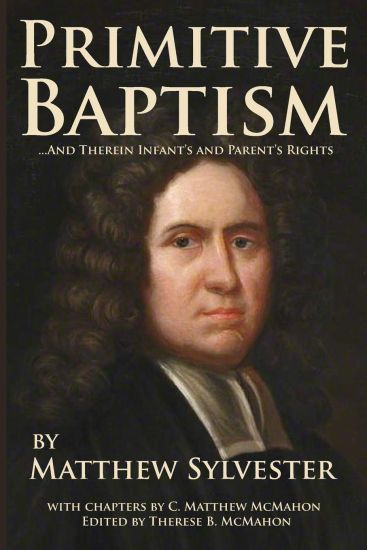
Primitive Baptism and Therein Infant's and Parent's Rights
C. Matthew McMahon; Matthew Sylvester
Puritan Publications
2019
nidottu
Matthew Sylvester (1636-1708) was a nonconformist divine, a meek and spirited Reformed preacher, and scholarly linguist. This rare work by Matthew Sylvester is an exegetical triumph of proper hermeneutics. He begins his treatment of baptism and its implications for parents and infants by first setting down a key principle of hermeneutics. He follows closely Christ's perfect method of interpreting the Scriptures against the Sadducees and their denial of the resurrection. Christ uses the Old Testament Scriptures to refute the Sadducees' denial of a "plain" text that taught the resurrection (as many do in the New Testament about infant baptism). Christ accuses them of both erring in their understanding of the Scriptures, and the implications of denying the power of God. Next, Sylvester treats methodically the Hebraisms that are used throughout the New Testament. He responsibly exegetes "house," "household" and other Hebraic terms that have been outlined in the New Testament referring to those having been baptized, and what those terms literally mean, as well as all their implications. He explains such Scriptures as the account with Lydia, "And when she was baptized, and her household, " (Acts 16:15), as well as the accounts of the Jailor and Crispus, among others. As a consequence of that part of the study, Sylvester then teaches the further implications of both an infant's and parent's right in the church in the sacrament of baptism. He explains two different practices; withholding baptism from infants of baptized parents, and withholding such parents from their infants in baptism. Sylvester maintains that the arguments brought against these practices, are those refuted by Christ against a practice of the same nature, namely, that it is a "putting asunder" those whom God has joined together; and that "from the beginning it was not so." His exegetical treatment of this line of reasoning is penetrating and helpful to the inquirer of these important covenant concepts. This is not a scan or facsimile, and has been updated in modern English for easy reading. It also has an active table of contents for electronic versions.
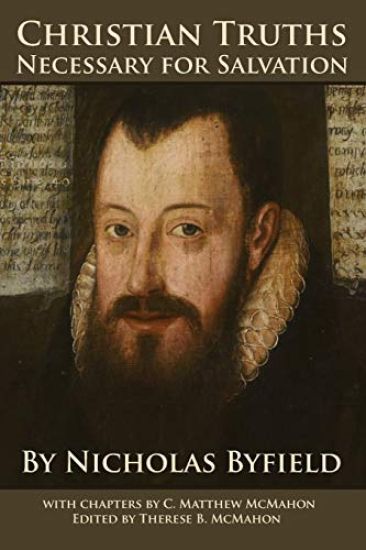
Christian Truths Necessary for Salvation
C. Matthew McMahon; Nicholas Byfield
Puritan Publications
2019
nidottu
Nicholas Byfield (1579-1622) was a Calvinistic puritan divine with a sweet preaching style akin to that of Thomas Watson, and a simple writing style with the practicality of Jeremiah Burroughs. He was an extremely popular puritan in his day. The Gospel has certain non-negotiable qualities to it in order to be believed. What are those non-negotiable traits? Byfield demonstrates the necessary Christian truths of the Gospel - what one must believe in order to have true saving faith. He will talk quite a lot about the Old Testament. The Gospel can certainly be found there. He will talk quite a lot about the New Testament. The Gospel can be found there as well, with greater clarity standing in the same substance of the "everlasting covenant" of Christ. In either testament, the substance of the Gospel for all believers remains the same, and focuses on God's one and only Savior. God has bound himself to save in a specific manner with a specific message. People cannot be saved by general revelation of nature. People are only saved through special revelation, which argues a specific message (otherwise such revelation would not be needed). Byfield is very liberal in using the entire Bible, all of the Word of God, to explain all those necessary truths in order to understand God's merciful message of salvation, and point men to the Christ. He will show that "faith" is believing and trusting in the divine object (Jesus Christ) of a specific message (the good news) and knowing that such an object of knowledge is good (that it comes from God and is necessary to understand to cultivate saving faith). No one would ever trust in anything they did not know to be good for them in that way, and Byfield will set up these Gospel truths in such a way that you might come to know them in a simple and most plain manner. This work is not a scan or facsimile, and has been updated in modern English for easy reading. It also has an active table of contents for electronic versions.
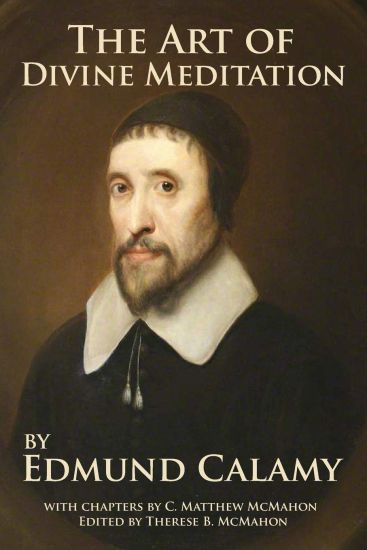
Edmund Calamy (1600-1666) was a Reformed Presbyterian preacher of the Gospel and one of the distinguished members of the Westminster Assembly. He was active to promote Reformed Theology in his day and was an eminent scholar of the Bible. In this wonderful treatise on godly meditation, Calamy shows that meditation on holy and heavenly things is a work that God requires at the hands of all His people. God requires Christians to pray, read Scripture, study and also requires them to meditate. God requires them to hear sermons, and still, requires them to meditate on the sermons they hear. What good is learning anything without chewing and thinking about it? Yet, there are few Christians who believe this doctrine, and it is all but lost today. In contrast, meditation is to be a regular part of the daily private devotions of the Christian. Meditation cultivates seriousness in the Christian for life and godliness. The highest seriousness makes the best scholar, and consequently, the best Christian. This is a searching and scanning, a deep dive into the things of God. Calamy teaches that meditating on godly truth is not something done once and forgotten; it is something done regularly and daily. It places the mind and will under the influence of the Spirit, and it helps them to avoid sin and glorify Christ. Many make excuses not to meditate because it is difficult. Some neglect it totally, and yet others may have simply never learned to do it rightly. There is a right way and wrong way to meditate or think on these high thoughts of the Lord. Serious thinking is fundamental to all right doing before Jesus Christ. One cannot be subject to Christ if one does not know or understand the will of Christ. To meditate in a godly manner, then, is to think like a Christian. This work is not a scan or facsimile, has been carefully transcribed by hand being made easy to read in modern English, and has an active table of contents for electronic versions.
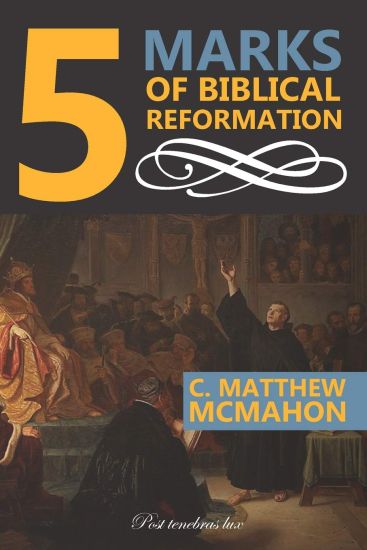

The Nature and Method of Secret Prayer
C. Matthew McMahon; Samuel Lee
Puritan Publications
2019
nidottu
Samuel Lee (1625-1691) was a learned puritan divine and preacher who ministered in both England and New England. What is prayer? And what is the difference between prayer and secret prayer? What is the best method for secret prayer according to Scripture for the Christian? Lee expounds Matthew 6:6 in a most able and helpful manner to show the Christian what God expects in secret prayer, "But thou, when thou prayest, enter into thy closet, and when thou hast shut thy door, pray to thy Father which is in secret; and thy Father which seeth in secret shall reward thee openly." Lee covers the duty of secret prayer, managing secret prayer, various important directions for secret prayer, how one knows when their prayers are answered, how to discern if one has prayed well in order to gain the most profit from secret prayer, a number of questions on prayer both generally and specifically, and a final application of how prayer can be made most rewarding to the Christian overall.

5 Marks of Biblical Commitment to the Visible Body of Christ
C. Matthew McMahon
Puritan Publications
2019
nidottu
This work, in an effort to serve the Lord Jesus Christ in his church, demonstrates how Christians ought to have a sound theology surrounding biblical commitment to Christ's visible body. This topic includes the privileges and benefits of church membership under the commands of Christ. Church membership is a topic sorely neglected in today's contemporary church culture. From today's modern vantagepoint, such a topic detracts from the attractiveness of the contemporary church. In this detraction, the church growth movement has quickly cultivated a memberless church (a rejection of a real commitment to Christ) and has appealed and marketed this new brand of false teaching to the "individual Christian." Individualism can become sinful very quickly. The sin of individualism is always "evolving" to cope with society's current trends and attempts to market the church and the Gospel in a humanistic manner. Such a view gives a license to people to dictate how they may or may not live within the bounds of Christ's visible covenant body; both in the context of their own lives and also within the local assembly of Christ's mystical body. Christians are to be biblically committed to Christ's divine oversight which includes the directives and regulations he has laid down concerning his visible body in the world. Under this theological doctrine of covenanting, we find the need for understanding what the visible body of Christ actually is, how Gospel unity contributes to its health, what need there is for unified public prayer, how one is to support the church financially, what worship in the church contributes to the health of the church, and how membership to a local body is an important element to the overall well-being of church polity and governance. C. Matthew McMahon, Ph. D., Th. D., is a Reformed theologian, and pastor of Grace Chapel in Crossville, TN. He is the founder and chairman of A Puritan's Mind, the largest Reformed website on the internet for students of the Bible concerning Reformed Theology, the Puritans and Covenant Theology. He is the founder of Puritan Publications which publishes rare Reformed and Puritan works from the 17th century, specializing in the Westminster Assembly. He is also a managing partner at Reformed.org, and the Center for Reformed Theology and Apologetics.

The Poor Doubting Christian Drawn to Christ
C. Matthew McMahon; Thomas Hooker
Puritan Publications
2019
nidottu
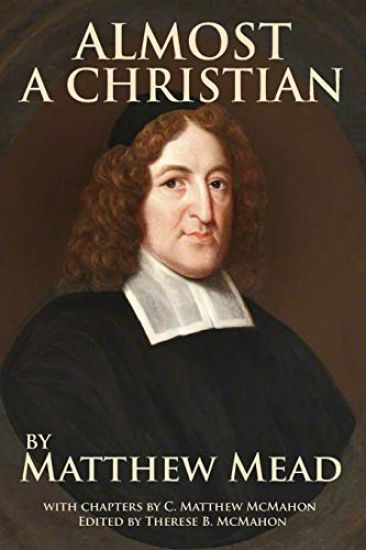
Matthew Mead (Meade) (1630-1699) was an independent puritan divine, and popular reformed preacher and morning lecturer at Stepney Church (London). The title of this work, "Almost a Christian" is drawn from Mead's main text, "Almost thou persuadest me to be a Christian," (Acts 26:28). This statement by Agrippa is the foundation on which the entire treatise revolves. What does it mean to be "almost a Christian?" How far can a man or woman go, how far can a teenager or child go, that they actually fall short of salvation? How far may a man, woman, or child run the race of the Christian, and yet not run as to obtain their end? It is, unfortunately, a sad consequence of so many people throughout history who have entered eternity unaware of their present danger. Mead warns and directs every professing Christian to consider what it means to lay under the scrutiny of a spiritual examination for the good of their souls. The reason? To find out whether that Christian is a true believer, or they have merely deceived themselves being "almost a Christian." What a terrible place to be to delude one's self for decades only to find out upon their last breath, at the judgment seat of God, that Christ "never knew them." Many souls miscarry into eternity on such grounds. Mead has most orderly and precisely laid out a series of biblical propositions and their corollary answers to help the reader discern, and thoroughly examine, their current spiritual state before Jesus Christ. He desires that they be "altogether a Christian," instead of "almost a Christian." This work is not a scan or facsimile, has been carefully transcribed by hand being made easy to read in modern English, and has an active table of contents for electronic versions.
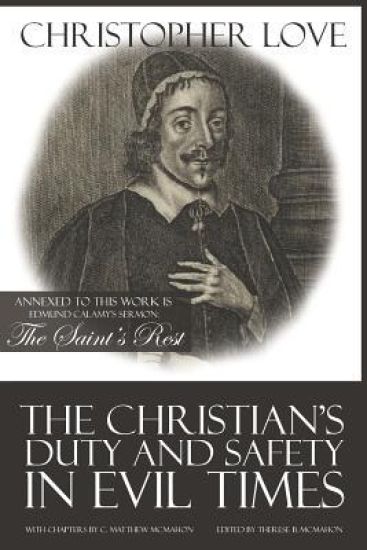
The Christian's Duty and Safety in Evil Times
C. Matthew McMahon; Christopher Love
Puritan Publications
2019
nidottu

The Wickedness, Humiliation, Restoration and Reformation of Manasseh
C. Matthew McMahon
Puritan Publications
2019
nidottu
Why study the life of Manasseh who was such a wicked and deplorable man? Aside from the thief on the cross who hung there next to the Christ, Manasseh is the "other" near deathbed convert that one finds in Scripture. Manasseh ought to hold a special place to two kinds of people who read the Bible. The first is the sinner who thinks they have sins that are bigger than Christ is a Savior. They are timid to come to the Savior, believing that God might not save such a lost person as they are. And the second are believers who wonder how their sinning after conversion affects their standing before God, robbing them of the full assurance of faith that they should have in Christ. God worked in the life of one of the most wretched people who ever lived, and the narrative in 2 Chronicles 33 shows how a despicable heathenish dog can be converted and changed by the abundant power of Jesus Christ through the Covenant of God's free Grace. As wicked as Manasseh might have been, God still reached down from heaven to change him, save him, reconcile him, and begin reformation not only of his own life, but life in the church at large. Consider that God saved a wretch like Manasseh from sin and hell, as abominable as he was, and abundantly pardoned him through saving grace only found in Jesus Christ. Such a truth should give sinners hope and give Christians a reason to cultivate a greater amount of godly assurance as they walk through the journey of this life before the face of God. Study Questions follow at the end of the work. C. Matthew McMahon, Ph. D., Th. D., is a Reformed theologian, and pastor of Grace Chapel in Crossville, TN. He is the founder and chairman of A Puritan's Mind, the largest Reformed website on the internet for students of the Bible concerning Reformed Theology, the Puritans and Covenant Theology. He is also the founder of Puritan Publications which publishes rare Reformed and Puritan works from the 17th century, specializing in the Westminster Assembly.
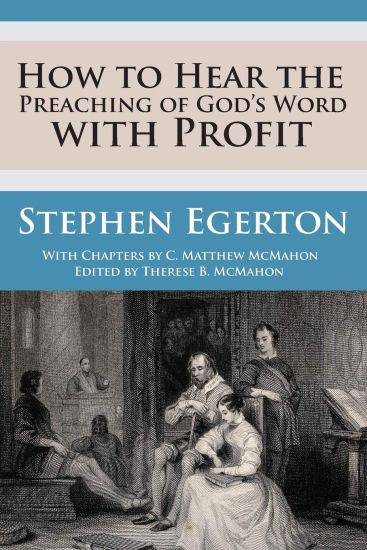
How to Hear the Preaching of God's Word with Profit
C. Matthew McMahon; Stephen Egerton
Puritan Publications
2019
nidottu
Rev. Stephen Egerton (1555-1621) was an early puritan divine, a man of great learning and practical godliness. In this treatise, Egerton demonstrates the Christian's duty in hearing the word of God preached. In the first chapter he shows what it means to "take heed" in hearing the word following what Christ said, "Take heed therefore how ye hear," (Luke 8:18). Then, he gives general duties in chapter 2 in relationship to preparations that ought to be made before coming to hear the sermon. Chapter 3 deals with what the hearer ought to do while hearing the sermon. And chapter 4 deals with the duties of the Christian after the sermon. Egerton takes a simplistic and manageable approach to teaching Christians what is required by Christ in hearing the Word of God preached. He is quite comprehensive to remind the believer of the most important aspects of the truth in his doctrine as it relates to the preached word. Egerton has a vivid, masterful grasp of his matter, and dissects the doctrine of hearing the word preached in a catechistic manner through questions and thorough answers. Since God is speaking to the Christian in the preached word by all true ministers, that the minister's mouth is God's mouth in the act of preaching, one would do quite well to heed Rev. Egerton's application of Christ's exhortations to hear what God is saying to us rightly, biblically, and for the good of our souls. This work is not a scan or facsimile, has been carefully transcribed by hand being made easy to read in modern English, and has an active table of contents for electronic versions.

Christ is clearly portrayed in Scripture as the incarnate God-man who came down from heaven to save his people from the apostasy of Adam in the garden. He is the second Adam, the Branch and High Priest of the everlasting covenant (planned before time began), who came to redeem and save wicked sinners through his merit of living a perfect life to uphold God's Law, and willingly died on a cross to became a curse through death in order to appease God's wrath for his one and only bride. To use biblical terms, he expiated sin and propitiated the wrath of God, justifying his people, sanctifying them through his heavenly intercession by sending his Spirit to work in them, and will one day glorify them making them perfect to rule and reign with him forever. It is one thing to understand the various historical narratives concerning these truths in the Gospels, but it is another thing altogether to consider how Jesus saw himself in the Gospels. This work investigates Christ's interpretation of the phrase "Son of Man" as found in the book of Daniel, (7:13) and applied to himself throughout the Gospels. Though the phrase "Son of Man" is seen in various Old Testament books and used for a variety of purposes, Christ's use is specific in its reference to Daniel and his own description. In this way a question becomes important as it relates to Christ's self-disclosure, "Do you see Christ as Christ saw himself? Do you see Christ clearly?"

The Christian's Desire to See God Face to Face
C. Matthew McMahon; Richard Sibbes
Puritan Publications
2018
nidottu
Captives Bound in Chains Made Free by Christ
Thomas Doolittle; C Matthew McMahon
Puritan Publications
2017
pokkari
Love's text is, "When Christ who is our life shall appear, then shall we also appear with Him in glory," (Col. 3:4). Why should the Christian have a hope of heaven? What may be expected there? What is Christ's role there right now and how will the Christian interact with Him before the throne of God? What does it mean that Christ is glorious, and how will his appearing usher in with great glory the heavenly state for all those who trust in him? Nothing has greater influence into a Christian's practice here in this world than the serious consideration of our everlasting estate in the world to come; the glory and happiness which is prepared for the elect in Christ. This work is not a scan or facsimile, has been carefully transcribed by hand being made easy to read in modern English, and has an active table of contents for electronic versions.
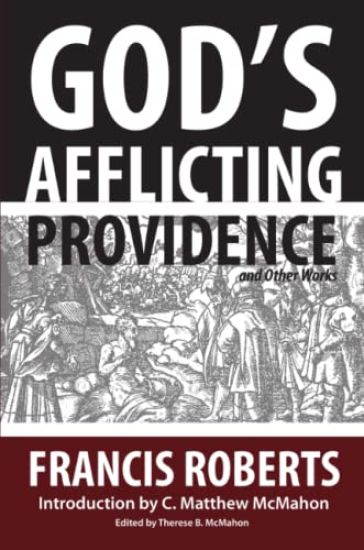
God's Afflicting Providence, and Other Works
C Matthew McMahon; Francis Roberts
Puritan Publications
2015
pokkari
Francis Roberts (1609-1675), was a Presbyterian and Reformed Calvinistic Puritan. He was an eminent theologian in his day and widely known for his works. In these works Roberts is at his best. They cover the sanctification of the Christian in the providence of God, the Christian's contrite spirit, and the advantage of the Christian in life and death. They are some of the best works on these biblical subjects in print, and Roberts handles them with pastoral sensitivity and theological accuracy. He teaches that God's dearest people may for a long time walk in darkness, yet at last refreshing consolation shall shine on them (Psalm 68:13). Secondly, he covers the gratefulness of true broken-heartedness for sin (Psalm 51:17). Thirdly, he shows that those who are in Christ have life and death as theirs (1 Cor. 3:21-23). It is impossible to say that this book is worth the cost of just one of these sections alone since all three are so powerful that the Christian will not walk away from them unchanged.