Kirjojen hintavertailu – 12 903 725 kirjaa ja 27 kauppaa

Kirjailija

Cass R. Sunstein

Kirjat ja teokset yhdessä paikassa: 114 kirjaa, julkaisuja vuosilta 1993–2027, suosituimpiin kuuluu Ruido: Un Fallo En El Juicio Humano / Noise: A Flaw in Human Judgment. Vertaile teosten hintoja ja tarkista saatavuus suomalaisista kirjakaupoista.

Nimi esiintyy myös muodoissa: Cass R Sunstein

114 kirjaa

Kirjojen julkaisuvuodet: 1993–2027.

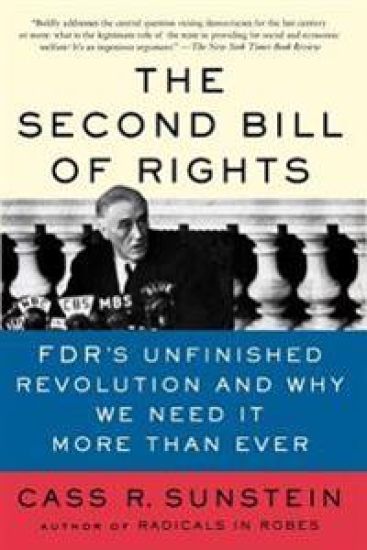
The Second Bill of Rights

The Second Bill of Rights

Cass R. Sunstein

Basic Books
2006
pokkari
In 1944, Franklin Delano Roosevelt gave a State of the Union Address that was arguably the greatest political speech of the twentieth century. In it, Roosevelt grappled with the definition of security in a democracy, concluding that "unless there is security here at home, there cannot be lasting peace in the world." To help ensure that security, he proposed a "Second Bill of Rights" - economic rights that he saw as necessary to political freedom. Many of the great legislative achievements of the past sixty years stem from Roosevelt's vision. Using this speech as a launching point, Cass R. Sunstein shows how these rights are vital to the continuing security of our nation. This is an ambitious, sweeping book that argues for a new vision of FDR, of constitutional history, and our current political scene.
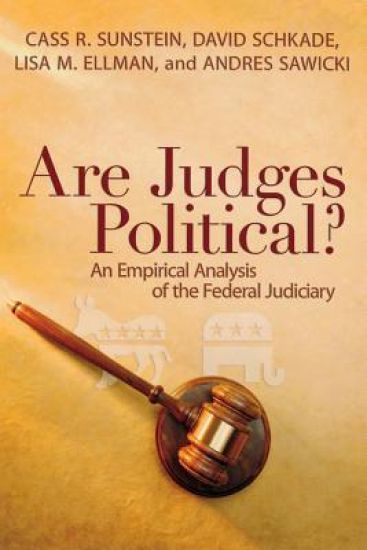
Are Judges Political?

Are Judges Political?

Cass R. Sunstein; David Schkade; Lisa Ellman

Brookings Institution
2006
nidottu
"Over the past two decades, the United States has seen an intense debate about the composition of the federal judiciary. Are judges ""activists""? Should they stop ""legislating from the bench""? Are they abusing their authority? Or are they protecting fundamental rights, in a way that is indispensable in a free society? Are Judges Political? cuts through the noise by looking at what judges actually do. Drawing on a unique data set consisting of thousands of judicial votes, Cass Sunstein and his colleagues analyze the influence of ideology on judicial voting, principally in the courts of appeal. They focus on two questions: Do judges appointed by Republican Presidents vote differently from Democratic appointees in ideologically contested cases? And do judges vote differently depending on the ideological leanings of the other judges hearing the same case? After examining votes on a broad range of issues--including abortion, affirmative action, and capital punishment--the authors do more than just confirm that Democratic and Republican appointees often vote in different ways. They inject precision into an all-too-often impressionistic debate by quantifying this effect and analyzing the conditions under which it holds. This approach sometimes generates surprising results: under certain conditions, for example, Democrat-appointed judges turn out to have more conservative voting patterns than Republican appointees. As a general rule, ideology should not and does not affect legal judgments. Frequently, the law is clear and judges simply implement it, whatever their political commitments. But what happens when the law is unclear? Are Judges Political? addresses this vital question. "
Why Societies Need Dissent

Why Societies Need Dissent

Cass R. Sunstein

Harvard University Press
2005
nidottu
In this timely book, Cass R. Sunstein shows that organizations and nations are far more likely to prosper if they welcome dissent and promote openness. Attacking "political correctness" in all forms, Sunstein demonstrates that corporations, legislatures, even presidents are likely to blunder if they do not cultivate a culture of candor and disclosure. He shows that unjustified extremism, including violence and terrorism, often results from failure to tolerate dissenting views. The tragedy is that blunders and cruelties could be avoided if people spoke out. Sunstein casts new light on freedom of speech, showing that a free society not only forbids censorship but also provides public spaces for dissenters to expose widely held myths and pervasive injustices. He provides evidence about the effects of conformity and dissent on the federal courts. The evidence shows not only that Republican appointees vote differently from Democratic appointees but also that both Republican and Democratic judges are likely to go to extremes if unchecked by opposing views. Understanding the need for dissent illuminates countless social debates, including those over affirmative action in higher education, because diversity is indispensable to learning. Dissenters are often portrayed as selfish and disloyal, but Sunstein shows that those who reject pressures imposed by others perform valuable social functions, often at their own expense. This is true for dissenters in boardrooms, churches, unions, and academia. It is true for dissenters in the White House, Congress, and the Supreme Court. And it is true during times of war and peace.
Laws of Fear

Laws of Fear

Cass R. Sunstein

Cambridge University Press
2005
sidottu
What is the relationship between fear, danger, and the law? Cass Sunstein attacks the increasingly influential Precautionary Principle - the idea that regulators should take steps to protect against potential harms, even if causal chains are uncertain and even if we do not know that harms are likely to come to fruition. Focusing on such problems as global warming, terrorism, DDT, and genetic engineering, Professor Sunstein argues that the Precautionary Principle is incoherent. Risks exist on all sides of social situations, and precautionary steps create dangers of their own. Diverse cultures focus on very different risks, often because social influences and peer pressures accentuate some fears and reduce others. Instead of adopting the Precautionary Principle, Professor Sunstein argues for three steps: a narrow Anti-Catastrophe Principle, designed for the most serious risks; close attention to costs and benefits; and an approach called 'libertarian paternalism', designed to respect freedom of choice while also moving people in directions that will make their lives go better. He also shows how free societies can protect liberty amidst fears about terrorism and national security. Laws of Fear represents a major statement from one of the most influential political and legal theorists writing today.
Risk and Reason

Risk and Reason

Cass R. Sunstein

Cambridge University Press
2004
pokkari
What should be done about airplane safety and terrorism, global warming, polluted water, nuclear power, and genetically engineered food? All over the globe, risks to safety, health, and the environment are a subject of intense interest. Too much of the time we fear the wrong things. Sometimes we make the situation even worse. Rather than investigating the facts, we respond to temporary fears. The result is a situation of hysteria and neglect - and unnecessary illness and death. Risk and Reason explains the sources of these problems and explores what can be done about them. It shows how individual thinking and social interactions lead us in foolish directions. Offering sound proposals for social reform, it explains how a more sensible system of risk regulation, embodied in the idea of a ‘cost-benefit state’, could save many thousands of lives and many billions of dollars too - and protect the environment in the process.
Punitive Damages

Punitive Damages

Cass R. Sunstein; Reid Hastie; John W. Payne; David A. Schkade; W. Kip Viscusi

University of Chicago Press
2003
nidottu
Over the past two decades, the United States has seen a dramatic increase in the number and magnitude of punitive damages verdicts rendered by juries in civil trials. Probably the most extraordinary example is the July 2000 award of $144.8 billion in the Florida class action lawsuit brought against the cigarette manufacturers. More puzzling were two recent verdicts against the auto manufacturer BMW in Alabama. In identical cases, argued in the same court before the same judge, one jury awarded $4 million in punitive damages, while the other awarded no punitive damages at all. In cases involving accidents, civil rights and the environment, multimillion dollar punitive awards have been a subject of intense controversy. But how do juries actually make decisions about punitive damages? To find out, the authors - specialists in psychology, economics and the law - present the results of controlled experiments with over 600 mock juries involving the responses of more than 8,000 jury-eligible citizens. They find that although juries tended to agree in their moral judgements about the defendant's conduct, they rendered erratic and unpredictable dollar awards. Jurors also tended to ignore instructions from the judges; showed "hindsight bias", believing that what happened should have been foreseen; and penalized corporations that had based their decisions on careful cost-benefit analyses. While judges made many of the same errors, they performed better in some areas, suggesting that judges (or other specialists) may be better equipped than juries to decide punitive damages. With a wealth of new data and a host of provocative findings, this book documents a wide range of systematic bias in jury behaviour and should be valuable for anyone interested in punitive damages, jury behaviour, human psychology and the theory of punishment.
Designing Democracy

Designing Democracy

Cass R. Sunstein

Oxford University Press Inc
2003
nidottu
"In modern nations, political disagreement is the source of both the gravest danger and the greatest security," writes Cass Sunstein. All democracies face intense political conflict. But is this conflict necessarily something to fear? In this provocative book, one of our leading political and legal theorists reveals how a nation's divisions of conviction and belief can be used to safeguard democracy. Confronting one explosive political issue after another, from presidential impeachment to the limits of religious liberty, from discrimination against women and gays to the role of the judiciary, Sunstein constructs a powerful new perspective from which to show how democracies negotiate their most divisive real-world problems. He focuses on a series of concrete concerns that go to the heart of the relationship between the idea of democracy and the idea of constitutionalism. Illustrating his discussion with examples from constitutional debates and court-cases in South Africa, Eastern Europe, Israel, America, and elsewhere, Sunstein takes readers through a number of highly charged questions: When should government be permitted to control discriminatory behaviour by or within religious organizations? Does it make sense to govern on the basis of popular referenda? Can the right to have an abortion be defended? Can we defend Internet regulation? Should the law step in if children are being schooled in discriminatory preferences and beliefs? Should a constitution protect rights to food, shelter, and health care? Disputes over questions such as these can be fierce enough to pose a grave threat. But in a paradox whose elaboration forms the core of Sunstein's book, it is a nation's apparently threatening diversity of opinion that can ensure its integrity. Extending his important recent work on the way deliberation within like-minded groups can produce extremism, Sunstein breaks new ground in identifying the mechanisms behind political conflict in democratic nations. At the same time, he develops a profound understanding of a constitutional democracy's system of checks and balances. Sunstein shows how a good constitution, fostering a "republic of reasons," enables people of opposing ethical and religious commitments to reach agreement where agreement is necessary, while making it unnecessary to reach agreement when agreement is impossible. A marvel of lucid, subtle reasoning, DESIGNING DEMOCRACY makes invaluable reading for anyone concerned with the promises and pitfalls of the democratic experiment.

Punitive Damages

Punitive Damages

Cass R. Sunstein; Reid Hastie; John W. Payne; David A. Schkade; W. Kip Viscusi

University of Chicago Press
2002
sidottu
Over the past two decades, the United States has seen a dramatic increase in the number and magnitude of punitive damages verdicts rendered by juries in civil trials. Probably the most extraordinary example is the July 2000 award of $144.8 billion in the Florida class action lawsuit brought against the cigarette manufacturers. More puzzling were two recent verdicts against the auto manufacturer BMW in Alabama. In identical cases, argued in the same court before the same judge, one jury awarded $4 million in punitive damages, while the other awarded no punitive damages at all. In cases involving accidents, civil rights and the environment, multimillion dollar punitive awards have been a subject of intense controversy. But how do juries actually make decisions about punitive damages? To find out, the authors - specialists in psychology, economics and the law - present the results of controlled experiments with over 600 mock juries involving the responses of more than 8,000 jury-eligible citizens. They find that although juries tended to agree in their moral judgements about the defendant's conduct, they rendered erratic and unpredictable dollar awards. Jurors also tended to ignore instructions from the judges; showed "hindsight bias", believing that what happened should have been foreseen; and penalized corporations that had based their decisions on careful cost-benefit analyses. While judges made many of the same errors, they performed better in some areas, suggesting that judges (or other specialists) may be better equipped than juries to decide punitive damages. With a wealth of new data and a host of provocative findings, this book documents a wide range of systematic bias in jury behaviour and should be valuable for anyone interested in punitive damages, jury behaviour, human psychology and the theory of punishment.
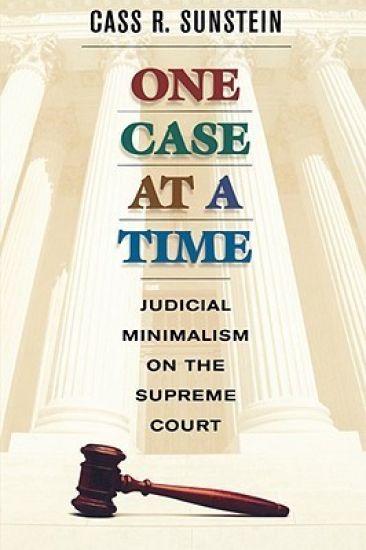
One Case at a Time

One Case at a Time

Cass R. Sunstein

Harvard University Press
2001
nidottu
Abortion, affirmative action, the "right to die," pornography and free speech, homosexuality and sex discrimination: as eagerly as the Supreme Court's rulings on these hot issues are awaited and as intently as they're studied, they never seem to settle anything once and for all. But something is settled in the process--in the incremental approach--as Cass Sunstein shows us in this instructive book. One of America's preeminent constitutional scholars, Sunstein mounts a defense of the most striking characteristic of modern constitutional law: the inclination to decide one case at a time. Examining various controversies, he shows how--and why--the Court has avoided broad rulings on issues from the legitimacy of affirmative action to the "right to die," and in doing so has fostered rather than foreclosed public debate on these difficult topics. He offers an original perspective on the right of free speech and the many novel questions raised by Congress's efforts to regulate violent and sexual materials on new media such as the Internet and cable television. And on the relationship between the Constitution and homosexuality and sex discrimination, he reveals how the Court has tried to ensure against second-class citizenship--and the public expression of contempt for anyone--while leaving a degree of flexibility to the political process. One Case at a Time also lays out, and celebrates, the remarkable constellation of rights--involving both liberty and equality--that now commands a consensus in American law. An authoritative guide to the Supreme Court, the book offers a new understanding of the American Constitution, and of the relationship between democracy and constitutionalism, and between rights and self-government.
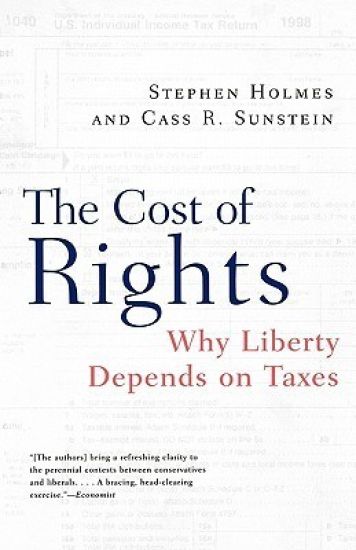
The Cost of Rights

The Cost of Rights

Stephen Holmes; Cass R. Sunstein

WW Norton Co
2000
nidottu
The simple insight that all legally enforceable rights cost money reminds us that freedom is not violated by a government that taxes and spends, but requires it—and requires a citizenry vigilant about how money is allocated. Drawing from these practical, commonsense notions, The Cost of Rights provides a useful corrective to the all-or-nothing feel of much political debate nowadays (The Economist).
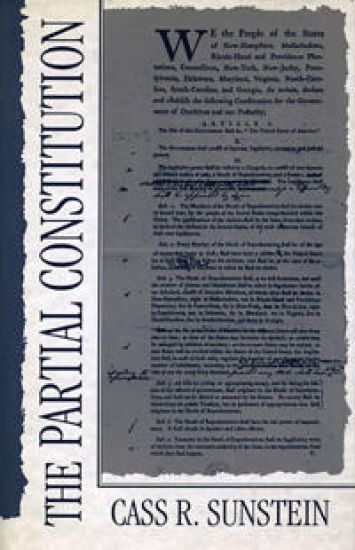
The Partial Constitution

The Partial Constitution

Cass R. Sunstein

Harvard University Press
1998
nidottu
American constitutional law is at a crossroads. In a major new interpretation of the Constitution, Cass Sunstein offers a clear account of our present dilemmas and shows where we might go from here. As it is currently interpreted, the Constitution is partial, Sunstein asserts. It is, first of all, biased. Contemporary constitutional law treats the status quo as neutral and just, and any departure as necessarily partisan. But when the status quo is neither neutral nor just, Sunstein argues, reasoning of this sort produces injustice. The Constitution is also partial in another sense: its meaning has come to be identified solely with the decisions of the Supreme Court. This was not always the case, as Sunstein demonstrates; nor was it the intention of the country's founders. Instead, the Constitution often served as a catalyst for public deliberation about its general terms and aspirations--and Sunstein makes a strong case for reviving this broader understanding of the Constitution's role. In light of this analysis, Sunstein proposes solutions to some of the most hotly disputed issues of our time, including affirmative action, sex discrimination, pornography, "hate speech," and government funding of religious schools and the arts. In an especially striking argument, he claims that theequal protection clause of the Fourteenth Amendment--not the right to privacy--protects a woman's right to choose abortion. Sunstein connects these and other debates to the Constitution's historic commitment to public deliberation among political equalsand in doing so, he reconceives many of our most basic constitutional rights, such as free speech and equality under law. He urges that public deliberation about the meaning of the Constitution in turn be freed from a principle of neutrality based on the status quo. His work points to a historically sound but fundamentally new understanding of the American constitutional process as an exercise in deliberative democracy.
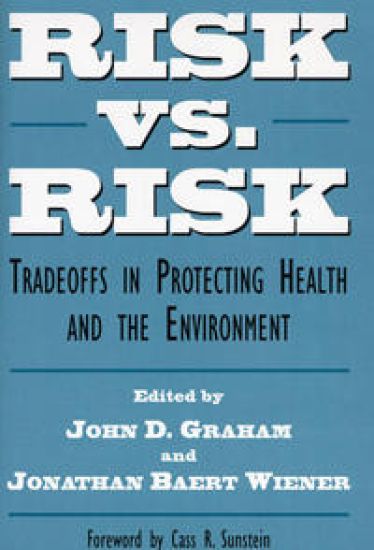
Risk vs. Risk

Risk vs. Risk

Cass R. Sunstein

Harvard University Press
1997
nidottu
We see the stories in the newspaper nearly every day: a drug hailed as a breakthrough treatment turns out to cause harmful side effects; controls implemented to reduce air pollution are shown to generate hazardous solid waste; bans on dangerous chemicals result in the introduction of even more risky substitutes. Could our efforts to protect our health and the environment actually be making things worse? In Risk versus Risk, John D. Graham, Jonathan Baert Wiener, and their colleagues at the Harvard Center for Risk Analysis marshal an impressive set of case studies which demonstrate that all too often our nation's campaign to reduce risks to our health and the environment is at war with itself.
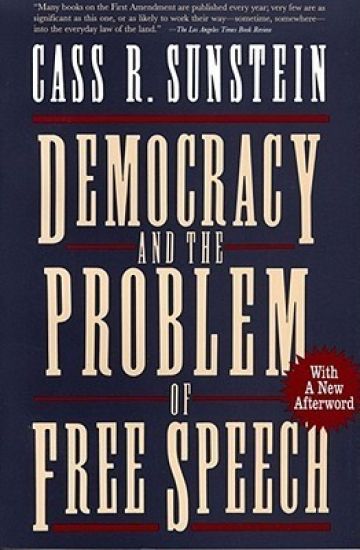
Democracy and the Problem of Free Speech

Democracy and the Problem of Free Speech

Cass R. Sunstein

The Free Press
1995
pokkari
Freedom of speech is one of our greatest legal rights and Cass Sunstein is one of our greatest legal theorists. This book is a must read for anyone who wants to think seriously about the free speech issues facing this generation.-- Akhil Amar, Southmayd Professor, Yale Law SchoolThis is an important book. Beautifully clear and carefully argued, Sunstein's contribution reaches well beyond the confines of academic debate. It will be of interest to any citizen concerned about freedom of speech and the current state of American democracy.-- Joshua Cohen, Massachusetts Institute of TechnologyHow can our constitutional protection of free speech serve to strengthen democracy? Cass Sunstein challenges conventional answers with a remarkable array of lucid arguments and legal examples. There is no better book on the subject.-- Amy Gutmann, Laurance S. Rockefeller University Professor, Princeton University
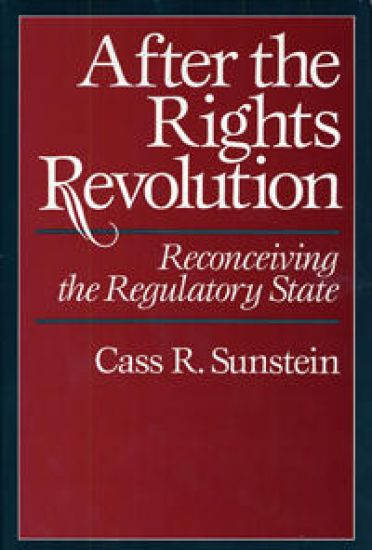
After the Rights Revolution

After the Rights Revolution

Cass R. Sunstein

Harvard University Press
1993
nidottu
In the twentieth century, American society has experienced a “rights revolution”: a commitment by the national government to promote a healthful environment, safe products, freedom from discrimination, and other rights unknown to the founding generation. This development has profoundly affected constitutional democracy by skewing the original understanding of checks and balances, federalism, and individual rights. Cass Sunstein tells us how it is possible to interpret and reform this regulatory state regime in a way that will enhance freedom and welfare while remaining faithful to constitutional commitments. Sunstein vigorously defends government regulation against Reaganite/Thatcherite attacks based on free-market economics and pre–New Deal principles of private right. Focusing on the important interests in clean air and water, a safe workplace, access to the air waves, and protection against discrimination, he shows that regulatory initiatives have proved far superior to an approach that relies solely on private enterprise. Sunstein grants that some regulatory regimes have failed and calls for reforms that would amount to an American perestroika: a restructuring that embraces the use of government to further democratic goals but that insists on the decentralization and productive potential of private markets. Sunstein also proposes a theory of interpretation that courts and administrative agencies could use to secure constitutional goals and to improve the operation of regulatory programs. From this theory he seeks to develop a set of principles that would synthesize the modern regulatory state with the basic premises of the American constitutional system. Teachers of law, policymakers and political scientists, economists and historians, and a general audience interested in rights, regulation, and government will find this book an essential addition to their libraries.