Kirjojen hintavertailu – 12 903 725 kirjaa ja 27 kauppaa

Kirjailija

Cass R. Sunstein

Kirjat ja teokset yhdessä paikassa: 114 kirjaa, julkaisuja vuosilta 1993–2027, suosituimpiin kuuluu Ruido: Un Fallo En El Juicio Humano / Noise: A Flaw in Human Judgment. Vertaile teosten hintoja ja tarkista saatavuus suomalaisista kirjakaupoista.

Nimi esiintyy myös muodoissa: Cass R Sunstein

114 kirjaa

Kirjojen julkaisuvuodet: 1993–2027.

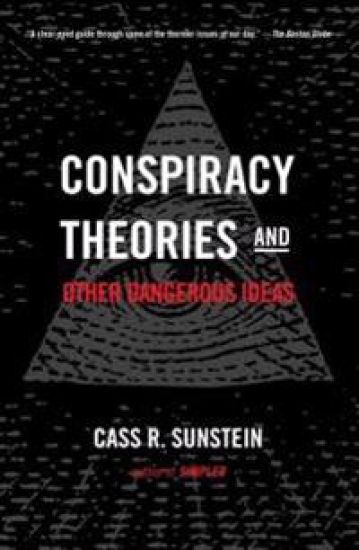
Conspiracy Theories and Other Dangerous Ideas

Conspiracy Theories and Other Dangerous Ideas

Cass R. Sunstein

SIMON SCHUSTER
2016
nidottu
The most controversial essays from the bestselling author once called the most dangerous man in America--collected for the first time. The nation's most-cited legal scholar who for decades has been at the forefront of applied behavioral economics, and the bestselling author of Nudge and Simpler, Cass Sunstein is one of the world's most innovative thinkers in the academy and the world of practical politics. In the years leading up to his confirmation as the administrator of the White House Office of Information and Regulatory Affairs (OIRA), Sunstein published hundreds of articles on everything from same-sex marriage to cost-benefit analysis. Conspiracy Theories and Other Dangerous Ideas is a collection of his most famous, insightful, relevant, and inflammatory pieces. Within these pages you will learn: - Why perfectly rational people sometimes believe crazy conspiracy theories - What wealthy countries should and should not do about climate change - Why governments should allow same-sex marriage, and what the "right to marry" is all about - Why animals have rights (and what that means) - Why we "misfear," meaning get scared when we should be unconcerned and are unconcerned when we should get scared - What kinds of losses make us miserable, and what kinds of losses are absolutely fine - How to find the balance between religious freedom and gender equality - And much more... Cass Sunstein is a unique, controversial, and exciting voice in the political world. A man who cuts through the fog of left vs. right arguments and offers logical, evidence-based, and often surprising solutions to today's most challenging questions.

Klokere

Klokere

Cass R. Sunstein; Reid Hastie

Cappelen Damm akademisk
2015
sidottu
Fra tidenes morgen har vi tatt beslutninger i grupper. Ved at man drar nytte av flokkens samlede kunnskaper og erfaringer bør dette gi gode resultater. Tja. Vi har alle deltatt i gruppebeslutninger – og vet at resultatet kan bli dårlig. Hvorfor? Mange legger skylden på «gruppetenkning», uten helt å vite hva begrepet egentlig betyr. De to professorene Sunstein og Hastie hjelper oss med å forstå hvorfor og hvordan gruppebeslutninger mislykkes – og til å unngå fallgruvene og oppnå bedre resultater. Første del av boken inneholder lettfattelige og fascinerende forklaringer på de særegne problemene grupper står overfor:De forsterker ofte, fremfor å korrigere, individuelle vurderingsfeil. De fører ofte til kaskadeeffekter, fordi medlemmene følger det andre sier. Medlemmene blir polarisert, og inntar mer ekstreme standpunkter De vektlegger det alle vet i stedet for å fokusere på viktig informasjon som bare noen få kjenner til. I andre del tilbyr forfatterne enkle metoder og råd om hvordan vi kan gjøre grupper smartere: blant annet demping av lederen, nye måter å tenke på insentiver og belønning på og gjennomtenkt tildeling av roller. Klokere har eksempler fra et bredt utvalg organisasjoner – fra Google til CIA. Boken gjør deg ikke bare klokere, men den kan også hjelpe ditt team og din organisasjon til å treffe bedre beslutninger – beslutninger som fører til suksess. Forord av Knut Ivar Karevold ph.d, Institutt for psykologi ved Universitetet i Oslo.
Constitutional Personae

Constitutional Personae

Cass R. Sunstein

Oxford University Press Inc
2015
sidottu
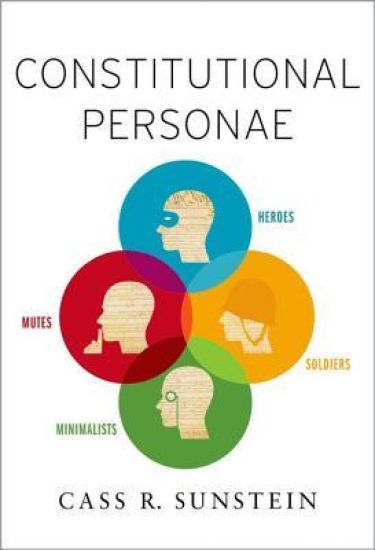
Since America's founding, the U. S. Supreme Court had issued a vast number of decisions on a staggeringly wide variety of subjects. And hundreds of judges have occupied the bench. Yet as Cass R. Sunstein, the eminent legal scholar and bestselling co-author of Nudge, points out, almost every one of the Justices fits into a very small number of types regardless of ideology: the hero, the soldier, the minimalist, and the mute. Heroes are willing to invoke the Constitution to invalidate state laws, federal legislation, and prior Court decisions. They loudly embrace first principles and are prone to flair, employing dramatic language to fundamentally reshape the law. Soldiers, on the other hand, are skeptical of judicial power, and typically defer to decisions made by the political branches. Minimalists favor small steps and only incremental change. They worry that bold reversals of long-established traditions may be counterproductive, producing a backlash that only leads to another reversal. Mutes would rather say nothing at all about the big constitutional issues, and instead tend to decide cases on narrow grounds or keep controversial cases out of the Court altogether by denying standing. As Sunstein shows, many of the most important constitutional debates are in fact contests between the four Personae. Whether the issue involves slavery, gender equality, same-sex marriage, executive power, surveillance, or freedom of speech, debates have turned on choices made among the four Personae--choices that derive as much from psychology as constitutional theory. Sunstein himself defends a form of minimalism, arguing that it is the best approach in a self-governing society of free people. More broadly, he casts a genuinely novel light on longstanding disputes over the proper way to interpret the constitution, demonstrating that behind virtually every decision and beneath all of the abstract theory lurk the four Personae. By emphasizing the centrality of character types, Sunstein forces us to rethink everything we know about how the Supreme Court works.
Why Nudge?

Why Nudge?

Cass R. Sunstein

Yale University Press
2015
pokkari
The bestselling author of Simpler offers a powerful, provocative, and convincing argument for protecting people from their own mistakes Based on a series of pathbreaking lectures given at Yale University in 2012, this powerful, thought-provoking work by national best-selling author Cass R. Sunstein combines legal theory with behavioral economics to make a fresh argument about the legitimate scope of government, bearing on obesity, smoking, distracted driving, health care, food safety, and other highly volatile, high-profile public issues. Behavioral economists have established that people often make decisions that run counter to their best interests—producing what Sunstein describes as “behavioral market failures.” Sometimes we disregard the long term; sometimes we are unrealistically optimistic; sometimes we do not see what is in front of us. With this evidence in mind, Sunstein argues for a new form of paternalism, one that protects people against serious errors but also recognizes the risk of government overreaching and usually preserves freedom of choice. Against those who reject paternalism of any kind, Sunstein shows that “choice architecture”—government-imposed structures that affect our choices—is inevitable, and hence that a form of paternalism cannot be avoided. He urges that there are profoundly moral reasons to ensure that choice architecture is helpful rather than harmful—and that it makes people’s lives better and longer.
Knuffandets politik : om libertariansk paternalism

Knuffandets politik : om libertariansk paternalism

Cass R. Sunstein

Bokförlaget Daidalos
2015
nidottu
Tillsammans med Richard H. Thaler publicerade Cass Sunstein år 2008 den mycket uppmärksammade boken "Nudge: improving decisions about health, wealth, and happiness". De argumenterade där för en ?libertariansk paternalism? som inte tvingar utan ?knuffar? människor i riktning av mer förnuftiga val, i betydelsen fördelaktiga för deras långsiktiga välfärd. I denna uppföljare redogör Sunstein klart och koncist för tankarna bakom denna ?knuffandets politik?, och förhåller sig då också till de invändningar som den blivit bemött med. ? Paternalism? förknippas med förmynderi och har alltid varit en skottavla för liberaler. John Stuart Mill hävdade att det enda som kan legitimera en begränsning av personers frihet är att förhindra skada för andra, inte att förhindra skada för en själv: över sig själv, sina egen kropp och själ är individen suverän. Mill antog att vuxna personer som regel vet sitt eget bästa. Sunstein mobiliserar de senaste decenniernas omfattande psykologiska och beteendeekonomiska forskning om hur människor tänker och beter sig, och i synnerhet om riskerna för allvarliga misstag i ovanliga eller obekanta situationer. Mer än vi tror, och Mill trodde, är vi styrda av det psykologerna kallar ?system 1?, som arbetar snabbt och intuitivt, och inte av det långsammare men reflekterande och kalkylerande ?system 2?. Insikten om mänskliga misstag och skevheter i vårt tänkande gör att vi inte kan ta för givet att människor väljer det som är till deras bästa, eller snarare: vi förstår nu bättre varför de väljer det som rentav är skadligt för deras välfärd. Människor kan vara kortsynta och impulsiva, fästa överdriven vikt vid kortsiktiga intressen, de är offer ?framing?, hur något presenteras, de prokrastinerar, är överoptimistiska, viljesvaga osv. Sunstein hävdar nu att i sammanhang där människor är särskilt benägna att begå misstag kan paternalistiska ingripanden i form av ?valarkitektur? förbättra deras tillvaro. Med ?valarkitektur? menar han olika sätt att leda våra val i en viss riktning utan att avskaffa valfriheten. Ett enkelt exempel på ?valarkitektur? är hur olika slags, mer eller mindre sunda, maträtter exponeras i en kafeteria. Ett annat är default-regler som styr vad som händer om man inte gör något, t ex automatisk inskrivning i en pensionsförsäkring. Det betyder att använda kunskapen om de psykologiska mekanismer som förklarar att människor väljer dåligt för att utforma ?knuffar? som får dem att undgå dåliga val. Om människor kan blir friskare och leva längre genom sådana icke frihetsbegränsande knuffar finns det starka moraliska skäl för myndigheterna att använda sig av dem. Cass R. Sunstein är jurist och professor vid Harvard och leder där ett program om beteendeekonomi och offentlig politik. Hans författarskap omfattar rätts- och demokratiteori, riskanalys, offentlighetsteori, beteendeekonomi och statlig regleringspolitik. Sunstein arbetade en tid under president Barack Obama som ansvarig för Vita husets Office of Information and Regulatory Affairs.
Simpler

Simpler

Cass R. Sunstein

Simon Schuster
2015
pokkari

Halvin toimitettuna 23,20 €

The future of government arrived four years ago. Government became simpler, it became smarter, and Cass Sunstein was at the centre of it all. Drawing on state-of-the-art work in behavioural psychology and economics, Sunstein, as administrator of the powerful White House Office of Information and Regulatory Affairs (OIRA), quietly helped save the nation billions of dollars while preventing thousands of deaths and countless illnesses and accidents. All this was accomplished in part through the extraordinary power of nudges-low-cost, seemingly modest policies that preserve freedom of choice. In combination with smart, disciplined cost-benefit analysis, nudges are simplifying government and making it far more effective. Twenty-first century insights now inform simplified mortgage and student loan applications, the labelling of food and energy-efficient cars, financial reform, and health care reform. New principles-democratizing data, presenting individuals and businesses with the most salient information, ensuring that the better outcome is the automatic outcome-are transforming government. Countless regulations are being streamlined or eliminated. Transparent review of which rules are working, and which aren't, is becoming the norm. Citing numerous examples from his years in the first term of the Obama Administration, and projecting forward into a data-driven future, Simpler provides a new understanding of how government can work.
Wiser

Wiser

Cass R. Sunstein; Reid Hastie

Harvard Business Review Press
2014
sidottu
Why are group decisions so hard? Since the beginning of human history, people have made decisions in groups--first in families and villages, and now as part of companies, governments, school boards, religious organizations, or any one of countless other groups. And having more than one person to help decide is good because the group benefits from the collective knowledge of all of its members, and this results in better decisions. Right? Back to reality. We've all been involved in group decisions--and they're hard. And they often turn out badly. Why? Many blame bad decisions on "groupthink" without a clear idea of what that term really means. Now, Nudge coauthor Cass Sunstein and leading decision-making scholar Reid Hastie shed light on the specifics of why and how group decisions go wrong--and offer tactics and lessons to help leaders avoid the pitfalls and reach better outcomes. In the first part of the book, they explain in clear and fascinating detail the distinct problems groups run into: * They often amplify, rather than correct, individual errors in judgment * They fall victim to cascade effects, as members follow what others say or do * They become polarized, adopting more extreme positions than the ones they began with * They emphasize what everybody knows instead of focusing on critical information that only a few people know In the second part of the book, the authors turn to straightforward methods and advice for making groups smarter. These approaches include silencing the leader so that the views of other group members can surface, rethinking rewards and incentives to encourage people to reveal their own knowledge, thoughtfully assigning roles that are aligned with people's unique strengths, and more. With examples from a broad range of organizations--from Google to the CIA--and written in an engaging and witty style, Wiser will not only enlighten you; it will help your team and your organization make better decisions--decisions that lead to greater success.
Development Projects Observed

Development Projects Observed

Albert O. Hirschman; Cass R. Sunstein; Michele Alacevich

Brookings Institution
2014
nidottu
"Originally published in 1967, the modest and plainly descriptive title of Development Projects Observed is deceptive. Today, it is recognized as the ultimate volume of Hirschman's groundbreaking trilogy on development, and as the bridge to the broader social science themes of his subsequent writings. Though among his lesser-known works, this unassuming tome is one of his most influential. It is in this book that Hirschman first shared his now famous ""Principle of the Hiding Hand."" In an April 2013 New Yorker issue, Malcolm Gladwell wrote an appreciation of the principle, described by Cass Sunstein in the book's new foreword as ""a bit of a trick up history's sleeve."" It can be summed up as a phenomenon in which people's inability to foresee obstacles leads to actions that succeed because people have far more problem-solving ability that they anticipate or appreciate. And it is in Development Projects Observed that Hirschman laid the foundation for the core of his most important work, Exit, Voice, and Loyalty, and later led to the concept of an ""exit strategy."""
Valuing Life

Valuing Life

Cass R. Sunstein

University of Chicago Press
2014
sidottu
The Office of Information and Regulatory Affairs (OIRA) is the nation's regulatory overseer. In Valuing Life, Cass R. Sunstein draws on his firsthand experience as the Administrator of OIRA from 2009 to 2012, to argue that we can humanize regulation - and save lives in the process. As OIRA Administrator, Sunstein oversaw regulation in a broad variety of areas, including national security, immigration, energy, environmental protection, and education. This background allows him to describe OIRA and how it works - and how it can work better - from an on-the-ground perspective. Using real-world examples, many of them drawn from today's headlines, Sunstein makes a compelling case for improving cost-benefit analysis, a longtime cornerstone of regulatory decision-making in this country, and for taking account of variables that are hard to quantify, such as dignity and privacy. He also shows how regulatory decisions about health, safety, and life itself can benefit from taking into account behavioral and psychological studies, including new findings about what scares us, and what does not. By better accounting for people's fallibility, Sunstein argues, we can create regulation that is simultaneously more human and more likely to achieve its goals. In this highly readable synthesis of insights from law, policy, economics, and psychology, Sunstein breaks down the intricacies of the regulatory system and offers a new way of thinking about regulation that incorporates human dignity.
The NSA Report

The NSA Report

Richard A. Clarke; Michael J. Morell; Geoffrey R. Stone; Cass R. Sunstein; Peter Swire

Princeton University Press
2014
pokkari
"We cannot discount the risk, in light of the lessons of our own history, that at some point in the future, high-level government officials will decide that this massive database of extraordinarily sensitive private information is there for the plucking. Americans must never make the mistake of wholly 'trusting' our public officials."--The NSA Report This is the official report that is helping shape the international debate about the unprecedented surveillance activities of the National Security Agency. Commissioned by President Obama following disclosures by former NSA contractor Edward J. Snowden, and written by a preeminent group of intelligence and legal experts, the report examines the extent of NSA programs and calls for dozens of urgent and practical reforms. The result is a blueprint showing how the government can reaffirm its commitment to privacy and civil liberties--without compromising national security.
On Rumors: How Falsehoods Spread, Why We Believe Them, and What Can Be Done
Many of us are being misled. Claiming to know dark secrets about public officials, hidden causes of the current economic situation, and nefarious plans and plots, those who spread rumors know precisely what they are doing. And in the era of social media and the Internet, they know a lot about how to manipulate the mechanics of false rumors--social cascades, group polarization, and biased assimilation. They also know that the presumed correctives--publishing balanced information, issuing corrections, and trusting the marketplace of ideas--do not always work. All of us are vulnerable. In On Rumors, Cass Sunstein uses examples from the real world and from behavioral studies to explain why certain rumors spread like wildfire, what their consequences are, and what we can do to avoid being misled. In a new afterword, he revisits his arguments in light of his time working in the Obama administration.
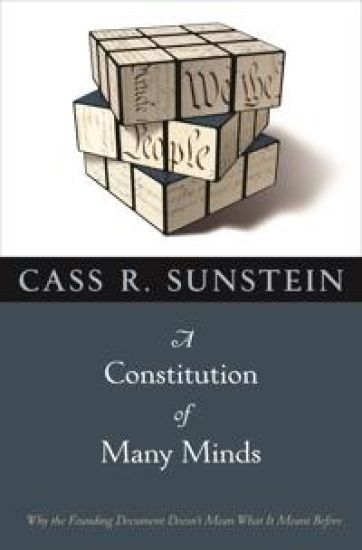
A Constitution of Many Minds

A Constitution of Many Minds

Cass R. Sunstein

Princeton University Press
2011
pokkari
The future of the U. S. Supreme Court hangs in the balance like never before. Will conservatives or liberals succeed in remaking the court in their own image? In A Constitution of Many Minds, acclaimed law scholar Cass Sunstein proposes a bold new way of interpreting the Constitution, one that respects the Constitution's text and history but also refuses to view the document as frozen in time. Exploring hot-button issues ranging from presidential power to same-sex relations to gun rights, Sunstein shows how the meaning of the Constitution is reestablished in every generation as new social commitments and ideas compel us to reassess our fundamental beliefs. He focuses on three approaches to the Constitution--traditionalism, which grounds the document's meaning in long-standing social practices, not necessarily in the views of the founding generation; populism, which insists that judges should respect contemporary public opinion; and cosmopolitanism, which looks at how foreign courts address constitutional questions, and which suggests that the meaning of the Constitution turns on what other nations do. Sunstein demonstrates that in all three contexts a "many minds" argument is at work--put simply, better decisions result when many points of view are considered. He makes sense of the intense debates surrounding these approaches, revealing their strengths and weaknesses, and sketches the contexts in which each provides a legitimate basis for interpreting the Constitution today. This book illuminates the underpinnings of constitutionalism itself, and shows that ours is indeed a Constitution, not of any particular generation, but of many minds.
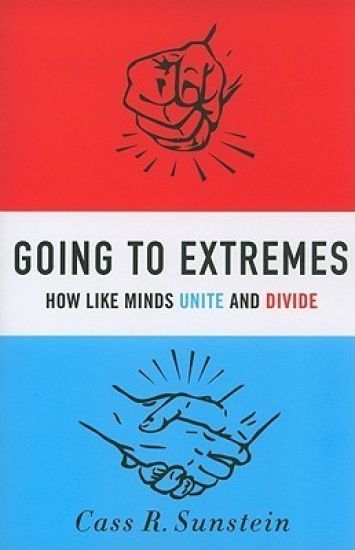
Going to Extremes

Going to Extremes

Cass R. Sunstein

Oxford University Press Inc
2011
nidottu

Halvin toimitettuna 24,10 €

Why do people become extremists? What makes people become so dismissive of opposing views? Why is political and cultural polarization so pervasive in America? In Going to Extremes, renowned legal scholar and best-selling author Cass R. Sunstein offers startling insights into why and when people gravitate toward extremism. Sunstein marshals a wealth of evidence that shows that when like-minded people gather in groups, they tend to become more extreme in their views than they were before. Thus when liberals group get together to debate climate change, they end up more alarmed about climate change, while conservatives brought together to discuss same-sex unions become more set against same-sex unions. In courtrooms, radio stations, and chatrooms, enclaves of like-minded people are breeding ground for extreme movements. Indeed, Sunstein shows that a good way to create an extremist group, or a cult of any kind, is to separate members from the rest of society, either physically or psychologically. Sunstein's findings help to explain such diverse phenomena as political outrage on the Internet, unanticipated "blockbusters" in the film and music industry, the success of the disability rights movement, ethnic conflict in Iraq and former Yugoslavia, and Islamic terrorism. Providing a wealth of real-world examples--sometimes entertaining, sometimes alarming--Sunstein offers a fresh explanation of why partisanship has become so bitter and debate so rancorous in America and abroad.
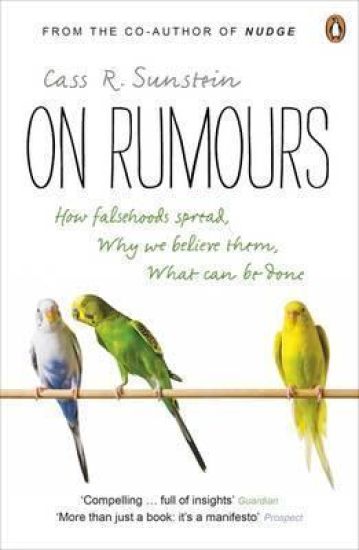
On Rumours

On Rumours

Cass R Sunstein

Penguin Books Ltd
2010
pokkari
Sunstein explores the human propensity for gossip and storytelling, and discusses how our fears and hopes can work against common sense. He also investigates the way that the internet can entrench our false beliefs even deeper, and how the wish to conform, our natural biases and even our basic emotions can cause us to fall for untrue accounts.
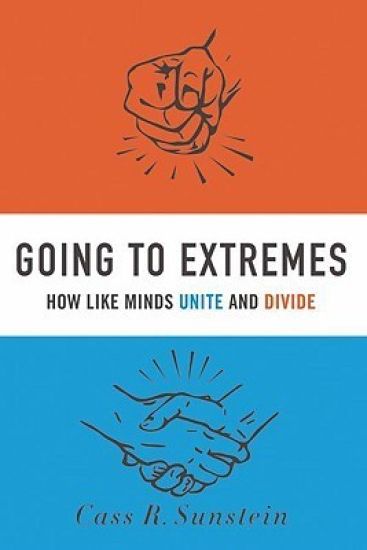
Going to Extremes

Going to Extremes

Cass R. Sunstein

Oxford University Press Inc
2009
sidottu

Halvin toimitettuna 30,50 €

Why do people become extremists? What makes people become so dismissive of opposing views? Why is political and cultural polarization so pervasive in America? Why do groups of teenagers, investors, and corporations take unnecessary risks? What leads groups to engage in such destructive acts as terrorism and ethic cleansing? In Going to Extremes, renowned legal scholar and best-selling author Cass Sunstein offers startling insights into why and when people gravitate toward extremism. Sunstein marshals an abundance of evidence that shows that when like-minded people talk to one another, they tend to become more extreme in their views than they were before. This point applies to such diverse groups as religious organizations, corporate boards, investment clubs, and White House officials. Sunstein introduces original research to show that when liberals are brought together to debate climate change, they end up more alarmed about climate change, while conservatives brought together to discuss same-sex unions become skeptical about same-sex unions. In courtrooms, radio stations, and chatrooms, enclaves of like-minded people are breeding ground for extreme movements. Sunstein shows that a good way to create an extremist group, or a cult of any kind, is to separate members from the rest of society, either physically or psychologically. This disturbing finding casts new light on the dangers that arise whenever people self-select into niche groups of the like-minded. Sunstein's findings help to explain such diverse phenomena as political outrage on the Internet, unanticipated "blockbusters" in the film and music industry, the success of the disability rights movement, ethnic conflict in Iraq and former Yugoslavia, and Islamic terrorism. Providing a wealth of real-world examples--sometimes entertaining, sometimes alarming-- Sunstein offers a fresh explanation of why partisanship has become so bitter and debate so rancorous in America and abroad--and of what concrete steps citizens and nations might take to halt the drift towards unjustified extremism.
Worst-Case Scenarios

Worst-Case Scenarios

Cass R. Sunstein

Harvard University Press
2009
nidottu
Nuclear bombs in suitcases, anthrax bacilli in ventilators, tsunamis and meteors, avian flu, scorchingly hot temperatures: nightmares that were once the plot of Hollywood movies are now frighteningly real possibilities. How can we steer a path between willful inaction and reckless overreaction? Cass Sunstein explores these and other worst-case scenarios and how we might best prevent them in this vivid, illuminating, and highly original analysis. Singling out the problems of terrorism and climate change, Sunstein explores our susceptibility to two opposite and unhelpful reactions: panic and utter neglect. He shows how private individuals and public officials might best respond to low-probability risks of disaster—emphasizing the need to know what we will lose from precautions as well as from inaction. Finally, he offers an understanding of the uses and limits of cost–benefit analysis, especially when current generations are imposing risks on future generations. Throughout, Sunstein uses climate change as a defining case, because it dramatically illustrates the underlying principles. But he also discusses terrorism, depletion of the ozone layer, genetic modification of food, hurricanes, and worst-case scenarios faced in our ordinary lives. Sunstein concludes that if we can avoid the twin dangers of overreaction and apathy, we will be able to ameliorate if not avoid future catastrophes, retaining our sanity as well as scarce resources that can be devoted to more constructive ends.
Nudge

Nudge

Richard H. Thaler; Cass R Sunstein

Penguin Books Ltd.
2009
pokkari
Every day we make decisions: about the things that we buy or the meals we eat; about the investments we make or our children's health and education; even the causes that we champion or the planet itself. This book offers a fresh way of looking at the world for individuals and governments alike.
Why Groups Go to Extremes

Why Groups Go to Extremes

Cass R. Sunstein

AEI Press
2008
pokkari
How does group behavior drive extremism and challenge democratic values? Cass R. Sunstein argues that the key to preventing the spread of extremist views is not to suppress deliberation among the like-minded; such groups productively challenge conventional thinking and majorit...
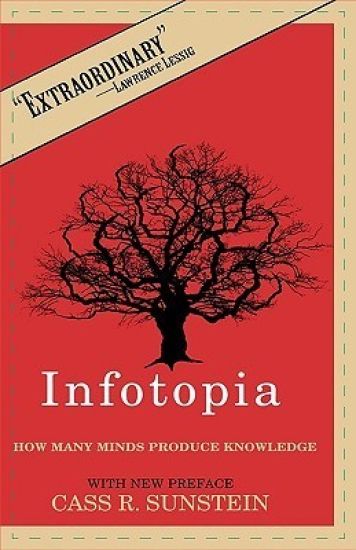
Infotopia

Infotopia

Cass R. Sunstein

Oxford University Press Inc
2008
nidottu
The rise of the "information society" offers not only considerable peril but also great promise. Beset from all sides by a never-ending barrage of media, how can we ensure that the most accurate information emerges and is heeded? In this book, Cass R. Sunstein develops a deeply optimistic understanding of the human potential to pool information, and to use that knowledge to improve our lives. In an age of information overload, it is easy to fall back on our own prejudices and insulate ourselves with comforting opinions that reaffirm our core beliefs. Crowds quickly become mobs. The justification for the Iraq war, the collapse of Enron, the explosion of the space shuttle Columbia-all of these resulted from decisions made by leaders and groups trapped in "information cocoons," shielded from information at odds with their preconceptions. How can leaders and ordinary people challenge insular decision making and gain access to the sum of human knowledge? Stunning new ways to share and aggregate information, many Internet-based, are helping companies, schools, governments, and individuals not only to acquire, but also to create, ever-growing bodies of accurate knowledge. Through a ceaseless flurry of self-correcting exchanges, wikis, covering everything from politics and business plans to sports and science fiction subcultures, amass-and refine-information. Open-source software enables large numbers of people to participate in technological development. Prediction markets aggregate information in a way that allows companies, ranging from computer manufacturers to Hollywood studios, to make better decisions about product launches and office openings. Sunstein shows how people can assimilate aggregated information without succumbing to the dangers of the herd mentality--and when and why the new aggregation techniques are so astoundingly accurate. In a world where opinion and anecdote increasingly compete on equal footing with hard evidence, the on-line effort of many minds coming together might well provide the best path to infotopia.
Infotopia

Infotopia

Cass R. Sunstein

Oxford University Press Inc
2006
sidottu
The rise of the "information society" offers not only considerable peril but also great promise Beset from all sides by a never-ending barrage of media, how can we ensure that the most accurate information emerges and is heeded? Cass R. Sunstein here develops a deeply optimistic understanding of the human potential to pool information, combat groupthink, and to use that knowledge to improve our lives. New ways, many Internet-based, to share and aggregate information--including wikis, open-source software, and prediction markets--are helping companies, schools, governments, and individuals not only to acquire, but also to create, ever-growing bodies of accurate knowledge without succumbing to the dangers of a hive-mind mentality. In a world where opinion and anecdote increasingly compete on equal footing with hard evidence, the on-line effort of many minds coming together could provide the best path to infotopia.