Kirjojen hintavertailu – 12 903 725 kirjaa ja 27 kauppaa

Kirjailija

Cass R. Sunstein

Kirjat ja teokset yhdessä paikassa: 114 kirjaa, julkaisuja vuosilta 1993–2027, suosituimpiin kuuluu Ruido: Un Fallo En El Juicio Humano / Noise: A Flaw in Human Judgment. Vertaile teosten hintoja ja tarkista saatavuus suomalaisista kirjakaupoista.

Nimi esiintyy myös muodoissa: Cass R Sunstein

114 kirjaa

Kirjojen julkaisuvuodet: 1993–2027.

Noise: A Flaw in Human Judgment

Noise: A Flaw in Human Judgment

Daniel Kahneman; Olivier Sibony; Cass R. Sunstein

Little, Brown Spark
2021
nidottu
From the Nobel Prize-winning author of Thinking, Fast and Slow and the coauthor of Nudge, a revolutionary exploration of why people make bad judgments and how to make better ones--"a tour de force" (New York Times). Imagine that two doctors in the same city give different diagnoses to identical patients--or that two judges in the same courthouse give markedly different sentences to people who have committed the same crime. Suppose that different interviewers at the same firm make different decisions about indistinguishable job applicants--or that when a company is handling customer complaints, the resolution depends on who happens to answer the phone. Now imagine that the same doctor, the same judge, the same interviewer, or the same customer service agent makes different decisions depending on whether it is morning or afternoon, or Monday rather than Wednesday. These are examples of noise: variability in judgments that should be identical. In Noise, Daniel Kahneman, Olivier Sibony, and Cass R. Sunstein show the detrimental effects of noise in many fields, including medicine, law, economic forecasting, forensic science, bail, child protection, strategy, performance reviews, and personnel selection. Wherever there is judgment, there is noise. Yet, most of the time, individuals and organizations alike are unaware of it. They neglect noise. With a few simple remedies, people can reduce both noise and bias, and so make far better decisions. Packed with original ideas, and offering the same kinds of research-based insights that made Thinking, Fast and Slow and Nudge groundbreaking New York Times bestsellers, Noise explains how and why humans are so susceptible to noise in judgment--and what we can do about it.
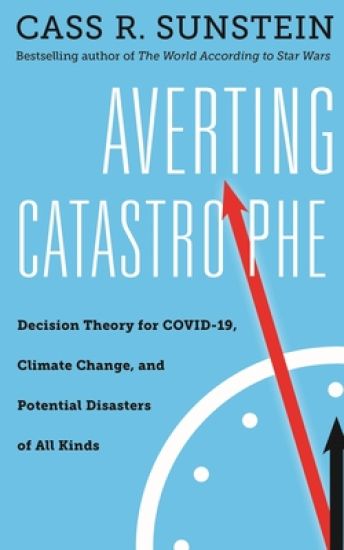
Averting Catastrophe

Averting Catastrophe

Cass R. Sunstein

New York University Press
2021
sidottu
Best-selling author Cass R. Sunstein examines how to avoid worst-case scenarios The world is increasingly confronted with new challenges related to climate change, globalization, disease, and technology. Governments are faced with having to decide how much risk is worth taking, how much destruction and death can be tolerated, and how much money should be invested in the hopes of avoiding catastrophe. Lacking full information, should decision-makers focus on avoiding the most catastrophic outcomes? When should extreme measures be taken to prevent as much destruction as possible? Averting Catastrophe explores how governments ought to make decisions in times of imminent disaster. Cass R. Sunstein argues that using the "maximin rule," which calls for choosing the approach that eliminates the worst of the worst-case scenarios, may be necessary when public officials lack important information, and when the worst-case scenario is too disastrous to contemplate. He underscores this argument by emphasizing the reality of "Knightian uncertainty," found in circumstances in which it is not possible to assign probabilities to various outcomes. Sunstein brings foundational issues in decision theory in close contact with real problems in regulation, law, and daily life, and considers other potential future risks. At once an approachable introduction to decision-theory and a provocative argument for how governments ought to handle risk, Averting Catastrophe offers a definitive path forward in a world rife with uncertainty.
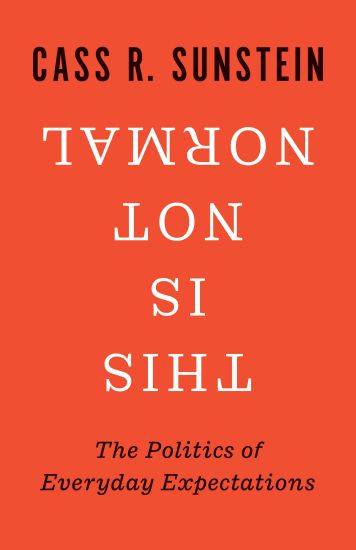
This Is Not Normal

This Is Not Normal

Cass R. Sunstein

Yale University Press
2021
sidottu
How our shifting sense of "what's normal" defines the character of democracy "A provocative examination of social constructs and those who would alternately undo or improve them."—Kirkus Reviews This sharp and engaging book by leading governmental scholar Cass R. Sunstein examines dramatically shifting understandings of what’s normal—and how those shifts account for the feminist movement, the civil rights movement, the rise of Adolf Hitler, the founding itself, political correctness, the rise of gun rights, the response to COVID-19, and changing understandings of liberty. Prevailing norms include the principle of equal dignity, the idea of not treating the press as an enemy of the people, and the social unacceptability of open expressions of racial discrimination. But norms can turn upside-down in a hurry. What people tolerate, and what they abhor, depends on what else they are seeing. Exploring Nazism, #MeToo, the work of Alexander Hamilton and James Madison, constitutional amendments, pandemics, and the influence of Ayn Rand, Sunstein reveals how norms change, and ultimately determine the shape of society and government in the United States, Europe, and elsewhere.
Behavioral Science and Public Policy

Behavioral Science and Public Policy

Cass R. Sunstein

Cambridge University Press
2020
pokkari
Behavioral science is playing an increasing role in public policy, and it is raising new questions about fundamental issues - the role of government, freedom of choice, paternalism, and human welfare. In diverse nations, public officials are using behavioral findings to combat serious problems - poverty, air pollution, highway safety, COVID-19, discrimination, employment, climate change, and occupational health. Exploring theory and practice, this Element attempts to provide one-stop shopping for those who are new to the area and for those who are familiar with it. With reference to nudges, taxes, mandates, and bans, it offers concrete examples of behaviorally informed policies. It also engages the fundamental questions, include the proper analysis of human welfare in light of behavioral findings. It offers a plea for respecting freedom of choice - so long as people's choices are adequately informed and free from behavioral biases.
How Change Happens

How Change Happens

Cass R. Sunstein

MIT Press
2020
pokkari

Halvin toimitettuna 22,00 €

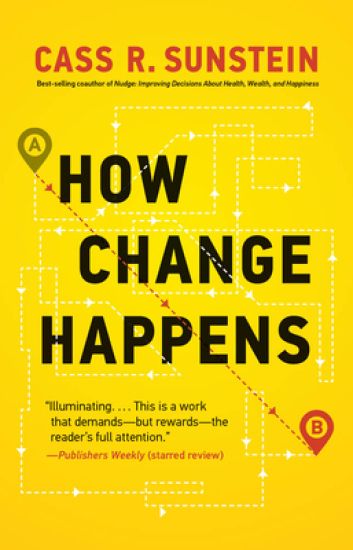
The different ways that social change happens, from unleashing to nudging to social cascades." Sunstein's book is illuminating because it puts norms at the center of how we think about change."—David Brooks, The New York TimesHow does social change happen? When do social movements take off? Sexual harassment was once something that women had to endure; now a movement has risen up against it. White nationalist sentiments, on the other hand, were largely kept out of mainstream discourse; now there is no shortage of media outlets for them. In this book, with the help of behavioral economics, psychology, and other fields, Cass Sunstein casts a bright new light on how change happens. Sunstein focuses on the crucial role of social norms—and on their frequent collapse. When norms lead people to silence themselves, even an unpopular status quo can persist. Then one day, someone challenges the norm—a child who exclaims that the emperor has no clothes; a woman who says “me too.” Sometimes suppressed outrage is unleashed, and long-standing practices fall. Sometimes change is more gradual, as “nudges” help produce new and different decisions—apps that count calories; texted reminders of deadlines; automatic enrollment in green energy or pension plans. Sunstein explores what kinds of nudges are effective and shows why nudges sometimes give way to bans and mandates. Finally, he considers social divisions, social cascades, and “partyism,” when identification with a political party creates a strong bias against all members of an opposing party—which can both fuel and block social change.
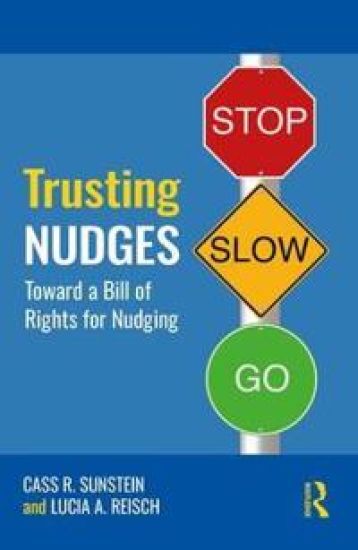
Trusting Nudges

Trusting Nudges

Cass R. Sunstein; Lucia A. Reisch

Routledge
2019
nidottu
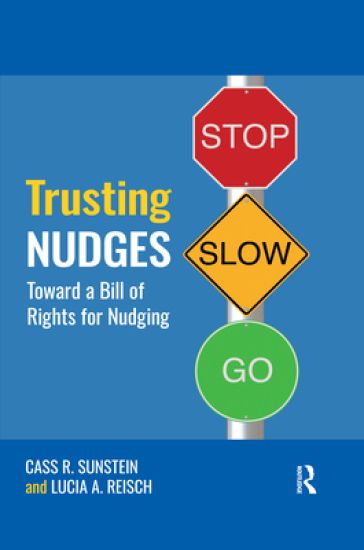
Many "nudges" aim to make life simpler, safer, or easier for people to navigate, but what do members of the public really think about these policies? Drawing on surveys from numerous nations around the world, Sunstein and Reisch explore whether citizens approve of nudge policies. Their most important finding is simple and striking. In diverse countries, both democratic and nondemocratic, strong majorities approve of nudges designed to promote health, safety, and environmental protection—and their approval cuts across political divisions. In recent years, many governments have implemented behaviorally informed policies, focusing on nudges—understood as interventions that preserve freedom of choice, but that also steer people in certain directions. In some circles, nudges have become controversial, with questions raised about whether they amount to forms of manipulation. This fascinating book carefully considers these criticisms and answers important questions. What do citizens actually think about behaviorally informed policies? Do citizens have identifiable principles in mind when they approve or disapprove of the policies? Do citizens of different nations agree with each other? From the answers to these questions, the authors identify six principles of legitimacy—a "bill of rights" for nudging that build on strong public support for nudging policies around the world, while also recognizing what citizens disapprove of. Their bill of rights is designed to capture citizens’ central concerns, reflecting widespread commitments to freedom and welfare that transcend national boundaries.
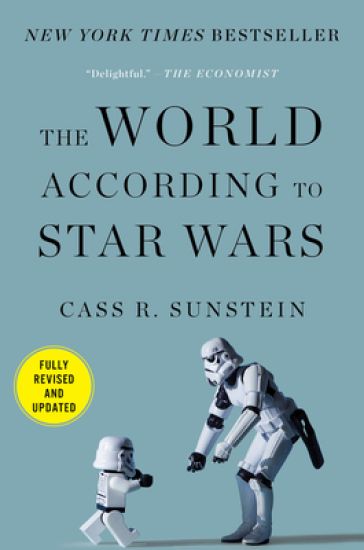
The World According to Star Wars

The World According to Star Wars

Cass R. Sunstein

Dey Street Books, an imprint of HarperCollins US
2019
nidottu

Halvin toimitettuna 21,60 €

NEW YORK TIMES BESTSELLERFULLY REVISED & UPDATED, WITH A NEW EPILOGUE"Delightful."—The EconomistThere’s Santa Claus, Shakespeare, Mickey Mouse, the Bible, and then there’s Star Wars. Nothing quite compares to sitting down with a young child and hearing the sound of John Williams’s score as those beloved golden letters fill the screen. In this fun, erudite, and often moving book, Cass R. Sunstein explores the lessons of Star Wars as they relate to childhood, fathers, the Dark Side, rebellion, and redemption. As it turns out, Star Wars also has a lot to teach us about constitutional law, economics, and political uprisings. In rich detail, Sunstein tells the story of the films’ wildly unanticipated success and explores why some things succeed while others fail. Ultimately, Sunstein argues, Star Wars is about freedom of choice and our never-ending ability to make the right decision when the chips are down. Written with buoyant prose and considerable heart, The World According to Star Wars shines a bright new light on the most beloved story of our time.
The Cost-Benefit Revolution

The Cost-Benefit Revolution

Cass R. Sunstein

MIT Press
2019
pokkari
Why policies should be based on careful consideration of their costs and benefits rather than on intuition, popular opinion, interest groups, and anecdotes. Opinions on government policies vary widely. Some people feel passionately about the child obesity epidemic and support government regulation of sugary drinks. Others argue that people should be able to eat and drink whatever they like. Some people are alarmed about climate change and favor aggressive government intervention. Others don't feel the need for any sort of climate regulation. In The Cost-Benefit Revolution, Cass Sunstein argues our major disagreements really involve facts, not values. It follows that government policy should not be based on public opinion, intuitions, or pressure from interest groups, but on numbers-meaning careful consideration of costs and benefits. Will a policy save one life, or one thousand lives? Will it impose costs on consumers, and if so, will the costs be high or negligible? Will it hurt workers and small businesses, and, if so, precisely how much? As the Obama administration's "regulatory czar," Sunstein knows his subject in both theory and practice. Drawing on behavioral economics and his well-known emphasis on "nudging," he celebrates the cost-benefit revolution in policy making, tracing its defining moments in the Reagan, Clinton, and Obama administrations (and pondering its uncertain future in the Trump administration). He acknowledges that public officials often lack information about costs and benefits, and outlines state-of-the-art techniques for acquiring that information. Policies should make people's lives better. Quantitative cost-benefit analysis, Sunstein argues, is the best available method for making this happen-even if, in the future, new measures of human well-being, also explored in this book, may be better still.
Impeachment: A Citizen's Guide

Impeachment: A Citizen's Guide

Cass R. Sunstein

Penguin USA
2019
nidottu
An essential guide to the impeachment process that rises above politics and goes beyond punditry, from one of America's foremost legal experts. As Benjamin Franklin famously put it, Americans have a republic, if we can keep it. Preserving the Constitution and the democratic system it supports is the public's responsibility. One route the Constitution provides for discharging that duty--a route rarely traveled--is impeachment. Harvard Law professor Cass R. Sunstein provides a succinct citizen's guide to this essential tool of self-government. Taking us deeper than mere partisan politics, he illuminates the constitutional design behind impeachment and emphasizes the people's role in holding presidents accountable. In spite of the loud national debate between pundits and politicians alike over whether or not to impeach Trump, impeachment remains widely misunderstood. Sunstein identifies and corrects a number of common misconceptions. For example, he shows how the Constitution, not the House of Representatives, establishes grounds for impeachment, and that the president can be impeached for abuses of power that do not violate the law. Even neglect of duty counts among the "high crimes and misdemeanors" delineated in the republic's foundational document. Sunstein describes how impeachment helps make sense of our constitutional order, particularly the framers' controversial decision to install an empowered executive in a nation deeply fearful of kings. With an eye toward the past and the future, Impeachment: A Citizen's Guide considers a host of actual and imaginable arguments for a president's removal, explaining why some cases are easy and others hard, why some arguments for impeachment have been judicious and others not. And with an appendix on the Mueller report, it puts the current national debate in its proper historical context. In direct and approachable terms, it dispels the fog surrounding impeachment so that Americans of all political convictions may use their ultimate civic authority wisely.
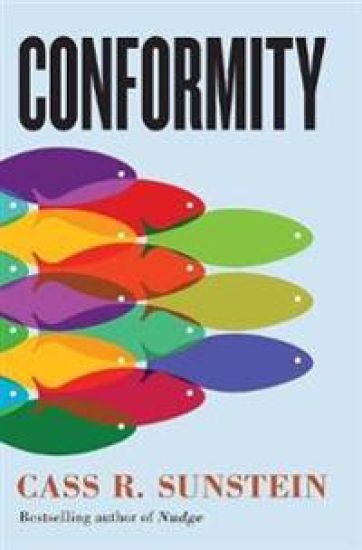
Conformity

Conformity

Cass R. Sunstein; Robert H. Frank

New York University Press
2019
sidottu
Bestselling author Cass R. Sunstein reveals the appeal and the danger of conformity We live in an era of tribalism, polarization, and intense social division—separating people along lines of religion, political conviction, race, ethnicity, and sometimes gender. How did this happen? In Conformity, Cass R. Sunstein argues that the key to making sense of living in this fractured world lies in understanding the idea of conformity—what it is and how it works—as well as the countervailing force of dissent. An understanding of conformity sheds new light on many issues confronting us today: the role of social media, the rise of fake news, the growth of authoritarianism, the success of Donald Trump, the functions of free speech, debates over immigration and the Supreme Court, and much more. Lacking information of our own and seeking the good opinion of others, we often follow the crowd, but Sunstein shows that when individuals suppress their own instincts about what is true and what is right, it can lead to significant social harm. While dissenters tend to be seen as selfish individualists, dissent is actually an important means of correcting the natural human tendency toward conformity and has enormous social benefits in reducing extremism, encouraging critical thinking, and protecting freedom itself. Sunstein concludes that while much of the time it is in the individual's interest to follow the crowd, it is in the social interest for individuals to say and do what they think is best. A well-functioning democracy depends on it.
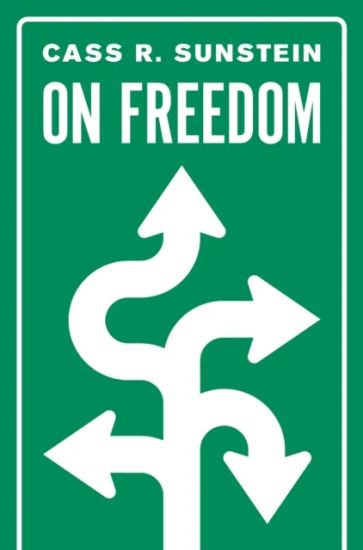
On Freedom

On Freedom

Cass R. Sunstein

PRINCETON UNIVERSITY PRESS
2019
sidottu
From New York Times bestselling author Cass Sunstein, a brisk, provocative book that shows what freedom really means—and requires—todayIn this pathbreaking book, New York Times bestselling author Cass Sunstein asks us to rethink freedom. He shows that freedom of choice isn’t nearly enough. To be free, we must also be able to navigate life. People often need something like a GPS device to help them get where they want to go—whether the issue involves health, money, jobs, children, or relationships. In both rich and poor countries, citizens often have no idea how to get to their desired destination. That is why they are unfree. People also face serious problems of self-control, as many of them make decisions today that can make their lives worse tomorrow. And in some cases, we would be just as happy with other choices, whether a different partner, career, or place to live—which raises the difficult question of which outcome best promotes our well-being. Accessible and lively, and drawing on perspectives from the humanities, religion, and the arts, as well as social science and the law, On Freedom explores a crucial dimension of the human condition that philosophers and economists have long missed—and shows what it would take to make freedom real.
Trusting Nudges

Trusting Nudges

Cass R. Sunstein; Lucia A. Reisch

Routledge
2019
sidottu
Many "nudges" aim to make life simpler, safer, or easier for people to navigate, but what do members of the public really think about these policies? Drawing on surveys from numerous nations around the world, Sunstein and Reisch explore whether citizens approve of nudge policies. Their most important finding is simple and striking. In diverse countries, both democratic and nondemocratic, strong majorities approve of nudges designed to promote health, safety, and environmental protection—and their approval cuts across political divisions. In recent years, many governments have implemented behaviorally informed policies, focusing on nudges—understood as interventions that preserve freedom of choice, but that also steer people in certain directions. In some circles, nudges have become controversial, with questions raised about whether they amount to forms of manipulation. This fascinating book carefully considers these criticisms and answers important questions. What do citizens actually think about behaviorally informed policies? Do citizens have identifiable principles in mind when they approve or disapprove of the policies? Do citizens of different nations agree with each other? From the answers to these questions, the authors identify six principles of legitimacy—a "bill of rights" for nudging that build on strong public support for nudging policies around the world, while also recognizing what citizens disapprove of. Their bill of rights is designed to capture citizens’ central concerns, reflecting widespread commitments to freedom and welfare that transcend national boundaries.
Impeachment: A Citizen's Guide

Impeachment: A Citizen's Guide

Cass R. Sunstein

Blackstone Audiobooks
2018
cd
As Benjamin Franklin famously put it, Americans have a republic, if we can keep it. Preserving the Constitution and the democratic system it supports is the public's responsibility. One route the Constitution provides for discharging that duty-a route rarely traveled-is impeachment. Cass R. Sunstein provides a succinct citizen's guide to an essential tool of self-government. He illuminates the constitutional design behind impeachment and emphasizes the people's role in holding presidents accountable. Despite intense interest in the subject, impeachment is widely misunderstood. Sunstein identifies and corrects a number of misconceptions. For example, he shows that the Constitution, not the House of Representatives, establishes grounds for impeachment, and that the president can be impeached for abuses of power that do not violate the law. Even neglect of duty counts among the high crimes and misdemeanors delineated in the republic's foundational document. Sunstein describes how impeachment helps make sense of our constitutional order, particularly the framers' controversial decision to install an empowered executive in a nation deeply fearful of kings. With an eye toward the past and the future, Impeachment: A Citizen's Guide considers a host of actual and imaginable arguments for a president's removal, explaining why some cases are easy and others hard, why some arguments for impeachment have been judicious and others not. In direct and approachable terms, it dispels the fog surrounding impeachment so that Americans of all political convictions may use their ultimate civic authority wisely.
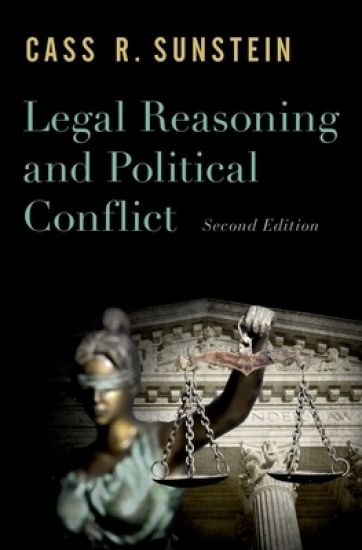
Legal Reasoning and Political Conflict

Legal Reasoning and Political Conflict

Cass R. Sunstein

Oxford University Press Inc
2018
sidottu
In Legal Reasoning and Political Conflict, Cass R. Sunstein, one of America's best known commentators on our legal system, offers a bold, new thesis about how the law should work in America, arguing that the courts best enable people to live together, despite their diversity, by resolving particular cases without taking sides in broader, more abstract conflicts. Professor Sunstein closely analyzes the way the law can mediate disputes in a diverse society, examining how the law works in practical terms, and showing that, to arrive at workable, practical solutions, judges must avoid broad, abstract reasoning. He states that judges purposely limit the scope of their decisions to avoid reopening large-scale controversies, calling such actions incompletely theorized agreements. In identifying them as the core feature of legal reasoning, he takes issue with advocates of comprehensive theories and systemization, from Robert Bork to Jeremy Bentham, and Ronald Dworkin. Equally important, Sunstein goes on to argue that it is the living practice of the nation's citizens that truly makes law. Legal reasoning can seem impenetrable, mysterious, baroque. Legal Reasoning and Political Conflict helps dissolve the mystery. Whether discussing abortion, homosexuality, or free speech, the meaning of the Constitution, or the spell cast by the Warren Court, Cass Sunstein writes with grace and power, offering a striking and original vision of the role of the law in a diverse society. In his flexible, practical approach to legal reasoning, he moves the debate over fundamental values and principles out of the courts and back to its rightful place in a democratic state: to the legislatures elected by the people. In this Second Edition, the author updates the previous edition bringing the book into the current mainstream of twenty-first century legal reasoning and judicial decision-making focusing on the many relevant contemporary issues and developments that occurred since its initial 1996 publication.
#Republic

#Republic

Cass R. Sunstein

Princeton University Press
2018
pokkari

Halvin toimitettuna 22,20 €

From the New York Times bestselling author of Nudge and The World According to Star Wars, a revealing account of how today's Internet threatens democracy—and what can be done about itAs the Internet grows more sophisticated, it is creating new threats to democracy. Social media companies such as Facebook can sort us ever more efficiently into groups of the like-minded, creating echo chambers that amplify our views. It's no accident that on some occasions, people of different political views cannot even understand one another. It's also no surprise that terrorist groups have been able to exploit social media to deadly effect. Welcome to the age of #Republic. In this revealing book, New York Times bestselling author Cass Sunstein shows how today’s Internet is driving political fragmentation, polarization, and even extremism--and what can be done about it. He proposes practical and legal changes to make the Internet friendlier to democratic deliberation, showing that #Republic need not be an ironic term. Rather, it can be a rallying cry for the kind of democracy that citizens of diverse societies need most.
Human Agency and Behavioral Economics

Human Agency and Behavioral Economics

Cass R. Sunstein

Springer International Publishing AG
2017
sidottu
This Palgrave Pivot offers comprehensive evidence about what people actually think of “nudge” policies designed to steer decision makers’ choices in positive directions. The data reveal that people in diverse nations generally favor nudges by strong majorities, with a preference for educative efforts – such as calorie labels - that equip individuals to make the best decisions for their own lives. On the other hand, there are significant arguments for noneducational nudges – such as automatic enrollment in savings plans - as they allow people to devote their scarce time and attention to their most pressing concerns. The decision to use either educative or noneducative nudges raises fundamental questions about human freedom in both theory and practice. Sunstein's findings and analysis offer lessons for those involved in law and policy who are choosing which method to support as the most effective way to encourage lifestyle changes.
#Republic

#Republic

Cass R. Sunstein

PRINCETON UNIVERSITY PRESS
2017
sidottu
From the New York Times bestselling author of Nudge and The World According to Star Wars, a revealing account of how today's Internet threatens democracy--and what can be done about it As the Internet grows more sophisticated, it is creating new threats to democracy. Social media companies such as Facebook can sort us ever more efficiently into groups of the like-minded, creating echo chambers that amplify our views. It's no accident that on some occasions, people of different political views cannot even understand each other. It's also no surprise that terrorist groups have been able to exploit social media to deadly effect. Welcome to the age of #Republic. In this revealing book, Cass Sunstein, the New York Times bestselling author of Nudge and The World According to Star Wars, shows how today's Internet is driving political fragmentation, polarization, and even extremism--and what can be done about it. Thoroughly rethinking the critical relationship between democracy and the Internet, Sunstein describes how the online world creates "cybercascades," exploits "confirmation bias," and assists "polarization entrepreneurs." And he explains why online fragmentation endangers the shared conversations, experiences, and understandings that are the lifeblood of democracy. In response, Sunstein proposes practical and legal changes to make the Internet friendlier to democratic deliberation. These changes would get us out of our information cocoons by increasing the frequency of unchosen, unplanned encounters and exposing us to people, places, things, and ideas that we would never have picked for our Twitter feed. #Republic need not be an ironic term. As Sunstein shows, it can be a rallying cry for the kind of democracy that citizens of diverse societies most need.
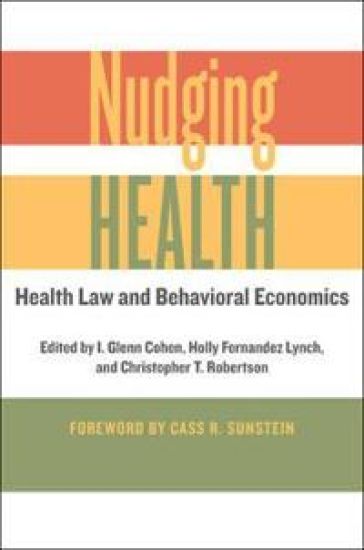
Nudging Health

Nudging Health

Cass R. Sunstein

Johns Hopkins University Press
2017
pokkari
Behavioral nudges are everywhere: calorie counts on menus, automated text reminders to encourage medication adherence, a reminder bell when a driver's seatbelt isn't fastened. Designed to help people make better health choices, these reminders have become so commonplace that they often go unnoticed. In Nudging Health, forty-five experts in behavioral science and health policy from across academia, government, and private industry come together to explore whether and how these tools are effective in improving health outcomes. Behavioral science has swept the fields of economics and law through the study of nudges, cognitive biases, and decisional heuristics-but it has only recently begun to impact the conversation on health care. Nudging Health wrestles with some of the thorny philosophical issues, legal limits, and conceptual questions raised by behavioral science as applied to health law and policy. The volume frames the fundamental issues surrounding health nudges by addressing ethical questions. Does cost-sharing for health expenditures cause patients to make poor decisions? Is it right to make it difficult for people to opt out of having their organs harvested for donation when they die? Are behavioral nudges paternalistic? The contributors examine specific applications of behavioral science, including efforts to address health care costs, improve vaccination rates, and encourage better decision-making by physicians. They wrestle with questions regarding the doctor-patient relationship and defaults in healthcare while engaging with larger, timely questions of healthcare reform. Nudging Health is the first multi-voiced assessment of behavioral economics and health law to span such a wide array of issues-from the Affordable Care Act to prescription drugs. Contributors: David A. Asch, Jerry Avorn, Jennifer Blumenthal-Barby, Alexander M. Capron, Niteesh K. Choudhry, I. Glenn Cohen, Sarah Conly, Gregory Curfman, Khaled El Emam, Barbara J. Evans, Nir Eyal, Andrea Freeman, Alan M. Garber, Jonathan Gingerich, Michael Hallsworth, Jim Hawkins, David Huffman, David A. Hyman, Julika Kaplan, Aaron S. Kesselheim, Nina A. Kohn, Russell Korobkin, Jeffrey T. Kullgren, Matthew J. B. Lawrence, George Loewenstein, Holly Fernandez Lynch, Ester Moher, Abigail R. Moncrieff, David Orentlicher, Manisha Padi, Christopher T. Robertson, Ameet Sarpatwari, Aditi P. Sen, Neel Shah, Zainab Shipchandler, Anna D. Sinaiko, Donna Spruijt-Metz, Cass R. Sunstein, Thomas S. Ulen, Kristen Underhill, Kevin G. Volpp, Mark D. White, David V. Yokum, Jennifer L. Zamzow, Richard J. Zeckhauser
Nudging Health

Nudging Health

Cass R. Sunstein

Johns Hopkins University Press
2017
sidottu
Behavioral nudges are everywhere: calorie counts on menus, automated text reminders to encourage medication adherence, a reminder bell when a driver's seatbelt isn't fastened. Designed to help people make better health choices, these reminders have become so commonplace that they often go unnoticed. In Nudging Health, forty-five experts in behavioral science and health policy from across academia, government, and private industry come together to explore whether and how these tools are effective in improving health outcomes. Behavioral science has swept the fields of economics and law through the study of nudges, cognitive biases, and decisional heuristics-but it has only recently begun to impact the conversation on health care. Nudging Health wrestles with some of the thorny philosophical issues, legal limits, and conceptual questions raised by behavioral science as applied to health law and policy. The volume frames the fundamental issues surrounding health nudges by addressing ethical questions. Does cost-sharing for health expenditures cause patients to make poor decisions? Is it right to make it difficult for people to opt out of having their organs harvested for donation when they die? Are behavioral nudges paternalistic? The contributors examine specific applications of behavioral science, including efforts to address health care costs, improve vaccination rates, and encourage better decision-making by physicians. They wrestle with questions regarding the doctor-patient relationship and defaults in healthcare while engaging with larger, timely questions of healthcare reform. Nudging Health is the first multi-voiced assessment of behavioral economics and health law to span such a wide array of issues-from the Affordable Care Act to prescription drugs. Contributors: David A. Asch, Jerry Avorn, Jennifer Blumenthal-Barby, Alexander M. Capron, Niteesh K. Choudhry, I. Glenn Cohen, Sarah Conly, Gregory Curfman, Khaled El Emam, Barbara J. Evans, Nir Eyal, Andrea Freeman, Alan M. Garber, Jonathan Gingerich, Michael Hallsworth, Jim Hawkins, David Huffman, David A. Hyman, Julika Kaplan, Aaron S. Kesselheim, Nina A. Kohn, Russell Korobkin, Jeffrey T. Kullgren, Matthew J. B. Lawrence, George Loewenstein, Holly Fernandez Lynch, Ester Moher, Abigail R. Moncrieff, David Orentlicher, Manisha Padi, Christopher T. Robertson, Ameet Sarpatwari, Aditi P. Sen, Neel Shah, Zainab Shipchandler, Anna D. Sinaiko, Donna Spruijt-Metz, Cass R. Sunstein, Thomas S. Ulen, Kristen Underhill, Kevin G. Volpp, Mark D. White, David V. Yokum, Jennifer L. Zamzow, Richard J. Zeckhauser
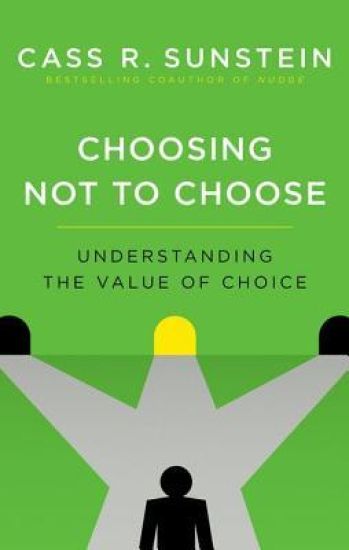
Choosing Not to Choose

Choosing Not to Choose

Cass R. Sunstein

Oxford University Press Inc
2017
nidottu
Our ability to make choices is fundamental to our sense of ourselves as human beings, and essential to the political values of freedom-protecting nations. Whom we love; where we work; how we spend our time; what we buy; such choices define us in the eyes of ourselves and others, and much blood and ink has been spilt to establish and protect our rights to make them freely. Choice can also be a burden. Our cognitive capacity to research and make the best decisions is limited, so every active choice comes at a cost. In modern life the requirement to make active choices can often be overwhelming. So, across broad areas of our lives, from health plans to energy suppliers, many of us choose not to choose. By following our default options, we save ourselves the costs of making active choices. By setting those options, governments and corporations dictate the outcomes for when we decide by default. This is among the most significant ways in which they effect social change, yet we are just beginning to understand the power and impact of default rules. Many central questions remain unanswered: When should governments set such defaults, and when should they insist on active choices? How should such defaults be made? What makes some defaults successful while others fail? Cass R. Sunstein has long been at the forefront of developing public policy and regulation to use government power to encourage people to make better decisions. In this major new book, Choosing Not to Choose, he presents his most complete argument yet for how we should understand the value of choice, and when and how we should enable people to choose not to choose. The onset of big data gives corporations and governments the power to make ever more sophisticated decisions on our behalf, defaulting us to buy the goods we predictably want, or vote for the parties and policies we predictably support. As consumers we are starting to embrace the benefits this can bring. But should we? What will be the long-term effects of limiting our active choices on our agency? And can such personalized defaults be imported from the marketplace to politics and the law? Confronting the challenging future of data-driven decision-making, Sunstein presents a manifesto for how personalized defaults should be used to enhance, rather than restrict, our freedom and well-being.