Kirjojen hintavertailu – 12 859 827 kirjaa ja 27 kauppaa
Kirjailija
Charles Dickens
Kirjat ja teokset yhdessä paikassa: 4 944 kirjaa, julkaisuja vuosilta 1843–2027, suosituimpiin kuuluu Saiturin joulu. Vertaile teosten hintoja ja tarkista saatavuus suomalaisista kirjakaupoista.
Our Mutual Friend was Charles Dickens' last completed novel, and some believe his most sophisticated. A young man discovers that he must marry a mercenary young woman before he can claim his inheritance. He is on his way to do his father's bidding when a body discovered in the Thames is identified as his, and his inheritance passes instead to Boffins, a working class man. The effects are felt through all levels of society.
LARGE PRINT EDITION 16 POINT FONT THIS IS THE ORIGINAL AND CLASSIC STORY TOLD BY CHARLES DICKENS FIRST PUBLISHED IN 1843 The story of Ebenezer Scrooge on a cold Christmas Eve Night, three ghosts take him on a scary journey and show him the error of his ways. Showing him his past, present and future. Will Scrooge learn from the error of his ways? " A wonderfully timeless piece of storytelling that simply must be read at Christmas. "
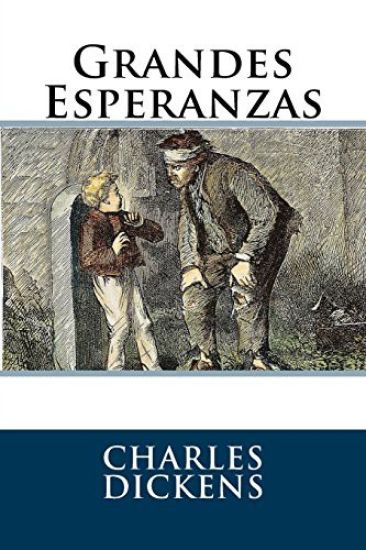
In this unflaggingly suspenseful story of aspirations and moral redemption, humble, orphaned Pip, a ward of his short-tempered older sister and her husband, Joe, is apprenticed to the dirty work of the forge but dares to dream of becoming a gentleman. And, indeed, it seems as though that dream is destined to come to pass - because one day, under sudden and enigmatic circumstances, he finds himself in possession of "great expectations." In telling Pip's story, Dickens traces a boy's path from a hardscrabble rural life to the teeming streets of 19th-century London, unfolding a gripping tale of crime and guilt, revenge and reward, and love and loss. Its compelling characters include Magwitch, the fearful and fearsome convict; Estella, whose beauty is excelled only by her haughtiness; and the embittered Miss Havisham, an eccentric jilted bride.
Oliver Twist is born an orphan and grows up handed from bad position to worse. Eventually he ends up in the London street gang run by Fagin, who attempts to blacken the boy's pure soul in his service. Through chance and coincidence Oliver is restored to his mother's middle-class family, where he is shown love and comfort for the first time in his life. The villains' attempts to kidnap him back are foiled and all are transported or hanged.
Raised in squalor in the marsh country of Kent, the orphan Pip is taken under the wing of the eccentric and reclusive Miss Havisham-only to blindly give his heart to the dowager's beautiful but ice-cold adopted daughter, Estella. Even as a mysterious benefactor helps to shape Pip's life into one of fortune, success, and self-discovery, the unspeakable secrets of his unrequited love continue to haunt him-and promise to change his life once again. With its indelible cast of characters, immersive epic narrative, and startling dramatic twists, Charles Dickens's powerful classic continues to enthrall generations of new readers.
George Silverman's Explanation", published in instalments from January to March 1868, was one of the last pieces of fiction written by Charles Dickens, two years before his death. Silverman is born in a Preston cellar, and spends his early years locked in there, often left alone while his parents go out to seek work.
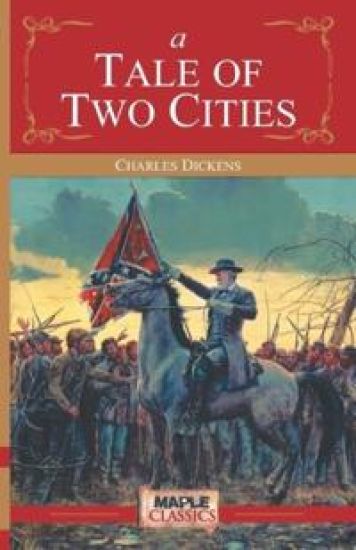
It was the time of the French Revolution - a time of great change and great danger. It was a time when injustice was met by a lust for vengeance, and rarely was a distinction made between the innocent and the guilty. Against this tumultuous historical backdrop, Dickens' great story of unsurpassed adventure and courage unfolds. Unjustly imprisoned for 18 years in the Bastille, Dr. Alexandre Manette is reunited with his daughter, Lucie, and safely transported from France to England. It would seem that they could take up the threads of their lives in peace. As fate would have it though, the pair are summoned to the Old Bailey to testify against a young Frenchman - Charles Darnay - falsely accused of treason. Strangely enough, Darnay bears an uncanny resemblance to another man in the courtroom, the dissolute lawyer's clerk Sydney Carton. It is a coincidence that saves Darnay from certain doom more than once. Brilliantly plotted, the novel is rich in drama, romance, and heroics that culminate in a daring prison escape in the shadow of the guillotine.
Leopold Classic Library is delighted to publish this classic book as part of our extensive collection. As part of our on-going commitment to delivering value to the reader, we have also provided you with a link to a website, where you may download a colour PDF version of this work for free. Many of the books in our collection have been out of print for decades, and therefore have not been accessible to the general public. Whilst the books in this collection have not been hand curated, an aim of our publishing program is to facilitate rapid access to this vast reservoir of literature. As a result of this book being first published many decades ago, it may have occasional imperfections. These imperfections may include poor picture quality, blurred or missing text. While some of these imperfections may have appeared in the original work, others may have resulted from the scanning process that has been applied. However, our view is that this is a significant literary work, which deserves to be brought back into print after many decades. While some publishers have applied optical character recognition (OCR), this approach has its own drawbacks, which include formatting errors, misspelt words, or the presence of inappropriate characters. Our philosophy has been guided by a desire to provide the reader with an experience that is as close as possible to ownership of the original work. We hope that you will enjoy this wonderful classic book, and that the occasional imperfection that it might contain will not detract from the experience.
A Tale Of Two Cities Charles Dickens " One of Dickens most memorable novels " A Tale of Two Cities is set in London and Paris before and during the French Revolution. The novel tells the story of the French Doctor Manette, his 18-year-long imprisonment in the Bastille in Paris and his release to life in London with his daughter Lucie, whom he had never met; Lucie's marriage and the collision between her beloved husband and the people who caused her father's imprisonment; and Monsieur and Madame Defarge, sellers of wine in a poor suburb of Paris. The story is set against the conditions that led up to the French Revolution and the Reign of Terror.
La novela narra la historia del hu rfano Pip, quien describe su vida desde su ni ez hasta su madurez tratando de convertirse en un hombre de nobleza a lo largo de su vida. Se puede decir que se trata de un Bildungsroman. La historia puede tambi n ser considerada como una semi-autobiograf a de Dickens, al igual que muchas de sus obras, en la cual mezcla sus experiencias de vidas con su entorno social.
Bleak House is one of Charles Dickens's major novels. The novel has many characters and several sub-plots, and the story is told partly by the novel's heroine, Esther Summerson, and partly by an omniscient narrator. At the centre of Bleak House is the long-running legal case, Jarndyce and Jarndyce, which came about because someone wrote several conflicting wills. This legal case is used by Dickens to satirise the English judicial system, and he makes use of his earlier experiences as a law clerk, and as a litigant seeking to enforce copyright on his earlier books.
Jane Austen ( 16 December 1775 - 18 July 1817) was an English novelist known primarily for her six major novels, which interpret, critique and comment upon the British landed gentry at the end of the 18th century. Austen's plots often explore the dependence of women on marriage in the pursuit of favourable social standing and economic security. Her works critique the novels of sensibility of the second half of the 18th century and are part of the transition to 19th-century literary realism.
The original and classic tale written by Charles Dickens and first published in 1839. A memorable tale of an orphaned boy, Oliver Twist, born in a workhouse and sold into an apprenticeship with an undertaker.
Allow me to introduce myself-first negatively. No landlord is my friend and brother, no chambermaid loves me, no waiter worships me, no boots admires and envies me. No round of beef or tongue or ham is expressly cooked for me, no pigeon-pie is especially made for me, no hotel-advertisement is personally addressed to me, no hotel-room tapestried with great-coats and railway wrappers is set apart for me, no house of public entertainment in the United Kingdom greatly cares for my opinion of its brandy or sherry. When I go upon my journeys, I am not usually rated at a low figure in the bill; when I come home from my journeys, I never get any commission. I know nothing about prices, and should have no idea, if I were put to it, how to wheedle a man into ordering something he doesn't want. As a town traveller, I am never to be seen driving a vehicle externally like a young and volatile pianoforte van, and internally like an oven in which a number of flat boxes are baking in layers. As a country traveller, I am rarely to be found in a gig, and am never to be encountered by a pleasure train, waiting on the platform of a branch station, quite a Druid in the midst of a light Stonehenge of samples.
Strictly speaking, there were only six Poor Travellers; but, being a Traveller myself, though an idle one, and being withal as poor as I hope to be, I brought the number up to seven. This word of explanation is due at once, for what says the inscription over the quaint old door? RICHARD WATTS, Esq. by his Will, dated 22 Aug. 1579, founded this Charity for Six poor Travellers, who not being ROGUES, or PROCTORS, May receive gratis for one Night, Lodging, Entertainment, and Fourpence each. It was in the ancient little city of Rochester in Kent, of all the good days in the year upon a Christmas-eve, that I stood reading this inscription over the quaint old door in question.
An ancient English Cathedral Tower? How can the ancient English Cathedral tower be here The well-known massive gray square tower of its old Cathedral? How can that be here There is no spike of rusty iron in the air, between the eye and it, from any point of the real prospect. What is the spike that intervenes, and who has set it up? Maybe it is set up by the Sultan's orders for the impaling of a horde of Turkish robbers, one by one. It is so, for cymbals clash, and the Sultan goes by to his palace in long procession. Ten thousand scimitars flash in the sunlight, and thrice ten thousand dancing-girls strew flowers. Then, follow white elephants caparisoned in countless gorgeous colours, and infinite in number and attendants. Still the Cathedral Tower rises in the background, where it cannot be, and still no writhing figure is on the grim spike. Stay Is the spike so low a thing as the rusty spike on the top of a post of an old bedstead that has tumbled all awry? Some vague period of drowsy laughter must be devoted to the consideration of this possibility.
Night is generally my time for walking. In the summer I often leave home early in the morning, and roam about fields and lanes all day, or even escape for days or weeks together; but, saving in the country, I seldom go out until after dark, though, Heaven be thanked, I love its light and feel the cheerfulness it sheds upon the earth, as much as any creature living. I have fallen insensibly into this habit, both because it favours my infirmity and because it affords me greater opportunity of speculating on the characters and occupations of those who fill the streets. The glare and hurry of broad noon are not adapted to idle pursuits like mine; a glimpse of passing faces caught by the light of a street-lamp or a shop window is often better for my purpose than their full revelation in the daylight; and, if I must add the truth, night is kinder in this respect than day, which too often destroys an air-built castle at the moment of its completion, without the least ceremony or remorse.
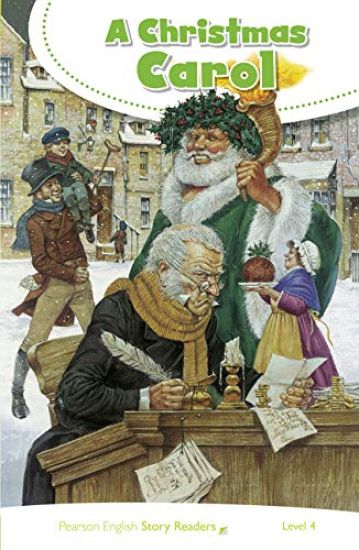
It’s Christmas Eve. Scrooge is an old man who hates Christmas and loves work and money. He does not want to share Christmas with anyone. But then he is visited by four ghosts. Who are the ghosts? What do they say to Scrooge? And what will happen when he wakes up on Christmas day?