Kirjojen hintavertailu – 12 903 727 kirjaa ja 27 kauppaa

Kirjailija

Charles River

Kirjat ja teokset yhdessä paikassa: 4 673 kirjaa, julkaisuja vuosilta 2013–2022, suosituimpiin kuuluu William Powell and Myrna Loy: The Lives and Careers of One of Classical Hollywood's Most Iconic Duos. Vertaile teosten hintoja ja tarkista saatavuus suomalaisista kirjakaupoista.

4 673 kirjaa

Kirjojen julkaisuvuodet: 2013–2022.

Lucky Lindy and Lady Lindy: The Lives and Legacies of Charles Lindbergh and Amelia Earhart
*Includes pictures of Lindbergh, Earhart, and important people, places, and events in their lives. *Discusses their historic flights, including their most famous quotes and their own words. *Analyzes the controversies surrounding Lindbergh's life and politics and the enduring mystery over Earhart's disappearance. *Includes Bibliographies for further reading. "If one took no chances, one would not fly at all." - Charles Lindbergh "The stars seemed near enough to touch and never before have I seen so many. I always believed the lure of flying is the lure of beauty, but I was sure of it that night." - Amelia Earhart In 1927, Charles Lindbergh became the first to make a nonstop Transatlantic solo flight, forever earning him fame and the moniker "Lucky Lindy". Two years later, Earhart was the first woman to cross the Atlantic in a plane, and her uncanny resemblance to Lindbergh earned her the nickname "Lady Lindy". Together they became America's most famous aviators, and their stories were inextricably interwoven by their lives, careers, and ill-fated destinies. In many ways, Charles Lindbergh represented the best and worst of America during the first half of the 20th century. Lindbergh became famous for being an aviation pioneer whose solo flight across the Atlantic captured the imagination of an entire world, yet he was an isolationist who wanted to keep American freedoms safe for Americans and no one else. Lindbergh was the quintessential family man, yet he fathered illegitimate children and suffered an unspeakable tragedy that became known as "The Crime of the Century." Lindbergh embodied some of his era's greatest virtues and harbored some of its worst prejudices, but it was those prejudices and his son's murder that have come to color much of his legacy.. By the mid-1930s, Earhart had set a multitude of altitude and distance records, but she wanted to attempt a circumnavigation of the world. After an ill-fated first attempt, Earhart and Fred Noonan set off on another attempt, creating one of the 20th century's most enduring mysteries. Earhart and Noonan were to land on Howland Island, 1700 miles southwest of Hawaii, but radio transmissions ceased between the plane and authorities on the ground the morning of July 2, 1937. Earhart and Noonan had disappeared, never to be seen again, despite one of the nation's largest and costliest manhunts to date. Unfortunately, the speculation over exactly what happened to Earhart and the mystery of her disappearance have come to overshadow and obscure her many accomplishments. Lucky Lindy and Lady Lindy looks at the controversies in Lindbergh's life and the theories attempting to explain Earhart's disappearance, but it also humanizes the pair of American legends whose sheer love of flying propelled them to unprecedented heights among both the clouds and their countrymen. Along with pictures of important people, places, and events in their lives, you will learn about Charles Lindbergh and Amelia Earhart like you never have before, in no time at all.
Notorious Assassins: The Life and Legacy of Marcus Brutus

Notorious Assassins: The Life and Legacy of Marcus Brutus

Charles River

Createspace Independent Publishing Platform
2018
nidottu
*Includes pictures of historic art depicting important people, places, and events. *Includes historical accounts of Caesar's assassination. *Includes a Bibliography for further reading. "Sic semper tyrannis " ("Thus, always, to tyrants ") - attributed to Brutus Throughout the annals of history, there have been few men as reviled as Marcus Junius Brutus the Younger. To this day, he is associated with murder, betrayal, violence and infamy, so much so that in modern English his name provides the root for the words "brute" and "brutal", as it does in several other Romance languages. Indeed, Brutus's reputation was so infamous that when Dante composed his timeless Divine Comedy, he relegated Brutus to the very nethermost depths of Hell. In the Inferno, Dante reaches the pit of the Ninth Circle of Hell, where he finds the Fallen Angel, Lucifer, himself. Lucifer is described as a giant, three-faced demon whose three mouths are perpetually gnashing upon three sinners, widely regarded as being the three most despicable individuals in history. According to Dante, the deepest circle of Hell is reserved for traitors, including Traitors against Kin, Traitors against Homeland, Traitors against Guests, and Traitors against Benefactors. The three men being devoured by Satan in Dante's Inferno are Judas, the greatest traitor of all, and the two conspirators whose knives cut down Julius Caesar: Gaius Cassius Longinus and Brutus. Since his appearance in the Inferno, Brutus has proven himself to be a resilient fictional character, naturally appearing as the main antagonist in Shakespeare's Julius Caesar, as well as turning up in places as diverse as contemporary novels, the Asterix comic books, and video games. This is hardly surprising, since Brutus was said to be the orchestrator and main perpetrator of the plot against Caesar, and legend had it that it was Brutus himself who dealt the final blow that struck Caesar down. Shakespeare's "Et tu, brute?" ("And you, Brutus?") is widely recognized as one of the most iconic lines in theatre, further cementing Brutus's lurid notoriety, although most of the chronicles dispute whether Caesar actually said anything at all as he died. Brutus has been history's most notorious assassin since the Ides of March in 44 B. C., but aside from his conspiracy, the rest of his life is often overlooked, especially his role in the subsequent civil war. In fact, forces loyal to Brutus and the other main conspirator, Cassius, fought one of the biggest battles in Roman history against Octavian and Antony, and it was one that they very nearly won. However, by the end of the decisive battle, Brutus and Cassius had lost, and Brutus had taken his own life. After Octavian rose to power by defeating Antony in yet another civil war, he was able to establish himself as Caesar Augustus, and the Republic that Brutus had hoped to save was truly finished. Naturally, Augustus ensured that Brutus was universally despised during his reign, and Brutus's negative reputation mostly persevered over the centuries. But in more modern times, Brutus has undergone something of a rehabilitation. As Western political thought shifted away from the Divine Right of Kings and towards democracy, Brutus began to be viewed in a far more sympathetic light. Brutus achieved a particularly positive public portrayal in the fledgling United States, where comparisons were often drawn between his actions and those of the patriots wishing to overthrow the British government, and the phrase "Sic semper tyrannis " would go on to become the state motto of the newly formed Commonwealth of Virginia. Notorious Assassins: The Life and Legacy of Marcus Brutus comprehensively covers his life and political career, as well as the origins of the plot, the assassination of Caesar, and the aftermath. Along with pictures depicting important people and places, you will learn about Caesar's assassin like you never have before.
Legends of the West: The Life and Legacy of Wild Bill Hickok

Legends of the West: The Life and Legacy of Wild Bill Hickok

Charles River

Createspace Independent Publishing Platform
2018
nidottu
*Includes pictures of Wild Bill and important people, places, and events in his life. *Discusses Wild Bill's most famous shootouts and his murder, explaining what's fact and what's legend. *Includes a bibliography for further reading. "Wild Bill was a strange character. Add to this figure a costume blending the immaculate neatness of the dandy with the extravagant taste and style of a frontiersman, you have Wild Bill, the most famous scout on the Plains."" - General George Custer Space may be the final frontier, but no frontier has ever captured the American imagination like the "Wild West", which still evokes images of dusty cowboys, outlaws, gunfights, gamblers, and barroom brawls over 100 years after the West was settled. A constant fixture in American pop culture, the 19th century American West continues to be vividly and colorful portrayed not just as a place but as a state of mind. In Charles River Editors' Legends of the West series, readers can get caught up to speed on the lives of America's most famous frontier figures in the time it takes to finish a commute, while learning interesting facts long forgotten or never known. In many ways, the narrative of the Wild West has endured more as legend than reality, and a perfect example of that can be found in the legend of James Butler Hickok (1837-1876), forever known as "Wild Bill". Indeed, separating fact from fiction when it comes to the life of Wild Bill is nearly impossible, something due in great measure to the fact that the man himself exaggerated his own adventures or fabricated stories altogether. When he was killed while playing poker in the mining South Dakotan outpost of Deadwood, he put Deadwood on the map and ensured both his place and his poker hand's place in legend. The best known aspects of Hickok's life hardly distinguish him from other famous Westerners. Like so many others, Hickok headed west as a fugitive of justice, yet that didn't prevent him from becoming a frontier lawman in Kansas, like Wyatt Earp. Hickok also became well known in the West for being a professional gambler and a remarkably quick draw who proved quite deadly in shootouts, like Doc Holliday. What made Hickok stand out from so many of his day was that he was both successful at what he did and he managed to cultivate his own legend through tales of his exploits. By the mid-1870s, Hickok was notorious enough that he went out of his way to play cards with his back to the wall so he could see anyone approaching him. On one of the few occasions he did not, August 2, 1876, he was shot in the back of the head by Jack McCall while holding two pair, Aces and Eights (all black), now known as the Dead Man's Hand. Whether Hickok's legacy would have endured without his legendary death is anyone's guess, but by becoming the first well known Western icon to die with his boots on, he immediately became the West's first hero. Hickok and his life story became the subject of countless "dime store" novels which cast him in larger than life roles loosely based on his adventures or entirely made up. Once Wild Bill became a fixture of American pop culture, he stayed there, and he continues to be depicted in television, movies, and the like. Legends of the West: The Life and Legacy of Wild Bill Hickok chronicles Wild Bill's life, while also analyzing his legacy and the mythology that has enveloped his story, attempting to separate fact from fiction to determine what the frontier legend was really like. Along with pictures of important people, places, and events in his life, you will learn about Wild Bill like you never have before, in no time at all.
Legends of the Silver Screen: The Lives and Legacies of John Wayne and Marlon Brando

Legends of the Silver Screen: The Lives and Legacies of John Wayne and Marlon Brando

Charles River

Createspace Independent Publishing Platform
2018
nidottu
*Includes Wayne's and Brando's filmographies. *Includes pictures of Wayne, Brando and important people in their lives. *Includes some of Wayne's and Brando's most colorful and controversial quotes. *Discusses the controversies surrounding the lives of both actors. "Every country in the world loved the folklore of the West -- the music, the dress, the excitement, everything that was associated with the opening of a new territory. It took everybody out of their own little world. The cowboy lasted a hundred years, created more songs and prose and poetry than any other folk figure. The closest thing was the Japanese samurai. Now, I wonder who'll continue it." - John Wayne "He is the marker. There's 'before Brando' and 'after Brando'." - Martin Scorsese Hollywood has produced no shortage of famous movie stars, but none have been as culturally significant as John Wayne. Marion Morrison was born in a quintessentially quaint Midwestern town, but he eventually grew up to become John Wayne, the legend of the silver screen who embodied the Western frontier. Wayne starred in so many movies (nearly 150 in all) that when asked to name his worst, he joked that 50 of them were tied, but the excessive number allowed Wayne to portray heroes of all stripes, from cowboys to soldiers, and he was invariably charming, courageous, and full of rugged, masculine swagger. Even as Westerns have certainly waned in popularity, Wayne himself has remained immensely popular, in part because he set the prototype for the heroic character, regardless of genre. Wayne will always be associated with Westerns, John Wayne transcended the Western genre. Through the portrayal of rugged, masculine characters, Wayne came to epitomize the American spirit and the way Americans view themselves. In that sense, he is truly America's actor, and he continues to live on in both the reels of Hollywood's archives and the living rooms of middle America. Marlon Brando. Few names in the acting profession evoke such a strong, almost visceral reaction. Over the course of his long, prolific career, he was considered perhaps the greatest actor of the 20th century as well as one of the most complicated and misunderstood. Uniquely able to be both emotionally charged and technically constrained in the same performance, he single-handedly changed the direction of not only the American style of acting, influencing successors such as Robert De Niro, Al Pacino and even Johnny Depp, but the acting profession on a global scale. His iconic interpretations of characters such as Stanley Kowalski (A Streetcar Named Desire), Terry Malloy (On the Waterfront) and Vito Corleone (The Godfather) have been forever burned into the collective memory of film and theatre aficionados, scholars and critics for their immense passion, rage, love, defiance, vulnerability, cruelty and tenderness - basically, the full spectrum of the human condition. With several Oscars and Golden Globes to his name, Brando's contributions remain the gold standard of the acting craft, and the American Film Institute has listed him as the 4th greatest screen legend in history. Brando was one of his generation's sex idols, its most versatile actors, and a political activist, but who was the person behind the legend? What propelled a young man from the Midwest to become such a powerful, capricious and dominating force in the acting arena? How was he able to penetrate the human condition, replete with all its multilayered emotional baggage, and convey its strengths, weaknesses and delicate nuances so successfully, often while plagued by his own personal tragedies and demons? Legends of the Silver Screen look at the lives, controversies, and legacies of both film icons. Along with filmographies, quotes, and pictures, you will learn about John Wayne and Marlon Brando like you never have before.
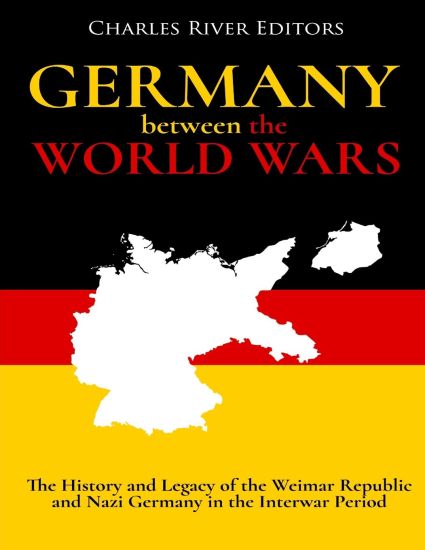
Germany Between the World Wars: The History and Legacy of the Weimar Republic and Nazi Germany in the Interwar Period
*Includes pictures *Includes online resources and a bibliography for further reading The Weimar Republic has become a byword for a failed, tragic, political experiment. The official period of its existence, 1919-1933, marked the inter-war years in Germany and their related uncertainty, chaos and the state's ultimate collapse. Historians have found the roots of Nazism embedded in the Weimar years and that in the final analysis, Weimar politicians voluntarily handed over power to the man who wrought destruction on an epic scale, Adolf Hitler. Yet the Weimar era encapsulated a number of trends and fissures within German society, as well as the international community. The Weimar Republic was a prisoner of events and in the long run had little power to shape them. Historians are fond of interpreting the past as a tension between human agency, that is to say decision-making, and structural developments that evade individual choices. Both these interpretations are crucial when examining the tumultuous years of Germany's Weimar Republic. The early 1930s were a tumultuous period for German politics, even in comparison to the ongoing transition to the modern era that caused various forms of chaos throughout the rest of the world. In the United States, reliance on the outdated gold standard and an absurdly parsimonious monetary policy helped bring about the Great Depression. Meanwhile, the Empire of Japan began its ultimately fatal adventurism with the invasion of Manchuria, alienating the rest of the world with the atrocities it committed. Around the same time, Gandhi began his drive for the peaceful independence of India through nonviolent protests against the British. It was in Germany, however, that the strongest seeds of future tragedy were sown. The struggling Weimar Republic had become a breeding ground for extremist politics, including two opposed and powerful authoritarian entities: the right-wing National Socialists and the left-wing KPD Communist Party. As the 1930s dawned, these two totalitarian groups held one another in a temporary stalemate, enabling the fragile ghost of democracy to continue a largely illusory survival for a few more years. That stalemate was broken in dramatic fashion on a bitterly cold night in late February 1933, and it was the Nazis who emerged decisively as the victors. A single act of arson against the famous Reichstag building proved to be the catalyst that propelled Adolf Hitler to victory in the elections of March 1933, which set the German nation irrevocably on the path towards World War II. That war would plunge much of the planet into an existential battle that ultimately cost an estimated 60 million lives. Germany Between the World Wars: The History and Legacy of the Weimar Republic and Nazi Germany in the Interwar Period chronicles the pivotal events in the years between World War I and World War II. Along with pictures of important people, places, and events, you will learn about Germany between the wars like never before.
The Samurai: The History and Legacy of Japan's Military Elite

The Samurai: The History and Legacy of Japan's Military Elite

Charles River

Createspace Independent Publishing Platform
2018
nidottu
*Includes pictures *Includes online resources and a bibliography for further reading The samurai are among the most iconic warriors in history. The fighting elite of feudal Japan, they have played a dominant role in the country's life for over a thousand years. Even today, a century and a half after the rule of the samurai has formally ended, they remain a powerful symbol of martial might, and the embodiment of the stoic warrior. Like the knights who fought in Europe during the same era, the samurai were a feudal aristocracy. Militarily, politically, socially, and economically, they were the most powerful, the most influential, and the most privileged members of society. Though not all samurai were equal in power and status, they were almost always better off than the rest of Japanese society. The word samurai, meaning "those who serve", indicates the foundation upon which their power was built. As a feudal society, medieval Japan was shaped by a hierarchy of land ownership and its associated obligations. Most samurai held their land for a more senior overlord, to whom they owed military service. That overlord owed service to his overlord, and so on up the hierarchy, which allowed the most powerful lords to raise great armies. A proud and dominant force, the collective dominance of the samurai arose from a dedication to service. Such service also created the opportunity for revolt, as a lord with enough loyal followers might try to usurp his master, and battles for land and power between competing samurai factions dominated Japanese history for centuries as a result. The wealth of the samurai not only led to their role as leaders but as a hard-hitting military elite as well, mostly because they could afford the armor, weapons, and horses that gave them an edge in battle. Supported by the labor of the people who lived on their lands, they were also able to spare the time to train for war, something for which young men of the samurai class were prepared from an early age. The Samurai: The History and Legacy of Japan's Military Elite looks at who the samurai were, how they fought, and the historical wars in which they played a leading part. Along with pictures of important people, places, and events, you will learn about the samurai like never before.
Shirley Temple and Judy Garland: Hollywood's Most Famous Child Stars

Shirley Temple and Judy Garland: Hollywood's Most Famous Child Stars

Charles River

Createspace Independent Publishing Platform
2018
nidottu
*Includes pictures of the child stars and important people, places, and scenes. *Includes Temple and Garland's own quotes about their lives, films and relationships. *Includes a Bibliography on each for further reading. Shirley Temple remains the most famous child star of all time, but even this designation fails to reflect the magnitude of her popularity during the era in which she worked. While it is true that she was not the first child actor to reach Hollywood fame, she was the first - and to this day, perhaps the only - star who rose to the very pinnacle of the Hollywood elite before she even turned 10 years old. For this reason, it is no exaggeration to view Shirley as the progenitor for all of the child actors that succeeded her. Moreover, her cultural importance constitutes an even more important barometer through which to measure her overall significance. Not only was Shirley a film star, but she had a monumental impact on a generation of children who grew up during the Great Depression, with her plucky optimism emotionally uplifting an American public struggling both financially and emotionally. She was not only a young actress but also a brand name, someone who offered fathers and mothers hope for their children to achieve the same success as the famous child star. For all of Shirley Temple's fame, it is no doubt surprising to many that her actual films received scant critical acclaim. Her films were never mentioned on critical "best of" lists, nor did they regularly appear on the list of nominees for the Academy Awards. In fact, even though most everyone has viewed at least one of her films, it is unlikely that most people could name many of her films. How exactly did Temple first reach Hollywood fame, and how did the many films she appeared in between 1934 and 1938 - the height of her career - build her fame to its lofty peak even as they were quickly forgotten? In many ways, Judy Garland's rise to fame seems almost predestined. Not only was she a national sensation at a young age, but her parents and sisters were all vaudeville entertainers. On top of that, Garland's parents owned and operated a movie theater, making it all the easier to draw the conclusion that singing and acting were simply professions which she was born into by virtue of her pedigree. Judy's early childhood quickly demonstrated that she had a gifted voice that developed well beyond its years and seemingly did not require any formal training in order to achieve success; her first performance before a public audience came when she was still a toddler, and she would continue to act up until her death, never pausing for more than a few months at a time. That Garland was able to secure starring roles almost immediately after signing a contract with MGM in 1935 only corroborates the belief that Garland was practically born with the ability to succeed in show business and the motion picture industry. Of course, Garland might be known today based more on her demise than anything else, and there's no denying that one of the most fascinating (and tragic) aspects of her life story is the manner in which her downward spiral occurred with the same rapid progression as her meteoric ascent. Garland died in 1969 at the age of 47, but she had lost control over her life years earlier and was actually fortunate to live as long as she did. This book profiles the lives and careers of the two most famous child stars in American history. Along with pictures of important people, places, and events, you will learn about Shirley Temple and Judy Garland like you never have before.
Shays' Rebellion: The History and Legacy of America's First Domestic Uprising

Shays' Rebellion: The History and Legacy of America's First Domestic Uprising

Charles River

Createspace Independent Publishing Platform
2018
nidottu
*Includes pictures *Includes accounts of the rebellion *Includes online resources and a bibliography for further reading *Includes a table of contents "You talk, my good sir, of employing influence to appease the present tumults in Massachusetts. I know not where that influence is to be found, or, if attainable, that it would be a proper remedy for the disorders. Influence is not government. Let us have a government by which our lives, liberties, and properties will be secured, or let us know the worst at once." - George Washington, referencing Shays' Rebellion in a letter to Light-Horse Harry Lee Even as the young United States successfully secured its independence, the new nation was beset by problems. The drafters of the Articles of Confederation had deliberately avoided giving the national legislature the power to tax, because Parliament had so abused that authority against the colonies, but this proved to be a severe limitation on the national government. Besides hampering the Continental Army, the inability of the national government to raise revenue made foreign policy difficult. Under the Articles of Confederation, the Congress was also completely unable to pay any of the debts it incurred to foreign powers during the Revolutionary War. Though allied powers had lent to the American government on favorable terms and no repayment was expected until the end of hostilities, the hope of ever paying national debts without a national government that could tax was slim. In particular, the prospect of the new nation defaulting on its loans from France led to the end of the Articles of Confederation. To top it all off, the Articles of Confederation also had no judiciary or executive branch. Therefore, laws passed by the Congress could not be enforced by the national government: the enforcement of laws was left to the mercy of the states. Likewise, there was no national judiciary to decide disputes over national law. Fueled at least in part by the weakness of the federal government to respond to military threats, the young country quickly faced a problem in the form of a rebellion led in New England by former Revolutionary War veteran Daniel Shays. On December 27, 1786, Samuel Lyman of Massachusetts wrote to his friend and confidant, Samuel Breck, " N]ot only this Commonwealth but the union at large are in the most confused and confounded condition; we do not yet feel that sameness or unity of interest which is the only cement of any nation, and which is absolutely necessary to be felt in order to make us respectable & important; but this is not surprizing, for our national existence is but of yesterday, and this unity of interest is the result of time, it is the effect of habit, sentiment, & opinion, it is the unison of each of these..." Whether he meant to or not, Lyman captured in this one statement the very essence of the causes of the series of riots known collectively as Shays' Rebellion; for they began during the earliest years of American independence and were led by men who were, by their very nature, rebels. Unlike most countries in the world, 18th century America was made up of people who believed in change, and who were willing to leave their homelands and strike out for the unknown to find it. The men who had just years earlier participated in the American Revolution were not afraid to break down a government they did not like; indeed, many of them reveled in it. When Massachusetts enacted laws that Shays and others didn't like, the rebels had no qualms about taking up arms, and while the rebellion was eventually put down, changes were made to prevent similar problems in the future. Out of this came peace, order and freedom.
Memphis: The History and Legacy of the Capital of Ancient Egypt

Memphis: The History and Legacy of the Capital of Ancient Egypt

Charles River

Createspace Independent Publishing Platform
2018
nidottu
*Includes pictures *Highlights the rulers and building projects in Memphis *Includes online resources and a bibliography for further reading *Includes a table of contents "Egypt is not a country we live in but a country that lives within us." - Pope Shenouda III Africa may have given rise to the first humans, and Egypt probably gave rise to the first great civilizations, which continue to fascinate modern societies across the globe nearly 5,000 years later. From the Library and Lighthouse of Alexandria to the Great Pyramid at Giza, the Ancient Egyptians produced several wonders of the world, revolutionized architecture and construction, created some of the world's first systems of mathematics and medicine, and established language and art that spread across the known world. With world-famous leaders like King Tut and Cleopatra, it's no wonder that today's world has so many Egyptologists. For almost four millennia, the Great Pyramids of Ancient Egypt have been widely hailed as the single greatest archeological feat man has ever accomplished. The Great Pyramid at Giza is the only one of the seven wonders of the ancient world to have survived into the modern age. Unlike so many pieces of the historical record which have been "re-discovered," relatively recently (in the grand scheme of things," in their four thousand years of existence, the Great Pyramids have never allowed themselves to be truly forgotten by the human civilization which has never ceased to regard them with wonder and awe. Thus, it is somewhat ironic that over time, people have managed to retain hardly any information about Memphis, the Ancient Egyptian capital in which the pharaohs responsible for the Great Pyramids resided and ruled. At some point, even the precise location of Memphis came to be forgotten, and the city was believed lost to the annals of time. Archaeological David Jefferys, not to be dissuaded, has continued to insist that Memphis is not a "lost" city but simply a city that has been temporarily misplaced. To this day, teams of archaeologists continue to sift through the Egyptian sands in the hopes that they will at last unearth the walls of the elusive city. In the meantime, an examination of the scant historical record read in close conjunction with the archeological record does allow a glimpse into what one of Egypt's most important cities was like. Memphis: The History and Legacy of the Capital of Ancient Egypt examines the history of one of the ancient world's most important cities. Along with pictures of important people, places, and events, you will learn about Memphis like never before.
A History of Ancient Egypt's Most Famous Sites

A History of Ancient Egypt's Most Famous Sites

Charles River

Createspace Independent Publishing Platform
2018
nidottu
*Includes pictures*Profiles sites like the pyramids, Sphinx, Luxor, Alexandria, and more*Includes online resources and a bibliography for further reading "Egypt is not a country we live in but a country that lives within us." - Pope Shenouda IIIAfrica may have given rise to the first humans, and Egypt probably gave rise to the first great civilizations, which continue to fascinate modern societies across the globe nearly 5,000 years later. From the Library and Lighthouse of Alexandria to the Great Pyramid at Giza, the Ancient Egyptians produced several wonders of the world, revolutionized architecture and construction, created some of the world's first systems of mathematics and medicine, and established language and art that spread across the known world. With world-famous leaders like King Tut and Cleopatra, it's no wonder that today's world has so many Egyptologists. For almost four millennia, the Great Pyramids of Ancient Egypt have been widely hailed as the single greatest archeological feat man has ever accomplished. The Great Pyramid at Giza is the only one of the seven wonders of the ancient world to have survived into the modern age. Unlike so many pieces of the historical record which have been "re-discovered," relatively recently (in the grand scheme of things," in their four thousand years of existence, the Great Pyramids have never allowed themselves to be truly forgotten by the human civilization which has never ceased to regard them with wonder and awe. Egypt also impressed its contemporaries. The 5th century B. C. Greek historian Herodotus wrote that Egypt was "the gift of the Nile" because the river made its soil so fertile and thus helped create one of the first great civilizations. Indeed, the land of Egypt so impressed the Greeks that when Alexander the Great conquered the Nile Valley in the 4th century B. C., he decided that he would build a new city on its soil and name it Alexandria. After Alexander, the city of Alexandria grew and became the most important city in the world for centuries as it watched and played a role in the rise and fall of numerous dynasties. The city also became home to one of the Seven Wonders of the Ancient World - the Lighthouse of Alexandria - and a center of culture and learning, which was exemplified by the Library of Alexandria. A History of Ancient Egypt's Most Famous Sites profiles the places that made Ancient Egypt so legendary. Along with pictures of important people, places, and events, you will learn about the Egyptians' most famous sites like never before.
Native American Tribes: The History and Culture of the Mohegans

Native American Tribes: The History and Culture of the Mohegans

Charles River

Createspace Independent Publishing Platform
2018
nidottu
*Includes pictures *Includes contemporary accounts describing the Mohegans *Includes online resources, footnotes, and a bibliography for further reading *Includes a table of contents "There were then given to Onkos, Sachem of Monheag, Eighty; to Myan Tonimo, Sachem of Narragansett, Eighty; and to Nynigrett, Twenty, when he should satisfy for a Mare of Edward Pomroye's killed by his Men. The Pequots were then bound by Covenant, That none should inhabit their native Country, nor should any of them be called PEQUOTS any more, but Moheags and Narragansatts for ever." - The Treaty of Hartford, made between the Mohegan and Narragansett after the Pequot War From the "Trail of Tears" to Wounded Knee and Little Bighorn, the narrative of American history is incomplete without the inclusion of the Native Americans that lived on the continent before European settlers arrived in the 16th and 17th centuries. Since the first contact between natives and settlers, tribes like the Sioux, Cherokee, and Navajo have both fascinated and perplexed outsiders with their history, language, and culture. In Charles River Editors' Native American Tribes series, readers can get caught up to speed on the history and culture of North America's most famous native tribes in the time it takes to finish a commute, while learning interesting facts long forgotten or never known. Among all the Native American tribes, the Mohegan people are some of the most well documented Native Americans in history. Indigenous to the northeast region of what is now the United States, they were among some of the earliest contacts Europeans had with the native tribes. And yet they have remained a constant source of mystery. When European settlers began to colonize areas like Plymouth and New Amsterdam, they quickly came into contact with various natives, including the southeast Connecticut based Mohegan, who were once part of a unified tribe with the Pequot but now considered that group a mortal enemy. In fact, the entangled nature of the tribes meant that European colonists who could barely distinguish between the groups often found themselves in makeshift alliances, and during the Pequot War in the 1630s, the Pequot were nearly wiped out. Though the Mohegan helped the colonists during that war and benefited from it, the tribe itself would begin to languish as the United States expanded. By the 20th century, the Mohegan tribe was on the verge of having its last native speaker die, and suffering the extinction of their original language. Fortunately, anthropologists and some of the Mohegans remaining helped to keep their culture and language alive, and today there is a federally recognized Mohegan tribe that lives on a reservation near their original homeland in Connecticut. Native American Tribes: The History and Culture of the Mohegans examines the Mohegan people, from their origins to their decline, as well as their revival. Along with pictures of important people, places, and events, you will learn about the Mohegans like never before, in no time at all.
Greco-Roman Warfare: The History and Legacy of the Phalanx and Legion Formations that Revolutionized the Ancient World
*Includes pictures *Includes ancient accounts *Includes online resources and a bibliography for further reading Although the armies of the ancient Greek, or "Hellenic", city-states (poleis, singular polis) included both cavalry (hippeis) and light infantry (psiloi, peltastes, gymnetes), their mainstay was undoubtedly the heavy infantry known today as hoplites. Armed to the teeth with their distinctive round shield (aspis or hoplon), high-crested helmet (corys) and long spear (dory), the hoplites were some of the most efficient soldiers of their time. They fought in the tight phalanx formation, and beyond the confines of their small poleis, Greek hoplites were also prized as mercenaries throughout the ancient world. Most historians believe that the hoplite became the dominant infantry soldier in nearly all the Greek city-states around the 8th century BCE. Hoplites were responsible for acquiring their own equipment, so not every hoplite might have been equally armed, but considering the style of warfare, they needed as much uniformity as possible. Like most infantry outside of Greece, the hoplites also carried spears, but while the Persian weapons were short and light for example, the Greek spears were thick shafts anywhere between seven and nine feet long. These spears were topped by a 9-inch spearhead, with a "lizard-sticker" buttspike at the bottom which could be used as a secondary spearhead if the main weapon was snapped off, or to plant the spear upright when at rest. Each hoplite also carried a shortsword, designed specifically for thrusting in the close confines of a melee (the Spartan weapon, the xiphos, was so short as to be virtually a dagger, its blade barely over a foot long). For the Greeks, a hoplite was only as strong as the hoplite next to him; without hoplites on the sides, both flanks were exposed, and heavy infantry units are not mobile. Thus, they implemented the phalanx formation, one of history's most important military innovations. The phalanx was a line of infantry as wide across as the battlefield dictated, anything from five to 30 men deep, with each rank of men officered by a veteran. The formation also included an additional, expert file-closer at the back of each file, to keep the formation cohesive. It was only with the advent of the more mobile Roman legion, and the defeat of phalanxes in battles like Cynoscephalae (197 BCE) and Pydna (168 BCE), that the hoplite phalanx was finally outclassed, although not without a long fight: the last of Alexander's successor kingdoms, Ptolemaic Egypt, only fell in 31 BCE. While the Roman army is rightly famed as an institution, the image of the individual legionary is also an iconic one. The uniformed, disciplined soldier of the late Republic and early Empire is one of the first things many people imagine when they think of Rome. They are the ultimate image of the ancient soldier, their arms and armor instantly recognizable. Their abilities, not only as warriors but also as engineers and administrators, have made them role models for other soldiers through the centuries. In the same vein, their commanders are still celebrated and studied, and generals the world over have tried to emulate the likes of Julius Caesar. Moreover, one of the key ingredients to Rome's success was the military's complete willingness to incorporate discovered technologies. If a different weapon, type of armor, or basic equipment or artillery worked better than what they were using, the Romans were not afraid to adopt that piece of military hardware for their own uses. Thus, the Romans were almost always using the finest military equipment in the world, all of which had long since proven effective on the field of battle. Greco-Roman Warfare: The History and Legacy of the Phalanx and Legion Formations that Revolutionized the Ancient World examines how the Greeks and Romans changed the world.
The Weimar Republic: The History of Germany After World War I Before the Rise of the Nazi Party
*Includes pictures *Includes online resources and a bibliography for further reading The Weimar Republic has become a byword for a failed, tragic, political experiment. The official period of its existence, 1919-1933, marked the inter-war years in Germany and their related uncertainty, chaos and the state's ultimate collapse. Historians have found the roots of Nazism embedded in the Weimar years and that in the final analysis, Weimar politicians voluntarily handed over power to the man who wrought destruction on an epic scale, Adolf Hitler. Yet the Weimar era encapsulated a number of trends and fissures within German society, as well as the international community. The Weimar Republic was a prisoner of events and in the long run had little power to shape them. Historians are fond of interpreting the past as a tension between human agency, that is to say decision-making, and structural developments that evade individual choices. Both these interpretations are crucial when examining the tumultuous years of Germany's Weimar Republic. The early 1930s were a tumultuous period for German politics, even in comparison to the ongoing transition to the modern era that caused various forms of chaos throughout the rest of the world. In the United States, reliance on the outdated gold standard and an absurdly parsimonious monetary policy helped bring about the Great Depression. Meanwhile, the Empire of Japan began its ultimately fatal adventurism with the invasion of Manchuria, alienating the rest of the world with the atrocities it committed. Around the same time, Gandhi began his drive for the peaceful independence of India through nonviolent protests against the British. It was in Germany, however, that the strongest seeds of future tragedy were sown. The struggling Weimar Republic had become a breeding ground for extremist politics, including two opposed and powerful authoritarian entities: the right-wing National Socialists and the left-wing KPD Communist Party. As the 1930s dawned, these two totalitarian groups held one another in a temporary stalemate, enabling the fragile ghost of democracy to continue a largely illusory survival for a few more years. That stalemate was broken in dramatic fashion on a bitterly cold night in late February 1933, and it was the Nazis who emerged decisively as the victors. A single act of arson against the famous Reichstag building proved to be the catalyst that propelled Adolf Hitler to victory in the elections of March 1933, which set the German nation irrevocably on the path towards World War II. That war would plunge much of the planet into an existential battle that ultimately cost an estimated 60 million lives. The Weimar Republic: The History of Germany After World War I Before the Rise of the Nazi Party chronicles the pivotal events in the years between World War I and Hitler's ascension to power. Along with pictures of important people, places, and events, you will learn about the Weimar Republic like never before.
World War II in 1941: The History of the War's Most Pivotal Year

World War II in 1941: The History of the War's Most Pivotal Year

Charles River

Createspace Independent Publishing Platform
2018
nidottu
*Includes pictures *Includes accounts of fighting *Includes online resources and a bibliography for further reading At the beginning of 1941, it was unclear whether the Allies would be able to remain in the war for much longer. British Prime Minister Winston Churchill had already immortalized the men of the Royal Air Force with one of the West's most famous war-time quotes, but the potential of a German invasion of Britain still loomed. With the comfort of hindsight, historians now suggest that the picture was actually more complex than that, but the Battle of Britain, fought throughout the summer and early autumn of 1940, was unquestionably epic in scope. The largest air campaign in history at the time, the vaunted Nazi Luftwaffe sought to smash the Royal Air Force, but thankfully, the RAF stood toe to toe with the Luftwaffe and ensured Hitler's planned invasion was permanently put on hold. The Allied victory in the Battle of Britain inflicted a psychological and physical defeat on the Luftwaffe and Nazi regime at large, and as the last standing bastion of democracy in Europe, Britain would provide the toehold for the June 1944 invasion of Europe that liberated the continent. For those reasons alone, the Battle of Britain was one of the decisive turning points of history's deadliest conflict. In the warm predawn darkness of June 22, 1941, 3 million men waited along a front hundreds of miles long, stretching from the Baltic coast of Poland to the Balkans. Ahead of them in the darkness lay the Soviet Union, its border guarded by millions of Red Army troops echeloned deep throughout the huge spaces of Russia. This massive gathering of Wehrmacht soldiers from Adolf Hitler's Third Reich and his allied states - notably Hungary and Romania - stood poised to carry out Operation Barbarossa, Hitler's surprise attack against the country of his putative ally, Soviet dictator Joseph Stalin. Stalin knew that if he could delay an invasion through the summer of 1941, he would be safe for another year, but Hitler began to plan to invade Russia by May of 1941. Since military secrets are typically the hardest to keep, Stalin soon began to hear rumors of the invasion, but even when Winston Churchill contacted him in April of 1941 warning him that German troops seemed to be massing on Russia's border, Stalin remained dubious. Stalin felt even more secure in his position when the Germans failed to invade the following May. What Stalin did not realize was that Hitler had simply overstretched himself in Yugoslavia and only planned to delay the invasion by a few weeks. As the beginning the start of the fighting on the Eastern Front, the deadliest part of history's deadliest war, Operation Barbarossa would turn out to be arguably the most fateful choice of World War II., but if it wasn't, that distinction may very well go to another decision made in the second half of 1941. All Americans are familiar with the "day that will live in infamy." At 9:30 a.m. on Sunday, December 7, 1941, Pearl Harbor, the advanced base of the United States Navy's Pacific Fleet, was ablaze. It had been smashed by aircraft launched by the carriers of the Imperial Japanese Navy. All eight battleships had been sunk or badly damaged, 350 aircraft had been knocked out, and over 2,000 Americans lay dead. Indelible images of the USS Arizona exploding and the USS Oklahoma capsizing and floating upside down have been ingrained in the American conscience ever since. In less than an hour and a half the Japanese had almost wiped out America's entire naval presence in the Pacific. World War II in 1941: The History of the War's Most Pivotal Year chronicles the year that the fate of the free world hung in the balance. Along with pictures of important people, places, and events, you will learn about World War II in 1941 like never before.
World War II in 1941: The History of the War's Most Pivotal Year

World War II in 1941: The History of the War's Most Pivotal Year

Charles River

Createspace Independent Publishing Platform
2018
nidottu
*Includes pictures *Includes accounts of fighting *Includes online resources and a bibliography for further reading At the beginning of 1941, it was unclear whether the Allies would be able to remain in the war for much longer. British Prime Minister Winston Churchill had already immortalized the men of the Royal Air Force with one of the West's most famous war-time quotes, but the potential of a German invasion of Britain still loomed. With the comfort of hindsight, historians now suggest that the picture was actually more complex than that, but the Battle of Britain, fought throughout the summer and early autumn of 1940, was unquestionably epic in scope. The largest air campaign in history at the time, the vaunted Nazi Luftwaffe sought to smash the Royal Air Force, but thankfully, the RAF stood toe to toe with the Luftwaffe and ensured Hitler's planned invasion was permanently put on hold. The Allied victory in the Battle of Britain inflicted a psychological and physical defeat on the Luftwaffe and Nazi regime at large, and as the last standing bastion of democracy in Europe, Britain would provide the toehold for the June 1944 invasion of Europe that liberated the continent. For those reasons alone, the Battle of Britain was one of the decisive turning points of history's deadliest conflict. In the warm predawn darkness of June 22, 1941, 3 million men waited along a front hundreds of miles long, stretching from the Baltic coast of Poland to the Balkans. Ahead of them in the darkness lay the Soviet Union, its border guarded by millions of Red Army troops echeloned deep throughout the huge spaces of Russia. This massive gathering of Wehrmacht soldiers from Adolf Hitler's Third Reich and his allied states - notably Hungary and Romania - stood poised to carry out Operation Barbarossa, Hitler's surprise attack against the country of his putative ally, Soviet dictator Joseph Stalin. Stalin knew that if he could delay an invasion through the summer of 1941, he would be safe for another year, but Hitler began to plan to invade Russia by May of 1941. Since military secrets are typically the hardest to keep, Stalin soon began to hear rumors of the invasion, but even when Winston Churchill contacted him in April of 1941 warning him that German troops seemed to be massing on Russia's border, Stalin remained dubious. Stalin felt even more secure in his position when the Germans failed to invade the following May. What Stalin did not realize was that Hitler had simply overstretched himself in Yugoslavia and only planned to delay the invasion by a few weeks. As the beginning the start of the fighting on the Eastern Front, the deadliest part of history's deadliest war, Operation Barbarossa would turn out to be arguably the most fateful choice of World War II., but if it wasn't, that distinction may very well go to another decision made in the second half of 1941. All Americans are familiar with the "day that will live in infamy." At 9:30 a.m. on Sunday, December 7, 1941, Pearl Harbor, the advanced base of the United States Navy's Pacific Fleet, was ablaze. It had been smashed by aircraft launched by the carriers of the Imperial Japanese Navy. All eight battleships had been sunk or badly damaged, 350 aircraft had been knocked out, and over 2,000 Americans lay dead. Indelible images of the USS Arizona exploding and the USS Oklahoma capsizing and floating upside down have been ingrained in the American conscience ever since. In less than an hour and a half the Japanese had almost wiped out America's entire naval presence in the Pacific. World War II in 1941: The History of the War's Most Pivotal Year chronicles the year that the fate of the free world hung in the balance. Along with pictures of important people, places, and events, you will learn about World War II in 1941 like never before.
A History of Ancient Egypt's Most Famous Sites

A History of Ancient Egypt's Most Famous Sites

Charles River

Createspace Independent Publishing Platform
2018
nidottu
*Includes pictures*Profiles sites like the pyramids, Sphinx, Luxor, Alexandria, and more*Includes online resources and a bibliography for further reading "Egypt is not a country we live in but a country that lives within us." - Pope Shenouda IIIAfrica may have given rise to the first humans, and Egypt probably gave rise to the first great civilizations, which continue to fascinate modern societies across the globe nearly 5,000 years later. From the Library and Lighthouse of Alexandria to the Great Pyramid at Giza, the Ancient Egyptians produced several wonders of the world, revolutionized architecture and construction, created some of the world's first systems of mathematics and medicine, and established language and art that spread across the known world. With world-famous leaders like King Tut and Cleopatra, it's no wonder that today's world has so many Egyptologists. For almost four millennia, the Great Pyramids of Ancient Egypt have been widely hailed as the single greatest archeological feat man has ever accomplished. The Great Pyramid at Giza is the only one of the seven wonders of the ancient world to have survived into the modern age. Unlike so many pieces of the historical record which have been "re-discovered," relatively recently (in the grand scheme of things," in their four thousand years of existence, the Great Pyramids have never allowed themselves to be truly forgotten by the human civilization which has never ceased to regard them with wonder and awe. Egypt also impressed its contemporaries. The 5th century B. C. Greek historian Herodotus wrote that Egypt was "the gift of the Nile" because the river made its soil so fertile and thus helped create one of the first great civilizations. Indeed, the land of Egypt so impressed the Greeks that when Alexander the Great conquered the Nile Valley in the 4th century B. C., he decided that he would build a new city on its soil and name it Alexandria. After Alexander, the city of Alexandria grew and became the most important city in the world for centuries as it watched and played a role in the rise and fall of numerous dynasties. The city also became home to one of the Seven Wonders of the Ancient World - the Lighthouse of Alexandria - and a center of culture and learning, which was exemplified by the Library of Alexandria. A History of Ancient Egypt's Most Famous Sites profiles the places that made Ancient Egypt so legendary. Along with pictures of important people, places, and events, you will learn about the Egyptians' most famous sites like never before.
The Ghosts of London: A Collection of Ghost Stories from the British Capital

The Ghosts of London: A Collection of Ghost Stories from the British Capital

Charles River

Createspace Independent Publishing Platform
2018
nidottu
*Includes pictures *Includes online resources and a bibliography for further reading England is an ancient land steeped in history and tradition, filled with prehistoric ruins, majestic castles, and a countryside sculpted from millennia of human habitation.. Its rolling countryside is dotted with prehistoric burial mounds and stone circles. Brooding castles hold tales of bloodshed and honor. Medieval churches have elaborate stained glass windows and gruesome carvings, reflecting a mixture of hope and darkness. Every hamlet and village has tales that go back centuries, and folk festivals with roots in pagan times. Thus, it is not surprising that many believe England is a land filled with ghosts. For centuries, people have told tales of ghosts stalking its historic buildings, strange creatures lurking in its primeval forests, and unexplained paths linking its ancient sites. And naturally, as one of the world's most historic capitals, every step in London takes visitors through hundreds of years of history laden with stories of political intrigue, war, romance, and the inspiration of artistic and scientific geniuses. From the most magnificent avenues and monuments to the humbler minor streets and private homes, it seems every brick and cobblestone has a story to tell. The English are enchanted with the spirits of the dead. They are woven into the legends of historic buildings and take a prominent place in English literature, from Shakespeare and Dickens to modern writers such as Peter Ackroyd. So many buildings, streets, and even Tube stations have resident ghosts. Here is a collection of such tales, from among the hundreds of local legends and modern sightings that make England one of the most haunted countries in the world. The Ghosts of London: A Collection of Ghost Stories from the British Capital offers a sampling of the many strange ghost stories and unexplained phenomena that make London such an intriguing place. Along with pictures of important people, places, and events, you will learn about the ghosts of London like never before.
Legends of the West: Deadwood, South Dakota

Legends of the West: Deadwood, South Dakota

Charles River

Createspace Independent Publishing Platform
2018
nidottu
*Includes pictures of important people and places. *Profiles famous figures like Wild Bill Hickok, Calamity Jane, Seth Bullock and Al Swearengen. *Includes a Bibliography for further reading. "On Wednesday about 3 o'clock the report stated that J. B. Hickok (Wild Bill) was killed. On repairing to the hall of Nuttall and Mann, it was ascertained that the report was too true." - The Black Hills Pioneer Space may be the final frontier, but no frontier has ever captured the American imagination like the "Wild West", which still evokes images of dusty cowboys, outlaws, gunfights, gamblers, and barroom brawls over 100 years after the West was settled. A constant fixture in American pop culture, the 19th century American West continues to be vividly and colorful portrayed not just as a place but as a state of mind. In Charles River Editors' Legends of the West series, readers can get caught up to speed on the lives of America's most famous frontier figures in the time it takes to finish a commute, while learning interesting facts long forgotten or never known. The Wild West has made legends out of many men, but it also forged a lasting legacy for a few of the West's most legendary towns, and alongside the city of Tombstone, Arizona, perhaps the most famous of them was Deadwood in the Black Hills of South Dakota. Deadwood owes its notoriety to some of the colorful people who called it home, and a recent critically acclaimed television series about the town that brought it to life for millions of modern viewers. In many ways, Deadwood fit all the stereotypes associated with the Old West. A mining town that sprung up quickly, it was a dusty place on the outskirts of civilization that brought together miners, cowboys, lawmen, saloons, gambling, brothels, and everything in between, creating an environment that was always colorful and occasionally fatal. In fact, Deadwood should have never legally existed. In 1874, General George Armstrong Custer led a troop over of 1,000 men to investigate reports of the discovery of gold on Lakota-Sioux land in the Black Hills. Sioux ownership of the land stemmed from the Treaty of Laramie in 1868, but the discovery of gold changed things for the United States. The mining town of Deadwood quickly sprung up as prospectors descended on the area, even though the federal government had ordered military troops to set up posts there to keep prospectors out. These characteristics might not have distinguished Deadwood from other frontier outposts that dotted the landscape, but some of the West's most famous legends of the West called Deadwood home. Men like Al Swearengen and Charlie Utter came to make fortunes one way or another, Calamity Jane amused and irritated the townspeople in equal measure, and the legendary Wild Bill Hickok was shot and killed in one of Deadwood's saloons while holding the "Dead Man's Hand" by "the coward McCall." Wild Bill's death helped ensure Deadwood would be remembered as an important part of Western lore, but in many ways the Deadwood craze was over almost before it began. During the 19th century, Deadwood's population reached its peak in the 1880s with a population of just less than 4,000, and fires, mining, and the closing of the frontier all made sure the population never grew. Today, barely 1,000 call Deadwood home, and it remains more an object of curiosity and tourism than anything else. Legends of the West: Deadwood, South Dakota comprehensively covers the history of the city, profiles the people who called it home, and highlights the attractions and events that made it famous. Along with pictures of important people, places, and events, you will learn about Deadwood like you never have before, in no time at all.
Legends of the West: Dodge City, Kansas

Legends of the West: Dodge City, Kansas

Charles River

Createspace Independent Publishing Platform
2018
nidottu
*Includes pictures of Dodge City and important people and places. *Profiles Dodge City's most famous residents, including Bat Masterson and Wyatt Earp. *Highlights the history of Dodge City, as well as its forms of entertainment. *Includes a Bibliography for further reading. "Dodge City Town Company, Ford Co., Kansas. Inducements offered to actual settlers Prospects of the town better than any other in the upper Arkansas Valley Free Bridge across the Arkansas River The town a little over one year old, and contains over seventy buildings Good school, hotel, etc. AT & SF RR depot in town... Enquire of: R. M. Wright at Chas. Rath & Co. store or E. B. Kirk, Secy and Treas., Fort Dodge." Dodge City Messenger, June 25, 1874 Space may be the final frontier, but no frontier has ever captured the American imagination like the "Wild West", which still evokes images of dusty cowboys, outlaws, gunfights, gamblers, and barroom brawls over 100 years after the West was settled. A constant fixture in American pop culture, the 19th century American West continues to be vividly and colorful portrayed not just as a place but as a state of mind. In Charles River Editors' Legends of the West series, readers can get caught up to speed on the lives of America's most famous frontier figures in the time it takes to finish a commute, while learning interesting facts long forgotten or never known. The Wild West has made legends out of many men, but it has forged a lasting legacy for some of the frontier towns that hosted famous Western icons as well, and aside from Tombstone and Deadwood, no frontier town is better known than Dodge City, Kansas. In the immediate wake of the Civil War, a settlement originally developed around Fort Dodge, which had been built to protect against Indian attacks, and it became a favorite spot for the buffalo hunters on the Plains who were engaged in exterminating the bison to harm the Native American tribes. By 1876, however, Dodge City had become a popular destination spot for cattle drives starting from as far south as Texas. With that, the town also came to symbolize everything about the Old West. Dodge City brought together cowboys, lawmen, saloons, gambling, brothels, and everything in between, creating an environment that was always colorful and occasionally fatal. Since Dodge City was on the frontier, it took awhile for the law to catch up to it; even as late as September 1876, a local paper noted, "The citizens of Dodge have organized a vigilance committee and last week the committee addressed the following pointed note to every gambler in the city; 'Sir: You are hereby notified to leave this city before 6 o'clock, a. m. of Sept. 17th, 1876, and not return here.'" Lawmen finally became a fixture of Dodge City in the late 1870s, but as with so many other places in the West, the line between hero and villain was blurred; cowboy Pink Sims later wrote about Dodge City, "It was stated that the marshals were all pimps, gamblers and saloonkeepers. They had the cowboys disarmed, and with their teeth pulled they were harmless. If they got too bad or went and got a gun, they were cut down with shotguns." Dodge City's lawmen included some of the most famous men of the Wild West, including Bat Masterson and Wyatt Earp, who mixed it up in Dodge City as a deputy marshal several years before he was involved in the Gunfight at the O. K. Corral in Tombstone. Given the way the frontier town developed, as well as the people who called it home, Dodge City was certain to hold a special place in Western lore. Legends of the West: Dodge City, Kansas comprehensively covers the history of the city, profiles the people who called it home, and highlights the attractions and events that made it famous. Along with pictures of important people, places, and events, you will learn about Dodge City like you never have before, in no time at all.
Legends of the Renaissance: The Lives and Legacies of Ferdinand & Isabella

Legends of the Renaissance: The Lives and Legacies of Ferdinand & Isabella

Charles River

Createspace Independent Publishing Platform
2018
nidottu
*Discusses all of the accomplishments of their reign, including the Reconquista against the Moors, the Spanish Inquisition, and Christopher Columbus's historic voyages. *Includes pictures depicting the Catholic Monarchs and important people, places, and events in their lives. *Includes a Bibliography for further reading. A lot of ink has been spilled covering the lives of history's most influential figures, but how much of the forest is lost for the trees? When historians are asked to pick a point in history when Western civilization was transformed and guided down the path to modernity, most of them point to the Renaissance. Indeed, the Renaissance revolutionized art, philosophy, religion, sciences and math, with individuals like Galileo, Leonardo, Michelangelo, Raphael, Dante, and Petrarch bridging the past and modern society. In Charles River Editors' Legends of the Renaissance, readers can get caught up to speed on the lives of the most important men and women of the Renaissance in the time it takes to finish a commute, while learning interesting facts long forgotten or never known. Isabella and Ferdinand of Spain, given the title the "most Catholic monarchs" by the Pope during their reign over Spain, are often blamed for some of the greatest atrocities in history. Remembered primarily for commissioning Christopher Columbus's historical voyage to the New World in 1492, they have been assigned blame for the results of the Spanish Conquest, particularly the catastrophes that befell the Native Americans of the New World. But their reign also had profound influences on the European continent, including the barbarity of the Spanish Inquisition and the expulsion of the Jews from Spain. However, while the modern world finds it hard to look favorably on Ferdinand and Isabella, in their own time they were well-respected, admired, and even presented as a model for other monarchs. Regardless of her choices and actions, Isabella was a remarkably strong-willed woman, creating an empire and a marriage in which she had a voice equal to that of her husband. In allowing and encouraging this, Ferdinand, too, was exceptional. Perhaps most remarkably of all, theirs was a love story, rare among royalty. Their partnership, and their marriage, was born in a world unlike any other. During the fifteenth century, Spain was a collection of several independent kingdoms, including Castile and Aragon. While most of these countries were Catholic, Granada remained Muslim and under the control of the Moors. The Catholic countries that make up modern-day Spain were divided by differences in government, customs and dialects, and though the royal families of the Catholic countries within the Iberian Peninsula frequently intermarried to create short-lived alliances, but land and border disputes between individual countries led to war amongst each other, as well as neighboring lands like France. Their shared faith, and the partnership between Ferdinand and Isabella would help bring about the unification of a nation. Legends of the Renaissance: The Lives and Legacies of Ferdinand & Isabella chronicles the lives of the Catholic Monarchs and the profound historical legacies they left. Along with pictures of important people, places, and events, you will learn about Ferdinand and Isabella like you never have before, in no time at all.