Kirjojen hintavertailu – 12 903 727 kirjaa ja 27 kauppaa

Kirjailija

Charles River

Kirjat ja teokset yhdessä paikassa: 4 673 kirjaa, julkaisuja vuosilta 2013–2022, suosituimpiin kuuluu William Powell and Myrna Loy: The Lives and Careers of One of Classical Hollywood's Most Iconic Duos. Vertaile teosten hintoja ja tarkista saatavuus suomalaisista kirjakaupoista.

4 673 kirjaa

Kirjojen julkaisuvuodet: 2013–2022.

Sequoyah: The Life and Legacy of the Most Famous Cherokee

Sequoyah: The Life and Legacy of the Most Famous Cherokee

Jesse Harasta; Charles River

Createspace Independent Publishing Platform
2018
nidottu
*Includes pictures *Explains how the syllabary works and its influences *Includes footnotes and a bibliography for further reading Tragically, the Cherokee is one of America's best known tribes due to the trials and tribulations they suffered by being forcibly moved west along the "Trail of Tears", but that overlooks the contributions they made to American society well before the 19th century. The Cherokee began the process of assimilation into European America very early, even before the establishment of the Unites States, and by the early 19th century they were one of the "Five Civilized Tribes." Despite all of the hostilities and the Trail of Tears, the Cherokee ultimately became the first people of non-European descent to become U. S. citizens en masse, and today the Cherokee Nation is the largest federally recognized tribe in the United States, boasting over 300,000 members. The Cherokee might be the most famous tribe in the country, and if so, the person most responsible for it is Sequoyah, whose invention of the Cherokee syllabary also played a prominent role in facilitating the assimilation between the Cherokee and Americans. Sequoyah began work on devising the writing and reading system around 1809, and it was instantly popular among the Cherokee, to the extent that it was being used in written publications among the tribe by the 1820s. The syllabary has been in use ever since, both within the tribe and among outsiders. Thanks to his accomplishments, Sequoyah was celebrated in his own lifetime, but due to his obscure roots, accounts of his early years still vary dramatically. Sequoyah: The Life and Legacy of the Most Famous Cherokee looks at the life and work of the man who put the Cherokee language down in print and made it possible for outsiders to both read and write it. This includes analyzing the nature of his invention, the social context in which he lived, and the ongoing legacy he has left for the modern Cherokee. Along with pictures of important people, places, and events, you will learn about Sequoyah like never before, in no time at all.
Seminal Moments of the 20th Century: Pearl Harbor, D-Day, the Assassination of John F. Kennedy, the Space Race, and the Civil Rights Movement
*Includes pictures of important people, places, and events. *Includes Bibliographies for further reading. The 20th century was a tumultuous century that saw technology take man from the ground to the Moon and make war possible on a global scale. It also produced 2 of the most shocking events in American history, the surprise attack on Pearl Harbor and the assassination of JFK, two flashpoints that everyone remembers hearing about. During World War II, the free world hung in the balance as the totalitarian Axis powers sought to usher in a new world order, and two key turning points helped bring America into the war and ultimately win it. All Americans are familiar with the "day that will live in infamy." At 9:30 a.m. on Sunday, December 7, 1941, Pearl Harbor, the advanced base of the United States Navy's Pacific Fleet, was ablaze. It had been smashed by aircraft launched by the carriers of the Imperial Japanese Navy. All eight battleships had been sunk or badly damaged, 350 aircraft had been knocked out, and over 2,000 Americans lay dead. Indelible images of the USS Arizona exploding and the USS Oklahoma capsizing and floating upside down have been ingrained in the American conscience ever since. It would be Americans who bore the brunt on June 6, 1944. On D-Day, the Allies commenced the liberation of Europe by staging the largest and most complex amphibious invasion in human history. The complex operation would require tightly coordinated naval and air bombardment, paratroopers, and even inflatable tanks that would be able to fire on fortifications from the coastline, all while landing over 150,000 men across nearly 70 miles of French beaches. November 22, 1963 started as a typical Friday, and many Americans were unaware that President Kennedy was even heading to Dallas, Texas. A public parade was hosted for the President and First Lady that afternoon, during which the most controversial assassination in American history. The indelible images provided by the Zapruder film of Kennedy being hit in the throat and head, followed by Jackie crawling over the backseat toward the trunk, are now instantly recognizable. Today the Space Race is widely viewed poignantly and fondly as a race to the Moon that culminated with Apollo 11 "winning" the Race for the United States. In fact, it encompassed a much broader range of competition between the Soviet Union and the United States that affected everything from military technology to successfully launching satellites that could land on Mars or orbit other planets in the Solar System. Today every American is taught about watershed moments in the history of minorities' struggles for civil rights over the course of American history: the Civil War, Brown v. Board of Education, Rosa Parks' refusal to give up her seat, Dr. Martin Luther King Jr.'s "I Have a Dream" speech, and the passage of the Civil Rights Act of 1964. Indeed, the use of the phrase "Civil Rights Movement" in America today almost invariably refers to the period of time from 1954-1964. However, the American Civil Rights Movement actually came into existence long before it is presumed to have done so. The Movement's primary work was slow, evolving, gradual and long-term. The Civil Rights Movement also included counternarratives led by activists like Malcolm X, who pointed out that Brown v. Board may have demanded integration, but it did not implement it. Insisting that politely asking the government for civil rights was futile, Malcolm X represented the face of the civil rights movement that demanded stronger words and action than nonviolent protest. Seminal Moments of the 20th Century comprehensively chronicles these crucial and decisive points in history and tell the stories of the people and places involved. Along with pictures, you will learn about these history-shaping moments like you never have before.
Seabiscuit and Secretariat: The History of America's Most Famous Horses

Seabiscuit and Secretariat: The History of America's Most Famous Horses

Charles River

Createspace Independent Publishing Platform
2018
nidottu
*Includes pictures *Includes accounts of the horses' lives and races *Includes online resources and a bibliography for further reading *Includes a table of contents Americans have always loved animals, and those living prior to World War II were still close enough to their pioneer roots to feel a special affection for horses. After all, it was these noble animals that had carried soldiers and pulled plows and milk wagons alike. A horse was more than just a pet; it was a partner in the fight for survival. Just as many Americans had known special, unforgettable individuals, so they had known special horses. Seabiscuit was one of these, and even the animal's name spoke to the heart of those struggling. A sea biscuit was a piece bread baked for so long in such a low oven that it was completely dry and would never mold. It was so tough that it had to be soaked in water, sometimes even rainwater, before it could be eaten. But it was nutritious and would allow a sailor to do his duty for one more hour, helping keep him alive until he reached a safe harbor. Seabiscuit was in many ways like his cracker namesake, for he was cultivated in many small races until he was ready for the big league. He was also at his best when soaked in the affection and attention given to him by his owners, trainer, and jockeys. Most of all, his wins and even his losses came to nourish a desperate nation and inspire its citizens to keep going until they reached a safer harbor of financial stability. He was also a friend, an inspiring leader who would rank in popularity and respect along with men like Roosevelt and Churchill. It is possible, perhaps even likely, that had he been born in another place and time, his name might never have been known outside of the racing world, but as one Horatio Alger story appealing to a nation full of them, his name became a household word and helped secure him a legacy as perhaps the most famous horse in history. Unlike other previous heroes like Seabiscuit, Secretariat's fame is based not on the way in which he overcame long odds against him but in the way that he and his trainers made the very most of the advantages he had from birth. Won by his owner in a lucky draw, he was cherished even before he was born and spent the first year of his life happily trotting around the green fields of a Virginia farm. As he grew up, he enjoyed the best food, care and training money could buy, and in return he learned to run, first fast and then faster, as it slowly dawned on his growing audience that they were in the presence of greatness. His career was short lived but full of glory, as he won nearly every race he ever ran. Of course, the peak of his career came in 1973, when he capped off a Triple Crown by shattering the track record at the Belmont Stakes on the way to winning by 31 lengths, a margin of victory that was never replicated. As he marveled at the performance, CBS announcer Chic Anderson couldn't help but gush, "Secretariat is widening now He is moving like a tremendous machine " Everyone the least bit familiar with horseracing has seen clips of Secretariat, and by the time Secretariat retired, he had won 16 of the 21 races he ran and only placed outside of the Top 3 once. Along the way, he ran at many race courses like Laurel, courses that most people don't remember, places where once full parking lots are now overgrown with weeds and where once glorious tracks are now being covered over with new construction. But while these courses may be nearly forgotten, Secretariat never will be. Seabiscuit and Secretariat: The History of America's Most Famous Horses looks at the life and career of two of the world's most famous horses. Along with pictures of important people, places, and events, you will learn about Seabiscuit and Secretariat like never before.
Salamis and Actium: The History of the Ancient World's Most Famous Naval Battles

Salamis and Actium: The History of the Ancient World's Most Famous Naval Battles

Charles River

Createspace Independent Publishing Platform
2018
nidottu
*Includes pictures *Includes ancient accounts of the battles *Includes a bibliography for further reading When the Spartans' famous and sacrificial stand at the Battle of Thermopylae ended during the Second Persian War, the Athenian fleet was forced to fall back, and Xerxes' massive Persian army marched unopposed into Greece before advancing on Athens. The Greek armies were scattered and unable to face the might of Persia, so Athens was forced to do the unthinkable: evacuate the entire population of the city to Salamis, from where the Athenians watched in horror as Xerxes' troops plundered the defenseless city, set it aflame, and razed the Acropolis. However, the Athenians remained belligerent, in part because according to the oracle at Delphi, "only the wooden wall shall save you." Indeed, this would prove true when Themistocles managed to lure the Persian fleet into the straits of Salamis. There, on a warm day in September 480 BCE, hundreds of Greek and Persian ships faced each other in a narrow strait between the Attic peninsula of Greece and the island of Salamis. The battle that ensued would prove to be epic on a number of different levels, as it set a precedent for how later naval battles were fought in the ancient Mediterranean, turned the tide in the Greeks' favor against the Persians in the Persian Wars, and ultimately played a role in Athens' rise to a preeminent role in the Hellenic world. Bereft of much of his fleet after Salamis, Xerxes feared being stranded on the wrong side of the Hellespont, as there was a chance Themistocles might take the allied navy north to destroy his bridge across the straits. Accordingly, he retreated with the greater part of his army, back through Thermopylae and then from there to Persia, and many of his men perished from lack of adequate supplies and disease. Thus, it can safely be said that while Thermopylae continues to be more celebrated and better remembered, Salamis was the decisive battle of the Second Persian War. Every era has watershed moments that shape the arc of history, and for Ancient Rome, few were as decisive or monumental as the Battle of Actium in 31 B. C. The battle's importance is understandable given the stakes and people involved; Actium pitted the joint navies of Cleopatra and Mark Antony against the battle fleet of Octavian. In many ways, this climactic battle was the culmination of a years-long power struggle between the heirs of the assassinated Julius Caesar, with Octavian being his legally appointed heir and Antony being his longtime lieutenant and trusted advisor. Antony had even taken Caesar's Egyptian mistress as his own. As one of Rome's most famous battles, the Battle of Actium has taken on a life of its own in popular memory. One of the longest-held myths about the battle is that Cleopatra, sensing defeat, began to sail away from the fight in the middle of the day, and the love struck Antony followed her with his own ship, abandoning his men in the middle of the fight. While that popular myth would be in keeping with explaining Cleopatra's irresistible charm and magnetism, contemporary accounts of the battle do not suggest it was actually the case. As night approached, Antony and Cleopatra spotted a gap in the now thoroughly jumbled enemy line, and ordered their ships to speed through it without delay, making for Alexandria with all speed and abandoning their entire navy to its fate. Only 60 of Antony's ships, less than a fifth of his original strength, survived. It was a crushing blow, for Octavian and his generals had virtually annihilated Egypt's seaborne power, and Antony's with it. While Antony was able to limp away from the disaster which befell his fleet, he and Cleopatra were now reduced to hunted fugitives virtually bereft of an army, and the abortive siege in Alexandria was nothing but the mopping-up. The war would end with Antony and Cleopatra both committing suicide.
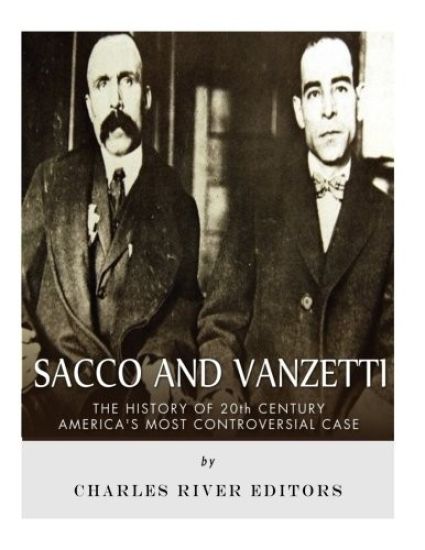
Sacco and Vanzetti: The History of 20th Century America's Most Controversial Case

Sacco and Vanzetti: The History of 20th Century America's Most Controversial Case

Charles River

Createspace Independent Publishing Platform
2018
nidottu
*Includes pictures *Includes accounts of the crime and trial *Includes online resources and a bibliography for further reading *Includes a table of contents "But what good is the evidence and what good is the argument? They are determined to kill us regardless of evidence, of law, of decency, of everything. If they give us a delay tonight, it will only mean they will kill us next week. Let us finish tonight. I'm weary of waiting seven years to die, when they know all the time they intend to kill us." - Nicola Sacco "What I say is that I am innocent, not only of the Braintree crime, but also of the Bridgewater crime. That I am not only innocent of these two crimes, but in all my life I have never stole and I have never killed and I have never spilled blood. That is what I want to say. And it is not all. Not only am I innocent of these two crimes, not only in all my life have I never stole, never killed, never spilled blood, but I have struggled all my life, since I began to reason to eliminate crime from the earth." - Bartolomeo Vanzetti There are few cases in American history as well known as Sacco and Vanzetti, and perhaps none of them were as controversial or socially charged as the trials against the two Italian immigrants in the early 20th century. The two avowed anarchists were ultimately tried and executed for murder and armed robbery, but the case said as much about the society trying them as it did about their guilt or innocence. Nearly 90 years later, there is still a heated debate over whether the two men, who arduously asserted their innocence, were actually guilty, but what is clear is that many Americans at the time believed they were being unjustly accused based on anti-Italian prejudice and disdain for their political beliefs. After they were arrested and charged, a number of respected celebrities lobbied on their behalf, including Albert Einstein, H. G. Wells, and future Supreme Court justice Felix Frankfurter, which compelled Massachusetts' governor to appoint a commission to investigate the case even after Sacco and Vanzetti had been convicted and sentenced to death. Ultimately, however, the commission upheld the finding of guilty, and the two men were electrocuted to death in August 1927. Even in the wake of the executions, people continued to bring up the case, not only in an effort to determine whether the two were actually guilty but also to decry the perceived injustice. H. G. Wells compared the outcome to the Dreyfus Affair, writing, "The guilt or innocence of these two Italians is not the issue that has excited the opinion of the world. Possibly they were actual murderers, and still more possibly they knew more than they would admit about the crime.... Europe is not 'retrying' Sacco and Vanzetti or anything of the sort. It is saying what it thinks of Judge Thayer. Executing political opponents as political opponents after the fashion of Mussolini and Moscow we can understand, or bandits as bandits; but this business of trying and executing murderers as Reds, or Reds as murderers, seems to be a new and very frightening line for the courts of a State in the most powerful and civilized Union on earth to pursue." Sacco and Vanzetti: The History of 20th Century America's Most Controversial Case chronicles the notorious trial and execution of the two Italian anarchists. Along with pictures of important people, places, and events, you will learn about Sacco and Vanzetti like never before, in no time at all.
Sacagawea and the Lewis & Clark Expedition: America's Most Famous Explorers

Sacagawea and the Lewis & Clark Expedition: America's Most Famous Explorers

Charles River

Createspace Independent Publishing Platform
2018
nidottu
*Includes pictures of important people, places, and events. *Includes passages from the journals of Lewis and Clark. *Explains Sacagawea's role in the expedition and the legends of her life and death. *Includes a Bibliography for further reading. "Your woman who accompanied you that long dangerous and fatigueing rout to the Pacific Ocian and back diserved a greater reward for her attention and services on that rout than we had in our power to give her at the Mandans." - William Clark in a letter to Sacagawea's husband "Ocian in view O The Joy " - William Clark, journal entry dated November 7,1805 It is the most fabled and storied journey in American history. From 1804-1806, the first expedition across the North American continent was commissioned by President Thomas Jefferson, who had recently bought a vast swath of territory from France. Though he knew he had bought a huge amount of land, Jefferson wasn't entirely sure of what he had bought, so he asked a team led by Meriwether Lewis and William Clark to traverse the continent until they reached the Pacific, studying everything from the ecology to geography along the way to get an understanding of the country's new region. Lewis and Clark would find far more than they bargained for. The 33 members who made the trip came into contact with about two dozen Native American tribes, many of whom helped the men survive the journey. Though they suffered deaths on their way west, the group ultimately reached the Pacific coast and got back to St. Louis in 1806, having drawn up nearly 150 maps and giving America a good idea of much of what lay west. Sacagawea is one of the most famous Native American women in American history, and few played such a central role in the settlement of the West for the young nation. As a young woman who was married to a French trapper from Quebec, Sacagawea happened to be in the right place at the right time for the legendary Lewis and Clark expedition, which set off for the Pacific coast after President Thomas Jefferson negotiated the Louisiana Purchase with France. The young Shoshone girl acted as a guide and interpreter for the expedition, helping it safely travel thousands of miles west from North Dakota to the Pacific over unfamiliar ground and amongst unfamiliar peoples. Put simply, the expedition could not have succeeded without her. Sacagawea's role in the Lewis and Clark expedition made her a national figure, and she continued to be popularized in literature and even among groups advocating for women's rights. Sacagawea is still taught to every American in school and stands alongside Pocahontas as the most famous Native American women, even though few people knew much about her life aside from her role in the trek. For that reason, few truly know about her life, her tribe, or her death, the latter of which is still controversial. At the same time, given the history and conflicts between the United States and various Native American tribes during the 19th century, Sacagawea's role in helping the nation push westward at the expense of Native Americans has taken on a more mixed and controversial character. Sacagawea and the Lewis & Clark Expedition profiles the lives, legends, and legacies of the famous explorers and their expedition, Along with excerpts from contemporary accounts, a bibliography an pictures of important people, places, and events, you will learn about the Lewis & Clark Expedition like you never have before, in no time at all.
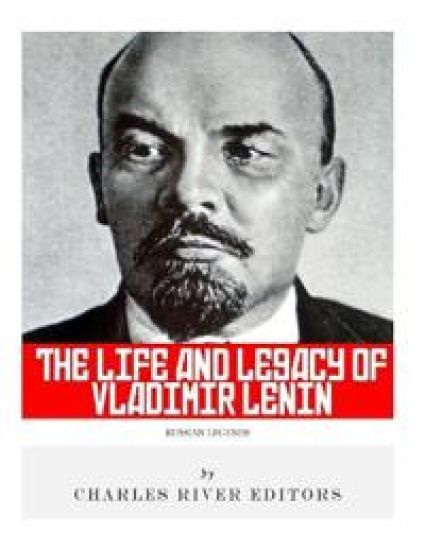
Russian Legends: The Life and Legacy of Vladimir Lenin

Russian Legends: The Life and Legacy of Vladimir Lenin

Charles River

Createspace Independent Publishing Platform
2018
nidottu
*Includes pictures of important people, places, and events in Lenin's life. *Explains the origins of Vladimir Lenin's name. "We want to achieve a new and better order of society: in this new and better society there must be neither rich nor poor; all will have to work. Not a handful of rich people, but all the working people must enjoy the fruits of their common labour." - Vladimir Lenin A lot of ink has been spilled covering the lives of history's most influential figures, but how much of the forest is lost for the trees? In Charles River Editors' Russian Legends series, readers can get caught up to speed on the lives of Russia's most important men and women in the time it takes to finish a commute, while learning interesting facts long forgotten or never known. Among the leaders of the 20th century, arguably none shaped the course of history as much as Vladimir Lenin (1870-1942), the Communist revolutionary and political theorist who led the Bolshevik Revolution that established the Soviet Union. In addition to shaping the Marxist-Leninist political thought that steered Soviet ideology, he was the first Soviet premier until his death and set the Soviet Union on its way to becoming one of the world's two superpowers for most of the century, in addition to being the West's Cold War adversary. Given the Red Scare and the nature of the Cold War, Lenin has always been a divisive and controversial figure in Western society, especially among those who equate the Soviets with brutal repression and human rights abuses. Lenin also has his champions, who point to the fact that he got Russia out of World War I, was the first to successfully implement a modern socialist state, and worked tirelessly to elevate the working classes. As it turned out, the creation of the Soviet Union came near the end of Lenin's life, as he worked so hard that he had burned himself out by his 50s, dying in 1924 after a series of strokes had completely debilitated him. Since his life before the Soviet Union naturally gets less focus, Lenin remains a bit of an unknown among many, and he is likely a lesser known or notorious figure than his successor, Joseph Stalin. Russian Legends: The Life and Legacy of Vladimir Lenin explores Lenin's life and work before the Bolshevik Revolution, as well as the crucial role he played in establishing the Soviet Union. Along with pictures of important people, places, and events, you will learn about the founder of Communist Russia like you never have before, in no time at all.
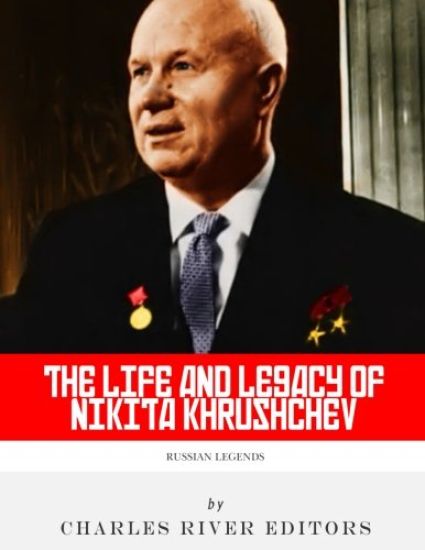
Russian Legends: The Life and Legacy of Nikita Khrushchev

Russian Legends: The Life and Legacy of Nikita Khrushchev

Charles River

Createspace Independent Publishing Platform
2018
nidottu
*Includes pictures of Khrushchev and important people, places, and events in his life. "We will bury you." - Nikita Khrushchev A lot of ink has been spilled covering the lives of history's most influential figures, but how much of the forest is lost for the trees? In Charles River Editors' Russian Legends series, readers can get caught up to speed on the lives of Russia's most important men and women in the time it takes to finish a commute, while learning interesting facts long forgotten or never known. For 30 years, much of the West looked on with disdain as the Bolsheviks took power in Russia and created and consolidated the Soviet Union. As bad as Vladimir Lenin seemed in the early 20th century, Joseph Stalin was so much worse that Churchill later remarked of Lenin, "Their worst misfortune was his birth... their next worst his death." Before World War II, Stalin consolidated his position by frequently purging party leaders (most famously Leon Trotsky) and Red Army leaders, executing hundreds of thousands of people at the least. And in one of history's greatest textbook examples of the idea that the enemy of my enemy is my friend, Stalin's Soviet Union allied with Britain and the United States to defeat Hitler in Europe during World War II. Stalin had ruled with an iron fist for nearly 30 years before his death in 1953, which may or may not have been murder, just as Stalin was preparing to conduct another purge. With his death, Soviet strongman and long-time Stalinist Nikita Khrushchev (1894-1971), who had managed to stay a step ahead of Stalin's purges if only because he participated in them, became the Soviet premier. A barely known figure outside of the Eastern bloc, Khrushchev was derided as a buffoon by one Western diplomat and mocked for his physical appearance by others, but any Western hopes that he would prove a more conciliatory figure than Stalin were quickly snuffed out as the hard-line Khrushchev embraced confrontational stances. In a statement to Western diplomats at the Polish embassy in Moscow, Khruschev famously warned, "We will bury you." And after his first meetings with President John F. Kennedy, Kennedy famously compared Khrushchev's negotiating techniques to his own father's. Even today, one of Khrushchev's most memorable moments is banging his shoe at a United Nations General Assembly meeting in September 1960 while a Filipino delegate was speaking. Personal histrionics aside, Khrushchev meant business when dealing with the West, especially the United States and its young president, John F. Kennedy. After sensing weakness and a lack of fortitude in Kennedy, Khrushchev made his most audacious and ultimately costly decision by attempting to place nuclear warheads at advanced, offensive bases located in Cuba, right off the American mainland. As it turned out, the Cuban Missile Crisis would show the Kennedy Administration's resolve, force Khrushchev to back down, and ultimately sow the seeds of Khrushchev's fall from power. By the time he died in 1971, he had been declared a non-citizen of the nation he had ruled for nearly 20 years. Russian Legends: The Life and Legacy of Nikita Khrushchev looks back at Khrushchev's most famous moments, but it also explores how the poor peasant rose to power, his politicking and brutality during the Stalin era, and his time as the Soviet premier. Along with pictures of important people, places, and events, you will learn about Khrushchev like you never have before, in no time at all.
Russian Legends: The Life and Legacy of Joseph Stalin

Russian Legends: The Life and Legacy of Joseph Stalin

Charles River

Createspace Independent Publishing Platform
2018
nidottu
*Includes pictures of Stalin and important people, places, and events in his life. *Discusses conspiracy theories surrounding Stalin's death "It is time to finish retreating. Not one step back Such should now be our main slogan." - Joseph Stalin A lot of ink has been spilled covering the lives of history's most influential figures, but how much of the forest is lost for the trees? In Charles River Editors' Russian Legends series, readers can get caught up to speed on the lives of Russia's most important men and women in the time it takes to finish a commute, while learning interesting facts long forgotten or never known. If Adolf Hitler had not inflicted the devastation of World War II upon Europe, it's quite likely that the West would consider Joseph Stalin (1878-1953) the 20th century's greatest tyrant. A Bolshevik revolutionary who played a crucial role in the Russian Revolution of 1917 and the establishment of the Soviet Union, Stalin was one of the Communist regime's earliest leaders and went about consolidating power after the death of Vladimir Lenin, whose final wishes were that Stalin be removed from his post as General Secretary of the Communist Party and not be given the ability to take power. Of course, Stalin managed to do just that, modernizing the Soviet Union at a breakneck pace on the backs of millions of poor laborers and prisoners. Before World War II, Stalin consolidated his position by frequently purging party leaders (most famously Leon Trotsky) and Red Army leaders, executing hundreds of thousands of people at the least. In one of history's greatest textbook examples of the idea that the enemy of my enemy is my friend, Stalin's Soviet Union allied with Britain and the United States to defeat Hitler in Europe, with the worst of the war's carnage coming on the eastern front during Germany's invasion of Russia. Nevertheless, the victory in World War II established the Soviet Union as of the world's two superpowers for nearly 50 years, in addition to being the West's Cold War adversary. By the time Stalin died in 1953, it was written that he "had found Russia working with wooden ploughs and is] leaving it equipped with atomic piles." Of course, he was reviled in the West, where it was written, "The names of Lenin, Stalin, and Hitler will forever be linked to the tragic course of European history in the first half of the twentieth century." Russian Legends: The Life and Legacy of Joseph Stalin explores Stalin's life and work before the Bolshevik Revolution, as well as the crucial role he played in establishing the Soviet Union and turning it into a modern superpower. Along with pictures of important people, places, and events, you will learn about Stalin like you never have before, in no time at all.
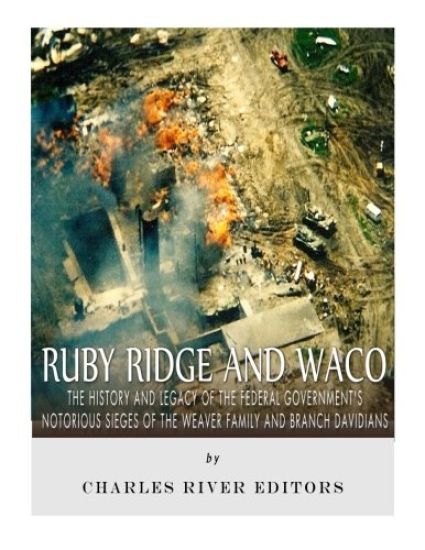
Ruby Ridge and Waco: The History and Legacy of the Federal Government's Notorious Sieges of the Weaver Family and Branch Davidians
*Includes pictures *Includes accounts of the standoffs by both sides *Includes online resources and a bibliography for further reading *Includes a table of contents In the summer of 1992, federal agents surrounded a few acres of land isolated in Ruby Ridge, Idaho, where Randy Weaver, his wife Vicki, his 14 year old son Samuel, and his three young daughters were staying. Weaver was a former Green Beret who had come to the attention of the ATF and other federal agencies for a number of reasons, including associations with white supremacist groups and the possession of illegal shotguns. After being arrested and released on bail in 1991, Weaver failed to appear in court when necessary and was thus treated as a fugitive, bringing in the involvement of U. S. Marshals. For the rest of that year, attempts to bring in Weaver were rebuffed, and Weaver threatened to shoot anyone who came to his cabin to bring him in. Federal agents from the U. S. Marshal Service and FBI surrounded the area on August 21 and wound up engaging in a firefight that ended in the deaths of 14 year old Samuel, one of the family dogs, and Marshal Bill Degan, who was shot by Weaver's friend Kevin Harris. On August 22, the federal agents were given new rules of engagement that were much more lax when it came to authorizing the use of deadly force. Instead of using the standard FBI policy that authorized deadly force to prevent suffering grievous harm as a method of self-defense, the agents, including snipers, were given the green light to shoot Randy and Kevin Harris if they were carrying weapons, regardless of whether they were actually targeting the federal agents. They were also authorized to shoot any adult after they surrendered if they were carrying a weapon. Before negotiators could even reach the scene on the 22nd, an FBI sniper shot Randy in the back as he headed towards the shed where his son's body lay. As Randy, his 16 year old daughter Sara, and Harris headed back for cover in the cabin, the same sniper fired a shot at Harris' chest, which wounded him but also struck and killed Vicki, who was standing behind the cabin door holding her 10 month old daughter. The Branch Davidians were an obscure religious sect located in Texas, but members of the group led by David Koresh in Waco, Texas stockpiled enough weaponry to catch the attention of the federal government. The U. S. Bureau of Alcohol, Tobacco, Firearms and Explosives (ATF) ultimately decided to serve arrest and search warrants at the compound for the possession of illegal weapons, even though they fully expected it would require a raid that could potentially turn fatal. The ATF hoped to use the element of surprise when it commenced the raid on February 28, but the Branch Davidians were ready for them, which led to an intense firefight between the two sides that resulted in the deaths of 4 ATF agents and a number of Branch Davidians. With that, the FBI got involved, and federal agents settled in for a standoff that would last about 50 days, trying everything from negotiating to using sleep deprivation tactics to coerce the Branch Davidians into ending the confrontation. Finally, on April 19, government agents breached the compound's walls and tried to use gas to flush the Branch Davidians out peacefully, but a series of fires broke out and quickly spread, killing the vast majority of the occupants inside, including many young children. Naturally, controversy spread over how the siege ended; for example, while most believe the Branch Davidians intentionally started the fires as part of a mass suicide, others insist it was the fault of the ATF. In addition to influencing how the government approached potential future conflicts with other groups, Waco's most important legacy was that it enraged people who already had an anti-government bent. The most notable, of course, was Timothy McVeigh, who conducted what was at the time the deadliest terrorist attack in American history in 1995.
Rousseau and Voltaire: The Lives of the Two Most Famous Intellectuals of the Enlightenment
*Includes pictures *Analyzes both men's lives and most famous works *Includes footnotes and a bibliography for further reading *Includes a table of contents "To hold a pen is to be at war." - Voltaire "Virtue is a state of war, and to live in it means one always has some battle to wage against oneself." - Rousseau The grand narrative of the Enlightenment, usually recounted and understood in terms of progress and modernity, generally appears as a simplified evolution from the trappings of superstition, feudalism, and everything "irrational" to a world more similar to today's world. Alongside the Renaissance, the Enlightenment is credited for the transition to an adherence to reason, secularism, and promotion of values such as individual and collective freedom and liberty. At the heart of the movement in France was Fran ois-Marie Arouet, better known by the pen name Voltaire, whose voluminous writings advocated for greater liberalism, including the freedom of religion and the separation of church and state. In addition to the classic Candide, Voltaire was a biting polemic whose satirical attacks on the Catholic Church were among the fiercest of his day. He also understood the risks he was taking with these writings, at one point explaining, "It is dangerous to be right in matters where established men are wrong." The Enlightenment is looked upon fondly, and it serves to reinforce the notion that the present is superior to the past, but things did not change as rapidly or as completely as many believe. In fact, some recent historians have challenged the belief that the Enlightenment was responsible for the French Revolution, which is a vital issue when it comes to Voltaire. After all, Voltaire, as his contemporaries and as most of his modern readers know him, is widely regarded as the pinnacle of Enlightenment thought, the symbol of the era of reason, and the harbinger of modern values. In that regard, his work is often considered to be the backbone of the French Revolution, which began about a decade after his death. Voltaire was unquestionably monumental, but he was also an exceptional product of his age, and his writings can introduce readers to the broader picture of the Enlightenment as a sum of contrasting and varied forces, tendencies and events. One of the towering figures of the age was Jean Jacques Rousseau, whose works were essential to the ideological developments of the 18th century. The prestige of French literature in the 18th century resides especially in its revolutionary character; while the writers of the previous century used to support the social order through their works and showed sympathy and even attempted to explain the political order of the time, in the 18th century, art, literature, philosophy and science all contribute actively and fiercely to the fight against the absolutist monarch and his regime. While this was a current manifesting all throughout Europe, there were differences in practice, especially between close countries (as was the case of England and France). There are many books and articles published constantly on the life and works of Rousseau. What generated such an abundance of writings is the turbulent life he led and the courage and audacity he manifested while fighting the prejudices of the time and establishing his ideas firmly within the academic community. His life can best be described as a constant conflict, whether it was conflict with his wife, his employers, his colleagues and even his friends. Rousseau and Voltaire examines the lives and works of the Enlightenment's most famous thinkers. Along with pictures of important people, places, and events, you will learn about Rousseau like never before, in no time at all.
Roman Greece: The History and Legacy of Ancient Rome's Conquest of Greece and Assimilation of Greek Culture
*Includes pictures *Includes online resources and a bibliography for further reading "Graecia capta ferum victorem cepit" ("Conquered Greece captured her uncouth conqueror and brought her arts to Latium") - Horace Graeco-Roman relations in the ancient world are normally assumed to date, essentially, from 146 B. C., when Rome organized its supervision of Greece through its Governors in Macedonia. In fact, the first direct interactions of any note between the two come about during the first Illyrian War in 229 B. C, although, of course there had been contacts of numerous kinds even prior to this date. Phillip V of Macedon had allied himself with Hannibal and that, in itself, guaranteed, at some point, that the Romans would turn their full attention to the eastern Mediterranean area, if for no other reason than to settle that outstanding score once and for all. Phillip was defeated in 197 B. C. at the Battle of Cynoscephalae and his son Perseus, at Pydna in 168 B. C. Following these defeats, Macedonia was divided into four republics under Roman governorship, but the rest of Greece was left relatively free from direct Roman rule. In due course, opposition to Rome's increasing domination of the region led to the establishment of the Achaean League, comprising a number of city states, headed by Corinth, to oppose the Romans. As this suggests, in the early years of the Principate despite growing Philhellenism in the Empire, the vast majority of Greeks, with the notable exception of Sparta, were very unwilling subjects of Rome. There was unrest in the Augustan period (27 B. C. - AD 14), particularly in Athens, and the imperial cult made little or no headway until the time of Nero (AD54 - 68), who, along with Hadrian much later (AD117 - 138), took a special interest in Greece and all things Greek. Nero, for example began the work on the Corinth canal, using slave labour, of course, and Hadrian completed a number of projects that are dealt with later in some detail. The antagonism that the majority of Greeks felt towards Rome was not helped by Caesar's foundation of a Roman colony at Corinth in 44 B. C. and another by Augustus at Nicopolis in 31 B. C. In both cases the establishment of the colonies had led to the forcible removal of the indigenous populations to make room for the colonists. What was, however, even more resented was what the Greeks considered to be the pillage of their culture and heritage. Various emperors systematically looted Greek temples and public buildings of their sculptures and other priceless works of art, taking them back to adorn the homes of the rich or public buildings in Rome. The pillage of Greek heritage extended to attempts to absorb Greek cults and Suetonius records the ultimately failed attempt to transfer the whole Eleusinian mystery cult to Rome. However, despite the ravages wrought on the Greek cities and their populations by Roman rule, in the end the Hellenism that came to be such a feature of the Roman Empire actually did more to secure the continuation of Greek culture and heritage than anything the Greeks themselves could have done. It can be argued that Roman culture was, indeed, Graeco-Roman rather than Roman. It was the Greek language that served as the lingua franca in the Eastern Empire and much of the west including Italy. Many Greek intellectuals, including Galen, were based in Rome and the Roman aristocracy more and more came to embrace Greek literature and philosophy. Homer's epics inspired Virgil's Aeneid and Seneca wrote in Greek. Earlier, Scipio Africanus (236 - 183 B. C.), the epitome of the Roman martial hero, studied Greek philosophy and regarded Greek culture as the benchmark against which all others had to be judged. The Roman poet and philosopher Horace studied in Athens during the Principate and, in common with many of his class, saw that city as the intellectual centre of the world.
Robin Hood: The History and Folklore of the English Legend

Robin Hood: The History and Folklore of the English Legend

Charles River

Createspace Independent Publishing Platform
2018
nidottu
*Includes pictures of important places and historic illustrations and art depicting the figures of the Robin Hood tales. *Profiles the historic figures who scholars speculate may be the person Robin Hood was based on. *Explains the origins and evolution of Robin Hood. "Robin Hood, Robin Hood, riding through the glen Robin Hood, Robin Hood, with his band of men Feared by the bad, loved by the good Robin Hood, Robin Hood, Robin Hood." - Theme Song from The Adventures of Robin Hood There are few characters in the English language more iconic than Robin Hood. Emerging out of the ballads of the High Middle Ages and surviving through numerous permutations to the present day, the green-clad archer has become an icon. Today he represents a playful, irreverent and cunning resistance to corruption and injustice, associated primarily with stealing from the rich and giving to the poor. Robin Hood's selfless acts of helping the masses at the expense of himself (by not keeping his treasure) have led to contemporary figures like Bill Gates being called "Modern Day Robin Hoods", and when a British man robbed a bank in 2013 and handed out the money to homeless people before he was arrested and imprisoned, the name Robin Hood was naturally in the news once more. Robin Hood is a celebrated folk hero and a kind of good thief, but the earliest stories about Robin Hood depict a far different character. The first Robin Hood was often a brutal and selfish yet also honorable figure, an anti-hero loved (perhaps paradoxically) by many social classes and loathed by authorities. When the notorious Gunpowder Plot was discovered at the beginning of the 17th century, the Earl of Salisbury condemned Guy Fawkes and the conspirators for being "Robin Hoods". The transformation of Robin Hood over the centuries has left many scholars attempting to find the origins behind the original story. Like King Arthur, some have even sought a historical figure that might serve as the basis for Robin Hood, while others have sought out mythological origins to see if Robin Hood's character evolved out of a mythological figure. When looking for the historical and mythical figure, scholars try to understand how the Robin Hood of these tales and came to be. What are the origins of Robin Hood and what can they tell people about the past? What is the historical basis for Robin Hood, if any? Robin Hood: The History and Folklore of the English Legend comprehensively examines the history and stories behind the Robin Hood legend, tracing the history of the elusive figure and examining the changes that developed over time. Along with pictures of important people, places, and events, you will learn about Robin hood like you never have before, in no time at all.
Rise and Fall: The Life and Legacy of Jefferson Davis

Rise and Fall: The Life and Legacy of Jefferson Davis

Charles River

Createspace Independent Publishing Platform
2018
nidottu
*Includes 25 pictures of Davis and important people, places and events in his life. Jefferson Davis (1808-1889) holds a unique place in American history, as the man best remembered for being the president of the Confederacy during the Civil War. While other famous Confederates like Robert E. Lee and Stonewall Jackson are still celebrated across the reunited country, Davis continues to be the object of scorn, derided over his attempt to flee after the Civil War and criticized as ineffective by historians. Among the Confederates still lauded among some Southerners, Davis is well down the list. Given his Civil War legacy, which often obscures his antebellum and postwar life, it's easy to forget why Davis was made president in the first place. As a career civil servant in the United States government during much of his adult life, both as a Senator and Secretary of War, Jefferson Davis was a natural choice to be elected President of the seceding Southern states in early 1861. History has accorded Abraham Lincoln a spot in the pantheon of American politics for the manner in which he steered the Union to victory and into the Reconstruction period after the war. In turn, Davis has been heavily criticized. Davis constantly clashed with Confederate generals like Joseph Johnston, the South's diplomacy failed to obtain foreign intervention, and he was unable to keep the Southern states together cohesively as the Confederate economy began to collapse. Whether the Civil War would have ended any differently with someone else in charge of the Confederacy will never be known, but Davis had a tumultuous presidency. Making matters worse, when Davis was captured by Union troops in May 1865, rumors spread that he was trying to escape in women's clothing. Davis was accused of treason and held prisoner for a few years before he was released, living out the rest of his years in the South. Even in death, Mother Nature hasn't left him alone. In 2005, Hurricane Katrina destroyed much of his postwar home in Biloxi, Mississippi. However, while others went quietly, Davis aimed to set the record straight in his gigantic, two volume memoir, The Rise and Fall of the Confederate Government. In his tome, Davis skipped over his own personal life and dove headfirst into explaining the country's and the war's political and military details in extremely exacting manner. Davis was obviously one of the best authorities from the Southern standpoint, and his book remains an invaluable source for historians today. Davis will forever remain controversial, but Rise and Fall: The Life and Legacy of Jefferson Davis looks at the whole picture. In addition to analyzing his presidency and decision-making, this biography chronicles the life of the man who befriended Robert E. Lee at West Point, opposed secession as a U. S. Senator, suffered personal and political tragedies while leading the Confederacy, and ultimately lived to tell his side of the story. Along with pictures of Davis and other important people and events in his life, you will learn about the Confederate president like you never have before, in no time at all.
Robert E. Lee's Greatest Victories: The Battles of Second Manassas, Fredericksburg, and Chancellorsville
Includes pictures of the battles' important generals and locations. Includes maps of the battles. Includes accounts of the fighting written by important generals like Lee, Longstreet, Stonewall Jackson, and more. Includes a Bibliography of each battle for further reading. With the exception of George Washington, perhaps the most famous general in American history is Robert E. Lee (January 19, 1807 - October 12, 1870), despite the fact he led the Confederate Army of Northern Virginia against the Union in the Civil War. Lee is remembered today for constantly defeating the Union's Army of the Potomac in the Eastern theater from 1862-1865, considerably frustrating Lincoln and his generals. His leadership of his army led to him being deified after the war by some of his former subordinates, especially Virginians, and he came to personify the Lost Cause's ideal Southern soldier. His reputation was secured in the decades after the war as a general who brilliantly led his men to amazing victories against all odds. Among those victories, the three most decisive and stunning victories were Second Manassas (August 1862), Fredericksburg (December 1862) and Chancellorsville (May 1863). The Second Battle of Bull Run (August 28-30, 1862) was one of the most decisive battles fought during the Civil War, and it was also one of the most unlikely. Less than three months before the battle, Joseph E. Johnston's Army of Northern Virginia had been pushed back nearly all the way to Richmond by George B. McClellan's Army of the Potomac, so close that Union soldiers could see the church steeples of the Confederate capital. And yet, at the end of Second Manassas, Robert E. Lee's Army of Northern Virginia found itself in the field unopposed about 20 miles away from the Union capital of Washington D. C. With Washington urging Army of the Potomac commander Ambrose Burnside to advance against Lee, Burnside launched an ill fated operation near Fredericksburg in December 1862. From December 12-13, Burnside struggled to get his army across the river while it was under fire from Confederates in Fredericksburg, and things only got worse when they did. The battle is mostly remembered for the piecemeal attacks the Union army made on heavily fortified positions Longstreet's men took up on Marye's Heights. As they threw themselves at Longstreet's heavily fortified position along the high ground, the Northern soldiers were mowed down again and again. During the battle, Lee turned to Longstreet and commented, "It is well that war is so terrible, otherwise we should grow too fond of it." In early May 1863, the Army of the Potomac was at the height of its power as it bore down on Lee's Army of Northern Virginia near Fredericksburg. With an army nearing 130,000 men, Joe Hooker's Army of the Potomac was twice the size of the Army of Northern Virginia. Despite being outnumbered, Lee sized up his opponents and decided to divide his forces in the face of the enemy, sending Stonewall Jackson to turn the Union army's right flank while the rest of the army maintained positions near Fredericksburg. The Battle of Chancellorsville is one of the most famous of the Civil War, and the most famous part of the battle was Stonewall Jackson's daring march across the Army of the Potomac's flank, surprising the XI Corps with an attack on May 2, 1863. Having seized the initiative, half of Lee's army launched desperate attacks on Hooker's forces near the Wilderness over the next 2 days, while simultaneously defending against Union attacks around Fredericksburg that pushed the other half of his army back several miles on May 3. Lee's heavily outnumbered army had just won the most stunning victory of the war. Robert E. Lee's Greatest Victories analyzes all three of the battles, including the campaigns that led up to them and the way they affected the Civil War at the time and in the future. You'll learn about the 3 battles l
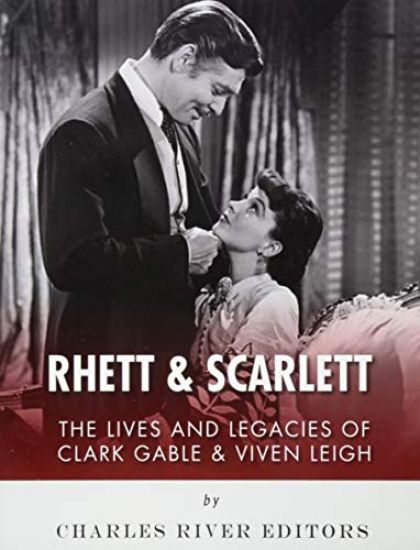
Rhett & Scarlett: The Lives and Legacies of Clark Gable and Vivien Leigh

Rhett & Scarlett: The Lives and Legacies of Clark Gable and Vivien Leigh

Charles River

Createspace Independent Publishing Platform
2018
nidottu
*Includes pictures of important people, places, and events. *Includes Leigh and Gable's quotes about their lives and careers. *Includes a bibliography for further reading. The 1930s were, without a doubt, the height of the classical Hollywood era. The era was known for its lavish studio productions, with MGM, RKO, Warner Brothers, Paramount, and 20th Century Fox all operating at the height of their powers. Every major studio possessed a long roster of contract players, with films released at such a rapid pace that it made for an especially competitive environment within the industry. Even while America remained in the throes of the Great Depression, the film industry continued to flourish, and movies easily supplanted the theater as the main attraction for American entertainment. Of course, what made 1939 the watershed year was the release of several critically acclaimed movies, including The Wizard of Oz and Mr. Smith Goes to Washington. But the most famous of the bunch, and perhaps the most famous movie of all, is Gone With the Wind. Leading man Clark Gable had a unique appeal that captivated Depression-era audiences; while Cary Grant offered a sophisticated charm and Fred Astaire was tied to the musical genre, Gable brought an air of sophistication that was less comical than that of Grant and appealed to both genders, unlike Astaire. At a time when so many Americans were financially destitute, Gable managed to appear classy without coming across as snobbish. At the same time, his virile masculinity was not overly macho or misogynist. For these reasons, Gable was able to captivate male and female viewers alike, and his mass appeal was a driving force behind the commercial success of Gone With the Wind, possibly the most beloved Hollywood film ever made. As iconic director John Huston once stated, "Clark Gable was the only real he-man I've ever known, of all the actors I've met." One of the most remarkable aspects of the film is that the quintessential Southern belle was played by Vivien Leigh, a British actress still relatively unknown in Hollywood. Vivien was an accomplished stage actress and had already appeared in foreign films during the 1930s, but she was a complete dark horse to get the iconic role she's still associated with, and it only came about because of her persistence in getting cast for the role. 30 years after Gone With the Wind was released, one film critic credited Selznick's "inspired casting" of Vivien Leigh as Scarlett with the film's success. Another 30 years later, the same critic wrote that Leigh "still lives in our minds and memories as a dynamic force rather than as a static presence." While Gone With the Wind made Leigh a big name practically overnight, she continued to buck the usual trend by doing Broadway and even appearing on stage in London during the 1940s, instead of focusing on movies. A lot of this was no doubt due to her famous marriage to Laurence Olivier, himself an accomplished stage and film actor. At the same time, Vivien became notorious for being difficult to work with and unusually temperamental, a byproduct of bipolar disorder that frequently affected her mood and occasionally left her incoherently hysterical. Despite starring together just that one time, Gable and Leigh produced one of the most memorable movie couples, but they were also tied together by similar fates and premature deaths. Rhett & Scarlett examines the lives and careers of the two Hollywood icons. Along with pictures of important people, places, and events, you will learn about Clark Gable and Vivien Leigh like never before.
Revolutionary Cousins: The Lives and Legacies of Samuel and John Adams

Revolutionary Cousins: The Lives and Legacies of Samuel and John Adams

Charles River

Createspace Independent Publishing Platform
2018
nidottu
*Weaves the lives of John and Samuel Adams into one entertaining and educational narrative. *Includes several quotes and writings from both John and Samuel. *Analyzes their relationship, political collaboration and later political rivalry. *Includes pictures of John, Samuel, and important people, places, and events in their lives. *Includes a Bibliography for further reading. Throughout the 1760s, colonial Boston was the principal thorn in the side of the British Empire, as British authorities constantly had to try to quell unrest over a series of taxes implemented against the colonies to try to finance the Seven Years War. At the heart of it all were two cousins, Samuel Adams and John Adams, who were destined to be two of Massachusetts and the American Revolution's most important figures. The American Revolution had no shortage of compelling characters with seemingly larger than life traits, including men like the multi-talented Benjamin Franklin, the wise Thomas Jefferson, the mercurial John Adams and the stoic George Washington. But no Revolutionary leader has been as controversial as Samuel Adams, who has been widely portrayed over the last two centuries as America's most radical and fiery colonist. Among his contemporaries, Samuel was viewed as one of the most influential colonial leaders, a man Thomas Jefferson himself labeled "truly the Man of the Revolution" and the one who the Boston Gazette eulogized as the "Father of the American Revolution." Adams was an outspoken opponent of British taxes in the 1760s, one of Boston's hardest working writers and orators, a leader of the Boston Caucus, active in the Sons of Liberty, and a political leader who organized large gatherings in settings like Faneuil Hall and the Old South Meeting House. When cousin John Adams was an Ambassador to France during the Revolution, he had to explain that he was not the "famous" Adams. John Adams has become one of the more popular presidents in history relatively recently, but it was not always so. For most of his life he was seen as a bit of an outsider, different from his fellow first presidents in his temperament, birth, life and politics. Adams and his son were the only presidents out of the first seven who were born north of the Mason Dixon line, and he was not an easy man to understand or work with. Not only did he have few friends, but he also often fell into long term quarrels with those he had. Adams remained a celebrated figure in Boston for all the work he did in Massachusetts before and after the Revolution, but his national reputation has experienced quite a renaissance over the past decade, beginning with David Mccullough's best selling biography in 2001, followed in 2008 by the popular HBO series based on it. Then, in 2010, Dearest Friend, a record of the correspondence between Adams and his wife Abigail solidified his position as one of the most darling Founding Fathers of the 21st Century. Revolutionary Cousins chronicles the amazing lives and work of the American Revolution's most famous cousins, examining their relationship, collaboration, and legacies. Along with pictures of important people, places, and events in his life, you will learn about Samuel and John Adams like you never have before, in no time at all.
The Phaistos Disc and Antikythera Mechanism: The History of the Most Mysterious Artifacts from Ancient Greece
*Includes pictures *Includes online resources and a bibliography for further reading Nearly 2,000 years before Homer wrote his epic poems, the Minoan civilization was centered on the island of Crete, a location that required the Minoans to be a regional sea power. And indeed they were, stretching across the Aegean Sea from about 2700-1500 BCE, with trade routes extending all the way to Egypt. The Minoans may have been the first link in the "European chain", leading to the Ancient Greeks and beyond, but questions persist over the origins of the civilization, the end of the civilization, and substantial parts of their history, including their religion and buildings. All of this is largely because their written language, known today as "Linear A," remains undeciphered, and among the more enigmatic finds of this truly enigmatic culture was a small disk-shaped object excavated among the ruins of the Minoan city of Phaistos in 1908. The disc, which has since become known simply as the "Phaistos Disc," contains a number of pictographic symbols that were unrecognized by the scholars who first laid eyes on the object and remain unknown in the more than 100 years since. The contents of the Phaistos Disc, like the Minoan language of Linear A, remain unclear, but that is not for lack of trying by a plethora of scholars, some more credible than others. Many different theories have been advanced, but there is still no consensus concerning its origins, or even if it was intended to be writing. Discovering ancient shipwrecks hasn't been a novelty for thousands of years, but when artifacts were salvaged from a Roman shipwreck off the Greek island of Antikythera in 1900, the discovery of one set off one of the great mysteries of antiquity. When sponge divers investigated the shipwreck, they found the kind of items often associated with such discoveries, including marble statues, pottery, jewelry, and coins, but they also discovered a strange object, the likes of which nobody had ever seen before. Initially assumed to be pieces of rock, it turned out that the item, soon to be dubbed the Antikythera mechanism, consisted of dozens of pieces, many of which had gears. In fact, while scholars quickly deduced that it had an astronomical purpose, many believed the mechanism was too advanced to actually date back to antiquity. As it turned out, of course, the Antikythera mechanism did date back to the 1st or 2nd century BCE, and as scholars began to more fully comprehend its abilities, fascination over the device grew. In conjunction with the determination that the mechanism was an analog computer of sorts that could predict astronomical phenomena like the positions of stars and eclipses, conjecture over the origins of the device led to theories over what the Romans were going to do with it, and whether the device was created by the Greek genius Archimedes himself. To this day, debate continues over whether there were predecessors to the model, where the astronomical observations that went into creating the model were taken, and whether the ultimate origins of the device might even be Babylonian.
The Phaistos Disc: The History of the Indecipherable Ancient Minoan Artifact Found on Crete
*Includes pictures*Includes online resources and a bibliography for further readingThe pre-modern world, especially the ancient world, is full of many mysteries, riddles, and enigmas that have perplexed scholars and lay people alike for centuries. One does not have to search long to find some of these mysteries. Ancient Egypt is often thought of as one of the most arcane of all civilizations with many aspects of its culture that are only now coming to light. For instance, the hieroglyphic script was not deciphered until the 19th century and to date scholars are still unsure about the details concerning how the pyramids were built or how mummies were made since there are no extant ancient "guidebooks" of either. In the New World, the sudden decline of the Mayan culture has captured the imagination of many for generations as the Maya left no records detailing their downfall. Likewise, the oldest European culture to reach the status of "civilization" - the Minoans - remains a mystery to the modern world in many ways. Nearly 2,500 years after the Golden Age of Athens, people across the world today continue to be fascinated by the Ancient Greeks, but the Greeks looked up to the Minoans. In Homer's Odyssey, Odysseus makes note of "a great town there, Cnossus, where Minos reigned." It was perhaps the earliest reference to the Minoan civilization, a mysterious ancient civilization that historians and archaeologists still puzzle over, but a civilization that renowned historian Will Durant described as "the first link in the European chain." Nearly 2,000 years before Homer wrote his epic poems, the Minoan civilization was centered on the island of Crete, a location that required the Minoans to be a regional sea power. And indeed they were, stretching across the Aegean Sea from about 2700-1500 BCE, with trade routes extending all the way to Egypt. Archeologists have found evidence that many of the Cretan cities suffered severe damage and were ravaged by fire at the same time Minoan trade diminished. Although some of the cities were reoccupied and partially rebuilt, the Minoan civilization never fully recovered. There is evidence that the Myceneans from the mainland began to occupy the cities of Crete and became the dominant traders in the Eastern Mediterranean. Throughout the late 19th century and much of the 20th century, some scholars believed the Minoans were unable to maintain their dominance over the bellicose Myceneans, while others speculated the growth of the Minoan population could not be supported by the agricultural production of Crete. However, recent archaeological finds have led to a consensus among scholars that the Minoan civilization was destroyed by a natural cataclysm. The Minoans may have been the first link in the "European chain", leading to the Ancient Greeks and beyond, but questions persist over the origins of the civilization, the end of the civilization, and substantial parts of their history, including their religion and buildings. All of this is largely because their written language, known today as "Linear A," remains undeciphered, and among the more enigmatic finds of this truly enigmatic culture was a small disk-shaped object excavated among the ruins of the Minoan city of Phaistos in 1908. The disc, which has since become known simply as the "Phaistos Disc," contains a number of pictographic symbols that were unrecognized by the scholars who first laid eyes on the object and remain unknown in the more than 100 years since. The contents of the Phaistos Disc, like the Minoan language of Linear A, remain unclear, but that is not for lack of trying by a plethora of scholars, some more credible than others. Many different theories have been advanced, but there is still no consensus concerning its origins, or even if it was intended to be writing.
The Phaistos Disc: The History of the Indecipherable Ancient Minoan Artifact Found on Crete
*Includes pictures*Includes online resources and a bibliography for further readingThe pre-modern world, especially the ancient world, is full of many mysteries, riddles, and enigmas that have perplexed scholars and lay people alike for centuries. One does not have to search long to find some of these mysteries. Ancient Egypt is often thought of as one of the most arcane of all civilizations with many aspects of its culture that are only now coming to light. For instance, the hieroglyphic script was not deciphered until the 19th century and to date scholars are still unsure about the details concerning how the pyramids were built or how mummies were made since there are no extant ancient "guidebooks" of either. In the New World, the sudden decline of the Mayan culture has captured the imagination of many for generations as the Maya left no records detailing their downfall. Likewise, the oldest European culture to reach the status of "civilization" - the Minoans - remains a mystery to the modern world in many ways. Nearly 2,500 years after the Golden Age of Athens, people across the world today continue to be fascinated by the Ancient Greeks, but the Greeks looked up to the Minoans. In Homer's Odyssey, Odysseus makes note of "a great town there, Cnossus, where Minos reigned." It was perhaps the earliest reference to the Minoan civilization, a mysterious ancient civilization that historians and archaeologists still puzzle over, but a civilization that renowned historian Will Durant described as "the first link in the European chain." Nearly 2,000 years before Homer wrote his epic poems, the Minoan civilization was centered on the island of Crete, a location that required the Minoans to be a regional sea power. And indeed they were, stretching across the Aegean Sea from about 2700-1500 BCE, with trade routes extending all the way to Egypt. Archeologists have found evidence that many of the Cretan cities suffered severe damage and were ravaged by fire at the same time Minoan trade diminished. Although some of the cities were reoccupied and partially rebuilt, the Minoan civilization never fully recovered. There is evidence that the Myceneans from the mainland began to occupy the cities of Crete and became the dominant traders in the Eastern Mediterranean. Throughout the late 19th century and much of the 20th century, some scholars believed the Minoans were unable to maintain their dominance over the bellicose Myceneans, while others speculated the growth of the Minoan population could not be supported by the agricultural production of Crete. However, recent archaeological finds have led to a consensus among scholars that the Minoan civilization was destroyed by a natural cataclysm. The Minoans may have been the first link in the "European chain", leading to the Ancient Greeks and beyond, but questions persist over the origins of the civilization, the end of the civilization, and substantial parts of their history, including their religion and buildings. All of this is largely because their written language, known today as "Linear A," remains undeciphered, and among the more enigmatic finds of this truly enigmatic culture was a small disk-shaped object excavated among the ruins of the Minoan city of Phaistos in 1908. The disc, which has since become known simply as the "Phaistos Disc," contains a number of pictographic symbols that were unrecognized by the scholars who first laid eyes on the object and remain unknown in the more than 100 years since. The contents of the Phaistos Disc, like the Minoan language of Linear A, remain unclear, but that is not for lack of trying by a plethora of scholars, some more credible than others. Many different theories have been advanced, but there is still no consensus concerning its origins, or even if it was intended to be writing.