Kirjojen hintavertailu – 12 903 727 kirjaa ja 27 kauppaa
Kirjailija
Charles River
Kirjat ja teokset yhdessä paikassa: 4 673 kirjaa, julkaisuja vuosilta 2013–2022, suosituimpiin kuuluu William Powell and Myrna Loy: The Lives and Careers of One of Classical Hollywood's Most Iconic Duos. Vertaile teosten hintoja ja tarkista saatavuus suomalaisista kirjakaupoista.
*Includes pictures*Includes historical accounts of the theory*Includes online resources and a bibliography for further readingThe world is filled with mysteries, and even in the modern age, much of the planet remains unexplored. The depths of the oceans and the intricate and extensive cave systems that honeycomb some parts of the Earth are still largely unknown. Thus, it should come as no surprise that when it comes to this terra incognita, people have projected all sorts of ideas. Tales of sunken cities or lost civilizations are just some of the fanciful theories, and those could even be considered tame in comparison to the idea that Earth is hollow and there's a whole other world, complete with alien beings, inside it. Despite this notion being rejected by the scientific community for at least 300 years, and despite the fact that geology, volcanology, oceanography, and physics have all proven that the planet does not have any substantial empty space inside of it, the idea of a hollow Earth continues to intrigue people and gain eager and sincere adherents. Why does this debunked notion seem to be gaining more followers? While most people accept that the Earth is an oblate spheroid and not flat, and that it is made up of rock and liquid magma and is not hollow, it's both interesting and of value to analyze radical ideas and examine how they endure and develop. Taken at face value, these ideas are patently ridiculous, but they provoke strong emotions in sincere people who have thought about their beliefs. These people feel they are privy to a hidden truth and that the rest of the world is wrong and ignorant. Of course, this feeling of mental superiority isn't the only appeal in clinging to radical notions. There is also the thrill of adventure-the feeling that one is part of a dangerous minority about to overthrow the dominant paradigm. It is far better, some would feel, to live in a world full of mystery and hope than in a decaying, "rational" world where everything can be explained but nothing solved. Hollow Earth: A History of Strange Tales, Bizarre Beliefs, and Conspiracy Theories about the Earth's Core offers a sampling of the many strange stories and theories regarding the planet's interior. Along with pictures of important people, places, and events, you will learn about the theories like never before.
"G a Gra a - a Estrela Flamejante, a Tocha da Raz o. Aqueles que possuem este conhecimento s o verdadeiramente Illuminati." - Adam Weishaupt "A pr pria palavra 'secretismo' repugnante em uma sociedade livre e aberta; e n s, como povo, inerente e historicamente nos opusemos a sociedades secretas, juramentos secretos, e procedimentos secretos..." - Presidente John F. Kennedy O surgimento de sociedades secretas sempre mostrou-se como uma das mais fascinantes facetas da civiliza o, um fen meno recorrente desde o nascimento da humanidade. Mesmo s culos ap s a funda o de alguns desses grupos, os mesmos permanecem muito conhecidos, como a "Ordem dos Cavaleiros Templ rios", um grupo de guerreiros armados vindos da Terra Santa; "Cr nio e Ossos"; e "Ma onaria", nomes que imediatamente nos v m mente. Mas, dentre as sociedades secretas da hist ria, a lenda por tr s de um nome supera todas as outras: os Illuminati. Das in meras sociedades secretas que tiveram sua ascens o e queda desde o in cio dos tempos, nenhuma chegou perto de alcan ar a notoriedade dos Illuminati. Particularmente nos ltimos anos, a lend ria ordem estrelou milhares de livros, artigos, document rios, filmes, m sicas, memes da internet, e outros meios de entretenimento. Eles s o um dos principais alvos dos peritos da conspira o, e os supostos mestres das mensagens subliminares simb licas escondidas na m dia. Independentemente da veracidade de quaisquer teorias da conspira o, n o se pode negar o impacto profundo do grupo nos ltimos s culos. Mesmo aqueles que n o encontram nada de impr prio na hist ria dos Illuminati compreendem a import ncia da m stica sociedade, desde sua origem na Baviera at a hist ria de seu fundador, Adam Weishaupt, e daqueles que levaram a sociedade ao auge. Um n mero infinito de teorias da conspira o foi levantado em torno dos Illuminati, que h muito tempo deixam o mundo em alerta, uma tend ncia que permanece at os dias de hoje. Os Illuminati: A Hist ria de Uma das Mais Not rias Sociedades Secretas do Mundo examina a verdadeira hist ria da influente irmandade, seu conhecimento intelectual e os membros que criaram a espinha dorsal da mesma. Este livro tamb m analisa o destino dos Illuminati na era moderna, desde o rid culo ao desconcertantemente convincente. Junto com imagens que representam pessoas, lugares e eventos importantes, voc aprender sobre os Illuminati como nunca antes.
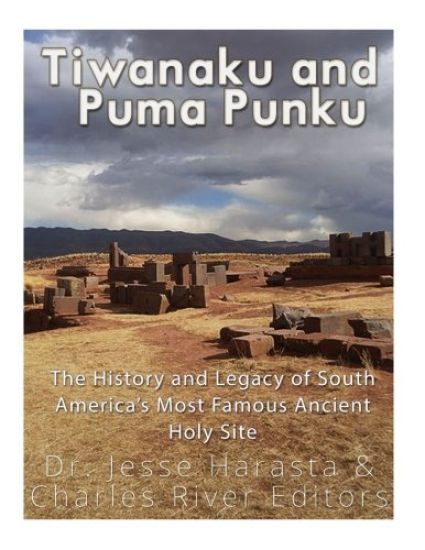
*Includes pictures *Includes a bibliography for further reading Few ancient ruins capture the imagination like the mighty holy site of Tiwanaku, located on the high Andean altiplano plateau outside of La Paz, Bolivia. Unlike some ancient sites, such as Machu Picchu in neighboring Peru or Chichen Itz in Mexico, Tiwanaku has never been "lost"; on the contrary, it has been marveled over for centuries by Incan nobles, Spanish Conquistadores, modern backpackers, and UFO fanatics alike. Despite this history of amazement, Tiwanaku has remained something of an enigma until recently, but it appears that this would have probably been pleasing to its creators. It was created to be a mysterious, sacred, and beautiful place, one with many secrets and a public face characterized by PT Barnum-like showmanship. Skillful modern archaeology has allowed people to look behind the facade and see, for the first time in many, many centuries, some of the secrets behind it. The story is fascinating, complex, and thoroughly human. The modern visitor arriving to Tiahuanaco finds him or herself in, as Cieza de L on noted almost 130 years ago, a not very notable, dusty, chilly settlement south of Lake Titicaca. The place would not be of any great interest except that to the east and south of the modern village, within walking distance of the center, rise a number of remarkable ruins. The ancient world often evokes wonder, respect and even confusion, and few places accomplish any of that more than the incredible ruined stone temple of Puma Punku. Part of the larger ruined city of Tiwanaku in the altiplano plains of modern Bolivia, Puma Punku is a marvel of engineering, stonemasonry and design. These facts are obvious to even the lay observer, as Puma Punku's stonework is remarkable even for the Andes where visitors have long wondered at ancient stone joints where even a knife bade could not fit between the stones. This level of craftsmanship has caused some, mostly those who have never been to the Andes, to speculate of a fanciful origin for the site, maintaining that such a wonderful and mysterious place must be the work of extraterrestrial or super-human forces. However, Puma Punku's stonemasonry is often considered its most notable feature only because until recently so little was known about the site or the Tiwanaku culture that built it. This would be like visiting the ruins of the Vatican or Westminster Abbey centuries from now and being wowed by the quality of construction. While the construction is impressive, that aspect is not the most interesting story that the sites can tell. Today, through the diligent work of scholars from many countries, the disciplines of archaeology, art history, comparative ethnography and other modern historical sciences have begun to peel back the story of Puma Punku, and historians can once again begin to tell the stories behind the stones. That work has highlighted the enigmatic ruins from many points of view, and have helped explain how it was a place of ritual, showmanship, mythology and, of course, the finest workmanship. Tiwanaku and Puma Punku: The History and Legacy of South America's Most Famous Ancient Holy Site examines some of the most important pre-Columbian ruins in the world. Along with pictures of important people, places, and events, you will learn about Tiwanaku and Puma Punku like never before.
*Includes pictures *Includes a bibliography for further reading Few ancient ruins capture the imagination like the mighty holy site of Tiwanaku, located on the high Andean altiplano plateau outside of La Paz, Bolivia. Unlike some ancient sites, such as Machu Picchu in neighboring Peru or Chichen Itz in Mexico, Tiwanaku has never been "lost"; on the contrary, it has been marveled over for centuries by Incan nobles, Spanish Conquistadores, modern backpackers, and UFO fanatics alike. Despite this history of amazement, Tiwanaku has remained something of an enigma until recently, but it appears that this would have probably been pleasing to its creators. It was created to be a mysterious, sacred, and beautiful place, one with many secrets and a public face characterized by PT Barnum-like showmanship. Skillful modern archaeology has allowed people to look behind the facade and see, for the first time in many, many centuries, some of the secrets behind it. The story is fascinating, complex, and thoroughly human. The modern visitor arriving to Tiahuanaco finds him or herself in, as Cieza de L on noted almost 130 years ago, a not very notable, dusty, chilly settlement south of Lake Titicaca. The place would not be of any great interest except that to the east and south of the modern village, within walking distance of the center, rise a number of remarkable ruins. The ancient world often evokes wonder, respect and even confusion, and few places accomplish any of that more than the incredible ruined stone temple of Puma Punku. Part of the larger ruined city of Tiwanaku in the altiplano plains of modern Bolivia, Puma Punku is a marvel of engineering, stonemasonry and design. These facts are obvious to even the lay observer, as Puma Punku's stonework is remarkable even for the Andes where visitors have long wondered at ancient stone joints where even a knife bade could not fit between the stones. This level of craftsmanship has caused some, mostly those who have never been to the Andes, to speculate of a fanciful origin for the site, maintaining that such a wonderful and mysterious place must be the work of extraterrestrial or super-human forces. However, Puma Punku's stonemasonry is often considered its most notable feature only because until recently so little was known about the site or the Tiwanaku culture that built it. This would be like visiting the ruins of the Vatican or Westminster Abbey centuries from now and being wowed by the quality of construction. While the construction is impressive, that aspect is not the most interesting story that the sites can tell. Today, through the diligent work of scholars from many countries, the disciplines of archaeology, art history, comparative ethnography and other modern historical sciences have begun to peel back the story of Puma Punku, and historians can once again begin to tell the stories behind the stones. That work has highlighted the enigmatic ruins from many points of view, and have helped explain how it was a place of ritual, showmanship, mythology and, of course, the finest workmanship. Tiwanaku and Puma Punku: The History and Legacy of South America's Most Famous Ancient Holy Site examines some of the most important pre-Columbian ruins in the world. Along with pictures of important people, places, and events, you will learn about Tiwanaku and Puma Punku like never before.
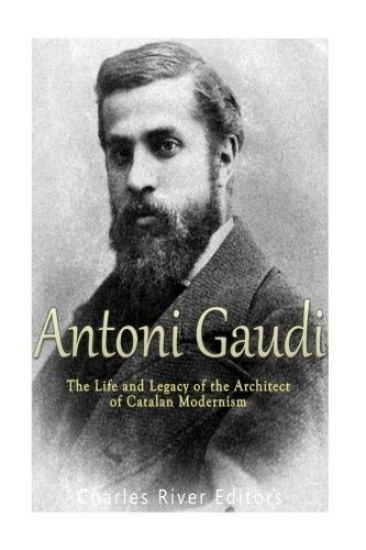
*Includes pictures *Includes Gaudi's quotes about his life and work *Includes online resources and a bibliography for further reading "Those who look for the laws of Nature as a support for their new works collaborate with the creator." - Antoni Gaudi Halfway into the 19th century, Spain's Catalonia underwent a sweeping transformation when it was thrust into not one, but 2 golden eras - the Renaixen a and the Industrial Revolution. It was during this explosive period of creativity, thriving prosperity, and invigorated patriotism that a steadfastly nonconforming and fascinatingly eccentric icon was born, one that was about to take Catalonia by storm with his brilliant eye for unorthodox art and his legendary - or as some would say, notoriously - out-of-the-box ideas. Salvador Dal , the celebrated surrealist, was one of many who would find a fount of inspiration in him, even once raving about the Sagrada Familia, the highlight of this icon's career: "Those who have not heard about the chromatic and shining essence of its color, the astonishing polyphony of its towers as organ pipes and shocked by its mutant naturalism, are traitors." This icon in question, of course, is none other than what many now consider to be the patriarch of the Catalan Modernism movement: Antoni Gaud . Antoni Gaud The Life and Legacy of the Architect of Catalan Modernism examines his life and career highlights, how his religiosity and love for nature shaped his art, and how a dangerous obsession eventually led to a genius' tragic end. Along with pictures depicting important people, places, and events, you will learn about Gaudi like never before.
*Includes pictures *Includes ancient accounts *Includes online resources and a bibliography for further reading The interactions between mortals and immortals in Greek myths were usually a coin-flip of love and hate, with the Trojan War being the biggest exception. This was the case even though the gods were mercilessly partisan. If the immortals chose not to sleep with mortals, they were punishing them for some slight or other, such as neglecting a sacrifice or hubristic boasting. Being the "eternal virgin" in the eyes of most later mythographers did not present Artemis with many opportunities to pursue amorous liaisons, but she never failed to exact her revenge for slights against herself or her mother, Leto. Artemis had one of the most widespread cults in the Greek world, perhaps due to her connection to nature, which can be a ubiquitous antagonist or boon-giver. Her association with nature may also explain why she was one of the oldest deities in the Greek pantheon, although her appearance in the Mycenaean Linear B script (the earliest form of Greek that has been deciphered, dating to as early as 1450 BCE) is still contested. Etymology often gives modern readers a better idea of the earliest form of a deity, but Artemis's is confusing. Of course, that didn't stop many writers, both ancient and modern, from making attempts at it, either associating her with mythic qualities (such as "maidenhood" and "purity") and/or giving her non-Greek origins. The latter is as unsurprising as the former, since Artemis had a large following throughout Greece and across Asia Minor, where her most famous temple-one of the Seven Wonders of the World-resided. It was in the Near East that Artemis embraced some of the wilder and more formidable characteristics many of the later Greek mythographers only hinted at. To many modern readers, what is most surprising about Artemis is not her "foreignness," but that she was not the carefree maiden prancing through woods and glades to give succor to animals in need. She was a maiden, and her realm was most certainly wooded, but it was above all wild, as was she. Since the dawn of time, humans have been clustering together for safety, and Artemis was the emanation of nature and all the unyielding and unforgiving elements therein Many of the stories in which she was involved reflect this wilderness (and oftentimes cruelty), finding their physical manifestation in much of the cult activity carried out in her honor. The duality of nature as both boon and danger is often present in the writing about Artemis, which gives more for modern historians to work with. Moreover, her deeds are recorded almost unceasingly from the 8th century BCE - when Homer and Hesiod first began recording orally transmitted myths - through to Roman times (during which her name changed, but little else). There is no definitive text on Artemis's deeds, there was no shortage of works that help explain the mythological, ritualistic, and cultural persona of the huntress. Artemis: The Origins and History of the Greek Goddess of the Moon and the Hunt looks at the story of the legendary goddess and the various roles she played in ancient mythology. Along with pictures depicting important people, places, and events, you will learn about Artemis like never before.
*Includes pictures *Includes Gaudi's quotes about his life and work *Includes online resources and a bibliography for further reading "Those who look for the laws of Nature as a support for their new works collaborate with the creator." - Antoni Gaudi Halfway into the 19th century, Spain's Catalonia underwent a sweeping transformation when it was thrust into not one, but 2 golden eras - the Renaixen a and the Industrial Revolution. It was during this explosive period of creativity, thriving prosperity, and invigorated patriotism that a steadfastly nonconforming and fascinatingly eccentric icon was born, one that was about to take Catalonia by storm with his brilliant eye for unorthodox art and his legendary - or as some would say, notoriously - out-of-the-box ideas. Salvador Dal , the celebrated surrealist, was one of many who would find a fount of inspiration in him, even once raving about the Sagrada Familia, the highlight of this icon's career: "Those who have not heard about the chromatic and shining essence of its color, the astonishing polyphony of its towers as organ pipes and shocked by its mutant naturalism, are traitors." This icon in question, of course, is none other than what many now consider to be the patriarch of the Catalan Modernism movement: Antoni Gaud . Antoni Gaud The Life and Legacy of the Architect of Catalan Modernism examines his life and career highlights, how his religiosity and love for nature shaped his art, and how a dangerous obsession eventually led to a genius' tragic end. Along with pictures depicting important people, places, and events, you will learn about Gaudi like never before.