Kirjojen hintavertailu – 12 903 727 kirjaa ja 27 kauppaa

Kirjailija

Charles River

Kirjat ja teokset yhdessä paikassa: 4 673 kirjaa, julkaisuja vuosilta 2013–2022, suosituimpiin kuuluu William Powell and Myrna Loy: The Lives and Careers of One of Classical Hollywood's Most Iconic Duos. Vertaile teosten hintoja ja tarkista saatavuus suomalaisista kirjakaupoista.

4 673 kirjaa

Kirjojen julkaisuvuodet: 2013–2022.

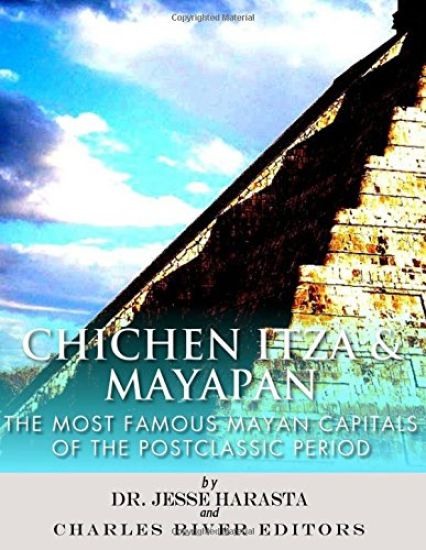
Chichen Itza & Mayapan: The Most Famous Mayan Capitals of the Postclassic Period

Chichen Itza & Mayapan: The Most Famous Mayan Capitals of the Postclassic Period

Jesse Harasta; Charles River

Createspace Independent Publishing Platform
2017
nidottu
*Includes pictures. *Includes footnotes and a bibliography for further reading. Many ancient civilizations have influenced and inspired people in the 21st century, like the Greeks and the Romans, but of all the world's civilizations, none have intrigued people more than the Mayans, whose culture, astronomy, language, and mysterious disappearance all continue to captivate people. At the heart of the fascination is the most visited and the most spectacular of Late Classic Maya cities: Chich n Itz . Chich n Itz was inhabited for hundreds of years and was a very influential center in the later years of Maya civilization. At its height, Chich n Itz may have had over 30,000 inhabitants, and with a spectacular pyramid, enormous ball court, observatory and several temples, the builders of this city exceeded even those at Uxmal in developing the use of columns and exterior relief decoration. Of particular interest at Chich n Itz is the sacred cenote, a sinkhole was a focus for Maya rituals around water. Because adequate supplies of water, which rarely collected on the surface of the limestone based Yucatan, were essential for adequate agricultural production, the Maya here considered it of primary importance. Underwater archaeology carried out in the cenote at Chich n Itz revealed that offerings to the Maya rain deity Chaac (which may have included people) were tossed into the sinkhole. Although Chich n Itz was around for hundreds of years, it had a relatively short period of dominance in the region, lasting from about 800-950 A. D. Today, tourists are taken by guides to a building called the Nunnery for no good reason other than the small rooms reminded the Spaniards of a nunnery back home. Similarly the great pyramid at Chich n Itz is designated El Castillo ("The Castle"), which it almost certainly was not, while the observatory is called El Caracol ("The Snail") for its spiral staircase. Of course, the actual names for these places were lost as the great Maya cities began to lose their populations, one by one. Chich n Itz was partially abandoned in 948, and the culture of the Maya survived in a disorganized way until it was revived at Mayap n. Mayap n emerged first as a minor settlement in the orbit of Chich n, but it slowly came to replace it after the larger city's trade connections with the Toltecs of Tula crumbled and it suffered a staggering defeat by Mayap n's armies. The building styles and art in their city show both admiring references to the great Chich n Itz as well as an attempt to position Mayap n as a more orthodox heir of Maya tradition. At the same time, they emulated many features and could not escape the tremendous influences - especially in religion - of Chich n. This is seen in the fact that many of the most important buildings in the new city appear to be small-scale reproductions of ones in Chich n. Due in part to the fact that it has long been overshadowed by Chich n Itz , a lot excavation and scholarly research on the site has only come about in recent decades, and even though there is still plenty of work to do, a lot of information about life in Mayap n has been unearthed. At its height, Mayap n may have boasted a population of over 15,000, and archaeologists have had their hands full trying to discover and restore the several thousand buildings both inside Mayap n's walls and outside them. Chich n Itz & Mayap n: The Most Famous Mayan Capitals of the Postclassic Period comprehensively covers the history of the city, as well as the speculation surrounding the purpose of Chich n Itz and the debate over the buildings. Along with pictures and a bibliography, you will learn about the Maya's most famous cities like you never have before, in no time at all.
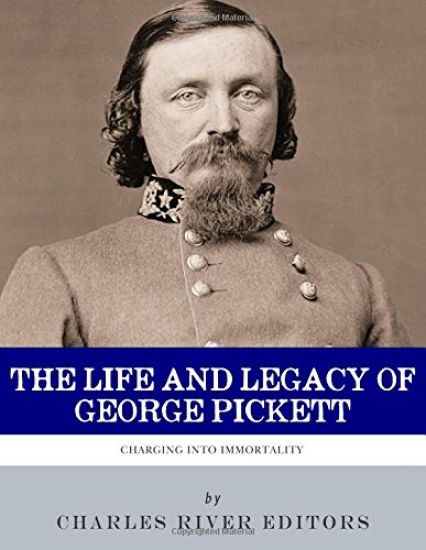
Charging into Immortality: The Life and Legacy of George Pickett

Charging into Immortality: The Life and Legacy of George Pickett

Charles River

Createspace Independent Publishing Platform
2017
nidottu
*Includes accounts of Pickett's Charge by some of the soldiers who made it. *Includes excerpts of letters Pickett wrote about Gettysburg to his wife Sallie. *Discusses controversies surrounding Pickett's Charge and his relationship with Robert E. Lee. *Includes pictures of important people, places, and events in Pickett's life. *Includes maps of important battles. *Includes a Bibliography for further reading. Before July 3, 1863, George Pickett was best known among his comrades for finishing last in his class at West Point, being a jocular but courageous soldier, and his carefully perfumed locks. As part of West Point's most famous Class of 1846, Pickett was classmates with men like Stonewall Jackson and George McClellan, and despite his poor class standing he distinguished himself fresh out of school during the Mexican-American War. Pickett's reputation for bravery extended into the early years of the Civil War, to the extent that former West Point classmate George McClellan wrote, "Perhaps there is no doubt that he was the best infantry soldier developed on either side during the Civil War." A native Virginian, the impeccably styled Pickett represented all of the antebellum South's most cherished traits, and as such he was a "beau-ideal" Confederate soldier. After proving himself a capable brigadier during the Peninsula Campaign, during which he was wounded and forced to recuperate, Pickett was given command of a division in Longstreet's corps of the Confederate Army of Northern Virginia, putting him in position for a rendez-vous with destiny. Today Pickett is best remembered for the charge that has taken his name and is now remembered as the most famous assault of the Civil War. Having failed to dislodge the Union Army of the Potomac on either flank during the first two days at Gettysburg, Lee ordered a charge of nearly 15,000 at the center of the lines. The attack is now considered the high water mark of the Confederacy, spelling the South's doom with the failed charge and the loss at Gettysburg. Pickett's division was so decimated by the charge that when Lee asked him to reform his division in case of a Union counterattack, Pickett is alleged to have responded, "I have no division " Pickett would later become notorious for the loss at the Battle of Five Forks that helped the Union break the siege at Petersburg and force Lee's surrender a week later at Appomattox. Rumors that Pickett and Lee intensely disliked each other have persisted ever since, with Pickett reputed to have said after the war "that man destroyed my division." Ironically, Pickett's Charge was always a sore subject with the general even though it was intended to be a tribute to the soldiers of his division for advancing the furthest during the doomed assault, and Pickett offered one of the most candid quotes after the Civil War on the topic of who was to blame for the loss at Gettysburg: "I've always thought the Yankees had something to do with it." Charging Into Immortality chronicles the life and career of Pickett and examines the controversy and legacy surrounding his Civil War record and the charge named after him. Along with accounts of Pickett's Charge and pictures of important people, places, and events in his life, you will learn about General Pickett like you never have before.
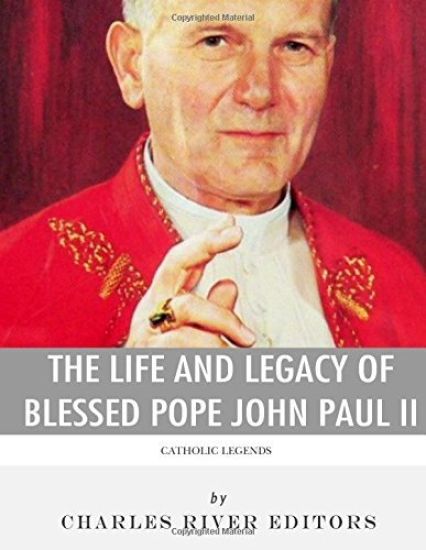
Catholic Legends: The Life and Legacy of Blessed Pope John Paul II

Catholic Legends: The Life and Legacy of Blessed Pope John Paul II

Charles River

Createspace Independent Publishing Platform
2017
nidottu
*Includes pictures of the Pope and important people, places, and events in his life. *Includes a bibliography of the Pope's works and works about him for further reading. A lot of ink has been spilled covering the lives of history's most influential figures, but how much of the forest is lost for the trees? In Charles River Editors' Catholic Legends series, readers can get caught up to speed on the lives of the Church's most important men and women in the time it takes to finish a commute, while learning interesting facts long forgotten or never known. The 20th century had no shortage of influential leaders, both good and bad. But while dictators, generals, and presidents came and went, the last quarter of the 20th century could rely on one thing: the papacy of Blessed Pope John Paul II. In becoming one of Catholicism's most popular leaders, and one shortly destined for sainthood, John Paul II indeed became one of the most famous and influential men of the 20th century. The first pope in centuries to not hail from Italy, John Paul II was responsible for a global outreach of epic proportions that brought him to over 100 countries, helped end communism in Europe, and brought people of different faiths closer together than ever before. It's often said that nobody in history has been seen and viewed in person by more people, an amazing feat for a man of humble origins born in Poland before World War II, a place that continues to especially venerate him today. Catholic Legends: The Life and Legacy of Blessed Pope John Paul II looks at the life and legacy of John Paul II, but it also humanizes the man born Karol J zef Wojtyla and provides a thorough assessment of his nearly 30 year papacy. Along with pictures of other important people, places and events in his life, you will learn about Pope John Paul II like you never have before, in no time at all.
Carlos the Jackal: The Life of the 20th Century's Most Notorious Terrorist

Carlos the Jackal: The Life of the 20th Century's Most Notorious Terrorist

Charles River

Createspace Independent Publishing Platform
2017
nidottu
*Includes pictures *Includes Carlos the Jackal's own quotes about his life and terrorism *Includes footnotes, online resources and a bibliography for further reading *Includes a table of contents "Excuse me for taking my time, but I'm a living archive, and most people at my level are dead." - Carlos the Jackal The history of terrorism as a self-appointed profession can be traced back to the dawn of the human community, and each era claims its own class of celebrities. However, it was in the 20th century in which individual terrorists first gained access to the type of advanced weaponry that could cause mass killings and destroy major public institutions. In the modern age, entire communities and countries can be held hostage to demands based upon the threat of personal or state violence, and playing upon mankind's greatest fears has risen to a new level of creativity as cultures, religions, and governmental ideologies square off in an ever-shrinking globe. From the early 1970s through the following two decades, the cult star of worldwide terrorism was Ilich Ramirez Sanchez of Venezuela, better known to the world as Carlos the Jackal. Sanchez, the most notorious of terrorists in the late 20th century before Osama bin Laden's destructive 9/11 attacks, was born on October 12, 1949, in the years following the most global example of state terrorism in the form of Nazi Germany. Sanchez was known to virtually every European and American who read the news between 1970 and 1990, but it was his moniker, Carlos the Jackal, that signified his status as a household word. During Sanchez' reign as what has been called, "the first super terrorist," the world found it unthinkable that any future attack on society could outdo his spectacular raids on Western targets, specifically European ones. For young generations growing up in the 21st century, the operative code-named Carlos may have slipped into distant history, but as one put it, "Before there was Osama bin Laden...before there was Ramzi Yousef, there was the jackal." Carlos the Jackal: The Life of the 20th Century's Most Notorious Terrorist looks at the violent life and legacy of the Jackal. Along with pictures of important people, places, and events, you will learn about Carlos the Jackal like never before, in no time at all.
Caligula's Nemi Ships: The History of the Roman Emperor's Mysterious Luxury Boats

Caligula's Nemi Ships: The History of the Roman Emperor's Mysterious Luxury Boats

Charles River

Createspace Independent Publishing Platform
2017
nidottu
*Includes pictures *Describes the purpose of the ships, their sizes, and some of the technologically advanced objects found on board *Includes online resources and a bibliography for further reading *Includes a table of contents For several centuries, fishermen on Lake Nemi in Italy could see ship wreckage on the floor of the lake, and in 1928, under the patronage of Italian dictator Benito Mussolini, one of the most extraordinary archaeological recovery processes was begun to raise from the floor of Lake Nemi, a small volcanic lake in the Alban Hills, some 30 miles south of Rome, two sunken barges that had lain half buried in the silt since the reign of the Roman Emperor Caligula. The recovery of these two vessels was a massive archaeological operation, unique in scope and scale, but also not atypical of the local and international prestige projects which Mussolini used to embellish his popularity, and for which he had become known. Through undertaking projects of this nature, Mussolini sought not only to highlight the splendor of Italian imperial history but also to recreate it, and to guide the Kingdom of Italy, and his own fascist dictatorship, along the road towards recapturing the glory days of the great Roman Empire. The recovery of the Nemi Ships was one such enterprise. It presented Mussolini with the opportunity to reveal to the world once again the superiority of ancient Roman culture and technology, while at the same time illustrating the advances in modern Italian technology that allowed for such a daring and groundbreaking salvage operation to take place. As the waters of Lake Nemi subsided, and as the carcasses of the first ship came into view, the shores of the lake were crowded with archaeologists, researchers, journalists and politicians bearing witness to one of the greatest moments in archaeological history. As it turned out, the two ships dated back to Caligula, with the smaller boat serving as a floating temple and the bigger one serving as a floating palace for Caligula himself. The bigger boat was one of the largest ships ever constructed during antiquity, and it had used technology that would not again be available until the 19th century. For example, in addition to their size, the ships on Lake Nemi used advanced water pumps and anchors, as well as the first evidence of the Romans' use of ball bearings, used to create a platform for a rotating statue. The ships at Nemi were perfect symbols for the excesses of Caligula, so after Caligula was assassinated, the ships were intentionally scuttled. Unfortunately, that was not the last time the ships met an untimely fate, because in May 1944, during World War II, the Allies were pushing the Nazis north through Italy and a battle was waged in the area. On the night of May 31, the ships were almost completely destroyed in a fire. Both sides blamed the other, but despite their loss, a lot of work has gone into replicating the ships and continuing to display the artifacts that were aboard. Caligula's Nemi Ships: The History of the Roman Emperor's Mysterious Luxury Barges chronicles the history, discovery, and destruction of the famous ships. Along with pictures of important people, places, and events, you will learn about the Nemi ships like never before, in no time at all.
Caesar & Cleopatra: History's Most Powerful Couple

Caesar & Cleopatra: History's Most Powerful Couple

Charles River

Createspace Independent Publishing Platform
2017
nidottu
*Discusses common myths and legends surrounding the lives of Caesar & Cleopatra. What were Caesar's last words? Was Cleopatra actually Egyptian? How did she die? What did she look like? *Includes pictures of busts of Caesar, Cleopatra, and depictions of important people, places, and events in their lives. *Includes a Bibliography for further reading. "I would rather be the first man in a humble village, than the second man in Rome" - Caesar "Her beauty, as we are told, was in itself not altogether incomparable, nor such as to strike those who saw her; but converse with her had an irresistible charm, and her presence, combined with the persuasiveness of her discourse and the character which was somehow diffused about her behaviour towards others, had something stimulating about it. There was sweetness also in the tones of her voice; and her tongue, like an instrument of many strings, she could readily turn to whatever language she pleased..." - Plutarch Possibly the most important man of antiquity, and even all of history, was Julius Caesar. Alexander Hamilton, the famous American patriot, once remarked that "the greatest man who ever lived was Julius Caesar". Such a tribute, coming from one of the Founding Fathers of the quintessential modern democracy in reference to a man who destroyed the Roman Republic, is testament to the enduring mark that Caesar left upon the world. The ultimate conqueror, statesman, dictator, visionary, and opportunist, during his time in power Caesar expanded the borders of Rome to almost twice their previous size, revolutionized the infrastructure of the Roman state, and destroyed the Roman Republic for good, leaving a line of emperors in its place. His legacy is so strong that his name has become, in many languages, synonymous with power: the Emperors of Austria and Germany bore the title Kaiser, and the Czars of Russia also owe the etymology of their title to Caesar. His name also crept further eastward out of Europe, even cropping up in Hindi and Urdu, where the term for "Emperor" is Kaisar. Cleopatra was a legendary figure even to contemporary Romans and the ancient world, as Plutarch's quote suggests, and she was a controversial figure who was equally reviled and praised through the years, depicted as a benevolent ruler and an evil seductress, sometimes at the same time. Over 2,000 years after her death, everything about Cleopatra continues to fascinate people around the world, from her lineage as a Ptolemaic pharaoh, her physical features, the manner in which she seduced Caesar, her departure during the Battle of Actium, and her famous suicide. And despite being one of the most famous figures in history, there is still much mystery surrounding her, leading historians and archaeologists scouring Alexandria, Egypt for clues about her life and the whereabouts of her royal palace and tomb. Caesar & Cleopatra chronicles the amazing lives of both famous leaders and lovers, and it explores some of the mysteries and legends surrounding their lives while also analyzing their long-lasting legacies, which has only grown larger over 2,000 years and promises to last many more. Along with pictures of important people, places, and events, you will learn about Caesar & Cleopatra like you never have before, in no time at all.
Butch and Sundance: The Lives and Careers of Paul Newman and Robert Redford

Butch and Sundance: The Lives and Careers of Paul Newman and Robert Redford

Charles River

Createspace Independent Publishing Platform
2017
nidottu
*Includes pictures *Includes the actors' quotes about their lives and careers *Includes a bibliography for further reading "The first time I remember women reacting to me was when we were filming Hud in Texas. Women were literally trying to climb through the transoms at the motel where I stayed. At first, it's flattering to the ego. At first. Then you realize that they're mixing me up with the roles I play - characters created by writers who have nothing to do with who I am." - Paul Newman "People say I've gone against Hollywood, but I've tried to be independent within Hollywood, tried to be my own person." - Robert Redford Over the course of his long film career, Paul Newman was once one of the most bankable stars in Hollywood during his peak, and that was decades before he won an Academy Award for Best Actor for his role in The Color of Money (1986), one of the eight times he was nominated for an Oscar. Having come to prominence as a handsome but rebellious young man in the mold of James Dean, Newman was able to maintain an aura that viewers found both cool and irresistible even into his 60s, typically an age when leading men find themselves on the outs. Newman was even nominated for an Academy Award for Best Supporting Actor for Road to Perdition (2002), when he was in his late 70s, and he continued working in the industry until just shortly before his death in 2008. While Newman was a recognizable film star in his time, younger generations know Newman more as a pop culture fixture than as a movie star. Newman acted and directed in Hollywood for six decades, but he was noteworthy off the screen for various pursuits, including running a racing team that was successful in IndyCar racing, but especially for the food products that bore his name. Newman established the food company Newman's Own as a philanthropic endeavor, once joking, "When I realized I was going to have to be a whore, to put my face on the label, I decided that the only way I could do it was to give away all the money we make. Over the years, that ethical stance has given us a 30 per cent boost. One in three customers buys my products because all the profits go to good causes and the rest buy the stuff because it is good." Although he started jokingly referring to himself as the "star of oil and vinegar and the oil and vinegar of the stars", consumers still find Newman's face on labels for goods like salad dressing and popcorn, and the brand name is still very popular today, helping carry Newman's name and legacy forward. Redford is now considered one of the leading figures of art house cinema, not only in America but across the world as well. Presiding over the Sundance Film Festival, which is housed in his figurative backyard in Park City, Utah, Redford oversees the leading festival for independent cinema in the United States, facilitating exposure to art house films that otherwise would have struggled to find any distribution and transforming Sundance into a wildly successful company in its own right. Meanwhile, over the last few decades, Redford's career has placed him among the great Hollywood actors of his generation, alongside the likes of Robert DeNiro, Al Pacino, and Dustin Hoffman. Moreover, where Redford separates himself from these other figures of acting royalty is that he is also an accomplished director, as evidenced by the successes of Ordinary People (1980), The Milagro Beanfield War (1988), A River Runs Through It (1992) and other films. Clearly, Redford has distanced himself as far as possible from the "golden boy" label that constrained him early in his career. This book examines the lives and careers of both legendary actors. Along with pictures and a bibliography, you will learn about Paul Newman and Robert Redford like never before.
Building America's Main Seats of Power: The Construction History of the White House and U.S. Capitol
*Includes pictures *Includes accounts of the construction of both buildings during the 19th century *Includes bibliographies for further reading *Includes a table of contents "The cornerstone was laid by Washington in 1793; the terrace was finished nearly a hundred years later, in 1891; and yet the Capitol will never be complete while the nation lasts. The impress of each succeeding generation will be found upon its walls, marking the intellectual, artistic and governmental advancement of the age. The great pile is national, American, human. On its walls is written the nation's history. Its corridors resound to the footsteps of her living heroes and sages; its every stone echoes the departed voices of her greatest dead." - George Hazelton For over two centuries, the capital of America has been located in Washington, D. C., and among all the iconic landmarks and monuments associated with the city, nothing is as conspicuous as the Capitol, the magnificent building that houses Congress and sits on Capitol Hill at the epicenter of the city. At the same time, even though the Capitol is now one of the most recognizable buildings in the world, the image everyone is familiar with took nearly a century to achieve, indicative of its turbulent history. In fact, the Capitol was partially burned by the British during the War of 1812, and its now famous dome was still under construction while the nation fought itself during the Civil War. Moreover, it's easy to forget that the expansion of the country resulted in the addition of new Congressmen, requiring the expansion of the Capitol as the seat of the legislative branch. The history of the Capitol also serves as a reminder that the building, like the nation, both shapes and is shaped by history. There are still singed walls from the War of 1812 under the marble fa ade, and microscopic examination could no doubt find cracks from the vibration of distant cannon fire during the Civil War. Of course, there is no way to calculate the wear and tear caused by the millions of feet that trudge through the Capitol's sacred halls each year, but through it all, the Capitol has managed to endure, just like the nation it represents. Few things in the nation's capital provide symbolism quite like the White House, the primary residence and office of the president. The instantly recognizable exterior and its location have ensured that the White House is associated as the main seat of power in the world's most powerful country. At the same time, the majesty of the White House and its tranquil setting belie its rather chaotic history, which includes being burned down by the British during the War of 1812, suffering damage during wild inaugural balls, and undergoing countless renovations. As Brian Kelly, author of Best Little Stories from the White House: More Than 100 True Stories, put it, "You could almost argue, in fact, that it wasn't finished, truly, until yesterday. And...who knows what they may do to it tomorrow, as it has undergone so many changes, additions, improvements, and even subtractions in its two-hundred-year history. The fact is, the White House we see today is not the White House of yore." Just as the interior has changed, the use of the White House has also changed considerably over time. While the White House was always intended to serve as the president's home and a place to receive dignitaries, in the early 19th century, the White House was open to the public, to the extent that people could simply call on the president. Perhaps most notably, the White House has historically been open to public tours, albeit with exceptions made based on security issues, wars, and budget issues. The availability of the public to tour the White House is a strong reminder that while it may house the president during his term, the place ultimately belongs to the people.
Boko Haram: The History of Africa's Most Notorious Terrorist Group

Boko Haram: The History of Africa's Most Notorious Terrorist Group

Charles River

Createspace Independent Publishing Platform
2017
nidottu
*Includes pictures *Profiles leaders of the group and explains its history of attacks *Includes footnotes for further reading *Includes a table of contents "Boko Haram are better armed and are better motivated than our own troops. Given the present state of affairs, it is absolutely impossible for us to defeat Boko Haram." - Kashim Shettima, governor of Borno On the morning of April 15, 2004, the world woke up to the extraordinary news of the kidnap in a little known hamlet of Nigeria of some 276, primarily Christian schoolgirls, by the radical militant Nigerian insurgent group Boko Haram. Almost overnight, the group, which had resided somewhat on the fringes of global consciousness up until that point, found itself at the forefront as international public outrage, culminating in a social media campaign headed by First Lady Michelle Obama, demanded the immediate return of the kidnapped girls. Those demands, while laudable, simply served to project a hitherto local and regional jihadist movement, operating in the gray hinterland of the African Sahel region, into an organization with an international profile and a place in the pantheon of globally recognized terror organizations. If anything, the headlines have probably imbued Boko Haram with more punch than it can practically wield, for in reality the organization, at least for the time being, it remains less a jihadist movement that a localized terror insurgency with very locally defined objectives. If Boko Haram does indeed nurture international ambitions, which increasingly it appears to, then these perhaps are a fringe expression of a movement that appears in on the whole, again at least for the time being, to be too haphazard, and chaotic in its administration and leadership to really find a home amongst the larger and better known international organizations. Boko Haram: The History of Africa's Most Notorious Terrorist Group looks at the history that led to the rise of Boko Haram, and a glimpse of what the future may hold. Along with pictures of important people, places, and events, you will learn about Boko Haram like never before, in no time at all.
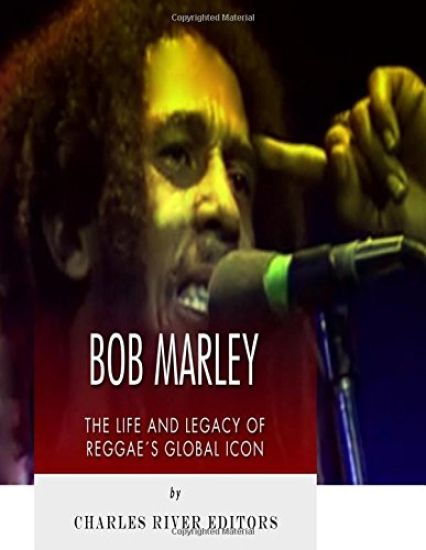
Bob Marley: The Life and Legacy of Reggae's Global Icon

Bob Marley: The Life and Legacy of Reggae's Global Icon

Charles River

Createspace Independent Publishing Platform
2017
nidottu
*Includes pictures *Includes Marley's own quotes *Includes footnotes and a bibliography for further reading "We don't have education, we have inspiration; if I was educated I would be a damn fool." - Bob Marley "If there remains any magic, it is music." - Bob Marley In terms of raw popularity, Bob Marley sold over 20 million albums in a brief career that took him around the globe as "the first international superstar from the so-called Third World," but the journey from anonymity within his own culture to reigning as "the defining figure of Jamaican music" was a circuitous and dangerous one. After leaving home at the age of 14, Marley's streets skills helped him "gain a foothold in Jamaica's chaotic music industry while skillfully navigating politically partisan violence that abounded in Kingston through the 70s," and his exaltation of the reggae form, couched in the Rastafari, became an instrument of order as a haven for otherwise directionless youth in Kingston and other communities of Jamaica. Beginning with the more lighthearted ska style, Marley drew fellow Jamaicans as kindred spirits by adding social commentary to the lyrics, and as these popular dance hits were infused with songs of faith, the weightier genre of reggae emerged. Marley would become "one of the genre's most beloved artists," and to the outer world, he is by far the most iconic individual associated with the form and the era. As the merely distractive element of ska fell away "into the slower, bass-heavy reggae sound," the accompanying depth of message lifted him above the category of mere entertainer, and his fellow Jamaican youth turned to him for social truths. As a Rolling Stone writer noted, "Marley wasn't singing about how peace could come easily to the World but rather how hell on Earth comes too easily to too many. His songs were his memories; he had lived with the wretched, he had seen the downpressers and those whom they pressed down." The true power of the reggae and Rastafari movements, with Marley as the messenger, was generated in Jamaica itself through epic concerts that reached the status of "mystical events" before growing into a global attraction that could no longer be ignored. What was for a foreign audiences a fresh sound was for the Caribbean (and for Jamaicans in particular) "a vital folk art," and along with the musical and religious waves that swept from Jamaica through the world came the cult of Marley himself, calling on the black man and woman to overthrow the influences of "Babylon" (Western institutions of oppression) while living with people of all races in harmony. Decades after Marley's death, his status as a figurehead of the reggae movement and Rastafari faith remains secure, and in many ways, his public legend loosely parallels those of Michael Jackson, John Lennon, and Elvis Presley. Bob Marley: The Life and Legacy of Reggae's Global Icon chronicles the life, career, and legacy of one of the world's most famous musicians. Along with pictures of important people, places, and events, you will learn about Bob Marley like never before, in no time at all.
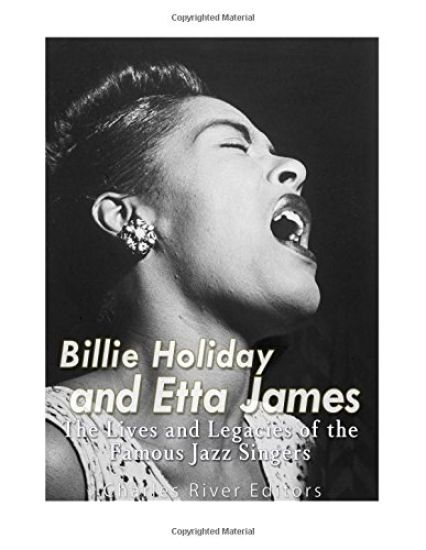
Billie Holiday and Etta James: The Lives and Legacies of the Famous Jazz Singers

Billie Holiday and Etta James: The Lives and Legacies of the Famous Jazz Singers

Charles River

Createspace Independent Publishing Platform
2017
nidottu
*Includes pictures *Includes the artists' quotes about their lives *Includes online resources and a bibliography for further reading *Includes a table of contents If Billie Holiday wanted to become a jazz singer, she chose the best of all eras in which to attempt it. A wave of great jazz and jazz/pop crossover artists swept over the United States from the 1920s through the 1950s, generating a golden age for the genre. This wondrous jazz era was well represented by both black and white master artists, men, women, vocalists, and instrumentalists, and Billie Holiday has stood the test of time as well as any, despite struggling with an environment that easily could have doomed such aspirations. Emerging from such a powerful group of talented vocalists was not easy. The woman who has come to represent a model of great, instinctive jazz singing came from nowhere, had nothing, and virtually had no one who was truly helpful in her background. She was raw and untrained but went forward regardless, with limited and quirky vocal gifts, the likes of which had never been heard in the highest circles of jazz. This especially was true among women, where perfection of phrasing and a smooth style of delivery stood as the unspoken guidelines of vocal success. No female counterpart of Louis Armstrong, one of Holiday's idols, was ever going to survive in the female jazz world for long, except perhaps as a novelty. It was not only hard-headed persistence that made Holiday "a preeminent female jazz vocalist" but a self-education, with the core belief that to sound like another singer was to not make music at all. Singing only from her deepest instinct and accepting no one as a literal model, she magically "changed the paradigm for jazz singing" by refusing to do anything the way it was expected to be done, or by swinging in any way that did not come authentically from her own artistry. Holiday "rewrote the rules" of jazz singing by using her voice not to imitate other singers, but by taking on the style of movement and sound common to jazz instruments. On top of that, she took the moderately employed practice of singing off the beat and brought it to the rhythmic forefront of virtually everything she sang. Holiday could "subtly twist the] rhythm" in a way never before heard, "in the manner of an instrumental soloist." Grateful to Louis Armstrong as a model, any song she took up was transformed rhythmically, tonally, and emotionally, with her "light and untrained" instrument, which despite its clarity could wield "a wounded poignancy" . Etta James, the legendary jazz, gospel, rhythm & blues, and soul singer, was perfectly positioned to reign as the supreme artist in the emerging soul genre of the '40s and '50s in America. No one ever doubted her talent, the highly distinctive and versatile nature of her voice, or her drive to succeed, and yet, she has been "woefully overlooked" in the history of indigenous rock and blues music in the United States. She is famous and recognized for several iconic hits with which she is eternally associated, such as "I'd Rather Go Blind" and "At Last," but her place in the pantheon of great soul artists is unsteady and not always instantly recognizable by those outside of a knowledgeable group of devotees. For the rest of soul music's listeners, mention of her name will result in a hasty inclusion into the inner circle of leading artists, as though James had been momentarily forgotten. Once the object of focus, however, she is revered as one of the titans of the genre, and those who had allowed her to slip from their minds are immediately reawakened to her powerful vocal and interpretive gifts. Such a vague position within the history of the form is partly due to a difficulty James experienced in crossing over to the white audience when others of the same genre were succeeding brilliantly at garnering a new, mixed race fan base.
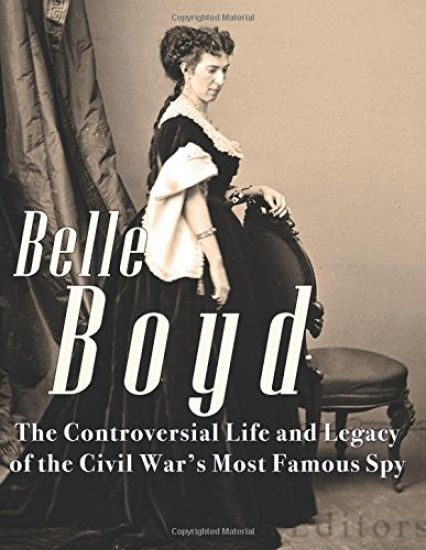
Belle Boyd: The Controversial Life and Legacy of the Civil War's Most Famous Spy

Belle Boyd: The Controversial Life and Legacy of the Civil War's Most Famous Spy

Charles River

Createspace Independent Publishing Platform
2017
nidottu
*Includes pictures *Includes Belle's account of her espionage *Includes a bibliography for further reading "What a jolly thing military surveillance is " - Belle Boyd "If it is a crime to love the South, its cause and its President, then I am a criminal. I would rather lie down in this prison and die than leave it owing allegiance to a government such as yours." - Belle Boyd Americans have long been fascinated by the Civil War, marveling at the size of the battles, the leadership of the generals, and the courage of the soldiers. Since the war's start over 150 years ago, the events have been subjected to endless debate among historians and the generals themselves. The Civil War was the deadliest conflict in American history, and had the two sides realized it would take 4 years and inflict over a million casualties, it might not have been fought. Since it did, however, historians and history buffs alike have been studying and analyzing the people and places that shaped the course of the conflict ever since. Much about the war remains controversial over 150 years later, and that includes the extent and nature of the spying that took place on both sides. Thus, it is only fitting that the war's most famous spy, the Confederate sympathizer Isabella Maria Boyd, is one of those people in American history who is as much myth as reality. Part of this is because she lived in an era that is still heavily imbued with a sense of nostalgia and myth, but her own personality is also heavily to blame, for she was what might in modern parlance be called a drama queen; since she was known for serial exaggerations in her work, historians are still trying to separate fact from fiction when it comes to her exploits. In the same vein, there was the matter of the people she surrounded herself with, many of whom needed a mythical figure to attach their last fading hopes for a Confederate victory to. They found such a person in Belle Boyd. Boyd's early life was in no way mythical, for she grew up in a lower middle class home in rural Virginia. While some of her more romantic biographers would describe her riding her horse into her parents' elegant dining room during a dinner party, it is unlikely that the Boyd family's home would accommodate a horse and rider within its four walls. Well on her way to fame before she left her teens, Boyd went on to be known to the French as "La Belle Rebelle," and to her own countrymen as "the Rebel Joan of Arc." Some, more impressed with her charms than her brains, named her "the Siren of the Shenandoah," while others gave her the less flattering nickname "Amazon of Secessia." Ultimately, Boyd became a victim of her own thirst for fame. She found life after the war to be empty, and she spent the rest of her days trying to recapture the sense of satisfaction and excitement that she enjoyed during her brief years as a spy. It cost her two marriages and perhaps even her life; she was far from home when she died, still only in her mid-50s, leaving sympathizers to speculate that her heart gave out under the strain of trying to recapture lost glory. Belle Boyd: The Controversial Life and Legacy of the Civil War's Most Famous Spy traces the life of the Confederate spy, analyzing her claims and the debate over the actual extent of her spying. Along with pictures of important people, places, and events, you will learn about Belle Boyd like never before.
Assur: The History and Legacy of the Ancient Assyrian Empire's Capital City

Assur: The History and Legacy of the Ancient Assyrian Empire's Capital City

Charles River

Createspace Independent Publishing Platform
2017
nidottu
*Includes pictures*Includes ancient accounts describing Assur and the Assyrians*Includes a bibliography for further reading"All who hear the news of your destruction clap their hands for joy. Did no one escape your endless cruelty?" - Nahum 3:19 In northern Iraq, on the banks of the Tigris River, lie the ruins of the ancient city of Assur. This was the first capital and the most important religious center of the Assyrian Empire. Underneath the cover of sand and soil are almost six meters of dense stratigraphic layers that reveal the passage of millennia. Known today as Qal'at Sherqat, and also as Kilah Shregat, the city dates back to the 3rd millennium BCE. In that time period, the Assyrian army became the largest yet seen, and their warriors were both the greatest and cruelest in the land. They conquered an empire from the Persian Gulf to the Mediterranean Sea; they despoiled the great city of Babylon, and they enslaved the tribes of Israel. Even the pharaoh of Egypt paid them tribute. No army had ever carried war so far. Indeed, Assur was the heart of one of antiquity's most infamous war machines. When scholars study the history of the ancient Near East, several wars that had extremely brutal consequences (at least by modern standards) often stand out. Forced removal of entire populations, sieges that decimated entire cities, and wanton destruction of property were all tactics used by the various peoples of the ancient Near East against each other, but the Assyrians were the first people to make war a science. When the Assyrians are mentioned, images of war and brutality are among the first that come to mind, despite the fact that their culture prospered for nearly 2,000 years. Like a number of ancient individuals and empires in that region, the negative perception of ancient Assyrian culture was passed down through Biblical accounts, and regardless of the accuracy of the Bible's depiction of certain events, the Assyrians clearly played the role of adversary for the Israelites. Indeed, Assyria (Biblical Shinar) and the Assyrian people played an important role in many books of the Old Testament and are first mentioned in the book of Genesis: "And the beginning of his kingdom was Babel and Erech, and Akkad, and Calneh, in the land of Shinar. Out of that land went forth Ashur and built Nineveh and the city Rehoboth and Kallah." (Gen. 10:10-11). Although the Biblical accounts of the Assyrians are among the most interesting and are often corroborated with other historical sources, the Assyrians were much more than just the enemies of the Israelites and brutal thugs. A historical survey of ancient Assyrian culture reveals that although they were the supreme warriors of their time, they were also excellent merchants, diplomats, and highly literate people who recorded their history and religious rituals and ideology in great detail. The Assyrians, like their other neighbors in Mesopotamia, were literate and developed their own dialect of the Akkadian language that they used to write tens of thousands of documents in the cuneiform script (Kuhrt 2010, 1:84). Although war played such a central role in Assyrian society, they were also active and prosperous traders, and trade was an essential part of Assur's growth from its earliest stages. Strangely, even during military campaigns, merchants from the city engaged in commercial interactions with the "enemy," for example with the Aramaeans during the campaigns of Adad Nirari II. As opposed to other cities in Mesopotamia, Assur's location meant that it was especially subjected to the influences of its many neighbors in southern Mesopotamia; Anatolia, Syria, the Zagros Mountains, and even from the barbarian tribes north of the Caucasus Mountains. Their presence can be seen today in the architecture and artifacts of the ruined city.
Archimedes and Leonardo Da Vinci: The Greatest Geniuses of Antiquity and the Renaissance
*Includes pictures *Profiles the inventions and works of both men. *Includes a bibliography on each man for further reading. "Give me a place to stand, and I shall move the world.'"- Archimedes "Iron rusts from disuse; stagnant water loses its purity and in cold weather becomes frozen; even so does inaction sap the vigor of the mind." - Leonardo Over 1500 years before Leonardo Da Vinci became the Renaissance Man, antiquity had its own in the form of Archimedes, one of the most famous Ancient Greeks. An engineer, mathematician, physicist, scientist and astronomer all rolled into one, Archimedes has been credited for making groundbreaking discoveries, some of which are undoubtedly fact and others that are almost certainly myth. Regardless, he's considered the first man to determine a way to measure an object's mass, and also the first man to realize that refracting the Sun's light could burn something, theorizing the existence of lasers over two millennia before they existed. People still use the design of the Archimedes screw in water pumps today, and modern scholars have tried to link him to the recently discovered Antikythera mechanism, an ancient "computer" of sorts that used mechanics to accurately chart astronomical data depending on the date it was set to. It has long been difficult to separate fact from legend in the story of Archimedes' life, from his death to his legendary discovery of how to differentiate gold from fool's gold, but many of his works survived antiquity, and many others were quoted by other ancient writers. As a result, even while his life and death remain topics of debate, his writings and measurements are factually established and well known, and they range on everything from measuring an object's density to measuring circles and parabolas. The Renaissance spawned the use of the label "Renaissance Man" to describe a person who is extremely talented in multiple fields, and no discussion of the Renaissance is complete without the original "Renaissance Man", Leonardo da Vinci. Indeed, if 100 people are asked to describe Leonardo in one word, they might give 100 answers. As the world's most famous polymath and genius, Leonardo found time to be a painter, sculptor, architect, musician, scientist, mathematician, engineer, inventor, anatomist, geologist, cartographer, botanist, and writer. It would be hard to determine which field Leonardo had the greatest influence in. His "Mona Lisa" and "The Last Supper" are among the most famous paintings of all time, standing up against even Michelangelo's work. But even if he was not the age's greatest artist, Leonardo may have conducted his most influential work was done in other fields. His emphasis on the importance of Nature would influence Enlightened philosophers centuries later, and he sketched speculative designs for gadgets like helicopters that would take another 4 centuries to create. Leonardo's vision and philosophy were made possible by his astounding work as a mathematician, engineer and scientist. At a time when much of science was dictated by Church teachings, Leonardo studied geology and anatomy long before they truly even became scientific fields, and he used his incredible artistic abilities to sketch the famous Vitruvian Man, linking art and science together. This book chronicles the amazing lives, writings and inventions of both men, analyzing their lasting legacies in art, medicine, math, science, and more. Along with pictures of important people, places, and events, you will learn about Archimedes and Leonardo like never before.
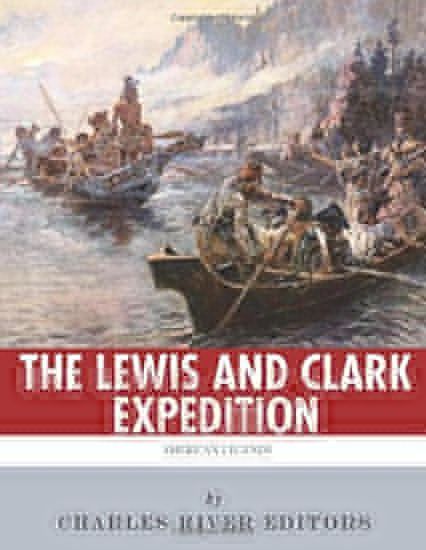
American Legends: The Lewis and Clark Expedition

American Legends: The Lewis and Clark Expedition

Charles River

Createspace Independent Publishing Platform
2017
nidottu
*Includes passages from the journals of Lewis and Clark. *Profiles important members of the expedition, including Lewis, Clark, and Sacajawea. *Includes pictures of important people and places. *Includes a Bibliography for further reading. "Ocian in view O The Joy " - William Clark, journal entry dated November 7,1805 A lot of ink has been spilled covering the lives of history's most influential figures, but how much of the forest is lost for the trees? In Charles River Editors' American Legends series, readers can get caught up to speed on the lives of America's most important men and women in the time it takes to finish a commute, while learning interesting facts long forgotten or never known. It is the most fabled and storied journey in American history. From 1804-1806, the first expedition across the North American continent was commissioned by President Thomas Jefferson, who had recently bought a vast swath of territory from France. Though he knew he had bought a huge amount of land, Jefferson wasn't entirely sure of what he had bought, so he asked a team led by Meriwether Lewis and William Clark to traverse the continent until they reached the Pacific, studying everything from the ecology to geography along the way to get an understanding of the country's new region. Lewis and Clark would find far more than they bargained for. The 33 men who made the trip came into contact with about two dozen Native American tribes, many of whom helped the men survive the journey, and along the way they met and were assisted by the famous Sacagawea, who would become one of the expedition's most famous participants. Though they suffered deaths on their way west, the group ultimately reached the Pacific coast and got back to St. Louis in 1806, having drawn up nearly 150 maps and giving America a good idea of much of what lay west. American Legends: The Lewis and Clark Expedition chronicles the amazing journey made by the group and profiles the lives of its most famous members. Along with pictures of important people, places, and events, you will learn about Lewis and Clark like you never have before, in no time at all.
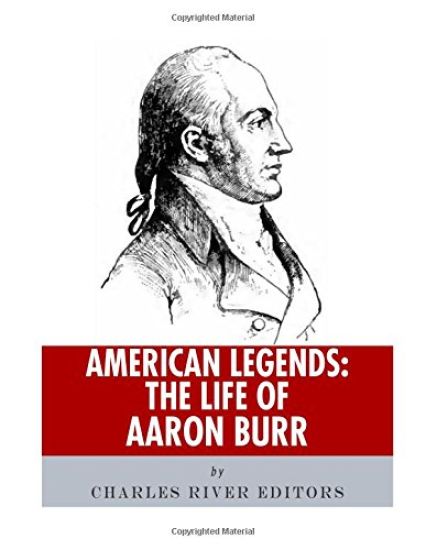
American Legends: The Life of Aaron Burr

American Legends: The Life of Aaron Burr

Charles River

Createspace Independent Publishing Platform
2017
nidottu
Includes pictures of Burr and important people and places. Comprehensively covers the Burr-Hamilton duel, including accounts of the duel and the mysteries and debates still surrounding the duel. Explains Burr's involvement in the Election of 1800 and the alleged treasonous conspiracy. "The rule of my life is to make business a pleasure and pleasure my business." - Aaron Burr A lot of ink has been spilled covering the lives of history's most influential figures, but how much of the forest is lost for the trees? In Charles River Editors' American Legends series, readers can get caught up to speed on the lives of America's most important men and women in the time it takes to finish a commute, while learning interesting facts long forgotten or never known. In all the annals of American history, it is hard if not impossible to find a figure with a more controversial legacy than Aaron Burr, one of the most reviled yet mysterious characters of the last 200 years. Today Burr is remembered almost solely for participating in the nation's most famous duel on July 11, 1804, which resulted in the death of instrumental Founding Father Alexander Hamilton, but it is often forgotten that Burr killed Hamilton while he was Thomas Jefferson's sitting Vice President. As if that wasn't incredible enough, Burr's path to the Vice Presidency sparked a Constitutional crisis after the Election of 1800, and in addition to leading to the establishment of the 12th Amendment, it was Hamilton's support of his principal political foe Jefferson over Burr that helped ignite the arguments that culminated with their duel. Burr was charged with murder for participating in the controversial and illegal duel, bringing his political career to an end, but he saved his most controversial act for last. After leaving politics, Burr headed west, where he engaged in a mysterious and convoluted scheme that eventually led to charges of treason for conspiring to create a new Western empire. Like the murder charges, he was never convicted of treason for the controversial and confusing conspiracy, but Burr had burned nearly every bridge by then. Having incurred massive debt, Burr took to practicing law and staying out of the public eye for the rest of his life. American Legends: The Life of Aaron Burr chronicles the controversial life and legacy of the nation's 3rd Vice President, but it also humanizes him and looks at contemporary accounts that paint Burr in a more positive light as well. Along with pictures of important people, places, and events, you will learn about Aaron Burr like you never have before, in no time at all.
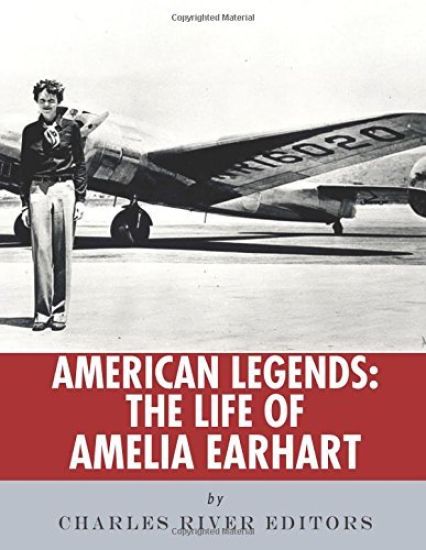
American Legends: The Life of Amelia Earhart

American Legends: The Life of Amelia Earhart

Charles River

Createspace Independent Publishing Platform
2017
nidottu
*Includes pictures of Earhart and important people, places, and events in her life. *Includes a comprehensive analysis of her disappearance and the prevailing theories surrounding her ultimate fate. *Includes a Bibliography for further reading. *Includes Earhart's most famous and inspiring quotes. "The stars seemed near enough to touch and never before have I seen so many. I always believed the lure of flying is the lure of beauty, but I was sure of it that night." - Amelia Earhart A lot of ink has been spilled covering the lives of history's most influential figures, but how much of the forest is lost for the trees? In Charles River Editors' American Legends series, readers can get caught up to speed on the lives of America's most important men and women in the time it takes to finish a commute, while learning interesting facts long forgotten or never known. During the early 20th century, groundbreaking technology revolutionized transportation both on the ground and in the sky, with new motors making automobiles and airplanes a reality in the 1910s. Around that same time, the feminist movement was underway in the United States, spearheaded by women seeking the right to vote, lobbying for the temperance movement, and trying to make their voices heard. It was at that crossroads that flight pioneer Amelia Earhart found herself in 1919, the very year President Wilson and Congress were trying to shepherd through the 19th Amendment to the Constitution, giving women the right to vote. That year, Earhart was given a ride on a plane piloted by legendary air racer Frank Hawks, and as she recalled, "By the time I had got two or three hundred feet off the ground, I knew I had to fly." Earhart's unbridled joy for flying was only occasionally abated by a lack of finances, and a recurring sinus issue, but throughout the 1920s she was one of the few women licensed to fly, and she set an altitude record of 14,000 feet for women in 1922. In 1928, Earhart was the first woman to fly across the Atlantic Ocean, but she was disappointed that she had to do so as a passenger, complaining, "I was just baggage, like a sack of potatoes." Nevertheless, that trip made "Lady Lindy" the "Queen of the Air" in America, and Earhart was now the nation's best known aviatrix. With her fresh face available for promoting everything from luggage to women's clothing, Earhart was able to finance her own aviation and remain involved in promoting air travel and flying to skeptical Americans. In May 1932, Earhart finally made her solo flight across the Atlantic, for which she received the Distinguished Flying Cross from Congress, the Cross of Knight of the Legion of Honor from the French Government and the Gold Medal of the National Geographic Society from President Herbert Hoover. By the mid-1930s, Earhart had set many altitude and distance records, but she wanted to attempt a circumnavigation of the world. After an ill-fated first attempt, Earhart and Fred Noonan set off on another attempt, creating one of the 20th century's most enduring mysteries. Earhart and Noonan were to land on Howland Island, 1700 miles southwest of Hawaii, but radio transmissions ceased between the plane and authorities on the ground the morning of July 2, 1937. Earhart and Noonan had disappeared, never to be seen again, despite one of the nation's largest and costliest manhunts. Unfortunately, the speculation over exactly what happened to Earhart and the mystery of her disappearance have come to overshadow and obscure her many accomplishments. American Legends: The Life of Amelia Earhart looks at the theories attempting to explain her disappearance, but it also humanizes the woman whose love of flying propelled her to unprecedented heights among both the clouds and her countrymen. Along with pictures of important people, places, and events in her life, you will learn about Lady Lindy like you never have before, in no time at
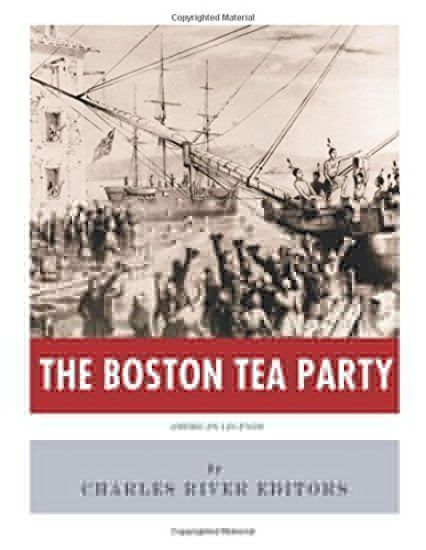
American Legends: The Boston Tea Party

American Legends: The Boston Tea Party

Charles River

Createspace Independent Publishing Platform
2017
nidottu
*Discusses the myths and legends of the Tea Party in an attempt to separate fact from fiction. Did the Tea Partiers dress up as Mohawks? Did Sam Adams lead the Tea Party? *Includes contemporary accounts of the Tea Party in the newspapers and accounts written by those claiming to have participated. *Discusses some of the aspects of the Tea Party that remain unclear. "The people finding all their endeavours for this purpose thus totally frustrated, dissolved the meeting, which had consisted by common estimation of at least seven thousand men, many of whom had come from towns at the distance of twenty miles. In less than four hours every chest of tea on board three ships which had by this time arrived, three hundred and forty-two chests, or rather the contents of them, was thrown into the sea, without the least injury to the vessels or any other property." - Samuel Adams A lot of ink has been spilled covering the lives of history's most influential figures, but how much of the forest is lost for the trees? In Charles River Editors' American Legends series, readers can get caught up to speed on the lives of America's most important men and women in the time it takes to finish a commute, while learning interesting facts long forgotten or never known. In the years before the American Revolution, the disputes between the colonies and Great Britain produced no shortage of legendary events, all of which can be recited by schoolchildren from an early age, but none has been mythologized or misunderstood quite like the Boston Tea Party, colonial Boston's most unique act of (relative) non-violent protest. The formation of a group of Americans calling themselves the "Tea Party" in 2009, more than 235 years after the Boston Tea Party, is testament to the enduring legacy of that iconic moment in American history. On the night of December 16, 1773, a group of 30-130 men boarded the tea ship Dartmouth and two other ships and dumped 342 chests of tea into Boston Harbor over the span of 3 hours in protest of the Tea Act of 1773. Agreement over what exactly happened ends there, but a number of legends have since popped up and become part of the common narrative. The urban legend that the people who boarded the ship dressed as Mohawks is not entirely true. The Tea Partiers were not protesting higher taxes on tea. The Tea Party was not coordinated by Samuel Adams. And nobody in Boston called it the "Tea Party" until nearly a century after it took place. However, the impact of the Tea Party is beyond dispute. The bold protest and destruction of the tea induced the British to pass the Coercive or Intolerable Acts, including the closing of Boston Harbor. That spurred the colonies to send delegates to the First Continental Congress in Philadelphia to craft a united response to the Coercive or Intolerable Acts and petition King George III for redress. The First Continental Congress also vowed to reconvene in the summer of 1775. By the time the Second Continental Congress met, the Revolution was underway. American Legends: The Boston Tea Party chronicles the history that led up to the passage of the Tea Act of 1773, the events of December 16, 1773, and the legends and myths surrounding the Boston Tea Party. Along with pictures of important people, places, and events, you will learn about the Tea Party like you never have before, in no time at all.
America's Most Notorious Domestic Terrorists: The Life and Crimes of the Unabomber and Timothy McVeigh
*Includes pictures *Includes the terrorists' quotes *Includes a bibliography for further reading Most Americans old enough to follow the news during the 1990s are instantly familiar with the Unabomber, a name given to the man behind a series of bombs that were periodically mailed or delivered to university professors and airlines, which led to the FBI giving the investigation the codename "UNABOM," an acronym for "University and Airline Bomber." Over nearly 20 years, the Unabomber, as he was dubbed by the media, would kill 3 and wound dozens with his homemade bombs, some of which were primitive but others of which were strong enough to destroy an airplane. While authorities struggled to find him from the first time he targeted someone with a bomb in 1978, the Unabomber 's choice of targets and the materials he used offered a glimpse into the kind of man he was. Profilers rightly assumed that it was a man who had received a higher education and had some sort of interest in the environment and big business. What they could not know at the time was that it was all the work of one man, Ted Kaczynski, who was the product of a Harvard education and had briefly taught at UCLA before retiring to a cabin in Montana without electricity or running water. Ultimately, it was Kaczynski who tripped himself up thanks to his insistence that a major media outlet publish his lengthy essay Industrial Society and Its Future. Now known almost universally as the Unabomber Manifesto, it was a long screed against the effects of industry and technology on nature, and the way technology has impacted the psychology and personalities of people in society. Often incorporating "FC" in his bombs and writings as shorthand for Freedom Club, Kaczynski also asserted that the dependence on technology limited people's freedom and sapped them of their desire for personal autonomy. After the controversial siege at Waco ended in April 1993, a disillusioned young veteran named Timothy McVeigh was determined to strike back at the federal government. In 1994, McVeigh and an old Army buddy, Michael Fortier, decided they would bomb the Alfred P. Murrah Federal Building in Oklahoma City because several federal agencies had offices inside, including the ATF. With the help of Terry Nichols, McVeigh constructed a bomb out of fertilizer that weighed over two tons and placed it in a rented Ryder truck, the same company the 1993 World Trade Center bomber, Ramzi Yousef, had rented a van from. At 9:00 a.m. on April 19, 1995, the second anniversary of the end of the siege in Waco, McVeigh's bomb exploded with a force so powerful that it registered seismic readings across much of Oklahoma and could be heard 50 miles away. The explosion killed 168 people, including young children in the building's day-care center. McVeigh was captured shortly after the explosion, and he never displayed remorse for his actions. When he later learned about the day-care center, McVeigh called the children "collateral damage." At the time, the bombing was the deadliest terrorist attack on American soil in history, and McVeigh was executed on June 11, 2001, three months before the bombing became the second deadliest terrorist attack on American soil in history. America's Most Notorious Domestic Terrorists: The Life and Crimes of the Unabomber and Timothy McVeigh chronicle the stories of two of the most famous domestic terrorists of the 20th century. Along with pictures of important people, places, and events, you will learn about the Unabomber and Timothy McVeigh like never before.