Kirjojen hintavertailu – 12 903 727 kirjaa ja 27 kauppaa

Kirjailija

Charles River

Kirjat ja teokset yhdessä paikassa: 4 673 kirjaa, julkaisuja vuosilta 2013–2022, suosituimpiin kuuluu William Powell and Myrna Loy: The Lives and Careers of One of Classical Hollywood's Most Iconic Duos. Vertaile teosten hintoja ja tarkista saatavuus suomalaisista kirjakaupoista.

4 673 kirjaa

Kirjojen julkaisuvuodet: 2013–2022.

America's Most Famous Disappearances: The Mysterious History of the Disappearances of Jimmy Hoffa, Amelia Earhart, D.B. Cooper, Jean Spangler, and Dor
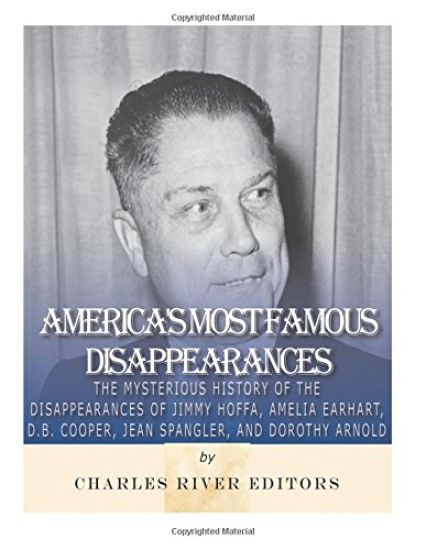
*Includes pictures *Discusses the popular theories behind each mystery *Includes online resources and a bibliography for further reading It was the great mystery of its time and still reads like an episode of "Law and Order" today. In December 1910, a wealthy young woman, thought to be sheltered and above reproach, goes missing shortly after being seen in broad daylight on Fifth Avenue in New York City. The police are called in and begin to question those closest to her, only to have her father, a wealthy manufacturer, insist it must be foul play and that his daughter was on good terms with her entire family. Likewise, he claims that though she was in her mid-20s and in the prime of life, she had no serious romantic attachments. The mother tearfully backs these claims up. While the story was certainly fit for a gripping thriller, it was all too true for Dorothy Arnold and her family. Arnold was a young, well-known socialite whose disappearance was front page news on the East Coast in the early 20th century. By the mid-1930s, Amelia Earhart was one of the most famous women in the world. The American pilot had set a number of altitude and distance records, but she wanted to attempt a circumnavigation of the world. After an ill-fated first attempt, Earhart and Fred Noonan set off on another attempt, creating one of the 20th century's most enduring mysteries. Earhart and Noonan were to land on Howland Island, 1700 miles southwest of Hawaii, but radio transmissions ceased between the plane and authorities on the ground the morning of July 2, 1937. Earhart and Noonan had disappeared, never to be seen again, despite one of the nation's largest and costliest manhunts to date. The mysterious case of actress and dancer Jean Spangler remains one of the most enduring such riddles in the annals of Hollywood crime. The nature of the case itself still evokes a public fascination many decades after her disappearance. Spangler found herself in southern California as a beautiful actress and dancer trying to land movie roles, a common story among the many young women gravitating to American entertainment centers from more conservative towns and cities. As a high-profile celebrity event, Spangler's case does not match the sensationalism attributed to figures such as Amelia Earhart, who sought to circumnavigate the globe by air, the political importance of union boss Jimmy Hoffa, or the fate of Judge Crater, a likely victim of the New York underworld. However, the Spangler story differs in that it carries no dearth of rational possibilities or relevant clues with which to accommodate all of the leading theories. On November 24, 1971, there was little to suggest that the skies above the Pacific Northwest would produce one of the greatest mysteries in American history and a criminal investigation that is still ongoing over 40 years later. However, on the day before Thanksgiving, a man calling himself Dan Cooper boarded Northwest Orient Flight 305 from Portland to Seattle and sat in the rear of the cabin. The identity of the thief who ransomed hostages and then jumped out of a plane with the money that night remains unknown. In fact, his ultimate fate is a mystery, and over 40 years after he jumped out of that plane, the FBI doesn't know much more than it did in 1971. Jimmy Hoffa, once described by Bobby Kennedy as the second most powerful man in America, was a union boss who evoked both respect and fear, and he continues to be a legendary figure who often crops up in conversation and media over 40 years after his disappearance. While it was an open secret that Hoffa had shady connections, the success of his leadership allowed supporters to overlook them. To this day, authorities are still searching for him (or presumably his remains), having been overloaded with false and dead-end leads throughout the decades.

America's Favorite Comedy Acts: The Three Stooges, Laurel & Hardy, Abbott & Costello, and Dean Martin & Jerry Lewis
*Includes pictures *Includes the comedy acts' most famous quotes *Includes bibliographies for further reading *Includes a table of contents There has been no shortage of comedy acts in American history, but the most famous and popular of them all is The Three Stooges, an act that has become synonymous with slapstick. Bring up their name to any American or even ask about slapstick comedy, and invariably, certain images will come to mind, most of which came from the comedy shorts featuring three bumbling but likable fools getting into all sorts of trouble due to their inability to think or behave properly. Moe, Larry and Curly quickly became a hit in comedy shorts on screen, and even as other similar acts like Abbot & Costello went on to make full length films, the Stooges continued to star in shorts, producing the iconic scenes that everyone associates with them, from Larry asking what he did wrong to Moe trying to hit Curly and Curly's efforts to block him. By the 1920s, English comic Stan Laurel had been in dozens of films and American Oliver Hardy had appeared in hundreds, but it was not until they formed a duo together in 1926 that they began to truly be noticed. Once they did, however, Laurel & Hardy became one of the most famous comedy teams in American history, with a career that spanned 4 decades and included over 100 combined shorts and feature films. Even today, nearly 60 years after their last performances together, Laurel & Hardy are still popular, alongside legends like The Three Stooges and Abbott & Costello, and their routines are still watched across the globe. Ironically, one of America's most famous comedy duos, and the performers of the country's most famous skit, came together in part because Lou Costello had already failed to cut it in the film industry. In fact, Costello had appeared in a Laurel & Hardy film in 1927 before meeting his partner, Bud Abbott, on the burlesque circuit in New York City. In fact, the two first performed together in 1935 only because Abbott filled in for Costello's usual partner, who happened to be ill one fateful day. Over time, Abbott & Costello perfected their routine, which typically consisted of Abbott playing the straight man while his dimwit partner acted foolishly and interrupted his plans. It was a shtick that also did well on radio, albeit one that required Costello to modify his voice with a higher pitch that not only differentiated his from Abbott but also made him sound appropriately dumber. By 1940, they were not only successful on the radio but also among America's most popular movie stars, a status they held almost consistently throughout the decade and into the early 1950s. Working as "Martin and Lewis", the team of Dean Martin and Jerry Lewis became the most popular nightclub act in America, commanding huge fees for their appearances all across the country. Perhaps the most ironic aspect of their success is that Dean Martin was not a comedian in any real sense of the word, and even during their act, he essentially served as the straight man to Jerry Lewis. The routine ensured that critics took more notice of Jerry Lewis, who intentionally came across as an awkward figure with a brand of bodily humor that was borrowed from a lineage of Yiddish humor predicated on physical slapstick. And just as Martin benefited from Lewis' comedic skills, Lewis also further developed a singing career thanks to the more famous Martin's crooning. Though it's often forgotten now, the duo eventually broke up in the mid-1950s because Lewis was starting to outshine Martin in their joint film career.
A Young Girl and Her Diary: The Life and Legacy of Anne Frank

A Young Girl and Her Diary: The Life and Legacy of Anne Frank

Charles River

Createspace Independent Publishing Platform
2017
nidottu
*Includes quotes from Anne Frank's diary about life, love, religion, persecution, and more. *Includes pictures of important people and places in Anne Frank's life. *Includes a Bibliography for further reading. "I want to be useful or bring enjoyment to all people, even those I've never met. I want to go on living even after my death And that's why I'm so grateful to God for having given me this gift, which I can use to develop myself and to express all that's inside me " - Anne Frank's diary entry for April 5, 1944 Anne Frank is one of the most famous individuals of the 20th century for the worst possible reason. Joseph Stalin is often quoted as saying one death is a tragedy and a million is a statistic, and while plenty of people might argue with the sentiment expressed, there's no question that Anne Frank in many ways became the face of the Holocaust. Among the millions of victims killed in the Holocaust, there were certainly a countless number of 15 year old Jewish girls who lost their mothers, their sisters, and their own lives in Nazi concentration camps. While they were destined to become a footnote of history for anyone outside of their loved ones, Anne Frank has indeed gone on living after death thanks to the diary she kept during World War II and the year she and her family spent hiding from the occupying Nazi forces in Amsterdam. Given the journal as a 13th birthday present, Anne dutifully wrote in it from June 1942-August 1944, with the last entry coming just a few days before her family was arrested. Anne and her sister Margot were transported to the Bergen-Belsen concentration camp, where both young girls died of typhus just a month before the war in Europe would end. Anne's father Otto managed to survive at Auschwitz and made his way back to Amsterdam after the war, only to learn that his wife and two young daughters had died at Bergen-Belsen. Upon his return, however, one of the men who had helped the Frank family hide gave Otto his daughter's diary and notes, greatly surprising the father who had not realized how perceptive his young daughter had been. Once Otto had it published, Anne Frank's diary became one of the best known and critically acclaimed works of the 20th century. During the two years Anne had kept a diary, her entries covered every aspect of a typical teenage girl's life, but set against the unforgiving reality of Nazi occupation and her family's attempt to hide. The diary vividly portrays the thoughts of an innocent girl who is well aware of her surroundings, even as she struggles to come to grips with them, and yet she manages to convey an eternal optimism and belief in the good of mankind. In addition to providing an important firsthand account of a critical period of history, the diary entries are both devastating and uplifting, often at the same time. As Dutch historian Jan Romein noted about the diary in the immediate aftermath of World War II, "This apparently inconsequential diary by a child, this 'de profundis' stammered out in a child's voice, embodies all the hideousness of fascism, more so than all the evidence of Nuremberg put together." A Young Girl and Her Diary: The Life and Legacy of Anne Frank chronicles Anne's short life and tragic fate, but it also celebrates her writings and enduring legacy. Along with pictures of important people and places, you will learn about Anne Frank like you never have before, in no time at all.
The Order of the Holy Sepulchre: The History of the Catholic Order Established during the Crusades for the Promised Land
*Includes pictures *Includes contemporary accounts of the order *Includes online resources and a bibliography for further reading "But as for these enemies of mine, who did not want me to reign over them, bring them here and slaughter them before me." - Luke 19:27 For centuries, Christians and Muslims were embroiled in one of the most infamous territorial disputes of all time, viciously and relentlessly battling one another for the Holy Land. In the heart of Jerusalem sat one of the shining jewels of the Christian faith, the Church of the Holy Sepulchre. Legend has it that this was where their Savior had been buried before his fabled resurrection. What was more, it was said to house the very cross Jesus Christ had died upon. It was for precisely these reasons that fearless pilgrims, near and far, risked their lives and made the treacherous trek to Jerusalem. Of course, this also made the basilica a perfect target, so much so that a powerful company of knights was founded to guard the church and defend its presence in the Promised Land. Though the Equestrian Knights of the Holy Sepulchre no longer sport the fancy coats of mail or shiny swords of their ancestors, their noble cause lives on, and they continue to aim to protect one of Christianity's holiest sites. Today, there exists 20,000-30,000 Knights and Ladies of the Holy Sepulchre in over 60 nations around the globe, a figure that is constantly growing. Its members today continue to provide support (now mostly financial and moral) to its main basilica, and they focus on enriching the order's philanthropic operations, as well as "strengthening the practice of Christian life amongst its members." Its members also serve as missionaries, spreading the gospel and the order's mission to both Catholics, non-Catholics, and even the non-religious, all over the world. The Order of the Holy Sepulchre: The History of the Catholic Order Established during the Crusades for the Promised Land examines the events leading up to its founding, its development throughout the years, its inner workings, and the lives of these famous knights of God. Along with pictures depicting important people, places, and events, you will learn about the Order of the Holy Sepulchre like never before.
The Order of the Holy Sepulchre: The History of the Catholic Order Established during the Crusades for the Promised Land
*Includes pictures *Includes contemporary accounts of the order *Includes online resources and a bibliography for further reading "But as for these enemies of mine, who did not want me to reign over them, bring them here and slaughter them before me." - Luke 19:27 For centuries, Christians and Muslims were embroiled in one of the most infamous territorial disputes of all time, viciously and relentlessly battling one another for the Holy Land. In the heart of Jerusalem sat one of the shining jewels of the Christian faith, the Church of the Holy Sepulchre. Legend has it that this was where their Savior had been buried before his fabled resurrection. What was more, it was said to house the very cross Jesus Christ had died upon. It was for precisely these reasons that fearless pilgrims, near and far, risked their lives and made the treacherous trek to Jerusalem. Of course, this also made the basilica a perfect target, so much so that a powerful company of knights was founded to guard the church and defend its presence in the Promised Land. Though the Equestrian Knights of the Holy Sepulchre no longer sport the fancy coats of mail or shiny swords of their ancestors, their noble cause lives on, and they continue to aim to protect one of Christianity's holiest sites. Today, there exists 20,000-30,000 Knights and Ladies of the Holy Sepulchre in over 60 nations around the globe, a figure that is constantly growing. Its members today continue to provide support (now mostly financial and moral) to its main basilica, and they focus on enriching the order's philanthropic operations, as well as "strengthening the practice of Christian life amongst its members." Its members also serve as missionaries, spreading the gospel and the order's mission to both Catholics, non-Catholics, and even the non-religious, all over the world. The Order of the Holy Sepulchre: The History of the Catholic Order Established during the Crusades for the Promised Land examines the events leading up to its founding, its development throughout the years, its inner workings, and the lives of these famous knights of God. Along with pictures depicting important people, places, and events, you will learn about the Order of the Holy Sepulchre like never before.
Francis Marion: The Life and Legacy of the Revolutionary War's Legendary Swamp Fox

Francis Marion: The Life and Legacy of the Revolutionary War's Legendary Swamp Fox

Charles River

Createspace Independent Publishing Platform
2017
nidottu
*Includes pictures *Includes accounts of Marion's life and career *Includes online resources and a bibliography for further reading "As for this damned old fox, the Devil himself could not catch him." - Colonel Banastre Tarleton "Well, now, this is exactly my case. I am in love; and my sweetheart is Liberty. Be that heavenly nymph my companion, and these wilds and Woods shall have charms beyond London and Paris in slavery. To have no proud monarch driving over me with his gilt coaches; nor his host of excise-men and tax-gatherers insulting and robbing me; but to be my own master, my own prince and sovereign, gloriously preserving my national dignity, and pursuing my true happiness; planting my vineyards, and eating their luscious fruits; and sowing my fields, and reaping the golden grain: and seeing millions of brothers all around me, equally free and happy as myself. 'This, sir, is What I long for." - A quote attributed to Francis Marion In 2000, The Patriot, starring Mel Gibson, captured the nation's attention with the highly dramatized story of an American patriot fighting the British in South Carolina during the American Revolution. As viewers learned that Gibson's character was loosely based on General Francis Marion, nicknamed the "Swamp Fox" by his enemies, people took a new interest in this often forgotten soldier. Those who had seen the movie may have envisioned Marion as a family man, a widower with enlightened, 21st century views, but those who dug deeper would find a man that Hugh Rankin, one of Marion's biographers, described as "something like a sandwich-a highly spiced center between two slabs of rather dry bread." In fact, Marion was a bachelor most of his life, and he likely only married so that he might have someone to care for him in his old age. Amy Crawford, writing in Smithsonian Magazine, reminded her readers, "Most heroes of the Revolution were not the saints that biographers like Parson Weems would have them be, and Francis Marion was a man of his times: he owned slaves, and he fought in a brutal campaign against the Cherokee Indians. While not noble by today's standards, Marion's experience in the French and Indian War prepared him for more admirable service. The Cherokee used the landscape to their advantage, Marion found; they concealed themselves in the Carolina backwoods and mounted devastating ambushes. Two decades later, Marion would apply these tactics against the British." After fighting the Cherokee, Marion, who had been a farmer beforehand, purchased his own plantation shortly before the Revolution, and in 1775, he was elected to the South Carolina Provincial Congress. But of course, Marion remains best known for his service during the war, even though he saw limited action in a theater that wasn't of particular importance until late in the war. Crawford emphasized, "After the Battles of Lexington and Concord on April 19, 1775, the Provincial Congress voted to raise three regiments, commissioning Marion a captain in the second. His first assignments involved guarding artillery and building Fort Sullivan, in the harbor of Charleston, South Carolina, South Carolina. When he saw combat during the Battle of Fort Sullivan in June 1776, Marion acted valiantly. But for much of the next three years, he remained at the fort, occupying the time by trying to discipline his troops, whom he found to be a disorderly, drunken bunch insistent on showing up to roll call barefoot. In 1779, they joined the Siege of Savannah, which the Americans lost." As it turned out, Marion was only getting started, and in the years that followed, he continued to torment and harass British troops across the colony, fighting a guerrilla war against soldiers with no training in countering such measures. In doing so, he kept the most powerful nation in the world off balance, and he ultimately earned himself a lasting place in American history.
Francis Marion: The Life and Legacy of the Revolutionary War's Legendary Swamp Fox

Francis Marion: The Life and Legacy of the Revolutionary War's Legendary Swamp Fox

Charles River

Createspace Independent Publishing Platform
2017
nidottu
*Includes pictures *Includes accounts of Marion's life and career *Includes online resources and a bibliography for further reading "As for this damned old fox, the Devil himself could not catch him." - Colonel Banastre Tarleton "Well, now, this is exactly my case. I am in love; and my sweetheart is Liberty. Be that heavenly nymph my companion, and these wilds and Woods shall have charms beyond London and Paris in slavery. To have no proud monarch driving over me with his gilt coaches; nor his host of excise-men and tax-gatherers insulting and robbing me; but to be my own master, my own prince and sovereign, gloriously preserving my national dignity, and pursuing my true happiness; planting my vineyards, and eating their luscious fruits; and sowing my fields, and reaping the golden grain: and seeing millions of brothers all around me, equally free and happy as myself. 'This, sir, is What I long for." - A quote attributed to Francis Marion In 2000, The Patriot, starring Mel Gibson, captured the nation's attention with the highly dramatized story of an American patriot fighting the British in South Carolina during the American Revolution. As viewers learned that Gibson's character was loosely based on General Francis Marion, nicknamed the "Swamp Fox" by his enemies, people took a new interest in this often forgotten soldier. Those who had seen the movie may have envisioned Marion as a family man, a widower with enlightened, 21st century views, but those who dug deeper would find a man that Hugh Rankin, one of Marion's biographers, described as "something like a sandwich-a highly spiced center between two slabs of rather dry bread." In fact, Marion was a bachelor most of his life, and he likely only married so that he might have someone to care for him in his old age. Amy Crawford, writing in Smithsonian Magazine, reminded her readers, "Most heroes of the Revolution were not the saints that biographers like Parson Weems would have them be, and Francis Marion was a man of his times: he owned slaves, and he fought in a brutal campaign against the Cherokee Indians. While not noble by today's standards, Marion's experience in the French and Indian War prepared him for more admirable service. The Cherokee used the landscape to their advantage, Marion found; they concealed themselves in the Carolina backwoods and mounted devastating ambushes. Two decades later, Marion would apply these tactics against the British." After fighting the Cherokee, Marion, who had been a farmer beforehand, purchased his own plantation shortly before the Revolution, and in 1775, he was elected to the South Carolina Provincial Congress. But of course, Marion remains best known for his service during the war, even though he saw limited action in a theater that wasn't of particular importance until late in the war. Crawford emphasized, "After the Battles of Lexington and Concord on April 19, 1775, the Provincial Congress voted to raise three regiments, commissioning Marion a captain in the second. His first assignments involved guarding artillery and building Fort Sullivan, in the harbor of Charleston, South Carolina, South Carolina. When he saw combat during the Battle of Fort Sullivan in June 1776, Marion acted valiantly. But for much of the next three years, he remained at the fort, occupying the time by trying to discipline his troops, whom he found to be a disorderly, drunken bunch insistent on showing up to roll call barefoot. In 1779, they joined the Siege of Savannah, which the Americans lost." As it turned out, Marion was only getting started, and in the years that followed, he continued to torment and harass British troops across the colony, fighting a guerrilla war against soldiers with no training in countering such measures. In doing so, he kept the most powerful nation in the world off balance, and he ultimately earned himself a lasting place in American history.
Britain's Greatest Prime Ministers: The Lives and Legacies of Winston Churchill and Margaret Thatcher
*Includes pictures of Churchill, Thatcher, and important people, places, and events in their lives. *Includes their famous quotes. *Includes a Bibliography on Churchill for further reading. "Winston Churchill led the life that many men would love to live. He survived 50 gunfights and drank 20,000 bottles of champagne. ...] And of course, by resisting Hitler, he saved Europe and perhaps the world." - Mark Riebling in "Churchill's Finest Hour". "Being powerful is like being a lady. If you have to tell people you are, you aren't." - Margaret Thatcher Was he "the greatest human being ever to occupy 10 Downing Street" ? Or a man whose "brilliant but unsound judgement resulted in detrimental consequences for Britain and for the world." ? Nearly 50 years after his death, debate still rages over Sir Winston Churchill's contribution to history. Indeed, now that wartime nostalgia has mostly washed away, in Britain in particular the views on Churchill are more divergent than ever. On one point though, the biographers and historians remain unanimous: Churchill led an astonishing life as a soldier, world statesman, historian and Noble Prize Laureate. When he died at 90 in 1965, one of the most important figures in modern history had left the stage. From providing some of the 20th century's greatest soundbytes to successfully navigating Great Britain to victory in World War II against great odds, Churchill was at the forefront of global events for decades, becoming one of the most influential Britons in history. In 2002, he was named the Greatest Briton of All Time, and 40 years earlier he was the first person to be made an Honorary Citizen of the United States. Churchill is often cited as Britain's greatest prime minister for leading the United Kingdom against Hitler's Nazi war machine during World War II, and indeed he was the idol of the one person who many think might have surpassed him: Margaret Thatcher. Thatcher not only became Britain's first female prime minister, she also became its longest serving prime minister. The political precedents Thatcher set as a woman would be enough of a legacy in its own right, but Thatcher effectively wielded her power in a way that made a lasting contribution both to geopolitics and the perception of female politicians in general. Thatcher is widely credited, along with Ronald Reagan, as one of the principal Cold Warriors who brought about the demise of the Soviet Union, whose leaders gave her the famous nickname "Iron Lady". And of course, Thatcher was recently in the spotlight again with the release of the critically acclaimed movie The Iron Lady, starring Meryl Streep. With the success of that movie, Thatcher has undergone a cultural revival and re-iconization in many quarters for her political stances and political achievements. Britain's Greatest Prime Ministers details the lives and careers of Britain's two most famous prime ministers, humanizing both leaders and analyzing the legacies they left on Britain and the world. Along with pictures of important people, places, and events in their lives, you will learn about Sir Winston Churchill and the Iron Lady like you never have before, in no time at all.
Ayn Rand & Atlas Shrugged: The Life and Legacy of the Author and Book

Ayn Rand & Atlas Shrugged: The Life and Legacy of the Author and Book

Charles River

Createspace Independent Publishing Platform
2017
nidottu
*Includes a full length biography of Ayn Rand that examines her life, works, philosophy, and legacy. *Includes a primer on Atlas Shrugged that will quickly bring readers up to speed on the plot, characters, themes, symbols, and philosophy of Rand's classic novel. *Includes pictures of Rand and important people in her life. *Includes many of Rand's most famous quotes from Atlas Shrugged and other works. *Includes a Bibliography for further reading. "Government 'help' to business is just as disastrous as government persecution... the only way a government can be of service to national prosperity is by keeping its hands off." - Ayn Rand Ayn Rand was born in St. Petersburg, Russia to Jewish parents on February 2, 1905 as Alisa Zinov'yevna Rosenbaum, and she lived through the turbulence and transformation of early 20th century Russia. Her first exposure to reading came after she taught herself how to read at age six, and she decided at nine years old to become a writer after a chance encounter with the books of Victor Hugo, the writer she admired most. The seminal events in the young would-be writer's life came just a few years later, when she witnessed firsthand the Bolshevik Revolution and the ultimate Communist victory as a teenager. Rand's experience with the maelstrom of this revolutionary zeal and cultural breakdown greatly contributed toward the formation of Rand's philosophy of objectivism, individualism and anti-religious ideas. During her last year of high school, she was introduced to the history of the United States and immediately decided to make America her model of what an ideal society should look like. Rand came to the United States as a young woman for a visit in 1925, and, as fate would have it, she never returned to Russia. In middle age, Rand continued trying to write in some capacity as a profession, but she had also formed her personal philosophy of integrating ethics, metaphysics, epistemology, politics, economics, and sexuality into what came to be called Objectivism, or as she called it, "a philosophy for living on earth." Rand began writing Atlas Shrugged, her enormous three part major novel, each with ten chapters, in 1946. Nearly 10 years after it was begun she finished what ultimately became her greatest achievement, and she poignantly dramatized her unique philosophy. Though Atlas Shrugged had been a popular title when Ayn Rand published it in 1957, it's quite possible that the only reference to it that many Americans heard before 2009 came from the hit series Mad Men. However, this staple of conservative and libertarian reader took on new life as the new Obama Administration sought to use government resources to fix financial problems. In 2009, with the global economy hemorrhaging jobs, and Western governments pouring hundreds of billions of dollars in taxpayer money to "bail out" troubled financial firms and large companies, frustrated people and political analysts turned to a book written over 50 years earlier as a guide out of the abyss. Conservative politicians like Ron Paul (who named his son after Rand) and commentators like Glenn Beck and Rush Limbaugh publicly praised Rand and her works, and Supreme Court Justice Clarence Thomas labeled Atlas Shrugged one of his favorite novels. By January 2009, one article in the Wall Street Journal was titled, ""Atlas Shrugged From Fiction to Fact in 52 Years". Over the last few years, Rand has become a household name and her works have seen their sales spike. Rand and her work are now some of the most influential and relevant works in America today. Ayn Rand & Atlas Shrugged chronicles the life, ideology and writings of the most famous Libertarian writer, and it examines her seminal book in detail. Along with pictures of important people, places, and events, you will learn about Ayn Rand and her magnum opus like you never have before.
Chernobyl and Three Mile Island: The History and Legacy of The World's Most Notorious Nuclear Accidents
*Includes pictures *Includes accounts of the accidents by survivors, workers, and residents *Includes bibliographies for further reading Uranium is best known for the destructive power of the atom bombs, which ushered in the nuclear era at the end of World War II, but given the effectiveness of nuclear power, plants like those at Three Mile Island in Pennsylvania were constructed to generate energy for Americans during the second half of the 20th century. While nuclear power plants were previously not an option and thus opened the door to new, more efficient, and more affordable forms of energy for domestic consumption, the use of nuclear energy understandably unnerved people living during the Cold War and amidst ongoing nuclear detonations. After all, the damage wrought on Hiroshima and Nagasaki made clear to everyone what nuclear energy was capable of inflicting, and the health problems encountered by people exposed to the radiation also demonstrated the horrific side effects that could come with the use of nuclear weapons or the inability to harness the technology properly. Thus, it seemed that everyone's worst fears were realized on March 28, 1979 when the nuclear plant at Three Mile Island suffered a partial meltdown. Since it occurred years before Russia's Chernobyl disaster took place, the accident, a combination of mechanical and management failures, was at the time the worst civilian nuclear disaster yet, and the predictions of its consequences were dire. Given the release of radioactive material, nearby residents feared for their lives, and the nature of the radioactive contamination meant it would take nearly 15 years and $1 billion to fully clean up after the disaster. Fortunately, the human cost was eventually ruled insignificant, but the scare forced the implementation of new regulations in an effort to ensure the use of nuclear energy was safer. As a result, Three Mile Island, while still well-known among Americans today, remains more of a caution tale than a tragedy. As bad as it was, Three Mile Island paled in comparison to Chernobyl, which to this day remains the most notorious nuclear accident in history. Located in the Ukraine, the Chernobyl power plant was undergoing experiments in the early morning hours of April 26, 1986 when it suffered a series of explosions in one of its nuclear reactors, killing over 30 people at the plant and spread radioactive fallout across a wide swath of the Soviet Union. Although the Soviets would try to cover up just how disastrous the accident at Chernobyl was, it was impossible to hide the full extent of the damage given that radioactive material was affecting Western Europe as well. All told, the accident caused an estimated $18 billion in damages, forced the evacuation of everybody nearby, and continues to produce adverse health effects that are still being felt in the region. As with Three Mile before it, Chernobyl emphatically demonstrated the dangers of nuclear power plants, and it brought about new regulations across the world in an effort to make the use of nuclear energy safer. Meanwhile, scientists and scholars are still studying the effects of the radiation on people exposed to it and continue to come up with estimates of just how deadly Chernobyl will wind up being. Chernobyl and Three Mile Island chronicles the worst nuclear accident in history and the aftermath of the accident. Along with pictures and a bibliography, you will learn about Chernobyl like never before.
Decisive Moments in History: D-Day & Operation Overlord

Decisive Moments in History: D-Day & Operation Overlord

Charles River

Createspace Independent Publishing Platform
2017
nidottu
*Includes over 25 pictures of important people, places, and events, including generals, maps, and each of the 5 landing beaches. *Includes a Bibliography for further reading. "The invasion of Europe was planned by a small group of driving, determined, devoted and occasionally furious men." In the 19th century, the Scottish writer Thomas Carlyle famously wrote, "The history of the world is but the biography of great men", popularizing the "Great Man" theory that the course of history is shaped by a select few heroic individuals. While historians and others continue to debate the accuracy of the Great Man theory of history, there is no question that the course of history is permanently altered by decisive moments in time, where a different result would have produced drastically different outcomes. During World War II, the free world literally hung in the balance, with the Axis and Allies engaging in warfare on an unprecedented scale. Although Hitler's Nazi Germany had overrun much of the European continent by 1940, the Allies began to reverse the momentum in 1942. By the end of 1943, with Allied forces firmly established in Italy and the Soviets on the verge of turning the tide in Russia, the British and Americans began to plot the invasion that would liberate Europe from the Nazis. In the first half of 1944, the Americans and British commenced a massive buildup of men and resources in the United Kingdom, while Allied Supreme Commander Dwight D. Eisenhower and military brass planned the details of an enormous and complex amphibious invasion of Europe. Though the Allies used misinformation to try deceiving the Germans, the most obvious place for an invasion was just across the narrow English Channel, and the Germans had built coastal fortifications throughout France to protect against just such an invasion. The invasion across the Channel came in the early morning hours of June 6, 1944. That day, forever known as D-Day, the Allies commenced Operation Overlord by staging the largest and most complex amphibious invasion in human history. The complex operation would require tightly coordinated naval and air bombardment, paratroopers, and even inflatable tanks, all while landing over 150,000 men across 50 miles of French beaches. Given the incredibly complex plan, it's no surprise that General Eisenhower had already written a letter apologizing for the failure of the invasion before launching it, a letter he carried in his coat pocket on that decisive day. Decisive Moments in History: D-Day & Operation Overlord covers the strategic situation and the logistics that went into the buildup, the invasion on each beach, and the aftermath and legacy of the day that eventually guaranteed the liberation of Paris and victory in Europe. Along with pictures of the important people, places, and events of that fateful day, you will learn about D-Day like you never have before, in no time at all.
Discovering and Conquering the New World: The Lives and Legacies of Christopher Columbus, Hernan Cortes and Francisco Pizarro
*Includes extracts from Columbus's journal of his historic first voyage to the New World. *Includes Cortes's letter to King Charles V describing Tenochtitlan and the Aztec Empire. *Includes descriptions of both the Aztec and Inca Empires. *Includes pictures of the explorers and important people and places in their lives. *Includes a Bibliography for further reading. "At two o'clock in the morning the land was discovered... As I saw that they were very friendly to us, and perceived that they could be much more easily converted to our holy faith by gentle means than by force, I presented them with some red caps, and strings of beads to wear upon the neck, and many other trifles of small value, wherewith they were much delighted, and became wonderfully attached to us." - Christopher Columbus's diary, October 11-12, 1492 "Among these temples there is one which far surpasses all the rest, whose grandeur of architectural details no human tongue is able to describe; for within its precincts, surrounded by a lofty wall, there is room enough for a town of five hundred families." - Hern n Cort s "Friends and comrades On that side south] are toil, hunger, nakedness, the drenching storm, desertion, and death; on this side ease and pleasure. There lies Peru with its riches; here, Panama and its poverty. Choose, each man, what best becomes a brave Castilian. For my part, I go to the south." - Francisco Pizarro The most seminal event of the last millennium might also be its most controversial. As schoolchildren have been taught for over 500 years, "In 1492 Columbus sailed the ocean blue." In October of that year, the Italian Christopher Columbus immortalized himself by landing in the New World and beginning the process of European settlement in the Americas for Spain, bringing the Age of Exploration to a new hemisphere with him. Ironically, the Italian had led a Spanish expedition, in part because the Portugese rejected his offers in the belief that sailing west to Asia would take too long. Everyone agrees that Columbus's discovery of the New World was one of the turning points in history, but agreements over his legacy end there. Although his other three voyages to the New World were far less successful and largely overlooked in the narrative of his life, Columbus has become a towering figure in the annals of history. During the Age of Exploration, some of the most famous and infamous individuals were Spain's best known conquistadors. Naturally, as the best known conquistador, Hern n Cort s (1485-1547) is also the most controversial. Like Christopher Columbus before him, Cort s was lionized for his successes for centuries without questioning his tactics or motives, while indigenous views of the man have been overwhelmingly negative for the consequences his conquests had on the Aztecs and other natives in the region. Just about the only thing everyone agrees upon is that Cort s had a profound impact on the history of North America. If Columbus and Cort s were the pioneers of Spain's new global empire, Pizarro consolidated its immense power and riches, and his successes inspired a further generation to expand Spain's dominions to unheard of dimensions. Furthermore, he participated in the forging of a new culture: like Cort s, he took an indigenous mistress with whom he had two mixed-race children, and yet the woman has none of the lasting fame of Cort s's Do a Marina. With all of this in mind, it is again remarkable that Pizarro remains one of the less well-known and less written about of the explorers of his age. Discovering and Conquering the New World looks at the lives of the three famous explorers and their enduring legacies. Along with pictures of important people, places, and events, you will learn about Columbus, Cortes and Pizarro like you never have before.
Corinth: The History and Legacy of the Ancient Greek City-State

Corinth: The History and Legacy of the Ancient Greek City-State

Charles River

Createspace Independent Publishing Platform
2017
nidottu
*Includes pictures *Includes ancient accounts of Corinth *Includes online resources and a bibliography for further reading Modern perceptions of Classical Greece are almost invariably based on Athens and Sparta, but Corinth was also a key city-state in antiquity. When St. Paul visited in 51 CE, the Corinth he saw was actually a relatively new city, having been built a little over 100 years previously, but he found a city five times larger than Athens at that time and one which was the capital of a prosperous province. However, ancient Corinth had actually been founded in the 10th century BCE and was, for most of its history, the richest port and the largest city in all of Greece. Corinth had a population in excess of 90,000 in 400 BCE, but the Romans leveled this original city in 146 BCE, killing all the male inhabitants and selling the women and children into slavery. The few that survived fled to Delos, and for the next 100 years the site was deserted until Julius Caesar rebuilt it in 44 BCE. The story of the rise and fall of this powerful polis is intriguing, as are the reasons for ancient Corinth's reputation throughout the Greek world for its licentiousness. One of the Greek words for fornication was korinthiazomai, and while the city's association with sacred prostitutes scandalized contemporary Athenians in particular, it also made the city a favorite destination for many Greeks. Corinth was also where so much of what became recognized as "Greek art and architecture" was first developed, and it was here that Eastern influence on Greece can first and most obviously be detected. The destruction of ancient Corinth marked the end of free Greece, but despite the integral role it played in Hellas, Corinth has never been recognized as a great military or naval power in the way that Athens and Sparta have. It did not boast any exceptional schools of philosophy, nor are there any great buildings still remaining to attest to its successes. Corinth's contribution to the spread of Greek civilization, however, matches if not surpasses all of the more well-known poleis. Corinth also acted as a gateway for many of the artistic ideas from the East that local artisans adapted and developed to produce their own uniquely Corinthian style of pottery and art. In architecture, too, Corinth's contribution was significant, and the Corinthian style was utilized throughout Greece and the Greek world, especially in relation to temple building. The quintessential Greek ship, the trireme, was first developed in Corinth, and its role in defeating the Persians, a defeat that most historians agree changed world history, is still understated, probably because of the credence given to Herodotus' claims about the Corinthians' behavior in that war. The fact that the city was reestablished by Julius Caesar and, even today, is a highly important center of trade suggests that Corinth was destined to be a hub of trading activity and a prosperous city. Still, the advantages conferred by a favorable geographic position had to be seized, and this ancient Corinth did. Its impact on the ancient Greek world, and hence its influence on Western civilization, should not be underestimated, even as it mostly continues to be. Corinth: The History and Legacy of the Ancient Greek City-State examines the history of one of Greece's most important poleis. Along with pictures depicting important people, places, and events, you will learn about Corinth like never before.
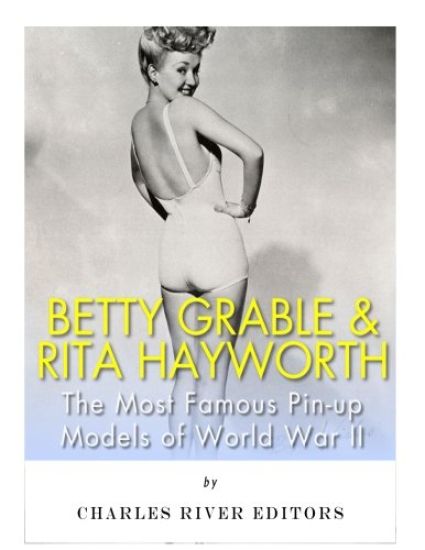
Betty Grable & Rita Hayworth: The Most Famous Pin-Up Models of World War II

Betty Grable & Rita Hayworth: The Most Famous Pin-Up Models of World War II

Charles River

Createspace Independent Publishing Platform
2017
nidottu
*Includes pictures *Includes their most famous quotes *Includes bibliographies for further reading *Includes a table of contents "There are two reasons why I'm in show business, and I'm standing on both of them." - Betty Grable "I've had a lot of unhappiness in my life - and a lot of happiness. Who doesn't?" - Rita Hayworth No history of American pop culture in the 1940s would be complete without mention of Betty Grable, the most popular pinup girl of the World War II era. Grable possessed the outstanding fortune of not only having an ideal body but arriving at the most fortuitous time imaginable; the famous pin-up photo of her, taken by Frank Powolny, made her the highest-earning actress in Hollywood from 1943 to 1951. Indeed, it was not hyperbole that earned Grable the nickname of "the girl with the million dollar legs" - not only were her legs famously adored by American soldiers fighting overseas, they were actually insured to the tune of one million dollars (Suddath). Grable was the banner actress for the era before the advent of Playboy and other publications designed to satisfy the lust of the heterosexual male, an era that objectified women but in a more wholesome, less pornographic way that was designed to reinforce all-American values. However, if Grable was, monetarily speaking, the most successful actress of the 1940s, there is a major gulf between her commercial success and the critical appraisal of her acting talents. Grable never won an Academy Award, and the swift demise of her career testifies to her inability to sustain her career. Rita Hayworth's life and career remain fascinating to both the general public and avid movie fans alike. Even people with just a casual interest in movies appreciate her performances in films such as Gilda (1946), The Lady from Shanghai (1947), and Salome (1953), and few actresses could rival Hayworth's popularity during the late 1940s and early 1950s. Indeed, many of her most famous films are still enjoyed by viewers from around the world even today, and with her acting career spanning nearly 50 years, few viewers are not familiar with at least some of Hayworth's films, particularly since she appeared in films of a wide variety of genres. In addition, Hayworth is also famously remembered for her status as one of the premier pin-up girls of World War II, with countless American soldiers who fought overseas carrying pin-up photos of Hayworth with them at all times. Even if she was never awarded an Academy Award, Hayworth remains extremely popular today, and it was no surprise that she was named one of the Top 100 actresses of the 20th century by the American Film Institute in 1999. While Hayworth is still famous today, she is arguably even more significant within the academic community, as the rise of Film Studies and the subsequent development of Cultural Studies as academic disciplines catapulted Hayworth from a popular actress to a figure worthy of close critical attention. Hayworth is now identified not only for the importance of her films but also as a figure who illuminates and exposes the treatment of race and sexuality during the period known as classical Hollywood cinema. As someone who was relegated to transforming her entire image, including her personal background and physical appearance, Hayworth represents both the height of Hollywood glamour as well as the lengths required of many actors and actresses in order to succeed in a particularly cut-throat environment. If Hollywood promoted the Horatio Alger myth of the rags-to-riches movie star, it is also important to acknowledge the extent to which it forced many stars to essentially erase their personal backgrounds in the interest of achieving this success. Even though it is true that Hayworth was the beneficiary of tremendous fortune throughout her life, her popularity within Cultural Studies curricula reflects the importance of not only her films but also her star image as well.
The World's Most Notorious Secret Societies: The Histories and Mysteries of the Freemasons, the Illuminati, and the Rosicrucians
*Includes pictures *Includes contemporary accounts explaining the inner workings of the groups *Includes online resources and a bibliography for further reading For decades, parodies featuring ominous, mysterious cults have been a favorite gag in pop culture. These fraternal brothers are often depicted in some type of underground lair, dressed in extravagant ceremonial robes with their faces hidden in their hoods, seated around a long table brimming with Gothic chalices, skulls, and glittering dark treasure. Flicks on the more morbid side might even show choppy, flashing imagery of blood, torture, and sacrifices. Like all art, creativity is sparked by a source of inspiration, and one of the most widely recognized muses of these kinds of scenes is none other than the Freemasons. This ancient society, descended from the ancient culture of stonemasonry, is said to possess the deepest, darkest, and most inexplicable truths of the universe. They are said to possess mystical powers like no other - maybe even magic. But does this stigma against the brotherhood have any merit, or are they simply just severely misunderstood? As many are aware, Freemasons have been around for many centuries. The Renaissance, which came into full bloom between the 14th and 16th centuries, saw a burst in creativity and advancement in an array of art forms throughout Europe. Stonemason guilds rode the changing tides; no longer did incoming apprentices have to be restricted by trade. A great portion of these new apprentices were artists and free thinkers, but still vowed to adhere to traditional stone-cutter culture. This new breed of masons separated from the orthodox "operative" masonry, and began to foster what became known as "speculative" masonry. Of the countless secret societies that have risen and fallen since the dawn of time, none could come close to touching the notoriety of the Illuminati. Particularly in recent years, the legendary order has starred in thousands upon thousands of books, articles, documentaries, movies, music, internet memes, and other mediums of entertainment. They are one of the chief targets for conspiracy connoisseurs, and the supposed masters of symbolic subliminal messages hidden in the media. Regardless of the veracity behind any of the conspiracy theories, there can be no denying the profound impact of the group over the past few centuries. Even those who find nothing untoward in the history of the Illuminati understand the importance of the society's mystique, from its origins in Bavaria to its founder, Adam Weishaupt, along with those who carried the society to its peak. Without question, there have been an endless number of conspiracy theories surrounding the Illuminati that have long had the world buzzing, a trend that continues on to this very day. Early Europe saw a sudden burst of Gnostic and mystical religions and organizations, each with their own take on the true path to enlightenment. Conflicts that arose within the Catholic Church and other Christian communities only encouraged the growing wave of dissenters. In the 17th century, intrigued Parisians learned about one of these unconventional groups - perhaps the most prestigious of all these secret schools. This was the Fraternity of the Rose Cross, a brotherhood of Rosicrucians founded by Christian Rosenkreutz. Like the Illuminati, the Rosicrucians are a legendary order that has been featured in thousands upon thousands of books, articles, documentaries, movies, music, internet memes, and other mediums of entertainment. They are one of the chief targets for conspiracy connoisseurs, and the supposed masters of symbolic subliminal messages hidden in the media. Regardless of the veracity behind any of the conspiracy theories, there can be no denying the profound impact of the group over the past few centuries. Even those who find nothing untoward in the history of the Rosicrucians understand the society's mystiqu
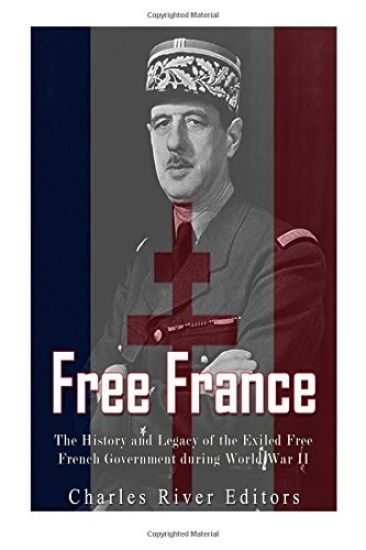
Free France: The History and Legacy of the Exiled Free French Government during World War II
*Includes pictures *Includes contemporary accounts *Includes online resources and a bibliography for further reading "Whatever happens, the flame of French Resistance must not be extinguished and will not be extinguished." - General Charles de Gaulle, radio broadcast from London, June 18, 1940 "A great man? Why, he's selfish, he's arrogant, he thinks he's the center of the universe...you're right, he's a great man " - Winston Churchill on General Charles de Gaulle The French Army crumbled swiftly under the powerful blows delivered to it in 1940 by Nazi Germany's confident Wehrmacht. Launching a massive feint into Belgium to lure mobile French armies and the British Expeditionary Force (BEF) away from the actual point of attack, the weakly protected Ardennes Forest, the Germans struck past the Maginot Line. In a lightning campaign, Heinz Guderian's panzers punched through to the coast, dividing Allied forces with a steel cordon across France and forcing the evacuation of the BEF from the port of Dunkirk. French morale collapsed very quickly in the face of the Third Reich's onslaught. The French population had not yet recovered from World War I's immense bloodshed, and many French preferred surrender to a second decimation of their young men. Accordingly, the Germans seized the northern French territories directly, while permitting Marshal Petain, an elderly war hero and right-wing fanatic, to found a rump state centered on Vichy. History dubbed the quasi-independent client state's government the Vichy Regime. Not all French people proved willing to surrender to the Nazi invaders, however. While large numbers "collaborated" - working for German or Vichy companies to provide for themselves or their families - and some wholeheartedly backed the new regime out of opportunism, fascist conviction, or other motivations, many courageous French resisted the Nazis and the quisling Vichy state. "De Gaulle described them as being bound together by a taste for risk and adventure ...] national pride sharpened by the suffering of their nation and 'an overwhelming confidence in the strength and cunning of their own plot'. ...] 'With him, it is ...] serving the Resistance and national honour, uncompromisingly demanding, ' wrote one. 'With him, we would have to get used to breathing the rarefied air of the summits.'" (Fenby, 2012, 109). While all Free French forces shared the same goal - opposition to the Germans their Vichy pawns - they viewed each other with some suspicion and sometimes cooperated only grudgingly. One of the biggest divides ran between the Gaullists (and those who favored de Gaulle simply as a convenient, but temporary, "banner" to provide a unifying influence) and the communists of the PCF (Partie Communiste Francais). De Gaulle and his followers viewed the communists with profound suspicion, believing they harbored a wish for violent revolution and a totalitarian Soviet-aligned state, yet they also needed their paramilitary skills and extraordinarily large cache of weaponry. While de Gaulle's suspicions proved overblown, the communists also tended to overstate their own role. They asserted, for example, that 75,000 communist Resistance members died in the struggle. During the war years, however, the Free French kept the spirit of an independent and defiant France alive, waiting for the opportunity to emerge again, regardless of the precise political beliefs of its members. Free France: The History and Legacy of the Exiled Free French Government during World War II examines the creation of Free France over the course of World War II. Along with pictures of important people, places, and events, you will learn about the Free French like never before.
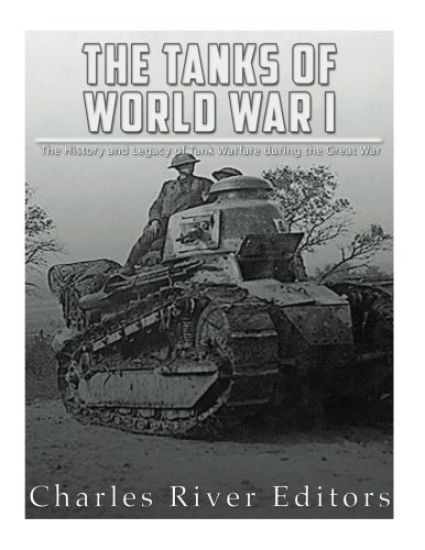
The Tanks of World War I: The History and Legacy of Tank Warfare during the Great War

The Tanks of World War I: The History and Legacy of Tank Warfare during the Great War

Charles River

Createspace Independent Publishing Platform
2017
nidottu
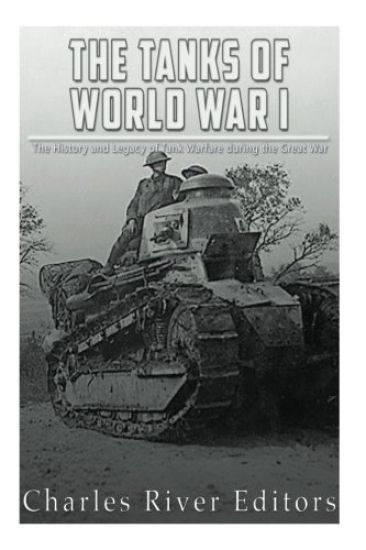
*Includes pictures *Includes contemporary accounts *Includes online resources and a bibliography for further reading World War I, also known in its time as the "Great War" or the "War to End all Wars", was an unprecedented holocaust in terms of its sheer scale. Fought by men who hailed from all corners of the globe, it saw millions of soldiers do battle in brutal assaults of attrition which dragged on for months with little to no respite. Tens of millions of artillery shells and untold hundreds of millions of rifle and machine gun bullets were fired in a conflict that demonstrated man's capacity to kill each other on a heretofore unprecedented scale, and as always, such a war brought about technological innovation at a rate that made the boom of the Industrial Revolution seem stagnant. One of the most important breakthroughs in military technology associated with World War I, and certainly the one that continues to capture the public imagination, was the introduction of a war machine that came to dominate the face of land battles throughout most of the 20th century: the tank. As a concept, it was not revolutionary; in fact, it harkened back to classical antiquity and to the Middle Ages, such as the covered battering rams and testudos which had made frequent appearances on ancient battlefields. The development of both modern artillery and machine guns, as well as the stalemate engendered by heavy fortifications and entrenchments, had hamstrung the mobility of infantry and cavalry and also left them both utterly vulnerable to defensive firepower. Since they were incapable of replying in kind, the tank was designed to bridge that gap. The tank's armor, thick enough to withstand lateral fragmentation from exploding shells (although not direct hits) also made it virtually invulnerable to enemy rifle and machine gun fire, and its large tread meant that it could bridge trenches which would, at the very least, have delayed infantry substantially. As for the barbed wire entanglements and obstacles that severely delayed infantry and exposed them to enemy fire, tanks could simply drive right through it. Various armies had flirted with the concept of a tank prior to World War I, but advances in metallurgical techniques (allowing for suitably solid and relatively lightweight armor) and in mechanical engineering (which allowed for the construction of a powerful engine capable of driving such a mass) finally made its development and deployment possible, as did the development of treaded track (initially for agricultural use in tractors). It was the British (at the instigation of Winston Churchill) who pioneered the "landship", but the French soon followed suit with their own designs. Ironically, Germany, which would subsequently become famous for panzers and blitzkrieg warfare, was late in taking up the idea. During World War I, the Germans continued to rely on other techniques, and they produced less than two dozen models for battlefield use. The tanks of World War I, revolutionary (and initially terrifying) as they were, had their limitations. A standard tank would literally consume its own weight in spare parts, and they were painfully slow compared to more modern iterations. They were also lightly armed - usually with machine guns or light guns at most - and some poorly designed models tended to "ditch" themselves, sometimes irretrievably, in wider trenches. However, as a mobile bastion for infantry to shelter behind in the advance, and as a psychological weapon, they were significant. The Tanks of World War I: The History and Legacy of Tank Warfare during the Great War analyzes the technological advancements in tank warfare and its impact on what was the deadliest conflict in history up to that time. Along with pictures of important people, places, and events, you will learn about World War I tanks like never before.
The Tanks of World War I: The History and Legacy of Tank Warfare during the Great War

The Tanks of World War I: The History and Legacy of Tank Warfare during the Great War

Charles River

Createspace Independent Publishing Platform
2017
nidottu
*Includes pictures *Includes contemporary accounts *Includes online resources and a bibliography for further reading World War I, also known in its time as the "Great War" or the "War to End all Wars", was an unprecedented holocaust in terms of its sheer scale. Fought by men who hailed from all corners of the globe, it saw millions of soldiers do battle in brutal assaults of attrition which dragged on for months with little to no respite. Tens of millions of artillery shells and untold hundreds of millions of rifle and machine gun bullets were fired in a conflict that demonstrated man's capacity to kill each other on a heretofore unprecedented scale, and as always, such a war brought about technological innovation at a rate that made the boom of the Industrial Revolution seem stagnant. One of the most important breakthroughs in military technology associated with World War I, and certainly the one that continues to capture the public imagination, was the introduction of a war machine that came to dominate the face of land battles throughout most of the 20th century: the tank. As a concept, it was not revolutionary; in fact, it harkened back to classical antiquity and to the Middle Ages, such as the covered battering rams and testudos which had made frequent appearances on ancient battlefields. The development of both modern artillery and machine guns, as well as the stalemate engendered by heavy fortifications and entrenchments, had hamstrung the mobility of infantry and cavalry and also left them both utterly vulnerable to defensive firepower. Since they were incapable of replying in kind, the tank was designed to bridge that gap. The tank's armor, thick enough to withstand lateral fragmentation from exploding shells (although not direct hits) also made it virtually invulnerable to enemy rifle and machine gun fire, and its large tread meant that it could bridge trenches which would, at the very least, have delayed infantry substantially. As for the barbed wire entanglements and obstacles that severely delayed infantry and exposed them to enemy fire, tanks could simply drive right through it. Various armies had flirted with the concept of a tank prior to World War I, but advances in metallurgical techniques (allowing for suitably solid and relatively lightweight armor) and in mechanical engineering (which allowed for the construction of a powerful engine capable of driving such a mass) finally made its development and deployment possible, as did the development of treaded track (initially for agricultural use in tractors). It was the British (at the instigation of Winston Churchill) who pioneered the "landship", but the French soon followed suit with their own designs. Ironically, Germany, which would subsequently become famous for panzers and blitzkrieg warfare, was late in taking up the idea. During World War I, the Germans continued to rely on other techniques, and they produced less than two dozen models for battlefield use. The tanks of World War I, revolutionary (and initially terrifying) as they were, had their limitations. A standard tank would literally consume its own weight in spare parts, and they were painfully slow compared to more modern iterations. They were also lightly armed - usually with machine guns or light guns at most - and some poorly designed models tended to "ditch" themselves, sometimes irretrievably, in wider trenches. However, as a mobile bastion for infantry to shelter behind in the advance, and as a psychological weapon, they were significant. The Tanks of World War I: The History and Legacy of Tank Warfare during the Great War analyzes the technological advancements in tank warfare and its impact on what was the deadliest conflict in history up to that time. Along with pictures of important people, places, and events, you will learn about World War I tanks like never before.