Kirjojen hintavertailu – 12 903 727 kirjaa ja 27 kauppaa
Kirjailija
Charles River
Kirjat ja teokset yhdessä paikassa: 4 673 kirjaa, julkaisuja vuosilta 2013–2022, suosituimpiin kuuluu William Powell and Myrna Loy: The Lives and Careers of One of Classical Hollywood's Most Iconic Duos. Vertaile teosten hintoja ja tarkista saatavuus suomalaisista kirjakaupoista.
*Includes pictures*Includes quotes from the Koran and Hadith*Includes online resources and a bibliography for further reading"It's very simple. We want sharia. Sharia in economy, in politics, in judiciary, in our borders and our foreign relations." - Mohammed Abdel-Rahman, the son of Omar Abdel-Rahman, Time. October 8, 2012 Beginning in 2010, much of the Middle East, including Egypt, was swept up by a series of revolutions later referred to as the Arab Spring. The wave of riots and demonstrations - some violent, some not, but all impactful and sizeable - began in Tunisia before spreading like wildfire to neighboring countries in Northern Africa and eventually into the Arabian Peninsula, including Egypt, Libya, Syria, Yemen, and Bahrain. Though it eventually petered out by mid-2012, the Arab Spring led to the toppling of long-reigning monarchs and regimes, free elections, and attempts to build republics based on democratic principles. In the aftermath of the Arab Spring protests of 2010 and 2011, the world witnessed the rise of political groups in the Middle East who associated themselves with a movement called Salafism, such as the Nour ("Light") Party in Egypt. Prior to these popular uprisings, the Salafis were rather marginalized groups within the spectrum of Islam and, in many cases, did not share a cohesive and agreed upon set of beliefs that clearly differed from what many call "mainstream Islam." Prior to the Arab Spring, different Muslim religious scholars and leaders had emerged and led what they believed to be Salafi movements to return Muslims back to the origins of the religion. The Arab Spring protests did fuel the overthrow of some long-term dictators, start civil war in other nations, and impress upon the world the power of digital communications. Another important outcome of these events was the opening of a space for religiously motivated social and political movements that had been feared and repressed for many years in the Middle East, particularly by autocratic rulers that arose during the post-colonialism fallout in the region. The term "Salaf' or "Salafism" is becoming more mainstream and associated with many unfortunate events, such as the spread of a violent ideology in the Middle East, South Central Asia, Europe, and North America because the perpetrators of violence claim to have some wholly different understanding of Islam than the rest of the world's Muslims. As such, the media and its consumers have begun to conflate and confuse the term Salafism with extremist or radical Islam, terrorism, Islamist, and a whole slate of other terms used to negatively label the entire religion. The problem is that the users of these terms in the media and beyond generally do not bother defining what it means to be a "Salafi" and how its many manifestations differ country to country and person to person within a given time and context. This is true for nearly all religions in most regards, because to believe something about a religion is to hold a subjective perspective: the religion is what you make of it or what others tell you to make of it. So what is Salafism? "The word salaf means predecessors, and in the Islamic context, it usually refers to the period of the Prophet, his Companions, and their successors." In general, a Salafi refers to someone who claims to follow a particular understanding of the Salaf and claims to comprehend an authoritative sense of Islam - one that espouses a belief that their Islam is the original Islam in the way it was practiced and meant to be practiced at the beginning of the religion. Most Salafis claim to focus their religious interpretation on the Qur'an's words and vary on the level of importance given to the Hadith. Whether their claim to boast a more accurate and traditional belief in the religion is true or not is debated among believers, but the fact remains that the term's usage is on the rise.
*Includes pictures*Includes quotes from the Koran and Hadith*Includes online resources and a bibliography for further reading"It's very simple. We want sharia. Sharia in economy, in politics, in judiciary, in our borders and our foreign relations." - Mohammed Abdel-Rahman, the son of Omar Abdel-Rahman, Time. October 8, 2012 Beginning in 2010, much of the Middle East, including Egypt, was swept up by a series of revolutions later referred to as the Arab Spring. The wave of riots and demonstrations - some violent, some not, but all impactful and sizeable - began in Tunisia before spreading like wildfire to neighboring countries in Northern Africa and eventually into the Arabian Peninsula, including Egypt, Libya, Syria, Yemen, and Bahrain. Though it eventually petered out by mid-2012, the Arab Spring led to the toppling of long-reigning monarchs and regimes, free elections, and attempts to build republics based on democratic principles. In the aftermath of the Arab Spring protests of 2010 and 2011, the world witnessed the rise of political groups in the Middle East who associated themselves with a movement called Salafism, such as the Nour ("Light") Party in Egypt. Prior to these popular uprisings, the Salafis were rather marginalized groups within the spectrum of Islam and, in many cases, did not share a cohesive and agreed upon set of beliefs that clearly differed from what many call "mainstream Islam." Prior to the Arab Spring, different Muslim religious scholars and leaders had emerged and led what they believed to be Salafi movements to return Muslims back to the origins of the religion. The Arab Spring protests did fuel the overthrow of some long-term dictators, start civil war in other nations, and impress upon the world the power of digital communications. Another important outcome of these events was the opening of a space for religiously motivated social and political movements that had been feared and repressed for many years in the Middle East, particularly by autocratic rulers that arose during the post-colonialism fallout in the region. The term "Salaf' or "Salafism" is becoming more mainstream and associated with many unfortunate events, such as the spread of a violent ideology in the Middle East, South Central Asia, Europe, and North America because the perpetrators of violence claim to have some wholly different understanding of Islam than the rest of the world's Muslims. As such, the media and its consumers have begun to conflate and confuse the term Salafism with extremist or radical Islam, terrorism, Islamist, and a whole slate of other terms used to negatively label the entire religion. The problem is that the users of these terms in the media and beyond generally do not bother defining what it means to be a "Salafi" and how its many manifestations differ country to country and person to person within a given time and context. This is true for nearly all religions in most regards, because to believe something about a religion is to hold a subjective perspective: the religion is what you make of it or what others tell you to make of it. So what is Salafism? "The word salaf means predecessors, and in the Islamic context, it usually refers to the period of the Prophet, his Companions, and their successors." In general, a Salafi refers to someone who claims to follow a particular understanding of the Salaf and claims to comprehend an authoritative sense of Islam - one that espouses a belief that their Islam is the original Islam in the way it was practiced and meant to be practiced at the beginning of the religion. Most Salafis claim to focus their religious interpretation on the Qur'an's words and vary on the level of importance given to the Hadith. Whether their claim to boast a more accurate and traditional belief in the religion is true or not is debated among believers, but the fact remains that the term's usage is on the rise.
*Includes pictures *Includes ancient accounts of Axum *Includes online resources and a bibliography for further reading "The Tigreans had Axum, but what could that mean to the Gurague? The Agew had Lalibela, but what could that mean to the Oromo? The Gonderes had castles, but what could that mean to the Wolaitai?" - Ethiopian Prime Minister Meles Zenawi, in response to a question about Ethiopian unity In the year 570 CE, a child by the name of Muhammad is born in the Arabian city of Mecca. Sixty-two years later, he dies, and upon his death, the faith that he founded, Islam ("obedience to the one God"), dominates the western half of the Arabian Peninsula. By the end of the first millennium CE, four centuries after the death of Muhammad, Islam has grown to dominate western Asia, north and east Africa, the Levant, and the Iberian Peninsula. The Holy Lands are lost to Christianity, and Christian Europe is under siege. Folk tales begin to circulate - their origins obscure, but first noted in historic texts around the 12th century CE - of a lost Christian kingdom in the East, the Kingdom of Prester John. There resides the patriarch of Saint Thomas, who proselytized in the Orient. Later, in the 15th century, under the impetus of the Portuguese King Henry the Navigator, Portuguese missionaries and navigators enter the Indian Ocean from the south and, creeping northward up the east coast of Africa, hear ever more substantial tales of a Christian kingdom lost in the belly of Islam. As they enter upon the coast of Somalia, competing in a growing trade in slaves and gold with Arabs of the peninsula, they become increasingly interested in the source of this legend, in part to fulfil the centuries-long dream of discovering the Kingdom of Prester John, but also in part to secure the alliance of a Christian power against the force of Islam. In 1515, a Portuguese missionary explorer by the name of Father Francisco lvares enters Ethiopia and takes note in the interior of the remnants of a civilization of obviously Christian origin, with living adherents conforming to a branch of the faith clearly founded in deepest antiquity. Could this be the Kingdom of Prester John? Father lvares is intrigued, but wary of too fanciful a construction, and he speculates more practically on the legend of King Solomon, the Queen of Sheba, and other such muses. The city at the center of the civilization he calls Aquasumo. Thus the existence of the Kingdom of Aksum came to the notice of Christian Europe after almost a millennium of isolation. The Portuguese had their own motivations for reaching and taking note of African antiquity, but as has often been true of the Portuguese relationship with Africa, their earliest explorations tended to be eclipsed by the work of later European explorers representing the wealthier nations of Europe. Axum: The History and Legacy of the Kingdom of Aksum's Capital and One of the Oldest Continuously Inhabited Cities in Africa examines the amazing history and legacy of one of the most interesting places in the world. Along with pictures of important people, places, and events, you will learn about Axum like never before.
Durante d cadas, las parodias sobre los cultos siniestros y misteriosos han sido parte de los chistes favoritos de la cultura pop. Las fraternidades han sido ubicadas con frecuencia en ciertas guaridas subterr neas, vestidos con extravagantes h bitos ceremoniales y con la cara oculta por capuchas, sentados alrededor de una mesa larga llena de c lices horrendos, calaveras y brillantes tesoros tenebrosos. Desde un punto de vista m s enfermizo, se pueden ver unas im genes entrecortadas y destellantes de sangre, torturas y sacrificios. Como en todo arte, la creatividad es desencadenada por una fuente de inspiraci n, y una de las musas m s ampliamente reconocidas de esta clase de escenas no es otra que los masones. Esta antigua sociedad, descendiente de la antigua cultura de la alba iler a, se cree que conoce las m s profundas, oscuras e inexplicables verdades del universo. Supuestamente poseen poderes m sticos-y a n m gicos-como nadie m s. Pero, tiene alguna validez esta estigmatizaci n de la fraternidad o es que simplemente han sido terriblemente incomprendidos? Como saben muchos, los masones han existido por siglos. El Renacimiento, que lleg a su m ximo esplendor entre los siglos 14 y 16, vio un estallido de creatividad y de progreso en una variedad de formas de arte a trav s de Europa. El gremio de los alba iles experiment cambios; los aprendices no se ve an ya restringidos por el comercio. Una gran porci n de esos aprendices eran artistas y librepensadores, pero segu an prometiendo adherencia a la tradicional cultura alba il. La nueva clase de alba iles se apart de la alba iler a "operativa" ortodoxa, y empez a promover lo que se conoci como la alba iler a "especulativa." Como la mayor a de las leyendas, todav a se discuten hoy en d a los or genes de la Masoner a. La m s antigua menci n de la sociedad se remonta al Manuscrito Hallwell, o Poema Regio que supuestamente fue escrito entre finales del siglo 14 y principios del 15. El manuscrito, en exquisita caligraf a y en ingl s antiguo, ten a 64 p ginas y 794 versos. Es considerado el primero de los tradicionales manuscritos mas nicos y es generalmente aceptado como la "verdadera" historia de los comienzos de la fraternidad. El poema empieza con Euclides, matem tico griego del siglo 4 A. C., recordado hoy en d a como "el padre de la geometr a." Se dice que el genio matem tico incorpor la geometr a a un nuevo campo que l denomin "alba iler a." Con esta nueva y refinada rama cient fica, viaj a Egipto y transmiti sus conocimientos a los hijos de los nobles egipcios. Cualesquiera que hayan sido los or genes de la organizaci n, el fen meno incipiente se transformar a un d a en la Sociedad de la Masoner a, portadora de secretos divinos como ninguna otra, y una de las fraternidades m s fascinantes y controvertidas en la historia de la humanidad. Los masones: Historia de la Masoner a, la m s famosa de las sociedades secretas, examina los or genes y la historia de la pol mica hermandad, su expansi n a trav s del globo, y algunas de las m s asombrosas teor as conspirativas que han rodeado a la sociedad hasta nuestros d as. Junto con fotos de gente importante, de lugares y de eventos, usted aprender acerca de los Masones como nunca antes.
Durante d cadas, las parodias sobre los cultos siniestros y misteriosos han sido parte de los chistes favoritos de la cultura pop. Las fraternidades han sido ubicadas con frecuencia en ciertas guaridas subterr neas, vestidos con extravagantes h bitos ceremoniales y con la cara oculta por capuchas, sentados alrededor de una mesa larga llena de c lices horrendos, calaveras y brillantes tesoros tenebrosos. Desde un punto de vista m s enfermizo, se pueden ver unas im genes entrecortadas y destellantes de sangre, torturas y sacrificios. Como en todo arte, la creatividad es desencadenada por una fuente de inspiraci n, y una de las musas m s ampliamente reconocidas de esta clase de escenas no es otra que los masones. Esta antigua sociedad, descendiente de la antigua cultura de la alba iler a, se cree que conoce las m s profundas, oscuras e inexplicables verdades del universo. Supuestamente poseen poderes m sticos-y a n m gicos-como nadie m s. Pero, tiene alguna validez esta estigmatizaci n de la fraternidad o es que simplemente han sido terriblemente incomprendidos? Como saben muchos, los masones han existido por siglos. El Renacimiento, que lleg a su m ximo esplendor entre los siglos 14 y 16, vio un estallido de creatividad y de progreso en una variedad de formas de arte a trav s de Europa. El gremio de los alba iles experiment cambios; los aprendices no se ve an ya restringidos por el comercio. Una gran porci n de esos aprendices eran artistas y librepensadores, pero segu an prometiendo adherencia a la tradicional cultura alba il. La nueva clase de alba iles se apart de la alba iler a "operativa" ortodoxa, y empez a promover lo que se conoci como la alba iler a "especulativa." Como la mayor a de las leyendas, todav a se discuten hoy en d a los or genes de la Masoner a. La m s antigua menci n de la sociedad se remonta al Manuscrito Hallwell, o Poema Regio que supuestamente fue escrito entre finales del siglo 14 y principios del 15. El manuscrito, en exquisita caligraf a y en ingl s antiguo, ten a 64 p ginas y 794 versos. Es considerado el primero de los tradicionales manuscritos mas nicos y es generalmente aceptado como la "verdadera" historia de los comienzos de la fraternidad. El poema empieza con Euclides, matem tico griego del siglo 4 A. C., recordado hoy en d a como "el padre de la geometr a." Se dice que el genio matem tico incorpor la geometr a a un nuevo campo que l denomin "alba iler a." Con esta nueva y refinada rama cient fica, viaj a Egipto y transmiti sus conocimientos a los hijos de los nobles egipcios. Cualesquiera que hayan sido los or genes de la organizaci n, el fen meno incipiente se transformar a un d a en la Sociedad de la Masoner a, portadora de secretos divinos como ninguna otra, y una de las fraternidades m s fascinantes y controvertidas en la historia de la humanidad. Los masones: Historia de la Masoner a, la m s famosa de las sociedades secretas, examina los or genes y la historia de la pol mica hermandad, su expansi n a trav s del globo, y algunas de las m s asombrosas teor as conspirativas que han rodeado a la sociedad hasta nuestros d as. Junto con fotos de gente importante, de lugares y de eventos, usted aprender acerca de los Masones como nunca antes.
"Nathanael le dijo, ' Puede salir algo bueno de Nazaret' Felipe le dijo, 'Ven y ver s'" (Juan 1,46) " Y l] vino y vivi en una ciudad, Nazaret. As fue para que se cumpliera lo dicho por los profetas: 'Ser llamado Nazareno'". (Mateo 2,23) "' Qu asuntos tienes con nosotros, Jesus de Nazaret? Has venido a destruirnos? S qui n eres T , el Santo de Dios '" - (Marcos 1,24) El pueblo de Nazaret, localizado en Galilea en el Norte de Israel, es hoy en d a un floreciente asentamiento con m s de 60.000 habitantes. Pero hace m s de 2000 a os era un pueblo insignificante de solo unos pocos centenares de habitantes, la mayor a granjeros y algunos jornaleros que viajaban a los cercanos poblados romanos en busca de trabajo. A pesar de ello, fue en esta localidad tan improbable donde vivi la Sagrada Familia. A n m s importante es que fue aqu donde la Anunciaci n tuvo lugar: el momento en el que el ngel Gabriel revel a Mar a que ella ser a la virgen madre de Jes s. Muchos tambi n sostienen que Nazaret fue el sitio donde Jes s pas la mayor parte de su infancia, aprendiendo el oficio de su padre, asistiendo a los servicios la sinagoga local, y desarrollando los fundamentos de su fe. Jos , Mar a y Jes s habr an seguido el estilo de vida jud o de esa poca, pero despu s de Cristo, Nazaret se fue convirtiendo en el centro de las peregrinaciones a la Tierra Santa. A trav s de los a os ha sido el escenario de algunas de las m s impresionantes manifestaciones de fe frente a la opresi n y el peligro, representando la turbulencia de los primeros a os del Cristianismo en la regi n, y de las campa as militares en la Tierra Santa durante las Cruzadas y el per odo Otomano. A trav s de todo eso, Nazaret ha continuado siendo un sitio extremadamente importante para la fe cristiana, considerando que hay cinco lugares vinculados a la vida y tiempos de Jesucristo: la Iglesia de San Gabriel, la Bas lica de la Anunciaci n, la Iglesia de San Jos , la antigua sinagoga, y un precipicio en el l mite de la ciudad, adonde Jes s fue llevado para ser ejecutado por blasfemo. Nazaret: La Historia y el Legado del lugar de nacimiento de Jesucristo echa una mirada a la historia de la ciudad y su importancia en la Antig edad. Junto con im genes de personas, lugares y hechos, aprender sobre Nazaret como nunca antes.
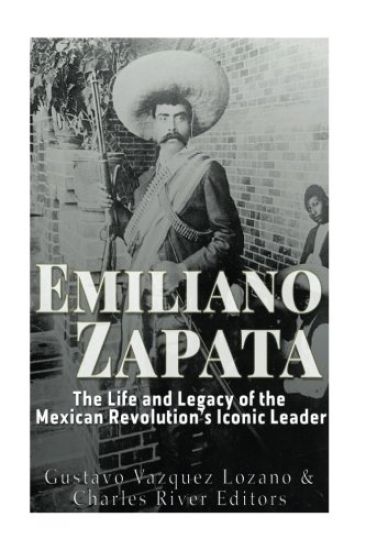
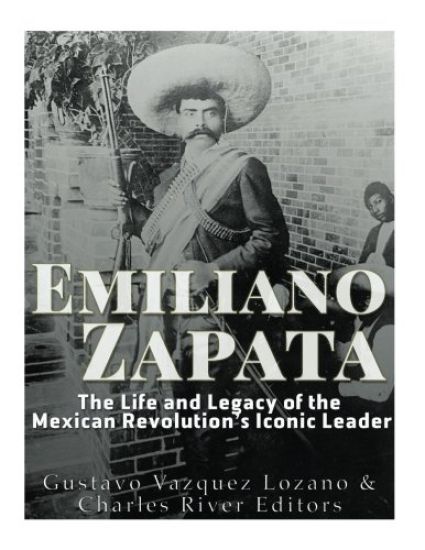
*Includes pictures *Includes Zapata's quotes and descriptions of his life and career *Includes online resources and a bibliography for further reading "It's better to die on your feet than to live on your knees." - Emiliano Zapata A little more than 100 years ago a Mexican peasant named Emiliano Zapata gathered a rural army from the plantations and villages of southern Mexico, seized the lands of the haciendas, and began to distribute them among the peasants of Anenecuilco, his hometown, in the state of Morelos. Outraged and impatient with the ceaseless destitution of the indigenous peoples at the hands of the landowners, he had decided to take justice in his hands. His flag was Liberty and Justice, the exact opposites of the two burdens that had tyrannized the rural population: work in semi-slavery conditions and immense inequality. Zapata, who in a few years assembled a popular army of 25,000, was a unique case in the history of Mexico. His country's past had consisted of opportunist generals revolting against the government seeking not to make justice, but to seize power. Conversely, Zapata was not interested in politics or power plays, except in their most practical and immediate form: to distribute land among the peasants; to allow them to work in peace; and to defend their gains by force of arms. Thus, it was only inevitable that in his time, he was seen as a menace, someone to get rid of in order to return to peace and order. Nearly a century after his death, Zapata remains an opaque figure. To call oneself a Zapatista in Mexico can get a person in trouble, yet he led one of the peasant rebellions most studied by scholars. Historians have produced biographies that portray him as a hero, such as John Womack in the 1960s, and that of his successor and closest aide, Gildardo Maga a, who wrote one shortly after Zapata's death. More meticulous books have appeared in recent past, like the one by Samuel Brunk, who concedes that the press may have exaggerated Zapata's exploits, but not completely. Despite the debates, the caudillo of the south continues to shine for his clarity of principles and intransigence, his refusal to compromise with the powerful, and his refusal to be a subordinate. He remained faithful to the death in his struggle for the oppressed, and he always despised power. On those grounds, although surely it was never his intention, Zapata became an international symbol, and as a result, many Mexicans have chosen to remember him as one of the noblest, most honest and bravest figures in their nation's history. Emiliano Zapata: The Life and Legacy of the Mexican Revolution's Iconic Leader chronicles the life of one of Mexico's most legendary figures. Along with pictures of important people, places, and events, you will learn about Emiliano Zapata like never before, in no time at all.
*Includes pictures *Includes Zapata's quotes and descriptions of his life and career *Includes online resources and a bibliography for further reading "It's better to die on your feet than to live on your knees." - Emiliano Zapata A little more than 100 years ago a Mexican peasant named Emiliano Zapata gathered a rural army from the plantations and villages of southern Mexico, seized the lands of the haciendas, and began to distribute them among the peasants of Anenecuilco, his hometown, in the state of Morelos. Outraged and impatient with the ceaseless destitution of the indigenous peoples at the hands of the landowners, he had decided to take justice in his hands. His flag was Liberty and Justice, the exact opposites of the two burdens that had tyrannized the rural population: work in semi-slavery conditions and immense inequality. Zapata, who in a few years assembled a popular army of 25,000, was a unique case in the history of Mexico. His country's past had consisted of opportunist generals revolting against the government seeking not to make justice, but to seize power. Conversely, Zapata was not interested in politics or power plays, except in their most practical and immediate form: to distribute land among the peasants; to allow them to work in peace; and to defend their gains by force of arms. Thus, it was only inevitable that in his time, he was seen as a menace, someone to get rid of in order to return to peace and order. Nearly a century after his death, Zapata remains an opaque figure. To call oneself a Zapatista in Mexico can get a person in trouble, yet he led one of the peasant rebellions most studied by scholars. Historians have produced biographies that portray him as a hero, such as John Womack in the 1960s, and that of his successor and closest aide, Gildardo Maga a, who wrote one shortly after Zapata's death. More meticulous books have appeared in recent past, like the one by Samuel Brunk, who concedes that the press may have exaggerated Zapata's exploits, but not completely. Despite the debates, the caudillo of the south continues to shine for his clarity of principles and intransigence, his refusal to compromise with the powerful, and his refusal to be a subordinate. He remained faithful to the death in his struggle for the oppressed, and he always despised power. On those grounds, although surely it was never his intention, Zapata became an international symbol, and as a result, many Mexicans have chosen to remember him as one of the noblest, most honest and bravest figures in their nation's history. Emiliano Zapata: The Life and Legacy of the Mexican Revolution's Iconic Leader chronicles the life of one of Mexico's most legendary figures. Along with pictures of important people, places, and events, you will learn about Emiliano Zapata like never before, in no time at all.
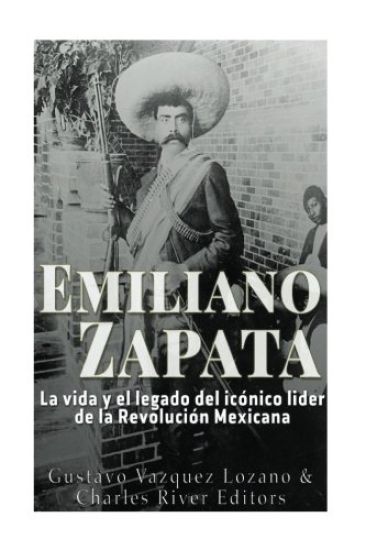
Hace poco m s de cien a os un campesino mexicano llamado Emiliano Zapata reclut un ej rcito rural de las plantaciones y pueblos del sur de M xico, tom por la fuerza las tierras de los haciendas y comenz a repartirlas entre los habitantes de Anenecuilco, su pueblo natal en Morelos. Indignado y encolerizado por el despojo que los terratenientes hab an venido efectuando durante a os contra los pueblos ind genas, hab a decidido tomar la impartici n de la justicia en sus propias manos. Su bandera era la de Libertad y Justicia, exactos opuestos de los dos flagelos que azotaban a la clase campesina: trabajo en la semiesclavitud y tropel as sin fin. Emiliano Zapata, que en unos cuantos a os logr reunir un ej rcito popular de 25 mil hombres, era una caso nico en la historia de M xico: la historia de su pa s hab a sido la de generales oportunistas dando cuartelazos buscando no hacer justicia, sino adue arse del poder. A Zapata no le interesaba el poder ni la pol tica, excepto en su forma m s pr ctica e inmediata: repartir tierras, hacer que los campesinos pudieran cultivarlas en paz y defender esa conquista elemental con la fuerza de las armas. No es raro que en su tiempo se le haya visto como a una amenaza, a quien deb a liquidarse para poder recuperar la paz y el orden. Admirado en nuestros d as como s mbolo de la resistencia campesina y luchador social, en vida Zapata fue perseguido tenazmente, declarado como un forajido m s all de toda amnist a. Cuando pudieron, los sucesivos gobiernos no dudaron en aplicar toda la brutalidad posible contra los zapatistas y sus pueblos, incluyendo mujeres y ni os. Para la gente de la capital no eran m s que unos semi-b rbaros. Sin embargo, rodeado de algunos intelectuales de izquierda, socialistas y antiguos anarquistas, Zapata dio forma a la corriente ideol gicamente m s avanzada y progresista de la Revoluci n Mexicana. "Quiero morir siendo un esclavo de los principios, no de los hombres" y "La tierra es de quien la trabaja con sus manos" son frases que se le atribuyen, aunque l mismo no sab a escribir y ten a que dictar sus cartas. En este sentido, sus palabras eran m s peligrosas que las conquistas militares que su Ej rcito Liberador del Sur alcanz durante un breve periodo. Zapata era tan pernicioso para el gobierno que cuando finalmente lo embosc y asesin , se asegur de que los habitantes de la regi n se pusieran en fila para ver su cad ver. Aparte de sus soldados ind genas vestidos de manta, Zapata no tuvo aliados. Otros caudillos ganaron cierta respetabilidad, pero a l la sociedad de su tiempo lo vio como un obst culo para la pacificaci n del pa s en los mejor de los casos; en el peor de ellos, era el "Atila del Sur", un violador de mujeres alrededor del cual se tejieron historias descabelladas. Hubo una notable excepci n: Francisco Villa, el otro gran l der de la Revoluci n, quien vio en las ideas de Zapata lo que l quiz no pod a formular. Desde el inicio de la guerra civil, Villa y Zapata fueron el s mbolo de la Revoluci n Mexicana, h roes populares, mitos vivientes, las dos caras de una misma moneda, expresi n de la misma rabia. En otros sentidos, eran lados opuestos. Villa ven a del norte, Zapata del sur. Villa era impulsivo, carism tico, el consentido del cine norteamericano, buen diplom tico e inmensamente popular; Zapata era huidizo y hura o, sin dotes diplom ticas y m s bien temido por la gente fuera de los l mites de su estado. Raramente era visto, fotografiado o filmado; detestaba la ciudad y la pol tica, a la que consideraba un nido de traidores. Llegar a una entrevista con l requer a pasar muchos retenes y viajar por caminos inaccesibles en las monta as. Demostr un inter s casi exclusivo por su regi n, y se enfoc en un solo ideal, el de la tierra. A diferencia de Pancho Villa o Venustiano Carranza, no le interesaba un programa nacional que cobijara a todas las clases sociales, sino una
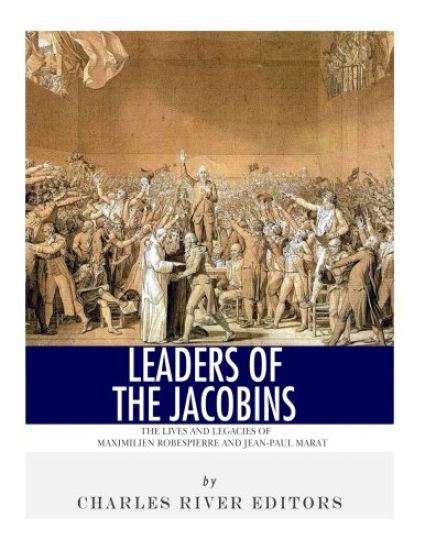
*Includes pictures of Robespierre, Marat, and important people, places, and events in their lives. *Includes quotes from Marat's fiery journals and Robespierre's most famous and controversial quotes about the French Revolution, Louis XVI, and more. *Includes detailed descriptions of the deaths of Marat, Robespierre, Louis XVI and Marie Antoinette *Includes Bibliographies on both leaders for further reading. "Citizens, did you want a revolution without a revolution?" - Maximilien Robespierre "People, give thanks to the gods Your most redoubtable enemy has fallen beneath the scythe of Fate." - Jean-Paul Marat In many ways it is fitting that Maximilien Robespierre (1758-1794) is one of the best known figures of the French Revolution, if not its most famous. The early years of the Revolution were fueled by Enlightenment ideals, seeking the social overthrow of the caste system that gave the royalty and aristocracy decisive advantages over the lower classes. Few were as vocal in their support of Enlightenment ideals as Robespierre, who was heavily versed in Rousseau and Montesquieu, a champion of the bourgeoise, and an advocate of human rights who opposed both slavery and the death penalty. But history remembers the French Revolution in a starkly different way, as the same leaders who sought a more democratic system while out of power devolved into establishing an incredibly repressive tyranny of their own once they acquired it. For that reason, the Reign of Terror became the most memorable aspect of the Revolution, and at the head of it all was Robespierre, whose position on the Committee of Public Safety made him the Reign of Terror's instrumental figure, until he himself became a victim of the Revolution's extremism. King Louis XVI gave the French Revolution a scapegoat. Robespierre gave the French Revolution a leader. And Jean-Paul Marat (1743-1793) gave the French Revolution a voice. One of the most memorable and notorious revolutionaries, Marat became one of the Revolution's best known figures through his speeches, writings, and scathing attacks on everyone he perceived as "enemies of the revolution". It's possible that the Jacobins might not have come to power in 1793 without Marat's fiery work championing the lower classes and branding his political foes with the harshest demagoguery. No revolutionary was more passionate, determined and willing to die for the cause. Marat's work during the French Revolution and his notorious death at the height of it remain the best known details of his life. Indeed, the image of the Death of Marat by Jacques-Louis David is one of the most commonly associated with the Revolution. But those facts have obscured what the man himself was really like. A trained scientist who served as a doctor before the Revolution, Marat counted among his acquaintances luminaries like Goethe and Benjamin Franklin. At the same time, Marat was an Enlightened political philosopher who advocated for basic human rights and reforms such as fair trials by jury. Leaders of the Jacobins chronicles the lives and legacies of Robespierre and Marat in one gripping narrative, explaining their rise within the Jacobins, the political struggles among the French revolutionaries, and the turmoil that ensued. With quotes, pictures, a bibliography, and a Table of Contents, you will learn about Robespierre and Marat like you never have before.