Kirjojen hintavertailu – 12 903 727 kirjaa ja 27 kauppaa

Kirjailija

Charles River

Kirjat ja teokset yhdessä paikassa: 4 673 kirjaa, julkaisuja vuosilta 2013–2022, suosituimpiin kuuluu William Powell and Myrna Loy: The Lives and Careers of One of Classical Hollywood's Most Iconic Duos. Vertaile teosten hintoja ja tarkista saatavuus suomalaisista kirjakaupoista.

4 673 kirjaa

Kirjojen julkaisuvuodet: 2013–2022.

The Race to the Moon: The History and Legacy of the Cold War Competition Between the Soviet Union and the United States
*Includes pictures *Includes accounts of the various missions *Includes online resources and a bibliography for further reading Today the Space Race is widely viewed poignantly and fondly as a race to the Moon that culminated with Apollo 11 "winning" the Race for the United States. In fact, it encompassed a much broader range of competition between the Soviet Union and the United States that affected everything from military technology to successfully launching satellites that could land on Mars or orbit other planets in the Solar System. Moreover, the notion that America "won" the Space Race at the end of the 1960s overlooks just how competitive the Space Race actually was in launching people into orbit, as well as the major contributions the Space Race influenced in leading to today's International Space Station and continued space exploration. In fact, the Soviet Union had spent much of the 1950s leaving the United States in its dust (and rocket fuel). President Eisenhower and other Americans who could view Soviet rockets in the sky were justifiably worried that Soviet satellites in orbit could soon be spying on them, or, even worse, dropping nuclear bombs on them. And in 1960, when Eisenhower's administration began planning and funding for the famous Apollo program that would land the first men on the Moon in 1969, the Soviet Union was already thinking further ahead, literally. In one of the worst kept secrets of the Space Race, the Soviet Union launched two probes, Korabl 4 and Korabl 5, toward Mars in October 1960. Eventually, the Space Race produced some of the most iconic moments of the 20th century, including the landing of the first men on the Moon, and in the years after the Space Race and the Cold War ended, the competition itself had helped lay the groundwork for international cooperation in space, both in terms of space exploration and aboard the International Space Station, which continues to orbit Earth today. The Apollo space program is the most famous and celebrated in American history, but the first successful landing of men on the Moon during Apollo 11 had complicated roots dating back over a decade, and it also involved one of NASA's most infamous tragedies. Landing on the Moon presented an ideal goal all on its own, but the government's urgency in designing the Apollo program was actually brought about by the Soviet Union, which spent much of the 1950s leaving the United States in its dust (and rocket fuel). In 1957, at a time when people were concerned about communism and nuclear war, many Americans were dismayed by news that the Soviet Union was successfully launching satellites into orbit. Over the decade, NASA would spend tens of billions on the Apollo missions, the most expensive peacetime program in American history to that point, and even though Apollo 11 was only one of almost 20 Apollo missions, it was certainly the crown jewel. only one of nearly 20 Apollo missions conducted by NASA. And to make Apollo 11 a success, it would take nearly a decade of planning by government officials, hard work by NASA scientists, intense training by the astronauts, and several missions preceding Apollo 11. It also cost over $20 billion, making the Apollo program the most expensive peacetime program in American history at the time.
France in World War II: The History of Nazi Germany's Conquest of France and Its Liberation By the Allies
*Includes pictures *Includes accounts of the war *Includes online resources and a bibliography for further reading One of the most famous people in the world came to tour the city of Paris for the first time on June 28, 1940. Over the next three hours, he rode through the city's streets, stopping to tour L'Op ra Paris. He rode down the Champs- lys es toward the Trocadero and the Eiffel Tower, where he had his picture taken. After passing through the Arc de Triomphe, he toured the Pantheon and old medieval churches, though he did not manage to see the Louvre or the Palace of Justice. Heading back to the airport, he told his staff, "It was the dream of my life to be permitted to see Paris. I cannot say how happy I am to have that dream fulfilled today." Four years after his tour, Adolf Hitler would order the city's garrison commander, General Dietrich von Choltitz, to destroy Paris, warning his subordinate that the city "must not fall into the enemy's hand except lying in complete debris." Of course, Paris was not destroyed before the Allies liberated it, but it would take more than 4 years for them to wrest control of France from Nazi Germany after they took the country by storm in about a month in 1940. That said, it's widely overlooked today given how history played out that as the power of Nazi Germany grew alarmingly during the 1930s, the French sought means to defend their territory against the rising menace of the Thousand-Year Reich. As architects of the most punitive measures in the Treaty of Versailles following World War I, France was a natural target for Teutonic retribution, so the Maginot Line, a series of interconnected strongpoints and fortifications running along much of France's eastern border, helped allay French fears of invasion. Emerging from France's catastrophic 1940 defeat like a bedraggled and rather sinister phoenix, the French State - better known to history as "Vichy France" or the "Vichy Regime" after its spa-town capital - stands in history as a unique and bizarre creation of German Fuhrer Adolf Hitler's European conquests. A patchwork of paradoxes and contradictions, the Vichy Regime maintained a quasi-independent French nation for some time after the Third Reich invasion until the Germans decided to include it in their occupation zone. By the end of D-Day, June 6, 1944, the Allies had managed to successfully land 170,000 men, with over 75,000 on the British and Canadian beaches, 57,000 on the American beaches, and over 24,000 airborne troops. Thanks to Allied deception, the German army had failed to react to prevent the Allies from making the most of their landings. Just one division, the Hitlerjugend, would arrive the following day. Despite a fearsome and bloody day, the majority of the Allied forces had held their nerve, and most importantly, achieved their objectives. This ensured Operation Overlord was ultimately successful, and victory in Europe would be achieved within less than a year. Given how the rest of the war played out, it's often forgotten that the British and Americans, after breaking out from their D-Day beachhead on the continent, did not free Paris from its Third Reich garrison. Instead, it was the people of Paris themselves, encouraged by the Allied armies putting the Germans to rout nearby, who retook the city, led by figures from the French Resistance. The revolt that emerged involved many factions, chiefly the followers of Charles de Gaulle, or the "Gaullists," and the communists of the PCF (Parti Communiste Francais, French Communist Party). These factions provided the spearhead and the catalyst sparking the people of Paris into rebellion against their Nazi masters, and the leadership coordinating that uprising and making it a success. Their rivalry and thirst for power spurred them on to outdo each other, but they all sought the same objective: defeat of the foreign occupiers.
The Druids: The History and Mystery of the Ancient Celtic Priests

The Druids: The History and Mystery of the Ancient Celtic Priests

Charles River

Createspace Independent Publishing Platform
2017
nidottu
*Includes pictures. *Includes ancient accounts of the Druids written by Caesar, Cicero, Pliny, and more. *Explains the modern revival of Druids. *Includes footnotes and a bibliography for further reading. "Throughout all of Gaul there are two classes of people who are treated with dignity and honor. This does not include the common people, who are little better than slaves and never have a voice in councils. Many of these align themselves with a patron voluntarily, whether because of debt or heavy tribute or out of fear of retribution by some other powerful person. Once they do this, they have given up all rights and are scarcely better than servants. The two powerful classes mentioned above are the Druids and the warriors. Druids are concerned with religious matters, public and private sacrifices, and divination." - Julius Caesar The Celts are one of the most well-known groups in Europe and one of the least understood. Depending on which classifications are used, the Celts are also one of the oldest civilizations in Europe. In the centuries before Christ, the Celts were spread out across much of continental Europe, and though they are mostly identified with Gaul, evidence suggests they also spread as far as Portugal. However, even though they were spread out across Europe before the height of the Roman Empire, most people associate the Celts with the British Isles today, particularly Ireland and Scotland. After they had been relegated to those smaller regions as a result of the Romans and other migrations, the culture of the Celts as it is currently understood began to congeal during the Early Middle Ages, and Celtic culture, folklore, and legend have all become inextricably intertwined with Irish history and British history as a whole. The Celts have fascinated people for centuries, and the biggest fascination of all has been over the Druids, a religious class at the heart of Celtic society that wielded great power. Naturally, people have been interested in Druids for centuries mostly because they don't understand much about the Druids or their practices. The earliest meaning of the word comes from the Ancient Romans, who labeled them "Druidae" in reference to the white robed order of Celtic priests living in Gaul, Britain and Ireland. They were a well-organized, secretive group who kept no written records and performed their rituals - allegedly including human sacrifice - in oaken groves, all of which interested and horrified the Romans. The order was eventually crushed under the weight of first Roman conquest and then the imposition of Christianity, and from the remains, centuries of myths, imaginings and dreams were superimposed over the little that was known about the Druids. Not surprisingly, people have come to associate the Druids with what have been imposed. Even today, there is a revived Druidic religious movement that fuses this skeleton of knowledge about the ancient Druids with ideas such as rituals at standing stones (like Stonehenge), nature and sun worship, the carrying of ornate staves, and Arthuriana. Wider popular culture has seen "Druids" - usually some form of secretive nature-priests - in games like Dungeons and Dragons and World of Warcraft, and films like Wicker Man (1973 and 2006) and Druids (2001). The Druids: The History and Mystery of the Ancient Celtic Priests explores the known and unknown about the Druids, from the historical evidence of their existence and practices to the evolution of Druidic concepts over time. This book also looks at the growth of Druidism since the 1700s, along with the practitioners who embrace new ideas and beliefs. Along with pictures and a bibliography, you will learn about the Druids like you never have before, in no time at all.
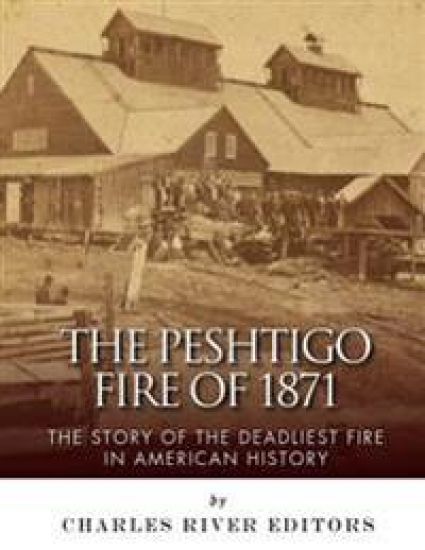
The Peshtigo Fire of 1871: The Story of the Deadliest Fire in American History

The Peshtigo Fire of 1871: The Story of the Deadliest Fire in American History

Charles River

Createspace Independent Publishing Platform
2017
nidottu
*Includes pictures *Includes witness accounts of the fire *Includes a bibliography for further reading "Why is this story not known? You see endless stories about Johnstown. What happened at Peshtigo makes Johnstown look like a birdbath." - Bill Lutz, co-author of Firestorm at Peshtigo "The air burned hotter than a crematorium and the fire traveled at 90 mph. I read an account of a Civil War veteran who had been through some of the worst battles of the war. He described the sound - the roar - during the fire as 100 times greater than any artillery bombardment." - Bill Lutz In arguably the most famous fire in American history, a blaze in the southwestern section of Chicago began to burn out of control on the night of October 8, 1871. It had taken about 40 years for Chicago to grow from a small settlement of about 300 people into a thriving metropolis with a population of 300,000, but in just two days in 1871, much of that progress was burned to the ground. Due to the publicity generated by a fire that reduced most of a major American city to ash, the Peshtigo Fire of 1871 might fairly be called America's forgotten disaster. Overshadowed by the much better covered and publicized Great Chicago Fire that occurred on the same evening, the fire that started in the Wisconsin logging town of Peshtigo generated a firestorm unlike anything in American history. In addition to destroying a wide swath of land, it killed at least 1,500 people and possibly as many as 2,500, several times more than the number of casualties in Chicago. While people marveled at the fact that the Great Chicago Fire managed to jump a river, the Peshtigo fire was so intense that it was able to jump several miles across Green Bay. While wondering aloud about the way in which the Peshtigo fire has been overlooked, Bill Lutz noted, "Fires are normally very fascinating to people, but people seem resistant to Peshtigo. Maybe Peshtigo is on such a large scale that people can't comprehend it." Ironically, while Peshtigo is widely forgotten, the fire there is often cited as proof that the Great Chicago Fire was caused by natural phenomena, such as a comet or meteor shower. Those advocating such a theory think it's too coincidental that such disastrous fires were sparked in the same region on the same night, and they point to other fires across the Midwest. Of course, as with the Great Chicago Fire, contemporaries of the Peshtigo fire faulted human error and didn't necessarily link the two fires, if only because fires were a common problem in both Peshtigo and Chicago during the 19th century. The Peshtigo Fire of 1871 chronicles the story America's deadliest fire. Along with pictures of important people, places, and events, you will learn about the Peshtigo fire like never before, in no time at all.
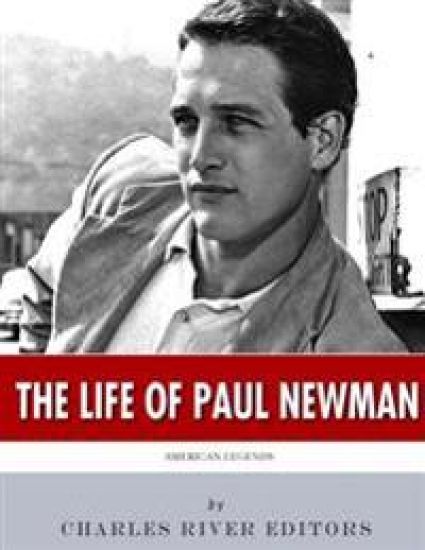
American Legends: The Life of Paul Newman

American Legends: The Life of Paul Newman

Charles River

Createspace Independent Publishing Platform
2017
nidottu
*Includes pictures *Includes a bibliography for further reading. *Includes Newman's own quotes about his life and career. "The first time I remember women reacting to me was when we were filming Hud in Texas. Women were literally trying to climb through the transoms at the motel where I stayed. At first, it's flattering to the ego. At first. Then you realize that they're mixing me up with the roles I play - characters created by writers who have nothing to do with who I am." - Paul Newman A lot of ink has been spilled covering the lives of history's most influential figures, but how much of the forest is lost for the trees? In Charles River Editors' American Legends series, readers can get caught up to speed on the lives of America's most important men and women in the time it takes to finish a commute, while learning interesting facts long forgotten or never known. Over the course of his long film career, Paul Newman was once one of the most bankable stars in Hollywood during his peak, and that was decades before he won an Academy Award for Best Actor for his role in The Color of Money (1986), one of the eight times he was nominated for an Oscar. Having come to prominence as a handsome but rebellious young man in the mold of James Dean, Newman was able to maintain an aura that viewers found both cool and irresistible even into his 60s, typically an age when leading men find themselves on the outs. Newman was even nominated for an Academy Award for Best Supporting Actor for Road to Perdition (2002), when he was in his late 70s, and he continued working in the industry until just shortly before his death in 2008. While Newman was a recognizable film star in his time, younger generations know Newman more as a pop culture fixture than as a movie star. Newman acted and directed in Hollywood for six decades, but he was noteworthy off the screen for various pursuits, including running a racing team that was successful in IndyCar racing, but especially for the food products that bore his name. Newman established the food company Newman's Own as a philanthropic endeavor, once joking, "When I realized I was going to have to be a whore, to put my face on the label, I decided that the only way I could do it was to give away all the money we make. Over the years, that ethical stance has given us a 30 per cent boost. One in three customers buys my products because all the profits go to good causes and the rest buy the stuff because it is good." Although he started jokingly referring to himself as the "star of oil and vinegar and the oil and vinegar of the stars", consumers still find Newman's face on labels for goods like salad dressing and popcorn, and the brand name is still very popular today, helping carry Newman's name and legacy forward. American Legends: The Life of Paul Newman examines the versatile life and career of an American icon. Along with pictures of important people, places, and events, you will learn about Paul Newman like never before, in no time at all.
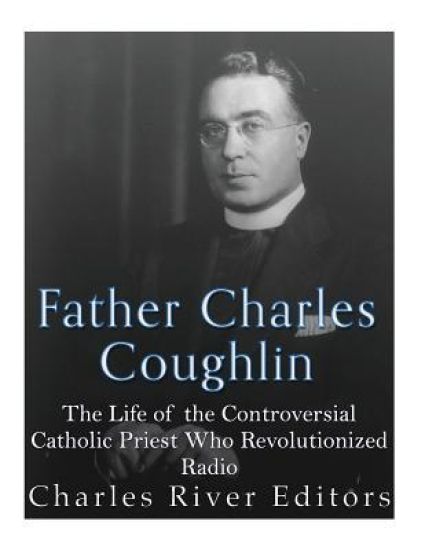
Father Charles Coughlin: The Life of the Controversial Catholic Priest Who Revolutionized Radio
*Includes pictures *Includes Coughlin's own quotes about the politics of the era *Includes online resources and a bibliography for further reading *Includes a table of contents "The people have spoken and the only American thing to do is abide by the will of the people." - Father Coughlin Traditionally in American culture, members of the clergy have been among the most trusted people in the nation, while politicians have been the least trusted. So, one might ask, what happens when these two classes collide and come in the form of one person? The result, it appears from history, is rarely all good, perhaps due to the difficulty of reconciling the moral high ground with political mud. Another reason why the political clergyman is usually a failure is that each of the world's major religions has its own identity, culture and even language, and it is often very hard for those outside that culture to understand what a member of the group means by what he is saying. This leaves the door open for misunderstanding and hostility, some of it by design and some by accident. For whatever reasons, clergymen rarely make good politicians, and there is perhaps no better example of this than Father Charles Coughlin, a Depression Era priest turned demagogue who was seen as an angel to some and a devil to others. Both viewpoints had plenty of reasons for their perspectives, for the same man who cruelly castigated the Jews also spoke eloquently on the needs and rights of the most downtrodden in society. The same orator who said, "Roosevelt or Ruin" later cried, "Roosevelt and Ruin." He was a radio priest who came to power after being victimized by the Ku Klux Klan and then used his power to spread racial hatred against others. He was a highly political Catholic who hated the first Catholic presidential candidate in American history. Coughlin has always been a slippery subject to wrap one's mind around, and this was so even at the height of his power, but nobody can deny his influence. In the 1930s, his effective use of the radio revolutionized mass communications, and millions of people listened to his every word. It would have been impossible for well known televangelists and religious figures like Jerry Falwell and Billy Graham to rise to national prominence without Coughlin setting the precedents decades earlier. Father Charles Coughlin: The Life of the Controversial Catholic Priest Who Revolutionized Radio chronicles the colorful life of one of the most famous priests in American history. Along with pictures of important people, places, and events, you will learn about Father Coughlin like never before, in no time at all.
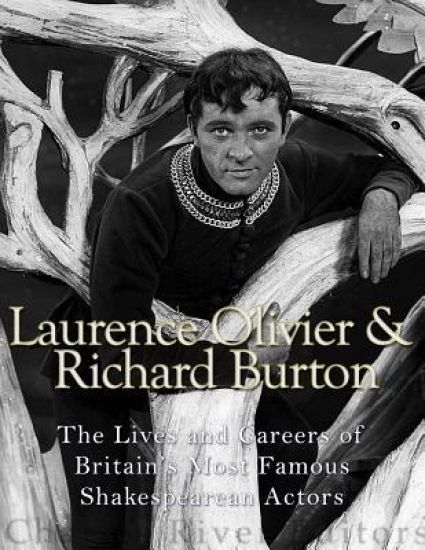
Laurence Olivier and Richard Burton: The Lives and Careers of Britain's Most Famous Shakespearean Actors
*Includes pictures *Includes the actors' quotes about their lives and careers *Includes online resources and a bibliography for further reading Of all the great actors of the 20th century, none personifies acting royalty more than Laurence Olivier, and some of this is simply due to the fact that he was actually knighted in 1947, along with a lengthy list of other honors that include being named a life peer in 1970 and admission to the Order of Merit in 1984. To speak of The Right Honourable Lord Laurence Olivier is not a figure of speech but rather a fact. Of course, in addition to the literal sense of the term, there is undeniably a manner in which Laurence Olivier qualifies as acting royalty, as it is not for nothing that Spencer Tracy once referred to Olivier as "the greatest actor in the English-speaking world" (Bacall). It is also important to note that Tracy refers to Olivier not as a film or theater actor specifically, because much of Olivier's lofty standing derives from his ability to successfully navigate different mediums like stage, film, and television. The breadth of mediums in which he worked, the various roles he inhabited within them (actor, producer, director), and the formidable time span of his career lend Olivier's career a scope of perhaps unmatched magnitude. Indeed, Laurence Olivier worked for so long and was so successful that few actors receive the level of visibility that he still enjoys, even more than two decades after his death. While his theatrical performances exist only as memories, his cinematic adaptations of several of Shakespeare's most famous plays remain the most canonical even to this day. Hamlet, for example, has been produced for the screen by several famous directors, but his version, released in 1948, is the most well-known and best-received. It is through his films that viewers also gain a full appreciation of his creative style, as Olivier assumed full authorial control (from actor to director to producer) over many of his films, particularly the Shakespearean ones. In this sense, it is appropriate to claim that Laurence Olivier was not only a storied actor but also an artist who worked best when enjoying full authority over his productions. In the 1960s, the most popular actor in the world was Richard Burton, a hard-drinking Welshman who was nevertheless so professional that he was one of the preeminent stage performers of his day. In fact, he performed Shakespeare so magnificently that he was compared to British legend Laurence Olivier, and that success ultimately led to a film career that earned him 7 Academy Award nominations, as well as BAFTA and Golden Globe awards for Best Actor. Given his accomplishments on the stage and in Hollywood, Burton became one of the world's most recognizable leading men, so it seemed fitting that he engaged in one of Hollywood's most legendary romances with Elizabeth Taylor while on the set of Cleopatra, one of the era's most notorious movies. In fact, his tumultuous relationship with Taylor, which included two marriages, dominated tabloids and remains the one thing most people associate with Burton today, despite the rest of his accomplishments. Burton's high-profile marriage to Taylor helped bring attention, but it also led to more self-destructive behavior, and in a sense it represented the peak of Burton's career. Over the last decade of his life, Burton began appearing in mediocre films, and due to his declining health and constant drunkenness, his performances were mediocre as well, often involving incoherent slurring. The fast life ultimately caught up with him in 1984, when a cerebral hemorrhage killed him at the age of 58. Fittingly, it was the same cause of death that befell his alcoholic father in 1957, just as Burton was at the precipice of Hollywood stardom.
The Syrian Civil War: The History of the 21st Century's Deadliest Conflict

The Syrian Civil War: The History of the 21st Century's Deadliest Conflict

Charles River

Createspace Independent Publishing Platform
2017
nidottu
*Includes pictures*Includes online resources and a bibliography for further reading*Includes a table of contents"I'm not a puppet. I wasn't made by the west to go to the west or any other country. I'm Syrian. I'm made in Syria. I have to live in Syria and die in Syria." - Bashar al-Assad, 2012 In December 2010, a 26-year-old Tunisian street vendor's self immolation triggered protests that spread from his hometown in Sidi Bouzid to cities across the country. The next month, on January 14, the country's autocratic president, Zine el-Abidine Ben Ali, fled the country. This would be the start of what became known as the "Arab Spring," which ultimately saw anti-government protests responded to with violence, reform, or both in countries across the Middle East. In Syria, the protests that began as early as January 2011 and increased in intensity the following March devolved into a complex armed conflict that involves multiple armed groups and wages to this day. Like the other dictators, Bashar al-Assad faced popular demonstrations against his regime at the height of the Arab Spring, but he steadfastly refused to step down from power, and the protests against him and his government quickly turned violent, which eventually enveloped Syria in a civil war that has already killed over 400,000, created over 4 million refugees, and shows no signs of ending anytime soon. Furthermore, on August 21, 2013, a chemical weapon attack outside of the capital city Damascus left around 1,500 civilians dead, and anti-Assad factions in Syria, as well as enemies of the Assad regime in other countries, have blamed the Syrian regime for the attack, while Assad claims his enemies are responsible. Although seeing and hearing about events in other countries affected by the Arab Spring most certainly helped encourage Syrian demonstrators, there are a number of other factors that contributed to the war, from foreign jihadist groups to the weather (from 2006-2011, a severe drought helped trigger increased urbanization, with a significant movement of the country's population moving from rural into urban areas and a corresponding worsening of socio-economic conditions). There was also a decline in oil production from 548,000 barrels per day (bpd) in 2000 to 380,000 bpd in 2009. At that time, the failure to discover new deposits meant an expected continued decline. Opposition to Assad's rule also already existed; there were people disappointed with continued limitations on freedoms and his failure to implement promised reform. This included the introduction of the "Damascus Spring" at the start of Assad's tenure, which involved state-sanctioned social and political debate but was ultimately suppressed. There was also significant opposition among Sunni Islamists who hadn't forgotten the deadly 1982 crackdown on the Muslim Brotherhood in Hama by Hafez al-Assad. Over 5 years later, Syria remains a flashpoint and an international crisis. The major questions that concern the future of Syria are whether Assad will literally and politically survive the civil war, and what Syria's future will be in the wake of the civil war. Answering these questions requires an understanding of Assad's religious sect, the Alawites, the regional strife among Sunni and Shiite nations, Arab nationalism, and the Assad family as a whole. The Syrian Civil War: The History of the 21st Century's Deadliest Conflict looks at the still-raging war and how it has been fought. Along with pictures of important people, places, and events, you will learn about the Syrian civil war like never before.
Mohenjo-daro: The History and Legacy of the Ancient Settlement of the Indus Valley Civilization
*Includes pictures *Includes online resources and a bibliography for further reading "...the ever present menace of inundation." - Sir John Marshall, 1931 What is a city? A simple definition is a "largely constructed landscape," and through inferences and comparisons with modern states, a successful ancient city is generally said to have a number of defining characteristics: evidence of political hierarchies; a centralized authority that is simultaneously dependent on the accumulation of resources and the suppression of competitors; the maintenance of continuous negotiation, alliance building, and occasionally costly and risky investments such as warfare; specialized crafts; a hinterland supplying food; and monumental statements of central planning and communal effort, such as the Mesopotamian ziggurats. Mohenjo-daro was the largest city of the Indus Valley Civilization, one of the most advanced civilizations to have ever existed, and the best-known and most ancient prehistoric urban site on the Indian subcontinent. It was a metropolis of great cultural, economic, and political importance that dates from the beginning of the 3rd millennium BCE. Although it primarily flourished between approximately 2500 and 1500 BCE, the city had longer lasting influences on the urbanization of the Indian subcontinent for centuries after its abandonment. It is believed to have been one of two capital cities of the Indus Civilization, its twin being Harappa located further north in Punjab, Pakistan. Mohenjo-daro is an enigmatic settlement, which confuses simple definitions of what a city consists of. It has revealed little evidence of palaces, contains few definite religious buildings, and appears to have never been involved in any external or internal military conflict. The inhabitants' writing has not been deciphered, and little is known about their religious and post-mortuary beliefs. Nonetheless, the city's importance is epitomized by its monumental buildings and walls, enormous manmade platforms, innovative architectural techniques, and evidence that they engaged in trade over vast distances, with high-quality artifacts sent from the Indus Valley as far as Mesopotamia and even Africa. Of particular note was their ingenious drainage system -one of the earliest means by which sewage was drained out of the city. No other urban site of similar size had a hydraulic network as complex and effective as that of Mohenjo-daro, and it would only be surpassed thousands of years later by the network of aqueducts in Rome during the third century CE. For centuries this city was believed to have sprung into existence suddenly and without precedent, with a highly standardized system of urban development, art, and architecture that is emulated in contemporary settlements across the Indus River Valley in a phenomenon known as the "Pan-Indus system". Although this view has changed over the last few decades, there exists no definitive hypothesis as to how they grew such a complex urban society so quickly. Fittingly, the city has an equally intriguing and mysterious narrative that explains its decline and eventual disappearance, a tale that gives the site its name: the "Hill of the Dead". The Indus Valley Civilization was forgotten for millennia, until 20th century archaeologists rediscovered and began excavations at Mohenjo-daro and Harappa. Today only foundations remain, but the site's importance is represented by its UNESCO World Heritage status, awarded in 1980 for being a site of outstanding cultural importance to the common heritage of humanity. Mohenjo-daro: The History and Legacy of the Ancient Settlement of the Indus Valley Civilization looks at the history of the site and the archaeological work on it. Along with pictures depicting important people, places, and events, you will learn about Mohenjo-daro like never before.
The Battle of the Teutoburg Forest: The History and Legacy of the Roman Empire's Greatest Military Defeat
*Includes pictures *Includes ancient accounts describing the battle *Includes online resources and a bibliography for further reading *Includes a table of contents "The details of this terrible calamity, the heaviest that had befallen the Romans on foreign soil since the disaster of Crassus in Parthia, I shall endeavor to set forth, as others have done, in my larger work. Here I can merely lament the disaster as a whole. An army unrivaled in bravery, the first of the Roman troops in discipline, vigor and military experience, was thus brought through supine leadership, the perfidy of the foe, and a cruel Fortune into an utterly desperate situation. The troops did not even have the opportunity of fighting, as they wished . . . and hemmed in by woods, lakes and the bands of ambushed enemies, were entirely cut off by those foes, whom they had used to slaughter like cattle... The savage enemy mangled the half-burned body of Varus. His head was cut off and sent to Marobodus a barbarian king] and by him sent to the Emperor; and so at length received honorable burial in the sepulcher of his family." - Paterculus, ancient Roman historian Every great nation or empire has had at least one horrific military loss or disaster in their history, and the Roman Empire, perhaps the greatest empire that ever existed in the Western world, was no exception to this rule. While Rome certainly suffered defeats and outright massacres over the course of its long and storied history, none of them were as disturbing for the Empire as the battle of the Teutoburg Forest in 9 CE. This battle, which took place in Germany, is also known as the Varian disaster, named after the governor of the Roman province, Germania Publius Quinctilius Varus. Varus was not only the Roman governor of the Roman controlled sections of Germania, he was also the highest military authority, being able to make decisions as to the who, what, where, when, why and how of military maneuvers and operations. It was Varus, then, who was in direct command of the Roman legions destroyed in the battle. The battle remains pertinent not only to military historians and archeologists but also to modern military officers around the world as well. As recently as 2009, the United States of America's Army Command and General Staff College published a work that focused upon the Roman legions in the Teutoburg Forest. This work was an examination of the battle in order to help understand the failures made by Varus, and how to avoid them. While it may seem unusual for a modern military to examine the mistakes of the past, it isn't; the Army used the battle as an example of how a theoretically inferior force, the Germanic warriors, were able to defeat a superior force in the Roman legions. Indeed, the Battle of the Teutoburg Forest featured some of the finest fighting forces in the world - the Roman legionaries - and a group of people whom the Romans didn't consider human at all - the Germanic tribes. Nonetheless, the battle between these two forces, in the narrow confines of the Teutoburg Forest, would be a turning point in the histories of both nations. Never again would Rome seek to establish a colony and create a functioning province out of the Germanic area; in fact, the Romans never ventured east of the Rhine River after the disastrous expedition. For the Germanic tribes, while they would later suffer from punishment excursions by various Roman legions following the battle of the Teutoburg Forest, they proved that they could hold their own against the might of the Roman Empire and that their land was indeed their own. The Battle of the Teutoburg Forest: The History and Legacy of the Roman Empire's Greatest Military Defeat analyzes the infamous battle. Along with pictures of important people, places, and events, you will learn about the Battle of the Teutoburg Forest like never before, in no time at all.
Jim Jones and the Peoples Temple: The History of the Most Notorious Cult and Mass Murder-Suicide in American History
*Includes pictures *Includes accounts of the cult and the massacre *Includes Jim Jones' quotes about his life and the massacre *Includes online resources and a bibliography for further reading *Includes a table of contents "We didn't commit suicide; we committed an act of revolutionary suicide protesting the conditions of an inhumane world." - Jim Jones The United States has never had a shortage of cults based on religious teachings and charismatic leaders, but perhaps none are as infamous as Jim Jones and the Peoples Temple, which remain notorious for the mass murder-suicide event in Jonestown, Guyana on November 18, 1978, during which nearly 900 people drank cyanide-laced Flavor Aid, including nearly 300 children. To this day, "drinking the Kool-Aid" is a popular phrase in America to refer to people who blindly follow a person or idea without thought, and the event at Jonestown was the deadliest deliberate act involving Americans in history until the 9/11 attacks. In addition to those deaths, Peoples Temple members also murdered a handful of others on the same day, including journalists, a member trying to leave Jonestown, and Congressman Leo Ryan. Almost from birth, Jones believed he had a higher calling, and after being immersed in various Christian churches and both political and religious doctrine, Jones founded the Peoples Temple in Indianapolis in 1955, when he was still in his mid-20s. While that might have been an unusual course in life for most Americans, Jones was hardly the first to take such a path, and indeed, his group expanded at a remarkable pace in the 1960s, which included a move to California after Jones claimed to foresee a nuclear attack on Chicago and the destruction of Indianapolis. By the 1970s, services at the group's Temple attracted thousands of visitors, even as Jones increasingly criticized Christianity and the Bible. Of course, none of the previous locations earned the notoriety of Jonestown, which the Peoples Temple established in Guyana along the northern coast of South America in the mid-'70s. Meant to be a "socialist paradise" and "sanctuary" from America's "creeping fascism," over 900 members headed to the new settlement by 1978. That November, Congressman Leo Ryan arrived in Jonestown to investigate various claims about the Peoples Temple and met with some members who wished to defect from the group. In response, Jones issued a tape decrying outsiders' efforts and directing members to commit suicide, and when some pushed back, he chided them: "Stop these hysterics. This is not the way for people who are socialists or communists to die. No way for us to die. We must die with some dignity." Survivors described the ensuing event, during which children drank the poison first and were followed by parents who lay down to die as a family. Others indicated that Jones had simulated mass suicides on a couple of other occasions before to test members' loyalty as well, so people remained unsure whether the event was real, even as Jones told them, "I tell you, I don't care how many screams you hear, I don't care how many anguished cries...death is a million times preferable to ten more days of this life. If you knew what was ahead of you - if you knew what was ahead of you, you'd be glad to be stepping over tonight." Although many began to worry once they saw the poison take effect in others, most of those who drank the poison were dead within 5 minutes, while Jones apparently shot himself in the head. Jim Jones and the Peoples Temple: The History of the Most Notorious Cult and Mass Murder-Suicide in American History chronicles the notorious cult and the mass murder-suicide. Along with pictures of important people, places, and events, you will learn about the Peoples Temple like never before.
Stephen Hawking: The Life of the World's Most Famous Scientist

Stephen Hawking: The Life of the World's Most Famous Scientist

Charles River

Createspace Independent Publishing Platform
2017
nidottu
*Includes pictures *Includes Hawking's own quotes about his life and work *Includes footnotes, online resources and a bibliography for further reading *Includes a table of contents "My goal is simple. It is a complete understanding of the universe, why it is as it is and why it exists at all." - Stephen Hawking "I am just a child who has never grown up. I still keep asking these 'how' and 'why' questions. Occasionally, I find an answer." - Stephen Hawking In the pantheon of great theoretical physicists that includes the names of such historical luminaries as Isaac Newton and Albert Einstein, it is, perhaps, supremely ironic that the successor to the leading scientific minds of their generations has produced such "groundbreaking work in physics and cosmology", while at the same time battling one of the world's most insidious and relentless diseases. Dr. Stephen William Hawking, British mathematician, theoretical physicist, and cosmologist, is the face of twenty-first century physics, and yet cannot speak directly to his audience. For verbal communication, he relies on the use of an electronically activated vocal synthesizer. The scientist who has most notably carried the ideas of Einstein and his colleagues forward from the early-to-mid 20th century, whether in terms of explanation, rejection, or confirmation of any given question, is no longer able to move his limbs due to the incapacitating effects of ALS, Amyotrophic Lateral Sclerosis. The affliction is better known in the United States as "Lou Gehrig's Disease," named after the great American baseball player. Since 2009, in fact, Hawking can no longer operate his wheelchair. With a failing body but a world-leading mind that has remained active and keen through the years, Dr. Hawking continues to fight for any means of communication that he or his scientific environment can devise, presently placing much of his attention on systems with which to "translate his brain patterns into switch activations." This desperate struggle to stay connected comes at a time in which the amassing of Hawking's theories, developed over the past half-century, seems poised to discover and affirm new solutions to the mysteries of the universe. Occupying a unique place in the history of physics, Hawking, more than Newton or Einstein, lives in the perfect era from which to stand at the threshold of new possibilities for balancing and synchronizing the theories of General Relativity, put forth by his great predecessors, and the newer field of the quantum world, hinted at in the mid-twentieth century but only more recently brought forward by leading proponents. He has devoted the lion's share of his adult life to "probing the space-time described by general relativity and the singularities where it breaks down," and is, in advancing years, more driven than ever by the urge to uncover all he can about the nature of the larger universe. Stephen Hawking: The Life of the World's Most Famous Scientist examines the life and career of the English physicist. Along with pictures of important people, places, and events, you will learn about Stephen Hawking like never before, in no time at all.