Kirjojen hintavertailu – 12 903 727 kirjaa ja 27 kauppaa
Kirjailija
Charles River
Kirjat ja teokset yhdessä paikassa: 4 673 kirjaa, julkaisuja vuosilta 2013–2022, suosituimpiin kuuluu William Powell and Myrna Loy: The Lives and Careers of One of Classical Hollywood's Most Iconic Duos. Vertaile teosten hintoja ja tarkista saatavuus suomalaisista kirjakaupoista.
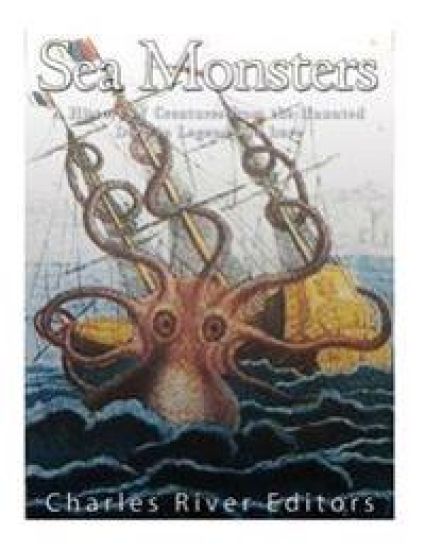
*Includes pictures *Includes accounts of legendary sea monsters *Includes online resources and a bibliography for further reading The oceans of the world have always had an air of mystery. About 71% of the Earth's surface is covered by water, and until the 20th century no one had plumbed its depths. Even today the bigger seas and oceans remain a largely unexplored frontier, with new species being discovered every year. Thus it comes as no surprise that countless legends have arisen of strange creatures lurking in the depths. What follows is just a sampling of these stories, including sightings of unusual sea creatures by experienced witnesses in the 19th, 20th, and even 21st centuries. The idea that there might be large species still swimming in the oceans that haven't been classified by marine biologists isn't as far-fetched as it might sound. For example, the megamouth shark (Megachasma pelagios) was entirely unknown to science until a U. S. Naval vessel off the coast of Hawaii accidentally skewered one on its anchor. The megamouth shark is a deepwater shark that can reach up to 18 feet in length, making it quite a large creature to go unnoticed for so long. In fact, since its accidental discovery, fewer than a hundred specimens have been spotted and the species had only been filmed three times. The Peruvian beaked whale (Mesoplodon peruvians) was discovered the same year and not formally described until 1991. Very little is known about this small species of whale that has only been seen off the west coast of Central and South America. Even more poorly known is the Spade-toothed whale (Mesoplodon traversii), which was first documented in 1872 thanks to the discovery of a partial jaw in New Zealand. It wasn't recognized as a distinct species until a partial skull was found in 1986, and no complete body was found until two specimens washed ashore in New Zealand in 2010. The fact that an entire species of whale is known to exist and yet no one has ever seen one alive adds fuel to the imagination of any monster hunter, who insists that there may be even more intriguing unknown species waiting to be discovered. Cryptozoology is the science that investigates these creatures, which investigators generally call "cryptids". The word is made up of the Greek stem "kryptos" (hidden) and suffix "zoology" (study of animals), thus cryptozoology is the study of hidden, as-yet-undiscovered animals. Cryptozoologists are quick to point out that they are not searching for alien beings or occult creatures; they do not hunt UFOs or ghosts. They are serious scientists, some amateur and some with professional degrees, who want to find, study, and protect these rare species. Sea Monsters: A History of Creatures from the Haunted Deep in Legend and Lore profiles the various sea creatures that people have told tales about for centuries, from ancient sources and doubtful legends to sightings by more reliable witnesses, such as ship's captains and naturalists. Along with pictures of important people, places, and events, you will learn about legendary sea monsters like never before.
*Includes pictures *Profiles important people and conspiracy theories *Includes online resources and a bibliography for further reading For decades, parodies featuring ominous, mysterious cults have been a favorite gag in pop culture. These fraternal brothers are often depicted in some type of underground lair, dressed in extravagant ceremonial robes with their faces hidden in their hoods, seated around a long table brimming with Gothic chalices, skulls, and glittering dark treasure. Flicks on the more morbid side might even show choppy, flashing imagery of blood, torture, and sacrifices. Like all art, creativity is sparked by a source of inspiration, and one of the most widely recognized muses of these kinds of scenes is none other than the Freemasons. This ancient society, descended from the ancient culture of stonemasonry, is said to possess the deepest, darkest, and most inexplicable truths of the universe. They are said to possess mystical powers like no other - maybe even magic. But does this stigma against the brotherhood have any merit, or are they simply just severely misunderstood? As many are aware, Freemasons have been around for many centuries. The Renaissance, which came into full bloom between the 14th and 16th centuries, saw a burst in creativity and advancement in an array of art forms throughout Europe. Stonemason guilds rode the changing tides; no longer did incoming apprentices have to be restricted by trade. A great portion of these new apprentices were artists and free thinkers, but still vowed to adhere to traditional stone-cutter culture. This new breed of masons separated from the orthodox "operative" masonry, and began to foster what became known as "speculative" masonry. Like most legends, the origins of Freemasonry are still disputed to this day. The earliest mention of the society traces back to The Halliwell Manuscript, or Regius Poem, which was supposedly authored sometime between the late 14th to the early 15th centuries. The manuscript, penned in exquisite Middle English and calligraphy, consisted of 64 pages and 794 lines of rhyme. It is considered the first of the time-honored Masonic manuscripts, and is generally accepted as the "truthful" history of the fraternity's beginnings. The poem in question begins with Euclid, a Greek mathematician from the 4th century BCE, remembered today as the "father of geometry." The math whiz was said to have incorporated geometric sciences into a new field he dubbed "masonry." With this new and refined brand of science, he traveled to Egypt, and imparted his wisdom to the children of Egyptian nobles. Whatever the organization's origins, the budding phenomenon would one day transform into the Society of Freemasonry, the bearers of divine secrets like no other, and one of the most fascinating and controversial brotherhoods in the history of mankind. The Freemasons: The History of Freemasonry and the World's Most Famous Secret Society examines the origins and history of the controversial brotherhood, its expansion across the globe, and some of the most mindboggling conspiracy theories that surround the society to this day. Along with pictures depicting important people, places, and events, you will learn about the Masons like never before.
*Includes pictures. *Includes Fontaine's quotes about her own life and career. *Highlights Fontaine's sibling rivalry with Olivia de Havilland. *Includes a bibliography for further reading. "You know, I've had a helluva life. Not just the acting part. I've flown in an international balloon race. I've piloted my own plane. I've ridden to the hounds. I've done a lot of exciting things." - Joan Fontaine In 1939, Olivia de Havilland had her most memorable role as Melanie Hamilton in Gone With the Wind (1939), perhaps the most famous movie in American history, but Hollywood legend has it that she only got the role because her own younger sister, Joan Fontaine, was asked to audition for the part and recommended Olivia instead so that she could audition for Scarlett O'Hara. Although Fontaine and de Havilland would make history by becoming the only sisters to both win an Academy Award for Best Actress, that anecdote was just one of the various stories about the siblings that has shed light on their notoriously contentious and complicated relationship. As Fontaine once put it, "I married first, won the Oscar before Olivia did, and if I die first, she'll undoubtedly be livid because I beat her to it " De Havilland herself once said, "Joan is very bright and sharp and can be cutting." Of course, one of the reasons people have remained interested in the sisters is that both of them had such long acting careers, and Fontaine became best remembered both for a career that spanned 60 years and several high profile marriages. With typical humor, Fontaine joked about the fact she had so many husbands, commenting in jest, "If you keep marrying as I do, you learn everybody's hobby." But that attention has only served to obscure her very serious professional career, which saw her won the Oscar for Best Actress for her role in Alfred Hitchcock's Suspicion (1941). She also earned a nomination for her performance in The Constant Nymph (1943), and in a television career that spanned several decades, she earned an Emmy nomination for her work on Ryan's Hope in 1980, nearly 40 years after winning the Academy Award for Suspicion. Fontaine even appeared on Broadway in a couple of productions that ran for several years. Legends of Hollywood: The Life of Joan Fontaine profiles the life and career of one of Hollywood's most prolific actresses. Along with pictures of important people, places, and events, you will learn about Joan Fontaine like never before, in no time at all.
*Includes pictures *Includes online resources and a bibliography for further reading "Nothing so needs reforming as other people's habits." - Mark Twain The Prohibition Era in the United States ran between 1920 and 1933, but its background and legacy are so massive and wide-ranging it may be affirmed that the subject is adhered to the country s history, from its first years until the modern era. In this 13-year period, the entire nation was forcibly converted to a society of non-drinkers. The movement formed slowly, exploding in 1920. Once it had passed, its effects continued to be felt through the rest of the 20th century. To this day, it can be said that Prohibition teaches an important lesson. The 18th Amendment making Prohibition constitutional and the Volstead Act detailing its enforcement did not come out of the blue-it was neither an electoral occurrence, nor was it a quick and surprising attack by a one interest group taking another unprepared. It was actually the result of a long period of indoctrination, a century of struggles between two political, and above all, moral positions: those who supported Prohibition-the so-called "drys," and those who opposed it, partly because they thought it should not be a government prerogative to control individual freedoms, also known as "the wets." The first group believed Prohibition of liquor, intoxicants, and saloons was a necessary measure to eradicate the great evils that were a part of the nation's life: drunken and violent husbands, labor accidents due to alcoholism, shattered homes, battered wives, and the family s patrimony lost in a single day. The wets defended a legitimate industry that produced jobs and taxes. They spoke of economic interests that would be damaged and of respect for sacrosanct individual freedom. Above all, the wets argued how strange it was that a government dedicated to liberty and equality would regulate an individual's private behavior, determining what he could or could not ingest. Since the beginning, wine had been an inseparable part of American culture, from the saloons of the Wild West, the grape fields of the California valleys, the tables of homes throughout the territory, to the clubs of the big cities where the working class met to talk about politics. This in addition to other areas in which wine culture was an essential feature, such as social cohesion, the economy, and in the arts-especially where music and literature was concerned. What no one could ignore was that since the beginning of the 19th century, the United States had a serious problem with the bottle. The nation of Washington, Adams, and Franklin, for example, had one of the highest consumption rates in the world and thus had the highest rates of alcohol-related diseases and family violence. When women, the principal group affected, decided it was the moment to raise their voices en masse, alcohol became a political topic that polarized the country. In favor of moderation were the eminently rural white people of the inner country with an Anglo-Saxon background. At the other extreme was the urban, cosmopolitan population, close to the coasts and therefore, with a better perspective where the rest of the world was concerned. There were two visions, two different sets of morals, and two ways of understanding the role of government. However, the dividing line between the drys and wets cannot be so clearly marked, even today. There were both progressive and retrograde persons on either side. On the drys side -whom we might be tempted to caricature as moralistic and uneducated-were, for example, the suffragists, the brave women who fought for the right to vote, social justice, and a place in the politics of their country. On the wets side, those against Prohibition, were moralistic institutions, such as the Catholic Church and the Jewish rabbinic community.
*Includes pictures *Includes some of the actors' quotes about their movies *Includes online resources and a bibliography for further reading Only a select few actors become international stars in their time, but none had as unique a career as Charlie Chaplin. Chaplin was the first true film star, and he managed to do so even when films were still silent. He has been honored with too many awards to count, and the fact that his name remains instantly recognizable nearly a century after his first film is a testament to his influence. Even today, Chaplin's films are arguably more recognizable than those of perhaps any other actor or director; everyone is familiar with the famous "Tramp" costume and persona, and even the casual film enthusiast has likely seen films such as City Lights (1931) and Modern Times (1936). Chaplin is known for the singular blend of pathos and humor evinced by his films, and it is not uncommon for audiences to laugh and cry at alternate points of a Chaplin film, a trait that continues to endear audiences even to this day. In the 1920s, the burgeoning movie industry was starting to come into its own, and alongside actor and director Charlie Chaplin, Buster Keaton was at the peak of Hollywood. It's no surprise that Keaton was so effective in silent films, because he had been practicing comedy in his family's vaudeville acts as "The Little Boy Who Can't Be Damaged", becoming a popular performer by the age of 5. Indeed, his physical form of comedy, which initially involved having his father throwing him around the stage, translated well onto the screen, and some of his slapstick and other comic gags remain legendary even today, in part because Keaton practiced his own stunts. In fact, Keaton wrote his own material and was a crucial comic influence on acts like The Marx Brothers and The Three Stooges. Everything about Rudolph Valentino, from his body to the characters he played, was exotic. His career may have been abbreviated by his premature death at the age of 31, but Valentino popularized the (somewhat racist) stereotype of the "Latin lover" in Hollywood, and even his name was markedly more out of the ordinary than those of other actors. In an era dominated by hyper-masculine actors like Douglas Fairbanks, or comedians such as Charlie Chaplin and Buster Keaton, Valentino had a more ethnic and mysterious appeal, and he was lusted after by women to a degree that remains unsurpassed in the industry. The extent to which he captivated America can be seen in the response to his death; after passing away from a perforated ulcer in 1926, Ashton Trice and Samuel Holland note that his funeral "was one of the pop culture events of the century," and devastated women are alleged to have committed suicide out of heartbreak. Of all the great movie stars, there may be none more enigmatic than Greta Garbo, who remains internationally famous despite the fact her life and career raise more questions than answers. How did a Swedish actress with very little film acting experience in her native land arrive in the United States and achieve instant stardom? Most actresses had to wait years before they were offered starring roles in major films, yet Garbo was ushered to the front of the line and perched atop the MGM pantheon at a time in which it was the studio par excellence. It goes without saying that the most enduring image of Gloria Swanson is the famous shot of her in Sunset Boulevard (1950), head tilted backward, stating, "Alright, Mr. DeMille, I'm ready for my close up." Indeed, for many, the very mention of "Gloria Swanson" conjures the name of "Norma Desmond," her character in Sunset Boulevard, directed by Billy Wilder. That the shot of Desmond requesting her close-up remains indelibly imprinted in the minds of so many speaks in large part to the power of Sunset Boulevard, one of the most revered films of its times and the most famous film of Gloria Swanson's career.
*Includes pictures *Includes quotes from the Koran and Hadith *Includes online resources and a bibliography for further reading "The most holy spot al-quds] on earth is Syria; the most holy spot in Syria is Palestine; the most holy spot in Palestine is Jerusalem Bayt al-maqdis]; the most holy spot in Jerusalem is the Mountain; the most holy spot in Jerusalem is the place of worship al-masjid], and the most holy spot in the place of worship is the Dome" - Thawr ibn Yazid, circa 770 In the campaign leading up to the election of Donald Trump, the Republican presidential candidate frequently discussed the importance of moving the U. S. Embassy from Tel Aviv to Jerusalem. For many conservative Christian Americans and Israelis, this was tantamount to the United States agreeing to Jewish control over Jerusalem. As it stands now, the U. S. has a consulate in Jerusalem, yet no country houses their embassy in Jerusalem due to the conflicting claims of the Israelis and Palestinians. The political issue is just one more reminder of how important Jerusalem is as both a secular and religious flashpoint. One of the oldest cities in the world, Jerusalem is a holy and special city to the three Abrahamic religions: Judaism, Christianity, and Islam. Throughout its more than 6,000 year history, Jerusalem has been a center of contention, from conflicting clans to warring states. In addition to its religious significance, Jerusalem's strategic location has also made the city desirable throughout history. While people in the West are more familiar with Jerusalem's importance to Jews and Christians, Jerusalem's particular importance to the religion of Islam is without question one of the major sticking points in the Israeli-Palestinian conflict. Prior to Israeli control, Jerusalem had been predominantly controlled by Muslim rulers since the 7th century and had been used as a type of political currency, legitimizing the ruling dynasty's claim over the city. This right of control by Muslims was viewed no more differently than control over Mecca and Medina in the Arabian Peninsula. For the world's Muslim population, Jerusalem is a holy site because Muslims believe the Prophet Muhammad visited Jerusalem where he ascended to heaven during the famous "Night Journey." There was also a period of time during the Prophet's life when Muslims prayed in the direction of Jerusalem, as opposed to Mecca. Just as in Judaism and Christianity, Jerusalem plays a central role in End of Days prophecies in Islamic theology. As a result, Jerusalem has been an important symbol for Muslims for nearly 1,300 years, and it has played a crucial political role throughout the history of Islamic civilization as this important city has passed from ruler to ruler and dynasty to dynasty. Now that the city is again controlled by a Jewish state, Jerusalem has even further implications for various religious groups, and it will certainly affect the conflict-wrought region. Jerusalem and Islam: The History and Legacy of the Holy City's Importance to Muslims examines the tumultuous history of Jerusalem and its relationship to the Islamic world. Along with pictures depicting important people, places, and events, you will learn about Jerusalem and Islam like never before.
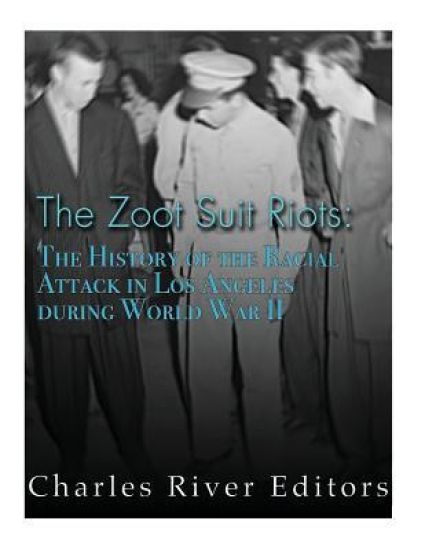
*Includes pictures *Includes accounts of the fighting *Includes online resources and a bibliography for further reading *Includes a table of contents "Marching through the streets of downtown Los Angeles, a mob of several thousand soldiers, sailors, and civilians, proceeded to beat up every zoot suiter they could find. Pushing its way into the important motion picture theaters, the mob ordered the management to turn on the house lights and then ran up and down the aisles dragging Mexicans out of their seats. Streetcars were halted while Mexicans, and some Filipinos and Negroes, were jerked from their seats, pushed into the streets and beaten with a sadistic frenzy." - Carey McWilliams, journalist Even enemies will agree that the United States is a unique nation, in that its culture has been developed almost entirely by immigrants, people who have come to the country from other places and carved their way into society. Sometimes called a melting pot, sometimes a tossed salad, the nation has been shaped by all that is good and bad of the people who live here. Sadly, history has taught that where there is immigration, there will always be conflict. Just as any newly married couple will argue over whose family to spend the holidays with, so those coming from different nations and cultures will clash over which traditions can be integrated into the new society and which ones must be left behind. One might think that after some 400 years of dealing with these issues, the nation would have mastered the subject, but instead the opposite seems true. In the early days of 2016, Americans are engaged in a heated presidential campaign fraught with rhetoric and fear over the role of immigrants in the United States. Candidates frequently speak out against certain cultures, insisting they are dangerous to the American economy or even national security. Because the nation is at war against an enemy defined more by religion and ethnicity than traditional national boundaries, there is a heightened sense of fear and that is adding fuel to the debate and no doubt clouding the judgment of many who are speaking out. They are warning the American people that there had never been a crisis like this in the nation's past, and that swift action must be taken or the country will not survive. The truth is that there has been a crisis much like this and that actions taken in the past, while often swift, was also just as often unjust. Few examples signify that like the Zoot Suit Riots, the national crisis that precipitated them, and the culture of fear and bigotry that nurtured them. If the name of the event sounds silly, its premise was both nearly comical but also deadly serious. It was the product of people of different races, cultures and practices, a story of immigration and clashes between nations on a grand scale and police and young people on an intimate one. The story unfolded in 1942 and 1943 but has been a recurring issue. If indeed, as philosopher George Santayana so famously contended, "those who cannot remember the past are condemned to repeat it," then the Zoot Suit Riots are one aspect of our nation's history that proves it. The Zoot Suit Riots: The History of the Racial Attacks in Los Angeles during World War II looks at the riots in L. A. during the war. Along with pictures of important people, places, and events, you will learn about the Zoot Suit Riots like never before, in no time at all.
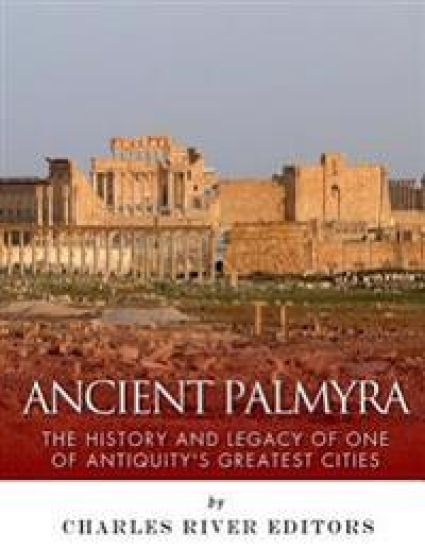
*Includes pictures *Profiles Palmyra's origins, its relationship with Rome, its culture, and more *Includes online resources and a bibliography for further reading *Includes a table of contents "At the end of twenty years, during which Solomon built the temple of the Lord and his own palace, Solomon rebuilt the villages that Hiram a] had given him, and settled Israelites in them. Solomon then went to Hamath Zobah and captured it. He also built up Tadmor in the desert and all the store cities he had built in Hamath." - The Bible's reference to Palmyra (as Tadmor) in II Chronicles 8 Recently, the ancient Syrian city of Palmyra has become a major source of news because the Islamic State of Iraq and Syria (ISIS) has embarked on a campaign to destroy the temples and art of the pre-Islamic city. For many people throughout the world, ISIS's campaign was the first time they heard about the city, but Palmyra's importance and history can be traced back to well before the Roman Empire. In fact, Palmyra was unique among the many important cities of the ancient world because, like Carthage before it, it was a city that was also a culture. Palmyrene culture, from the arts to religion, borrowed from numerous other peoples throughout the ancient world to create a culture that was uniquely "Palmyrene". Palmyra became a city like no other, and its culture shined bright for several centuries before it was finally extinguished. The people of Palmyra truly developed a vibrant culture that eventually placed the city among some of the greatest of the ancient world. Palmyra's influential position in world history was largely due to its economic prowess, which was achieved not through conquest or exploration but through its position as the preeminent trading center in the ancient Mediterranean and Near Eastern regions. Donkey and camel caravans brought precious commodities from both the west and east through the gates of Palmyra, which eventually resulted in the city becoming an oasis of wealth in the middle of the Syrian desert. For hundreds of years, Palmyra's wealth was a testament to its greatness, and its leaders displayed their political acumen by playing the middleman between the powerful Roman and Parthian Empires. As a result, the Palmyrenes built an eclectic culture that was as sophisticated as any of their contemporaries, but eventually the leadership of Palmyra overestimated their power and the greatness of their city quickly came crumbling down. Ancient Palmyra: The History and Legacy of One of Antiquity's Greatest Cities looks at the influential Semitic settlement that flourished for thousands of years. Along with pictures depicting important people, places, and events, you will learn about Palmyra like never before, in no time at all.
*Includes pictures *Explains the politics of the 1930s and how Hitler and Stalin agreed to carve up Poland *Includes accounts of the fighting written by soldiers *Includes online resources and a bibliography for further reading *Includes a table of contents "The object of the war is ... to physically to destroy the enemy. That is why I have prepared, for the moment only in the East, my 'Death's Head' formations with orders to kill without pity or mercy all men, women, and children of Polish descent or language. Only in this way can we obtain the living space we need." - Hitler, August 1939 Throughout 1938 and 1939, conflict broke out across Europe after the social and economic disorder brought about by World War I helped the Nazis rise to power in Germany. In 1937, Adolf Hitler declared the Treaty of Versailles void and began aggressively annexing parts of the European continent. Europe's attempts to appease him, most notably at Munich in 1938, failed, as Nazi Germany swallowed up Austria and Czechoslovakia by 1939. Italy was on the march as well, invading Albania in April of 1939. The straw that broke the camel's back, however, was Germany's invasion of Poland on September 1 of that year. Two days later, France and Great Britain declared war on Germany, and World War II had begun in earnest. Of course, as most people now know, the invasion of Poland was merely the preface to the Nazi blitzkrieg of most of Western Europe, which would include Denmark, Belgium, and France by the summer of 1940. The resistance put up by these countries is often portrayed as weak, and the narrative is that the British stood alone in 1940 against the Nazi onslaught, defending the British Isles during the Battle of Britain and preventing a potential German invasion. In particular, the campaign in Poland is remembered as one in which an antiquated Polish army was quickly pummeled by the world's most modern army. Polish lancers charging in a valiant yet idiotic attack against German tanks is the only image from the 1939 Nazi-Soviet invasion of Poland remaining in the popular imagination today. Originating as a piece of Nazi propaganda, paradoxically adopted by the Poles as a patriotic myth, the fictional charge obscures the actual events of September 1939. Outnumbered, outgunned, and under-equipped, the Polish army nevertheless inflicted heavy losses on the invading Wehrmacht. In fact, only the unexpected advance of Soviet forces from the east put a quick end to the struggle and saw the Polish republic partitioned again after just 20 years of independence. Nonetheless, the campaign that started World War II was a bloody sign of things to come as the conflict engulfed the globe. The Nazi Invasion of Poland: The History of the Campaign that Started World War II chronicles the beginning of the war in Europe. Along with pictures of important people, places, and events, you will learn about the invasion of Poland like never before, in no time at all.
*Includes pictures *Includes historic accounts written by explorers *Includes a bibliography for further reading *Includes a table of contents "Judge, then, what must have been our astonishment, as we entered the basin at mid-afternoon of our second day's travel, to see in the clear sunlight, at no great distance, an immense volume of clear, sparkling water projected into the air to the height of one hundred and twenty-five feet. "Geysers geysers " exclaimed one of our company, and, spurring our jaded horses, we soon gathered around this wonderful phenomenon. It was indeed a perfect geyser. The aperture through which the jet was projected was an irregular oval, three feet by seven in diameter. The margin of sinter was curiously piled up, and the exterior crust was filled with little hollows full of water, in which were small globules of sediment, some having gathered around bits of wood and other nuclei. This geyser is elevated thirty feet above the level of the surrounding plain, and the crater rises five or six feet above the mound. It spouted at regular intervals nine times during our stay, the columns of boiling water being thrown from ninety to one hundred and twenty-five feet at each discharge, which lasted from fifteen to twenty minutes. We gave it the name of 'Old Faithful.'" - Nathaniel P. Langford The United States is full of natural wonders, but few rival Yellowstone National Park, which is full of features that led Native Americans to believe the land was possessed by spirits and compelled people who heard accounts from white explorers to assume the explorers had suffered hallucinations. Today, of course, all Americans are instantly familiar with the name Old Faithful, and even among those who have never visited the park, Yellowstone is practically synonymous with its geysers. While Old Faithful and other geysers remain the park's most popular features, Yellowstone offers a vast array of diversity, not only among wildlife but within the land itself. Yellowstone is home to mountains, rivers, canyons, lakes, forests, waterfalls, and North America's largest supervolcano, which remains active underneath Yellowstone Lake. While all of this attracts millions of tourists, Yellowstone is also home to all kinds of animals, from bison to birds, some of which are endangered species protected within the park. Established by President Ulysses S. Grant, Yellowstone is one of America's most ambitious and crucial conservation areas, and nearly 150 years later, officials still try to balance the interests of everyone and everything involved. Yellowstone National Park: The History of America's Most Famous Park traces the history of the park. Along with pictures of important people, places, and events, you will learn about Yellowstone like never before, in no time at all.
*Includes pictures *Includes contemporary accounts of the Haymarket Affair and trials *Includes online resources and a bibliography for further reading *Includes a table of contents "That night I could not sleep. Again I lived through the events of 1887. Twenty-one months had passed since the Black Friday of November 11, when the Chicago men had suffered their martyrdom, yet every detail stood out clear before my vision and affected me as if it had happened but yesterday. My sister Helena and I had become interested in the fate of the men during the period of their trial. The reports in the Rochester newspapers irritated, confused, and upset us by their evident prejudice. The violence of the press, the bitter denunciation of the accused, the attacks on all foreigners, turned our sympathies to the Haymarket victims." - Emma Goldman Although it's no longer well known as a flashpoint, few things were as controversial during the late 19th century as the Haymarket Affair. Depending on one's perspective, the riots and the violence that ensued were the result of anarchist terrorists attacking law enforcement authorities with a homemade bomb that was detonated during a large public event, killing a police officer and wounding several more. Others who were more sympathetic to the plight of the people protesting for better working conditions that night in Haymarket Square in Chicago on May 4, 1886 portray it as a peaceful rally that was marred by a heavy handed response attempting to disperse the protesters. What is clear is that the moments following the explosion were characterized by confusion and bedlam, as some people ran away and others ran toward the site. By the time the shooting was done, nearly a dozen lay dead, including a number of police officers, and makeshift hospitals were soon overwhelmed. Citizens in the area began to cry out for justice, and police detectives poured through the city, making arrests and questioning thousands. As word spread about the attack, cities around the country went on high alert, concerned that they could be next. It was soon determined that a traditionally anti-American group was responsible for the attack, and many threatened mob violence against anyone who looked like they might be involved with the group. The press egged on those in the public with cries for revenge and justice. Eventually, the suspected perpetrators' trial began, a sensational event followed closely by many across the nation. Tensions ran high as those involved were prosecuted and defended, and when the jury convicted 8 anarchists of conspiracy and some of them were sentenced to death, many rejoiced while others cried out that Lady Justice had miscarried the case. Lost amidst the violence was the fact that the protests that culminated with the Haymarket Affair had come in response to previous labor strikes across the country, and controversial police shootings of some workers on strike, which took on a discriminatory undertone because many of the laborers were immigrants facing poor working conditions. It was against this backdrop that political anarchists also got involved, which muddled things and ultimately brought blowback against immigrant communities after the Haymarket Affair. More importantly, workers and those advocating on their behalf were galvanized by the events to push for what they considered much needed reforms, many of which would come over the next few decades. As professor William J. Adelman put it, "No single event has influenced the history of labor in Illinois, the United States, and even the world, more than the Chicago Haymarket Affair. It began with a rally on May 4, 1886, but the consequences are still being felt today." Chicago has since commemorated both the workers and the police with various memorials and plaques.
*Includes pictures *Includes footnotes and a bibliography for further reading "Our path to Palestine will not be covered with a red carpet or with yellow sand. Our path to Palestine will be covered with blood... In order that we may liberate Palestine, the Arab nation must unite, the Arab armies must unite, and a unified plan of action must be established." - Nasser Gamal Abdel Nasser has been called many things. The father of modern-day Egypt. The founder of Arab nationalism. The leader of the Egyptian Revolution. The second president of the Egyptian Republic. The creator of his own brand of political and social governance - Nasserism. Anthony Eden, the former British Prime Minister, called him the "Mussolini of the Nile." Nasser was all of these things and much more. Indeed, he led the revolution that overthrew the monarchy of Egypt and subsequently shaped and led the new Egyptian government. He became a prominent regional and world leader, playing a significant role in the Non-Alignment Movement that he co-founded, formed during the midst of the Cold War. He led his country toward modernization and industrialization, implementing social and economic reforms focused on strengthening the nation and improving the lives of the people. Yet, Nasser's legacy goes beyond state governance and policies; his name, to this day, evokes great emotion among Egyptians and much of the Arab world. His funeral in 1970 drew millions of mourners and an outpouring of genuine grief across the Arab world. Nasser continues to remain an iconic figure in the region, symbolizing Arab dignity, pride, and unity. In addition to working to carve a path for a new Egypt, Nasser aimed to help the rest of the Arab nations of the Middle East by uniting the historically uncooperative Arab countries and encouraging them to act as a united front. Nasser was not the first to see that Arab countries more often than not had much in common, including resources, political policies, and social structures, but he was the first to take action and work to get the Arab countries to work together. The concept of pan-Arabism that Nasser furthered during his presidency had lasting impact on the region that continued decades after his death. As such, Gamal Abdel Nasser made a significant mark on the regional and global politics of the 20th century. Though not many were his supporters, and fewer were his friend, all were aware of his influence and capabilities. Many of the other Arab leaders of the region feared him for his eloquence and his ability to inspire millions using only words, whether written or spoken; they were afraid he would incite their own populations to revolt. In other areas of the world, the British sought ways to reestablish their dominance over the Egyptian government, the Soviets worried that their friendship with Nasser had a deadline, and the Americans worried that Nasser would turn all of the Middle East against them. And the greatest anxiety over Egypt was held by the Israelis, who feared that Nasser was the one leader who could truly unite the Arab nations against them. But everyone, from his friends and supporters to his enemies, acknowledged and respected his bravery, idealism, and devotion to his country and people. Gamal Abdel Nasser: The Life and Legacy of Egypt's Second President examines the life and legacy of one of the Middle East's most influential leaders, from his early life and military career to his role in the 1952 revolution. This book also explores his turbulent presidency and his lasting legacy. Along with a bibliography and pictures of important people, places, and events, you will learn about Nasser like never before, in no time at all.