Kirjojen hintavertailu – 12 903 727 kirjaa ja 27 kauppaa
Kirjailija
Charles River
Kirjat ja teokset yhdessä paikassa: 4 673 kirjaa, julkaisuja vuosilta 2013–2022, suosituimpiin kuuluu William Powell and Myrna Loy: The Lives and Careers of One of Classical Hollywood's Most Iconic Duos. Vertaile teosten hintoja ja tarkista saatavuus suomalaisista kirjakaupoista.
*Includes pictures *Includes contemporary newspaper reports about the crimes *Includes online resources and a bibliography for further reading *Includes a table of contents "It wasn't as dark and scary as it sounds. I had a lot of fun....killing people is a funny experience." - Albert DeSalvo "I did this not as a sex act...but out of hate for her. I don't mean out of hate for her in particular, really I mean out of hate for a woman." - Albert DeSalvo The story reads like something out of a mini-series. The police are called to the home of an elderly woman who has been raped and strangled. She's a socialite and popular in among the Boston upper-crust. As the grizzled detective stand over her body, wondering who would do something like this, someone mentions that there was a similar case recently, except that time the victim was a lower-middle class immigrant woman. He wonders briefly if there is a pattern and hopes there isn't, but before long there's a third victim, and then a fourth. At first, the women are all elderly, and the police psychologist postulates that the culprit has some sort of hatred for his own mother and therefore attacks motherly figures. The police begin to track down mental patients with histories of violence and question them about their whereabouts, but there is no one suspect, even as more bodies pile up in the morgue. Then, suddenly, there's a change, and young women start turning up dead, changing the whole approach to the case. As tension in the city builds, the mayor and other civic leaders begin demanding action, even as another young woman dies, followed in short order by an elderly one. Young women start refusing dates and looking under their beds at night, while older ladies refuse to open their doors to anyone. The city is in turmoil and the police are at a loss about what to do next, but just as quickly as they started, the murders stopped after 13 confirmed victims. Just as that description makes it sound, the case of the Boston Strangler is as confusing and mystifying as it is terrifying. In fact, the mythology and debate lingering over the crime spree only heightened when Albert DeSalvo confessed to the crimes, provided both accurate and inaccurate details about some of them, and had his DNA tied to several of the crime scenes. However, before DeSalvo himself was murdered by an unknown assailant in jail in 1973, he had recanted his confession, and ultimately, he was never tried for the murders in Boston. 50 years after the Boston Strangler stopped killing, investigators and amateurs alike are still debating the very messy and all too real 18 month reign of terror that gripped the city of Boston in the early 1960s and haunts many to this day. Even in the wake of DeSalvo's confession, and in part because of the various inaccuracies he told authorities, people continue to argue whether he was the Boston Strangler, or even if the Boston Strangler was just one killer given the seemingly different M. O.s used in some of the crimes. The Boston Strangler: The History and Mystery of the Notorious Crime Spree covers the crimes of one of America's most infamous serial killers. Along with pictures of important people, places, and events, you will learn about the Boston Strangler like never before.
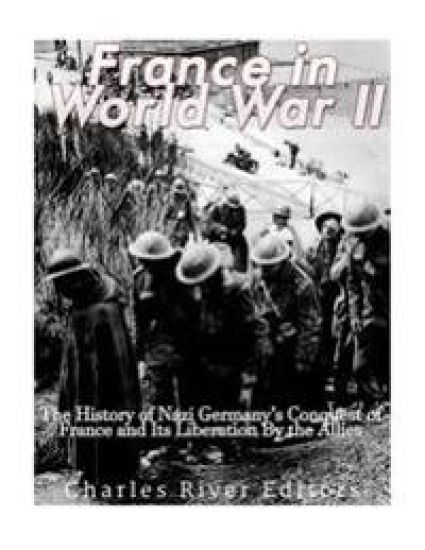
*Includes pictures *Includes accounts of the war *Includes online resources and a bibliography for further reading One of the most famous people in the world came to tour the city of Paris for the first time on June 28, 1940. Over the next three hours, he rode through the city's streets, stopping to tour L'Op ra Paris. He rode down the Champs- lys es toward the Trocadero and the Eiffel Tower, where he had his picture taken. After passing through the Arc de Triomphe, he toured the Pantheon and old medieval churches, though he did not manage to see the Louvre or the Palace of Justice. Heading back to the airport, he told his staff, "It was the dream of my life to be permitted to see Paris. I cannot say how happy I am to have that dream fulfilled today." Four years after his tour, Adolf Hitler would order the city's garrison commander, General Dietrich von Choltitz, to destroy Paris, warning his subordinate that the city "must not fall into the enemy's hand except lying in complete debris." Of course, Paris was not destroyed before the Allies liberated it, but it would take more than 4 years for them to wrest control of France from Nazi Germany after they took the country by storm in about a month in 1940. That said, it's widely overlooked today given how history played out that as the power of Nazi Germany grew alarmingly during the 1930s, the French sought means to defend their territory against the rising menace of the Thousand-Year Reich. As architects of the most punitive measures in the Treaty of Versailles following World War I, France was a natural target for Teutonic retribution, so the Maginot Line, a series of interconnected strongpoints and fortifications running along much of France's eastern border, helped allay French fears of invasion. Emerging from France's catastrophic 1940 defeat like a bedraggled and rather sinister phoenix, the French State - better known to history as "Vichy France" or the "Vichy Regime" after its spa-town capital - stands in history as a unique and bizarre creation of German Fuhrer Adolf Hitler's European conquests. A patchwork of paradoxes and contradictions, the Vichy Regime maintained a quasi-independent French nation for some time after the Third Reich invasion until the Germans decided to include it in their occupation zone. By the end of D-Day, June 6, 1944, the Allies had managed to successfully land 170,000 men, with over 75,000 on the British and Canadian beaches, 57,000 on the American beaches, and over 24,000 airborne troops. Thanks to Allied deception, the German army had failed to react to prevent the Allies from making the most of their landings. Just one division, the Hitlerjugend, would arrive the following day. Despite a fearsome and bloody day, the majority of the Allied forces had held their nerve, and most importantly, achieved their objectives. This ensured Operation Overlord was ultimately successful, and victory in Europe would be achieved within less than a year. Given how the rest of the war played out, it's often forgotten that the British and Americans, after breaking out from their D-Day beachhead on the continent, did not free Paris from its Third Reich garrison. Instead, it was the people of Paris themselves, encouraged by the Allied armies putting the Germans to rout nearby, who retook the city, led by figures from the French Resistance. The revolt that emerged involved many factions, chiefly the followers of Charles de Gaulle, or the "Gaullists," and the communists of the PCF (Parti Communiste Francais, French Communist Party). These factions provided the spearhead and the catalyst sparking the people of Paris into rebellion against their Nazi masters, and the leadership coordinating that uprising and making it a success. Their rivalry and thirst for power spurred them on to outdo each other, but they all sought the same objective: defeat of the foreign occupiers.
*Includes pictures *Includes contemporary accounts about Andr 's career and execution *Includes online resources and a bibliography for further reading *Includes a table of contents "I pray you to bear me witness that I meet my fate like a brave man." - Andr Spying and treachery are as much a part of warfare as weapons and death. This has always been the case since the earliest battles and is not likely to change in the future. And yet, even within this irregular system, there are certain rules, especially in past eras such as the American Revolution. First, while spying on behalf of one's country is perfectly respectable, betraying one's nation is treason. Second, honorable men do not involve those too innocent to understand the consequences of their actions in their schemes. Third, no man wearing his own uniform can be considered a spy, for his garments make it clear who he is and preclude deception. All three of these rules played into the story of the machinations and death of Major John Andr . No one who knew Andr personally would ever have dreamed he would one day hang. He was raised by devoutly religious parents and was a loyal Englishman and solid officer in His Majesty's army. He had, it was rumored, an unfortunate romantic liaison that ended with a cancelled engagement, and during the early days of the American Revolutionary War, he had served his king in Canada before being captured and held as a prisoner of war. Once he was returned to his command, he was promoted in recognition of his strength of character under duress. His reputation was so sterling, in fact, that he was given a very sensitive role, that of gathering intelligence for the British Army as they tried to put down the rebellious American colonies. This assignment, and an alleged relationship to a beautiful young Loyalist in Philadelphia named Peggy Shippen, would lead him to one of the colonists' biggest war heroes, Benedict Arnold. Arnold had arguably been more instrumental for the colonies' successes from 1775-1778 than anyone else, even perhaps George Washington, but a confluence of events left him willing to betray the cause he had fought and bled so hard for after he became military commander of Philadelphia. In one of the most controversial and scrutinized episodes of the war, Arnold married Peggy Shippen despite her Loyalist sympathies, and while Arnold was willing to break the first rule, Andr broke the second rule by using Shippen to pass messages, possibly even playing on her own affections for him. Ultimately, it was in breaking the third rule of espionage that Andr made his fatal mistake, for when he met near West Point to facilitate Arnold's betrayal, he changed his clothes one fateful night in September 1780, he changed his destiny and earned a place in the history books at the cost of his life. He was tried and convicted of being a spy, and he was sentenced to hang by men who had more respect for him than they did for their turncoat countryman. In the end, they agreed with Washington himself, who insisted that he was "more unfortunate than criminal." Major John Andr The Life and Death of the Famous British Spymaster during the Revolutionary War profiles the influential part the dashing British spymaster played in the Revolution. Along with pictures of important people, places, and events, you will learn about Andr like never before, in no time at all.
*Includes pictures *Includes footnotes, online resources and a bibliography for further reading *Includes a table of contents "Had I just 10,000 Cossacks, I would have conquered the whole world." - Napoleon Bonaparte "Save us Lord, from Cossacks." - Sir Wilson, reporting the prayers of conquered Germans (1813) The modern myth of the Cossack presents striking images of a stern warrior mounted on horseback, with a long woolen coat, papakha (distinctive tall fur cap ) and fur-lined cloak, with bandoliers holding large-caliber bullets crisscrossing his chest. The warrior is armed with a mixture of rifle, lance, daggers and pistols, but he always has his signature weapons: the shashka (a single-edged, guard-less, slightly curved saber originally designed by the Circassian foes) and the nagyka (short, thick whip of braided leather with a heavy weight worked into the end originally designed for fighting off wolves but more commonly used in later years against enemies of the state in the streets of Moscow or Odessa). As enemies conjured up the Cossack as semi-tamed steppe barbarian, a dog of the state, and the fist of the Czar, it's no surprise they were terrified. Even as the origins of these ferocious fighters remain murky and obscure, the Cossacks have continued their growing international appearance with the outbreak of the Russian-Ukrainian conflict in 2014. The conflict over the Crimea and the southeastern Donbass region has had thoroughly Cossack overtones; on the one hand, the Ukrainian Nationalists view themselves as the descendants of the freedom minded Cossack Republics and on the other hand, Russia has leaned heavily upon Cossack "volunteers" to staff its informal militias in the Donbass and to seize and police Crimea . The Cossacks in Luhansk (southeastern Ukraine) and Crimea had been swearing loyalty to Russia since the 1990s and were enthusiastic supporters of the Russian campaign. The Cossacks: The History and Legacy of the Legendary Slavic Warriors traces the history of the Cossacks over the centuries. Along with pictures of important people, places, and events, you will learn about the Cossacks like never before, in no time at all.
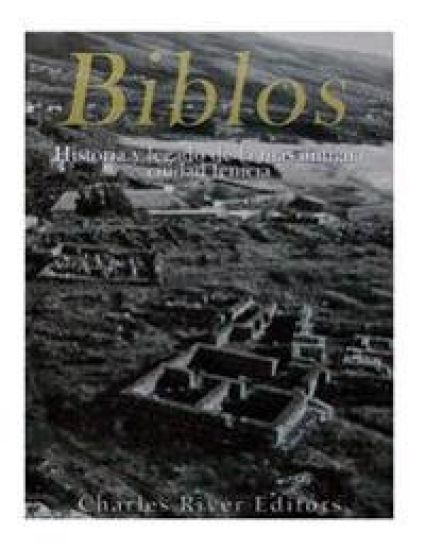
De todos los pueblos del antiguo cercano oriente, los fenicios est n entre los m s reconocidos, pero quiz s tambi n entre los menos comprendidos. Los fenicios nunca construyeron un imperio como los egipcios y los asirios; de hecho, los fenicios nunca crearon un estado fenicio nico, en cambio existieron como ciudades-estados que eran reinos independientes, dispersos por toda la regi n del Mediterr neo. Sin embargo, a pesar del hecho de que nunca hubo un "imperio fenicio', los fenicios se mostraron m s prol ficos en su exploraci n y colonizaci n que ning n otro pueblo en la historia universal hasta los espa oles en la poca del descubrimiento. Los fenicios fueron bien conocidos a lo largo de muchas civilizaciones en todo el mundo antiguo y su influencia se puede apreciar en muchos lugares del occidente hoy en d a porque a ellos se les atribuye la invenci n del precursor del alfabeto griego, del que se deriv directamente el alfabeto latino. Sin embargo, los fenicios dejaron pocos textos escritos, de manera que los historiadores modernos se han visto forzados a reconstruir su pasado por medio de una variedad de antiguas fuentes egipcias, asirias, babilonias, griegas y romanas. No es ni siquiera claro c mo se llamaron a s mismos los fenicios, porque el nombre "fenicio" se deriva de la palabra griega "phoinix", que se refiere posiblemente a los tintes que ellos produc an y comerciaban (Markoe 2000, 10). El misterio de los antiguos fenicios se complica m s por el hecho de que los arque logos han sido capaces de excavar solo peque as secciones de las tres m s importantes ciudades fenicias: Biblos, Sid n y Tiro. Biblos, conocida hoy en d a como Jebail, ha sido conocida a trav s del tiempo con muchos otros nombres: los fenicios la llamaron Gebal; para los egipcios fue Kepen o Kupna; los asirios y los acadios se refer an a ella como Gubla (este es el nombre que aparece en el Antiguo Testamento); los rabes la llamaron Jbeil, y eventualmente los cruzados europeos le dieron el nombre de Gibelet. Esta larga etimolog a refleja la singular importancia del legado de la ciudad, porque Biblos es una de las m s antiguas ciudades habitadas sin interrupci n que ha habido en el mundo. La ciudad fue mencionada con frecuencia en los grandes archivos de la antig edad, pero sus or genes descansan en lo m s profundo de la prehistoria. Su localizaci n estrat gica, con abundancia de madera para la construcci n de barcos procedente de las monta as cercanas, hizo que muchos estados poderosos quisieran controlar el territorio. Con el tiempo, Biblos y el rea circundante fueron ocupados por los amorreos, los cananeos, los fenicios, los asirios, los persas, los macedonios, los romanos, los rabes, los cruzados, los mamelucos y los otomanos. Desde tiempos remotos, Biblos fue un activo centro comercial, negociando ampliamente con Egipto, a donde exportaba madera de cedro de los territorios fenicios a cambio de papiro. Como resultado de eso, Egipto lleg a tener una influencia importante en el arte y la cultura de Biblos, y la ciudad asumi muy pronto una posici n de supremac a en el Mediterr neo, gracias en parte a su uso temprano de la escritura. Evidencia arqueol gica encontrada en la ciudad muestra la existencia de un alfabeto fenicio en uso desde poca tan temprana como el a o 1200 A. C. y los restos de ciudades fenicias a lo largo de la costa de El L bano dan testimonio del papel importante que jugaron como lugar de encuentro entre el este y el oeste, haciendo de ellas puntos focales para la fusi n de culturas en el mundo antiguo. Por regla general, los fenicios no buscaron ventajas pol ticas o la expansi n territorial de su patria-su inter s primordial estaba en el comercio internacional.
*Includes pictures *Includes online resources and a bibliography for further reading *Includes a table of contents "Chicago, mistress of the lakes, Controller of our inland trade, The freest city of our states, What wondrous strides thy fame has made " - Charles Frederick White, "To Chicago" When people think of trains, many conjure up visions of Amtrak, with dining cars and sleeper cars. Some think of the song "The Train They Call the City of New Orleans." Plenty remember counting railcars as children, and some probably still do that as the cars clickety-clack past a railroad crossing with its flashing red lights, all along pondering what might be in those massive teetering railcars as they snake slowly through the city or across the wide-open prairie on slivers of steel. But, Amtrak did not exist until May 1, 1971 when Congress passed the Rail Passenger Service Act of 1970, establishing the National Railroad Passenger Corporation. Railroads were not created for the purpose of moving people. Railroads were created more than a century ago for transporting goods. Today, there are 48 separate railroads operating throughout just the state of Illinois. Initially, railroads were built a few miles at a time, connecting with waterways and primarily for the transportation of coal. It took decades for these railroads to interconnect. For decades, railroads have been disappearing from the American landscape. The trains that do exist are faster, fewer and a whole new breed. Trains are unlikely to disappear across Illinois, even though mile after mile of railroad track continues to be converted to hiking trails. The reason? Coal. The Illinois Railroads: The History and Construction of the Rails that Connect the Heart of the Midwest looks at the building of the state's rail system and its importance. Along with pictures of important people, places, and events, you will learn about the Illinois railroads like never before, in no time at all.
*Includes pictures *Includes Spanish accounts of the Aztec's human sacrifices *Includes footnotes and a bibliography for further reading "They strike open the wretched Indian's chest with flint knives and hastily tear out the palpitating heart which, with the blood, they present to the idols... They cut off the arms, thighs and head, eating the arms and thighs at ceremonial banquets. The head they hang up on a beam, and the body is...given to the beasts of prey." - Bernal Diaz, a Spaniard who described the Aztec's human sacrifice From the moment Spanish conquistador Hernan Cort s first found and confronted them, the Aztecs have fascinated the world, and they continue to hold a unique place both culturally and in pop culture. Nearly 500 years after the Spanish conquered their mighty empire, the Aztecs are often remembered today for their major capital, Tenochtitlan, as well as being fierce conquerors of the Valley of Mexico who often engaged in human sacrifice rituals. Ironically, and unlike the Mayans, the Aztecs are not widely viewed or remembered with nuance, in part because their own leader burned extant Aztec writings and rewrote a mythologized history explaining his empire's dominance less than a century before the Spanish arrived. While the Mayans are remembered for their astronomy, numeral system, and calendar, the Aztecs have primarily been remembered in a far narrower way, despite continuing to be a source of pride to Mexicans through the centuries. As a result, even though the Aztecs continue to interest people across the world centuries after their demise, it has fallen on archaeologists and historians to try to determine the actual history, culture, and lives of the Aztecs from the beginning to the end, relying on excavations, primary accounts, and more. That said, more is known about Aztec religious practices than any other aspect of their culture, mostly because the major element in the public ceremonies was focused on human sacrifice. The rituals were apparently so gruesome that they horrified even the Spanish, who were not exactly known for their gentility when it came to war and religious fervor. A Spaniard named Bernal Diaz described what happened at one religious ceremony: "They have a most horrid and abominable custom which truly ought to be punished and which until now we have seen in no other part, and this is that, whenever they wish to ask something of the idols, in order that their plea may find more acceptance, they take many girls and boys and even adults, and in the presence of these idols they open their chests while they are still alive and take out their hearts and entrails and burn them before the idols, offering the smoke as sacrifice. Some of us have seen this, and they say it is the most terrible and frightful thing they have ever witnessed." Naturally, Cort s and other Spaniards depicted the Aztecs as savages greatly in need of conversion to Catholicism. The Spanish used the Aztec's religious practices as a justification for Cort s' conquest, but even though the Spanish attempted to burn as much as they could, plenty of information about Aztec mythology also survived. The Mythology and Religion of the Aztec examines the history and legacy of the religion practiced by the famous Mesoamerican empire. Along with pictures and a bibliography, you will learn about Aztec religion and mythology like you never have before, in no time at all.
*Includes pictures *Includes contemporary descriptions of Number 10 *Includes online resources and a bibliography for further reading "I am speaking to you from the Cabinet Room at 10 Downing Street. This morning the British Ambassador in Berlin handed the German Government an official note stating that unless we heard from them by eleven o'clock, that they were prepared at once to withdraw their troops from Poland, a state of war would exist between us. I have to tell you now that no such undertaking has been received, and consequently this country is at war with Germany." - Neville Chamberlain "Ten Downing Street is a house, not an office. That is its most important characteristic." - Douglas Hurd Throughout the world, there are centers of power and law that also serve as homes for families, sometimes just one, sometimes several. In the United States, the White House is both a residence and an office, and the same is true of a number of palaces around the world. In London, much of the United Kingdom's official business emanates from 10 Downing Street, often referred to simply as Number 10. In fact, "Number 10" has become synonymous with the voice of the government of the United Kingdom itself, much the same way America's presidential administration is often referred to as the White House. As much as it is a center of power, 10 Downing Street is also a study in contradictions. Though known today as the home of the Prime Minister, for most of its history it has housed other high ranking government offices. Seen as a symbol of stability, it has often been physically the opposite; originally built in a swamp on a sandy foundation, it was shorn up again and again for decades. In fact, its location and condition were often considered so bad that prior to 1900, only about half of the men offered the home chose to live there, and it was not until the latter half of the 20th century that the house was finally brought up to the most basic standards of modern building code. 10 Downing Street: The History and Legacy of the British Prime Minister's Official Residence examines the long and storied history of one of England's most famous landmarks. Along with pictures depicting important people, places, and events, you will learn about 10 Downing Street like never before.
De todos los pueblos del antiguo cercano oriente, los fenicios est n entre los m s reconocidos, pero quiz s tambi n entre los menos comprendidos. Los fenicios nunca construyeron un imperio como los egipcios y los asirios; de hecho, los fenicios nunca crearon un estado fenicio nico, en cambio existieron como ciudades-estados que eran reinos independientes, dispersos por toda la regi n del Mediterr neo. Sin embargo, a pesar del hecho de que nunca hubo un "imperio fenicio', los fenicios se mostraron m s prol ficos en su exploraci n y colonizaci n que ning n otro pueblo en la historia universal hasta los espa oles en la poca del descubrimiento. Los fenicios fueron bien conocidos a lo largo de muchas civilizaciones en todo el mundo antiguo y su influencia se puede apreciar en muchos lugares del occidente hoy en d a porque a ellos se les atribuye la invenci n del precursor del alfabeto griego, del que se deriv directamente el alfabeto latino. Sin embargo, los fenicios dejaron pocos textos escritos, de manera que los historiadores modernos se han visto forzados a reconstruir su pasado por medio de una variedad de antiguas fuentes egipcias, asirias, babilonias, griegas y romanas. No es ni siquiera claro c mo se llamaron a s mismos los fenicios, porque el nombre "fenicio" se deriva de la palabra griega "phoinix", que se refiere posiblemente a los tintes que ellos produc an y comerciaban (Markoe 2000, 10). El misterio de los antiguos fenicios se complica m s por el hecho de que los arque logos han sido capaces de excavar solo peque as secciones de las tres m s importantes ciudades fenicias: Biblos, Sid n y Tiro. Durante siglos, la ciudad portuaria de Sid n sirvi como la capital de Fenicia, como el centro administrativo de su red comercial mar tima, y el centro sagrado de uno de los cultos religiosos m s populares del Levante. Localizada en el sur de Fenicia, aproximadamente 30 millas al sur de Beirut, la capital actual de El L bano, el asentamiento tiene una narrativa que se extiende hasta las profundidades de la prehistoria. Los restos arqueol gicos m s antiguos datan de la segunda mitad del cuarto milenio A. C. Lo mismo que con otras ciudades fenicias, la historia de Sid n fluctu constantemente entre la libertad y la sujeci n. Su posici n geogr fica privilegiada sobre la costa fue la causa de su desarrollo comercial y su apertura a culturas for neas, pero por eso mismo la pr spera ciudad fue codiciada por numerosos conquistadores. La ciudad pas por la influencia sucesiva de Egipto, Tiro, la vecina ciudad-estado fenicia, y finalmente floreci bajo el gobierno de Persia como sede de un s trapa para toda la regi n del ufrates. El rey persa hizo uso con frecuencia de la renombrada flota sidonia durante sus campa as militares, y los reyes de Sid n fueron ampliamente recompensados por sus servicios. Durante las campa as de Alejandro Magno, Sid n abri sus puertas al joven macedonio, que decidi deponer la duradera dinast a de los reyes sidonios. Se convirti luego en el campo de batalla entre los califatos rabes y los cruzados europeos en la Edad Media en un conflicto que de muchas maneras sigue hasta nuestros d as dando forma a la regi n. Como muchas otras ciudades del Levante, Sid n ha sido habitada sin interrupci n por siglos, y a pesar de las transformaciones tra das por m ltiples civilizaciones que sucedieron a los fenicios, la ciudad mantuvo completamente una identidad antigua y un car cter original hasta el per odo moderno. De todas maneras, mucha de su antigua historia sigue envuelta en el misterio, no solo por la falta de una excavaci n arqueol gica sistem tica, sino tambi n porque mucho de su patrimonio se ha perdido como consecuencia de los conflictos y del saqueo de los buscadores de tesoros a lo largo de los siglos 19 y 20. En la actualidad, una gran cantidad de los activos arqueol gicos de Sid n son propiedad de colecciones de mus
*Includes pictures *Includes quotes about Opus Dei by members and its founder *Includes online resources and a bibliography for further reading "But the faithful must also be encouraged to do outward acts of penance, both to keep their bodies under the strict control of reason and faith, and to make amends for their own and other people's sins... St. Augustine issued the same insistent warning: 'It is not enough for a man to change his ways for the better and to give up the practice of evil, unless by painful penance, sorrowing humility, the sacrifice of a contrite heart and the giving of alms he makes amends to God for all that he has done wrong.'" - Pope John XXIII The intentional deprivation of one's most physical and carnal needs is a concept that has existed since the beginning of time, more commonly known as "mortification." The Bible makes one of the earliest references to "mortification of the flesh," as seen in Colossians 3:5, which reads, "Mortify therefore your members which are upon the earth; fornication, uncleanness, inordinate affection, evil concupiscence, and covetousness, which is idolatry." As time progressed, this concept has branched out into a more extreme form - corporal mortification. These are cases of voluntary acts of agonizing self-inflicted deprivation and physical torture, acts that have aroused much contempt from the public. Thanks to Dan Brown's bestselling novel turned blockbuster mega-hit, The Da Vinci Code, in which audiences were introduced to Silas, the villainous, self-whipping monk, corporal mortification is now a term most often associated with Opus Dei. A creepy, deranged, and blood-thirsty albino monk, Silas is most remembered for viciously whipping himself with a nail-embedded cilice. For added suspense, various falsehoods of the real-life order have been propagated by the literary masterpiece; in fact, the character of Silas contains one of the foremost bloopers, as there were never any monks in the order. Hollywood magic aside, the Opus Dei describes itself as a Catholic-based organization composed of "ordinary" Christian laymen and a small fraction of priests who have dedicated their lives to spreading the word and love of God. Its founder, Josemar a Escriv , has since been inducted into the sainthood. Though some have taken the sinister portrayals of the Opus Dei in good humor, much the way similar conspiracy theories hound the Freemasons, the depiction of the order has left a bad taste in the mouths of many, including the Opus Dei themselves. Members of the powerful Catholic organization have risen to their own defense. Having said that, while there are indeed a trove of glittering claims that can be quickly disproven, some of the scandals the group has found itself involved in have left plenty of people stroking their chins. On top of allegations of connections and unfair favoritism from the Vatican, chronicles of stories from former members have continuously surfaced over the years. What was Opus Dei really about, and do the rumors that hound them have any credibility at all? Opus Dei: The History and Legacy of the Catholic Church's Famous Institution examines the founding of the organization, its worldwide expansion, and the ongoing scandals that seem to emanate from this unique and controversial order. Along with pictures depicting important people, places, and events, you will learn about Opus Dei like never before.
*Includes pictures*Includes quotes about Opus Dei by members and its founder*Includes online resources and a bibliography for further reading "But the faithful must also be encouraged to do outward acts of penance, both to keep their bodies under the strict control of reason and faith, and to make amends for their own and other people's sins... St. Augustine issued the same insistent warning: 'It is not enough for a man to change his ways for the better and to give up the practice of evil, unless by painful penance, sorrowing humility, the sacrifice of a contrite heart and the giving of alms he makes amends to God for all that he has done wrong.'" - Pope John XXIIIThe intentional deprivation of one's most physical and carnal needs is a concept that has existed since the beginning of time, more commonly known as "mortification." The Bible makes one of the earliest references to "mortification of the flesh," as seen in Colossians 3:5, which reads, "Mortify therefore your members which are upon the earth; fornication, uncleanness, inordinate affection, evil concupiscence, and covetousness, which is idolatry." As time progressed, this concept has branched out into a more extreme form - corporal mortification. These are cases of voluntary acts of agonizing self-inflicted deprivation and physical torture, acts that have aroused much contempt from the public. Thanks to Dan Brown's bestselling novel turned blockbuster mega-hit, The Da Vinci Code, in which audiences were introduced to Silas, the villainous, self-whipping monk, corporal mortification is now a term most often associated with Opus Dei. A creepy, deranged, and blood-thirsty albino monk, Silas is most remembered for viciously whipping himself with a nail-embedded cilice. For added suspense, various falsehoods of the real-life order have been propagated by the literary masterpiece; in fact, the character of Silas contains one of the foremost bloopers, as there were never any monks in the order. Hollywood magic aside, the Opus Dei describes itself as a Catholic-based organization composed of "ordinary" Christian laymen and a small fraction of priests who have dedicated their lives to spreading the word and love of God. Its founder, Josemar a Escriv , has since been inducted into the sainthood. Though some have taken the sinister portrayals of the Opus Dei in good humor, much the way similar conspiracy theories hound the Freemasons, the depiction of the order has left a bad taste in the mouths of many, including the Opus Dei themselves. Members of the powerful Catholic organization have risen to their own defense. Having said that, while there are indeed a trove of glittering claims that can be quickly disproven, some of the scandals the group has found itself involved in have left plenty of people stroking their chins. On top of allegations of connections and unfair favoritism from the Vatican, chronicles of stories from former members have continuously surfaced over the years. What was Opus Dei really about, and do the rumors that hound them have any credibility at all? Opus Dei: The History and Legacy of the Catholic Church's Famous Institution examines the founding of the organization, its worldwide expansion, and the ongoing scandals that seem to emanate from this unique and controversial order. Along with pictures depicting important people, places, and events, you will learn about Opus Dei like never before.
*Includes pictures *Includes quotes from the Koran and Hadith *Includes online resources and a bibliography for further reading "The most holy spot al-quds] on earth is Syria; the most holy spot in Syria is Palestine; the most holy spot in Palestine is Jerusalem Bayt al-maqdis]; the most holy spot in Jerusalem is the Mountain; the most holy spot in Jerusalem is the place of worship al-masjid], and the most holy spot in the place of worship is the Dome" - Thawr ibn Yazid, circa 770 In the campaign leading up to the election of Donald Trump, the Republican presidential candidate frequently discussed the importance of moving the U. S. Embassy from Tel Aviv to Jerusalem. For many conservative Christian Americans and Israelis, this was tantamount to the United States agreeing to Jewish control over Jerusalem. As it stands now, the U. S. has a consulate in Jerusalem, yet no country houses their embassy in Jerusalem due to the conflicting claims of the Israelis and Palestinians. The political issue is just one more reminder of how important Jerusalem is as both a secular and religious flashpoint. One of the oldest cities in the world, Jerusalem is a holy and special city to the three Abrahamic religions: Judaism, Christianity, and Islam. Throughout its more than 6,000 year history, Jerusalem has been a center of contention, from conflicting clans to warring states. In addition to its religious significance, Jerusalem's strategic location has also made the city desirable throughout history. While people in the West are more familiar with Jerusalem's importance to Jews and Christians, Jerusalem's particular importance to the religion of Islam is without question one of the major sticking points in the Israeli-Palestinian conflict. Prior to Israeli control, Jerusalem had been predominantly controlled by Muslim rulers since the 7th century and had been used as a type of political currency, legitimizing the ruling dynasty's claim over the city. This right of control by Muslims was viewed no more differently than control over Mecca and Medina in the Arabian Peninsula. For the world's Muslim population, Jerusalem is a holy site because Muslims believe the Prophet Muhammad visited Jerusalem where he ascended to heaven during the famous "Night Journey." There was also a period of time during the Prophet's life when Muslims prayed in the direction of Jerusalem, as opposed to Mecca. Just as in Judaism and Christianity, Jerusalem plays a central role in End of Days prophecies in Islamic theology. As a result, Jerusalem has been an important symbol for Muslims for nearly 1,300 years, and it has played a crucial political role throughout the history of Islamic civilization as this important city has passed from ruler to ruler and dynasty to dynasty. Now that the city is again controlled by a Jewish state, Jerusalem has even further implications for various religious groups, and it will certainly affect the conflict-wrought region. Jerusalem and Islam: The History and Legacy of the Holy City's Importance to Muslims examines the tumultuous history of Jerusalem and its relationship to the Islamic world. Along with pictures depicting important people, places, and events, you will learn about Jerusalem and Islam like never before.
Se conoce como la Era de la Prohibici n en Estados Unidos al periodo que va de 1920 a 1933, pero sus antecedentes y legado son tan extensos, que sin duda el tema corre adherido a lo largo de toda la historia del pa s, desde sus primeros a os como naci n independiente hasta la actualidad. Durante trece a os se intent convertir por la fuerza a todo un pa s en una naci n de no bebedores; fue el reventar de un ola que se hab a ido formando lentamente hasta explotar en 1920, y una vez pasada, sus efectos continuaron sinti ndose durante el resto del siglo XX. Incluso hoy en d a, la prohibici n del alcohol en el pa s consagrado a la libertad sigue teniendo lecciones importantes que ense arnos. La 18a Enmienda que convirti la iniciativa en ley constitucional, y el Acta Volstead que pormenorizaba su aplicaci n, no surgieron de la nada; no fue una ocurrencia electoral ni una batalla r pida y sorpresiva de un grupo de inter s que tom al otro desprevenido. En realidad la Ley Seca fue el resultado de casi un siglo de adoctrinamiento y lucha entre dos posturas pol ticas y sobre todo morales: la de quienes apoyaban la Prohibici n, los llamados "secos", y quienes se opon an a ella, en parte por considerar que no era incumbencia del gobierno condicionar la libertad de la persona, los llamados "h medos". Los primeros cre an que la prohibici n de licores, bebidas embriagantes y salones (o cantinas) era una medida necesaria para erradicar los grandes males que ya eran parte de la vida de la naci n: esposos embriagados y violentos, accidentes laborales debido al alcoholismo, hogares destrozados, esposas maltratadas y patrimonio familiar echado a volar en un solo d a. Los h medos defend an una industria leg tima que brindaba empleos e impuestos; les preocupaban los grandes intereses econ micos que se ver an afectados; recordaban el respeto a la sacrosanta libertad individual y sobre todo, hac an notar lo extra o que era que el gobierno determinara lo que alguien pod a ingerir o no. Especialmente porque, desde el inicio, el alcohol hab a sido parte inseparable de la cultura norteamericana: desde los salones del Lejano Oeste, los campos de uva de los valles de California, las mesas de los hogares de todo el pa s, hasta las cantinas de las grandes ciudades donde la clase trabajadora se reun a para hablar sobre pol tica. Ello sin tomar en cuenta otros mbitos en los que la cultura del vino resultaba un elemento esencial: el desarrollo de las artes -sobre todo la m sica y la literatura-, la cohesi n social y la econom a.
De todos los pueblos del antiguo cercano oriente, los fenicios est n entre los m s reconocidos, pero quiz s tambi n entre los menos comprendidos. Los fenicios nunca construyeron un imperio como los egipcios y los asirios; de hecho, los fenicios nunca crearon un estado fenicio nico, en cambio existieron como ciudades-estados que eran reinos independientes, dispersos por toda la regi n del Mediterr neo. Sin embargo, a pesar del hecho de que nunca hubo un "imperio fenicio', los fenicios se mostraron m s prol ficos en su exploraci n y colonizaci n que ning n otro pueblo en la historia universal hasta los espa oles en la poca del descubrimiento. Los fenicios fueron bien conocidos a lo largo de muchas civilizaciones en todo el mundo antiguo y su influencia se puede apreciar en muchos lugares del occidente hoy en d a porque a ellos se les atribuye la invenci n del precursor del alfabeto griego, del que se deriv directamente el alfabeto latino. Sin embargo, los fenicios dejaron pocos textos escritos, de manera que los historiadores modernos se han visto forzados a reconstruir su pasado por medio de una variedad de antiguas fuentes egipcias, asirias, babilonias, griegas y romanas. No es ni siquiera claro c mo se llamaron a s mismos los fenicios, porque el nombre "fenicio" se deriva de la palabra griega "phoinix", que se refiere posiblemente a los tintes que ellos produc an y comerciaban (Markoe 2000, 10). El misterio de los antiguos fenicios se complica m s por el hecho de que los arque logos han sido capaces de excavar solo peque as secciones de las tres m s importantes ciudades fenicias: Biblos, Sid n y Tiro. Biblos, conocida hoy en d a como Jebail, ha sido conocida a trav s del tiempo con muchos otros nombres: los fenicios la llamaron Gebal; para los egipcios fue Kepen o Kupna; los asirios y los acadios se refer an a ella como Gubla (este es el nombre que aparece en el Antiguo Testamento); los rabes la llamaron Jbeil, y eventualmente los cruzados europeos le dieron el nombre de Gibelet. Esta larga etimolog a refleja la singular importancia del legado de la ciudad, porque Biblos es una de las m s antiguas ciudades habitadas sin interrupci n que ha habido en el mundo. La ciudad fue mencionada con frecuencia en los grandes archivos de la antig edad, pero sus or genes descansan en lo m s profundo de la prehistoria. Su localizaci n estrat gica, con abundancia de madera para la construcci n de barcos procedente de las monta as cercanas, hizo que muchos estados poderosos quisieran controlar el territorio. Con el tiempo, Biblos y el rea circundante fueron ocupados por los amorreos, los cananeos, los fenicios, los asirios, los persas, los macedonios, los romanos, los rabes, los cruzados, los mamelucos y los otomanos. Desde tiempos remotos, Biblos fue un activo centro comercial, negociando ampliamente con Egipto, a donde exportaba madera de cedro de los territorios fenicios a cambio de papiro. Como resultado de eso, Egipto lleg a tener una influencia importante en el arte y la cultura de Biblos, y la ciudad asumi muy pronto una posici n de supremac a en el Mediterr neo, gracias en parte a su uso temprano de la escritura. Evidencia arqueol gica encontrada en la ciudad muestra la existencia de un alfabeto fenicio en uso desde poca tan temprana como el a o 1200 A. C. y los restos de ciudades fenicias a lo largo de la costa de El L bano dan testimonio del papel importante que jugaron como lugar de encuentro entre el este y el oeste, haciendo de ellas puntos focales para la fusi n de culturas en el mundo antiguo. Por regla general, los fenicios no buscaron ventajas pol ticas o la expansi n territorial de su patria-su inter s primordial estaba en el comercio internacional.
*Includes pictures*Includes accounts of the various missions*Includes online resources and a bibliography for further reading Today the Space Race is widely viewed poignantly and fondly as a race to the Moon that culminated with Apollo 11 "winning" the Race for the United States. In fact, it encompassed a much broader range of competition between the Soviet Union and the United States that affected everything from military technology to successfully launching satellites that could land on Mars or orbit other planets in the Solar System. Moreover, the notion that America "won" the Space Race at the end of the 1960s overlooks just how competitive the Space Race actually was in launching people into orbit, as well as the major contributions the Space Race influenced in leading to today's International Space Station and continued space exploration. In fact, the Soviet Union had spent much of the 1950s leaving the United States in its dust (and rocket fuel). President Eisenhower and other Americans who could view Soviet rockets in the sky were justifiably worried that Soviet satellites in orbit could soon be spying on them, or, even worse, dropping nuclear bombs on them. And in 1960, when Eisenhower's administration began planning and funding for the famous Apollo program that would land the first men on the Moon in 1969, the Soviet Union was already thinking further ahead, literally. In one of the worst kept secrets of the Space Race, the Soviet Union launched two probes, Korabl 4 and Korabl 5, toward Mars in October 1960. Eventually, the Space Race produced some of the most iconic moments of the 20th century, including the landing of the first men on the Moon, and in the years after the Space Race and the Cold War ended, the competition itself had helped lay the groundwork for international cooperation in space, both in terms of space exploration and aboard the International Space Station, which continues to orbit Earth today. The Apollo space program is the most famous and celebrated in American history, but the first successful landing of men on the Moon during Apollo 11 had complicated roots dating back over a decade, and it also involved one of NASA's most infamous tragedies. Landing on the Moon presented an ideal goal all on its own, but the government's urgency in designing the Apollo program was actually brought about by the Soviet Union, which spent much of the 1950s leaving the United States in its dust (and rocket fuel). In 1957, at a time when people were concerned about communism and nuclear war, many Americans were dismayed by news that the Soviet Union was successfully launching satellites into orbit. Over the decade, NASA would spend tens of billions on the Apollo missions, the most expensive peacetime program in American history to that point, and even though Apollo 11 was only one of almost 20 Apollo missions, it was certainly the crown jewel. only one of nearly 20 Apollo missions conducted by NASA. And to make Apollo 11 a success, it would take nearly a decade of planning by government officials, hard work by NASA scientists, intense training by the astronauts, and several missions preceding Apollo 11. It also cost over $20 billion, making the Apollo program the most expensive peacetime program in American history at the time.