Kirjojen hintavertailu – 12 903 725 kirjaa ja 27 kauppaa
Kirjailija
Charles River
Kirjat ja teokset yhdessä paikassa: 4 673 kirjaa, julkaisuja vuosilta 2013–2022, suosituimpiin kuuluu William Powell and Myrna Loy: The Lives and Careers of One of Classical Hollywood's Most Iconic Duos. Vertaile teosten hintoja ja tarkista saatavuus suomalaisista kirjakaupoista.
*Includes pictures *Includes Parton's own quotes about her life and career *Includes a bibliography for further reading "If you don't like the road you're walking, start paving another one." - Dolly Parton "I'm not offended by all the dumb blonde jokes because I know I'm not dumb... and I also know that I'm not blonde." - Dolly Parton A lot of ink has been spilled covering the lives of history's most influential figures, but how much of the forest is lost for the trees? In Charles River Editors' American Legends series, readers can get caught up to speed on the lives of America's most important men and women in the time it takes to finish a commute, while learning interesting facts long forgotten or never known. Few celebrities are as much a product of their native land as Dolly Parton. While many celebrities have desperately tried to get as far away as possible from their impoverished upbringings, Parton constructed her star persona around the image of Appalachian country music culture. In many ways, Parton was raised in a quintessential Appalachian family, and while she has been resolute in expressing her affection for this background, it is impossible to deny that her upbringing posed obstacles that were difficult to overcome and related to societal and industrial levels. However, as Curtis Ellison put it, "A good part of Parton's public image has been one of rustic coziness rendered in picturesque regional Appalachian] idioms." Not only did she make her performing debut at the Grand Ole Opry in Nashville, but despite forays into pop music, her performing style remains anchored in the brand of country music that made the Grand Ole Opry one of the iconic performing venues in the United States. On a personal level, despite spending much of her time in Hollywood, Parton continues to maintain an amusement park in Tennessee-the aptly titled "Dollywood"-and her frequent appearances there attest to her enduring connection to the land of her upbringing. As much as Dolly Parton is identified with rural Tennessee, her star image has progressed beyond the socially conservative climate of the Smoky Mountain region. At first glance, Parton appears to embody the regressive image of the objectified woman, and given her busty figure and numerous cosmetic surgeries, it's clear she cares a great deal about her appearance. As she once joked, "The only way I'd be caught without makeup is if my radio fell in the bathtub while I was taking a bath and electrocuted me and I was in between makeup at home. I hope my husband would slap a little lipstick on me before he took me to the morgue." However, there is also a way in which she has come to represent liberated femininity. Indeed, since making her entrance into the performing industry in the late 1960s, Parton has striven to attain a level of mastery over her career that was unusual for her time, and she has been successful in controlling the discourse that surrounds her, a feat achieved through highly deliberate responses to interviews and publicity requests. It is telling that one of Dolly's most famous songs is "9 to 5", an indication that she represents American working women. American Legends: The Life of Dolly Parton chronicles how Parton's family background and performing career established her persona, as well as her nuanced relationship with gender and social issues. Along with pictures of important people, places, and events, you will learn about Dolly Parton like never before, in no time at all.
*Includes pictures *Includes ancient accounts and legends about Eridu *Includes online resources and a bibliography for further reading *Includes a table of contents "After the kingship descended from heaven, the kingship was in Eridu." - Excerpt from the opening paragraph of the Sumerian King List Emerging from the desert flats of southern Iraq can be seen the remains of a large mound, approximately 1750 feet x 1750 feet in size, surrounded by several smaller mounds. Known today as Tell Abu Shahrain or in the ancient world as Eridu, this site contains some of best examples of the Ubaid culture, and it was one of the first urban centers of civilization in southern Mesopotamia, if not the first itself. Many famous stories came from the mythical landscapes of Iraq's deep south. In the literature of ancient Sumer, Eridu was regarded as the primordial city, the first urban center, believed to have existed long before the great mythical Flood that wiped out human culture in the Book of Genesis and other earlier traditions. It was to places like this that Western explorers first came in the 19th century, searching for the origins of the lands which the Bible described as the cradle of the human race. In doing so, they discovered that Eridu was also a real place. The astonishing site is located about 8 miles southwest of the Sumerian city of Ur, and when it was first excavated in the mid-19th century, Western archaeologists were confused as to how a city as large as this could have existed in such a vast and waterless desert. But Eridu is positioned on the edge of the great alluvial plain of Sumer, a wild and beautiful marshland where the Tigris and the Euphrates meet. This was the Biblical "Garden of Eden", an ancient landscape that was renowned for its fertility in the past. To many Westerners, Iraq's history and culture were a blank before 1991, but ironically, as war engulfed the region, it helped underscore the importance and influence of the area on Western civilization. It was here, in the ferocious landscape of south Iraq, old Sumer, that the first laws, science, and cities came into being. Eridu is a place of extraordinary significance for the study of the earliest stages of civilization in history, and it is one of the best examples of cultural continuity in Mesopotamia, from the earliest prehistoric stages in which settlements emerged to the later historic periods. Eridu had a special status, not as the residence of a ruling dynasty of kings but for its religious significance; a series of temples were built there, devoted to the patron god of the city, Enki. Each one was built upon the ruins of its predecessor, and each one represents the architectural, religious, and social changes that occurred at the site throughout its history. Eridu: The History and Legacy of the Oldest City in Ancient Mesopotamia examines the tumultuous history of one of the most important cities of antiquity. Along with pictures depicting important people, places, and events, you will learn about Eridu like never before.
*Includes pictures *Includes eyewitness accounts of the Trail of Tears *Includes a Bibliography for further reading. "I fought through the War Between the States and have seen many men shot, but the Cherokee Removal was the cruelest work I ever knew." - Georgia soldier on the Trail of Tears The "Five Civilized Tribes" are among the best known Native American groups in American history, and they were even celebrated by contemporary Americans for their abilities to adapt to white culture. But tragically, they are also well known tribes due to the trials and tribulations they suffered by being forcibly moved west along the "Trail of Tears". Though the Trail of Tears applied to several different tribes, it is most commonly associated today with the Cherokee. The Cherokee began the process of assimilation into European America very early, even before the establishment of the Unites States, but it is unclear what benefits that brought the tribe. Throughout the colonial period and after the American Revolution, the Cherokee struggled to satisfy the whims and desires of American government officials and settlers, often suffering injustices after complying with their desires. Nevertheless, the Cherokee continued to endure, and after being pushed west, they rose from humble origins as refugees new to the southeastern United States to build themselves back up into a powerhouse both economically and militarily. The Cherokee ultimately became the first people of non-European descent to become U. S. citizens en masse, and today the Cherokee Nation is the largest federally recognized tribe in the United States, boasting over 300,000 members. The Creek became known as one of the Five Civilized Tribes for quickly assimilating aspects of European culture, but in response to early European contact, the Muscogee established one of the strongest confederacies in the region. Despite becoming a dominant regional force, however, infighting brought about civil war in the early 19th century, and they were quickly wrapped up in the War of 1812 as well. By the end of that fighting, the Creek were compelled to cede millions of acres of land to the expanding United States, ushering in a new era that found the Creek occupying only a small strip of Alabama by the 1830s. With the Spanish Empire foundering during the mid-19th century, the young United States sought to take possession of Florida. President Andrew Jackson's notorious policy of Indian Removal led to the Seminole Wars in the 1830s, and that was already after General Andrew Jackson had led American soldiers against the Seminole in the First Seminole War a generation earlier. The Seminole Wars ultimately pushed much of the tribe into Oklahoma, and the nature of some of the fighting remains one of the best known aspects of Seminole history among Americans. The Trail of Tears comprehensively covers the history and legacy of the events that brought about the removal of the Southeastern tribes. Along with pictures of important people, places, and events, you will learn about the Trail of Tears like you never have before, in no time at all.
"Captur 46 ciudades ... mediante la consolidaci n de rampas para levantar carneros, ataques de infanter a, minas, brechas y motores de asedio." - Senaquerib Cuando los estudiosos estudian la historia del antiguo Cercano Oriente, a menudo se destacan varias guerras que tuvieron consecuencias extremadamente brutales (al menos para los est ndares modernos). La eliminaci n forzada de poblaciones enteras, los asedios que diezmaron ciudades enteras y la destrucci n il cita de propiedades fueron t cticas utilizadas por los diversos pueblos del antiguo Cercano Oriente unos contra otros, pero los asirios fueron los primeros en hacer de la guerra una ciencia. Cuando se menciona a los asirios, las im genes de guerra y brutalidad son las primeras que vienen a la mente, a pesar de que su cultura prosper durante casi 2.000 a os. Como una serie de antiguos individuos e imperios en esa regi n, la percepci n negativa de la antigua cultura asiria fue transmitida a trav s de relatos b blicos, e independientemente de la exactitud de la descripci n de la Biblia de ciertos eventos, los asirios desempe aron claramente el papel de adversario para los israelitas . De hecho, Asiria (el Shinar b blico) y el pueblo asirio desempe aron un papel importante en muchos libros del Antiguo Testamento y se mencionan por primera vez en el libro del G nesis: "Y el principio de su reino fue Babel, Erec, Acab y Calne, en la tierra de Sinar. De aquella tierra sali hacia Asiria y edific N nive, Rehobot Ir, Cala." (G nesis 10: 10-11). Aunque los relatos b blicos de los asirios est n entre los m s interesantes y son a menudo corroborados con otras fuentes hist ricas, los asirios eran mucho m s que s lo los enemigos de los israelitas y brutales matones. Entre todas las ciudades que prosperaron en el antiguo Cercano Oriente, pocos pueden igualar la opulencia y la ostentaci n de N nive, la capital del Imperio asirio durante gran parte del siglo VII a. C. Durante ese tiempo se hizo conocido por sus poderosas ciudadelas, grandes palacios, hermosos jardines, e incluso sus parques zool gicos. De hecho, la belleza de N nive, especialmente sus jardines, impresion tanto a los escritores posteriores que designaron sus jardines como una de las Siete Maravillas del Mundo, excepto que por desgracia para la memoria de N nive, la ubicaci n fue colocada en Babilonia. La confusi n que asign una de las maravillas del mundo a Babilonia en lugar de N nive es de hecho parte de la historia de N nive - era una gran ciudad durante su tiempo, pero la guerra incesante llev a la metr polis al olvido y eventualmente su historia fue olvidada o distorsionada. Examinando N nive se demuestra que en muchos sentidos fue v ctima de la gente que la construy . Cuando N nive estaba en su apogeo, controlaban un imperio que abarcaba Egipto, Anatolia, Mesopotamia y partes de Ir n. Finalmente, los asirios se extendieron demasiado y sus enemigos los derrocaron y destruyeron gran parte de sus ciudades. N nive se perdi durante siglos, s lo siendo mencionada en fragmentos por los historiadores griegos cl sicos, pero los m todos arqueol gicos modernos fueron capaces de traer la ciudad perdida de vuelta a la vida en el siglo XIX. Hoy, a trav s de una combinaci n de informes arqueol gicos, relatos griegos cl sicos y antiguas inscripciones cuneiformes, la cronolog a de N nive puede ser reconstruida. Un examen revela que N nive desempe un papel vital en la historia religiosa y pol tica del antiguo Cercano Oriente y a pesar de sufrir un da o inmenso a manos de los enemigos de los asirios, sigui funcionando como una ciudad importante durante varios siglos despu s de que el Imperio asirio se derrumbase. N nive: la historia y el legado de la antigua capital asiria traza la historia y el legado de una de las ciudades m s influyentes de la antig edad. Junto con fotos de personas importantes, lugares y eventos, aprender s sobre la historia de
*Includes pictures*Includes Skelton's quotes about his life and career*Includes a bibliography for further reading"I don't want to be called 'the greatest' or 'one of the greatest'; let other guys claim to be the best. I just want to be known as a clown because to me that's the height of my profession. It means you can do everything-sing, dance, and above all, make people laugh." - Red Skelton"All I want to do is to make people laugh, to take the word 'heartache' out of their vocabulary" - Red SkeltonA lot of ink has been spilled covering the lives of history's most influential figures, but how much of the forest is lost for the trees? In Charles River Editors' American Legends series, readers can get caught up to speed on the lives of America's most important men and women in the time it takes to finish a commute, while learning interesting facts long forgotten or never known. Among radio personalities and television entertainers, almost nobody had a career as long or storied as Red Skelton, one of America's foremost comedians during the 20th century. Over the course of 70 years, Skelton made crowds laugh from vaudeville to performing as a clown, and while he is best known for The Red Skelton Show and his other variety shows, he also managed a 45 year stage career, as a pantomime or one of the other characters he created over the years. Although Skelton was extremely popular in America at the peak of his career, his entertainment was also a throwback to the early 20th century, which compelled television studios to balk at the notion of continuing to air his shows by 1970, even though his shows had spent almost two straight decades with Top 10 ratings on the air. Understandably bitter, Skelton refused to have his shows in syndication until the 1980s, and by then, the same concerns about his appeal to younger crowds had only gotten worse as he and his show had aged. Skelton is still best remembered for his performances and his television career, but he was also a noted artist who fittingly excelled at depicting clowns on canvas. Despite the seemingly silly content of his work, Skelton's skills as an artist were so impressive that he made millions of dollars a year selling his art and having it displayed. By the time he died in 1997, it's estimated that he may have made more money through art than through performing. American Legends: The Life of Red Skelton chronicles the life and career of one of America's most beloved comedians. Along with pictures of important people, places, and events, you will learn about Red Skelton like never before, in no time at all.
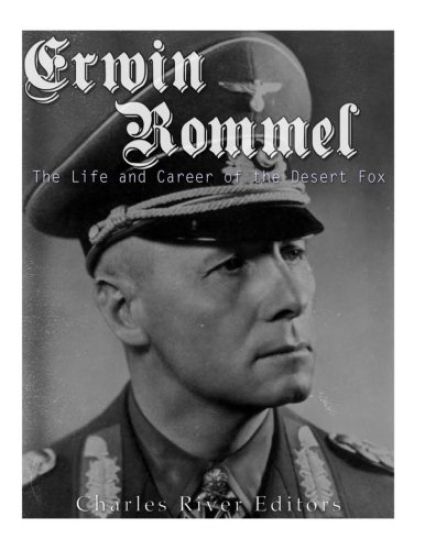
*Includes pictures *Includes Rommel's quotes about his life and the war *Includes online resources and a bibliography for further reading "Be an example to your men in your duty and in private life. Never spare yourself, and let the troops see that you don't in your endurance of fatigue and privation. Always be tactful and well-mannered, and teach your subordinates to be the same. Avoid excessive sharpness or harshness of voice, which usually indicates the man who has shortcomings of his own to hide." - Erwin Rommel One of his biographers called him "a complex man: a born leader, a brilliant soldier, a devoted husband, a proud father; intelligent, instinctive, brave, compassionate, vain, egotistical, and arrogant." As that description suggests, every account of Erwin Rommel's life must address what appears to be its inherent contradictions. Fittingly, and in the same vein, he remains one of the best remembered generals of World War II and history at large, despite the fact he was on the losing side, and he was defeated at the most famous battle of his career, the decisive Battle of El Alamein. Nonetheless, the Desert Fox has been a legend on both sides of the Atlantic for over 70 years, thanks to the crucial role he played in history's deadliest conflict. Before his legendary encounters against the British and Americans in North Africa, Rommel gained much fame for his role in the invasions of Poland and France before was sent to North Africa in February 1941. In describing Rommel, the Italian officer Alessandro Predieri talked about his "two very rare and precious gifts" "The first is luck, which you will remember, Napoleon prescribed to his generals... The second gift is that of being able to keep his bearings in the midst of all the confusion of modern desert warfare. His instinct tells him immediately where a difficult situation is going to develop, and off he goes with his Kampfstaffel Headquarters Group], which he treats like a Praetorian Guard, and puts things right, charging around like a junior officer." With the Axis forces trying to push through Egypt towards the Suez Canal and the British Mandate of Palestine, American forces landed to their west in North Africa, which ultimately compelled Rommel to try to break through before the Allies could build up and overwhelm them with superior numbers. The Second Battle of El Alamein was a turning point in the two-year conflict between Allied forces and a combined German-Italian force in North Africa. While the scale of the battle paled in comparison to the battles of the Eastern Front, where the majority of German troops were concentrated, it still marked an important victory in World War II, especially from the British perspective. After leaving North Africa, Rommel spent much of the later part of the war strengthening German defenses across the Atlantic in anticipation of an amphibious Allied landing, which would come in June 1944. But the murky role he played in the notorious July 20 plot on Adolf Hitler's life in 1944, the closest an assassination attempt got to killing the Nazi Fuhrer, would bring about the Desert Fox's untimely demise in October 1944, even as the Soviets and Western Allies were tightening the vise on Germany. Compelled to take cyanide by authorities, the Desert Fox insisted he was innocent until his dying day, and his popularity forced the Nazi government to claim his death was brought about by a heart attack or a cerebral embolism. In fact, Rommel was given an official state funeral, and Winston Churchill would go on to praise him, "He also deserves our respect because, although a loyal German soldier, he came to hate Hitler and all his works, and took part in the conspiracy to rescue Germany by displacing the maniac and tyrant. For this, he paid the forfeit of his life."
"La persecuci n no es una caracter stica original de ninguna religi n; pero es una caracter stica extraordinariamente notable en todas las religiones legales o religiones establecidas por ley." Thomas Paine, Los derechos del hombre En muchas sociedades modernas, se han establecido leyes para proteger a los ciudadanos de la discriminaci n basada en el g nero, las creencias, la raza y la sexualidad. La simple idea de ver esos derechos violados de alguna manera es algo que la gente del mundo occidental considera impensable. En estos tiempos, la gente pelear con dientes y con u as contra los casos de discriminaci n e injusticia, bien sea buscando acci n legal o acusando legalmente a la parte que discrimina. Hay muchas organizaciones alrededor del mundo que ayudam a combatir y a proteger a los ciudadanos de las desigualdades arbitrarias. Los medios de comunicaci n social se han convertido tambi n en canales por medio de los cuales la gente de todo el mundo puede denunciar estas injusticias. Las personas de todo el mundo que se solidarizan con los discriminados se unen para condenar a los fan ticos. Se ha visto que los boicots, las solicitudes y las reacciones negativas en los medios y en el internet han jugado un papel significativo en la ca da de individuos y corporaciones que han sido acusados de alguna clase de discriminaci n. El camino hacia la edad moderna de armon a y aceptaci n cultural es una de las haza as m s hermosas del progreso humano, pero habiendo dicho esto, hubo un tiempo en que la simple duda de la existencia de una figura religiosa era no solo un crimen punible legalmente, sino que muy bien pod a costarle a una persona la vida. Este era el crimen de herej a. Esta clase de persecuci n religiosa ha estado presente por miles de a os, y los cristianos fueron con frecuencia sus v ctimas, pero cuando la Iglesia Cat lica comenz su r pida difusi n a trav s de Europa durante la edad media, las cosas cambiaron. En 1184, el Papa Lucio III promulg una bula papal que iba a desatar una larga tradici n de caza de brujas, lo que dio como resultado el comienzo de la poca de la Inquisici n. Por un giro de los acontecimientos, los perseguidos se volvieron perseguidores. A partir de entonces, la Iglesia Cat lica se atribuy el poder de tener tribunales, o cortes judiciales, en su intento de exterminar la herej a de una vez por todas. Se cree que estas inquisiciones, que habr an de plagar a Europa por siglos, vieron a cientos de miles de personas perseguidas por creencias que iban contra la Iglesia. Una escandalosa porci n de ellos ser an brutalmente torturados y condenados a muerte. Ninguna de ellas podr a compararse con la que comenz en el siglo XV-la Inquisici n espa ola. La infame inquisici n, objeto de muchos documentales, pel culas, y otros medios de la cultura pop, es una era oscura recordada por su opresi n, b rbaras torturas y tiran a religiosa. Sirviendo como tel n de fondo de todo esto hubo una terrible enfermedad, un hombre identificado con Satan s y el tumultuoso surgimiento y ca da de uno de los m s terribles per odos de la historia europea. La Inquisici n espa ola: Historia y legado de la infame persecuci n de los herejes por la iglesia cat lica estudia c mo naci la inquisici n y c mo la gente fue torturada y ejecutada. Junto con im genes de gente importante, lugares y acontecimientos, usted aprender acerca de la inquisici n como nunca antes.
*Includes pictures of Ball and important people, places, and scenes.*Includes Lucille Ball's own quotes about her life and career.*Includes a Bibliography for further reading." I don't suppose that hard work, discipline, and a perfectionist attitude toward my work did me any harm. They are a big part of my makeup today, as any of my co-workers will tell you. And when life seemed unbearable, I learned to live in my imagination, and to step inside other people's skins - indispensable abilities for an actress." - Lucille BallA lot of ink has been spilled covering the lives of history's most influential figures, but how much of the forest is lost for the trees? In Charles River Editors' American Legends series, readers can get caught up to speed on the lives of America's most important men and women in the time it takes to finish a commute, while learning interesting facts long forgotten or never known. Lucille Ball, one of the most famous and versatile stars in American history, is above all defined by her charisma. She did not possess the overwhelming beauty of her contemporaries in the entertainment industry, yet her infectious enthusiasm continues to endear her to the American public even decades following her death. Indeed, at the time that I Love Lucy (1951-1957) ended, the show still remained the most-watched show in America. Ball possessed an intangible quality that captivated audiences, who were transfixed by even the most banal plot sequences in her sitcoms. That Ball was able to withhold her popularity even after the ending of I Love Lucy testifies to the fact that she was always the star attraction on the famous sitcom. Indeed, even after separating from Arnaz, Ball continued to achieve high ratings on her subsequent programs, most notably The Lucy Show (1962-1968) and Here's Lucy (1968-1974). Without doubt, Ball's longevity and the magnitude of her popularity make her the most cherished comedienne in American history. Given Ball's immense fame, it is easy to strip her career out of its original context and assume that she would have risen to fame regardless of the medium. However, it is important to remember that I Love Lucy actually began when Ball was already 40 years of age, a relatively advanced age for someone in the entertainment industry. In fact, from 1933 through the end of the 1940s, Ball appeared in over 80 films (with very minor roles in almost all of these) while serving as a contract player for the MGM and RKO film studios. There is thus a massive discrepancy between the fame she achieved in the television medium and her lack of success in cinema. To this end, Ball's career reflects the evolutions that occurred throughout the mid-1950s with regard to the entertainment industry, mass culture, and the ways in which the American public consumed popular culture. Where Ball was unable to rise to prominence in cinema, she represented the ideal actress for the television medium, and in this regard she introduced a new model for media celebrity, one that was more accessible if less physically dazzling. This biography explores the entirety of Ball's life and career, with attention paid to her both her childhood and her pre-television and television periods. In so doing, this study provides as complete a picture as possible of the enormity of Ball's rise to fame and how she was able to capture the favor of the American public. American Legends: The Life of Lucille Ball profiles the life and career of one of America's most iconic actresses. Along with pictures of important people, places, and events, you will learn about Ball like you never have before, in no time at all.