Kirjojen hintavertailu – 12 903 725 kirjaa ja 27 kauppaa
Kirjailija
Charles River
Kirjat ja teokset yhdessä paikassa: 4 673 kirjaa, julkaisuja vuosilta 2013–2022, suosituimpiin kuuluu William Powell and Myrna Loy: The Lives and Careers of One of Classical Hollywood's Most Iconic Duos. Vertaile teosten hintoja ja tarkista saatavuus suomalaisista kirjakaupoista.
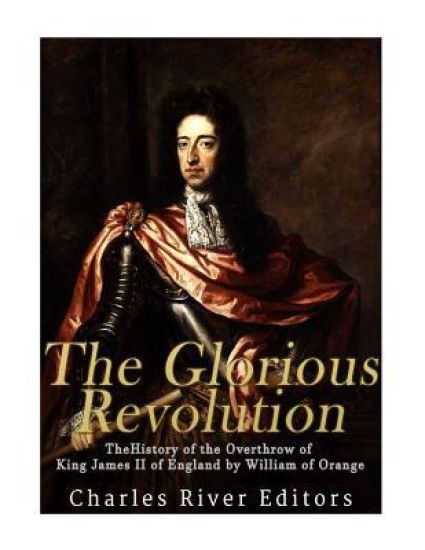
*Includes pictures *Includes quotes and accounts from people involved *Includes online resources and a bibliography *Includes a table of contents "We have great reason to believe, we shall be every day in a worse condition than we are, and less able to defend ourselves, and therefore we do earnestly wish we might be so happy as to find a remedy before it be too late for us to contribute to our own deliverance ... the people are so generally dissatisfied with the present conduct of the government, in relation to their religion, liberties and properties (all which have been greatly invaded), and they are in such expectation of their prospects being daily worse, that your Highness may be assured, there are nineteen parts of twenty of the people throughout the kingdom, who are desirous of a change; and who, we believe, would willingly contribute to it, if they had such a protection to countenance their rising, as would secure them from being destroyed. - Excerpt from the invitation by The Seven to William of Orange to become monarch 17th century Europe, particularly its latter years, is often hailed as the beginning of the Enlightenment as nations across the continent experienced a surge in innovation and scientific progress, a period also commonly referred to as the Age of Reason. There was English natural philosopher, Francis Bacon, whose book Novum Organum challenged Aristotelian philosophy and stressed the significance of inductive reasoning. Bacon's ideas, which emphasized observation and the implementation of various premises to form conclusions, was later referenced by famed French mathematician Ren Descartes. The Enlightenment had been awakened by the European Age of Discovery, a transformative era that succeeded the Medieval Years of Yore, but the continent was also a seedbed of insurrection, holy wars, and volatility. People were growing weary of the unpredictable system of monarchy, a post that was inherited only by members of an exclusive bloodline or connection, one that often muted the voices of the people. Time and time again, grossly incompetent and seemingly diabolic rulers had come to power through the rigged regal system. The Glorious Revolution is an intriguing story of a power war exacerbated by ruthless ambition, under-the-table plotting, and the treachery of familial betrayal. In 1678, a sinister scheme to assassinate King Charles II was unearthed, sending the public into a frenzy of mass panic. Fingers were pointed at the Catholics, who had been accused of concocting the elaborate conspiracy, and this very event would intensify the white-hot flames of the Anti-Catholic hysteria that was already running unchecked within the nation. 7 years later, the openly Catholic King James II rose to the throne, and needless to say, the largely Protestant public was anything but pleased. As the people slowly turned against him, the king's daughter, Mary, and her husband, William of Orange, watched across the English Channel from a distance. The people were begging for change in a broken system, and something drastic had to and would be done. The Glorious Revolution: The History of the Overthrow of King James II of England by William of Orange explores the story of an English kingdom in turmoil, and how one king's overly ambitious quest led to his undoing. It also tells the story of how the aspiring monarchs achieved their prize in this "Bloodless Revolution" with a political game of cat and mouse, assisted along the way by secret plotting, persistence, and betrayal in order to forever change the course of history. Along with pictures depicting important people, places, and events, you will learn about the Glorious Revolution like never before.
*Includes pictures *Includes quotes and accounts from people involved *Includes online resources and a bibliography *Includes a table of contents "We have great reason to believe, we shall be every day in a worse condition than we are, and less able to defend ourselves, and therefore we do earnestly wish we might be so happy as to find a remedy before it be too late for us to contribute to our own deliverance ... the people are so generally dissatisfied with the present conduct of the government, in relation to their religion, liberties and properties (all which have been greatly invaded), and they are in such expectation of their prospects being daily worse, that your Highness may be assured, there are nineteen parts of twenty of the people throughout the kingdom, who are desirous of a change; and who, we believe, would willingly contribute to it, if they had such a protection to countenance their rising, as would secure them from being destroyed. - Excerpt from the invitation by The Seven to William of Orange to become monarch 17th century Europe, particularly its latter years, is often hailed as the beginning of the Enlightenment as nations across the continent experienced a surge in innovation and scientific progress, a period also commonly referred to as the Age of Reason. There was English natural philosopher, Francis Bacon, whose book Novum Organum challenged Aristotelian philosophy and stressed the significance of inductive reasoning. Bacon's ideas, which emphasized observation and the implementation of various premises to form conclusions, was later referenced by famed French mathematician Ren Descartes. The Enlightenment had been awakened by the European Age of Discovery, a transformative era that succeeded the Medieval Years of Yore, but the continent was also a seedbed of insurrection, holy wars, and volatility. People were growing weary of the unpredictable system of monarchy, a post that was inherited only by members of an exclusive bloodline or connection, one that often muted the voices of the people. Time and time again, grossly incompetent and seemingly diabolic rulers had come to power through the rigged regal system. The Glorious Revolution is an intriguing story of a power war exacerbated by ruthless ambition, under-the-table plotting, and the treachery of familial betrayal. In 1678, a sinister scheme to assassinate King Charles II was unearthed, sending the public into a frenzy of mass panic. Fingers were pointed at the Catholics, who had been accused of concocting the elaborate conspiracy, and this very event would intensify the white-hot flames of the Anti-Catholic hysteria that was already running unchecked within the nation. 7 years later, the openly Catholic King James II rose to the throne, and needless to say, the largely Protestant public was anything but pleased. As the people slowly turned against him, the king's daughter, Mary, and her husband, William of Orange, watched across the English Channel from a distance. The people were begging for change in a broken system, and something drastic had to and would be done. The Glorious Revolution: The History of the Overthrow of King James II of England by William of Orange explores the story of an English kingdom in turmoil, and how one king's overly ambitious quest led to his undoing. It also tells the story of how the aspiring monarchs achieved their prize in this "Bloodless Revolution" with a political game of cat and mouse, assisted along the way by secret plotting, persistence, and betrayal in order to forever change the course of history. Along with pictures depicting important people, places, and events, you will learn about the Glorious Revolution like never before.
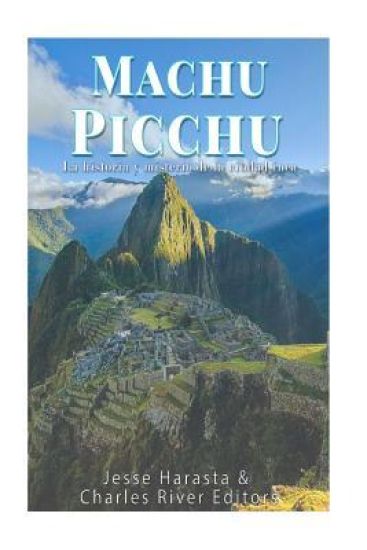
En 1911, el historiador estadounidense Hiram Bingham public el hallazgo de lo que en aquel momento era considerado una "ciudad perdida" inca. Aunque los habitantes locales ya la conoc an desde hac a un siglo, Bingham document y fotografi las ruinas de un asentamiento del siglo XV establecido a lo largo de una cresta monta osa sobre el valle de Urubamba en Per , colocado tan perfectamente desde un punto de vista defensivo que se cree que los espa oles nunca lo conquistaron y puede que nunca lo conocieran. Hoy en d a, por supuesto, Machu Picchu es uno de los mejores puntos tur sticos de Am rica del Sur, y las ruinas han sido incluso votadas como una de las Siete Nuevas Maravillas del Mundo. Pero a pesar de que Machu Picchu es ahora la m s conocida de todas las ruinas incas, su funci n en la civilizaci n inca a n no est clara. Algunos han especulado que era un puesto de avanzada o una ciudadela fronteriza, mientras que otros creen que es un santuario o un centro de trabajo para las mujeres. Otros sugieren que era un centro ceremonial o tal vez el ltimo refugio de los incas despu s de la conquista espa ola. Una de las teor as a tener en cuenta es que Machu Picchu era la vivienda de verano de la corte real de los incas, la versi n inca de Versalles. Como sucedi con el cambio de nombre de las ruinas mayas y aztecas, los nombres dados a diversas estructuras por los arque logos son puramente imaginarios y por lo tanto no muy tiles; por ejemplo, el mausoleo, el palacio o la torre de vigilancia en Machu Picchu puede que no hubieran sido nada de eso. Lo que est claro en Machu Picchu es que el plan urbano y las t cnicas de construcci n empleadas segu an a los de otros asentamientos incas, particularmente la capital de Cuzco. La ubicaci n de las plazas y el uso inteligente de las irregularidades de la tierra, junto con la est tica muy desarrollada involucrada en el trabajo de mamposter a, sigui el modelo de la capital inca. En Machu Picchu, la t pica t cnica inca de ensamblar meticulosamente la siller a y crear muros de bloques sin un material aglutinante es sorprendente. A veces los bloques son cuadrados uniformemente y algunas veces son de forma variable. En este ltimo caso, la conexi n muy estrecha entre los bloques de piedra parece bastante notable. A n m s asombroso que el corte de piedra preciso de los incas es el m todo que utilizaron para el transporte y movimiento de estos bloques enormes. Los incas no ten an la rueda, as que todo el trabajo se realiz usando rodillos y palancas. Machu Picchu: la historia y el misterio de la ciudad inca cubre de manera integral la historia de la ciudad, as como la especulaci n sobre el prop sito de Machu Picchu y el debate sobre los edificios. Junto con im genes y una bibliograf a, aprender s sobre Machu Picchu como nunca antes, en nada de tiempo.
"Y fue el t rmino de los cananeos desde Sid n, en direcci n a Gerar hasta Gaza; en direcci n de Sodoma y Gomorra, Adma, y Zeboim, hasta Lasa." - G nesis 10,19 "Y queda dicho: Os sacar de la aflicci n de Egipto, a la tierra de los cananeos, heteos, amorreos, fereceos, heveos y jebuseos, a una tierra que mana leche y miel." - xodo 3,17 "Y cuando el SE OR tu Dios te los haya entregado, y t los hayas derrotado, y destruido por completo; no har s pacto con ellos, ni les mostrar s compasi n..." - Deuteronomio 7,2 Las personas que deciden estudiar el Antiguo Testamento de la Biblia, en principio se enfrentan a la dificultad de identificar a los distintos pueblos que los hebreos conocieron, y con los que en ocasiones estuvieron en conflicto cuando entraron al territorio que con el tiempo se convirti en Israel. Los moabitas y los edomitas eran s lo dos de los muchos grupos cananeos con los que trataron los hebreos, a menudo violentamente, pero hubo docenas de otros grupos cananeos que fueron identificados en su mayor a a trav s de los nombres de sus respectivas ciudades. De hecho, antes de que los hebreos establecieran un reino y antes de que los fenicios colonizaran gran parte del Mediterr neo, los cananeos fueron el grupo m s importante en el Levante desde buena parte de la Edad de Bronce hasta principios de la Edad de Hierro. Aunque los cananeos nunca crearon un estado-naci n unificado o un reino, su importancia en al antiguo Pr ximo Oriente no puede ser subestimada. Los cananeos fueron incapaces de resistir a sus vecinos m s grandes y poderosos; a ello se debe en parte que hoy por hoy las personas en general conozcan tan poco acerca de su historia, pero los estudios modernos han revelado que ellos desarrollaron una religi n nica que influenci a los pueblos no-cananeos, y continu siendo practicada de alguna manera siglos despu s de que los cananeos dejaron de ser identificados como pueblo. M s a n, durante el apogeo de la Edad de Bronce, los cananeos no s lo proporcionaron importantes recursos a los imperios egipcio e hitita, tambi n jugaron un papel clave en el ajedrez geopol tico de los dos reinos. No hay ni que decir que los cananeos fueron tambi n un factor en el establecimiento del reino de Israel, cuando las batallas que perdieron m s tarde ante los hebreos significaron la fundaci n del reino jud o. Los antiguos cananeos: la historia de las civilizaciones que vivieron en Canaan antes de los israelitas, examina a los distintos grupos y su impacto tanto en la regi n como en las culturas que siguieron. Junto con ilustraciones que muestran personajes, lugares y eventos importantes, usted aprender sobre los cananeos como nunca antes.
No era un hombre que poseyera una gran cultura, pero sab a como utilizar el sentimiento de su epoca, lo cual es una forma sutil de decir que era un avezado aventurero. Ten a aire presidencial. Le encantaba lucirse de cualquier forma posible. Santa Anna era "El aguila" - nombre que puso a su autobiograf a - en m s de un sentido: el guila es el animal que destaca en el centro de la bandera de Mexico, devorando una serpiente, s mbolo del enemigo que profana el suelo nacional. Pero mas veces de lo que el esperaba cayo en desgracia, sufrio la ingratitud de sus compatriotas y solo por suerte se salvo de ser linchado o fusilado: su fortuna fue, como en el poema del siglo XIII Carmina Burana, variable como la luna. Sin duda, Santa Anna merece un juicio m s objetivo que el de la historia oficial. Por sus pecados pago, en parte viviendo demasiado tiempo, hasta ser una figura prehistorica. Hubiera sido mejor para su reputacion de haber partido antes. Como pocas personas del continente americano, su vida es digna de ser le da. En ella hay de todo: gloria, tragedia, intriga, amor, destierro y olvido. Esta es la vida de Antonio Lopez de Santa Anna, uno de los hombres mas extraordinarios e influyentes del siglo XIX, pero ante todo un enamorado de cierta doncella a la que siempre quiso seducir: Mexico.
*Includes pictures*Includes ancient accounts of the Old Kingdom*Includes online resources and a bibliography for further reading Africa may have given rise to the first human beings, and Egypt probably gave rise to the first great civilizations, which continue to fascinate modern societies across the globe nearly 5,000 years later. From the Library and Lighthouse of Alexandria to the Great Pyramid at Giza, the Ancient Egyptians produced several wonders of the world, revolutionized architecture and construction, created some of the world's first systems of mathematics and medicine, and established language and art that spread across the known world. With world-famous leaders like King Tut and Cleopatra, it's no wonder that today's world has so many Egyptologists. What makes the accomplishments of the Ancient Egyptians all the more remarkable is that Egypt was historically a place of great political turbulence. Its position made it both valuable and vulnerable to tribes across the Mediterranean and the Middle East, and Ancient Egypt had no shortage of its own internecine warfare. Its most famous conquerors would come from Europe, with Alexander the Great laying the groundwork for the Hellenic Ptolemy line and the Romans extinguishing that line after defeating Cleopatra and driving her to suicide. Perhaps the most intriguing aspect of ancient Egyptian civilization was its inception from the ground up, as the ancient Egyptians had no prior civilization which they could use as a template. In fact, ancient Egypt itself became a template for the civilizations that followed. The Greeks and the Romans were so impressed with Egyptian culture that they often attributed many attributes of their own culture - usually erroneously - to the Egyptians. With that said, some minor elements of ancient Egyptian culture were, indeed, passed on to later civilizations. Egyptian statuary appears to have had an initial influence on the Greek version, and the ancient Egyptian language continued long after the pharaonic period in the form of the Coptic language. Although the Egyptians may not have passed their civilization directly on to later peoples, the key elements that comprised Egyptian civilization - their religion, early ideas of state, and art and architecture - can be seen in other pre-modern civilizations. For instance, civilizations far separated in time and space - such as China and Mesoamerica - possessed key elements that were similar to those found in ancient Egypt. Indeed, since Egyptian civilization represented some fundamental human concepts, a study of pharaonic culture can be useful when trying to understand many other pre-modern cultures. Thus, anyone who reads about ancient Egyptian civilization in this regard is best served by looking at its earliest phases: the Early Dynastic Period and the Old Kingdom. By examining the Old Kingdom and the period immediately preceding it, attributes considered quintessentially "Egyptian" in later periods will become clearer. The Old Kingdom of Ancient Egypt: The History and Legacy of the Beginning of Egyptian Civilization chronicles the tumultuous history that ushered in the beginning of Ancient Egyptian civilization. Along with pictures depicting important people, places, and events, you will learn about the Old Kingdom like never before.
*Includes pictures of Chichen Itza's ruins and art. *Explains the history of the site and the theories about its purpose and abandonment. *Describes the layout of Chichen Itza, its important structures, and the theories about the buildings' uses. *Includes a bibliography for further reading. Many ancient civilizations have influenced and inspired people in the 21st century, like the Greeks and the Romans, but of all the world's civilizations, none have intrigued people more than the Mayans, whose culture, astronomy, language, and mysterious disappearance all continue to captivate people. At the heart of the fascination is the most visited and the most spectacular of Late Classic Maya cities: Chichen Itza. Chichen Itza was inhabited for hundreds of years and was a very influential center in the later years of Maya civilization. At its height, Chichen Itza may have had over 30,000 inhabitants, and with a spectacular pyramid, enormous ball court, observatory and several temples, the builders of this city exceeded even those at Uxmal in developing the use of columns and exterior relief decoration. Of particular interest at Chichen Itza is the sacred cenote, a sinkhole was a focus for Maya rituals around water. Because adequate supplies of water, which rarely collected on the surface of the limestone based Yucatan, were essential for adequate agricultural production, the Maya here considered it of primary importance. Underwater archaeology carried out in the cenote at Chichen Itza revealed that offerings to the Maya rain deity Chaac (which may have included people) were tossed into the sinkhole. Although Chichen Itza was around for hundreds of years, it had a relatively short period of dominance in the region, lasting from about 800-950 A. D. Today, tourists are taken by guides to a building called the Nunnery for no good reason other than the small rooms reminded the Spaniards of a nunnery back home. Similarly the great pyramid at Chichen Itza is designated El Castillo ("The Castle"), which it almost certainly was not, while the observatory is called El Caracol ("The Snail") for its spiral staircase. Of course, the actual names for these places were lost as the great Maya cities began to lose their populations, one by one. Chichen Itza was partially abandoned in 948, and the culture of the Maya survived in a disorganized way until it was revived at Mayap n around 1200. Why Maya cities were abandoned and left to be overgrown by the jungle is a puzzle that intrigues people around the world today, especially those who have a penchant for speculating on lost civilizations. Chichen Itza: The History and Mystery of the Maya's Most Famous City comprehensively covers the history of the city, as well as the speculation surrounding the purpose of Chichen Itza and the debate over the buildings. Along with pictures and a bibliography, you will learn about the Maya's most famous city like you never have before, in no time at all.
*Includes pictures *Includes contemporary accounts *Includes online resources and a bibliography for further reading "The Anglo-Saxon charms... are of outstanding importance because they provide more than vague references of exceptional and short texts. They cannot be said to reveal everything, for there are numerous points in which they lamentably fail us, but they are numerous enough and, taken as a body, complete enough to give more than a tantalising hint of a strange world. The veil of mystification enveloping magic appears to be thin and transparent here." - G. Storms, Anglo-Saxon Magic (1948) London is one of the great cities of Europe, a center of commerce, art, and science for more almost 2,000 years. Visitors today are treated to world-class museums, pulsing nightlife, and fine dining. But one does not have to search far beyond this prosperous and modern fa ade to glimpse an older, and more unusual, London; in fact, everywhere one looks, ancient traditions and old patterns emerge. Pagan figures peer down from pub walls, ghosts allegedly haunt major tourist sites, and strange customs continue in places of supposedly Christian worship. London was founded by the Romans shortly after an invasion led during the reign of Emperor Claudius in 43 CE. The site chosen was the north bank of the River Thames, close to a good ford. The Romans called the capital of their new province of Britannia "Londinium," derived from Celtic word "lond," meaning "wild," after the untouched states of the land. However, archaeology and folklore make clear that the land wasn't entirely uninhabited. Londinium was already a sacred site for the Celts, and several swords and pieces of armor have been dredged up from the Thames, thrown there as offerings by Druids. Also, two of the city's major religious centers, Westminster Abbey and St. Paul's Cathedral, were Celtic sacred sites. The last major Celtic resistance against the invaders came in 60 CE, when Boudicca, the female leader of the Iceni, gathered the tribes together and laid waste to Verulamium (modern St. Albans) and other Roman settlements before marching on Londinium. She burned and looted the city, but the Romans soon rallied and amassed their disciplined legions against her. The two armies met at an area near King's Cross station known to later generations as Battlebridge. The Romans crushed the Celtic army and the warrior queen poisoned herself rather than be led away in chains. Legend has it that she is buried below platform seven of King's Cross Station. Given its ancient past, it's no surprise London is so steeped in history and tradition, filled with prehistoric ruins, majestic castles, and a countryside sculpted from millennia of human habitation. Its rolling countryside is dotted with prehistoric burial mounds and stone circles. Brooding castles hold tales of bloodshed and honor. Medieval churches have elaborate stained glass windows and gruesome carvings, reflecting a mixture of hope and darkness. Every hamlet and village has tales that go back centuries, and folk festivals with roots in pagan times. London is built upon mystery, and what follows are only a few, because recounting them all would require an entire library. Mysterious London is part of an ongoing series by Sean McLachlan and Charles River Editors that covers the mysteries and oddities of the world, including titles like Mysterious England, The Weird Wild West, Weird West Coast, Mysteries of the South, and Mysterious New England, and Weird Scotland. This book offers a sampling of strange, unexplained, and just plain odd stories from London that have fascinated people in and around the city for centuries. Along with pictures of important people, places, and events, you will learn about Mysterious London like never before.
*Includes pictures *Includes Santa Anna's quotes about his own life *Includes a bibliography for further reading "Texas, to be respected must be polite. Santa Anna living, can be of incalculable benefit to Texas; Santa Anna dead, would just be another dead Mexican." - Sam Houston The butcher of the Alamo and Goliad. The traitor who sold half of Mexico. The Napoleon of the West. Mr. Fifteen Nails. The Mother Country's seducer. Almost 150 years after his death, a lot of name-calling is still being directed towards Antonio L pez de Santa Anna, president of Mexico 11 times in the 19th century, and today, the vast majority of his compatriots consider him the greatest traitor in history. It was not like that in his day; actually, there had never been a more popular man in Mexico, or anyone more eulogized and essential than General Santa Anna. In life he was the most famous - and at intervals most infamous - Mexican general and politician. Justo Sierra, the eminent writer and historian who watched him when he was a child, wrote that the masses came to regard him as a Messiah: "The people had a vague confidence that he could do miracles." Sierra wrote that Santa Anna was "the indispensable man, the man for our times of crisis, our deus ex machina." The political factions that rose against him and sent him into exile, a couple of years later were knocking at his door begging him to come back when the nation was coming apart at its seams. Then Santa Anna returned to Mexico, and he seduced her, united the people, and formed armies out of thin air to fight the new threats to the motherland: Spain, France, and the United States. At the same time, just as there are men who embody all the nation s virtues - like Benito Ju rez in Mexico or Abraham Lincoln in the United States - the Mexicans have, according to their official history, a villain by decree, guilty of all the evils except maybe the earthquakes. The most serious accusation is that Santa Anna let go half of Mexico s territory to the United States. "Me? Selling half of Mexico?" says the General in Enrique Serna s brilliant novel, The Mother Country s Seducer. "For Christ s sake When will these childish Mexicans learn that if this ship sank, it was not the helmsman's fault only, but the laziness and ineptitude of the oarsmen? Like all human beings, I have committed mistakes, and some had dire consequences. But from there to the monstrosity they want to blame me for, there is an abyss." The general was not a man of much learning, but he knew how to use the sentiment of the time, which is merely a way of saying that he was a skillful adventurer. He had the air for the office and loved all forms of display. Santa Anna was "The Eagle" - the title of his autobiography - in more than one sense: the eagle is the animal that stands out in the center of the Mexican flag, devouring a snake, the symbol of the enemy that desecrates the national soil. But more often than not he fell in disgrace, suffered the ingratitude of his people, and only by sheer luck was saved several times from being shot. His fortune always was, as so eloquently put in the 13th century poem Carmina Burana, changeable like the moon. Santa Anna deserves a more objective judgment than that of official history. For his sins, he certainly paid, in part by living long past his time. It certainly would have been better for his reputation if he had gone sooner. But either way, his life story is more interesting than all but a select few, and it includes a little bit of everything, including glory, tragedy, intrigue, love, exile, and oblivion. Santa Anna: The Life and Legacy of the Legendary Mexican President and General looks at one of Mexico's most important figures. Along with pictures of important people, places, and events, you will learn about Santa Anna like never before.
*Includes pictures *Includes Santa Anna's quotes about his own life *Includes a bibliography for further reading "Texas, to be respected must be polite. Santa Anna living, can be of incalculable benefit to Texas; Santa Anna dead, would just be another dead Mexican." - Sam Houston The butcher of the Alamo and Goliad. The traitor who sold half of Mexico. The Napoleon of the West. Mr. Fifteen Nails. The Mother Country's seducer. Almost 150 years after his death, a lot of name-calling is still being directed towards Antonio L pez de Santa Anna, president of Mexico 11 times in the 19th century, and today, the vast majority of his compatriots consider him the greatest traitor in history. It was not like that in his day; actually, there had never been a more popular man in Mexico, or anyone more eulogized and essential than General Santa Anna. In life he was the most famous - and at intervals most infamous - Mexican general and politician. Justo Sierra, the eminent writer and historian who watched him when he was a child, wrote that the masses came to regard him as a Messiah: "The people had a vague confidence that he could do miracles." Sierra wrote that Santa Anna was "the indispensable man, the man for our times of crisis, our deus ex machina." The political factions that rose against him and sent him into exile, a couple of years later were knocking at his door begging him to come back when the nation was coming apart at its seams. Then Santa Anna returned to Mexico, and he seduced her, united the people, and formed armies out of thin air to fight the new threats to the motherland: Spain, France, and the United States. At the same time, just as there are men who embody all the nation s virtues - like Benito Ju rez in Mexico or Abraham Lincoln in the United States - the Mexicans have, according to their official history, a villain by decree, guilty of all the evils except maybe the earthquakes. The most serious accusation is that Santa Anna let go half of Mexico s territory to the United States. "Me? Selling half of Mexico?" says the General in Enrique Serna s brilliant novel, The Mother Country s Seducer. "For Christ s sake When will these childish Mexicans learn that if this ship sank, it was not the helmsman's fault only, but the laziness and ineptitude of the oarsmen? Like all human beings, I have committed mistakes, and some had dire consequences. But from there to the monstrosity they want to blame me for, there is an abyss." The general was not a man of much learning, but he knew how to use the sentiment of the time, which is merely a way of saying that he was a skillful adventurer. He had the air for the office and loved all forms of display. Santa Anna was "The Eagle" - the title of his autobiography - in more than one sense: the eagle is the animal that stands out in the center of the Mexican flag, devouring a snake, the symbol of the enemy that desecrates the national soil. But more often than not he fell in disgrace, suffered the ingratitude of his people, and only by sheer luck was saved several times from being shot. His fortune always was, as so eloquently put in the 13th century poem Carmina Burana, changeable like the moon. Santa Anna deserves a more objective judgment than that of official history. For his sins, he certainly paid, in part by living long past his time. It certainly would have been better for his reputation if he had gone sooner. But either way, his life story is more interesting than all but a select few, and it includes a little bit of everything, including glory, tragedy, intrigue, love, exile, and oblivion. Santa Anna: The Life and Legacy of the Legendary Mexican President and General looks at one of Mexico's most important figures. Along with pictures of important people, places, and events, you will learn about Santa Anna like never before.