Kirjojen hintavertailu – 12 903 725 kirjaa ja 27 kauppaa
Kirjailija
Charles River
Kirjat ja teokset yhdessä paikassa: 4 673 kirjaa, julkaisuja vuosilta 2013–2022, suosituimpiin kuuluu William Powell and Myrna Loy: The Lives and Careers of One of Classical Hollywood's Most Iconic Duos. Vertaile teosten hintoja ja tarkista saatavuus suomalaisista kirjakaupoista.
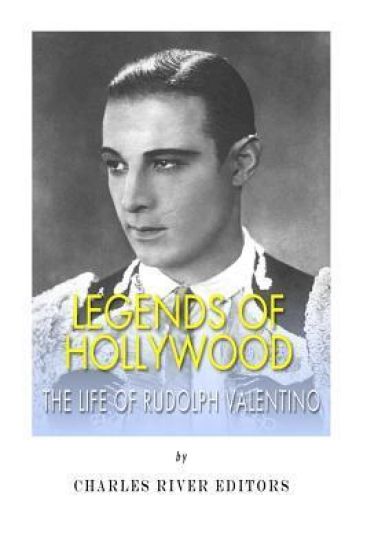
*Includes pictures *Includes a bibliography for further reading "A man should control his life. Mine is controlling me." - Rudolph Valentino Everything about Rudolph Valentino, from his body to the characters he played, was exotic. His career may have been abbreviated by his premature death at the age of 31, but Valentino popularized the (somewhat racist) stereotype of the "Latin lover" in Hollywood, and even his name was markedly more out of the ordinary than those of other actors. In an era dominated by hyper-masculine actors like Douglas Fairbanks, or comedians such as Charlie Chaplin and Buster Keaton, Valentino had a more ethnic and mysterious appeal, and he was lusted after by women to a degree that remains unsurpassed in the industry. The extent to which he captivated America can be seen in the response to his death; after passing away from a perforated ulcer in 1926, Ashton Trice and Samuel Holland note that his funeral "was one of the pop culture events of the century," and devastated women are alleged to have committed suicide out of heartbreak. If Valentino's public persona was exotic, his personal life and background were no less fantastic, to the extent that it rivaled the improbable narratives of his movies. While he was identified as a Latin American in his films, Rudolph was actually born in Italy, the descendant of French and Italian heritage. The circuitous path that saw him reach the United States, and subsequently the film industry, is replete with outrageous good fortune. Even at an early age, Valentino was a dreamer, but there was no way that he could have anticipated the level of success he would achieve not long after landing in Ellis Island in the winter of 1913. Rudolph Valentino's skill as an actor is not always recognized in discussions about the famous star, but his acting style and cultural importance were quite influential. It's particularly important to take note because Valentino represented a turn toward a masculinity that was softer and, in a sense, more effete than that of his peers. There is no possibility of fully uncovering the mystique of Valentino, but his reputation had a dramatic effect on Hollywood moving forward. Legends of Hollywood: The Life of Rudolph Valentino examines the life and career of one of Hollywood's biggest stars of the 1920s. Along with pictures of important people, places, and events, you will learn about Rudolph Valentino like never before, in no time at all.
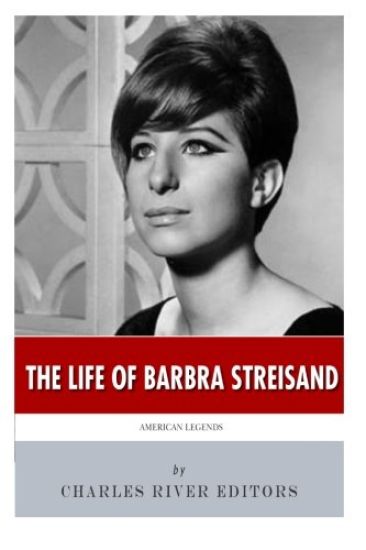
*Includes pictures*Includes Streisand's quotes about her life and career*Includes a bibliography for further reading"I was a personality before I became a person - I am simple, complex, generous, selfish, unattractive, beautiful, lazy and driven." - Barbra Streisand"I arrived in Hollywood without having my nose fixed, my teeth capped, or my name changed. That is very gratifying to me." - Barbra StreisandA lot of ink has been spilled covering the lives of history's most influential figures, but how much of the forest is lost for the trees? In Charles River Editors' American Legends series, readers can get caught up to speed on the lives of America's most important men and women in the time it takes to finish a commute, while learning interesting facts long forgotten or never known. It should come as no surprise that Barbra Streisand allegedly once declared that she never had any idols as a child, because given how unusual her career has been, it's hard to determine who might have served as her inspiration (Mann). And as the star once put it herself, "I guess if you have an original take on life, or something about you is original, you don't have to study people who came before you. You don't have to mimic anybody. You just have a gut feeling inside, an instinct that tells you what's right for you, and you can't do it in any other way." To be sure, strong-willed women had populated both cinema and popular culture before Streisand, like Katharine Hepburn and Joan Crawford, but Streisand was unique in her ability to appeal to diverse groups in America. She also arrived at a time when acting roles for women were generally less flexible than they would become by the end of the century, and making her story all the more compelling is that Streisand never met conventional standards of American beauty or acting style, leading biographer William Mann to declare that "Barbra had to believe she was special since no one else did." Clearly, there is no denying that if Barbra Streisand possesses considerable talents as a singer and actress, both supported by unshakeable confidence, yet there are also ways in which Streisand has always been insecure, a quality that Stacy Wolf noted when she wrote, "Streisand is gossiped about...as an egomaniacal, control-freak perfectionist on the set (particularly when directing) and as a frail, anxious slip of a girl who solicits opinions from anyone and everyone and still longs for conventional beauty and the approval of a father who died when she was still a small child." As a result, there is an apparent contradiction between Streisand's unbounded confidence and her persistent need to receive praise from others. She may be bold enough to resist fashioning her image in ways that emulate her predecessors, but it's just as necessary to acknowledge that she was prone to the stresses of anxiety. Any complete portrait of the famous star must reconcile the two poles of Streisand, with Streisand the fearless individualist and Streisand the nervous performer forever joined at the hip. American Legends: The Life of Barbra Streisand explores her life and career, and the way in which her confidence and fragility shaped both. As a star who has succeeded in music and film, Streisand's singing and film acting are discussed in detail, all with an eye toward explaining the cultural importance of a singer whose voice Glenn Gould referred to as "one of the natural wonders of the age." Along with pictures of important people, places, and events, you will learn about Barbra Streisand like never before, in no time at all.
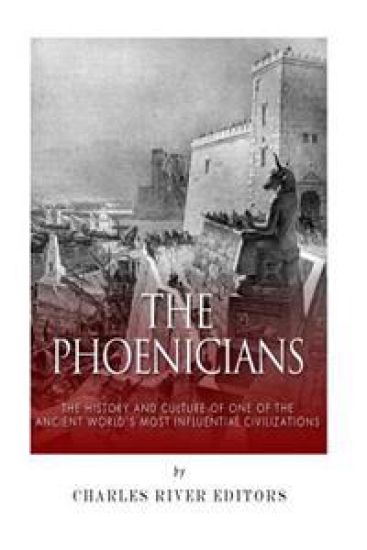
*Includes pictures *Includes ancient accounts describing the Phoenicians and their history, language, and culture. *Includes a bibliography for further reading "These people, who had formerly dwelt on the shores of the Erythraean Sea, having migrated to the Mediterranean and settled in the parts which they now inhabit, began at once, they say, to adventure on long voyages, freighting their vessels with the wares of Egypt and Assyria..." - Herodotus Of all the peoples of the ancient Near East, the Phoenicians are among the most recognizable but also perhaps the least understood. The Phoenicians never built an empire like the Egyptians and Assyrians; in fact, the Phoenicians never created a unified Phoenician state but instead existed as independent city-state kingdoms scattered throughout the Mediterranean region. However, despite the fact there was never a "Phoenician Empire," the Phoenicians proved to be more prolific in their exploration and colonization than any other peoples in world history until the Spanish during the Age of Discovery. The Phoenicians were well-known across different civilizations throughout the ancient world, and their influence can be felt across much of the West today because they are credited with inventing the forerunner to the Greek alphabet, from which the Latin alphabet was directly derived. Nonetheless, the Phoenicians left behind few written texts, so modern historians have been forced to reconstruct their past through a variety of ancient Egyptians, Assyrian, Babylonian, Greek, and Roman sources. It's not even clear what the Phoenicians called themselves, because the name "Phoenician" is derived from the Greek word "phoinix", which possibly relates to the dyes they produced and traded (Markoe 2000, 10). The mystery of the ancient Phoenicians is further compounded by the fact that archaeologists have only been able to excavate small sections of the three primary Phoenician cities: Byblos, Sidon, and Tyre. Despite the inherent problems in reconstructing Phoenician history, there are enough primary sources available to accurately place the Phoenician people in their proper historical context within the ancient Near East, and scholars have found that given their extensive exploration, colonization, trade, and manufacturing (among other things), the Phoenicians deserve to be considered alongside the other well-known peoples of antiquity. The Phoenicians: The History and Culture of One of the Ancient World's Most Influential Civilizations comprehensively covers the history, culture, and lingering mysteries behind the Phoenicians, profiling their origins and their lasting legacy.. Along with pictures of important people, places, and events, you will learn about the Phoenicians like never before, in no time at all.
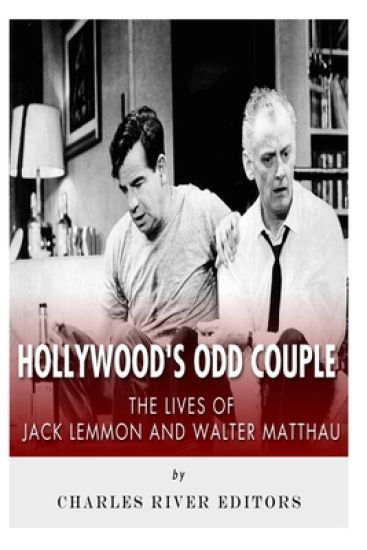
*Includes pictures *Includes the actors' quotes *Includes a bibliography for further reading "Every actor looks all his life for a part that will combine his talents with his personality...'The Odd Couple' was mine. That was the plutonium I needed. It all started happening after that." - Walter Matthau "It's hard enough to write a good drama, it's much harder to write a good comedy, and it's hardest of all to write a drama with comedy. Which is what life is." - Jack Lemmon Walter Matthau and Jack Lemmon are probably best remembered for their films together, but both were clearly established actors in Hollywood by the time they appeared in their first film together. The great film director Billy Wilder once noted of Jack Lemmon that Lemmon "was my everyman", and Lemmon did indeed represent a great everyman to American audiences during the latter half of the 20th century. For rich, poor, and working class audiences alike, Lemmon was an accessible leading male, someone certainly less stately than Cary Grant or Laurence Olivier and seemingly more approachable even than archetypal leading men such as Jimmy Stewart or Henry Fonda. Viewers may not have known Lemmon on a personal level, yet his easygoing demeanor made it easy for the American public to feel as if they knew Lemmon. His wide appeal is summarized nicely by Richard T. Stanley, who noted that he "had the personality and versatile talent to star in any era," and Lemmon became intimately associated with other famous figures of Hollywood, including Billy Wilder and Matthau. Before his movies with Lemmon, Matthau most often played shady criminals in dramatic films, and his character in Elia Kazan's A Face in the Crowd (1957) offers one of the best examples. Matthau's major breakthrough did not occur until 1965, when he starred in the stage production of The Odd Couple, which was later adapted into the film that might be the duo's best known movie together. In several of their movies, viewers witness all of the core elements of the Lemmon-Matthau dynamic. Lemmon plays the straight man to Matthau's shadier, conniving character, and a sharp contrast exists between the two: Lemmon is relatively short and conventionally handsome, while Matthau is far taller and appears far more clownish, and the contrast would grow starker as they aged and Matthau became rather stocky. Even though Lemmon is invariably tempted by Matthau's schemes, he denounces them at the conclusion but doesn't reject or condemn Matthau as a person. A romantic plot often develops between leading ladies and the two actors, but the chief relationship is usually between Lemmon and Matthau, whose comedic value as a team is greater than the sum of its parts. It is all the more noteworthy that while Lemmon and Matthau are often mentioned in the pantheon of legendary male comedy teams, they were not natural comics in the manner of Laurel and Hardy or Abbot and Costello. Instead, they became great comics when acting alongside their comic foil, and while it is Matthau who took primacy in The Fortune Cookie (he did win an Academy Award, after all), in The Odd Couple, Saul Austerlitz argues that the opposite occurs in the subsequent movie: "Matthau has the showier role as gruff, sloppy sportswriter Oscar Madison, but Lemmon steals the show as the prim... Felix Unger." In an act of homage toward their legendary partnership, Lemmon was buried near Matthau, who died about a year before Lemmon, and upon Matthau's death, Lemmon stated, "I have lost someone I loved as a brother, as a closest friend, and a remarkable human being. We have also lost one of the best damn actors we'll ever see." Lemmon may have put it even more aptly when he said, "Death ends a life, not a relationship." Hollywood's Odd Couple chronicles the lives, careers, and partnership between the two actors. Along with pictures and a bibliography, you will learn about Lemmon and Matthau like never before
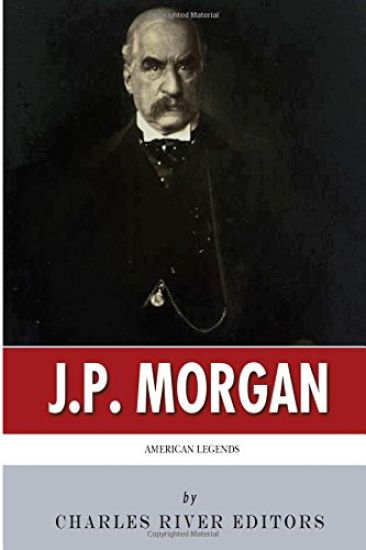
*Includes pictures *Includes some of Morgan's quotes *Includes a bibliography for further reading "Go as far as you can see; when you get there, you'll be able to see farther." - J. P. Morgan A lot of ink has been spilled covering the lives of history's most influential figures, but how much of the forest is lost for the trees? In Charles River Editors' American Legends series, readers can get caught up to speed on the lives of America's most important men and women in the time it takes to finish a commute, while learning interesting facts long forgotten or never known. The Gilded Age and the dawn of the 20th century are often remembered as an era full of monopolies, trusts, and economic giants in heavy industries like oil and steel. Men like Andrew Carnegie built empires like Carnegie Steel, John D. Rockefeller partnered with railroads to create an oil titan, and the era also made names like Astor, Cooke, Gould, and Vanderbilt instantly recognizable across the globe. Over time, the unfathomable wealth generated by the businesses made the individuals on top incredibly rich, and that in turn led to immense criticism and an infamous epithet used to rail against them: robber barons. Dozens of men were called "robber barons", but few were as notorious or rich as John Pierpont Morgan, a financier and banker who bankrolled the consolidation of behemoth corporations across various industries. Morgan was behind the merging of Edison General Electric and Thomson-Houston Electric Company, which subsequently became General Electric, still known simply as GE across the world today. Similarly, he financed Federal Steel Company and consolidated various other steel businesses to help form the United States Steel Corporation. While critics complained about the outsized influence that these gigantic businesses had, Morgan's massive wealth also gave him unprecedented power in the financial sector and the ability to deal with politicians. In fact, Morgan played an important part in the Panic of 1907 and the subsequent decision to create the Federal Reserve as a monetary oversight. The industrial might wielded by men like Morgan directly led to a public backlash and made President Teddy Roosevelt the "trust buster", and there has since been countless regulations to attempt to avoid the types of monopolies found over 100 years ago. However, many 20th century historians and writers pushed back against the allegations hurled at the "robber barons" and even took issue with the name. Morgan may have used his wealth to collect everything from jewelry to yachts, but he was also celebrated for spending enormous sums of money on charitable works and public service projects. As a result, Morgan's reputation is still mixed, even as his legacy is felt over 100 years after his death. American Legends: The Life of J. P. Morgan looks at the life and career of one of America's most famous industrialists. Along with pictures of important people, places, and events, you will learn about J. P. Morgan like never before, in no time at all.
*Includes pictures *Includes the men's quotes own quotes about their lives and careers *Includes a transcript of Abbott & Costello's "Who's on First?" *Includes a bibliography for further reading By the 1920s, English comic Stan Laurel had been in dozens of films and American Oliver Hardy had appeared in hundreds, but it was not until they formed a duo together in 1926 that they began to truly be noticed. Once they did, however, Laurel & Hardy became one of the most famous comedy teams in American history, with a career that spanned 4 decades and included over 100 combined shorts and feature films. Even today, nearly 60 years after their last performances together, Laurel & Hardy are still popular, alongside legends like The Three Stooges and Abbott & Costello, and their routines are still watched across the globe. Perhaps most importantly, Laurel & Hardy were forerunners of slapstick comedy and thus influenced those that followed. Their complementary styles of slapstick humor, with the thin, childish Laurel acting as a foil for the overweight and overly pompous Hardy, offered a template for others to follow, and the duo established several famous gags that other acts like the Stooges subsequently mimicked. For example, when Laurel occasionally came up with a smart idea, something completely out of character, the surprised Hardy would ask him to repeat what he just said, and Laurel would be unable to replicate it. That theme would recur with Curly and the Stooges, and Laurel & Hardy's use of "D'oh " has been made even more famous by Homer Simpson in The Simpsons. Of course, the physical aspects of their slapstick, which often included destruction and mayhem, proved popular for them and several groups as well. Ironically, one of America's most famous comedy duos, and the performers of the country's most famous skit, came together in part because Lou Costello had already failed to cut it in the film industry. In fact, Costello had appeared in a Laurel & Hardy film in 1927 before meeting his partner, Bud Abbott, on the burlesque circuit in New York City. In fact, the two first performed together in 1935 only because Abbott filled in for Costello's usual partner, who happened to be ill one fateful day. Over time, Abbott & Costello perfected their routine, which typically consisted of Abbott playing the straight man while his dimwit partner acted foolishly and interrupted his plans. It was a shtick that also did well on radio, albeit one that required Costello to modify his voice with a higher pitch that not only differentiated his from Abbott but also made him sound appropriately dumber. By 1940, they were not only successful on the radio but also among America's most popular movie stars, a status they held almost consistently throughout the decade and into the early 1950s. The legendary comedy duo performed together for decades, and like similar acts, their popularity began to wane over time, but Abbott & Costello are still household names today. While all of their material is still in syndication and watched by many, they are best known today for "Who's on First", the famous routine in which Abbott's answers about the names of baseball players at various positions on the field sound like questions and completely confuse Costello. Although the skit was pieced together from various others, it was immortalized by Abbott & Costello and helped popularize not only the duo but some of their subsequent material. Laurel & Hardy and Abbott & Costello: America's Most Popular Comedy Duos examines the lives, careers, and comedy of the famous performers. Along with pictures and bibliographies, you'll learn about them like never before.
*Includes pictures *Discusses the debate and theories over the historical and religious nature of King Solomon's life, and the construction and operation of the temple *Compares the Bible to the historical record to trace the roots of Solomon's reign and temple *Includes a bibliography for further reading King Solomon is one of the most famous men in the Bible, but also one of the most elusive historical figures. He is credited with supervising the construction of the first Temple in Jerusalem, and excavations and archaeologists continue to dig in an effort to find it in places that are now religiously sensitive for Christians, Jews, and Muslims. Information about King Solomon comes almost exclusively from the book of Kings, occasionally supplemented by additional material found in the book of Chronicles. This is problematic for several reasons. First, the book of Kings does not simply record the actions of the king and the details of his reign for posterity; the author weaves a narrative that is often more concerned about making theological points rather than recording historical details. Moreover, the first edition of this book was written in the 6th century B. C. at the earliest, about four centuries after King Solomon would have lived, by an editor given the title of Deuteronomistic Historian. It is likely that this editor relied upon some type of royal "court history" as a source document. The temptation with a figure like Solomon can be to go to one of two extremes. Some readers may want to look at Solomon only as a historical figure without acknowledging the literary elements that play a big role in his life story. Other readers may find themselves at the other extreme and view Solomon entirely as a literary figure, dismissing any historicity at all from his story. Given how important he is as a religious figure, it's necessary to keep in mind both the literary and historical elements of the monarch's story. There was not any one entity more central to the Yahwistic Judean religion during the monarchy than the temple of Solomon. It symbolized the presence of YHWH in the nation, as well as his enduring protection of the nation and the Davidic royal throne. Judean worshippers directed their prayers toward the Solomonic temple, and eventually, the Judean prophets and theologians declared that this was the only legitimate location where priests could perform sacrifices and other religious rites for YHWH. Its significance can be seen most clearly in the dramatic cognitive dissonance experienced by the Judeans in Babylonian captivity after the destruction of the temple, which had been so central to their religious conception that they had great difficulty reconciling its destruction with their continued belief in YHWH at all. The Temple and the Biblical descriptions of it have fascinated people for centuries and led to all kinds of conjecture and imagination. In addition to countless works of art, Isaac Newton tried to make a model of it in his writings, and he wrote about the temple extensively. Even Freemasons give a nod to Solomon's Temple by calling their meeting places temples as well. That said, the Temple remains an enduring mystery due to conflicting accounts and descriptions of it in the Bible, and some scholars have even put forth theories that the structure was not originally designed to serve religious purposes in the first place. King Solomon and Temple of Solomon: The History of the Jewish King and His Temple discusses the history, mystery and controversy surrounding Solomon and the temple, examining the Bible and historical record in an attempt to separate fact from fiction. Along with pictures and a bibliography, you will learn about Solomon and Solomon's Temple like never before.
*Includes pictures *Explains Inca mythology and religious practices, including human sacrifices *Includes footnotes and a bibliography for further reading During the Age of Exploration, Native American tribes fell victim to European conquerors seeking legendary cities made of gold and other riches, attempts that were often being made in vain. And yet, of all the empires that were conquered across the continent, the one that continues to be most intimately associated with legends of gold and hidden riches is the Inca Empire. The Inca Empire, which flourished in modern day Peru and along the west coast of South America, was the largest Native American empire in pre-Columbian America until Pizarro and the Spanish conquistadors conquered them in the 16th century. What ultimately sealed their doom was the rumor that huge amounts of gold were available in regions south of the Andes Mountains. Though the Spanish physically conquered them in quick fashion, the culture and legacy of the Inca Empire has continued to endure throughout the centuries in both Europe and South America, due in no small part to the fact they were one of the most advanced and sophisticated cultures on the continent. Like the Aztecs, the Spanish burned much of the Inca's extant writings, but it is estimated that as many as 35 million people once fell under their banner, and the empire's administrative skills were so sharp that they kept accurate census records. Their religion, organization, and laws were also effectively centralized and tied to the rulers of the empire, and their military mobilization would have made the ancient Spartans proud. After the Spanish conquest, several rebellions in the area attempted to reestablish the proud Inca Empire over the next two centuries, all while famous Europeans like Voltaire glorified the Inca Empire in optimistic artistic portrayals. The Mythology and Religion of the Inca examines the history and legacy of the religion practiced by the famous Incan empire. Along with pictures and a bibliography, you will learn about the Inca's religion and mythology like you never have before, in no time at all.
*Includes pictures. *Includes accounts of the siege by citizens, soldiers and important generals. *Includes a bibliography for further reading. "The city is dead. There is no electricity, no trams. Warm rooms are rare. No water. Almost the only form of transport is sleds, carrying corpses in plain coffins, covered with rags or half clothed. Daily six to eight thousand die. The city is dying as it has lived for the last half year - clenching its teeth." - Nikolai Markevich's diary entry on January 24, 1942. The casualties inflicted on all sides during World War II nearly defy belief, and even today estimates of the number of dead differ by tens of millions of people. Amid all of the destruction and carnage, perhaps nothing symbolizes the war quite like the Siege of Leningrad, one of the longest sieges in history and by far the deadliest. When the Soviet-Nazi non-aggression pact of 1939 was broken by a German offensive against Russia, the surprised Red Army was quickly driven eastward away from the border with Poland, and Russian forces found themselves in a desperate attempt to defend major Russian cities from the Germany invaders. Leningrad, which had a population of roughly three million on the eve of the German attack, was one of the victims of the Russian unpreparedness, but once the siege began in the fall of 1941, the Soviets knew they were in a desperate struggle to the death. In fact, the Russians wouldn't have even been given a chance to surrender if they had wanted to, because the orders to the German forces instructed them to completely raze the city: "After the defeat of Soviet Russia there can be no interest in the continued existence of this large urban center... Following the city's encirclement, requests for surrender negotiations shall be denied, since the problem of relocating and feeding the population cannot and should not be solved by us. In this war for our very existence, we can have no interest in maintaining even a part of this very large urban population." The Russians managed to barely supply the encircled city through a small corridor of land that connected to Lake Ladoga, with transports crossing the lake when it froze over in winter. This euphemistically became known as the Road of Life, but the precarious conditions and the Luftwaffe also left many referring to it as the Road of Death. And even though the Nazis never managed to entirely cut off that supply route, during the nearly 900 day siege, which lasted from September 1941 - January 1944, at least 750,000 civilians starved to death, one out of every three or four members of the pre-siege population. The siege was so devastating that estimates of civilian dead from all causes were estimated at over a million. To put the massive death toll of the siege of Leningrad in perspective, roughly 35 times more civilians died at Leningrad than in the London Blitz, and 4 times more died than in the bombings of Nagasaki and Hiroshima combined. Of course, the civilians were hardly the only ones struggling around Leningrad during the siege, because soldiers on both sides had to deal with combat and terrible weather conditions over the course of nearly 28 months. By the time the siege was lifted, the Germans had suffered an estimated 1 million casualties, while the Soviets suffered an estimated 1 million dead or missing and over 2 million wounded. Not surprisingly, the city itself was a hollow shell of itself, with over 11,000 buildings destroyed and wreckage strewn everywhere. The Greatest Battles in History: The Siege of Leningrad comprehensively covers the entire military situation that led up to the siege, analyzes the decisions made by important leaders, and explains the aftermath of the Soviet victory. Along with a bibliography and pictures of important people and places, you will learn about the Siege of Leningrad like never before, in no time at all.
*Includes pictures *Includes Lemmon's own quotes *Includes a bibliography for further reading "It's hard enough to write a good drama, it's much harder to write a good comedy, and it's hardest of all to write a drama with comedy. Which is what life is." - Jack Lemmon A lot of ink has been spilled covering the lives of history's most influential figures, but how much of the forest is lost for the trees? In Charles River Editors' American Legends series, readers can get caught up to speed on the lives of America's most important men and women in the time it takes to finish a commute, while learning interesting facts long forgotten or never known. The great film director Billy Wilder once noted of Jack Lemmon that Lemmon "was my everyman", and Lemmon did indeed represent a great everyman to American audiences during the latter half of the 20th century. For rich, poor, and working class audiences alike, Lemmon was an accessible leading male, someone certainly less stately than Cary Grant or Laurence Olivier and seemingly more approachable even than archetypal leading men such as Jimmy Stewart or Henry Fonda. Viewers may not have known Lemmon on a personal level, yet his easygoing demeanor made it easy for the American public to feel as if they knew Lemmon. His wide appeal is summarized nicely by Richard T. Stanley, who noted that he "had the personality and versatile talent to star in any era," and Lemmon became intimately associated with other famous figures of Hollywood, including director Billy Wilder and actor Walter Matthau. If Lemmon's persona was that of the everyman, the actual narrative of his life tells a somewhat different story. In fact, he did not come from working-class roots but was instead raised in a wealthy family and educated only in the most exclusive institutions that many could buy, including exclusive prep schools and then Harvard University. Lemmon was an honorable citizen who served in the Navy, but he was also someone who benefitted from educational and economic opportunities that were unavailable to the vast majority of the country, and while he would never have reached the level of fame he attained without hard work, his life story does not reflect the upward mobility that can be seen in the biographies of many other famous actors. One could even argue that the miracle of his career is that someone from such wealth could manage to construct an everyman persona in the first place. In addition, while Lemmon was a master at shielding the darker aspects of his personal life, he experienced a great deal of adversity, from the separation of his parents to his struggles with alcoholism and the cancer that eventually took his life. Lemmon led a privileged life, but this biography examines these struggles as well as his triumphs in order to explicate the construction of his persona and the artistic and cultural implications of the life and career of this storied Hollywood actor. American Legends: The Life of Jack Lemmon chronicles the life and career of one of America's favorite actors. Along with pictures of important people, places, and events, you will learn about Jack Lemmon like never before, in no time at all.
*Includes pictures *Includes Rockefeller's own quotes about his life and career *Includes a bibliography for further reading "I believe it is a religious duty to get all the money you can, fairly and honestly; to keep all you can, and to give away all you can." - John D. Rockefeller, 1928 The Gilded Age and the dawn of the 20th century are often remembered as an era full of monopolies, trusts, and economic giants in heavy industries like oil and steel. Men like Andrew Carnegie built empires like Carnegie Steel, and financiers like J. P. Morgan merged and consolidated them. The era also made names like Astor, Cooke, and Vanderbilt instantly recognizable across the globe. Over time, the unfathomable wealth generated by the businesses made the individuals on top incredibly rich, and that in turn led to immense criticism and an infamous epithet used to rail against them: robber barons. Dozens of men were called "robber barons", but none were as notorious or rich as John D. Rockefeller, who co-founded Standard Oil and turned it into the first real trust in the United States. Rockefeller had been groomed ambitiously by a huckster father nicknamed "Devil Bill", who was just as willing to cheat his son as an unsuspecting public, and John certainly chased his dreams of living long and large. Rockefeller forged his empire in the first few decades of his life and nearly worked himself to death by the time he was 50, which helped compel him to retire for the last several decades of his life. At one point, Rockefeller's wealth was worth more than 1.5% of the entire country's gross domestic product, and by adjusting for inflation, he is arguably the richest man in American history if not world history. Rockefeller was often demonized for being greedy, and there's no question that he was a capitalist par excellence, if not an outright proponent of Social Darwinism. Rockefeller often asserted that growing a business "is merely a survival of the fittest," and he even bragged, "I have ways of making money that you know nothing of." To charges that he was making his riches off the backbreaking work of others, Rockefeller admitted, "I would rather earn 1% off 100 people's efforts than 100% of my own efforts." The industrial might wielded by men like Rockefeller directly led to a public backlash and made President Teddy Roosevelt the "trust buster", and there has since been countless regulations to attempt to avoid the types of monopolies found over 100 years ago. However, many 20th century historians and writers pushed back against the allegations hurled at the "robber barons" and even took issue with the name. Libertarian writer John Stossel argued, "They weren't robbers, because they didn't steal from anyone, and they weren't barons-they were born poor... Rockefeller got rich selling oil. First competitors and then the government called him a monopolist, but he wasn't. At the time he had well over a hundred competitors. No one was forced to buy his oil. Rockefeller enticed people to buy it by selling it for less. That's what his competitors hated. His finding cheaper ways to get oil from the ground to the gas pump made life better for millions. Working-class people, who used to go to bed when it got dark, could suddenly afford fuel for lanterns, so they could stay up and read at night. Rockefeller's greed might have even saved the whales, because when he lowered the price of kerosene and gasoline, he eliminated the need for whale oil. The mass slaughter of whales suddenly stopped." American Legends: The Life of John D. Rockefeller looks at the life and career of one of America's most famous industrialists and the leader of Standard Oil. Along with pictures of important people, places, and events, you will learn about Rockefeller like never before, in no time at all.
*Includes pictures *Includes accounts and diary entries made by participants about the journey *Includes a bibliography for further reading "Like fated trains of other epochs whose privations, sufferings, and self-sacrifices have added renown to colonization movements and served as danger signals to later wayfarers, that party began its journey with song of hope, and within the first milestone of the promised land ended it with a prayer for help. 'Help for the helpless in the storms of the Sierra Nevada Mountains '" - Eliza P. Donner Houghton, The Expedition of the Donner Party and Its Tragic Fate The westward movement of Americans in the 19th century was one of the largest and most consequential migrations in history, and for countless people back east, the West represented opportunities for adventure, independence, and fortune. Even in the 21st century, Americans look back on the era fondly, even romantically, and millions are familiar with the popular game that reignited interest in the Oregon Trail Of course, it's easy for people with modern transportation to comfortably reminisce about the West, because many pioneers discovered that the traveling was fraught with various kinds of obstacles and danger, including bitter weather, potentially deadly illnesses, and hostile Native Americans, not to mention an unforgiving landscape that famous American explorer Stephen Long deemed "unfit for human habitation." 19th century Americans were all too happy and eager for the transcontinental railroad to help speed their passage west and render overland paths obsolete. One of the main reasons people yearned for new forms of transportation is because of the most notorious and tragic disasters in the history of westward travel. While people still romanticize the Wild West, many Americans are still all too familiar with the fate of the Donner Party, a group of 87-90 people that met with disaster in the Sierra Nevada mountain range during the winter of 1846-1847. The party knew the journey would take months, but early snowfalls in the mountains left dozens of people trapped in snow drifts that measured several feet, stranding them in a manner that made it virtually impossible for them to go any further for several weeks. Inevitably, as the Donner Party's supplies began to run low, there was little hope of acquiring new provisions high up in the mountains, and even worse, their location and the technology of the time also made it virtually impossible for relief expeditions to reach them. Due to exposure and lack of food, the health of many in the party began to deteriorate quickly in the tough winter conditions, and the animals brought along with the group died at alarming rates. Most of the men who set out to try to get help died en route, while the families back in camp tried to cope with dozens of deaths suffered by young and old alike. As a few able-bodied people went for help, the people who remained back in their wagons resorted to the most desperate of measures in attempts to either stay alive or keep their children alive. Some members of the Donner Party fought with each other, occasionally fatally, and the journey is perhaps best known today for accounts of cannibalism. One member of the group noted in his diary in February 1847, "Mrs Murphy said here yesterday that thought she would Commence on Milt. & eat him. I dont that she has done so yet, it is distressing." All the while, the plight of the Donner Party made news across the nation, even before the surviving members were rescued and brought to safety, and by the time the doomed expedition was over, less than 50 of them made it to California. As writer Ethan Rarick summed it up, "more than the gleaming heroism or sullied villainy, the Donner Party is a story of hard decisions that were neither heroic nor villainous".