Kirjojen hintavertailu – 12 903 725 kirjaa ja 27 kauppaa

Kirjailija

Charles River

Kirjat ja teokset yhdessä paikassa: 4 673 kirjaa, julkaisuja vuosilta 2013–2022, suosituimpiin kuuluu William Powell and Myrna Loy: The Lives and Careers of One of Classical Hollywood's Most Iconic Duos. Vertaile teosten hintoja ja tarkista saatavuus suomalaisista kirjakaupoista.

4 673 kirjaa

Kirjojen julkaisuvuodet: 2013–2022.

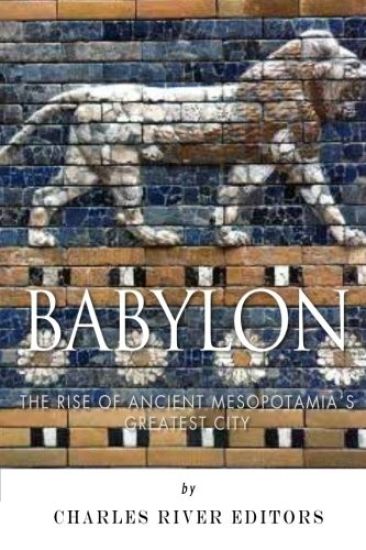
Babylon: The Rise and Fall of Ancient Mesopotamia's Greatest City

Babylon: The Rise and Fall of Ancient Mesopotamia's Greatest City

Charles River

Createspace Independent Publishing Platform
2014
nidottu
*Includes pictures. *Includes historic accounts about the city and its history. *Profiles Hammurabi, Nebuchadnezzar and the Hanging Gardens. *Includes a bibliography for further reading. The ancient world was full of many fantastic cities and places, and like today's major cities, the great ancient cities were hubs of trade, religion, and science. Writing was first invented in ancient cities, and many important scientific discoveries were also made in them, some of which are still used in the modern world. Among the many cities of the ancient world, Rome and Athens may come to mind first, but the city of Babylon in the land of Mesopotamia was already an ancient, venerated city when the others were still inconsequential settlements. Today, Babylon has become a byword for greed, excess, and licentiousness, mostly due to its mention in the Bible, but a closer examination reveals that Babylon was so much more, and even perhaps the most important city in the ancient world. Ancient Babylon was home to great dynasties that produced some of the world's most influential leaders, most notably Hammurabi and Nebuchadnezzar, and these rulers invoked their wills on the entire ancient Near East and have been remembered as both progressive and cruel all at the same time. Babylon was also the seat of culture in ancient Mesopotamia and the place where scholars made amazing scientific advances that would not be eclipsed for several centuries. An examination of ancient Babylon demonstrates that it was truly the first great city in the ancient world. Of course, the sheer span of history between Babylon's power and today has produced plenty of historical questions and controversy. One of the things people most closely associate Babylon with is the Hanging Gardens, which, like the Great Pyramid of Giza, were considered both a technological marvel and an aesthetic masterpiece. Ancient historians believed that the Hanging Gardens were constructed around the 7th century B. C. after the second rise of Babylon, which would make them the second-oldest of the Seven Wonders of the Ancient World, and they were reputedly created by the biblical Nebuchadnezzar II (the king who conquered Judea) to please his homesick wife, after the model of Egyptian pleasure gardens. However, in 1993, British Assyriologist, Stephanie Dalley, proposed a theory that the Hanging Gardens were ordered built by the Assyrian King Sennacherib a century earlier for his giant palace at Nineveh instead. She believed that the two sites were easily confused by ancient sources, resulting in the Gardens being incorrectly located in Babylon a century later. Babylon was also instrumental in the development of the region's religions. Ancient Mesopotamian religion continues to captivate people for many of the same reasons today's best known religions and their histories fascinate people. The religion practiced by the Ancient Mesopotamians provides a certain mix between the mundane and the surreal, and at the same time aspects of it are both familiar and bizarre to people today. Some find themselves drawn to it based on its preeminent position in religious history as the oldest documented religion in the world. Others become fascinated with the close connections between some of the Mesopotamian religious texts, which include a flood story, a creation story and a story of the righteous sufferer, and their parallels in the Hebrew Bible. Babylon: The Rise and Fall of Ancient Mesopotamia's Greatest City traces the history of the city and its rise as the center of the Babylonian empire. Along with pictures depicting important people, places, and events, you will learn about the city of Babylon like never before, in no time at all.
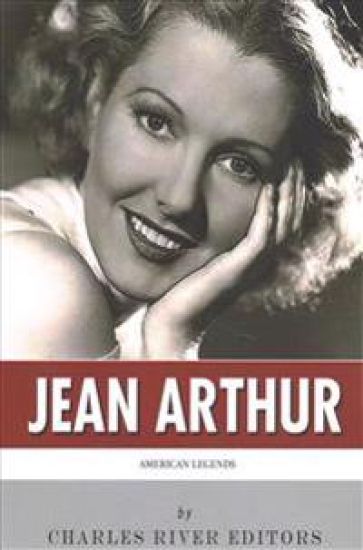
American Legends: The Life of Jean Arthur

American Legends: The Life of Jean Arthur

Charles River

Createspace Independent Publishing Platform
2014
nidottu
*Includes pictures. *Includes Arthur's own quotes about her life and career. *Includes a bibliography for further reading. "I guess I became an actress because I didn't want to be myself." - Jean Arthur "It's a strenuous job every day of your life to live up to the way you look on the screen." - Jean Arthur A lot of ink has been spilled covering the lives of history's most influential figures, but how much of the forest is lost for the trees? In Charles River Editors' American Legends series, readers can get caught up to speed on the lives of America's most important men and women in the time it takes to finish a commute, while learning interesting facts long forgotten or never known. At the peak of the Golden Era of Hollywood, one of the film industry's most popular genres was the screwball comedy, making stars out of young actresses like Jean Harlow and helping pave the way for future ones like Marilyn Monroe. But at the height of the era of the screwball comedy, the actress most associated with them was Jean Arthur, whose ability to portray everyday women made her incredibly popular in the 1930s and 1940s. As one critic put it, "No one was more closely identified with the screwball comedy than Jean Arthur. So much was she part of it, so much was her star personality defined by it, that the screwball style itself seems almost unimaginable without her." Her seemingly effortless abilities helped get her cast in some of legendary director Frank Capra's most famous films, including Mr. Deeds Goes to Town and Mr. Smith Goes to Washington. Capra's films were some of the most critically acclaimed and popular of Depression-era America thanks to viewers being able to relate to the characters, and Arthur was integral in this, as film critic Charles Champlin once explained, "To at least one teenager in a small town (though I'm sure we were a multitude), Jean Arthur suggested strongly that the ideal woman could be - ought to be - judged by her spirit as well as her beauty ... The notion of the woman as a friend and confidante, as well as someone you courted and were nuts about, someone whose true beauty was internal rather than external, became a full-blown possibility as we watched Jean Arthur." Arthur was an Oscar nominated actress and one of the richest women in the country in the mid-1940s, but she nevertheless retired after her contract with Columbia ended in 1944. While that seems like an odd decision, Arthur was notorious for wanting to avoid the spotlight and Hollywood's celebrity culture, which led to her being branded a recluse. In addition to avoiding interviews and even having her picture taken, she was bitterly critical of Hollywood, saying, "I hated the place - not the work, but the lack of privacy, those terrible prying fan magazine writers and all the surrounding exploitation." Life magazine made it sound alluring when they pointed out in 1940 that " n]ext to Garbo, Jean Arthur is Hollywood's reigning mystery woman", but Arthur would only appear in a couple of movies after her retirement, and she disappeared from the Hollywood scene almost as quickly as she burst onto it. American Legends: The Life of Jean Arthur examines the life and career of one of America's favorite screwball comedy queens. Along with pictures of important people, places, and events, you will learn about Jean Arthur like never before, in no time at all.
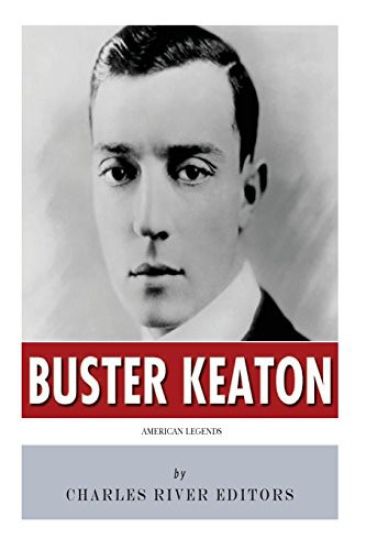
American Legends: The Life of Buster Keaton

American Legends: The Life of Buster Keaton

Charles River

Createspace Independent Publishing Platform
2014
nidottu
*Includes pictures. *Includes Keaton's own quotes about his life and career. *Includes a bibliography for further reading. "It's said that Chaplin wanted you to like him, but Keaton didn't care. I think he cared, but was too proud to ask. His films avoid the pathos and sentiment of the Chaplin pictures, and usually feature a jaunty young man who sees an objective and goes for it in the face of the most daunting obstacles. Buster survives tornados, waterfalls, avalanches of boulders, and falls from great heights, and never pauses to take a bow: He has his eye on his goal. And his movies, seen as a group, are like a sustained act of optimism in the face of adversity; surprising, how without asking, he earns our admiration and tenderness." - Roger Ebert A lot of ink has been spilled covering the lives of history's most influential figures, but how much of the forest is lost for the trees? In Charles River Editors' American Legends series, readers can get caught up to speed on the lives of America's most important men and women in the time it takes to finish a commute, while learning interesting facts long forgotten or never known. In the 1920s, the burgeoning movie industry was starting to come into its own, and alongside actor and director Charlie Chaplin, Buster Keaton was at the peak of Hollywood. It's no surprise that Keaton was so effective in silent films, because he had been practicing comedy in his family's vaudeville acts as "The Little Boy Who Can't Be Damaged", becoming a popular performer by the age of 5. Indeed, his physical form of comedy, which initially involved having his father throwing him around the stage, translated well onto the screen, and some of his slapstick and other comic gags remain legendary even today, in part because Keaton practiced his own stunts. In fact, Keaton wrote his own material and was a crucial comic influence on acts like The Marx Brothers and The Three Stooges. In addition to being one of the foremost comedians of his time and writing his own stuff, Keaton also directed many of his own films, and he mastered the use of cameras at a time when film was still relatively new. As Time magazine writer Richard Corliss noted, "Watch his beautiful, compact body as it pirouettes or pretzels in tortured permutations or, even more elegantly, stands in repose as everything goes crazy around it. Watch his mind as it contemplates a hostile universe whose violent whims Buster understands, withstands and, miraculously, tames. Watch his camera taking his picture (Keaton directed or supervised all his best films); it is as cool as the star it captured in its glass... The medium was still in its infancy; comics were pioneering the craft of making people laugh at moving images. Keaton, it turns out, knew it all - intuitively." When the American Film Institute listed the greatest actors of the 20th century, Keaton came in 21st, and second among the silent film stars behind Chaplin, but the transition to making talkies didn't go as smoothly for him. Keaton had developed a deadpan stare no matter what happened to his character or what stunt or "accident" befell him, which added comedic effect in vaudeville and silent films, but when sound moved the focus to dialogue, Keaton's physical brand of comedy didn't go over as well. Nonetheless, he remains incredibly popular and influential today, with contemporary stars like Jim Carrey, Kevin Spacey, and Jackie Chan all expressing their admiration for him in commemorative pieces. American Legends: The Life of Buster Keaton examines the life and career of one of America's most famous comic actors. Along with pictures of important people, places, and events, you will learn about Jean Arthur like never before, in no time at all.
Legends of Hollywood: The Life of Richard Burton

Legends of Hollywood: The Life of Richard Burton

Charles River

Createspace Independent Publishing Platform
2014
nidottu
*Includes pictures. *Includes Burton's quotes about his own life and career. *Includes a bibliography for further reading. "You may be as vicious about me as you please. You will only do me justice." - Richard Burton In the 1960s, the most popular actor in the world was Richard Burton, a hard-drinking Welshman who was nevertheless so professional that he was one of the preeminent stage performers of his day. In fact, he performed Shakespeare so magnificently that he was compared to British legend Laurence Olivier, and that success ultimately led to a film career that earned him 7 Academy Award nominations, as well as BAFTA and Golden Globe awards for Best Actor. Given his accomplishments on the stage and in Hollywood, Burton became one of the world's most recognizable leading men, so it seemed fitting that he engaged in one of Hollywood's most legendary romances with Elizabeth Taylor while on the set of Cleopatra, one of the era's most notorious movies. In fact, his tumultuous relationship with Taylor, which included two marriages, dominated tabloids and remains the one thing most people associate with Burton today, despite the rest of his accomplishments. Burton's high-profile marriage to Taylor helped bring attention, but it also led to more self-destructive behavior, and in a sense it represented the peak of Burton's career. Over the last decade of his life, Burton began appearing in mediocre films, and due to his declining health and constant drunkenness, his performances were mediocre as well, often involving incoherent slurring. The fast life ultimately caught up with him in 1984, when a cerebral hemorrhage killed him at the age of 58. Fittingly, it was the same cause of death that befell his alcoholic father in 1957, just as Burton was at the precipice of Hollywood stardom. Legends of Hollywood: The Life of Richard Burton examines the life and career of one of Hollywood's biggest stars of the 1960s. Along with pictures of important people, places, and events, you will learn about Richard Burton like never before, in no time at all.
American Legends: Abbott & Costello

American Legends: Abbott & Costello

Charles River

Createspace Independent Publishing Platform
2014
nidottu
*Includes pictures. *Includes Abbott and Costello's own quotes about their lives and careers. *Includes a transcript of "Who's on First?" *Includes a bibliography for further reading. "You never heard of a comedy team that didn't fight, did you? But for twenty years as a professional team, Lou and I were closer than man and wife." - Bud Abbott "A husband is what's left of a sweetheart after the nerve has been killed." - Lou Costello A lot of ink has been spilled covering the lives of history's most influential figures, but how much of the forest is lost for the trees? In Charles River Editors' American Legends series, readers can get caught up to speed on the lives of America's most important men and women in the time it takes to finish a commute, while learning interesting facts long forgotten or never known. Ironically, one of America's most famous comedy duos, and the performers of the country's most famous skit, came together in part because Lou Costello had already failed to cut it in the film industry. In fact, Costello had appeared in a Laurel & Hardy film in 1927 before meeting his partner, Bud Abbott, on the burlesque circuit in New York City. In fact, the two first performed together in 1935 only because Abbott filled in for Costello's usual partner, who happened to be ill one fateful day. Over time, Abbott & Costello perfected their routine, which typically consisted of Abbott playing the straight man while his dimwit partner acted foolishly and interrupted his plans. It was a shtick that also did well on radio, albeit one that required Costello to modify his voice with a higher pitch that not only differentiated his from Abbott but also made him sound appropriately dumber. By 1940, they were not only successful on the radio but also among America's most popular movie stars, a status they held almost consistently throughout the decade and into the early 1950s. The legendary comedy duo performed together for decades, and like similar acts, their popularity began to wane over time, but Abbott & Costello are still household names today. While all of their material is still in syndication and watched by many, they are best known today for "Who's on First", the famous routine in which Abbott's answers about the names of baseball players at various positions on the field sound like questions and completely confuse Costello. Although the skit was pieced together from various others, it was immortalized by Abbott & Costello and helped popularize not only the duo but some of their subsequent material. American Legends: Abbott & Costello examines the lives and careers of one of America's most famous comedy teams. Along with pictures of important people, places, and events, you will learn about Abbott & Costello like never before, in no time at all.
American Legends: The Life of Janis Joplin

American Legends: The Life of Janis Joplin

Charles River

Createspace Independent Publishing Platform
2014
nidottu
*Includes pictures. *Includes Joplin's own quotes about her life and career. *Includes footnotes and a bibliography for further reading. "The more you live, the less you die." - Janis Joplin The life and career of Janis Joplin marks such a stark departure from the blues, rock and soul traditions as American society has come to know them that her brief and tempestuous career defies artistic analysis, if only because there is so little precedent aside from the great African-American blues and jazz singers that influenced her. For a woman born in 1943 and coming into her professional prime in the 1960s, Joplin stood as a mesmerizing and baffling foil to the female tradition in non-classical music, which had previously been symbolized by pure, mellow voices singing thoughtful texts. In the world of rock ensembles, women often stood near the back to play peripheral percussion instruments, such as the tambourine, and from time to time, they filled in a harmony or enjoyed a brief stint on the front of the stage. However, due to Joplin's belief that the mellow and refined tradition was not the way for her to go, the young firebrand with the conflicted past and personality opted for a complete, unrestrained expression of her deepest feelings. In the process, she both thrilled and frightened American audiences who had never seen her kind and never would again. The American music scene was entirely unprepared to witness the emergence of a white woman who could sing the blues with such authenticity, force, and depth of feeling. Dubbed by many as the "First Lady" or "Queen" of Rock & Roll, Joplin both invented and installed the "rock mama paradigm" into the American rock consciousness, a patriarchal and fraternal industry that, much like the societal traits it protested, restricted women to a narrow and conservative criteria for entrance. However, when Joplin was fully committed, she would have none of it, and in time she became "the middle class white girl who sang the blues" for her generation and the generation to come, releasing four powerful albums between the socially intense years of 1966-1970. With only a very few kindred spirits, such as Grace Slick of Jefferson Airplane, "she pioneered a new range of expression for white women." In Joplin's case, performing was a critical aspect of her popularity, but drugs and alcohol were central to her performances, which often found her under the influence of heroin and sipping from a whiskey bottle while playing before live crowds. Despite the dangerous mixtures, Joplin's performances became such a phenomenon that they turned her into an unlikely sex symbol, something she had a hard time understanding and often joked about ("Guess what, I might be the first hippie pinup girl."). Nonetheless, she could pull it off because her "blues-soaked voice...was matched by her uninhibited physical movements...in a mesmerizing display of soulfulness few thought a white singer could pull off." At the height of her powers, before crippling addictions eventually overwhelmed her, her Monterey and Woodstock appearances are "considered by many specialists...to have been classic moments in the history of rock" Of course, for all the mention of Joplin's career, there is nearly as much focus on her untimely death at the age of 27, particularly because she died just a few weeks after Jimi Hendrix's death at the age of 27 and was followed in death by Jim Morrison at the age of 27 less than a year later. Those three all died as a result of alcohol and drug abuse, and they formed the starting point for the legendary "27 Club", which memorializes rock stars who died at the age of 27. American Legends: The Life of Janis Joplin examines the life and career of one of America's most famous musicians. Along with pictures of important people, places, and events, you will learn about Janis Joplin like never before, in no time at all.
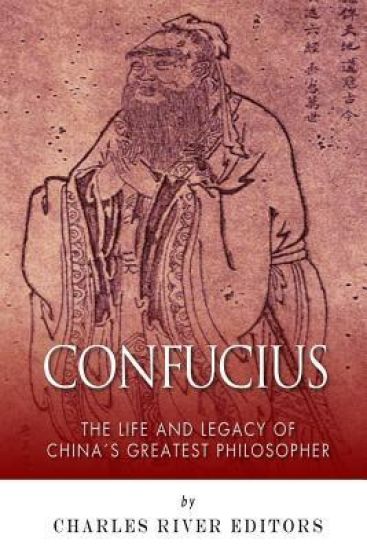
Confucius: The Life and Legacy of China's Greatest Philosopher

Confucius: The Life and Legacy of China's Greatest Philosopher

Charles River

Createspace Independent Publishing Platform
2014
nidottu
*Includes pictures. *Includes Confucius's quotes and analyzes the most important texts of Confucianism. *Includes a bibliography for further reading. "At fifteen my heart was set on learning; at thirty I stood firm; at forty I had no more doubts; at fifty I knew the will of heaven; at sixty my ear was obedient; at seventy I could follow my heart's desire without overstepping the boundaries of what was right." - Confucius "Confucius has no interest in falsehood; he did not pretend to be prophet; he claimed no inspiration; he taught no new religion; he used no delusions; flattered not the emperor under whom he lived..." - Voltaire Many people argue that Confucius is the most influential person of all time, and if having a significant effect on the greatest number of people is the criterion, he may very well be. China is one of the largest and oldest civilizations on earth, and Confucius has been influential there from almost the beginning: the first Chinese dynasty was founded around 1600 BCE and Confucius lived from 551-479 BCE. Although he is still one of history's most famous philosophers, Confucius was in many respects an unremarkable man, and even his physical features were said to be unattractive. There is little evidence that he thought of himself as a harbinger of any kind, but shortly after his death, writings, sayings, and theories based on his life and ideas spread throughout China and even took hold of the imperial court of one of the most powerful and important dynasties, the Han (206 BCE-220 CE). It was during the Han Dynasty that Confucianism became closely tied to state affairs, and it would remain so until the fall of the last dynasty in 1912. Confucianism was closely tied to state religious and ritual practice, and naturally, it benefited greatly from this relationship and was able to subsequently exert influence on all aspects of society. As a "state religion", it provided "religious sanction for policy-making, official sacrifices, court ceremonies, royal marriage, funeral and mourning rights" as well as several major sacrifices to gods and ancestors. Confucianism continues to reverberate to the present day; the Chinese Communist Party still discusses Confucius in their official newspapers and references his thought when they think it will help promote a political or social stance. Eventually Confucius himself was worshiped as a sage, though accounts of his own opinions of himself are nothing but humble. As his great successor Mencius (372-289 BCE) put it, "Since humanity came into this world, there has never been one greater than Confucius." The description of the capture of a unicorn in the important Confucian classic, the Spring and Autumn Annals, was taken as a sign that Confucius was chosen by heaven to found a new moral dynasty. The state ritual sacrifice to Confucius grew rapidly in importance during the Han dynasty and continued to grow in later dynasties. In 630, for example, the Tang dynasty (618-907) founder ordered that every district and country establish a Confucius temple. Confucius: The Life and Legacy of China's Greatest Philosopher examines the life and teachings of the ancient philosopher. Along with pictures, footnotes and a bibliography, you will learn about Confucius like never before, in no time at all.
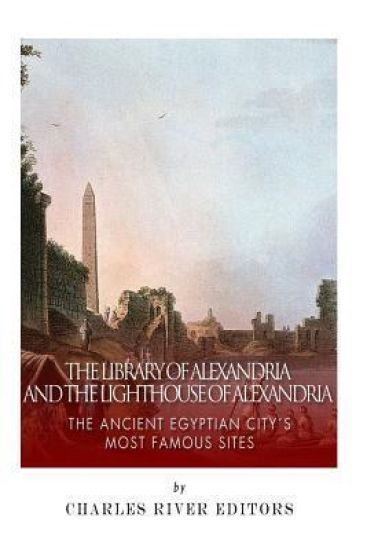
The Library of Alexandria and the Lighthouse of Alexandria: The Ancient Egyptian City's Most Famous Sites
*Includes pictures depicting important people, places, and events. *Includes ancient accounts about the two sites and their destruction. *Includes a bibliography for further reading. In the modern world, libraries are taken for granted by most people, perhaps because their presence is ubiquitous. Every school has a library, large libraries can be found in every major city, and even most small towns have public libraries. However, the omnipresent nature of libraries is a fairly recent historical phenomenon, because libraries were still few and far between before the 19th century. For centuries in the Western world, during what is known as the Middle Ages, written knowledge was guarded closely and hidden away in private repositories, usually by the religious classes, and hidden away in private repositories. The lack of libraries in the West helped contribute to the popular imagination of the ancient Library at Alexandria, and all the myths and legends that have come to be associated with it, but the Library of Alexandria deserves its reputation. While the exact nature of the Library remains murky, it functioned for at least several centuries and is believed to have housed hundreds of thousands of books, most written as scrolls on papyrus, and it essentially became the culmination of two ancient literary and cultural traditions converging: the Greek and Egyptian. Of course, the most controversial aspect of the Library of Alexandria is its destruction, which is still a topic of debate today. Over 2,000 years ago, two ancient writers named Antipater of Sidon and Philo of Byzantium authored antiquity's most well known tour guides. After the two Greeks had traveled around the Mediterranean, they wrote of what they considered to be the classical world's greatest construction projects. While there is still some question as to who actually authored the text attributed to Philo and when it was authored, their lists ended up comprising the Seven Wonders of the Ancient World, igniting interest in the ones they chose and inspiring subsequent generations to identify their own era's Seven Wonders. The youngest of the Wonders also turned out to be the most practical and one of the longest-lived, surviving into the late Middle Ages. It was a lighthouse built on the northern coast of Egypt in Africa, at the Greek city founded in Alexander's name. It was the Pharos, the Great Lighthouse of Alexandria. Among antiquity's wonders, the Lighthouse of Alexandria was fairly unique both in terms of its purpose and its secular nature. While pyramids and statues served religious purposes in Egypt and Greece, and others were impressive works of art, the origins of the Lighthouse were not even as a lighthouse at all. Instead, the large formation on the island of Pharos in the harbor of Alexandria was originally meant to help sailors identify the location of the city during the day, and some speculate it was not until later that Alexandrians decided to make it a true lighthouse that would serve sailors at night. While there is still debate over its height, the Lighthouse of Alexandria was unquestionably one of the tallest man-made structures in the world at the time, if not the tallest. While ancient accounts often exaggerated its height, medieval Arab sources often claimed it was somewhere around 300-350 feet tall, with an incredibly wide base, and those sources wrote at a time where it had already required repairs due to earthquake damage. Efforts to repair it kept going until the 14th century, when the damage was so extensive that it was mostly left in ruins, the last of which were taken for other building projects and/or slipped underneath the Mediterranean. Fortunately, due to descriptions of the lighthouse and archaeological remains, modern scholars are able to understand this wonder better than most, and there may even be future attempts to build a replica and bring it back to life.
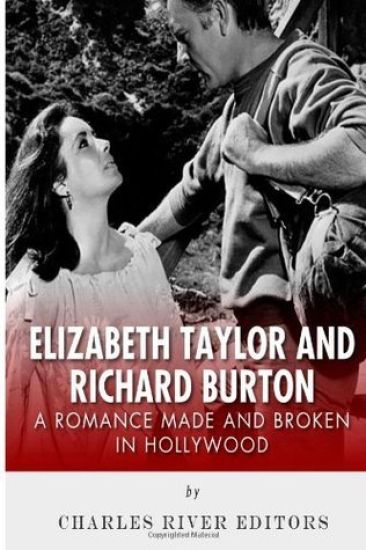
Elizabeth Taylor and Richard Burton: A Romance Made and Broken in Hollywood

Elizabeth Taylor and Richard Burton: A Romance Made and Broken in Hollywood

Charles River

Createspace Independent Publishing Platform
2014
nidottu
*Includes pictures. *Includes their own quotes about their lives and careers. *Includes a bibliography for further reading. Hollywood is full of cautionary tales for child actors like Judy Garland, Jackie Coogan, and Macaulay Culkin, who all soared to fame in their youth only to suffer family feuds, drug addiction, or other ill effects of becoming famous so early in life. Even those child actors for whom stardom was not traumatic, such as Shirley Temple, had great difficulty succeeding in Hollywood as an adult, with their careers effectively over by the time they reached adulthood. On the other hand, the life of Elizabeth Taylor bears little in common with the paradigm of the troubled child star. After arriving in the United States at the age of 9, Taylor was indoctrinated into the life of the Hollywood studio system shortly after child stars Judy Garland and Mickey Rooney, but while Garland suffered great trauma at the hands of the studio system, Taylor's early experience in Hollywood represented the flip side of the coin. Groomed for a life in Hollywood by her zealous mother, Taylor enjoyed her life in the motion picture industry and reveled in the privileged lifestyle and opportunities she enjoyed by virtue of her profession. Acting supplied her with a lavish lifestyle and, more importantly for her, constant attention. From an early age, Taylor displayed a vociferous love for living in the public eye. In many ways, Taylor enjoyed being in the public spotlight and living the lifestyle of the rich and famous, and her personal life very much resembled a performance suitable for Hollywood. Taylor faced great adversity throughout her life, including being married on eight different occasions to seven different spouses and fighting battles with weight and drug addiction. Still, while many actors grow resentful of public attention, even during her moments of personal struggle Taylor thrived on public attention and enjoyed a mutually adoring relationship with the American public. In the 1960s, the most popular actor in the world was Richard Burton, a hard-drinking Welshman who was nevertheless so professional that he was one of the preeminent stage performers of his day. In fact, he performed Shakespeare so magnificently that he was compared to British legend Laurence Olivier, and that success ultimately led to a film career that earned him 7 Academy Award nominations, as well as BAFTA and Golden Globe awards for Best Actor. Given his accomplishments on the stage and in Hollywood, Burton became one of the world's most recognizable leading men, so it seemed fitting that he engaged in one of Hollywood's most legendary romances with Elizabeth Taylor while on the set of Cleopatra, one of the era's most notorious movies. In fact, his tumultuous relationship with Taylor, which included two marriages, dominated tabloids and remains the one thing most people associate with Burton today, despite the rest of his accomplishments. Burton's high-profile marriage to Taylor helped bring attention, but it also led to more self-destructive behavior, and in a sense it represented the peak of Burton's career. Over the last decade of his life, Burton began appearing in mediocre films, and due to his declining health and constant drunkenness, his performances were mediocre as well, often involving incoherent slurring. The fast life ultimately caught up with him in 1984, when a cerebral hemorrhage killed him at the age of 58. Fittingly, it was the same cause of death that befell his alcoholic father in 1957, just as Burton was at the precipice of Hollywood stardom. This book examines the lives and careers of the famous lovers. Along with pictures and a bibliography, you will learn about Taylor and Burton like never before.
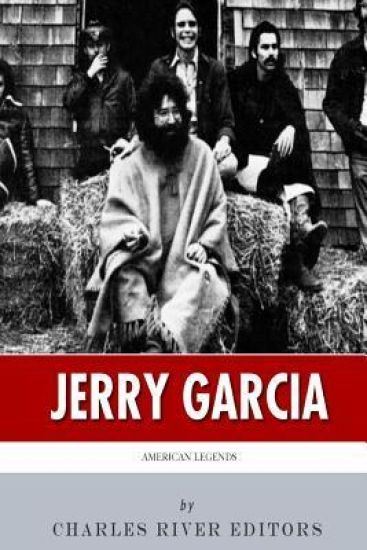
American Legends: The Life of Jerry Garcia

American Legends: The Life of Jerry Garcia

Charles River

Createspace Independent Publishing Platform
2014
nidottu
*Includes pictures. *Includes Garcia's quotes about his life and career. *Includes footnotes and a bibliography for further reading. "I read somewhere that 77 percent of all the mentally ill live in poverty. Actually, I'm more intrigued by the 23 percent who are apparently doing quite well for themselves." - Jerry Garcia Despite the enormous esteem he has garnered from virtually every corner of the music world, Jerry Garcia has continued to elude both fans and music historians as they attempt to determine his origins and categorize his art and influence on American music. Part of their difficulty lies in the fact that his work as the frontman for the Grateful Dead, "one of the most prolific and iconic guitarists of the twentieth century," tended toward a blending of the traditional with the experimental, in which he was willing to use almost any and every available ethnic musical resource. In terms of ethnic material, Garcia's passionate interest in virtually every nook and cranny of American music, particularly rural music, made the task of following his concepts from moment to moment an unpredictable and inexact science. In his explorations and elaborations on old musical treasures, whether familiar or obscure, he fully indulged in almost all of them at one time or another. For Garcia, this was not a career move but a joyous personal search to create a vast palette of harmonic, rhythmic and textural escapades. As an iconic example of the "communitarian, drug-positive hippie subculture of Haight-Ashbury," and fulfilling all the expectations of the devotees who immersed themselves in the era's music, Garcia could just as easily draw from classical music as he could from American jazz. He performed highly regionalized blues in all of their dialects, along with country music, numerous shades of rock music, and any combination of all of them. In one late career example, he even took on the genre of disco, meeting the public backlash head-on. Despite its waning popularity and status as a Saturday night indulgence for teens, in Garcia's mind, it was a native American musical form and therefore worth studying and mutating into new hybrid forms and sounds. He could (and constantly did) synthesize new musical treatments and old, time-tested themes without inflicting any damage on the historical source, and among his various bands, he spun lengthy, expansive guitar improvisations, aided by masterful colleagues who melded the music to fit the emotional and intellectual profiles of their audiences. By all accounts, Garcia's place at the front of the stage made the event magical, and even though he was not a fine singer in the conventional sense, he could produce "delicate, mournful, rough-around-the-edges vocals," reflecting the same inviting atmosphere that his physical presence conveyed onstage. With the Grateful Dead alone, Garcia performed over 2,300 concerts during his three decades of work, and his efforts spent with other groups were similarly prodigious. Despite being a frail, sickly youth, Garcia found the enthusiasm and energy in adulthood to work with three bands simultaneously, all while indulging a lifelong interest in film and art. Garcia's laid-back persona, along with others of his musical generation, worked like an irresistible force within the industry, and by the mid-90s, had left it forever altered. American Legends: The Life of Jerry Garcia examines the life and career of one of America's most famous musicians. Along with pictures of important people, places, and events, you will learn about Jerry Garcia like never before, in no time at all.
American Legends: The Life of Bob Dylan

American Legends: The Life of Bob Dylan

Charles River

Createspace Independent Publishing Platform
2014
nidottu
*Includes pictures. *Includes Dylan's quotes about his life and career. *Includes footnotes and a bibliography for further reading. "I have dined with kings, I've been offered wings. And I've never been too impressed." - Bob Dylan In the space of just a few years, Bob Dylan, born Robert Allen Zimmerman, rose from the obscurity of a small Minnesota town to a position of royalty atop the folk music landscape of the 1960s, with a universal esteem and status on a par with Elvis Presley and The Beatles. Not content to remain for long within that niche, however, he went on to conquer rock with elements of blues, jazz, pop, country, Gospel, rockabilly and ethnic music of the British Isles, not to mention authoring several books, working in film soundtracks, acting, and holding international art exhibits of his work along the way. He even developed a fondness for old school rap, such as Public Enemy. In the 1960s, "Blowin' in the Wind" and "The Times They Are A' Changing" "became anthems of the anti-war and civil rights movements," but long after the transition from the '50s to the late '60s and '70s was accomplished, the initially baffling young folk singer who appeared out of nowhere was awarded a special Pulitzer Prize for "his profound impact on popular music, and American culture, marked by lyrical compositions of extraordinary poetic power." Over the span of his career, he has received Grammy Awards, Golden Globes, Academy Award Oscars, and he has been inducted into the Rock & Roll Hall of Fame, the Minnesota Music Hall of Fame, the Nashville Songwriters Hall of Fame, and the Songwriters Hall of Fame, not to mention the Pulitzer Prize and Presidential Medal of Freedom. Like other artists who depended on the skill of their texts, ideas or vocal interpretation, such as Jim Morrison and Janis Joplin, Dylan never possessed a conventionally beautiful voice, and as a pure vocalist, he did nothing out of the ordinary, as he once admitted, "Nothing can affect my voice, it's so bad." However, in an era of pure vocal timbres, lilting phrases and a throwback to the quasi-classical genres brought from the British Isles during the British Invasion, he overcame and broke down the universal idea of the voice being the first priority with the music and text coming second. Even for those in the audience that did not follow such a belief, the works of Bob Dylan could be heard anywhere within the industry at the height of his fame, and his charisma and mythologized image did the rest. Numerous friends and colleagues made his songs famous, and well into his career, over 3,000 artists have undertaken them on stage and recording, with over 100 covers of "Blowin' in the Wind" alone. Included among the many artists who enjoyed hits with Dylan songs are Sonny and Cher, The Hollies, and Herman's Hermits. Throughout a thriving and energetic career that has continued into his 70s, the man who served as "the voice of a generation," "the voice of protest," and "the Bard" during the years of the American youth revolution has refused to remain where fans, colleagues and record companies can easily identify and market him, and he has similarly defied becoming an artist confined to the nostalgia of one generation. Through the decades, Dylan has found himself on more than one side of the youth movement; with an intense drive to explore and produce, he has, at times, rebelled against the rebellion, and he refuses to be commanded by his present audience or industry, even if it alienated many along the way. American Legends: The Life of Bob Dylan examines the life and career of America's most famous folk artist and one of its most iconic musicians. Along with pictures of important people, places, and events, you will learn about Dylan like never before, in no time at all.
Celtic Mythology and the Religion of the Ancient Celts

Celtic Mythology and the Religion of the Ancient Celts

Jesse Harasta; Charles River

Createspace Independent Publishing Platform
2014
nidottu
*Includes pictures. *Includes ancient accounts describing the Celts and their religious practices. *Includes footnotes and a bibliography. "Throughout all of Gaul there are two classes of people who are treated with dignity and honor. This does not include the common people, who are little better than slaves and never have a voice in councils. Many of these align themselves with a patron voluntarily, whether because of debt or heavy tribute or out of fear of retribution by some other powerful person. Once they do this, they have given up all rights and are scarcely better than servants. The two powerful classes mentioned above are the Druids and the warriors. Druids are concerned with religious matters, public and private sacrifices, and divination." - Julius Caesar The Celts are one of the most well-known groups in Europe and one of the least understood. Depending on which classifications are used, the Celts are also one of the oldest civilizations in Europe. In the centuries before Christ, the Celts were spread out across much of continental Europe, and though they are mostly identified with Gaul, evidence suggests they also spread as far as Portugal. Though they were spread out across Europe before the height of the Roman Empire, most people associate the Celts with the British Isles today, particularly Ireland and Scotland. After they had been relegated to those smaller regions as a result of the Romans and other migrations, the culture of the Celts as it is currently understood began to congeal during the Early Middle Ages, and Celtic culture, folklore, and legend have all become inextricably intertwined with Irish history and British history as a whole. Historically, Celtic cultures differ from their English and French neighbors in a number of ways, including social organization, language, values and economic systems, but one of the most captivating of these has always been their myths. Celtic Myths, which can be read in translation without needing special training in grammar, are more accessible than the Celtic languages, and unlike the other distinctive features that have faded over the centuries, myths still have their immediacy and power when read today. While much has undoubtedly been lost from the ancient Celts over time, medieval manuscripts help scholars understand how Celtic myths have reached the form they have today. Like many ancient belief systems, Celtic mythology shares Indo-European roots, meaning Celtic beliefs have cousins in related societies like the Norse, Greeks, Romans and Slavs, with a foundation of shared mythmaking that goes back several millennia. Descriptions of Celtic mythology by their contemporaries, including the Ancient Romans and Greeks, provide a hazy picture, while the tales recorded by Christian monks and undoubtedly bear the stamp of their own religious affiliations. Celtic Mythology: The Religion of the Ancient Celts examines the history and legacy of the religion practiced by the Ancient Celts. Along with pictures and a bibliography, you will learn about Celtic mythology like you never have before, in no time at all.
American Legends: The Life of Paul Newman

American Legends: The Life of Paul Newman

Charles River

Createspace Independent Publishing Platform
2014
nidottu
*Includes pictures *Includes a bibliography for further reading. *Includes Newman's own quotes about his life and career. "The first time I remember women reacting to me was when we were filming Hud in Texas. Women were literally trying to climb through the transoms at the motel where I stayed. At first, it's flattering to the ego. At first. Then you realize that they're mixing me up with the roles I play - characters created by writers who have nothing to do with who I am." - Paul Newman A lot of ink has been spilled covering the lives of history's most influential figures, but how much of the forest is lost for the trees? In Charles River Editors' American Legends series, readers can get caught up to speed on the lives of America's most important men and women in the time it takes to finish a commute, while learning interesting facts long forgotten or never known. Over the course of his long film career, Paul Newman was once one of the most bankable stars in Hollywood during his peak, and that was decades before he won an Academy Award for Best Actor for his role in The Color of Money (1986), one of the eight times he was nominated for an Oscar. Having come to prominence as a handsome but rebellious young man in the mold of James Dean, Newman was able to maintain an aura that viewers found both cool and irresistible even into his 60s, typically an age when leading men find themselves on the outs. Newman was even nominated for an Academy Award for Best Supporting Actor for Road to Perdition (2002), when he was in his late 70s, and he continued working in the industry until just shortly before his death in 2008. While Newman was a recognizable film star in his time, younger generations know Newman more as a pop culture fixture than as a movie star. Newman acted and directed in Hollywood for six decades, but he was noteworthy off the screen for various pursuits, including running a racing team that was successful in IndyCar racing, but especially for the food products that bore his name. Newman established the food company Newman's Own as a philanthropic endeavor, once joking, "When I realized I was going to have to be a whore, to put my face on the label, I decided that the only way I could do it was to give away all the money we make. Over the years, that ethical stance has given us a 30 per cent boost. One in three customers buys my products because all the profits go to good causes and the rest buy the stuff because it is good." Although he started jokingly referring to himself as the "star of oil and vinegar and the oil and vinegar of the stars", consumers still find Newman's face on labels for goods like salad dressing and popcorn, and the brand name is still very popular today, helping carry Newman's name and legacy forward. American Legends: The Life of Paul Newman examines the versatile life and career of an American icon. Along with pictures of important people, places, and events, you will learn about Paul Newman like never before, in no time at all.
The Greatest Civil War Battles: The Atlanta Campaign

The Greatest Civil War Battles: The Atlanta Campaign

J. D. Mitchell; Charles River

Createspace Independent Publishing Platform
2014
nidottu
*Includes pictures of the battle's important generals. *Includes several maps of the battle. *Includes accounts of the fighting written by important generals. *Includes a Bibliography for further reading. After successfully breaking the Confederate siege at Chattanooga near the end of 1863, William Tecumseh Sherman united several Union armies in the Western theater for the Atlanta Campaign, forming one of the biggest armies in American history. After detaching troops for essential garrisons and minor operations, Sherman assembled his nearly 100,000 men and in May 1864 began his invasion of Georgia from Chattanooga, Tennessee, where his forces spanned a line roughly 500 miles wide. Sherman set his sights on the Confederacy's last major industrial city in the West and General Joseph E. Johnston's Army of Tennessee, which aimed to protect it. Atlanta's use to the Confederacy lay in its terminus for three major railroad lines that traveled across the South: the Georgia Railroad, Macon and Western, and the Western & Atlantic. U. S. Lieutenant General Ulysses S. Grant knew this, sending Major General William Tecumseh Sherman's Division of the Mississippi towards Atlanta, with specific instructions, "get into the country as far as you can, inflicting all the damage you can against the war revenues." The city's ability to send supplies to Lee's Army of Northern Virginia made Atlanta all the more important. The people of Atlanta clearly identified their own role in the struggle, as the Atlanta Daily Appeal noted, "The greatest battle of the war will probably be fought in the immediate vicinity of Atlanta. Its results determines that of the pending Northern Presidential election. If we are victorious the Peace party will triumph; Lincoln's Administration is a failure, and peace and Southern independence are the immediate results." It would fall upon Sherman's forces in the West to deliver the necessary victory. Johnston's army of 50,000 found itself confronted by almost double its numbers, and General Johnston began gradually retreating in the face of Sherman's forces, despite repulsing them in initial skirmishes at Resaca and Dalton. The cautious Johnston was eventually sacked and replaced by the more aggressive John Bell Hood once the Confederate army was back in Atlanta. Taking command in early July 1864, Hood lashed out at Sherman's armies with several frontal assaults on various portions of Sherman's line, but the assaults were repulsed, particularly at Peachtree Creek on July 20, where Thomas's defenses hammered Hood's attack. At the same time, Sherman was unable to gain any tactical advantages when attacking north and east of Atlanta. In August, Sherman moved his forces west across Atlanta and then south of it, positioning his men to cut off Atlanta's supply lines and railroads. When the Confederate attempts to stop the maneuvering failed, the writing was on the wall. On September 1, 1864, Hood and the Army of Tennessee evacuated Atlanta and torched everything of military value. On September 3, 1864, Sherman famously telegrammed Lincoln, "Atlanta is ours and fairly won." Two months later, so was Lincoln's reelection. The Greatest Civil War Battles: The Atlanta Campaign comprehensively covers the campaign, including the fighting and the aftermath of the results. Accounts of the battle by important participants are also included, along with maps of the battle and pictures of important people, places, and events. You will learn about the Atlanta Campaign like you never have before.
American Legends: The Life of Andy Warhol

American Legends: The Life of Andy Warhol

Charles River

Createspace Independent Publishing Platform
2014
nidottu
*Includes pictures.*Includes Warhol's own quotes about his life and career.*Includes a bibliography for further reading." Don't pay any attention to what they write about you. Just measure it in inches." - Andy Warhol"In the future, everyone will be famous for 15 minutes." - Andy WarholA lot of ink has been spilled covering the lives of history's most influential figures, but how much of the forest is lost for the trees? In Charles River Editors' American Legends series, readers can get caught up to speed on the lives of America's most important men and women in the time it takes to finish a commute, while learning interesting facts long forgotten or never known. Few artists of the 20th century were as enigmatic as Andy Warhol, who once remarked, "If you want to know all about Andy Warhol, just look at the surface of my paintings and films and me, there I am. There's nothing behind it." This statement is hardly out of character for the famous artist, who remains famous for his cagey answers to interviews and his refusal to speak from the heart. It is no accident that Warhol wore a wig; paradoxically enough, he required the company of others but refused to allow himself to become emotionally intimate with anyone. If anything, Warhol's public persona seemed to be structured around an apparent lack of personality, and yet he later noted, "At the times in my life when I was feeling the most gregarious and looking for bosom friendships, I couldn't find any takers so that exactly when I was alone was when I felt the most like not being alone. The moment I decided I'd rather be alone and not have anyone telling me their problems, everybody I'd never even seen before in my life started running after me to tell me things I'd just decided I didn't think it was a good idea to hear about. As soon as I became a loner in my own mind, that's when I got what you might call a 'following.' As soon as you stop wanting something you get it. I've found that to be absolutely axiomatic." Of course, Andy Warhol was more than just an apathetic figure; after all, he is the most famous member of the artistic movement known as Pop, a title that was coined by critics but which Warhol epitomized like no other. The core themes of Pop art are well-known: an ironic appropriation of mass culture; the utilization of found objects (especially those relating to mass culture); and an early postmodern tone of irony and even pastiche. The works of Warhol and his cohorts in the Pop movement not only stand as iconic works of post-war American art but also fundamentally redefined what qualified as art in the first place. Arriving on the heels of the Abstract Expressionist movement, Warhol's art marked a dramatic turn away from abstraction and toward the banal, but his works continue to enchant the public, exceeding even the grand-scale Abstract Expressionist compositions of Jackson Pollock. Warhol's virtuosity is bolstered by the fact that he was able to thrive while working in different media; his paintings and silkscreens have received by far the greatest focus from art historians, but Warhol also created famous sculptures, films, and drawings. More than just a great painter, he was a great artist. Just as memorably, Warhol was someone whose art was intertwined with his personal life, so The Factory is nearly as big a pop culture icon as Warhol himself. Warhol's eclectic group of companions included artists, musicians, vamps, Bohemians, and everyone in between. Like them, Warhol is an almost impossible figure to pin down entirely, but American Legends: The Life of Andy Warhol explores the many dimensions of his life and career. Along with pictures of important people, places, and events, you will learn about Andy Warhol like never before, in no time at all.