Kirjojen hintavertailu – 12 903 725 kirjaa ja 27 kauppaa
Kirjailija
Charles River
Kirjat ja teokset yhdessä paikassa: 4 673 kirjaa, julkaisuja vuosilta 2013–2022, suosituimpiin kuuluu William Powell and Myrna Loy: The Lives and Careers of One of Classical Hollywood's Most Iconic Duos. Vertaile teosten hintoja ja tarkista saatavuus suomalaisista kirjakaupoista.
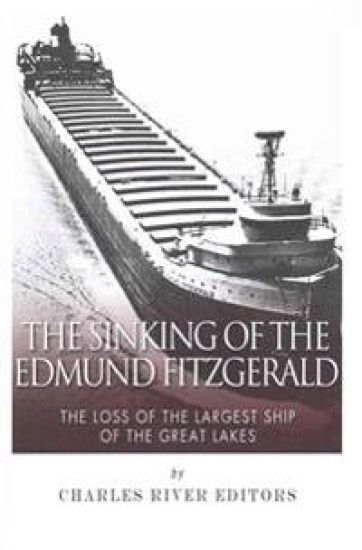
*Includes pictures *Discusses official investigations and amateur expeditions to the wreckage *Discusses the evidence and theories about the sinking *Includes a bibliography for further reading "They might have split up or they might have capsized; they may have broke deep and took water. And all that remains is the faces and the names of the wives and the sons and the daughters." - Gordon Lightfoot, "The Wreck of the Edmund Fitzgerald" The Great Lakes have claimed countless thousands of vessels over the course of history, but its biggest and most famous victim was the SS Edmund Fitzgerald, the largest ship of its day to sail the Great Lakes and still the largest to lie below Lake Superior's murky depths. The giant ore freighter was intentionally built "within a foot of the maximum length allowed for passage through the soon-to-be completed Saint Lawrence Seaway." but despite its commercial purpose, the Edmund Fitzgerald was also one of the most luxurious ships to ever set sail in the Great Lakes. One person who sailed aboard the ship recounted, "Stewards treated the guests to the entire VIP routine. The cuisine was reportedly excellent and snacks were always available in the lounge. A small but well stocked kitchenette provided the drinks. Once each trip, the captain held a candlelight dinner for the guests, complete with mess-jacketed stewards and special 'clamdigger' punch." Indeed, when it was completed in 1957, the Edmund Fitzgerald was nearly 730 feet long and dubbed "Queen of the Lakes", and it was so popular that people would wait along the shores to catch a glimpse of the famous boat. The ship had already earned various safety awards and never suffered a serious problem when it set sail from Superior, Wisconsin with over 26,000 tons of freight on November 9, 1975 and headed for a steel mill near Detroit. During that afternoon, however, the National Weather Service, which had earlier predicted that a storm would miss Lake Superior, revised its estimates and issued gale warnings. Over the course of the next 24 hours, the Fitzgerald and other ships in Lake Superior tried to weather the storm, but by the early evening hours of November 10, the Fitzgerald's captain radioed other ships to report that the ship was having some problems and was taking on water. In the ship's last radio contact, the captain reported that the ship and crew were "holding our own," but just what happened next still remains a mystery to this day. Minutes after that last contact, the Edmund Fitzgerald stopped replying on the radio and no longer showed up on radar, indicating that it sank, but no distress signal was ever given, suggesting something catastrophic happened almost instantly. At the time the ship went down with all 29 of its crew, winds had reached about 60 miles per hour, waves were about 25 feet high, and rogue waves were measured at 35 feet. The wreck of the ship was found within days, and the fact that it was found in two large pieces suggest it broke apart on the surface of the lake, but it's still unclear how that happened. Since her loss with all hands, people from all walks of life have weighed in on the ship's fate, including official investigators, sailors, and meteorologists, but no one has yet to come to a clear conclusion about what exactly went wrong. Various theories have since been put forth, attributing the sinking to everything from rogue waves to the flooding of the cargo hold, but the loss made clear that more stringent regulations on shipping in the Great Lakes was necessary, and it was also a painful reminder of the dangers of maritime travel. The Sinking of the Edmund Fitzgerald: The Loss of the Largest Ship on the Great Lakes chronicles the story of the Great Lakes' biggest victim. Along with pictures of important people, places, and events, you will learn about the sinking of the Edmund Fitzgerald like never before, in no time at all.
*Includes pictures *Includes Redford's own quotes about his life and career *Includes a bibliography for further reading "The way you really find out about the performer's seriousness about the cause is how long they stay with it when the spotlight gets turned off. " - Robert Redford "People say I've gone against Hollywood, but I've tried to be independent within Hollywood, tried to be my own person." - Robert Redford A lot of ink has been spilled covering the lives of history's most influential figures, but how much of the forest is lost for the trees? In Charles River Editors' American Legends series, readers can get caught up to speed on the lives of America's most important men and women in the time it takes to finish a commute, while learning interesting facts long forgotten or never known. When Robert Redford first entered the national spotlight in the early 1960s, he was hardly viewed as a serious actor, and with his red hair, blonde complexion, and athletic build, he was seen more as a handsome man than a skilled one. On top of that, he came a time in which most Hollywood stars were tall, dark, and slender, like one of his most famous co-stars, Paul Newman, and by comparison, Redford looked more like a surfer. It was an unfortunate stereotype, because he had already studied acting and even performed on Broadway even as people initially had great difficulty in taking him seriously. The acting roles for which he first became famous, such as Barefoot in the Park, featured him in what Elisa Leonelli has referred to as "golden boy" roles, and this was something that would take years to overcome, but it also gave him a chip on his shoulder. As he later noted half in jest, "I think a lot of people thought my career started with Butch Cassidy." That description of Redford is hard to square with opinions of him today. Indeed, Redford is now considered one of the leading figures of art house cinema, not only in America but across the world as well. Presiding over the Sundance Film Festival, which is housed in his figurative backyard in Park City, Utah, Redford oversees the leading festival for independent cinema in the United States, facilitating exposure to art house films that otherwise would have struggled to find any distribution and transforming Sundance into a wildly successful company in its own right. Meanwhile, over the last few decades, Redford's career has placed him among the great Hollywood actors of his generation, alongside the likes of Robert DeNiro, Al Pacino, and Dustin Hoffman. Moreover, where Redford separates himself from these other figures of acting royalty is that he is also an accomplished director, as evidenced by the successes of Ordinary People (1980), The Milagro Beanfield War (1988), A River Runs Through It (1992) and other films. Clearly, Redford has distanced himself as far as possible from the "golden boy" label that constrained him early in his career. American Legends: The Life of Robert Redford charts Redford's shift from an actor who could not garner any respect to one of Hollywood's most important figures, along with an analysis of his famous films that portrayed various topics like masculinity, sport, and the American West. Along with pictures of important people, places, and events, you will learn about Robert Redford like never before, in no time at all.
*Includes pictures *Includes Autry's own quotes about his life and career *Includes a bibliography for further reading "Music has been the better part of my career. Movies are wonderful fun and they give you a famous face. But how the words and melody are joined, how they come together out of air and enter the mind, this is art. Songs are forever." - Gene Autry A lot of ink has been spilled covering the lives of history's most influential figures, but how much of the forest is lost for the trees? In Charles River Editors' American Legends series, readers can get caught up to speed on the lives of America's most important men and women in the time it takes to finish a commute, while learning interesting facts long forgotten or never known. In the early 20th century, Westerns were one of the most popular genres in Hollywood, and one of the young stars at the forefront was Gene Autry, a Texan whose life story made him a natural to be the country's most famous "singing cowboy". Autry would become a symbol of masculinity and morality on screen during the 1930s, but it was effortless for someone who had already grown up riding horses to school. Autry came of age at a time when the "singing cowboy" was at the apex of his popularity, and like his most famous successor, Roy Rogers, Autry actually got his start in show business as a singer. Even today, Autry might be best known for being a pioneer of country music and the author of Christmas hits "Here Comes Santa Claus", "Frosty the Snowman", and "Rudolph the Red-Nosed Reindeer". Autry would produce hundreds of recordings during his life, helping ensure the popularity of the country music genre and earning inductions into several related halls of fame. Of course, the popularity of Autry's music and country music in general was bolstered by the fact that he became one of the biggest stars in Hollywood. After he was discovered in 1934, Autry made dozens of films and was still one of the industry's biggest moneymakers when he went off to fight in World War II. Though his movie career had already hit its peak by the time he returned, Autry used his popularity and his skills to transition into television, and he dabbled in all kinds of other ventures, including owning a radio station and professional sports teams. By the end of his long life and career, Autry could lay claim to being the only man with 5 stars on the Hollywood Walk of Fame for film, television, music, radio, and live performances. American Legends: The Life of Gene Autry examines the life and career of one of America's most famous singing cowboys. Along with pictures of important people, places, and events, you will learn about Gene Autry like never before, in no time at all.
*Includes pictures *Includes their quotes about their lives and careers *Includes a bibliography for further reading "Music has been the better part of my career. Movies are wonderful fun and they give you a famous face. But how the words and melody are joined, how they come together out of air and enter the mind, this is art. Songs are forever" - Gene Autry "I did pretty good for a guy who never finished high school and used to yodel at square dances." - Roy Rogers In the early 20th century, Westerns were one of the most popular genres in Hollywood, and one of the young stars at the forefront was Gene Autry, a Texan whose life story made him a natural to be the country's most famous "singing cowboy". Autry would become a symbol of masculinity and morality on screen during the 1930s, but it was effortless for someone who had already grown up riding horses to school. Autry came of age at a time when the "singing cowboy" was at the apex of his popularity, and like his most famous successor, Roy Rogers, Autry actually got his start in show business as a singer. Even today, Autry might be best known for being a pioneer of country music and the author of Christmas hits "Here Comes Santa Claus", "Frosty the Snowman", and "Rudolph the Red-Nosed Reindeer". Autry would produce hundreds of recordings during his life, helping ensure the popularity of the country music genre and earning inductions into several related halls of fame. Of course, the popularity of Autry's music and country music in general was bolstered by the fact that he became one of the biggest stars in Hollywood. After he was discovered in 1934, Autry made dozens of films and was still one of the industry's biggest moneymakers when he went off to fight in World War II. Though his movie career had already hit its peak by the time he returned, Autry used his popularity and his skills to transition into television, and he dabbled in all kinds of other ventures, including owning a radio station and professional sports teams. By the end of his long life and career, Autry could lay claim to being the only man with 5 stars on the Hollywood Walk of Fame for film, television, music, radio, and live performances. Roy Rogers came from an Ohio farm, but regardless of his background, Rogers certainly looked the part of the quintessential cowboy, along with his wife Dale Evans and his horse Trigger. His versatile singing and acting abilities made him successful both on radio and on the screen. Rogers came of age at a time when the "singing cowboy" was at the apex of his popularity, and that was favorable because he actually got his start in show business as a singer. In the early '30s, he bounced around several groups as a country music singer before earning national attention as a member of the Sons of the Pioneers, who were signed to Decca and had a couple of hits. As a result, when he first appeared in movies in 1935, it was usually in bit roles that required singing, but when Gene Autry threatened to quit acting in 1938, Rogers was viewed as a suitable replacement for lead roles. As it turned out, he became the premiere "singing cowboy" in Autry's stead, and from 1939-1954, he was one of the Top 10 Western stars in Hollywood, and a Top 10 movie star overall during some of those years. As Rogers evolved into the "King of the Cowboys", he became a pop culture icon, and he was shrewd enough to capitalize on his image. All sorts of Roy Rogers merchandise hit stores, from action figures to comic strips, and Rogers even banked on the popularity of his horse Trigger by featuring him enough to make the horse a household name as well. Even today, people can find the name Roy Rogers all over the place, if only because he eventually had his name lent to a popular fast food chain in later years. Gene Autry and Roy Rogers examines the lives and careers of two of America's most famous Western actors.
*Includes pictures *Includes Hughes' quotes *Includes a bibliography for further reading. "My father told me, never have partners." - Howard Hughes "I'm not a paranoid deranged millionaire." - Howard Hughes Howard Hughes lived a life that was quintessentially American, and his personal history was so varied, improbable and extraordinary that he practically resembled a living folk hero. Hughes was barely in his 20s during America's Roaring Twenties, but he already began to command the nation's headlines as a multi-talented millionaire, and the varied pastimes that his talents and wealth afforded him made him nearly impossible to ignore. In the '20s and '30s, the most famous people in the country were generally gangsters, jazz musicians, inventors, baseball players, Hollywood stars or flying aces, and by the end of the '30s, the 35 year old Hughes was at least three and arguably four of those; perhaps learning to play jazz or hit home runs seemed greedy at that point. After receiving a handsome inheritance in his teens, Howard made himself into one of the world's first billionaires by the time he was in middle age, so he clearly wasted no time. Already a tycoon at the age of 20, Hughes took no pleasure in rest or success, and his accomplishments were just as unique as the man himself. He made Oscar-nominated films while simultaneously becoming the fastest man on the planet by setting airspeed records in a plane of his own invention, but even as he became a national celebrity, he displayed little interest in other people. A consummate loner, he rarely interacted with the elite social circles to which he had access unless business necessitated it, instead surrounding himself with employees to carry out the practical matters of his empire, make his designs into reality, cobble together his film productions, and organize the disparate parts of his life according to his precise specifications. He was known to millions and managed a diverse empire but was a friend to no one. Perhaps not surprisingly, a heavy majority of Hughes' social interactions involved romance. Hughes was one of the most notorious womanizers in Hollywood, romancing scores of forgettable starlets and silver screen icons alike, but most of his affairs also remained impersonal, to the extent that he remained an enigma even to his paramours. Despite the sharp intellect, vigor and dynamism that made his astonishing accomplishments possible, Hughes ultimately descended into madness, ravaged by physical and psychological maladies that left him a caricature of what he had been at the zenith of his feats. Fittingly, the catalyst for his final decline was literally a fall, when one of his heralded airplanes tumbled out of the sky and brought him back down to Earth in a nearly fatal crash. The maverick billionaire was a famous figure in America for no less than half a century, but his true influence over the nation's fate wasn't known until long after his death. Despite the acrimonious way his unfulfilled airplane contracts were resolved at the end of World War II, while the Cold War raged, Howard continued to make a small fortune off government contracts by secretly supplying the Central Intelligence Agency with untold troves of spy gear. He also played a significant role in the most infamous political scandal of the century (Watergate), but even as the scandal transfixed the country, much like his own post-war Senate hearings a quarter century earlier, Hughes was never mentioned in the extensive investigation. American Legends: The Life of Howard Hughes chronicles the incredible life of one of America's most eccentric geniuses. Along with pictures of important people, places, and events, you will learn about Howard Hughes like never before.
*Includes pictures *Includes the actors' quotes about their lives and careers *Includes a bibliography for further reading "The first time I remember women reacting to me was when we were filming Hud in Texas. Women were literally trying to climb through the transoms at the motel where I stayed. At first, it's flattering to the ego. At first. Then you realize that they're mixing me up with the roles I play - characters created by writers who have nothing to do with who I am." - Paul Newman "People say I've gone against Hollywood, but I've tried to be independent within Hollywood, tried to be my own person." - Robert Redford Over the course of his long film career, Paul Newman was once one of the most bankable stars in Hollywood during his peak, and that was decades before he won an Academy Award for Best Actor for his role in The Color of Money (1986), one of the eight times he was nominated for an Oscar. Having come to prominence as a handsome but rebellious young man in the mold of James Dean, Newman was able to maintain an aura that viewers found both cool and irresistible even into his 60s, typically an age when leading men find themselves on the outs. Newman was even nominated for an Academy Award for Best Supporting Actor for Road to Perdition (2002), when he was in his late 70s, and he continued working in the industry until just shortly before his death in 2008. While Newman was a recognizable film star in his time, younger generations know Newman more as a pop culture fixture than as a movie star. Newman acted and directed in Hollywood for six decades, but he was noteworthy off the screen for various pursuits, including running a racing team that was successful in IndyCar racing, but especially for the food products that bore his name. Newman established the food company Newman's Own as a philanthropic endeavor, once joking, "When I realized I was going to have to be a whore, to put my face on the label, I decided that the only way I could do it was to give away all the money we make. Over the years, that ethical stance has given us a 30 per cent boost. One in three customers buys my products because all the profits go to good causes and the rest buy the stuff because it is good." Although he started jokingly referring to himself as the "star of oil and vinegar and the oil and vinegar of the stars", consumers still find Newman's face on labels for goods like salad dressing and popcorn, and the brand name is still very popular today, helping carry Newman's name and legacy forward. Redford is now considered one of the leading figures of art house cinema, not only in America but across the world as well. Presiding over the Sundance Film Festival, which is housed in his figurative backyard in Park City, Utah, Redford oversees the leading festival for independent cinema in the United States, facilitating exposure to art house films that otherwise would have struggled to find any distribution and transforming Sundance into a wildly successful company in its own right. Meanwhile, over the last few decades, Redford's career has placed him among the great Hollywood actors of his generation, alongside the likes of Robert DeNiro, Al Pacino, and Dustin Hoffman. Moreover, where Redford separates himself from these other figures of acting royalty is that he is also an accomplished director, as evidenced by the successes of Ordinary People (1980), The Milagro Beanfield War (1988), A River Runs Through It (1992) and other films. Clearly, Redford has distanced himself as far as possible from the "golden boy" label that constrained him early in his career. This book examines the lives and careers of both legendary actors. Along with pictures and a bibliography, you will learn about Paul Newman and Robert Redford like never before.
*Includes pictures of important people and places. *Explains the origins, history, and social structure of the Pawnee. *Includes a Bibliography for further reading. "All things in the world are two. In our minds we are two, good and evil. With our eyes we see two things, things that are fair and things that are ugly. We have the right hand that strikes and makes for evil, and we have the left hand full of kindness, near the heart. One foot may lead us to an evil way, the other foot may lead us to a good. So are all things two, all two." - Letakos-Lesa (Eagle Chief), a member of the Pawnee From the Trail of Tears to Wounded Knee and Little Bighorn, the narrative of American history is incomplete without the inclusion of the Native Americans that lived on the continent before European settlers arrived in the 16th and 17th centuries. Since the first contact between natives and settlers, tribes like the Sioux, Cherokee, and Navajo have both fascinated and perplexed outsiders with their history, language, and culture. In Charles River Editors' Native American Tribes series, readers can get caught up to speed on the history and culture of North America's most famous native tribes in the time it takes to finish a commute, while learning interesting facts long forgotten or never known. One of the most famous Native American tribes on the Great Plains is the Pawnee, and they were also once one of the strongest groups in the region. At the turn of the 19th century, there were about 10,000 members spread across much of modern day Nebraska, Kansas, South Dakota and even into Missouri and Iowa. The Pawnee were able to thrive despite having strong neighbors to their west, most notably the Arapaho and the Lakota Sioux, and though the different Pawnee bands were autonomous, they also recognized the need to cooperate with each other to face various threats. For several centuries, the Pawnee lived in relatively sedentary communities, relying on agriculture in what is today known as America's "breadbasket", and anthropologists have found Pawnee settlements that date all the way back to the 13th century. Inevitably, however, European contact began to drastically affect the Pawnee's lifestyle, especially when horses were introduced to their societies. Like other groups on the Plains, the Pawnee eventually became more reliant on buffalo and thus more nomadic. Like other Native American groups in the region, the westward push by American settlers led to conflicts that nearly wiped out all of the Pawnee by the latter half of the 19th century. Nonetheless, the Pawnee were resilient enough to have their numbers bounce back, even as their lands were taken and they moved onto reservations. Today, the Pawnee live on reservations that are only a fraction of the size of the vast expanses they once controlled. Native American Tribes: The History and Culture of the Pawnee comprehensively covers the culture and history of the famous group, profiling their origins, their history, and their lasting legacy. Along with pictures of important people, places, and events, you will learn about one of the most influential tribes of the Great Plains like you never have before, in no time at all.
*Includes pictures. *Includes Heston's own quotes about his life, his career, and politics. *Includes a bibliography for further reading. " Fame] has complicated my life a little, but not enormously. I had to learn to be a public person, but fame has given me a good deal of control over my career, which I otherwise would not have had. Also, chances to work with some extraordinary men and women." - Charlton Heston "Charlton Heston was seen by the world as larger than life. He was known for his chiseled jaw, broad shoulders and resonating voice, and, of course, for the roles he played. No one could ask for a fuller life than his. No man could have given more to his family, to his profession and to his country." - An official statement made by Heston's family after his death A lot of ink has been spilled covering the lives of history's most influential figures, but how much of the forest is lost for the trees? In Charles River Editors' American Legends series, readers can get caught up to speed on the lives of America's most important men and women in the time it takes to finish a commute, while learning interesting facts long forgotten or never known. Charlton Heston had one of the longest and most critically acclaimed careers of any man in Hollywood during the second half of the 20th century, winning an Academy Award for Best Actor and appearing in some of Hollywood's most beloved classics, including The Greatest Show on Earth (1952), The Ten Commandments (1956), Touch of Evil (1958), Ben-Hur, (1959), El Cid (1961), The Agony and the Ecstasy, and Planet of the Apes (1968). Given so many popular and memorable roles, Heston became known across the nation for playing strong, moral men who were not just fatherly role models but also voices of authority and forces for good. Of course, it was no coincidence that Heston played roles with these characteristics, because he rejected appearing as a character who did not share his own personal, professional, political or religious outlook. Anyone who was unaware of that would've noticed that Heston was outspoken about his beliefs and unabashedly advocated them. During the 1960s, he championed Democratic candidates, but as he grew older, he became an ideological conservative and was perhaps more associated with the Republican Party than anyone else in Hollywood. Ironically, Heston may be best known by today's generations for speaking in favor of conservative causes and especially his affiliation with the National Rifle Association, even more than for his actual film career. If so, it certainly didn't bother Heston, who wrote a speech titled Fighting the Culture War in America and said, "The Constitution was handed down to guide us by a bunch of wise old dead white guys who invented our country Now some flinch when I say that. Why It's true-they were white guys So were most of the guys that died in Lincoln's name opposing slavery in the 1860s. So why should I be ashamed of white guys? Why is "Hispanic Pride" or "Black Pride" a good thing, while 'White Pride' conjures shaven heads and white hoods? Why was the Million Man March on Washington celebrated by many as progress, while the Promise Keepers March on Washington was greeted with suspicion and ridicule? I'll tell you why: Cultural warfare " Heston remained the president and face of the NRA until stepping down after being diagnosed with Alzheimer's, and he died a few years later in 2008. American Legends: The Life of Charlton Heston examines the life and career of one of America's most famous and infamous actors. Along with pictures of important people, places, and events, you will learn about Heston like never before, in no time at all.
*Includes pictures *Includes the rock stars' quotes about their lives and careers *Includes an introduction and bibliography for each one In 1964, girls all across the United States filled venues, almost literally screamed their heads off, and fainted en masse. Almost from the second they played the first note, The Beatles would be hit with the resounding screams, which made it impossible for them to even hear themselves sing. When they made their American debut on The Ed Sullivan Show in early 1964, they were greeted by young fans who whipped themselves up into such a frenzy that some of them fainted. Beatlemania had struck North America, creating a musical and pop culture phenomenon unlike anything the world had ever seen. At the center of it all was John Lennon and Paul McCartney, the principal songwriting duo who were instrumental in creating the soundtrack of the 1960s, while producing some of the world's most timeless classics. Together with George Harrison and Ringo Starr, Lennon and McCartney propelled The Beatles to unprecedented heights, sparking Beatlemania on two sides of the Atlantic and experimenting with their sound in ways that revolutionized rock and inspired bands across various musical genres. In the space of just a few years, Bob Dylan, born Robert Allen Zimmerman, rose from the obscurity of a small Minnesota town to a position of royalty atop the folk music landscape of the 1960s, with a universal esteem and status on a par with Elvis Presley and The Beatles. In the 1960s, "Blowin' in the Wind" and "The Times They Are A' Changing" "became anthems of the anti-war and civil rights movements," but long after the transition from the '50s to the late '60s and '70s was accomplished, the initially baffling young folk singer who appeared out of nowhere was awarded a special Pulitzer Prize for "his profound impact on popular music, and American culture, marked by lyrical compositions of extraordinary poetic power." Over the span of his career, he has received Grammy Awards, Golden Globes, Academy Award Oscars, and he has been inducted into the Rock & Roll Hall of Fame, the Minnesota Music Hall of Fame, the Nashville Songwriters Hall of Fame, and the Songwriters Hall of Fame, not to mention the Pulitzer Prize and Presidential Medal of Freedom. It is rare in the world of music for a general consensus to form over who was the best at anything. Many would call The Beatles the greatest rock band, but it's easy to find strongly opinionated dissenters. However, when it came to playing a guitar and laying the soundtrack for the psychedelic era, just about everyone agrees there was Jimi Hendrix (1942-1970) and then there was everyone else. Anyone arguing otherwise either never heard his music or saw him perform. In fact, Jimi Hendrix is one of the few musicians known primarily for his sound and what he could do with a guitar than for his discography. Dubbed by many as the "First Lady" or "Queen" of Rock & Roll, Joplin both invented and installed the "rock mama paradigm" into the American rock consciousness, a patriarchal and fraternal industry that, much like the societal traits it protested, restricted women to a narrow and conservative criteria for entrance. With only a very few kindred spirits, such as Grace Slick of Jefferson Airplane, "she pioneered a new range of expression for white women." In the mid-1960s, an era on the cusp of change from the musical and social norms of the previous decade, the emergence of Jim Morrison, the charismatic poet/musician of The Doors, helped to transform the subgenre of rock n' roll as a stylistic flavor to the full-fledged institution of Rock Music. Morrison accomplished this transformation by avoiding membership in any of the known categories of modern rock music during the age of protest, but at the same time, he became the general symbol of anti-authoritarianism for his generation and the next.
*Includes pictures. *Includes Lee's own quotes about his life, martial arts, and philosophy. *Includes a bibliography for further reading. "When you're talking about fighting, as it is, with no rules, well then, baby you'd better train every part of your body " - Bruce Lee "The slender, swift Bruce Lee was the Fred Astaire of martial arts, and many of the fights that could be merely brutal come across as lightning-fast choreography." - Pauline Kael's review of Enter the Dragon A lot of ink has been spilled covering the lives of history's most influential figures, but how much of the forest is lost for the trees? In Charles River Editors' American Legends series, readers can get caught up to speed on the lives of America's most important men and women in the time it takes to finish a commute, while learning interesting facts long forgotten or never known. It would be nearly impossible for someone to pack more action into 32 years than Bruce Lee, whose name remains practically synonymous with martial arts excellence and kung fu movies. He was undoubtedly the forerunner to martial arts stars who came in his wake, including Chuck Norris and Jackie Chan, a feat made all the more impressive by the fact that he grew up as a sickly child. His upbringing was simultaneously one of great privilege and hardship, which had a huge impact on his career down the road; even when he began to fill out his skinny frame, trouble on the streets created a whirlwind set of circumstances that all but required Lee to move to America before he was 20. Despite being the most famous star of the genre and the man who almost singlehandedly popularized martial arts in the West, the films that helped make Lee a global icon were not even made in the United States but were instead shot and produced in Hong Kong, after which they received large-scale international distribution. Furthermore, for all of his fame, none of Bruce Lee's movies are commonly regarded as masterpieces, and they have always been viewed more as popular entertainment than as significant artistic achievements. Some might be able to name the short list of movies in which he starred and may know that Enter the Dragon (1973) is his most iconic picture, but his movies were never among those considered for Academy Award nominations. Nonetheless, Bruce Lee has not been neglected by serious scholars of cinema, a fact that attests to the cultural significance of his films and his own star image. That Lee was able to become an international icon is all the more remarkable in light of the fact that he died suddenly and unexpectedly before the age of 33, leaving many to reasonably argue that he had yet to even reach the pinnacle of his career. As it was, the list of accomplishments speaks to his relentless work schedule and unparalleled drive. Bruce Lee was arguably the greatest martial artist who ever lived, but he's also remembered today for being spiritual and philosophical. In addition to writing at length about those topics, Lee considered those elements essential to his physical fitness and training. In reference to a form of martial arts that came to bear his name, he explained, "Too much time is given to the development of skill and too little to the development of the individual for participation... Jeet Kune Do] ultimately is not a matter of petty techniques but of highly developed spirituality and physique." In the process of becoming so famous, Lee played an outsized part in changing the representation of Asians on screen and in pop culture, even though Lee was both a product of his cultural background and someone who broke away from his background and challenged cultural conventions. American Legends: The Life of Bruce Lee examines the life and career of the world's most famous martial artist. Along with pictures of important people, places, and events, you will learn about Bruce Lee like never before, in no time at all.
*Includes pictures *Includes Marley's own quotes *Includes footnotes and a bibliography for further reading "We don't have education, we have inspiration; if I was educated I would be a damn fool." - Bob Marley "If there remains any magic, it is music." - Bob Marley In terms of raw popularity, Bob Marley sold over 20 million albums in a brief career that took him around the globe as "the first international superstar from the so-called Third World," but the journey from anonymity within his own culture to reigning as "the defining figure of Jamaican music" was a circuitous and dangerous one. After leaving home at the age of 14, Marley's streets skills helped him "gain a foothold in Jamaica's chaotic music industry while skillfully navigating politically partisan violence that abounded in Kingston through the 70s," and his exaltation of the reggae form, couched in the Rastafari, became an instrument of order as a haven for otherwise directionless youth in Kingston and other communities of Jamaica. Beginning with the more lighthearted ska style, Marley drew fellow Jamaicans as kindred spirits by adding social commentary to the lyrics, and as these popular dance hits were infused with songs of faith, the weightier genre of reggae emerged. Marley would become "one of the genre's most beloved artists," and to the outer world, he is by far the most iconic individual associated with the form and the era. As the merely distractive element of ska fell away "into the slower, bass-heavy reggae sound," the accompanying depth of message lifted him above the category of mere entertainer, and his fellow Jamaican youth turned to him for social truths. As a Rolling Stone writer noted, "Marley wasn't singing about how peace could come easily to the World but rather how hell on Earth comes too easily to too many. His songs were his memories; he had lived with the wretched, he had seen the downpressers and those whom they pressed down." The true power of the reggae and Rastafari movements, with Marley as the messenger, was generated in Jamaica itself through epic concerts that reached the status of "mystical events" before growing into a global attraction that could no longer be ignored. What was for a foreign audiences a fresh sound was for the Caribbean (and for Jamaicans in particular) "a vital folk art," and along with the musical and religious waves that swept from Jamaica through the world came the cult of Marley himself, calling on the black man and woman to overthrow the influences of "Babylon" (Western institutions of oppression) while living with people of all races in harmony. Decades after Marley's death, his status as a figurehead of the reggae movement and Rastafari faith remains secure, and in many ways, his public legend loosely parallels those of Michael Jackson, John Lennon, and Elvis Presley. Bob Marley: The Life and Legacy of Reggae's Global Icon chronicles the life, career, and legacy of one of the world's most famous musicians. Along with pictures of important people, places, and events, you will learn about Bob Marley like never before, in no time at all.
*Includes pictures *Includes Spanish accounts of the Aztec's human sacrifices *Includes footnotes and a bibliography for further reading "They strike open the wretched Indian's chest with flint knives and hastily tear out the palpitating heart which, with the blood, they present to the idols... They cut off the arms, thighs and head, eating the arms and thighs at ceremonial banquets. The head they hang up on a beam, and the body is...given to the beasts of prey." - Bernal Diaz, a Spaniard who described the Aztec's human sacrifice From the moment Spanish conquistador Hernan Cort s first found and confronted them, the Aztecs have fascinated the world, and they continue to hold a unique place both culturally and in pop culture. Nearly 500 years after the Spanish conquered their mighty empire, the Aztecs are often remembered today for their major capital, Tenochtitlan, as well as being fierce conquerors of the Valley of Mexico who often engaged in human sacrifice rituals. Ironically, and unlike the Mayans, the Aztecs are not widely viewed or remembered with nuance, in part because their own leader burned extant Aztec writings and rewrote a mythologized history explaining his empire's dominance less than a century before the Spanish arrived. While the Mayans are remembered for their astronomy, numeral system, and calendar, the Aztecs have primarily been remembered in a far narrower way, despite continuing to be a source of pride to Mexicans through the centuries. As a result, even though the Aztecs continue to interest people across the world centuries after their demise, it has fallen on archaeologists and historians to try to determine the actual history, culture, and lives of the Aztecs from the beginning to the end, relying on excavations, primary accounts, and more. That said, more is known about Aztec religious practices than any other aspect of their culture, mostly because the major element in the public ceremonies was focused on human sacrifice. The rituals were apparently so gruesome that they horrified even the Spanish, who were not exactly known for their gentility when it came to war and religious fervor. A Spaniard named Bernal Diaz described what happened at one religious ceremony: "They have a most horrid and abominable custom which truly ought to be punished and which until now we have seen in no other part, and this is that, whenever they wish to ask something of the idols, in order that their plea may find more acceptance, they take many girls and boys and even adults, and in the presence of these idols they open their chests while they are still alive and take out their hearts and entrails and burn them before the idols, offering the smoke as sacrifice. Some of us have seen this, and they say it is the most terrible and frightful thing they have ever witnessed." Naturally, Cort s and other Spaniards depicted the Aztecs as savages greatly in need of conversion to Catholicism. The Spanish used the Aztec's religious practices as a justification for Cort s' conquest, but even though the Spanish attempted to burn as much as they could, plenty of information about Aztec mythology also survived. The Mythology and Religion of the Aztec examines the history and legacy of the religion practiced by the famous Mesoamerican empire. Along with pictures and a bibliography, you will learn about Aztec religion and mythology like you never have before, in no time at all.