Kirjojen hintavertailu – 12 903 725 kirjaa ja 27 kauppaa

Kirjailija

Charles River

Kirjat ja teokset yhdessä paikassa: 4 673 kirjaa, julkaisuja vuosilta 2013–2022, suosituimpiin kuuluu William Powell and Myrna Loy: The Lives and Careers of One of Classical Hollywood's Most Iconic Duos. Vertaile teosten hintoja ja tarkista saatavuus suomalaisista kirjakaupoista.

4 673 kirjaa

Kirjojen julkaisuvuodet: 2013–2022.

Your Guide to The Hobbit and The Lord of the Rings

Your Guide to The Hobbit and The Lord of the Rings

Charles River

Createspace Independent Publishing Platform
2013
nidottu
*Includes characters spotlights on the books' main characters, including Bilbo, Frodo, Gandalf, Aragorn and other important characters. *Explains the origins of Middle Earth, its creatures, and its magic. *Comprehensively covers the plot and themes of each book. *Explains the books' legacy. "In a hole in the ground there lived a hobbit." So starts one of Western literature's most epic journeys, The Hobbit, a fantasy novel that has delighted adults and children alike since it was published in 1937 by professor J. R. R. Tolkien. Ostensibly, The Hobbit is an adventurous tale about hobbit Bilbo Baggins, who leaves the cozy comforts of his home to try to win a share of a treasure guarded by a dragon named Smaug. The novel follows Bilbo and an assorted cast of magical characters and creatures, including dwarves, the wizard Gandolf, giants, goblins, and the mysterious Gollum. Tolkien brings so many different characters to life and keeps the plot moving at a fast enough pace that readers of all kinds have been easily engrossed reading the novel over the last 75 years. Of course, there is a never-ending number of fantasy novels, so why has The Hobbit endured so long and remain as popular as ever before? Part of the reason comes from Tolkien's background as a professor well versed in Anglo-Saxon literature, which made him extremely familiar with old medieval fairy tales. Others have pointed to his experience in World War I as being responsible for the militaristic and heroic motifs found throughout his books. Furthermore, Tolkien manages to make his characters come across as down to earth, even in the midst of a fantasy world, and at the heart of the novel is a coming of age story that people on Planet Earth have always identified with. The popularity of The Hobbit made Tolkien's publisher and audience want a follow-up involving his Middle Earth and hobbit creations. To say Tolkien eventually outdid himself in response would be a drastic understatement. What followed was the most famous trilogy of the fantasy genre, The Lord of the Rings. Tolkien drew upon his background and spent over a decade fashioning the history of his world and the characters, including some of the old (Gandalf and Bilbo) and a lot of the new (Frodo, Aragorn, Sam). Though Tolkien's epic fantasy was published more than 50 years ago, it remains a stalwart piece of writing today. More than 150 million copies have been sold in more than 30 languages, and the trilogy is among the top-selling novels of all time. Like The Hobbit, Tolkien's expertise with language and history inform the story, but The Lord of the Rings is a staggering, complex work for adults, not children. Tolkien took the themes from The Hobbit and revisited them, but this time he went even deeper. The corruptive nature of power and the many forms of bravery are once again front and center as major themes. Working together and the environmental degradation of industrialization and war are also themes woven through the work.
Your Guide to Hamlet & Romeo and Juliet

Your Guide to Hamlet & Romeo and Juliet

Charles River

Createspace Independent Publishing Platform
2013
nidottu
*Includes a short biography of Shakespeare. *Explains the historical sources that inspired the plots of Hamlet & Romeo and Juliet. *Includes a synopsis and summarizes every scene of both plays. *Discusses the characters, plots, and major themes of both plays. "Do not, as some ungracious pastors do, Show me the steep and thorny way to heaven, Whiles, like a puff'd and reckless libertine, Himself the primrose path of dalliance treads. And recks not his own rede." - Ophelia in Hamlet "If I profane with my unworthiest hand This holy shrine, the gentle sin is this: My lips, two blushing pilgrims, ready stand To smooth that rough touch with a tender kiss." - Romeo William Shakespeare is widely considered the greatest writer in the history of the English language, so renowned and respected that the time period in which he lived is often known as the Age of Shakespeare. Indeed, his genius is questioned only by those who doubt the authenticity of his authorship of timeless classics like Romeo and Juliet. As Ben Jonson once put it, "He was not of an age, but for all time." No other writer, in English or in any other language, can rival the appeal that Shakespeare has enjoyed around the world, and nobody's had a bigger influence. The "Bard of Avon" has a catalogue full of the best known plays and poetry in history. His surviving works, including some collaborations, consist of about 38 plays, 154 sonnets, two long narrative poems, and several other poems. His plays have been translated into every major living language and are performed more often than those of any other playwright. His early plays were mainly comedies and histories, genres he raised to the peak of sophistication and artistry by the end of the 16th century. He then wrote mainly tragedies until about 1608, and in his last phase, he wrote tragicomedies. Even those who have never read works like Othello, Macbeth, King Lear, or Hamlet are instantly familiar with the names. Although his works are so well known, major details of his life are still sketchy. Between 1585 and 1592, he began a successful career in London as an actor, writer, and part owner of a playing company called the Lord Chamberlain's Men, later known as the King's Men. He appears to have retired to Stratford around 1613, where he died three years later. Few records of Shakespeare's private life survive, and there has been considerable speculation about such matters as his physical appearance, sexuality, religious beliefs, and even whether the works attributed to him were written by others. Shakespeare's most famous play, and probably the most famous play in history, is Romeo and Juliet, the classic tragic love story between two members of rival families and the result of the feud. Hamlet is widely considered Shakespeare's greatest play, as it follows Prince Hamlet's path to the throne in Denmark. Along the way, the tragedy powerfully explores and depicts some of the strongest themes found in any of Shakespeare's plays, including madness, treachery, revenge, incest, and corruption. Hamlet has been standard reading across the world for over 400 years, and the stark portrayals of characters like Hamlet, Ophelia, Gertrude and Claudius have inspired countless writers over the last 4 centuries. Your Guide to Hamlet & Romeo and Juliet is the perfect resource for understanding Shakespeare's two famous tragedies, including an introduction to the famous playwright and a comprehensive explanation of the plays' characters, plots, themes, and their influential and enduring legacies. With Hamlet & Romeo and Juliet as relevant as ever today, get caught up quickly on both plays with this resourceful guide.
Legends of the Renaissance: The Life and Legacy of Lorenzo de' Medici

Legends of the Renaissance: The Life and Legacy of Lorenzo de' Medici

Charles River

Createspace Independent Publishing Platform
2013
nidottu
*Includes pictures of Lorenzo and important people and places in his life. *Discusses Lorenzo's relationships with other famous Renaissance legends, including Leonardo and Michelangelo. *Includes a Bibliography for further reading. "How beautiful is youth that is always slipping away." - Lorenzo de' Medici A lot of ink has been spilled covering the lives of history's most influential figures, but how much of the forest is lost for the trees? When historians are asked to pick a point in history when Western civilization was transformed and guided down the path to modernity, most of them point to the Renaissance. Indeed, the Renaissance revolutionized art, philosophy, religion, sciences and math, with individuals like Galileo, Leonardo, Michelangelo, Raphael, Dante, and Petrarch bridging the past and modern society. In Charles River Editors' Legends of the Renaissance, readers can get caught up to speed on the lives of the most important men and women of the Renaissance in the time it takes to finish a commute, while learning interesting facts long forgotten or never known. Most historians credit the city-state of Florence as the place that started and developed the Italian Renaissance, a process carried out through the patronage and commission of artists during the late 12th century. If Florence is receiving its due credit, much of it belongs to the Medicis, the family dynasty of Florence that ruled at the height of the Renaissance. The dynasty held such influence that some of its family members even became Pope. Among all of the Medicis, its most famous member ruled during the Golden Age of Florence at the apex of the Renaissance's artistic achievements. Lorenzo de Medici, commonly referred to as Lorenzo the Magnificent, was groomed both intellectually and politically to rule Venice, and he took the reins of power at just 20 years old. Of all the fields that were advanced during the Renaissance, the period's most famous works were art, with iconic paintings like Leonardo's Mona Lisa and timeless sculptures like Michelangelo's David. Thus it is fitting that both Leonardo and Michelangelo were at times members of Lorenzo's court, and the Florentian ruler, who also considered himself an artist and poet, became known for securing commissions for the most famous artists of the age, including the aforementioned legends, Piero and Antonio del Pollaiuolo, Andrea del Verrocchio, Sandro Botticelli and Domenico Ghirlandaio. When Lorenzo died in April 1492, he was buried in a chapel designed by Michelangelo. Legends of the Renaissance: The Life and Legacy of Lorenzo de' Medici chronicles the life and reign of Lorenzo the Magnificent, examines the relationships he had with other Renaissance legends, and analyzes his enduring legacy. Along with pictures of important people, places, and events in his life, you will learn about Lorenzo de' Medici like you never have before, in no time at all.
American Legends: The Life of Eliot Ness

American Legends: The Life of Eliot Ness

Charles River

Createspace Independent Publishing Platform
2013
nidottu
*Chronicles Al Capone's rise in Chicago and the efforts of Eliot Ness and the Untouchables to bring him down. *Includes pictures of Ness and important people, places, and events in his life. *Includes a Bibliography for further reading. "Unquestionably, it was going to be highly dangerous. Yet I felt it was quite natural to jump at the task. After all, if you don't like action and excitement, you don't go into police work. And, what the hell, I figured, nobody lives forever " - Eliot Ness A lot of ink has been spilled covering the lives of history's most influential figures, but how much of the forest is lost for the trees? In Charles River Editors' American Legends series, readers can get caught up to speed on the lives of America's most important men and women in the time it takes to finish a commute, while learning interesting facts long forgotten or never known. The early decades of the 20th century featured a series of growing pains for the United States as the nation entered a new century, a rapidly changing world, and a new stage in its own evolution. All at once, it seemed, American society was attempting to deal with the excesses and injustices of a rapidly industrializing and increasingly centralized economy, a wave of immigration changing the ethnic make-up of the country, and the emergence of new social movements fighting for causes like women's right to vote. It was also the era of the American gangster, during which men like Al Capone famously and infamously strutted their stuff. The Brooklyn born kid with Italian roots would become the face of a multi-ethnic urban America, an early innovator in an almost corporate approach to organized crime, and a savvy manipulator of big-city politics. His mixture of sophistication and savagery mirrored that of a nation trying to harness its considerable but sometimes unruly energies. It was America's brief and disastrous attempt to outlaw the sale of alcohol-an experiment that in so many ways seemed at odds with a decade some have called The Roaring Twenties-that allowed gangsters to garner the tremendous wealth and wield the outrageous power that made then almost mythical, larger-than-life historical figures. And it was another of Progressivism's reforms, the establishment of a Federal Income Tax, which would in the end provide for Capone's downfall. The man most famously associated with Capone's downfall, of course, is Eliot Ness, thanks in large measure to his own sensationalized version of the events that became the basis for the book Eliot Ness and the Untouchables." That work in turn spawned the memorable television series "The Untouchables", in which Robert Stack plays an intrepid Eliot Ness who has both seemingly omniscient detective skills and the ability to fight tommy-gun wielding gangsters in street battles. That portrayal of Ness was a mythological creation made for TV, but it has also cemented his legacy as the man who brought Al Capone down. "The Untouchables" has mostly obscured what the real man and his real work was like during that critical period, but it has also overshadowed the rest of Ness's life and career, which saw him mostly try and fail to parlay his success against Capone into success elsewhere. By the time Ness died, he was mostly down and out, and he had no clue that the book he was working on with writer Oscar Fraley would make him one of the most famous law enforcement officials in American history. Some have even dubbed him the patron saint of today's ATF. American Legends: The Life of Eliot Ness looks at the life and career of Eliot Ness, but it also humanizes the man who refused Capone's bribes and never flinched. Along with pictures of important people, places, and events, you will learn about Eliot Ness like you never have before, in no time at all.
Last at West Point, Legends at War: The Lives and Legacies of George Pickett and George Custer
*Weaves Pickett and Custer's lives into one entertaining and educational narrative. *Includes accounts of Pickett's Charge by some of the soldiers who made it. *Includes excerpts of letters Pickett wrote about Gettysburg to his wife Sallie. *Discusses controversies surrounding Pickett's Charge and the Battle of Little Bighorn *Includes pictures of important people, places, and events. *Includes maps of important battles. *Includes a Bibliography of each man for further reading. Before July 3, 1863, George Pickett was best known among his comrades for finishing last in his class at West Point, being a jocular but courageous soldier, and his carefully perfumed locks. As part of West Point's most famous Class of 1846, Pickett was classmates with men like Stonewall Jackson and George McClellan, and despite his poor class standing he distinguished himself fresh out of school during the Mexican-American War. After proving himself a capable brigadier during the Peninsula Campaign, during which he was wounded and forced to recuperate, Pickett was given command of a division in Longstreet's corps of the Confederate Army of Northern Virginia, putting him in position for a rendez-vous with destiny. Today Pickett is best remembered for the charge that has taken his name and is now remembered as the most famous assault of the Civil War. Having failed to dislodge the Union Army of the Potomac on either flank during the first two days at Gettysburg, Lee ordered a charge of nearly 15,000 at the center of the lines. The attack is now considered the high water mark of the Confederacy, spelling the South's doom with the failed charge and the loss at Gettysburg. Pickett's division was so decimated by the charge that when Lee asked him to reform his division in case of a Union counterattack, Pickett is alleged to have responded, "I have no division " Since the Battle of Little Bighorn, George Armstrong Custer (1839-1876) has possessed one of the most unique places in American history. Although he was a capable cavalry officer who served honorably during the Civil War, he remains one of the most instantly identifiable and famous military men in American history due to the fact he was killed during one of the country's most well known and ignominious defeats, the Battle of Little Bighorn. And yet, this one relatively insignificant battle during America's Indian Wars has become one of the country's most mythologized events and continues to fascinate Americans nearly 140 years later. Despite being in his early 20s when the Civil War started, Custer rose through the ranks so quickly that he famously commanded a brigade of Michigan cavalrymen at Gettysburg, fighting the vaunted JEB Stuart and his horsemen to a standstill on the climactic 3rd day of that battle. Custer's success continued through until the end of the war, with his men playing an integral role during the Appomattox Campaign that forced the surrender of Robert E. Lee's Army of Northern Virginia. Had Custer's career ended there, he would have been both successful and largely forgotten. Instead, the last 10 years of his life were full of political and military intrigue, as he attempted to position himself both in politics and the Army while making himself one of the best known fighters of the Indian Wars. Those actions, along with the Battle of Little Bighorn, made him controversial even in his day, but with his death coming to be widely viewed as a sacrifice for his country, his legend and legacy grew throughout the nation. No matter what critics or supporters thought of him, George Armstrong Custer was unquestionably relevant. Last at West Point, Legends at War chronicles the historic lives and careers of the two men who finished last in their class at West Point before becoming legends in war, and it discusses the controversial legacies of each man. Along with pictures, you will learn about Custer and Pickett like you never have
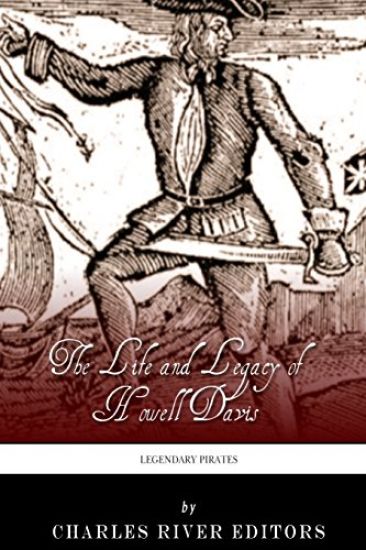
Legendary Pirates: The Life and Legacy of Howell Davis

Legendary Pirates: The Life and Legacy of Howell Davis

Charles River

Createspace Independent Publishing Platform
2013
nidottu
*Includes historic illustrations of Howell Davis and other important people, places, and events in his life. *Includes a profile of Howell Davis from the famous English pirate history "A General History of the Pyrates". *Includes a Bibliography for further reading. "Captain Davis...allowing for the course of life he had been unhappily engaged in, was a most generous, humane person." - Captain William Snelgrave The people who have lived outside the boundaries of normal societies and refused to play by the rules have long fascinated the world, and nowhere is this more evident than the continuing interest in the pirates of centuries past. As the subjects of books, movies, and even theme park rides, people continue to let their imaginations go when it comes to pirates, with buried treasure, parrots, and walking the plank all ingrained in pop culture's perception of them. Charles River Editors' Legendary Pirates series covers the lives, piracy, legends, myths, and legacies of history's most famous pirates. Despite having one of the shortest careers of history's most famous pirates, Captain Howell Davis had one of the most colorful and important years during the Golden Age of Piracy. Though little is known about his life before July 1718, when he joined a pirate crew after they captured the slaver ship he was working on, it's a testament to his abilities that he became the captain of one of the pirates' ships very quickly after they had commandeered his ship. It also didn't take him long to earn a reputation for being devious and cunning, and more than once he was able to lie and bluff his way to taking a ship that probably could have defended itself against him. It was during one of his most daring escapades that one of his ruses was undone on the island of Principe, a Portugese holding at the time. Though Davis didn't know it, one of his deceptions was unmasked, and the island's governor put his own plot in motion, setting Davis up for an ambush that left him and some of his men dead. But even in death, Davis remained influential; he had taken a pirate named Bartholomew Roberts under his wing, and Black Bart would succeed Davis as captain upon his death. Legendary Pirates: The Life and Legacy of Howell Davis looks at the life and legacy of the famous pirate, attempting to separate fact from fiction. Along with pictures depicting Captain Davis and important people, places, and events in his life, you will learn about the pirate like you never have before, in no time at all.
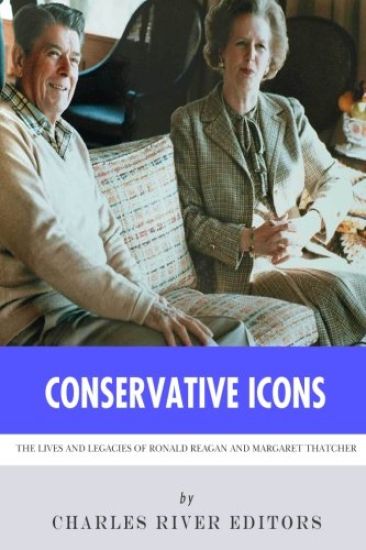
Conservative Icons: The Lives and Legacies of Ronald Reagan and Margaret Thatcher

Conservative Icons: The Lives and Legacies of Ronald Reagan and Margaret Thatcher

Charles River

Createspace Independent Publishing Platform
2013
nidottu
*Includes pictures of Reagan, Thatcher, and important people, places, and events in their lives. *Includes an in depth analysis of both leaders' political philosophies and records. *Includes a Bibliography on Reagan for further reading. "The nine most terrifying words in the English language are: 'I'm from the government and I'm here to help.'" - Ronald Reagan "Being powerful is like being a lady. If you have to tell people you are, you aren't." - Margaret Thatcher Kindred Spirits. Cold Warriors. Conservative Icons. In the 1980s, U. S. President Ronald Reagan and British Prime Minister Margaret Thatcher forged a strong bond that shaped the destinies of the United States, the United Kingdom, and all of Europe, banding together to bring about the end of the Soviet Union. While their geopolitical successes earned them a place in history, it was their similar political philosophies that continue to greatly influence the politics of their respective nations over 20 years after they left office. In a story that could have come straight out of Hollywood, golden actor Ronald Reagan rose through California politics to become California governor and eventually the 40th President. The former actor then went on to have one of the most consequential presidencies of the 20th century, unquestionably making him one of the most influential men of the last 50 years. And his name is still as relevant in American politics today, with every politician with an R next to his or her name trying to claim Ronald Reagan's conservative mantle. In the Republican presidential nomination debates in 2011, Reagan's name was invoked an average of over 5 times per debate, more than every other president combined. Meanwhile, Americans of all stripes continue to debate the merits of "Reaganomics" more than 30 years after Reagan was elected. Sir Winston Churchill is often cited as Britain's greatest prime minister for leading the United Kingdom against Hitler's Nazi war machine during World War II, and indeed he was the idol of the one person who many think might have surpassed him: Margaret Thatcher. Thatcher not only became Britain's first female prime minister, she also became its longest serving prime minister. The political precedents Thatcher set as a woman would be enough of a legacy in its own right, but Thatcher effectively wielded her power in a way that made a lasting contribution both to geopolitics and the perception of female politicians in general. Thatcher is widely credited, along with Ronald Reagan, as one of the principal Cold Warriors who brought about the demise of the Soviet Union, whose leaders gave her the famous nickname "Iron Lady". And of course, Thatcher was recently in the spotlight again with the release of the critically acclaimed movie The Iron Lady, starring Meryl Streep. Conservative Icons looks at the private lives of the two leaders, highlights their political accomplishments and conservative philosophies, and analyzes their ongoing political legacies. Along with pictures of Reagan, Thatcher and other important people and events in his life, you will learn about these Conservative Icons like you never have before, in no time at all.
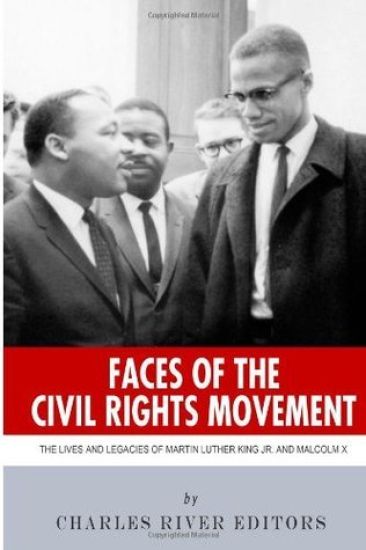
Faces of the Civil Rights Movement: The Lives and Legacies of Martin Luther King Jr. and Malcolm X
*Includes pictures of King, Malcolm X, and important people, places, and events in their lives. *Explains the origins of Malcolm X's name and Martin Luther King Jr.'s name. *Includes a bibliography of King for further reading. Today, a man born Michael King Jr. is one of the most famous Americans in history, his name having been changed at the age of 5 to one the world fondly remembers: Martin Luther King Jr. The life and legend of Dr. King have been told to every American, many of whom come away equating King with the Civil Rights Movement as a whole. But King's life was about far more than leading movements and having dreams. At the height of the Civil Rights Movement, while much of the nation's attention was given to peaceful protests, boycotts, and figures like Rosa Parks and Martin Luther King Jr., a young man named Malcolm Little was rising through the ranks to become one of the leaders of the Nation of Islam. As Malcolm X, he would come to be one of the most controversial figures in 20th century America, hailed as a bold civil rights activist by some and reviled as a violent racist by others. What everyone can agree on, however, is that Malcolm X was one of the most influential black leaders of the 20th century. As the two biggest leaders of their respective civil rights movements, Malcolm X and Martin Luther King Jr. battled for the hearts and minds of Americans, and they even battled against each other, with Malcolm X famously calling King a "chump" and King referring to Malcolm's message as "fiery, demagogic oratory." Faces of the Civil Rights Movement chronicles the lives of these two leaders, whose different ideologies made them advocate vastly different approaches in pursuit of a common goal. This ebook also humanizes the two leaders, both of whom wanted to follow in the footsteps of their fathers, both of whom became leaders of their movements, and both of whom had notorious shortcomings. Along the way, you will learn things about Malcolm X and Dr. King you never knew, including the origins of their names, how they reached their positions, a bitterly contested court case over some of King's papers, and the off-the-cuff origins of King's I Have a Dream speech. Along with pictures of the important people, places, and events in his life, you will learn about Dr. King and Malcolm X like you never have before, in no time at all.
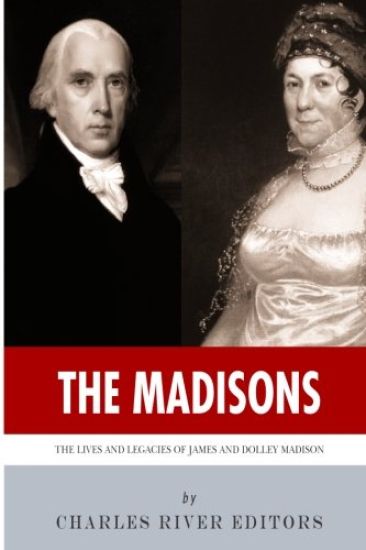
The Madisons: The Lives and Legacies of James and Dolley Madison

The Madisons: The Lives and Legacies of James and Dolley Madison

Charles River

Createspace Independent Publishing Platform
2013
nidottu
*Includes pictures of the Madisons and important people, places, and events in their lives. *Includes a Bibliography for further reading. They seemed like an unusual couple from the outset. In 1794, Dolley Payne Todd was widely considered one of Philadelphia's most beautiful belles, an exceptionally pretty 26 year old with dark curly hair, dancing blue eyes, and as much elegance and social grace as anyone. James Madison was 17 years older, already balding, and just barely five feet tall, unattractive physical characteristics in a modern sense. Yet the two were incredibly close and devoted to each other, and the two of them went on to instrumentally shape the course of American history as one of America's greatest Founding Fathers and First Ladies respectively. The Founding Fathers have become so revered by Americans in the last 200 years that the "Father of the Constitution" himself is often overlooked among the rest of the pantheon. Today James Madison's legacy mostly pales in comparison to the likes of George Washington, Ben Franklin and his closest colleague, Thomas Jefferson, but Madison's list of important accomplishments is monumental. A lifelong statesman, Madison was the youngest delegate at the Continental Congress from 1780-83, and at 36 he was one of the youngest men who headed to Philadelphia for the Constitutional Convention in 1787. Despite his age, he was the Convention's most influential thinker, and the man most responsible for the final draft of the U. S. Constitution. Along with Alexander Hamilton and John Jay, Madison was one of the most persuasive advocates for ratifying the Constitution, authoring some of the most famous Federalist Papers, and he drafted the Bill of Rights that was later added to the Constitution. But his work was far from done; along with Thomas Jefferson, Madison was one of the founders and ideological cornerstones of the Democratic-Republican Party that guided the young nation in the first 30 years of the 19th century. That included his own presidency, in which he oversaw the War of 1812. After the Constitution was ratified, George Washington went about setting all the precedents for the role of the presidency, establishing traditions like the Cabinet. But the role of being the First Lady of the United States was defined by the wife of the 4th president. James Madison may have been the Father of the Constitution, but his wife Dolley all but defined the responsibilities and customs of being the president's wife. Dolley had served as an informal First Lady for the widowed Thomas Jefferson, but when her husband entered the White House in 1809, Dolley went about furnishing the White House to such an extent that much of the style and items she chose were still in place when Mary Todd Lincoln became the First Lady in 1861. Dolley also became a folk hero of sorts and the center of a colorful legend that had her saving Gilbert Stuart's priceless painting of George Washington just ahead of the British while her husband was denigrated for fleeing as Washington D. C. was burned. In addition to being instrumental in decorating the White House, Dolley Madison also set the standard for the First Lady's traditional hosting and ceremonial duties. . The Madisons chronicles the amazing lives and legacies of James and Dolley, as well as the legends surrounding them. Along with pictures of important people, places, and events in their lives, you will learn about James and Dolley Madison like you never have before, in no time at all.
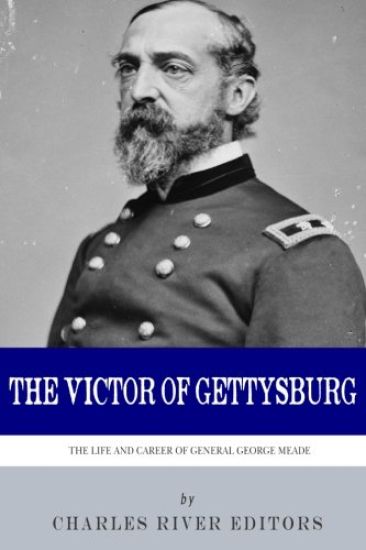
The Victor of Gettysburg: The Life and Career of General George Meade

The Victor of Gettysburg: The Life and Career of General George Meade

Charles River

Createspace Independent Publishing Platform
2013
nidottu
*Includes pictures of Meade and important people, places, and events in his life. *Includes excerpts of Meade's Civil War letters to his wife. *Includes a Bibliography for further reading. "Meade has more than met my most sanguine expectations. He and Sherman are the fittest officers for large commands I have come in contact with." - Ulysses S. Grant, 1864 Ironically, one of the generals who often escapes the attention of Civil War fans who compile the lists of best generals is the man who won the war's most famous battle, George G. Meade (1815-1872). In fact, Meade has become a perfect example of how the generals who did not self-promote themselves and write memoirs after the war had their reputations suffer in the ensuing decades. When people think of Appomattox Court House, they think of Ulysses S. Grant and Robert E. Lee. Few remember that the commander of the Army of the Potomac at the end of the Civil War was not Grant but Meade. Meade exemplified modesty and competence, serving as a career United States Army officer and civil engineer who fought with distinction in the eastern theater of the Civil War. During the first half of the war, Meade rose from command of a brigade to command of a division and finally command of the entire Army of the Potomac just days before the Battle of Gettysburg. Naturally, he is best known for defeating Robert E. Lee's Army of Northern Virginia at Gettysburg in July 1863, although he's not nearly as well remembered as his Confederate counterpart, and he has even been eclipsed in popularity by some of the men he commanded at Gettysburg, like Joshua Chamberlain. If Meade distinguished himself at places like Antietam and Gettysburg, why is he frequently left out of the historical narrative of the war? Meade had a notoriously short temper that hurt his popularity with the press, his men and contemporaries during the war, despite how well he commanded. Perhaps more importantly, Meade's relatively early death in the decade after the war prevented him from defending his record and his decisions during and after Gettysburg. Lincoln mistakenly thought Meade blundered by not being more aggressive in pursuit of Lee after Gettysburg, when in fact Lee's men constructed strong defenses and invited attack on a number of occasions during their retreat. Just as significantly, Meade came under attack by generals like Daniel Sickles, who sought to shield themselves from scrutiny by blaming Meade for poor decisions. On Day 2 of the Battle of Gettysburg, Sickles disobeyed Meade and moved his III Corps out in front of the rest of the army. Although he would constantly defend his maneuver, the move destroyed his corps and nearly ruined the Army of the Potomac's left flank, creating a salient that led to the near annihilation of the corps. Sickles and Meade would feud over the actions on Day 2 in the years after the war, with Meade explaining his actions, and Sickles taking credit for the victory by disrupting Lee's attack plans. While historians have taken Meade's side since, Sickles outlived Meade and helped tarnish the commanding general's reputation after the war, helping cast a shadow over Meade's record for nearly a century. Today historians credit Meade with doing a solid job at Gettysburg, but no self-effusive praise was forthcoming from the man himself. The Victor of Gettysburg: The Life and Career of General George Meade chronicles the life and career of the commanding general at Gettysburg, but it also humanizes the man who somehow managed to be both modest and short-tempered at the same time. Along with pictures of important people, places, and events in his life, you will learn about General Meade like you never have before, in no time at all.
The Stonewall of the West: The Life and Career of General Patrick Cleburne

The Stonewall of the West: The Life and Career of General Patrick Cleburne

Charles River

Createspace Independent Publishing Platform
2013
nidottu
*Includes the entire text of Cleburne's 1864 letter proposing to free the Confederacy's slaves. *Includes pictures of Cleburne and important people, places, and events in his life. *Includes maps of the battles Cleburne fought in, including Shiloh, Chickamauga, and Missionary Ridge. *Includes a Bibliography for further reading. "As between the loss of independence and the loss of slavery, we assume that every patriot will freely give up the latter..." - Patrick Cleburne, 1864 During the Civil War, the eyes of the nation usually stayed fixed to the Eastern theater, where Confederate General Robert E. Lee's Army of Northern Virginia constantly bedeviled the Union Army of the Potomac and its many commanders. Instrumental to that success at places like Second Manassas and Chancellorsville was Lee's corps commander Stonewall Jackson, who became one of the most popular and respected generals of the Civil War. Despite the Confederates' success in holding off the Union's offensives in the East, however, the Union made steady progress in the Western theater, winning battles like Shiloh, capturing New Orleans, and sealing off the Mississippi River at Vicksburg. Like the Union generals in the East, Confederate generals in the West were either mortally wounded in battle (Albert Sidney Johnston) or proved ineffective (Braxton Bragg, John Pemberton). One of the only bright spots in the West for the Confederacy was Irish immigrant Patrick Cleburne, whose successes earned him the nickname "Stonewall of the West". Where so many Confederates were failing, Cleburne's strategic tactics and bold defensive fighting earned him fame and recognition throughout the South, even leading Lee to call him "a meteor shining from a clouded sky." Unfortunately for Cleburne, he is also remembered today for reasons other than his battlefield successes. Cleburne was tasked with leading an assault that he heartily opposed during the Battle of Franklin near the end of 1864, but he obeyed the command and was killed in the assault within the Union lines. The general was so legendary even among Union soldiers that the valuables on his body were looted before his body came back to Confederate lines Upon hearing of his death, Cleburne's old corps commander noted, "Where this division defended, no odds broke its line; where it attacked, no numbers resisted its onslaught, save only once; and there is the grave of Cleburne." Cleburne is also remembered for a bold and novel idea that he proposed to the Army of Tennessee in 1864. Realizing the Confederates' deficiency in manpower and resources, Cleburne suggested freeing the South's slaves so that they would fight for the Confederacy. It was such a radical idea that the Army buried it, and even when the Confederacy was on its last legs entering 1865, it could not muster the political support to emancipate some of their slaves to fight. The Stonewall of the West: The Life and Career of General Patrick Cleburne chronicles the life and career of the Stonewall of the West, analyzing his record in the war and assessing his legacy. Along with pictures of important people, places, and events in his life, you will learn about General Cleburne like you never have before, in no time at all.
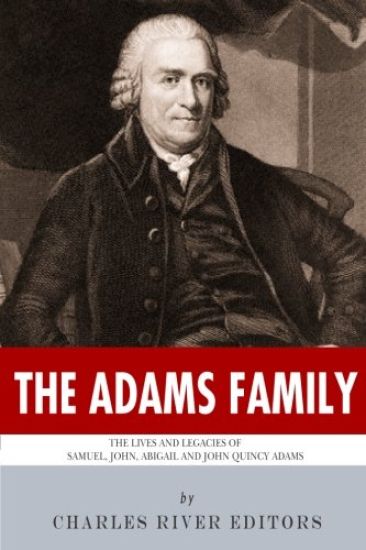
The Adams Family: The Lives and Legacies of Samuel, John, Abigail and John Quincy Adams
*Weaves the lives and work of the Adams family into one entertaining and educational narrative. *Includes several quotes and writings from Samuel, John, John Quincy and Abigail. *Includes pictures of the Adams family and important people, places, and events in their lives. *Includes a Bibliography for further reading. "The liberties of our Country, the freedom of our civil constitution are worth defending at all hazards: And it is our duty to defend them against all attacks." - Samuel Adams "A Constitution of Government once changed from Freedom, can never be restored. Liberty, once lost, is lost forever." - John Adams "Remember the Ladies, and be more generous and favourable to them than your ancestors. Do not put such unlimited power into the hands of the Husbands." - Abigail Adams "My toast would be, may our country always be successful, but whether successful or otherwise, always right." - John Quincy Adams The American Revolution had no shortage of compelling characters with seemingly larger than life traits, including men like the multi-talented Benjamin Franklin, the wise Thomas Jefferson, the mercurial John Adams and the stoic George Washington. But no Revolutionary leader has been as controversial as Samuel Adams, who has been widely portrayed over the last two centuries as America's most radical and fiery colonist. Among his contemporaries, Samuel Adams was viewed as one of the most influential colonial leaders, a man Thomas Jefferson himself labeled "truly the Man of the Revolution" and the one who the Boston Gazette eulogized as the "Father of the American Revolution." Samuel was an outspoken opponent of British taxes in the 1760s, one of Boston's hardest working writers and orators, a leader of the Boston Caucus, active in the Sons of Liberty, and a political leader who organized large gatherings in settings like Faneuil Hall and the Old South Meeting House. When cousin John Adams was an Ambassador to France during the Revolution, he had to explain that he was not the "famous" Adams. John Adams remained a celebrated figure in Boston for all the work he did in Massachusetts before and after the Revolution, but his national reputation has experienced quite a renaissance over the past decade, beginning with David Mccullough's best selling biography in 2001, followed in 2008 by the popular HBO series based on it. While her time as First Lady was important, Abigail Adams remains one of the most recognized and respected First Ladies in American history due to her voluminous correspondence with John when they were separated throughout the American Revolution, as she remained in Massachusetts while John found himself in the thick of politics during his time in the Continental Congress and over in France. In addition to providing a comprehensive account of the inner workings of both politics and the home front during that important chapter in history, the letters also demonstrated the strong intellectual and emotional bond the two of them shared, allowing historians a glimpse of just how influential Abigail was on her husband's ideology and decision making. John Quincy Adams set a lot of firsts for his country. In addition to being the first son of a president to become president himself, John Quincy Adams also managed to be a U. S. Senator, a U. S. House Representative, a Secretary of State, and an ambassador to several countries. Though he is known primarily for his presidential races against Andrew Jackson, there is a general consensus among historians that he is one of America's greatest and most skilled diplomats, responsible for successes such as the Treaty of Ghent (which ended the War of 1812), the annexation of Florida from Spain, and the Monroe Doctrine. The Adams Family chronicles the lives, work and writings of one of the nation's most important families, analyzing their relationships with each other and their lasting legacies.
The Sons of Liberty: The Lives and Legacies of John Adams, Samuel Adams, Paul Revere and John Hancock
*Weaves the lives of the 4 Sons of Liberty together into one entertaining and educational narrative. *Explains the relationships between the men and the roles each one played in the pivotal events before and during the Revolution. *Includes Paul Revere's account of his midnight ride and Longfellow's famous poem Paul Revere's Ride. *Includes several letters and writings from John Adams, Sam Adams and John Hancock. *Includes an original introduction for each of the 4 Sons of Liberty. For over 200 years, Americans have been fascinated by the Revolutionary period and the patriots who led the growing resistance movement against British authority that eventually brought about the Revolutionary War. In particular, the clandestine activities of Boston's Sons of Liberty in the decade before the war continue to be a source of both intrigue and mystery. The American Revolution had no shortage of compelling characters with seemingly larger than life traits, including men like the multi-talented Benjamin Franklin, the wise Thomas Jefferson, the mercurial John Adams and the stoic George Washington. But no Revolutionary leader has been as controversial as Samuel Adams, who has been widely portrayed over the last two centuries as America's most radical and fiery colonist. Among his contemporaries, Adams was viewed as one of the most influential colonial leaders, a man Thomas Jefferson himself labeled "truly the Man of the Revolution" and the one who the Boston Gazette eulogized as the "Father of the American Revolution." Over the course of 83 years, Paul Revere was one of the most prominent citizens in Boston, heralded for his silversmith work, his participation in the Sons of Liberty, and his service in the Massachusetts militia. Given everything he did for Boston and his community, it would have no doubt greatly surprised Revere at the end of his life if he had known he would become an American legend for his midnight ride on the night of April 18, 1775, one of the most mythical events in American history. John Adams remained a celebrated figure in Boston for all the work he did in Massachusetts before and after the Revolution, but his national reputation has experienced quite a renaissance over the past decade, beginning with David Mccullough's best selling biography in 2001, followed in 2008 by the popular HBO series based on it. Then, in 2010, Dearest Friend, a record of the correspondence between Adams and his wife Abigail solidified his position as one of the most darling Founding Fathers of the 21st Century. Most Americans are familiar with John Hancock solely because of his famous signature on the Declaration of Independence, and his name has become a slang phrase for signing a document. But his conspicuous signature on the Declaration of Independence has overshadowed the various and important contributions Hancock made in colonial Boston before the Revolution, the Continental Congress during the Revolution, and Massachusetts state politics after the Revolution. The Sons of Liberty chronicles the amazing lives and careers of the 4 most famous members of the Sons of Liberty, examines their relationships before and during the Revolution, and analyzes their lasting legacies. Along with pictures of important people, places, and events, you will learn about Samuel Adams, John Adams, Paul Revere and John Hancock like you never have before.
American Legends: The Life of John Quincy Adams

American Legends: The Life of John Quincy Adams

Charles River

Createspace Independent Publishing Platform
2013
nidottu
*Includes pictures of John Quincy Adams and important people, places, and events in his life. *Includes quotes from his diary and letters. *Includes a Bibliography for further reading. "My toast would be, may our country always be successful, but whether successful or otherwise, always right." - John Quincy Adams A lot of ink has been spilled covering the lives of history's most influential figures, but how much of the forest is lost for the trees? In Charles River Editors' American Legends series, readers can get caught up to speed on the lives of America's most important men and women in the time it takes to finish a commute, while learning interesting facts long forgotten or never known. John Adams was one of his country's seminal Founding Fathers and one of its most experienced, distinguished diplomats and politicians. Few men in American history have a record anywhere near comparable, but one of them happened to be Adams's own son, John Quincy Adams. And yet, few Americans are familiar with him aside from the fact that he was his father's son and the 6th president of the United States. John Quincy Adams set a lot of firsts for his country. In addition to being the first son of a president to become president himself, John Quincy Adams also managed to be a U. S. Senator, a U. S. House Representative, a Secretary of State, and an ambassador to several countries. Though he is known primarily for his presidential races against Andrew Jackson, there is a general consensus among historians that he is one of America's greatest and most skilled diplomats, responsible for successes such as the Treaty of Ghent (which ended the War of 1812), the annexation of Florida from Spain, and the Monroe Doctrine. Along with his substantive record, Adams was one of the foremost ideological thinkers of the early to mid-19th century, particularly in his adamant opposition to slavery. Adams brought the issue to the forefront in government whenever he could, and he predicted the Civil War that would come less than 15 years after his death: "The conflict between the principle of liberty and the fact of slavery is coming gradually to an issue. Slavery has now the power, and falls into convulsions at the approach of freedom. That the fall of slavery is predetermined in the counsels of Omnipotence I cannot doubt; it is a part of the great moral improvement in the condition of man, attested by all the records of history. But the conflict will be terrible, and the progress of improvement perhaps retrograde before its final progress to consummation." Somewhat fittingly, Adams died in the Capitol Building, collapsing during a session of the House of Representatives in February 1848. But why is Adams a relative unknown? Perhaps it was because he was the first president to be elected without having participated in the Revolution. Through no fault of his own (he was only a child during the conflict), he would forever be kept out of that most exclusive group. It's also likely that he has always had the problem of being in his father's shadow, even though every letter and diary entry indicates John Adams was immensely proud of his son and worked very hard to promote his political career. American Legends: The Life of John Quincy Adams chronicles the amazing life and career of the distinguished politician and diplomat, analyzing his record and unshakable beliefs. Along with pictures of important people, places, and events in his life, you will learn about John Quincy Adams like you never have before, in no time at all.
Russian Legends: The Life and Legacy of Nikita Khrushchev

Russian Legends: The Life and Legacy of Nikita Khrushchev

Charles River

Createspace Independent Publishing Platform
2013
nidottu
*Includes pictures of Khrushchev and important people, places, and events in his life. "We will bury you." - Nikita Khrushchev A lot of ink has been spilled covering the lives of history's most influential figures, but how much of the forest is lost for the trees? In Charles River Editors' Russian Legends series, readers can get caught up to speed on the lives of Russia's most important men and women in the time it takes to finish a commute, while learning interesting facts long forgotten or never known. For 30 years, much of the West looked on with disdain as the Bolsheviks took power in Russia and created and consolidated the Soviet Union. As bad as Vladimir Lenin seemed in the early 20th century, Joseph Stalin was so much worse that Churchill later remarked of Lenin, "Their worst misfortune was his birth... their next worst his death." Before World War II, Stalin consolidated his position by frequently purging party leaders (most famously Leon Trotsky) and Red Army leaders, executing hundreds of thousands of people at the least. And in one of history's greatest textbook examples of the idea that the enemy of my enemy is my friend, Stalin's Soviet Union allied with Britain and the United States to defeat Hitler in Europe during World War II. Stalin had ruled with an iron fist for nearly 30 years before his death in 1953, which may or may not have been murder, just as Stalin was preparing to conduct another purge. With his death, Soviet strongman and long-time Stalinist Nikita Khrushchev (1894-1971), who had managed to stay a step ahead of Stalin's purges if only because he participated in them, became the Soviet premier. A barely known figure outside of the Eastern bloc, Khrushchev was derided as a buffoon by one Western diplomat and mocked for his physical appearance by others, but any Western hopes that he would prove a more conciliatory figure than Stalin were quickly snuffed out as the hard-line Khrushchev embraced confrontational stances. In a statement to Western diplomats at the Polish embassy in Moscow, Khruschev famously warned, "We will bury you." And after his first meetings with President John F. Kennedy, Kennedy famously compared Khrushchev's negotiating techniques to his own father's. Even today, one of Khrushchev's most memorable moments is banging his shoe at a United Nations General Assembly meeting in September 1960 while a Filipino delegate was speaking. Personal histrionics aside, Khrushchev meant business when dealing with the West, especially the United States and its young president, John F. Kennedy. After sensing weakness and a lack of fortitude in Kennedy, Khrushchev made his most audacious and ultimately costly decision by attempting to place nuclear warheads at advanced, offensive bases located in Cuba, right off the American mainland. As it turned out, the Cuban Missile Crisis would show the Kennedy Administration's resolve, force Khrushchev to back down, and ultimately sow the seeds of Khrushchev's fall from power. By the time he died in 1971, he had been declared a non-citizen of the nation he had ruled for nearly 20 years. Russian Legends: The Life and Legacy of Nikita Khrushchev looks back at Khrushchev's most famous moments, but it also explores how the poor peasant rose to power, his politicking and brutality during the Stalin era, and his time as the Soviet premier. Along with pictures of important people, places, and events, you will learn about Khrushchev like you never have before, in no time at all.
Legendary Pirates: The Life and Legacy of Anne Bonny

Legendary Pirates: The Life and Legacy of Anne Bonny

Charles River

Createspace Independent Publishing Platform
2013
nidottu
*Includes historic illustrations of Anne Bonny and important people in her life. *Includes a profile of Anne Bonny from the famous English pirate history "A General History of the Pyrates". *Discusses common legends about Anne Bonny and what is known and unknown about her. *Includes a Bibliography for further reading. "The Day that Rackam was executed, by special Favour, he was admitted to see her; but all the Comfort she gave him, was, that she was sorry to see him there, but if he had fought like a Man, he need not have been hang'd like a Dog." - Captain Charles Johnson, A General History of the Robberies and Murders of the most notorious Pyrates The people who have lived outside the boundaries of normal societies and refused to play by the rules have long fascinated the world, and nowhere is this more evident than the continuing interest in the pirates of centuries past. As the subjects of books, movies, and even theme park rides, people continue to let their imaginations go when it comes to pirates, with buried treasure, parrots, and walking the plank all ingrained in pop culture's perception of them. Charles River Editors' Legendary Pirates series covers the lives, piracy, legends, myths, and legacies of history's most famous pirates. One of the most famous pirates of all time, and possibly the most famous woman to ever become one, was Anne Bonny. The Irish-born girl moved with her family to the Bahamas at a young age in the early 18th century, which at that time was a hotbed for piracy by the likes of Blackbeard, but the redhead with a fiery temper would go on to forge her own reputation. After marrying a poor sailor who accepted clemency to give up piracy, Anne began a legendary affair with Calico Jack Rackam and became pregnant with his child, but that did not stop them from plundering the high seas aboard his pirate ship Revenge, at least until they were captured by British authorities. Anne avoided execution by "pleading her belly", getting a temporary stay of execution due to her pregnancy. It is at that point that Anne Bonny drops off the historical record and becomes the stuff of legends. It's unclear whether she was eventually executed or pardoned or even ransomed, and it's unclear what became of her child. Her relationship with Mary Read aboard the Revenge is also the stuff of legends, and people have been filling in the gaps ever since. Legendary Pirates: The Life and Legacy of Anne Bonny looks at the mysterious life and legends of the famous female pirate, attempting to separate fact from fiction while analyzing her lasting legacy. Along with pictures depicting Anne Bonny and important people in her life, you will learn about the famous pirate like you never have before, in no time at all.
Legendary Pirates: The Life and Legacy of Captain Henry Morgan

Legendary Pirates: The Life and Legacy of Captain Henry Morgan

Charles River

Createspace Independent Publishing Platform
2013
nidottu
*Includes historic illustrations depicting Morgan and important events in his life. *Includes excerpts from an account of Morgan's piracy written by his ship's surgeon. *Analyzes Morgan's legacy and current efforts to find some of his sunken pirate ships. *Includes a Bibliography for further reading. The people who have lived outside the boundaries of normal societies and refused to play by the rules have long fascinated the world, and nowhere is this more evident than the continuing interest in the pirates of centuries past. As the subjects of books, movies, and even theme park rides, people continue to let their imaginations go when it comes to pirates, with buried treasure, parrots, and walking the plank all ingrained in pop culture's perception of them. Charles River Editors' Legendary Pirates series covers the lives, piracy, legends, myths, and legacies of history's most famous pirates. Although Captain Morgan has become somewhat synonymous with spiced rum in the 21st century, Henry Morgan has been one of the best known pirates and privateers for centuries, long before an alcohol was named after him. The swashbuckling captain, who fought nearly as hard as he drank, has long been a favorite among authors looking to write exciting novels about pirates, beginning with Captain Blood, written by Rafael Savtinin during the late 1800s. John Steinbeck wrote about him in Cup of Gold in 1929, and Berton Braley composed a poem about him, aptly titled This is the ballad of Henry Morgan, a few years later. James Michner devoted a chapter to Morgan in his 1989 hit Caribbean, and he inspired Michael Crichton's character in Pirate Latitudes, Charles Hunter. Of course, few young people reach adulthood without drinking too much Captain Morgan spiced rum at least once in their lives, and most people are instantly familiar with a "Captain and Coke", but Morgan's name is all over the Western hemisphere too. Those who have partied and vacationed in the Caribbean Islands are also familiar with Morgan, and many have stayed at the Hotel Henry Morgan in Honduras or at the Port Morgan resort in Haiti. Some of the wealthiest may have stayed at Captain Morgan's Retreat and Vacation Club in Belize. Even gamers have met Morgan in Sid Meier's Pirates and the Age of Pirates 2. In addition to being one of the most famous pirates, there is more of a historical record about Morgan than most, in no small part due to the fact that Morgan had certain advantages many subsequent pirates did not enjoy. Morgan was a Welshman born into aristocracy, subsequently served in the Royal Navy, and viewed piracy as more of a way to serve his country than it was to line his own pockets (though he did plenty of that too.) As a result, Morgan acted with the approval and support of the Crown, which was only too happy to have Morgan and others sail to the Americas and steal from archenemies like Spain. Morgan would go on to have a daring and lucrative career, engaging in adventurous attacks that were legendary in their own time for their success. Legendary Pirates: The Life and Legacy of Captain Henry Morgan looks at the life and legacy of the famous pirate, attempting to separate fact from fiction. Along with pictures depicting Captain Morgan and important people, places, and events in his life, you will learn about the captain like you never have before, in no time at all.
Legendary Pirates: The Life and Legacy of Calico Jack

Legendary Pirates: The Life and Legacy of Calico Jack

Charles River

Createspace Independent Publishing Platform
2013
nidottu
*Includes historic illustrations of Calico Jack and important people in his life. *Includes a profile of Calico Jack from the famous English pirate history "A General History of the Pyrates". *Discusses common legends about Calico Jack, Anne Bonny and Mary Read. *Includes a Bibliography for further reading. "The Day that Rackam was executed, by special Favour, he was admitted to see Anne Bonny]; but all the Comfort she gave him, was, that she was sorry to see him there, but if he had fought like a Man, he need not have been hang'd like a Dog." - Captain Charles Johnson, A General History of the Robberies and Murders of the most notorious Pyrates The people who have lived outside the boundaries of normal societies and refused to play by the rules have long fascinated the world, and nowhere is this more evident than the continuing interest in the pirates of centuries past. As the subjects of books, movies, and even theme park rides, people continue to let their imaginations go when it comes to pirates, with buried treasure, parrots, and walking the plank all ingrained in pop culture's perception of them. Charles River Editors' Legendary Pirates series covers the lives, piracy, legends, myths, and legacies of history's most famous pirates. One of the most famous pirates of all time is Calico Jack, and though he would accomplish many things in his career that would earn him notoriety among the pirates of his age, the simple truth is that he is remembered mostly for his association with Anne Bonny and Mary Read, two of history's most famous women pirates. In fact, had it not been for his involvement with them, his name might have disappeared from the history books entirely. And fittingly, even his nickname, "Calico," came from the type of fabric he preferred for his shirts, the same fabric typically used for women's everyday clothing. Rackham preferred attractive print fabrics produced for trade with natives in the New World, a flamboyant taste worthy of the common pirate stereotype. Before Rackham had even met Anne Bonny, who would become his lover, he had managed to make a name for himself as part of Charles Vane's pirate crew, and it was after a mutiny that he became the captain of a pirate ship. This would allow Calico Jack to make yet another contribution to pirate history and legend: the "Jolly Roger" pirate flag. Flying the simple yet frightening flag that featured a white skull and crossed swords against a black banner, Calico Jack ensured his targets knew they were in trouble as soon as they could spot the flag. To this day, the flag remains synonymous with piracy. Still, it seems Calico Jack will never escape the shadow of his famous female shipmates, despite the fact he was their captain, For his part, Jack never seems to have minded the women who stood beside and behind him through most of his short career, and if anything it seems he enjoyed having the fairer sex aboard, in more ways than one. Their most adventurous and notorious year, 1720, would also be Rackham's last, after they were eventually caught by authorities and tried. In one of the Golden Age of Piracy's most famous anecdotes, one of Calico Jack's last wishes was to see Anne Bonny one more time, and she "consoled" him by telling him that if he fought like a man he wouldn't have been hanged like a dog. Legendary Pirates: The Life and Legacy of Calico Jack looks at the mysterious life and legends of the famous pirate, attempting to separate fact from fiction while analyzing his lasting legacy. Along with pictures depicting Calico Jack and important people, places, and events in his life, you will learn about the pirate captain like you never have before, in no time at all.
America's Greatest Cold War Presidents: Harry Truman, Dwight Eisenhower, John F. Kennedy, Lyndon B. Johnson and Ronald Reagan
*Comprehensively covers the lives, careers and legacies of the 5 Presidents. *Includes pictures of important people, places, and events. *Includes Bibliographies for further reading. Among America's presidents, Harry Truman's presidency produced some of the nation's most crucial decisions and left one of the nation's most unique legacies. The new president had to usher America through victory in Europe in his first month and decide to drop atomic bombs on Hiroshima and Nagasaki a few months later, but the end of World War II produced only the first of many consequential decisions Truman would face during his nearly 8 years in office. As president, Truman would lay the groundwork for the next 50 years of American foreign policy, as the architect of Cold War containment, the man who signed off on the Marshall Plan, and the commander-in-chief during much of the Korean War. Despite being one of America's oldest presidents, Eisenhower redefined the public relations nature of the office, in addition to positioning America during the Cold War standoff with the Soviet Union. But Eisenhower's most lasting contribution as president was the construction of the interstate highway system, and it was in the final year of his presidency that his administration planned and implemented the Apollo space program that would land men on the Moon in 1969. By the time he died in 1969, President Nixon aptly described Eisenhower as "the world's most admired and respected man, truly the first citizen of the world." In many ways, John Fitzgerald Kennedy and his young family were the perfect embodiment of the '60s. The decade began with a sense of idealism, personified by the attractive Kennedy, his beautiful and fashionable wife Jackie, and his young children. Months into his presidency, Kennedy exhorted the country to reach for the stars, calling upon the nation to send a man to the Moon and back by the end of the decade. In 1961, Kennedy made it seem like anything was possible, and Americans were eager to believe him. The Kennedy years were fondly and famously labeled "Camelot," by Jackie herself, suggesting an almost mythical quality about the young President and his family. Of all the politicians who have left their mark on American history, few have had a political career or list of accomplishments and accolades that can even come close to rivaling Lyndon B. Johnson. Johnson is one of only 4 Americans to serve as a House Rep, U. S. Senator, Vice President and President, and he made the most out of each experience. The hard-nosed Texas Democrat became one of the legendary strongmen in the Senate, mastering that political body from 1949-1961 and spending six years as Senate Majority Leader, two as Senate Minority Leader, and two as Senate Majority Whip. The 70+ year old former actor Ronald Reagan went on to have one of the most consequential presidencies of the 20th century, unquestionably making him one of the most influential men of the last 50 years. And his name is still as relevant in American politics today, with every politician with an R next to his or her name trying to claim Ronald Reagan's conservative mantle. In the Republican presidential nomination debates in 2011, Reagan's name was invoked an average of over 5 times per debate, more than every other president combined. Meanwhile, Americans of all stripes continue to debate the merits of "Reaganomics" more than 30 years after Reagan was elected. America's Greatest Cold War Presidents looks at the lives and presidencies of each of the Cold War presidents, their Cold War policies, and their enduring legacies. Along with pictures of important people, places, and events, you will learn about Truman, Ike, JFK, LBJ and Reagan like you never have before.