Kirjojen hintavertailu – 12 903 725 kirjaa ja 27 kauppaa

Kirjailija

Charles River

Kirjat ja teokset yhdessä paikassa: 4 673 kirjaa, julkaisuja vuosilta 2013–2022, suosituimpiin kuuluu William Powell and Myrna Loy: The Lives and Careers of One of Classical Hollywood's Most Iconic Duos. Vertaile teosten hintoja ja tarkista saatavuus suomalaisista kirjakaupoista.

4 673 kirjaa

Kirjojen julkaisuvuodet: 2013–2022.

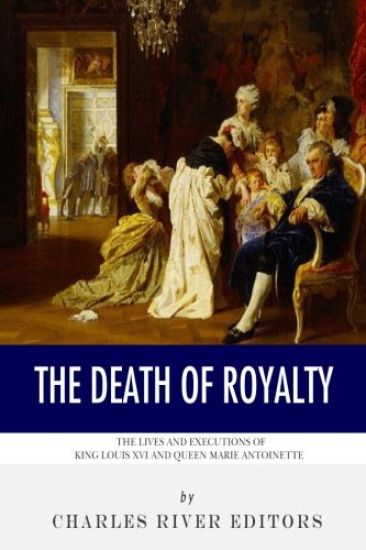
The Death of Royalty: The Lives and Executions of King Louis XVI and Queen Marie Antoinette
*Includes famous art depicting Louis XVI, Marie Antoinette, and important people, places, and events in their lives. *Includes a discussion of their roles in the American and French Revolutions. *Includes a comprehensive discussion of their trials and executions. "I die perfectly innocent of the so-called crimes of which I am accused. I pardon those who are the cause of my misfortunes." - Louis XVI "I was a queen, and you took away my crown; a wife, and you killed my husband; a mother, and you deprived me of my children. My blood alone remains: take it, but do not make me suffer long." - Marie Antoinette Louis XVI and Marie Antoinette are among France's most famous royalty, but for reasons they would have much rather avoided. Coming of age in the wake of the reign of the Sun King, Louis XIV, and his father, Louis XV, Louis XVI initially intended to be one of France's most enlightened Kings. Instead, he was destined to be the only French King ever executed. Indeed, it is his death and his role in fomenting the French Revolution (along with his infamous Queen, Marie Antoinette) that continue to play the central role in Louis XVI's legacy. Throughout history, a countless number of historical figures have had their lives overshadowed by the myths and legends that surround them to the extent that their legacy comes to define them. In French history, this is truer of Marie Antoinette than just about everyone else. Nearly 220 years after she was put to the guillotine, Marie Antoinette is more famous than ever, fairly or unfairly coming to epitomize royalty and everything that was wrong with it. Since her death, Marie Antoinette has been the subject of sharp historical debate over whether she was actually a catalyst in the French Revolution or simply an insignificant scapegoat who was unfairly made a target. At the same time, the one thing everybody associates with Antoinette is the phrase "Let them eat cake", a spoiled and ignorant comment supposedly made in response to being informed that the peasants had no bread. While that phrase has been used far and wide to depict someone as being out of touch, there's no indication Antoinette ever said anything like it. Nevertheless, she remains a pop culture fixture across the West, perceived just as negatively in death as she was in life. The Death of Royalty explains the couple's role in two of history's most famous revolutions, looks at the life of the famous, ill-fated Royal Family, attempts to separate fact from fiction and analyzes their legacies. Along with pictures of important people, places, and events, you will learn about Louis XVI and Marie Antoinette like you never have before, in no time at all.
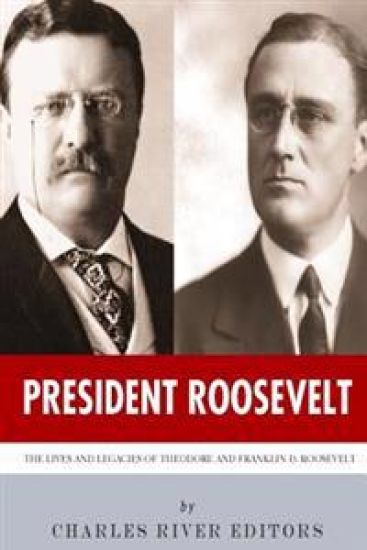
President Roosevelt: The Lives and Legacies of Theodore and Franklin D. Roosevelt

President Roosevelt: The Lives and Legacies of Theodore and Franklin D. Roosevelt

Charles River

Createspace Independent Publishing Platform
2013
nidottu
*Includes pictures of Teddy, FDR, and important people, places, and events in their lives. *Includes a Bibliography for further reading. For a man who grew up to become the "Bull Moose", Theodore Roosevelt was a sickly child, suffering from asthma and other maladies. But his physical weakness actually drove him to be more active, which also fostered an interest in nature. It also helped that Teddy's family was wealthy, allowing him privileges including home school and the ability to attend Harvard, where he was an athlete and took an interest in naval affairs. After finishing at Harvard, Teddy entered politics, but it didn't stop him from writing The Naval War of 1812 in 1882, establishing himself as a professional writer and historian. In the 1890s, it was Teddy's turn to make history, leading the Rough Riders during the Spanish-American War and being decorated for his service with a Medal of Honor. He parlayed his glory into the governorship of New York and then the Vice Presidency under William McKinley. When McKinley was assassinated in 1901, young Teddy was thrust into the presidency, one that would earn him a place on Mount Rushmore, Roosevelt's "Square Deal" domestic policies favored average citizens while busting trusts and monopolies. Teddy also promoted conservation as an environmental stance, while his "speak softly and carry a big stick" foreign policy is still an oft used phrase today. Teddy even earned a Nobel Prize during his presidency. By the time Teddy died in 1919, he was an American icon. Today, Teddy is remembered for being an explorer, hunter, author, soldier, president, and safari adventurer, all of which combine into one unique reputation. As with all legends, Teddy is often portrayed more as a quintessential man's man, to the point that the legend obscures the actual man. Teddy is on Mount Rushmore and might be America's greatest 20th century president, but if he's not it might be because of his own relative. Whether Franklin Delano Roosevelt was America's greatest 20th century president or not, there's no question that he was the most unique. A well-connected relative of Theodore Roosevelt, FDR was groomed for greatness until he was struck down by what was widely believed to be polio at the time. Nevertheless, he persevered, rising through New York politics to reach the White House just as the country faced its greatest challenge since the Civil War, beginning his presidency with one of the most iconic lines ever spoken during an inaugural address. For over a decade, President Roosevelt threw everything he had at the Great Depression, and then threw everything the country had at the Axis powers during World War II. Ultimately, he succumbed to illness in the middle of his fourth term, just before the Allies won the war. President Roosevelt chronicles the lives and legacies of the famous relatives who became two of their country's greatest presidents, humanizing the Bull Moose by juxtaposing his tender side with his masculinity and looking at FDR's dogged determination to beat all of his enemies, no matter what form they took. Along with pictures of important people, places, and events, you will learn about Teddy and FDR like you never have before, in no time at all.
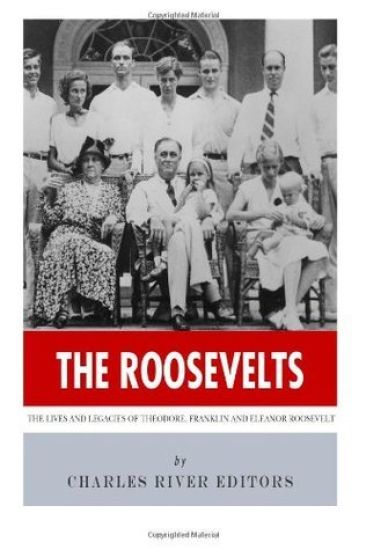
The Roosevelts: The Lives and Legacies of Theodore, Franklin and Eleanor Roosevelt

The Roosevelts: The Lives and Legacies of Theodore, Franklin and Eleanor Roosevelt

Charles River

Createspace Independent Publishing Platform
2013
nidottu
*Includes pictures of Teddy, FDR, Eleanor, and important people, places and events in their lives. *Explains the relationships among the Roosevelts and their family history. They were American legends who revolutionized the roles in the White House and the way the government deals with its citizens. They also happened to be related. For a man who grew up to become the "Bull Moose," Theodore Roosevelt was a sickly child, suffering from asthma and other maladies. But his physical weakness actually drove him to be more active, which also fostered an interest in nature. It also helped that Teddy's family was wealthy, allowing him privileges including home school and the ability to attend Harvard, where he was an athlete and took an interest in naval affairs. After finishing at Harvard, Teddy entered politics, but it didn't stop him from writing The Naval War of 1812 in 1882, establishing himself as a professional writer and historian. In the 1890s, it was Teddy's turn to make history, leading the Rough Riders during the Spanish-American War and being decorated for his service with a Medal of Honor. He parlayed his glory into the governorship of New York and then the Vice Presidency under William McKinley. When McKinley was assassinated in 1901, young Teddy was thrust into the presidency, one that would earn him a place on Mount Rushmore, Roosevelt's "Square Deal" domestic policies favored average citizens while busting trusts and monopolies. Roosevelt also promoted conservation as an environmental stance, while his "speak softly and carry a big stick" foreign policy is still an oft used phrase today. Roosevelt even earned a Nobel Prize during his presidency. If Teddy wasn't the greatest president of the 20th century, it might be due to his own relative. FDR was certainly the most unique. A well-connected relative of Theodore Roosevelt, FDR was groomed for greatness until he was struck down by what was widely believed to be polio at the time. Nevertheless, he persevered, rising through New York politics to reach the White House just as the country faced its greatest challenge since the Civil War, beginning his presidency with one of the most iconic lines ever spoken during an inaugural address. For over a decade, President Roosevelt threw everything he had at the Great Depression, and then threw everything the country had at the Axis powers during World War II. Ultimately, he succumbed to illness in the middle of his fourth term, just before the Allies won the war. If Dolley Madison was instrumental in molding the role of First Lady in the 19th century, credit can be given to Eleanor Roosevelt for revolutionizing the political nature of the role in the 20th and 21st centuries and making it possible for presidents like Bill Clinton to enlist their wives to handle political duties. At the same time, history might remember Eleanor more for what she did outside of the White House, as she became a critically acclaimed and world famous international author and advocate of civil rights, women's rights. By the time she had finished working for the United Nations, working on the Universal Declaration of Human Rights, President Truman rightly called her "The First Lady of the World." The Roosevelts chronicles the amazing lives and careers of the Teddy, FDR and Eleanor and analyzes their relationships and legacies, but it also humanizes the Bull Moose, the man who was doggedly determined to conquer his enemies, and the dutiful wife who persevered through her husband's marital infidelities to become one of his most important political allies and spokesmen. Along with pictures of important people, places, and events, you will learn about the Roosevelts like you never have before.
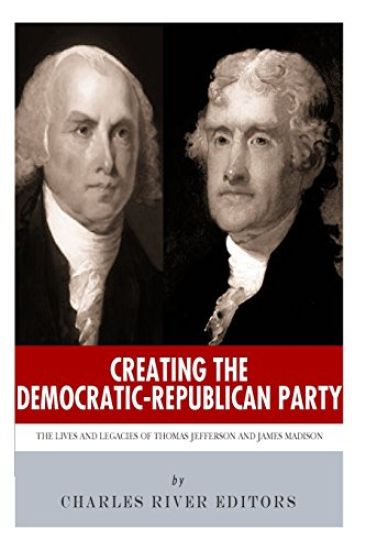
Creating the Democratic-Republican Party: The Lives and Legacies of Thomas Jefferson and James Madison
*Comprehensively covers the lives and careers of Jefferson and Madison from before the Revolution to their presidencies. *Comprehensively covers colonial history leading up to the Revolution. *Includes pictures of important people, places, and events. *Looks at the influences on the political philosophies of the two architects of the Democratic-Republican Party. *Discusses their arguments with the Federalists. *Includes a Bibliography "An opinion prevails that there is no longer any distinction, that the republicans & Federalists are completely amalgamated but it is not so. The amalgamation is of name only, not of principle. All indeed call themselves by the name of Republicans, because that of Federalists was extinguished in the battle of New Orleans." - Thomas Jefferson The story of the United States of America is one of a nation founded upon the loftiest ideals of representative government, attempting to fulfill its goals while encountering competing domestic and global forces. From the beginning, Americans debated how their national government should govern, balancing powers between the federal government and the states, which led to the establishment of the first political parties. At the same time, the nation has struggled to reconcile its guarantee of universal rights and individual liberties with several stark realities, including the presence of millions of slaves at the time of the Declaration of Independence. Nobody spent more time in the thick of these debates than Thomas Jefferson, one of the most famous and revered Americans. Jefferson was instrumental in all of the aforementioned debates, authoring the Declaration of Independence, laying out the ideological groundwork of the notion of states' rights, leading one of the first political parties, and overseeing the expansion of the United States during his presidency. The Founding Fathers have become so revered by Americans in the last 200 years that the "Father of the Constitution" himself is often overlooked among the rest of the pantheon. Today James Madison's legacy mostly pales in comparison to the likes of George Washington, Ben Franklin and his closest colleague, Thomas Jefferson, but Madison's list of important accomplishments is monumental. A lifelong statesman, Madison was the youngest delegate at the Continental Congress from 1780-83, and at 36 he was one of the youngest men who headed to Philadelphia for the Constitutional Convention in 1787. Despite his age, Madison was the Convention's most influential thinker, and the man most responsible for the final draft of the U. S. Constitution. Along with Alexander Hamilton and John Jay, Madison was one of the most persuasive advocates for ratifying the Constitution, authoring some of the most famous Federalist Papers, and he drafted the Bill of Rights that was later added to the Constitution. But his work was far from done; along with Thomas Jefferson, Madison was one of the founders and ideological cornerstones of the Democratic-Republican Party that guided the young nation in the first 30 years of the 19th century. That included his own presidency, in which he oversaw the War of 1812. Creating the Democratic-Republican Party chronicles the amazing lives and careers of Jefferson and Madison, discussing their relationships with each other and other important Founding Fathers. Along with pictures of important people, places, and events, you will learn about the architects of one of America's first political parties like you never have before.
Conquering Asia: The Lives and Legacies of Alexander the Great and Genghis Khan

Conquering Asia: The Lives and Legacies of Alexander the Great and Genghis Khan

Charles River

Createspace Independent Publishing Platform
2013
nidottu
*Includes paintings and busts depicting important people, places, and events. *Discusses both common legends and little known facts about the lives of Alexander and Genghis Khan. *Includes a Bibliography for further reading. "There is nothing impossible to him that will but try" - Alexander "Conquering the world from horseback is easy. It is dismounting and governing that is hard." - Genghis Khan Over the last 2,000 years, ambitious men have dreamed of forging vast empires and attaining eternal glory in battle, but of all the conquerors who took steps toward such dreams, none were ever as successful as antiquity's first great conqueror. Leaders of the 20th century hoped to rival Napoleon's accomplishments, while Napoleon aimed to emulate the accomplishments of Julius Caesar. But Caesar himself found inspiration in Alexander the Great (356-323 B. C.), the Macedonian King who managed to stretch an empire from Greece to the Himalayas in Asia at just 30 years old. It took less than 15 years for Alexander to conquer much of the known world. As fate would have it, Alexander died of still unknown causes at the height of his conquests, when he was still in his early 30s. Although his empire was quickly divided, his legacy only grew, and Alexander became the stuff of legends even in his own time. Alexander was responsible for establishing 20 cities in his name across the world, most notably Alexandria in Egypt, and he was directly responsible for spreading Ancient Greek culture as far east as modern day India and other parts of Asia. For the ancient world, Alexander became the emblem of military greatness and accomplishment; it was reported that many of Rome's greatest leaders, including Pompey the Great, Augustus, and Caesar himself all visited Alexander's tomb in Alexandria, a mecca of sorts for antiquity's other leaders. In a world fascinated by men like Alexander the Great and Julius Caesar, Genghis Khan is one of history's greatest and most famous conquerors. No man, before or since, has ever started with so little and gone on to achieve so much. From a noble family but raised in poverty that drove him to the brink of starvation, Genghis Khan rose to control the second-largest empire the world has ever known (the largest being, arguably, the British Empire of the 18th and 19th centuries), and easily the largest empire conquered by a single man. And while many empires disintegrate upon the death of an emperor, like Alexander the Great's, Genghis Khan's empire endured and was actually enlarged by his successors, who went on to establish dynasties that in some cases lasted for centuries. Though history is usually written by the victors, the lack of a particularly strong writing tradition from the Mongols ensured that history was largely written by those who Genghis Khan vanquished. Because of this, Genghis Khan's portrayal in the West and the Middle East has been extraordinarily (and in many ways unfairly) negative for centuries, at least until recent revisions to the historical record. He was far more complex than the mere brute that his negative portrayals indicate, and though there is a slew of graves and depopulated regions to testify to the fact that he was not a gentle man, it would be simplistic and wrong to describe him merely as a madman bent on destruction for destruction's sake. Conquering Asia chronicles the amazing lives of the two famous conquerors, examining their conquests and discussing the legends and myths surrounding them. Along with pictures of important people, places, and events, you will learn about Alexander the Great and Genghis Khan like you never have before.
Conquering the Middle East: The Lives and Legacies of Alexander the Great, Saladin and Genghis Khan
*Includes paintings and busts depicting important people, places, and events. *Discusses both common legends and little known facts about the lives of each conqueror. *Includes a Bibliography for further reading. Over the last 2,000 years, ambitious men have dreamed of forging vast empires and attaining eternal glory in battle, but of all the conquerors who took steps toward such dreams, none were ever as successful as antiquity's first great conqueror. Leaders of the 20th century hoped to rival Napoleon's accomplishments, while Napoleon aimed to emulate the accomplishments of Julius Caesar. But Caesar himself found inspiration in Alexander the Great (356-323 B. C.), the Macedonian King who managed to stretch an empire from Greece to the Himalayas in Asia at just 30 years old. It took less than 15 years for Alexander to conquer much of the known world. As fate would have it, Alexander died of still unknown causes at the height of his conquests, when he was still in his early 30s. Although his empire was quickly divided, his legacy only grew, and Alexander became the stuff of legends even in his own time. Alexander was responsible for establishing 20 cities in his name across the world, most notably Alexandria in Egypt, and he was directly responsible for spreading Ancient Greek culture as far east as modern day India and other parts of Asia. In a world fascinated by men like Alexander the Great and Julius Caesar, Genghis Khan is one of history's greatest and most famous conquerors. No man, before or since, has ever started with so little and gone on to achieve so much. From a noble family but raised in poverty that drove him to the brink of starvation, Genghis Khan rose to control the second-largest empire the world has ever known (the largest being, arguably, the British Empire of the 18th and 19th centuries), and easily the largest empire conquered by a single man. And while many empires disintegrate upon the death of an emperor, like Alexander the Great's, Genghis Khan's empire endured and was actually enlarged by his successors, who went on to establish dynasties that in some cases lasted for centuries. Though history is usually written by the victors, history was largely written by those who Genghis Khan and Saladin vanquished, and while Genghis was reviled, Saladin became celebrated. Saladin is widely considered one of the greatest generals in history and one of the most famous leaders of the Middle Ages, but he remains a paradox, both in personal and in historical terms. A military genius, he first served other generals and was overshadowed, late in life, by his greatest rival, Richard I of England. He was far more admired by his Christian enemies, who extolled his chivalry, than some of his Muslim rivals, who fought him for control of Egypt and Syria in the 12th century. His Christian enemies continued his name long after it was forgotten in the Middle East, only to spark a revival of his reputation in Arab culture in the 20th century. Revered as the flower of Arab culture, he was really a Kurd who nearly destroyed it. Taught to Egyptian children as a native born Egyptian hero, he was, in fact, Egypt's conqueror, the man who destroyed its native dynasty and suppressed the local Shi'ite sect. Having united almost all of the Levant under one rule, he left it as divided as before. He founded a dynasty that was eventually destroyed by slaves. Conquering the Middle East chronicles the amazing lives and conquests of each conqueror, while looking at the legends and myths surrounding each man's legacy. Along with pictures of important people, places, and events, you will learn about Alexander, Saladin and Genghis Khan like you never have before.
American Outlaws: The Life and Legacy of Baby Face Nelson

American Outlaws: The Life and Legacy of Baby Face Nelson

Charles River

Createspace Independent Publishing Platform
2013
nidottu
*Comprehensively covers Baby Face Nelson's most notorious shootouts and robberies, his relationship with John Dillinger, and the fatal Battle of Barrington. *Includes pictures of Baby Face Nelson and important people and places in his life. *Includes a Bibliography for further reading. "He had a baby face. He was good looking, hardly more than a boy, had dark hair and was wearing a gray topcoat and a brown felt hat, turned down brim." -The wife of Chicago Mayor Big Bill Thompson describing the man who attacked her and stole her jewelry in October 1930. America has always preferred heroes who weren't clean cut, an informal ode to the rugged individualism and pioneering spirit that defined the nation in previous centuries. The early 19th century saw the glorification of frontier folk heroes like Davy Crockett and Daniel Boone. After the Civil War, the outlaws of the West were more popular than the marshals, with Jesse James and Billy the Kid finding their way into dime novels. And at the height of the Great Depression in the 1930s, there were the "public enemies", common criminals and cold blooded murderers elevated to the level of folk heroes by a public frustrated with their own inability to make a living honestly. The man who became Public Enemy Number One after the deaths of John Dillinger and Pretty Boy Floyd was Lester Joseph Gillis, whose alias "George Nelson" eventually gave way to the nickname "Baby Face Nelson". Despite the almost playfully innocent nickname, and the fact that he was not as notorious as two of his partners in crime, Dillinger and Floyd, Baby Face Nelson was the worst of them all. In an era where the outlaws were glorified as Robin Hood types, Baby Face was a merciless outlier who pulled triggers almost as fast as he lost his temper. By the time fate caught up with Baby Face Nelson in November 1934 at the "Battle of Barrington", a shootout that left his body riddled with nearly 20 bullet holes, he was believed to have been responsible for the deaths of more FBI agents than anybody else in American history. It was a distinction he would have appreciated; during one bank robbery, Baby Face Nelson gleefully screamed "I got one " after shooting police officer Hale Keith several times. Due to his association with Dillinger and his own crime spree, Baby Face Nelson became a fixture of pop culture and was the main character in a few Hollywood films two decades after his death. Though he is not remembered as colorfully as Dillinger or Bonnie and Clyde, he is often remembered paradoxically as being a devoted family man who even had his wife and children on the run with him. American Outlaws: The Life and Legacy of Baby Face Nelson looks at the life and crime of the famous outlaw, but it also humanizes him and examines his lasting legacy. Along with pictures of Baby Face Nelson and important people, places, and events in his life, you will learn about the infamous public enemy like you never have before, in no time at all.
The World's Greatest Civilizations: The History and Culture of Ancient Athens

The World's Greatest Civilizations: The History and Culture of Ancient Athens

Charles River

Createspace Independent Publishing Platform
2013
nidottu
*Discusses the lives and influence of famous Athenians like Socrates, Plato, Aristotle, Pericles, and more.*Explains the democratic system organized by the Athenians.*Describes how triremes were built and operated, as well as the method of naval warfare mastered by the Athenians.*Includes the famous Funeral Oration of Pericles during the Peloponnesian War.*Includes pictures of Athens and important people and places in its history. "What I would prefer is that you should fix your eyes every day on the greatness of Athens as she really is, and should fall in love with her. When you realize her greatness, then reflect that what made her great was men with a spirit of adventure, men who knew their duty, men who were ashamed to fall below a certain standard. If they ever failed in an enterprise, they made up their minds that at any rate the city should not find their courage lacking to her, and they gave to her the best contribution that they could." - The Funeral Oration of Pericles, quoted by ThucydidesDominated to this day by the sprawling white marble complex of the Acropolis, Athens is a city which is immensely and rightly proud of its past. For a period of roughly three centuries, the polis of Athens stood, if not in a position of unchallenged supremacy among the cities of Hellas, then at the very least among its three most important polities. Its fledgling Empire, though small by the standards later set by Alexander or the Romans, or even by those of its ancient enemy Persia, nonetheless encompassed cities as far afield as Asia Minor and Southern Italy, a remarkable fact considering such expansion was achieved by the inhabitants of a single city and its immediate surroundings, rather than by an entire nation. For much of its history, the Athenian navy was the single mightiest force in the Mediterranean, having defeated the overwhelming might of Persia in pitched battle upon the open sea numerous times. The Athenian army itself, though subordinate to its naval power - a sop to the fact that it was trade and empire-building that had made Athens rich - was nothing to be sneered at, as it succeeded in meting out a humiliating defeat to Darius's Persians at Marathon. Yet despite a martial tradition that, if taken as a whole, was second to none save the Spartans, Athens is chiefly remembered for two reasons: its political system, which would in time form the nucleus of all Western democratic systems of government, and the remarkable number of outstanding individuals which, during the Golden Age of Athens, lived and flourished in the enlightened city-state. The Ancient Athenians formed the backbone of the West's entire culture, from the arts to philosophy and everything inbetween. In virtually all fields of human endeavor Athens was so much at the forefront of dynamism and innovation that the products of its most brilliant minds remain not only influential but entirely relevant to this day. In the field of medicine, the great physician Hippocrates not only advanced the practical knowledge of human anatomy and care-giving but changed the entire face of the medical profession. The great philosophers of Athens, men like Aristotle, Socrates, and Plato, literally revolutionized the way people thought about topics like logic, reason, and good and evil. Great architects and sculptors such as Phidias produced works of art of such breathtaking realism and startling dynamism that they later formed the driving force behind the resurgence of sculpture during the Renaissance and served as masters to artists such as Michelangelo, Bernini, and Donatello. The World's Greatest Civilizations: The History and Culture of Ancient Athens comprehensively covers the history and culture of the famous Greek city-state, looking at their religious, political, and military past, and examining all their accomplishments. You will learn about Ancient Athens like you never have before.
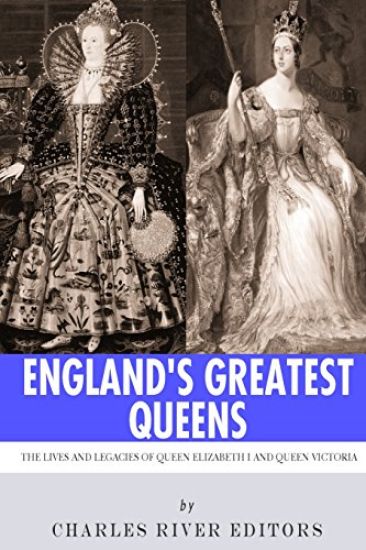
England's Greatest Queens: The Lives and Legacies of Queen Elizabeth I and Queen Victoria
*Includes pictures of the queens and important people, places, and events in their lives. *Discusses the Elizabethan era and Victorian era in depth and looks at their legacies and depictions in pop culture. "Video et taceo." ("I see, and say nothing") - Queen Elizabeth I "Since it has pleased Providence to place me in this station, I shall do my utmost to fulfil my duty towards my country; I am very young and perhaps in many, though not in all things, inexperienced, but I am sure that very few have more real good will and more real desire to do what is fit and right than I have." - Queen Victoria, 1837 England has had no shortage of influential monarchs, but only Queen Elizabeth I and Queen Victoria had their nation's age literally named after them. Both the Elizabethan era and Victorian era have come to symbolize a golden age of peace and progress in every aspect of British life, with the long reigns of both queens also providing stability. When Queen Elizabeth II came to the throne in 1952, many commentators heralded the beginning of her reign as the second Elizabethan age. The first one, of course, concerned the reign of Henry VIII's second surviving daughter and middle surviving child, Queen Elizabeth I, one of England's most famous and influential rulers. It was an age when the arts, commerce and trade flourished. It was the epoch of gallantry and great, enduring literature. It was also an age of wars and military conflicts in which men were the primary drivers and women often were pawns. Elizabeth I changed the rules of the game and indeed she herself was changed by the game. She was a female monarch of England, a kingdom that had unceremoniously broken with the Catholic Church, and the Vatican and the rest of Christendom was baying for her blood. She had had commercial and militaristic enemies galore. In the end, she helped change the entire structure of female leadership. Elizabeth I still wielded great power in the 16th century, whereas Victoria was a constitutional monarch with limited power over the workings of the British government. But in a way, that made Victoria even more unique, as she still proved able to mold the cultural identity of a nearly 65 year long epoch. Furthermore, Victoria established some of the ceremonial customs of the British monarch and became both the forerunner and role model of subsequent queens, a legacy that continues to endure with her great-great granddaughter, Queen Elizabeth II. Though Britain's longest reigning monarch is now mostly associated with conservative values (particularly strict morality and traditional social and gender roles), Victoria and her era oversaw the cultural and technological progress of Britain and the West in general, architectural revivals, and the expansion of imperialism. While some of these developments have been perceived negatively over a century later, Britons of the 19th century and early 20th century often viewed the Victorian Era as the height of their nation's power and influence. England's Greatest Queens chronicles the lives and reigns of Elizabeth I and Victoria, as well as the eras they lived in. Along with pictures of important people, places, and events in her life, you will learn about Queen Elizabeth I and Queen Victoria like you never have before, in no time at all.
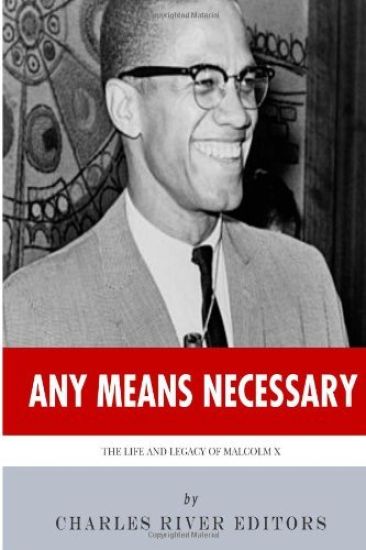
Any Means Necessary: The Life and Legacy of Malcolm X

Any Means Necessary: The Life and Legacy of Malcolm X

Charles River

Createspace Independent Publishing Platform
2013
nidottu
*Includes pictures of Malcolm X and important people, places, and events in his life. *Explains the origins of the name Malcolm X. *Includes some of Malcolm X's most famous quotes, and a detailed description of his "The Ballot or The Bullet" speech. "Our objective is complete freedom, justice and equality by any means necessary." - Malcolm X At the height of the Civil Rights Movement, while much of the nation's attention was given to peaceful protests, boycotts, and figures like Rosa Parks and Martin Luther King Jr., a young man named Malcolm Little was rising through the ranks to become one of the leaders and public faces of the Nation of Islam. As Malcolm X, he would come to be one of the most controversial figures in 20th century America, hailed as a bold human rights activist by some and reviled as a violent racist by others. What everyone can agree on, however, is that Malcolm X was one of the most influential black leaders of the 20th century. After being imprisoned for crimes committed as a teenager, Malcolm X converted to Islam and joined the Nation of Islam while in jail. Once he was freed in 1952, he began a steady ascent to become the face of the Nation, a platform from which he gained notoriety for advocating the Nation's teachings about black supremacy. Whereas Dr. King was pushing for fuller integration and desegregation, X and the Nation of Islam advocated total separation. Other Civil Rights organizations deemed X and the Nation to be too extremist, and in response X labeled them "stooges". Today, one of the best known aspects of Malcolm X's life was his assassination in 1965 by members of the Nation of Islam following his split from the group over differences with leader Elijah Muhammad. In addition to making a pilgrimage to Mecca, X continued to be politically active, founding a number of groups and speaking to many more in an attempt to heighten political awareness. Over the last two years of his life, he faced several threats from the Nation of Islam, which culminated with his assassination on February 21, 1965, as he was addressing the Organization of Afro-American Unity in Manhattan's Audubon Ballroom, Any Means Necessary: The Life and Legacy of Malcolm X looks at the turbulent life and legacy of the famous leader, while humanizing the man and discussing lesser known facts about him, including how he chose the name Malcolm X, and whether he was advocating more peaceful protest at the end of his life. Along with pictures of important people, places, and events in his life, you will learn about Malcolm X like you never have before, in no time at all.
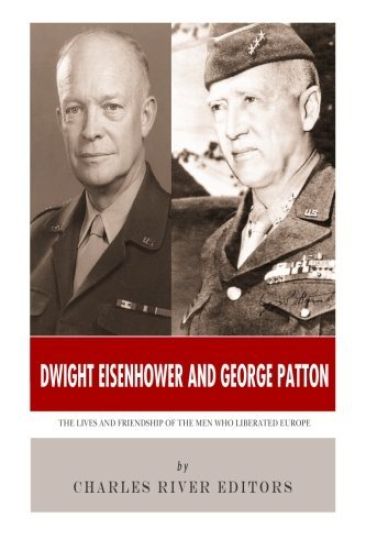
Dwight Eisenhower and George Patton: The Lives and Friendship of the Men Who Liberated Europe
*Weaves the lives and careers of both generals into one entertaining and educational narrative. *Includes Patton's most colorful and inspiring quotes, including his famous Speech to the Third Army. *Includes pictures of Eisenhower, Patton and other important people, places, and events. *Discusses the decades-long friendship between both generals. *Explains their roles in North Africa, Sicily, D-Day and the Battle of the Bulge. *Includes a Bibliography for further reading. During the middle of the 20th century, the United States completed its transformation into one of the world's superpowers, and few were as instrumental in this development as Dwight D. Eisenhower (1890-1969), A career military man, Ike was too young to serve in combat during World War I, but he began a long and productive career collaborating with future military legends George Patton and Douglas MacArthur while serving some of the nation's other famous generals, including George Marshall and John J. Pershing. Amazingly, he had never served in anything but administrative positions before World War II. By 1942, Eisenhower was given the role of appointed Supreme Commander Allied (Expeditionary) Force in North Africa, and after his success there, Eisenhower oversaw the invasion of Sicily in 1943, which at the time had been the largest amphibious invasion in history. In both campaigns he had the fortune of commanding George Patton. With those successes, President Roosevelt picked Eisenhower to be the Supreme Allied Commander of the Allied Expeditionary Force, leaving him in charge of Operation Overlord and the defining moment of his military career, D-Day. By the time he died in 1969, President Nixon aptly described Eisenhower as "the world's most admired and respected man, truly the first citizen of the world." Rommel, Guderian, Liddell-Hart and JFC Fuller were all early exponents and practitioners of armored warfare, tactics that were to break the stalemate that had characterized World War I. Advocates of the tank and above all speed, it was their ideas which decimated Saddam Hussein's forces in the 1990 Gulf War. But among the proponents and practitioners of armored warfare, the brash, bold, arrogant and eccentric George S. Patton remains the world's greatest armored commander by the one yardstick that really counts: the battlefield. In 1944-45, Patton's Third Army raced across northern Europe, covering more ground and destroying more enemy resources than any other equivalent force in history. Patton is one of America's most celebrated generals and one of the most famous generals of the 20th century, but his story has its origins in the form of a shy, dyslexic boy who could cry uncontrollably and who viewed his own emotional intelligence as unmanly. Patton was a fascinating, complicated and controversial man whose life story ranges between genius, folly and tragedy, with absolute determination the one constant theme. Between the two World Wars, he wrote at length about mechanized warfare and tactics, and during the Second World War he worked his way up colorfully, controversially, and capably, all of which made him more conspicuous during the war. Patton's shocking death just a few months after the war ended ensured that the general died at the height of his fame and would always be remembered for his legendary attitude and exploits. This book profiles the lives, careers, friendship and legacies of the two legendary generals, along with pictures, a bibliography and a Table of Contents.
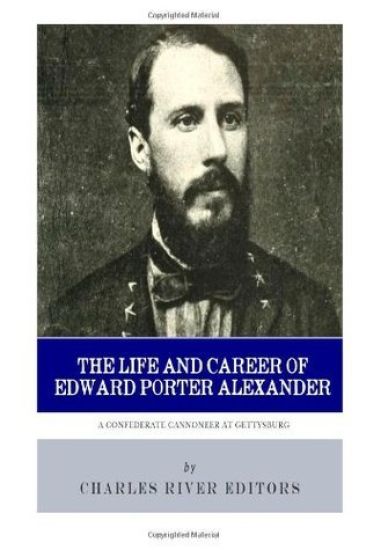
A Confederate Cannoneer at Gettysburg: The Life and Career of Edward Porter Alexander

A Confederate Cannoneer at Gettysburg: The Life and Career of Edward Porter Alexander

Charles River

Createspace Independent Publishing Platform
2013
nidottu
*Includes pictures of Porter Alexander and other Civil War generals, as well as maps of important battles. *Includes Alexander's descriptions of important battles, including Gettysburg, and his analysis of them from his memoirs. *Includes a Bibliography for further reading. In the narrative of the Civil War, Edward Porter Alexander has loomed larger in death than in life. Just 25 years old when the war broke out, Porter Alexander had already served as an engineer and officer in the U. S. Army, but the native Georgian resigned his commission in May 1861 and joined the Confederacy after his home state seceded. Porter Alexander spent 1861 as an intelligence officer, and he served as part of a signal guard, but he soon became chief of ordnance for Joseph Johnston's army near Richmond. Half a year later, Johnston would be injured during the Peninsula Campaign at the Battle of Seven Pines, after which he was replaced by Robert E. Lee. Over the course of 1862, Porter Alexander took on more roles in the Army of Northern Virginia's artillery branch, particularly under James Longstreet's 1st Corps. Though he participated in several battles, he played his biggest role at the Battle of Gettysburg. On the third day, Lee decided to make a thrust at the center of the Union's line with about 15,000 men spread out over three divisions. Though it is now known as Pickett's Charge, named after division commander George Pickett, the assignment for the charge was given to Longstreet, whose 1st Corps included Pickett's division. Lee's decision necessitated a heavy artillery bombardment of the Union line in an attempt to knock out the Union's own artillery before beginning the charge that would cover nearly a mile of open space from Seminary Ridge to the Union line on Cemetery Ridge. Lee tasked Porter Alexander, in charge of the 1st Corps' guns, to conduct the artillery bombardment. What resulted was the largest sustained bombardment of the Civil War, with over 150 Confederate cannons across the line firing incessantly at the Union line for nearly 2 hours. Unfortunately for Porter Alexander and the Confederates, the sheer number of cannons belched so much smoke that they had trouble gauging how effective the shells were. As it turned out, most of the artillery was overshooting the target, landing in the rear of the Union line. Reluctant to order the charge, Longstreet commanded Porter Alexander to order the timing for the charge. As Longstreet and Alexander anticipated, the charge was an utter disaster, incurring a nearly 50% casualty rate and failing to break the Union line. Porter Alexander would continue to serve under Longstreet's corps for most of the rest of the war, and he famously suggested to Lee at Appomattox that the Confederate army should disband and melt away instead of surrender. Porter Alexander would later regret the suggestion, and Lee scolded him for it anyway. Though he had served with distinction during the Civil War, it was Porter Alexander's memoirs that have kept his name alive today. While many prominent officers on both sides wrote memoirs, Porter Alexander's were among the most insightful and often considered by historians as the most evenhanded. With a sense of humor and a good narrative, Porter Alexander skillfully narrated the war, his service, and what he considered the successes and faults of others, including Lee, when he thought they had made good decisions or mistakes. As a result, historians continue to rely heavily on his memoirs as a source for Civil War history. A Confederate Cannoneer at Gettysburg profiles the life, career, and legacy of the man in charge of the Confederate guns before Pickett's Charge. Along with pictures of important people, places, and events, you will learn about Porter Alexander like you never have before, in no time at all.
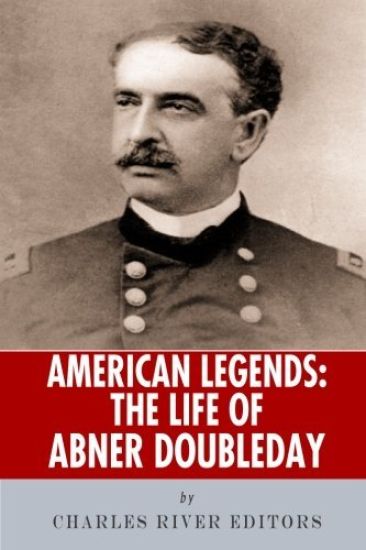
American Legends: The Life of Abner Doubleday

American Legends: The Life of Abner Doubleday

Charles River

Createspace Independent Publishing Platform
2013
nidottu
*Examines the legend that Abner Doubleday invented baseball, including the origins of the legend and its veracity. *Includes Doubleday's accounts of Fort Sumter, Antietam, and Gettysburg. *Discusses the controversies surrounding Doubleday's life and legacy. *Includes pictures of Doubleday and important people and places. *Includes a Bibliography for further reading. "Gen. Doubleday was not a man of 'personal magnetism' nor what is called a dashing officer.' He was an earnest and conscientious man and a safe and steady soldier-precise, methodical, and to be depended on in any emergency." - General Don Carlos Buell A lot of ink has been spilled covering the lives of history's most influential figures, but how much of the forest is lost for the trees? In Charles River Editors' American Legends series, readers can get caught up to speed on the lives of America's most important men and women in the time it takes to finish a commute, while learning interesting facts long forgotten or never known. Abner Doubleday (1819-1893) had one of the lengthiest Civil War resumes and an influence that made him worthy of national recognition. Doubleday is credited with firing the first shot in defense of Fort Sumter, the opening fight of the war, and he played a pivotal role on the first day of the Battle of Gettysburg, taking command of the I Corps early on the morning of July 1, 1863 after General John Reynolds was killed. Doubleday also led a division at South Mountain and then at Antietam, where he was injured during deadly fighting in the Cornfield and the West Woods. One colonel described him as a "gallant officer ... remarkably cool and at the very front of battle", and his personal character was so admired among the rank-and-file that one of his men humorously asserted, "He is deficient considerably in the requisites of a commander. He does not drink whiskey...stays with his command and seems anxious to do his duty and fight Rebels.... He also allows his wife to stay with him when he ought to keep a mistress." Despite his Civil War service, few people remember Abner Doubleday for his military career today, and it has basically been relegated to the status of historical footnote. Instead, Doubleday has become the inadvertent beneficiary of the myth that he invented baseball, and he is almost universally remembered for that claim. In conjunction, the widespread belief that Doubleday invented baseball resulted in his hometown of Cooperstown, New York becoming home of Major League Baseball's Hall of Fame. This is all in spite of the fact that Doubleday never claimed to have invented the game much less said anything of note about it, which should come as no surprise since baseball was so commonplace by then that it was a popular game played in army camps among Civil War soldiers on both sides. American Legends: The Life of Abner Doubleday profiles the life of the Civil War general, examines his military career, and explains the origins of the myth that he invented baseball. Along with pictures, you will learn about Doubleday like you never have before, in no time at all.
Charles Dickens & Jane Austen: The Lives and Legacies of Britain's Two Famous Novelists
*Includes pictures of Austen, Dickens and important people, places, and events in their lives. *Explains the real-life inspiration for many of Dickens's most famous characters. *Includes quotes about Austen and her novels by some of her most famous contemporaries. *Includes a Bibliography of Austen's works and works about her. Charles Dickens needs no formal introduction, having been the most popular English writer of the 19th century and still one of the most popular writers in history today. Dickens' upbringing was a mixture of happy times and sad: when he recalled his father being sent to debtor's prison in his memoirs, his tears actually left marks on the page. These qualities eventually helped forge him into a man many regard as the greatest Victorian era novelist, perhaps in the world, and the author of some of the most remarkable fictional characters who retain tremendous staying power to this day, including Fagin, Peepy, David Copperfield and Oliver Twist to name just a few. Unlike other great writers and artists, during his own lifetime Dickens' works enjoyed remarkable popularity and renown, to such an extent that even Queen Victoria and Prime Minister Benjamin Disraeli felicitated and feted Dickens. In the 20th century, well after Dickens's passing, his literary genius was truly and completely appreciated by ordinary readers as well as critics and scholars alike. Dickens's novels, novellas and short stories retain powerful and enduring popularity with the public largely because Dickens, apart from the usual attributes of good fiction writing, connected his thoughts with the universal by using history and the present as bridges. By the time he died at the relatively young age of 58 from a stroke, he was already Europe's most famous writer, and obituaries noted that Dickens was a "sympathiser with the poor, the suffering, and the oppressed." Dickens was interred in Westminster Abbey, a rare honor bestowed only among the greatest and most accomplished Britons. As has happened with many of history's greatest writers, Jane Austen (1775-1817) did not earn the credit she was due until well after her death. Austen was an English novelist whose works of romantic fiction, set among the landed gentry, has earned her a place as one of the most widely read writers in English literature over the last 150 years. Austen's romantic fiction was an interesting genre that belied the fact her writing was laden with realism and a scathing critique on society and the role women played in it during her life. Austen tried several different types of literary styles before settling on writing novels from 1811-1817, releasing Sense and Sensibility (1811), Mansfield Park (1814) and Emma (1816). The novels highlighted the dependence of women on marrying high to reach a better social status and financial security, but given the controversial nature of her topics and her writing, there was a strong debate in the 19th century over the merits of Jane's writing and her works. While some like Sir Walter Scott praised her writing, others like Charlotte Bronte thought poorly of it. Charles Dickens & Jane Austen looks at the lives, works, and influences the famous British novelists had over their contemporaries and successors, while also analyzing their lasting literary legacies. Along with pictures of important people and places, you will learn about Charles Dickens and Jane Austen like you never have before, in no time at all.
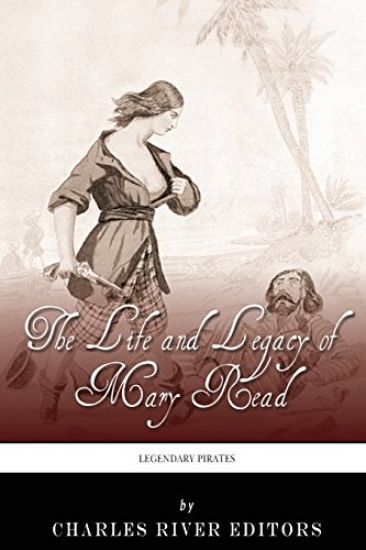
Legendary Pirates: The Life and Legacy of Mary Read

Legendary Pirates: The Life and Legacy of Mary Read

Charles River

Createspace Independent Publishing Platform
2013
nidottu
*Includes historic illustrations of Mary Read and important people in her life. *Includes a profile of Mary Read from the famous English pirate history "A General History of the Pyrates". *Discusses common legends about Mary Read, separating fact from fiction. *Includes a Bibliography for further reading. " H]e fell accidentally into Discourse with Mary Read, whom he taking for a young Man, ask'd her, what Pleasure she could have in being concerned in such Enterprizes, where her Life was continually in Danger, by Fire or Sword; and not only so, but she must be sure of dying an ignominious Death, if she should be taken alive?-She answer'd, that as to hanging, she thought it no great Hardship, for, were it not for that, every cowardly Fellow would turn Pyrate, and so infest the Seas, that Men of Courage must starve..." - Captain Charles Johnson, A General History of the Robberies and Murders of the most notorious Pyrates The people who have lived outside the boundaries of normal societies and refused to play by the rules have long fascinated the world, and nowhere is this more evident than the continuing interest in the pirates of centuries past. As the subjects of books, movies, and even theme park rides, people continue to let their imaginations go when it comes to pirates, with buried treasure, parrots, and walking the plank all ingrained in pop culture's perception of them. Charles River Editors' Legendary Pirates series covers the lives, piracy, legends, myths, and legacies of history's most famous pirates. Among all the pirates of the "Golden Age of Piracy", none were as unique as Mary Read, who was one of just two known women to be tried as a pirate during the Golden Age, alongside her own crewmate (and possible lover) Anne Bonny. Like Anne, Mary Read was an illegitimate child who spent some of her childhood dressed up as and disguised as a little boy through incredibly strange circumstances. But unlike her future shipmate, Mary ultimately took a liking to it, and she continued to disguise her gender to take on roles reserved for men, including in the British army. During that time, she fell in love with a Flemish soldier and eventually married him. Mary Read might have been content to live out her life with her husband in Holland, but after his death, she headed for the West Indies, only to have her ship commandeered by pirates. But Read, who had worked on a ship before, was only too happy to join the pirate crew and play the role of privateer. And in 1720, that crew was captured by Calico Jack, who already had his lover Anne Bonny as part of his crew and now unwittingly added a second female when Mary opted to join. Together the three played a legendary role as shipmates and possible lovers while continuing their piracy around the Bahamas, only to eventually be captured by authorities in October 1720. Most of the crew was executed, but Mary and Anne both decided to "plead the belly", claiming they were pregnant and thereby receiving a stay of execution. This spared them the noose, but Mary would die of illness while still imprisoned in 1721. Legendary Pirates: The Life and Legacy of Mary Read looks at the mysterious life and legends of the famous female pirate, attempting to separate fact from fiction while analyzing her lasting legacy. Along with pictures depicting Mary and important people, places, and events in her life, you will learn about the famous pirate like you never have before, in no time at all.
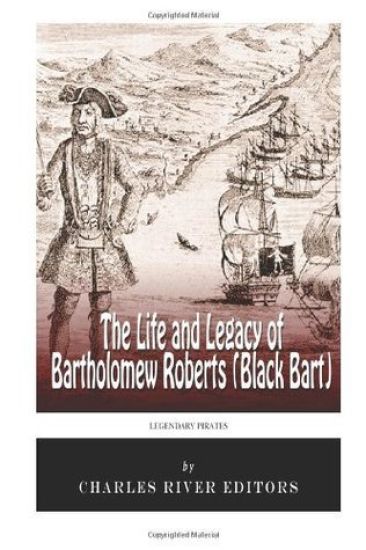
Legendary Pirates: The Life and Legacy of Bartholomew Roberts (Black Bart)

Legendary Pirates: The Life and Legacy of Bartholomew Roberts (Black Bart)

Charles River

Createspace Independent Publishing Platform
2013
nidottu
*Includes historic illustrations of Black Bart and other important people, places, and events in his life. *Includes a profile of Black Bart from the famous English pirate history "A General History of the Pyrates". *Includes a Bibliography for further reading. "Roberts was a tall black Man, near forty Years of Age...of good natural Parts, and personal Bravery, tho' he applied them to such wicked Purposes, as made them of no Commendation, frequently drinking Damn to him who ever lived to wear a Halter... Roberts himself made a gallant Figure, at the Time of the Engagement, being dressed in a rich crimson Damask Wastcoat and Breeches, a red Feather in his Hat, a Gold Chain round his Neck, with a Diamond Cross hanging to it, a Sword in his Hand, and two Pair of Pistols hanging at the End of a Silk Sling, flung over his Shoulders (according to the Fashion of the Pyrates;)..." - Captain Charles Johnson, A General History of the Robberies and Murders of the most notorious Pyrates The people who have lived outside the boundaries of normal societies and refused to play by the rules have long fascinated the world, and nowhere is this more evident than the continuing interest in the pirates of centuries past. As the subjects of books, movies, and even theme park rides, people continue to let their imaginations go when it comes to pirates, with buried treasure, parrots, and walking the plank all ingrained in pop culture's perception of them. Charles River Editors' Legendary Pirates series covers the lives, piracy, legends, myths, and legacies of history's most famous pirates. The Golden Age of Piracy generally refers to the era when history's most famous pirates roamed the seas of the West Indies from 1670-1720, engaging in colorfully daring and oftentimes murderous attacks on any ship they felt emboldened enough to take on. And it is no coincidence that the end of the Golden Age was marked by the deaths of Blackbeard and Bartholomew Roberts, best known as Black Bart. Black Bart may not be as well known today as other pirates of the era, but he was truly the gold standard during the Golden Age of Piracy. Despite the fact he was initially reluctant to become a pirate and had to be talked into it, Roberts and his crew captured nearly 500 ships in just a few years, making him the most successful pirate in history. Although he was the most successful pirate of his time, he suffered a fate typical of the era's legendary pirates. In a battle with a Royal Navy ship in February 1722, Black Bart was killed by artillery on deck and his ships were captured, but not before his crew had tossed his body overboard, never to be seen again. Black Bart's death in battle was so important that pirate historian Marcus Rediker would later write, "The defeat of Roberts and the subsequent eradication of piracy off the coast of Africa represented a turning point in the slave trade and even in the larger history of capitalism." While Black Bart's success and infamous demise were both important parts of his story, the main reason he has endured is that he gave rise to some of the best known pirate stereotypes. In addition to making his crew swear to and uphold a pirate code, Roberts was known as a colorfully courageous commander who looked the part with extravagant costumes. It is thus no surprise that Roberts has been depicted as one of the foremost pirates of the age in literature and film, including in Robert Louis Stevenson's Treasure Island. Legendary Pirates: The Life and Legacy of Bartholomew Roberts (Black Bart) looks at the life and legends of the famous pirate, attempting to separate fact from fiction while analyzing his lasting legacy. Along with pictures depicting Roberts and important people, places, and events in his life, you will learn about the famous pirate like you never have before, in no time at all.
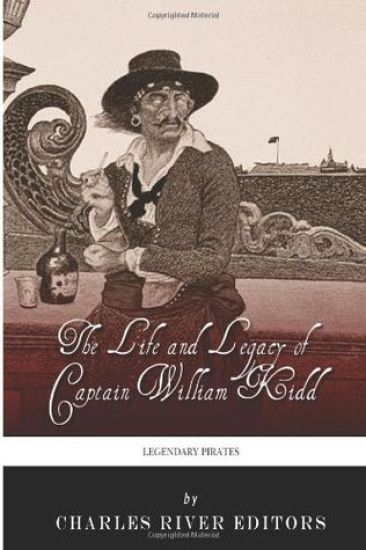
Legendary Pirates: The Life and Legacy of Captain William Kidd

Legendary Pirates: The Life and Legacy of Captain William Kidd

Charles River

Createspace Independent Publishing Platform
2013
nidottu
*Includes historic illustrations of Kidd and important people and events in his life. *Includes a profile of Kidd from Captain Charles Johnson's pirate history. *Includes Kidd's own account of the controversial expedition that resulted in his trial. *Discusses the legends and controversies surrounding Kidd and his trial. *Includes a Bibliography for further reading. "My name is Captain Kidd, who has sailed, who has sailed, My name is Captain Kidd, who has sailed. My name is Captain Kidd; What the laws did still forbid Unluckily I did while I sailed, while I sailed." - A verse from Captain Kidd's Farewell to the Seas The people who have lived outside the boundaries of normal societies and refused to play by the rules have long fascinated the world, and nowhere is this more evident than the continuing interest in the pirates of centuries past. As the subjects of books, movies, and even theme park rides, people continue to let their imaginations go when it comes to pirates, with buried treasure, parrots, and walking the plank all ingrained in pop culture's perception of them. Charles River Editors' Legendary Pirates series covers the lives, piracy, legends, myths, and legacies of history's most famous pirates. There are a number of famous pirates in history, but one of them may not have been a pirate at all. Captain William Kidd has been remembered for over 300 years as a pirate and his name is synonymous with piracy today, but he was far from the most bloodthirsty or most prosperous because he insisted he wasn't one at all. In fact, Kidd's entire reputation is based on the most notorious trial in the history of piracy. Like many pirates, Kidd got his start by being an English privateer assigned to fight the French, and later he was ironically asked to attack pirates around the English colonies of New Hampshire and New York. Kidd established some connections with powerful people in the New World, affording him the luxury of a large ship with which to capture pirates, but he would become notorious and controversial for killing one of his own crew members in 1697. When Kidd found himself at odds with the Royal Navy over the impressment of his crew, charges of piracy were lobbed at him, and by 1698 he was a wanted man. Aware of what would happen if he was caught, Kidd was tricked into coming to Boston by an investor in his expedition who betrayed him and had him arrested. In addition to being personally questioned by Parliament, Kidd's trial became a political football between the Whigs and Tories, and ultimately it produced a controversial conviction and execution of the notorious captain in 1701. Historians and scholars have been debating whether Kidd was a pirate or murderer ever since. Legendary Pirates: The Life and Legacy of Captain William Kidd looks at the controversial life and career of the infamous captain, attempting to separate fact from fiction while analyzing his lasting legacy. Along with pictures depicting important people, places, and events in his life, you will learn about Kidd like you never have before, in no time at all.
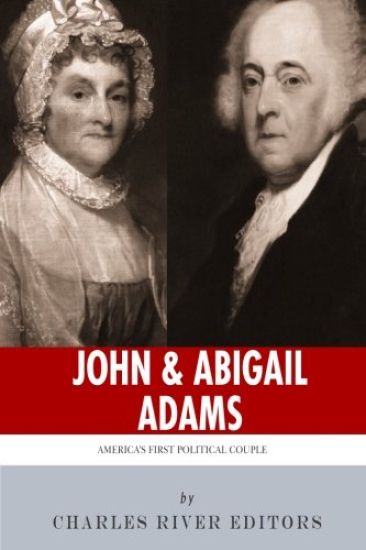
John & Abigail Adams: America's First Political Couple

John & Abigail Adams: America's First Political Couple

Charles River

Createspace Independent Publishing Platform
2013
nidottu
*Includes letters written by John, Abigail, and Thomas Jefferson. *Includes pictures of the Adamses and important people, places, and events in their lives. *Includes a Bibliography for further reading. "A Constitution of Government once changed from Freedom, can never be restored. Liberty, once lost, is lost forever." - John Adams "Remember the Ladies, and be more generous and favourable to them than your ancestors. Do not put such unlimited power into the hands of the Husbands." - Abigail Adams John Adams has become one of the more popular presidents in history relatively recently, but it was not always so. For most of his life he was seen as a bit of an outsider, different from his fellow first presidents in his temperament, birth, life and politics. Adams and his son were the only presidents out of the first seven who were born north of the Mason Dixon line, and he was not an easy man to understand or work with. Not only did he have few friends, but he also often fell into long term quarrels with those he had. Adams remained a celebrated figure in Boston for all the work he did in Massachusetts before and after the Revolution, but his national reputation has experienced quite a renaissance over the past decade, beginning with David Mccullough's best selling biography in 2001, followed in 2008 by the popular HBO series based on it. Then, in 2010, Dearest Friend, a record of the correspondence between Adams and his wife Abigail solidified his position as one of the most darling Founding Fathers of the 21st Century. Several factors explain the recent boost to his legacy. First, unlike Washington or Jefferson, Adams was not a cultural icon. Therefore, Americans have had more to learn about his life and work, whereas recent historical findings about men like Jefferson are either anti-climatic or disappointing. Moreover, Adams and his son are the only two of the first 10 presidents not to have owned slaves, making it easier and more politically correct to like them. Finally, the extensive letters that passed between him and Abigail have cast him as a romantic figure in a way that few other presidents enjoy. While her time as First Lady was important, Abigail Adams remains one of the most recognized and respected First Ladies in American history due to her voluminous correspondence with John when they were separated throughout the American Revolution, as she remained in Massachusetts while John found himself in the thick of politics during his time in the Continental Congress and over in France. In addition to providing a comprehensive account of the inner workings of both politics and the home front during that important chapter in history, the letters also demonstrated the strong intellectual and emotional bond the two of them shared, allowing historians a glimpse of just how influential Abigail was on her husband's ideology and decision making. As the acclaimed historian Joseph Ellis noted, the nearly 1200 letters between the couple "constituted a treasure trove of unexpected intimacy and candor, more revealing than any other correspondence between a prominent American husband and wife in American history." John & Abigail Adams chronicles the amazing lives and legacies of America's first political couple, humanizing the man who could be both mercurial and tender, and the woman who proved his intellectual match and helped keep him grounded. Along with pictures of important people, places, and events in their lives, you will learn about John and Abigail Adams like you never have before, in no time at all.
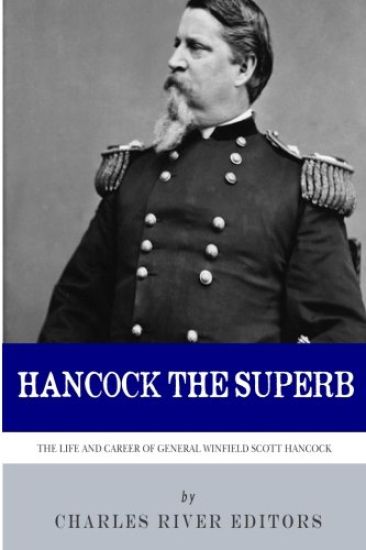
Hancock the Superb: The Life and Career of General Winfield Scott Hancock

Hancock the Superb: The Life and Career of General Winfield Scott Hancock

Charles River

Createspace Independent Publishing Platform
2013
nidottu
*Includes pictures of Hancock and important people, places, and events in his life. *Includes battle maps of Gettysburg, Antietam, Chancellorsville, Fredericksburg, and more. *Includes a Bibliography for further reading. "General Hancock is one of the handsomest men in the United States Army. He is tall in stature, robust in figure, with movements of easy dignity... In action...dignity gives way to activity; his features become animated, his voice loud, his eyes are on fire, his blood kindles, and his bearing is that of a man carried away by passion - the character of his bravery" - Regis de Trobriand Winfield Scott Hancock was an intimidating figure who impressed friends, foes, and fellow generals alike. Known as Hancock the Superb after McClellan described his performance as such during the Battle of Williamsburg in the Peninsula Campaign of 1862, Hancock eventually rose to become the Army of the Potomac's greatest corps commander. Though his reputation and legacy gradually faded over time, Hancock was one of the North's foremost war heroes by the end of the war, and he nearly became president in 1880 when he was just barely defeated by a less decorated Civil War veteran, James Garfield. Nobody in the Army of the Potomac was in the thick of its biggest battles as often as Hancock and the men he commanded. Hancock superbly led his brigade during the Peninsula Campaign, temporarily commanded a division at Antietam in the center of the lines at the Sunken Lane, and his division was the last to withdraw across the river during the Battle of Chancellorsville. After the Battle of Chancellorsville, he fortuitously became the new II Corps commander in the Army of the Potomac, just in time to deliver his greatest performance of all. At Gettysburg, Hancock was the commanding general in the field on Day 1, as Meade and the rest of the Union army arrived later that night. On Day 2, Hancock's men assisted Sickles' III Corps when Sickles disobeyed orders and moved it forward, creating a gap in the Union lines. And on Day 3, Hancock's greatest day of the war, he was seriously injured and nearly bled to death while leading his men in their decisive repulse of Pickett's Charge. Hancock's injury was excruciatingly painful, but he was back in command for the 1864 Overland Campaign, where his men played crucial roles in the Battle of the Wilderness, the Battle of Spotsylvania Court House, and the Battle of Cold Harbor. By the end of the Civil War, Hancock was one of the highest regarded generals in the North. Like Confederate corps commander James Longstreet, Hancock's reputation was attacked after the war because of politics. His Northern brethren were critical of his opposition to the execution of Mary Surratt for the Lincoln assassination, they were enraged when he was lenient on the Southern military district he governed during Reconstruction, and the final straw came when he ran as a Democrat in 1880. It would take nearly another century before Hancock's reputation and legacy were revived by Michael Sharaa's Killer Angels, a historical fiction about the Battle of Gettysburg that examined the friendship between Hancock and Confederate General Lewis Armistead, who was mortally wounded by Hancock's men during Pickett's Charge. By the time Ken Burns' Civil War documentary had renwed interest in Gettysburg and the Civil War, Hancock was as popular as ever. Hancock the Superb: The Life and Career of General Winfield Scott Hancock chronicles the life and career of one of the Union's most indispensable generals, humanizing the courageous and fiery man who was respected and admired by his men and his superiors alike. Along with pictures of important people, places, and events in his life, you will learn about Winfield Scott Hancock like you never have before, in no time at all.