Kirjojen hintavertailu – 12 903 725 kirjaa ja 27 kauppaa
Kirjailija
Charles River
Kirjat ja teokset yhdessä paikassa: 4 673 kirjaa, julkaisuja vuosilta 2013–2022, suosituimpiin kuuluu William Powell and Myrna Loy: The Lives and Careers of One of Classical Hollywood's Most Iconic Duos. Vertaile teosten hintoja ja tarkista saatavuus suomalaisista kirjakaupoista.
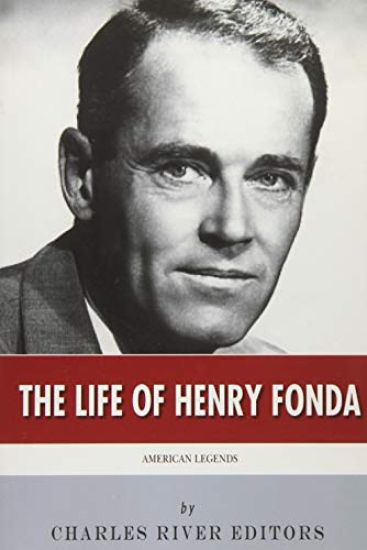
*Includes pictures. *Includes quotes about Fonda and Fonda's own quotes about his life and career. *Includes a bibliography for further reading. "I must have had faith that day. When I went out, I was Henry Fonda again. An unemployed actor but a man." - Henry Fonda A lot of ink has been spilled covering the lives of history's most influential figures, but how much of the forest is lost for the trees? In Charles River Editors' American Legends series, readers can get caught up to speed on the lives of America's most important men and women in the time it takes to finish a commute, while learning interesting facts long forgotten or never known. Among all of Hollywood's iconic leading men, arguably none proved as versatile at acting as Henry Fonda, whose career spanned six decades and earned him Academy Awards for roles in various genres. After breaking into Hollywood in 1935, Fonda quickly rose the ranks, earning an Academy Award nomination in the classic Twelve Angry Men (1940), but Fonda had the kind of staying power that most actors could only dream of. In fact, Fonda had already received an honorary lifetime achievement award from the Academy (in 1980) before winning the Oscar for Best Actor for his role in On Golden Pond (1981), an award he earned when he was already well into his 70s and only about a year away from his death. Fonda would also earn Emmy nominations for his work on two different shows and even a Grammy for a spoken word album in 1977. And as if all that wasn't enough, he was also a critically acclaimed stage performer, winning a Tony for Mister Roberts in 1948. A lot of Fonda's success could be attributed to the fact that he could convincingly play the all-American man that everybody in the nation adored and/or wanted to be, to the extent that one magazine called him "the man we wished we lived next door to." At the same time, Fonda could portray characters like Tom Joad, who maintain their status as heroes even while breaking rules on-screen. His personal life also seemed to mirror his acting versatility; while his World War II service helped cement his all-American persona, his family life was also extremely troubled, even after he became recognized as the patriarch of a family full of famous actors, including Jane and Bridget Fonda. When Henry played a distant father on-screen in On Golden Pond alongside his daughter Jane, the autobiographical elements of the film were apparent to those who knew him. One of the remarkable aspects of Henry Fonda's career is that he was able to play vastly different roles despite not changing his style of acting. As Henry's distant personality would suggest, he hailed from an old-school breed of actors who didn't express emotions outwardly, and even as his progeny would become associated with Method Acting, Henry remained in the same mold as actors like Cary Grant and Jimmy Stewart. Of course, the seemingly effortless nature of Henry's acting only made him more endearing to contemporary audiences, even as his acting style would eventually go out of style. American Legends: The Life of Henry Fonda examines the life and career of one of the Golden Era of Hollywood's biggest stars. Along with pictures of important people, places, and events, you will learn about Henry Fonda like never before, in no time at all.
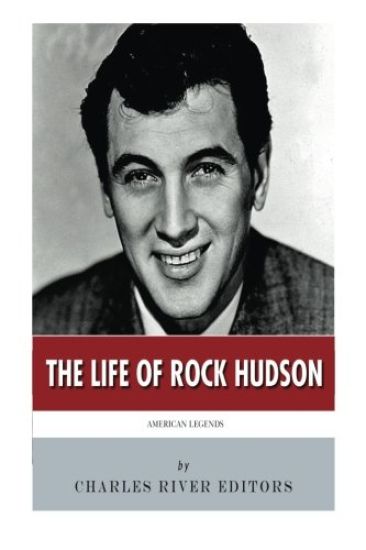
*Includes pictures. *Includes Hudson's own quotes about his life and career. *Includes a bibliography for further reading. "I'm notorious for giving a bad interview. I'm an actor and I can't help but feel I'm boring when I'm on as myself." - Rock Hudson A lot of ink has been spilled covering the lives of history's most influential figures, but how much of the forest is lost for the trees? In Charles River Editors' American Legends series, readers can get caught up to speed on the lives of America's most important men and women in the time it takes to finish a commute, while learning interesting facts long forgotten or never known. In the middle of the 20th century, there was perhaps no leading man as famous and popular as Rock Hudson, who would star in both comedies and dramas on the way to being named one of the Top 10 Stars of the Year for eight years straight (1957-1964). Whether he was starring in a comedy with Doris Day or in a drama opposite Elizabeth Taylor, the tall, impeccably dressed actor couldn't help but make girls in the audience swoon, and he was recognized as one of Hollywood's biggest heartthrobs. The success of his peak years ensured that Hudson would remain a star over the course of 4 decades, and he appeared in about 70 films during his career. Today, however, Rock Hudson might be better known among contemporary audiences for his personal life. Acting in a more conservative era, Hudson struggled to keep his homosexuality out of the news for fear it would destroy his career, even though many of his Hollywood contemporaries were aware of it. After Hudson died of AIDS in 1985, perhaps the first major celebrity to die of the disease, details of his personal life began to be publicized, sometimes amidst messy legal battles. It soon became clear just what kind of pains Hudson took to keep his personal life private, and his friendships with men were highly scrutinized, as was his marriage to his agent's secretary, Phyllis Gates. At the same time, his death shined a bigger spotlight on AIDS and helped raise both awareness and funding for research into battling the disease. American Legends: The Life of Rock Hudson examines the life and career of one of Hollywood's biggest stars. Along with pictures of important people, places, and events, you will learn about Rock Hudson like never before, in no time at all.
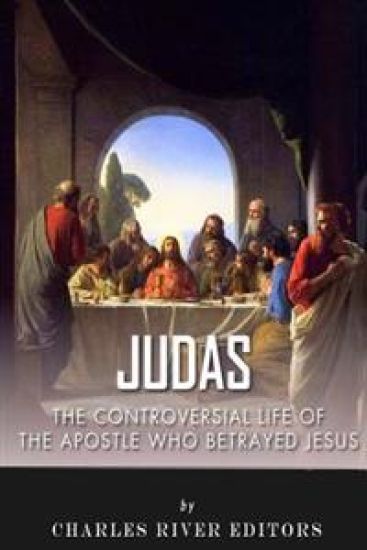
*Includes pictures. *Includes Scripture passages about Judas's life and betrayal. *Explains arguments over the Gospel of Judas. *Includes a bibliography for further reading. "And Judas went to the chief priests and the officers of the temple guard and discussed with them how he might betray Jesus. They were delighted and agreed to give him money. He consented, and watched for an opportunity to hand Jesus over to them when no crowd was present." - Luke 22: 4-6 Even someone with a casual knowledge of the Bible will recognize the name Judas Iscariot. Well known as the disciple who betrayed Jesus, the Messiah, with a kiss, Judas has become synonymous with betrayal and deception. The most infamous of the Apostles, Judas goes from true follower to a turncoat who seemingly sacrifices the cause for personal benefit. Not surprisingly, the names of the other disciples will appear in birth registries around the world, except for Judas, whose name is still associated with suspicion and even fear. It goes without saying that Judas is an interesting character in the development of the salvation history. His person, his act of betrayal and even his replacement were predicted by the Old Testament prophets, which some Biblical scholars take as evidence that Judas was doomed from the beginning to be the betrayer and had no choice. But by taking a closer look at the history, the reader will see several points along the way, even up to the moment of the final kiss, in which Jesus gave Judas the opportunity to repent. God's plan was going to be fulfilled, and God was going to use an individual to bring about the betrayal of Jesus, but at the same time, Judas made several conscious choices along the way to reject the Messiah and turn Jesus over to the Roman authorities. Like many other teachings of the Bible, the infinite wisdom of God and the finite understanding of man clash in the life of Judas. Divine sovereignty predetermined that Judas would be the betrayer, yet the free will of man allowed him to make his own decisions. At the same time, a relatively recent discovery has cast doubt on the traditional understanding of Judas's life and actions. The Gospel of Judas, a Gnostic text purportedly written in the 3rd or 4th century A. D., casts Judas as a hero who directly follows Christ's explicit orders and accepts the weight of being responsible for Christ's death as the price to pay for being one of the chosen. In this controversial account, Judas is actually portrayed as the one who is favored by Jesus and worthy of praise, while the other 11 disciples are characterized as not understanding the true nature of God. Not surprisingly, this lost gospel has brought about considerable controversy, both over the authenticity of the text and the validity of what was written in it. Judas: The Life of the Apostle Who Betrayed Jesus explores the known and unknown of the life of Judas, and the actions that led to Christ's crucifixion. This book looks at the Biblical narrative of the disciple to gain an understanding of his position in the Gospels. Digging into the Biblical record and accompanying that record with cultural and historical facts, readers can begin to understand the character of this disciple turned betrayer. It also looks at the controversial Gospel of Judas, a text purporting to present an alternative account of the relationship between Jesus and Judas. Along with pictures and a bibliography, you will learn about Judas like never before, in no time at all.
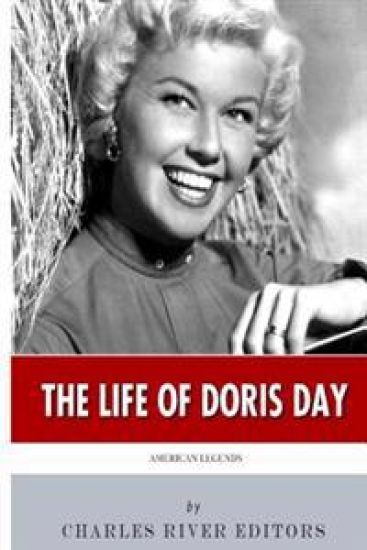
*Includes pictures. *Includes Day's quotes about her life and career. *Includes a bibliography for further reading. "I've been through everything. I always said I was like those round-bottomed circus dolls - you know, those dolls you could push down and they'd come back up? I've always been like that. I've always said, 'No matter what happens, if I get pushed down, I'm going to come right back up.'" - Doris Day A lot of ink has been spilled covering the lives of history's most influential figures, but how much of the forest is lost for the trees? In Charles River Editors' American Legends series, readers can get caught up to speed on the lives of America's most important men and women in the time it takes to finish a commute, while learning interesting facts long forgotten or never known. It goes without saying that few people have a career spanning 8 decades, yet that claim to fame is occupied by the legendary Doris Day, who got her start in show business as a singer in a big band in 1939 and has not let up since. From there, Day went on to record dozens of albums and hundreds of songs, winning a countless number of awards on the way to being one of the 20th century's most popular singers. One of those recognitions came just a few years ago in 2011, when Day, by that time nearing 90 years old, released a new album that charted 9th in the UK Top 40 Albums, making her the oldest singer ever with that distinction. Her musical career would've been impressive enough, but Doris Day is just as well known today for her film career, which wasn't so bad itself. Though her time in Hollywood was much shorter in comparison to her music career, she nevertheless managed to reach the top in that industry as well. As one of the most popular actresses of the '60s, Day was the biggest box office draw in Hollywood in the early half of that decade, and the only woman among the Top 10. In the process of making nearly 40 movies, Day would eventually be recognized as the highest grossing actress in history, and at the same time she was good enough at her craft to be nominated for an Oscar for Best Actress. Amazingly, despite her incredible success in both music and film, Day eventually found herself bankrupt due to the mismanagement of her money by her husband, compelling her to reinvent herself as the host of a popular television sitcom. Perhaps not surprisingly, Day excelled in this field as well, making The Doris Day Show one of the most popular shows on television for several years at the end of the '60s. American Legends: The Life of Doris Day examines the life and career of one of the entertainment industry's biggest stars. Along with pictures of important people, places, and events, you will learn about Doris Day like never before, in no time at all.
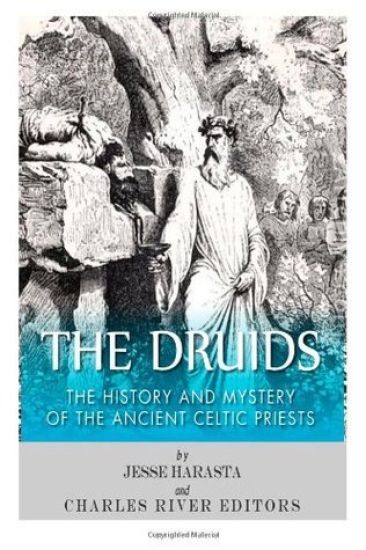
*Includes pictures. *Includes ancient accounts of the Druids written by Caesar, Cicero, Pliny, and more. *Explains the modern revival of Druids. *Includes footnotes and a bibliography for further reading. "Throughout all of Gaul there are two classes of people who are treated with dignity and honor. This does not include the common people, who are little better than slaves and never have a voice in councils. Many of these align themselves with a patron voluntarily, whether because of debt or heavy tribute or out of fear of retribution by some other powerful person. Once they do this, they have given up all rights and are scarcely better than servants. The two powerful classes mentioned above are the Druids and the warriors. Druids are concerned with religious matters, public and private sacrifices, and divination." - Julius Caesar The Celts are one of the most well-known groups in Europe and one of the least understood. Depending on which classifications are used, the Celts are also one of the oldest civilizations in Europe. In the centuries before Christ, the Celts were spread out across much of continental Europe, and though they are mostly identified with Gaul, evidence suggests they also spread as far as Portugal. However, even though they were spread out across Europe before the height of the Roman Empire, most people associate the Celts with the British Isles today, particularly Ireland and Scotland. After they had been relegated to those smaller regions as a result of the Romans and other migrations, the culture of the Celts as it is currently understood began to congeal during the Early Middle Ages, and Celtic culture, folklore, and legend have all become inextricably intertwined with Irish history and British history as a whole. The Celts have fascinated people for centuries, and the biggest fascination of all has been over the Druids, a religious class at the heart of Celtic society that wielded great power. Naturally, people have been interested in Druids for centuries mostly because they don't understand much about the Druids or their practices. The earliest meaning of the word comes from the Ancient Romans, who labeled them "Druidae" in reference to the white robed order of Celtic priests living in Gaul, Britain and Ireland. They were a well-organized, secretive group who kept no written records and performed their rituals - allegedly including human sacrifice - in oaken groves, all of which interested and horrified the Romans. The order was eventually crushed under the weight of first Roman conquest and then the imposition of Christianity, and from the remains, centuries of myths, imaginings and dreams were superimposed over the little that was known about the Druids. Not surprisingly, people have come to associate the Druids with what have been imposed. Even today, there is a revived Druidic religious movement that fuses this skeleton of knowledge about the ancient Druids with ideas such as rituals at standing stones (like Stonehenge), nature and sun worship, the carrying of ornate staves, and Arthuriana. Wider popular culture has seen "Druids" - usually some form of secretive nature-priests - in games like Dungeons and Dragons and World of Warcraft, and films like Wicker Man (1973 and 2006) and Druids (2001). The Druids: The History and Mystery of the Ancient Celtic Priests explores the known and unknown about the Druids, from the historical evidence of their existence and practices to the evolution of Druidic concepts over time. This book also looks at the growth of Druidism since the 1700s, along with the practitioners who embrace new ideas and beliefs. Along with pictures and a bibliography, you will learn about the Druids like you never have before, in no time at all.
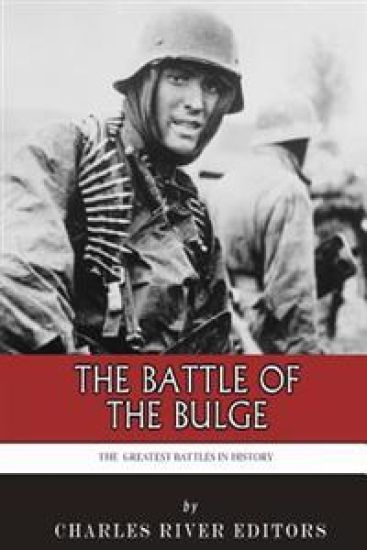
*Includes historic pictures of the fighting. *Includes accounts of the fighting written by common soldiers and important generals. *Includes pictures of important people, places, and events. *Includes a bibliography for further reading. "We were across the Saar River in Dellingen, where the Battle of the Bulge started. That was where Axis Sally told us about the Bulge. The Germans had a loud speaker back in the woods and she was talking on that. They played a few American records first. I don't remember everything she said. She said, 'Your wives and girlfriends are probably home in a nice warm building, dancing with some other men. You're over here in the cold.'" - Dent Wheeler After the successful amphibious invasion on D-Day in June 1944, the Allies began racing east toward Germany and liberating France along the way. The Allies had landed along a 50 mile stretch of French coast, and despite suffering 8,000 casualties on D-Day, over 100,000 still began the march across the western portion of the continent. By the end of August 1944, the German Army in France was shattered, with 200,000 killed or wounded and a further 200,000 captured. However, Adolf Hitler reacted to the news of invasion with glee, figuring it would give the Germans a chance to destroy the Allied armies that had water to their backs. As he put it, "The news couldn't be better. We have them where we can destroy them." While that sounds delusional in retrospect, it was Hitler's belief that by splitting the Allied march across Europe in their drive toward Germany, he could cause the collapse of the enemy armies and cut off their supply lines. Part of Hitler's confidence came as a result of underestimating American resolve, but with the Soviets racing toward Berlin from the east, this final offensive would truly be the last gasp of the German war machine, and the month long campaign was fought over a large area of the Ardenne Forest, through France, Belgium and parts of Luxembourg. From an Allied point of view, the operations were commonly referred to as the Ardennes Offensive, while the German code phrase for the operation was Unternehmen Wacht am Rhein ("Operation Watch on the Rhine"), with the initial breakout going under the name of "Operation Mist." Today, Americans know it best as the Battle of the Bulge. Regardless of the term for it, and despite how desperate the Germans were, the Battle of the Bulge was a massive attack against primarily American forces that inflicted an estimated 100,000 American casualties, the worst American losses in any battle of the war, However, while the German forces did succeed in bending, and at some points even breaking through Allied lines (thus causing the "bulge" reflected in the moniker), the Germans ultimately failed. As Winston Churchill himself said of the battle, "This is undoubtedly the greatest American battle of the war, and will, I believe be regarded as an ever famous American victory." After resisting the German attack, the Allied armies began advancing, and with that, the race to Berlin was truly on, with the Allied armies in Western Europe desperate to reach the German capital before Stalin's Soviets could arrive from the east. Less than 2 months after the Battle of the Bulge ended, Allied armies entered Germany, and by early May, Hitler would be dead in his bunker and the war in Europe would be over. The Greatest Battles in History: The Battle of the Bulge comprehensively covers the entire military situation that led up to the battle, analyzes the decisions made by the battle's most important leaders, and explains the aftermath of the Allied victory. Along with a bibliography and pictures of important people and places, you will learn about the Bulge like you never have before, in no time at all.
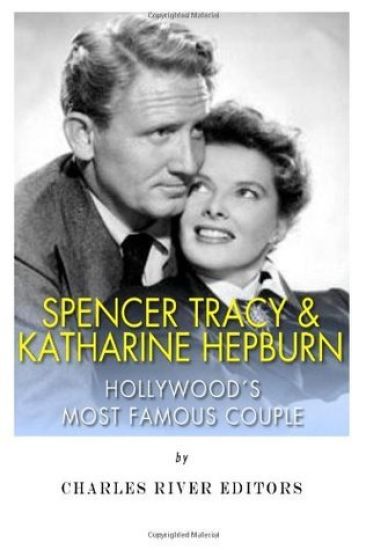
*Includes pictures. *Includes Hepburn and Tracy's quotes about their lives and careers. *Includes a bibliography for further reading. "Acting is the most minor of gifts and not a very high-class way to earn a living. After all, Shirley Temple could do it at the age of four." - Katharine Hepburn Of all the screen legends whose names remain synonymous with Hollywood, few took as long to become a star as Spencer Tracy, who is today recognized as one of the greatest actors ever but whose career did not truly take off until he was already in his mid-30s. After languishing with Fox for 5 years and over two dozen movies, one biographer had summed up his career to that point in time: "Tracy was scarcely a blip on the box office barometer in 1935, a critics' darling and little more." However, after joining MGM in 1935, Tracy catapulted to fame with one of the most impressive runs in Hollywood history, winning Oscars for Best Actor in 1938 and 1939 after already being nominated in 1937. Over the next three decades, Tracy would appear in classics like Captains Courageous and Judgment at Nuremburg, appear in 9 films with Katharine Hepburn, and receive 9 Oscar nominations over a span of 32 years, including for his final film, Guess Who's Coming to Dinner. Several contemporaries considered Tracy the greatest actor of his era, a sentiment summed up by actor Richard Widmark, who once said, "He's the greatest movie actor there ever was... I've learned more about acting from watching Tracy than in any other way." Tracy's career earned him an unbelievable number of accolades, and a place in the American Film Institute's Top 10 actors of the 20th century, but it's also an open question how much more he could have accomplished without a litany of health problems brought on by alcohol. Even as he went years at a time without drinking, the effects gradually wore him down physically, and by his early 60's, he needed full-time care, provided mostly by his most famous co-star and lover, Katharine Hepburn. Ironically, his relationship with Hepburn has actually served to overshadow his own acting career among modern viewers, even as his acting abilities remain universally recognized. Early in her career, there was no actress more controversial than Katharine Hepburn. By the end of her career, there was no actress more beloved than Katharine Hepburn. Famously labeled "box office poison" in 1938, it is clear that Hollywood was not prepared for the young Hepburn. Yet, even after being scorned by the general public, Hepburn still retained a magnetism that would endear her to the public for decades to come, and after a tumultuous first decade as an actress, Hepburn became arguably the biggest box office sensation in the industry. Moreover, in an era when most actresses were unable to secure starring roles after reaching middle age, Hepburn remained a leading lady even after turning 60. Hepburn acted in some capacity from the start of the 1930s through the early-1990s, and it is important to view how the nature of Hepburn's roles changed from her youth to old age. Aside from being one of the most recognized and acclaimed actresses in history, Hepburn's career is also of great importance because she forced Americans to reevaluate their expectations for female behavior, both in films themselves and off the movie set as well. As society began to pay greater attention to the importance of strong roles for women, Hepburn's career gained an even greater importance, and at a time in which women were expected to be passive, she was a fiercely individual figure who offered a daring alternative to the conventions of femininity that had long existed in American culture. This biography profiles the lives and careers of two of Hollywood's biggest icons. Along with pictures of important people, places, and events, you will learn about Tracy and Hepburn like you never have before.
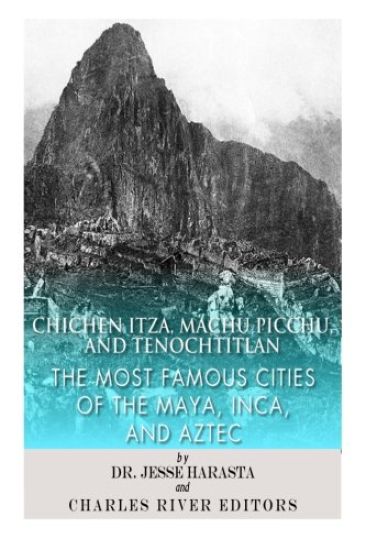
*Includes pictures of the sites and depictions of important people and events. *Explains the history of the sites and the theories about their purpose. *Describes the layout of the ancient cities, their important structures, and the theories about the buildings' uses. *Includes footnotes and bibliographies for further reading. Chichen Itza was inhabited for hundreds of years and was a very influential center in the later years of Maya civilization. At its height, Chichen Itza may have had over 30,000 inhabitants, and with a spectacular pyramid, enormous ball court, observatory and several temples, the builders of this city exceeded even those at Uxmal in developing the use of columns and exterior relief decoration. Of particular interest at Chichen Itza is the sacred cenote, a sinkhole was a focus for Maya rituals around water. Because adequate supplies of water, which rarely collected on the surface of the limestone based Yucatan, were essential for adequate agricultural production, the Maya here considered it of primary importance. Underwater archaeology carried out in the cenote at Chichen Itza revealed that offerings to the Maya rain deity Chaac (which may have included people) were tossed into the sinkhole. Why Maya cities were abandoned and left to be overgrown by the jungle is a puzzle that intrigues people around the world today, especially those who have a penchant for speculating on lost civilizations. In 1911, American historian Hiram Bingham publicized the finding of what at the time was considered a "lost city" of the Inca. Though local inhabitants had known about it for century, Bingham documented and photographed the ruins of a 15th century settlement nestled along a mountain ridge above the Urubamba Valley in Peru, placed so perfectly from a defensive standpoint that it's believed the Spanish never conquered it and may have never known about it. Today, of course, Machu Picchu is one of South America's best tourist spots, and the ruins have even been voted one of the Seven New Wonders of the World. But even though Machu Picchu is now the best known of all Incan ruins, its function in Incan civilization is still not clear. Some have speculated that it was an outpost or a frontier citadel, while others believe it to be a sanctuary or a work center for women. Still others suggest that it was a ceremonial center or perhaps even the last refuge of the Incas after the Spanish conquest. One of the most theories to take hold is that Machu Picchu was the summer dwelling of the Inca's royal court, the Inca's version of Versailles. As was the case with the renaming of Mayan and Aztec ruins, the names given to various structures by archaeologists are purely imaginary and thus not very helpful; for example, the mausoleum, palace or watchtower at Machu Picchu may have been nothing of the sort. Mexico City is now easily the largest city in the Western Hemisphere, trailing only Tokyo internationally, but unlike the other great cities of the Americas, Mexico City is not a new place. Mexico City instead has much in common with cities like London, Delhi or Cairo in the East in that it is an ancient city dating back centuries before the arrival of Columbus in Hispaniola. For, while much (including the name) has changed, Mexico City is the mighty Tenochtitlan, capital of the Aztec Empire and the great American metropolis of the Spanish Empire. There has been no break in occupation, and despite much devastation in the Conquest, the city was never fully destroyed. What the conquistadores encountered in Tenochtitlan was entirely unexpected: one of the world's greatest cities, teeming with over 200,000 people, built on an island on a lake and connected to the shore by a number of long, broad stone causeways. On the water itself were remarkable floating gardens, on surrounding shorelines were sprawling suburbs, and behind them was a dramatic wall of mountain peaks.
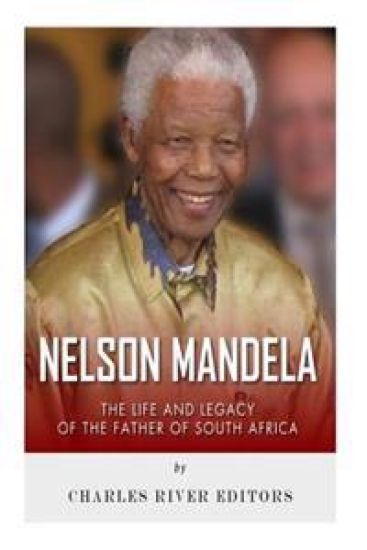
*Includes pictures *Includes Mandela's quotes about his life and work. *Includes a bibliography for further reading. "During my lifetime I have dedicated myself to this struggle of the African people. I have fought against white domination, and I have fought against black domination. I have cherished the ideal of a democratic and free society in which all persons will live together in harmony and with equal opportunities. It is an ideal which I hope to live for. But, my lord, if needs be, it is an ideal for which I am prepared to die." - Nelson Mandela, 1964 In the case of some historical figures, a single event or small span of years is sufficient for understanding the timeliness and extent of their impact upon the world. But others have taken lengthier, more convoluted journeys with broadly-evolved circumstances, intentions and roles to be played, reinventing themselves and playing different roles as times change. Such is the case with Nelson Mandela, whose conflict with the apartheid government of South Africa was marked by an irrational and contrary stream of corrupt legislation intended to reverse the gains made in the cause of equality through the 19th and 20th centuries. The most basic descriptions of Nelson Mandela's life and career would include terms such as anti-apartheid revolutionary, politician, activist and philanthropist, but all of these monikers require extensive shading. He has, at one time or another, been called every complimentary and critical term available to a politician, and from specific times and perspectives, they all contain some hint of truth. Mandela was a child without citizenship from his own country without any notion of its history, but in the end, he became the first of his race to lead it and to reestablish a franchise for those of his heritage. He is the "communist sympathizer" who pleaded with the United States Congress that the blessings of democracy be brought to his country, and the adoptee of a Gandhiesque non-violence who led the military wing of the African National Congress when pacifism no longer seemed feasible. Unlike the rise of national leaders of African heritage in modern times, Mandela's rise to the presidency literally began amidst mid-19th century conditions, in which the exclusionary pro-white business groups that took over southern Africa before his birth were able to legislate and codify apartheid into an accepted institution during his life. While he is now one of the most beloved figures of the 20th century and almost universally praised, few are familiar with more than a basic outline of his life, including his lengthy imprisonment for working against South Africa's apartheid government, his release from jail and his ascent to South Africa's presidency, and his tireless charitable work on behalf of peace, fighting HIV, and more. Nelson Mandela: The Life and Legacy of the Father of South Africa examines the life and career of one of the 20th century's most famous figures and one of its greatest activists. Along with pictures of important people, places, and events, you will learn about Mandela like never before, in no time at all.
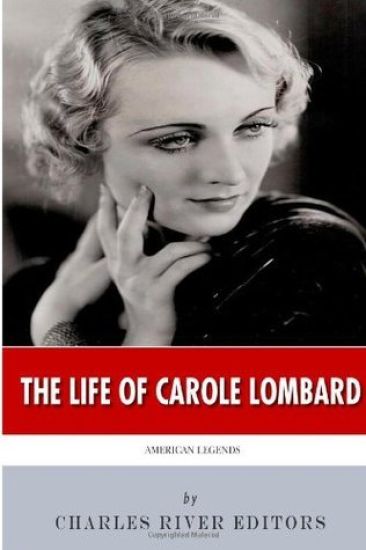
*Includes pictures. *Includes Lombard's quotes about her life and career. *Includes a bibliography for further reading. "Carole Lombard's tragic death means that something of gaiety and beauty have been taken from the world at a time they are needed most." - Errol Flynn A lot of ink has been spilled covering the lives of history's most influential figures, but how much of the forest is lost for the trees? In Charles River Editors' American Legends series, readers can get caught up to speed on the lives of America's most important men and women in the time it takes to finish a commute, while learning interesting facts long forgotten or never known. On January 16, 1942, just a few weeks after Pearl Harbor brought the United States into World War II, the nation suffered what were considered the first civilian deaths of the war when a plane crashed into the side of a mountain southwest of Las Vegas. Aboard the plane were 15 servicemen, but the plane was also carrying one of Hollywood's biggest stars: actress Carole Lombard. Although Lombard's death and her marriage to Gone With the Wind star Clark Gable have overshadowed her career, her untimely death in 1942 cut short the life of one of Hollywood's most prominent stars at the time. In fact, Lombard's platinum look and her unique mannerisms had helped her become the biggest star of the screwball genre by the end of the 1930s, and her movies were so successful that she was the highest paid actress in Hollywood by the start of the 1940s. As English critic Graham Greene said of her, "Platinum blonde, with a heart-shaped face, delicate, impish features and a figure made to be swathed in silver lam , Lombard wriggled expressively through such classics of hysteria as Twentieth Century and My Man Godfrey." Indeed, despite dying at the age of 33, the American Film Institute recognized her as one of the biggest film icons of the 20th century. Lombard has been memorialized in many fitting ways as an actress, but one of her biggest contributions to Hollywood was the blond archetype that the film industry used successfully for decades in screwball comedies, paving the way for the success of women like Marilyn Monroe. Perhaps the most remarkable aspect of that fact is that it was actually based on Carole's gushing personality. As famous director Howard Hawks noted of her, "She acted like a schoolgirl ... and she was stiff, she would try and imagine a character and then act according to her imaginings instead of being herself." When Lombard started simply portraying herself, Hawks told actor John Barrymore, " Y] ou've just seen a girl that's probably going to be big a star, and if we can just keep her from acting, we'll have a hell of a picture." American Legends: The Life of Carole Lombard examines the life and career of one of the Golden Era of Hollywood's biggest stars. Along with pictures of important people, places, and events, you will learn about Carole Lombard like never before, in no time at all.
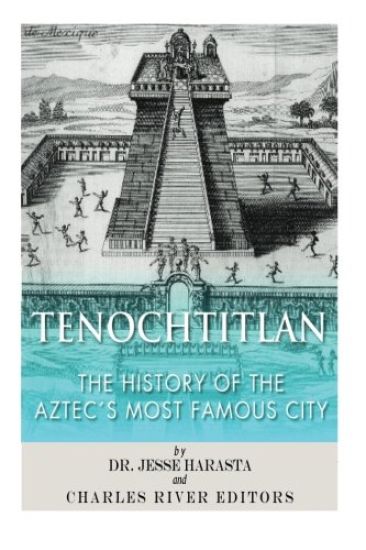
*Includes pictures. *Explains the history of Tenochtitlan from its founding to its destruction by Cortes and the Spanish. *Includes descriptions of Tenochtitlan by Spanish conquistadors, including Cortes' 1520 letter to Holy Roman Emperor Charles V. *Describes the layout of Tenochtitlan and its important structures. *Includes footnotes and a bibliography for further reading. "When we saw so many cities and villages built in the water and other great towns on dry land... we were amazed and said that it was like the enchantments they tell of in the legend of Amadis, on account of the great towers and buildings rising from the water and all built of masonry. And some of our soldiers even asked whether the things that we saw were not a dream... I do not know how to describe it, seeing things as we did that had never been heard of or seen before, not even dreamed about." - Bernal D az del Castillo Mexico City is now easily the largest city in the Western Hemisphere, trailing only Tokyo internationally, but unlike the other great cities of the Americas, Mexico City is not a new place. Mexico City instead has much in common with cities like London, Delhi or Cairo in the East in that it is an ancient city dating back centuries before the arrival of Colombus in Hispa ola. For, while much (including the name) has changed, Mexico City is the mighty Tenochtitlan, capital of the Aztec Empire and the great American metropolis of the Spanish Empire. There has been no break in occupation, and despite much devastation in the Conquest, the city was never fully destroyed. Indeed, from the moment Spanish conquistador Hernan Cort s first found and confronted them, the Aztecs have fascinated the world, and they continue to hold a unique place both culturally and in pop culture. Nearly 500 years after the Spanish conquered their mighty empire, the Aztecs are often remembered today for their major capital, Tenochtitlan, as well as being fierce conquerors of the Valley of Mexico who often engaged in human sacrifice rituals. But thanks to the Spanish conquest, even though the Aztecs continue to interest people across the world centuries after their demise, it has fallen on archaeologists and historians to try to determine the actual history, culture, and lives of the Aztecs from the beginning to the end, relying on excavations, primary accounts, and more. Much of what is known today does come from the Conquistadores, and what those men encountered was entirely unexpected: one of the world's greatest cities, teeming with over 200,000 people, built on an island on a lake and connected to the shore by a number of long, broad stone causeways. On the water itself were remarkable floating gardens, on surrounding shorelines were sprawling suburbs, and behind them was a dramatic wall of mountain peaks. Tenochtitlan: The History of the Aztec's Most Famous City comprehensively covers the history of the city, examining what life was like in the great city, who ruled the city, and what the day-to-day existence of all sorts of Tenocha (people of the city) was like. Along with pictures and a bibliography, you will learn about Tenochtitlan like you never have before, in no time at all.

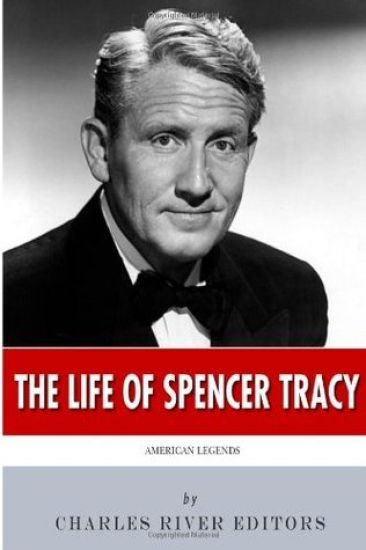
*Includes pictures. *Includes Tracy's quotes about his life and career. *Includes a bibliography for further reading. "Know your lines and don't bump into the furniture." - Spencer Tracy A lot of ink has been spilled covering the lives of history's most influential figures, but how much of the forest is lost for the trees? In Charles River Editors' American Legends series, readers can get caught up to speed on the lives of America's most important men and women in the time it takes to finish a commute, while learning interesting facts long forgotten or never known. Of all the screen legends whose names remain synonymous with Hollywood, few took as long to become a star as Spencer Tracy, who is today recognized as one of the greatest actors ever but whose career did not truly take off until he was already in his mid-30s. After languishing with Fox for 5 years and over two dozen movies, one biographer had summed up his career to that point in time: "Tracy was scarcely a blip on the box office barometer in 1935, a critics' darling and little more." However, after joining MGM in 1935, Tracy catapulted to fame with one of the most impressive runs in Hollywood history, winning Oscars for Best Actor in 1938 and 1939 after already being nominated in 1937. Over the next three decades, Tracy would appear in classics like Captains Courageous and Judgment at Nuremburg, appear in 9 films with Katharine Hepburn, and receive 9 Oscar nominations over a span of 32 years, including for his final film, Guess Who's Coming to Dinner. Several contemporaries considered Tracy the greatest actor of his era, a sentiment summed up by actor Richard Widmark, who once said, "He's the greatest movie actor there ever was... I've learned more about acting from watching Tracy than in any other way." Tracy's career earned him an unbelievable number of accolades, and a place in the American Film Institute's Top 10 actors of the 20th century, but it's also an open question how much more he could have accomplished without a litany of health problems brought on by alcohol. Even as he went years at a time without drinking, the effects gradually wore him down physically, and by his early 60's, he needed full-time care, provided mostly by his most famous co-star and lover, Katharine Hepburn. Ironically, his relationship with Hepburn has actually served to overshadow his own acting career among modern viewers, even as his acting abilities remain universally recognized. American Legends: The Life of Spencer Tracy profiles the life, career, and legacy of the man deemed by the American Film Institute as one of Hollywood's 10 greatest actors. Along with pictures of important people, places, and events, you will learn about Spencer Tracy like you never have before, in no time at all.
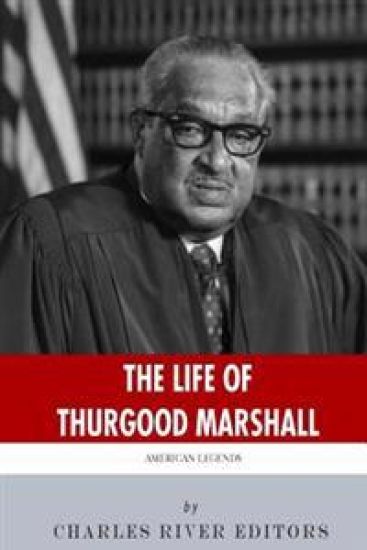
*Includes the seminal Brown v. Board decision, which Marshall successfully argued. *Includes a timeline of Marshall's life, including important cases and events. *Includes pictures of Marshall and important people in his life. *Includes footnotes "A child born to a black mother in a state like Mississippi...has the same rights as a white baby born to the wealthiest person in the United States. It's not true, but I challenge anyone to say it is not a goal worth working for." - Thurgood Marshall A lot of ink has been spilled covering the lives of history's most influential figures, but how much of the forest is lost for the trees? In Charles River Editors' American Legends series, readers can get caught up to speed on the lives of America's most important men and women in the time it takes to finish a commute, while learning interesting facts long forgotten or never known. In the United States, the Civil Rights Movement is sometimes conveniently and narrowly remembered as a mid-20th century phenomenon that began with the 1954 Supreme Court decision invalidating segregation in Brown v. Board, but it actually came into existence long before it is presumed to have done so. In fact, the Movement's primary work was slow, evolving, gradual and long-term. Its more glamorous moments, such as the Montgomery Bus Boycott (1955-1956), the Selma to Montgomery March (1965), and the March on Washington (1963), were mainly supplemental to the all-important grassroots work already going on in communities, churches, legislatures and courts. Nobody is a bigger testament to that fact than Thurgood Marshall, the African-American lawyer who successfully argued the Brown v. Board case. Today Marshall is best known for being the first black Supreme Court justice, but that history setting precedent has come to overshadow the instrumental work he did as chief counsel for the National Association for the Advancement of Colored People. Marshall argued more cases before the Supreme Court than anyone in history and would win nearly 30 of them, including the seminal Brown v. Board case. Marshall was eventually appointed as an appellate justice by President Kennedy and was a very natural choice for the Supreme Court when President Lyndon Johnson appointed him. The appointment of Marshall made history, but Marshall left an indelible mark on American jurisprudence as a liberal anchor on the court for more than two decades. Naturally, he was a progressive voice on the issue of civil rights, and he also took strong stances on criminal procedure cases, including ardent opposition against the death penalty and the strengthening of legal protections for criminal defendants. American Legends: The Life of Thurgood Marshall chronicles the amazing life and career of the first black Supreme Court Justice, examining his work and legacy. Along with pictures of important people, places, and events, you will learn about Thurgood Marshall like you never have before, in no time at all.
*Includes pictures of important people, places, and events. *Includes Leigh and Gable's quotes about their lives and careers. *Includes a bibliography for further reading. The 1930s were, without a doubt, the height of the classical Hollywood era. The era was known for its lavish studio productions, with MGM, RKO, Warner Brothers, Paramount, and 20th Century Fox all operating at the height of their powers. Every major studio possessed a long roster of contract players, with films released at such a rapid pace that it made for an especially competitive environment within the industry. Even while America remained in the throes of the Great Depression, the film industry continued to flourish, and movies easily supplanted the theater as the main attraction for American entertainment. Of course, what made 1939 the watershed year was the release of several critically acclaimed movies, including The Wizard of Oz and Mr. Smith Goes to Washington. But the most famous of the bunch, and perhaps the most famous movie of all, is Gone With the Wind. Leading man Clark Gable had a unique appeal that captivated Depression-era audiences; while Cary Grant offered a sophisticated charm and Fred Astaire was tied to the musical genre, Gable brought an air of sophistication that was less comical than that of Grant and appealed to both genders, unlike Astaire. At a time when so many Americans were financially destitute, Gable managed to appear classy without coming across as snobbish. At the same time, his virile masculinity was not overly macho or misogynist. For these reasons, Gable was able to captivate male and female viewers alike, and his mass appeal was a driving force behind the commercial success of Gone With the Wind, possibly the most beloved Hollywood film ever made. As iconic director John Huston once stated, "Clark Gable was the only real he-man I've ever known, of all the actors I've met." One of the most remarkable aspects of the film is that the quintessential Southern belle was played by Vivien Leigh, a British actress still relatively unknown in Hollywood. Vivien was an accomplished stage actress and had already appeared in foreign films during the 1930s, but she was a complete dark horse to get the iconic role she's still associated with, and it only came about because of her persistence in getting cast for the role. 30 years after Gone With the Wind was released, one film critic credited Selznick's "inspired casting" of Vivien Leigh as Scarlett with the film's success. Another 30 years later, the same critic wrote that Leigh "still lives in our minds and memories as a dynamic force rather than as a static presence." While Gone With the Wind made Leigh a big name practically overnight, she continued to buck the usual trend by doing Broadway and even appearing on stage in London during the 1940s, instead of focusing on movies. A lot of this was no doubt due to her famous marriage to Laurence Olivier, himself an accomplished stage and film actor. At the same time, Vivien became notorious for being difficult to work with and unusually temperamental, a byproduct of bipolar disorder that frequently affected her mood and occasionally left her incoherently hysterical. Despite starring together just that one time, Gable and Leigh produced one of the most memorable movie couples, but they were also tied together by similar fates and premature deaths. Rhett & Scarlett examines the lives and careers of the two Hollywood icons. Along with pictures of important people, places, and events, you will learn about Clark Gable and Vivien Leigh like never before.
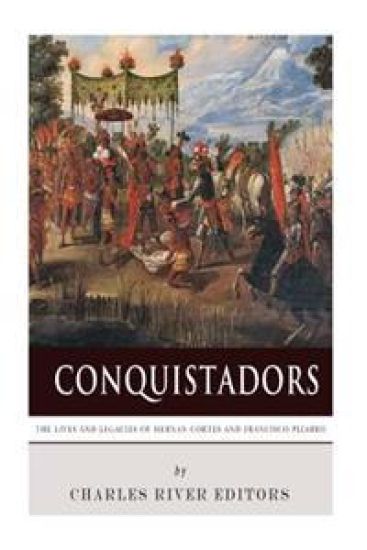
*Includes Cortes's letter to King Charles V describing Tenochtitlan and the Aztec Empire. *Includes descriptions of both the Aztec and Inca Empires. *Includes pictures of the Conquistadors and important people and places in their lives. *Includes a Bibliography for further reading. "Among these temples there is one which far surpasses all the rest, whose grandeur of architectural details no human tongue is able to describe; for within its precincts, surrounded by a lofty wall, there is room enough for a town of five hundred families." - Hern n Cort s "Friends and comrades On that side south] are toil, hunger, nakedness, the drenching storm, desertion, and death; on this side ease and pleasure. There lies Peru with its riches; here, Panama and its poverty. Choose, each man, what best becomes a brave Castilian. For my part, I go to the south." - Francisco Pizarro During the Age of Exploration, some of the most famous and infamous individuals were Spain's best known conquistadors. Naturally, as the best known conquistador, Hern n Cort s (1485-1547) is also the most controversial. Like Christopher Columbus before him, Cort s was lionized for his successes for centuries without questioning his tactics or motives, while indigenous views of the man have been overwhelmingly negative for the consequences his conquests had on the Aztecs and other natives in the region. Just about the only thing everyone agrees upon is that Cort s had a profound impact on the history of North America. Of course, the lionization and demonization of Cort s often take place without fully analyzing the man himself, especially because there are almost no contemporaneous sources that explain what his thinking and motivation was. If anything, Cort s seemed to have been less concerned with posterity or the effects of the Spanish conquest on the natives than he was on relations with the Mother Country itself. Of the few things that are known about Cort s, it appears that he was both extremely ambitious and fully cognizant of politics and political intrigue, even in a New World thousands of miles west of Spain itself. Cort s spent much of his time in Mexico and the New World defending himself against other Spanish officials in the region, as well as trying to portray and position himself in a favorable light back home. If Columbus and Cort s were the pioneers of Spain's new global empire, Pizarro consolidated its immense power and riches, and his successes inspired a further generation to expand Spain's dominions to unheard of dimensions. Furthermore, he participated in the forging of a new culture: like Cort s, he took an indigenous mistress with whom he had two mixed-race children, and yet the woman has none of the lasting fame of Cort s's Do a Marina. With all of this in mind, it is again remarkable that Pizarro remains one of the less well-known and less written about of the explorers of his age. On the other hand, there are certain factors that may account for the conqueror of Peru's relative lack of lasting glory. For one, he was a latecomer in more than one sense. Cort s's reputation was built on being the first to overthrow a great empire, so Pizarro's similar feat, even if it bore even greater fruit in the long run, would always be overshadowed by his predecessor's precedent. But Pizarro also lacked the youthful glamour of Cort s: already a wizened veteran in his 50s by the time he undertook his momentous expedition, he proceeded with the gritty determination of a hardened soldier rather than the audacity and cunning of a young courtier. Conquistadors looks at the lives of the two distant relatives, the empires they conquered, and their legacies. Along with pictures of important people, places, and events, you will learn about Cortes and Pizarro like you never have before.
*Includes a full length biography of Ayn Rand that examines her life, works, philosophy, and legacy. *Includes a primer on Atlas Shrugged that will quickly bring readers up to speed on the plot, characters, themes, symbols, and philosophy of Rand's classic novel. *Includes pictures of Rand and important people in her life. *Includes many of Rand's most famous quotes from Atlas Shrugged and other works. *Includes a Bibliography for further reading. "Government 'help' to business is just as disastrous as government persecution... the only way a government can be of service to national prosperity is by keeping its hands off." - Ayn Rand Ayn Rand was born in St. Petersburg, Russia to Jewish parents on February 2, 1905 as Alisa Zinov'yevna Rosenbaum, and she lived through the turbulence and transformation of early 20th century Russia. Her first exposure to reading came after she taught herself how to read at age six, and she decided at nine years old to become a writer after a chance encounter with the books of Victor Hugo, the writer she admired most. The seminal events in the young would-be writer's life came just a few years later, when she witnessed firsthand the Bolshevik Revolution and the ultimate Communist victory as a teenager. Rand's experience with the maelstrom of this revolutionary zeal and cultural breakdown greatly contributed toward the formation of Rand's philosophy of objectivism, individualism and anti-religious ideas. During her last year of high school, she was introduced to the history of the United States and immediately decided to make America her model of what an ideal society should look like. Rand came to the United States as a young woman for a visit in 1925, and, as fate would have it, she never returned to Russia. In middle age, Rand continued trying to write in some capacity as a profession, but she had also formed her personal philosophy of integrating ethics, metaphysics, epistemology, politics, economics, and sexuality into what came to be called Objectivism, or as she called it, "a philosophy for living on earth." Rand began writing Atlas Shrugged, her enormous three part major novel, each with ten chapters, in 1946. Nearly 10 years after it was begun she finished what ultimately became her greatest achievement, and she poignantly dramatized her unique philosophy. Though Atlas Shrugged had been a popular title when Ayn Rand published it in 1957, it's quite possible that the only reference to it that many Americans heard before 2009 came from the hit series Mad Men. However, this staple of conservative and libertarian reader took on new life as the new Obama Administration sought to use government resources to fix financial problems. In 2009, with the global economy hemorrhaging jobs, and Western governments pouring hundreds of billions of dollars in taxpayer money to "bail out" troubled financial firms and large companies, frustrated people and political analysts turned to a book written over 50 years earlier as a guide out of the abyss. Conservative politicians like Ron Paul (who named his son after Rand) and commentators like Glenn Beck and Rush Limbaugh publicly praised Rand and her works, and Supreme Court Justice Clarence Thomas labeled Atlas Shrugged one of his favorite novels. By January 2009, one article in the Wall Street Journal was titled, ""Atlas Shrugged From Fiction to Fact in 52 Years". Over the last few years, Rand has become a household name and her works have seen their sales spike. Rand and her work are now some of the most influential and relevant works in America today. Ayn Rand & Atlas Shrugged chronicles the life, ideology and writings of the most famous Libertarian writer, and it examines her seminal book in detail. Along with pictures of important people, places, and events, you will learn about Ayn Rand and her magnum opus like you never have before.
*Includes pictures depicting important people, places, and events. *Includes accounts of Jamestown written by settlers, including John Smith. *Explains the facts, mysteries, and myths surrounding John Smith's relationship with Pocahontas. *Includes a bibliography for further reading. "When you send againe I entreat you rather send but thirty Carpenters, husbandmen, gardiners, fishermen, blacksmiths, masons and diggers up of trees, roots, well provided; than a thousand of such as wee have: for except wee be able both to lodge them and feed them, the most will consume with want of necessaries before they can be made good for anything." - John Smith John Smith is one of the most common names in the English language and akin to the use of John Doe, but every Briton and American is familiar with the explorer and mercenary Captain John Smith, who helped found the first permanent English colony in the New World at Jamestown in 1607. Jamestown is fondly remembered today for being the first permanent English settlement in the colonies, but it was not fondly remembered by those who lived and died there. The English quickly learned it would be difficult to establish a permanent settlement because of the poor weather, the swampy terrain, the hostile natives living nearby, and the general inexperience and ineptitude of the English settlers. During their first winter, everyone nearly starved, and more than half of the settlers died. By the end of the winter of 1609-1610, known as the "starving time", barely 10% of the settlers were still alive. Nevertheless, Jamestown is remembered today because the settlement did survive through the hardships and go on to serve as the capital of the English colony for much of the 17th century. At the same time, one of the biggest reasons for its survival and fame today can be attributed to the local Native Americans, particularly Pocahontas, who has added both a human and romanticized, mythological element to Jamestown. She was the daughter of the paramount chief (mamanatowick) Powhatan, leader of an Algonquian-speaking native group in eastern Virginia. It was this group that Smith and the other English settlers came into contact with, and Smith credited her with saving him from being killed by the Native Americans. After that, Smith was able to establish relatively friendly relations and trade with the local inhabitants, ensuring Jamestown's survival. Jamestown has often been cast as the backdrop of this unique relationship, one that the colonists sought to portray as representative of relations with Native Americans. Subsequent retellings of the story have often fictitiously cast Smith and Pocahontas lovers and even husband and wife, portraying both characters in a more romantic and positive light. While their relationship has been the subject of countless historical texts and even children's books, it has no historical basis in fact, and there is still even some doubt over whether she saved Smith's life in the famous encounter that has ensured her name remains instantly recognizable nearly 400 years after her death. Jamestown: The History and Legacy of England's First Permanent American Settlement comprehensively analyzes the history of the settlement and its famous inhabitants. Along with pictures and a bibliography, you will learn about Jamestown like you never have before, in no time at all.
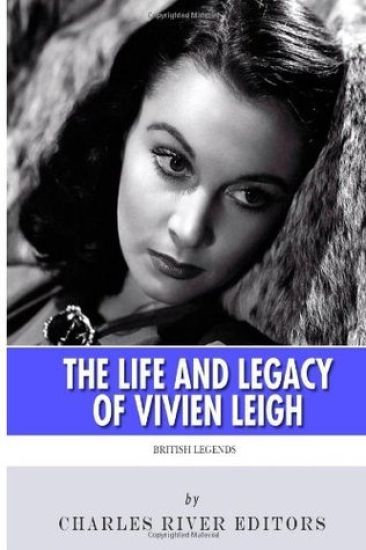
*Includes pictures. *Includes quotes about Vivien's life and career, including her own quotes. *Includes a bibliography for further reading. "I'm not a film star, I am an actress. Being a film star is such a false life, lived for fake values and for publicity." - Vivien Leigh A lot of ink has been spilled covering the lives of history's most influential figures, but how much of the forest is lost for the trees? In Charles River Editors' British Legends series, readers can get caught up to speed on the lives of Britain's most important men and women in the time it takes to finish a commute, while learning interesting facts long forgotten or never known. The 1930s were the height of the classical Hollywood era, and it is no accident that 1939 has historically been designated as the pinnacle of Hollywood film history. The era was known for its lavish studio productions, with MGM, RKO, Warner Brothers, Paramount, and 20th Century Fox all operating at the height of their powers. Every major studio possessed a long roster of contract players, with films released at such a rapid pace that it made for an especially competitive environment within the industry. Even while America remained in the throes of the Great Depression, the film industry continued to flourish, and movies easily supplanted the theater as the main attraction for American entertainment. Of course, what made 1939 the watershed year was the release of several critically acclaimed movies, including The Wizard of Oz and Mr. Smith Goes to Washington. But the most famous of the bunch, and perhaps the most famous movie of all, is Gone With the Wind, and one of the most remarkable aspects of the film is that the quintessential Southern belle was played by Vivien Leigh, a British actress still relatively unknown in Hollywood. Vivien was an accomplished stage actress and had already appeared in foreign films during the 1930s, but she was a complete dark horse to get the iconic role she's still associated with, and it only came about because of her persistence in getting cast for the role. 30 years after Gone With the Wind was released, one film critic credited Selznick's "inspired casting" of Vivien Leigh as Scarlett with the film's success. Another 30 years later, the same critic wrote that Leigh "still lives in our minds and memories as a dynamic force rather than as a static presence." While Gone With the Wind made Leigh a big name practically overnight, she continued to buck the usual trend by doing Broadway and even appearing on stage in London during the 1940s, instead of focusing on movies. A lot of this was no doubt due to her famous marriage to Laurence Olivier, himself an accomplished stage and film actor. At the same time, Vivien became notorious for being difficult to work with and unusually temperamental, a byproduct of bipolar disorder that frequently affected her mood and occasionally left her incoherently hysterical. Nevertheless, Vivien was able to recapture the magic in 1951's A Streetcar Named Desire, which cast her in the role of Southern belle yet again. Phyllis Harnoll praised Leigh's Blanche DuBois by saying that, in the London stage production of the play, she showed, "proof of greater powers as an actress than she had hitherto shown". In fact, it was actually during her time as DuBois that she reached the pinnacle of her stage career. Likewise, her role in the movie was described as one "of the greatest performances ever put on film" and "one of those rare performances that can truly be said to evoke both fear and pity." Unfortunately, her life and career faced constant upheaval by both her mental and physical maladies, including tuberculosis, which led to a premature death in 1967. British Legends: The Life and Legacy of Vivien Leigh examines the life and career of one of Hollywood's most famous actresses.
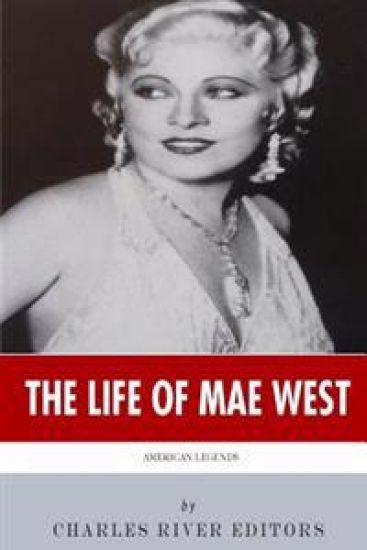
*Includes pictures. *Includes Mae's most famous, clever and controversial quotes. *Includes quotes from Mae's autobiography about her life and career. *Includes a bibliography for further reading. "Between two evils, I generally like to pick the one I never tried before." - Mae West A lot of ink has been spilled covering the lives of history's most influential figures, but how much of the forest is lost for the trees? In Charles River Editors' American Legends series, readers can get caught up to speed on the lives of America's most important men and women in the time it takes to finish a commute, while learning interesting facts long forgotten or never known. Mae West will always be remembered as one of Hollywood's biggest icons, and the American Film Institute named her the 15th greatest actress of the 20th century in its Top 100 list, but she also transcended the entertainment industry and became a critical part of Americana itself. Over the course of 7 decades, Mae redefined the boundaries of sexuality in ways that made more conservative Americans of the early 20th century uncomfortable, and for good measure she did so boldly and in people's faces. Full of witty rejoinders and one-liners that both flaunted and celebrated her sexuality, she eventually managed to help usher in a more open era, even as the standards of the time found her so controversial that she was often subjected to censorship (which she once quipped "made a fortune" for her). Mae and some of her movies have been widely credited with spurring the implementation of the notorious Hays Code, which censored lewd and obscene material in Hollywood movies for several years, but she remained defiant. Even near the end of her life and career, when cast in a role where she is romantically pursued by a British man, her elderly character wisecracks that she hopes to be able to say what Paul Revere did: "The British are coming." Although Mae West is mostly remembered for being one of the 20th century's first and most important sex symbols, she was a versatile entertainer who made it in different venues across the country and across the years. Like many young actresses at the time, Mae started in vaudeville and stage in New York before heading west to Hollywood. In fact, by the time she starred in movies, she was nearing the age of 40, well after most star actresses had seen their careers peaked. Nonetheless, Mae continued to portray vixens that drove men nuts on screen for decades, all while being a comedienne and even writing her own plays and materials. Even after her film career was over, she returned to the stage and appeared on television shows. By the time Mae West was nearing the end of her life, she was a ubiquitous pop culture presence. American servicemen made bawdy references to her when parachutes split in two, certainly the kind of comparisons she appreciated, and even The Beatles felt compelled to convince Mae West to let them use her likeness on the album cover of Sgt. Pepper's Lonely Hearts Club Band. True to form, Mae initially objected to being a member of a "Lonely Hearts Club". But just as importantly, Mae's self-confidence and sense of independence helped pave new paths for actresses who followed her. American Legends: The Life of Mae West examines the life and career of one of Hollywood's biggest sex icons. Along with pictures of important people, places, and events, you will learn about Mae West like never before, in no time at all.