Kirjojen hintavertailu – 12 903 725 kirjaa ja 27 kauppaa

Kirjailija

Charles River

Kirjat ja teokset yhdessä paikassa: 4 673 kirjaa, julkaisuja vuosilta 2013–2022, suosituimpiin kuuluu William Powell and Myrna Loy: The Lives and Careers of One of Classical Hollywood's Most Iconic Duos. Vertaile teosten hintoja ja tarkista saatavuus suomalaisista kirjakaupoista.

4 673 kirjaa

Kirjojen julkaisuvuodet: 2013–2022.

American Legends: The Life of Black Hawk

American Legends: The Life of Black Hawk

Charles River

Createspace Independent Publishing Platform
2013
nidottu
*Includes pictures of historic art depicting Black Hawk and important people, places, and events. *Includes Black Hawk's own quotes about his life and battles. *Includes a bibliography for further reading. "I was once a great warrior; I am now poor... I am now old. I have looked upon the Mississippi since I have been a child. I love the great river. I have dwelt upon its banks from the time I was an infant. I look upon it now. I shake hands with you, and as it is my wish, I hope you are my friends." - Black Hawk at Fort Madison, 1838 A lot of ink has been spilled covering the lives of history's most influential figures, but how much of the forest is lost for the trees? In Charles River Editors' American Legends series, readers can get caught up to speed on the lives of America's most important men and women in the time it takes to finish a commute, while learning interesting facts long forgotten or never known. Of all the Native American leaders who attempted to resist the westward expansion of the United States and further white settlement during the 19th century, few fought as long or as hard as Black Hawk, a leader of the Sauk in the present-day Midwest. Though he is no longer as well-known as his contemporary Tecumseh, or subsequent Native American leaders like Sitting Bull, Crazy Horse, and Geronimo, his eventual surrender and trip east as a prisoner turned him into one of the first Native American celebrities in the country. Long before curious Americans came out in throngs to get a glimpse of him, Black Hawk played a crucial role in some of the seminal events of the 19th century, including the negotiations of several treaties and the War of 1812. Today, of course, he is best known for leading a band of about 1,500 during the Black Hawk War in 1832, a series of small battles fought in the Wisconsin territory after Black Hawk led his people east across the Mississippi River in an attempt to reclaim his people's old lands in Illinois. One of the earliest battles in the war resulted in a shocking defeat of American militia and one of America's most notorious losses before the Battle of the Little Bighorn, but the fighting ultimately lasted only a few months, culminating in a massacre of Native Americans at the Battle of Bad Axe. During the fighting there, American soldiers literally pushed the Native Americans back to the Mississippi River and then shot men, women and children as they attempted to cross the river to safety. Given the limited amount of fighting, the Black Hawk War was hardly a war in the traditional sense, but it is still well-known among Americans today, and it was truly a seminal moment in American history. Black Hawk's defeat essentially ended all Native American resistance east of the Mississippi River and opened up the rest of Illinois and Wisconsin to white settlement. The war also provided an opportunity for some of the era's most famous Americans to get military experience, including several U. S. Senators, several Territorial Governors, future Confederate President Jefferson Davis, and most famously, Abraham Lincoln. American Legends: The Life of Black Hawk chronicles the life of the Sauk leader who defiantly fought to save his people's homeland, but it also humanizes one of the most famous Native Americans in American history. Along with pictures of important people, places, and events, you will learn about Black Hawk like you never have before, in no time at all.
American Legends: The Pilgrims and the Mayflower

American Legends: The Pilgrims and the Mayflower

Charles River

Createspace Independent Publishing Platform
2013
nidottu
*Includes pictures *Includes excerpts from the journals of two of the Mayflower's passengers "By God's providence, upon the ninth of November following, by break of the day we espied land which was deemed to be Cape Cod, and so afterward it proved. And the appearance of it much comforted us, especially seeing so goodly a land, and wooded to the brink of the sea. It caused us to rejoice together, and praise God that had given us once again to see land." - Edward Winslow A lot of ink has been spilled covering the lives of history's most influential figures, but how much of the forest is lost for the trees? In Charles River Editors' American Legends series, readers can get caught up to speed on the lives of America's most important men and women in the time it takes to finish a commute, while learning interesting facts long forgotten or never known. In September 1620, about 130 people set sail from Plymouth, England and headed west for a new land and new religious opportunities. Known colloquially as Separatists or Strangers, the group aimed to establish a new colonial settlement in the New World, but by the end of the following winter, half of them would be dead. And though they had intended to land farther to the south, the ship was blown off course during the journey and instead took them to Plymouth Harbor in Cape Cod, Massachusetts. The men, women and children who boarded the Mayflower that year were not the first colonists in North America, but they nevertheless have become the most famous, and every American is instantly familiar with the name of their boat. These pilgrims intended to create the first permanent colonial settlement in the region, and despite the hardships they managed to do so. Their legendary story naturally included their encounters with local Native Americans, many of which were hostile despite the fact Thanksgiving is celebrated because these first pilgrims survived the first year with help from nearby natives. American Legends: The Pilgrims and the Mayflower chronicles the amazing journey made by the pilgrims and their turbulent attempt to establish a permanent settlement. Along with pictures of important people, places, and events, you will learn about the Mayflower like you never have before, in no time at all.
The Top 10 Most Notorious Pirates: Blackbeard, Captain Kidd, Captain Morgan, Grace O'Malley, Black Bart, Calico Jack, Anne Bonny, Mary Read, Henry Eve
*Examines the lives, legends and legacies of 10 of history's most famous pirates. *Explains how the myths and legends of pirates like Blackbeard created the instantly recognizable pirate stereotypes today. *Includes pictures depicting the pirates and important people, places, and events in their lives. *Includes contemporary accounts of the pirates written by Captain Charles Johnson *Includes Bibliographies The people who have lived outside the boundaries of normal societies and refused to play by the rules have long fascinated the world, and nowhere is this more evident than the continuing interest in the pirates of centuries past. As the subjects of books, movies, and even theme park rides, people continue to let their imaginations go when it comes to pirates, with buried treasure, parrots, and walking the plank all ingrained in pop culture's perception of them. While there is no question that the myths and legends surrounding history's most famous pirates are colorful, in some instances their actual lives made for even better stories. Before the Golden Age of Piracy, men and women like Sir Francis Drake and Grace O'Malley straddled the line between pirate and privateer, with Drake being knighted for fighting the Spanish and O'Malley representing many things to the Irish, including queen, legend, pirate, and folk hero. While Captain Morgan's ruthless piracy has actually been forgotten due to his association with the spiced rum company using his name, Captain William Kidd insisted he wasn't a pirate at all, and his entire reputation is based on the most notorious trial in the history of piracy. The Golden Age of Piracy generally refers to the era when history's most famous pirates roamed the seas of the West Indies from 1670-1720, and it is no coincidence that the beginning of it was marked by the rise of Henry Every. In his day Every was the "King of Pirates", and in addition to popularizing the famous skull and crossbones logo that would become the most famous pirate flag, Every conducted what is considered the most profitable pirate raid in history, leading to what is considered the first worldwide manhunt in history when the English put a large bounty on his head. It would be an understatement to say that pop culture's perception of piracy and pirates has been primarily influenced by Captain Edward Teach, known to the world as Blackbeard. Blackbeard is remembered today based more on myths than reality. People continue to let their imaginations go when it comes to Blackbeard, picturing a pirate who captured more booty than any other pirate, hid buried treasure, and lit his hair on fire before battle. People have long claimed that his ghost still haunts the Atlantic Ocean, and his contemporaries were so scared of him that they claimed to have seen his headless body swim around his pirate boat three times. Fittingly, some of history's most famous pirates sailed together. Black Bart Roberts is considered the most successful pirate in history, managing to capture about 500 ships before meeting his fate, but he learned the tricks of the trade from Howell Davis, whose cunning and courage led to some of the most spectacular acts of piracy in history. Then there are history's two most famous female pirates, Anne Bonny and Mary Read, who actually sailed together on Calico Jack's pirate ship. Together the three became history's most famous pirate crew and had one of the most colorful years of the Golden Age of Piracy before being captured. This book looks at all of these notorious pirates, examining their careers and analyzing their legacies. Along with pictures, contemporary accounts, bibliographies, and a Table of Contents, you will learn about history's most famous pirates like never before.
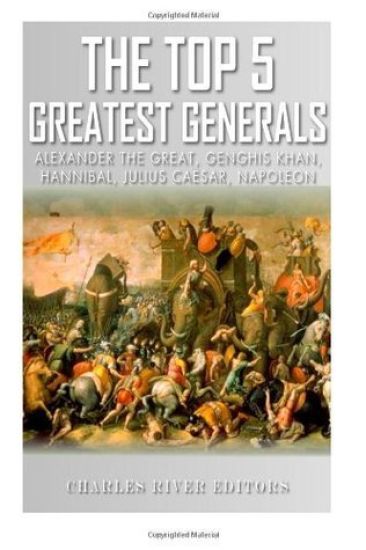
The Top 5 Greatest Generals: Alexander the Great, Hannibal, Julius Caesar, Genghis Khan, and Napoleon Bonaparte
Includes pictures depicting important people, places, and events in each man's life. Discusses interesting, lesser known facts about each man and answers common myths and misconceptions about them. Was Alexander referenced in the Qur'an? What were Caesar's last words? Was Napoleon really short? Includes bibliographies on Napoleon and Alexander for further reading. Over the last 2,000 years, ambitious men have dreamed of conquering vast empires and attaining eternal glory in battle, but of all the men who took steps toward such dreams, few were as successful as Alexander the Great, Hannibal, Julius Caesar, Genghis Khan, and Napoleon Bonaparte, all of whom have been inextricably tied together by their successes and ambitions. Over the last 200 years, would-be conquerors and generals hoped to rival Napoleon's accomplishments, while Napoleon aimed to emulate the accomplishments of Julius Caesar. But Caesar himself found inspiration in Alexander the Great (356-323 B. C.), the Macedonian King who managed to stretch an empire from Greece to the Himalayas in Asia at just 30 years old. It took less than 15 years for Alexander to conquer much of the known world. Alexander was responsible for establishing 20 cities in his name across the world, most notably Alexandria in Egypt, and he was directly responsible for spreading Ancient Greek culture as far east as modern day India and other parts of Asia. Hannibal has the distinction of being the only man who nearly brought Rome to its knees before its decline almost 700 years later. Rome never suffered a more horrifying defeat in its history than at Cannae, and indeed, Hannibal nearly rewrote the course of Western history during the Second Punic War. Even today there remains great debate on just how he accomplished his masterful invasion of Italy across the Alps. Since his army included war elephants, historians still argue over exactly where and how he crossed over 2,000 years after he managed that incredible feat. Hannibal will always be listed among history's greatest generals, and his military campaign in Italy during the Second Punic War will always be studied, but part of the aura and mystique surrounding the Carthaginian legend is that there is still a lot of mystery. The ultimate conqueror, statesman, dictator, visionary, and opportunist, during his time in power Caesar expanded the borders of Rome to almost twice their previous size, revolutionized the infrastructure of the Roman state, and destroyed the Roman Republic for good, leaving a line of emperors in its place. His legacy is so strong that his name has become, in many languages, synonymous with power: the Emperors of Austria and Germany bore the title Kaiser, and the Czars of Russia also owe the etymology of their title to Caesar. His name also crept further eastward out of Europe, even cropping up in Hindi and Urdu, where the term for "Emperor" is Kaisar. In a world fascinated by men like Alexander the Great and Julius Caesar, Genghis Khan is one of history's greatest and most famous conquerors. No man, before or since, has ever started with so little and gone on to achieve so much. From a noble family but raised in poverty that drove him to the brink of starvation, Genghis Khan rose to control the second-largest empire the world has ever known (the largest being, arguably, the British Empire of the 18th and 19th centuries), and easily the largest empire conquered by a single man. Napoleon Bonaparte was the most successful French leader since Charlemagne and widely acknowledged as one of the greatest generals ever. Indeed, Napoleon was likely the most influential man of the 19th century, leaving an indelible mark on everything from the strategy and tactics of warfare to the Napoleonic Code that drafted laws across the continent. To defeat Napoleon, the Europeans had to form large coalitions multiple times, which helped bring about the entangling alliances that sparked World War
The Holy Grail: The History and Legend of the Famous Relic

The Holy Grail: The History and Legend of the Famous Relic

Charles River

Createspace Independent Publishing Platform
2013
nidottu
*Includes pictures depicting important people and events. *Explains the literary evolution of the legend of the Holy Grail. *Discusses the scholarship over the historicity of the Grail and theories about the origins of the legend. *Includes a bibliography for further reading. "And He took a cup and when He had given thanks He gave it to them saying 'Drink this, all of you; for this is My blood of the covenant, which is poured out for many for the forgiveness of sins. I tell you, I shall not drink again of the fruit of the vine until I drink it new with you in My Father's kingdom.'" - Matthew 26:27 "The Grail is the womb of the beloved." - Robert Anton Wilson The Holy Grail is one of the most famous relics of Christianity, but also one of the least understood. Today, it is mostly associated with Christ's Last Supper, possibly used during the meal as a serving cup. The gospels in the New Testament specifically mention the Holy Chalice that Jesus used to serve wine, so it's no surprise that images of the Holy Grail depict a similar kind of cup. Initially, the Holy Chalice was a separate tradition, but over time, the Holy Grail has come to be indistinguishable from the Holy Chalice itself, a concept that probably would have been foreign to the earliest Christians. While churches throughout Christendom were familiar with traditions regarding the Holy Chalice and some even claimed to have the venerated object, the legend of the Holy Grail was given life during the Middle Ages through folklore. Today, the legends written about the Holy Grail are better known than the traditions surrounding the Holy Chalice. The Holy Grail is a prevalent theme in the Arthurian tales, and it eventually became linked to other events in the crucifixion narrative by subsequent legends, including the belief that Joseph used the Holy Grail to catch some of Christ's blood after he was crucified and was being interred. Conveniently, the British writers who wrote of the legend related the tale of how special protectors of the relic brought it to Britain, a simple but effective way of boosting the legitimacy and prestige of the motherland. While the Arthurian tales about Galahad and Perceval continue to fascinate readers, and the concept of undertaking an arduous quest to attain the Holy Grail has become a secular part of the modern lexicon, scholarly debate also arose over the actual history of the relic. Given the passage of time, and the addition of the literature surrounding it, it should come as no surprise that the historical debate continues today. In addition to the Christian traditions, scholars have looked for other sources that might have influenced the beliefs and legends about the Holy Grail, including searching Celtic mythology and literature, all in an attempt to better understand the emergence of the Holy Grail legend. The Holy Grail: The History and Legend of the Famous Relic chronicles the legends and theories about the famous holy relic, examining the historical record to piece together an understanding of the known and unknown about the Grail. Along with pictures and a bibliography, you will learn about the Holy Grail like you never have before, in no time at all.
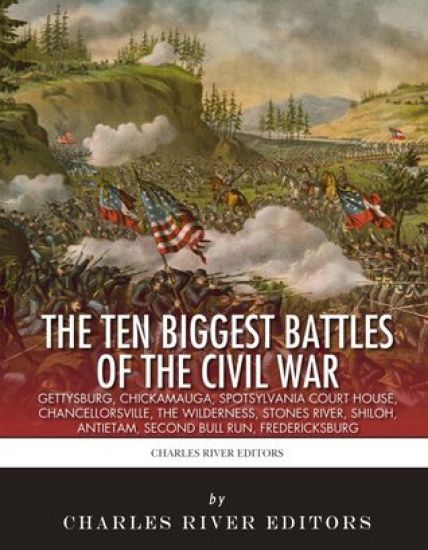
The 10 Biggest Civil War Battles: Gettysburg, Chickamauga, Spotsylvania Court House, Chancellorsville, The Wilderness, Stones River, Shiloh, Antietam,
*Includes pictures of the battles' important generals. *Includes several maps of the battles. *Includes accounts of the battles written by important generals. *Includes a Bibliography for each battle.. Americans have long been fascinated by the Civil War, marveling at the size of the battles, the leadership of the generals, and the courage of the soldiers. Since the war's start over 150 years ago, the battles have been subjected to endless debate among historians and the generals themselves. The Civil War was the deadliest conflict in American history, and had the two sides realized it would take 4 years and inflict over a million casualties, it might not have been fought. Since it did, however, historians and history buffs alike have been studying and analyzing the biggest battles ever since. The 10 biggest Civil War battles were incredibly bloody, desperate fights that involved the war's most famous figures and determined the fate of several states. All told, over a quarter of a million casualties were inflicted by the two sides during the 10 largest battles, and the fates of the battles and the war itself hung in the balance. Shiloh, Stones River and Chickamauga would all feature Union heroes like Ulysses S. Grant and George H. Thomas preserving Federal control over Tennessee and Kentucky. But during those same periods of time, Robert E. Lee was leading the Army of Northern Virginia to victory over several Union commanders at Fredericksburg, Second Bull Run, and Chancellorsville. Of course, the most famous battles of the war involved the Army of the Potomac blunting Lee's offensives at Antietam and Gettysburg. Antietam was the bloodiest day of the war and forced Lee out of Maryland, allowing Lincoln to issue the Emancipation Proclamation. The following summer would see the biggest and most famous battle at Gettysburg. Lee would try and fail to dislodge the Union army with attacks on both of its flanks during the second day and Pickett's Charge right down the center of the line on the third and final day. Meade's stout defense held, barely, repulsing each attempted assault, handing the Union a desperately needed victory that ended up being one of the Civil War's turning points. At the Battle of the Wilderness (May 5-7, 1864), Ulysses S. Grant and Robert E. Lee fought to a standstill in their first encounter, failing to dislodge each other despite incurring nearly 30,000 casualties between the Union Army of the Potomac and the Confederate Army of Northern Virginia. Despite the fierce fighting, Grant continued to push his battered but resilient army south, hoping to beat Lee's army to the crossroads at Spotsylvania Court House, but Lee's army beat Grant's to Spotsylvania and began digging in, setting the scene for on and off fighting from May 8-21 that ultimately inflicted more casualties than the Battle of the Wilderness. In fact, with over 32,000 casualties among the two sides, it was the deadliest battle of the Overland Campaign. The 10 Biggest Civil War Battles comprehensively covers all 10 battles, including the events that led up to the battle, the fighting itself, and the aftermath of the battles. Accounts of the battles by important participants are also included, along with maps of the battles and pictures of important people, places, and events. You will learn about the 10 bloodiest Civil War battles like you never have before.
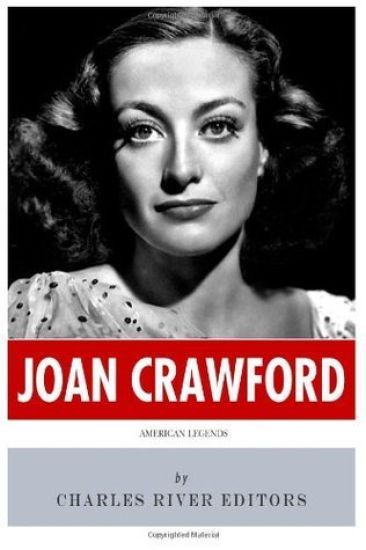
American Legends: The Life of Joan Crawford

American Legends: The Life of Joan Crawford

Charles River

Createspace Independent Publishing Platform
2013
nidottu
*Includes pictures of Crawford and important people, places, and scenes. *Includes Crawford's' own quotes about her upbringing, films and relationships. *Includes a Bibliography for further reading. "I never go outside unless I look like Joan Crawford the movie star. If you want to see the girl next door, go next door." - Joan Crawford A lot of ink has been spilled covering the lives of history's most influential figures, but how much of the forest is lost for the trees? In Charles River Editors' American Legends series, readers can get caught up to speed on the lives of America's most important men and women in the time it takes to finish a commute, while learning interesting facts long forgotten or never known. The life of Joan Crawford is one of the most famous Hollywood rags-to-riches tales. While it is common to think of Hollywood as a land offering great opportunity to hard-working actresses, the Horatio Alger myth rarely applies in reality, but it applied almost perfectly to Joan Crawford. Crawford grew up in relative poverty, with both of her childhood father figures abandoning the family before she became a teenager, and she relied on undying ambition in order to progress through the ranks of the show business circuit and then the Hollywood studio system. This drive to succeed continued throughout her entire career, and Crawford's public battles with both studios (MGM in particular) and other stars (first Norma Shearer and later Bette Davis) were borne out of an unmatched competitive streak. Joan Crawford's life and career also shed light on the treatment of women in pop culture and in cinema during the early 20th century. Her career was not only limited to film acting, as she acted in musical revues and was previously an unabashed flapper during the Roaring Twenties. As her career progressed, she acted in silent films, flourished with the rise of sound cinema in the late 1920s, became a leading lady in the 1930s and 1940s, and finally became a sort of caricature of herself during the late stages of her career in the 1950s and 1960s. Taken together, her filmography comprises roughly 90 films, a career of almost unprecedented scope. Given the length of her career and her range, her career offers one of the most useful examples for tracking the changing way in which women were portrayed on screen from the 1920s-1960s, and it is for this reason that her life story reveals the pressures, pleasures, and expectations of being a Hollywood actress during the first half of the 20th century. After reaching film stardom, Crawford lived a life of glamour, but she was also constantly involved in public jockeying for position within the film industry and never relinquished the desperate need to succeed that helped her get her start decades earlier. Naturally, there was a wide gulf between Joan's unprivileged upbringing and the comfort she enjoyed as an adult; in fact, her rise from poverty to fame seems almost fabricated, as she went from living in a dilapidated apartment adjacent to a laundry room to become one of the wealthiest actresses in Hollywood. At the same time, comparing Joan's childhood with her adult life reveals many similarities. As child and adult, Crawford had contentious interactions with family members, and a large proportion of her familial relationships are characterized by abuse. Moreover, the bold assertion that often got her in trouble as a youth in her strict all-girls school was instrumental in supplying her with the verve to overcome the significant obstacles that face anyone with Hollywood aspirations. Joan's life is proof that no matter how much Hollywood may transform the lifestyle of a famous actress, she likely won't cast aside the influence of her cultural background.
The History of Syria: 1900-2012

The History of Syria: 1900-2012

Charles River; M. Clement Hall

Createspace Independent Publishing Platform
2013
nidottu
As one of the hottest political topics in the world today, nearly everyone is aware of the ongoing violence in Syria, between forces loyal to the regime of Bashar al-Assad and opposition looking to overthrow the regime. Within that narrative are a number of sensitive issues, including sectarian strife between the majority Sunni population and the Alawites, not to mention Christians. People may know what's going on in Syria today, but how did Syria get to where it is today, at the forefront of the Arab Spring? The history of Syria in the last century is one of turbulence, violence, and political intrigue, with local religious sects battling for control of the land while foreign powers vied to maintain influence over the region. What resulted was a toxic and twisted mess that has precipitously affected the entire region, from Israel and Lebanon to Iran and Iraq. The History of Syria: 1900-2012 comprehensively and descriptively unweaves the web, progressing through the history of Syria from the days of the Ottoman Empire to now, by examining all of the different religious, political, foreign, and military issues that affect Syria and are affected by Syria today. Along with maps showing how the modern state of Syria came to be formed, The History of Syria: 1900-2012 will bring readers up to speed on one of the world's most volatile and violent hotspots today.
American Legends: The Life of Edgar Allan Poe

American Legends: The Life of Edgar Allan Poe

Charles River

Createspace Independent Publishing Platform
2013
nidottu
*Includes pictures of Poe and important people and places in his life. *Discusses the inspiration for Poe's most famous works. *Explains Poe's relationships with the various women in his life. *Discusses the mysterious circumstances of his death and possible explanations. *Includes a Bibliography for further reading. "He was an adventurer into the vaults and cellars and horrible underground passages of the human soul. He sounded the horror and the warning of his own doom." - D. H. Lawrence A lot of ink has been spilled covering the lives of history's most influential figures, but how much of the forest is lost for the trees? In Charles River Editors' American Legends series, readers can get caught up to speed on the lives of America's most important men and women in the time it takes to finish a commute, while learning interesting facts long forgotten or never known. Edgar Allan Poe was one of America's first native-born professional authors, but he nevertheless embodied the now-common archetype of the artist - dark, tortured, brilliant and tragic. Born into troubled conditions, Poe's life hardly improved over the years, and when it did, his happiness or triumph was always brief. His work was lauded during his lifetime, but his lifestyle never came close to matching the legacy that would swell in the decades following his death. And that untimely end, so mysterious and pathetic, was an event that only Poe or Fate could have been macabre enough to script. However, in spite of (or perhaps because of) all of his suffering, Poe remains one of the great forces in American literature, particularly during its formative years. He was a pioneer of multiple literary traditions, including the gothic, horror, dark Romanticism, detective, satire, hoax and science fiction genres. Poe is best known for his tales of mystery and the macabre, and Poe was one of the earliest American practitioners of the short story. Long before Sherlock Holmes became famous, Poe invented the genre of detective fiction and contributed to science fiction. Had Poe simply pioneered genres, he would have left a worthy legacy, but Poe also happened to master them, and the imagery of his stories remains unsurpassed. His portrayal of insane protagonists and antagonists, horrific situations like being buried alive, supernatural phenomena, and vivid descriptions of the physical and mental effects of sickness and death continue to amaze and bedevil subsequent generations of readers, most of whom come to admire his genius and wonder about his sanity at the same time. American Legends: The Life of Edgar Allan Poe profiles the dark life and works of one of America's most famous and influential authors, examining his stories and analyzing his lasting legacy. Along with pictures of important people, places, and events, you will learn about Poe like you never have before, in no time at all.

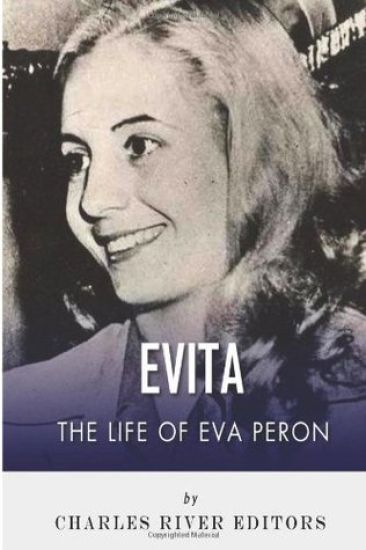
Evita: The Life of Eva Peron

Evita: The Life of Eva Peron

Charles River

Createspace Independent Publishing Platform
2013
nidottu
*Includes pictures. *Comprehensively covers Evita's life and legacy, including the ways she has been depicted in media over the last 60 years. *Includes a Bibliography for further reading. Maria Eva Duarte de Peron, known to the world as Evita, stands with Jesus Christ as a highly influential historical figure who lived only 33 years. The similarities do not end there: as Argentine novelist Tomas Eloy Martinez has observed, Evita came to "symbolize certain naive, but effective, beliefs: the hope for a better world; a life sacrificed on the altar of the disinherited, the humiliated, the poor of the earth . . . myths which somehow reproduce the image of Christ." During her life she was elevated to the status of "spiritual leader" of her country, Argentina, and after death she was regarded there as a martyr and a saint by her many followers. A visit to the museum dedicated to Evita's legacy in the Botanico neighborhood of Buenos Aires reveals the spirit of quasi-religious devotion that surrounds her: more than simply a collection of historical displays, the museum stands as a shrine to her legacy and intends to imbue its viewers with the spirit and beliefs of the deceased First Lady. In one of the rooms, the visitor stands in the presence of one of her most famous dresses in a centrally placed glass case, with the scent of roses artificially pumped into the air. Like many of the other objects, the dress is presented much as were the relics of medieval saint. Evita's tomb in the same city's Recoleta cemetery, constantly garlanded with fresh bouquets and notes of gratitude from pilgrims who have come to pay their respects, provides further evidence of her revered presence in Argentine culture. At the same time, the presence of the major artifacts of Evita's person in these particular locations is also ironic and revealing of the great social divisions over which she presided. Botanico is a prestigious and wealthy neighborhood, and the Recoleta is the burial place of Argentina's oligarchy; Eva Peron prided herself on having antagonized and earned the hatred of precisely these social classes. Over 50 years after her death, Peronism, the political philosophy devised by her and her husband Juan Domingo Peron, remains a potent force in Argentine politics (the current president identifies herself closely with the Perons and their legacy), but it also continues to inspire deep enmity. While a large portion of the country sees Evita as a symbol of national pride, there is also a significant sector that sees her as an impostor and a demagogue whose brilliant but irresponsible manipulation of mass politics helped sink the country into chaos. Whereas some controversial political figures tend to become more broadly and neutrally admired as the distance from their lifespan grows, within her own country Evita remains as much a lightning rod as ever. Since her death, the mythology and legend of Evita have grown monumentally. Though millions worshipped Eva, who nearly became the Vice-President of Argentina before her premature death, opinions of her still vary between two extremes. While some think of her as an angelic woman who sought to uplift women and the poor, others view her as a self-serving, egotistical, and embittered woman who used sex to rise up Argentina's social and political ladder and seek vengeance on the upper classes. Evita: The Life of Eva Peron humanizes the youngest of 5 siblings who once had more modest ambitions as Eva Duarte, and it explores the mythology and legacy that have grown around Evita, examining her representations in literature, film, and theatre to uncover the truth behind her enigmatic existence.
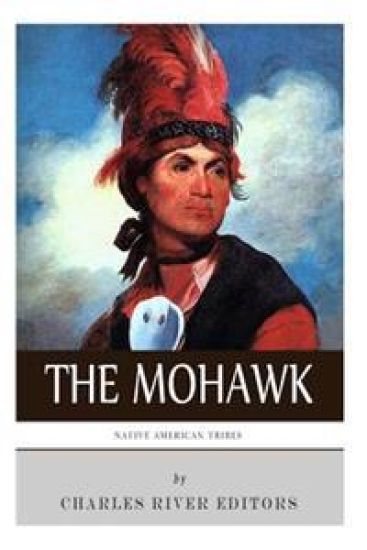
Native American Tribes: The History and Culture of the Mohawk

Native American Tribes: The History and Culture of the Mohawk

Charles River

Createspace Independent Publishing Platform
2013
nidottu
*Includes pictures *Includes a Bibliography for further reading. From the "Trail of Tears" to Wounded Knee and Little Bighorn, the narrative of American history is incomplete without the inclusion of the Native Americans that lived on the continent before European settlers arrived in the 16th and 17th centuries. Since the first contact between natives and settlers, tribes like the Sioux, Cherokee, and Navajo have both fascinated and perplexed outsiders with their history, language, and culture. In Charles River Editors' Native American Tribes series, readers can get caught up to speed on the history and culture of North America's most famous native tribes in the time it takes to finish a commute, while learning interesting facts long forgotten or never known. Among all the Native American tribes, the Iroquois peoples are some of the most well documented Native Americans in history. Indigenous to the northeast region of what is now the United States and parts of Canada, they were among some of the earliest contacts Europeans had with the native tribes. And yet they have remained a constant source of mystery. At the same time, the Iroquois are a confederation of several different tribal nations that include the Seneca, Oneida, Onondaga, Mohawk, Cayuga and the Tuscarora. Among these groups, the most famous is the Mohawk, who refer to themselves as Kanien'keh ka ("People of the Place of Flint"), but pop culture has a very different image in mind when it comes to the Mohawk (and the Iroquois as a whole). Those unfamiliar with the group associate them with the conspicuous Mohawk haircut, and images of a warlike people who scalp their enemies are still constantly evoked. The Mohawk were mentioned in James Fenimore Cooper's classic 1826 novel The Last of the Mohicans, an entertaining novel that led to many misconceptions about the Mokawk and continues to do so. That said, European settlers who came into contact with the Mohawks in the Northeast certainly learned to respect their combat skills, to the point that there were literally bounties on the Mohawks' heads, with scalps fetching money for colonists who succeeded in slaying them and carrying away the "battle prize". Both the British and Americans encountered some of their military leaders, who subsequently became well known as portraits were made of them and word of their actions traveled. The Mohawk leader known by the British and Americans as Joseph Brant fought in the Revolution for the British and met men like George Washington and King George III. Native American Tribes: The History and Culture of the Mohawk comprehensively covers the culture and history of the famous group, profiling their origins, their history, and their lasting legacy. Along with pictures of important people, places, and events, you will learn about the Mohawk like you never have before, in no time at all.
Native American Tribes: The History and Culture of the Apache

Native American Tribes: The History and Culture of the Apache

Charles River

Createspace Independent Publishing Platform
2013
nidottu
*Includes pictures *Includes a Bibliography for further reading. "Of the hundreds of peoples that lived and flourished in native North America, few have been so consistently misrepresented as the Apacheans of Arizona and New Mexico. Glorified by novelists, sensationalized by historians, and distorted beyond credulity by commercial film makers, the popular image of 'the Apache' - a brutish, terrifying semi-human bent upon wanton death and destruction - is almost entirely a product of irresponsible caricature and exaggeration...." - Keith Basso, anthropologist. From the "Trail of Tears" to Wounded Knee and Little Bighorn, the narrative of American history is incomplete without the inclusion of the Native Americans that lived on the continent before European settlers arrived in the 16th and 17th centuries. Since the first contact between natives and settlers, tribes like the Sioux, Cherokee, and Navajo have both fascinated and perplexed outsiders with their history, language, and culture. In Charles River Editors' Native American Tribes series, readers can get caught up to speed on the history and culture of North America's most famous native tribes in the time it takes to finish a commute, while learning interesting facts long forgotten or never known. Among all the Native American tribes, the Spanish, Mexicans, and Americans learned the hard way that the warriors of the Apache were among the fiercest in North America. Based in the Southwest, the Apache fought all three in Mexico and the American Southwest, engaging in seasonal raids for so many centuries that the Apache struck fear into the hearts of all their neighbors. Given the group's reputation, it's fitting that they are inextricably associated with one of their most famous leaders, Geronimo. Descendants of people killed by "hostile" Apache certainly considered warriors like Geronimo to be murderers and thieves whose cultures and societies held no redeeming values, and even today, many Americans associate the name Geronimo with a war cry. The name Geronimo actually came about because of a battle he fought against the Mexicans. Over time, however, the historical perception of the relationship between America and Native tribes changed drastically. With that, Geronimo was viewed in a far different light, as one of a number of Native American leaders who resisted the U. S. and Mexican governments when settlers began to push onto their traditional homelands. Like the majority of Native American groups, the Apache were eventually vanquished and displaced by America's westward push, and Geronimo became an icon for eluding capture for so long. Native American Tribes: The History and Culture of the Apache comprehensively covers the culture and history of the famous group, profiling their origins, their history, and their lasting legacy. Along with pictures of important people, places, and events, you will learn about the Apache like you never have before, in no time at all.
Native American Tribes: The History and Culture of the Anasazi (Ancient Pueblo)

Native American Tribes: The History and Culture of the Anasazi (Ancient Pueblo)

Charles River

Createspace Independent Publishing Platform
2013
nidottu
*Includes pictures of Anasazi art, artifacts, and ruins. *Explains the origins, history, religion, and social structure of the Anasazi *Explains the relationship between the Anasazi and the Zuni *Includes a Bibliography for further reading. From the "Trail of Tears" to Wounded Knee and Little Bighorn, the narrative of American history is incomplete without the inclusion of the Native Americans that lived on the continent before European settlers arrived in the 16th and 17th centuries. Since the first contact between natives and settlers, tribes like the Sioux, Cherokee, and Navajo have both fascinated and perplexed outsiders with their history, language, and culture. In Charles River Editors' Native American Tribes series, readers can get caught up to speed on the history and culture of North America's most famous native tribes in the time it takes to finish a commute, while learning interesting facts long forgotten or never known. When European settlers and later American settlers came into contact with Native American tribes on the continent, they were frequently unable to differentiate between the subcultures within individual tribes, leading to all kinds of misunderstandings. When the Spanish came into contact with different tribes in the Southwest, they categorized several of them as Pueblo. Thus, while most Americans have heard of the Pueblo and Navajo, many remain unfamiliar with distinctions within the tribes. The Pueblo fascinated those who came across their settlements, especially those located in desert regions and the sides of cliffs that involved the use of adobe mud, stone, carving homes out of cliffs. One such settlement, Oraibi, was created around 1100 A. D. and remains one of the oldest continuously inhabited settlements in North America. The Spanish were so intrigued by the structure of the communities that they gave the natives the name Pueblo, a term they used to measure certain sizes for their own settlements. Today's Puebloan tribes are descended from tribes known as the "Ancestral Puebloan People", one of which was the Anasazi. The name Anasazi came from their enemies; it is a Navajo word that means "enemy ancestor". While that name understandably continues to offend the descendants of the Anasazi, it also underscores that there is still a lot of uncertainty regarding the history of the Anasazi. It is still unclear what the Anasazi called themselves, and though they resided near the "Four Corners" area of Utah, Arizona, Colorado and New Mexico for more than 700 years, they mysteriously abandoned their settlements shortly after they truly began to flourish around 1050-1150 A. D. Despite the unknowns, it is likely that all of the Puebloan tribes today are at least partially descended from the Anasazi, particularly the Zuni. Through ongoing research and Zuni oral traditions, archaeologists and anthropologists continue to try to piece together the history and culture of the Anasazi, even as their ruins continue to fascinate tourists nearly a millennium after they were constructed. Native American Tribes: The History and Culture of the Anasazi comprehensively covers the facts, mysteries, and theories surrounding the ancient Native Americans who built the elaborate and impressive settlements in the cliffs and deserts of the Southwest. Along with pictures and a bibliography, you will learn about the Ancient Pueblo like you never have before, in no time at all.

Native American Tribes: The History and Culture of the Cherokee

Native American Tribes: The History and Culture of the Cherokee

Charles River

Createspace Independent Publishing Platform
2013
nidottu
*Includes pictures of important people, places, and events. *Explains the origins, religion, and social structure of the Cherokee *Comprehensively covers the Trail of Tears and includes eyewitness accounts of it. *Includes a Bibliography for further reading. "We are overwhelmed Our hearts are sickened, our utterance is paralyzed, when we reflect on the condition in which we are placed, by the audacious practices of unprincipled men, who have managed their stratagems with so much dexterity as to impose on the Government of the United States, in the face of our earnest, solemn, and reiterated protestations." - Principal Chief John Ross From the "Trail of Tears" to Wounded Knee and Little Bighorn, the narrative of American history is incomplete without the inclusion of the Native Americans that lived on the continent before European settlers arrived in the 16th and 17th centuries. Since the first contact between natives and settlers, tribes like the Sioux, Cherokee, and Navajo have both fascinated and perplexed outsiders with their history, language, and culture. In Charles River Editors' Native American Tribes series, readers can get caught up to speed on the history and culture of North America's most famous native tribes in the time it takes to finish a commute, while learning interesting facts long forgotten or never known. Tragically, the Cherokee is one of America's best known tribes due to the trials and tribulations they suffered by being forcibly moved west along the "Trail of Tears", but that overlooks the contributions they made to American society well before the 19th century. The Cherokee began the process of assimilation into European America very early, even before the establishment of the Unites States, and by the early 19th century they were one of the "Five Civilized Tribes." Ultimately, however, it is unclear what benefits "civilization" brought the tribe. Throughout the colonial period and after the American Revolution, the Cherokee struggled to satisfy the whims and desires of American government officials and settlers, often suffering injustices after complying with their desires. Nevertheless, the Cherokee continued to endure, and after being pushed west, they rose from humble origins as refugees new to the southeastern United States to build themselves back up into a powerhouse both economically and militarily. Even after being forced to leave their traditional homeland again, they once more rose to become a powerful tribe and nation, ruling themselves and building their economic power through wise and skillful leadership. Despite all of the hostilities, the Cherokee ultimately became the first people of non-European descent to become U. S. citizens en masse, and today the Cherokee Nation is the largest federally recognized tribe in the United States, boasting over 300,000 members. Given what they overcame in the last 200 years, the story of the Cherokee Nation is a testament to the resiliency, cohesiveness, and power of the Cherokee people. Native American Tribes: The History and Culture of the Cherokee comprehensively covers the culture and history of the famous tribe, profiling their origins, their famous leaders, and their lasting legacy. Along with pictures of important people, places, and events, you will learn about the Cherokee like you never have before, in no time at all.

Legendary Scientists: The Life and Legacy of Nikola Tesla

Legendary Scientists: The Life and Legacy of Nikola Tesla

Charles River

Createspace Independent Publishing Platform
2013
nidottu
*Includes pictures of Tesla and important people, places, and events in his life. *Includes a list of some of Tesla's most inspirational and controversial quotes. *Examines the relationship and rivalry between Tesla and Edison. *Includes a Bibliography for further reading. "Throughout space there is energy. Is this energy static or kinetic If static our hopes are in vain; if kinetic - and this we know it is, for certain - then it is a mere question of time when men will succeed in attaching their machinery to the very wheelwork of nature." - Nikola Tesla Nikola Tesla was one of history's greatest scientists, and though he is best known for his pioneering work with electricity, the fact that he is mostly remembered solely for that actually does a disservice to his legacy. Born a Serb in the Austrian Empire, Tesla came to the United States and worked in a laboratory for none other than the Wizard of Menlo Park, Thomas Edison. It was through his work on behalf of Edison that Tesla flourished and became a well-known figure in his own right. His work there helped him establish financial backing for his own projects, particularly the design of AC (alternating current) as a system for supplying electricity. This later put him at odds with Edison, who championed DC (direct current), but Tesla's model would come out on top as the 19th century came to a close. Having established AC as an electrical supply system, Tesla became a global celebrity, and his devices and inventions fascinated people. Tesla tinkered with everything from X-rays to wireless communications and even attempted a primitive form of the radio. While Tesla was not able to successfully execute the devices and concepts he foresaw, his forward thinking in fields like wireless communication certainly proved prescient, and his futuristic devices and his later reputation for eccentricity helped create the "mad scientist" image that still remains a pop culture fixture. Tesla seemed to have come to grips with this aspect of his legacy late in life, noting, "The scientific man does not aim at an immediate result. He does not expect that his advanced ideas will be readily taken up. His work is like that of the planter - for the future. His duty is to lay the foundation for those who are to come, and point the way." Legendary Scientists: The Life and Legacy of Nikola Tesla profiles the life and legacy of the famous scientist, while examining his inventions and work. Along with pictures of important people, places, and events, you will learn about Tesla like you never have before, in no time at all.
American Legends: The Life of Pocahontas

American Legends: The Life of Pocahontas

Charles River

Createspace Independent Publishing Platform
2013
nidottu
*Includes pictures of historic art depicting Pocahontas and important people and places in her life. *Discusses John Smith's accounts of Pocahontas, the Mattaponi Native Americans' oral histories of Pocahontas, and the sharp differences between them. *Analyzes the legends surrounding Pocahontas and how her legacy was shaped. *Includes a Bibliography for further reading. "So it is, that some ten years ago being in Virginia, and taken prisoner by the power of Powhatan their chief King, I received from this great Savage exceeding great courtesy, especially from his son Nantaquaus, the most manliest, comeliest, boldest spirit, I ever saw in a Savage, and his sister Pocahontas, the King's most dear and well-beloved daughter, being but a child of twelve or thirteen years of age, whose compassionate pitiful heart, of my desperate estate, gave me much cause to respect her." - John Smith in a letter to Queen Anne, 1616 A lot of ink has been spilled covering the lives of history's most influential figures, but how much of the forest is lost for the trees? In Charles River Editors' American Legends series, readers can get caught up to speed on the lives of America's most important men and women in the time it takes to finish a commute, while learning interesting facts long forgotten or never known. The life of Pocahontas fulfills a specific role in American culture and history. Her short life came to symbolize the first encounters between English settlers and the local native tribes, and the meaning of her name, "little plaything" or "little wanton," suggests that she was destined to be bandied about by the powers in her life. The men of the time simply assumed a young Native American girl did not deserve or even want respect. She had other many names, however, some which would have never been known to people outside her tribe, let alone European colonists. What historians do know is Pocahontas was also known as Matoaka, she was born sometime in 1595, and she was the daughter of the paramount chief (mamanatowick) Powhatan, leader of an Algonquian-speaking native group. She grew up in Tsenacommacha, the "densely inhabited Land" of eastern Virginia, where English explorers and settlers under the leadership of Lord Newport yearned to find a passage to the "other sea". The English settlers were also ready to play the role of the legendary Spanish conquistadors and hoping to find hidden gold in the region. Nevertheless, generations of Americans and English have been taught that Pocahontas was part of a unique fairy tale, saving the life of explorer John Smith and later becoming his wife. While their relationship has been the subject of countless historical texts and even children's books, it has no historical basis in fact. There is still even some doubt over whether she saved his life in the famous encounter that has ensured her name remains instantly recognizable nearly 400 years after her death. American Legends: The Life of Pocahontas profiles the life and legacy of the famous Native American girl woman, including the known and unknown, while analyzing her lasting legacy. Along with pictures of important people, places, and events, you will learn about Pocahontas like you never have before, in no time at all.
American Legends: The Life of Sitting Bull

American Legends: The Life of Sitting Bull

Charles River

Createspace Independent Publishing Platform
2013
nidottu
*Includes pictures of Sitting Bull and important people and places in his life. *Explains the Battle of the Little Bighorn and several Lakota oral legends. *Includes a Table of Contents "When I was a boy the Sioux owned the world. The sun rose and set on their land; they sent ten thousand men to battle. Where are the warriors today? Who slew them? Where are our lands? Who owns them? Is it wrong for me to love my own? Is it wicked for me because my skin is red? Because I am Sioux? Because I was born where my father lived? Because I would die for my people and my country?" - Sitting Bull A lot of ink has been spilled covering the lives of history's most influential figures, but how much of the forest is lost for the trees? In Charles River Editors' American Legends series, readers can get caught up to speed on the lives of America's most important men and women in the time it takes to finish a commute, while learning interesting facts long forgotten or never known. In 1872, during a fight along the Yellowstone River between U. S. troops protecting railroad workers and Sioux warriors, one of the Sioux did something both unusual and inspiring. At the height of the battle, with bullets whizzing all around him, this warrior sat down, loaded his cannupa (sacred pipe), and began to smoke, partaking in his people's religious sacrament. For the Sioux, smoking a pipe was akin to praying, and the smoke, wafting up through to the heavens, represented those prayers as they floated up to Wakan Tanka, the "god" of the Native Americans who occupied the North American Plains. Wakan Tanka is not the name of their god but rather a description, for the words literally mean "Great Mystery." The Sioux warrior continued smoking until done with his pipe, and after carefully reaming and cleaning out the pipe, he rose to his feet, and rejoined the battle. Of course, it was not that battle which made Sitting Bull one of the most famous Native Americans in American history. Like Geronimo in the Southwest during the same era, Sitting Bull was a warrior who fought in several skirmishes against settlers and U. S. forces across the Plains during the 1860s, and while it is still debated whether he was the "Supreme Chief of the whole Sioux Nation" by 1868, it's clear that he was one of the influential leaders of the Lakota. And when The Great Sioux War of 1876 began, Sitting Bull was recognized as the most important leader among all Native American tribes on the Plains, and the one to turn to for those who intended to keep fighting whites. Sitting Bull ensured he would become a legend at the Battle of the Little Bighorn, during which an estimated 2,000 Lakota and Cheyenne warriors inspired by one of his visions routed and then annihilated the 7th U. S. Cavalry led by George Custer. That disaster led the American government to double down on its efforts to "pacify" the Sioux, and by the end of the decade many of them had surrendered and been moved onto a reservation. Sitting Bull defiantly refused to surrender, instead heading with a smaller band into Canada and remaining exiled. When he finally surrendered to the U. S. in 1881, he was a celebrity of sorts, and Sitting Bull went on to appear in Buffalo Bill Cody's Wild West Show during the decade. Not surprisingly, his death was as controversial as his life; in 1890 Sitting Bull was killed on a reservation after plans to arrest him went terribly awry, leading to fighting in the aftermath that left over a dozen dead. American Legends: The Life of Sitting Bull chronicles the amazing life of the Sioux leader who defiantly fought to save his people's homeland, but it also humanizes the man who became one of the most famous Native Americans in American history. Along with pictures of important people, places, and events, you will learn about Sitting Bull like you never have before, in no time at all.