Kirjojen hintavertailu – 12 903 725 kirjaa ja 27 kauppaa

Kirjailija

Charles River

Kirjat ja teokset yhdessä paikassa: 4 673 kirjaa, julkaisuja vuosilta 2013–2022, suosituimpiin kuuluu William Powell and Myrna Loy: The Lives and Careers of One of Classical Hollywood's Most Iconic Duos. Vertaile teosten hintoja ja tarkista saatavuus suomalaisista kirjakaupoista.

4 673 kirjaa

Kirjojen julkaisuvuodet: 2013–2022.

The World's Greatest Generals: The Life and Career of Nathan Bedford Forrest

The World's Greatest Generals: The Life and Career of Nathan Bedford Forrest

Charles River

Createspace Independent Publishing Platform
2013
nidottu
*Includes pictures of Forrest and important people, places, and events in his life. *Includes a bibliography for further reading. "I got there first with the most men." - Nathan Bedford Forrest Despite the fact that the Civil War was fought nearly 150 years ago, it remains a polarizing topic for the country to this day. And nowhere is this more evident than in the life and legacy of Confederate Lieutenant General Nathan Bedford Forrest, the war's most controversial soldier. When the war broke out, Forrest enlisted in the army and was instructed to raise a battalion of cavalry. A self-made man with no formal military training, Forrest spent the entire war fighting in the Western theater, becoming the only individual in the war to rise from the rank of Private to Lieutenant General. By the end of the war, Forrest was known throughout the South as the "Wizard of the Saddle," and anecdotes of his prowess in battle were legendary. In addition to being injured multiple times in battle, Forrest has been credited with having killed 30 Union soldiers in combat and having 29 horses shot out from under him. History has properly accorded Forrest his place as one of the most courageous soldiers of the Civil War, and Forrest attained a number of command successes in the Western theater of the war. But Forrest was also at the head of Confederate troops accused of massacring a Union garrison comprised mostly of black soldiers at Fort Pillow, and he was also a prominent slave trader, an overt racist, and likely a leader of the Ku Klux Klan after the Civil War. When he died in 1877, in part due to various war wounds, he was the nation's most notorious unreconstructed rebel. John E. Stanchack, an editor of the Civil War Times Illustrated, aptly noted in 1993, "Everything...about Forrest] is bent to fit some political or intellectual agenda." Ashdown and Caudill, authors of The Myth of Nathan Bedford Forrest, write that the story of Forrest "embraces violence, race, realism, sectionalism, politics, reconciliation, and repentance." With these characteristics, it has proven almost impossible for any American to have a neutral view of Forrest, and it has been even harder to ignore him. Subsequently, Forrest's image has vacillated from celebrated to reviled, sometimes both at the same time, over the last 150 years, as the numerous and notable aspects of Forrest's life and legacy were considered by different people at different times. The World's Greatest Generals: The Life and Career of Nathan Bedford Forrest addresses the controversies and battles within Forrest's war record, but it also humanizes the man, explaining what drove him before and after the war. Along with pictures of Forrest and other important people, places and events in his life, you will learn about the Wizard of the Saddle like you never have before, in no time at all.

Your Guide to Ayn Rand, Atlas Shrugged, and The Fountainhead

Your Guide to Ayn Rand, Atlas Shrugged, and The Fountainhead

Charles River

Createspace Independent Publishing Platform
2013
nidottu
Includes a full length biography of Ayn Rand that examines her life, works, philosophy, Objectivism, and legacy. Includes a primer on Atlas Shrugged and The Fountainhead that will quickly bring readers up to speed on the plots, characters, themes, symbols, and philosophy of Rand's classic novels. Includes pictures of Rand and important people in her life. Includes many of Rand's most famous quotes. Includes a Bibliography for further reading. "Government 'help' to business is just as disastrous as government persecution... the only way a government can be of service to national prosperity is by keeping its hands off." - Ayn Rand The seminal events in Ayn Rand's life occurred when she witnessed firsthand the Bolshevik Revolution and the ultimate Communist victory as a teenager. Rand's experience with the maelstrom of this revolutionary zeal and cultural breakdown greatly contributed toward the formation of Rand's philosophy of objectivism, individualism and anti-religious ideas. During her last year of high school, she was introduced to the history of the United States and immediately decided to make America her model of what an ideal society should look like. Rand came to the United States as a young woman for a visit in 1925, and, as fate would have it, she never returned to Russia. When Rand first embarked on writing The Fountainhead, her first major literary success, she intended to deliver a book that incorporated her philosophies on 20th century society while telling a story that was less politically inclined than her initial novel, We the Living, which was set in post-revolutionary Russia and promoted her tough, unwavering stand against communism. In The Fountainhead, Rand took many of the seeds of individualism that she sowed in We the Living, enhancing and heightening them into her new book's dominant theme. The Fountainhead clearly represents Rand's disdain for and rejection of the notion of collectivism, and holds not merely individualism but also objectivism, a philosophy attributed to the writer herself, as components critical to man's ideal state. Her objectivist posture, given its basic foundation in self-service and the belief that the pursuit of one's own happiness alone reigns supreme over any other human activity, was certainly polarizing. Supporters claimed that it was a natural progression from existentialism, while opponents asserted that it was systematically self-interested and therefore bordered on amorality. Rand began her most famous novel, Atlas Shrugged, in 1946. The novel consumed her, and in 1951, she moved back to New York City to devote herself to its completion. Atlas Shrugged was published in 1957 and is still considered her greatest work, as it touches upon a variety of social and philosophical topics such as metaphysics and epistemology while addressing the more "pop culture" areas of sex and politics. The book also sealed her association with the philosophical concept of Objectivism, which she called a methodology for "living on earth." The Objectivism movement caught fire, inspiring Rand to establish Objectivist periodicals from 1962 to 1976. Though Atlas Shrugged had been a popular title when Ayn Rand published it in 1957, it's quite possible that the only reference to it that many Americans heard before 2009 came from the hit series Mad Men. However, this staple of conservative and libertarian reader took on new life as the new Obama Administration sought to use government resources to fix financial problems. In 2009, with the global economy hemorrhaging jobs, and Western governments pouring hundreds of billions of dollars in taxpayer money to "bail out" troubled financial firms and large companies, frustrated people and political analysts turned to a book written over 50 years earlier as a guide out of the abyss. Learn about Ayn Rand and her classics like never before.
Abraham Lincoln and the Lincoln-Douglas Debates: The Making of a President

Abraham Lincoln and the Lincoln-Douglas Debates: The Making of a President

Charles River

Createspace Independent Publishing Platform
2013
nidottu
*Profiles the life and presidency of Abraham Lincoln with a special focus on his debates with Stephen Douglas in 1858. *Explains the central issues of the 1850s, including the Missouri Compromise, the Kansas-Nebraska Act, popular sovereignty and the Dred Scott Decision. *Includes pictures of Lincoln and other important people, places, and events in his life. *Includes a Bibliography for further reading. "This declared indifference, but, as I must think, covert real zeal for the spread of slavery, I cannot but hate. I hate it because of the monstrous injustice of slavery itself. I hate it because it deprives our republican example of its just influence in the world-enables the enemies of free institutions, with plausibility, to taunt us as hypocrites-causes the real friends of freedom to doubt our sincerity, and especially because it forces so many really good men amongst ourselves into an open war with the very fundamental principles of civil liberty-criticizing the Declaration of Independence, and insisting that there is no right principle of action but self-interest." - Abraham Lincoln Abraham Lincoln (1809-1865) is one of the most famous Americans in history and one of the country's most revered presidents. Schoolchildren can recite the life story of Lincoln, the "Westerner" who educated himself and became a self made man, rising from lawyer to leader of the new Republican Party before becoming the 16th President of the United States. Lincoln successfully navigated the Union through the Civil War but didn't live to witness his crowning achievement, becoming the first president assassinated when he was shot at Ford's Theater by John Wilkes Booth on April 14, 1865. In the generation after the Civil War, Lincoln became an American deity and one of the most written about men in history. With such a sterling reputation, even historians hesitate to write a critical word; in Team of Rivals Doris Kearns Goodwin casts Lincoln as an almost superhuman puppet master in control of his Cabinet's political machinations and the war's direction, juggling the balancing act flawlessly. As a result, Lincoln the man is far less known than Lincoln the myth. Lincoln's springboard to the presidency came in the form of the most famous debates in American history. Throughout the Fall of 1858, U. S. Senate candidates Abraham Lincoln and Stephen Douglas participated in seven three-hour debates throughout Illinois. This unprecedented method of campaigning drew national attention, one that is still often idealized even today among those who feel politics is too bitterly partisan. The main theme of the debates was the topic being discussed across the nation: slavery. When Congress created the territories of Kansas and Nebraska in 1854, it allowed the citizens of those territories to vote whether the new states would be free states or slave states. This idea of allowing the citizens to vote was known as "popular sovereignty", and it was championed by the "Little Giant", Stephen Douglas. Casting himself as a moderate, Douglas believed popular sovereignty would not divide the nation, and thinking further ahead he believed slavery could not thrive in the Western territories because the land there was inhospitable to slave labor anyway. Abraham Lincoln and the Lincoln-Douglas Debates chronicles the life of the 16th president and profiles the debates that made him a national celebrity and ultimately set him on the path to the presidency. This book also discusses lesser-known facts about Lincoln while tracking his monumental presidency, and his legacy. Along with pictures of Lincoln and other important people and events in his life, you will learn about Lincoln and his debates with the "Little Giant" like you never have before.
The History of the Civil War: The Causes, Battles, and Generals of the War Between the States
*Includes pictures of important people, places, and events. *Includes accounts of the fighting written by the generals of the battles. *Includes maps of the battles. *Explains the causes and chain of events that led to the secession of Southern states and the formation of the Confederacy. *Includes a Bibliography for further reading. The Civil War was the deadliest conflict in American history, and had the two sides realized it would take 4 years and inflict over a million casualties, it might not have been fought. Since it did, however, historians and history buffs alike have been studying and analyzing the biggest battles ever since. Americans have long been fascinated by the Civil War, marveling at the size of the battles, the leadership of the generals, and the courage of the soldiers. Since the war's start over 150 years ago, the battles have been subjected to endless debate among historians and the generals themselves. The secession of the South was one of the seminal events in American history, but it also remains one of the most controversial. The election of Abraham Lincoln was the impetus for secession, but that was merely one of many events that led up to the formation of the Confederacy and the start of the Civil War. The Confederacy's hope of being let go in peace ended at 4:30 a.m. on the morning of April 12, 1861, when Confederate Brigadier-General P. G. T. Beauregard ordered the first shots to be fired at the federal garrison defending Fort Sumter in the Charleston Harbor, effectively igniting the Civil War. Today First Bull Run is remembered as the first important land battle of the Civil War, but with over 350 killed on each side, it was the deadliest battle in American history to date, and both the Confederacy and the Union were quickly served notice that the war would be much more costly than either side had believed. The 10 biggest Civil War battles were incredibly bloody, desperate fights that involved the war's most famous figures and determined the fate of several states. All told, over a quarter of a million casualties were inflicted by the two sides during the 10 largest battles, and the fates of the battles and the war itself hung in the balance. Shiloh, Stones River and Chickamauga would all feature Union heroes like Ulysses S. Grant and George H. Thomas preserving Federal control over Tennessee and Kentucky. But during those same periods of time, Robert E. Lee was leading the Army of Northern Virginia to victory over several Union commanders at Fredericksburg, Second Bull Run, and Chancellorsville. Of course, the most famous battles of the war involved the Army of the Potomac blunting Lee's offensives at Antietam and Gettysburg. Antietam was the bloodiest day of the war and forced Lee out of Maryland, allowing Lincoln to issue the Emancipation Proclamation. The following summer would see the biggest and most famous battle at Gettysburg. Lee would try and fail to dislodge the Union army with attacks on both of its flanks during the second day and Pickett's Charge right down the center of the line on the third and final day. Meade's stout defense held, barely, repulsing each attempted assault, handing the Union a desperately needed victory that ended up being one of the Civil War's turning points. The History of the Civil War comprehensively analyzes the events that brought about the war, the major campaigns and decisive battles, and the aftermath of the nation's deadliest conflict. Accounts of the battles by important generals are included, along with analysis of the generals and fighting. Along with maps of the battle and pictures of important people, places, and events, you will learn about the Civil War like you never have before.
Legends of the Ancient World: The Life and Legacy of Hannibal

Legends of the Ancient World: The Life and Legacy of Hannibal

Charles River

Createspace Independent Publishing Platform
2013
nidottu
*Includes art depicting Hannibal and other important people in his life. *Includes maps of Hannibal's most famous battles. *Discusses the debate over which route Hannibal took to cross the Alps. "God has given to man no sharper spur to victory than contempt of death." - Hannibal A lot of ink has been spilled covering the lives of history's most influential figures, but how much of the forest is lost for the trees? In Charles River Editors' Legends of the Ancient World series, readers can get caught up to speed on the lives of antiquity's most important men and women in the time it takes to finish a commute, while learning interesting facts long forgotten or never known. In the history of war, only a select few men always make the list of greatest generals. Napoleon. Caesar. Alexander. They are always joined by Hannibal, who has the distinction of being the only man who nearly brought Rome to its knees before its decline almost 700 years later. Rome never suffered a more horrifying defeat in its history than at Cannae, and indeed, Hannibal nearly rewrote the course of Western history during the Second Punic War. Even today there remains great debate on just how he accomplished his masterful invasion of Italy across the Alps. Since his army included war elephants, historians still argue over exactly where and how he crossed over 2,000 years after he managed that incredible feat. Hannibal will always be listed among history's greatest generals, and his military campaign in Italy during the Second Punic War will always be studied, but part of the aura and mystique surrounding the Carthaginian legend is that there is still a lot of mystery. Since Carthage was destroyed by Rome a generation after Hannibal, most of what is known about Hannibal came from the very people he tormented in the late 2nd century B. C., and thus much of his background and life story is unknown. Moreover, while military historians are still amazed that he was able to maintain his army in Italy near Rome for nearly 15 years, scholars are still puzzled over some of his decisions, including why he never attempted to march on Rome in the first place. Legends of the Ancient World: The Life and Legacy of Hannibal looks at the life of the Carthaginian hero, explores some of the mysteries and myths surrounding his life and campaigns, and analyzes his legacy, which has remained strong over 2,000 years after his death and promises to last many more. Along with pictures of important people, places, and events, you will learn about Hannibal like you never have before, in no time at all.
Native American Tribes: The History and Culture of the Iroquois Confederacy

Native American Tribes: The History and Culture of the Iroquois Confederacy

Charles River

Createspace Independent Publishing Platform
2013
nidottu
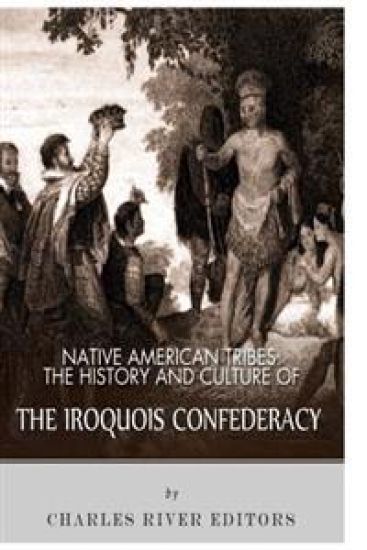
*Includes pictures depicting important Iroquois leaders and art. *Includes a Bibliography for further reading. From the "Trail of Tears" to Wounded Knee and Little Bighorn, the narrative of American history is incomplete without the inclusion of the Native Americans that lived on the continent before European explorers and settlers arrived in the 16th and 17th centuries. Since the first contact between natives and settlers, tribes like the Sioux, Cherokee, and Navajo have both fascinated and perplexed outsiders with their history, language, and culture. In Charles River Editors' Native American Tribes series, readers can get caught up to speed on the history and culture of North America's most famous native tribes in the time it takes to finish a commute, while learning interesting facts long forgotten or never known. Among all the Native American tribes, the Iroquois people are some of the most well documented Native Americans in history. Indigenous to the northeast region of what is now the United States and parts of Canada, they were among some of the earliest contacts Europeans had with the native tribes. And yet they have remained a constant source of mystery. The name "Iroquois", like many Native American tribal names, is not a name the people knew themselves by, but a word applied to them by their enemies the Huron, who called them "Iroquo" (rattlesnake) as an insult. The French later added the suffix "ois." Moreover, the Iroquois are not even a single tribe but a confederation of several different tribal nations that include the Seneca, Oneida, Onondaga, Mohawk, Cayuga and the Tuscarora, who didn't become part of the union until the early 1700's. The name Haudenosaunee (pronounced "ho-den-oh-SHO-nee") is the name the people use for themselves, which translates as "the People of the Longhouse." They are also commonly known as the Six Nations. Despite their own cultural differences, the nations that comprised the Iroquois Confederacy established their political dominance across much of America's East Coast and Midwest through conquest, and it is that aspect which has perhaps best endured among Americans in terms of the Iroquois' legacy. European settlers who came into contact with the Mohawks in the Northeast certainly learned to respect their combat skills, to the point that there were literally bounties on the Mohawks' heads, with scalps fetching money for colonists who succeeded in slaying them and carrying away the "battle prize". In addition to the constant state of conflict between the Iroquois and different nations, including the French and the colonists, the Six Nations are perhaps best known for their political structure, and their influence on American democracy is well documented if not well known by most Americans. Far from being relics of history, they are living communities who maintain political relationships with United States and Canada, as they have occupied their territories long before international borders were drawn. Their histories have left an indelible mark on the formation of the United States and Canada. Native American Tribes: The History and Culture of the Iroquois Confederacy comprehensively covers the culture and history of the Six Nations. Along with pictures depicting the Iroquois, you will learn about the Iroquois like you never have before, in no time at all.
Native American Tribes: The History and Culture of the Chippewa

Native American Tribes: The History and Culture of the Chippewa

Charles River

Createspace Independent Publishing Platform
2013
nidottu
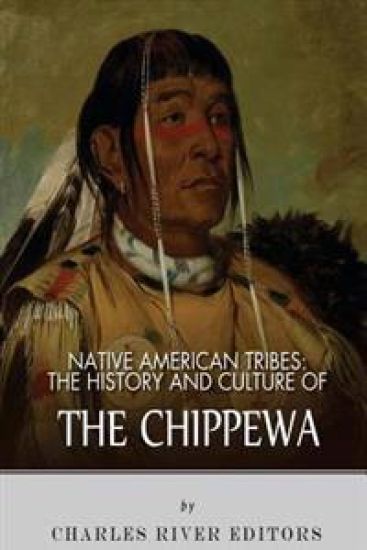
*Includes pictures of important people, places, and art. *Includes a Bibliography for further reading. "Sometimes I go about in pity for myself, and all the while, a great wind carries me across the sky." - Chippewa proverb From the "Trail of Tears" to Wounded Knee and Little Bighorn, the narrative of American history is incomplete without the inclusion of the Native Americans that lived on the continent before European settlers arrived in the 16th and 17th centuries. Since the first contact between natives and settlers, tribes like the Sioux, Cherokee, and Navajo have both fascinated and perplexed outsiders with their history, language, and culture. In Charles River Editors' Native American Tribes series, readers can get caught up to speed on the history and culture of North America's most famous native tribes in the time it takes to finish a commute, while learning interesting facts long forgotten or never known. Outside of the Midwest, the Chippewa are not as well-known as other Native American tribes like the Sioux or Cherokee, but they have long been one of the biggest groups in all of North America. Not surprisingly, their presence around the Great Lakes region made them especially important to early European explorers who sailed the St. Lawrence and came into contact with the natives as they continued searching for the Northwest Passage. The French in particular conducted substantial fur trading with the Chippewa, and it is thanks to the European explorers that the various groups have all been identified as Chippewa today. Unlike other Plains peoples and tribes scattered throughout North America, the Chippewa fared relatively well after contact was established with European and American settlers. They had been enemies of the Iroquois before and during European colonization of North America, and then engaged in different political alliances with the French and British as their interests dictated. Eventually, they engaged in violent conflicts over land with the growing United States as well, and the pattern of treaties and war inevitably pushed many of the Chippewa off the lands they had resided on for centuries. Nevertheless, many different groups of Chippewa continue to inhabit large swaths of the United States and Canada today. Native American Tribes: The History and Culture of the Chippewa comprehensively covers the culture and history of the famous tribe, profiling their origins, their famous leaders, and their lasting legacy. Along with pictures of important people, places, and events, you will learn about the Chippewa like you never have before, in no time at all.

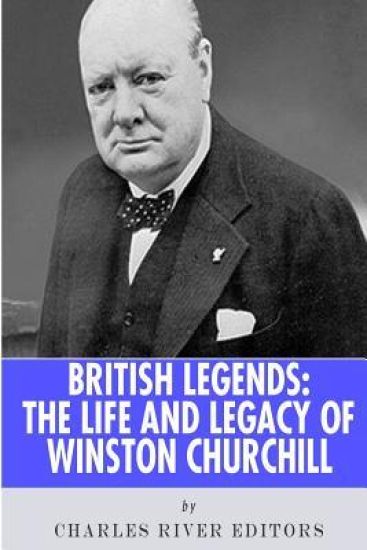
British Legends: The Life and Legacy of Winston Churchill

British Legends: The Life and Legacy of Winston Churchill

Charles River

Createspace Independent Publishing Platform
2013
nidottu
*Includes pictures of Churchill and important people, places, and events in his life. *Includes a list of Churchill's greatest quotes. *Includes a Bibliography for further reading. "Winston Churchill led the life that many men would love to live. He survived 50 gunfights and drank 20,000 bottles of champagne... And of course, by resisting Hitler, he saved Europe and perhaps the world." - Mark Riebling in "Churchill's Finest Hour". Was he "the greatest human being ever to occupy 10 Downing Street" ? Or a man whose "brilliant but unsound judgement resulted in detrimental consequences for Britain and for the world." ? Nearly 50 years after his death, debate still rages over Sir Winston Churchill's contribution to history. Indeed, now that wartime nostalgia has mostly washed away, in Britain in particular the views on Churchill are more divergent than ever. On one point though, the biographers and historians remain unanimous: Churchill led an astonishing life as a soldier, world statesman, historian and Noble Prize Laureate. When he died at 90 in 1965, one of the most important figures in modern history had left the stage. From providing some of the 20th century's greatest soundbytes to successfully navigating Great Britain to victory in World War II against great odds, Churchill was at the forefront of global events for decades, becoming one of the most influential Britons in history. In 2002, he was named the Greatest Briton of All Time, and 40 years earlier he was the first person to be made an Honorary Citizen of the United States. Churchill will forever be most associated with World War II, but his life was far more adventurous and complex than that, and these other aspects of the man are often overlooked and overshadowed. British Legends: The Life and Legacy of Winston Churchill details Churchill's life and career, while humanizing the young child who was both aristocrat and hellion, and the young man who had to overcome a speech impediment to become one of the 20th century's most dazzling orators. Along with pictures of important people, places, and events in his life, you will learn about Sir Winston Churchill like you never have before, in no time at all.
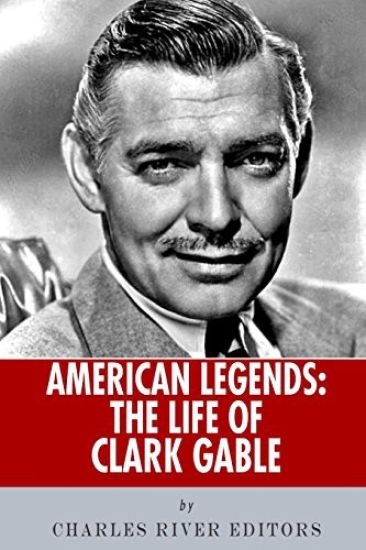
American Legends: The Life of Clark Gable

American Legends: The Life of Clark Gable

Charles River

Createspace Independent Publishing Platform
2013
nidottu
*Includes pictures of important people, places, and events. *Includes Gable's quotes about his own life and working with other Hollywood stars. *Includes a bibliography for further reading. "The only reason they come to see me is that I know that life is great - and they know I know it." - Clark Gable The 1930s were, without a doubt, the height of the classical Hollywood era. It is no accident that 1939 has historically been designated as the pinnacle of Hollywood film history. The era was known for its lavish studio productions, with MGM, RKO, Warner Brothers, Paramount, and 20th Century Fox all operating at the height of their powers. Every major studio possessed a long roster of contract players, with films released at such a rapid pace that it made for an especially competitive environment within the industry. Even while America remained in the throes of the Great Depression, the film industry continued to flourish, and movies easily supplanted the theater as the main attraction for American entertainment. Indeed, it would be no exaggeration to claim that the film industry reached its zenith during the decade precisely because it offered an affordable (if very temporary) escape from the anxieties of the economic woes of the era. The 1930s were also a time in which Hollywood boasted an unprecedented array of famous leading men. Gary Cooper, Cary Grant, James Stewart, and Fred Astaire were just a handful of the A-list stars of the decade, and it is in this context that the achievements of Clark Gable are particularly remarkable. Best known for his role in Gone with the Wind (1939), Gable reached the ranks of the Hollywood elite well before the end of the decade through acting in films such as It Happened One Night (1934) and Mutiny on the Bounty (1935). Gable had a unique appeal that captivated Depression-era audiences; while Cary Grant offered a sophisticated charm and Fred Astaire was tied to the musical genre, Gable brought an air of sophistication that was less comical than that of Grant and appealed to both genders, unlike Astaire. At a time when so many Americans were financially destitute, Gable managed to appear classy without coming across as snobbish. At the same time, his virile masculinity was not overly macho or misogynist. For these reasons, Gable was able to captivate male and female viewers alike, and his mass appeal was a driving force behind the commercial success of Gone With the Wind, possibly the most beloved Hollywood film ever made. As iconic director John Huston once stated, "Clark Gable was the only real he-man I've ever known, of all the actors I've met." Even if Gable is perhaps less widely-known than Grant or Astaire among 21st century audiences, examining the effect he had on viewers during the 1930s and 1940s allows a better understanding of Hollywood during its Golden Age. In conjunction with that, his career served as a sort of response to his upbringing and cultural background. In fact, there was a significant gap between his glamorous roles on the movie screen and the real-life adversity he faced from an early age. Gable faced great challenges throughout his entire career, from the death of his biological mother to the death of wife Carol Lombard in 1942. As with any famous actor, he was the recipient of great fortune, yet it is important to recognize that his many opportunities did not preclude him from experiencing great pain and tragedy. American Legends: The Life of Clark Gable examines the life and career of one of Hollywood's most iconic leading men. Along with pictures of important people, places, and events, you will learn about Clark Gable like never before, in no time at all.
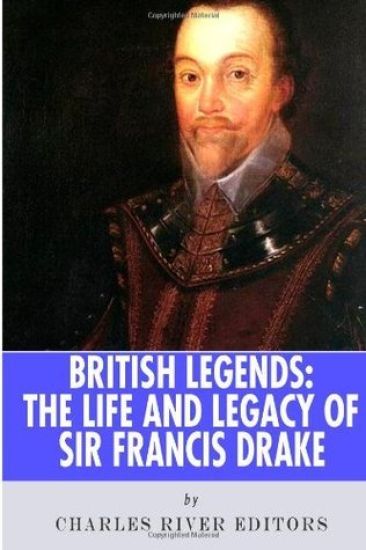
British Legends: The Life and Legacy of Sir Francis Drake

British Legends: The Life and Legacy of Sir Francis Drake

Charles River

Createspace Independent Publishing Platform
2013
nidottu
*Includes a contemporary account of Drake's voyage around the world. *Includes pictures depicting Drake and important people, places, and events in his life. *Discusses the legends and controversies surrounding Drake's piracy and adventures. *Includes a Bibliography for further reading. "There must be a beginning of any great matter, but the continuing unto the end until it be thoroughly finished yields the true glory." - Sir Francis Drake The life of Sir Francis Drake, or, more precisely, the tale of it, is one of those prime examples that history is written by the winners. Drake was the most famous sailor of the Elizabethan Era, and he has long been considered a hero by the English. His successes against the Spanish as a captain and a privateer were legendary, and Drake was celebrated for fighting the Queen's enemies, sinking their ships, and capturing the treasure that would otherwise be used to finance attacks on England. Drake vigorously pursued every mission given to him by Elizabeth I, and brought all his skill, experience and training to bear against her enemies. He was recognized at court for his valor, praised in story and song, and remembered for the kind of personality and esprit de corps that the English have long desired and celebrated in their military heroes. While that might have summarized Sir Francis Drake's life from an English perspective, that's not at all how the Spanish remember "El Draque" ("The Dragon"), the 16th century's most notorious pirate. Referred to as "the main cause of wars" in one 1592 letter to the Spanish King Phillip II, Drake harassed Spanish ships in several oceans and was so despised by the Spanish that Phillip II placed the equivalent of a 7 million dollar bounty on his head. This should come as no surprise, given that Spanish accounts tell of a captain who attacked and boarded Spanish merchant ships to steal their treasure and made off with it in the kind of haughty and dramatic ways that have become standard fare in pirate lore. El Draque also had no qualms about killing those who refused his requests. Which version of Drake's life is more accurate? As usual, the reality falls somewhere inbetween. For most of his career, Drake was unquestionably a privateer and not a member of any organized Navy, thus answering to nobody except the Queen, and had he failed, he might have been shackled in irons and imprisoned. It was due to the fact he was successful that he was instead given a seat of honor at Elizabeth's own table in her own court. While privateers were used by all European powers during times of war, Drake also happened to target enemy ships when no state of war existed, thus clearly veering into the realm of piracy. Naturally, Elizabeth's enemies claimed that he was engaging in piracy with her blessing, which was probably true at times and untrue at others. While contemporary accounts reveal two very different sides of the same man, Drake's legacy has since been shrouded in legend, with tales concerning buried treasure, encounters with Native Americans, and his famous circumnavigation of the globe. British Legends: The Life and Legacy of Sir Francis Drake looks at the life, career, legends, and controversies of the Elizabethan Era's most famous captain. Along with pictures of important people, places, and events in his life, you will learn about Sir Francis Drake like you never have before, in no time at all.
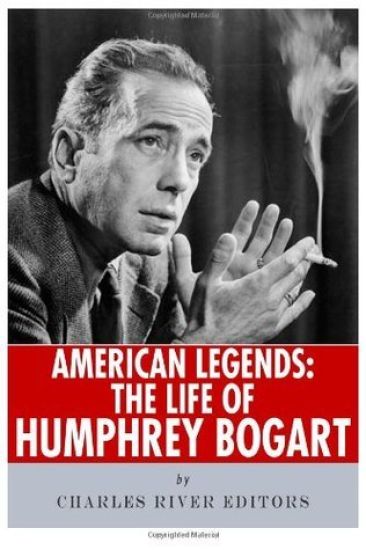
American Legends: The Life of Humphrey Bogart

American Legends: The Life of Humphrey Bogart

Charles River

Createspace Independent Publishing Platform
2013
nidottu
*Includes pictures of Bogart and important people and places in his life. *Includes some of his most colorful and memorable quotes. *Includes a Bibliography for further reading. "All you owe the public is a good performance." - Humphrey Bogart A lot of ink has been spilled covering the lives of history's most influential figures, but how much of the forest is lost for the trees? In Charles River Editors' American Legends series, readers can get caught up to speed on the lives of America's most important men and women in the time it takes to finish a commute, while learning interesting facts long forgotten or never known. Americans have always loved movie stars, and there have been no shortage of Hollywood icons, but one man has long been considered the greatest male star. From the time he first became a leading man, Humphrey Bogart's screen image has resonated with viewers more than perhaps any other actor. At the end of the 20th century, when the American Film Institute assembled its list of the 50 Greatest American Screen Legends, Bogart was at the top of the list. His persona as a tough guy who manages to maintain his sense of virtue no matter how compromising the situation features in some of the most famous films ever made, including Casablanca (1942), The Maltese Falcon (1941), and Key Largo (1949). Bogart's screen persona was not only desirable (everyone wanted to be like Bogart) but also highly approachable, in the sense that he played the everyman figure far more than Cary Grant or Laurence Olivier, for example. Bogart also had good timing, with some of his popularity due to the fact that he rose to fame in an era when the film industry was at its most potent. Bogart's prime coincided with the Golden Age of cinema; sound had been successfully integrated and the studio system ruled over the industry. Bogart was the biggest star at a time in which the medium itself held immense mass appeal, and he has been famous ever since. People have long been familiar with Bogart's career and movies, but the differences between his persona and his real life are also interesting. Bogart's everyman screen persona belies the fact that he came from immense privilege, and his down-to-earth film roles are in many ways a rebellion against a family with which he was never close. There were traits that Bogart inherited from his parents, but his film career also offered Bogart to escape a family culture that was antithetical to his personality. Bogart's screen persona as a jaded but ultimately indestructible figure also obscures the fact that his life was filled with substantial tragedy, culminating in his own premature death at the age of 57. Separating Bogart's real life from his reel life is still a subject of great interest and debate. American Legends: The Life of Humphrey Bogart profiles the life, career, and legacy of the man deemed by the American Film Institute as the greatest male star. Along with pictures of important people, places, and events, you will learn about Humphrey Bogart like you never have before, in no time at all.
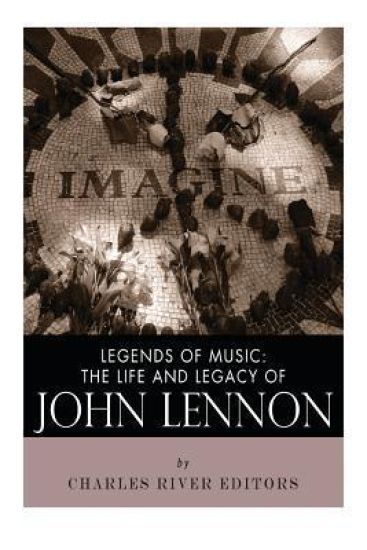
Legends of Music: The Life and Legacy of John Lennon

Legends of Music: The Life and Legacy of John Lennon

Charles River

Createspace Independent Publishing Platform
2013
nidottu
*Includes a Suggested Playlist of 20 of Lennon's Greatest Songs. *Includes detailed descriptions of the origins and recording of some of Lennon's timeless classics, including Tomorrow Never Knows, Strawberry Fields Forever, and A Day in the Life. *Includes pictures of Lennon and important people, places, and events in his life. *Includes a Bibliography for further reading. In 1964, girls all across the United States filled venues, almost literally screamed their heads off, and fainted en masse. Almost from the second they played the first note, The Beatles would be hit with the resounding screams, which made it impossible for them to even hear themselves sing. When they made their American debut on The Ed Sullivan Show in early 1964, they were greeted by young fans who whipped themselves up into such a frenzy that some of them fainted. Beatlemania had struck North America, creating a musical and pop culture phenomenon unlike anything the world had ever seen. At the center of it all was John Lennon, the man who founded The Beatles and was instrumental in creating the soundtrack of the 1960s, while producing some of the world's most timeless classics. Together with Paul McCartney, George Harrison, and Ringo Starr, Lennon became one of the world's most famous men, and he was also one of the world's most interesting and outspoken men, a complex figure who survived a turbulent upbringing, addictions to drugs, and unstable relationships, only to be tragically killed just as he was settling into a serene, comfortable life. His loss is still widely felt today like it was in December 1980, as people remain in awe of his music and continue to grapple with the contradictory nature of his life and work, which at any given moment could oscillate from his notoriously acerbic wit to the endless optimism of Imagine. The incredible highs and lows of Lennon's life, as well as his untimely death, are all a well known narrative across the universe, but what made one of the world's most revered musicians and peace activists tick? Legends of Music: The Life and Legacy of John Lennon details Lennon's life and career while analyzing his lasting legacy, but it also humanizes the rebellious hellion who struggled in school, did well with women, and ultimately became one of rock's most enduring icons. Along with pictures of important people, places, and events in his life, you will learn about John Lennon like you never have before, in no time at all.
Abraham Lincoln and Stephen Douglas: The Men Behind America's Most Famous Debates

Abraham Lincoln and Stephen Douglas: The Men Behind America's Most Famous Debates

Charles River

Createspace Independent Publishing Platform
2013
nidottu
"This declared indifference, but, as I must think, covert real zeal for the spread of slavery, I cannot but hate. I hate it because of the monstrous injustice of slavery itself. I hate it because it deprives our republican example of its just influence in the world-enables the enemies of free institutions, with plausibility, to taunt us as hypocrites-causes the real friends of freedom to doubt our sincerity, and especially because it forces so many really good men amongst ourselves into an open war with the very fundamental principles of civil liberty-criticizing the Declaration of Independence, and insisting that there is no right principle of action but self-interest." - Abraham Lincoln Abraham Lincoln (1809-1865) is one of the most famous Americans in history and one of the country's most revered presidents. Schoolchildren can recite the life story of Lincoln, the "Westerner" who educated himself and became a self made man, rising from lawyer to leader of the new Republican Party before becoming the 16th President of the United States. Lincoln successfully navigated the Union through the Civil War but didn't live to witness his crowning achievement, becoming the first president assassinated when he was shot at Ford's Theater by John Wilkes Booth on April 14, 1865. In the generation after the Civil War, Lincoln became an American deity and one of the most written about men in history. With such a sterling reputation, even historians hesitate to write a critical word; in Team of Rivals Doris Kearns Goodwin casts Lincoln as an almost superhuman puppet master in control of his Cabinet's political machinations and the war's direction, juggling the balancing act flawlessly. As a result, Lincoln the man is far less known than Lincoln the myth. Naturally, Lincoln participated in the most famous debates in American history. Throughout the Fall of 1858, U. S. Senate candidates Abraham Lincoln and Stephen Douglas participated in seven three-hour debates throughout Illinois. This unprecedented method of campaigning drew national attention, one that is still often idealized even today among those who feel politics is too bitterly partisan. The main theme of the debates was the topic being discussed across the nation: slavery. When Congress created the territories of Kansas and Nebraska in 1854, it allowed the citizens of those territories to vote whether the new states would be free states or slave states. This idea of allowing the citizens to vote was known as "popular sovereignty", and it was championed by the "Little Giant", Stephen Douglas. Casting himself as a moderate, Douglas believed popular sovereignty would not divide the nation, and thinking further ahead he believed slavery could not thrive in the Western territories because the land there was inhospitable to slave labor anyway. Douglas looked to blunt Lincoln's arguments during the debates by casting him as a radical "Black Republican", accusing him of advocating for the social and legal equality of the races. Though he opposed slavery on moral grounds, Douglas also wanted to deny citizenship to all African-Americans, which the Supreme Court had ruled in the Dred Scott case. In his rebuttal, Lincoln offered one of his most quotable moments: "I protest against the counterfeit logic which concludes that, because I do not want a black woman for a slave, I must necessarily want her for a wife."
British Legends: The Life and Legacy of Queen Elizabeth I

British Legends: The Life and Legacy of Queen Elizabeth I

Charles River

Createspace Independent Publishing Platform
2013
nidottu
*Includes pictures depicting Elizabeth and other important people in her life. "Video et taceo." ("I see, and say nothing") - Queen Elizabeth I A lot of ink has been spilled covering the lives of history's most influential figures, but how much of the forest is lost for the trees? In Charles River Editors' British Legends series, readers can get caught up to speed on the lives of Great Britain's most important men and women in the time it takes to finish a commute, while learning interesting facts long forgotten or never known. When Queen Elizabeth II came to the throne in 1952, many commentators heralded the beginning of her reign as the second Elizabethan age. The first one, of course, concerned the reign of Henry VIII's second surviving daughter and middle surviving child, Queen Elizabeth I, one of England's most famous and influential rulers. It was an age when the arts, commerce and trade flourished. It was the epoch of gallantry and great, enduring literature. It was also an age of wars and military conflicts in which men were the primary drivers and women often were pawns. Elizabeth I changed the rules of the game and indeed she herself was changed by the game. She was a female monarch of England, a kingdom that had unceremoniously broken with the Catholic Church, and the Vatican and the rest of Christendom was baying for her blood. She had had commercial and militaristic enemies galore. In the end, she helped change the entire structure of female leadership. Elizabeth was the last Tudor sovereign, the daughter of the cruel and magnificent King Henry VIII and a granddaughter of the Tudor House's founder, the shrewd Henry VII. Elizabeth, hailed as "Good Queen Bess," "Gloriana" and "The Virgin Queen" to this day in the public firmament, would improve upon Henry VIII's successes and mitigate his failures, and despite her own failings would turn out to "have the heart and stomach of a king, and a king of England too". Indeed, that was the phrase she would utter in describing herself while exhorting her troops to fight for England against the Spanish Armada). Elizabeth often has been featured in biographies that were more like hagiographies, glossing over her fits of temper, impatience and other frailties. It is fair to say, however, that she had also inherited her grandfather's political acumen and her father's magnificence, thus creating not just one of the most colourful courts in Europe but also one of the most effective governments in English history. It was an age of Christopher Marlowe's and William Shakespeare's flourishing creativity that still enhances English as well as comparative literature. Elizabeth was also patroness of Sir Francis Drake, the pirate, thereby promoting English settlement of foreign colonies. The Jamestown Settlement in Virginia would come in 1607, four years after Elizabeth's passing, and the Plymouth colony in Massachusetts would come in 1620. Elizabeth had also fought for her life time and time again in an era that was already unsafe for female leaders and she probably had remembered the searing feeling of realizing that her mother Queen Anne (Anne Boleyn) had been executed by her father arguably on a trumped-up charge. Danger was pervasive; strategy was needed not just to thrive but just to survive. British Legends: The Life and Legacy of Queen Elizabeth I chronicles the life and reign of England's most famous queen, but it also humanizes the woman who ruled one of the world's most powerful kingdoms in an age dominated by men. Along with pictures of important people, places, and events in her life, you will learn about Elizabeth I like you never have before, in no time at all.
American Legends: The Life of John Adams

American Legends: The Life of John Adams

Charles River

Createspace Independent Publishing Platform
2013
nidottu
*Includes several letters written by Abigail Adams, John Adams and Thomas Jefferson. *Includes pictures of Adams and important people, places, and events in his life. *Includes a Bibliography for further reading. "A Constitution of Government once changed from Freedom, can never be restored. Liberty, once lost, is lost forever." - John Adams A lot of ink has been spilled covering the lives of history's most influential figures, but how much of the forest is lost for the trees? In Charles River Editors' American Legends series, readers can get caught up to speed on the lives of America's most important men and women in the time it takes to finish a commute, while learning interesting facts long forgotten or never known. John Adams has become one of the more popular presidents in history relatively recently, but it was not always so. For most of his life he was seen as a bit of an outsider, different from his fellow first presidents in his temperament, birth, life and politics. Adams and his son were the only presidents out of the first seven who were born north of the Mason Dixon line, and he was not an easy man to understand or work with. Not only did he have few friends, but he also often fell into long term quarrels with those he had. Politically, Adams shared Washington's preference for Britain as well as his preference of non-interference. However, while he was certainly the more significant man in his work and his governing, he could never seem to move out of Washington's shadow. Even worse, his presidency was seen as threatening to the very essence of American liberty with the Alien and Sedition Acts, and his loss to Jefferson in 1800 was a repudiation of the Federalists that left Jeffersonians in power until John Quincy Adams was elected in 1824. His presidency is still viewed relatively unfavorably. Adams remained a celebrated figure in Boston for all the work he did in Massachusetts before and after the Revolution, but his national reputation has experienced quite a renaissance over the past decade, beginning with David Mccullough's best selling biography in 2001, followed in 2008 by the popular HBO series based on it. Then, in 2010, Dearest Friend, a record of the correspondence between Adams and his wife Abigail solidified his position as one of the most darling Founding Fathers of the 21st Century. Several factors explain the recent boost to his legacy. First, unlike Washington or Jefferson, Adams was not a cultural icon. Therefore, Americans have had more to learn about his life and work, whereas recent historical findings about men like Jefferson are either anti-climatic or disappointing. Moreover, Adams and his son are the only two of the first 10 presidents not to have owned slaves, making it easier and more politically correct to like them. Finally, the extensive letters that passed between him and Abigail have cast him as a romantic figure in a way that few other presidents enjoy. American Legends: The Life of John Adams chronicles the amazing life and work of one of America's Founding Fathers, but it humanizes the man who could be both mercurial and tender. Along with pictures of important people, places, and events in her life, you will learn about John Adams like you never have before, in no time at all.
American Legends: The Life of Harriet Tubman

American Legends: The Life of Harriet Tubman

Charles River

Createspace Independent Publishing Platform
2013
nidottu
*Includes pictures of Harriet and important people and places in her life. *Includes contemporaneous accounts of Harriet, the Underground Railroad, and her Civil War service. *Examines the legends and mythology of Harriet's participation in the Underground Railroad, John Brown's Raid at Harpers Ferry, the Civil War, and the women's suffrage movement. *Includes a Timeline and Bibliography for further reading. "Excepting John Brown, of sacred memory, I know of no one who has willingly encountered more perils and hardships to serve our enslaved people than you have. Much that you have done would seem improbable to those who do not know you as I know you." - Frederick Douglass to Harriet Tubman A lot of ink has been spilled covering the lives of history's most influential figures, but how much of the forest is lost for the trees? In Charles River Editors' American Legends series, readers can get caught up to speed on the lives of America's most important men and women in the time it takes to finish a commute, while learning interesting facts long forgotten or never known. Harriet Tubman is one of the most famous women in American history, and from an early age every American learns of her contributions to abolition and the Underground Railroad. The woman who became known as the Moses of her people personally led more than 13 expeditions to free slaves in the South, and she was so integral in helping escaped slaves achieve freedom that her name is practically synonymous with the Underground Railroad today. If anything, the central role she played in the Underground Railroad has become so ingrained among subsequent generations that Tubman's life has been shrouded in legend, and other important aspects have been overlooked. In order to fully appreciate and understand both Harriet Tubman's life and the important role she played in the abolitionist movement, it is necessary to examine the circumstances in which she was raised and what events drove her to the path she chose. Anthropologist Douglas Armstrong notes " s]o little information about Tubman has been based on fact and so much based on myth and created history" that it has only been recently that historians have "come to the point where we can recognize her true contributions." In fact, Tubman's entire life consisted of struggles and persistence, whether she was fighting on behalf of slaves, the Union army during the Civil War, or women's rights. After managing to escape the severe beatings and humiliation of slavery herself, she put her life on the line over and over again to help others, and she could proudly boast, "I was the conductor of the Underground Railroad for eight years, and I can say what most conductors can't say - I never ran my train off the track and I never lost a passenger." But that was only part of her involvement with abolition; Tubman was well-acquainted with other famous abolitionists of her time, including Frederick Douglass and John Brown, and she threw herself into efforts to further the cause of abolition in various ways. Her life and work were publicized nearly 50 years before her death by Franklin Sanborn, who worked as an editor in an abolitionist newspaper and detailed the work of the Underground Railroad in the Boston Commonwealth in 1863. American Legends: The Life of Harriet Tubman profiles the life, legends, and legacies of one of America's most famous and influential women. Along with pictures of important people, places, and events, you will learn about Harriet Tubman like you never have before, in no time at all.