Kirjojen hintavertailu – 12 903 725 kirjaa ja 27 kauppaa

Kirjailija

Charles River

Kirjat ja teokset yhdessä paikassa: 4 673 kirjaa, julkaisuja vuosilta 2013–2022, suosituimpiin kuuluu William Powell and Myrna Loy: The Lives and Careers of One of Classical Hollywood's Most Iconic Duos. Vertaile teosten hintoja ja tarkista saatavuus suomalaisista kirjakaupoista.

4 673 kirjaa

Kirjojen julkaisuvuodet: 2013–2022.

Civilizations of Africa: The History and Culture of the Mbuti (Pygmy)

Civilizations of Africa: The History and Culture of the Mbuti (Pygmy)

Charles River

Createspace Independent Publishing Platform
2013
nidottu
*Explains the origins, history, religion, and social structure of the Mbuti *Includes ancient descriptions of pygmies and theories about their evolution. *Includes a Bibliography for further reading. " T]heir eyes had an untameable wildness about them that struck me as very remarkable." - French-American explorer Paul du Chaillu, 1867 The indigenous Africans known as pygmies have interested outsiders for thousands of years. In the 2200s B. C., the Egyptian Pharaoh Pepi II referred to one as a "dancing dwarf of the god from the land of spirits", and the Ancient Greeks were also familiar with them. Homer makes mention of pygmies in The Iliad, and Herodotus recounted the experiences of a Persian explorer who encountered "dwarfish people, who used clothing made from the palm tree" on the western coast of Africa. In fact, the term pygmy comes from the Greek word for "dwarfish". Not surprisingly, foreigners' interest in pygmies has never waned. When medieval Europeans first traveled to Africa and parts of Asia, many of them were stunned when they encountered people who were considerably smaller than the average height. Perhaps the most famous account comes from the legendary Marco Polo, who was so confused about the people known as pygmies that he refused to believe they were actually human. In his famous account, Marco Polo wrote about seeing some of them in Indonesia, "I may tell you moreover that when people bring home pygmies which they allege to come from India, 'tis all a lie and a cheat...for nowhere in India nor anywhere else in the world were there ever men seen so small as these pretended pygmies." Marco Polo believed that the pygmies were actually monkeys that people manipulated and shaved to resemble smaller people. Today, of course, anthropologists know a lot more about the pygmies, a collective of indigenous groups in Africa who are still defined by the fact that they have an average height of less than 5 feet tall. But while their short height and their apparent evolutionary differences make for a source of fascination in modern times, their very visible physical differences made it that much easier for foreigners to justify military conquest. Scholars believe that prior to European invasion, the pygmies occupied a significant swath of land across and numbered in the hundreds of thousands. Ultimately, however, external forces have resulted in the groups dwindling in numbers and being dispossessed of much of their traditional homelands. In the 21st century, the Mbuti, one of the prominent groups of pygmy peoples, and who once numbered about 150,000, now number about 40,000 and are centralized primarily in the Ituri Forest of the Democratic Republic of the Congo (formerly Zaire), a tropical rainforest covering less than 25,000 square miles. Civilizations of Africa: The History and Culture of the Mbuti (Pygmy) comprehensively covers the history and culture of the people, from their origins to the present time. Along with pictures and a bibliography, you will learn about the Mbuti like you never have before, in no time at all.
Antiquity's Greatest Philosophers: Socrates, Plato, and Aristotle

Antiquity's Greatest Philosophers: Socrates, Plato, and Aristotle

Charles River

Createspace Independent Publishing Platform
2013
nidottu
*Analyzes the controversies and mysteries surrounding Socrates' life and death, including the debate over his portrayal in Plato's Socratic dialogues. *Discusses the philosophers' writings about knowledge, logic, metaphysics, science, reason, Forms, political science, rhetoric and more. *Includes busts and other art depicting the philosophers and other important people. *Includes a Bibliography on each for further reading. In 427 B. C., the Ancient Greek city-state of Athens was flourishing. Approximately 80 years earlier, the Athenians had formed the first self-representative democracy in history, the Peloponnesian War against Sparta had only just started, and Socrates was only beginning to lay the foundation of what would become Western philosophy. None of Socrates' works survived antiquity, so most of what is known about him came from the writings of his followers, most notably Plato. What is known about Socrates is that he seemed to make a career out of philosophy, and Plato was intent on following in his footsteps. Yet for all of the influence of Socrates' life on his followers, it was Socrates' death around 399 B. C. that truly shaped them. Plato was so embittered by Socrates' trial in Athens that he completely soured on Athenian democracy, and Aristotle would later criticize politicians who relied on rhetoric; when Aristotle's own life was threatened, he fled Greece and allegedly remarked, "I will not allow the Athenians to sin twice against philosophy." About a decade after Socrates' death, Plato returned to Athens and founded his famous Platonic Academy around 387 B. C., which he oversaw for 40 years until his death. One of Plato's philosophical beliefs was that writing down teachings was less valuable than passing them down orally, and several of Plato's writings are responses to previous writings of his, so Plato's personally held beliefs are hard to discern. However, Plato educated several subsequent philosophers, chief among them Aristotle, and his writings eventually formed the backbone of Western philosophy. Alongside Socrates and Plato, Aristotle is, without question, one of the most influential ancient Greek philosophers and arguably the greatest icon of ancient thought. His life and work expanded rapidly and extensively across the ancient world, helped in part by the fact he tutored Alexander the Great, he was a recognized and celebrated intellectual force during all of antiquity and the Middle Ages. Furthermore, after Aristotle, Greek thought and political influence began a rapid decline, and the cultivation of knowledge, so important during the classic period, slowly but surely began to fade, making Aristotle the last of ancient Greece's great philosophers. Aristotle's influence on Western philosophical thought is marked by an extensive list of crucial issues that both signaled the way forward but at the same time boggled philosophers' minds throughout the centuries. Aristotle's reflections on Being, as well as his rigorous Logic, were his most important philosophical legacy, but he was also an intellectual in the broadest sense of the word. His interests went beyond metaphysical questions and into practical life and practical knowledge, from ethics to politics, rhetoric and the sciences, all of which left a profound impact on Western political thought and ethics. Naturally, this has also made him one of the foundations of knowledge and philosophical thought that subsequent philosophers relied on when forming and refining their own philosophies. Antiquity's Greatest Philosophers chronicles the lives, works, and philosophies of all three philosophers in depth, while analyzing their enduring legacies. You will learn about Socrates, Plato and Aristotle like never before.
The Top 5 Greatest Americans: George Washington, Thomas Jefferson, Benjamin Franklin, Abraham Lincoln and Martin Luther King Jr.
*Includes pictures of important people, places, and events. *Includes bibliographies. Every American can easily recite the highlights of the "Father of Our Country". The remarkable Virginian led an under-resourced rag-tag army to ultimate victory in the American Revolution before becoming the nation's first president, setting every precedent for the executive branch of the new government, from forming a "Cabinet" to limiting himself to two terms. Nobody spent more time in the thick of America's political debates than Thomas Jefferson, one of the most famous and revered Americans. Jefferson was instrumental in all of the aforementioned debates, authoring the Declaration of Independence, laying out the ideological groundwork of the notion of states' rights, leading one of the first political parties, and overseeing the expansion of the United States during his presidency. Before the United States of America even existed, the first American celebrity was Benjamin Franklin (1706-1790). Franklin was an author, printer, political theorist, politician, postmaster, scientist, musician, inventor, satirist, civic activist, statesman, and diplomat, and he used his unique status as an international celebrity to become the colonies' best diplomat. Schoolchildren can recite the life story of Lincoln, the "Westerner" who educated himself and became a self made man, rising from lawyer to leader of the new Republican Party before becoming the 16th President of the United States. Lincoln successfully navigated the Union through the Civil War but didn't live to witness his crowning achievement, becoming the first president assassinated. The life and legend of Dr. King have been told to every American, many of whom come away equating King with the Civil Rights Movement as a whole. But King's life was about far more than leading movements and having dreams.
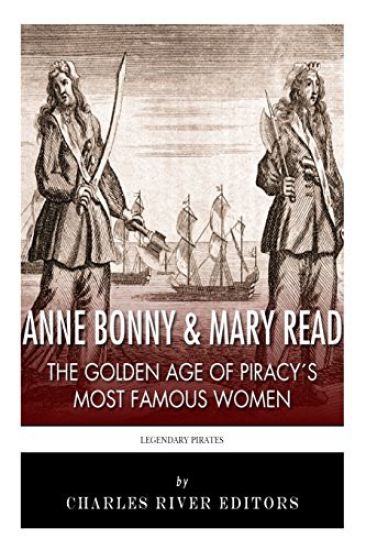
Anne Bonny & Mary Read: The Golden Age of Piracy's Most Famous Women

Anne Bonny & Mary Read: The Golden Age of Piracy's Most Famous Women

Charles River

Createspace Independent Publishing Platform
2013
nidottu
*Includes historic illustrations depicting Anne Bonny, Mary Read, and important people in their lives. *Includes a profile of Anne and Mary from the famous English pirate history "A General History of the Pyrates". *Discusses common legends about Anne and Mary, separating fact from fiction. *Includes a Bibliography for further reading. "NOW we are to begin a History full of surprizing Turns and Adventures; I mean, that of Mary Read and Anne Bonny, alias Bonn, which were the true Names of these two Pyrates; the odd Incidents of their rambling Lives are such, that some may be tempted to think the whole Story no better than a Novel or Romance; but since it is supported by many thousand Witnesses, I mean the People of Jamaica, who were present at their Tryals, and heard the Story of their Lives, upon the first discovery of their Sex; the Truth of it can be no more contested, than that there were such Men in the World, as Roberts and Black-beard..." - Captain Charles Johnson, A General History of the Robberies and Murders of the most notorious Pyrates One of the most famous pirates of all time, and possibly the most famous woman to ever become one, was Anne Bonny. The Irish-born girl moved with her family to the Bahamas at a young age in the early 18th century, which at that time was a hotbed for piracy by the likes of Blackbeard, but the redhead with a fiery temper would go on to forge her own reputation. After marrying a poor sailor who accepted clemency to give up piracy, Anne began a legendary affair with Calico Jack Rackam and became pregnant with his child, but that did not stop them from plundering the high seas aboard his pirate ship Revenge, at least until they were captured by British authorities. Anne avoided execution by "pleading her belly", getting a temporary stay of execution due to her pregnancy. Among all the pirates of the "Golden Age of Piracy", none were as unique as Mary Read, who was one of just two known women to be tried as a pirate during the Golden Age, alongside her own crewmate (and possible lover) Anne Bonny. Like Anne, Mary Read was an illegitimate child who spent some of her childhood dressed up as and disguised as a little boy through incredibly strange circumstances. But unlike her future shipmate, Mary ultimately took a liking to it, and she continued to disguise her gender to take on roles reserved for men, including in the British army. During that time, she fell in love with a Flemish soldier and eventually married him. Mary Read might have been content to live out her life with her husband in Holland, but after his death, she headed for the West Indies, only to have her ship commandeered by pirates. But Read, who had worked on a ship before, was only too happy to join the pirate crew and play the role of privateer. And in 1720, that crew was captured by Calico Jack, who already had his lover Anne Bonny as part of his crew and now unwittingly added a second female when Mary opted to join. Together the three played a legendary role as shipmates and possible lovers while continuing their piracy around the Bahamas, only to eventually be captured by authorities in October 1720. Most of the crew was executed, but Mary was able to successfully "plead the belly" and thereby receiving a stay of execution. This spared her the noose, but Mary would die of illness while still imprisoned in 1721. Anne Bonny & Mary Read chronicles the mysterious lives and legends of the two famous female pirates, attempting to separate fact from fiction while analyzing her lasting legacy. Along with pictures depicting Anne Bonny, Mary Read, and other important people, you will learn about the famous pirates like you never have before, in no time at all.

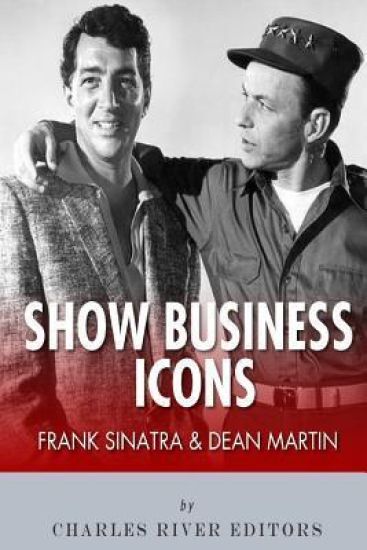
Frank Sinatra & Dean Martin: Show Business Icons

Frank Sinatra & Dean Martin: Show Business Icons

Charles River

Createspace Independent Publishing Platform
2013
nidottu
*Includes pictures. *Includes both men's most colorful quotes. *Discusses their relationship and the Rat Pack. *Includes bibliographies of both men for further reading. "May you live to be 100 and may the last voice you hear be mine." - Frank Sinatra "If people want to think I get drunk and stay out all night, let 'em. That's how I got here, you know." - Dean Martin America has always celebrated its star entertainers, but Frank Sinatra remains a unique American legend. A pop culture fixture for over half a century, Sinatra's music is still cherished, and his persona remains its own archetype of the quintessential American star. Sinatra transcended genres to the extent that his music stands alone as its own kind of American music, with songs like "New York, New York," "Chicago," and "Come Fly With Me" instantly recognizable among all Americans. Of course, there was also the life that went with the music. The cultural identity of the Rat Pack, epitomized in the 1960 film Ocean's Eleven, further contributed to his fame, and everyone knows and appreciates the image of easy living, smooth voice and exuberant starpower that Sinatra represents. If anything, Sinatra's ability to make so many people feel happy and good about themselves was one of the main ingredients of his success. And as evidence of the fact that Americans don't mind their stars doing a little dirt, Sinatra's rap sheet and relationship with the mob are practically a celebrated part of his life. Like Frank Sinatra, Dean Martin is an American legend for his longevity and success across a garden variety of different platforms. Martin began as a nightclub singer, performed in a comedy act, starred in films, recorded hit albums, and capped his career by serving as a television host. In fact, there may be no star who was better able to transcend the different avenues of entertainment. Martin's life and career are often compared to his close friend and contemporary Frank Sinatra, and for good reason. Both came from proud Italian families, both were cohorts in the famed Rat Pack in the 1960s, and they each maintained success even late in their careers. However, Sinatra's career was filled with far more ups and downs than Martin, and his public image experienced highs and lows along with it. It's also somewhat ironic that it was Martin who Anglicized his name but remained a bigger Italian icon than Sinatra. They each began their careers as Italian crooners, but Martin maintained his style while Sinatra adopted a brasher, more "All-American" singing method. Martin never strayed far from his humble background, even as he became one of America's biggest stars. Show Business Icons profiles the life and career of two of America's most famous performers. Along with pictures of important people, places, and events, you will learn about Ol' Blue Eyes and the King of Cool like never before.
Chairman Mao: The Life and Legacy of Mao Zedong

Chairman Mao: The Life and Legacy of Mao Zedong

Charles River

Createspace Independent Publishing Platform
2013
nidottu
*Includes pictures. *Includes excerpts of Mao's writings about politics and military strategy. *Includes a bibliography for further reading. "A revolution is not a dinner party, or writing an essay, or painting a picture, or doing embroidery. It cannot be so refined, so leisurely and gentle, so temperate, kind, courteous, restrained and magnanimous. A revolution is an insurrection, an act of violence by which one class overthrows another." - Mao Zedong It's a sure sign of fame when a man is known simply by his first name, and Mao Zedong, often referred to simply as Mao or Chairman Mao, was one of the most influential men of the 20th century. He was also arguably the most controversial; as the founder of the People's Republic of China, Mao rose from being a communist revolutionary to successfully overthrowing a regime and transforming China into a communist powerhouse in Asia. The ramifications of Mao's life and legacy are still very much felt today, as China continues to transition into a superpower that may soon lay claim to the world's largest economy. Mao's communist revolution is still controversial, but it was his reign over China that has made him notorious, and in the West he is often considered one of history's biggest tyrants. Mao's revolution and his subsequent policies have been accused of causing millions of deaths, possibly more than the likes of Hitler and Stalin. It has been roughly estimated that Mao was responsible for the deaths of anywhere from 40-70 million, but he has plenty of defenders as well, who cite Mao's military and political leadership for inspiring similar revolutions across the world. Chairman Mao: The Life and Legacy of Mao Zedong chronicles the rise of Mao and analyzes his leadership of China and the lasting effects he has had on geopolitics today. Along with pictures of important people, places, and events, you will learn about Mao like you never have before, in no time at all.
History's Greatest Mysteries: Easter Island

History's Greatest Mysteries: Easter Island

Charles River

Createspace Independent Publishing Platform
2013
nidottu
*Comprehensively covers the entire history of Easter Island, including how the first settlers got there. *Explains the theories and mysteries behind the famous megalith statues found across Easter Island. *Includes pictures of Easter Island, its famous statues, and other important people and places. *Includes a bibliography for further reading. " R]emarkable, tall, stone figures, a good 30 feet in height." - A description of the Moai made by Dutch navigator Jacob Roggeveen in 1722. Far out in the south-eastern part of the Pacific Ocean lies one of the world's most remote islands. Located over 2,000 miles away from Chile and South America, the nearest continent, and over 1,300 miles away from its nearest inhabited neighbour, Pitcairn Island, Easter Island is a solitary mass of land alone at the southeastern-most point of the Polynesian Triangle. And yet this small patch of land, a mere dot within the vast Pacific Ocean, is one of the most famous islands in the world. Today, Easter Island is almost synonymous for the unique artifacts that grace its coastline and interior, particularly the nearly 900 monumental statues that are unlike anything found elsewhere across the globe. Known as "Moai" by the island inhabitants, these statues have amazed everyone who has seen them in person or in photos, and they have befuddled researchers attempting to answer important questions about them. The Moai also vary considerably, with the tallest having a height of over 70 feet and the shortest being less than 4 feet. With the average statue having a height of about 13 feet and a weight of several tons, it's unclear how or why the inhabitants constructed them, and given the manner in which they were positioned across certain parts of Easter Island, it's also unclear how the inhabitants transported the giant monoliths. On top of that, some researchers have speculated that only a third of the Moai made it to their intended destination on the island. Of course, before these statues could be created, the people who made them needed to find their way to Easter Island's desolate location, which was quite literally in the middle of the nowhere. Then they also needed to learn how to settle there and survive. The story of Easter Island's statues is extraordinary, but the story of how people came to be there in the first place is just as incredible. History's Greatest Mysteries: Easter Island comprehensively covers the facts, mysteries, and theories surrounding the island's inhabitants and their famous creations. Along with pictures and a bibliography, you will learn about Easter Island like you never have before, in no time at all.
The Top 5 Most Notorious Outlaws: Jesse James, Billy the Kid, John Dillinger, an

The Top 5 Most Notorious Outlaws: Jesse James, Billy the Kid, John Dillinger, an

Charles River

Createspace Independent Publishing Platform
2013
nidottu
*Covers the lives, crimes, and deaths of the outlaws. *Explains the legends and myths surrounding all of the outlaws in an attempt to separate fact from fiction. *Includes pictures of important people, places, and events. *Includes Bibliographies for further reading. America has always preferred heroes who weren't clean cut, an informal ode to the rugged individualism and pioneering spirit that defined the nation in previous centuries. The early 19th century saw the glorification of frontier folk heroes like Davy Crockett and Daniel Boone. After the Civil War, the outlaws of the West were more popular than the marshals, with Jesse James and Billy the Kid finding their way into dime novels. And at the height of the Great Depression in the 1930s, there were the "public enemies", common criminals and cold blooded murderers elevated to the level of folk heroes by a public frustrated with their own inability to make a living honestly. Jesse James was and remains the most famous outlaw of the Wild West, with both his life of crime and his death remaining pop culture fixtures. Eventually James, his brother and their infamous gang became the most hunted outlaws in the country, but Jesse would famously be done in by the brother of his most trusted gang members. After Jesse moved in with the Ford brothers, Bob Ford began secretly negotiating turning in the famous outlaw to Missouri Governor Thomas Crittenden. On April 3, 1882, as the gang prepared for another robber, Jesse was famously shot in the back of the head by Bob Ford as he stood on a chair fixing a painting. In many ways, the narrative of the Wild West has endured more as legend than reality, and a perfect example of that can be found in the legend of William Henry McCarty Jr., better known as William H. Bonney or "Billy the Kid". Indeed, separating fact from fiction when it comes to the life of the West's most famous outlaw is nearly impossible, due in great measure to the fact that the young man himself cultivated the image of a deadly outlaw and legendary gunman himself. Though Billy the Kid may have killed anywhere from 4-9 men in his short life, he was often credited for killing more than 20. Two months after Franklin D. Roosevelt's inauguration in 1933, a petty thief who had spent almost a decade behind bars for attempted theft and aggravated assault was released from jail. By the end of the year, that man, John Dillinger, would be America's most famous outlaw: Public Enemy Number One. From the time of his first documented heist in early July 1933, until his dramatic death in late July of the following year, he would capture the nation's attention and imagination as had no other outlaw since Jesse James. There was no shortage of well known public enemies like John Dillinger and Baby Face Nelson, but none fascinated the American public as much as Bonnie and Clyde. While the duo and their Barrow Gang were no more murderous than other outlaws of the era, the duo's romantic relationship and the discovery of photographs at one of their hideouts added a more human dimension to Bonnie and Clyde, even as they were gunning down civilians and cops alike. When Bonnie and Clyde were finally cornered and killed in a controversial encounter with police, a fate they shared with many other outlaws of the period, their reputations were cemented.
Calico Jack, Anne Bonny and Mary Read: The Lives and Legacies of History's Most Famous Pirate Crew
*Includes historic illustrations depicting Calico Jack, Anne Bonny, Mary Read, and important people in their lives. *Includes the profiles of Calico Jack, Anne Bonny and Mary Read from the famous English pirate history "A General History of the Pyrates". *Discusses common legends about the three famous pirates, separating fact from fiction. *Includes a Bibliography for further reading. "The Day that Rackam was executed, by special Favour, he was admitted to see Anne Bonny]; but all the Comfort she gave him, was, that she was sorry to see him there, but if he had fought like a Man, he need not have been hang'd like a Dog." - Captain Charles Johnson, A General History of the Robberies and Murders of the most notorious Pyrates One of the most famous pirates of all time, and possibly the most famous woman to ever become one, was Anne Bonny. The Irish-born girl moved with her family to the Bahamas at a young age in the early 18th century, which at that time was a hotbed for piracy by the likes of Blackbeard, but the redhead with a fiery temper would go on to forge her own reputation. After marrying a poor sailor who accepted clemency to give up piracy, Anne began a legendary affair with Calico Jack Rackam and became pregnant with his child, but that did not stop them from plundering the high seas aboard his pirate ship Revenge, at least until they were captured by British authorities. Anne avoided execution by "pleading her belly", getting a temporary stay of execution due to her pregnancy. It is at that point that Anne Bonny drops off the historical record and becomes the stuff of legends. It's unclear whether she was eventually executed or pardoned or even ransomed, and it's unclear what became of her child. Her relationship with Mary Read aboard the Revenge is also the stuff of legends, and people have been filling in the gaps ever since. Among all the pirates of the "Golden Age of Piracy", none were as unique as Mary Read, who was one of just two known women to be tried as a pirate during the Golden Age, alongside her own crewmate (and possible lover) Anne Bonny. Like Anne, Mary Read was an illegitimate child who spent some of her childhood dressed up as and disguised as a little boy through incredibly strange circumstances. But unlike her future shipmate, Mary ultimately took a liking to it, and she continued to disguise her gender to take on roles reserved for men, including in the British army. Though he would accomplish many things in his career that would earn him notoriety among the pirates of his age, the simple truth is that he is remembered mostly for his association with Anne Bonny and Mary Read, two of history's most famous women pirates. In fact, had it not been for his involvement with them, his name might have disappeared from the history books entirely. And fittingly, even his nickname, "Calico," came from the type of fabric he preferred for his shirts, the same fabric typically used for women's everyday clothing. Rackham preferred attractive print fabrics produced for trade with natives in the New World, a flamboyant taste worthy of the common pirate stereotype. Calico Jack to make yet another contribution to pirate history and legend: the "Jolly Roger" pirate flag. Flying the simple yet frightening flag that featured a white skull and crossed swords against a black banner, Calico Jack ensured his targets knew they were in trouble as soon as they could spot the flag. To this day, the flag remains synonymous with piracy. Still, it seems Calico Jack will never escape the shadow of his famous female shipmates, despite the fact he was their captain, and if anything it seems he enjoyed having the fairer sex aboard, in more ways than one. This book chronicles the lives and legends of history's most famous pirate crew, with historic illustrations and contemporary accounts. It also includes a bibliography and Table of Contents.
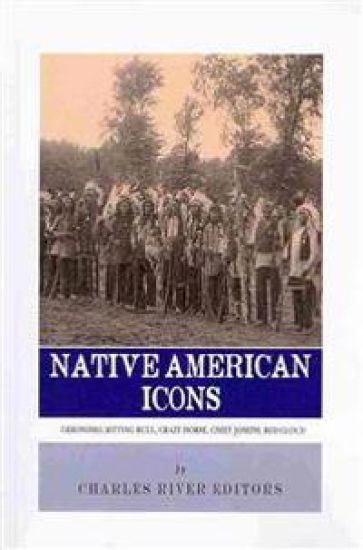
Native American Icons: Geronimo, Sitting Bull, Crazy Horse, Chief Joseph and Red Cloud
*Includes pictures of important people, places, and events. *Explains several Lakota Sioux oral legends, as well as the origins of the names of each Native American icon. *Explains the Battle of the Little Bighorn, the Nez Perce War, and Geronimo's final campaign Five of the best known Native American legends in history are Geronimo, Sitting Bull, Crazy Horse, Chief Joseph and Red Cloud, celebrated by Americans today for the very reason they were reviled by Americans of their own day. Americans have always appreciated plucky, persistent, and dogged individuals, and there are few examples in the nation's history that represent the fighting spirit better than these Native American leaders. The name "Geronimo" evokes a number of different emotions. Those who believed in 19th century America's "Manifest Destiny" viewed Geronimo and all Native Americans as impediments to God's will for the nation. Even today, many Americans associate the name Geronimo with a war cry, and the name Geronimo itself only came about because of a battle he fought against the Mexicans. Over time, however, those who empathized with the fate of the Native Americans saw Geronimo as one of a number of Native American leaders who resisted the U. S. and Mexican governments as their lands were being appropriated, often eluding large numbers of soldiers pursuing them. Around the same time, Sitting Bull and Crazy Horse became legends at the Battle of the Little Bighorn, during which an estimated 2,000 Sioux and Cheyenne warriors inspired by one of Sitting Bull's visions routed and then annihilated the 7th U. S. Cavalry led by George Custer. That disaster led the American government to double down on its efforts to "pacify" the Sioux, and by the end of the decade many of them had surrendered and been moved onto a reservation. Sitting Bull and Crazy Horse were two of the last Sioux leaders to surrender, and both suffered controversial deaths on reservations. Though he has not been remembered as vividly as another member of the Oglala Lakota, Crazy Horse, Red Cloud led the group for 40 years, in war, in peace, and on a reservation, becoming so esteemed and influential that Americans began to mistakenly take him for the leader of the entire Sioux tribe. When he died in 1904, most Americans who knew his people's story considered Chief Joseph, whose Nez Perc name is Himahtooyahlatkekt ("Thunder Rolling Down from the Mountains"), a military genius and an "Indian Napoleon." This assessment of the Native American leader was based on a 1,500-mile odyssey during which he and his people left their reservation in the hopes of escaping to Canada, where the Nez Perc intended to join Sitting Bull and his Hunkpapa Sioux band. The real Chief Joseph was a gifted speaker and more diplomat than war leader. It's not surprising that Chief Joseph was misunderstood and misrepresented by Americans because his people's name was as well; Nez Perc literally means "pierced nose" in French, but it is unclear whether the tribe ever used nose piercing as a form of ornament. Native American Icons profiles the amazing lives of the 5 Native American leaders, from their origins to their legendary confrontations with the U. S. Army, while also analyzing their lasting legacies. Along with pictures of the Native American icons and other important people, places, and events in their lives, you will learn about Geronimo, Sitting Bull, Crazy Horse, Chief Joseph and Red Cloud like you never have before.
From the Sugar Act to the Shot Heard Round the World: America Before the Revolution, 1764-1775
*Chronicles the major events that brought about the American Revolution, including the Boston Massacre, Boston Tea Party, the Midnight Ride of Paul Revere, and the Battles of Lexington & Concord. *Includes pictures of important people, places, and events. "The Revolution was effected before the war commenced. The Revolution was in the minds and hearts of the people.... This radical change in the principles, opinions, sentiments, and affections of the people was the real American Revolution." - John Adams, 1818 A lot of ink has been spilled covering the lives of history's most influential figures, but how much of the forest is lost for the trees? In Charles River Editors' American Legends series, readers can get caught up to speed on the lives of America's most important men and women in the time it takes to finish a commute, while learning interesting facts long forgotten or never known. The American Revolution is replete with seminal moments that every American learns in school, from the "shot heard 'round the world" to the Declaration of Independence, but the events that led up to the fighting at Lexington & Concord were borne out of 10 years of division between the British and their American colonies over everything from colonial representation in governments to taxation, the nature of searches, and the quartering of British regulars in private houses. From 1764-1775, a chain of events that included lightning rods like the Townshend Acts led to bloodshed in the form of the Boston Massacre, while the Boston Tea Party became a symbol of nonviolent protest. In the summer of 1774, patriot groups around the 13 colonies communicated with each other and brought about the first council that would unite all of them. That September, 56 delegates who had been chosen by their colonial legislatures to attend the First Continental Congress met in Philadelphia to craft a united response to the Intolerable Acts, debate the merits of a boycott of British trade, declare their rights and demand redress. The First Continental Congress eventually petitioned the British government to end the Intolerable Acts, while also determining to convene again the following summer. As it turned out, the Revolution would be underway before the Second Continental Congress would convene. From the Sugar Act to the Shot Heard Round the World chronicles the momentous events of the decade leading up to the Revolution, culminating with the legendary midnight ride of Paul Revere and the Battles of Lexington and Concord. It comprehensively covers the roles played by men like Samuel Adams, Thomas Jefferson, John Hancock and Joseph Warren, and the way the political outlook evolved from peace to separation. Along with pictures of important people, places, and events, you will learn about the run-up to the Revolution like you never have before, in no time at all.

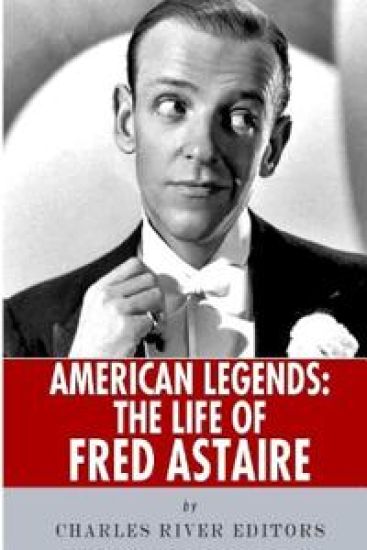
American Legends: The Life of Fred Astaire

American Legends: The Life of Fred Astaire

Charles River

Createspace Independent Publishing Platform
2013
nidottu
*Includes pictures of Astaire and other important people and scenes.*Includes Astaire's quotes about his own life and others' quotes about him.*Includes a bibliography for further reading." No dancer can watch Fred Astaire and not know that we all should have been in another business." - Mikhail BaryshnikovA lot of ink has been spilled covering the lives of history's most influential figures, but how much of the forest is lost for the trees? In Charles River Editors' American Legends series, readers can get caught up to speed on the lives of America's most important men and women in the time it takes to finish a commute, while learning interesting facts long forgotten or never known. Virtually all famous actors are regaled by the public, but even still, Fred Astaire occupies a privileged position in American pop culture. The specific films in which Astaire acted may not be especially famous in their own right - most people likely cannot recall the title of Top Hat (1935), his most decorated film - but Astaire's dancing prowess invariably creates a lasting impact on viewers. Instead of tying his fame to a single film, Astaire's genius lay in constructing his star persona around a specific set of iconographic imagery that has become embedded within American culture. Across his films, the recurring iconic images of the top hat, cane, and coat tails, as well as the image of Astaire dancing with Ginger Rogers, all constitute a timeless symbol for elegance that continues to captivate viewers who are unfamiliar with the plots of his films. There have been other film musical actors who were proficient dancers, Gene Kelly chief among them, but none were able to perform with the seamless elegance of Astaire, and none have been remembered nearly as well. Astaire's dancing numbers epitomized grace and gaiety, making it seem as though he was carefree, but this was hardly the case. While it is easy to imagine Astaire being raised in an aristocratic family, his working-class background was so blue collar that his family eventually relied on him and his sister as the primary breadwinners in the family. Rather than being born and raised with wealth in a large city, Astaire came from a working-class neighborhood in Omaha, Nebraska, a setting so antithetical to the world of dance that it quickly became clear that the family would need to relocate. If anything, Astaire's unglamorous origins further demonstrate that the magisterial dancing and the effortlessly elegant image accompanying it were products of Astaire's tireless work ethic and insistence on perfection. Astaire's popularity can in large part be tied to the escapism that his films offered to impoverished Depression-era American audiences, and yet Astaire was a working man, albeit one who labored in the studios of Hollywood rather than the factories of America. Considering the quiet life that he led off the movie set, it can be difficult to disassociate Astaire from his films, and while he may have attempted to project the same image off the screen, the era and his personal background were extremely important. As someone who was born just before the start of the 20th century, Astaire's life sheds light on the developments that occurred in American entertainment, from the stage (where he first performed during his youth) to cinema (the site of his greatest triumphs) and finally to television (a medium Astaire entered at the end of his career.) Astaire's career tends to obscure his all-American success story, one in which hard work transformed a Nebraska boy from a working-class family into America's most prominent symbol of grace. American Legends: The Life of Fred Astaire profiles the life and career of one of America's most famous entertainers. Along with pictures of important people, places, and events, you will learn about Fred Astaire like you never have before, in no time at all.

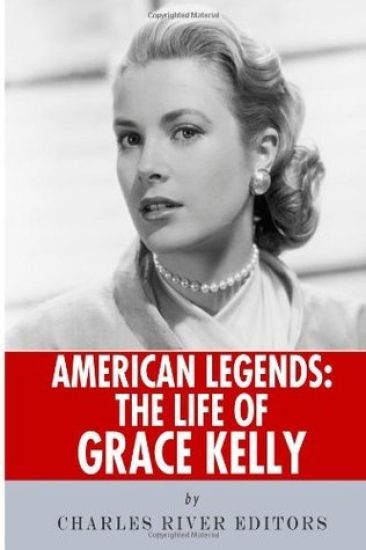
American Legends: The Life of Grace Kelly

American Legends: The Life of Grace Kelly

Charles River

Createspace Independent Publishing Platform
2013
nidottu
*Includes pictures of important people, places, and scenes. *Includes a Bibliography for further reading. "You know, I just love Grace Kelly. Not because she was a princess, not because she was an actress, not because she was my friend, but because she was just about the nicest lady I ever met. Grace brought into my life as she brought into yours, a soft, warm light every time I saw her, and every time I saw her was a holiday of its own." - James Stewart A lot of ink has been spilled covering the lives of history's most influential figures, but how much of the forest is lost for the trees? In Charles River Editors' American Legends series, readers can get caught up to speed on the lives of America's most important men and women in the time it takes to finish a commute, while learning interesting facts long forgotten or never known. Considering that her film career lasted just six years, it would seem as though the reputation of Grace Kelly far outweighs her actual output. Indeed, from the time of her arrival in Hollywood in 1951 through her final film, High Society, in 1956, Kelly acted in just 11 films, leaving viewers to wonder whether Kelly was still in the beginning of her career or whether High Society was a proper culmination to an extraordinarily brief stay in the film industry? Ultimately, it is might be most accurate to state that Kelly was still in the prime of her career, but it's unclear what direction her career would have taken, as well as who inherited the void she left. Despite the short resume, Kelly is one of America's most famous actresses, and she left an indelible impact on Hollywood. Kelly brought a well-heeled, almost regal quality that deviated from the film noir roles and musical showgirls who had populated the screen during the 1930s and 1940s, and it is this new identity Kelly brought to the motion picture industry that remains her overriding trademark. Of course, Kelly is just as well known today for her life outside of Hollywood, but in a sense, her life as Princess of Monaco continued many of the themes she had established while in Hollywood. Princess Grace exuded a regal and stately quality that also managed to keep her considerable sex appeal hidden beneath a layer of female elegance. As an actress and as a Princess, she was an international fashion icon, and her handbag and white glove are still associated with her. More than anything else, her career as an actress gave her the ability to live in the public eye, and in both of her "careers," Kelly was skilled at navigating the media and acting before the camera, whether it was the cinematic camera or the flash bulbs of the paparazzi. Kelly provided women worldwide with a model of female elegance that has perhaps not been equaled in the decades following her premature death in 1982. American Legends: The Life of Grace Kelly profiles the life and career of the American princess. Along with pictures of important people, places, and events, you will learn about Grace Kelly like you never have before, in no time at all.

American Legends: The Life of Lucille Ball

American Legends: The Life of Lucille Ball

Charles River

Createspace Independent Publishing Platform
2013
nidottu
*Includes pictures of Ball and important people, places, and scenes. *Includes Lucille Ball's own quotes about her life and career. *Includes a Bibliography for further reading. "I don't suppose that hard work, discipline, and a perfectionist attitude toward my work did me any harm. They are a big part of my makeup today, as any of my co-workers will tell you. And when life seemed unbearable, I learned to live in my imagination, and to step inside other people's skins - indispensable abilities for an actress." - Lucille Ball A lot of ink has been spilled covering the lives of history's most influential figures, but how much of the forest is lost for the trees? In Charles River Editors' American Legends series, readers can get caught up to speed on the lives of America's most important men and women in the time it takes to finish a commute, while learning interesting facts long forgotten or never known. Lucille Ball, one of the most famous and versatile stars in American history, is above all defined by her charisma. She did not possess the overwhelming beauty of her contemporaries in the entertainment industry, yet her infectious enthusiasm continues to endear her to the American public even decades following her death. Indeed, at the time that I Love Lucy (1951-1957) ended, the show still remained the most-watched show in America. Ball possessed an intangible quality that captivated audiences, who were transfixed by even the most banal plot sequences in her sitcoms. That Ball was able to withhold her popularity even after the ending of I Love Lucy testifies to the fact that she was always the star attraction on the famous sitcom. Indeed, even after separating from Arnaz, Ball continued to achieve high ratings on her subsequent programs, most notably The Lucy Show (1962-1968) and Here's Lucy (1968-1974). Without doubt, Ball's longevity and the magnitude of her popularity make her the most cherished comedienne in American history. Given Ball's immense fame, it is easy to strip her career out of its original context and assume that she would have risen to fame regardless of the medium. However, it is important to remember that I Love Lucy actually began when Ball was already 40 years of age, a relatively advanced age for someone in the entertainment industry. In fact, from 1933 through the end of the 1940s, Ball appeared in over 80 films (with very minor roles in almost all of these) while serving as a contract player for the MGM and RKO film studios. There is thus a massive discrepancy between the fame she achieved in the television medium and her lack of success in cinema. To this end, Ball's career reflects the evolutions that occurred throughout the mid-1950s with regard to the entertainment industry, mass culture, and the ways in which the American public consumed popular culture. Where Ball was unable to rise to prominence in cinema, she represented the ideal actress for the television medium, and in this regard she introduced a new model for media celebrity, one that was more accessible if less physically dazzling. This biography explores the entirety of Ball's life and career, with attention paid to her both her childhood and her pre-television and television periods. In so doing, this study provides as complete a picture as possible of the enormity of Ball's rise to fame and how she was able to capture the favor of the American public. American Legends: The Life of Lucille Ball profiles the life and career of one of America's most iconic actresses. Along with pictures of important people, places, and events, you will learn about Ball like you never have before, in no time at all.
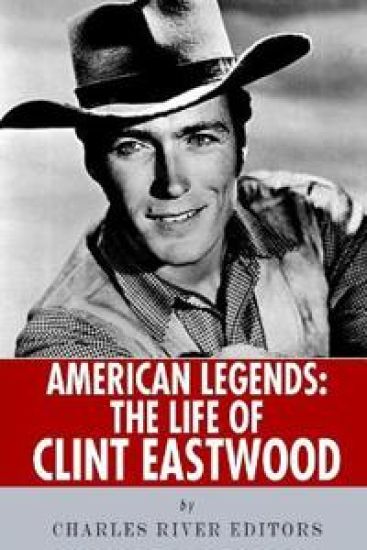
American Legends: The Life of Clint Eastwood

American Legends: The Life of Clint Eastwood

Charles River

Createspace Independent Publishing Platform
2013
nidottu
*Includes pictures. *Includes some of Eastwood's most colorful quotes. *Includes a Bibliography for further reading. "The roles that Eastwood has played, and the films that he has directed, cannot be disentangled from the nature of the American culture of the last quarter century, its fantasies and its realities." - Edward Gallafent A lot of ink has been spilled covering the lives of history's most influential figures, but how much of the forest is lost for the trees? In Charles River Editors' American Legends series, readers can get caught up to speed on the lives of America's most important men and women in the time it takes to finish a commute, while learning interesting facts long forgotten or never known. Today, the name Clint Eastwood conjures up many different and unforgettable images. While many will always associate him as the quintessential Western hero in classics like The Good, the Bad, and the Ugly, new generations know him as a critically acclaimed director and even an outspoken conservative firebrand. Even if he is no longer the most prominent star in Hollywood, he is assuredly the most decorated octogenarian in the industry. In addition to his acting, two of his pictures, Unforgiven (1992) and Million Dollar Baby (2004), garnered Oscars for Best Director and Best Picture. Eastwood's acting and directing abilities have long appealed to both high classes and mass audiences, although it is true that his early works were skewed more toward the popular while the later ones reflect the opposite dynamic. Debuting in the 1950s, Eastwood's career has now spanned over 50 years, and he has been involved in over 75 films, not to mention his appearances in television and other media. The sheer volume of films is especially impressive considering that he has also directed a significant number of them. As such a prolific figure of Hollywood, it is clear that Eastwood has approached his career with diligence and persistence, working hard through both success and failure. This work ethic has lent him an aura of accessibility that is relatively rare among Hollywood stars, as has his willingness to put himself out there on issues beyond the silver screen. Today, Eastwood is just as likely to evoke images of his speech at the 2012 Republican National Convention as he is images of the Western vigilante. American Legends: The Life of Clint Eastwood profiles the life and career of one of Hollywood's greatest icons, both on and off the screen. Along with pictures of important people, places, and events, you will learn about Eastwood like you never have before, in no time at all.

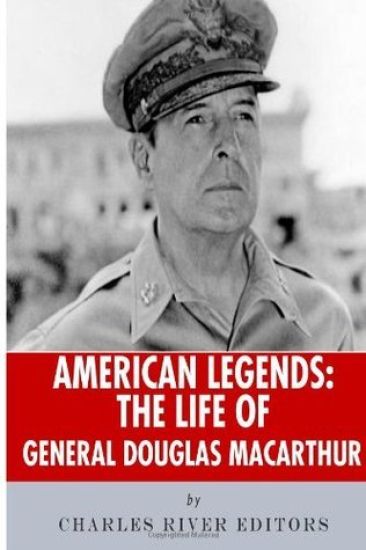
American Legends: The Life of General Douglas MacArthur

American Legends: The Life of General Douglas MacArthur

Charles River

Createspace Independent Publishing Platform
2013
nidottu
*Includes MacArthur's most colorful and inspiring quotes, including his Victory Broadcast after Japan's surrender and his Farewell Address to Congress. *Includes pictures of MacArthur and other important people. *Includes a Bibliography for further reading. "There is no substitute for victory." - Douglas MacArthur A lot of ink has been spilled covering the lives of history's most influential figures, but how much of the forest is lost for the trees? In Charles River Editors' American Legends series, readers can get caught up to speed on the lives of America's most important men and women in the time it takes to finish a commute, while learning interesting facts long forgotten or never known. Of all the military men America produced during the 19th and 20th centuries, it's hard to find one as important, successful and controversial as General Douglas MacArthur. The son of a Civil War veteran, MacArthur rose to become the most instrumental commander in the Pacific Theater during World War II. His legendary return to the Philippines in 1944 made good on one of the war's most famous vows, and it was MacArthur who fittingly who oversaw the occupation and reconstruction of Japan following the war. Given his long and celebrated career, MacArthur was the obvious choice to lead the newly created United Nations' troops during the Korean War, but his arguments over war strategy and policy eventually led to his controversial firing by President Harry Truman in 1951. After that, in his own words, he "faded away", living out his remaining days on the top floor of the Waldorf Hotel until his death in 1964. For many with a conservative disposition he remains a hero who, had he been listened to, would have prevented the current impasse with the rogue state that is modern North Korea. For some liberal thinkers he was dangerously obsessive while wholly ignorant of geopolitics, and he has been branded as a general who would have used atomic weapons and potentially triggered the third world war. The truth is far more difficult to discern and much more subtle. Douglas MacArthur was one of the most intelligent soldiers America has produced, and he was also one of the most prominent statesmen of the twentieth century. He made his mark from flamboyant staff officer in the Vera Cruz expedition of 1914 to United Nations Commander in the Korean War. Along the way he found fame in World War I, participated in the controversial Bonus Army incident, lost and won campaigns in World War II, and served as Army Chief of Staff, Superintendent at West Point and as effective ruler of Japan. Rarely out of the limelight, MacArthur was as much an administrator as he was a soldier and a combat commander, and in all of his endeavors he found success and controversy. American Legends: The Life of General Douglas MacArthur profiles the amazing life and career of the American war hero, while also examining his personality and analyzing his lasting legacy. Along with pictures of important people, places, and events, you will learn about MacArthur like you never have before, in no time at all.

Legends of the Renaissance: The Life and Legacy of Niccolo Machiavelli

Legends of the Renaissance: The Life and Legacy of Niccolo Machiavelli

Charles River

Createspace Independent Publishing Platform
2013
nidottu
*Includes pictures of Machiavelli and important people and places. *Explains the historical background of Machiavelli's life and the political context within which he wrote The Prince. *Discusses lingering controversies surrounding Machiavelli and his work, including whether The Prince was intended as a satire or an effort to spark a rebellion. *Includes a Bibliography for further reading. "The assumptions of the entire western political tradition from Plato onwards were called into question by a generation of radical thinkers, of whom the greatest and most radical was Niccol Machiavelli." - James Hankins "No epitaph can match so great a name," reads the inscription on Niccol Machiavelli's tomb in the church of Santa Croce in Florence. Such praise of the notorious author of The Prince, the "teacher of evil," according to Leo Strauss, may seem misplaced to those with only a passing knowledge of one of history's most famous political philosophers and theorists. Ever since Machiavelli penned his 1513 treatise on princely rule and the politics of reality, a work that infamously advises rulers to abandon virtue and morality when necessary, his name has been synonymous with deceit, duplicity and amoral pragmatism. In 1559, the text was unsurprisingly registered to the Index Librorum Prohibitorum, the Catholic Church's list of banned books, on the grounds of immorality, and Shakespeare dubbed him the "murderous Machiavel" in the 1590s, a mere six decades after his death in 1527. Since then, a sinister reputation has posthumously plagued the controversial Florentine, and the accusation of being "Machiavellian," an overused and typically misapplied adjective, is a charge of behaving in a cunning, scheming and unscrupulous way. But is this depiction of Machiavelli as wicked and immoral accurate? Like most historical figures, Machiavelli was a creature of his time, and his works have distinct historical identities - written for a particular culture in a particular time. Machiavelli was a public servant during the Republic who lost his office when the Medicis returned to power, yet Machiavelli dedicated The Prince to the ruling Medici of the time, leading many over the centuries to speculate that The Prince was a satire. 20th century French philosopher Maurice Merleau-Ponty went so far as to assert, "Machiavelli is the complete contrary of a machiavellian, since he describes the tricks of power and 'gives the whole show away.' The seducer and the politician, who live in the dialectic and have a feeling and instinct for it, try their best to keep it hidden." Regardless, The Prince remains one of the most influential political philosophies of history, and Machiavelli himself will forever be associated with the "ends justify the means" philosophy that he wrote about. Either way, understanding the significance of his writings and their place in the history of political theory requires exploring the world in which Machiavelli lived and worked, tracing his diplomatic career, his encounters with some of Italy's most influential rulers, and the financial desperation and ignominy he suffered in exile from his native city. Legends of the Renaissance: The Life and Legacy of Niccolo Machiavelli chronicles the famous artist's life and work, as well as his lasting legacy. Along with pictures of important people, places, and events in his life, you will learn about Raphael like you never have before, in no time at all.
American Legends: The Life of Chief Joseph of the Nez Perce

American Legends: The Life of Chief Joseph of the Nez Perce

Charles River

Createspace Independent Publishing Platform
2013
nidottu
*Includes pictures of Chief Joseph and other important people and places in his life. *Explains the events that led up to the Nez Perce War and comprehensively covers the tribe's legendary retreat *Discusses Chief Joseph's legacy and controversies surrounding his life. "Our fathers gave us many laws, which they had learned from their fathers. These laws were good. They told us to treat all people as they treated us; that we should never be the first to break a bargain; that is was a disgrace to tell a lie; that we should speak only the truth; that it was a shame for one man to take another's wife or his property without paying for it." - Chief Joseph A lot of ink has been spilled covering the lives of history's most influential figures, but how much of the forest is lost for the trees? In Charles River Editors' American Legends series, readers can get caught up to speed on the lives of America's most important men and women in the time it takes to finish a commute, while learning interesting facts long forgotten or never known. When he died in 1904, most Americans who knew his people's story considered Chief Joseph, whose Nez Perc name is Himahtooyahlatkekt ("Thunder Rolling Down from the Mountains"), a military genius and an "Indian Napoleon." This assessment of the Native American leader was based on a 1,500-mile odyssey during which he and his people left their reservation in the hopes of escaping to Canada, where the Nez Perc intended to join Sitting Bull and his Hunkpapa Sioux band. The real Chief Joseph was a gifted speaker and more diplomat than war leader. It's not surprising that Chief Joseph was misunderstood and misrepresented by Americans because his people's name was as well; Nez Perc literally means "pierced nose" in French, but it is unclear whether the tribe ever used nose piercing as a form of ornament. At the time of Joseph's birth, the Nez Perc were rapidly becoming the most influential and wealthy tribe in the region, and their prospects seemed bright. Lewis and Clark had considered his ancestors sufficiently friendly and reliable that they left their horses with them as they loaded onto canoes and journeyed to the Pacific Coast. By the time of Joseph's birth in 1840, the Nez Perc had maintained friendly relations with American settlers for several decades. But their attitudes would soon change as the United States government began to coerce them to cede their traditional homeland to newly arrived white settlers, and the Nez Perc began suffering a fate very similar to that of other Native American tribes to the east. Joseph had inherited tribal leadership from his father in 1871, and for six tumultuous years he attempted to peacefully resist settlers who desired the tribe's fertile potential farmland in the Wallowa Valley of present-day northeastern Oregon. Thus it was Chief Joseph who fought the Nez Perce War against the U. S. Army in 1877, earning grudging respect from the people who sought to defeat them. American Legends: The Life of Chief Joseph of the Nez Perce profiles the amazing life and leadership of the famous Native American Chief, examining the results of the war and analyzing his lasting legacy. Along with pictures of important people, places, and events, you will learn about Chief Joseph like you never have before, in no time at all.