Kirjojen hintavertailu – 12 903 725 kirjaa ja 27 kauppaa
Kirjailija
Charles River
Kirjat ja teokset yhdessä paikassa: 4 673 kirjaa, julkaisuja vuosilta 2013–2022, suosituimpiin kuuluu William Powell and Myrna Loy: The Lives and Careers of One of Classical Hollywood's Most Iconic Duos. Vertaile teosten hintoja ja tarkista saatavuus suomalaisista kirjakaupoista.
*Includes pictures. *Includes a unique introduction of each actress. *Includes quotes by the actresses about their lives and careers. *Includes bibliographies of each actress for further reading. In 1999, the American Film Institute released its list of the 50 greatest Hollywood stars of the 20th century, and selecting the 10 best actresses out of the bunch was certainly a tall task. The competition was so stacked that women like Ginger Rogers, Grace Kelly and Rita Hayworth were not even among the Top 10. So who were the Top 10 women selected by the AFI? Aside from being one of the most recognized and acclaimed actresses in history, Katharine Hepburn's career is also of great importance because she forced Americans to reevaluate their expectations for female behavior, both in films themselves and off the movie set as well. As society began to pay greater attention to the importance of strong roles for women, Hepburn's career gained an even greater importance as a fiercely individual figure who offered a daring alternative to the conventions of femininity that had long existed in American culture. Bette Davis presided over Hollywood at a time in which the film industry was at its most influential. Every actress from Katharine Hepburn to Ingrid Bergman and Ginger Rodgers, themselves now considered among Hollywood's greatest icons, lived in the shadow of Bette Davis. For someone whose career ended over 30 years ago, Audrey Hepburn continues to retain her popularity and exert a strong influence over how people view beauty and sophistication. She remains an American icon, despite the fact that she did not even move to the United States until 1953 (at the age of 24) and spent the majority of her life living in Europe, while her characters in films such as Roman Holiday (1953) and Breakfast at Tiffany's (1961) are still held up as the paragon of delicate femininity and elegance. At times during her career, Bergman was the darling of Hollywood, but at other times she was literally a pariah. It is all too common to remember Bergman for her performance in Casablanca, forgetting the fact that she was effectively exiled from Hollywood for several years during her romance with Roberto Rossellini. Of all the great movie stars, there may be none more enigmatic than Greta Garbo, who remains internationally famous despite the fact her life and career raise more questions than answers. How did a Swedish actress with very little film acting experience in her native land arrive in the United States and achieve instant stardom? Few actresses lived their lives in the public eye more than Marilyn Monroe, and yet her life remains shrouded in mystery to this day. While it is common knowledge that Marilyn's life is a rags-to-riches story, her life is bookended by hazy details surrounding her early life and even more mysterious death. In many ways, Elizabeth Taylor enjoyed being in the public spotlight and living the lifestyle of the rich and famous, and her personal life very much resembled a performance suitable for Hollywood. Taylor faced great adversity throughout her life, including being married on eight different occasions to seven different spouses and fighting battles with weight and drug addiction. Judy Garland might be known today based more on her demise than anything else, and there's no denying that one of the most fascinating (and tragic) aspects of her life story is the manner in which her downward spiral occurred with the same rapid progression as her meteoric ascent. When Marlene Dietrich first became a household name in the United States, she introduced a new standard for female sexuality on screen. Her performance in The Blue Angel (1930) not only stands as one of the most glamorous roles ever played but also one of the frankest depictions of the femme fatale ever captured on screen.
*Includes pictures. *Includes Lombard and Gable's quotes about their lives and careers. *Comprehensively analyzes their film careers. *Includes a bibliography for further reading. "The only reason they come to see me is that I know that life is great - and they know I know it." - Clark Gable "Carole Lombard's tragic death means that something of gaiety and beauty have been taken from the world at a time they are needed most." - Errol Flynn The 1930s were also a time in which Hollywood boasted an unprecedented array of famous leading men. Gary Cooper, Cary Grant, James Stewart, and Fred Astaire were just a handful of the A-list stars of the decade, and it is in this context that the achievements of Clark Gable are particularly remarkable. Best known for his role in Gone With the Wind (1939), Gable reached the ranks of the Hollywood elite well before the end of the decade through acting in films such as It Happened One Night (1934) and Mutiny on the Bounty (1935). Gable had a unique appeal that captivated Depression-era audiences; while Cary Grant offered a sophisticated charm and Fred Astaire was tied to the musical genre, Gable brought an air of sophistication that was less comical than that of Grant and appealed to both genders, unlike Astaire. At a time when so many Americans were financially destitute, Gable managed to appear classy without coming across as snobbish. At the same time, his virile masculinity was not overly macho or misogynist. For these reasons, Gable was able to captivate male and female viewers alike, and his mass appeal was a driving force behind the commercial success of Gone With the Wind, possibly the most beloved Hollywood film ever made. As iconic director John Huston once stated, "Clark Gable was the only real he-man I've ever known, of all the actors I've met." Even if Gable is perhaps less widely-known than Grant or Astaire among 21st century audiences, examining the effect he had on viewers during the 1930s and 1940s allows a better understanding of Hollywood during its Golden Age. In conjunction with that, his career served as a sort of response to his upbringing and cultural background. In fact, there was a significant gap between his glamorous roles on the movie screen and the real-life adversity he faced from an early age. Gable faced great challenges throughout his entire career, from the death of his biological mother to the death of wife Carol Lombard in 1942. As with any famous actor, he was the recipient of great fortune, yet it is important to recognize that his many opportunities did not preclude him from experiencing great pain and tragedy. On January 16, 1942, just a few weeks after Pearl Harbor brought the United States into World War II, the nation suffered what were considered the first civilian deaths of the war when a plane crashed into the side of a mountain southwest of Las Vegas. Aboard the plane were 15 servicemen, but the plane was also carrying one of Hollywood's biggest stars: actress Carole Lombard. Although Lombard's death and her marriage to Gone With the Wind star Clark Gable have overshadowed her career, her untimely death in 1942 cut short the life of one of Hollywood's most prominent stars at the time. In fact, Lombard's platinum look and her unique mannerisms had helped her become the biggest star of the screwball genre by the end of the 1930s, and her movies were so successful that she was the highest paid actress in Hollywood by the start of the 1940s. As English critic Graham Greene said of her, "Platinum blonde, with a heart-shaped face, delicate, impish features and a figure made to be swathed in silver lam , Lombard wriggled expressively through such classics of hysteria as Twentieth Century and My Man Godfrey." Indeed, despite dying at the age of 33, the American Film Institute recognized her as one of the biggest film icons of the 20th century.
*Weaves the lives and careers of Sherman and Johnston together into one entertaining and educational narrative. *Includes pictures of the generals and important people and places in their lives. *Includes maps of important battles they fought in. *Discusses their relationship during and after the war. *Includes Bibliographies of each general for further reading. William Tecumseh Sherman (February 8, 1820 - February 14, 1891) holds a unique position in American history. Synonymous with barbarity in the South, Sherman is lauded as a war hero in the North, and modern historians consider him the harbinger of total war. As a General in the Union Army during the American Civil War (1861-65), Sherman was recognized for his outstanding command of military strategy but criticized for the harshness of the "scorched earth" policies that he implemented in conducting total war against the Confederate States, especially in 1864 and 1865. Military historian B. H. Liddell Hart famously declared that Sherman was "the first modern general." Sherman spent a majority of the war out west, although it is often forgotten that he was a brigade commander at the First Battle of Bull Run, and that the Civil War actually finished with General Joseph E. Johnston surrendering to Sherman weeks after Appomattox. Having fought against each other and negotiated with each other, Sherman and Johnston became good friends after the war, and when the elderly Johnston served as a pallbearer at Sherman's funeral, he contracted an illness that eventually killed him. During the Civil War, one of the tales that was often told among Confederate soldiers was that Joseph E. Johnston was a crack shot who was a better bird hunter than just about everyone else in the South. However, as the story went, Johnston would never take the shot when asked to, complaining that something was wrong with the situation that prevented him from being able to shoot the bird when it was time. The story is almost certainly apocryphal, but it was aptly used to demonstrate the Confederates' frustration with a man who everyone regarded as a capable general. Johnston would become known more for losing by not winning; he was never badly beaten in battle, but he had a habit of strategically withdrawing until he had nowhere left to retreat. When Johnston had retreated in the face of McClellan's army before Richmond in 1862, he finally launched a complex attack that not only failed but left him severely wounded, forcing him to turn over command of the Army of Northern Virginia to Robert E. Lee. Johnston and Confederate President Jefferson Davis had a volatile relationship throughout the war, but Johnston was too valuable to leave out of service and at the beginning of 1864 he was given command of the Army of Tennessee. When Johnston gradually retreated in the face of Sherman's massive army (which outnumbered his 2-1) before Atlanta in 1864, Davis removed Johnston from command of the Army of Tennessee and gave it to John Bell Hood. Civil War Enemies, Post-War Friends chronicles the lives and careers of the two famous generals, including their famous encounters in the field, their assessments of each other, and their final surrender negotiations. Along with pictures of important people, places, and events in his life, you will learn about Sherman and Johnston like you never have before.
*Includes pictures of Sheridan and important people, places, and events in his life. "A brown, chunky little chap, with a long body, short legs, not enough neck to hang him, and such long arms that if his ankles itch he can scratch them without stooping." - Abraham Lincoln describing Phil Sheridan In the most popular narratives of the Civil War, Union Generals Ulysses S. Grant and William Tecumseh Sherman are celebrated as the Union's most successful generals and men who revolutionized total warfare with the use of scorched earth tactics. Sherman's March to the Sea continues to be one of the most famous campaigns of the war, and he is still widely reviled in the South because of it. Lost in this common narrative is the fact that Sherman's March was preceded by a scorched earth campaign that made Virginia howl, led by "Little Phil" Sheridan. The 5'5 Sheridan was one of the smallest and toughest fighters in the Union Army, whose capabilities as both a general of infantry and cavalry made him one of the most valuable and versatile officers in the North. A close associate of Grant's in the West, Sheridan was so critical that Grant brought him east in 1864 and gave him command of the Union cavalry to face off against the vaunted JEB Stuart. Despite his successes in the West and during the Overland Campaign, Sheridan's most famous campaign was in the Shenandoah Valley, which had seen much fighting and Stonewall Jackson's famous 1862 Valley Campaign. In 1864, however, Sheridan and his Army of the Shenandoah defeated Jubal Early and systematically destroyed the economic infrastructure and viability of the Valley, which had been considered the "breadbasket" of Virginia during the war's earlier years. Residents of the Valley simply referred to Sheridan's campaign as "The Burning". After Sheridan's cavalry proved instrumental in surrounding Lee's army and forcing its surrender at Appomattox, Sheridan had cemented his legacy as one of the greatest Union generals of the Civil War. But he was far from done. During Reconstruction, he was a military governor responsible for trying to pacify Southern civilians in the wake of the Civil War, and it should come as no surprise that Sheridan and Southerners didn't see eye to eye. Sheridan himself famously stated, "If I owned Texas and Hell, I would rent Texas and live in Hell." Sheridan also ran afoul of President Andrew Johnson, who later removed him from his post. The tough and acerbic Sheridan was also one of the highest ranked officers who fought the Indian Wars in the decades after the Civil War. Notorious for uttering "The only good Indians I ever saw were dead", which has since been misattributed into more generalized and bigoted forms, Sheridan's biographers have taken pains to try to point out that Little Phil wasn't a racist, though there can be no denying he ruthlessly waged war on the Great Plains to subdue Native American tribes. Enemies on the battlefield rarely got the best of Sheridan, but his hard living finally caught up with him around the end of the 1880s, when Sheridan, in his 50s, began suffering massive heartattacks. By the time he died in 1888, he had been General-in-Chief and Commanding General of the U. S. Army, the very upper echelons of the military, and he was celebrated as one of the Civil War's foremost heroes. Little Phil: The Life and Career of General Philip Sheridan provides a comprehensive account of the fighting general's military career, but it also humanizes "Little Phil", the quintessential military man. Along with pictures of important people, places, and events in his life, you will learn about Phil Sheridan like you never have before, in no time at all.
*Weaves the famous stories of Caesar, Cleopatra, Antony and Augustus into one gripping narrative. *Includes famous art depicting Caesar, Antony, Cleopatra, Augustus and important people, places, and events in their lives. *Includes a comprehensive discussion of the facts and myths surrounding the deaths of Caesar, Antony and Cleopatra, separating fact from fiction. Possibly the most important man of antiquity, and even all of history, was Julius Caesar. Alexander Hamilton, the famous American patriot, once remarked that "the greatest man who ever lived was Julius Caesar". Such a tribute, coming from one of the Founding Fathers of the quintessential modern democracy in reference to a man who destroyed the Roman Republic, is testament to the enduring mark that Caesar left upon the world. The ultimate conqueror, statesman, dictator, visionary, and opportunist, during his time in power Caesar expanded the borders of Rome to almost twice their previous size, revolutionized the infrastructure of the Roman state, and destroyed the Roman Republic for good, leaving a line of emperors in its place. His legacy is so strong that his name has become, in many languages, synonymous with power: the Emperors of Austria and Germany bore the title Kaiser, and the Czars of Russia also owe the etymology of their title to Caesar. His name also crept further eastward out of Europe, even cropping up in Hindi and Urdu, where the term for "Emperor" is Kaisar. During one of the most turbulent periods in the history of Rome, men like Julius Caesar, Mark Antony, and Octavian participated in two civil wars that would spell the end of the Roman Republic and determine who would become the Roman emperor. In the middle of it all was history's most famous woman, the Egyptian pharaoh Cleopatra (69-30 B. C.), who famously seduced both Caesar and Antony and thereby positioned herself as one of the most influential people in a world of powerful men. Cleopatra was a legendary figure even to contemporary Romans and the ancient world, and she was a controversial figure who was equally reviled and praised through the years, depicted as a benevolent ruler and an evil seductress, sometimes at the same time. Over 2,000 years after her death, everything about Cleopatra continues to fascinate people around the world, from her lineage as a Ptolemaic pharaoh, her physical features, the manner in which she seduced Caesar, her departure during the Battle of Actium, and her famous suicide. Mark Antony (83-50 B. C.) is one of the most unique and best known figures of antiquity, a man whose relationships with some of history's giants ensured his own legacy. A prot g of Julius Caesar's, a lover of Cleopatra's, a sworn enemy of Cicero's, and a foil for Octavian, Antony has long been remembered for the role he played in others' lives more than for his own accomplishments. While Antony's relationships with Rome's most famous leaders and history's most famous woman were central components in his lives, the fact that his legacy has been intertwined with them belies the fact that he was a powerful man in his own right. The importance of Gaius Julius Caesar Augustus (or as he was known from birth, Gaius Octavius "Octavian" Thurinus) to the course of Western history is hard to overstate. His life, his rise to power, his political, social and military achievements, all laid the foundations for the creation of an Empire which would endure for almost five centuries, and whose traditions, laws, architecture and art continue to influence much of Europe and the world today. The End of the Roman Republic chronicles these amazing leaders and their colorful lives, separating fact from legend and analyzing the legacies they left behind on Rome and the world. Along with pictures and a Table of Contents, you will learn about Caesar, Cleopatra, Antony and Augustus like you never have before.
*Weaves the lives of the 4 progressive presidents into one entertaining and educational narrative. *Includes pictures of the presidents and important people, places, and events in their lives. *Includes some of the presidents' most colorful quotes. *Includes a Bibliography for further reading. When President McKinley was assassinated in 1901, young Vice President Theodore Roosevelt was thrust into the presidency, one that would earn him a place on Mount Rushmore, Roosevelt's "Square Deal" domestic policies favored average citizens while busting trusts and monopolies. Roosevelt also promoted conservation as an environmental stance, while his "speak softly and carry a big stick" foreign policy is still an oft used phrase today. Roosevelt even earned a Nobel Prize during his presidency. By the time Roosevelt died in 1919, he was an American icon. As one of the most influential men of the 20th century, there is no shortage of adjectives to use when describing Woodrow Wilson's two terms as president of the United States. Wilson was a pioneer of the Progressive movement both before and during his presidency, becoming a populist champion a generation before Franklin Roosevelt's New Deal. He ran for reelection by touting his neutrality during World War I, only to lead his nation into the war and become the architect of a world body that would lead to greater inter-connection among nations. Today Wilson is best remembered for his Fourteen Points, one of the most forceful arguments for an idealistic foreign policy in American history, and his fight for the League of Nations, which set the model for today's United Nations. Franklin Delano Roosevelt might be America's greatest 20th century president, but there's no question that he was the most unique. A well-connected relative of Theodore Roosevelt, FDR was groomed for greatness until he was struck down by what was widely believed to be polio at the time. Nevertheless, he persevered, rising through New York politics to reach the White House just as the country faced its greatest challenge since the Civil War, beginning his presidency with one of the most iconic lines ever spoken during an inaugural address. For over a decade, President Roosevelt threw everything he had at the Great Depression, and then threw everything the country had at the Axis powers during World War II. Ultimately, he succumbed to illness in the middle of his fourth term, just before the Allies won the war. Kennedy has been nostalgically and fondly remembered for his youth, vigor and sense of unfinished potential, but it would be President Johnson who would bring much of the agenda to fruition. To the surprise of many, the Southern Democrat relied on his wealth of Senate experience and dogged determination to help push through an ambitious and progressive social agenda that formed the backbone of modern American society. Known as the Great Society, President Johnson's legislation included the landmark Civil Rights Act of 1964, as well as the establishment of Medicare, Medicaid, environmental protection, and the "War on Poverty." Everything from the National Endowment for the Arts to the Environmental Protection Agency has its roots in Johnson's presidency. Had Johnson's presidency included just his domestic agenda, he would have unquestionably been one of America's greatest presidents. Unfortunately, as he was engineering a new social contract at home, he was ramping up American military participation in a tiny country thousands of miles away in Southeast Asia. The Progressive Presidents chronicles the lives of each president and weaves their stories and accomplishments into one entertaining narrative, examining their records and analyzing their legacies. Along with pictures of important people, places, and events, you will learn about America's most important progressive presidents like you never have before.
*Includes pictures of important people, places, and events. *Includes an original introduction for each leader. *Includes a bibliography for each leader. Despite the fact that the Civil War began over 150 years ago, it remains one of the most widely discussed topics in America today, with Americans arguing over its causes, reenacting its famous battles, and debating which general was better than others. Americans continue to be fascinated by the Civil War leaders who made the difference between victory and defeat. Abraham Lincoln (1809-1865) is one of the most famous Americans in history and one of the country's most revered presidents. Schoolchildren can recite the life story of Lincoln, the "Westerner" who educated himself and became a self made man, rising from lawyer to leader of the new Republican Party before becoming the 16th President of the United States. Lincoln successfully navigated the Union through the Civil War but didn't live to witness his crowning achievement, becoming the first president assassinated when he was shot at Ford's Theater by John Wilkes Booth on April 14, 1865. In the 19th century, one of the surest ways to rise to prominence in American society was to be a war hero, like Andrew Jackson and William Henry Harrison. But few would have predicted such a destiny for Hiram Ulysses Grant, who had been a career soldier with little experience in combat and a failed businessman when the Civil War broke out in 1861. William Tecumseh Sherman (February 8, 1820 - February 14, 1891) holds a unique position in American history. Synonymous with barbarity in the South, Sherman is lauded as a war hero in the North, and modern historians consider him the harbinger of total war. As a General in the Union Army during the American Civil War (1861-65), Sherman was recognized for his outstanding command of military strategy but criticized for the harshness of the "scorched earth" policies that he implemented in conducting total war against the Confederate States, especially in 1864 and 1865. Military historian B. H. Liddell Hart famously declared that Sherman was "the first modern general." Jefferson Davis (1808-1889) holds a unique place in American history, as the man best remembered for being the president of the Confederacy during the Civil War. While other famous Confederates like Robert E. Lee and Stonewall Jackson are still celebrated across the reunited country, Davis continues to be the object of scorn, derided over his attempt to flee after the Civil War and criticized as ineffective by historians. Among the Confederates still lauded by today's Southerners, Davis is well down the list. With the exception of George Washington, perhaps the most famous general in American history is Robert E. Lee (January 19, 1807 - October 12, 1870), despite the fact he led the Confederate Army of Northern Virginia against the Union in the Civil War. As the son of U. S. Revolutionary War hero Henry "Light Horse Harry" Lee III, and a relative of Martha Custis Washington, Lee was imbued with a strong sense of honor and duty from the beginning. And as a top graduate of West Point, Lee had distinguished himself so well before the Civil War that President Lincoln asked him to command the entire Union Army. Lee famously declined, serving his home state of Virginia instead after it seceded. Thomas Jonathan Jackson is one of the most famous generals of the Civil War, but many of the people he continues to fascinate probably don't remember his whole name. That's because Jackson earned his famous "Stonewall" moniker at the First Battle of Manassas or Bull Run, when Brigadier-General Bee told his brigade to rally behind Jackson, whose men were standing like a stone wall. Ironically, it's still unclear whether that was a compliment for standing strong or an insult for not moving his brigade, but the nickname stuck for the brigade and the general itself.
*Includes pictures and maps of battles. *Includes a bibliography of every general. Despite the fact that the Civil War began over 150 years ago, it remains one of the most widely debated topics in America today, with Americans arguing over its causes, reenacting its famous battles, and arguing over which general was better than others. Americans continue to be fascinated by the Civil War icons who made the difference between victory and defeat in the war's great battles. In particular, the Confederates have been the most popular topics of Civil War history, Foremost among the South's generals were the icons of the Army of Northern Virginia, led by Robert E. Lee and his most trusted subordinates, James Longstreet, Stonewall Jackson, and JEB Stuart. The Confederacy also had its share of controversial generals, notably Patrick Cleburne and Nathan Bedford Forrest. Cleburne was incredibly effective but controversial after suggesting the South should arm its slaves, while Forrest was controversial for the alleged massacre of black Union soldiers at Fort Pillow. While all eyes were fixed on the Eastern theater at places like Manassas, Richmond, the Shenandoah Valley and Antietam, Ulysses S. Grant went about a steady rise up the ranks through a series of successes in the West. Grant eventually came east to face Lee in 1864. Phil Sheridan, his trusted subordinate, came with and operated the Army of the Potomac's cavalry until the end of the war as well. Sheridan proved to be one of the few generals in the war who could competently lead infantry and cavalry. Synonymous with barbarity in the South, William Tecumseh Sherman is lauded as a war hero in the North, and modern historians consider him the harbinger of total war. Military historian B. H. Liddell Hart famously declared that Sherman was "the first modern general." While there is a never ending stream of acclaim going to generals like Grant, Lee, and Sherman, General George H. Thomas has managed to fly under the radar. Thomas scored almost inconceivable successes at Missionary Ridge, Franklin, and Nashville. Thomas also skillfully fought at Perryville, Stones River, and in Sherman's Atlanta Campaign, but he's best remembered as "The Rock of Chickamauga". Thomas' heroics prevented the destruction of the Union army at that battle and allowed it to successfully retreat to Chattanooga.
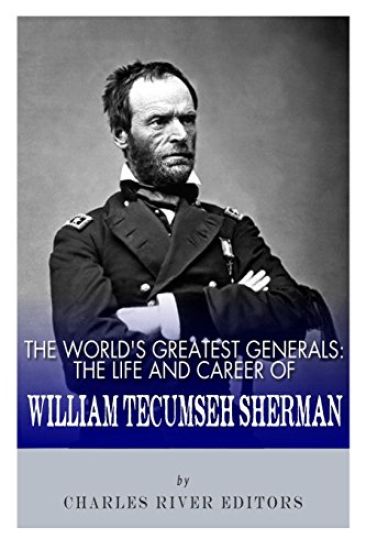
*Includes 25 pictures of Sherman and important people, places, and events in his life. *Includes footnotes and a bibliography William Tecumseh Sherman (February 8, 1820 - February 14, 1891) holds a unique position in American history. Synonymous with barbarity in the South, Sherman is lauded as a war hero in the North, and modern historians consider him the harbinger of total war. As a General in the Union Army during the American Civil War (1861-65), Sherman was recognized for his outstanding command of military strategy but criticized for the harshness of the "scorched earth" policies that he implemented in conducting total war against the Confederate States, especially in 1864 and 1865. Military historian B. H. Liddell Hart famously declared that Sherman was "the first modern general." Sherman spent a majority of the war out west, although it is often forgotten that he was a brigade commander at the First Battle of Bull Run, and that the Civil War actually finished with General Joseph E. Johnston surrendering to Sherman weeks after Appomattox. By 1865, Sherman was the second most popular general in the North behind Grant, and history has accorded him a strong Civil War legacy. Nevertheless, Sherman remains controversial across much of the United States today. He was unquestionably instrumental at battles like Shiloh, his victory in the Atlanta Campaign reassured Lincoln's reelection, and his March to the Sea revolutionized total warfare. At the same time, the South considered him akin to a terrorist, violating the norms of warfare by targeting civilians, and accuse him of needlessly burning Atlanta and Columbia. In many ways, Sherman is still the scourge of the South, nearly 150 years after he vowed to make Georgia howl. Although Sherman's Civil War record has come to define his legacy, the man himself has given way to the controversies, legends, and accusations surrounding his life and actions. The World's Greatest Generals: The Life and Career of William Tecumseh Sherman addresses the controversies and the battles, but it also humanizes a man who had to battle mental demons and a political and military hierarchy within the Union Army before becoming one of the men who defeated the Confederacy. Along with pictures of Sherman and other important people and events in his life, you will learn about the great general like you never have before, in no time at all.
*Includes pictures of John Paul II, Mother Teresa, Padre Pio, and important people, places and events in their lives. *Includes Bibliographies of each for further reading. *Discusses their lives, legacies, and controversial criticisms. The 20th century had no shortage of influential leaders, both good and bad. But while dictators, generals, and presidents came and went, the last quarter of the 20th century could rely on one thing: the papacy of Blessed Pope John Paul II. In becoming one of Catholicism's most popular leaders, and one shortly destined for sainthood, John Paul II indeed became one of the most famous and influential men of the 20th century. The first pope in centuries to not hail from Italy, John Paul II was responsible for a global outreach of epic proportions that brought him to over 100 countries, helped end communism in Europe, and brought people of different faiths closer together than ever before. It's often said that nobody in history has been seen and viewed in person by more people, an amazing feat for a man of humble origins born in Poland before World War II, a place that continues to especially venerate him today. For the last few decades of the 20th century, the Catholic Church was blessed to have two of its most influential leaders guiding the Church and spreading its faith and message at the same time. Pope John Paul II made history by becoming the first non-Italian pope in several centuries, guiding the church for over 25 years. But while he led the Church, a remarkable woman born Agnes Gonxha Bojaxhiu (1910-1997) became one of the Church's greatest missionaries and humanitarians. She would come to be known to the world as Mother Teresa. It would be nearly impossible to overstate the impact Mother Teresa had on the Catholic Church and the world during her life. In addition to founding the Missionaries of Charity, a sisterhood of Roman Catholics that now operates in over 125 countries and has over 4,500 sisters, Mother Teresa spent nearly half a century spreading her religious congregation across the world, while using it to help the sick and poor. Through her direct participation and planning, she opened hundreds of missions, providing essential services that ranged from hospices to schools, and from orphanages to soup kitchens. Her work won her a Nobel Peace Prize in 1979, and Mother Teresa was consistently ranked among the world's most admired people for the last 20 years of her life. Shortly after her death in 1997, the beatification process for Mother Teresa was begun, and in 2003 she was beatified as Blessed Mother Teresa of Calcultta. Francesco Forgione might be a name lost to history, but over the course of his life, he became one of Catholicism's most well known figures during the 20th century as Padre Pio. It was a remarkable path for a man who was legendarily afflicted by a series of illnesses and most famously bore the stigmata, very noticeably bearing what appeared to be the crucifixion wounds Jesus's hands suffered. Padre Pio was also known for his eccentricities, including unique forms of deep meditation and experiencing visions. Not surprisingly, despite all the spiritual work Padre Pio did, he was the subject of substantial controversy during his own life. And though he has been venerated as Saint Pio of Pietrelcina by the Catholic Church, critics have all but called him a fraud. Greatest Catholics of the 20th Century details the remarkable lives and legacies of these great Catholics, while also humanizing their struggles and discussing the controversies and criticisms that they were subjected to. Along with pictures of John Paul II, Mother Teresa, Padre Pio, and other important people, places and events in their lives, you will learn about these great Catholics like you never have before, in no time at all.
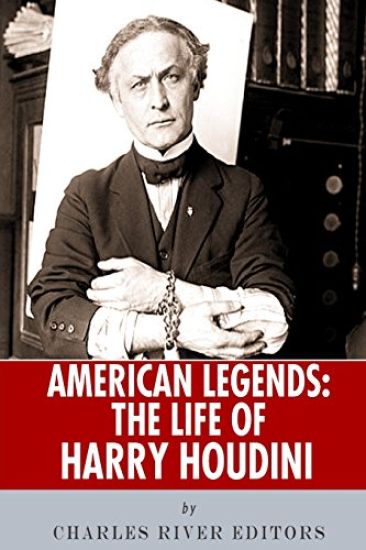
*Includes pictures of Houdini and his most famous escape acts. *Includes descriptions of Houdini's most famous stunts. *Includes a Bibliography for further reading. "I knew, as everyone knows, that the easiest way to attract a crowd is to let it be known that at a given time and a given place some one is going to attempt something that in the event of failure will mean sudden death. That's what attracts us to the man who paints the flagstaff on the tall building, or to the 'human fly' who scales the walls of the same building." - Harry Houdini A lot of ink has been spilled covering the lives of history's most influential figures, but how much of the forest is lost for the trees? In Charles River Editors' American Legends series, readers can get caught up to speed on the lives of America's most important men and women in the time it takes to finish a commute, while learning interesting facts long forgotten or never known. There is no shortage of professional magicians and stunt men in the 21st century, but all of them owe something to the most famous stunt man of them all, Harry Houdini. A century after he began to thrill audiences with his patented escape acts, Houdini's name remains synonymous with seemingly miraculous escapes and getaways, and his name is instantly recognizable even among those who have never seen pictures of his stunts. Houdini wasn't the first of his kind, but after he got his start as "Harry Handcuff Houdini" during a traveling European tour, he added the kind of showmanship and flair that have become standard fare among performers of his kind. His initial repertoire of escaping handcuffs eventually gave way to far grander feats, involving skyscrapers, straitjackets, and being buried alive. With fame came skepticism, and Houdini was frequently accused of being a fake and fixing his escapes. Some even believed he was helped by supernatural forces. Skeptics were bolstered by the fact that, like his escapes and magic tricks, Houdini remained a man shrouded in mystery, constantly changing his own life story to reinvent himself as he thought fit. Though Houdini insisted his stunts were real and constantly went after those who besmirched him or his profession, his success couldn't help but breed both legends and criticism simultaneously. By the end of his life, Houdini had transformed himself into a national celebrity, and he tried to dabble in acting and other pursuits, but he was destined to be forever associated with the profession he helped pioneer. And fittingly, mystery and controversy surrounded the exact cause of his death, as it had so much of his life. American Legends: The Life of Harry Houdini profiles the life, legends, stunts, and controversies of history's most famous escape artist, with pictures of important people, places, and events. You will learn about Houdini like you never have before, in no time at all.
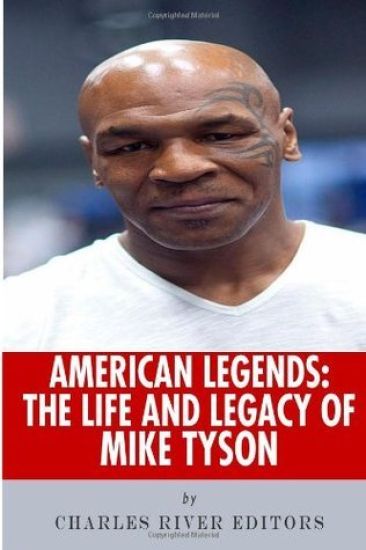
*Discusses Tyson's life in and out of the ring. *Includes Tyson's most colorful quotes. *Includes pictures of Tyson and important people in his life. "Everybody in boxing probably makes out well except for the fighter." - Mike Tyson A lot of ink has been spilled covering the lives of history's most influential figures, but how much of the forest is lost for the trees? In Charles River Editors' American Legends series, readers can get caught up to speed on the lives of America's most important men and women in the time it takes to finish a commute, while learning interesting facts long forgotten or never known. Iron Mike Tyson was one of the most feared opponents to ever step into a boxing ring. With unbelievable power that floored or stopped all but two of his first 28 professional opponents, Tyson began an unprecedented ascent to the top of the boxing world, becoming the youngest champion in history with a second round TKO over Trevor Berbick, the last man to box and defeat Muhammad Ali. That victory, in November 1986, prompted one British sports reporter to write, "The noble and manly art of boxing can at least cease worrying about its immediate future, now it has discovered a heavyweight champion fit to stand alongside Dempsey, Tunney, Louis, Marciano and Ali." Tyson became one of the biggest names in sports during the 1980s and could literally do no wrong in the ring, compiling a 37-0 record with 33 KO/TKOs. On top of that, he was the face of the iconic Nintendo game Mike Tyson's Punch-Out , a favorite among every video gamer in Generations X and Y. It was a stunning rise for a kid who grew up poor with no father in rough neighborhoods of New York City. Taunted for his now instantly recognizable high voice and lisp, Tyson was quick to fight and a petty criminal who became orphaned upon his mother's death when he was 16. Somehow, 4 years later, he was the heavyweight champion of the world. Unfortunately, as everyone knows today, the unprecedented nature of his rise is rivaled only by his stunning fall from grace. In February 1990, Tyson was knocked out by Buster Douglas in one of boxing's greatest upsets. Though he won his next few fights, his career was derailed by his conviction for raping Desiree Washington, landing him in prison for 3 of his prime fighting years. When Tyson got out of prison, his career simply became surreal. After winning a few belts back, he lost two bouts to Evander Holyfield, infamously biting part of Holyfield's ear off out of frustration during the rematch. He had another stint in jail before the end of the '90s, and his odd comments before his loss to Lennox Lewis ensured that the man once billed as an all time great was now more of a one man circus than anything else. In 2003, near the end of a career that had netted him $300 million, Tyson declared bankruptcy, hitting rock bottom. Today Tyson is nostalgically remembered as one of boxing's great heavyweights, but that shares the pedestal with his controversial quotes and antics. American Legends: The Life of Mike Tyson looks at the life and career of Iron Mike both inside and outside of the ring, including all his famous ups and infamous downs.
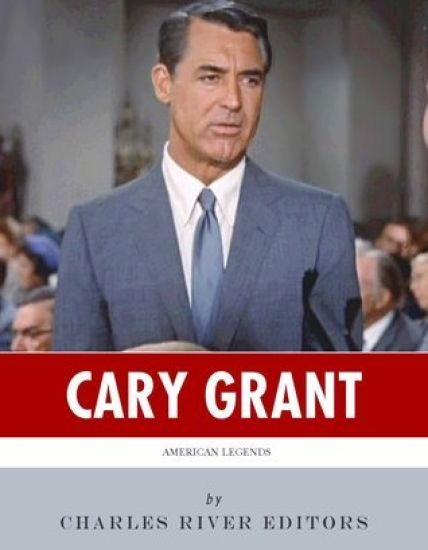
*Includes pictures of important people, places, and events. *Includes Cary Grant's quotes about his own life and working with other Hollywood stars. *Includes a bibliography for further reading. "Everyone wants to be Cary Grant. Even I want to be Cary Grant." - Cary Grant A lot of ink has been spilled covering the lives of history's most influential figures, but how much of the forest is lost for the trees? In Charles River Editors' American Legends series, readers can get caught up to speed on the lives of America's most important men and women in the time it takes to finish a commute, while learning interesting facts long forgotten or never known. Movie stars are revered for their ability to captivate audiences, and perhaps no actor has done it as well as Cary Grant, the epitome of the suave, debonair actor who may have been rivaled only by dancer extraordinaire Fred Astaire. Grant offered a version of the male actor that stood in stark contrast with the gangster heroes and hard-boiled film noir detectives that populated the screen throughout his career. Impeccably groomed and always clad in dapper attire, Grant possessed a magnetism that was undeniably attractive, all while managing to come across as well-heeled and socially respectable. As a result, there was an archetypal quality to Cary Grant that endeared him to both male and female viewers. After all, he was able to star in major movies well into his 60s, and even after he retired, Grant never lost his charm and continued to maintain a universal appeal that has almost never been rivaled. Cary Grant occupies an almost sacred place in American film history, but it is still important to recognize that the persona that has enchanted audiences for decades was in fact a creation. Grant was not born with the charm and elegance he later exuded, and the contrast between his upbringing and the man he would later become is arguably the most remarkable aspect of his life story. Born into a dysfunctional family, Grant had a tumultuous childhood that saw him tasked with perpetually overcoming major adversity. With a mother who was too ill to care for him and a father whose interests lay elsewhere, he was in many respects charged with raising himself, a dynamic entirely antithetical to the affluent characters he famously portrayed in films such as The Philadelphia Story (1939), To Catch a Thief (1953), and An Affair to Remember (1957). The progression from Grant's youth to his glamorous adult life was a complex transformation of its own, and it is a Hollywood rags-to-riches story of its own. At the same time, Grant's rise to stardom was due to an intricate web of factors, including his own natural acting ability, developments in the motion picture industry, and the fortuitous opportunity to consistently work with gifted directors who molded his image. Like nearly every big star, Grant was an exceptionally gifted actor and someone who benefited from a fortunate string of career opportunities that he took advantage of to full effect. American Legends: The Life of Cary Grant examines the life and career of Hollywood's most iconic leading man. Along with pictures of important people, places, and events, you will learn about Cary Grant like never before, in no time at all.
*Includes pictures of important people, places, and events. *Includes Bibliographies for further reading. American presidents have shaped the course of global affairs for generations, but as the saying goes, behind every great man there's a great woman. While the First Ladies often remain overshadowed by their husbands, some have carved unique niches in their time and left their own lasting legacy. Abigail Adams served as a political advisor that earned her the moniker "Mrs. President", while Eleanor Roosevelt gave voice to policy issues in a way that made her a forerunner of First Ladies like Hillary Clinton. During the last 100 years, Susan B. Anthony has been one of the most venerated women in American history, but in the 80 years before that, she was one of the most hated women in American history. Anthony took note of her contemporaries' distaste for her but remained defiant, asserting, "I have encountered riotous mobs and have been hung in effigy, but my motto is: Men's rights are nothing more. Women's rights are nothing less." Though Anthony is best remembered today for working towards women's suffrage, she was an active and progressive advocate for all of the leading human rights issues of her time. Anthony was an ardent abolitionist from day one, and she spent much of the first 40 years of her life championing the cause of African-Americans, even befriending men like Frederick Douglass and William Lloyd Garrison along the way. She also championed "radical" ideas as 8 hour work days, minimum wage laws, and equal pay for women. To say Helen Keller is one of the most unique figures in American history would be an understatement. As a young child, Helen lost both her vision and hearing, leaving her deafblind, an almost hopelessly debilitating condition that left her literally trapped, unable to communicate with anyone. But Helen eventually overcame the frustration and used unimaginable perseverance to overcome her disability. With Anne Sullivan's help and the sense of touch, Helen eventually broke through and learned to communicate. Helen's story would have been remarkable enough if it had ended simply with her ability to communicate with the outside world, but "I had now the key to all language, and I was eager to learn to use it." With unbridled ambition, Helen became the first deafblind individual to earn a bachelor's degree from a college, published her own autobiography when she was just 22, and in the early 20th century became famous across the world as both an author and speaker. The Top 5 Greatest American Women profiles each and every one of these American icons, examining their contributions to history and their lasting legacies.
*Includes pictures of the Wright brothers, their planes, and important events. *Includes a Bibliography for further reading. "For some years I have been afflicted with the belief that flight is possible to man. My disease has increased in severity and I feel that it will soon cost me an increased amount of money if not my life. I have been trying to arrange my affairs in such a way that I can devote my entire time for a few months to experiment in this field." - Wilbur Wright, 1900 A lot of ink has been spilled covering the lives of history's most influential figures, but how much of the forest is lost for the trees? In Charles River Editors' American Legends series, readers can get caught up to speed on the lives of America's most important men and women in the time it takes to finish a commute, while learning interesting facts long forgotten or never known. The lives of Wilbur and Orville Wright are quintessential American stories. Growing up in America's heartland, the boys lived very ordinary lives with 5 other siblings and worked in printing jobs and repair jobs that involved tinkering with tools and bicycles. But at the end of the 20th century, one of the brothers' passions became an obsession, especially for Wilbur, who would later write, "My brother and I became seriously interested in the problem of human flight in 1899." The Wright Brothers initially underestimated the difficulties involved in flying, and they were apparently surprised by the fact that so many others were working on solving the "problem of human flight" already. Decades before their own historic plane would end up in the National Air & Space Museum, Wilbur and Orville asked the Smithsonian for reading materials and brushed up on everything from the works of their contemporaries to Leonardo Da Vinci. Undeterred by the work, and the fact that several would-be pioneers died in crashes trying to control gliders, the Wright Brothers tested out gliding at Kitty Hawk in North Carolina for several years, working to perfect pilot control before trying powered flight. In December 1903, the brothers had done enough scientific work with concepts like lift to help their aeronautical designs, and they had the technical know-how to work with engines. On December 17, the brothers took turns making history's first successful powered flights. The fourth and final flight lasted nearly a minute and covered nearly 900 feet. The Wright Flyer I had just made history, and minutes later it would be permanently damaged after wind gusts tipped it over; it would never fly again. Although the Wright Brothers are still famous for the first flight, the rest of their story is often overlooked, especially their subsequent contributions in the field of aviation. Far from merely experimenting for a few weeks, Wilbur would work in aviation until dying of typhoid at the age of 45 in 1912, and it fell upon Orville to continue their business crucial aviation developments. By the time Orville died in 1948, planes had nearly reached supersonic speeds, a far cry from the days of bicycles and carriages he knew as a kid. American Legends: The Wright Brothers profiles the lives, careers, and legacies of the famous brothers. Along with pictures of important people, places, and events, you will learn about the Wright Brothers like you never have before, in no time at all.
*Includes pictures and maps. *Includes bibliographies on each general for further reading. With the exception of George Washington, perhaps the most famous general in American history might be Robert E. Lee, despite the fact he led the Confederate Army of Northern Virginia against the Union in the Civil War. Lee had distinguished himself so well before the Civil War that President Lincoln asked him to command the entire Union Army. Lee famously declined, serving his home state of Virginia instead after it seceded. Lee's most famous subordinate, Thomas Jonathan Jackson earned his famous "Stonewall" moniker at the First Battle of Bull Run, when Brigadier-General Bee told his brigade to rally behind Jackson, whose men were standing like a stone wall. Lee's other most famous subordinate was James Longstreet, the man Lee called his "old war horse." Had Longstreet died on the field in early May 1864, he would almost certainly be considered one of the South's biggest heroes. However, it was his performance at Gettysburg and arguments with other Southern generals after the Civil War that tarnished his image. One of the only bright spots in the West for the Confederacy was Irish immigrant Patrick Cleburne, whose successes earned him the nickname "Stonewall of the West". Where so many Confederates were failing, Cleburne's strategic tactics and bold defensive fighting earned him fame and recognition throughout the South, even leading Lee to call him "a meteor shining from a clouded sky." Confederate Lieutenant General Nathan Bedford Forrest is possibly the war's most controversial soldier. A self-made man with no formal military training, Forrest spent the entire war fighting in the West, becoming the only individual in the war to rise from the rank of Private to Lieutenant General. Forrest has been credited with having killed 30 Union soldiers in combat and having 29 horses shot out from under him.
*Includes pictures and maps of battles. *Includes a bibliography of every general. With the exception of George Washington, perhaps the most famous general in American history is Robert E. Lee, despite the fact he led the Confederate Army of Northern Virginia against the Union in the Civil War. His most famous subordinate, Stonewall Jackson, is one of the most famous generals of the war, but it's still unclear whether that was a compliment for standing strong or an insult for not moving his brigade, but the nickname stuck for the brigade and the general itself. While all eyes were fixed on the Eastern theater at places like Manassas, Richmond, the Shenandoah Valley and Antietam, Ulysses S. Grant went about a steady rise up the ranks through a series of successes in the West. Grant eventually came east to face Lee in 1864. Synonymous with barbarity in the South, William Tecumseh Sherman is lauded as a war hero in the North, and modern historians consider him the harbinger of total war. Military historian B. H. Liddell Hart famously declared that Sherman was "the first modern general." While there is a never ending stream of acclaim going to generals like Grant, Lee, and Sherman, General George H. Thomas has managed to fly under the radar. Thomas scored almost inconceivable successes at Missionary Ridge, Franklin, and Nashville. Thomas also skillfully fought at Perryville, Stones River, and in Sherman's Atlanta Campaign, but he's best remembered as "The Rock of Chickamauga". Thomas' heroics prevented the destruction of the Union army at that battle and allowed it to successfully retreat to Chattanooga.
*Discusses the myths and legends surrounding the relationship between Wild Bill and Calamity Jane, including whether they were married. *Includes pictures of Wild Bill, Calamity Jane, and important people, places, and events in their lives. *Explains the true origins of the nickname Calamity Jane. *Discusses Wild Bill's most famous shootouts and his murder, explaining what's fact and what's legend. *Includes a bibliography for further reading. "When fired upon Capt. Egan was shot. I was riding in advance and on hearing the firing turned in my saddle and saw the Captain reeling in his saddle as though about to fall. I turned my horse and galloped back with all haste to his side and got there in time to catch him as he was falling. I lifted him onto my horse in front of me and succeeded in getting him safely to the Fort. Capt Egan on recovering, laughingly said: 'I name you Calamity Jane, the heroine of the plains.' I have borne that name up to the present time." - Calamity Jane "Wild Bill was a strange character. Add to this figure a costume blending the immaculate neatness of the dandy with the extravagant taste and style of a frontiersman, you have Wild Bill, the most famous scout on the Plains."" - General George Custer In many ways, the narrative of the Wild West has endured more as legend than reality, and a perfect example of that can be found in the legend of James Butler Hickok (1837-1876), forever known as "Wild Bill". Indeed, separating fact from fiction when it comes to the life of Wild Bill is nearly impossible, something due in great measure to the fact that the man himself exaggerated his own adventures or fabricated stories altogether. When he was killed while playing poker in the mining South Dakotan outpost of Deadwood, he put Deadwood on the map and ensured both his place and his poker hand's place in legend. Whether Hickok's legacy would have endured without his legendary death is anyone's guess, but by becoming the first well known Westerner to die with his boots on, he immediately became the West's first hero. The most famous woman of the Wild West was also possibly the most colorful and mysterious. "Considered a remarkable good shot and a fearless rider for a girl of my age", Calamity Jane claimed to be a veteran of the Indian Wars, a scout, and the wife of Wild Bill Hickok, all on the way to becoming a dime novel heroine. While all of those legends have stuck, it's unclear to what extent if any they are actually true, and even her contemporaries doubted the authenticity of her statements. More than anything, people in frontier towns like Deadwood looked on with amusement at the girl who was more often than not drunk and was described by one of Wild Bill's friends as "simply a notorious character, dissolute and devilish." Her frequent drinking binges and her insistence that messing with her would "court calamity" had helped establish her nickname even before she arrived in Deadwood in the mid-1870s. Ultimately, Calamity Jane's tall tales, eccentric personality, and association with Wild Bill would all make her a popular figure in the last quarter of the 19th century, and she became so well known that she started taking part in traveling shows of the kind made famous by Buffalo Bill Cody, where spectators could hear her colorfully (and drunkenly) talk about her life in the Wild West, with each telling stretching the truth ever further. Her legacy continued to crystallize after her death and eventually turn her into a legend, immortalized in countless dime novels, books, TV and the silver screen, helping make some of her contemporaries and surroundings notorious as well. Wild Bill Hickok & Calamity Jane chronicle the colorful lives of the two Western legends and examines their relationship and legacies. Along with pictures and a Table of Contents, you will learn about Wild Bill & Calamity Jane like you never have before.