Kirjojen hintavertailu – 12 903 727 kirjaa ja 27 kauppaa

Kirjailija

Charles River

Kirjat ja teokset yhdessä paikassa: 4 673 kirjaa, julkaisuja vuosilta 2013–2022, suosituimpiin kuuluu William Powell and Myrna Loy: The Lives and Careers of One of Classical Hollywood's Most Iconic Duos. Vertaile teosten hintoja ja tarkista saatavuus suomalaisista kirjakaupoista.

4 673 kirjaa

Kirjojen julkaisuvuodet: 2013–2022.

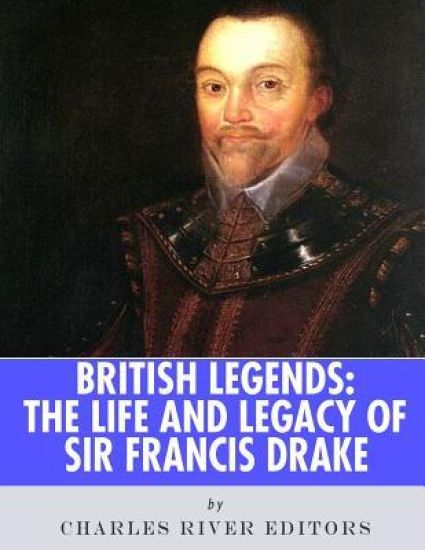
British Legends: The Life and Legacy of Sir Francis Drake

British Legends: The Life and Legacy of Sir Francis Drake

Charles River

Createspace Independent Publishing Platform
2018
nidottu
*Includes a contemporary account of Drake's voyage around the world. *Includes pictures depicting Drake and important people, places, and events in his life. *Discusses the legends and controversies surrounding Drake's piracy and adventures. *Includes a Bibliography for further reading. "There must be a beginning of any great matter, but the continuing unto the end until it be thoroughly finished yields the true glory." - Sir Francis Drake The life of Sir Francis Drake, or, more precisely, the tale of it, is one of those prime examples that history is written by the winners. Drake was the most famous sailor of the Elizabethan Era, and he has long been considered a hero by the English. His successes against the Spanish as a captain and a privateer were legendary, and Drake was celebrated for fighting the Queen's enemies, sinking their ships, and capturing the treasure that would otherwise be used to finance attacks on England. Drake vigorously pursued every mission given to him by Elizabeth I, and brought all his skill, experience and training to bear against her enemies. He was recognized at court for his valor, praised in story and song, and remembered for the kind of personality and esprit de corps that the English have long desired and celebrated in their military heroes. While that might have summarized Sir Francis Drake's life from an English perspective, that's not at all how the Spanish remember "El Draque" ("The Dragon"), the 16th century's most notorious pirate. Referred to as "the main cause of wars" in one 1592 letter to the Spanish King Phillip II, Drake harassed Spanish ships in several oceans and was so despised by the Spanish that Phillip II placed the equivalent of a 7 million dollar bounty on his head. This should come as no surprise, given that Spanish accounts tell of a captain who attacked and boarded Spanish merchant ships to steal their treasure and made off with it in the kind of haughty and dramatic ways that have become standard fare in pirate lore. El Draque also had no qualms about killing those who refused his requests. Which version of Drake's life is more accurate? As usual, the reality falls somewhere inbetween. For most of his career, Drake was unquestionably a privateer and not a member of any organized Navy, thus answering to nobody except the Queen, and had he failed, he might have been shackled in irons and imprisoned. It was due to the fact he was successful that he was instead given a seat of honor at Elizabeth's own table in her own court. While privateers were used by all European powers during times of war, Drake also happened to target enemy ships when no state of war existed, thus clearly veering into the realm of piracy. Naturally, Elizabeth's enemies claimed that he was engaging in piracy with her blessing, which was probably true at times and untrue at others. While contemporary accounts reveal two very different sides of the same man, Drake's legacy has since been shrouded in legend, with tales concerning buried treasure, encounters with Native Americans, and his famous circumnavigation of the globe. British Legends: The Life and Legacy of Sir Francis Drake looks at the life, career, legends, and controversies of the Elizabethan Era's most famous captain. Along with pictures of important people, places, and events in his life, you will learn about Sir Francis Drake like you never have before, in no time at all.

Blitzkrieg: The History and Legacy of Nazi Germany's Lightning Warfare at the Start of World War II
*Includes pictures *Includes online resources and a bibliography for further reading "In this year, 1929, I became convinced that tanks working on their own or in conjunction with infantry could never achieve decisive importance. My historical studies, the exercises carried out in England and our own experience with mock-ups had persuaded me that the tanks would never be able to produce their full effect until the other weapons on whose support they must inevitably rely were brought up to their standard of speed and of cross-country performance. In such formation of all arms, the tanks must play primary role, the other weapons beings subordinated to the requirements of the armour. It would be wrong to include tanks in infantry divisions; what was needed were armoured divisions which would include all the supporting arms needed to allow the tanks to fight with full effect." - Heinz Guderian War has always been a competition between defense and offense. At times these two have been relatively balanced, but at other times, one becomes far more powerful. It is during those times that the greatest military innovations occur. The tank was first developed by the British and French during World War I as a means to break the deadlock on the Western Front. More so than any previous war, the balance of power lay with the defense, as machine guns, trenches, bunkers, barbed wire, and rapid-firing rifles all made frontal assaults on established positions prohibitively costly. In the closing months of the war, the tank partially evened up that balance, even as the war's commanders initially proved unsure of how to use them. While it cannot be said that the tank won the war, it contributed to its end and if the fighting had continued another year, the mass production that had started in Allied countries may have proved decisive. World War II was thus the culmination of a quarter century of tank development, and it would also be the first major test of tanks in mobile warfare, during which they had to face other tanks. However, many of the tanks were constructed with the static warfare of the Western Front in mind and were thus slow and had short operational ranges. Others were too light to face opposing tanks or the new generation of anti-tank weapons that hadn't existed in World War I. The unsuitability of these tank models for this new kind of warfare was quickly recognized, and the belligerent powers scrambled to create better designs. As each new, improved model came off the assembly lines, the opposing powers rushed to create a tank that could beat it. In that regard, World War II was also a war between rival engineers. At the same time, German military officials were at the forefront of developing new ideologies when it came to utilizing their tanks to maximum effect. Heinz Guderian even published a book on the topic before becoming one of the Third Reich's most effective tank commanders. Moreover, during the German invasion of Poland, Nazi forces gained experience they would use across Europe and in Russia. After all, it was in Poland that the Wehrmacht saw action for the first time, conducting what was not only an invasion but also a trial run of its new equipment and tactics. The Polish invasion proved invaluable in providing the German high command with a low-risk, high-value live fire exercise for their newly minted war machine, while the actual combat experience highlighted the remaining flaws in the system. During the campaign, the Germans honed tactics and weapon systems for the massive struggle with the Soviets, British, and United States that loomed on the horizon. Blitzkrieg: The History and Legacy of Nazi Germany's Lightning Warfare at the Start of World War II looks at the development of the tanks and the doctrine that revolutionized tank warfare. Along with pictures of important people, places, and events, you will learn about blitzkrieg like never before.
A Ascensão do Império Otomano: a História do Estabelecimento do Império Turco através do Oriente Médio e Leste Europeu
Em termos de geopol tica, talvez o evento mais fat dico da Idade M dia tenha sido o cerco bem-sucedido de Constantinopla pelos Otomanos em 1453. A cidade havia sido uma capital imperial desde o s culo IV, quando Constantino o Grande migrou o centro de poder do Imp rio Romano para ali, efetivamente estabelecendo duas metades quase igualmente poderosas do maior imp rio da antiguidade. Constantinopla continuaria servindo como a capital do Imp rio Bizantino at mesmo ap s a metade Ocidental do Imp rio Romano entrar em colapso no fim do s culo V. Naturalmente, o Imp rio Otomano tamb m usaria Constantinopla como a capital de seu imp rio - ap s sua conquista efetivamente destruir o Imp rio Bizantino - e gra as sua localiza o estrat gica, foi um centro comercial por anos, e segue sendo nos dias de hoje sob o nome turco de Istanbul. O fim do Imp rio Bizantino teve um efeito profundo n o somente sobre o Oriente M dio, mas tamb m a Europa. Constantinopla teve um papel crucial nas Cruzadas, e a queda dos Bizantinos significava que os Otomanos agora compartilhavam uma fronteira com a Europa. O imp rio isl mico era visto como uma amea a pelo continente predominantemente crist o ao seu Oeste, e pouco tempo foi necess rio para que diferentes na es europeias entrassem em conflito com os poderosos Turcos. De fato, os Otomanos lutariam contra Russos, Austr acos, Venezianos, Poloneses, e ainda outros antes de entrar em colapso como resultado da Primeira Guerra Mundial, quando eles participaram das Pot ncias Centrais. A conquista otomana de Constantinopla tamb m teve um papel decisivo no surgimento do Renascimento na Europa ocidental. A influ ncia do Imp rio Bizantino garantiu que ele fosse o propriet rio de v rios textos antigos, em especial dos antigos gregos, e com a queda de Constantinopla, refugiados bizantinos fugiram para o oeste buscando abrigo na Europa. Estes refugiados trouxeram consigo livros que ajudaram na igni o do interesse pela antiguidade que serviu de combust vel para o Renascimento Italiano e essencialmente causou o fim da Idade M dia como um todo. A Ascens o do Imp rio Otomano: a Hist ria do Estabelecimento do Imp rio Turco atrav s do Oriente M dio e Leste Europeu narra o desenvolvimento de um dos imp rios mais influentes da hist ria. Junto de gravuras de personagens, lugares, e eventos importantes, voc aprender sobre a ascens o do Imp rio Otomano como nunca antes.
The History and Legacy of Ancient Greece's Most Influential City-States

The History and Legacy of Ancient Greece's Most Influential City-States

Charles River

Createspace Independent Publishing Platform
2018
nidottu
*Includes pictures *Includes ancient accounts *Includes online resources and a bibliography for further reading Dominated to this day by the sprawling white marble complex of the Acropolis, Athens is a city which is immensely and rightly proud of its past. For a period of roughly three centuries, the polis of Athens stood, if not in a position of unchallenged supremacy among the cities of Hellas, then at the very least among its three most important polities. Its fledgling Empire, though small by the standards later set by Alexander or the Romans, or even by those of its ancient enemy Persia, nonetheless encompassed cities as far afield as Asia Minor and Southern Italy, a remarkable fact considering such expansion was achieved by the inhabitants of a single city and its immediate surroundings, rather than by an entire nation. Athens is chiefly remembered for two reasons: its political system, which would in time form the nucleus of all Western democratic systems of government, and the remarkable number of outstanding individuals which, during the Golden Age of Athens, lived and flourished in the enlightened city-state. The Ancient Athenians formed the backbone of the West's entire culture, from the arts to philosophy and everything in between. The most unique city-state in Ancient Greece was Sparta, which continues to fascinate contemporaneous society. It is not entirely clear why Sparta placed such a great emphasis on having a militaristic society, but the result was that military fitness was a preoccupation from birth. If a Spartan baby did not appear physically fit at birth, it was left to die. Spartan children underwent military training around the age of 7 years old, and every male had to join the army around the age of 18. Sparta will forever be known for its military prowess, but they had lives off the battlefield as well, and their way of life was also unique. For example, Spartan females were formally educated, which was a rarity among the city-states, and the Spartan way of life was entirely dependent on a class of indentured servants known as the helots. Yet the Laws of Lycurgus, which ordered all Spartans to disregard art (with the exception of song, which the Spartans prized, and some forms of music and poetry), to distrust philosophy, and to abhor excess in all things, were designed to create the perfect warrior society, and they did. As a result, the Spartans became notorious for "Laconic phrases" In the Archaic and Classical periods, Rhodes often stood as a prime exemplar of the highs and lows of its fellow Greek cities, and as the largest island of the Dodecanese, Rhodes' history is largely in line with that of the rest of those islands. Rhodes would reach the zenith of its power in the Hellenistic period following the death of Alexander the Great in 323 B. C. Even as the rest of the city-states waned compared to the much larger kingdoms of Alexander's successors in Egypt and Asia, Rhodes would come to the forefront as a main power in the Greek world. Modern perceptions of Classical Greece are almost invariably based on Athens and Sparta, but Thebes was also a key player in the history of the region in this pivotal period. Indeed, it was, in fact, Thebes that was the major power for many of the years preceding the emergence of Macedon. The reasons for so little being known about Thebes and its contributions to ancient Greek civilization are complex, but the fact that it was totally destroyed by Alexander the Great is certainly one. Ancient Corinth had actually been founded in the 10th century B. C. and was, for most of its history, the richest port and the largest city in all of Greece. Corinth had a population in excess of 90,000 in 400 B. C., but the Romans leveled this original city in 146 B. C., killing all the male inhabitants and selling the women and children into slavery. This book weaves all these city-states' stories and histories together.
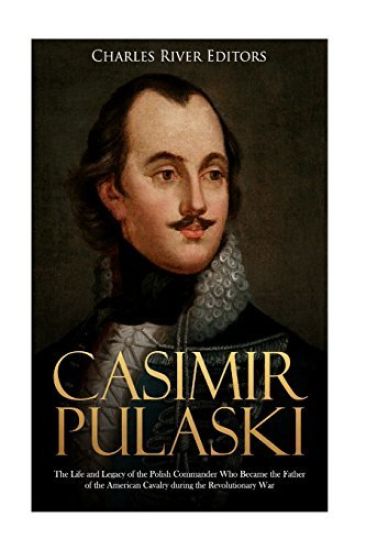
Casimir Pulaski: The Life and Legacy of the Polish Commander Who Became the Father of the American Cavalry during the Revolutionary War
*Includes pictures *Includes contemporary accounts *Includes online resources and a bibliography for further reading "I came here, where freedom is being defended, to serve it, and to live or die for it." - Pulaski Many Americans labor under the misconception that the nation's colonial and national heritage was almost wholly accomplished by an English migration, and the notion of early American diversity ends at an acknowledgment of the slave trade conducted between Southern buyers, Northern shippers, the African continent and the Caribbean region. However, early America witnessed the development of New York by the Dutch, the southernmost regions by Spain, and what would become eastern Canada by the French after lengthy battles with Britain. In fact, the Seven Years' War during the 1750s was fought on a nearly global scale between several European belligerents. As a result, when the Revolution began, the Continental Army sported numerous volunteers from Ireland, Scotland, virtually every European nation between France and Russia, and men from the northern and southern borders of the European continent. There are good reasons America doesn't possess a constitutionally-confirmed national language, despite an English-speaking majority; among the early proposals for such a common language, German and French served as contenders, with the latter going on to become Western Europe's official diplomatic language. Likewise, those who accomplished the legislative, diplomatic, and military miracles that helped 13 separate colonies hold off the greatest power in the world represented a multi-national heritage. With European nations unceasingly at war, soldiers from one side or the other often found themselves in disfavor, were marked men in exile, or were fleeing from a superior force. To General George Washington's good fortune, a few found their way to the colonies to join in the cause. Some were adventurers recently cut off from their own borders, while others embraced the American urge for freedom that so closely mirrored the same movements in their home countries. Nations such as France undoubtedly had an elevating effect on America's capacity to make formal war, and Lafayette is the most famous foreigner to serve in the Continental Army, but one of the most important individuals who arrived at Washington's door was Polish aristocrat Kazimierz Michal Wladyslaw Wiktor Pulaski, known to future generations as the "Father of the American Cavalry." Few foreign participants in early American events are as widely decorated in non-military society as this Polish cavalry officer driven into exile from his own nation's fight for independence. Pulaski considered the American urge for resistance against Britain to be an inseparable principle from Poland's lengthy struggle against Russian domination. Today, streets, bridges, monuments, and even neighborhoods bear Pulaski's name across the country, and in Polish communities, he is often hailed as a hero equal to General Washington himself. Historians speculate that without Pulaski having taken specific actions in one or more crucial battles, the war against Britain might well have taken a far different and darker turn. At the very least, it was Pulaski who made America's Congress and military leadership aware of the importance of cavalry units and a need for establishing the first "true legion" of warriors on horseback to act in support of the foot soldiers. A man of ferocious resolve despite a diminutive stature, Pulaski was the first to lead the unit bearing his name as a Brigadier General under Washington. Casimir Pulaski: The Life and Legacy of the Polish Commander Who Became the Father of the American Cavalry during the Revolutionary War profiles one of the Revolutionary War's most important figures. Along with pictures of important people, places, and events, you will learn about Pulaski like never before.
American Legends: The Life of Bob Hope

American Legends: The Life of Bob Hope

Charles River

Createspace Independent Publishing Platform
2018
nidottu
*Includes pictures.*Includes Hope's quotes about his life and career.*Includes a bibliography for further reading. "You never get tired unless you stop and take time for it." - Bob HopeA lot of ink has been spilled covering the lives of history's most influential figures, but how much of the forest is lost for the trees? In Charles River Editors' American Legends series, readers can get caught up to speed on the lives of America's most important men and women in the time it takes to finish a commute, while learning interesting facts long forgotten or never known. Of all the show business icons in American history, one of the most beloved was Bob Hope, whose career spanned over 6 decades across film, television, vaudeville, comedy, and touring and earned him too many accolades to count. On the day of his 100th birthday, more than half of the states in America declared it "Bob Hope Day", a sign of just how monumental and influential he was as an entertainer. Along the way, he performed so many United Service Organization (USO) tours visiting troops that Congress made him the "first and only honorary veteran of the U. S. armed forces." Incredibly, he was given honorary awards for his career at the Academy Awards nearly 40 years before his death, and decades before he actually retired from public life. By the time he reached his twilight, he was an instantly recognized institution unto himself. All of that would have been impressive for any American, let alone someone who was actually born in England with the name Leslie Townes Hope. Indeed, the quintessential American entertainer wouldn't actually move to the country until he was 4, and while his English roots may have helped his impressive impersonation of Charlie Chaplin when Hope was merely a teen, he quickly became an American through and through. He later claimed he changed his first name to Bob because it had a folksy feel to it, and he definitely gave off that kind of aura throughout his 5 decades doing USO tours, his 4 decades making films, his television career of . In addition to his versatile career that ranged from Broadway to comedy, he was an accomplished athlete who once quipped that all of the money he made went towards his greens fees. In fact, Hope became notorious for carrying a golf club around, so much so that Stephen Colbert paid homage to him by carrying a golf club during his own USO performances in 2009. American Legends: The Life of Bob Hope examines the life and career of one of America's greatest entertainers, tracing his rise to stardom and the towering legacy he left behind. Along with pictures of important people, places, and events, you will learn about Bob Hope like never before, in no time at all.
The Ghosts of Scotland: A Collection of Ghost Stories across the Scottish Nation

The Ghosts of Scotland: A Collection of Ghost Stories across the Scottish Nation

Charles River

Createspace Independent Publishing Platform
2018
nidottu
*Includes pictures *Includes online resources and a bibliography for further reading "In Scotland, beautiful as it is, it was always raining. Even when it wasn't raining, it was about to rain, or had just rained. It's a very angry sky." - Colin Hay Scotland is a fascinating and ancient land filled with history. It has produced explorers, warriors, inventors, writers, and more than a few murderers. For many centuries, it fought bitter wars against England to maintain its independence, and even when those wars were finally lost, Scotland retained its distinct culture and identity. Though a part of the United Kingdom, it would be a mistake to lump it in with England, Wales, and Northern Ireland, as Scotland has its own tales to tell and traditions to maintain. Not everything in Scotland is as it appears, however. Some Scots say this is a land haunted by spirits, a place of strange disappearances and unexplained phenomena. There is no shortage when it comes to the strange stories Scotland has to offer, and the legends and lore have compelled many to dig a little deeper and even explore this wonderful land for themselves. Some of those tales are downright grisly. Scotland has always been a rival to its southern neighbor, and the rivalry extends to the number of hauntings in its medieval castles, stately homes, and old cobblestone streets. While many Englishmen claim that their country is the most haunted, the Scots can point to their own stories of ghosts as evidence they may beat the English in this dubious distinction. The Ghosts of Scotland: A Collection of Ghost Stories across the Scottish Nation is a collection of such tales, just a few among the thousands of local legends and modern sightings that make Scotland one of the most haunted countries in the world. It is part of a collection of other books written by Sean McLachlan, including The Ghosts of England: A Collection of Ghost Stories across the English Nation and The Ghosts of Ireland: A Collection of Ghost Stories across the Emerald Isle. For other strange occurrences in Scotland, ranging from Nessie to jelly falling from the sky, check out another title in the series, Weird Scotland: Monsters, Mysteries, and Magic Across the Scottish Nation. Along with pictures of important people, places, and events, you will learn about the ghosts of Scotland like never before.
American Legends: The Life of Hank Williams

American Legends: The Life of Hank Williams

Charles River

Createspace Independent Publishing Platform
2018
nidottu
*Includes pictures. *Includes Williams' own quotes about his life and music. *Includes footnotes and a bibliography for further reading. "You have to have smelt a lot of mule manure before you can sing like a hillbilly." - Hank Williams A lot of ink has been spilled covering the lives of history's most influential figures, but how much of the forest is lost for the trees? In Charles River Editors' American Legends series, readers can get caught up to speed on the lives of America's most important men and women in the time it takes to finish a commute, while learning interesting facts long forgotten or never known. One of the most enduring and consistently popular singers and songwriters in the history of country music, Hank Williams is considered by many to be the first American superstar of the genre and the "father" of modern country music. In the post-World War II era, at a time when country music was an insulated and regionalized cottage industry, Williams almost personally oversaw its transition into a national mania that would be later taken up by such figures as Johnny Cash and Elvis Presley, even as the musicians remained loyal to the genre's older, rural roots. But unlike the wave of greats that followed his brief but stellar career, Williams remained distinctly and unapologetically Southern, thereby avoiding adoption by the larger pop world even as his remarkable sense of phrasing and authentic texts fascinated pop artists across the country. Among his most enduring hits are "Cold, Cold Heart," "Your Cheatin' Heart," "Hey, Good-Lookin'," "I'll Never Get Out of This Life Alive," "Lost Highway", and his signature hit, "Lovesick Blues." At his zenith in the late '40s and early '50s, Nashville had begun to shake off its hillbilly image and orient itself toward becoming a more universal, commercialized industry, welcoming cross-over artists from other styles. Had Williams lived, it's unclear whether he could have or would have fully adapted to the transformation initiated by country music's capital. However, the man dubbed as "the hillbilly Shakespeare," "Harm" (because his first name was Hiram), and "Herky" or "Skeets" by his friends, reached the larger national audience in a way that none had before, and as he once put it, "I don't know what you mean by country music. I just make music the way I know how." Williams' appeal extended even beyond that of the famous Carter family, whose members preserved the hill country tradition in both musical and presentational terms, and he has been likened to artists of the early era like Jimmie Rodgers, Bob Wills and Bill Monroe, but few others from that era could match his distinctiveness and natural gift for songwriting. American Legends: The Life of Hank Williams examines the life and career of one of America's most famous country music stars. Along with pictures of important people, places, and events, you will learn about Hank Williams like never before, in no time at all.
The Ancient Kingdoms of Africa: The History and Legacy of the African Continent's Most Prominent Kingdoms in Antiquity
*Includes pictures*Includes ancient accounts*Includes online resources and a bibliography for further readingAfrica may have given rise to the first human beings, and Egypt probably gave rise to the first great civilizations, which continue to fascinate modern societies across the globe nearly 5,000 years later. From the Library and Lighthouse of Alexandria to the Great Pyramid at Giza, the Ancient Egyptians produced several wonders of the world, revolutionized architecture and construction, created some of the world's first systems of mathematics and medicine, and established language and art that spread across the known world. With world-famous leaders like King Tut and Cleopatra, it's no wonder that today's world has so many Egyptologists. Perhaps the most intriguing aspect of ancient Egyptian civilization was its inception from the ground up, as the ancient Egyptians had no prior civilization which they could use as a template. In fact, ancient Egypt itself became a template for the civilizations that followed. The Greeks and the Romans were so impressed with Egyptian culture that they often attributed many attributes of their own culture - usually erroneously - to the Egyptians. With that said, some minor elements of ancient Egyptian culture were, indeed, passed on to later civilizations. Egyptian statuary appears to have had an initial influence on the Greek version, and the ancient Egyptian language continued long after the pharaonic period in the form of the Coptic language. By the 4th century BCE, it appeared as though ancient Egypt was in its final death throes. It had long ceased to be an influential kingdom in the Near East and Mediterranean regions, and it had been ruled over by a succession of foreign peoples including Libyans, Nubians, Assyrians, and Persians. But just when Egypt seemed was doomed to pass forever into obscurity, it was reinvigorated by outsiders, most notably Alexander the Great. While in the process of campaigning to destroy the Achaemenid Persian Empire and conquer the world in 331 BCE, he made a pit stop in Egypt that forever changed the course of Egyptian history. Although his understanding of ancient Egyptian chronology and religion was minimal, Alexander was intrigued by ancient pharaonic culture, knowing, as the 5th century BCE Greek historian Herodotus once wrote, "Egypt is the gift of the Nile." As a result, Alexander endeavored to incorporate the land of the pharaohs into Hellenic Civilization. The three primary enemies of the Egyptians were the Libyans who occupied the Western Desert and its oases, the so-called Asiatics who lived in the Levant, and finally the Nubians to Egypt's south. Among the three peoples, the Nubians were the most "Egyptianized" and at times were integral to the development of Egyptian history. Truly, the Nubians were the greatest of all sub-Saharan peoples in pre-modern times and deserve to be studied in their own right, apart from ancient Egyptian history. In 1515, a Portuguese missionary explorer by the name of Father Francisco lvares entered Ethiopia and took note in the interior of the remnants of a civilization of obviously Christian origin, with living adherents conforming to a branch of the faith clearly founded in antiquity. Could this be the Kingdom of Prester John? Father lvares was intrigued, but he was wary of too fanciful a construction, and he speculated more practically on the legend of King Solomon, the Queen of Sheba, and other such muses. As for the city at the center of the civilization, he called it Aquasumo. Thus, the existence of the Kingdom of Aksum came to the notice of Christian Europe after almost 1,000 years of isolation. The Ancient Kingdoms of Africa: The History and Legacy of the African Continent's Most Prominent Kingdoms in Antiquity chronicles the tumultuous rise and fall of kingdoms like Egypt, Nubia, Aksum, and more.
The Bozeman Trail: The History and Legacy of the Exploration Route that Led to Red Cloud's War
*Includes pictures *Includes contemporary accounts *Includes online resources and a bibliography for further reading "When the Great Father at Washington sent us his chief soldier to ask for a path through our hunting grounds, a way for his iron road to the mountains and the western sea, we were told that they wished merely to pass through our country, not to tarry among us, but to seek for gold in the far west. Our old chiefs thought to show their friendship and good will, when they allowed this dangerous snake in our midst. They promised to protect the wayfarers. Yet before the ashes of the council fire are cold, the Great Father is building his forts among us. You have heard the sound of the white soldier's ax upon the Little Piney. His presence here is an insult and a threat. It is an insult to the spirits of our ancestors. Are we then to give up their sacred graves to be plowed for corn? Dakotas, I am for war " - Red Cloud Even before the American Revolution, Americans traveled west. From the narrow strip of the 13 colonies, across the Appalachians, ever westward they journeyed, and by the end of the 19th century, the United States of America stretched from sea to shining sea. Of course, just because the names on the borders changed, it did not tame the land or its previous residents. Americans desired California and Oregon, going to war for one and nearly going to war for the other. Once acquired, it now fell to the salt of the earth to settle these claimed lands, and everything in between. To do this meant crossing terrain unused to the heavy traffic of Westerners on the move. Though Indian trails followed rivers, hills, and valleys across the plains, Westerners often needed to create new paths capable of handling the heaver traffic and bulky covered wagons. At the same time, safety often required avoiding the natives. Though sometimes co-opting Indian trails for this purpose, oftentimes pioneering settlers worked to avoid such routes as well, especially when the natives took exception to their new neighbors. From this need came two adventurers determined to find a path north to the latest gold rush at the end of the road. Though such trails already existed, these two men forged a new trail, one that would bring a great deal of woe to the local natives. Why build such a trail through such a tumultuous land, exacerbating already tenuous relations with the natives and even souring those of the few the United States could call allies? As is often the case with such questions, the answer begins with geography, the greatest boon and bane to adventurers since mankind first started traveling. The Bozeman Trail ran through the Powder River country, which included the traditional hunting grounds of Lakota, Cheyenne, and Arapaho peoples. Attempts by the natives to prevent encroachment and armed defense of settlers along the trail led to conflicts in short order. Shortly after the Civil War, the U. S. found itself engaged against the Sioux in what came to be known as Red Cloud's War, and after a series of battles, including the notorious Fetterman Massacre, the ongoing hostilities ultimately convinced American officials to head back to the negotiating table with the natives. As a result, Red Cloud has often been labeled the only Indian chief to win a war against the Americans. The Bozeman Trail: The History and Legacy of the Exploration Route that Led to Red Cloud's War analyzes the forging of the trail and the impact it had on the region. Along with pictures depicting important people, places, and events, you will learn about the Bozeman Trail like never before.
Charles Dickens & Jane Austen: The Lives and Legacies of Britain's Two Famous Novelists
*Includes pictures of Austen, Dickens and important people, places, and events in their lives. *Explains the real-life inspiration for many of Dickens's most famous characters. *Includes quotes about Austen and her novels by some of her most famous contemporaries. *Includes a Bibliography of Austen's works and works about her. Charles Dickens needs no formal introduction, having been the most popular English writer of the 19th century and still one of the most popular writers in history today. Dickens' upbringing was a mixture of happy times and sad: when he recalled his father being sent to debtor's prison in his memoirs, his tears actually left marks on the page. These qualities eventually helped forge him into a man many regard as the greatest Victorian era novelist, perhaps in the world, and the author of some of the most remarkable fictional characters who retain tremendous staying power to this day, including Fagin, Peepy, David Copperfield and Oliver Twist to name just a few. Unlike other great writers and artists, during his own lifetime Dickens' works enjoyed remarkable popularity and renown, to such an extent that even Queen Victoria and Prime Minister Benjamin Disraeli felicitated and feted Dickens. In the 20th century, well after Dickens's passing, his literary genius was truly and completely appreciated by ordinary readers as well as critics and scholars alike. Dickens's novels, novellas and short stories retain powerful and enduring popularity with the public largely because Dickens, apart from the usual attributes of good fiction writing, connected his thoughts with the universal by using history and the present as bridges. By the time he died at the relatively young age of 58 from a stroke, he was already Europe's most famous writer, and obituaries noted that Dickens was a "sympathiser with the poor, the suffering, and the oppressed." Dickens was interred in Westminster Abbey, a rare honor bestowed only among the greatest and most accomplished Britons. As has happened with many of history's greatest writers, Jane Austen (1775-1817) did not earn the credit she was due until well after her death. Austen was an English novelist whose works of romantic fiction, set among the landed gentry, has earned her a place as one of the most widely read writers in English literature over the last 150 years. Austen's romantic fiction was an interesting genre that belied the fact her writing was laden with realism and a scathing critique on society and the role women played in it during her life. Austen tried several different types of literary styles before settling on writing novels from 1811-1817, releasing Sense and Sensibility (1811), Mansfield Park (1814) and Emma (1816). The novels highlighted the dependence of women on marrying high to reach a better social status and financial security, but given the controversial nature of her topics and her writing, there was a strong debate in the 19th century over the merits of Jane's writing and her works. While some like Sir Walter Scott praised her writing, others like Charlotte Bronte thought poorly of it. Charles Dickens & Jane Austen looks at the lives, works, and influences the famous British novelists had over their contemporaries and successors, while also analyzing their lasting literary legacies. Along with pictures of important people and places, you will learn about Charles Dickens and Jane Austen like you never have before, in no time at all.

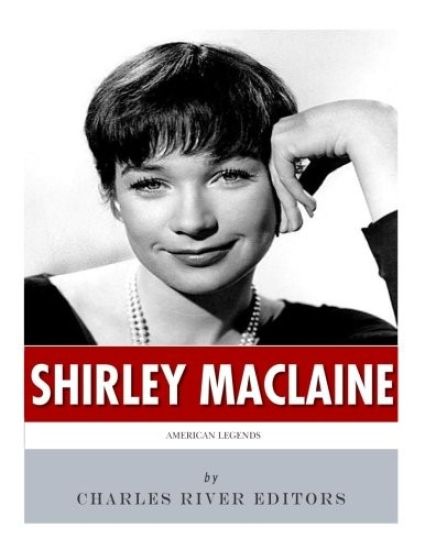
American Legends: The Life of Shirley MacLaine

American Legends: The Life of Shirley MacLaine

Charles River

Createspace Independent Publishing Platform
2018
nidottu
*Includes pictures *Includes MacLaine's quotes about her own life and career. *Includes a bibliography for further reading. "I think of life itself now as a wonderful play that I've written for myself, and so my purpose is to have the utmost fun playing my part." - Shirley MacLaine A lot of ink has been spilled covering the lives of history's most influential figures, but how much of the forest is lost for the trees? In Charles River Editors' American Legends series, readers can get caught up to speed on the lives of America's most important men and women in the time it takes to finish a commute, while learning interesting facts long forgotten or never known. Over the course of a career that spanned several decades and ranged from the stage to movies and television, Shirley MacLaine has been one of the most critically acclaimed actresses in America. After first being nominated for an Oscar in Some Came Running (1958), when she was still just in her mid-20s, she was nominated for two more for The Apartment (1960) and Irma la Douce (1963), all before she turned 30. Ironically, she won her first Academy Award for producing a documentary about her 1973 trip to China, and she finally won the Academy Award for Best Actress by playing a mother seeking to reconnect with her daughter in Terms of Endearment (1983), a full 25 years after earning her first nomination. Not surprisingly, she also added plenty of BAFTA and Golden Globe awards to the list during that time as well. Another 25 years after winning the Oscar for Terms of Endearment, MacLaine was nominated for an Emmy for portraying Coco Chanel in the television movie Coco Chanel (2008). While MacLaine's acting career has continued mostly unabated for about 60 years, she is also well-known for her esoteric spiritual beliefs, particularly as a proponent of New Age thought. MacLaine has authored several books, some of which have dealt with navigating Hollywood over the years, but others have discussed more controversial topics, such as her belief in multiple dimensions, reincarnation, UFOs, and more. All the while, MacLaine has managed to maintain a self-deprecatingly humorous view of herself, frequently joking and making light of her own life and experiences along the way. American Legends: The Life of Shirley MacLaine examines the life and career of one of America's most famous living actresses. Along with pictures of important people, places, and events, you will learn about Shirley MacLaine like never before, in no time at all.
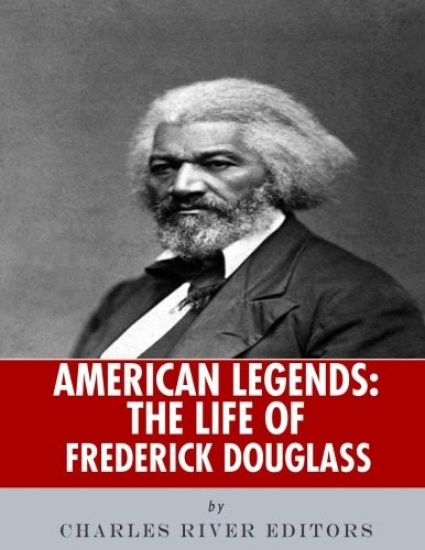
American Legends: The Life of Frederick Douglass

American Legends: The Life of Frederick Douglass

Charles River

Createspace Independent Publishing Platform
2018
nidottu
*Includes pictures of Douglass and important people, places and events in his life. A lot of ink has been spilled covering the lives of history's most influential figures, but how much of the forest is lost for the trees? In Charles River Editors' American Legends series, readers can get caught up to speed on the lives of America's most important men and women in the time it takes to finish a commute, while learning interesting facts long forgotten or never known. With the possible exception of Dr. Martin Luther King, Jr., no African American has been more instrumental in the fight for minorities' civil rights in the United States than Frederick Douglass 1818-1895), an American social reformer, orator, writer and statesman. His list of accomplishments would be impressive enough even without taking into account the fact that he was born into slavery. Douglass was born into slavery, and it's believed his father was a white man, even perhaps his master Aaron Anthony. When Douglass was about 12, his slaveowner's wife, Sophia Auld, began teaching him the alphabet in defiance of the South's laws against teaching slaves how to read. When her husband Hugh found out, he was furious, reminding her that if the slave learned to read, he would become dissatisfied with his condition and desire freedom. Those words would prove prophetic. Douglass is noted as saying that "knowledge is the pathway from slavery to freedom," and he took that advice to heart, teaching himself how to read and write with his knowledge of the alphabet. On September 3, 1838, Douglass successfully escaped slavery, traveling by boat to Delaware, Philadelphia, and finally New York, all in the span of a day. Douglass found a "new world had opened upon me." After escaping from slavery, Douglass became a leader of the abolitionist movement, gaining national notice for his dazzling oratory and anti-slavery writing. He stood out as the living embodiment of an intellectual former slave, the antithesis of slaveholders' arguments that blacks were an inferior race. Douglass remained active in the fight for civil rights and abolition throughout the Civil War and Reconstruction, even meeting President Lincoln and strongly urging him to let black men enlist in the Union. As Douglass constantly stated, nobody had more to fight for in the Civil War than black men. Douglass continued his work all the way up to his death in 1895, continuing to advocate on behalf of blacks, women, immigrants and even Native Americans. Douglass famously said, "I would unite with anybody to do right and with nobody to do wrong." Douglass remains well known today, but given the manner in which Jim Crow segregated and discriminated against minorities for another 60 years after his death, he is often overshadowed by the icons of the Civil Rights Movement of the 1950s and 1960s. American Legends: The Life of Frederick Douglass looks at Douglass's incredible life story of preservation and perseverance, explaining how the man who literally started with nothing became his people's Martin Luther King Jr. decades before King was born. Along with pictures of Douglass and other important people and events in his life, you will learn about America's first great Civil Rights leader like you never have before, in no time at all.

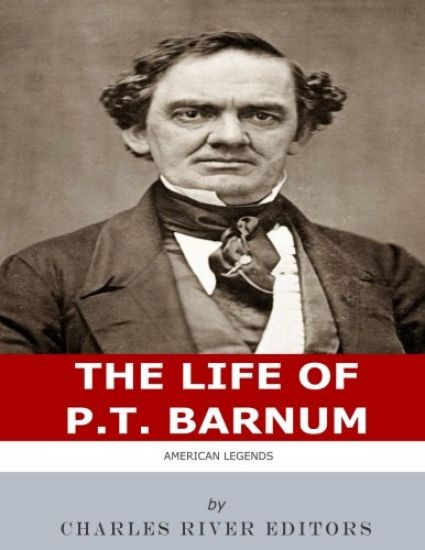
American Legends: The Life of P.T. Barnum

American Legends: The Life of P.T. Barnum

Charles River

Createspace Independent Publishing Platform
2018
nidottu
*Includes pictures. *Includes Barnum's own quotes about his life and career. *Highlights Barnum's entertainment career and transition into the circus. *Includes a bibliography for further reading. "I was a farmhand, a merchant, a clerk, a boss, a theater director and a bank director; I lived in prisons and palaces, I knew poverty and abundance, I've traveled extensively on two continents, I've met all kinds of people and seen the human character in all its guises, and time and again I have been in the greatest danger. Amidst such a diversity of events, I had to undergo difficult times, but I'm definitely not complaining, and I believe that my life was a happy one, because I always saw the positive side of things." - P. T. Barnum A lot of ink has been spilled covering the lives of history's most influential figures, but how much of the forest is lost for the trees? In Charles River Editors' American Legends series, readers can get caught up to speed on the lives of America's most important men and women in the time it takes to finish a commute, while learning interesting facts long forgotten or never known. Americans have loved traveling circuses for generations, and none represent the country's love for entertainment quite like the most famous of them all, the Ringling Bros. and Barnum & Bailey Circus. Circus promoters have long been viewed as somewhat shady hucksters, but none could top Phineas Taylor Barnum, who used a blend of traditional circus entertainment, freak show exhibits, and outright hoaxes to create "The Greatest Show on Earth". Barnum introduced America to Jumbo the Elephant, one of the most legendary acts in the history of the circus, as well as "exhibits" like Joice Heth, an elderly African American woman Barnum advertised as a 161 year old who nursed George Washington. He also notoriously perpetrated hoaxes with General Tom Thumb and claimed to have a live mermaid, so it's no surprise that Barnum is often apocryphally quoted as saying, "There's a sucker born every minute." While he didn't actually say that, he said something similar: "Nobody ever lost a dollar by underestimating the taste of the American public." In fact, Barnum had specialized in circus entertainment decades before traveling circuses were truly a national sensation, particularly thanks to the popularity of the Barnum American Museum in New York City. Barnum's museum offered something for everyone across its different halls, from poetic readings to animal exhibits, and all the while, Barnum was defiant when confronted by criticism, reminding people, "I am a showman by profession...and all the gilding shall make nothing else of me." Of course, Barnum was selling himself short by calling himself merely a showman, because during the course of his adventurous life, he was a shrewd businessman, a politician, and the country's most famous and notorious promoter of both entertainment and himself. American Legends: The Life of P. T. Barnum examines the life and career of the man most responsible for the kinds of circus entertainment that still fascinate Americans of all ages. Along with pictures of important people, places, and events, you will learn about P. T. Barnum like never before, in no time at all.
American Legends: The Life of Mary Pickford

American Legends: The Life of Mary Pickford

Charles River

Createspace Independent Publishing Platform
2018
nidottu
*Includes pictures. *Includes Pickford's quotes about her life and career. *Includes a bibliography for further reading. "Make them laugh, make them cry, and hack to laughter. What do people go to the theatre for? An emotional exercise. I am a servant of the people. I have never forgotten that." - Mary Pickford A lot of ink has been spilled covering the lives of history's most influential figures, but how much of the forest is lost for the trees? In Charles River Editors' American Legends series, readers can get caught up to speed on the lives of America's most important men and women in the time it takes to finish a commute, while learning interesting facts long forgotten or never known. At the end of the 20th century, the American Film Institute compiled a list of the 25 greatest actors and actresses in Hollywood over the past 100 years, but only a select few worked all the way back in the silent era of films, before "talkies" revolutionized the industry at the end of the 1920s. Among them was Mary Pickford, who was ranked 24th but was arguably the most influential actress when it came to creating the career template for all actresses who followed, from name changes to salary. Like many actresses of the early 20th century, "Little Mary" got her start by acting on the stage, and she eventually made it to Broadway. By the time she had finished her run there, she had caught the eye of film director D. W. Griffith, who would go on to make Birth of a Nation and was working for the Biograph at the time. Pickford figured she would best make a mark by playing as many roles as possible, to the extent that she was appearing in an average of one film per week: "I played scrubwomen and secretaries and women of all nationalities... I decided that if I could get into as many pictures as possible, I'd become known, and there would be a demand for my work." And back before it was the norm, Pickford would avoid harsh winters in New York by heading to California to make movies there until it got warmer again, a move that foreshadowed the film industry's wholesale move to Hollywood the following decade. Over the next several years, Pickford became the most famous actress in the industry, with only Charlie Chaplin rivaling her in popularity, to the extent that one film reviewer wrote she was "the best known woman who has ever lived, the woman who was known to more people and loved by more people than any other woman that has been in all history." By the time she had reached her peak, Pickford was making the unheard sum of $500 per week, and she was using her status to promote humanitarian causes and fundraising drives during World War I, a model that would be followed by so many Hollywood stars during World War II. Pickford was even one of the founding members of the Academy of Motion Picture Arts and Sciences. In a sense, it was fitting that "America's Sweetheart" all but finished her career just as sound was being incorporated into movies, but ironically, the actress once called "loved by more people than any other woman" became something of a recluse in later years, until she started communicating with the outside world only by telephone. In fact, when she won a lifetime achievement Academy award, a TV crew was sent to her house to record her statement instead of having her appear to accept the award in person at the ceremony. American Legends: The Life of Mary Pickford examines the life and career of one of Hollywood's most famous silent actresses. Along with pictures of important people, places, and events, you will learn about Mary Pickford like never before, in no time at all.
Lourdes: La Historia y Legado del Lugar de Peregrinación Cristiano más Famoso de Francia
Dicen que el juicio no existe en Lourdes. Una vez que uno pone un pie en este suelo sagrado, todas las barreras de raza, condici n social, antecedentes y diferencias de religi n dejan de existir. No es uno m s que un alma humilde en busca de la renovaci n de la propia conexi n con Dios. En un comunicado emitido a la prensa francesa a mediados de agosto de 2008, el padre Jacques Nieuviarts garantiz lo siguiente: "Aquellos que tocan la roca de la gruta en Lourdes... Tal vez est n pidiendo ser imbuidos con la fuerza de esta roca. Aquellos que beben del agua de la fuente sienten que su sed interna est siendo saciada, que han sido cambiados y que el agua los ha purificado... Al encender la vela, se abren a s mismos a la claridad que proviene de Dios, y cuando al marcharse dejan una vela ardiendo, su plegaria contin a en uni n con aquellas de todas las dem s personas que han colocado sus velas encendidas en la gruta...". Dadas estas promesas de paz interior y despertares espirituales, sin mencionar los incontables casos -tanto declarados como "verificados"- de curaciones milagrosas de los que est repleto esta sobrenatural ciudad, no resulta una sorpresa que este una vez modesto pueblo sea actualmente el segundo destino tur stico m s popular en Francia, despu s de Par s. Con el pasar de los a os, el antes pintoresco pero vetusto pueblo de grises tejados ha sido m s que exitoso a la hora de hacerse notar mediante sus m sticos santuarios construidos sobre milagros, pero c mo lograron exactamente tal designaci n? Y, qu tanto de cierto -si lo hay- tienen estos supuestos milagros? Lourdes: La historia y legado del lugar de peregrinaci n cristiano m s famoso de Francia narra la notable historia del sitio y la influencia religiosa que ha tenido durante siglos. En conjunto con im genes que representan personas, lugares y eventos importantes, aprender sobre Lourdes como nunca.
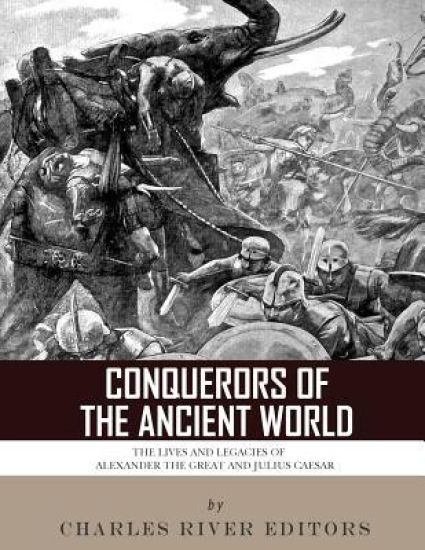
Conquerors of the Ancient World: The Lives and Legacies of Alexander the Great and Julius Caesar
*Includes pictures depicting important people, places, and events in the lives of Alexander and Caesar. *Discusses little known facts about both men and whether some of the legends and myths about them were true. *Includes a bibliography on Alexander the Great for further reading. Over the last 2,000 years, ambitious men have dreamed of forging vast empires and attaining eternal glory in battle, but of all the conquerors who took steps toward such dreams, none were ever as successful as antiquity's two most famous and successful conquerors. For thousands of years, leaders across the globe dreamed of emulating or rivaling the accomplishments of Julius Caesar, but Caesar himself found inspiration in Alexander the Great (356-323 B. C.), the Macedonian King who managed to stretch an empire from Greece to the Himalayas in Asia at just 30 years old. It took less than 15 years for Alexander to conquer much of the known world. Both men died untimely deaths. Alexander died of still unknown causes at the height of his conquests, when he was still in his early 30s. Although his empire was quickly divided, his legacy only grew, and Alexander became the stuff of legends even in his own time. Alexander was responsible for establishing 20 cities in his name across the world, most notably Alexandria in Egypt, and he was directly responsible for spreading Ancient Greek culture as far east as modern day India and other parts of Asia. For the ancient world, Alexander became the emblem of military greatness and accomplishment; it was reported that many of Rome's greatest leaders, including Pompey the Great, Augustus, and Caesar himself all visited Alexander's tomb in Alexandria, a mecca of sorts for antiquity's other leaders. Possibly the most important man of antiquity, and even all of history, was Julius Caesar. Alexander Hamilton, the famous American patriot, once remarked that "the greatest man who ever lived was Julius Caesar". Such a tribute, coming from one of the Founding Fathers of the quintessential modern democracy in reference to a man who destroyed the Roman Republic, is testament to the enduring mark that Caesar left upon the world. The ultimate conqueror, statesman, dictator, visionary, and opportunist, during his time in power Caesar expanded the borders of Rome to almost twice their previous size, revolutionized the infrastructure of the Roman state, and destroyed the Roman Republic for good, leaving a line of emperors in its place. His legacy is so strong that his name has become, in many languages, synonymous with power: the Emperors of Austria and Germany bore the title Kaiser, and the Czars of Russia also owe the etymology of their title to Caesar. His name also crept further eastward out of Europe, even cropping up in Hindi and Urdu, where the term for "Emperor" is Kaisar. Conquerors of the Ancient World provides an entertaining look at the facts, myths, and legends surrounding two of history's most famous men and conquerors, while exploring the lasting legacies they left on the ancient world and today's world. Along with pictures of important people, places, and events, you will learn about Alexander the Great and Julius Caesar like you never have before, in no time at all.
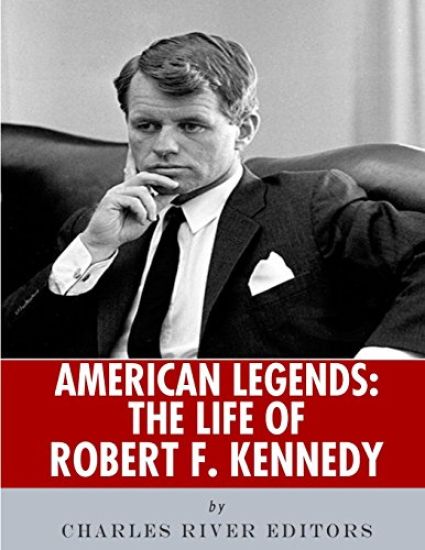
American Legends: The Life of Robert F. Kennedy

American Legends: The Life of Robert F. Kennedy

Charles River

Createspace Independent Publishing Platform
2018
nidottu
*Includes pictures of Bobby and important people, places, and events in his life. A lot of ink has been spilled covering the lives of history's most influential figures, but how much of the forest is lost for the trees? In Charles River Editors' American Legends series, readers can get caught up to speed on the lives of America's most important men and women in the time it takes to finish a commute, while learning interesting facts long forgotten or never known. In some ways, Robert Francis Kennedy (1925-1968) is the forgotten Kennedy, eclipsed in life while working in his brother John's administration, eclipsed in death both by his older brother's assassination and his younger brother's long, influential career in the Senate as a liberal lion. And yet, the politics of the 1960s and the ultimate legacy of the Kennedys, including the "Kennedy Curse", would have been incomplete without Bobby's place in the narrative. As Bobby's private life and public life played out, the two came to mirror each other. Among the Kennedy clan, Bobby remained within the shadow of older brothers Joseph Jr. and John, both of whom their father thought were destined to become political scions. And ultimately, it was Ted who cast the longest political shadow, serving for decades in government. But Bobby may have been the most intellectual and ideological of them all. And it was Bobby who worked behind the scenes to help advance John's political career, including his political campaigns and as Attorney General in his administration. Eventually, with the deaths of his brothers, Bobby rose to become the leader of the Kennedy family, at the same time his political prominence rose. Today, unfortunately, Bobby is best remembered for his assassination, the way in which it helped perpetuate the "Kennedy Curse", and the fact that his political promise, including potentially becoming president in 1968, was never fulfilled. American Legends: The Life of Robert F. Kennedy looks at Bobby's place in the political and cultural narrative of the Kennedys and the 1960s, but it also humanizes the middle brother who labored tirelessly for the good of his family, the ideological advocate who took courageous stands, and the man who juggled the demands of being a Kennedy with his own political ambitions. Along with pictures of Bobby and other important people and events in his life, you will learn about RFK like you never have before, in no time at all.

Israel's Wars: The History and Legacy of the Jewish State's Most Important Military Conflicts
*Includes pictures *Includes online resources and a bibliography for further reading The Ottoman Empire quickly collapsed after World War I, and its extensive lands were divvied up between the French and British. While the French gained control of the Levant, which would later become modern day nations like Syria, the British were given the Mandate for Palestine from the newly created League of Nations. The British Mandate for Palestine gave the British control over the lands that have since become Jordan, Israel, the West Bank, and the Gaza Strip. The terms of the British Mandate incorporated the language of the Balfour Declaration, recognizing the "historical connection of the Jewish people with Palestine." The British were also tasked with creating a Jewish state, which the United States Congress endorsed in 1922. In 1947, the British delegated the issue of partitioning the British Mandate to the United Nations, and the U. N. General Assembly set up the Special Committee on Palestine (UNSCOP). UNSCOP eventually came up with what is now known as the U. N. Partition Plan of 1947. The Partition Plan carved up two strange looking states, but their motive was to create an Israel in which the Jewish population was a 55% majority, while Palestine had an over 90% Palestinian Arab majority. Meanwhile, the city of Jerusalem would be administered internationally, due to the sensitive religious concerns of Muslims, Christians, and Jews. In addition to several Christian holy spots, Jerusalem's Al-Aqsa Mosque is the third holiest site in Islam, and it is situated right next to the Western Wall, the Jews' holiest remaining site. On May 14, 1948, the British Mandate officially expired. That same day, the Jewish National Council issued the Declaration of the Establishment of the State of Israel. About 10 minutes later, President Truman officially recognized the State of Israel, and the Soviet Union also quickly recognized Israel. However, the Palestinians and the Arab League did not recognize the new state, and the very next day, armies from Egypt, Syria, Lebanon and Iraq invaded the former British Mandate to squelch Israel, while Saudi Arabia assisted the Arab armies. Jordan would also get involved in the war, fighting the Israelis around Jerusalem. In early 1949, Israel began signing armistices with Egypt, Jordan, and Syria, which left Israel in control of nearly 75% of the lands that were to be partitioned into the two states under the 1947 plan. Jordan now occupied Judea and Samaria, which later became known as the West Bank due to its position on the western bank of the Jordan River. Jordan also occupied three quarters of Jerusalem, with the Israelis controlling only about a quarter in the western part of the city. To the west, Egypt occupied the Gaza Strip. The new armistice lines became known as the "Green Line," and the conflict has continued to involve those lines and the issues that were contested in a war now nearly 70 years old. In early June 1967, the Israelis captured Jordanian intelligence that indicated an invasion was imminent and thus launched preemptive strikes. Over the next six days, the Israelis overwhelmed the Egyptians in the west, destroying thousands of tanks and capturing the Gaza Strip and the entire Sinai Peninsula. At the same time, Israel drove the Jordanians out of Jerusalem and the West Bank, and it captured the Golan Heights from Syria near the border of Lebanon. In the span of a week, Israel had tripled the size of the lands it controlled. Israel had gone from less than 10 miles wide in some spots to over 200 miles wide from the Sinai Peninsula to the West Bank. Israel also unified Jerusalem. On October 6, 1973, Syria and Egypt caught Israel off guard during the Jewish holy holiday of Yom Kippur, surprise attacking the Sinai Peninsula and Golan Heights. The Israelis turned the tide within a week, going on the counteroffensive and winning the war within 3 weeks.
Israel's Wars: The History and Legacy of the Jewish State's Most Important Military Conflicts
*Includes pictures *Includes online resources and a bibliography for further reading The Ottoman Empire quickly collapsed after World War I, and its extensive lands were divvied up between the French and British. While the French gained control of the Levant, which would later become modern day nations like Syria, the British were given the Mandate for Palestine from the newly created League of Nations. The British Mandate for Palestine gave the British control over the lands that have since become Jordan, Israel, the West Bank, and the Gaza Strip. The terms of the British Mandate incorporated the language of the Balfour Declaration, recognizing the "historical connection of the Jewish people with Palestine." The British were also tasked with creating a Jewish state, which the United States Congress endorsed in 1922. In 1947, the British delegated the issue of partitioning the British Mandate to the United Nations, and the U. N. General Assembly set up the Special Committee on Palestine (UNSCOP). UNSCOP eventually came up with what is now known as the U. N. Partition Plan of 1947. The Partition Plan carved up two strange looking states, but their motive was to create an Israel in which the Jewish population was a 55% majority, while Palestine had an over 90% Palestinian Arab majority. Meanwhile, the city of Jerusalem would be administered internationally, due to the sensitive religious concerns of Muslims, Christians, and Jews. In addition to several Christian holy spots, Jerusalem's Al-Aqsa Mosque is the third holiest site in Islam, and it is situated right next to the Western Wall, the Jews' holiest remaining site. On May 14, 1948, the British Mandate officially expired. That same day, the Jewish National Council issued the Declaration of the Establishment of the State of Israel. About 10 minutes later, President Truman officially recognized the State of Israel, and the Soviet Union also quickly recognized Israel. However, the Palestinians and the Arab League did not recognize the new state, and the very next day, armies from Egypt, Syria, Lebanon and Iraq invaded the former British Mandate to squelch Israel, while Saudi Arabia assisted the Arab armies. Jordan would also get involved in the war, fighting the Israelis around Jerusalem. In early 1949, Israel began signing armistices with Egypt, Jordan, and Syria, which left Israel in control of nearly 75% of the lands that were to be partitioned into the two states under the 1947 plan. Jordan now occupied Judea and Samaria, which later became known as the West Bank due to its position on the western bank of the Jordan River. Jordan also occupied three quarters of Jerusalem, with the Israelis controlling only about a quarter in the western part of the city. To the west, Egypt occupied the Gaza Strip. The new armistice lines became known as the "Green Line," and the conflict has continued to involve those lines and the issues that were contested in a war now nearly 70 years old. In early June 1967, the Israelis captured Jordanian intelligence that indicated an invasion was imminent and thus launched preemptive strikes. Over the next six days, the Israelis overwhelmed the Egyptians in the west, destroying thousands of tanks and capturing the Gaza Strip and the entire Sinai Peninsula. At the same time, Israel drove the Jordanians out of Jerusalem and the West Bank, and it captured the Golan Heights from Syria near the border of Lebanon. In the span of a week, Israel had tripled the size of the lands it controlled. Israel had gone from less than 10 miles wide in some spots to over 200 miles wide from the Sinai Peninsula to the West Bank. Israel also unified Jerusalem. On October 6, 1973, Syria and Egypt caught Israel off guard during the Jewish holy holiday of Yom Kippur, surprise attacking the Sinai Peninsula and Golan Heights. The Israelis turned the tide within a week, going on the counteroffensive and winning the war within 3 weeks.