Kirjojen hintavertailu – 12 903 727 kirjaa ja 27 kauppaa

Kirjailija

Charles River

Kirjat ja teokset yhdessä paikassa: 4 673 kirjaa, julkaisuja vuosilta 2013–2022, suosituimpiin kuuluu William Powell and Myrna Loy: The Lives and Careers of One of Classical Hollywood's Most Iconic Duos. Vertaile teosten hintoja ja tarkista saatavuus suomalaisista kirjakaupoista.

4 673 kirjaa

Kirjojen julkaisuvuodet: 2013–2022.

The Essential Guide to Marketing

The Essential Guide to Marketing

Charles River

Createspace Independent Publishing Platform
2018
nidottu
It's been said that the only functions of business are marketing and innovation, and the two definitely need each other. Without marketing, the best ideas might go nowhere, and conversely the Hindenberg might be mistakenly ballyhooed. But marketing extends beyond the business world, too. In the game of life, people are constantly selling things - often nothing more than themselves Although The Essential Guide to Marketing is geared toward business-oriented readers, the concepts of marketing can help people in all walks of life, including consumers. The Essential Guide to Marketing consists of all 4 ebooks in The ABCs of Marketing series: In the first of the series, an MBA introduces readers to all of the necessary components of a successful marketing strategy, with chapters on Advertising, Branding (both Personal and Business), Demographics/Segments, Strategy/Planning, Marketing to Businesses vs. Consumers, Online and Offline Marketing, and Research. The goal is to provide an introductory understanding of the subject and familiarize the reader with key terms and practices. In the second ebook, Media Advertising, a former advertising executive provides an overview of seven popular advertising mediums and their functions. Sample cases provided include select clients, campaigns or instances that have been experienced or observed. The third installment, New Ways to Market with Social Media, explains how to use social networks like Facebook, Twitter, and Pinterest, as well as location-based marketing with Facebook Places, foursquare, and Loopt. It also explains how to utilize blogging, Youtube, and QR codes. Finally, the last ebook guides readers through marketing for a new small business or a startup, and how to successfully imprint your brand in the minds of the outside world. So let The Essential Guide to Marketing be your crash course in marketing and help you cover every step of the way.

Fighting for Jerusalem: The History of the Most Important Battles and Sieges for Control of the World's Holiest City
*Includes pictures *Includes contemporary accounts *Includes online resources and a bibliography for further reading When Israel captured East Jerusalem during the Six Day War in 1967, it established Jewish control over the city for the first time in nearly 2,000 years, and in many ways it brought a story full circle, as Jerusalem has witnessed some of history's most important battles over the past 3,000 years. Over 2,500 years before the Six Day War, the Babylonian king Nebuchadnezzar II oversaw the expansion of the Neo-Babylonian Empire during the 7th and 6th centuries BCE, which placed him in conflict with Egypt and the ancient kingdom of Judah. His ruthless conquest of Judah resulted in the destruction of Jerusalem and the entire kingdom, and it ultimately earned him notoriety in the Old Testament, where he is mentioned in the books of Jeremiah, Ezekiel and Daniel. The Assyrians also exiled the Jews The Siege of Jerusalem in 70 CE is arguably the most important event in Jewish history. First, it was the central battle in the First Jewish-Roman war. Second, the failure of the siege on the Jewish side resulted in the destruction of the Second Temple of Jerusalem, a disaster that would eventually prove both permanent and catastrophic, since it was never rebuilt. Third, it permanently altered the diaspora of Judaism in the Ancient World. Fourth, because it was indecisive in breaking the power of the Jewish revolt permanently, it was also inconclusive and led to further, inevitable revolts that broke Judean identity completely. Of the many campaigns during the Middle Ages, few are as remarkable or seemingly impossible to win at the start as the First Crusade (1095-99), and the true crowning achievement of that crusade, which resulted in two centuries of Western European Christian states in the Middle East and the permanent firing of the European imagination, was the conquest of Jerusalem on July 15, 1099 after three weeks of siege. That victorious siege came four years after the call for a crusade first went out, and had the Crusaders not taken Jerusalem, the First Crusade would not likely have been followed by any more and the campaign might have been no more than an historical footnote of what could have been. As it turned out, the siege of Jerusalem and the crusade as a whole says much about the first major clash of Western and Eastern military tactics after the fall of the Roman Empire, as well as the power of faith and even fanaticism to motivate people beyond ordinary human endurance. For better and worse, the siege and fall of Jerusalem to the Crusaders has become a fundamental piece in the current view of the West in that part of the world. Indeed, to this day, the First Crusade remains a polarizing event, even among modern historians. For some, the Crusaders were heroes and saints, and for others they were devils who disrupted the peaceful local sects of Muslims, Jews, and Christians, establishing an alien colony that heralded modern European imperialism. In fact, the First Crusade is a good example of why it is unwise to choose sides in history, because neither side was correct and the situation was highly complex. In the wake of the Crusades, Jerusalem's status would change fairly frequently until the establishment of the Ottoman Empire, but that would make the region a flashpoint during World War I. When the Ottoman Empire dissolved following the Great War, Jerusalem became one of the 20th century's most important political issues, and it would witness more fighting in 1948 and 1967. Fighting for Jerusalem: The History of the Most Important Battles and Sieges for Control of the World's Holiest City chronicles the most influential conflicts for control of the city. Along with pictures of important people, places, and events, you will learn about the fighting for Jerusalem like never before, in no time at all.
American Legends: The Life of William Faulkner

American Legends: The Life of William Faulkner

Charles River

Createspace Independent Publishing Platform
2018
nidottu
*Includes pictures of important people and places. *Includes Faulkner's own quotes about his life and career, as well as his famous Nobel Prize acceptance speech. *Includes a Bibliography for further reading. A lot of ink has been spilled covering the lives of history's most influential figures, but how much of the forest is lost for the trees? In Charles River Editors' American Legends series, readers can get caught up to speed on the lives of America's most important men and women in the time it takes to finish a commute, while learning interesting facts long forgotten or never known. With the notable exception of Mark Twain, whose roots along the Mississippi River factored so thoroughly into his life story and his literature, America's greatest writers have rarely been categorized by or associated with a specific region of the country. And among America's greatest 20th century writers, many have been identified with a specific era, such as F. Scott Fitzgerald and the 1920's, or even as part of a community of expatriates, like Ernest Hemingway and Gertrude Stein. William Faulkner is an exception to that rule, and a prolific and influential one at that. The reclusive Southerner, who died about 40 miles away from his birthplace in New Albany, Mississippi, was associated with the South as a region and Southern literature in particular throughout his career, at least when he was associated with anything at all. Faulkner toiled in relative obscurity for much of his life, and it was only after he earned a Nobel Prize in 1949 that he truly entered the national radar. He later joked about his own neighbors, "Some folks wouldn't even speak when they passed me on the street...it wasn't until the Nobel Prize that they really thawed out." But by the time Faulkner died a little more than a decade later, he had earned multiple Pulitzer Prizes and was widely recognized as the leader of a Southern Renaissance and and one of the 20th century's greatest writers. Faulkner tapped into his heritage and culture to truly capture the Southern way of life both in the present and in past eras, including the antebellum South and the Civil War, bringing the South to life in novels like Absalom, Absalom and The Sound and the Fury. But paradoxically, Faulkner was romanticizing a past way of life by using one of the early 20th century's greatest literary innovations, the "stream of consciousness" writing popularized by the Irish literary icon James Joyce. While critics frequently took note of the stream of consciousness technique and contrasted it with Ernest Hemingway's "iceberg theory" of writing less and letting readers use their imaginations to fill in the blanks, Faulkner dismissed comparisons, saying, "Let the writer take up surgery or bricklaying if he is interested in technique. There is no mechanical way to get the writing done, no shortcut. The young writer would be a fool to follow a theory... The good artist believes that nobody is good enough to give him advice. He has supreme vanity. No matter how much he admires the old writer, he wants to beat him." American Legends: The Life of William Faulkner profiles the life and career of one of America's most influential novelists. Along with pictures of important people, places, and events, you will learn about Faulkner like you never have before, in no time at all.
The Athenian Agora and Roman Forum: The Beating Hearts of the Ancient World's Most Famous Cities
*Includes pictures *Includes online resources and a bibliography for further reading The center of political and commercial interaction in the Ancient Greek polis was the agora. The word essentially means a gathering place or an open space, and in all Greek city states, the agora was central to all aspects of daily life and commerce. As the agora developed as a civic space, particularly from the 6th century BCE onward in Athens, the architectural splendor of the buildings associated with it became an ever more obvious demonstration of the power and glory of Athenian democracy. In its earliest forms, an agora in maritime cities was invariably situated near the sea, while in inland urban centers, it was usually located at the foot of the hill that normally provided the city's ultimate defense. The agora was always the oldest part of any city and, as such, and as well as being the commercial hub of the area, also became the center of the religious and political life of the polis. In Homer's time, an agora might have seats for the comfort of the citizens that had assembled to consult with one another. The city's oldest sanctuaries were always located either in or very close to the agora itself, and the first festive games were held in its open space. Roads to and from the city centered on the agora, and it was usually the starting point for any processions to the various sacred sites visited by the populace. The space itself was treated in much the same way as a temenos or sacred precinct. The Roman Empire is the most famous in history, and the center of the far-reaching empire's activities was located in the Forum, a low area between the Capitoline and Palatine hills in Rome. The topography held a great deal of significance for Romans, and consequently so many layers of myth were laid on top of the landscape and buildings that it is difficult to separate legend from actual historical fact. As a low-lying area near the Tiber river, the Forum was subject to much flooding, and even into the 20th century, the Forum area could flood upwards of over 40 feet above sea level. This would factor significantly in the imagination of Romans, who later ascribed the flooding with saving the city's founders, Romulus and Remus, from execution. However, in the 8th and 7th centuries BCE, this did not make for a good area for construction. Previous generations of excavators have concluded that in the beginning, there were waddle and daub huts in the Forum, as indicated by remains of organic food material, fragments of daub, and evidence of post holes dug in the ground for these structures. However, a recent environmental study has shown that such structures could not survive the flooding that was endemic to the Forum, suggesting that it took a few hundred years (during the period of the Roman kings) for the Romans to move up to 20,000 square meters of earth in order to reclaim land in the Forum, and a gravel pavement was placed on top of the landfill. If true, this project shows a high degree of organization and central planning. What is clear is that for well over a thousand years, the Forum was the scene of intense construction, as well as social, political, and commercial activity, making the Forum a boon for the study of Roman history, even though some buildings in the Forum are of such importance that they cannot be disassembled in order to discover the older layers underneath and thus find more evidence about the origins of this area. Ultimately, the Forum transformed from being a backwater used for grazing livestock into the religious and political center of Roman life, and it has long been an inspiration for subsequent generations, influencing the Renaissance, Romanticism, and even Fascism. The Athenian Agora and Roman Forum: The Beating Hearts of the Ancient World's Most Famous Cities examines the history of both cities' major centers.
American Legends: The Life of Sam Cooke

American Legends: The Life of Sam Cooke

Charles River

Createspace Independent Publishing Platform
2018
nidottu
*Includes pictures *Includes footnotes and a bibliography for further reading *Includes a table of contents "I think the secret is really observation. Well, if you observe what's going on and try to figure out how people are thinking, I think you can always write something that people will understand." - Sam Cooke A lot of ink has been spilled covering the lives of history's most influential figures, but how much of the forest is lost for the trees? In Charles River Editors' American Legends series, readers can get caught up to speed on the lives of America's most important men and women in the time it takes to finish a commute, while learning interesting facts long forgotten or never known. If Sam Cooke, one of the greatest African-American soul singers in the genre's history, had been Irish, he might have kept company with the likes of the great balladeer and classical tenor John McCormack. If he had been born Italian, he might have starred in the refined, lyrical Mozart opera roles usually reserved for those with an extreme musical sensitivity. Such was the level of excellence in Cooke's inner understanding of his own voice, which was capable of exquisite classical precision and a finesse in phrasing that lay far beyond the norm. He could have prospered and attained greatness in any genre of his choice, but considering the timing of the American audience, and his African-American heritage, Sam Cooke instead pioneered a new genre and became its greatest practitioner by blending black musical traditions that incorporated all the refinement and beauty of European classical genres yet still spoke from the heart of his rural American roots. The timing of Cooke's appearance was perfect, coming as it did at a historical intersection where blues, jazz, country, gospel, and numerous traditional black forms met on the verge of transforming into new musical blends that included rock and new variant forms of jazz. In this genre, soul music, Cooke, above all others, had what it took to lead its ascent in the American pop music industry. As a masterful singer of any of the stylistic blends that went into soul, bringing the older forms along with him, and as both a songwriter and entrepreneur, Cooke would prove to be "one of the most influential black vocalists of the post-World War II period." Sam Cooke's legacy can be found both within the musical and in the inner workings and procedures of his industry, after dozens of high-profile African American artists followed his lead, and obtained new freedom and profit from their own work. As a singer who sold ten million copies as a crossover artist, he set a high vocal bar for all those who came after, and his artistic personality and "suave, sophisticated image set the style of soul crooners for the next decade. A number of artists in the following generation who were either directly launched by his musical influence, mentorship, or producing skills, included many of the newly-emerging stars, such as Smokey Robinson, James Taylor, Michael Jackson, Aretha Franklin, his prot g Bobby Womack, Curtis Mayfield, Stevie Wonder, Marvin Gaye, Otis Redding, and James Brown." American Legends: The Life of Sam Cooke looks at the life and career of one of America's most influential musicians. Along with pictures of important people, places, and events, you will learn about Sam Cooke like never before, in no time at all.
The Six Day War and the Yom Kippur War: The History of the Military Conflicts that Established Israel as a Superpower in the Middle East
*Includes pictures *Includes online resources and a bibliography for further reading Despite losing the 1948 war, Arab nations throughout the Middle East had still refused to recognize Israel's right to exist. After the Suez Crisis, Egyptian leader Gamal Abdel Nasser envisioned creating a unified Arab world, commonly referred to as pan-Arabism. Nasser was the consummate pan-Arab leader in the 1960s, positioning himself as the leader of the Arab world through increasing incitement against Israel with rhetoric. Israel found itself in possession of more land after 1948 than envisioned by the U. N. Partition Plan, but the Green Line still left it less than 10 miles wide in some positions. In the summer of 1967, the armies of Jordan and Syria mobilized near Israel's borders, while Egypt's army mobilized in the Sinai Peninsula just west of the Gaza Strip. Combined, the Arab armies numbered over 200,000 soldiers. In early June 1967, the Israelis captured Jordanian intelligence that indicated an invasion was imminent, and at 08h10 on June 5, 1967, the Israel Broadcasting Authority aired an Israeli Defense Force communique. "Since the early hours of this morning," it read, "heavy fighting has been taking place on the southern front between Egyptian armored and aerial forces, which moved against Israel, and our forces, which went into action to check them." Over the next six days, the Israelis overwhelmed the Egyptians in the west, destroying thousands of tanks and capturing the Gaza Strip and the entire Sinai Peninsula. At the same time, Israel drove the Jordanians out of Jerusalem and the West Bank, and it captured the Golan Heights from Syria near the border of Lebanon. In the span of a week, Israel had tripled the size of the lands it controlled. Israel had gone from less than 10 miles wide in some spots to over 200 miles wide from the Sinai Peninsula to the West Bank. Israel also unified Jerusalem. The results of the Six Day War created several issues that have still not been resolved in the Middle East. Israel now found itself in possession of territories that were the home of over a million Arabs. Of these territories, Israel officially annexed only East Jerusalem and the Golan Heights, leaving the inhabitants of the West Bank, Sinai Peninsula, and Gaza Strip in limbo regarding citizenship status. On October 6, 1973, Syria and Egypt caught Israel off guard during the Jewish holy holiday of Yom Kippur, surprise attacking the Sinai Peninsula and Golan Heights. Although they initially made gains, the Israelis turned the tide within a week, going on the counteroffensive and winning the war within 3 weeks. The Yom Kippur War was the last concerted invasion of Israel by conventional Arab armies, but it underscored how entangled the West and the Soviet Union had gotten in the region. The British and French had been allied with Israel in the 1950s, including during the Suez Canal War, and the United States assisted Israel by providing weapons as early as the 1960s. As a way of counteracting Western influence, the Soviets developed ties with the Arab nations. After the Yom Kippur War, President Jimmy Carter's administration sought to establish a peace process that would settle the conflict in the Middle East, while also reducing Soviet influence in the region. On September 17, 1978, after secret negotiations at the presidential retreat Camp David, Egyptian President Anwar Sadat and Israeli Prime Minister Menachem Begin signed a peace treaty between the two nations, in which Israel ceded the Sinai Peninsula to Egypt in exchange for a normalization of relations, making Egypt the first Arab adversary to officially recognize Israel. For the Camp David Accords, Begin and Sadat won the Nobel Peace Prize, but the peace treaty may have cost Sadat his life, as he was assassinated in 1981 by fundamentalist military officers during a victory parade.
American Legends: The Life of Gloria Swanson

American Legends: The Life of Gloria Swanson

Charles River

Createspace Independent Publishing Platform
2018
nidottu
*Includes pictures*Includes Swanson's quotes about her own life and career*Includes online resources and a bibliography for further reading*Includes a table of contents"Fame was thrilling only until it became grueling. Money was fun only until you ran out of things to buy." - Gloria SwansonIt goes without saying that the most enduring image of Gloria Swanson is the famous shot of her in Sunset Boulevard (1950), head tilted backward, stating, "Alright, Mr. DeMille, I'm ready for my close up." Indeed, for many, the very mention of "Gloria Swanson" conjures the name of "Norma Desmond," her character in Sunset Boulevard, directed by Billy Wilder. That the shot of Desmond requesting her close-up remains indelibly imprinted in the minds of so many speaks in large part to the power of Sunset Boulevard, one of the most revered films of its times and the most famous film of Gloria Swanson's career. By dint of her performance in the film, Swanson has become almost synonymous with Hollywood's silent era. In many respects, Swanson's status as the female face of the silent era is entirely apropos. Working in the 1920s for Cecil B. DeMille in his lavish productions, Swanson commanded salaries of more than $1 million per year, sums that Paramount was only too willing to provide for the virtual guarantee of high box office receipts that her films provided. Swanson worked with a cross section of famous silent era figures, such Mack Sennett and Charlie Chaplin (although her experience with Chaplin did not fare well) during her early years with Keystone, as well as collaborations with DeMille and Erich Von Stroheim during her more mature years. Yet at the same time, the histrionics of Swanson's character in Wilder's film belie the sophistication that Swanson brought to the screen, as well as the salient role she played in shaping cinematic representations of women during the onset of the "new woman" in 1920s America. In other words, while one could justifiably argue that Sunset Boulevard stands as the finest film of Swanson's career, it obfuscates the impact Swanson had during her prime, not only in the film industry but also in society more broadly. American Legends: The Life of Gloria Swanson looks at the life and career of one of America's most famous actresses. Along with pictures of important people, places, and events, you will learn about Gloria Swanson like never before, in no time at all.
Conquering Asia: The Lives and Legacies of Alexander the Great and Genghis Khan

Conquering Asia: The Lives and Legacies of Alexander the Great and Genghis Khan

Charles River

Createspace Independent Publishing Platform
2018
nidottu
*Includes paintings and busts depicting important people, places, and events. *Discusses both common legends and little known facts about the lives of Alexander and Genghis Khan. *Includes a Bibliography for further reading. "There is nothing impossible to him that will but try" - Alexander "Conquering the world from horseback is easy. It is dismounting and governing that is hard." - Genghis Khan Over the last 2,000 years, ambitious men have dreamed of forging vast empires and attaining eternal glory in battle, but of all the conquerors who took steps toward such dreams, none were ever as successful as antiquity's first great conqueror. Leaders of the 20th century hoped to rival Napoleon's accomplishments, while Napoleon aimed to emulate the accomplishments of Julius Caesar. But Caesar himself found inspiration in Alexander the Great (356-323 B. C.), the Macedonian King who managed to stretch an empire from Greece to the Himalayas in Asia at just 30 years old. It took less than 15 years for Alexander to conquer much of the known world. As fate would have it, Alexander died of still unknown causes at the height of his conquests, when he was still in his early 30s. Although his empire was quickly divided, his legacy only grew, and Alexander became the stuff of legends even in his own time. Alexander was responsible for establishing 20 cities in his name across the world, most notably Alexandria in Egypt, and he was directly responsible for spreading Ancient Greek culture as far east as modern day India and other parts of Asia. For the ancient world, Alexander became the emblem of military greatness and accomplishment; it was reported that many of Rome's greatest leaders, including Pompey the Great, Augustus, and Caesar himself all visited Alexander's tomb in Alexandria, a mecca of sorts for antiquity's other leaders. In a world fascinated by men like Alexander the Great and Julius Caesar, Genghis Khan is one of history's greatest and most famous conquerors. No man, before or since, has ever started with so little and gone on to achieve so much. From a noble family but raised in poverty that drove him to the brink of starvation, Genghis Khan rose to control the second-largest empire the world has ever known (the largest being, arguably, the British Empire of the 18th and 19th centuries), and easily the largest empire conquered by a single man. And while many empires disintegrate upon the death of an emperor, like Alexander the Great's, Genghis Khan's empire endured and was actually enlarged by his successors, who went on to establish dynasties that in some cases lasted for centuries. Though history is usually written by the victors, the lack of a particularly strong writing tradition from the Mongols ensured that history was largely written by those who Genghis Khan vanquished. Because of this, Genghis Khan's portrayal in the West and the Middle East has been extraordinarily (and in many ways unfairly) negative for centuries, at least until recent revisions to the historical record. He was far more complex than the mere brute that his negative portrayals indicate, and though there is a slew of graves and depopulated regions to testify to the fact that he was not a gentle man, it would be simplistic and wrong to describe him merely as a madman bent on destruction for destruction's sake. Conquering Asia chronicles the amazing lives of the two famous conquerors, examining their conquests and discussing the legends and myths surrounding them. Along with pictures of important people, places, and events, you will learn about Alexander the Great and Genghis Khan like you never have before.
American Legends: The Life of Stevie Wonder

American Legends: The Life of Stevie Wonder

Charles River

Createspace Independent Publishing Platform
2018
nidottu
*Includes pictures *Includes Stevie Wonder's quotes about his own life and career *Includes a bibliography for further reading "Just because a man lacks the use of his eyes doesn't mean he lacks vision." - Stevie Wonder A lot of ink has been spilled covering the lives of history's most influential figures, but how much of the forest is lost for the trees? In Charles River Editors' American Legends series, readers can get caught up to speed on the lives of America's most important men and women in the time it takes to finish a commute, while learning interesting facts long forgotten or never known. Among the most innovative and independent artists to come out of Motown in the latter half of the twentieth century, along with colleagues Marvin Gaye, Isaac Hayes, and Michael Jackson, Stevie Wonder was said by many to possess three distinct obstacles to fulfillment in the music industry. First, he was poor, and worse, he was black and blind. Wonder, however, refused to shrink from or acknowledge any of these realities as barriers, asserting that he had not been in any way disadvantaged or limited in his path toward success. Through a long and prodigious career at Motown, and a vast experience of collaborations with great musicians of the era, Stevie Wonder has gone on to prove that his optimistic view toward life and work was correct from the very beginning, in a lengthy and extraordinarily productive career. From childhood appearances and record releases to a non-stop regimen of over half a century, he has produced an almost unparalleled catalogue of hits, a long list of exceptional tunes written for fellow musicians, many working within Motown, and a touring legacy that has taken him to locations around the globe where no Motown artist has previously gone. Winning virtually every award and accolade that the music industry has to offer, his humanitarian efforts on behalf of particularly challenged groups in society have been vast in scope, and steadfastly loyal. As an experimental musician, Wonder gained at least competence, and usually a high degree of fluency, on so many instruments at a young age that he could, in many cases, man the recording studio single-handedly. Further, he was one of the pioneers in the modern studio, incorporating the Moog and other early synthesizers, along with a vast array of additional modern electronic instruments and effects, into his daily studio regimen. Never satisfied with merely passable skills in taking on any part of the creative process, he studied classical piano at the Michigan School for the Blind to improve his keyboard "chops" in every genre that he touched, despite never intending to appear on stage with Beethoven Sonatas or Chopin Etudes, more usual goals for such studies. By taking on this added level of skill, he developed not only the expected requirement of "covering" the correct notes, but took on a sensitive palette of touches, pedaling, and a fine-tuned sense for texture and quasi-vocal lines on keyboard instruments. Likewise, he studied traditionally classical and twentieth century music theory at the University of Southern California, one of the nation's premier classical music schools, to expand his harmonic and rhythmic language in the composition process. As a result, Wonder possessed both the historical harmonic language of non-classical songwriting, and the advanced classical intricacies with which to create truly sophisticated, innovative examples, far beyond the normal keys, rhythms and harmonic progressions. American Legends: The Life of Stevie Wonder looks at the life and career of one of America's most famous musicians. Along with pictures of important people, places, and events, you will learn about Stevie Wonder like never before, in no time at all.
The Six Day War and the Yom Kippur War: The History of the Military Conflicts that Established Israel as a Superpower in the Middle East
*Includes pictures *Includes online resources and a bibliography for further reading Despite losing the 1948 war, Arab nations throughout the Middle East had still refused to recognize Israel's right to exist. After the Suez Crisis, Egyptian leader Gamal Abdel Nasser envisioned creating a unified Arab world, commonly referred to as pan-Arabism. Nasser was the consummate pan-Arab leader in the 1960s, positioning himself as the leader of the Arab world through increasing incitement against Israel with rhetoric. Israel found itself in possession of more land after 1948 than envisioned by the U. N. Partition Plan, but the Green Line still left it less than 10 miles wide in some positions. In the summer of 1967, the armies of Jordan and Syria mobilized near Israel's borders, while Egypt's army mobilized in the Sinai Peninsula just west of the Gaza Strip. Combined, the Arab armies numbered over 200,000 soldiers. In early June 1967, the Israelis captured Jordanian intelligence that indicated an invasion was imminent, and at 08h10 on June 5, 1967, the Israel Broadcasting Authority aired an Israeli Defense Force communique. "Since the early hours of this morning," it read, "heavy fighting has been taking place on the southern front between Egyptian armored and aerial forces, which moved against Israel, and our forces, which went into action to check them." Over the next six days, the Israelis overwhelmed the Egyptians in the west, destroying thousands of tanks and capturing the Gaza Strip and the entire Sinai Peninsula. At the same time, Israel drove the Jordanians out of Jerusalem and the West Bank, and it captured the Golan Heights from Syria near the border of Lebanon. In the span of a week, Israel had tripled the size of the lands it controlled. Israel had gone from less than 10 miles wide in some spots to over 200 miles wide from the Sinai Peninsula to the West Bank. Israel also unified Jerusalem. The results of the Six Day War created several issues that have still not been resolved in the Middle East. Israel now found itself in possession of territories that were the home of over a million Arabs. Of these territories, Israel officially annexed only East Jerusalem and the Golan Heights, leaving the inhabitants of the West Bank, Sinai Peninsula, and Gaza Strip in limbo regarding citizenship status. On October 6, 1973, Syria and Egypt caught Israel off guard during the Jewish holy holiday of Yom Kippur, surprise attacking the Sinai Peninsula and Golan Heights. Although they initially made gains, the Israelis turned the tide within a week, going on the counteroffensive and winning the war within 3 weeks. The Yom Kippur War was the last concerted invasion of Israel by conventional Arab armies, but it underscored how entangled the West and the Soviet Union had gotten in the region. The British and French had been allied with Israel in the 1950s, including during the Suez Canal War, and the United States assisted Israel by providing weapons as early as the 1960s. As a way of counteracting Western influence, the Soviets developed ties with the Arab nations. After the Yom Kippur War, President Jimmy Carter's administration sought to establish a peace process that would settle the conflict in the Middle East, while also reducing Soviet influence in the region. On September 17, 1978, after secret negotiations at the presidential retreat Camp David, Egyptian President Anwar Sadat and Israeli Prime Minister Menachem Begin signed a peace treaty between the two nations, in which Israel ceded the Sinai Peninsula to Egypt in exchange for a normalization of relations, making Egypt the first Arab adversary to officially recognize Israel. For the Camp David Accords, Begin and Sadat won the Nobel Peace Prize, but the peace treaty may have cost Sadat his life, as he was assassinated in 1981 by fundamentalist military officers during a victory parade.
The Catholic Church's Most Influential Religious Military Orders: The Controversial and Mysterious History of the Knights Templar, the Teutonic Knight
*Includes pictures *Includes online resources and a bibliography for further reading For centuries, Christians and Muslims were embroiled in one of the most infamous territorial disputes of all time, viciously and relentlessly battling one another for the Holy Land. In the heart of Jerusalem sat one of the shining jewels of the Christian faith, the Church of the Holy Sepulchre. Legend has it that this was where their Savior had been buried before his fabled resurrection. What was more, it was said to house the very cross Jesus Christ had died upon. It was for precisely these reasons that fearless pilgrims, near and far, risked their lives and made the treacherous trek to Jerusalem. The Order of the Temple of Solomon, also known as the Templars or the Knights Templar, is one of the best-known and least-understood groups in history. They appear prominently in everything from novels (The Da Vinci Code) to films (as the Knights of the Cruciform Sword in Indiana Jones and the Last Crusade) to videogames (Assassin's Creed). In these stories, they are a sinister cult that manipulated historical events since the Middle Ages, via intimidation and assassination. They are usually connected to the Freemasons and, sometimes, to other historical cults like the Hindu Thuggees. The real Templars were both more mundane and more fascinating than the myths and legends. They were the first military religious order - monks who were also knights. The knights of the Teutonic Order have since been compared to the surreal creature that appeared to the biblical Ezekiel, one that bore 2 faces - one of a man's, and one of a lion's. The human side of the creature is said to symbolize the order's charity, whereas the lion was a metaphor for its valor and gallant spirit, which they relied on to vanquish the heathens of the world. Like other secretive groups, the mystery surrounding these military orders helped their legacies endure. While some conspiracy theorists attempt to tie the groups to other alleged secret socities like the Illuminati, other groups have tried to assert connections with them to bolster their own credentials. Who they were and what they had in their possession continue to be a source of great intrigue. The Catholic Church's Most Influential Religious Military Orders: The Controversial and Mysterious History of the Knights Templar, the Teutonic Knights, and the Order of the Holy Sepulchre chronicles the known history of the orders and examines the secrecy and mystery surrounding them. Along with pictures of important people, places, and events, you will learn about the Catholic Church's most famous religious military orders like you never have before.
British Legends: The Life and Legacy of Queen Victoria

British Legends: The Life and Legacy of Queen Victoria

Charles River

Createspace Independent Publishing Platform
2018
nidottu
*Includes pictures of Victoria and important people, places, and events in her life. *Discusses the legacy of Victoria and the Victorian era, as well as their depiction in pop culture. "Since it has pleased Providence to place me in this station, I shall do my utmost to fulfil my duty towards my country; I am very young and perhaps in many, though not in all things, inexperienced, but I am sure that very few have more real good will and more real desire to do what is fit and right than I have." - Queen Victoria, 1837 A lot of ink has been spilled covering the lives of history's most influential figures, but how much of the forest is lost for the trees? In Charles River Editors' British Legends series, readers can get caught up to speed on the lives of Great Britain's most important men and women in the time it takes to finish a commute, while learning interesting facts long forgotten or never known. England has had no shortage of influential monarchs, but among its queens only Queen Elizabeth I and Queen Victoria had the age they lived in literally named after them. Both the Elizabethan era and Victorian era have come to symbolize a golden age of peace and progress in every aspect of British life, with the long reigns of both queens also providing stability. Of course, there was a critical difference between those two queens: Elizabeth I still wielded great power in the 16th century, whereas Victoria was a constitutional monarch who had to deal with more limited power over the workings of the British government. But in a way, that made Victoria even more unique, as she still proved able to mold the cultural identity of a nearly 65 year long epoch. Furthermore, Victoria established some of the ceremonial customs of the British monarch and became both the forerunner and role model of subsequent queens, a legacy that continues to endure with her great-great granddaughter, Queen Elizabeth II. Though Britain's longest reigning monarch is now mostly associated with conservative values (particularly strict morality and traditional social and gender roles), Victoria and her era oversaw the cultural and technological progress of Britain and the West in general, architectural revivals, and the expansion of imperialism. While some of these developments have been perceived negatively over a century later, Britons of the 19th century and early 20th century often viewed the Victorian Era as the height of their nation's power and influence. British Legends: The Life and Legacy of Queen Victoria chronicles the life and reign of Queen Victoria, while examining the enduring legacy of the era in British history named after her. Along with pictures of important people, places, and events in her life, you will learn about Queen Victoria like you never have before, in no time at all.
American Legends: The Life of Chuck Norris

American Legends: The Life of Chuck Norris

Charles River

Createspace Independent Publishing Platform
2018
nidottu
*Includes pictures *Includes Norris' own quotes about his life and career *Includes online resources, footnotes, and a bibliography for further reading *Includes a table of contents "Whatever luck I had, I made. I was never a natural athlete, but I paid my dues in sweat and concentration and took the time necessary to learn karate and become world champion." - Chuck Norris A lot of ink has been spilled covering the lives of history's most influential figures, but how much of the forest is lost for the trees? In Charles River Editors' American Legends series, readers can get caught up to speed on the lives of America's most important men and women in the time it takes to finish a commute, while learning interesting facts long forgotten or never known. It is not uncommon for a culture to create intricate mythologies around its combat arts champions, but those celebrity fighters who have produced enough tangible accomplishments to merit such adulation are generally limited to a few in each generation. In the second half of the 20th century, boxer Muhammad Ali commanded such reverence, and in the martial arts, two stars have primarily reestablished the entire combat genre for the international movie-going population. In terms of raw popularity, Chuck Norris represents the West. Whereas Bruce Lee developed a cinematic market by attaching scripts and formulaic plots to his masterful athleticism and martial arts skills that are still considered exotic to many Westerners, American Chuck Norris built his resume with little fanfare or sense of peripheral fantasy by studying and mastering the Korean karate form Tang Soo Do and by dominating in international competition for six consecutive years. Along the way, he came to study numerous related styles as well, attaining advanced black belt degrees in several. In a fighting career of approximately one decade, Norris was considered all but unbeatable for the last 8 years, and once his skills reached their peak, he held every significant major world title available in his weight class, as well as some without any weight distinction. Only after retirement was he redirected into the martial arts film industry set against uniquely American landscapes, where he created iconic characters and memorable combat scenes for several more decades. In contrast to Lee's fame, which emerged from a Chinese version of martial arts entertainment laced with tinges of the superhuman, Chuck Norris was karate's verismo artist, with his characters based on the realities of actual tournament and military experiences. His films capitalized upon the preexisting model of the American international male persona, both as it was and as he and the studios believed that it should be. In this way, Norris followed in the footsteps of Gary Cooper and John Wayne, with the addition of martial arts as a spur to the action. Critics have derided the quality of his acting from the onset of his career, but Norris has always maintained that his interest in acting was for the messages he intended for viewers, and he has never expressed a moment's care for the pundits. A master of the paramilitary underdog and lone law enforcement officer film, his career would come to an apex with the television series Walker, Texas Ranger, a household name among viewers for nearly a decade and one that rivaled such classics as Gunsmoke and Bonanza. Not the sort to occupy his time with either second-guessing an issue or playing devil's advocate, Norris has parlayed his fame into a forum from which he speaks openly of his conservative religious, political, and personal principles as an outspoken member of America's far right. As an athletic icon, he is heavily involved with numerous charities, including the cleansing of the American school system of illegal drugs, and in the building of confident, self-assured citizens who are secure enough to resist the urge to respond to daily burdens with violence.
American Legends: The Life of Willie Nelson

American Legends: The Life of Willie Nelson

Charles River

Createspace Independent Publishing Platform
2018
nidottu
*Includes pictures *Includes Nelson's quotes about his life and career *Includes footnotes and a bibliography for further reading *Includes a table of contents "Since I was a kid, music was what I wanted to do. I thought I could make it by my own talents. That's what I wanted to prove." - Willie Nelson A lot of ink has been spilled covering the lives of history's most influential figures, but how much of the forest is lost for the trees? In Charles River Editors' American Legends series, readers can get caught up to speed on the lives of America's most important men and women in the time it takes to finish a commute, while learning interesting facts long forgotten or never known. By the time Willie Hughes Nelson was born in 1933, several of the genres he would later cover and dominate had already passed through an entire generation of pioneering artists. The tradition of authentic country music was handed down by such groups as the Carter family, and the boundaries of style and sound were well set by the time Nelson picked up his first guitar. The pioneers of rock music had later done the same for their industry, with Buddy Holly setting the tone for clean-cut hairstyles, wholesome, non-aggressive texts, and predictable harmonic progressions to underpin his unique energy. Elvis Presley was melding rock with country and blues, but through sheer charisma, created a distinct package for the future of rock music. Given this, there was no obvious path for one such as Willie Nelson to travel with country music's pre-set expectations. Jazz artists were, in most cases, expected to possess a vocal instrument of some conventional beauty, unless they wished to pursue the comedic route, as in the case of Fats Waller, so that door seemed closed as well. The protest movement was decades away from liberating the songwriter to deal with looming social issues, and anything nearing classical music was, for a voice like Nelson's, out of the question, since he lacked a natural reverberation or depth of acoustical color in his instrument. In the world of club standards, one of Nelson's favorite repertoire types, it seemed unlikely that he could compete with his idol, Frank Sinatra, Tony Bennett, Perry Como, or dozens of other vocal stylists who depended on a specific suave from the sound of the voice. The only clear choice for Willie Nelson's success lay in his songwriting ability, which was clever, poignant, and prolific in periods of high creativity, times in which he produced multiple hit songs in a week's time - and, in one case, within the space of one day. How Nelson broke through as a performer, however, is to some still a mystery. With extreme persistence and a little good fortune, it took him over two decades to pull off one of the greatest international singing careers, to perform with every great name in almost every non-classical genre, and to take control of the iconic renditions of his own songs. Once he reached the pinnacle of his profession as a singer, he never relinquished his position, and has toured relentlessly into his 80s, without conforming to previous industry standards for any of his genres. American Legends: The Life of Willie Nelson looks at the life and career of one of America's most famous musicians. Along with pictures of important people, places, and events, you will learn about Willie Nelson like never before, in no time at all.
American Legends: The Life of Edgar Allan Poe

American Legends: The Life of Edgar Allan Poe

Charles River

Createspace Independent Publishing Platform
2018
nidottu
*Includes pictures of Poe and important people and places in his life. *Discusses the inspiration for Poe's most famous works. *Explains Poe's relationships with the various women in his life. *Discusses the mysterious circumstances of his death and possible explanations. *Includes a Bibliography for further reading. "He was an adventurer into the vaults and cellars and horrible underground passages of the human soul. He sounded the horror and the warning of his own doom." - D. H. Lawrence A lot of ink has been spilled covering the lives of history's most influential figures, but how much of the forest is lost for the trees? In Charles River Editors' American Legends series, readers can get caught up to speed on the lives of America's most important men and women in the time it takes to finish a commute, while learning interesting facts long forgotten or never known. Edgar Allan Poe was one of America's first native-born professional authors, but he nevertheless embodied the now-common archetype of the artist - dark, tortured, brilliant and tragic. Born into troubled conditions, Poe's life hardly improved over the years, and when it did, his happiness or triumph was always brief. His work was lauded during his lifetime, but his lifestyle never came close to matching the legacy that would swell in the decades following his death. And that untimely end, so mysterious and pathetic, was an event that only Poe or Fate could have been macabre enough to script. However, in spite of (or perhaps because of) all of his suffering, Poe remains one of the great forces in American literature, particularly during its formative years. He was a pioneer of multiple literary traditions, including the gothic, horror, dark Romanticism, detective, satire, hoax and science fiction genres. Poe is best known for his tales of mystery and the macabre, and Poe was one of the earliest American practitioners of the short story. Long before Sherlock Holmes became famous, Poe invented the genre of detective fiction and contributed to science fiction. Had Poe simply pioneered genres, he would have left a worthy legacy, but Poe also happened to master them, and the imagery of his stories remains unsurpassed. His portrayal of insane protagonists and antagonists, horrific situations like being buried alive, supernatural phenomena, and vivid descriptions of the physical and mental effects of sickness and death continue to amaze and bedevil subsequent generations of readers, most of whom come to admire his genius and wonder about his sanity at the same time. American Legends: The Life of Edgar Allan Poe profiles the dark life and works of one of America's most famous and influential authors, examining his stories and analyzing his lasting legacy. Along with pictures of important people, places, and events, you will learn about Poe like you never have before, in no time at all.
Fighting for Jerusalem: The History of the Most Important Battles and Sieges for Control of the World's Holiest City
*Includes pictures *Includes contemporary accounts *Includes online resources and a bibliography for further reading When Israel captured East Jerusalem during the Six Day War in 1967, it established Jewish control over the city for the first time in nearly 2,000 years, and in many ways it brought a story full circle, as Jerusalem has witnessed some of history's most important battles over the past 3,000 years. Over 2,500 years before the Six Day War, the Babylonian king Nebuchadnezzar II oversaw the expansion of the Neo-Babylonian Empire during the 7th and 6th centuries BCE, which placed him in conflict with Egypt and the ancient kingdom of Judah. His ruthless conquest of Judah resulted in the destruction of Jerusalem and the entire kingdom, and it ultimately earned him notoriety in the Old Testament, where he is mentioned in the books of Jeremiah, Ezekiel and Daniel. The Assyrians also exiled the Jews The Siege of Jerusalem in 70 CE is arguably the most important event in Jewish history. First, it was the central battle in the First Jewish-Roman war. Second, the failure of the siege on the Jewish side resulted in the destruction of the Second Temple of Jerusalem, a disaster that would eventually prove both permanent and catastrophic, since it was never rebuilt. Third, it permanently altered the diaspora of Judaism in the Ancient World. Fourth, because it was indecisive in breaking the power of the Jewish revolt permanently, it was also inconclusive and led to further, inevitable revolts that broke Judean identity completely. Of the many campaigns during the Middle Ages, few are as remarkable or seemingly impossible to win at the start as the First Crusade (1095-99), and the true crowning achievement of that crusade, which resulted in two centuries of Western European Christian states in the Middle East and the permanent firing of the European imagination, was the conquest of Jerusalem on July 15, 1099 after three weeks of siege. That victorious siege came four years after the call for a crusade first went out, and had the Crusaders not taken Jerusalem, the First Crusade would not likely have been followed by any more and the campaign might have been no more than an historical footnote of what could have been. As it turned out, the siege of Jerusalem and the crusade as a whole says much about the first major clash of Western and Eastern military tactics after the fall of the Roman Empire, as well as the power of faith and even fanaticism to motivate people beyond ordinary human endurance. For better and worse, the siege and fall of Jerusalem to the Crusaders has become a fundamental piece in the current view of the West in that part of the world. Indeed, to this day, the First Crusade remains a polarizing event, even among modern historians. For some, the Crusaders were heroes and saints, and for others they were devils who disrupted the peaceful local sects of Muslims, Jews, and Christians, establishing an alien colony that heralded modern European imperialism. In fact, the First Crusade is a good example of why it is unwise to choose sides in history, because neither side was correct and the situation was highly complex. In the wake of the Crusades, Jerusalem's status would change fairly frequently until the establishment of the Ottoman Empire, but that would make the region a flashpoint during World War I. When the Ottoman Empire dissolved following the Great War, Jerusalem became one of the 20th century's most important political issues, and it would witness more fighting in 1948 and 1967. Fighting for Jerusalem: The History of the Most Important Battles and Sieges for Control of the World's Holiest City chronicles the most influential conflicts for control of the city. Along with pictures of important people, places, and events, you will learn about the fighting for Jerusalem like never before, in no time at all.
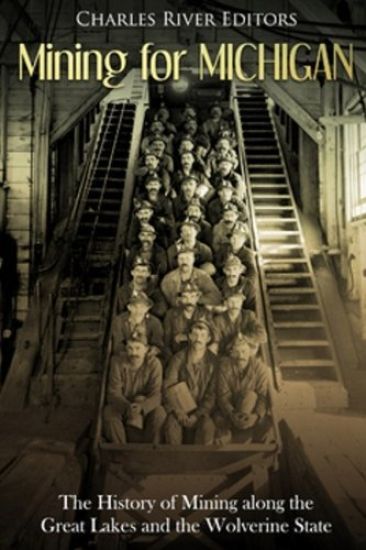
Mining for Michigan: The History of Mining along the Great Lakes and the Upper Peninsula
*Includes pictures *Includes online resources and a bibliography for further reading Copper mining is as ubiquitous to the Upper Peninsula of Michigan as the automobile industry is to the Lower. Centuries before the first white man set foot in the New World, local natives used rocks to pound copper free from the earth, shaping it into goods traded across the continent. It was not long before European settlers followed up on the natives' work, and when industry came to Copper Country, mines sprung up, quickly dominating the economy and lives of the Upper Peninsula's residents. Copper was not the only mineral harvested from the earth. Iron mines spread out as well, becoming profitable if less known than their copper cousins. Even less well known but just as integral to the Peninsula's history, gold and silver prospectors prowled the land, looking for metals whose value had started and ended empires. Mining, especially copper mining, left a deep mark in the Upper Peninsula by affecting the region's growth, landscape, culture, and economic structure. Where once a booming industry churned out tons of copper, feeding the nation's need for the ever utilitarian metal, there now lay empty shafts and a few mines, still scraping metals from the earth. Though the heyday of mining in the state has long passed, its mark on the region, the state, and the nation itself remains, and it all started long before the first men of Europe set foot in the Americas. Iron mining continues, though the industry is now a pale shadow of its former self. Though not as extensive or well known as copper mining, the iron mines also played an important role in the region, and they also supported much of the region's silver and gold prospecting and mining. Though no great gold or silver mines came as a result of the exploring conducted by the many prospectors, the constant efforts to pull the precious metals from the region demonstrate the grit, determination, and sheer gumption of those who traveled north to stake their claims and build new lives. The miners and workers faced their hard times like many others, but, by and large, the history of the mines, as well as the companies that ran them and the miners who worked them, is one of technological progress and impressive output that proved a great boon to the region, the state, and the nation. Though the mining companies faced their share of ups and downs, their story is largely one of success, even if it offers little comfort to those living in the shadows of the companies' remains. Mining for Michigan: The History of Mining along the Great Lakes and the Upper Peninsula examines the effects of the mining in the region and the results. Along with pictures of important people, places, and events, you will learn about mining in the area like never before.
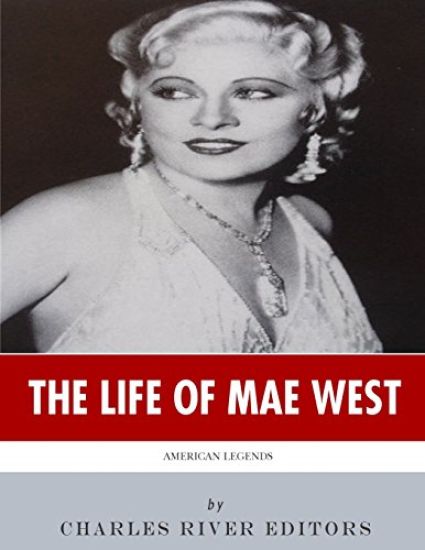
American Legends: The Life of Mae West

American Legends: The Life of Mae West

Charles River

Createspace Independent Publishing Platform
2018
nidottu
*Includes pictures. *Includes Mae's most famous, clever and controversial quotes. *Includes quotes from Mae's autobiography about her life and career. *Includes a bibliography for further reading. "Between two evils, I generally like to pick the one I never tried before." - Mae West A lot of ink has been spilled covering the lives of history's most influential figures, but how much of the forest is lost for the trees? In Charles River Editors' American Legends series, readers can get caught up to speed on the lives of America's most important men and women in the time it takes to finish a commute, while learning interesting facts long forgotten or never known. Mae West will always be remembered as one of Hollywood's biggest icons, and the American Film Institute named her the 15th greatest actress of the 20th century in its Top 100 list, but she also transcended the entertainment industry and became a critical part of Americana itself. Over the course of 7 decades, Mae redefined the boundaries of sexuality in ways that made more conservative Americans of the early 20th century uncomfortable, and for good measure she did so boldly and in people's faces. Full of witty rejoinders and one-liners that both flaunted and celebrated her sexuality, she eventually managed to help usher in a more open era, even as the standards of the time found her so controversial that she was often subjected to censorship (which she once quipped "made a fortune" for her). Mae and some of her movies have been widely credited with spurring the implementation of the notorious Hays Code, which censored lewd and obscene material in Hollywood movies for several years, but she remained defiant. Even near the end of her life and career, when cast in a role where she is romantically pursued by a British man, her elderly character wisecracks that she hopes to be able to say what Paul Revere did: "The British are coming." Although Mae West is mostly remembered for being one of the 20th century's first and most important sex symbols, she was a versatile entertainer who made it in different venues across the country and across the years. Like many young actresses at the time, Mae started in vaudeville and stage in New York before heading west to Hollywood. In fact, by the time she starred in movies, she was nearing the age of 40, well after most star actresses had seen their careers peaked. Nonetheless, Mae continued to portray vixens that drove men nuts on screen for decades, all while being a comedienne and even writing her own plays and materials. Even after her film career was over, she returned to the stage and appeared on television shows. By the time Mae West was nearing the end of her life, she was a ubiquitous pop culture presence. American servicemen made bawdy references to her when parachutes split in two, certainly the kind of comparisons she appreciated, and even The Beatles felt compelled to convince Mae West to let them use her likeness on the album cover of Sgt. Pepper's Lonely Hearts Club Band. True to form, Mae initially objected to being a member of a "Lonely Hearts Club". But just as importantly, Mae's self-confidence and sense of independence helped pave new paths for actresses who followed her. American Legends: The Life of Mae West examines the life and career of one of Hollywood's biggest sex icons. Along with pictures of important people, places, and events, you will learn about Mae West like never before, in no time at all.
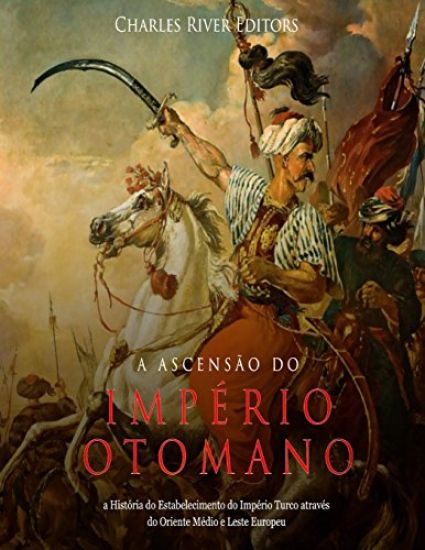
A Ascensão do Império Otomano: a História do Estabelecimento do Império Turco através do Oriente Médio e Leste Europeu
Em termos de geopol tica, talvez o evento mais fat dico da Idade M dia tenha sido o cerco bem-sucedido de Constantinopla pelos Otomanos em 1453. A cidade havia sido uma capital imperial desde o s culo IV, quando Constantino o Grande migrou o centro de poder do Imp rio Romano para ali, efetivamente estabelecendo duas metades quase igualmente poderosas do maior imp rio da antiguidade. Constantinopla continuaria servindo como a capital do Imp rio Bizantino at mesmo ap s a metade Ocidental do Imp rio Romano entrar em colapso no fim do s culo V. Naturalmente, o Imp rio Otomano tamb m usaria Constantinopla como a capital de seu imp rio - ap s sua conquista efetivamente destruir o Imp rio Bizantino - e gra as sua localiza o estrat gica, foi um centro comercial por anos, e segue sendo nos dias de hoje sob o nome turco de Istanbul. O fim do Imp rio Bizantino teve um efeito profundo n o somente sobre o Oriente M dio, mas tamb m a Europa. Constantinopla teve um papel crucial nas Cruzadas, e a queda dos Bizantinos significava que os Otomanos agora compartilhavam uma fronteira com a Europa. O imp rio isl mico era visto como uma amea a pelo continente predominantemente crist o ao seu Oeste, e pouco tempo foi necess rio para que diferentes na es europeias entrassem em conflito com os poderosos Turcos. De fato, os Otomanos lutariam contra Russos, Austr acos, Venezianos, Poloneses, e ainda outros antes de entrar em colapso como resultado da Primeira Guerra Mundial, quando eles participaram das Pot ncias Centrais. A conquista otomana de Constantinopla tamb m teve um papel decisivo no surgimento do Renascimento na Europa ocidental. A influ ncia do Imp rio Bizantino garantiu que ele fosse o propriet rio de v rios textos antigos, em especial dos antigos gregos, e com a queda de Constantinopla, refugiados bizantinos fugiram para o oeste buscando abrigo na Europa. Estes refugiados trouxeram consigo livros que ajudaram na igni o do interesse pela antiguidade que serviu de combust vel para o Renascimento Italiano e essencialmente causou o fim da Idade M dia como um todo. A Ascens o do Imp rio Otomano: a Hist ria do Estabelecimento do Imp rio Turco atrav s do Oriente M dio e Leste Europeu narra o desenvolvimento de um dos imp rios mais influentes da hist ria. Junto de gravuras de personagens, lugares, e eventos importantes, voc aprender sobre a ascens o do Imp rio Otomano como nunca antes.
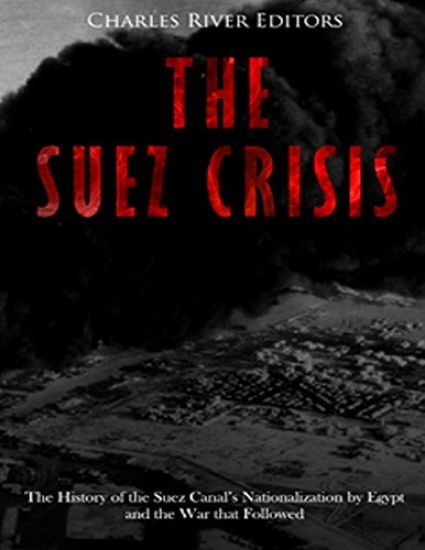
The Suez Crisis: The History of the Suez Canal's Nationalization by Egypt and the War that Followed
*Includes pictures *Includes online resources and a bibliography for further reading "Nobody was kept more completely in the dark than the President of the United States." - Anthony Nutting, British Secretary of State for Foreign Affairs. World War II changed the dynamics of colonization irrevocably. India was granted independence in 1947, and that set the tone for decolonization across the European imperial spectrum. But as it turned out, decolonization was preempted in Egypt by a military coup in 1952. On January 25, 1952, British forces in the Suez Canal region took aggressive action when it ordered a police post in Ismailia to surrender for alleged support of anti-British activities. When the commander of the police post refused and mounted defenses, the British attacked, killing approximately 40 and injuring 70 Egyptian policemen. Outrage spilled out onto the streets in the form of protests and riots, leading to violence, looting, and the burning down of foreign businesses in Cairo. This coup, a minor revolutionary movement, had begun with the limited objective of overthrowing King Farouk, the incumbent ruler, but it became a far larger, anti-West, anti-imperialist and non-aligned nationalist movement. The country fell under the control of an armed forces council known as the Free Officers Movement, and the coup was initially led by Major General Mohammed Naguib, but it would bring about the rise of Nasser. Naturally, Nasser's disdain and distrust of the British and French was wholly reciprocated. The French were fighting insurgencies in Algeria and Morocco, which Nasser was openly supporting, while the British were attempting to adjust to its vastly reduced relevance in the post-war world. Faced with inevitable decolonization, the British government sensed that standing up to a belligerent bully like Nasser would be seen at home as defending Britain's declining international significance. On July 26, 1956, in a historic speech that stunned the world, Nasser announced the nationalization of the Suez Canal. By doing this, Nasser was not only emphasizing Egyptian independence and political might, but also creating another source of tax revenue for the country, which would ultimately be used for the Aswan High Dam project and other social and infrastructure projects. Though many of his advisors expressed their doubts with this abrupt maneuver to nationalize one of the most economically significant canals in the world, the Egyptian people were in full support of Nasser, whose popularity skyrocketed as a result. Of course, Nasser's sudden move was viewed as an abrupt slap against the countries with vested interests in the Suez Canal and the region at large. In October 1956, Britain, France, and Israel struck Egypt simultaneously - Israel from the ground, and Britain and French from the air - seizing key bases in the Sinai, and in one swift sweep, bombarding all the aircraft that Egypt had bought from the Soviets. Egypt hastily asked for aid from the Soviet Union, which pointedly refused. Aid ultimately came not from the Soviet Union, nor from neighboring Arab countries, but from the most unexpected country: the United States. Angered by the fact that the leader of the democratic bloc and Western alliance had not been forewarned about the coming aggression, and deeply affronted by the unilateralism of his European allies, President Dwight D. Eisenhower demanded that the three countries immediately halt their advance and withdraw their troops. Britain, France, and Israel - just as surprised about the forcefulness of the U. S. as Egypt was - had no choice but to comply. Egypt emerged largely unscathed and maintained full control of the Suez Canal, though without the intervention of the U. S., it would have certainly been defeated. The Suez Crisis: The History of the Suez Canal's Nationalization by Egypt and the War that Followed examines the tense events and the aftermath.