Kirjojen hintavertailu – 12 903 727 kirjaa ja 27 kauppaa

Kirjailija

Charles River

Kirjat ja teokset yhdessä paikassa: 4 673 kirjaa, julkaisuja vuosilta 2013–2022, suosituimpiin kuuluu William Powell and Myrna Loy: The Lives and Careers of One of Classical Hollywood's Most Iconic Duos. Vertaile teosten hintoja ja tarkista saatavuus suomalaisista kirjakaupoista.

4 673 kirjaa

Kirjojen julkaisuvuodet: 2013–2022.

American Legends: The Life of Robert Redford

American Legends: The Life of Robert Redford

Charles River

Createspace Independent Publishing Platform
2018
nidottu
*Includes pictures *Includes Redford's own quotes about his life and career *Includes a bibliography for further reading "The way you really find out about the performer's seriousness about the cause is how long they stay with it when the spotlight gets turned off. " - Robert Redford "People say I've gone against Hollywood, but I've tried to be independent within Hollywood, tried to be my own person." - Robert Redford A lot of ink has been spilled covering the lives of history's most influential figures, but how much of the forest is lost for the trees? In Charles River Editors' American Legends series, readers can get caught up to speed on the lives of America's most important men and women in the time it takes to finish a commute, while learning interesting facts long forgotten or never known. When Robert Redford first entered the national spotlight in the early 1960s, he was hardly viewed as a serious actor, and with his red hair, blonde complexion, and athletic build, he was seen more as a handsome man than a skilled one. On top of that, he came a time in which most Hollywood stars were tall, dark, and slender, like one of his most famous co-stars, Paul Newman, and by comparison, Redford looked more like a surfer. It was an unfortunate stereotype, because he had already studied acting and even performed on Broadway even as people initially had great difficulty in taking him seriously. The acting roles for which he first became famous, such as Barefoot in the Park, featured him in what Elisa Leonelli has referred to as "golden boy" roles, and this was something that would take years to overcome, but it also gave him a chip on his shoulder. As he later noted half in jest, "I think a lot of people thought my career started with Butch Cassidy." That description of Redford is hard to square with opinions of him today. Indeed, Redford is now considered one of the leading figures of art house cinema, not only in America but across the world as well. Presiding over the Sundance Film Festival, which is housed in his figurative backyard in Park City, Utah, Redford oversees the leading festival for independent cinema in the United States, facilitating exposure to art house films that otherwise would have struggled to find any distribution and transforming Sundance into a wildly successful company in its own right. Meanwhile, over the last few decades, Redford's career has placed him among the great Hollywood actors of his generation, alongside the likes of Robert DeNiro, Al Pacino, and Dustin Hoffman. Moreover, where Redford separates himself from these other figures of acting royalty is that he is also an accomplished director, as evidenced by the successes of Ordinary People (1980), The Milagro Beanfield War (1988), A River Runs Through It (1992) and other films. Clearly, Redford has distanced himself as far as possible from the "golden boy" label that constrained him early in his career. American Legends: The Life of Robert Redford charts Redford's shift from an actor who could not garner any respect to one of Hollywood's most important figures, along with an analysis of his famous films that portrayed various topics like masculinity, sport, and the American West. Along with pictures of important people, places, and events, you will learn about Robert Redford like never before, in no time at all.
American Legends: The Life of Robert Mitchum

American Legends: The Life of Robert Mitchum

Charles River

Createspace Independent Publishing Platform
2018
nidottu
*Includes pictures *Includes a bibliography for further reading "I never take any notice of reviews - unless a critic has thought up some new way of describing me. That old one about my lizard eyes and anteater nose and the way I sleep my way through pictures is so hackneyed now." - Robert Mitchum A lot of ink has been spilled covering the lives of history's most influential figures, but how much of the forest is lost for the trees? In Charles River Editors' American Legends series, readers can get caught up to speed on the lives of America's most important men and women in the time it takes to finish a commute, while learning interesting facts long forgotten or never known. If one assembled a list of the most iconic actors of the film noir genre, Robert Mitchum would surely rank at the top of the list. With his deadpan fa ade and slow, monotone verbal delivery, Mitchum encapsulated the disillusioned hero of the postwar crime genre. In many of his most famous movies from the postwar era, including Out of the Past (1947) and Angel Face (1952), Mitchum plays anti-heroes who are victims of circumstance, but even as he is placed in situations beyond his control, he maintains a cool, if dispassionate countenance. Mitchum was, in short, neither a hero nor a villain but someone who seemed to defy the often-simplistic distinctions between protagonist and antagonist, hero and villain. Even so, for someone who put on such a cool fa ade, Mitchum certainly experienced a great deal of hardship. From the death of his father, James, to his rough adolescence-much of which was spent traveling on railcars during the throes of the Great Depression-Robert Mitchum lived the part of the hard-luck antiheroes he portrayed onscreen. Up until his adult life, there was little indication that he would grow up to become anything more than a working-class factory worker, let alone a world-famous movie star. It is telling that Mitchum remained within the confines of the gritty noir and western genres; to imagine him acting in a romantic comedy would be antithetical to the reputation that he built. Mitchum was, to be sure, one of the premier A-list stars of the 1940s and 1950s, but he was a leading man in the hypermasculine mold of Humphrey Bogart rather than the more diverse skill set of Henry Fonda or Jimmy Stewart. In any event, one of the great mysteries of Robert Mitchum's career is that for all the poor luck that his characters experienced, he still was able to affect a debonair sensibility that made him identifiable-a man to which viewers were irresistibly attracted, even if his characters did not necessarily warrant such a response. This biography looks at the process that led from Robert Mitchum rising from impoverished Depression-era youth to leading Hollywood celebrity. Mitchum's harsh childhood, including the premature death of his father and his dangerous life on the road, are discussed, as well as the process that saw him ascend through the acting industry. Important themes from Mitchum's films are discussed (including postwar masculinity and the role of the antihero), as is the cultural climate in which he worked, which was to a large degree responsible for facilitating his rise to fame. American Legends: The Life of Robert Mitchum looks at the life and career of one of America's most famous film noir actors. Along with pictures of important people, places, and events, you will learn about Robert Mitchum like never before, in no time at all.
American Legends: The Life of Rock Hudson

American Legends: The Life of Rock Hudson

Charles River

Createspace Independent Publishing Platform
2018
nidottu
*Includes pictures. *Includes Hudson's own quotes about his life and career. *Includes a bibliography for further reading. "I'm notorious for giving a bad interview. I'm an actor and I can't help but feel I'm boring when I'm on as myself." - Rock Hudson A lot of ink has been spilled covering the lives of history's most influential figures, but how much of the forest is lost for the trees? In Charles River Editors' American Legends series, readers can get caught up to speed on the lives of America's most important men and women in the time it takes to finish a commute, while learning interesting facts long forgotten or never known. In the middle of the 20th century, there was perhaps no leading man as famous and popular as Rock Hudson, who would star in both comedies and dramas on the way to being named one of the Top 10 Stars of the Year for eight years straight (1957-1964). Whether he was starring in a comedy with Doris Day or in a drama opposite Elizabeth Taylor, the tall, impeccably dressed actor couldn't help but make girls in the audience swoon, and he was recognized as one of Hollywood's biggest heartthrobs. The success of his peak years ensured that Hudson would remain a star over the course of 4 decades, and he appeared in about 70 films during his career. Today, however, Rock Hudson might be better known among contemporary audiences for his personal life. Acting in a more conservative era, Hudson struggled to keep his homosexuality out of the news for fear it would destroy his career, even though many of his Hollywood contemporaries were aware of it. After Hudson died of AIDS in 1985, perhaps the first major celebrity to die of the disease, details of his personal life began to be publicized, sometimes amidst messy legal battles. It soon became clear just what kind of pains Hudson took to keep his personal life private, and his friendships with men were highly scrutinized, as was his marriage to his agent's secretary, Phyllis Gates. At the same time, his death shined a bigger spotlight on AIDS and helped raise both awareness and funding for research into battling the disease. American Legends: The Life of Rock Hudson examines the life and career of one of Hollywood's biggest stars. Along with pictures of important people, places, and events, you will learn about Rock Hudson like never before, in no time at all.
American Legends: The Life of Richard Nixon

American Legends: The Life of Richard Nixon

Charles River

Createspace Independent Publishing Platform
2018
nidottu
*Includes pictures. *Includes Nixon's most famous quotes. *Includes footnotes and a bibliography for further reading. "I leave you gentleman now. You will now write it; you will interpret it; that's your right. But as I leave you I want you to know.... just think how much you're going to be missing. You don't have Nixon to kick around any more..." - Richard Nixon, 1962 A lot of ink has been spilled covering the lives of history's most influential figures, but how much of the forest is lost for the trees? In Charles River Editors' American Legends series, readers can get caught up to speed on the lives of America's most important men and women in the time it takes to finish a commute, while learning interesting facts long forgotten or never known. Best known as the 37th President of the United States, and the only president in American history to resign his office, Richard Nixon's lengthy political career would put him, during various times, at the center of regional, national and international politics for several decades. It was to be a career filled with unexpected twists and turns, high-profile defeats and unlikely resurrections, in which he made exhaustive efforts to reinvent himself in the public eye. From humble beginnings filled with disparate influences, Nixon's extraordinary intellect, strategic brilliance and imposing style of confrontation saw him through a stellar academic career at Duke Law School to seats in both the House and Senate, the vice-presidency and finally, the presidency, where he was and is considered by many to be among the strongest foreign policy presidents in the history of the United States. Of course, Nixon's presidency is an enigmatic one, given the alternating of previously unimaginable accomplishments in foreign relations with scandals at home. They began long before he became president too. When his name was bandied about for vice president on the Eisenhower ticket, Nixon had to worm his way out of serious trouble. America has seen more than its fair share of slick politicians, including those who manage to navigate out of political trouble through charm, but even though Nixon was notorious for not being a warm individual, he managed to orchestrate the infamous "Checkers" speech, which not only saved his political career but effectively worked to force Eisenhower to keep him on the ticket. By 1972, Nixon appeared to be well on his way to reelection, and sure enough, he enjoyed one of the biggest landslides against George McGovern that year. However, despite the fact that Nixon's reelection seemed a cinch, the seeds of his destruction were being sown in the months leading up to the election. Increasingly and mistakenly viewed as a single scandal within the United States government, what is commonly referred to as the Watergate scandal serves as an overarching term for a series of scandals beginning in 1971 and extending through 1974, although more than any other, it refers to the specific break-in at the Watergate Hotel and office complex in Washington, D. C. The crisis, originating in a secretive battle between the two major political parties, the Nixon White House's paranoia, and the ensuing conflict concerning the release of confidential information to the public, induced senior government officials into committing crimes (most notoriously petty burglary) and coverups for the purposes of character assassination and inter-political espionage. Ultimately, Watergate resulted in the first and only resignation of a sitting American president, but only after Nixon had tried at seemingly every turn to hinder investigations and coverup crimes committed by senior officials in his own administration. American Legends: The Life of Richard Nixon examines the life and legacy of America's most controversial president.
American Legends: The Life of Red Cloud

American Legends: The Life of Red Cloud

Charles River

Createspace Independent Publishing Platform
2018
nidottu
*Includes pictures of Red Cloud and other important people in his life. *Includes some of Red Cloud's quotes and an explanation of the publication purported to be his autobiography. *Discusses Red Cloud's relationships with other Indian leaders like Crazy Horse. "Look at me - I am poor and naked, but I am the chief of the nation. We do not want riches, but we want to train our children right. Riches will do us no good. We could not take them with us to the other world. We do not want riches. We want peace and love." - Red Cloud A lot of ink has been spilled covering the lives of history's most influential figures, but how much of the forest is lost for the trees? In Charles River Editors' American Legends series, readers can get caught up to speed on the lives of America's most important men and women in the time it takes to finish a commute, while learning interesting facts long forgotten or never known. Among the Oglala Lakota, one of the most famous bands of the Native American Tribe known as the Sioux, the longest and most effective leader was Makhpiyaluta, better known as Red Cloud. Though he has not been remembered as vividly as another member of the Oglala Lakota, Crazy Horse, Red Cloud led the group for 40 years, in war, in peace, and on a reservation, becoming so esteemed and influential that Americans began to mistakenly take him for the leader of the entire Sioux tribe. In the 1860s, Red Cloud was at the forefront of skirmishing among whites and Native Americans along the frontier in Wyoming and Montana, which came to be known as Red Cloud's War. After that, however, Red Cloud continued to lead his people to reservations first near the Black Hills and later westward after the Battle of the Little Bighorn. Though he was respected as a war chief, it was his political functions as a spokesman of the Oglala that truly allowed Red Cloud to leave his mark over the last several decades of his life. Whereas Sitting Bull and Crazy Horse suffered premature deaths, Red Cloud outlived the other important leaders of the Sioux until dying in 1909 at 87 years old. Near the end of his life, he reportedly said, "They made us many promises, more than I can remember. But they kept but one -- they promised to take our land...and they took it." Though Red Cloud was forever embittered by what he and his people had lost, his long leadership and his help in transitioning his people onto reservations has ironically turned him into somewhat of a symbol of conciliation and reconciliation between Native Americans and whites, as opposed to Native American symbols of defiance like Tecumseh, Sitting Bull and Crazy Horse. American Legends: The Life of Red Cloud chronicles the amazing life of the Sioux leader, from the origins of his name to his legacy among Native Americans and whites alike. Along with pictures of important people, places, and events, you will learn about Red Cloud like you never have before, in no time at all.
American Legends: The Life of Ralph Waldo Emerson

American Legends: The Life of Ralph Waldo Emerson

Charles River

Createspace Independent Publishing Platform
2018
nidottu
*Includes a list of dozens of Emerson's most inspirational quotes. *Includes pictures of Emerson and important people and places in his life. *Includes a Bibliography of Emerson's works and books about Emerson for further reading. "Standing on the bare ground, - my head bathed by the blithe air, and uplifted into infinite space, - all mean egotism vanishes. I become a transparent eye-ball; I am nothing; I see all; the currents of the Universal Being circulate through me; I am part or particle of God." - Ralph Waldo Emerson A lot of ink has been spilled covering the lives of history's most influential figures, but how much of the forest is lost for the trees? In Charles River Editors' American Legends series, readers can get caught up to speed on the lives of America's most important men and women in the time it takes to finish a commute, while learning interesting facts long forgotten or never known. In the mid-19th century, Romantic literature was still in full bloom across the West, but some American authors began producing literature that, while still Romantic, was unique enough to be considered a different genre. This new genre, Transcendentalism, focused on the spirituality of the self and nature, not rejecting religion outright but concentrating on pragmatism and the importance of individuals as the spiritual center of the cosmos. In addition to drawing upon the Age of Enlightenment, Transcendentalist authors also utilized the philosophy of Plato, who taught that self-fulfillment through attaining knowledge should be an individual's ultimate goal. The leader of Transcendentalism and the man who ushered the movement's practices and literature was Ralph Waldo Emerson (1802-1883), one of America's most famous writers and speakers. Whereas Romantic literature typically took the form of poetry, novels and short stories, much of Emerson's writings disregarded those traditional structures and were written as essays. Emerson initiated Transcendentalism with the publishing of his essay Nature in 1836, which espoused the virtues of nature and the interconnectedness of all life in nature. With his focus on the environment and natural history, Emerson became the first major American writer whose work was not influenced in any way by European literature. But Emerson didn't just write Transcendentalist literature; he practiced what he preached. Now at the forefront of a movement, Emerson established group meetings, gave a series of lectures, and helped produce a Transcendentalist publication in the 1840s, which included his famous essay Self-Reliance. As Emerson's movement and stature grew, he befriended other authors, including Nathaniel Hawthorne, Louisa May Alcott, and Henry David Thoreau, who became his greatest prot g . Thoreau in particular took a keen interest in the idea of getting in touch with nature, writing in Walden, "Most of the luxuries and many of the so-called comforts of life are not only not indispensable, but positive hindrances to the elevation of mankind." American Legends: The Life of Ralph Waldo Emerson looks at the life and work of Emerson and the movement he helped lead. Along with pictures, you will learn about Ralph Waldo Emerson like you never have before, in no time at all.
Blitzkrieg: The History and Legacy of Nazi Germany's Lightning Warfare at the Start of World War II
*Includes pictures *Includes online resources and a bibliography for further reading "In this year, 1929, I became convinced that tanks working on their own or in conjunction with infantry could never achieve decisive importance. My historical studies, the exercises carried out in England and our own experience with mock-ups had persuaded me that the tanks would never be able to produce their full effect until the other weapons on whose support they must inevitably rely were brought up to their standard of speed and of cross-country performance. In such formation of all arms, the tanks must play primary role, the other weapons beings subordinated to the requirements of the armour. It would be wrong to include tanks in infantry divisions; what was needed were armoured divisions which would include all the supporting arms needed to allow the tanks to fight with full effect." - Heinz Guderian War has always been a competition between defense and offense. At times these two have been relatively balanced, but at other times, one becomes far more powerful. It is during those times that the greatest military innovations occur. The tank was first developed by the British and French during World War I as a means to break the deadlock on the Western Front. More so than any previous war, the balance of power lay with the defense, as machine guns, trenches, bunkers, barbed wire, and rapid-firing rifles all made frontal assaults on established positions prohibitively costly. In the closing months of the war, the tank partially evened up that balance, even as the war's commanders initially proved unsure of how to use them. While it cannot be said that the tank won the war, it contributed to its end and if the fighting had continued another year, the mass production that had started in Allied countries may have proved decisive. World War II was thus the culmination of a quarter century of tank development, and it would also be the first major test of tanks in mobile warfare, during which they had to face other tanks. However, many of the tanks were constructed with the static warfare of the Western Front in mind and were thus slow and had short operational ranges. Others were too light to face opposing tanks or the new generation of anti-tank weapons that hadn't existed in World War I. The unsuitability of these tank models for this new kind of warfare was quickly recognized, and the belligerent powers scrambled to create better designs. As each new, improved model came off the assembly lines, the opposing powers rushed to create a tank that could beat it. In that regard, World War II was also a war between rival engineers. At the same time, German military officials were at the forefront of developing new ideologies when it came to utilizing their tanks to maximum effect. Heinz Guderian even published a book on the topic before becoming one of the Third Reich's most effective tank commanders. Moreover, during the German invasion of Poland, Nazi forces gained experience they would use across Europe and in Russia. After all, it was in Poland that the Wehrmacht saw action for the first time, conducting what was not only an invasion but also a trial run of its new equipment and tactics. The Polish invasion proved invaluable in providing the German high command with a low-risk, high-value live fire exercise for their newly minted war machine, while the actual combat experience highlighted the remaining flaws in the system. During the campaign, the Germans honed tactics and weapon systems for the massive struggle with the Soviets, British, and United States that loomed on the horizon. Blitzkrieg: The History and Legacy of Nazi Germany's Lightning Warfare at the Start of World War II looks at the development of the tanks and the doctrine that revolutionized tank warfare. Along with pictures of important people, places, and events, you will learn about blitzkrieg like never before.
Charles Darwin: The Life and Legacy of the 19th Century's Most Famous Scientist

Charles Darwin: The Life and Legacy of the 19th Century's Most Famous Scientist

Charles River

Createspace Independent Publishing Platform
2018
nidottu
*Includes pictures *Includes contemporary accounts *Includes online resources and a bibliography for further reading "There is grandeur in this view of life, with its several powers, having been originally breathed into a few forms or into one; and that, whilst this planet has gone cycling on according to the fixed law of gravity, from so simple a beginning endless forms most beautiful and most wonderful have been, and are being, evolved." - Charles Darwin "We must, however, acknowledge, as it seems to me, that man with all his noble qualities... still bears in his bodily frame the indelible stamp of his lowly origin." - Charles Darwin Ever since the human mind developed the capacity for thought, people have pondered not just the meaning of life, but the genesis of the world, the universe, and all the natural marvels and precious forms of life within it. To this day, all of these intricate subjects continue to be matters of great contention, and they are often best encapsulated in the debate between creationism and evolution. On the one hand are those who are adamant that it was God, or some other supreme being, that designed and crafted every detail of the universe, as evidenced by the plethora of creation myths from various creeds and traditions. Among one of the most well-known etiological tales is the classic story of the Christian God who constructed the world in 6 days, and man and woman out of clay and man's rib, respectively. This is a concept that many still cling to today; approximately 38% of Americans believed in creationism in 2017, as reported by a Gallup Poll. Then, there are the more obscure narratives, such as the Japanese creation myth, which recounts how the god and goddess, Izanagi and Izanami, birthed from "elements mixed together with one germ of life," shaped the Japanese islands with some mud and the aid of a sacred staff. The Mayans preached about Tepeu, the maker of all things, and Gucumatz, the "feathered spirit," who produced the world with nothing but their thoughts, and placed on Earth the first quartet of humans fashioned out of white and yellow corn. On the other hand are those who subscribe to the belief of, or as they would say, "accept" evolution and scientific processes as fact. As enthralling as such creation myths may be, insist critics of creationism, who campaign for their retirement, there is not a sound shred of logic behind these time-worn tales. Renowned theoretical physicist Stephen Hawking, arguably one of the most brilliant minds to have ever lived, stated, "Before we understand science, it is natural to believe that God created the universe. But now science offers a more convincing explanation." His sentiments are echoed by famous atheist, evolutionary biologist, and coiner of the word "meme," Richard Dawkins, in The Selfish Gene: "Today the theory of evolution is about as much open to doubt as the theory that the earth goes round the sun..." The kindler of this impassioned existential dispute, of course, is none other than Charles Darwin, who himself devised the term "creationists" and propelled the controversial theory of evolution to prominence. Given that he went against the grain with his scientific work, he was clearly one of the most polarizing men of his age, and he wouldn't hesitate to question one of the central tenets of Western civilization in print: "I cannot persuade myself that a beneficent and omnipotent God would have designedly created parasitic wasps with the express intention of their feeding within the living bodies of Caterpillars." Bearing this in mind, while it was indeed Darwin who stoked the fire, he is not the hardcore, deity-despising atheist who obsessed about disproving God that most presume him to be. What lies within this fascinating man is a complicated, neurotic, and somewhat tortured individual, which, needless to say, only makes this pioneer all the more compelling.
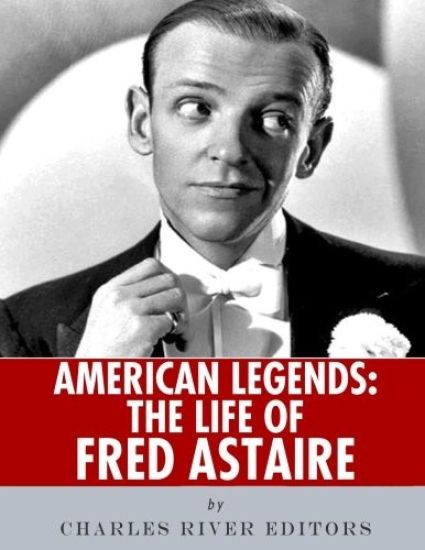
American Legends: The Life of Fred Astaire

American Legends: The Life of Fred Astaire

Charles River

Createspace Independent Publishing Platform
2018
nidottu
*Includes pictures of Astaire and other important people and scenes. *Includes Astaire's quotes about his own life and others' quotes about him. *Includes a bibliography for further reading. "No dancer can watch Fred Astaire and not know that we all should have been in another business." - Mikhail Baryshnikov A lot of ink has been spilled covering the lives of history's most influential figures, but how much of the forest is lost for the trees? In Charles River Editors' American Legends series, readers can get caught up to speed on the lives of America's most important men and women in the time it takes to finish a commute, while learning interesting facts long forgotten or never known. Virtually all famous actors are regaled by the public, but even still, Fred Astaire occupies a privileged position in American pop culture. The specific films in which Astaire acted may not be especially famous in their own right - most people likely cannot recall the title of Top Hat (1935), his most decorated film - but Astaire's dancing prowess invariably creates a lasting impact on viewers. Instead of tying his fame to a single film, Astaire's genius lay in constructing his star persona around a specific set of iconographic imagery that has become embedded within American culture. Across his films, the recurring iconic images of the top hat, cane, and coat tails, as well as the image of Astaire dancing with Ginger Rogers, all constitute a timeless symbol for elegance that continues to captivate viewers who are unfamiliar with the plots of his films. There have been other film musical actors who were proficient dancers, Gene Kelly chief among them, but none were able to perform with the seamless elegance of Astaire, and none have been remembered nearly as well. Astaire's dancing numbers epitomized grace and gaiety, making it seem as though he was carefree, but this was hardly the case. While it is easy to imagine Astaire being raised in an aristocratic family, his working-class background was so blue collar that his family eventually relied on him and his sister as the primary breadwinners in the family. Rather than being born and raised with wealth in a large city, Astaire came from a working-class neighborhood in Omaha, Nebraska, a setting so antithetical to the world of dance that it quickly became clear that the family would need to relocate. If anything, Astaire's unglamorous origins further demonstrate that the magisterial dancing and the effortlessly elegant image accompanying it were products of Astaire's tireless work ethic and insistence on perfection. Astaire's popularity can in large part be tied to the escapism that his films offered to impoverished Depression-era American audiences, and yet Astaire was a working man, albeit one who labored in the studios of Hollywood rather than the factories of America. Considering the quiet life that he led off the movie set, it can be difficult to disassociate Astaire from his films, and while he may have attempted to project the same image off the screen, the era and his personal background were extremely important. As someone who was born just before the start of the 20th century, Astaire's life sheds light on the developments that occurred in American entertainment, from the stage (where he first performed during his youth) to cinema (the site of his greatest triumphs) and finally to television (a medium Astaire entered at the end of his career.) Astaire's career tends to obscure his all-American success story, one in which hard work transformed a Nebraska boy from a working-class family into America's most prominent symbol of grace. American Legends: The Life of Fred Astaire profiles the life and career of one of America's most famous entertainers. Along with pictures of important people, places, and events, you will learn about Fred Astaire like you never have before, in no time at all.
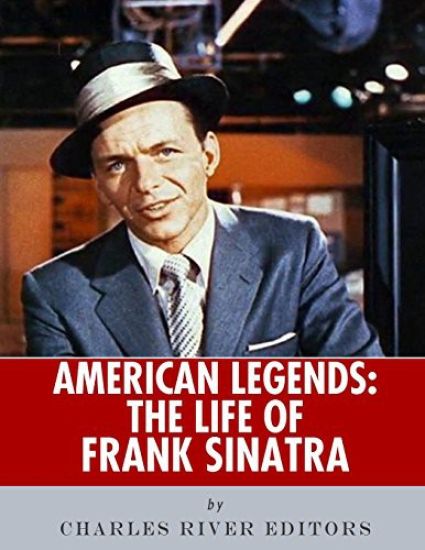
American Legends: The Life of Frank Sinatra

American Legends: The Life of Frank Sinatra

Charles River

Createspace Independent Publishing Platform
2018
nidottu
*Includes pictures. *Includes some of Sinatra's most famous and colorful quotes. *Includes a Bibliography for further reading. "May you live to be 100 and may the last voice you hear be mine." - Frank Sinatra A lot of ink has been spilled covering the lives of history's most influential figures, but how much of the forest is lost for the trees? In Charles River Editors' American Legends series, readers can get caught up to speed on the lives of America's most important men and women in the time it takes to finish a commute, while learning interesting facts long forgotten or never known. America has always celebrated its star entertainers, but Frank Sinatra remains a unique American legend. A pop culture fixture for over half a century, Sinatra's music is still cherished, and his persona remains its own archetype of the quintessential American star. Sinatra transcended genres to the extent that his music stands alone as its own kind of American music, with songs like "New York, New York," "Chicago," and "Come Fly With Me" instantly recognizable among all Americans. Of course, there was also the life that went with the music. The cultural identity of the Rat Pack, epitomized in the 1960 film Ocean's Eleven, further contributed to his fame, and everyone knows and appreciates the image of easy living, smooth voice and exuberant star power that Sinatra represents. If anything, Sinatra's ability to make so many people feel happy and good about themselves was one of the main ingredients of his success. And as evidence of the fact that Americans don't mind their stars doing a little dirt, Sinatra's rap sheet and relationship with the mob are practically a celebrated part of his life. Given his almost universal appeal, it is easy to forget that Sinatra did not always enjoy strong popularity during his career. He had a meteoric rise to fame, but he also suffered a terrible mid-career slump in popularity and was forced to work hard to reinvent his public image. In a sense, the many changes to his public identity only make him even more American; the American public loves an underdog figure, and during his rise back to fame Sinatra came to embody the struggling American hero. The many transformations that Sinatra made throughout his career were necessary to cement his legacy as an unshakable American icon. American Legends: The Life of Frank Sinatra looks at the life, career and legacy of Ol' Blue Eyes. Along with pictures of important people, places and events in his life, you will learn about Sinatra like you never have before, in no time at all.
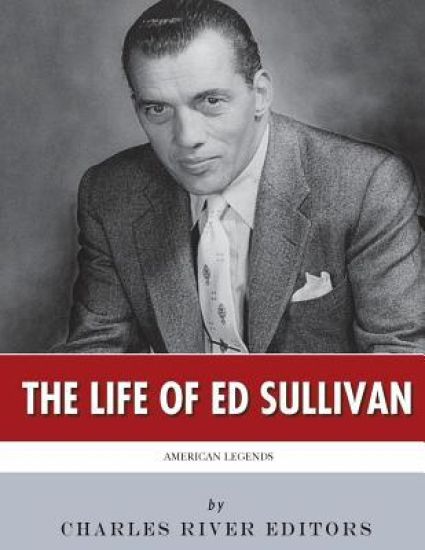
American Legends: The Life of Ed Sullivan

American Legends: The Life of Ed Sullivan

Charles River

Createspace Independent Publishing Platform
2018
nidottu
*Includes pictures. *Includes in depth accounts of Elvis Presley and The Beatles' historic performances on The Ed Sullivan Show. *Includes Sullivan's quotes about his life and his famous show. *Includes a bibliography for further reading. "Open big, have a good comedy act, put in something for children and keep the show clean. I believe in getting the best acts I can, introducing them quickly, and getting off." - Ed Sullivan's explanation for the success of The Ed Sullivan Show "Ed Sullivan will be around as long as someone else has talent." - Fred Allen A lot of ink has been spilled covering the lives of history's most influential figures, but how much of the forest is lost for the trees? In Charles River Editors' American Legends series, readers can get caught up to speed on the lives of America's most important men and women in the time it takes to finish a commute, while learning interesting facts long forgotten or never known. From the day television existed as an entertainment medium, giant companies have battled each other for viewers, but in the history of television programming, no show was as consistently excellent in the ratings as The Ed Sullivan Show, a variety show that brought on all kinds of acts, from dancers to artists and singers. It was the longest running show to maintain one time slot, and today it is widely remembered for introducing the nation to the likes of Elvis Presley and The Beatles. When Elvis was on the show in 1956, over 82% of the nation's entire television audience tuned in, a rating that would make even the Super Bowl blush. Indeed, being booked on The Ed Sullivan Show became so important for performers that Aretha Franklin once noted, "And I was booked once to go on 'Ed Sullivan' and I got bumped and ran out the back door crying." The Ed Sullivan Show has been commemorated as one of the most influential programs in the history of American television, and behind it all was the seemingly unassuming man whose name was on it. Even after Ed Sullivan had become an American institution on the strength of his show, one critic from Time asked, "What exactly is Ed Sullivan's talent?" Or as comedian (and frequent guest) Alan King put it, "Ed does nothing, but he does it better than anyone else in television." Of course, Ed Sullivan did have plenty of talent, especially when it came to identifying others', and over the course of nearly two decades, he became America's biggest starmaker. While Elvis and The Beatles are most remembered, Sullivan helped open the door to Motown acts, and his show was so culturally significant that Reverend Al Sharpton said of those performances, "I grew up in the 1950s and '60s, when it was almost a holiday when a black act would go on Ed Sullivan." Perhaps the most ironic aspect of Sullivan's fame is that almost everyone tended to agree that he was stilted and unnatural in front of cameras. In 1955, one writer for Time colorfully described Sullivan as "a cigar-store Indian, the Cardiff Giant and a stone-faced monument just off the boat from Easter Island. He moves like a sleepwalker; his smile is that of a man sucking a lemon; his speech is frequently lost in a thicket of syntax; his eyes pop from their sockets or sink so deep in their bags that they seem to be peering up at the camera from the bottom of twin wells." At the same time, however, the writer conceded, "Yet, instead of frightening children, Ed Sullivan charms the whole family." To a degree, that may have worked in Sullivan's favor, because it allowed him to come across like an everyday American, even as he was introducing audiences to potential stars with talents that most could not hope to emulate.
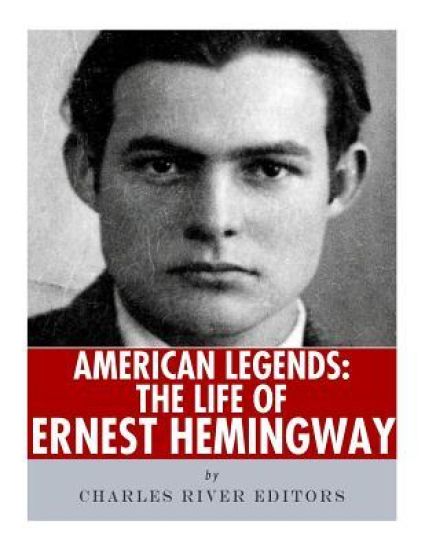
American Legends: The Life of Ernest Hemingway

American Legends: The Life of Ernest Hemingway

Charles River

Createspace Independent Publishing Platform
2018
nidottu
*Includes pictures of important people and places. *Includes some of Hemingway's most famous quotes. *Analyzes the real life inspirations behind Hemingway's work and separates fact from fiction regarding Hemingway's life. *Includes a Bibliography for further reading. "If a writer of prose knows enough of what he is writing about he may omit things that he knows and the reader, if the writer is writing truly enough, will have a feeling of those things as strongly as though the writer had stated them. The dignity of movement of an ice-berg is due to only one-eighth of it being above water. A writer who omits things because he does not know them only makes hollow places in his writing." - Ernest Hemingway, Death in the Afternoon A lot of ink has been spilled covering the lives of history's most influential figures, but how much of the forest is lost for the trees? In Charles River Editors' American Legends series, readers can get caught up to speed on the lives of America's most important men and women in the time it takes to finish a commute, while learning interesting facts long forgotten or never known. Ernest Hemingway is famous across the world and has been remembered in his own country as an American icon widely considered one of the most influential American authors of the 20th century. Students are unlikely to leave high school without reading one of Hemingway's classics, especially The Sun Also Rises (1926), and they are usually introduced to rudimentary details about Hemingway's eclectic life and controversial death. Hemingway's literary career included several unquestioned classics, but a great deal of his fame and notoriety today comes from the fact that it has become impossible to separate his work from his life. In fact, Hemingway's service in World War I and his time as a war correspondent at places like Normandy during D-Day in World War II have also established him as the kind of masculine, adventurous man that Americans have long held out as cultural heroes. This is made even more ironic by the fact that Hemingway spent so much time overseas, both in Europe and Africa, to the extent that he became one of the most identifiable members of the "Lost Generation" of American expatriates, which included literary stars like F. Scott Fitzgerald and Gertrude Stein. It is possible today for people to be familiar with the basic outline of his life despite rarely coming into contact with his writing. Of course, Hemingway's life story is incomplete without discussion of his suicide, which naturally makes the man come across as even more enigmatic. As people continue to debate the exact physical and mental reasons behind Hemingway's suicide, it has helped ensure that a spotlight remains fixated on his life as a whole, and everything from the controversial relationships he had to the mysterious nature of his death continues to provide grist for literature and Hollywood today. American Legends: The Life of Ernest Hemingway profiles the life and career of one of America's most famous authors. Along with pictures of important people, places, and events, you will learn about Hemingway like you never have before, in no time at all.
American Legends: The Life of Etta James

American Legends: The Life of Etta James

Charles River

Createspace Independent Publishing Platform
2018
nidottu
*Includes pictures *Includes Etta James' quotes *Includes footnotes and a bibliography for further reading *Includes a table of contents "What happens is, when I perform, I'm somewhere else. I go back in time and get in touch with who I really am. I forget my troubles, my worries." - Etta James A lot of ink has been spilled covering the lives of history's most influential figures, but how much of the forest is lost for the trees? In Charles River Editors' American Legends series, readers can get caught up to speed on the lives of America's most important men and women in the time it takes to finish a commute, while learning interesting facts long forgotten or never known. Etta James, the legendary jazz, gospel, rhythm & blues, and soul singer, was perfectly positioned to reign as the supreme artist in the emerging soul genre of the '40s and '50s in America. No one ever doubted her talent, the highly distinctive and versatile nature of her voice, or her drive to succeed, and yet, she has been "woefully overlooked" in the history of indigenous rock and blues music in the United States. She is famous and recognized for several iconic hits with which she is eternally associated, such as "I'd Rather Go Blind" and "At Last," but her place in the pantheon of great soul artists is unsteady and not always instantly recognizable by those outside of a knowledgeable group of devotees. For the rest of soul music's listeners, mention of her name will result in a hasty inclusion into the inner circle of leading artists, as though James had been momentarily forgotten. Once the object of focus, however, she is revered as one of the titans of the genre, and those who had allowed her to slip from their minds are immediately reawakened to her powerful vocal and interpretive gifts. Such a vague position within the history of the form is partly due to a difficulty James experienced in crossing over to the white audience when others of the same genre were succeeding brilliantly at garnering a new, mixed race fan base. Further, her own abilities may have contributed to the phenomenon; Etta James excelled at almost everything she touched, from gospel and blues, to soul and pop. She could wound the listener with a ballad yet in the same evening "rock a house" . In her various vocal incarnations, she triumphed as "a rhythm and blues belter, a blues crooner, and a rock-and-roll screamer" who could tailor her voice and her stage persona to seduce or abuse the listener. James' larger than life and highly forceful personality may have had a downside as well, as she searched for cross-over acceptance by doing everything that her colleagues were doing to make it happen but would not step far enough into the common ground where the entire spectrum of listeners could experience a sufficient level of comfort. Some of her colleagues, however, had been accused, at one time or another, of creating hybrids of themselves in order to be perceived as either partly or almost entirely white in their musical and stage craft, but outside of the prevailing musical habits of Fifties pop music, there was a line passed that James would not, and probably could not budge. In addition, she would not admit to being weak in any musical area and moved between the genres easily and often, with the strong blues roots always at the ready for an underpinning. The steamy aspects of her personal life were followed with great interest by a fascinated public, and she was not at all subtle about traversing between the most primal and spiritualistic aspects minutes apart in any one appearance. Critic Richard Corliss of Time remarked, "Blues is the music of the church and the roadhouse, sanctity and sin; and this 'soul' survivor sang with intimate knowledge of both" . American Legends: The Life of Etta James looks at the life and career of one of America's most famous singers.
American Legends: The Life of Dick Van Dyke

American Legends: The Life of Dick Van Dyke

Charles River

Createspace Independent Publishing Platform
2018
nidottu
*Includes pictures *Includes Van Dyke's own quotes about his life and career *Includes a bibliography "I wanted to be Stan Laurel, then I wanted to be Fred Astaire and then Captain Kangaroo. I actually started out as a radio announcer when I was 17 and never left the business, so that's literally 70 years." - Dick Van Dyke "I never wanted to be an actor, and to this day I don't. I can't get a handle on it. An actor wants to become someone else. I am a song-and-dance man, and I enjoy being myself, which is all I can do." - Dick Van Dyke A lot of ink has been spilled covering the lives of history's most influential figures, but how much of the forest is lost for the trees? In Charles River Editors' American Legends series, readers can get caught up to speed on the lives of America's most important men and women in the time it takes to finish a commute, while learning interesting facts long forgotten or never known. If television was still coming into its own during the 1950s, it truly became a national phenomenon across America in the 1960s, and in an era where most Americans finally owned a television, one of the most popular shows on the air was The Dick Van Dyke Show. The show starred Van Dyke as a middle class writer who worked on a television show, and it also helped catapult Mary Tyler Moore (who played his wife) to superstardom and her own hit show, The Mary Tyler Moore Show. To this day, it is widely considered one of the greatest television shows in history, and Dick Van Dyke remains best known for it, but the show was merely the peak of a career that had already proven quite versatile. Van Dyke had long aspired to be in show business and even a television show host long before television was popular, and he got his start as a radio DJ when he was still in his early 20s. Always a fan of comedy, Van Dyke parlayed that into a comedy gig, and he then rode the success of his comedic performances to starring roles on Broadway. Van Dyke's skills and versatility ultimately helped make him a good choice to star in a television show in 1961, thus spawning the show that took his name. The first 40 years of Van Dyke's career would be impressive enough, but Van Dyke has also appeared in hit films, most notably Mary Poppins, over a span of about 50 years. In fact, he is set to appear in the latest installment of the popular Night at the Museum series, Night at the Museum: Secret of the Tomb, which is scheduled to be released a week after his 89th birthday. Van Dyke has noted over the course of a career now spanning 8 decades that he's "retired so many times now it's getting to be a habit," but as he once joked, "I've won several Emmys, a Tony and a Grammy, so maybe somebody will let me have an Oscar, and then I'll have a full set." American Legends: The Life of Dick Van Dyke chronicles the life and career of one of America's most famous show business stars. Along with pictures of important people, places, and events, you will learn about Dick Van Dyke like never before, in no time at all.
American Legends: The Life of Dred Scott and the Dred Scott Decision

American Legends: The Life of Dred Scott and the Dred Scott Decision

Charles River

Createspace Independent Publishing Platform
2018
nidottu
*Includes the full text of the Dred Scott decision and every opinion written by the Supreme Court justices. *Analyzes the Dred Scott decision and its impact on future civil rights cases. *Includes pictures of important people, places, and events. "The question is simply this: Can a negro, whose ancestors were imported into this country, and sold as slaves, become a member of the political community formed and brought into existence by the Constitution of the United States, and as such become entitled to all the rights, and privileges, and immunities, guarantied by that instrument to the citizen? " - Dred Scott v. Sanford Dred Scott was an unlikely candidate to become the impetus and rallying cry of a brand new political party in the mid-19th century. Born into slavery in Virginia as Sam Scott, the young slave took the name of his older brother Dred after Dred's death, and he moved throughout Southern slave states as property of the Blow family until he was sold to U. S. Army doctor John Emerson in St. Louis, Missouri. Emerson's commission in the Army eventually brought him to the Wisconsin Territory in 1836, which was north of the line established by the Missouri Compromise of 1820 and was thus free territory where slavery was illegal. Naturally, Emerson brought his slaves along with him, and Dred Scott thus lived for an extended period of time in free territory, his slave status being a violation of the Missouri Compromise, the Northwest Ordinance, and the Wisconsin Enabling Act. By 1840, Dred Scott had married another slave of Emerson's named Harriet, and the couple had a child. Desperate to shake off the yoke of slavery but unable to buy his family's freedom, Scott sued for his freedom in Missouri, arguing that once he had entered free territory he could no longer be a slave. Scott's case made its way through the court system, and when the Missouri Supreme Court struck down a lower court ruling in Scott's favor, Scott and his lawyers appealed to the United States Supreme Court. What followed was the 19th century's most important and far-reaching case. In Dred Scott v. Sandford (1857), the Supreme Court ruled 7-2 against Scott and Chief Justice Roger Taney wrote what is widely considered the most notorious opinion in American jurisprudence. The Court held that it lacked jurisdiction to hear the case because slaves and their descendants were not and could not be citizens of the United States because the Constitution never intended for them to be citizens. Thus, Scott had no standing to bring a case in court to begin with. Since every black person in the country had presumably come as a result of the slave trade or was the descendant of a slave, the Court essentially ruled that blacks could not be American citizens. Additionally, the Court opined that Congress could not prohibit slavery in federal territories, had no authority to prohibit slavery in federal territories. Taney hoped the case would help settle the growing political tension over the issue of slavery, but it had the opposite effect of becoming a springboard for Republicans and Abraham Lincoln. Though Scott and his family were set free just months after the case, he would die less than two years after being part of one of America's seminal cases. American Legends: The Life of Dred Scott and the Dred Scott Decision looks at the life of one of the most famous slaves in American history and the plaintiff in one of its most famous cases, but it also humanizes the man whose yearning for freedom shaped the destiny of a nation. Along with pictures of important people, places, and events, you will learn about Dred Scott and the Dred Scott Decision like you never have before.
American Legends: The Life of Davy Crockett

American Legends: The Life of Davy Crockett

Charles River

Createspace Independent Publishing Platform
2018
nidottu
*Discusses some of the legends and controversies surrounding Crockett's life, including his fate at the Alamo. *Includes passages from Crockett's autobiography about some of his frontier exploits and legendary adventures. *Includes the story about Crockett's famous Not Yours To Give speech, and the debate over whether he actually gave it. *Includes pictures of Crockett and other important people and places in his life. *Includes a Bibliography for further reading. "I know not whether, in the eyes of the world, a brilliant death is not preferred to an obscure life of rectitude. Most men are remembered as they died, and not as they lived. We gaze with admiration upon the glories of the setting sun, yet scarcely bestow a passing glance upon its noonday splendor." - Davy Crockett A lot of ink has been spilled covering the lives of history's most influential figures, but how much of the forest is lost for the trees? In Charles River Editors' American Legends series, readers can get caught up to speed on the lives of America's most important men and women in the time it takes to finish a commute, while learning interesting facts long forgotten or never known. The Wild West and the frontier have long held a special place in the narrative of American history, and of all the legends and folk heroes who lived in the 19th century, none became as famous as Davy Crockett, "The King of the Wild Frontier". Crockett had the distinction of being a living legend in his own life. Known as a hardscrabble frontiersman who could spin a good yarn but who also took a no-nonsense approach that brought him from the backwoods of Tennessee to the halls of Congress. Though he served during the presidency of another Westerner, Andrew Jackson, Crockett was very much his own man, and he was distrustful of other politicians, a sentiment that has only endured him further to subsequent generations of Americans. In 1834, Crockett was promoting his autobiography, which provided colorful accounts of his life on the frontier, all while facing reelection. In the midst of the campaign, Crockett noted, "I told the people of my district that I would serve them as faithfully as I had done; but if not ... you may all go to hell, and I will go to Texas." When he lost in 1834, he kept his word and set off for Texas, a spot he grew to love so much that he would write to his children in 1836, "I must say as to what I have seen of Texas, it is the garden spot of the world. The best land & best prospects for health I ever saw is here, and I do believe it is a fortune to any man to come here. There is a world of country to settle." Crockett was famous in his lifetime, but it was his death in Texas that made him an American legend. Though there is still some mystery and controversy surrounding exactly what transpired at the Battle of the Alamo, the deaths of Crockett, Travis, Bowie and the rest of the defenders at the hands of Santa Anna's Mexican soldiers became a symbol of sacrifice and defiance, and the battle itself became a rallying cry throughout the rest of Texas' War for Independence. Naturally, it also cemented Crockett's legacy as well. American Legends: The Life of Davy Crockett looks at the amazing life of the frontier hero, his controversial death, and the fantastic legends and mythmaking that have shaped his legacy. Along with pictures of important people, places, and events, you will learn about The King of the Wild Frontier like you never have before, in no time at all.
American Legends: The Life of Daniel Boone

American Legends: The Life of Daniel Boone

Charles River

Createspace Independent Publishing Platform
2018
nidottu
*Includes portraits of Boone and illustrations depicting other important people and places in his life. *Analyzes some of the legends about Daniel Boone's life in an effort to separate fact from fiction. *Explains how Daniel Boone's legacy was shaped and how he became a national icon. *Includes a Bibliography for further reading. "Many heroic actions and chivalrous adventures are related of me which exist only in the regions of fancy. With me the world has taken great liberties, and yet I have been but a common man." - Daniel Boone A lot of ink has been spilled covering the lives of history's most influential figures, but how much of the forest is lost for the trees? In Charles River Editors' American Legends series, readers can get caught up to speed on the lives of America's most important men and women in the time it takes to finish a commute, while learning interesting facts long forgotten or never known. The Wild West and the frontier have long held a special place in the narrative of American history, and all of the legends and folk heroes who lived in the 19th century owe their reputation to the original American frontier folk hero, Daniel Boone. Boone was literally a trailblazer: the legendary pioneer established his Wilderness Road by striking west into present-day Kentucky and establishing Boonesborough, one of the earliest white settlements west of the Appalachians. Hundreds of thousands of settlers would follow his path by the end of the 18th century. While that was an important and proud legacy for the former Revolutionary War militiaman and Virginia State Assemblyman, Boone became known for the outsized tales and adventures associated with his foray into the frontier. Far and wide, people spoke of Boone's expert marksmanship, his encounters with wild bears, and his hardscrabble frontier life, making him a living legend and the prototypical Western frontier folk hero in America. All of it bewildered and bemused the actual man himself, whose own words about his affinity for the backwoods made him sound more like Henry David Thoreau than anything else. Boone was once quoted as saying, "Situated, many hundred miles from our families in the howling wilderness, I believe few would have equally enjoyed the happiness we experienced. I often observed to my brother, You see now how little nature requires to be satisfied. Felicity, the companion of content, is rather found in our own breasts than in the enjoyment of external things..." Of course, that's how nobody has chosen to remember Daniel Boone, and the legends and lore have long outstripped the man himself. The legend of Daniel Boone helped him become an inspiration and model for Americans on the frontier, while also serving to make him the embodiment of the American pioneer overseas. Lord Byron even mentions Boone in his classic Don Juan (Of the great names which in our faces stare, /The General Boon, back-woodsman of Kentucky/Was happiest amongst mortals any where;/For killing nothing but a bear or buck, he/Enjoyed the lonely vigorous, harmless days/ Of his old age in wilds of deepest maze.") American Legends: The Life of Daniel Boone chronicles the life of the frontier hero, and the legends and mythmaking that have shaped his legacy. Along with pictures of important people, places, and events, you will learn about America's original frontier folk hero like you never have before, in no time at all.
American Legends: The Life of Dwight D. Eisenhower

American Legends: The Life of Dwight D. Eisenhower

Charles River

Createspace Independent Publishing Platform
2018
nidottu
*Includes pictures of Eisenhower and important people, places, and events in his life. *Includes a detailed analysis of Eisenhower's military planning for D-Day and the invasion itself. A lot of ink has been spilled covering the lives of history's most influential figures, but how much of the forest is lost for the trees? In Charles River Editors' American Legends series, readers can get caught up to speed on the lives of America's most important men and women in the time it takes to finish a commute, while learning interesting facts long forgotten or never known. During the middle of the 20th century, the United States completed its transformation into one of the world's superpowers, and few were as instrumental in this development as Dwight D. Eisenhower (1890-1969), renowned for being the nation's principal commanding general during World War II and the president who served during the early, tumultuous Cold War years. A career military man, Ike was too young to serve in combat during World War I, but he began a long and productive career collaborating with future military legends George Patton and Douglas MacArthur while serving some of the nation's other famous generals, including George Marshall and John J. Pershing. Amazingly, he had never served in anything but administrative positions before World War II. Eisenhower remained mired in middle management positions until George Marshall, Chief of Staff of the Army, took notice of his skills and began promoting him. By 1942, Eisenhower was given the role of appointed Supreme Commander Allied (Expeditionary) Force in North Africa, and after his success there, Eisenhower oversaw the invasion of Sicily in 1943, which at the time had been the largest amphibious invasion in history. With those successes, President Roosevelt picked Eisenhower to be the Supreme Allied Commander of the Allied Expeditionary Force, leaving him in charge of Operation Overlord and the defining moment of his military career, D-Day. Like many before him, his successes in the war made him a natural candidate for President, and he was offered plum political spots by both parties before winning the presidency as a Republican in 1952. Despite being one of America's oldest presidents, Eisenhower redefined the public relations nature of the office, in addition to positioning America during the Cold War standoff with the Soviet Union. But Eisenhower's most lasting contribution as president was the construction of the interstate highway system, and it was in the final year of his presidency that his administration planned and implemented the Apollo space program that would land men on the Moon in 1969. By the time he died in 1969, President Nixon aptly described Eisenhower as "the world's most admired and respected man, truly the first citizen of the world." American Legends: The Life of Dwight Eisenhower details Ike's life and career in the military and politics, while also analyzing his lasting legacy. Along with pictures of important people, places, and events in his life, you will learn about Eisenhower like you never have before, in no time at all.
American Legends: The Life of Clark Gable

American Legends: The Life of Clark Gable

Charles River

Createspace Independent Publishing Platform
2018
nidottu
*Includes pictures of important people, places, and events. *Includes Gable's quotes about his own life and working with other Hollywood stars. *Includes a bibliography for further reading." The only reason they come to see me is that I know that life is great - and they know I know it." - Clark GableThe 1930s were, without a doubt, the height of the classical Hollywood era. It is no accident that 1939 has historically been designated as the pinnacle of Hollywood film history. The era was known for its lavish studio productions, with MGM, RKO, Warner Brothers, Paramount, and 20th Century Fox all operating at the height of their powers. Every major studio possessed a long roster of contract players, with films released at such a rapid pace that it made for an especially competitive environment within the industry. Even while America remained in the throes of the Great Depression, the film industry continued to flourish, and movies easily supplanted the theater as the main attraction for American entertainment. Indeed, it would be no exaggeration to claim that the film industry reached its zenith during the decade precisely because it offered an affordable (if very temporary) escape from the anxieties of the economic woes of the era. The 1930s were also a time in which Hollywood boasted an unprecedented array of famous leading men. Gary Cooper, Cary Grant, James Stewart, and Fred Astaire were just a handful of the A-list stars of the decade, and it is in this context that the achievements of Clark Gable are particularly remarkable. Best known for his role in Gone with the Wind (1939), Gable reached the ranks of the Hollywood elite well before the end of the decade through acting in films such as It Happened One Night (1934) and Mutiny on the Bounty (1935). Gable had a unique appeal that captivated Depression-era audiences; while Cary Grant offered a sophisticated charm and Fred Astaire was tied to the musical genre, Gable brought an air of sophistication that was less comical than that of Grant and appealed to both genders, unlike Astaire. At a time when so many Americans were financially destitute, Gable managed to appear classy without coming across as snobbish. At the same time, his virile masculinity was not overly macho or misogynist. For these reasons, Gable was able to captivate male and female viewers alike, and his mass appeal was a driving force behind the commercial success of Gone With the Wind, possibly the most beloved Hollywood film ever made. As iconic director John Huston once stated, "Clark Gable was the only real he-man I've ever known, of all the actors I've met." Even if Gable is perhaps less widely-known than Grant or Astaire among 21st century audiences, examining the effect he had on viewers during the 1930s and 1940s allows a better understanding of Hollywood during its Golden Age. In conjunction with that, his career served as a sort of response to his upbringing and cultural background. In fact, there was a significant gap between his glamorous roles on the movie screen and the real-life adversity he faced from an early age. Gable faced great challenges throughout his entire career, from the death of his biological mother to the death of wife Carol Lombard in 1942. As with any famous actor, he was the recipient of great fortune, yet it is important to recognize that his many opportunities did not preclude him from experiencing great pain and tragedy. American Legends: The Life of Clark Gable examines the life and career of one of Hollywood's most iconic leading men. Along with pictures of important people, places, and events, you will learn about Clark Gable like never before, in no time at all.
American Legends: The Life of Crazy Horse

American Legends: The Life of Crazy Horse

Charles River

Createspace Independent Publishing Platform
2018
nidottu
*Includes pictures of important people and places in Crazy Horse's life. *Explains the Battle of the Little Bighorn and several Lakota oral legends, including the origins of Crazy Horse's name. "Upon suffering beyond suffering: the Red Nation shall rise again and it shall be a blessing for a sick world. A world filled with broken promises, selfishness and separations. A world longing for light again. I see a time of Seven Generations when all the colors of mankind will gather under the Sacred Tree of Life and the whole Earth will become one circle again." - Crazy Horse A lot of ink has been spilled covering the lives of history's most influential figures, but how much of the forest is lost for the trees? In Charles River Editors' American Legends series, readers can get caught up to speed on the lives of America's most important men and women in the time it takes to finish a commute, while learning interesting facts long forgotten or never known. As he lay dying, Tashunke Witco, whose name is literally translated as "His Horse is Spirited" or "His Horse is Crazy," refused to be placed on an army cot, and he insisted upon being placed on the floor. He had spent his life avoiding white people whenever possible, and after he died, his cousin Touch the Clouds pointed to the blanket covering the dead Chief's body and said, "This is the lodge of Crazy Horse." Throughout his life, Tashunke Witco tried to live the life his people had enjoyed for centuries. He never signed a treaty with the U. S. government and was never photographed, largely because he wanted to avoid contact with the settlers encroaching further west upon Native American lands. By staying away from white settlements and military forts, he thus avoided the places where a photographer might be lurking. As the great Lakota leaders surrendered to the U. S. military or were killed, they became symbols of the qualities and character of their people. Red Cloud is often referred to as a symbol of Lakota concession. Sitting Bull is considered symbolic of Lakota spirituality. Crazy Horse, because he delayed surrender and never entered into treaty agreements with the U. S. military, became a symbol of Lakota resistance. Crazy Horse may have fervently wished to avoid white settlers, but he's a Native American icon today because of the inability to do so. Like Geronimo in the Southwest and Sitting Bull on the Plains, Crazy Horse was a chief who fought in several skirmishes against settlers and U. S. forces during the 1860s, and he became one of the most famous Native Americans in American history because of one fateful confrontation with whites: the legendary Battle of the Little Bighorn, during which an estimated 2,000 Lakota and Cheyenne warriors routed and then annihilated the 7th U. S. Cavalry led by George Custer. That disaster led the American government to double down on its efforts to "pacify" the Plains, and by the end of the decade many of them had surrendered and been moved onto a reservation. Like Sitting Bull, Crazy Horse tried to avoid surrendering for as long as he could, and both suffered a controversial death. American Legends: The Life of Crazy Horse chronicles the amazing life of the Lakota leader who defiantly fought to save his people's homeland, but it also humanizes the man who became one of the most famous Native Americans in American history. Along with pictures of important people, places, and events, you will learn about Crazy Horse like you never have before, in no time at all.