Kirjojen hintavertailu – 12 903 727 kirjaa ja 27 kauppaa

Kirjailija

Charles River

Kirjat ja teokset yhdessä paikassa: 4 673 kirjaa, julkaisuja vuosilta 2013–2022, suosituimpiin kuuluu William Powell and Myrna Loy: The Lives and Careers of One of Classical Hollywood's Most Iconic Duos. Vertaile teosten hintoja ja tarkista saatavuus suomalaisista kirjakaupoista.

4 673 kirjaa

Kirjojen julkaisuvuodet: 2013–2022.

Calico Jack, Anne Bonny and Mary Read: The Lives and Legacies of History's Most Famous Pirate Crew
*Includes historic illustrations depicting Calico Jack, Anne Bonny, Mary Read, and important people in their lives. *Includes the profiles of Calico Jack, Anne Bonny and Mary Read from the famous English pirate history "A General History of the Pyrates". *Discusses common legends about the three famous pirates, separating fact from fiction. *Includes a Bibliography for further reading. "The Day that Rackam was executed, by special Favour, he was admitted to see Anne Bonny]; but all the Comfort she gave him, was, that she was sorry to see him there, but if he had fought like a Man, he need not have been hang'd like a Dog." - Captain Charles Johnson, A General History of the Robberies and Murders of the most notorious Pyrates One of the most famous pirates of all time, and possibly the most famous woman to ever become one, was Anne Bonny. The Irish-born girl moved with her family to the Bahamas at a young age in the early 18th century, which at that time was a hotbed for piracy by the likes of Blackbeard, but the redhead with a fiery temper would go on to forge her own reputation. After marrying a poor sailor who accepted clemency to give up piracy, Anne began a legendary affair with Calico Jack Rackam and became pregnant with his child, but that did not stop them from plundering the high seas aboard his pirate ship Revenge, at least until they were captured by British authorities. Anne avoided execution by "pleading her belly", getting a temporary stay of execution due to her pregnancy. It is at that point that Anne Bonny drops off the historical record and becomes the stuff of legends. It's unclear whether she was eventually executed or pardoned or even ransomed, and it's unclear what became of her child. Her relationship with Mary Read aboard the Revenge is also the stuff of legends, and people have been filling in the gaps ever since. Among all the pirates of the "Golden Age of Piracy", none were as unique as Mary Read, who was one of just two known women to be tried as a pirate during the Golden Age, alongside her own crewmate (and possible lover) Anne Bonny. Like Anne, Mary Read was an illegitimate child who spent some of her childhood dressed up as and disguised as a little boy through incredibly strange circumstances. But unlike her future shipmate, Mary ultimately took a liking to it, and she continued to disguise her gender to take on roles reserved for men, including in the British army. Though he would accomplish many things in his career that would earn him notoriety among the pirates of his age, the simple truth is that he is remembered mostly for his association with Anne Bonny and Mary Read, two of history's most famous women pirates. In fact, had it not been for his involvement with them, his name might have disappeared from the history books entirely. And fittingly, even his nickname, "Calico," came from the type of fabric he preferred for his shirts, the same fabric typically used for women's everyday clothing. Rackham preferred attractive print fabrics produced for trade with natives in the New World, a flamboyant taste worthy of the common pirate stereotype. Calico Jack to make yet another contribution to pirate history and legend: the "Jolly Roger" pirate flag. Flying the simple yet frightening flag that featured a white skull and crossed swords against a black banner, Calico Jack ensured his targets knew they were in trouble as soon as they could spot the flag. To this day, the flag remains synonymous with piracy. Still, it seems Calico Jack will never escape the shadow of his famous female shipmates, despite the fact he was their captain, and if anything it seems he enjoyed having the fairer sex aboard, in more ways than one. This book chronicles the lives and legends of history's most famous pirate crew, with historic illustrations and contemporary accounts. It also includes a bibliography and Table of Contents.
British Legends: The Life and Legacy of Winston Churchill

British Legends: The Life and Legacy of Winston Churchill

Charles River

Createspace Independent Publishing Platform
2018
nidottu
*Includes pictures of Churchill and important people, places, and events in his life. *Includes a list of Churchill's greatest quotes. *Includes a Bibliography for further reading. "Winston Churchill led the life that many men would love to live. He survived 50 gunfights and drank 20,000 bottles of champagne... And of course, by resisting Hitler, he saved Europe and perhaps the world." - Mark Riebling in "Churchill's Finest Hour". Was he "the greatest human being ever to occupy 10 Downing Street" ? Or a man whose "brilliant but unsound judgement resulted in detrimental consequences for Britain and for the world." ? Nearly 50 years after his death, debate still rages over Sir Winston Churchill's contribution to history. Indeed, now that wartime nostalgia has mostly washed away, in Britain in particular the views on Churchill are more divergent than ever. On one point though, the biographers and historians remain unanimous: Churchill led an astonishing life as a soldier, world statesman, historian and Noble Prize Laureate. When he died at 90 in 1965, one of the most important figures in modern history had left the stage. From providing some of the 20th century's greatest soundbytes to successfully navigating Great Britain to victory in World War II against great odds, Churchill was at the forefront of global events for decades, becoming one of the most influential Britons in history. In 2002, he was named the Greatest Briton of All Time, and 40 years earlier he was the first person to be made an Honorary Citizen of the United States. Churchill will forever be most associated with World War II, but his life was far more adventurous and complex than that, and these other aspects of the man are often overlooked and overshadowed. British Legends: The Life and Legacy of Winston Churchill details Churchill's life and career, while humanizing the young child who was both aristocrat and hellion, and the young man who had to overcome a speech impediment to become one of the 20th century's most dazzling orators. Along with pictures of important people, places, and events in his life, you will learn about Sir Winston Churchill like you never have before, in no time at all.
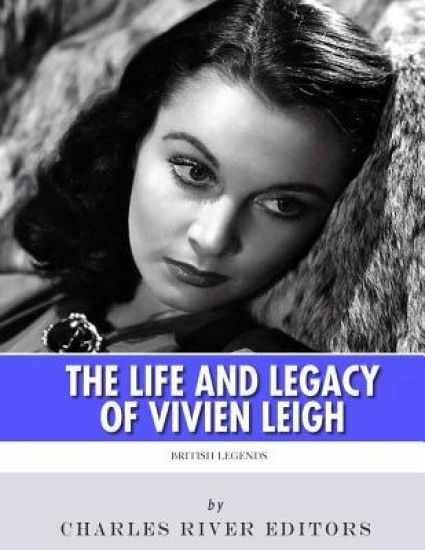
British Legends: The Life and Legacy of Vivien Leigh

British Legends: The Life and Legacy of Vivien Leigh

Charles River

Createspace Independent Publishing Platform
2018
nidottu
*Includes pictures. *Includes quotes about Vivien's life and career, including her own quotes. *Includes a bibliography for further reading. "I'm not a film star, I am an actress. Being a film star is such a false life, lived for fake values and for publicity." - Vivien Leigh A lot of ink has been spilled covering the lives of history's most influential figures, but how much of the forest is lost for the trees? In Charles River Editors' British Legends series, readers can get caught up to speed on the lives of Britain's most important men and women in the time it takes to finish a commute, while learning interesting facts long forgotten or never known. The 1930s were the height of the classical Hollywood era, and it is no accident that 1939 has historically been designated as the pinnacle of Hollywood film history. The era was known for its lavish studio productions, with MGM, RKO, Warner Brothers, Paramount, and 20th Century Fox all operating at the height of their powers. Every major studio possessed a long roster of contract players, with films released at such a rapid pace that it made for an especially competitive environment within the industry. Even while America remained in the throes of the Great Depression, the film industry continued to flourish, and movies easily supplanted the theater as the main attraction for American entertainment. Of course, what made 1939 the watershed year was the release of several critically acclaimed movies, including The Wizard of Oz and Mr. Smith Goes to Washington. But the most famous of the bunch, and perhaps the most famous movie of all, is Gone With the Wind, and one of the most remarkable aspects of the film is that the quintessential Southern belle was played by Vivien Leigh, a British actress still relatively unknown in Hollywood. Vivien was an accomplished stage actress and had already appeared in foreign films during the 1930s, but she was a complete dark horse to get the iconic role she's still associated with, and it only came about because of her persistence in getting cast for the role. 30 years after Gone With the Wind was released, one film critic credited Selznick's "inspired casting" of Vivien Leigh as Scarlett with the film's success. Another 30 years later, the same critic wrote that Leigh "still lives in our minds and memories as a dynamic force rather than as a static presence." While Gone With the Wind made Leigh a big name practically overnight, she continued to buck the usual trend by doing Broadway and even appearing on stage in London during the 1940s, instead of focusing on movies. A lot of this was no doubt due to her famous marriage to Laurence Olivier, himself an accomplished stage and film actor. At the same time, Vivien became notorious for being difficult to work with and unusually temperamental, a byproduct of bipolar disorder that frequently affected her mood and occasionally left her incoherently hysterical. Nevertheless, Vivien was able to recapture the magic in 1951's A Streetcar Named Desire, which cast her in the role of Southern belle yet again. Phyllis Harnoll praised Leigh's Blanche DuBois by saying that, in the London stage production of the play, she showed, "proof of greater powers as an actress than she had hitherto shown." In fact, it was actually during her time as DuBois that she reached the pinnacle of her stage career. Likewise, her role in the movie was described as one "of the greatest performances ever put on film" and "one of those rare performances that can truly be said to evoke both fear and pity." Unfortunately, her life and career faced constant upheaval by both her mental and physical maladies, including tuberculosis, which led to a premature death in 1967. British Legends: The Life and Legacy of Vivien Leigh examines the life and career of one of Hollywood's most famous actresses.
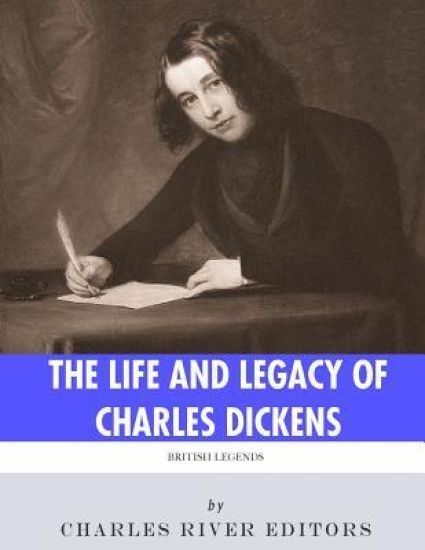
British Legends: The Life and Legacy of Charles Dickens

British Legends: The Life and Legacy of Charles Dickens

Charles River

Createspace Independent Publishing Platform
2018
nidottu
*Includes pictures of Dickens and important people, places, and events in his life. *Explains the real-life inspiration for many of his most famous characters A lot of ink has been spilled covering the lives of history's most influential figures, but how much of the forest is lost for the trees? In Charles River Editors' British Legends series, readers can get caught up to speed on the lives of Great Britain's most important men and women in the time it takes to finish a commute, while learning interesting facts long forgotten or never known. Charles Dickens needs no formal introduction, having been the most popular English writer of the 19th century and still one of the most popular writers in history today. Dickens' upbringing was a mixture of happy times and sad: when he recalled his father being sent to debtor's prison in his memoirs, his tears actually left marks on the page. These qualities eventually helped forge him into a man many regard as the greatest Victorian era novelist, perhaps in the world, and the author of some of the most remarkable fictional characters who retain tremendous staying power to this day, including Fagin, Peepy, David Copperfield and Oliver Twist to name just a few. Unlike other great writers and artists, during his own lifetime Dickens' works enjoyed remarkable popularity and renown, to such an extent that even Queen Victoria and Prime Minister Benjamin Disraeli felicitated and feted Dickens. In the 20th century, well after Dickens's passing, his literary genius was truly and completely appreciated by ordinary readers as well as critics and scholars alike. Dickens's novels, novellas and short stories retain powerful and enduring popularity with the public largely because Dickens, apart from the usual attributes of good fiction writing, connected his thoughts with the universal by using history and the present as bridges. By the time he died at the relatively young age of 58 from a stroke, he was already Europe's most famous writer, and obituaries noted that Dickens was a "sympathiser with the poor, the suffering, and the oppressed." Dickens was interred in Westminster Abbey, a rare honor bestowed only among the greatest and most accomplished Britons. Many of Dickens' novels were written with the concept of social reform in mind, and Dickens' work was often praised for its realism, comic genius and unique personalities. At the same time, however, Dickens' ability as a writer was nearly unrivaled, with his ability to write in prose unquestioned and unmatched. British Legends: The Life and Legacy of Charles Dickens details the writer's life and career, while humanizing the man who overcame a turbulent childhood to become one of the West's greatest writers. Along with pictures of important people, places, and events in his life, you will learn about Charles Dickens like you never have before, in no time at all.
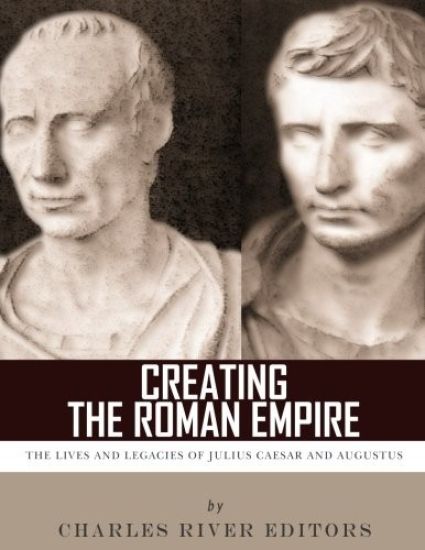
Creating the Roman Empire: The Lives and Legacies of Julius Caesar and Augustus

Creating the Roman Empire: The Lives and Legacies of Julius Caesar and Augustus

Charles River

Createspace Independent Publishing Platform
2018
nidottu
*Weaves the lives of Caesar and Augustus into one gripping narrative detailing the fall of the Republic and the creation of the Roman Empire. *Includes pictures of famous art depicting Caesar, Augustus, and important people, places, and events in their lives. *Discusses the facts and legends surrounding the assassination of Caesar and the deaths of Antony and Cleopatra. Possibly the most important man of antiquity, and even all of history, was Julius Caesar. Alexander Hamilton, the famous American patriot, once remarked that "the greatest man who ever lived was Julius Caesar". Such a tribute, coming from one of the Founding Fathers of the quintessential modern democracy in reference to a man who destroyed the Roman Republic, is testament to the enduring mark that Caesar left upon the world. The ultimate conqueror, statesman, dictator, visionary, and opportunist, during his time in power Caesar expanded the borders of Rome to almost twice their previous size, revolutionized the infrastructure of the Roman state, and destroyed the Roman Republic for good, leaving a line of emperors in its place. His legacy is so strong that his name has become, in many languages, synonymous with power: the Emperors of Austria and Germany bore the title Kaiser, and the Czars of Russia also owe the etymology of their title to Caesar. His name also crept further eastward out of Europe, even cropping up in Hindi and Urdu, where the term for "Emperor" is Kaisar. Even in his time, Caesar was in many ways larger than life, and because of his legacy as virtual founder of the Roman Empire, much of what was written about - and by - him during his life and immediately after his assassination was politically motivated. His successor, Octavian Augustus, had a strong interest in ensuring that Caesar's life be painted in a favorable light, while Caesar's political enemies attempted to paint him as a corrupt, undemocratic dictator who was destroying the old order of the Republic. Of course, Caesar's life and death left a vacuum of power in Rome that was ultimately filled by his chosen heir, Octavian. The importance of Gaius Julius Caesar Augustus (or as he was known from birth, Gaius Octavius "Octavian" Thurinus) to the course of Western history is hard to overstate. His life, his rise to power, his political, social and military achievements, all laid the foundations for the creation of an Empire which would endure for almost five centuries, and whose traditions, laws, architecture and art continue to influence much of Europe and the world today. Octavian was the first true Roman Emperor, and the first man since the Etruscan Tarquins, five centuries earlier, to establish a successful hereditary ruling dynasty in what had been a proud Republic for over half a millennium. He was a canny strategist, an excellent orator, a fine writer, a generous patron of the arts and enthusiastic promoter of public works, but above all he was a master politician. Octavian's great-uncle (and adoptive father) Julius Caesar was a great general, his rival Mark Antony was a great soldier, but as a politician Octavian outmatched them all. Like his adoptive father before him, Octavian is one of those figures whom it is difficult to know exactly what to make of, because he appears, even at a distance, to be larger than life. Yet the amount of personal correspondence and contemporary writings penned by Octavian himself, as well as his friends and associates (and rivals) is such that, when we analyse it all together, a clear picture of the man behind the bronze statue begins to emerge - the man who found Rome a city of bricks, but left her behind a city of marble. Creating the Roman Empire chronicles the lives of Rome's two most important leaders, separating fact from fiction and analyzing their legacies. Along with pictures and a Table of Contents, you will learn about Caesar and Augustus like you never have before.
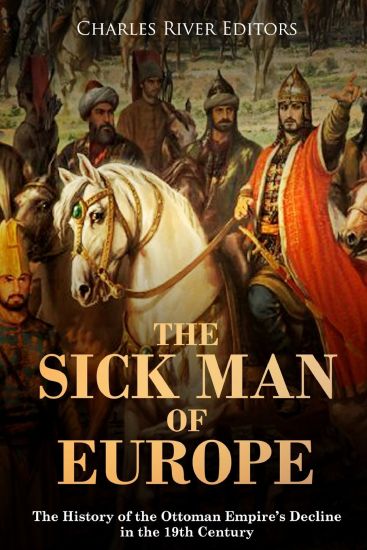
The Sick Man of Europe: The History of the Ottoman Empire's Decline in the 19th Century
*Includes pictures *Includes online resources and a bibliography for further reading The long agony of the "sick man of Europe," an expression used by the Tsar of Russia to depict the falling Ottoman Empire, could almost blind people to its incredible power and history. Preserving its mixed heritage, coming from both its geographic position rising above the ashes of the Byzantine Empire and the tradition inherited from the Muslim Conquests, the Ottoman Empire lasted more than six centuries. Its soldiers fought, died, and conquered lands on three different continents, making it one of the few stable multi-ethnic empires in history, and likely one of the last. Thus, it's somewhat inevitable that the history of its decline is at the heart of complex geopolitical disputes, as well as sectarian tensions that are still key to understanding the Middle East, North Africa and the Balkans. When studying the fall of the Ottoman Empire, historians have argued over the breaking point that saw a leading global power slowly become a decadent empire. The failed Battle of Vienna in 1683 is certainly an important turning point for the expanding empire, as the defeat of Grand Vizier Kara Mustafa Pasha at the hands of a coalition led by the Austrian Habsburg dynasty, Holy Roman Empire and Polish-Lithuanian commonwealth marked the end of Ottoman expansionism. It was also the beginning of a slow decline during which the Ottoman Empire suffered multiple military defeats, found itself mired by corruption, and had to deal with the increasingly mutinous Janissaries (the Empire's initial foot soldiers). Despite it all, the Ottoman Empire would survive for over 200 more years, and in the last century of its life it strove to reform its military, administration and economy until it was finally dissolved. Years before the final collapse of the Empire, the Tanzimat ("Reorganization"), a period of swiping reforms, led to significant changes in the country's military apparatus, among others, which certainly explains the initial success the Ottoman Empire was able to achieve against its rivals. Similarly, the drafting of a new Constitution (Kan n-u Es s , basic law) in 1876, despite it being shot down by Sultan Abdul Hamid II just two years later, as well as its revival by the "Young Turks" movement in 1908, highlights the understanding among Ottoman elites that change was needed, and their belief that such change was possible. During the period that preceded its collapse, the Ottoman Empire was at the heart of a growing rivalry between two of the competing global powers of the time, England and France. The two powers asserted their influence over a declining empire, the history of which is anchored in Europe as much as in Asia. However, while the two powers were instrumental in the final defeat and collapse of the Ottoman Empire, their stance toward what came to be known as the "Eastern Question" - the fate of the Ottoman Empire - is not one of clear enmity. Both England and France found, at times, reasons to extend the life of the sick man of Europe until it finally sided with their shared enemies. Russia's stance toward the Ottoman Empire is much more clear-cut; the rising Asian and European powers saw the Ottomans as a rival, which they strove to contain, divide and finally destroy for more than 300 years in a series of wars against their old adversary. The Sick Man of Europe: The History of the Ottoman Empire's Decline in the 19th Century chronicles the struggles of the vast Turkish empire before World War I brought about its dissolution. Along with pictures of important people, places, and events, you will learn about the decline of the Ottoman Empire like never before.
The Sick Man of Europe: The History of the Ottoman Empire's Decline in the 19th Century
*Includes pictures *Includes online resources and a bibliography for further reading The long agony of the "sick man of Europe," an expression used by the Tsar of Russia to depict the falling Ottoman Empire, could almost blind people to its incredible power and history. Preserving its mixed heritage, coming from both its geographic position rising above the ashes of the Byzantine Empire and the tradition inherited from the Muslim Conquests, the Ottoman Empire lasted more than six centuries. Its soldiers fought, died, and conquered lands on three different continents, making it one of the few stable multi-ethnic empires in history, and likely one of the last. Thus, it's somewhat inevitable that the history of its decline is at the heart of complex geopolitical disputes, as well as sectarian tensions that are still key to understanding the Middle East, North Africa and the Balkans. When studying the fall of the Ottoman Empire, historians have argued over the breaking point that saw a leading global power slowly become a decadent empire. The failed Battle of Vienna in 1683 is certainly an important turning point for the expanding empire, as the defeat of Grand Vizier Kara Mustafa Pasha at the hands of a coalition led by the Austrian Habsburg dynasty, Holy Roman Empire and Polish-Lithuanian commonwealth marked the end of Ottoman expansionism. It was also the beginning of a slow decline during which the Ottoman Empire suffered multiple military defeats, found itself mired by corruption, and had to deal with the increasingly mutinous Janissaries (the Empire's initial foot soldiers). Despite it all, the Ottoman Empire would survive for over 200 more years, and in the last century of its life it strove to reform its military, administration and economy until it was finally dissolved. Years before the final collapse of the Empire, the Tanzimat ("Reorganization"), a period of swiping reforms, led to significant changes in the country's military apparatus, among others, which certainly explains the initial success the Ottoman Empire was able to achieve against its rivals. Similarly, the drafting of a new Constitution (Kan n-u Es s , basic law) in 1876, despite it being shot down by Sultan Abdul Hamid II just two years later, as well as its revival by the "Young Turks" movement in 1908, highlights the understanding among Ottoman elites that change was needed, and their belief that such change was possible. During the period that preceded its collapse, the Ottoman Empire was at the heart of a growing rivalry between two of the competing global powers of the time, England and France. The two powers asserted their influence over a declining empire, the history of which is anchored in Europe as much as in Asia. However, while the two powers were instrumental in the final defeat and collapse of the Ottoman Empire, their stance toward what came to be known as the "Eastern Question" - the fate of the Ottoman Empire - is not one of clear enmity. Both England and France found, at times, reasons to extend the life of the sick man of Europe until it finally sided with their shared enemies. Russia's stance toward the Ottoman Empire is much more clear-cut; the rising Asian and European powers saw the Ottomans as a rival, which they strove to contain, divide and finally destroy for more than 300 years in a series of wars against their old adversary. The Sick Man of Europe: The History of the Ottoman Empire's Decline in the 19th Century chronicles the struggles of the vast Turkish empire before World War I brought about its dissolution. Along with pictures of important people, places, and events, you will learn about the decline of the Ottoman Empire like never before.
Misteriosa Inglaterra: Monstruos, Misterios y Magia en la Nación Inglesa

Misteriosa Inglaterra: Monstruos, Misterios y Magia en la Nación Inglesa

Charles River

Createspace Independent Publishing Platform
2018
nidottu
"Los amuletos anglosajones... son de suma importancia porque proporcionan m s que vagas referencias de textos cortos y excepcionales. No puede decirse que lo revelan todo, pues en numerosos puntos lamentablemente nos fallan, pero son lo suficientemente numerosos y, tomados como un cuerpo, lo suficientemente completos para ofrecer m s que un intrigante atisbo de un mundo extra o. El velo de mistificaci n que envuelve a la magia parece ser aqu delgado y transparente". - G. Storms. Anglo-Saxon Magic Magia anglosajona] (1948) Inglaterra es una tierra antigua empapada de historia y tradici n, llena de ruinas prehist ricas, castillos majestuosos y un campo esculpido por milenios de habitaci n humana. Su ondulante campi a est salpicada de t mulos funerarios y c rculos de piedra prehist ricos. Melanc licos castillos contienen historias de sangre y honor. Iglesias medievales tienen ventanas con intrincados vitrales y tallas truculentas, que reflejan una mezcla de esperanza y oscuridad. Cada aldea y caser o posee relatos que se remontan siglos, y festivales tradicionales con ra ces paganas. Por lo tanto, no sorprende que Inglaterra sea una tierra llena de misterios. Durante siglos la gente ha contado historias de fantasmas que acechan en edificios hist ricos, criaturas extra as que merodean en pr stinos bosques, e inexplicables caminos que enlazan sus sitios antiguos. Misteriosa Inglaterra: Monstruos, Misterios y Magia en la Naci n Inglesa ofrece una muestra de las muchas extra as historias y fen menos inexplicados que hacen de Inglaterra un lugar tan intrigante. Forma parte de una serie en curso por Sean McLachlan y Charles River Editors que cubre los misterios y curiosidades de diversos lugares en todo el mundo, y que incluye Extra o Salvaje Oeste, Extra a Costa Oeste, Misterios del Sur, Misteriosa Nueva Inglaterra y Extra a Escocia. En conjunto con fotograf as de personas, lugares y eventos importantes, aprender s sobre los misterios de Inglaterra como nunca.
Misteriosa Inglaterra: Monstruos, Misterios y Magia en la Nación Inglesa

Misteriosa Inglaterra: Monstruos, Misterios y Magia en la Nación Inglesa

Charles River

Createspace Independent Publishing Platform
2018
nidottu
"Los amuletos anglosajones... son de suma importancia porque proporcionan m s que vagas referencias de textos cortos y excepcionales. No puede decirse que lo revelan todo, pues en numerosos puntos lamentablemente nos fallan, pero son lo suficientemente numerosos y, tomados como un cuerpo, lo suficientemente completos para ofrecer m s que un intrigante atisbo de un mundo extra o. El velo de mistificaci n que envuelve a la magia parece ser aqu delgado y transparente". - G. Storms. Anglo-Saxon Magic Magia anglosajona] (1948) Inglaterra es una tierra antigua empapada de historia y tradici n, llena de ruinas prehist ricas, castillos majestuosos y un campo esculpido por milenios de habitaci n humana. Su ondulante campi a est salpicada de t mulos funerarios y c rculos de piedra prehist ricos. Melanc licos castillos contienen historias de sangre y honor. Iglesias medievales tienen ventanas con intrincados vitrales y tallas truculentas, que reflejan una mezcla de esperanza y oscuridad. Cada aldea y caser o posee relatos que se remontan siglos, y festivales tradicionales con ra ces paganas. Por lo tanto, no sorprende que Inglaterra sea una tierra llena de misterios. Durante siglos la gente ha contado historias de fantasmas que acechan en edificios hist ricos, criaturas extra as que merodean en pr stinos bosques, e inexplicables caminos que enlazan sus sitios antiguos. Misteriosa Inglaterra: Monstruos, Misterios y Magia en la Naci n Inglesa ofrece una muestra de las muchas extra as historias y fen menos inexplicados que hacen de Inglaterra un lugar tan intrigante. Forma parte de una serie en curso por Sean McLachlan y Charles River Editors que cubre los misterios y curiosidades de diversos lugares en todo el mundo, y que incluye Extra o Salvaje Oeste, Extra a Costa Oeste, Misterios del Sur, Misteriosa Nueva Inglaterra y Extra a Escocia. En conjunto con fotograf as de personas, lugares y eventos importantes, aprender s sobre los misterios de Inglaterra como nunca.
La KGB: La historia y el legado de la notoria agencia de espionaje de la Unión Soviética
La KGB es una de las abreviaturas m s famosas del siglo XX, y se ha convertido en sin nimo de las tenebrosas y a menudo violentas acciones de la polic a secreta de la Uni n Sovi tica y de las agencias de seguridad interna. De hecho, se utiliza a menudo para referirse a las agencias de seguridad del Estado Sovi tico a lo largo de su historia, desde la creaci n de la Checa (Comisi n Extraordinaria) en 1917 hasta la eliminaci n oficial de la KGB en 1992. Tanto si se relaciona con los excesos de la Guerra Civil rusa, las purgas de Stalin e incluso con Vladimir Putin, la KGB ha sido considerada durante mucho tiempo como el peor ogro del Occidente durante la segunda mitad del siglo XX. La KGB: La historia y el legado de la notoria agencia de espionaje de la Uni n Sovi tica examina la historia de una de las agencias m s famosas de la historia. Adem s de fotos que muestran a personas importantes, lugares y eventos, aprender sobre la KGB como nunca antes.
La disolución del imperio otomano: La historia y el legado del declive de los turcos otomanos y la creación del Oriente Medio moderno
La larga agon a del "hombre enfermo de Europa", una expresi n utilizada por el Zar de Rusia para describir el imperio en decadencia, podr a casi cegar a la gente sobre su incre ble poder e historia. Preservando su herencia mixta, proveniente tanto de su posici n geogr fica que se elevaba sobre las cenizas del Imperio Bizantino como de la tradici n heredada de las conquistas musulmanas, el Imperio Otomano dur m s de seis siglos. Sus soldados lucharon, murieron y conquistaron tierras en tres continentes diferentes, convirti ndolo en uno de los pocos imperios multi tnicos estables en la historia, y probablemente uno de los ltimos. Durante el per odo que precedi a su colapso, el Imperio Otomano estuvo en el coraz n de una creciente rivalidad entre dos de las potencias globales rivales de la poca, Inglaterra y Francia. Ambas potencias afirmaron su influencia sobre un imperio en declive, cuya historia est anclada tanto en Europa como en Asia. Sin embargo, mientras que las dos potencias fueron instrumentales en la derrota final y el colapso del Imperio Otomano, su postura hacia lo que lleg a conocerse como la "Cuesti n Oriental" - el destino del Imperio Otomano - no es de clara enemistad. Tanto Inglaterra como Francia encontraron, a veces, razones para prolongar la vida del enfermo europeo hasta que finalmente se pusieron de parte de sus enemigos comunes. La postura de Rusia hacia el Imperio Otomano es mucho m s clara; las crecientes potencias asi ticas y europeas vieron a los otomanos como un rival, que se esforzaron por contener, dividir y finalmente destruir durante m s de 300 a os en una serie de guerras contra su viejo adversario. Por ltimo, pero no menos importante, el surgimiento del nacionalismo entre los pueblos bajo dominaci n otomana fue un factor clave en la disoluci n del imperio. A finales del siglo XIX, poco antes de su colapso final, el territorio del Imperio Otomano disminuy debido a la creciente demanda de independencia proveniente de diferentes etnias que gobern durante cientos de a os. La inclusividad del Imperio, que lo marc como sucesor directo del Imperio Bizantino, fue ciertamente desafiada por un viejo liderazgo. La incapacidad del Imperio Otomano para crear una identidad compartida, un Estado central d bil y las crecientes disensiones internas fueron algunos de los principales factores que explicaron su larga desaparici n. Tal fracaso tambi n explica la necesidad de crear una nueva forma de identidad, que en ltima instancia fue provista por Mustaf Kemal, el padre fundador de la Turqu a moderna. La Disoluci n del Imperio Otomano: La Historia y Legado de la Decadencia de los Turcos Otomanos y la Creaci n del Oriente Medio Moderno narra el fin de uno de los imperios m s influyentes de la historia, y las secuelas. Junto con fotos de personas importantes, lugares y eventos, aprender sobre la disoluci n del Imperio Otomano como nunca antes.
Legends of the Ancient World: The Life and Legacy of Hannibal

Legends of the Ancient World: The Life and Legacy of Hannibal

Charles River

Createspace Independent Publishing Platform
2018
nidottu
*Includes art depicting Hannibal and other important people in his life. *Includes maps of Hannibal's most famous battles. *Discusses the debate over which route Hannibal took to cross the Alps. "God has given to man no sharper spur to victory than contempt of death." - Hannibal A lot of ink has been spilled covering the lives of history's most influential figures, but how much of the forest is lost for the trees? In Charles River Editors' Legends of the Ancient World series, readers can get caught up to speed on the lives of antiquity's most important men and women in the time it takes to finish a commute, while learning interesting facts long forgotten or never known. In the history of war, only a select few men always make the list of greatest generals. Napoleon. Caesar. Alexander. They are always joined by Hannibal, who has the distinction of being the only man who nearly brought Rome to its knees before its decline almost 700 years later. Rome never suffered a more horrifying defeat in its history than at Cannae, and indeed, Hannibal nearly rewrote the course of Western history during the Second Punic War. Even today there remains great debate on just how he accomplished his masterful invasion of Italy across the Alps. Since his army included war elephants, historians still argue over exactly where and how he crossed over 2,000 years after he managed that incredible feat. Hannibal will always be listed among history's greatest generals, and his military campaign in Italy during the Second Punic War will always be studied, but part of the aura and mystique surrounding the Carthaginian legend is that there is still a lot of mystery. Since Carthage was destroyed by Rome a generation after Hannibal, most of what is known about Hannibal came from the very people he tormented in the late 2nd century B. C., and thus much of his background and life story is unknown. Moreover, while military historians are still amazed that he was able to maintain his army in Italy near Rome for nearly 15 years, scholars are still puzzled over some of his decisions, including why he never attempted to march on Rome in the first place. Legends of the Ancient World: The Life and Legacy of Hannibal looks at the life of the Carthaginian hero, explores some of the mysteries and myths surrounding his life and campaigns, and analyzes his legacy, which has remained strong over 2,000 years after his death and promises to last many more. Along with pictures of important people, places, and events, you will learn about Hannibal like you never have before, in no time at all.
American Legends: The Life of Jackie Gleason

American Legends: The Life of Jackie Gleason

Charles River

Createspace Independent Publishing Platform
2018
nidottu
*Includes pictures. *Includes Gleason's own quotes. *Includes a bibliography for further reading. "One of these days... One of these days... POW Right in the kisser " - Jackie Gleason as Ralph Kramden A lot of ink has been spilled covering the lives of history's most influential figures, but how much of the forest is lost for the trees? In Charles River Editors' American Legends series, readers can get caught up to speed on the lives of America's most important men and women in the time it takes to finish a commute, while learning interesting facts long forgotten or never known. If Lon Chaney will forever be recognized as The Man with a Thousand Faces, Jackie Gleason holds a legitimate claim to being The Man with a Thousand Personas. Indeed, during his time hosting The Jackie Gleason Show on television, he developed numerous alter egos, including tough guy Rudy the Repairman, the energetic Joe the Bartender, and the alcoholic Rum Dum. Physically, there was no mistaking Jackie Gleason (the way one certainly could with Lon Chaney), but Gleason also possessed an uncanny ability to alternate between personas. In the years before the Rat Pack made the nightclub lifestyle chic and glamorous on a national scale, Jackie Gleason presided as perhaps the foremost nightclub figure in America, and nobody excelled at situation comedy as well as he. Paradoxically, the iconic element of Jackie Gleason's persona was that he was able to maintain so many personas simultaneously, and in a sense, each of these characters bears traces of the "real" Jackie Gleason, but the fact remains that the many personas of Jackie Gleason make it difficult to figure out exactly who Jackie Gleason actually was beneath his show business facades. Perhaps just as ironically, today Gleason is best remembered for The Honeymooners, which began as a sketch within other shows like The Jackie Gleason Show before becoming its own spinoff. Though it lasted just 39 episodes on its own, Gleason continued using The Honeymooners as sketches in other shows, and he is most closely associated with the character Ralph Kramden today, especially his recurring threat to send his wife Alice to the moon. Gleason's lifestyle reveals not only the glamorous perks of spending one's life in show business but also the physical and emotional tolls that accompany needing to please an audience on a nightly basis. Moreover, even before becoming a professional, Gleason experienced great adversity, having lost his mother at a young age and having been abandoned by his father, traumatic events that heavily shaped his later career. Jackie Gleason was both an exuberant figure and a very sad one as well, and looking at his upbringing, personal life, and career demonstrate both his many achievements and the underlying drama and anguish behind it all. American Legends: The Life of Jackie Gleason looks at both the life and career of Jackie Gleason, which were in many respects inseparable throughout much of his adult life. Along with pictures of important people, places, and events, you will learn about Jackie Gleason like never before, in no time at all.
American Legends: The Life of Jack Nicholson

American Legends: The Life of Jack Nicholson

Charles River

Createspace Independent Publishing Platform
2018
nidottu
*Includes pictures. *Includes Nicholson's quotes about his life and career. *Includes a bibliography for further reading. "If I go into a restaurant there's a very good chance that I'm going to spend my time being the mayor." - Jack Nicholson A lot of ink has been spilled covering the lives of history's most influential figures, but how much of the forest is lost for the trees? In Charles River Editors' American Legends series, readers can get caught up to speed on the lives of America's most important men and women in the time it takes to finish a commute, while learning interesting facts long forgotten or never known. In 1994, the American Film Institute gave a Lifetime Achievement Award to Jack Nicholson, who became one of the youngest actors to ever receive the award. It was a fitting choice, given that Nicholson was already one of the most decorated and critically acclaimed actors in the history of Hollywood, but such tributes typically come as a capstone to a star's career, not when the actor is still in his 50s. In fact, Nicholson would go on to win the Oscar for Best Actor just a few years after receiving the Lifetime Achievement Award as a result of As Good As It Gets (1997), and he would earn another Academy Award nomination for About Schmidt (2002). Those two would give him 12 Academy Award nominations, more than any other man in history, and make him one of just two actors to be nominated in every decade between 1960 and 2010. In addition to winning so many awards, many of Nicholson's roles have become pop culture fixtures, and many of his most famous lines have become part of the lexicon, helping cement his legacy and making him a living legend. Americans of all ages are familiar with the classic movies Nicholson acted in, particularly Easy Rider, Chinatown, The Passenger, The Shining, Batman, A Few Good Men, The Pledge, About Schmidt, and The Departed, and his career has continued into the current decade, thanks to his ability to seamlessly transition into playing different kinds of elderly roles in everything from dramas to comedies. While any actor would be proud to have his resume, Nicholson has transcended Hollywood stardom and has become his own institution, instantly recognizable not just for his past roles and sound bites but also for his prominent status everywhere he goes. Whether he's sitting courtside at a Lakers game or hanging out with other celebrities, Nicholson has crafted an image unlike anyone else, combining cool with bad boy behavior. From conducting bizarre pranks with Hunter S. Thompson to fighting lawsuits and dating models, the always quotable Nicholson has seemingly reveled in it all, once noting, "Well, I'm not going to sit here and pretend that I haven't been a rogue most of my life." American Legends: The Life of Jack Nicholson examines the life and career of America's most critically acclaimed actor. Along with pictures of important people, places, and events, you will learn about Jack Nicholson like never before, in no time at all.
American Legends: The Wright Brothers

American Legends: The Wright Brothers

Charles River

Createspace Independent Publishing Platform
2018
nidottu
*Includes pictures of the Wright brothers, their planes, and important events. *Includes a Bibliography for further reading. "For some years I have been afflicted with the belief that flight is possible to man. My disease has increased in severity and I feel that it will soon cost me an increased amount of money if not my life. I have been trying to arrange my affairs in such a way that I can devote my entire time for a few months to experiment in this field." - Wilbur Wright, 1900 A lot of ink has been spilled covering the lives of history's most influential figures, but how much of the forest is lost for the trees? In Charles River Editors' American Legends series, readers can get caught up to speed on the lives of America's most important men and women in the time it takes to finish a commute, while learning interesting facts long forgotten or never known. The lives of Wilbur and Orville Wright are quintessential American stories. Growing up in America's heartland, the boys lived very ordinary lives with 5 other siblings and worked in printing jobs and repair jobs that involved tinkering with tools and bicycles. But at the end of the 20th century, one of the brothers' passions became an obsession, especially for Wilbur, who would later write, "My brother and I became seriously interested in the problem of human flight in 1899." The Wright Brothers initially underestimated the difficulties involved in flying, and they were apparently surprised by the fact that so many others were working on solving the "problem of human flight" already. Decades before their own historic plane would end up in the National Air & Space Museum, Wilbur and Orville asked the Smithsonian for reading materials and brushed up on everything from the works of their contemporaries to Leonardo Da Vinci. Undeterred by the work, and the fact that several would-be pioneers died in crashes trying to control gliders, the Wright Brothers tested out gliding at Kitty Hawk in North Carolina for several years, working to perfect pilot control before trying powered flight. In December 1903, the brothers had done enough scientific work with concepts like lift to help their aeronautical designs, and they had the technical know-how to work with engines. On December 17, the brothers took turns making history's first successful powered flights. The fourth and final flight lasted nearly a minute and covered nearly 900 feet. The Wright Flyer I had just made history, and minutes later it would be permanently damaged after wind gusts tipped it over; it would never fly again. Although the Wright Brothers are still famous for the first flight, the rest of their story is often overlooked, especially their subsequent contributions in the field of aviation. Far from merely experimenting for a few weeks, Wilbur would work in aviation until dying of typhoid at the age of 45 in 1912, and it fell upon Orville to continue their business crucial aviation developments. By the time Orville died in 1948, planes had nearly reached supersonic speeds, a far cry from the days of bicycles and carriages he knew as a kid. American Legends: The Wright Brothers profiles the lives, careers, and legacies of the famous brothers. Along with pictures of important people, places, and events, you will learn about the Wright Brothers like you never have before, in no time at all.
American Legends: The Salem Witch Trials

American Legends: The Salem Witch Trials

Charles River

Createspace Independent Publishing Platform
2018
nidottu
*Includes descriptions of the trials and executions of the accused. *Includes testimony from some of the cases and the petitions of some of the accused asking for clemency. *Includes pictures depicting important people, places, and events. *Includes a Bibliography for further reading. "More than once it has been said, too, that the Salem witchcraft was the rock on which the theocracy shattered." - George Lincoln Burr A lot of ink has been spilled covering the lives of history's most influential figures, but how much of the forest is lost for the trees? In Charles River Editors' American Legends series, readers can get caught up to speed on the lives of America's most important men and women in the time it takes to finish a commute, while learning interesting facts long forgotten or never known. The sleepy town of Salem, Massachusetts was not unlike every other small village that dotted the countryside around Boston until 1692, when religious authorities held a series of hearings accusing dozens of people of witchcraft across a handful of towns outside of Boston, including Ipswich and Andover. However, since the most notorious trials were held in Salem, they have been known ever since as the Salem Witch Trials. Today the Salem Witch Trials are often remembered as being a relic of a superstitious past, and Salem has transformed itself into a tourist haven and Halloween destination by capitalizing off the Salem Witch trials. But it was deadly serious in 1692, when 19 men and women found themselves taken to "Gallows Hill" and hanged for being witches. Another man who was over 80 years old was pressed to death for refusing to be tried for witchcraft. And from February 1692 - May 1693, hundreds of others were accused of witchcraft, and dozens of them were imprisoned for months until the mass hysteria finally died down. The Salem Witch Trials are still taught to American schoolchildren, but much of the context is removed from the narrative, and important questions are often never posed. How did the Salem Witch Trials go on for over a year? Why did it happen in Salem? Why were the condemned people accused of witchcraft? American Legends: The Salem Witch Trials chronicles the history that led up to the infamous trials, and the legends and myths surrounding them. Along with pictures of important people, places, and events, you will learn about the Salem Witch Trials like you never have before, in no time at all.
American Legends: The Marx Brothers

American Legends: The Marx Brothers

Charles River

Createspace Independent Publishing Platform
2018
nidottu
*Includes pictures. *Includes the brothers' funniest quotes. *Includes a bibliography for further reading. "The world would not be in such a snarl, had Marx been Groucho instead of Karl." - Irving Berlin "I sent the club a wire stating, 'PLEASE ACCEPT MY RESIGNATION. I DON'T WANT TO BELONG TO ANY CLUB THAT WILL ACCEPT PEOPLE LIKE ME AS A MEMBER.'" - Groucho Marx A lot of ink has been spilled covering the lives of history's most influential figures, but how much of the forest is lost for the trees? In Charles River Editors' American Legends series, readers can get caught up to speed on the lives of America's most important men and women in the time it takes to finish a commute, while learning interesting facts long forgotten or never known. When the American Film Institute ranked its top 50 screen legends of the 20th century, only one team of performers earned a collective spot: the Marx Brothers. Famous throughout the country for nearly half a century, several of the Marx Brothers performed together for over 40 years, and their nicknames - Groucho, Harpo, Chico, Gummo and Zeppo - are all well known today, especially Groucho. From the vaudeville stage to movie theaters, millions saw their performances, and the brothers became not only one of the most popular acts but the kind that paved the way for subsequent groups like The Three Stooges. As beloved and culturally significant as the Marx Brothers are, it is also important to acknowledge that the character they portrayed in their films were clearly personas, so one of the challenges of any close analysis of their lives involves digging past their performances and attempting to figure out what they were truly like as people. How much did the Groucho Marx audiences saw onscreen correspond with his offscreen personality, and where are the nuances and discrepancies that exist between the brothers' private and public selves? If anything, it's important to determine how their personas were actually shaped, a process that did not actually crystallize until Groucho was well into his adulthood. At the same time, the dynamic between the siblings, as well as the impact that their parents had on them, all necessarily influenced their careers. Analyzing these influences on their lives helps explain how the formation of the Marx Brothers was the result of a lengthy process, and just why no one could have justifiably predicted that they would achieve such fame and cultural status. American Legends: The Marx Brothers examines the lives and careers of one of America's most iconic performance teams. Along with pictures of important people, places, and events, you will learn about the Marx Brothers like never before, in no time at all.
American Legends: The Life of Henry Kissinger

American Legends: The Life of Henry Kissinger

Charles River

Createspace Independent Publishing Platform
2018
nidottu
*Includes pictures *Includes Kissinger's own quotes about his life and career *Includes online resources, footnotes and a bibliography for further reading *Includes a table of contents "There cannot be a crisis next week. My schedule is already full." - Henry Kissinger "The longer I am out of office, the more infallible I appear to myself." - Henry Kissinger A lot of ink has been spilled covering the lives of history's most influential figures, but how much of the forest is lost for the trees? In Charles River Editors' American Legends series, readers can get caught up to speed on the lives of America's most important men and women in the time it takes to finish a commute, while learning interesting facts long forgotten or never known. The latter half of the 20th century was privy to one of the greatest displays of ongoing international diplomacy seen in American history, but to say that Henry A. Kissinger's career as an American diplomat was purely American would be short-sighted and simplistic. The diplomatic atmosphere, particularly in the 1970s, was far from the image of a public official manning an office in Washington, D. C., greeting foreign dignitaries, and traveling on occasion to sign foreign agreements. In the post-World War II environment, old allies became new enemies, and a series of crises appeared almost simultaneously around the world, involving virtually every nation in the world, on every continent. From Richard Nixon's opening of relations with China to the ensuing conflict with Taiwan, as well as the potential benefits of d tente with the Soviet Union, a fellow nuclear power, Secretary of State Kissinger had his hands full. In addition to that, he had to deal with the churning of leadership changes and military rule in South America, the seething tension between the newly-founded Israel and its surrounding Arab states. The diplomatic demands on the United States as a central and powerful presence were profound and ongoing. As the man who would become the 56th American Secretary of State, Kissinger presided over a vast network of partnerships, rivalries, cultural obstacle courses, and world ideologies. His dealings with every section of the globe were conducted in parallel regimens of public and private negotiations, and power plays in both natural and purposefully manipulated scenarios. As a staunch devotee of the "Realpolitik" concept, which espouses a dispassionate, amoral approach to all conflict, based on ultimate practicality and circumstantial realism, Kissinger, with his deeply embedded pragmatic streak, has been hailed by some as the Archimedes of Diplomacy, a diplomatic genius. Others, on both the left and right, refer to him overtly as a war criminal, with some still insisting that he be brought to justice decades after the zenith of his career for surreptitious policies that interfered with the normal progression of foreign governments. All, however, agree that Kissinger was a master of power plays and superb rhetorical influence; whether ruthless or gentle, he was a diplomatic artist who could inexplicably "manufacture opportunities out of chaos." Through his work with the Nixon administration, Kissinger ultimately became the most celebrated foreign diplomat since Thomas Jefferson, and for a time, he was, according to a national Gallup Poll, the most popular and admired man in America. The highest ranking Jewish official in the history of the United States, even Egyptian politicians sitting across the desk in direct and vehement opposition referred to him behind closed doors as "the magician." American Legends: The Life of Henry Kissinger explores the life and career of one of America's most famous diplomats. Along with pictures of important people, places, and events, you will learn about Kissinger like never before, in no time at all.
American Legends: The Life of Henry David Thoreau

American Legends: The Life of Henry David Thoreau

Charles River

Createspace Independent Publishing Platform
2018
nidottu
*Includes dozens of Thoreau's quotes. *Includes Emerson's article about Thoreau's life in the August 1862 edition of Atlantic Monthly. *Includes pictures of Thoreau and important people and places in his life. *Includes a Bibliography of Thoreau's works and works about him. "A living dog is better than a dead lion. Shall a man go and hang himself because he belongs to the race of pygmies, and not be the biggest pygmy that he can? Let every one mind his own business, and endeavor to be what he was made. Why should we be in such desperate haste to succeed and in such desperate enterprises? If a man does not keep pace with his companions, perhaps it is because he hears a different drummer. Let him step to the music which he hears, however measured or far away." - Henry David Thoreau A lot of ink has been spilled covering the lives of history's most influential figures, but how much of the forest is lost for the trees? In Charles River Editors' American Legends series, readers can get caught up to speed on the lives of America's most important men and women in the time it takes to finish a commute, while learning interesting facts long forgotten or never known. In the mid-19th century, Romantic literature was still in full bloom across the West, but some American authors began producing literature that, while still Romantic, was unique enough to be considered a different genre. This new genre, Transcendentalism, focused on the spirituality of the self and nature, not rejecting religion outright but concentrating on pragmatism and the importance of individuals as the spiritual center of the cosmos. In addition to drawing upon the Age of Enlightenment, Transcendentalist authors also utilized the philosophy of Plato, who taught that self-fulfillment through attaining knowledge should be an individual's ultimate goal. One of the most famous Transcendentalists, and possibly its most ardent practitioner, was Henry David Thoreau (1817-1862). As a prot g of Ralph Waldo Emerson, Thoreau took the values of the movement to heart and was particularly interested in the interconnection between man and nature, writing in Walden, "Most of the luxuries and many of the so-called comforts of life are not only not indispensable, but positive hindrances to the elevation of mankind." That famous work was Thoreau's account of his experience living for two years in a small cabin in a forest along the shore of Walden Pond in Concord, Massachusetts. In 1846, Thoreau was arrested for failing to pay taxes, which was based on his opposition to slavery and other ways the government spent taxpayers' money. After being freed, he gave a lecture about the roles of governments and individuals in society, which eventually became the famous essay "Civil Disobedience." In addition to rejecting any government "which is the slave's government also," Thoreau famously advocated "the majority of one", calling upon people to break unjust laws. As fate would have it, Thoreau's message of civil disobedience has resonated more than any of his other Transcendentalist values, and it had a profound influence on the philosophy and nonviolent protests of activists like Mahatma Gandhi and Martin Luther King, Jr. American Legends: The Life of Henry David Thoreau looks at the life and work of Thoreau, and it examines his ideology and the Transcendentalist movement. Along with pictures of important people and places, you will learn about Thoreau like you never have before, in no time at all.
American Legends: The Life of Henry Fonda

American Legends: The Life of Henry Fonda

Charles River

Createspace Independent Publishing Platform
2018
nidottu
*Includes pictures. *Includes quotes about Fonda and Fonda's own quotes about his life and career. *Includes a bibliography for further reading. "I must have had faith that day. When I went out, I was Henry Fonda again. An unemployed actor but a man." - Henry Fonda A lot of ink has been spilled covering the lives of history's most influential figures, but how much of the forest is lost for the trees? In Charles River Editors' American Legends series, readers can get caught up to speed on the lives of America's most important men and women in the time it takes to finish a commute, while learning interesting facts long forgotten or never known. Among all of Hollywood's iconic leading men, arguably none proved as versatile at acting as Henry Fonda, whose career spanned six decades and earned him Academy Awards for roles in various genres. After breaking into Hollywood in 1935, Fonda quickly rose the ranks, earning an Academy Award nomination in the classic Twelve Angry Men (1940), but Fonda had the kind of staying power that most actors could only dream of. In fact, Fonda had already received an honorary lifetime achievement award from the Academy (in 1980) before winning the Oscar for Best Actor for his role in On Golden Pond (1981), an award he earned when he was already well into his 70s and only about a year away from his death. Fonda would also earn Emmy nominations for his work on two different shows and even a Grammy for a spoken word album in 1977. And as if all that wasn't enough, he was also a critically acclaimed stage performer, winning a Tony for Mister Roberts in 1948. A lot of Fonda's success could be attributed to the fact that he could convincingly play the all-American man that everybody in the nation adored and/or wanted to be, to the extent that one magazine called him "the man we wished we lived next door to." At the same time, Fonda could portray characters like Tom Joad, who maintain their status as heroes even while breaking rules on-screen. His personal life also seemed to mirror his acting versatility; while his World War II service helped cement his all-American persona, his family life was also extremely troubled, even after he became recognized as the patriarch of a family full of famous actors, including Jane and Bridget Fonda. When Henry played a distant father on-screen in On Golden Pond alongside his daughter Jane, the autobiographical elements of the film were apparent to those who knew him. One of the remarkable aspects of Henry Fonda's career is that he was able to play vastly different roles despite not changing his style of acting. As Henry's distant personality would suggest, he hailed from an old-school breed of actors who didn't express emotions outwardly, and even as his progeny would become associated with Method Acting, Henry remained in the same mold as actors like Cary Grant and Jimmy Stewart. Of course, the seemingly effortless nature of Henry's acting only made him more endearing to contemporary audiences, even as his acting style would eventually go out of style. American Legends: The Life of Henry Fonda examines the life and career of one of the Golden Era of Hollywood's biggest stars. Along with pictures of important people, places, and events, you will learn about Henry Fonda like never before, in no time at all.