Kirjojen hintavertailu – 12 903 727 kirjaa ja 27 kauppaa

Kirjailija

Charles River

Kirjat ja teokset yhdessä paikassa: 4 673 kirjaa, julkaisuja vuosilta 2013–2022, suosituimpiin kuuluu William Powell and Myrna Loy: The Lives and Careers of One of Classical Hollywood's Most Iconic Duos. Vertaile teosten hintoja ja tarkista saatavuus suomalaisista kirjakaupoista.

4 673 kirjaa

Kirjojen julkaisuvuodet: 2013–2022.

The Great Fire of Rome: The Story of the Most Famous Fire in Roman History

The Great Fire of Rome: The Story of the Most Famous Fire in Roman History

Charles River

Createspace Independent Publishing Platform
2018
nidottu
*Includes pictures *Includes ancient accounts about Nero and the Great Fire *Includes a bibliography for further reading *Includes a table of contents "A disaster followed, whether accidental or treacherously contrived by the emperor, is uncertain, as authors have given both accounts, worse, however, and more dreadful than any which have ever happened to this city by the violence of fire. It had its beginning in that part of the circus which adjoins the Palatine and Caelian hills, where, amid the shops containing inflammable wares, the conflagration both broke out and instantly became so fierce and so rapid from the wind that it seized in its grasp the entire length of the circus." Among all the natural disasters that struck Rome, one of the most well-known is the Great Fire of Rome, in part due to the popular myth that Emperor Nero fiddled while the Eternal City burned, even though no fiddle existed in 1st century Rome. Suetonius and Cassius Dio, two of Nero's ancient biographers, are adamant that it was he himself who set the fire (or ordered it set), and they are the originators of the myth that Nero played the lyre, danced around his palace and sang "The Sack of Troy" while Rome burned outside his windows. Even though those accounts are likely apocryphal, it is true that on the night of July 18th, 64 A. D., the most significant event of Nero's time in power - and the one which, for better or for worse, would seal his name in infamy throughout the ages - took place. What became known as the Great Fire of Rome started sometime between the night of the 18th and the earliest hours of the 19th, and it consumed almost a quarter of the city as it burned out of control for five days. Interestingly, though there is archaeological evidence for the fact that the fire actually took place, and its extent was as significant as the sources seem to indicate, Tacitus is the only one who gives a comprehensive account of the fire, with other biographers not even mentioning it (aside from Pliny, who mentions it in connection to another incident). It is most likely that the fire was an accident, likely caused by flammable materials near the Circus Maximus. Indeed, blazes of such kind were common until the 19th century in overcrowded cities with wooden houses closely packed together, lit and heated by open flames, and with no organized official fire brigades. In fact, Rome would suffer two more major fires in the next 15 years. Regardless of its origins, the fire was a disaster for Rome. Though casualties are unknown, it destroyed scores, if not hundreds, of private residences, commercial premises, and public buildings. According to Tacitus, Nero quickly hurried back from Antium when news reached him of the fire and opened the doors of his palace to common people dispossessed by the flames. Tacitus claim Nero also spent days, sometimes without his bodyguards, combing the smoking ruins for victims and partially funding the relief effort out of his own private fortune. Though this is partially at odds with Nero's perceived character, his populist generosity to the lower classes, which was a hallmark of his reign, was in keeping with his previous legislation and sounds like it could have a kernel of truth. Either way, the Great Fire of Rome permanently tarnished Nero's reign, and it ultimately helped bring about the downfall that ended with the Roman emperor committing suicide just a few years later in 68 A. D. The Great Fire of Rome chronicles the most famous fire to strike the Roman Empire, and the important aftermath of the damage it caused.

The Great Diamond Hoax of 1872: The History of 19th Century America's Most Notorious Fraud
*Includes pictures *Includes contemporary accounts of the hoax written by victims and newspapers *Includes online resources and a bibliography for further reading *Includes a table of contents " T]he most gigantic and barefaced swindle of the age." - The San Francisco Chronicle's description of the Great Diamond Hoax of 1872 It's only natural that people have always been attracted to get-rich-quick schemes, and in spite of their best efforts, almost everyone has been tempted at one time or another by a promise of riches that can be obtained with little or no work. The attraction is even stronger during periods when ordinary people have indeed struck it rich, particularly the California Gold Rush and the Yukon Gold Rush in the mid-19th century and late 19th century respectively. Having heard stories of men who went west with nothing and returned as millionaires, people were more inclined than ever before to believe that "there's gold (or silver or diamonds) in them thar hills." It would take decades of research to fully understand that most of the miners in the West did not strike it rich, and that those who fared best were mining companies and those who sold goods to miners. But regardless, fraudsters also understood that the best way to make a profit off the gold rush was to fleece the people trying to find the gold, and before long a large number of shysters hoped to make their own pot of riches in a far less honorable way. As Patricia O'Toole, author of Money and Morals in America: A History, noted, "I see the Diamond Hoax as one in a long line of scams made possible by the fact that the United States truly was a land of opportunity. Many a legitimate fortune seemed to be made overnight, so it was particularly easy for a con artist to convince a gullible American that he too could wake up a millionaire." There were many schemes carried out in the 19th century, and even professional con men like Soapy Smith, but perhaps no fraud in the region was as infamous as the Great Diamond Hoax of 1872. It began with a major, legitimate diamond strike in South Africa. From there, the fever quickly spread to America, spurred on by tall tales told by trappers from Jim Bridger to Kit Carson of diamonds and other precious gems that could be picked up by the side of the road as one walked through the deserts of the West. Most of these men told these stories as harmless tall tales for the amusement of their audiences, but there were a few that had bigger and, at least in the own minds, better ideas. They decided to use the rumors to line their own pockets. That is where two cousins entered the picture. With the help of a friend, cousins Philip Arnold and John Slack managed to take otherwise sensible people, including highly successful businessmen and politicians like former Civil War General George McClellan, for nearly half a million dollars. They accomplished this by playing the long game, reinvesting initial sums of money to salt the ground they claimed was rich in minerals with enough diamonds and other gemstones to convince a few respected experts that they really had struck it big. They then sold shares in the land to investors before skipping town with their ill-gotten gains. In the end, the scam was only discovered because of a coincidental meeting on a train, one that sent a renowned geologist back to their claim, where he quickly determined it to be a fraud. Of course, by then the cousins had their money, and thanks to the embarrassment that most of their victims felt, Arnold and Slack were able to keep the money. There were hearings and lawsuits both in the United States and England, but in the end, almost no one got back any of the money they had invested under false pretenses. The Great Diamond Hoax of 1872: The History of 19th Century America's Most Notorious Fraud chronicles the story of one of the most infamous scams in the history of the United States.
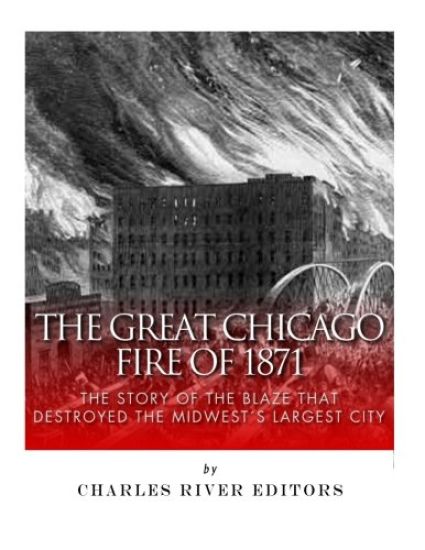
The Great Chicago Fire of 1871: The Story of the Blaze That Destroyed the Midwest's Largest City
*Includes pictures *Includes eyewitness accounts of the disaster *Includes a bibliography for further reading "The fire was barely fifteen minutes old. What followed was a series of fatal errors that set the fire free and doomed the city to a fiery death." - Jim Murphy, The Great Fire It had taken about 40 years for Chicago to grow from a small settlement of about 300 people into a thriving metropolis with a population of 300,000, but in just two days in 1871, much of that progress was burned to the ground. In arguably the most famous fire in American history, a blaze in the southwestern section of Chicago began to burn out of control on the night of October 8, 1871. Thanks to The Chicago Tribune, the fire has been apocryphally credited to a cow kicking over a lantern in Mrs. Catherine O'Leary's barn, and though that was not true, the rumor dogged Mrs. O'Leary to the grave. Of course, the cause of the fire didn't matter terribly much to the people who lost their lives or their property in the blaze. Thanks to dry conditions, wind, and wooden buildings, firefighters were never actually able to stop the fire, which burned itself out only after it spent nearly two whole days incinerating several square miles of Chicago. By the time rain mercifully helped to put the fire out, the Great Chicago Fire had already killed an estimated 300 people, destroyed an estimated 17,500 buildings, and left nearly 100,000 people (1/3 of the population) homeless. Several other theories have developed as an explanation for the fire. Most of them center on people around Mrs. O'Leary's barn, but other have gone so far as to blame a meteor shower as the culprit that started fires across the Midwest that same night. As proof, they note that the country's worst forest fire in history took place around the same time in the logging town of Peshtigo in northeastern Wisconsin, a fire that killed thousands. Mrs. O'Leary and her barn remain a part of lore, but it also speaks to Chicago's ability to rebuild that it's almost impossible to envision a farm in downtown Chicago today. Chicago suffered a wide swath of destruction, but it had rebuilt itself within 20 years in order to host the World's Fair, evidence that it was back and bigger and better than ever. Along with that, Chicago has maintained its status as the region's biggest city and one of the most important in America. The Great Chicago Fire chronicles one of the largest natural disasters of the 19th century in America. Along with pictures of important people, places, and events, you will learn about the Great Chicago Fire of 1871 like never before, in no time at all.
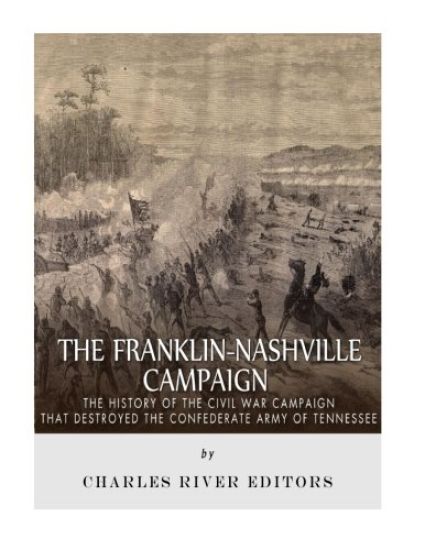
The Franklin-Nashville Campaign: The History of the Civil War Campaign that Destroyed the Confederate Army of Tennessee
*Includes pictures *Includes accounts of the campaign written by generals and soldiers on both sides *Includes online resources and a bibliography for further reading *Includes a table of contents "Never had there been such an overwhelming victory during the Civil War - indeed, never in American military history." - Wiley Ford's comment on the Franklin-Nashville Campaign As Sherman began his infamous march to the sea, Lincoln instructed Grant to redirect General George H. Thomas' efforts back to Tennessee to protect Union supply lines and stop the offensive mounted by Confederate general John Bell Hood. Hood had broken away from Atlanta and was trying to compel Sherman to follow him, thus diverting him from his intended path of destruction. With Sherman marching east toward the sea, he directed Thomas to try to block Hood around Nashville. In late November, the Army of the Ohio, being led by Thomas' principal subordinate John Schofield, all but blindly stumbled into Hood's forces, and it was only through luck that some of them had not been bottled up before they could regroup together. Receiving word of Union troop movement in the Nashville area, General Hood sent for his generals while attempting to hold off Schofield's advance. Hood knew that if Schofield reached Thomas' position, their combined armies would number more than twice his. Though the Confederates successfully blocked Schofield's route to Nashville, the Union general managed to execute an all-night maneuver that brought him to Franklin, about 18 miles south of Nashville. On November 30, the Union army began digging in around Franklin, and that afternoon Hood ordered a frontal assault on the dug in Union army which deeply upset his own officers. After repeated frontal assaults failed to create a gap in the Union lines, Schofield withdrew his men across the river on the night of November 30, successfully escaping Hood's army. Meanwhile, Hood had inflicted nearly 8,000 casualties upon his army (men the Confederacy could scarcely afford to lose), while the Union lost about a quarter of that. Despite practically wrecking his army, which was now only about 25,000 strong, Hood marched his battered army to a position outside Nashville, Tennessee, where he took up defensive positions while awaiting reinforcements from Texas. On December 1, General Thomas sent word to Grant that he had "retired to the fortifications around Nashville until I can get my cavalry equipped", a reference to the fact that Forrest's cavalry had more than double the manpower of the Union cavalry. But Thomas also added that "if Hood attacks our position, he would be seriously damaged, but if he makes no attack until our cavalry can be equipped, I] or General Schofield will move against him at once." The following day Grant wired back, "If Hood is permitted to remain quietly about Nashville, you will lose all the road back to Chattanooga, and possibly have to abandon the line of the Tennessee. Should he attack you it is all well; but if he does not, you should attack him before he fortifies. Arm and put in the trenches your quartermaster's employees, citizens, etc." Even with Grant constantly urging him forward, Thomas held back for nearly two weeks, partly because of a bad ice storm, and his delay nearly resulted in having Grant remove him from command. When it was clear reinforcements wouldn't arrive by December 15, Thomas finally devised a complex two-pronged attack that feinted at Hood's right flank while bringing overwhelming force on the left flank. During the two day battle, Thomas effectively destroyed Hood's command, inflicting about 8,000 more Confederate casualties while losing less than half that. Upon reaching his headquarters at Tupelo, Mississippi, General Hood requested to be relieved of command rather than be removed in disgrace.
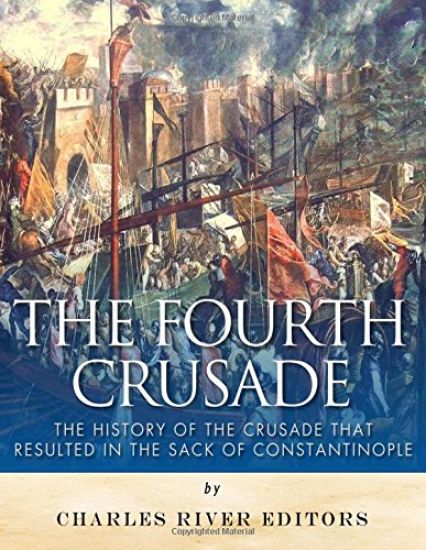
The Fourth Crusade: The History of the Crusade that Resulted in the Sack of Constantinople
*Includes pictures *Includes accounts of the standoff by federal agents and members of the Branch Davidians *Includes online resources and a bibliography for further reading *Includes a table of contents "The Latin soldiery subjected the greatest city in Europe to an indescribable sack. For three days they murdered, raped, looted and destroyed on a scale which even the ancient Vandals and Goths would have found unbelievable." - Speros Vryonis, Byzantium and Europe The Fourth Crusade from 1202-1204 is significant in medieval history because it was the first time a crusade was directed against another Christian group. It was also significant since it encompassed two of the four major sieges of Constantinople, and it also sparked a third in 1235 (an unsuccessful attempt to reverse the Latin gains in 1204). Given that legacy, it's ironic that like the Crusades before it, the Fourth Crusade was originally intended as an invasion of Egypt, which had been conquered by Saladin and his uncle nearly four decades earlier. Egypt had been joined with Syria into one Muslim empire under Saladin, but it had fallen apart into two separate realms after his death shortly after the Third Crusade in 1193. Following that crusade, the main objective of the Crusaders in the 13th century was to conquer Egypt and use it as a beachhead against the Muslims in Syria who threatened Christian Palestine, a goal that should have been beneficial to all of Christendom in both the West and East. Instead, during the Fourth Crusade, tensions between the Latin Christians of Western Europe and the Greek Christians of Constantinople came to a head after a century and three previous Crusades. This resulted in a critical breakdown of communications that resulted in an internal war within Christendom and led to the sack of Constantinople by the Crusaders. After this, the Crusaders established a Latin Kingdom in Constantinople for nearly 60 years, but it remained shaky and was eventually retaken by the Byzantine Greeks. The Fourth Crusade was also a result of the imperialist ambitions of Pope Innocent III, one of the strongest and proudest popes of the Middle Ages, and it was a precursor of the Albigensian Crusade, the first true "internal" crusade. With that, the Latin Christians began to lose focus on the dwindling territories in Palestine, and instead Christians fell upon each other, engaging in Crusades against other Christian groups and bleeding much-needed support from the Latin kingdoms in Palestine. In the west, the Fourth Crusade also saw the rise in power of the Byzantines' most bitter rivals in the West: the Venetians and Genoese. The Venetian Doge was later blamed for inciting the Crusaders to fall upon his Byzantine enemies, and while the situation was more complicated than that, the involvement of the Venetians in the altered direction of the Crusade cannot be denied. Thus, even though no one realized it at the time, the Fourth Crusade was the turning point for the Crusades; after this one, the slow decline toward the Latin Christians losing the Holy Land became inevitable. Constantinople, whether as a Greek or a Latin Empire, was also fatally weakened and would eventually fall to the Ottoman Turks in 1453, long after the end of the Crusades. The Fourth Crusade would inevitably lead to the fall of the Crusader states less than a century later and also the fall of Constantinople two and a half centuries later to the Muslims. The latter would be a permanent loss to Christianity, while Christian forces would not regain control of Palestine until the 20th century. The Fourth Crusade: The History of the Crusade that Resulted in the Sack of Constantinople chronicles one of the most controversial events of the Middle Ages. Along with pictures of important people, places, and events, you will learn about the 4th Crusade like never before, in no time at all.
The Formation of Saudi Arabia: The History of the Arabian Peninsula's Unification and the Discovery of Oil
*Includes pictures *Includes online resources and a bibliography for further reading At the conclusion of World War I, a once promised unified Arab state, which was to include the modern Hejaz, Syria, Lebanon, Palestine/Israel, Jordan and Iraq, did not materialize. Instead, the territories were divided between the French and British, but the British did reward the Hashemites by putting local leaders on the thrones of Iraq and Jordan. In 1924, when the revolutionary government of Mustafa Kemal Ataturk declared Turkey a secular state and abolished the Caliphate, the Sharif (now King) declared himself Caliph, and it appeared that a new Arab-based Caliphate centered on Mecca would emerge. However, this was also not to be, because the Saudis had reformed their power base in central Arabia. While the First Saudi state had been shattered in 1818 by Muhammad Ali Pasha, in 1824 another branch of the Saudi Clan had captured Riyadh, making it the capital of their more cautious Second Saudi State. Their growth had been slow for some time, but they took advantage of the crumbling Ottoman Empire to consolidate power and in 1925 attacked the Hejaz. With that, the Saudis stormed Mecca and drove out the Hashemite Clan. Like the Hashemites, the Saudi family consisted of Arabs, but the family came from the Nejd, an area of the Arabian Peninsula to the east closer to the Persian Gulf. In the late 18th century, the ambitious Muhammed bin Saud, the head of the family and the Sultan of Nejd, allied himself with a theologian named Muhammad ibn Abd al-Wahhab (1703-1792). Wahhab taught that Islam's weakened position (compared to the rising Christian powers of his era) was due to an internal weakness within the Islamic community. He taught that increasing numbers of Muslims had turned their backs on the teachings of the Prophet and had corrupted Islam with pagan influences. He was particularly scornful of Shi'a Islam or any practices that he did not see directly referenced within the Qur'an, and he sought to "purify" the religion and return it to its "fundamentals." Thus, Wahhabism is a form of fundamentalism that desires a return to the imagined purity of the past and a willingness to undertake dramatic steps to achieve it. As the process of consolidating the new Saudi state was still in progress, the course of Saudi Arabia's history changed with the discovery of oil, and today it is almost impossible to imagine Saudi Arabia without the vital resource. Not only does the country have 18 percent of the world's proven oil reserves and lead the world in exports, but in mid-2016, the International Energy Agency (IEA) reported that Saudi Arabia had overtaken the U. S. to become the world's largest oil producer. There was, however, a time when the country's finances were anything but stable and when three ministries were the extent of the government's formal institutions. This was not, in fact, so long ago either, as the modern state of Saudi Arabia is still a relatively young country, formally announced only in 1932. At that time, finances were precarious; its major sources of income were Muslim pilgrimage, including the hajj, the annual pilgrimage to Mecca and Medina; customs and taxes; and international aid and loans. These were also all dependent on the current international situation and the interests of foreign parties. An economic downturn, for example, depressed the number of pilgrims, while shifting interests of international parties could cause support to dry up with little notice. The Formation of Saudi Arabia: The History of the Arabian Peninsula's Unification and the Discovery of Oil traces the formation of the modern Saudi state, beginning with its 18th and 19th century predecessors, as well as the various efforts undertaken by its founders to nation build and secure the Saudi family's position of power.
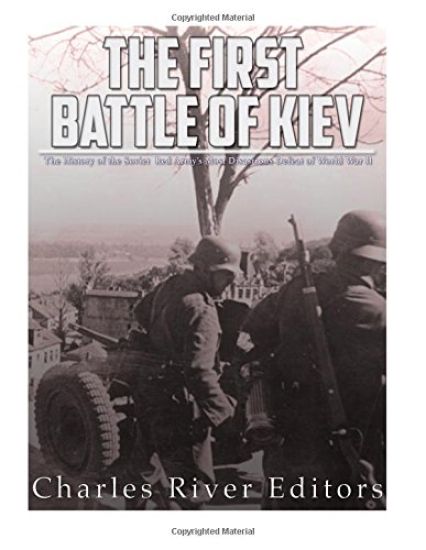
The First Battle of Kiev: The History of the Soviet Red Army's Most Disastrous Defeat of World War II
*Includes pictures *Includes accounts of the fighting *Includes online resources and a bibliography for further reading *Includes a table of contents "We have only to kick in the door and the whole rotten structure will come crashing down." - Adolf Hitler In the warm predawn darkness of June 22, 1941, 3 million men waited along a front hundreds of miles long, stretching from the Baltic coast of Poland to the Balkans. Ahead of them in the darkness lay the Soviet Union, its border guarded by millions of Red Army troops echeloned deep throughout the huge spaces of Russia. This massive gathering of Wehrmacht soldiers from Adolf Hitler's Third Reich and his allied states - notably Hungary and Romania - stood poised to carry out Operation Barbarossa, Hitler's surprise attack against the country of his putative ally, Soviet dictator Josef Stalin. The Soviets were so caught by surprise at the start of the attack that the Germans were able to push several hundred miles into Russia across a front that stretched dozens of miles long, reaching the major cities of Leningrad and Sevastopol in just three months. The first major Russian city in their path was Minsk, which fell in only six days. In order to make clear his determination to win at all costs, Stalin had the three men in charge of the troops defending Minsk executed for their failure to hold their position. This move, along with unspeakable atrocities by the German soldiers against the people of Minsk, solidified the Soviet will. In the future, Russian soldiers would fight to the death rather than surrender, and in July, Stalin exhorted the nation, "It is time to finish retreating. Not one step back Such should now be our main slogan. ... Henceforth the solid law of discipline for each commander, Red Army soldier, and commissar should be the requirement - not a single step back without order from higher command." Backed by extremely shrewd and professionally executed logistics arrangements based on rapidly-advanced railways, Army Group Center plunged forward through Minsk, then Smolensk, like an arrow aimed at Moscow, a crucial Soviet rail hub and manufacturing center. The Wehrmacht's leadership initially tasked Army Groups North and South with guarding the flanks of Army Group Center. They, too, smashed forward through Soviet defenses, but only as secondary operations supporting the main thrust. However, as the Germans began taking Smolensk, Hitler suddenly diverted significant forces to the northern and southern flanks. Heinz Guderian's Panzer Group 2 found itself sent to assist in the Ukraine rather than smashing directly through to Moscow. The diversion of this force increased the scope of the Kiev encirclement and the eventual haul of prisoners, but Guderian himself opposed it: "Hoth and myself - in contradiction to this - were anxious to continue the advance eastwards with our panzer forces according to the original, expressed intentions of the supreme command, and to capture the objective initially assigned to us." (Guderian, 1996, 166-167). Despite the logistical difficulties generated by the new emphasis on a rapid advance in the south, and the stubborn, courageous, but disastrously uncoordinated resistance of the Red Army, the Germans succeeded in winning the gigantic struggle for Kiev and the Ukraine. While the First Battle of Kiev represented an operational triumph for the Germans, resulting in an astounding number of Red Army prisoners and the complete collapse of the Ukraine's defenses, the victory came at a high price. Hitler's diversion of Heinz Guderian's Panzer Group II south from the Army Group Center Schwerpunkt increased the power and effectiveness of the Kiev encirclement, but cast away the near certainty of taking Moscow itself in August. Meanwhile, for their part, the Soviets tried hard to forget the disastrous battle ever occurred, going so far as to omit its mention in subsequent histories of the war.
The Disappearance of Dorothy Arnold: The Unsolved Mystery of the American Socialite Who Vanished in 1910
*Includes pictures *Includes contemporary accounts from family members, authorities, and newspapers *Includes online resources and a bibliography for further reading *Includes a table of contents "It would be bad enough if the daughter I loved so well were] lying beside her grandmother in Greenwood Cemetery, but this suspense and uncertainty are a thousand times worse." - Francis Arnold, Dorothy's father It was the great mystery of its time and still reads like an episode of "Law and Order" today. In December 1910, a wealthy young woman, thought to be sheltered and above reproach, goes missing shortly after being seen in broad daylight on Fifth Avenue in New York City. The police are called in and begin to question those closest to her, only to have her father, a wealthy manufacturer, insist it must be foul play and that his daughter was on good terms with her entire family. Likewise, he claims that though she was in her mid-20s and in the prime of life, she had no serious romantic attachments. The mother tearfully backs these claims up. Eventually, far different information leaks out, like the fact that the victim was an aspiring writer who kept much about her work a secret, that she had been trying to cut ties with her family for some time, and, most interesting of all, that there certainly was a boyfriend, and that her family had tried to hide their relationship. For a time, all eyes are on the romantic interest, who is significantly older but a longtime friend of the family. In fact, the victim's brother is seen in beautiful Florence, Italy, beating the boyfriend up in a failed attempt to get more information about his sister's disappearance. Letters surface, as do photographs, but ultimately nothing to indicate the he had anything at all to do with her disappearance. Finally, everyone gives up and turns their attentions elsewhere. Meanwhile, there are rumored sightings, as she is "seen" in various large cities across the United States and Europe. Mentally ill women claim to be her, but again and again, no lead checks out. Eventually, the story grows cold and people lose interest, but then, more than three years after she disappeared, a new lead turns up. A back room abortionist claims that she came to him for an "illegal" operation and died, and as he did with all his other victims, he cremated her body and tossed out the ashes. The story makes the front pages for days, even as the family denies it is possible, but by now, it's April 1914 and the newspapers have more pressing matters to report, so the story quickly falls off their radar again. While the story was certainly fit for a gripping thriller, it was all too true for Dorothy Arnold and her family. Arnold was a young, well-known socialite whose disappearance was front page news on the East Coast in the early 20th century, and over 100 years later, armchair gumshoes continue trying to piece together the puzzle over her fate. In an era before other famous disappearances like that of the Lindbergh baby and Jimmy Hoffa became grist for writers, it was Dorothy Arnold who left people wondering and speculating. To this day, the mystery remains unsolved and, except for periodic stories and lists about enduring mysteries, largely forgotten. The Disappearance of Dorothy Arnold: The Unsolved Mystery of the American Socialite Who Vanished in 1910 looks at one of the early 20th century's most enduring mysteries. Along with pictures of important people, places, and events, you will learn about the disappearance of Dorothy Arnold like never before.
The Democratic National Convention: The History of the Democratic Party's Presidential Candidates and Platforms
*Includes pictures *Includes accounts of the conventions and platforms *Includes online resources and a bibliography for further reading *Includes a table of contents As the oldest political party in the United States, the Democratic Party has been one of the nation's major political parties for over 150 years, and diverse men and ideas have fallen under its tent since the 19th century. Today the Democrats are generally viewed as proponents of a strong, centralized federal government, and yet the forerunner of the modern party was none other than Thomas Jefferson, the man most associated with states' rights and limited government. With its Jeffersonian background, the party championed farmers, and Andrew Jackson's populist era made the Party home to urban workers and new immigrants. Eventually sectional splits weakened the Democrats, and when the fledgling Republican Party took power under Abraham Lincoln in 1861, it ushered in an era in which the Democrats only elected 2 presidents over a 70 year span. However, Reconstruction ensured that the Democrats maintained an almost unbreakable level of support in the old Confederate states, and they used the Solid South to wield power in Congress for decades. 150 years after the Civil War, the Democratic Party's current voting bloc (strongly reliant on minorities) and their base of power (the Northeast and Midwest) are completely different than the 19th century's incarnation. Its platform has also been completely revamped. Both of those reversals are byproducts of Franklin Roosevelt's New Deal and Lyndon B. Johnson's Great Society, which continue to be the pillars on which the Democrats' current platform rests. As the 20th century progressed, so did the Democratic Party, and by 1932, it had switched places with the Republicans and had become the party of liberal politics, beginning with the four term tenure of Franklin Roosevelt and continuing through the Great Society promulgated by Lyndon Johnson. And yet, it left many of the people who should have supported it dissatisfied, as could be seen in the rioting and unrest that surrounded both the 1968 and 1972 conventions. The party's platform supported women's rights in the 1970s and remains the only one to consistently support abortion rights. In 2008, it became the first party to put an African-American in the White House when Barack Obama was elected, and it is poised to become the first major party to nominate a woman, Hillary Clinton, as its presidential candidate, even as more progressive groups supported other candidates. It is certain that, at least in the near future, the Democratic Party will continue to be interesting to watch, if for no other reason than to see what direction it goes in next. The Democratic National Convention: The History of the Democratic Party's Presidential Candidates and Platforms examines one of the most important wars fought in the colonial era. Along with pictures of important people, places, and events, you will learn about the Democratic conventions like never before.
The Dahlgren Affair: The History of the Civil War's Most Controversial Cavalry Raid

The Dahlgren Affair: The History of the Civil War's Most Controversial Cavalry Raid

Charles River

Createspace Independent Publishing Platform
2018
nidottu
*Includes pictures *Includes accounts of the raid written by participants on both sides *Includes online resources and a bibliography for further reading *Includes a table of contents "Judson Kilpatrick, Ulric Dahlgren, and their probable patron Edwin Stanton set out to engineer the death of the Confederacy's president; the legacy spawned out of the utter failure of their effort may have included the death of their own president." - Stephen Sears, Civil War historian Failing to secure the capture of any major northern cities, or the recognition of Great Britain or France, or the complete destruction of any northern armies, the Confederacy's last chance to survive the Civil War was the election of 1864. Democrats had been pushing an anti-war stance or at least a stance calling for a negotiated peace for years, so the South hoped that if a Democrat defeated President Lincoln, or if anti-war Democrats could retake the Congress, the North might negotiate peace with the South. In the election of 1862, anti-war Democrats made some gains in Congress and won the governorship of the State of New York. Confederates were therefore hopeful that trend would continue to the election of 1864. It's now often forgotten that Lincoln's reelection was far from a foregone conclusion, and the fighting in 1864 would be desperate in both the East and West. The Overland Campaign that Ulysses S. Grant launched against Robert E. Lee's Army of Northern Virginia would be an extremely costly stalemate, so Lincoln's fate may have rested in the hands of William Tecumseh Sherman, whose successful Atlanta campaign shortly before the election may have been the decider. As controversial as the Overland Campaign and the March to the Sea were, however, the most controversial event of that year took place before either campaign. In March, skirmishing between the two sides' cavalry outside of Richmond left one 21 year old Union colonel, Ulric Dahlgren, dead, and when a young Virginian went through the items on his body, the orders that were found seemed almost too unbelievable to be true: "The men must keep together and well in hand, and once in the city it must be destroyed and Jeff. Davis and Cabinet killed." When the papers on Dahlgren's body made their way to Confederate officials, the leaders decided to publicize them, leading officials in the North to denounce the papers as forgeries. Over 150 years later, the authenticity of the papers is still widely debated among historians. While most in the North dismissed the papers (and Dahlgren's father would work to clear his son's name for the rest of his own life), Union General George Meade questioned Judson Kilpatrick, the cavalry commander in charge of the raid, and he came away with the belief that at the very least, Kilpatrick had signed off on the conspiracy to assassinate the Confederate leadership. Nonetheless, he relayed to Lee that "neither the United States Government, myself, nor General Kilpatrick authorized, sanctioned, or approved the burning of the city of Richmond and the killing of Mr. Davis and cabinet." Although it still remains one of the Civil War's most enduring mysteries, modern historians now mostly believe the orders were authentic, and that the responsibility for the plan may go all the way up to Secretary of War Edwin Stanton. Moreover, some of them, including noted historian Stephen Sears, believe that the Dahlgren Affair may have been one of the primary reasons John Wilkes Booth devised his own conspiracy to assassinate President Lincoln. That conspiracy, of course, would be far more successful than Dahlgren's. The Dahlgren Affair: The History of the Civil War's Most Controversial Cavalry Raid chronicles the history and mystery of the conspiracy to kill the Confederacy's top leaders. Along with pictures of important people, places, and events, you will learn about the Dahlgren Affair like never before, in no time at all.
The Conquest of the Aztecs: The Lives and Legacies of Cortés, Montezuma, and the Aztec Empire
*Includes pictures of Aztec art, ruins, and more. *Describes daily life for the Aztecs, including their infamous human sacrifice rituals. *Discusses the legends and controversies surrounding the lives of Cortes and Montezuma, as well as the Conquest. *Includes Cort s's Second Letter to Charles V, one of the most descriptive firsthand accounts of the Aztecs and Tenochtitlan. *Includes a Bibliography for further reading. From the moment Spanish conquistador Hernan Cort s first found and confronted them, the Aztecs have fascinated the world, and they continue to hold a unique place both culturally and in pop culture. Nearly 500 years after the Spanish conquered their mighty empire, the Aztecs are often remembered today for their major capital, Tenochtitlan, as well as being fierce conquerors of the Valley of Mexico who often engaged in human sacrifice rituals. Ironically, and unlike the Mayans, the Aztecs are not widely viewed or remembered with nuance, in part because their own leader burned extant Aztec writings and rewrote a mythologized history explaining his empire's dominance less than a century before the Spanish arrived. Naturally, Cortes and other Spaniards depicted the Aztecs as savages greatly in need of conversion to Catholicism. While the Mayans are remembered for their astronomy, numeral system, and calendar, the Aztecs have primarily been remembered in a far narrower way, despite continuing to be a source of pride to Mexicans through the centuries. The Spanish conquest of the Aztec and some of the myths and legends surrounding it have made its emperor's name (and variations of it like Montezuma) instantly recognizable around the globe. Still, Moctezuma II's life is shrouded in mystery; Bernal Diaz del Castillo's The Conquest of New Spain and Miguel Leon-Portilla's translation of the Aztec observation of the conquest, The Broken Spears, recorded but a few details about the last Aztec ruler's life. The mysterious nature of Moctezuma's life is matched by the controversial nature of his death and the demise of his empire. During the Age of Exploration, some of the most famous and infamous individuals were Spain's best known conquistadors. Naturally, as the best known conquistador, Hern n Cort s (1485-1547) is also the most controversial. Like Christopher Columbus before him, Cort s was lionized for his successes for centuries without questioning his tactics or motives, while indigenous views of the man have been overwhelmingly negative for the consequences his conquests had on the Aztecs and other natives in the region. Just about the only thing everyone agrees upon is that Cort s had a profound impact on the history of North America. Of course, the lionization and demonization of Cort s often take place without fully analyzing the man himself, especially because there are almost no contemporaneous sources that explain what his thinking and motivation was. If anything, Cort s seemed to have been less concerned with posterity or the effects of the Spanish conquest on the natives than he was on relations with the Mother Country itself. Of the few things that are known about Cort s, it appears that he was both extremely ambitious and fully cognizant of politics and political intrigue, even in a New World thousands of miles west of Spain itself. Cort s spent much of his time in Mexico and the New World defending himself against other Spanish officials in the region, as well as trying to portray and position himself in a favorable light back home. The Conquest of the Aztecs looks at the history and culture of the Aztec, while exploring the controversial lives and legacies of the man who ruled the empire and the man who conquered it. Along with pictures and a bibliography, you will learn about Cort s, Montezuma and the Aztec like you never have before.
The Clintons: The Lives and Legacies of Bill and Hillary Clinton

The Clintons: The Lives and Legacies of Bill and Hillary Clinton

Charles River

Createspace Independent Publishing Platform
2018
nidottu
*Covers the remarkable lives of the Clintons in one educational and entertaining narrative. *Includes pictures of Bill, Hillary, and other important people, places, and events in their lives. "Sometime in my sixteenth year, I decided I wanted to be in public life as an elected official. I loved music and thought I could be very good, but I knew I would never be John Coltrane or Stan Getz. I was interested in medicine and thought I could be a fine doctor, but I knew I would never be Michael DeBakey. But I knew I could be great in public service." - Bill Clinton "I suppose I could have stayed home and baked cookies and had teas, but what I decided to do was to fulfill my profession which I entered before my husband was in public life." - Hillary Clinton It would be impossible to sum up the life and legacy of Bill Clinton in one sentence or even one paragraph, as the former president represents many different things to many different people. Indeed, the yin and yang of Clinton's life and career are inescapable. Widely hailed as the greatest politician of his era, Clinton proved to be his own worst enemy, creating unnecessary scandals through his womanizing. Clinton was one of the first politicians to truly connect with young adults, yet in the process he provided ludicrous soundbytes like "I did not inhale." Long considered the Democratic Party's greatest spokesman and surrogate, Clinton's presidency was defined by centrist "triangulation". And though he is still publicly popular and considered a great president, Clinton became just the second president to be impeached in the House of Representatives. Regardless of what Americans think of him, one thing Clinton does represent is the American Dream. Born to a single mother in Hope, Arkansas, Clinton used his ambition, hard work and intelligence to become a Rhodes scholar. As a teenager, a meeting with President Kennedy helped drive him toward politics, which he pursued after getting his law degree at Yale, where he met future wife Hillary Rodham. During the presidential campaign in 1992, Democratic challenger Bill Clinton announced that by voting for him, Americans would get two presidents "for the price of one." The reference to his wife Hillary signified that she would be no ordinary First Lady, and indeed she was employed frequently by her husband in the White House to try to push legislation through Congress, most notably universal healthcare. While that proved to be one of the Clinton Administration's greatest failures, Hillary and her staff continued to act as a political surrogate for the president during his two terms. Of course, describing Hillary Clinton as just a First Lady belittles all of her accomplishments. Today she is the most powerful woman in the world and one of the most recognizable, working so seamlessly with her former rival Barack Obama that her popularity has easily eclipsed his within a year of his victory over her in the Democratic primaries. In addition to the stirring Democratic primaries of 2008, Hillary was a U. S. Senator from New York for nearly 8 years before becoming Obama's Secretary of State. Recognized as one of the sharpest minds in Washington and a complete policy wonk, Hillary has been one of the few bright spots in Obama's Cabinet during his first term. The Clintons looks at the amazing lives and careers of America's most powerful political couple, including their unprecedented highs and their notorious controversies, but it also humanizes the duo who have overcome considerable personal and political hurdles along the way. Along with pictures of important people, places, and events in her life, you will learn about Bill and Hillary Clinton like you never have before, in no time at all.
The Civil War Presidents: The Lives and Legacies of Abraham Lincoln and Jefferson Davis
*Includes pictures of each general and important people, places, and events in their lives *Includes an introduction for each president *Includes a Table of Contents *Includes bibliographies for each president Despite the fact that the Civil War began over 150 years ago, it remains one of the most widely discussed topics in America today, with Americans arguing over its causes, reenacting its famous battles, and debating which general was better than others. Americans continue to be fascinated by the Civil War leaders who made the difference between victory and defeat. Abraham Lincoln (1809-1865) is one of the most famous Americans in history and one of the country's most revered presidents. Schoolchildren can recite the life story of Lincoln, the "Westerner" who educated himself and became a self made man, rising from lawyer to leader of the new Republican Party before becoming the 16th President of the United States. Lincoln successfully navigated the Union through the Civil War but didn't live to witness his crowning achievement, becoming the first president assassinated when he was shot at Ford's Theater by John Wilkes Booth on April 14, 1865. History has accorded Abraham Lincoln a spot in the pantheon of American politics for the manner in which he steered the Union to victory and into the Reconstruction period after the war. In turn, Jefferson Davis has been heavily criticized. Davis constantly clashed with Confederate generals like Joseph Johnston, the South's diplomacy failed to obtain foreign intervention, and he was unable to keep the Southern states together cohesively as the Confederate economy began to collapse. Whether the Civil War would have ended any differently with someone else in charge of the Confederacy will never be known, but Davis had a tumultuous presidency. Given the charged nature of the Civil War during the fighting and the years after it, the legacies of both men often obscure what they were like in life. The Civil War Presidents humanizes the two important leaders, chronicling their antebellum lives, their politics, their presidencies, and ultimately their legacies. Along with pictures of both presidents, an original introduction for both, and pictures of other important people, places and events in their lives, you will learn about the Civil War presidents like you never have before, in no time at all.
The Boer War: The History and Legacy of the Conflict that Solidified British Rule in South Africa
*Includes pictures *Includes online resources and a bibliography for further reading "The Boers were hostile toward indigenous African peoples, with whom they fought frequent range wars, and toward the government of the Cape, which was attempting to control Boer movements and commerce. They overtly compared their way of life to that of the Israel patriarchs of the Bible, developing independent patriarchal communities based upon a mobile pastoralist economy. Staunch Calvinists, they saw themselves as the children of God in the wilderness, a Christian elect divinely ordained to rule the land and the backward natives therein. By the end of the 18th century the cultural links between the Boers and their urban counterparts were diminishing, although both groups continued to speak a type of Flemish." - Encyclopaedia Britannica The Boer War was the defining conflict of South African history and one of the most important conflicts in the history of the British Empire. Naturally, complicated geopolitics underscored it. The European history of South Africa began with the 1652 arrival of a small Dutch flotilla in Table Bay, at the southern extremity of the African continent, which made landfall with a view to establishing a victualing station to service passing Dutch East India Company (Vereenigde Oost-Indische Compagnie) ships. The Dutch at that point largely dominated the East Indian Trade, and it was their establishment of the settlement of Kaapstad, or Cape Town, that set in motion the lengthy and often turbulent history of South Africa. For over a century, the Cape remained a Dutch East India Company settlement, and in the interests of limiting expenses, strict parameters were established to avoid the development of a colony. As religious intolerance in Europe drove a steady trickle of outward emigration, however, Dutch settlers began to informally expand beyond the Cape, settling the sparsely inhabited hinterland to the north and east of Cape Town. In doing so, they fell increasingly outside the administrative scope of the Company, and they developed an individualistic worldview, characterized by self-dependence and self-reliance. They were also bonded as a society by a rigorous and literal interpretation of the Old Testament. In their wake, towards the end of the 17th century, followed a wave of French Huguenot immigrants, fleeing a renewal of anti-Protestantism in Europe. They were integrated over the succeeding generations, creating a hybridized language and culture that emerged in due course as the Cape Dutch, The Afrikaner or the Boer. The Napoleonic Wars radically altered the old, established European power dynamics, and in 1795, the British, now emerging as the globe's naval superpower, assumed control of the Cape as part of the spoils of war. In doing so, they recognized the enormous strategic value of the Cape as global shipping routes were developing and expanding. Possession passed back and forth once or twice, but more or less from that point onwards, the British established their presence at the Cape, which they held until the unification of South Africa in 1910. The Boer War: The History and Legacy of the Conflict that Solidified British Rule in South Africa looks at the controversial fighting and the manner in which it affected the 20th century. Along with pictures and a bibliography, you will learn about the Boer War like never before.
The Boer War: The History and Legacy of the Conflict that Solidified British Rule in South Africa
*Includes pictures *Includes online resources and a bibliography for further reading "The Boers were hostile toward indigenous African peoples, with whom they fought frequent range wars, and toward the government of the Cape, which was attempting to control Boer movements and commerce. They overtly compared their way of life to that of the Israel patriarchs of the Bible, developing independent patriarchal communities based upon a mobile pastoralist economy. Staunch Calvinists, they saw themselves as the children of God in the wilderness, a Christian elect divinely ordained to rule the land and the backward natives therein. By the end of the 18th century the cultural links between the Boers and their urban counterparts were diminishing, although both groups continued to speak a type of Flemish." - Encyclopaedia Britannica The Boer War was the defining conflict of South African history and one of the most important conflicts in the history of the British Empire. Naturally, complicated geopolitics underscored it. The European history of South Africa began with the 1652 arrival of a small Dutch flotilla in Table Bay, at the southern extremity of the African continent, which made landfall with a view to establishing a victualing station to service passing Dutch East India Company (Vereenigde Oost-Indische Compagnie) ships. The Dutch at that point largely dominated the East Indian Trade, and it was their establishment of the settlement of Kaapstad, or Cape Town, that set in motion the lengthy and often turbulent history of South Africa. For over a century, the Cape remained a Dutch East India Company settlement, and in the interests of limiting expenses, strict parameters were established to avoid the development of a colony. As religious intolerance in Europe drove a steady trickle of outward emigration, however, Dutch settlers began to informally expand beyond the Cape, settling the sparsely inhabited hinterland to the north and east of Cape Town. In doing so, they fell increasingly outside the administrative scope of the Company, and they developed an individualistic worldview, characterized by self-dependence and self-reliance. They were also bonded as a society by a rigorous and literal interpretation of the Old Testament. In their wake, towards the end of the 17th century, followed a wave of French Huguenot immigrants, fleeing a renewal of anti-Protestantism in Europe. They were integrated over the succeeding generations, creating a hybridized language and culture that emerged in due course as the Cape Dutch, The Afrikaner or the Boer. The Napoleonic Wars radically altered the old, established European power dynamics, and in 1795, the British, now emerging as the globe's naval superpower, assumed control of the Cape as part of the spoils of war. In doing so, they recognized the enormous strategic value of the Cape as global shipping routes were developing and expanding. Possession passed back and forth once or twice, but more or less from that point onwards, the British established their presence at the Cape, which they held until the unification of South Africa in 1910. The Boer War: The History and Legacy of the Conflict that Solidified British Rule in South Africa looks at the controversial fighting and the manner in which it affected the 20th century. Along with pictures and a bibliography, you will learn about the Boer War like never before.
Carcassonne: The History and Legacy of the Castles, Campaigns, and Crimes in France's Fabled Walled City
*Includes pictures *Includes medieval accounts *Includes online resources and a bibliography for further reading Posted by the Porte Narbonne, or Narbonne Gate, the entrance of the fabled La Cite in Carcassonne, is a striking bust that is often missed upon first glance, for it is overshadowed by the exquisitely preserved, millennia-old citadel in its background. But standing before the porte, her face draws one in - round, with plump cheeks, thin arches for eyebrows that follow the shape of her large, downturned eyes, wavy hair peeking out of her wimple - reminiscent of the "celestial" suns with human faces often seen in the bedroom d cor of a hip, teenage girl from the '90s. Gaze upon her from a certain angle and distance, and it seems as if one of the iconic conical roofs behind her doubles as a russet-hued hennin. Garbed in a fine gown with flower accents embroidered on her sleeves and a fussy wimple and veil, the joyfully radiant face that welcomes visitors into the citadel hardly appears to be the "heroine" type. Rather, the way she is depicted here is what usually springs to mind at the mention of a classic damsel in distress. That being said, while this particular damsel was indeed distressed, she relied on no one to not only save herself from the plight at hand, but the entire citadel itself. This damsel, as inscribed on the plaque underneath the bust, is the beloved Dame Carcas, often billed by the locals as the star of the town's origin story. Carcassonne today is the capital of the Aude department in the Occitanie region of southwestern France, about 58 miles from Toulouse. It lies by the "eastward bend" of the glittering cobalt waters of the River Aude, which serves as a barrier between the two towns of the city: the Cit and the Ville Basse. It is the old Cit that attracts most of Carcassonne's visitors (3 million of them each year), for it houses the historic fortress that looks like it came straight out of a fairy tale and supposedly became the muse behind the captivating castles featured in Walt Disney's acclaimed 1959 classic Sleeping Beauty. But this breathtaking town is so much more than just the perfect spot for wedding shoots and social media narcissism, for it is a place that oozes medieval history. Carcassonne: The History and Legacy of the Castles, Campaigns, and Crimes in France's Fabled Walled City examines the origins of the site and its sweeping history. Along with pictures depicting important people, places, and events, you will learn about Carcassonne like never before.
Carcassonne: The History and Legacy of the Castles, Campaigns, and Crimes in France's Fabled Walled City
*Includes pictures *Includes medieval accounts *Includes online resources and a bibliography for further reading Posted by the Porte Narbonne, or Narbonne Gate, the entrance of the fabled La Cite in Carcassonne, is a striking bust that is often missed upon first glance, for it is overshadowed by the exquisitely preserved, millennia-old citadel in its background. But standing before the porte, her face draws one in - round, with plump cheeks, thin arches for eyebrows that follow the shape of her large, downturned eyes, wavy hair peeking out of her wimple - reminiscent of the "celestial" suns with human faces often seen in the bedroom d cor of a hip, teenage girl from the '90s. Gaze upon her from a certain angle and distance, and it seems as if one of the iconic conical roofs behind her doubles as a russet-hued hennin. Garbed in a fine gown with flower accents embroidered on her sleeves and a fussy wimple and veil, the joyfully radiant face that welcomes visitors into the citadel hardly appears to be the "heroine" type. Rather, the way she is depicted here is what usually springs to mind at the mention of a classic damsel in distress. That being said, while this particular damsel was indeed distressed, she relied on no one to not only save herself from the plight at hand, but the entire citadel itself. This damsel, as inscribed on the plaque underneath the bust, is the beloved Dame Carcas, often billed by the locals as the star of the town's origin story. Carcassonne today is the capital of the Aude department in the Occitanie region of southwestern France, about 58 miles from Toulouse. It lies by the "eastward bend" of the glittering cobalt waters of the River Aude, which serves as a barrier between the two towns of the city: the Cit and the Ville Basse. It is the old Cit that attracts most of Carcassonne's visitors (3 million of them each year), for it houses the historic fortress that looks like it came straight out of a fairy tale and supposedly became the muse behind the captivating castles featured in Walt Disney's acclaimed 1959 classic Sleeping Beauty. But this breathtaking town is so much more than just the perfect spot for wedding shoots and social media narcissism, for it is a place that oozes medieval history. Carcassonne: The History and Legacy of the Castles, Campaigns, and Crimes in France's Fabled Walled City examines the origins of the site and its sweeping history. Along with pictures depicting important people, places, and events, you will learn about Carcassonne like never before.
The Munich Massacre: The History and Legacy of the Notorious Terrorist Attack on Israeli Athletes at the 1972 Summer Olympics
*Includes pictures *Includes online resources and a bibliography for further reading "We just got the final word...you know, when I was a kid, my father used to say 'Our greatest hopes and our worst fears are seldom realized.' Our worst fears have been realized tonight. They've now said that there were eleven hostages. Two were killed in their rooms yesterday morning, nine were killed at the airport tonight. They're all gone." - Newscaster Jim McKay At 10:00 a.m. on September 12, 1972, Prime Minister Golda Meir appeared before a special session of the Knesset, the Israeli parliament. Wasting no time, the austere, chain-smoking grandmother addressed a full house of 120 members. "I want to share my plans with you," she said. 'I've decided to pursue each and every one of them. Not one of the people involved in any way will be walking around on this earth for much longer. We will chase them to the last." These determined and resolute words were spoken in reference to the surviving operatives and planners of one of the most audacious terrorist attacks mounted against Israel since the founding of the nation in 1948. A week earlier, on September 5, 1972, 8 Palestinian terrorists belonging to the Black September faction of the Palestine Liberation Organization (PLO) entered the Olympic Village in Munich, West Germany, and took 11 Israeli athletes and team members hostage. After a lengthy standoff and a bungled rescue operation, all 11 were killed. The key element of Golda Meir's speech was the sense of outrage felt by the Israeli people against an act that transgressed both the essential principles of the Olympic Games and the unwritten charter of the Israeli people, drawn up over less than three decades of uncertain existence. Israel was founded on little more than determination and religious and social cohesion, forged in a crucible of war against unequal odds and the fanatical resolve of all of its neighbors to see it destroyed. While today Israel is one of the most divisive political subjects across the world, the Munich Massacre and the Israeli operations in response all came about entirely because of the emotional power inherent in the Israeli-Arab conflict. The Munich Massacre: The History and Legacy of the Notorious Terrorist Attack on Israeli Athletes at the 1972 Summer Olympics looks at one of the most controversial events in sports history. Along with pictures and a bibliography, you will learn about the Munich Massacre like never before.
The Munich Massacre: The History and Legacy of the Notorious Terrorist Attack on Israeli Athletes at the 1972 Summer Olympics
*Includes pictures *Includes online resources and a bibliography for further reading "We just got the final word ... you know, when I was a kid, my father used to say 'Our greatest hopes and our worst fears are seldom realized.' Our worst fears have been realized tonight. They've now said that there were eleven hostages. Two were killed in their rooms yesterday morning, nine were killed at the airport tonight. They're all gone." - Newscaster Jim McKay At 10:00 a.m. on September 12, 1972, Prime Minister Golda Meir appeared before a special session of the Knesset, the Israeli parliament. Wasting no time, the austere, chain-smoking grandmother addressed a full house of 120 members. "I want to share my plans with you," she said. 'I've decided to pursue each and every one of them. Not one of the people involved in any way will be walking around on this earth for much longer. We will chase them to the last." These determined and resolute words were spoken in reference to the surviving operatives and planners of one of the most audacious terrorist attacks mounted against Israel since the founding of the nation in 1948. A week earlier, on September 5, 1972, 8 Palestinian terrorists belonging to the Black September faction of the Palestine Liberation Organization (PLO) entered the Olympic Village in Munich, West Germany, and took 11 Israeli athletes and team members hostage. After a lengthy standoff and a bungled rescue operation, all 11 were killed. The key element of Golda Meir's speech was the sense of outrage felt by the Israeli people against an act that transgressed both the essential principles of the Olympic Games and the unwritten charter of the Israeli people, drawn up over less than three decades of uncertain existence. Israel was founded on little more than determination and religious and social cohesion, forged in a crucible of war against unequal odds and the fanatical resolve of all of its neighbors to see it destroyed. While today Israel is one of the most divisive political subjects across the world, the Munich Massacre and the Israeli operations in response all came about entirely because of the emotional power inherent in the Israeli-Arab conflict. The Munich Massacre: The History and Legacy of the Notorious Terrorist Attack on Israeli Athletes at the 1972 Summer Olympics looks at one of the most controversial events in sports history. Along with pictures and a bibliography, you will learn about the Munich Massacre like never before.
The 1862 Shenandoah Valley Campaign: The History of the Civil War Campaign that Made Stonewall Jackson a Confederate Legend
*Includes pictures *Includes accounts of the campaign written by soldiers and generals *Includes online resources and a bibliography for further reading *Includes a table of contents "Jackson and his army, in one month, have routed Milroy-annihilated Banks-discomfited Fr mont, and overthrown Shields Was there ever such a series of victories won by an inferior force by dauntless courage and consummate generalship?" - An anonymous newspaper correspondent for the Richmond Whig, June 6, 1862 Confederate general Thomas Jonathan Jackson had been a virtual unknown upon his arrival at the front line of First Bull Run, but by the spring of 1862, thanks to his actions at that battle, "Stonewall" was already becoming known across the battlefields. Ultimately, it would be the Valley Campaign of 1862 that made him a legend. In the early months of 1862, Jackson was given command of an army numbering about 17,000 in the Shenandoah Valley. His task was daunting. The loss at Bull Run prompted a changing of the guard, with George B. McClellan, the "Young Napoleon", put in charge of reorganizing and leading the Army of the Potomac. That spring, the Army of the Potomac conducted an ambitious amphibious invasion of Virginia's Peninsula, circumventing the Confederate defenses to the north of Richmond by attacking Richmond from the southeast. General Johnston's outnumbered army headed toward Richmond to confront McClellan, but the Union still had three armies totaling another 50,000 around the Shenandoah Valley, which represented a threat to Richmond from the north. It was these armies that Jackson would be tasked with stopping. Jackson would go on to lead his undermanned army through what military strategists and historians consider the most incredible campaign of the Civil War. From late March to early June, Jackson kept all three Union armies bottled up and separated from each other in the Shenandoah Valley by marching up and down the Valley about 650 miles in 50 days, earning his army the nickname "foot cavalry." After the amazing campaign in the Shenandoah Valley in June of 1862, Lee recalled Stonewall's men to travel by rail to Richmond in an effort to envelop the right flank of the Army of the Potomac. Upon taking command, Lee immediately took the offensive, attacking the Army of the Potomac repeatedly in a flurry of battles known as the Seven Days Battles. Fearing he was heavily outnumbered, McClellan began a strategic retreat, and despite badly defeating the Confederates at the Battle of Malvern Hill, the last battle of the Peninsula Campaign, it was clear that the Army of the Potomac was quitting the campaign. The failure of McClellan's campaign devastated the morale of the North, as McClellan had failed to advance despite originally having almost double the manpower. McClellan's Peninsula Campaign has been analyzed meticulously and is considered one of the grandest failures of the Union war effort, with McClellan made the scapegoat. In actuality, there was plenty of blame to go around, including Lincoln and his administration, which was so concerned about Jackson's army in the Valley that several Union armies were left in the Valley to defend Washington D. C. and even more were held back from McClellan for fear of the capital's safety. The Administration also micromanaged the deployment of certain divisions, and with Stanton's decision to shut down recruiting stations in early 1862, combined with the Confederacy concentrating all their troops in the area, the Army of the Potomac was eventually outnumbered in front of Richmond. The 1862 Shenandoah Valley Campaign: The History of the Civil War Campaign that Made Stonewall Jackson a Confederate Legend analyzes the history of one of the most famous campaigns of the war. Along with pictures of important people, places, and events, you will learn about the Valley Campaign like never before.