Kirjojen hintavertailu – 12 903 727 kirjaa ja 27 kauppaa
Kirjailija
Charles River
Kirjat ja teokset yhdessä paikassa: 4 673 kirjaa, julkaisuja vuosilta 2013–2022, suosituimpiin kuuluu William Powell and Myrna Loy: The Lives and Careers of One of Classical Hollywood's Most Iconic Duos. Vertaile teosten hintoja ja tarkista saatavuus suomalaisista kirjakaupoista.
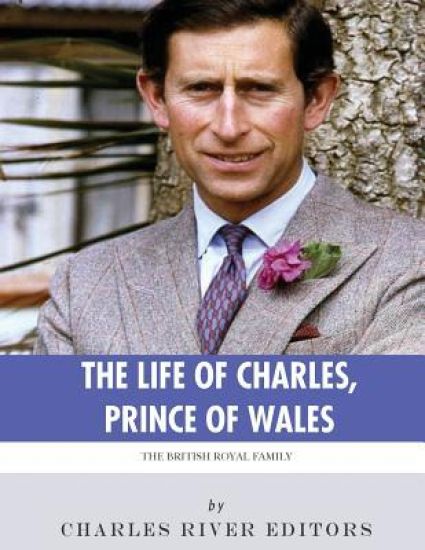
*Includes pictures of Charles and important people, places, and events in his life. *Includes a comprehensive look at his marriage to Diana and his role in her funeral. "I think it's something that dawns on you with the most ghastly, inexorable sense. I didn't suddenly wake up in my pram one day and say 'Yippee, I -', you know. But I think it just dawns on you, you know, slowly, that people are interested in one, and slowly you get the idea that you have a certain duty and responsibility." - Prince Charles about being heir to the throne The British Royal Family is held in awe across Britain, and they have captured the interest of people around the globe. Queen Elizabeth II is respected for her stately demeanor, Prince William and his new wife, Kate Middleton, are deemed trendsetters and attract attention from media starved for gossip, and nobody has held as unique a place in pop culture as the late Diana, Princess of Wales. In the middle of it all is Charles, Prince of Wales and heir to the throne. As the firstborn son of the Queen, Charles has always been under the watchful eyes of his countrymen and the press, but his relationship with the latter and views of him among the former have long been ambivalent, especially in comparison to the other noteworthy members of his family. Hampered by his own reserved personality and his aloofness to the attention, the man who may one day be King has often been cast as the villain in the central narrative. Charles has never helped his cause by admittedly attempting to steer clear of the media's feeding frenzy, going so far as to describe the media in 2002 "awkward, cantankerous, cynical, bloody-minded, at times intrusive, at times inaccurate and at times deeply unfair and harmful to individuals and to institutions." While comments like that (at a gathering to celebrate journalism no less) are a good way to guarantee bad publicity, the negative portrayals of the Prince of Wales are mostly a result of his disastrous marriage with Diana, a media darling in life and an icon in death. His marriage to Diana and their divorce, along with his longterm affair with mistress (and current wife) Camilla Parker Bowles, remain the seminal events in his life, at least so far as interested spectators are concerned. Charles may never be able to fully overcome his past, but The British Royal Family: The Life of Charles, Prince of Wales presents a comprehensive, objective look at the life of the heir to the British throne, his relationships with his famous relatives throughout the Royal Family, his famous marriage, and his future. Along with pictures of important people, places, and events in his life, you will learn about Prince Charles like you never have before, in no time at all.
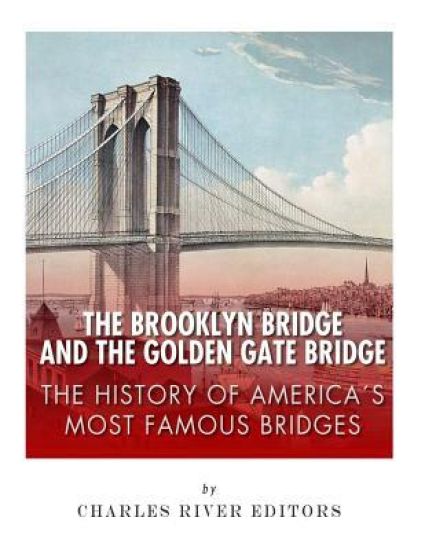
*Includes pictures *Includes accounts of the bridges' construction written by those who worked on the projects *Includes bibliographies for further reading *Includes a table of contents " A] perpetual monument that will make this city's name ring around the world and renew the magical fame which the Golden Gate enjoyed in the days of '49." - S. F. Examiner editorial, March 24, 1925 New York City has countless landmarks and tourist spots, but few are as old or as associated with the city as the Brooklyn Bridge, the giant suspension bridge that spans nearly 1,600 feet as it connects lower Manhattan to Brooklyn. Indeed, the bridge is so old that Manhattan and Brooklyn represented the largest and third largest cities in America at the time of its construction, and the East River posed a formidable enough challenge that taking a ferry across could be dangerous. Originally known as the New York and Brooklyn Bridge and then later as the East River Bridge, the iconic bridge wasn't formally dubbed the Brooklyn Bridge until about 30 years after it was completed in the early 1880s. As the first steel suspension bridge built in America, it represented an enormous engineering feat that claimed the lives of several workers, including its original designer, but by the time it was finished, the Brooklyn Bridge towered nearly 300 feet above the water at over 80 feet wide. With those dimensions, it was over 50% larger than any suspension bridge to date. From its inception, the Brooklyn Bridge has been celebrated as one of the things that makes New York City unique. President Chester Arthur attended its opening, and P. T. Barnum famously walked Jumbo the Elephant across the bridge as a publicity stunt. Yet despite its age and the fact that so many contemporary bridges have fallen into disrepair or were destroyed, the Brooklyn Bridge continues to be not just an instantly identifiable landmark in New York City but also a crucially valuable one that is still used by thousands of people a day. Likewise, the Golden Gate Bridge in San Francisco is one of the modern world's engineering marvels. The giant suspension bridge spans the San Francisco Bay, with a length of over 1.5 miles, a height of nearly 750 feet, and a width of around 100 feet. While it is a beautiful and instantly recognizable landmark, the Golden Gate Bridge was also a very practical one born of necessity. After the California Gold Rush helped turn San Francisco into a destination site, connecting people on both sides of the beautiful Golden Gate Strait became vitally important. There was a consistent ferry service in the area, but the advent of automobiles made a bridge even more imperative. At the same time, no one in the world had ever successfully built a bridge as long as this one would be, and indeed, no one else would for another three decades after the Golden Gate Bridge opened. Given its size, it should come as little surprise that the Golden Gate Bridge was one of the most ambitious and expensive projects of its age. Indeed, it would take nearly 20 years from the time the bridge was proposed to its grand opening, and it cost hundreds of millions of dollars (the equivalent of several billion today). When it finally opened in 1937, Joseph Strauss, the man most responsible for the bridge, remarked, "This bridge needs neither praise, eulogy nor encomium. It speaks for itself. We who have labored long are grateful. What Nature rent asunder long ago, man has joined today." The Brooklyn Bridge and the Golden Gate Bridge: The History of America's Most Famous Bridges chronicles the story of how one of America's most famous bridges was built. Along with pictures of important people, places, and events, you will learn about the Golden Gate Bridge like never before, in no time at all.
*Includes pictures. *Includes a bibliography for further reading. In terms of geopolitics, perhaps the most seminal event of the Middle Ages was the successful Ottoman siege of Constantinople in 1453. The city had been an imperial capital as far back as the 4th century, when Constantine the Great shifted the power center of the Roman Empire there, effectively establishing two almost equally powerful halves of antiquity's greatest empire. Constantinople would continue to serve as the capital of the Byzantine Empire even after the Western half of the Roman Empire collapsed in the late 5th century. Naturally, the Ottoman Empire would also use Constantinople as the capital of its empire after their conquest effectively ended the Byzantine Empire, and thanks to its strategic location, it has been a trading center for years and remains one today under the Turkish name of Istanbul. The end of the Byzantine Empire had a profound effect not only on the Middle East but Europe as well. Constantinople had played a crucial part in the Crusades, and the fall of the Byzantines meant that the Ottomans now shared a border with Europe. The Islamic empire was viewed as a threat by the predominantly Christian continent to their west, and it took little time for different European nations to start clashing with the powerful Turks. In fact, the Ottomans would clash with Russians, Austrians, Venetians, Polish, and more before collapsing as a result of World War I, when they were part of the Central powers. The Ottoman conquest of Constantinople also played a decisive role in fostering the Renaissance in Western Europe. The Byzantine Empire's influence had helped ensure that it was the custodian of various ancient texts, most notably from the ancient Greeks, and when Constantinople fell, Byzantine refugees flocked west to seek refuge in Europe. Those refugees brought books that helped spark an interest in antiquity that fueled the Italian Renaissance and essentially put an end to the Middle Ages altogether. The Fall of Constantinople traces the history of the formation of the Ottoman Empire, the siege that toppled the city, and the dissolution of the Byzantine Empire. Along with pictures depicting important people, places, and events, you will learn about the fall of Constantinople like never before, in no time at all.
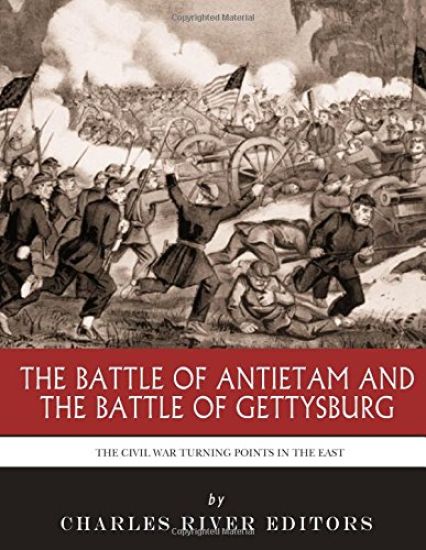
*Includes pictures of important people, places, and events. *Includes maps of the battles. *Comprehensively covers the entire Maryland Campaign of 1862 and the Pennsylvania campaign of 1863, as well as the aftermath and legacies of the battles. *Analyzes the generalship of the battles' most important leaders, including Lee, McClellan, Longstreet, Meade, and more. *Includes bibliographies for further reading. "The fact of the matter is that George G. Meade, unexpectedly and against all odds, thoroughly outgeneraled Robert E. Lee at Gettysburg." - Stephen Sears "Those in whose judgment I rely tell me that I fought the battle splendidly and that it was a masterpiece of art. ... I feel I have done all that can be asked in twice saving the country. ... I feel some little pride in having, with a beaten & demoralized army, defeated Lee so utterly." - George McClellan The bloodiest day in American history took place on the 75th anniversary of the signing of the Constitution. On September 17, 1862, Robert E. Lee's Confederate Army of Northern Virginia fought George McClellan's Union Army of the Potomac outside Sharpsburg along Antietam Creek. That day, nearly 25,000 would become casualties, and Lee's army would barely survive fighting the much bigger Northern army. Although the battle was tactically a draw, it resulted in forcing Lee's army out of Maryland and back into Virginia, making it a strategic victory for the North and an opportune time for President Abraham Lincoln to issue the Emancipation Proclamation, freeing all slaves in the rebellious states. Less than a year later, the most famous battle of the Civil War took place outside of the small town of Gettysburg, Pennsylvania, which happened to be a transportation hub, serving as the center of a wheel with several roads leading out to other Pennsylvanian towns. From July 1-3, Robert E. Lee's Confederate Army of Northern Virginia tried everything in its power to decisively defeat George Meade's Union Army of the Potomac, unleashing ferocious assaults that inflicted nearly 50,000 casualties in all. Day 1 of the battle would have been one of the 25 biggest battles of the Civil War itself, and it ended with a tactical Confederate victory. But over the next two days, Lee would try and fail to dislodge the Union army with attacks on both of its flanks during the second day and Pickett's Charge on the third and final day. Meade's stout defense held, barely, repulsing each attempted assault, handing the Union a desperately needed victory that ended up being one of the Civil War's turning points. After the South had lost the war, the importance of Antietam and Gettysburg was apparent to everyone, making the battles all the more important in the years after it had been fought. While former Confederate generals cast about for scapegoats, with various officers pointing fingers at Robert E. Lee, James Longstreet, and James Stuart, historians and avid Civil War fans became obsessed with studying and analyzing all the command decisions and army movements during the campaigns. Despite the saturation of coverage, millions of Americans continue visiting the two battlefields. The Civil War Turning Points in the East comprehensively covers the two crucial campaigns, analyzing Lee's invasion strategies, the Union's response, and the generalship of the most important commanders of the battles. Along with bibliographies, maps of the battle, and pictures of important people and places, you will learn about the Antietam and Gettysburg like you never have before.
*Includes pictures *Includes accounts of the Alabama's raids and battles written by its sailors and captain *Includes online resources and a bibliography for further reading *Includes a table of contents "God helps those who help themselves." - The motto of the Alabama After the first year of the Civil War, the Confederacy was faced with a serious problem. While the South had enjoyed some stunning victories on land, they had been all but cut off from the world at sea. The more industrialized North had realized that in case of an extended war, the best way to defeat the Confederacy was to starve it of supplies. The rebels started the war with no real navy to speak of, and so the federal government quickly set up a blockade of all Southern ports and river mouths. By depriving the South of revenues derived from its main export, cotton, the North seriously injured the Southern economy. Without European intervention and the ability to build a navy that could rival the Union's, the Confederacy was mostly reduced to token resistance and using fast moving ships that could evade the blockade and import and export goods. Again, that was only partially successful, and today, the blockade runners are better known for their extracurricular activities; most notably, some of the crews also acted as privateers on the high seas, attacking U. S. shipping and taking any loot for themselves. The daring exploits of these commerce raiders caught the imagination of Southern soldiers and civilians and buoyed up morale, even as the war news turned increasingly grim. Among all the Confederate commerce raiders, by far the most famous was the CSS Alabama. The Alabama attacked American ships and eluded the U. S. Navy around the globe for more than two years, all without ever having docked at a Southern port. The Alabama conducted seven expeditions, raiding commerce in locations as diverse as the Indian Ocean, Pacific Ocean, and Atlantic Ocean, capturing dozens of prizes across tens of thousands of miles of water. In fact, the Alabama would meet its demise as a result of having to head into port in France to refit and repair the ship after so much heavy use. While the Confederates tried to rely on blockade runners, the Union Navy assigned many ships the task of tracking them down and stopping them. One of these ships, the USS Kearsarge, would face off against the Alabama off the French coast. Unaware the Union ship was partly fitted with the armor of an ironclad, the Confederates decided to attack, and after the Alabama was escorted out of the French harbor by French ships, the Alabama and Kearsage dueled with each other in full view of hundreds of Frenchmen gathered on the coast. The battle lasted about an hour until the Alabama was headed to the bottom and dozens of its sailors were killed or wounded. Dozens more would be rescued, including some by the Kearsarge, and with that, the most famous Confederate raiding vessel of all was no more. The battle itself was celebrated in a number of artworks, including a few paintings by Edouard Manet, and the end of the Alabama brought relief to Union supporters across America. By the last year of the war, blockade running had been all but strangled. Several major ports had fallen to the Union, and the rest were tightly blockaded. The blockade runners had also suffered from attrition. By the end of the war more than 1,100 of the ships had been captured and another 355 had been sunk or run aground. The CSS Alabama: The History of the Famous Confederate Raider that Sank Off the Coast of France during the Battle of Cherbourg looks at one of the Civil War's most famous ships. Along with pictures of important people, places, and events, you will learn about the CSS Alabama like never before.
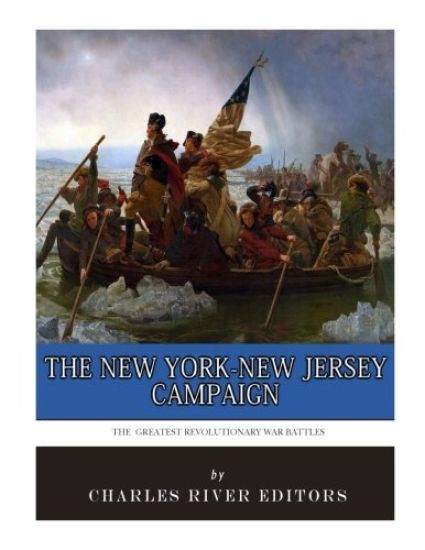
*Includes pictures *Includes accounts of the fighting around New York City *Includes online resources and a bibliography for further reading *Includes a table of contents After the siege of Boston forced the British to evacuate that city in March 1776, Continental Army commander George Washington suspected that the British would move by sea to New York City, the next logical target in an attempt to end a colonial insurrection. He thus rushed his army south to defend the city. Washington guessed correctly, but it would be to no avail. Unlike Boston, New York City's terrain featured few defensible positions. The city lacked a high point from which to launch a siege, as the peninsula of Boston was fortunate to have. Moreover, Washington wasn't sure defending the city was necessary, hoping that an expedition launched toward Quebec like the one Benedict Arnold had led in late 1775 would keep the British away from New York anyway. However, Congress thought otherwise, and demanded that Washington defend New York. Washington thus did what he was told, and it nearly resulted in the army's demise. In the summer of 1776, the British conducted the largest amphibious expedition in North America's history at the time, landing over 20,000 troops on Long Island. British General William Howe, who had led the British at Bunker Hill and would later become commander in chief of the armies in North America, easily captured Staten Island, which Washington was incapable of defending without a proper navy. Washington's army attempted to fight, but Washington was badly outmaneuvered, and his army was nearly cut off from escape. The withdrawal across New York City was enormously disorderly, with many of Washington's troops so scared that they deserted. Others were sick as a result of the dysentery and smallpox plaguing the Continental Army in New York. In what was arguably the worst defeat of the Revolution, Washington was ashamed, and he also felt betrayed, by both his troops and Congress. To escape from New York, Washington led a tactical retreat across the East River and off Long Island in the middle of the night without British knowledge. This retreat prevented the annihilation of the colonial army in New York, but with Washington being pushed west across New Jersey and into Pennsylvania, Congress was forced to flee Philadelphia. And with this string of crucial British successes in 1776, the Revolution was on the brink of failure. The Continental Army, now in Pennsylvania, had lost over 5,000 men during its retreat through New York and New Jersey and now had fewer than 5,000 able soldiers. That winter, one of the men in camp, Thomas Paine, would write The American Crisis, beginning with the famous words, "These are the times that try men's souls." However, Washington would famously cross the Delaware River on Christmas night to attack British forces at Trenton, and he was able to compel the British to suspend the winter campaign after fighting around Princeton. Nonetheless, in the early months of 1777, the colonists were in dire straits and the British were plotting a campaign in the coming months to put down the revolution once and for all. The Greatest Revolutionary War Battles: The New York-New Jersey Campaign comprehensively covers the events that led up to the campaign, the fighting itself, and the aftermath of the conflict. Along with maps and pictures of important people, places, and events, you will learn about the campaign like never before, in no time at all.
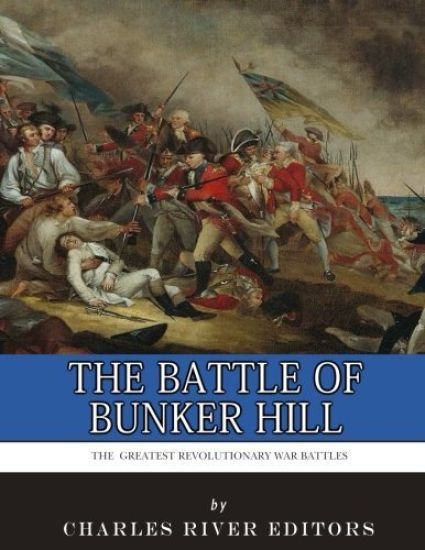
*Discusses some of the famous legends of the battle and whether they are accurate. *Includes pictures of the battle's important generals. *Includes several maps of the battle. *Includes accounts of the fighting written by witnesses and soldiers. *Includes a Bibliography for further reading. "We have... learned one melancholy truth, which is, that the Americans, if they were equally well commanded, are full as good soldiers as ours." - A British officer after the Battle of Bunker Hill On April 19, 1775, the "shot heard 'round the world" was fired at Lexington, officially starting the Revolutionary War between the colonists and the British Empire. Though Lexington and Concord were the scenes of the first fighting, contingency plans had been made on both sides for war, and immediately after the Battles of Lexington and Concord, the colonial militia men who had poured in from across the countryside converged on Boston, which at the time was a peninsula with a small neck attaching it to the rest of Massachusetts. With the Charles River surrounding it on three sides, Boston was an ideal city to lay siege to. Initially, the militias blocked off the land approaches to Boston, but when 4,500 more British soldiers arrived by sea, the American forces fell back to adjacent hills on the Charlestown Peninsula, Breed's Hill and Bunker Hill. At this time, the colonists and colonial forces were still unclear of their ultimate goals; the Second Continental Congress would not formally declare independence for another year. During the first few months of the fighting, the British tried on several occasions to lift the siege with force, and the most memorable attempt was what became known as the Battle of Bunker Hill. On June 17, 1775, the British Navy fired on Charlestown from the Charles River and then landed an estimated 3,000 British regulars on the peninsula. The British soldiers attempted multiple charges against about 1,500 defenders who were fairly well entrenched on Breed's Hill, one of the hills behind Charlestown, and it took three attempts to force the colonists back to Cambridge. The British suffered a heavy price, losing over 1,000 British soldiers killed or wounded, compared to only 450 casualties for the colonists, who had stood toe to toe with the vaunted redcoats until ammunition ran low. Bunker Hill would end up being the bloodiest battle of the entire Revolutionary War, and it had a critical impact on the morale of what would become the Continental Army and the ultimately successful siege of Boston. Given its importance, the battle remains well known among all Americans, and perhaps not surprisingly some of the myths and legends surrounding the battle and its participants remain the best known aspects of the fighting. The Greatest Revolutionary War Battles: The Battle of Bunker Hill comprehensively covers the events that led up to the battle, the fighting itself, and the aftermath of the battle. Along with maps and pictures of important people, places, and events, you will learn about the Battle of Bunker Hill like you never have before, in no time at all.

*Includes pictures *Includes accounts of the plot written by contemporaries *Includes online resources and a bibliography for further reading "A desperate disease requires a dangerous remedy." - Guy Fawkes "Remember, remember, the fifth of November Gunpowder treason and plot We see no reason Why Gunpowder treason Should ever be forgot" In 1605, Guy Fawkes was one of over a dozen conspirators in the famous Gunpowder Plot, an attempt to assassinate England's King James I. When the plot was discovered on the 5th of November, Fawkes and other conspirators were quickly convicted and executed, and the King asked his subjects to remember the date as "the joyful day of deliverance." Fawkes was but one of a countless number of failed assassins, but in a perversely ironic way, the King's declaration ultimately turned November 5 into Guy Fawkes Day, a celebratory day that usually had children creating an effigy that would then be burned in a bonfire. While the effigy was usually Fawkes, others made it a custom to burn an effigy of the pope, a tradition that came to the 13 Colonies in America as well. Though he was only one of the plotters, Fawkes became the one most associated with the act, and he was viewed as a symbol of treason. A strange thing happened, however, in the 19th century, as Fawkes began to undergo a sort of character rehabilitation, beginning with William Harrison Ainsworth's 1841 historical fiction Guy Fawkes; or, The Gunpowder Treason. Suddenly, Fawkes became an anti-hero who had the best interest of the public at heart and was taking action to effect change. Other British literature of the century depicted Fawkes as some sort of action hero. In 2005's Remember, Remember: A Cultural History of Guy Fawkes Day, writer J. A. Sharpe noted Fawkes is sometimes remembered tongue-in-cheek as "the last man to enter Parliament with honest intentions." With that new perception of Fawkes taking hold, Fawkes managed to become a symbol of defiance against government. The popular movie V for Vendetta reintroduced Fawkes to American audiences, and Fawkes and the Guy Fawkes Mask have taken on a new life as a rally cry and symbol for groups protesting the government. The major hacking network Anonymous uses the Guy Fawkes Mask as its hallmark, and the Guy Fawkes Mask was a common sight at Occupy protests across America in 2011. As a result, even though Guy Fawkes wasn't even the leader of the plot, the twists and turns of his legacy have ensured that the Gunpowder Plot remains one of the most noteworthy and widely studied conspiracies of history, despite its ultimate failure. The Gunpowder Plot of 1605: The History of the Famous Conspiracy to Assassinate King James I of England examines the failed plot and how Guy Fawkes and the Gunpowder Plot have been remembered over time as a pop culture fixture around the globe.
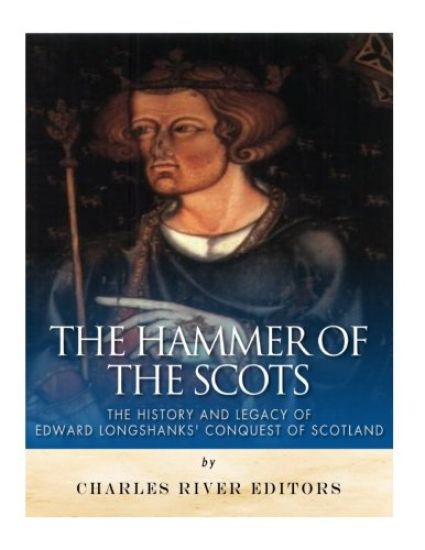
*Includes pictures *Includes accounts of battles fought between Edward Longshanks, William Wallace and Robert the Bruce *Includes online resources and a bibliography for further reading *Includes a table of contents "By God, Sir Earl, either go or hang." - Edward Longshanks From their very beginnings, England and Scotland fought each other. Emerging as unified nations from the early medieval period, their shared border and inter-related aristocracy created endless causes of conflict, from local raiders known as border reivers to full blown wars between their monarchies. Every century from the 11th to the 16th was colored by such violence, and there were periods when not a decade went by without some act of violence marring the peace. Out of all of this, the most bitterly remembered conflict is Edward I's invasion during the late 13th century. Eventually beaten back after Edward's death at the famous Battle of Bannockburn in 1314, this was the period of some of Scotland's greatest national heroes, including William Wallace and Robert the Bruce. It still resonates in the Scottish national memory, all the more so following its memorable but wildly inaccurate depiction in the 1995 film Braveheart, which had Scottish audiences cheering in cinemas. Though the fondly remembered heroes of this war are Scottish, the man who defined it was an English monarch, a man whose ruthless efficiency and brutality would earn him the title Hammer of the Scots. This was, for better or for worse, Edward I's war. The Hammer of the Scots: The History and Legacy of Edward Longshanks' Conquest of Scotland analyzes the history behind the fighting between Edward and Scottish leaders like William Wallace. Along with pictures of important people, places, and events, you will learn about Edward Longshanks and the conquest of Scotland like never before, in no time at all.
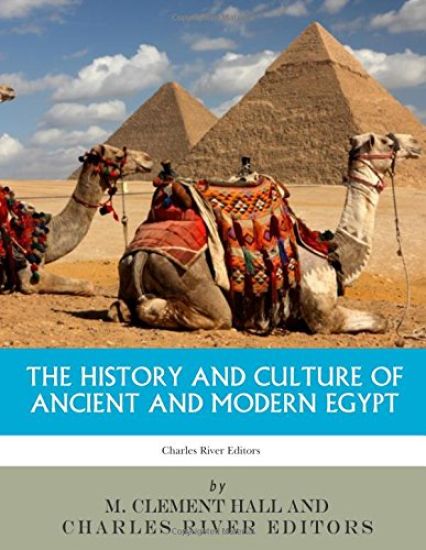
*Covers the history and culture of Ancient Egypt from 3,000-30 B. C. *Covers the history and culture of Modern Egypt from 1800-2012. *Includes pictures of famous people, places, art, and events in Egypt. Africa may have given rise to the first human beings, and Egypt probably gave rise to the first great civilizations, which continue to fascinate modern societies across the globe nearly 5,000 years later. From the Library and Lighthouse of Alexandria to the Great Pyramid at Giza, the Ancient Egyptians produced several wonders of the world, revolutionized architecture and construction, created some of the world's first systems of mathematics and medicine, and established language and art that spread across the known world. With world-famous leaders like King Tut and Cleopatra, it's no wonder that today's world has so many Egyptologists. What makes the accomplishments of the Ancient Egyptians all the more remarkable is that Egypt was historically a place of great political turbulence. Its position made it both valuable and vulnerable to tribes across the Mediterranean and the Middle East, and Ancient Egypt had no shortage of its own internecine warfare. Its most famous conquerors would come from Europe, with Alexander the Great laying the groundwork for the Hellenic Ptolemy line and the Romans extinguishing that line after defeating Cleopatra and driving her to suicide. About 2,050 years after Cleopatra's death, Egypt still remains a volatile hotspot. In the last year, Egypt has undergone a revolution that expelled its authoritarian leader of nearly 30 years and implemented elections that have pitted the Egyptian military in a power struggle with the Muslim Brotherhood, the long-time Islamic opposition group with ties to Hamas and elements of al-Qaeda. Making everything that much more surreal, the events have played out before well placed television cameras with continuous "real time" coverage of the revolution and ongoing turmoil, and foreign nations around the world eagerly await or dread the end result. The situation in Egypt sounds messy today, but strife in Egypt is hardly a new occurrence. In fact, conflict has been more of a rule than exception since the end of the 18th century, when Western powers, beginning with Napoleon and the French, got involved in the territory that was at that point a part of the Ottoman Turkish Empire. Since then, European powers came into conflict with each other and local Egyptian officials in their imperialistic efforts, Egyptian nationalists tried to do away with foreign interference, and the critically important Suez Canal became a geopolitical hotspot. And when Egypt finally did receive full independence and sovereignty from the British, it was subjected to conflict between religious extremists, secular forces, pan-Arab nationalists, and oppressive strongmen. The History and Culture of Ancient and Modern Egypt comprehensively covers the history and culture of Ancient Egypt, looking at its religious, political, foreign and military past, and examining all the architectural and artistic achievements from 3,000-30 B. C. It also comprehensively covers this turbulent history, helping to explain and sort through all the different forces at play in Egypt over the last 215 years. Along with maps and pictures of important people, places, and events, you will learn about Ancient and Modern Egypt like you never have before.
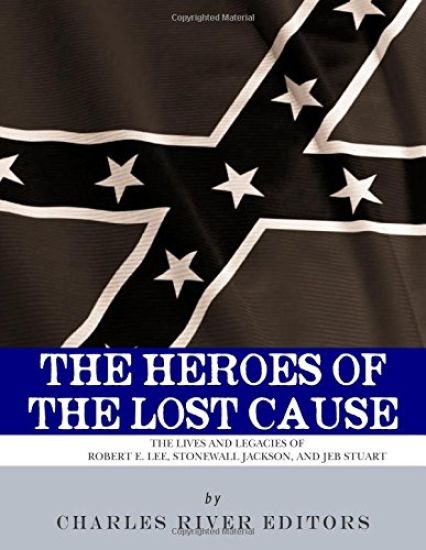
*Includes pictures of each general and important people, places, and events in their lives. *Includes a Bibliography on each man for further reading. In 1867, Edward Pollard, an editor for a Richmond newspaper, published The Lost Cause, championing his voluminous book as a "New Southern history" of the war. Pollard's work poignantly reflected the sentiments of unrepentant rebels clinging to their ideology. Pollard explicitly explained the motivation behind what he termed the "Lost Cause." Although the South had lost the Civil War, he argued that the South could still wage and win the "war of ideas." Henceforth, the Lost Cause remembered the Confederacy and their leaders as a doomed cause that was justly and heroically fought for by noble, chivalrous, virtuous men. The ideal Southern soldier, of course, was the "Marble Man". With the exception of George Washington, perhaps the most famous general in American history is Robert E. Lee (January 19, 1807 - October 12, 1870), despite the fact he led the Confederate Army of Northern Virginia against the Union in the Civil War. As the son of U. S. Revolutionary War hero Henry "Light Horse Harry" Lee III, and a relative of Martha Custis Washington, Lee was imbued with a strong sense of honor and duty from the beginning. And as a top graduate of West Point, Lee had distinguished himself so well before the Civil War that President Lincoln asked him to command the entire Union Army. Lee famously declined, serving his home state of Virginia instead after it seceded. Nobody personified the virtuous Christian soldier of the Lost Cause quite like Thomas Jonathan Jackson, who became one of the most famous generals of the Civil War, even if many of the people he continues to fascinate probably don't remember his whole name. That's because Jackson earned his famous "Stonewall" moniker at the First Battle of Manassas or Bull Run, when Brigadier-General Bee told his brigade to rally behind Jackson, whose men were standing like a stone wall. Ironically, it's still unclear whether that was a compliment for standing strong or an insult for not moving his brigade, but the nickname stuck for the brigade and the general. Alongside Lee, no one epitomized the chivalry and heroism celebrated by the Lost Cause more than JEB Stuart (1833-1864), the most famous cavalry officer of the Civil War. Stuart was equal parts great and grandiose, leading the cavalry for the Confederacy in Lee's Army of Northern Virginia until his death at the Battle of Yellow Tavern in May 1864. Stuart was a throwback to the past, colorfully dressing with capes, sashes, and an ostrich plumed hat, while sporting cologne and a heavy beard. But he was also brilliant in conducting reconnaissance, and he proved capable of leading both cavalry and infantry at battles like Chancellorsville. As the eyes and ears of Robert E. Lee's army, none were better, despite the fact that he was only in his late 20s and early 30s during the Civil War, far younger than most men of senior rank. The Heroes of the Lost Cause chronicles the lives, battles, and legacies of the Confederacy's most famous and popular generals, while humanizing the men whose legends have often obscured the fact that they were mere mortals. Along with pictures of Lee, Jackson, Stuart and other important people, places and events in their lives, you will learn about the icons of the Lost Cause like you never have before, in no time at all.
*Includes pictures of important people, places, and events in Egyptian history. In the last year, Egypt has undergone a revolution that expelled its authoritarian leader of nearly 30 years and implemented elections that have pitted the Egyptian military in a power struggle with the Muslim Brotherhood, the long-time Islamic opposition group with ties to Hamas and elements of al-Qaeda. Making everything that much more surreal, the events have played out before well placed television cameras with continuous "real time" coverage of the revolution and ongoing turmoil, and foreign nations around the world eagerly await or dread the end result. The situation in Egypt sounds messy today, but strife in Egypt is hardly a new occurrence. In fact, conflict has been more of a rule than exception since the end of the 18th century, when Western powers, beginning with Napoleon and the French, got involved in the territory that was at that point a part of the Ottoman Turkish Empire. Since then, European powers came into conflict with each other and local Egyptian officials in their imperialistic efforts, Egyptian nationalists tried to do away with foreign interference, and the critically important Suez Canal became a geopolitical hotspot. And when Egypt finally did receive full independence and sovereignty from the British, it was subjected to conflict between religious extremists, secular forces, pan-Arab nationalists, and oppressive strongmen. The History of Modern Egypt comprehensively covers this turbulent history, helping to explain and sort through all the different forces at play in Egypt over the last 215 years. At the same time, it examines and analyzes all of the different religious, political, foreign, and military issues that continue to affect Egypt today. The History of Modern Egypt will bring readers up to speed on one of the world's crucial countries today.
*Discusses the origins of Hamas and important leaders like Sheikh Yassin, Khaled Meshaal, and others. *Covers the Middle East conflict from the formation of Israel to today. *Includes pictures of important people, places, and events. In 1988, a recently organized militant group issued its charter, which called upon Muslims to "raise the banner of Allah over every inch of Palestine." The group, an offshoot of the Muslim Brotherhood, declared, "Allah is its goal, the Prophet is the model, the Qur'an its constitution, jihad its path, and death for the sake of Allah its most sublime belief." Vowing to fight off the "Zionist invaders," the charter states, "The time will not come until Muslims will fight the Jews and kill them]; until the Jews hide behind rocks and trees, which will cry: Oh Muslim There is a Jew hiding behind me, come on and kill him " Despite having a charter that called for the murder of Jews across the world, Israel actually bolstered this fundamentalist religious group, universally known as Hamas, during its formative years in the 1980s. After occupying the Gaza Strip, Israel encouraged the rise of Islamists as a way of undercutting the secular Palestine Liberation Organization, which Israel had always viewed as the greater threat. One of the individuals who Israel helped was Sheikh Ahmed Yassin, leader of the Muslim Brotherhood in the Gaza Strip, who had organized a charity that built mosques, clubs, and schools there. Less than 20 years later, the political situation in the Palestinian territories became far more complicated. Although the extent of cooperation between Hamas and the Palestinian Authority during the '90s and early 2000s was disputed, Hamas was voted into power in elections in the Gaza Strip and the two sides eventually engaged in a civil war in 2007, with Hamas crushing the PA's forces in the Gaza Strip and becoming the sole power in that territory. Since Hamas' rise to power, the Gaza Strip has been subjected to war, blockades, and a tense political situation, as Israel and the U. S. have called upon Hamas to renounce violence, recognize Israel's right to exist, and honor past agreements between Israelis and Palestinians. But Hamas leaders have continued to refuse all of the preconditions and remain committed to Israel's destruction. The History of Hamas chronicles the rise of the organization to power, the influential leaders behind it, the group's fighting against Israel, and what the future might hold. Along with pictures of important people, places, and events, The History of Hamas will bring readers up to speed on one of the world's most important Middle Eastern groups today.
*Explains the history of the Democratic Party from the Revolution to Obama. *Analyzes the policies of Democratic Presidents like Jackson, Roosevelt, Kennedy, Johnson and Clinton. *Explains the way the Democratic Party's voting blocs and party platform have transformed from Jefferson to Obama. *Includes pictures "I hope the two wings of the Democratic Party may flap together." - William Jennings Bryan As the oldest political party in the United States, the Democratic Party has been one of the nation's major political parties for over 150 years, and diverse men and ideas have fallen under its tent since the 19th century. Today the Democrats are generally viewed as proponents of a strong, centralized federal government, and yet the forerunner of the modern party was none other than Thomas Jefferson, the man most associated with states' rights and limited government. With its Jeffersonian background, the party championed farmers, and Andrew Jackson's populist era made the Party home to urban workers and new immigrants. Eventually sectional splits weakened the Democrats, and when the fledgling Republican Party took power under Abraham Lincoln in 1861, it ushered in an era in which the Democrats only elected 2 presidents over a 70 year span. However, Reconstruction ensured that the Democrats maintained an almost unbreakable level of support in the old Confederate states, and they used the Solid South to wield power in Congress for decades. 150 years after the Civil War, the Democratic Party's current voting bloc (strongly reliant on minorities) and their base of power (the Northeast and Midwest) are completely different than the 19th century's incarnation. Its platform has also been completely revamped. Both of those reversals are byproducts of Franklin Roosevelt's New Deal and Lyndon B. Johnson's Great Society, which continue to be the pillars on which the Democrats' current platform rests. The History of the Democratic Party looks back at the historical narrative of the Democrats, including their key leaders, important changes and events, and the Party's current political platform. Along with pictures, you will learn about the Democratic Party like you never have before, in no time at all.

*Includes pictures *Includes accounts of the shipwreck and mutiny by various crewmembers *Includes online resources and a bibliography for further reading *Includes a table of contents "Whereas upon a General Consultation, it has been agreed to go from this Place through the Streights of Magellan, for the coast of Brazil, in our way for England: We do, notwithstanding, find the People separating into Parties, which must consequently end in the Destruction of the whole Body; and as also there have been great robberies committed on the Stores and every Thing is now at a Stand; therefore, to prevent all future Frauds and Animosoties, we are unanimously agreed to proceed as above-mentioned." - John Bulkley, gunner on the HMS Wager "I cannot suppose the Captain will refuse the signing of it; but he is so self-willed, the best step we can take, is to put him under arrest for the killing of Mr. Cozens. In this case I will, with your approbation, assume command. Then our affairs will be concluded to the satisfaction of the whole company, without being any longer liable to the obstruction they now meet from the Captain's perverseness and chicanery." - Lieutenant Robert Baynes, second-in-command on the HMS Wager Mention the 18th century Royal Navy and visions come to mind of swashbuckling sailors swinging from rope to rope while a red-faced captain in an even redder coat and a powdered wig shouts order and pitches fits. Such visions, largely shaped by Hollywood pictures such as the popular Pirates of the Caribbean franchise, naturally fail to do full justice to a group of men who functioned, with little direction and even less support, on the seas for years at a time. Disney may enjoy portraying them sitting down to sumptuous feasts or cavorting with scantily clad native girls, but the opposite was true; the men were almost always hungry, with even the best meals consisting of little more than bread, beans, and a bit of meat on the side if the voyage was still in its early days. Likewise, those stranded on islands were not met by pretty native girls bearing coconut cream pies but instead cold and wind and an unremitting surf that drove away both flora and fauna. Those who doubt this reality or unfamiliar with it need only consult the journals and records of the officers and crew of the HMS Wager, who sailed from England to fight the Spanish in 1741 and instead ended up fighting for their lives. These men, many of whom were already long past the normal age of service, endured short rations and rough seas for months, only to end up shipwrecked on an island off of South America. Many died during the wreck, as did many others who were marooned, only to discover it bare of almost all supplies necessary for survival. On top of those tribulations, mutinous men rose up violently against their captain and made their way across more than 2,000 miles of tossing seas in an open boat. Their trip was characterized not just by hardship and hunger but also by that most dastardly of crimes - betrayal - as their leaders again and again chose their own good over that of their men. Of the almost 100 men that set out on the Wager, only a handful made it home, and even then they returned not together but piecemeal after having been separated by their troubles. When they finally did make their way back to England, they came home not to a hero's welcome but numerous questions and ultimately a court martial. For a number of reasons, ranging from lack of evidence to prosecutorial reluctance, the men were not convicted of any crimes; in fact, most of the survivors went on to have successful careers in the British Navy and other endeavors. However, no rational person could ever claim that they got away unpunished, for surely the sights of friends dying slowly of starvation and dead bodies piled on beaches for carrion to attack were tougher punishments than the Admiralty could ever mete out on them.
*Includes pictures depicting important people and events. *Explains the literary evolution of the legend of the Holy Grail. *Discusses the scholarship over the historicity of the Grail and theories about the origins of the legend. *Includes a bibliography for further reading. "And He took a cup and when He had given thanks He gave it to them saying 'Drink this, all of you; for this is My blood of the covenant, which is poured out for many for the forgiveness of sins. I tell you, I shall not drink again of the fruit of the vine until I drink it new with you in My Father's kingdom.'" - Matthew 26:27 "The Grail is the womb of the beloved." - Robert Anton Wilson The Holy Grail is one of the most famous relics of Christianity, but also one of the least understood. Today, it is mostly associated with Christ's Last Supper, possibly used during the meal as a serving cup. The gospels in the New Testament specifically mention the Holy Chalice that Jesus used to serve wine, so it's no surprise that images of the Holy Grail depict a similar kind of cup. Initially, the Holy Chalice was a separate tradition, but over time, the Holy Grail has come to be indistinguishable from the Holy Chalice itself, a concept that probably would have been foreign to the earliest Christians. While churches throughout Christendom were familiar with traditions regarding the Holy Chalice and some even claimed to have the venerated object, the legend of the Holy Grail was given life during the Middle Ages through folklore. Today, the legends written about the Holy Grail are better known than the traditions surrounding the Holy Chalice. The Holy Grail is a prevalent theme in the Arthurian tales, and it eventually became linked to other events in the crucifixion narrative by subsequent legends, including the belief that Joseph used the Holy Grail to catch some of Christ's blood after he was crucified and was being interred. Conveniently, the British writers who wrote of the legend related the tale of how special protectors of the relic brought it to Britain, a simple but effective way of boosting the legitimacy and prestige of the motherland. While the Arthurian tales about Galahad and Perceval continue to fascinate readers, and the concept of undertaking an arduous quest to attain the Holy Grail has become a secular part of the modern lexicon, scholarly debate also arose over the actual history of the relic. Given the passage of time, and the addition of the literature surrounding it, it should come as no surprise that the historical debate continues today. In addition to the Christian traditions, scholars have looked for other sources that might have influenced the beliefs and legends about the Holy Grail, including searching Celtic mythology and literature, all in an attempt to better understand the emergence of the Holy Grail legend. The Holy Grail: The History and Legend of the Famous Relic chronicles the legends and theories about the famous holy relic, examining the historical record to piece together an understanding of the known and unknown about the Grail. Along with pictures and a bibliography, you will learn about the Holy Grail like you never have before, in no time at all.
*Includes pictures. Science has always been a daunting topic, but one field has never failed to fascinate people. From the moment life on Earth began, it has slept beneath the gaze of hundreds of little balls of light in the night sky, and a Moon that very noticeably changes its shape. For as long as people have been around, they could not help but notice the movements of the stars in the sky, the Moon's phases, and the coming of eclipses and comets hundreds of thousands of years before anyone determined what these bodies were. At its most basic, astronomy is the study of the objects in space, which goes at least as far back as written history, beginning with the Sumerian and Babylonian civilizations in the 4th millennium B. C. Ancient civilizations were mystified by the stars and planets that they saw every night, and they attached religious and mythological importance to them, making it all the more important to closely track their movements. The Babylonians became the first recorded civilization to create a solar calendar, measuring time by the cyclical movements of the stars, and they were also the first to notice that planets moved differently compared to the stars in the sky. Although ancient civilizations made great strides in astronomy, they could accomplish only so much without advanced instruments, physics, and more sophisticated measurements of light. Given our technological leaps and further understanding of the size of the universe and the different objects within it, astronomy is now one of the biggest sciences possible, easy to get both engrossed in and lost in at the same time. In this quick but comprehensive primer, The Illustrated Guide to the Universe by Bill Andrews of Astronomy magazine gives a complete overview of our universe, starting with our solar system before moving outward to explore the rest of the Milky Way Galaxy and beyond. Along with more than 20 pictures and illustrations, The Illustrated Guide to the Universe explains the workings of the universe and everything in it, from the planets and stars to quasars and black holes. Whether you are an experienced amateur or a complete novice, let The Illustrated Guide to the Universe be your guide to the stars.
*Includes step by step explanations for 36 poses and stretches, accompanied with pictures of each. For nearly a thousand years, people in the East have been practicing what was known as hatha yoga, "a kind of forced Yoga or abstract meditation", but in the West during the 20th century, it came to be known simply as yoga. In the last 50 years, yoga has become incredibly popular as a way to exercise both the mind and body. Yoga means "unity" or "oneness," and the word is derived from the Sanskrit word yuj, which means "to join." In spiritual terms, this joining refers to the unity of the individual consciousnesses with the universal consciousness. In practical terms, it refers to balancing and harmonizing the mind, body, and spirit. Yoga can be both a physical exercise and a way of life that bestows several health benefits upon those who practice it. Whether you have hours to spend on a yoga session that includes traditional postures, chanting, and meditation, or if you have only a limited time to do yoga poses for exercise, the versatility of yoga makes it an ideal way to improve fitness and flexibility. The Illustrated Step-By-Step Guide to Yoga for Flexibility will help any yoga newcomer or veteran improve the flexibility of all of their limbs and back by learning yoga poses and stretches for the back, shoulders, hamstrings, and more. Over three dozen different postures and yogic practices are accompanied with photographs of instructors and explanations to make sure you're practicing yoga correctly. This guide is essential for yoga students who seek to increase their body's flexibility and become more limber. Contents: Chapter 1: The Science of Stretching Chapter 2: Developing Shoulder flexibility Chapter 3: Developing Back Flexibility Chapter 4: Developing Knee, Hip, and Groin Flexibility Chapter 5: Developing Hamstring Flexibility Chapter 6: Sitting Series
*Gives step by step instructions on how to perform over 60 different traditional yoga poses. *Includes dozens of pictures showing how to properly perform each yoga pose discussed. For nearly a thousand years, people in the East have been practicing what was known as hatha yoga, "a kind of forced Yoga or abstract meditation", but in the West during the 20th century, it came to be known simply as yoga. In the last 50 years, yoga has become incredibly popular as a way to exercise both the mind and body. Yoga means "unity" or "oneness," and the word is derived from the Sanskrit word yuj, which means "to join." In spiritual terms, this joining refers to the unity of the individual consciousnesses with the universal consciousness. In practical terms, it refers to balancing and harmonizing the mind, body, and spirit. Yoga can be both a physical exercise and a way of life that bestows several health benefits upon those who practice it. Whether you have hours to spend on a yoga session that includes traditional postures, chanting, and meditation, or if you have only a limited time to do yoga poses for exercise, the versatility of yoga makes it an ideal way to improve fitness and flexibility. The Illustrated Step-By-Step Guide to Yoga will help any yoga newcomer or veteran learn and practice traditional yoga, replete with photographs and in-depth explanations by instructors trained at Yoga Vidya Gurukul in Trimbakeshwar, India. Over 60 different postures and yogic practices are each accompanied with photographs of instructors and explanations to make sure you're practicing yoga correctly. This guide is essential for yoga students who seek to increase their physical and mental balance and wish to delve further into the higher practices of traditional yoga. Contents: Chapter 1: What is Hatha Yoga? Chapter 2: Beginning the Practice of Yoga Chapter 3: Preparatory Movements Chapter 4: Sun Salutations Chapter 5: Supine Position Postures Chapter 6: Prone Position Postures Chapter 7: Seated Postures Chapter 8: Standing and Balancing Postures Chapter 9: Concluding the Practice of Yoga
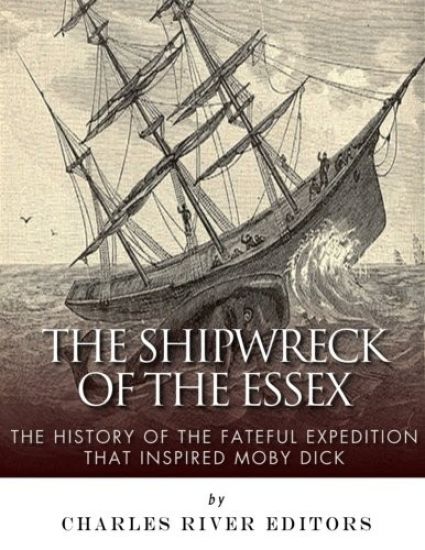
*Includes pictures *Includes accounts written by survivors *Includes a bibliography for further reading "I turned around and saw him about one hundred rods 500 m or 550 yards] directly ahead of us, coming down with twice his ordinary speed of around 24 knots (44 km/h), and it appeared with tenfold fury and vengeance in his aspect. The surf flew in all directions about him with the continual violent thrashing of his tail. His head about half out of the water, and in that way he came upon us, and again struck the ship." - Owen Chase, First Mate aboard the Essex Although Herman Melville was a popular writer during his day, he had become mostly obscure until a literary revival in the early 20th century resurrected his legacy. At the forefront of the revival was the book that is now considered a classic around the globe, and one of the greatest American novels ever written: Moby Dick. The novel is about Captain Ahab hunting a whale named Moby Dick, with a sailor named Ishmael narrating the story. Throughout the novel Ishmael speculates upon concepts such as good and evil, society and religion, and by the time the novel ends, readers come to understand that the novel's plot and characters (including the whale itself) are comprised of metaphors and allegories that Melville leaves for readers to interpret for themselves. However, while Moby Dick remains a staple among students, Melville was actually inspired by a true story: the shipwreck of the whaleship Essex in 1820. While it was always dangerous to work on a whaleship, the Essex was the first known American ship to be badly damaged by a massive sperm whale's attack, and though whales would sink other ships in the ensuing decades, the entire ordeal encountered by the crew made headlines when the survivors were rescued. When the Essex was wrecked, its crew of 21 tried to survive on uninhabited islands and resorted to desperate measures, including cannibalism of those who began to die. With opinions differing on what to do, groups of crew members began to split off from each other, and by the time the 8 remaining survivors were rescued, it had been about 3 months since the Essex had been attacked by the whale. In the wake of the notorious shipwreck, many of the survivors wrote gripping accounts of what had happened, and their own personal experiences trying to endure their difficulties. Owen Chase, the First Mate, wrote an account that was published in 1821, and Melville would draw upon that one to write Moby Dick, which has incidentally kept the memory of the Essex itself alive as well. The Shipwreck of the Essex: The History of the Fateful Expedition That Inspired Moby Dick chronicles the unbelievable story of the Essex's fateful journey and the aftermath of the shipwreck. Along with pictures of important people, places, and events, you will learn about the Essex like never before, in no time at all.