Kirjojen hintavertailu – 12 903 727 kirjaa ja 27 kauppaa

Kirjailija

Charles River

Kirjat ja teokset yhdessä paikassa: 4 673 kirjaa, julkaisuja vuosilta 2013–2022, suosituimpiin kuuluu William Powell and Myrna Loy: The Lives and Careers of One of Classical Hollywood's Most Iconic Duos. Vertaile teosten hintoja ja tarkista saatavuus suomalaisista kirjakaupoista.

4 673 kirjaa

Kirjojen julkaisuvuodet: 2013–2022.

The Last Gasp of Robert E. Lee's Army of Northern Virginia: The Siege of Petersburg and the Appomattox Campaign
*Includes pictures *Includes accounts of the fighting written by generals and soldiers on both sides *Includes online resources and a bibliography for further reading *Includes a table of contents "I have seen your despatch expressing your unwillingness to break your hold where you are. Neither am I willing. Hold on with a bulldog grip, and chew and choke as much as possible." - President Abraham Lincoln to Ulysses S. Grant, August 1864 After the last major pitched battle of the Overland Campaign was fought at Cold Harbor in early June, Ulysses S. Grant's Army of the Potomac had suffered more casualties during the campaign than Robert E. Lee had in his entire Army of Northern Virginia at the start of May. Understandably, the American public was shocked by the carnage, and to this day Grant has been accused of being a butcher, but attrition had become a vital war aim for the North, and Grant remained undeterred. Refusing to attack Lee in frontal assaults, and aware that Lee dared not venture out to counterattack, Grant nearly captured Richmond in mid-June by stealing a march on Lee's army and crossing the James River. The fog of war, poor luck, and a skillful impromptu defense by P. G. T. Beauregard stopped Grant from taking Petersburg, which was a critical railroad hub and supply line for Richmond, before Lee's army could confront, thereby saving the Confederacy for the time being. The two armies began to dig in around Petersburg, and unbeknownst to them they would be there for the next 9 months, constructing elaborate trenches and engaging in the kind of warfare that would be the forerunner of World War I. Both sides engaged in innovative and unique attempts at mining underneath the enemy's siege lines, as well as countermining, which led to the famous Battle of the Crater that turned an ingenious engineering feat into a Union debacle. Lee's attempts to break the siege by threatening Washington and trying to fight Grant's army proved just as futile. On April 2, the long siege of Petersburg by Ulysses S. Grant ended with Robert E. Lee's Army of Northern Virginia finally having its line broken, forcing Lee to retreat and give up Richmond in the process. Lee's battered army began stumbling toward a rail depot in the hopes of avoiding being surrounded by Union forces and picking up much needed food rations. While Grant's army continued to chase Lee's retreating army westward, the Confederate government sought to escape across the Deep South. On April 4, President Lincoln entered Richmond and toured the home of Confederate President Jefferson Davis. Fittingly, the food rations Lee moved toward did not arrive as anticipated, and on April 7, 1865, Grant sent Lee the first official letter demanding Lee's surrender. In it Grant wrote, "The results of the last week must convince you of the hopelessness of further resistance on the part of the Army of Northern Virginia in this struggle. I feel it is so, and regret it as my duty to shift myself from the responsibility of any further effusion of blood by asking of you the surrender of that portion of the Confederate States army known as the Army of Northern Virginia." Passing the note to General Longstreet, now his only advisor, Longstreet said, "Not yet." But by the following evening during what would be the final Confederate Council of War (and after one final attempt had been made to break through Union lines), Lee finally succumbed, stating regretfully, "There is nothing left me but to go and see General Grant, and I had rather die a thousand deaths." Communications continued until April 9, at which point Lee and Grant two met at Appomattox Court House. When Lee and Grant met, the styles in dress captured the personality differences perfectly. Lee was in full military attire, while Grant showed up casually in a muddy uniform. The Civil War's two most celebrated generals were meeting for the first time since the Mexican-American War.

The Last Emperor of the Aztecs: The Life and Legacy of Montezuma

The Last Emperor of the Aztecs: The Life and Legacy of Montezuma

Charles River

Createspace Independent Publishing Platform
2018
nidottu
*Discusses the legends and controversies surrounding Montezuma's life and death, and the conquest of the Aztec Empire by Cortes *Describes the Aztec Empire, the city of Tenochtitlan, and the human sacrifice rituals. *Includes pictures of historic art depicting Montezuma and important people, places, and events. "Cort s and all of us captains and soldiers wept for him, and there was no one among us that knew him and had dealings with him who did not mourn him as if he were our father, which was not surprising, since he was so good. It was stated that he had reigned for seventeen years, and was the best king they ever had in Mexico, and that he had personally triumphed in three wars against countries he had subjugated. I have spoken of the sorrow we all felt when we saw that Montezuma was dead. We even blamed the Mercederian friar for not having persuaded him to become a Christian." - Bernal D az del Castillo Nearly 500 years after his death and the demise of his empire, Moctezuma II is the most famous ruler of the most famous civilization in the New World, the Aztec. For centuries the legends surrounding his life and the conquest of the Aztecs by Hernan Cortes have fascinated readers and historians alike. Moctezuma was born around 1466 in the legendary Aztec city of Tenochtitlan and into the ruling family of the Aztec Confederacy. In the Nahuatl language, his name means "Angry Lord" or "Strong Armed Lord," and he was the ninth ruler of the Aztecs, who called their leaders tlatoani. Though he is the best known ruler of the Aztec today, he was actually the second Aztec tlatoani to bear the name Moctezuma, after he assumed the throne from his uncle. The Spanish conquest of the Aztec and some of the myths and legends surrounding it have made his name (and variations of it like Montezuma) instantly recognizable around the globe, his life is shrouded in mystery; Bernal Diaz del Castillo's The Conquest of New Spain and Miguel Leon-Portilla's translation of the Aztec observation of the conquest, The Broken Spears, recorded but a few details about the last Aztec ruler's life. Also, these two sources are only concerned with the circumstances surrounding the Spanish conquest of the Aztecs and therefore only deal with the very end of Moctecuma II's life and reign. Thus, his early life largely remains a mystery. So what is known about the famous Aztec ruler? Naturally, there is still a fierce debate over what happened during the conquest of the Aztec, and one of the most controversial episodes of the conquest was Moctezuma's death. But all of the sources agree that Moctezuma - sometimes called Moctezuma the Younger - generally possessed a reputation as a valiant warrior and was considered a courageous combat leader among his people. Myths and legends have helped fill in the blanks, regardless of their accuracy, and many of them have since become the best known details of Moctezuma's life. The Last Emperor of the Aztecs chronicles the life and legacy of the famous ruler and examines the myths, legends and historical accounts in an attempt to separate fact from fiction. Along with pictures of famous art depicting important people, places, and events, you will learn about Moctezuma II like you never have before.
The Kennedy Brothers: The Lives and Legacies of John, Robert, and Ted Kennedy

The Kennedy Brothers: The Lives and Legacies of John, Robert, and Ted Kennedy

Charles River

Createspace Independent Publishing Platform
2018
nidottu
*Includes pictures of the Kennedys and important people, places, and events in their lives. *Includes an introduction for each brother. Over 50 years after the Kennedy Brothers rose to political power in the United States, the name Kennedy remains the nation's most famous political name. From Curse to Camelot, the word evokes poignant memories of young men holding great promise, their ill-fated destinies, and their grasp on both political power and the national conscience. At the same time, each brother was his own man, and they all offered America something different. In many ways, John Fitzgerald Kennedy and his young family were the perfect embodiment of the '60s. The decade began with a sense of idealism, personified by the attractive Kennedy, his beautiful and fashionable wife Jackie, and his young children. Months into his presidency, Kennedy exhorted the country to reach for the stars, calling upon the nation to send a man to the Moon and back by the end of the decade. In 1961, Kennedy made it seem like anything was possible, and Americans were eager to believe him. The Kennedy years were fondly and famously labeled "Camelot," by Jackie herself, suggesting an almost mythical quality about the young President and his family. As it turned out, the '60s closely reflected the glossy, idealistic portrayal of John F. Kennedy, as well as the uglier truths. The country would achieve Kennedy's goal of a manned moon mission, and the landmark Civil Rights Act of 1964 finally guaranteed minorities their civil rights and restored equality, ensuring that the country "would live out the true meaning of its creed." But the idealism and optimism of the decade was quickly shattered, starting with Kennedy's assassination in 1963. The '60s were permanently marred by the Vietnam War, and by the time Robert F. Kennedy and Martin Luther King, Jr. were assassinated in 1968, the country was irreversibly jaded. The events of the decade produced protests and countercultures unlike anything the country had seen before, as young people came of age more quickly than ever. Robert Francis Kennedy (1925-1968) was the quintessential middle brother among the Kennedys, eclipsed in life while working in his brother John's administration, eclipsed in death both by his older brother's assassination and his younger brother's long, influential career in the Senate as a liberal lion. And yet, the politics of the 1960s and the ultimate legacy of the Kennedys, including the "Kennedy Curse", would have been incomplete without Bobby's place in the narrative. Ted may not have been the center of attention in the Kennedy family then or now, but he had the same charisma and skills of his older brothers, as well as the same controversial vices. And as fate would have it, Ted's political legacy may have eclipsed them all. His brothers were victims of two of the country's most tragic assassinations, two other siblings died in plane crashes, and he would have to eulogize nephews. But Ted had the extra gift of length of years, surviving his encounter with the "Kennedy Curse", a 1964 plane crash that severely injured and nearly killed him. Together, the three men blazed different political paths, each forging their own legacy and combining to create the Kennedy family's legacy, one that still captures the imagination of the American public nearly 50 years after John's presidency. The Kennedy Brothers looks at their lives in detail, weaving them together in one chronological narrative that humanizes and highlights the similarities and differences of the brothers, their lives, and their legacies. Along with pictures of the important people, places, and events in their lives, you will learn about the Kennedy Brothers like you never have before, in no time at all.
The Kennedys: The Lives and Legacies of John, Jackie, Robert, and Ted Kennedy

The Kennedys: The Lives and Legacies of John, Jackie, Robert, and Ted Kennedy

Charles River

Createspace Independent Publishing Platform
2018
nidottu
*Includes pictures of the Kennedys and important people, places, and events in their lives. *Includes an introduction for each of the 4. Over the last 50 years, the name Kennedy has become the most famous one in America, with the Kennedy brothers coming to political power during the mid-20th century, while John's beautiful wife Jackie became a political wife and First Lady unlike any the nation had ever witnessed. In time, the Kennedys forged a political dynasty, leaving a lasting legacy in American politics that endures to this day. In many ways, John Fitzgerald Kennedy and his young family were the perfect embodiment of the '60s. The decade began with a sense of idealism, personified by the attractive Kennedy, his beautiful and fashionable wife Jackie, and his young children. Months into his presidency, Kennedy exhorted the country to reach for the stars, calling upon the nation to send a man to the Moon and back by the end of the decade. In 1961, Kennedy made it seem like anything was possible, and Americans were eager to believe him. The Kennedy years were fondly and famously labeled "Camelot," suggesting an almost mythical quality about the young President and his family. The famous label came from John's fashionable and beautiful wife, Jackie, whose elegance and grace made her the most popular woman in the world. Her popularity threatened to eclipse even her husband's, who famously quipped on one presidential trip to France that he was "the man who accompanied Jacqueline Kennedy to Paris." Americans were fascinated by the young First Lady's style, and the manner in which she glamorously positioned both the First Family and the White House in those years, and Jackie remains one of the country's most popular First Ladies. Robert Francis Kennedy (1925-1968) is the quintessential middle brother among the Kennedys, eclipsed in life while working in his brother John's administration, eclipsed in death both by his older brother's assassination and his younger brother's long, influential career in the Senate as a liberal lion. And yet, the politics of the 1960s and the ultimate legacy of the Kennedys, including the "Kennedy Curse", would have been incomplete without Bobby's place in the narrative. Today, unfortunately, Bobby is best remembered for his assassination, the way in which it helped perpetuate the "Kennedy Curse", and the fact that his political promise, including potentially becoming president in 1968, was never fulfilled. Ted may not have been the center of attention in the Kennedy family then or now, but he had the same charisma and skills of his older brothers, as well as the same controversial vices. And as fate would have it, Ted's political legacy may have eclipsed them all. His brothers were victims of two of the country's most tragic assassinations, two other siblings died in plane crashes, and he would have to eulogize nephews. But Ted had the extra gift of length of years, surviving his encounter with the "Kennedy Curse", a 1964 plane crash that severely injured and nearly killed him. Although controversy ensured Ted would never be president, he spent nearly half a century in the U. S. Senate, forging a legacy that earned him the nickname "The Lion of the Senate". Indeed, in the course of becoming the 4th longest serving Senator in American history, Ted became the patriarch of both the Kennedy family and the Democratic Party, as well as one of the most forceful and outspoken advocates of progressivism. The Kennedys tells the story of John, Jackie, Robert, and Ted, weaving their lives and legacies together into one narrative. Along with pictures of the Kennedy family and important people, places, and events in their lives, you will learn about the Kennedys like you never have before, in no time at all.
The Japanese Invasion of Manchuria and the Rape of Nanking: The History of the Most Notorious Events of the Second Sino-Japanese War
*Includes pictures *Includes accounts of the events written by people on both sides *Includes online resources and a bibliography for further reading Though scarcely mentioned in the world of early 21st century politics, Manchuria represented a key region of Asia during the first half of the 20th century. Once the heartland of the fierce Manchu empire, this northeastern Chinese region's rich natural resources made it a prize for nations in the process of entering the modern age, and three ambitious nations in the midst of such a transformation lay close enough to Manchuria to attempt to claim it: Japan, Russia, and China. For countries attempting to shake off their feudal past and enter a dynamic era of industrialization, Manchuria's resources presented an irresistible lure. With immense natural resources coupled to economic activity more concentrated than elsewhere in China, this region, abutting Mongolia, Korea, the Yellow Sea, and the Great Wall "accounted for 90 percent of China's oil, 70 percent of its iron, 55 percent of its gold, and 33 percent of its trade. If Shanghai remained China's commercial center, by 1931 Manchuria had become its industrial center." (Paine, 2012, 15). Thus, it's not altogether surprising that Japan's invasion of Manchuria in 1931 resulted from a long, complex chain of historical events stretching back to the late 19th century. Approximately 380,000 square miles in extent, or 1.4 times the size of the American state of Texas, Manchuria came into Imperial Russia's possession in 1900 due to the "Boxer Rebellion" in China, but the Russians held it only briefly; their defeat in the Russo-Japanese War shook loose their control from important parts of Manchuria by the end of 1905. The Japanese gained two important footholds in Manchuria thanks to their victory. One consisted of Port Arthur (renamed Ryojun by the Japanese), an economically and strategically vital harbor city on the Liaodung Peninsula, plus the peninsula itself. The other comprised the South Manchurian Railway, which the Russians gave to the Japanese as a prize of war, in lieu of a cash indemnity. Three days of plundering traditionally befell cities taken by storm, a fate usually avoided by those surrendering before the first attacking soldier penetrated beyond the outer walls. In Europe and areas influenced by Enlightenment thinkers, this practice faded rapidly after the Napoleonic Wars. In 1937, however, as the Imperial Army of Japan invaded China, this custom returned in a horrifying new form - the Rape of Nanking or the Nanking Massacre, a bloodbath lasting more than six weeks and possibly claiming more than a quarter of a million lives. Even the Japanese participating in the Nanking Massacre provided no rationale for their actions. They made no effort to explain it as a measure to terrorize other Chinese cities into surrender, or even to extract the location of hidden valuables. Instead, the Rape appears on the page of history as a psychopathic orgy of sadism for sadism's sake. Insatiably driven by hatred and, apparently, an unabashed relish for cruelty, the Japanese soldiery abandoned any semblance of restraint. Women of every age, from small children to ancient elders, suffered innumerable rapes, in many cases dying from the mass raping alone. Those who did not die from sexual assault suffered death in other forms - shot, decapitated, or tortured to death once the soldiers found themselves sexually exhausted. Other women suffered fatal sexual torture involving the introduction of sharp foreign objects into their vagina or the placement of firecrackers or live grenades inside. Even Third Reich personnel in the city interceded in a sometimes futile effort to rescue victims from their tormentors. This book chronicles two of the most infamous events of the 20th century.
The Iron Brigade and Stonewall Brigade: The History of the Civil War's Most Famous Brigades
*Includes pictures *Includes accounts of the battles written by soldiers *Includes online resources and a bibliography for further reading The title of "Iron Brigade" has been given to a number of different U. S. Army brigades over the last century and a half, but it has become almost entirely synonymous with the Civil War soldiers who fought in the brigade for the Army of the Potomac. Also known as the "Iron Brigade of the West," "Rufus King's Brigade" and the "Black Hat Brigade," the Iron Brigade was comprised of the 2nd, 6th, and 7th Wisconsin Volunteer Infantry Regiments, the 19th Indiana, Battery B of the 4th U. S. Light Artillery, and later, the 24th Michigan. Wisconsin governor Alexander William Randall had hoped to organize an all-Wisconsin brigade to contribute to the Union's Civil War effort, but the U. S. Army dispersed Wisconsin regiments to different areas as needs arose. Nevertheless, Wisconsin regiments comprised a majority of the brigade, and it would distinguish itself as the only all-Western brigade in the Army of the Potomac. It would come to be recognized for its unique uniforms, strong discipline, and "iron" disposition, earning the name during the Maryland Campaign both for its tenacity and for the costs paid by fighting so hard. The Eastern Theater of the Civil War saw the bloodiest and most famous battles, as well as the biggest losses, giving the brigade a chance to demonstrate its mettle during legendary confrontations with Robert E. Lee's Army of Northern Virginia, particularly at the battles of Second Bull Run, South Mountain, Antietam, and Gettysburg. In fact, the brigade suffered the highest percentage of casualties of any brigade in the Civil War, rendering it almost incapable of maintaining a fighting force by June 1864, during the middle of Ulysses S. Grant's Overland Campaign. General Thomas Jonathan Jackson and his brigade earned the nickname "Stonewall" at First Manassas by turning the tide of that battle, and they would become known as the legendary foot cavalry by bottling up 3 different Union armies in the Shenandoah Valley in 1862. Although Stonewall Jackson and the Stonewall Brigade may share the most famous nickname to come out of the Civil War, it's still unclear whether Barnard Bee, the general who provided the legendary name at First Manassas, meant it as a complaint that they were not moving or as a compliment for standing resolute in the heat of battle. Regardless, the Stonewall Brigade went on to fight in every major battle in the Eastern theater of the American Civil War, to the extent that of the 6,000 men who fought with the brigade over the course of four years, less than 200 remained by the time General Robert E. Lee surrendered at Appomattox Courthouse on April 9, 1865. They were organized, trained, and mentored by one of the most revered military leaders in American history, and they made a decisive impact on battles like First Manassas, the 1862 Valley Campaign, and Chancellorsville. The brigade was virtually a spent force by the end of the Battle of Spotsylvania Courthouse in May 1864, which took place nearly a year after Stonewall Jackson himself had been mortally wounded at Chancellorsville. Not only was the Stonewall Brigade present at most of the major engagements in the Eastern theater, more often than not, they were positioned at the edge of the front line of battle. It can be fairly stated that while these men may not have been more heroic or courageous than any other soldiers who fought in the Civil War, they appeared in the first wave of volunteers immediately after Virginia announced secession, were better trained, were more skillfully directed, and showed greater dedication to the cause and their leader than most regiments on either side of the conflict.
The International Polar Expedition: The History of Adolphus Greely's Harrowing Journey to Reach the Farthest North
*Includes pictures*Includes accounts of the expedition written by members*Includes a bibliography for further reading*Includes a table of contents "No matter how much forethought may be exercised these thoughts have never so strongly suggested themselves as at this time when we find ourselves in the broad Atlantic with our ship's trial pointed at the North star and every revolution of our propeller speeding us nearer our inhospitable destination and further from home and friends. We retire at a late hour to be lulled to sleep by the motion of the ship, which has not yet become unpleasant, and dream of icebergs and polar bears." - Sergeant George RiceIt is the dreamland of most children in Europe and the Americas, and the mysterious home of the mythical Santa Claus, his devoted wife Mrs. Claus, the reindeer and the many elves who make Christmas toys each year. In many ways, the North Pole is the first geographical location many kids learn, if only because children over the age of 3 can manage to tell any interested adult that Santa Claus lives there. In reality, of course, the North Pole proved to be as elusive for many brave explorers as jolly old Santa has been for children who wait up at night by the chimney. The biggest problem, of course, is the North Pole's unforgiving location, far from sunshine or any sort of natural warmth. Another problem, one that would only became obvious in the 20th Century, was that it is located not on any piece of stable land but in the middle of the Arctic Ocean, usually covered by ever shifting ice floes. Finally, without modern technological advances, it was nearly impossible to tell when one had actually reached the planet's northernmost spot. Nonetheless, explorers were undeterred from traveling north, including the expedition led by Adolphus Greely in the 1880s. Greely's team was sent north to conduct all sorts of scientific research, including gathering astronomical data and measure the pole's magnetic data. As it turned out, the expedition would partially accomplish certain feats over several years, including reaching the farthest point north up to that time, it would go down in history for the problems the team experienced. Like many who had headed toward the Arctic in the past, Greely's expedition had to contend not just with the elements but the tough navigation that went with it, and as fate would have it, they would have to deal with limited supplies. Once the team was all but marooned, they had to hope for rescue attempts that were made difficult if not impossible by the climate and changing seasons. As a result, an expedition that started in 1881 was only saved by a comprehensive rescue effort in 1884, and by then, most of the team had succumbed. Rumors flew that the survivors had resorted to cannibalism, and while the team always denied that, they certainly resorted to desperate measures, including Greely shooting one man who tried to steal rations. The International Polar Expedition chronicles the ill-fated voyage that became one of the most harrowing sea stories of the 19th century. Along with pictures of important people, places, and events, you will learn about the Greely expedition like never before, in no time at all.
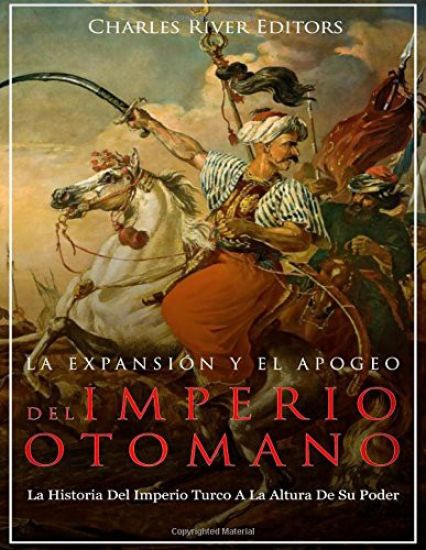
The Expansion and Apogee of the Ottoman Empire: The History of the Turkish Empire at the Height of Its Power
*Includes pictures *Includes online resources and a bibliography for further reading In terms of geopolitics, perhaps the most seminal event of the Middle Ages was the successful Ottoman siege of Constantinople in 1453. The city had been an imperial capital as far back as the 4th century, when Constantine the Great shifted the power center of the Roman Empire there, effectively establishing two almost equally powerful halves of antiquity's greatest empire. Constantinople would continue to serve as the capital of the Byzantine Empire even after the Western half of the Roman Empire collapsed in the late 5th century. Naturally, the Ottoman Empire would also use Constantinople as the capital of its empire after their conquest effectively ended the Byzantine Empire, and thanks to its strategic location, it has been a trading center for years and remains one today under the Turkish name of Istanbul. The end of the Byzantine Empire had a profound effect not only on the Middle East but Europe as well. Constantinople had played a crucial part in the Crusades, and the fall of the Byzantines meant that the Ottomans now shared a border with Europe. The Islamic empire was viewed as a threat by the predominantly Christian continent to their west, and it took little time for different European nations to start clashing with the powerful Turks. In fact, the Ottomans would clash with Russians, Austrians, Venetians, Polish, and more before collapsing as a result of World War I, when they were part of the Central powers. The Ottoman conquest of Constantinople also played a decisive role in fostering the Renaissance in Western Europe. The Byzantine Empire's influence had helped ensure that it was the custodian of various ancient texts, most notably from the ancient Greeks, and when Constantinople fell, Byzantine refugees flocked west to seek refuge in Europe. Those refugees brought books that helped spark an interest in antiquity that fueled the Italian Renaissance and essentially put an end to the Middle Ages altogether. In the wake of taking Constantinople, the Ottoman Empire would spend the next few centuries expanding its size, power, and influence, bumping up against Eastern Europe and becoming one of the world's most important geopolitical players. It was a rise that would not truly start to wane until the 19th century. The Expansion and Apogee of the Ottoman Empire: The History of the Turkish Empire at the Height of Its Power examines what made the Turks' empire and power grow. Along with pictures of important people, places, and events, you will learn about the apogee of the Ottoman Empire like never before.
Jedediah Smith: The Life and Legacy of the Famous Mountain Man

Jedediah Smith: The Life and Legacy of the Famous Mountain Man

Charles River

Createspace Independent Publishing Platform
2018
nidottu
*Includes pictures *Includes contemporary accounts *Includes online resources and a bibliography for further reading By the golden age of the mountain man in the mid-19th-century, there were perhaps only 3,000 living in the West. Their origins were disparate, although they included many Anglo-Americans. A good number hailed from wilderness regions of Kentucky and Virginia and throughout the newly purchased Louisiana Territory, which occupied the entire central section of the continent. French Canadians traveled from the north to work in the fur trade, while Creole-Europeans represented approximately 15% of the men known to be living the isolated mountain life. Others were of M tis, Spanish, American, Black, Indian, and mixed-blood origin, most often Iroquois or Delaware. Most came to the West in their late adolescent years, the oldest learning the trade in their 30s. Many roamed the west for as long as their constitutions would hold up under constant attacks on their health and personal safety. Some stayed too long and failed to survive the experience. Among the most famous, Jim Bridger arrived at the age of 16, while Edward Robinson was eventually killed in his 60s by what were known as "bad snakes," a reference to the Snake tribe in Idaho country. Jim Beckwourth left the mountains at 68 and Old Bill Williams died at the age of 62 when a band of Utes "made him to come." Regardless of their motivations for entering the western forests, fur trapping was a central component of the lifestyle in order to satisfy the east coast and European fashion industries. The quest for fur of several varieties, particularly beaver, peaked in the 1840s, but many of the trappers continued for decades longer. Those laboring in the lower positions of the trade lasted an average of only 2.7 years in duration, while mid-level positions, such as traders and clerks, averaged 6.3. Directors and factory owners generally continued for approximately 15 years. Eventually, fashion moved on to other resources, but for the better part of a century, the frontiersman was the only worker able to survive the rigors of wilderness life while maintaining prosperity. Historians believe that even Jim Bridger's prodigious travels were eclipsed by that of New York-born Jedediah Strong Smith, whose uncharacteristic personal life set him apart from the rough-edged mountain man reputation. Smith, who developed into a master cartographer through a regimen of self-study, left a legacy of surprisingly accurate maps of the western continent for military and immigrant groups, so accurate as to remain in use far beyond his death. Early experiences as a clerk for a Lake Erie freighter company aroused a sense for business that would serve him well in the west. A capable hunter and trapper, his urge to explore and develop the western third of the continent led him to virtually every area from the Rockies to the length of the Pacific coast. Outdoing even Bridger, Smith roamed the central Rockies, traveled the southwest through Arizona, roamed much of the Oregon Country, and led two expeditions across the Mojave Desert to California, the first American to reach the vast region traveling overland. That he was the first white man to preach the Christian gospel beyond the "shining mountains" is well-corroborated. In time, what contemporary accounts described as a "devout, peace-loving, Christian teetotaler who rarely imbibed alcohol, never smoked tobacco, never cursed" became known as one of "The Twelve Apostles of California," known then as Alta (North) Mexico. Many hailed Smith as a missionary, but his passion for Scripture was mostly relegated to small gatherings when the immediate work was complete. But despite his lack of formal education, almost any map of the western continent made in the following century was based on or influenced by Smith's models.
The Partition of India and the British Mandate of Palestine: The Controversial History of Great Britain's Post-War Partition Plans and the Aftermath
*Includes pictures *Includes online resources and a bibliography for further reading The Ottoman Empire quickly collapsed after World War I, and its extensive lands were divvied up between the French and British. While the French gained control of the Levant, which would later become modern day nations like Syria, the British were given the Mandate for Palestine from the newly created League of Nations. The British Mandate for Palestine gave the British control over the lands that have since become Jordan, Israel, the West Bank, and the Gaza Strip. The terms of the British Mandate incorporated the language of the Balfour Declaration, recognizing the "historical connection of the Jewish people with Palestine." The British were also tasked with creating a Jewish state, which the United States Congress endorsed in 1922. In 1947, the British delegated the issue of partitioning the British Mandate to the United Nations, and the U. N. General Assembly set up the Special Committee on Palestine (UNSCOP). UNSCOP eventually came up with what is now known as the U. N. Partition Plan of 1947. The Partition Plan carved up two strange looking states, but their motive was to create an Israel in which the Jewish population was a 55% majority, while Palestine had an over 90% Palestinian Arab majority. Meanwhile, the city of Jerusalem would be administered internationally, due to the sensitive religious concerns of Muslims, Christians, and Jews. In addition to several Christian holy spots, Jerusalem's Al-Aqsa Mosque is the third holiest site in Islam, and it is situated right next to the Western Wall, the Jews' holiest remaining site. On May 14, 1948, the British Mandate officially expired. That same day, the Jewish National Council issued the Declaration of the Establishment of the State of Israel. About 10 minutes later, President Truman officially recognized the State of Israel, and the Soviet Union also quickly recognized Israel. However, the Palestinians and the Arab League did not recognize the new state, and the very next day, armies from Egypt, Syria, Lebanon and Iraq invaded the former British Mandate to squelch Israel, while Saudi Arabia assisted the Arab armies. Jordan would also get involved in the war, fighting the Israelis around Jerusalem, but ultimately Israel would survive. Thanks to its commercial complexion and the power invested in a board of directors, British rule in India was characterized by economic monopolies, aggressive trade practices, punitive taxation, and the impoverishment of vast regions of India. Much of the Company's industry was based on a policy of producing and exporting raw materials from India and importing manufactured goods to satisfy an almost unlimited local market. Home industries and the domestic cottage textile industry, in particular, were heavily impacted by this, and with the addition of land taxes and a general regime of economic exploitation, the British East India Company grew to be a heavy burden on the shoulders of ordinary Indians. British India ultimately covered some 54 percent of the landmass and 77 percent of the population. By the time the British began to contemplate a withdrawal from India, 565 princely states were officially recognized, in addition to thousands of zamindaris and jagirs, which were in effect feudal estates. It stands to reason, therefore, as India began the countdown to independence after World War II, that the Indian Muslim leadership would begin to express anxiety over the prospect of universal suffrage and majority rule. At less than 20 percent of the population, Indian Muslims would inevitably find themselves overwhelmed by the Hindu majority, and as the British prepared to divest themselves of India, ancient enmities between Hindu and Muslim, long papered over by the secular and remote government of Britain, began once again to surface.
World War II in 1943: The History of the Pivotal Year that Saw the Allies Begin to Push Back the Axis Powers
*Includes pictures *Includes online resources and a bibliography for further reading Entering 1943, the Allies looked to press their advantage in the Pacific and Western Europe. The United States was firmly pushing the Japanese back across the Pacific, while the Americans and British plotted a major invasion somewhere in Western Europe to relieve the pressure on the Soviets. By the time the Allies conducted that invasion, the Soviets had lifted the siege of Stalingrad. The Allies were now firmly winning the war. Even before the British and Americans were able to make major strategic decisions in 1943, a massive German surrender at Stalingrad in February marked the beginning of the end for Hitler's armies in Russia. From that point forward, the Red Army started to steadily push the Nazis backward toward Germany. Yet it would still take the Red Army almost an entire two years to push the Germans all the way out of Russia. In July, just a few months after the surrender at Stalingrad, the Allies conducted what at the time was the largest amphibious invasion in history, coordinating the landing of two whole armies on Sicily, over a front more than 100 miles long. Within weeks of the beginning of the Allied campaign in Italy, Italy's government wasted no time negotiating peace with the Allies and quickly quit the war. Though Italy was no longer fighting for the Axis, German forces continued to occupy and control Italy in 1943. The Germans attempted to resist the Allies' invasion on Sicily but were badly outmanned and outgunned, leading to a German evacuation of the island within a month. The Allies would land on the mainland of Italy in September and continue to campaign against the Germans there. With Allied forces firmly established in Italy, the British and Americans began to plot a much more massive invasion to liberate Western Europe from the Nazis. In December 1943, President Roosevelt appointed General Dwight Eisenhower Supreme Allied Commander for the upcoming invasion, with General Montgomery as the top British commander coordinating with Eisenhower. During the first half of 1944, the Americans and British began a massive buildup of men and resources in England, while the military leaders devised an enormous and complex amphibious invasion of Western Europe. World War II in 1943: The History of the Pivotal Year that Saw the Allies Begin to Push Back the Axis Powers chronicles the seminal events of 1943. Along with pictures of important people, places, and events, you will learn about World War II in 1943 like never before.
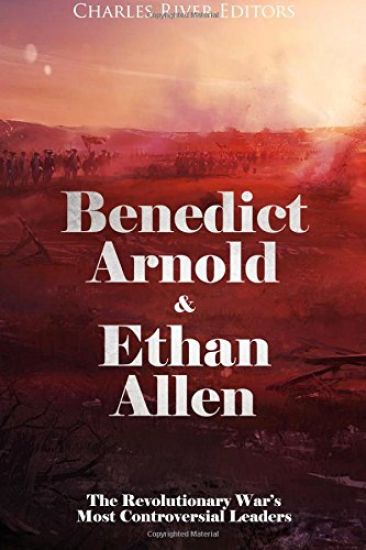
Benedict Arnold & Ethan Allen: The Revolutionary War's Most Controversial Leaders

Benedict Arnold & Ethan Allen: The Revolutionary War's Most Controversial Leaders

Charles River

Createspace Independent Publishing Platform
2018
nidottu
*Includes pictures *Includes contemporary accounts *Includes online resources and a bibliography for further reading The story of Ethan Allen and his Green Mountain Boys is one of those delightful tales that American schoolchildren hear about in school, but it is also one that is much more interesting to read about in older age. Unlike revered Founding Fathers such as George Washington and Thomas Jefferson, who came from Virginian plantations, Allen was a rough and tumble frontiersman more likely to fight than talk. And yet, he was in no way a dullard, but instead as well-read as many of his contemporaries and more so than the average man of his day. His family story reads almost like a cheap novel, from his heretic father to his hotheaded brothers and his shrewish first wife. By the time he was 30 years old, Allen had run up a significant list of skirmishes with law, something most of his fellow Revolutionary War heroes managed to avoid. Unlike Washington, who received his military training as a soldier in the famous British Army, Allen learned to fight in the backwoods of what is now Vermont, struggling alongside others for independence years before Jefferson wrote the Declaration of Independence. While Ethan Allen's potential treachery is still a subject for debate, that is certainly not the case for American history's most infamous traitor. On October 7, 1777, Benedict Arnold rode out against orders and led an American assault against British forces led by General John Burgoyne in one of the climactic battles and ultimate turning point of the war at Saratoga. Near the end of the most important American victory of the Revolution, Arnold's leg was shattered by a volley that also hit his horse, which fell on the leg as well. Arnold would later remark that he wish the shot had hit him in the chest. If it had, he would be remembered as one of America's greatest war heroes, and probably second only to George Washington among the generals of the Revolution. In fact, when Arnold was injured at the height of his success in October 1777, he had been the most successful leader of American forces during the war to date. Arnold had been instrumental in the seizure of Fort Ticonderoga in 1775, he constructed the first makeshift American navy to defend Lake Champlain and delay British campaigning in 1776, and he was the principal leader at Saratoga in 1777. Even his unsuccessful campaign to Quebec in the winter of 1775 is remembered primarily for the amazing logistical feats undertaken by Arnold and his men to even reach the target. History has accorded Arnold his fair share of credit for the fighting he participated in from 1775-1777. The problem is his contemporaries did not. Arnold was better on the field than any other American general in those years, but his mercurial personality rubbed some the wrong way, and other self-promoting generals, from Ethan Allen to Horatio Gates, credited themselves with success at Arnold's expense. Meanwhile, the Second Continental Congress frequently if inadvertently slighted Arnold, failing to duly promote him in a timely fashion and failing to pay him four years of back pay even as he spent his own private fortune training, equipping, and feeding his army and navy. Historian William Sterne Randall estimates Congress shorted Arnold out of the equivalent of $275,000. Today, of course, all of that has been overshadowed by Arnold's treacherous plot to turn over West Point to the British in 1780. As every American knows, Arnold's plot was uncovered, and he barely escaped to the British side, where he was just as distrusted and nearly as despised. Though he would serve as a brigadier-general for the British through the end of the war, his personal fortune and reputation were permanently tarnished. The man who could have been one of his country's greatest heroes became its most despised traitor.
The Gulf War: The History and Legacy of Operation Desert Shield and Operation Desert Storm
*Includes pictures *Includes online resources and a bibliography for further reading It was one of the 20th century's most decisive wars, but also one of its most influential. In the wake of Saddam Hussein's invasion of Kuwait, America led a coalition of dozens of nations that repelled the Iraqi attack and smashed Iraqi forces, much of which was captured on live television as global networks broadcast the images back home. On the now ironic date of September 11, 1990, President Bush addressed a joint session of Congress to explain why he was assembling a coalition of nations to intervene against Saddam Hussein's invasion of Kuwait. Bush stated, "Out of these troubled times, our fifth objective -- a new world order -- can emerge... A new era, freer from the threat of terror, stronger in the pursuit of justice and more secure in the quest for peace." As his son would later attempt over a decade later in another war against Iraq, President Bush sought to present the coalition of nearly 40 nations as indicative of multilateralism, even though it was dominated by American forces. At the time, the Soviet Union was less than a year away from collapsing, leaving the United States as the sole superpower. In fact, the "new world order" that Bill Clinton and future presidents stepped into was one that allowed for American unilateralism. Since World War II, the United States had protected the West during the Cold War, and President Kennedy had coined the term "Pax Americana" to describe his hope of peace for the world. 30 years later, American presidents now seemingly had the opportunity to use America's unchecked power to instill and preserve peace across the world. As events have proved, the attempt to forge Pax Americana would be much easier said than done, and American involvement in the Middle East has been directly tied to the First Gulf War. As Osama bin Laden and al-Qaeda attacked American targets throughout the 1990s, and most notably on 9/11, the terrorist leader pointed to the stationing of American troops in Saudi Arabia in response to Saddam's invasion of Kuwait. Bin Laden was livid, not just because foreign boots were stampeding on what is popularly considered the holiest land in Islam but also because he had wanted to help defend the Saudi kingdom with his own group. By lashing out, bin Laden was caught up in the Saudi government's crackdown on dissidents and was ultimately forced into exile. Bin Laden took refuge in Sudan in 1992, and later in Afghanistan in 1996. Of course, the Gulf War also played a role in the more controversial invasion of Iraq, which began in 2003 and was again led by the United States. That invasion came about as a result of faulty intelligence and Iraq's skirting of United Nations weapons resolutions, as well as a biting sanctions regime meant to compel Iraq to comply, all of which were put in place after the First Gulf War. The resulting chaos in Iraq, from the bloody fighting to the rise of the Islamic State, can thus all be tied back to the conflict a generation earlier. On top of that, the stateless Kurds in Iraq continue to be important geopolitical players, whether it was their actions during and after the Gulf War, or their involvement in the Syrian Civil War, politics in Turkey, and more. The Gulf War: The History and Legacy of Operation Desert Shield and Operation Desert Storm looks at the fighting and its aftermath. Along with pictures and a bibliography, you will learn about the Gulf War like never before.
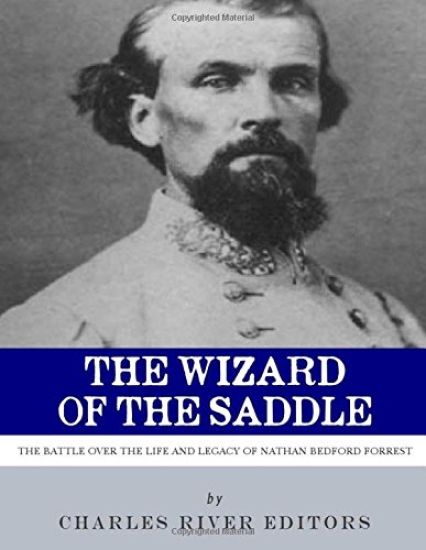
The Wizard of the Saddle: The Battle over the Life and Legacy of Nathan Bedford Forrest
*Includes pictures of Forrest and important people, places, and events. *Includes a lengthy bibliography for further reading. "I got there first with the most men." - Nathan Bedford Forrest Despite the fact that the Civil War was fought nearly 150 years ago, it remains a polarizing topic for the country to this day. And nowhere is this more evident than in the life and legacy of Confederate Lieutenant General Nathan Bedford Forrest, the war's most controversial soldier. When the war broke out, Forrest enlisted in the army and was instructed to raise a battalion of cavalry. A self-made man with no formal military training, Forrest spent the entire war fighting in the Western theater, becoming the only individual in the war to rise from the rank of Private to Lieutenant General. By the end of the war, Forrest was known throughout the South as the "Wizard of the Saddle," and anecdotes of his prowess in battle were legendary. In addition to being injured multiple times in battle, Forrest has been credited with having killed 30 Union soldiers in combat and having 29 horses shot out from under him. Northerners weren't the only ones who felt his wrath; Forrest famously feuded with several commanding officers and notoriously killed an artillery commander in his unit after a verbal confrontation spiraled out of control. History has properly accorded Forrest his place as one of the most courageous soldiers of the Civil War, and Forrest attained a number of command successes in the Western theater of the war. But Forrest was also at the head of Confederate troops accused of massacring a Union garrison comprised mostly of black soldiers at Fort Pillow, and he was also a prominent slave trader, an overt racist, and likely a leader of the Ku Klux Klan after the Civil War. When he died in 1877, in part due to various war wounds, he was the nation's most notorious unreconstructed rebel. Ashdown and Caudill, authors of The Myth of Nathan Bedford Forrest, write that the story of Forrest "embraces violence, race, realism, sectionalism, politics, reconciliation, and repentance." With these characteristics, it has proven almost impossible for any American to have a neutral view of Forrest, and it has been even harder to ignore him. Subsequently, Forrest's image has vacillated from celebrated to reviled, sometimes both at the same time, over the last 150 years, as the numerous and notable aspects of Forrest's life and legacy were considered by different people at different times. The Wizard of the Saddle: The Battle over the Life and Legacy of Nathan Bedford Forrest traces his life and Civil War record in the first part, detailing both his wild successes and his biggest controversies. The second part looks at how Forrest's legacy has been interpreted in the North and South since the end of the war, and how it fits within the context of Civil War memory and historiography as a whole, showing how Americans' opinions of Forrest have changed over time in conjunction with how the war and its aftermath were viewed. Along with pictures of Forrest and other important people, places and events in his life, you will learn about the Wizard of the Saddle like you never have before, in no time at all.
La Expansión Y El Apogeo Del Imperio Otomano: La Historia Del Imperio Turco A La Altura De Su Poder
En t rminos de geopol tica, quiz s el acontecimiento m s importante de la Edad Media fue el exitoso asedio otomano de Constantinopla en 1453. La ciudad hab a sido una capital imperial ya en el siglo IV, cuando Constantino el Grande cambi el centro de poder del Imperio Romano, estableciendo efectivamente dos mitades casi igualmente poderosas del imperio m s grande de la antig edad. Constantinopla seguir a siendo la capital del Imperio Bizantino incluso despu s de que la mitad occidental del Imperio Romano se derrumbara a finales del siglo V. Naturalmente, el Imperio Otomano tambi n usar a a Constantinopla como capital de su imperio despu s de que su conquista terminara efectivamente con el Imperio Bizantino, y gracias a su ubicaci n estrat gica, ha sido un centro comercial durante a os y sigue siendo uno de ellos hoy en d a bajo el nombre turco de Estambul. El fin del Imperio Bizantino tuvo un profundo efecto no s lo en el Medio Oriente sino tambi n en Europa. Constantinopla hab a jugado un papel crucial en las Cruzadas, y la ca da de los bizantinos signific que los otomanos ahora compart an frontera con Europa. El imperio isl mico fue visto como una amenaza por el continente predominantemente cristiano en el oeste, y tom poco tiempo para que diferentes naciones europeas empezaran a chocar con los poderosos turcos. De hecho, los otomanos chocar an con rusos, austr acos, venecianos, polacos y m s, antes de colapsar como resultado de la Primera Guerra Mundial, cuando formaban parte de los poderes centrales. La conquista otomana de Constantinopla tambi n desempe un papel decisivo en el fomento del Renacimiento en Europa occidental. La influencia del Imperio Bizantino hab a ayudado a asegurar como guardi n de varios textos antiguos, sobre todo de los antiguos griegos, y cuando Constantinopla cay , los refugiados bizantinos acudieron en masa al oeste para refugiarse en Europa. Esos refugiados trajeron libros que ayudaron a despertar el inter s por la antig edad, que aliment el renacimiento italiano y esencialmente puso fin a la Edad Media. Despu s de tomar Constantinopla, el Imperio Otomano pasar a los pr ximos siglos expandiendo su tama o, poder e influencia, top ndose con Europa Oriental y convirti ndose en uno de los actores geopol ticos m s importantes del mundo. Fue un ascenso que no empez a decaer hasta el siglo XIX. La Expansi n y el Apogeo del Imperio Otomano: La Historia del Imperio Turco en la Altura de Su Poder examina lo que hizo crecer el imperio y el poder de los turcos. Junto con fotos de personas importantes, lugares y eventos, aprender sobre el apogeo del Imperio Otomano como nunca antes.
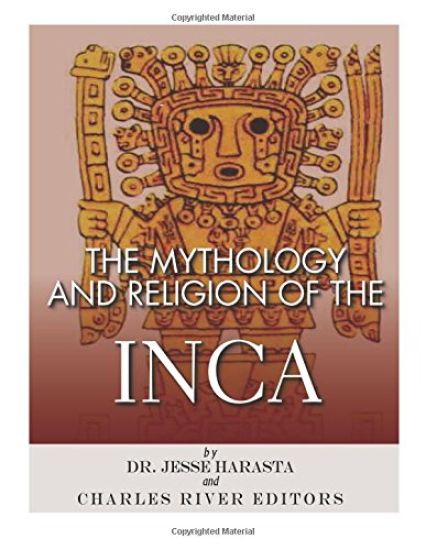
The Mythology and Religion of the Inca

The Mythology and Religion of the Inca

Charles River

Createspace Independent Publishing Platform
2018
nidottu
*Includes pictures *Explains Inca mythology and religious practices, including human sacrifices *Includes footnotes and a bibliography for further reading During the Age of Exploration, Native American tribes fell victim to European conquerors seeking legendary cities made of gold and other riches, attempts that were often being made in vain. And yet, of all the empires that were conquered across the continent, the one that continues to be most intimately associated with legends of gold and hidden riches is the Inca Empire. The Inca Empire, which flourished in modern day Peru and along the west coast of South America, was the largest Native American empire in pre-Columbian America until Pizarro and the Spanish conquistadors conquered them in the 16th century. What ultimately sealed their doom was the rumor that huge amounts of gold were available in regions south of the Andes Mountains. Though the Spanish physically conquered them in quick fashion, the culture and legacy of the Inca Empire has continued to endure throughout the centuries in both Europe and South America, due in no small part to the fact they were one of the most advanced and sophisticated cultures on the continent. Like the Aztecs, the Spanish burned much of the Inca's extant writings, but it is estimated that as many as 35 million people once fell under their banner, and the empire's administrative skills were so sharp that they kept accurate census records. Their religion, organization, and laws were also effectively centralized and tied to the rulers of the empire, and their military mobilization would have made the ancient Spartans proud. After the Spanish conquest, several rebellions in the area attempted to reestablish the proud Inca Empire over the next two centuries, all while famous Europeans like Voltaire glorified the Inca Empire in optimistic artistic portrayals. The Mythology and Religion of the Inca examines the history and legacy of the religion practiced by the famous Incan empire. Along with pictures and a bibliography, you will learn about the Inca's religion and mythology like you never have before, in no time at all.
The Mythology and Religion of the Ancient Egyptians

The Mythology and Religion of the Ancient Egyptians

Charles River

Createspace Independent Publishing Platform
2018
nidottu
*Includes pictures *Includes quotes taken from Ancient Egyptian funerary and religious texts *Includes a bibliography for further reading Africa may have given rise to the first humans, and Egypt probably gave rise to the first great civilizations, which continue to fascinate modern societies across the globe nearly 5,000 years later. From the Library and Lighthouse of Alexandria to the Great Pyramid at Giza, the Ancient Egyptians produced several wonders of the world, revolutionized architecture and construction, created some of the world's first systems of mathematics and medicine, and established language and art that spread across the known world. With world-famous leaders like King Tut and Cleopatra, it's no wonder that today's world has so many Egyptologists. Some of the most recognizable images of ancient Egypt, from the mummies to the pyramids, make clear how important religion was to the Egyptians. Unlike modern Western countries, Ancient Egypt was not a secular society but one where religion played a role in even the most mundane daily occurrences, and religion and myth were used to explain how and why the Nile River flooded. It also justified the absolute power of the king, who was considered not only divinely chosen for the role but divine himself. As a result, the pharaoh was expected to serve as a sort of intermediary who curried the gods' favor through rituals, sacrifices, offerings, and other practices, even while various cults and temples also sought the same goals and engaged in religious practices. In addition to being ubiquitous parts of daily life, Egyptian religion and mythology were also complex, and while Egyptian society was polytheistic like other ancient civilizations, that's where the comparisons end. Religion was so pervasive that it heavily influenced funerary practices and the belief in an afterlife, and deities like Osiris and Isis (who are still well known today) had become so firmly ingrained that even the Ptolemaic pharaohs, who considered themselves purely Greek, embraced Egyptian deities and assimilated the Greek and Egyptian cultures. In fact, Cleopatra often had herself depicted as Isis. The Egyptians' belief systems proved resilient enough to last for thousands of years, but there were also critical evolutions over time as different dynasties took power, and with that, certain deities took prominence at different points. Perhaps the most famous changes were made by King Tut's father, the pharaoh Akhenaten, who emphasized worship of the Aten, a symbol of the sun which had been associated with Ra but became the focal point of Akhenaten's reign. To drive home just how serious the Egyptians took religion, there were grumblings about the pharaoh's actions, and shortly after Akhenaten's death, the system reverted to more closely resemble what it was like before his reign. The Mythology and Religion of the Ancient Egyptians looks at the importance of kingship and the gods, and how they were tied into the three major Egyptian creation myths. This book also analyzes the mythical tales that help explain the cosmological, theological, and mythological ideas of the ancient Egyptians. Along with pictures and a bibliography, you will learn about Aztec religion and mythology like you never have before, in no time at all.
The Mycenaeans: The History and Culture of Ancient Greece's First Advanced Civilization
*Includes pictures *Includes ancient accounts describing Mycenaean involvement in the Trojan War, trade, and other aspects of their history *Includes online resources and a bibliography for further reading *Includes a table of contents When people think of ancient Greece, images of philosophers such as Plato or Socrates often come to mind, as do great warriors like Pericles and Alexander the Great, but hundreds of years before Athens became a city, a Greek culture flourished and spread its tentacles throughout the western Mediterranean region via trade and warfare. Scholars have termed this pre-Classical Greek culture the Mycenaean culture, which existed from about 2000-1200 BCE, when Greece, along with much of the eastern Mediterranean, was thrust into a centuries long dark age. Before the Mycenaean culture collapsed, it was a vital part of the late Bronze Age Mediterranean system and stood on equal footing with some of the great powers of the region, such as the Egyptians and Hittites. Despite being ethnic Greeks and speaking a language that was the direct predecessor of classical Greek, the Mycenaeans had more in common with their neighbors from the island of Crete, who are known today as the Minoans. Due to their cultural affinities with the Minoans and the fact that they conquered Crete yet still carried on many Minoan traditions, the Mycenaeans are viewed by some scholars as the later torchbearers of a greater Aegean civilization, much the way the Romans carried on Hellenic civilization after the Greeks. Given that the Mycenaeans played such a vital role on the history in the late Bronze Age, it would be natural to assume there are countless studies and accurate chronologies on the subject, but the opposite is true. Although the Mycenaeans were literate, the corpus of written texts from the period is minimal, so modern scholars are left to use a variety of methods in order to reconstruct a proper history of Mycenaean culture. In fact, even the name "Mycenaean" can be a bit misleading since it refers only to one locale in Greece. However, since the city was the first Bronze Age site discovered, it became a reference point for archeologists and historians to use to refer to any Bronze Age discoveries in Greece. Archeology provides the base for any study of the ancient Mycenaeans; since many of their cities were replaced and built over in classical, medieval, and modern times, excavations of the Bronze Age cities can tell modern scholars how these people lived and died. Closely related to archaeology is art history, which can be the study of any material culture including pottery, sculptures, reliefs, and jewelry. The Homeric epics also provide some information about Mycenaean culture, though Homer was a poet who lived hundreds of years after the collapse of the Mycenaean culture. Classical Greek historians and geographers also wrote about the Mycenaeans, but their works should be consulted with caution as some of their statements have proved false and they, like Homer, received much of their information through oral traditions. Finally, the few extant Mycenaean written documents can help tell modern scholars what the Mycenaeans found most important in life. When all of the sources are consulted, they reveal that the Mycenaean culture was as vibrant as any other during the Bronze Age. The Mycenaeans: The History and Culture of Ancient Greece's First Advanced Civilization analyzes the history of this influential Greek civilization. Along with pictures of important people, places, and events, you will learn about the Mycenaeans like never before, in no time at all.
The Munich Agreement of 1938: The History of the Peace Pact that Failed to Prevent World War II
*Includes pictures *Explains the appeasement of the Nazis in Czechoslovakia and Austria, and reactions to it *Includes online resources and a bibliography for further reading *Includes a table of contents "My good friends," the mustached, bony man with thick eyebrows and large, strong teeth somewhat reminiscent of those of a horse, shouted to the crowds from the second-floor window of his house at 10 Downing Street, "this is the second time in our history, that there has come back to Downing Street from Germany peace with honor. I believe it is peace for our time." (McDonough, 1998, 70). The man addressing the crowd, British Prime Minister Neville Chamberlain, had just returned from the heart of Nazi Germany following negotiations with Adolf Hitler, and the crowd gathered outside the English leader's house on September 30, 1938 greeted these ringing words with grateful cheers. The piece of paper Chamberlain flourished exultantly seemed to offer permanent amity and goodwill between democratic Britain and totalitarian Germany. In it, Britain agreed to allow Hitler's Third Reich to absorb the Sudeten regions of Czechoslovakia without interference from either England or France, and since high percentages of ethnic Germans - often more than 50% locally - inhabited these regions, Hitler's demand for this territory seemed somewhat reasonable to Chamberlain and his supporters. With Germany resurgent and rearmed after the disasters inflicted on it by the Treaty of Versailles following World War I, the pact - known as the Munich Agreement - held out hope of a quick end to German ambitions and the return of stable, normal international relations across Europe. Of course, the Munich agreement is now notorious because its promise proved barren within a very short period of time. Chamberlain's actions either failed to avert or actually hastened the very cataclysm he wished to avoid at all costs. The "Munich Agreement" of 1938 effectively signed away Czechoslovakia's independence to Hitler's hungry new Third Reich, and within two years, most of the world found itself plunged into a conflict which made a charnelhouse of Europe and left somewhere between 60-80 million people dead globally. Many people hailed Chamberlain's "success" at defusing Nazi aggression by handing over Czechoslovakia tamely to Hitler's control, but others remained dubious. douard Daladier, the French prime minister, "later told Amery that he turned up his coat collar to protect his face from rotten eggs when he arrived in Paris." (Gilbert, 1963, 179-180). A Foreign Office man, Orme Sargent, was disgusted, and he later said bitterly, "For all the fun and cheers, you might think they were celebrating a major victory over an enemy instead of merely the betrayal of a minor ally." (Gilbert, 1963, 180). Winston Churchill, the deal's most famous critic, bitterly remarked, "England has been offered a choice between war and shame. She has chosen shame, and will get war." Munich is widely reviled today and is held up as the epitome of appeasement, but historians still debate its effects on the Second World War, as well as Neville Chamberlain's character and motivations. Some believe the attempted appeasement of Nazi Germany hastened, or even caused, the mayhem occupying the next seven years. Others believe that the pact merely failed to alter war's inevitable arrival in either direction. Historians and authors alternately interpret Chamberlain as a bumbling, arrogant fool, a strong-willed statesman who simply miscalculated the nature of Hitler and Nazi Germany, or even a man with dictatorial ambitions surreptitiously inserting himself into the Fuhrer's orbit and prevented from further damaging democracy only by his fall and death from bowel cancer. Another possible interpretation, with considerable documentary support, asserts Chamberlain wished to enlist Germany's aid against the state most Europeans perceived as the true threat of the era, the Soviet Union
The Mother of Theosophy: The Life and Legacy of H.P. Blavatsky

The Mother of Theosophy: The Life and Legacy of H.P. Blavatsky

Charles River

Createspace Independent Publishing Platform
2018
nidottu
*Includes pictures of Blavatsky and other important people in her life. *Includes quotes by and about Blavatsky and her seminal works, Isis Unveiled and The Secret Doctrine. *Discusses the beliefs of Blavatsky and Theosophy. *Includes a Bibliography for further reading. Among the New Age Movement and modern spiritualists, one name stands above the rest: Helena Petrovna (H. P.) Blavatsky. Blavatsky is best known today for co-founding the Theosophical School, a religious school of thought that she labeled "the archaic Wisdom-Religion, the esoteric doctrine once known in every ancient country having claims to civilization", and nobody was more qualified than Blavatsky to forge such a creation. During her second marriage, Blavatsky traveled to various parts of the world, including Egypt, France, Germany, Mexico, South America, Canada, and India, absorbing all the diverse cultures, customs, religions, and philosophies she came across. Once she had extensively studied all of the different movements she had experienced, Blavatsky went about synthesizing Theosophy and creating a worldview that offered explanations for the origin, workings and ultimate fate of every aspect of mankind's existence, in order to "form a nucleus of the Universal Brotherhood of Humanity, without distinction of race, creed, sex, caste or color." Blavatsky did so by becoming an incredibly prolific writer, and some of her works have become cult classics, particularly The Secret Doctrine and Isis Unveiled. These works included her unique blend of science, esoteric ideas, the occult, and ancient religions and philosophies, and they remain popular today. The Mother of Theosophy: The Life and Legacy of H. P. Blavatsky profiles the life, works, and legacy of the influential scholar, writer, philosopher and theologian, examining her movement and its origins. Along with pictures of important people, you will learn about Blavatsky like you never have before, in no time at all.