Kirjojen hintavertailu – 12 903 727 kirjaa ja 27 kauppaa
Kirjailija
Charles River
Kirjat ja teokset yhdessä paikassa: 4 673 kirjaa, julkaisuja vuosilta 2013–2022, suosituimpiin kuuluu William Powell and Myrna Loy: The Lives and Careers of One of Classical Hollywood's Most Iconic Duos. Vertaile teosten hintoja ja tarkista saatavuus suomalaisista kirjakaupoista.
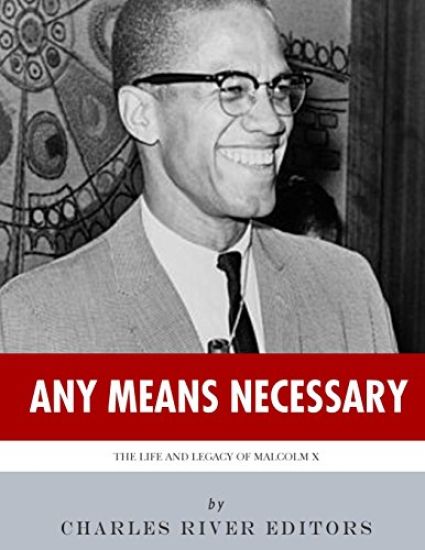
*Includes pictures of Malcolm X and important people, places, and events in his life. *Explains the origins of the name Malcolm X. *Includes some of Malcolm X's most famous quotes, and a detailed description of his "The Ballot or The Bullet" speech. "Our objective is complete freedom, justice and equality by any means necessary." - Malcolm X At the height of the Civil Rights Movement, while much of the nation's attention was given to peaceful protests, boycotts, and figures like Rosa Parks and Martin Luther King Jr., a young man named Malcolm Little was rising through the ranks to become one of the leaders and public faces of the Nation of Islam. As Malcolm X, he would come to be one of the most controversial figures in 20th century America, hailed as a bold human rights activist by some and reviled as a violent racist by others. What everyone can agree on, however, is that Malcolm X was one of the most influential black leaders of the 20th century. After being imprisoned for crimes committed as a teenager, Malcolm X converted to Islam and joined the Nation of Islam while in jail. Once he was freed in 1952, he began a steady ascent to become the face of the Nation, a platform from which he gained notoriety for advocating the Nation's teachings about black supremacy. Whereas Dr. King was pushing for fuller integration and desegregation, X and the Nation of Islam advocated total separation. Other Civil Rights organizations deemed X and the Nation to be too extremist, and in response X labeled them "stooges." Today, one of the best known aspects of Malcolm X's life was his assassination in 1965 by members of the Nation of Islam following his split from the group over differences with leader Elijah Muhammad. In addition to making a pilgrimage to Mecca, X continued to be politically active, founding a number of groups and speaking to many more in an attempt to heighten political awareness. Over the last two years of his life, he faced several threats from the Nation of Islam, which culminated with his assassination on February 21, 1965, as he was addressing the Organization of Afro-American Unity in Manhattan's Audubon Ballroom, Any Means Necessary: The Life and Legacy of Malcolm X looks at the turbulent life and legacy of the famous leader, while humanizing the man and discussing lesser known facts about him, including how he chose the name Malcolm X, and whether he was advocating more peaceful protest at the end of his life. Along with pictures of important people, places, and events in his life, you will learn about Malcolm X like you never have before, in no time at all.
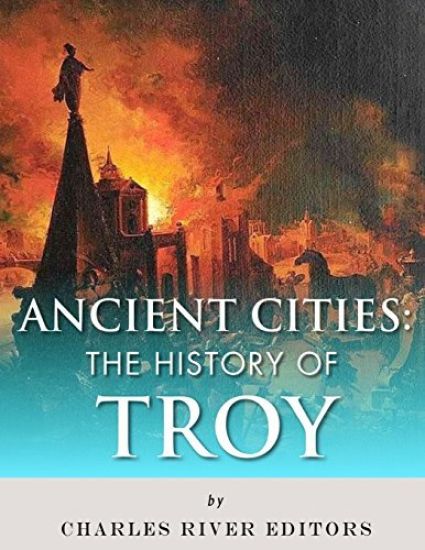
*Includes pictures of important people and places. *Discusses the Iliad's depiction of the Trojan War and the way the Iliad was used to rediscover Troy *Includes a bibliography for further reading. "Rage - Goddess, sing the rage of Peleus' son Achilles, murderous, doomed, that cost the Achaeans countless losses, hurling down to the House of Death so many sturdy souls, great fighters' souls, but made their bodies carrion, feasts for the dogs and birds, and the will of Zeus was moving toward its end. Begin, Muse, when the two first broke and clashed, Agamemnon lord of men and brilliant Achilles. . . ." - Homer, The Iliad Troy is unquestionably one of the most famous and legendary cities of antiquity, yet it is also the most mysterious. While ancient cities like Rome and Athens survived, and the destruction of others like Carthage and Pompeii were well-documented, the fame of Troy rested entirely on Homer's epic poems, The Iliad & The Odyssey. The poems were so famous in the ancient world that Augustus had Virgil associate Rome's foundation with the destruction of Troy and Aeneas' own odyssey in the Aeneid. Augustus went so far as to have a new settlement, New Ilium, built in the region. While the epic poems have been read for thousands of years and are regarded among Western literature's most important, their depiction of the Trojan War between the Greeks and Trojans clearly included fictional elements. As a result, there has been much historical debate over whether the Trojan War actually happened. Up until the 19th century, many scholars merely regarded it as an ancient myth, but when Heinrich Schliemann used Homer's descriptions to guide his excavations, he found ruins in western Turkey of several ancient cities built atop each other, with the oldest dating to the 12th century B. C. Further excavations have found early settlements on the spot dating as far back as 3000 B. C. While that hardly means Homer's tale is true, especially the constant divine intervention, it does suggest that there was a historical city of Troy that was destroyed in war; and the city of Troy associated with Homer's poems was the 7th city built on that spot. Of course, the war would likely have been fought over resources, not a woman whose face could launch 1,000 ships. Since the discovery of the ancient site, further work and scholarship has helped shed light on certain aspects of Troy while also leading to other sorts of debates. For example, Egyptologists have tried to tie references in certain Hittite and Egyptian texts to famous Trojans like Paris. Ancient Cities: The History of Troy comprehensively covers the history and folklore of one of antiquity's most famous cities. Along with pictures and a bibliography, you will learn about Troy like you never have before, in no time at all.
*Includes pictures *Includes ancient accounts of the Library and Lighthouse of Alexandria, as well as the founding of the city *Highlights the city's cultural, economic, and religious influence upon the ancient world *Includes online resources and a bibliography for further reading *Includes a table of contents "He proceeded around Lake Mareotis and finally came ashore at the spot where Alexandria, the city which bears his name, now stands. He was at once struck by the excellence of the site, and convinced that if a city were built upon it, it would prosper. Such was his enthusiasm that he could not wait to begin the work; he himself designed the general layout of the new town, indication the position of the market square, the number of temples to be built, and what gods they should serve..." - Arrian Africa may have given rise to the first humans, and Egypt probably gave rise to the first great civilizations, which continue to fascinate modern societies across the globe nearly 5,000 years later. From the Library and Lighthouse of Alexandria to the Great Pyramid at Giza, the Ancient Egyptians produced several wonders of the world, revolutionized architecture and construction, created some of the world's first systems of mathematics and medicine, and established language and art that spread across the known world. With world-famous leaders like King Tut and Cleopatra, it's no wonder that today's world has so many Egyptologists. The 5th century BCE Greek historian Herodotus wrote that Egypt was "the gift of the Nile" because the river made its soil so fertile and thus helped create one of the first great civilizations. Indeed, the land of Egypt so impressed the Greeks that when Alexander the Great conquered the Nile Valley in the 4th century BCE, he decided that he would build a new city on its soil and name it Alexandria. After Alexander, the city of Alexandria grew and became the most important city in the world for centuries as it watched and played a role in the rise and fall of numerous dynasties. The city also became home to one of the Seven Wonders of the Ancient World - the Lighthouse of Alexandria - and a center of culture and learning, which was exemplified by the Library of Alexandria. Truly, Alexandria was as unique as it was great; it was a Greek city built on Egyptian soil that was later ruled by the Romans and then became an important center of early Christian culture. Today, Alexandria is a teeming metropolis that, although much larger than it was in ancient times, is a shadow of its former self culturally speaking. So what made Alexandria stand apart from other ancient cities such as Rome and Babylon and how did it become the gift of the Mediterranean? The answer is complicated, but an examination of Alexandria's history reveals that from the time the city was founded until the Arab conquest, the different dynasties who ruled there took the time and effort to foster and patronize arts, culture, and learning that made Alexandria famous. Alexandria was also an important center of trade in the ancient Mediterranean world as tons of grain, gold, and papyri sailed down the Nile River on barges to the harbors in Alexandria and then to the rest of the world, while exotic spices, silks, and other commodities were imported into Egypt via the same harbors in the ancient city. Some of the features of Alexandria changed throughout the centuries, but its most vital components remained consistent. Alexandria meant different things to different people, but for over 500 years all people saw the city as a center of culture. Ancient Alexandria: The History and Legacy of Egypt's Most Famous City examines the history of one of the ancient world's most important cities. Along with pictures of important people, places, and events, you will learn about Alexandria like never before.
*Comprehensively covers Baby Face Nelson's most notorious shootouts and robberies, his relationship with John Dillinger, and the fatal Battle of Barrington. *Includes pictures of Baby Face Nelson and important people and places in his life. *Includes a Bibliography for further reading. "He had a baby face. He was good looking, hardly more than a boy, had dark hair and was wearing a gray topcoat and a brown felt hat, turned down brim." -The wife of Chicago Mayor Big Bill Thompson describing the man who attacked her and stole her jewelry in October 1930. America has always preferred heroes who weren't clean cut, an informal ode to the rugged individualism and pioneering spirit that defined the nation in previous centuries. The early 19th century saw the glorification of frontier folk heroes like Davy Crockett and Daniel Boone. After the Civil War, the outlaws of the West were more popular than the marshals, with Jesse James and Billy the Kid finding their way into dime novels. And at the height of the Great Depression in the 1930s, there were the "public enemies", common criminals and cold blooded murderers elevated to the level of folk heroes by a public frustrated with their own inability to make a living honestly. The man who became Public Enemy Number One after the deaths of John Dillinger and Pretty Boy Floyd was Lester Joseph Gillis, whose alias "George Nelson" eventually gave way to the nickname "Baby Face Nelson". Despite the almost playfully innocent nickname, and the fact that he was not as notorious as two of his partners in crime, Dillinger and Floyd, Baby Face Nelson was the worst of them all. In an era where the outlaws were glorified as Robin Hood types, Baby Face was a merciless outlier who pulled triggers almost as fast as he lost his temper. By the time fate caught up with Baby Face Nelson in November 1934 at the "Battle of Barrington", a shootout that left his body riddled with nearly 20 bullet holes, he was believed to have been responsible for the deaths of more FBI agents than anybody else in American history. It was a distinction he would have appreciated; during one bank robbery, Baby Face Nelson gleefully screamed "I got one " after shooting police officer Hale Keith several times. Due to his association with Dillinger and his own crime spree, Baby Face Nelson became a fixture of pop culture and was the main character in a few Hollywood films two decades after his death. Though he is not remembered as colorfully as Dillinger or Bonnie and Clyde, he is often remembered paradoxically as being a devoted family man who even had his wife and children on the run with him. American Outlaws: The Life and Legacy of Baby Face Nelson looks at the life and crime of the famous outlaw, but it also humanizes him and examines his lasting legacy. Along with pictures of Baby Face Nelson and important people, places, and events in his life, you will learn about the infamous public enemy like you never have before, in no time at all.
*Includes pictures *Includes Bierce's quotes about his own life and career *Includes footnotes, online resources and a bibliography for further reading "History is an account, mostly false, of events, mostly unimportant, which are brought about by rulers, mostly knaves, and soldiers, mostly fools." - Ambrose Bierce Satirical commentary, memoirs from the agony of war, and horror stories of the supernatural have existed in literature since the beginning of the written word, and in virtually all global societies. The most lauded and familiar examples known to 21st century readers are emblematic of vast literary industries in comparison to previous eras. With an astonishing number of authors at liberty to self-publish and the rapid expansion of the relatively recent film industry, the world has never before seen such a vast expression of such genres. However, as epic film music can often trace its roots back to the Romantic movement of the 1800s, so can the written word. Mark Twain, a preeminent, globally-admired satirist, shared the stage with such wits as Britain's Oscar Wilde, delivering barb after barb laced with the two-edged charm of the old American South. Nearer the end of the 19th century, Stephen Crane penned Red Badge of Courage, considered the definitive novel on the American Civil War. These, and the ironically inventive horror stories penned by Edgar Allen Poe and the next century's H. P. Lovecraft, remain popular in the West's canon. Examples of these early authors are taught in the American school curriculum, having acquired distinction by the passing of time, often serving as plot and stylistic foundations for new works. One author who is less frequently mentioned among these iconic literary figures of war, horror, acidic poetry, and social satire, is Ambrose Gwinnet Bierce, a journalist, poet, short-story writer, novelist, fabulist, and writing master who embodied the literary affections of all three. As a satirist, Bierce was famously dubbed the "Mark Twain of the North." Inclusion of the "North," however, embodies several points of dissimilarity from the wit of Twain; sharp and lightning-clever like his counterpart from Missouri, Bierce the Ohioan made no pretense to Southern charm or allowed any room for a nuanced interpretation of his remarks. Once atop his profession, Bierce's venom was spewed at virtually everyone, in almost every walk of life. Any figure of public note in San Francisco came to know him as "Bitter Bierce," or by his initials, which in public life were often translated as "Almighty God Bierce." As a war author, Bierce is the only one of the great literary figures who actually served as a front-line soldier in the American Civil War. Walt Whitman and Twain were somewhat removed from the conflict by comparison. Twain, in fact, "dabbled" at being a soldier before deserting his Confederate unit. Bierce's often metaphysical and supernatural-tinged memoirs of his war service served as the ideal backdrop for the Poe-like "attraction to death in its most bizarre forms" and an affection for the ghost story as a "campfire tale." A master of the "ironic style of the grotesque," he outstripped even Poe in the minds of many readers as "the blackest of black humorists." H. P. Lovecraft, the most prominent author of the macabre in the early part of the following century, described Bierce's work as "grim and savage," but other critics disagree, citing the "detached, oddly companionable" personality of the storytelling that made the horror all the more penetrating. Indeed, many 20th and 21st century novels, short stories, films, and television serials have drawn their success, squarely from Bierce's models. In the end, Ambrose Bierce wrote the most interesting story of all by disappearing from the world in a final late-life Mexican adventure, amidst that country's revolution. A new theory of his demise emerges with each passing year.
*Includes pictures *Includes accounts of the Hiss trials and his testimony before the House Committee on Un-American Activities *Includes online resources and a bibliography for further reading *Includes a table of contents "I am amazed; until the day I die I shall wonder how Whittaker Chambers got into my house to use my typewriter." - Alger Hiss "We won the Hiss case in the papers. We did. I had to leak stuff all over the place. Because the Justice Department would not prosecute it. Hoover didn't even cooperate.... It was won in the papers. I leaked out the papers.... I leaked out the testimony. I had Hiss convicted before he ever got to the grand jury.... Go back and read the chapter on the Hiss case in Six Crises and you'll see how it was done. It wasn't done waiting for the goddamn courts or the attorney general or the FBI." - Richard Nixon Shortly after World War II, Congress' House Committee on Un-American Activities began investigating Americans across the country for suspected ties to Communism. The most famous victims of these witch hunts were Hollywood actors, such as Charlie Chaplin, whose "Un-American activity" was being neutral at the beginning of World War II, but at the beginning of the Cold War, many Americans had the Red Scare, and Wisconsin Senator Joseph McCarthy would make waves in 1950 by telling the Republican Women's Club in Wheeling, West Virginia that he had a list of dozens of known Communists working in the State Department. The political theater helped Senator McCarthy become the prominent anti-Communist crusader in the government, and McCarthy continued to claim he held evidence suggesting Communist infiltration throughout the government, but anytime he was pressed to produce his evidence, McCarthy would not name names. Instead, he'd accuse those who questioned his evidence of being Communists themselves. Among the people called before the House Committee on Un-American Activities, none are as controversial as Alger Hiss. Hiss had graduated from Harvard Law, after which he worked as a clerk for Supreme Court Justice Oliver Wendell Holmes, worked in the Roosevelt administration for the Agricultural Adjustment Association, and was Head of the Carnegie Endowment for International Peace. That background didn't exactly sound like one held by a Soviet spy, let alone a Communist, but Elizabeth Bentley, a former Communist, notified the Committee about a suspected spy ring and named several names, including Hiss. More notably, Hiss was also accused of being a Communist and Soviet spy by an admitted Communist, Whittaker Chambers. The Hiss case came at a time when the Committee was populated by right-wing zealots, including a young Congressman from California named Richard Nixon. Decorum was in scarce supply, and "Hiss was everything Nixon despised...wealthy, liberal, educated and handsome." Although Hiss was believed at first and Nixon was cast as the public villain for doggedly questioning him over Communist ties, Chambers eventually produced State Department documents typed on Hiss's typewriter, and Hiss was forced to admit that he previously knew and had associated with Chambers, who had renounced his Communism and had become editor of Time Magazine. Though the FBI and the Committee were never able to prove Hiss was a spy, they were able to get Hiss on a charge of perjury, for which he was sentenced to five years in prison, and the conviction of Hiss added to the luster of Nixon's anti-communist credentials. To this day, controversy still swirls over whether Hiss was actually a Soviet spy. Hiss claimed he was innocent of the charges his entire life, but the authors of Spies: The Rise and Fall of the KGB in America strongly assert Hiss was actually a spy, writing that "continued claims for Hiss's innocence are akin to a terminal case of ideological blindness." Conversely, others have cited lack of hard evidence and available Soviet documents to make definitive conclusions.
*Includes pictures of Burr, Hamilton, and important people and places. *Explains the origins of their duel and includes the correspondence between them leading up to the duel. *Includes accounts of the duel and explains the mysteries and controversies still surrounding what happened. *Includes a Bibliography for further reading. "General Hamilton and Judge Kent have declared in substance that they looked upon Mr. Burr to be a dangerous man, and one who ought not be trusted with the reins of government." The Founding Fathers have been revered by Americans for over 200 years, celebrated for creating a new nation founded upon the loftiest ideals of democracy and meritocracy. But if the American Dream has come to represent the ability to climb the social ladder with skill and hard work, no Founding Father represented the new America more than Alexander Hamilton. Unfortunately, one of the best known aspects of Hamilton's (1755-1804) life is the manner in which he died, shot and killed in a famous duel with Aaron Burr in 1804. But Hamilton started as an orphaned child in the West Indies before becoming one of the most instrumental Founding Fathers of the United States in that time, not only in helping draft and gain support for the U. S. Constitution but in also leading the Federalist party and building the institutions of the young federal government as Washington's Secretary of Treasury. Hamilton is also well remembered for his authorship, along with John Jay and James Madison, of the Federalist Papers. The Federalist Papers sought to rally support for the Constitution's approval when those three anonymously wrote them, but they demonstrate how men of vastly different political ideologies came to accept the same Constitution. Conversely, it is hard if not impossible to find a figure with a more controversial legacy than Aaron Burr, one of the most reviled yet mysterious characters of the last 200 years. Today Burr is remembered almost solely for participating in the duel with Hamilton, but it is often forgotten that Burr killed Hamilton while he was Thomas Jefferson's sitting Vice President. As if that wasn't incredible enough, Burr's path to the Vice Presidency sparked a Constitutional crisis after the Election of 1800, and in addition to leading to the establishment of the 12th Amendment, it was Hamilton's support of his principal political foe Jefferson over Burr that helped ignite the arguments that culminated with their duel. Burr was charged with murder for participating in the controversial and illegal duel, bringing his political career to an end, but he saved his most controversial act for last. After leaving politics, Burr headed west, where he engaged in a mysterious and convoluted scheme that eventually led to charges of treason for conspiring to create a new Western empire. Like the murder charges, he was never convicted of treason for the controversial and confusing conspiracy, but Burr had burned nearly every bridge by then. Having incurred massive debt, Burr took to practicing law and staying out of the public eye for the rest of his life. Alexander Hamilton & Aaron Burr: The Men Behind America's Most Famous Duel chronicles the lives and legacies of both men and their notorious duel, but it also humanizes them and provides contemporary accounts that offer conflicting opinions of them. Along with pictures and a bibliography, you will learn about Hamilton, Burr and their duel like you never have before.
"This declared indifference, but, as I must think, covert real zeal for the spread of slavery, I cannot but hate. I hate it because of the monstrous injustice of slavery itself. I hate it because it deprives our republican example of its just influence in the world-enables the enemies of free institutions, with plausibility, to taunt us as hypocrites-causes the real friends of freedom to doubt our sincerity, and especially because it forces so many really good men amongst ourselves into an open war with the very fundamental principles of civil liberty-criticizing the Declaration of Independence, and insisting that there is no right principle of action but self-interest." - Abraham Lincoln Abraham Lincoln (1809-1865) is one of the most famous Americans in history and one of the country's most revered presidents. Schoolchildren can recite the life story of Lincoln, the "Westerner" who educated himself and became a self made man, rising from lawyer to leader of the new Republican Party before becoming the 16th President of the United States. Lincoln successfully navigated the Union through the Civil War but didn't live to witness his crowning achievement, becoming the first president assassinated when he was shot at Ford's Theater by John Wilkes Booth on April 14, 1865. In the generation after the Civil War, Lincoln became an American deity and one of the most written about men in history. With such a sterling reputation, even historians hesitate to write a critical word; in Team of Rivals Doris Kearns Goodwin casts Lincoln as an almost superhuman puppet master in control of his Cabinet's political machinations and the war's direction, juggling the balancing act flawlessly. As a result, Lincoln the man is far less known than Lincoln the myth. Naturally, Lincoln participated in the most famous debates in American history. Throughout the Fall of 1858, U. S. Senate candidates Abraham Lincoln and Stephen Douglas participated in seven three-hour debates throughout Illinois. This unprecedented method of campaigning drew national attention, one that is still often idealized even today among those who feel politics is too bitterly partisan. The main theme of the debates was the topic being discussed across the nation: slavery. When Congress created the territories of Kansas and Nebraska in 1854, it allowed the citizens of those territories to vote whether the new states would be free states or slave states. This idea of allowing the citizens to vote was known as "popular sovereignty", and it was championed by the "Little Giant", Stephen Douglas. Casting himself as a moderate, Douglas believed popular sovereignty would not divide the nation, and thinking further ahead he believed slavery could not thrive in the Western territories because the land there was inhospitable to slave labor anyway. Douglas looked to blunt Lincoln's arguments during the debates by casting him as a radical "Black Republican", accusing him of advocating for the social and legal equality of the races. Though he opposed slavery on moral grounds, Douglas also wanted to deny citizenship to all African-Americans, which the Supreme Court had ruled in the Dred Scott case. In his rebuttal, Lincoln offered one of his most quotable moments: "I protest against the counterfeit logic which concludes that, because I do not want a black woman for a slave, I must necessarily want her for a wife."
*Includes pictures *Includes online resources and a bibliography for further reading " T]he Stasi often used a method which was really diabolic. It was called Zersetzung, and it's described in another guideline. The word is difficult to translate because it means originally "biodegradation". But actually, it's a quite accurate description. The goal was to destroy secretly the self-confidence of people, for example by damaging their reputation, by organizing failures in their work, and by destroying their personal relationships. Considering this, East Germany was a very modern dictatorship. The Stasi didn't try to arrest every dissident. It preferred to paralyze them, and it could do so because it had access to so much personal information and to so many institutions." - Hubertus Knabe, German historian The KGB is one of the most famous abbreviations of the 20th century, and it has become synonymous with the shadowy and often violent actions of the Soviet Union's secret police and internal security agencies. In fact, it is often used to refer to the Soviet state security agencies throughout its history, from the inception of the inception of the Cheka (Extraordinary Commission) in 1917 to the official elimination of the KGB in 1992. Whether it's associated with the Russian Civil War's excesses, Stalin's purges, and even Vladimir Putin, the KGB has long been viewed as the West's biggest bogeyman during the second half of the 20th century. Aside from the KGB, the 20th century's most notorious spy agency was the Stasi, which was instrumental in the history of East Germany. In an era of totalitarian countries dominated by repressive state agencies, the Stasi stood out for its size, and the sheer breadth and depth of its surveillance. Films such as Das Leben der Anderen ("The Lives of Others") encapsulated post-unification attitudes and conceptions of both life in East Germany and the activities of the Stasi. Despite its notoriety, the legacy of the Stasi is contested in modern Germany. Former West Germans, and Westerners more generally, closely align the East German state and the Stasi, framing a "Stasi State." Those in the former East Germany, however, resent the patronizing attitudes and conflation of the two institutions, preferring to focus on the social elements of the East German state. Uwe Spiekermann, of the German Historical Institute, succinctly sets out the impressions of many when considering East Germany and its culture of surveillance: "In retrospect, the Stasi has become a symbol for the GDR East Germany]." The East German State Security Service, or Staatssicherheitsdienst in German (abbreviated to Stasi) was formed in 1950. It purported to be the state's "shield and sword" and closely monitored much of the population for the next 40 years. Some of the figures are startling. By the end of the 1980s, Stasi files were kept on six million out of 18 million inhabitants. When the Stasi archives were opened in the 1990s, files were discovered that stretched for 178 kilometers. Over the course of East Germany's existence, up to two million people acted as spies, and 90,000 people worked at the Ministry, not to mention the numerous "unofficial" informers. East Germany also had a much-feared foreign intelligence arm of its intelligence services, the HV A (German: Hauptverwaltung A or central department), which proved expert at infiltrating West German society and running operations in numerous other countries. But why did the Stasi form, and how did it prove so effective? Answering those questions requires understanding the unique circumstances in which East Germany was formed, as well as politics in Germany at the end of World War II and the start of the Cold War. The KGB and the Stasi: The History of the Eastern Bloc's Most Infamous Intelligence Agencies examines two notorious agencies.
*Includes pictures *Includes contemporary accounts of the Zodiac Killer's crime spree and his messages to police *Includes online resources and a bibliography for further reading *Includes a table of contents "I LIKE KILLING PEOPLE BECAUSE IT IS SO MUCH FUN IT IS MORE FUN THAN KILLING WILD GAME IN THE FORREST BECAUSE MAN IS THE MOST DANGEROUE ANAMAL OF ALL" - A section of the Zodiac Killer's cipher During the mid-1960s, the people of America became accustomed to opening their newspapers to two types of headlines. The first would be positive and often have something to do with the space program, perhaps which mission was in the works or which one had just been completed. Then there would be an article of a more negative nature, often concerning the United States' increasing involvement in the Vietnam War. Toward the end of 1968, however, a new and more sinister headline began to pop up. At first it was just in California and seemed to be simply a random crime, with a couple being murdered a few days before Christmas. It was a tragic tale, but in California, it was often dismissed as a byproduct of the youth culture of sex, drugs and rock and roll that often led young people to be in the wrong place at the wrong time. Then, some months later, another couple was shot, and this time the man survived. The story he told was not of someone targeting either him or his friend, but of a type of madman shooting them again and again. The idea that there was an unhinged serial killer on the loose was confirmed when he began writing letters to the police and the newspapers, not only claiming responsibility for these killings but for others that either had been or would be committed. After he stabbed a third couple and then shot a cab driver in cold blood, he began to send more and more letters. These, like the earlier ones, were signed with a symbol understood only by the killer, a man who called himself "Zodiac." In addition to sending cryptic letters that authorities had to decipher, the Zodiac Killer used them to both taunt people and threaten more violence, warning that a failure to publish what he would wrote would lead him to "cruse sic] around all weekend killing lone people in the night then move on to kill again, until I end up with a dozen people over the weekend." In many respects, the pattern of crime and writing letters was not novel at all. Around the same time the Zodiac Killer was murdering people on the West Coast, the Son of Sam terrorized New York City in much the same way by killing at random and writing letters to the police. Serial killers often use a set pattern and/or rituals as part of their modus operandi, so in that regard the actions of the Zodiac Killer didn't exactly distinguish him from other serial killers. The main difference, of course, is that most serial killers are caught, including the Son of Sam (David Berkowitz), while the Zodiac Killer's identity remains an unsolved mystery. By both remaining unidentified and leaving seemingly tantalizing clues in his writing, the Zodiac Killer ensured his notorious legacy in American history, much the same way the attempt to identify Jack the Ripper continues to fascinate people across the world today. If this case had been part of a well-written police show or movie, there would be music, shooting, and perhaps a romance between a cranky cop and a sexy detective. The case would be wrapped up in an hour or two, the killer would either be killed in an exciting firefight or put away for life, and the people of San Francisco would once more rest easy at night. But this was no movie, the script lacks an ending, and though the killer would be an old man by now, as far as anyone knows, he could still be alive and potentially dangerous. The Zodiac Killer: The Mystery of America's Most Infamous Serial Killer looks at the life of the serial killer and the crimes he committed.
*Includes pictures of important people and places. *Profiles famous people and events like the Earps, Wild Bill Hickok, Calamity Jane and the Gunfight at the O. K. Corral. *Describes the sights, sounds, and history of both towns. *Includes bibliographies for each town. The Wild West has made legends out of many men, but it has forged a lasting legacy for Tombstone, Arizona and Deadwood, South Dakota, frontier boomtowns that have come to symbolize everything about the Old West. In many ways, these places fit all the stereotypes associated with that era in American history. Dusty places on the outskirts of civilization, Tombstone and Deadwood brought together miners, cowboys, lawmen, saloons, gambling, brothels, and everything in between, creating an environment that was always colorful and occasionally fatal. Those characteristics might not have distinguished Tombstone or Deadwood from other frontier outposts, but some of the most famous legends of the West called these towns home, most notably the Earp brothers and Doc Holliday in Tombstone and Wild Bill Hickok and Calamity Jane in Deadwood. Ultimately, the relationships and rivalries forged by the townspeople culminated in some of the West's most legendary events, including the murder of Hickok in 1876 and the Gunfight at the O. K. Corral on October 26, 1881. The West's most famous fight all but ensured that Tombstone would be the epicenter of Western lore, and as the city's population dwindled at the end of the 19th century, the allure of Tombstone as a tourist center took hold. Nearly half a million tourists flock to Tombstone each year, where they find a city that has cashed in on its legacy through careful preservation. Many of the historic buildings in Tombstone haven't changed much in the last 130 years, and visitors who come to the O. K. Corral or Boothill Cemetery can get an idea of what Tombstone was like in 1881. Similarly, Wild Bill's death helped ensure Deadwood would always be relevant, but in many ways the Deadwood craze was over almost before it began. During the 19th century, Deadwood's population reached its peak in the 1880s with a population of just less than 4,000, and fires, mining, and the closing of the frontier all made sure the population never grew. Today, barely 1,000 call Deadwood home, and it remains more an object of curiosity and tourism than anything else. Tombstone and Deadwood comprehensively covers the history of both towns, profiles the people who called them home, and highlights the places and events that made them famous. Along with pictures of important people, places, and events, you will learn about Tombstone and Deadwood like you never have before.
*Includes pictures of Forrest and important people, places, and events in his life. *Includes a bibliography for further reading. "I got there first with the most men." - Nathan Bedford Forrest Despite the fact that the Civil War was fought nearly 150 years ago, it remains a polarizing topic for the country to this day. And nowhere is this more evident than in the life and legacy of Confederate Lieutenant General Nathan Bedford Forrest, the war's most controversial soldier. When the war broke out, Forrest enlisted in the army and was instructed to raise a battalion of cavalry. A self-made man with no formal military training, Forrest spent the entire war fighting in the Western theater, becoming the only individual in the war to rise from the rank of Private to Lieutenant General. By the end of the war, Forrest was known throughout the South as the "Wizard of the Saddle," and anecdotes of his prowess in battle were legendary. In addition to being injured multiple times in battle, Forrest has been credited with having killed 30 Union soldiers in combat and having 29 horses shot out from under him. History has properly accorded Forrest his place as one of the most courageous soldiers of the Civil War, and Forrest attained a number of command successes in the Western theater of the war. But Forrest was also at the head of Confederate troops accused of massacring a Union garrison comprised mostly of black soldiers at Fort Pillow, and he was also a prominent slave trader, an overt racist, and likely a leader of the Ku Klux Klan after the Civil War. When he died in 1877, in part due to various war wounds, he was the nation's most notorious unreconstructed rebel. John E. Stanchack, an editor of the Civil War Times Illustrated, aptly noted in 1993, "Everything...about Forrest] is bent to fit some political or intellectual agenda." Ashdown and Caudill, authors of The Myth of Nathan Bedford Forrest, write that the story of Forrest "embraces violence, race, realism, sectionalism, politics, reconciliation, and repentance." With these characteristics, it has proven almost impossible for any American to have a neutral view of Forrest, and it has been even harder to ignore him. Subsequently, Forrest's image has vacillated from celebrated to reviled, sometimes both at the same time, over the last 150 years, as the numerous and notable aspects of Forrest's life and legacy were considered by different people at different times. The World's Greatest Generals: The Life and Career of Nathan Bedford Forrest addresses the controversies and battles within Forrest's war record, but it also humanizes the man, explaining what drove him before and after the war. Along with pictures of Forrest and other important people, places and events in his life, you will learn about the Wizard of the Saddle like you never have before, in no time at all.
*Explains the origins, history, religion, and social structure of the Zulu *Includes European descriptions of the Zulu *Includes a Bibliography for further reading "He is Shaka the unshakeable, Thunderer-while-sitting, son of Menzi He is the bird that preys on other birds, The battle-axe that excels over other battle-axes in sharpness, He is the long-strided pursuer, son of Ndaba, Who pursued the sun and the moon. He is the great hubbub like the rocks of Nkandla Where elephants take shelter When the heavens frown..." - Traditional Zulu song The Zulu are one of the most famous ethnic groups in Africa, and possibly one of the most misunderstood. Of course, that was due almost entirely to the fact that European colonial powers encountered the powerful group in the 19th century and found that they were more than willing to resist and fight them. At the height of its power in the southern part of Africa, the Zulu could rely on an army of 40,000 warriors, presenting a formidable obstacle to the designs of the British, who eventually engaged in a full-scale conflict with the Zulu due to their own geopolitical concerns. When the fighting started at the beginning of 1879, British military leader Lord Chelmsford assured, "'If I am called upon to conduct operations against them, I shall strive to be in a position to show them how hopelessly inferior they are to us in fighting power, altho' numerically stronger." Less than 10 days later, Chelmsford had lost nearly 33% of his fighting force at the Battle of Isandlwana, but the British began to take the Zulu more seriously and subdued the Zulu nation in the span of 5 months. The military conflict helped immortalize the Zulu in the minds of Westerners, but their history was far from finished in 1879. The Zulu persevered, only to suffer under the depredations of South Africa's apartheid system, but they also outlasted that, and even today, they remain the largest ethnic group in South Africa. In the midst of the fighting and the apartheid system, the actual culture and history of the Zulu have often been overlooked, even as they remain one of the most famous groups in Africa's history. The World's Greatest Civilizations: The History and Culture of the Zulu comprehensively covers the history, culture, and legacy of the Zulu, from their origins to their influence. Along with pictures and a bibliography, you will learn about the Zulu like you never have before, in no time at all.

*Includes maps and pictures of Ancient Egyptian art and architecture, including King Tut's death mask and the Great Pyramid at Giza. Africa may have given rise to the first human beings, and Egypt probably gave rise to the first great civilizations, which continue to fascinate modern societies across the globe nearly 5,000 years later. From the Library and Lighthouse of Alexandria to the Great Pyramid at Giza, the Ancient Egyptians produced several wonders of the world, revolutionized architecture and construction, created some of the world's first systems of mathematics and medicine, and established language and art that spread across the known world. With world-famous leaders like King Tut and Cleopatra, it's no wonder that today's world has so many Egyptologists. What makes the accomplishments of the Ancient Egyptians all the more remarkable is that Egypt was historically a place of great political turbulence. Its position made it both valuable and vulnerable to tribes across the Mediterranean and the Middle East, and Ancient Egypt had no shortage of its own internecine warfare. Its most famous conquerors would come from Europe, with Alexander the Great laying the groundwork for the Hellenic Ptolemy line and the Romans extinguishing that line after defeating Cleopatra and driving her to suicide. The World's Greatest Civilizations: The History and Culture of Ancient Egypt comprehensively covers the history and culture of Ancient Egypt, looking at its religious, political, foreign and military past, and examining all the architectural and artistic achievements from 3,000-30 B. C. Along with historic artwork depicting important people, places, and events, The History and Culture of Ancient Egypt will bring readers up to speed on Ancient Egypt today.
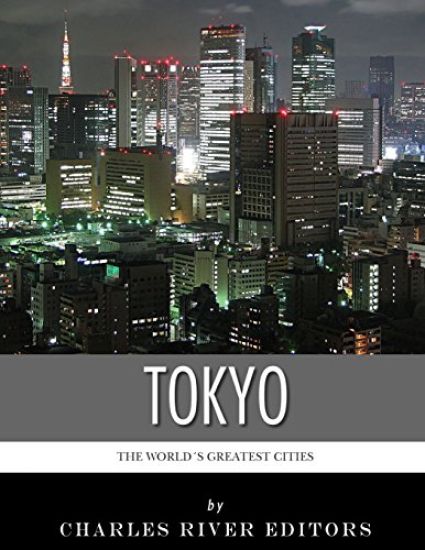
*Includes pictures *Chronicles the history of Tokyo over the last several centuries *Includes accounts of what the city was like across the years *Includes a bibliography for further reading After a series of conflicts among feudal lords, the new city of Edo became and remained Japan's beating heart, and in the 17th century, Edo gave birth to a vibrant new urban culture marked by woodblock prints, the kabuki theater, and haiku poetry. By the 18th century, with its ranks swelled thanks to a flood of provincial daimyo, along with their households, clients, and retainers, Edo had become the most populous urban area in the world, a title Tokyo still can lay claim to today. In the latter 19th and 20th centuries, after the Tokugawa bakufu was overthrown by a modernizing and reforming central government under the Meiji emperor, Edo was renamed Tokyo and became Japan's new imperial capital. The Meiji emperor wanted Tokyo to be a vibrant, bustling, cosmopolitan city that could be viewed as a meeting ground between the East and West. He also wanted Tokyo to showcase the bunmei kaika ("civilization and enlightenment") that the new regime trumpeted, and today, Tokyo remains an international center of culture, finance, and media, as well as home to Japan's most prestigious research universities, its most fashionable shopping districts, the headquarters of its wealthiest corporations, and its largest museums. Now covering over 800 square miles, Tokyo's skyline seems endlessly expansive, and it also seems to have taken some of the most noteworthy aspects of other great cities. In Shinjuku ward, Tokyo has skyscrapers that look like they belong in Manhattan, while in Minato, the Tokyo Tower instantly brings to mind the Eiffel Tower. To the west, the ward of Shibuya is full of enough neon lights to make Las Vegas blush, and the National Diet Building in Chiyoda houses Japan's legislature and looks like a capitol building tourists might find across American states. It's no coincidence that nearly half a million foreign expatriates choose to live in Tokyo today. Tokyo is one of the largest metropolises in the world, with over 12 million residents living there and another 2.5 million workers coming each day, and because World War II left much of the city in ruins, Tokyo is now one of the most modern major metropolises on the planet. In fact, the Japanese had determined even before the end of World War II that Tokyo was more like a prefecture (the Japanese version of a county or state) than one city. For that reason, the metropolis of Tokyo is a prefecture that is actually comprised of 23 cities, each of which has political autonomy that allows it to govern in collaboration with Tokyo's metropolitan government. The autonomy afforded to the different cities that make up Tokyo also means that Tokyo as people understand it is remarkably diverse. While Chiyoda attracts the affluent, as well as foreign nationals and tourists, the ward just to the east of it, Chuo, covers less ground but is about three times as dense. Over 30,000 students go to the prestigious Keio University in the neighboring special ward of Minato, helping make Shibuya the hotspot for young adults. Naturally, the kids help make Shibuya Tokyo's best spot for all forms of nightlife entertainment, fashion, and shopping. Meanwhile, the major population centers of Tokyo are the special wards on the outskirts of the metropolis, such as Adachi, Ota, and Edogawa, which cover upwards of 50 square miles by themselves. The World's Greatest Cities: The History of Tokyo chronicles the history of Japan's most famous city.
*Includes maps of Genghis Khan's and Attila's empires and pictures depicting the two men and other important people and places in their lives. *Discusses legends and controversies surrounding the lives, deaths, and legacies of Attila the Hun and Genghis Khan. *Includes a Bibliography of each man for further reading. Attila, Emperor of the Hunnic Empire and thus most commonly known as Attila the Hun, is an idiosyncratic figure who has become more myth than man, not least because much of his life is shrouded in mystery. Perhaps the most famous "barbarian" in history, Attila was the lord of a vast empire spanning two continents and was often referred to as the "Scourge of God", but he is best remembered for what he did not conquer. Though he seemingly had Rome at his mercy in 452, he ultimately decided not to sack the Eternal City, and a year later he had suffered a mysterious death. What is known about Attila came mostly from Priscus, a guest of his court who wrote several books about Attila's life in Greek. Unfortunately, much of that work was lost to history, but not before the ancient writer Jordanes relied on it to write his own overexaggerated account of Attila's life. And like their leader, the Huns themselves are an instantly recognizable name with mysterious origins; most of what is known about the Huns came from Chinese sources thousands of miles and an entire continent away from Italy. Naturally, the dearth of information and the passage of time have allowed myths and legends to fill in the most important details of Attila's life. Why did a man at war with the Roman Empire for so long decide not to sack Rome in 452? Did a meeting with Pope Leo the Great convince him to spare the capital of the Western half of the empire? Did a vision from St. Peter induce Attila to convert to Christianity? Was Attila murdered by his new bride? Many authors and chroniclers have provided many answers to the many questions, but the lack of answers has allowed Attila to become the face of ancient barbarity and the embodiment of the furious nomadic conqueror. In a world fascinated by men like Alexander the Great and Julius Caesar, Genghis Khan is one of history's greatest and most famous conquerors. No man, before or since, has ever started with so little and gone on to achieve so much. From a noble family but raised in poverty that drove him to the brink of starvation, Genghis Khan rose to control the second-largest empire the world has ever known (the largest being, arguably, the British Empire of the 18th and 19th centuries), and easily the largest empire conquered by a single man. And while many empires disintegrate upon the death of an emperor, like Attila's, Genghis Khan's empire endured and was actually enlarged by his successors, who went on to establish dynasties that in some cases lasted for centuries. Though history is usually written by the victors, the lack of a particularly strong writing tradition from the Mongols ensured that history was largely written by those who Genghis Khan vanquished. Because of this, Genghis Khan's portrayal in the West and the Middle East has been extraordinarily (and in many ways unfairly) negative for centuries, at least until recent revisions to the historical record. He was far more complex than the mere brute that his negative portrayals indicate, and though there is a slew of graves and depopulated regions to testify to the fact that he was not a gentle man, it would be simplistic and wrong to describe him merely as a madman bent on destruction for destruction's sake. The Scourge of God discusses the facts, myths, and legends surrounding the lives, deaths and conquests of Attila and Genghis Khan, examining the historical record and the way in which their legacies were shaped, all in an attempt to separate fact from fiction. Along with pictures and bibliographies, you will learn about Attila and Genghis like never before.
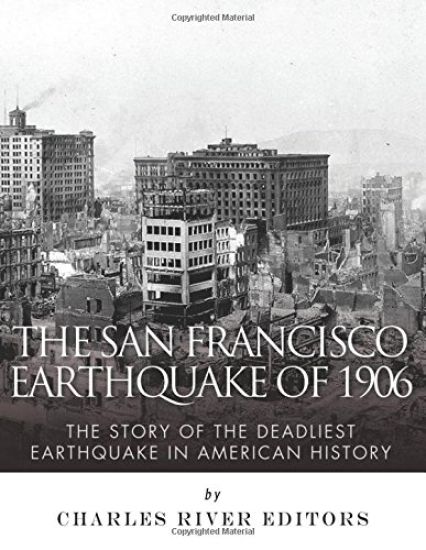
*Includes pictures *Includes accounts of the earthquake and fires *Includes a bibliography for further reading " I]t does not seem to have affected any one with a sense of final destruction, with any foreboding of irreparable disaster. Every one is talking of it this afternoon, and no one is in the least degree dismayed. I have talked and listened in two clubs, watched people in cars and in the street, and one man is glad that Chinatown will be cleared out for good; another's chief solicitude is for Millet's 'Man with the Hoe.' 'They'll cut it out of the frame, ' he says, a little anxiously. 'Sure.' But there is no doubt anywhere that San Francisco can be rebuilt, larger, better, and soon. Just as there would be none at all if all this New York that has so obsessed me with its limitless bigness was itself a blazing ruin. I believe these people would more than half like the situation." - H. G. Wells On April 18, 1906, most of the residents of the city of San Francisco were sound asleep when the ground started to shake around 5:15 a.m., but what started as fairly soft tremors turned into a violent shaking in all directions. The roar of the earthquake unquestionably woke up residents, at least those fortunate enough not to be immediately swallowed by the cracks opening up in the ground. The earthquake lasted about a minute, but it had enough destructive force to divert the course of entire rivers and level much of the 9th largest city in America at the time. Unfortunately for San Franciscans, the worst was yet to come. During the earthquake, the city's gas mains and water mains were ruptured, which had the effects of starting a number of fires and preventing the residents from being equipped to fight them. Without water to truly fight the blaze, the city's officials actually resorted to demolishing buildings in hopes of containing the fire, and witnesses reported seeing San Franciscans trapped in the burning buildings being shot by authorities instead of letting them burn alive. The fires lasted three days, and by the time they were done, 80% of the city was in ruins, about 60% of the residents were homeless, and an estimated 3,000-6,000 were dead. In fact, the fires were so devastating that contemporary San Franciscans called the disaster "The Fire." Although the resulting fires may have done the most damage, the widespread destruction made clear to city leaders that the new buildings would need better safety codes and protection against subsequent earthquakes. The city reinforced new buildings against earthquakes and fixed older surviving buildings to better deal with future earthquakes, and the city also created the Auxiliary Water Supply System to prevent a repeat of the 1906 disaster. At the same time, there was a determined sense of resolve to rebuild San Francisco into a bigger and better city, and financial assistance flowed to the shattered city from all across the country. Even as refugee camps were set up in parks and sheltered people for a few years, the U. S. Army and other volunteers helped provide for the people, and despite suffering damage amounting to the equivalent of over $6 billion in today's dollars, California governor George C. Pardee was right when he predicted, "This is not the first time that San Francisco has been destroyed by fire, I have not the slightest doubt that the City by the Golden Gate will be speedily rebuilt, and will, almost before we know it, resume her former great activity." The San Francisco Earthquake of 1906: The Deadliest Earthquake in American History chronicles the deadliest natural disaster in California's history and one of the most important seismic events on record. Along with pictures of important people, places, and events, you will learn about the San Francisco Earthquake of 1906 like never before, in no time at all.
*Includes pictures *Includes accounts of the standoff by federal agents and members of the Weaver family *Includes online resources and a bibliography for further reading *Includes a table of contents "The Subcommittee is ...] concerned that, as Marshals investigating the Weaver case learned facts that contradicted information they previously had been provided, they did not adequately integrate their updated knowledge into their overall assessment of who Randy Weaver was or what threat he might pose." - Excerpt from a report by the Senate Judiciary Committee In the summer of 1992, federal agents surrounded a few acres of land isolated in Ruby Ridge, Idaho, where Randy Weaver, his wife Vicki, his 14 year old son Samuel, and his three young daughters were staying. Weaver was a former Green Beret who had come to the attention of the ATF and other federal agencies for a number of reasons, including associations with white supremacist groups and the possession of illegal shotguns. After being arrested and released on bail in 1991, Weaver failed to appear in court when necessary and was thus treated as a fugitive, bringing in the involvement of U. S. Marshals. For the rest of that year, attempts to bring in Weaver were rebuffed, and Weaver threatened to shoot anyone who came to his cabin to bring him in. After a number of reconnaissance efforts and operations to arrest Weaver took place in 1992, federal agents from the U. S. Marshal Service and FBI surrounded the area on August 21 and wound up engaging in a firefight that ended in the deaths of 14 year old Samuel, one of the family dogs, and Marshal Bill Degan, who was shot by Weaver's friend Kevin Harris. In the aftermath of the shooting, Randy and Vicki brought Samuel's body to a shed near their main cabin, and they remained inside with Harris for the rest of the day. On August 22, the federal agents were given new rules of engagement that were much more lax when it came to authorizing the use of deadly force. Instead of using the standard FBI policy that authorized deadly force to prevent suffering grievous harm as a method of self-defense, the agents, including snipers, were given the green light to shoot Randy and Kevin Harris if they were carrying weapons, regardless of whether they were actually targeting the federal agents. They were also authorized to shoot any adult after they surrendered if they were carrying a weapon. Before negotiators could even reach the scene on the 22nd, an FBI sniper shot Randy in the back as he headed towards the shed where his son's body lay. As Randy, his 16 year old daughter Sara, and Harris headed back for cover in the cabin, the same sniper fired a shot at Harris' chest, which wounded him but also struck and killed Vicki, who was standing behind the cabin door holding her 10 month old daughter. Ultimately, it would be several more days before negotiators talked Harris and the Weaver family into surrendering, but the recriminations were just starting. Due to the way the operations were handled, Harris would end up being acquitted of all charges, and Weaver was acquitted of every charge except those involving his refusal to show up in court. Meanwhile, Ruby Ridge severely shook confidence in the way federal law enforcement operated, leading to investigations and reforms. Just as importantly, in addition to influencing how the government approached potential future conflicts with other groups, Ruby Ridge's most important legacy was that it enraged people who already had an anti-government bent. The most notable, of course, was Timothy McVeigh, who conducted what was at the time the deadliest terrorist attack in American history in Oklahoma City in April 1995 and cited Ruby Ridge as a motive. The Ruby Ridge Siege: The History of the Federal Government's Deadly Standoff with Randy Weaver and His Family chronicles the controversial event and the influence it had on subsequent events like Waco and the Oklahoma City bombing.