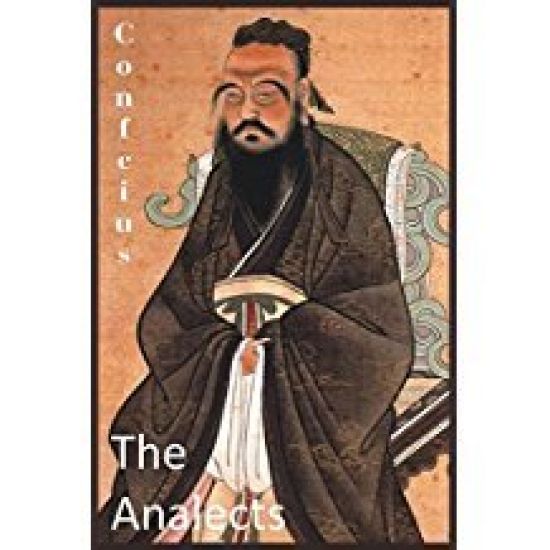
Kirjailija
Confucius
Kirjat ja teokset yhdessä paikassa: 145 kirjaa, julkaisuja vuosilta 1979–2027, suosituimpiin kuuluu Confucian Analects. Vertaile teosten hintoja ja tarkista saatavuus suomalaisista kirjakaupoista.
Nimi esiintyy myös muodoissa: * Confucius
145 kirjaa
Kirjojen julkaisuvuodet: 1979–2027.
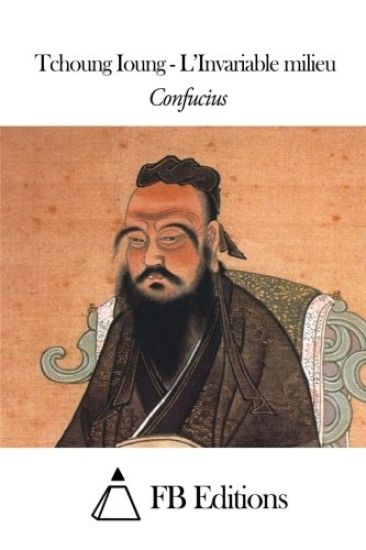
Tchoung Ioung - L'Invariable milieu
Confucius
Createspace Independent Publishing Platform
2015
nidottu
"Tchoung Ioung - L'Invariable milieu" par Confucius. Confucius tait un penseur et philosophe chinois (551 av JC - 479 av JC).
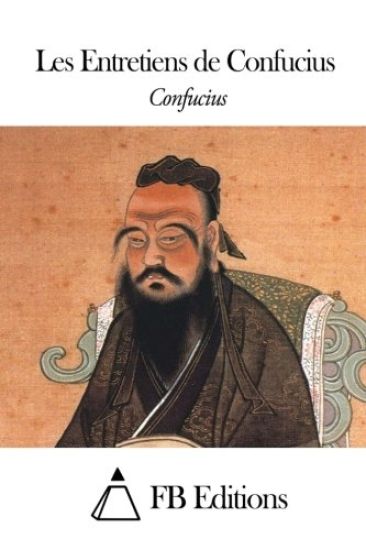
"Les Entretiens de Confucius" par Confucius. Confucius tait un penseur et philosophe chinois (551 av JC - 479 av JC).
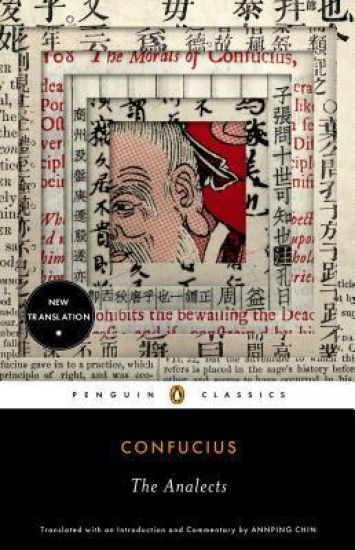
One of the most influential books in human history, in a revelatory new translation. China's first and greatest teacher, Confucius traveled from state to state as an itinerant philosopher. The Analects preserves his major teachings, as compiled by his disciples after his death - everything from how people should relate to each other (the Golden Rule, which he was the first to define), to how a country should be organized (like a family), to how to lie in bed (not like a corpse). This new translation, by one of the pre-eminent scholars of Confucius, draws on the most recent excavated texts and latest scholarship. The historian Annping Chin sets out to illuminate the historical context of Confucius's teachings, explaining who the many local figures referenced in The Analects are, and navigating a rich tradition of historical commentaries to provide a map of Confucian thought that brings us as close as possible to experiencing Confucius as his followers might have 2,500 years ago. Confucius (551-479 B. C.) was a philosopher, political figure and founder of one of the major schools of thought in Chinese history. Annping Chin is a senior lecturer in the history department at Yale and is the author of The Authentic Confucius: A Life of Thought and Politics and a coauthor, with Jonathan Spence, of The Chinese Century: A Photographic History of the Last Hundred Years. She lives in New Haven, Connecticut.
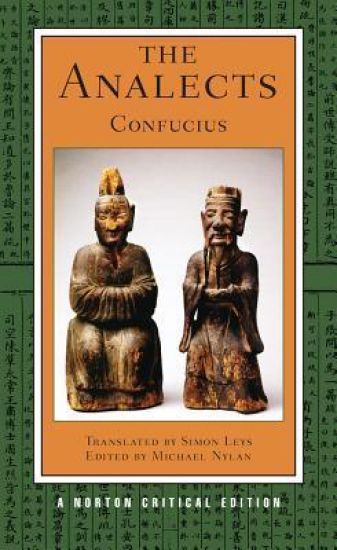
The Norton Critical Edition aims to situate the historical figure of Kongzi, the legendary figure of Confucius, and the Analects (or Lunyu), the single most influential book ascribed to the Master's circle of disciples, within their evolving ethical, cultural, and political contexts. Simon Leys’s acclaimed translation and notes are accompanied by Michael Nylan’s insightful introduction. Eleven essays by leading experts in the field of Chinese studies discuss a broad range of issues relating to the Analects, from the origins of the classicists (Ru) and the formation of the Analects text to the use (and abuse) of the Master’s iconic image in twentieth- and twenty-first-century Asian, diasporic, and Western settings. Collectively, these readings suggest that the Confucius we thought we knew is not the Kongzi of record and that this Kongzi is a protean figure given to rapid change and continual reevaluation. Contributors include Henry Rosemont Jr., Nicolas Zufferey, Robert Eno, Thomas Wilson, Sébastien Billioud and Vincent Goossaert, Julia K. Murray, Mark Csikszentmihalyi and Tae Hyun Kim, Eric L. Hutton, Luke Habberstad, He Yuming, and Sam Ho.
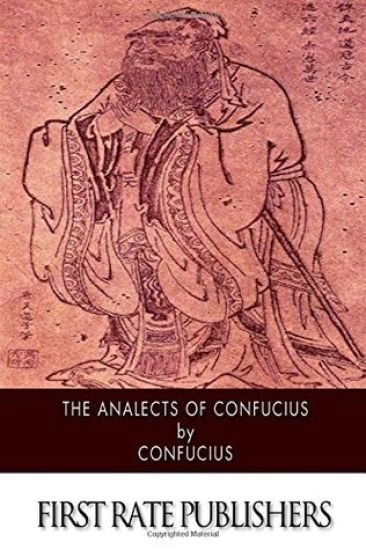
"At fifteen my heart was set on learning; at thirty I stood firm; at forty I had no more doubts; at fifty I knew the will of heaven; at sixty my ear was obedient; at seventy I could follow my heart's desire without overstepping the boundaries of what was right." - Confucius "Confucius has no interest in falsehood; he did not pretend to be prophet; he claimed no inspiration; he taught no new religion; he used no delusions; flattered not the emperor under whom he lived..." - Voltaire Many people argue that Confucius is the most influential person of all time, and if having a significant effect on the greatest number of people is the criterion, he may very well be. China is one of the largest and oldest civilizations on earth, and Confucius has been influential there from almost the beginning: the first Chinese dynasty was founded around 1600 BCE and Confucius lived from 551-479 BCE. Although he is still one of history's most famous philosophers, Confucius was in many respects an unremarkable man, and even his physical features were said to be unattractive. There is little evidence that he thought of himself as a harbinger of any kind, but shortly after his death, writings, sayings, and theories based on his life and ideas spread throughout China and even took hold of the imperial court of one of the most powerful and important dynasties, the Han (206 BCE-220 CE). It was during the Han Dynasty that Confucianism became closely tied to state affairs, and it would remain so until the fall of the last dynasty in 1912. Confucianism was closely tied to state religious and ritual practice, and naturally, it benefited greatly from this relationship and was able to subsequently exert influence on all aspects of society. As a "state religion", it provided "religious sanction for policy-making, official sacrifices, court ceremonies, royal marriage, funeral and mourning rights" as well as several major sacrifices to gods and ancestors. Confucianism continues to reverberate to the present day; the Chinese Communist Party still discusses Confucius in their official newspapers and references his thought when they think it will help promote a political or social stance. Eventually Confucius himself was worshiped as a sage, though accounts of his own opinions of himself are nothing but humble. As his great successor Mencius (372-289 BCE) put it, "Since humanity came into this world, there has never been one greater than Confucius." The description of the capture of a unicorn in the important Confucian classic, the Spring and Autumn Annals, was taken as a sign that Confucius was chosen by heaven to found a new moral dynasty. The state ritual sacrifice to Confucius grew rapidly in importance during the Han dynasty and continued to grow in later dynasties. In 630, for example, the Tang dynasty (618-907) founder ordered that every district and country establish a Confucius temple.
The Analects of Confucius In Plain and Simple English
Confucius
Createspace Independent Publishing Platform
2014
nidottu
The Sayings of Confucius: A New Translation of the Greater Part of the Confucian Analects (1910)
Confucius
Literary Licensing, LLC
2014
nidottu
The Discourses and Sayings of Confucius (1898)
Ku Hung-Ming; Confucius
Literary Licensing, LLC
2014
nidottu
The Sayings of Confucius: A New Translation of the Greater Part of the Confucian Analects (1910)
Confucius
Literary Licensing, LLC
2014
sidottu
The Sayings of Confucius is a book that contains a new translation of the greater part of the Confucian Analects, originally written in ancient China by the philosopher Confucius. The book presents a collection of Confucius' teachings and sayings, which cover a wide range of topics such as morality, ethics, politics, and education. The translator has made an effort to convey the essence of Confucius' teachings in a clear and concise manner, making it accessible to modern readers. The book provides insights into the ancient Chinese culture and philosophy and offers valuable lessons that are still relevant today. Overall, The Sayings of Confucius is a must-read for anyone interested in philosophy, history, and culture. This Is A New Release Of The Original 1910 Edition. This scarce antiquarian book is a facsimile reprint of the old original and may contain some imperfections such as library marks and notations. Because we believe this work is culturally important, we have made it available as part of our commitment for protecting, preserving, and promoting the world's literature in affordable, high quality, modern editions, that are true to their original work.
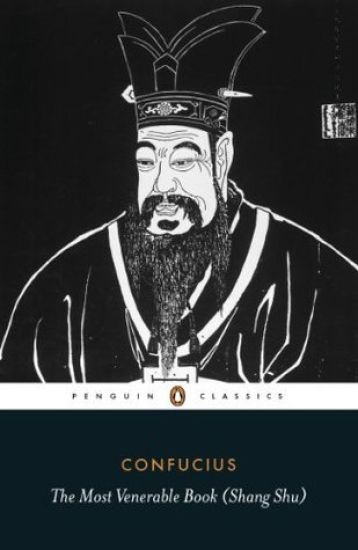
The Most Venerable Book (Shang Shu)
Confucius
Penguin Classics
2014
pokkari
Halvin toimitettuna 20,90 €
A wonderfully enjoyable storehouse of ancient Chinese history and legends, which also has an important role in understanding 21st-century China'And remember: Heaven's blessing will cease forever if there's despair and poverty in your lands'The Most Venerable Book (also known as The Book of History) is one of the Five Classics, a key work of Chinese literature which preserves some of the most ancient and dramatic chronicles of the history, both real and mythological, of the Chinese state. For many centuries it was a central work for anyone wishing to work for the Imperial administration, preserving as it does a fascinating mixture of key Confucian concepts as well as page after page of heroes, benevolent rulers, sagacious ministers, and struggles against flood, corruption and vicious, despotic rulers. The First Emperor tried in 213 BC to have all copies of the book destroyed because of its subversive implication that 'the Mandate of Heaven' could be withdrawn from rulers who failed their people. For similar reasons it was also banned by Chairman Mao. Extraordinarily, the values of The Most Venerable Book have been revived by the Chinese government of the 2010s.
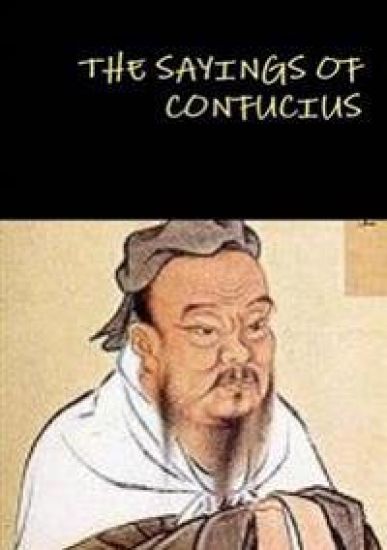
This Chinese sage from the sixth century BC is probably the most quoted philosopher and moralizer ever, a guide to everyday as well as heavenly conduct. CALLENDER ANCIENT WISDOM
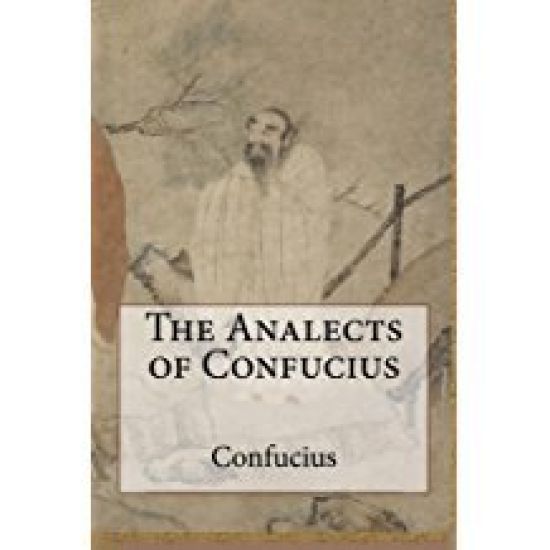
The Analects of Confucius
Confucius
Createspace Independent Publishing Platform
2014
nidottu
Halvin toimitettuna 12,50 €
The Analects of Confucius, is a collection of sayings and ideas attributed to the Chinese philosopher Confucius and his contemporaries, traditionally believed to have been compiled and written by Confucius' followers. It is believed to have been written during the Warring States period (475-221 BC), and it achieved its final form during the mid-Han dynasty (206 BC-220 AD). By the early Han dynasty the Analects was considered merely a "commentary" on the Five Classics, but the status of the Analects grew to be one of the central texts of Confucianism by the end of that dynasty. During the late Song dynasty (960-1279) the importance of the Analects as a philosophy work was raised above that of the older Five Classics, and it was recognized as one of the "Four Books". The Analects has been one of the most widely read and studied books in China for the last 2,000 years, and continues to have a substantial influence on Chinese and East Asian thought and values today. Confucius believed that the welfare of a country depended on the moral cultivation of its people, beginning from the nation's leadership. He believed that individuals could begin to cultivate an all-encompassing sense of virtue through ren, and that the most basic step to cultivating ren was devotion to one's parents and older siblings. He taught that one's individual desires do not need to be suppressed, but that people should be educated to reconcile their desires via rituals and forms of propriety, through which people could demonstrate their respect for others and their responsible roles in society. He taught that a ruler's sense of virtue was his primary prerequisite for leadership. His primary goal in educating his students was to produce ethically well-cultivated men who would carry themselves with gravity, speak correctly, and demonstrate consummate integrity in all things. Confucius was a Chinese teacher, editor, politician, and philosopher of the Spring and Autumn period of Chinese history. The philosophy of Confucius, also known as Confucianism, emphasized personal and governmental morality, correctness of social relationships, justice and sincerity. His followers competed successfully with many other schools during the Hundred Schools of Thought era only to be suppressed in favor of the Legalists during the Qin Dynasty. Following the victory of Han over Chu after the collapse of Qin, Confucius's thoughts received official sanction and were further developed into a system known in the West as Neo-Confucianism, and later New Confucianism (Modern Neo-Confucianism). Confucius is traditionally credited with having authored or edited many of the Chinese classic texts including all of the Five Classics, but modern scholars are cautious of attributing specific assertions to Confucius himself. Aphorisms concerning his teachings were compiled in the Analects, but only many years after his death. Confucius's principles have commonality with Chinese tradition and belief. He championed strong family loyalty, ancestor veneration, and respect of elders by their children and of husbands by their wives, recommending family as a basis for ideal government. He espoused the well-known principle "Do not do to others what you do not want done to yourself", the Golden Rule. He is also a traditional deity in Daoism. Throughout history, Confucius is widely considered as one of the most important and influential individuals in affecting the lives of humanity. His teaching and philosophy greatly impacted people around the world and still linger in today's society.
The Confucian Analects is a collection of teachings and sayings attributed to the Chinese philosopher Confucius. The book is considered one of the most important works of Confucianism and Chinese philosophy. It is believed to have been compiled by Confucius' disciples after his death and contains discussions on a range of topics including morality, ethics, politics, and social relationships. The book emphasizes the importance of personal virtue, respect for authority, and the cultivation of a harmonious society. The teachings of Confucius have had a profound impact on Chinese culture and have been influential in shaping the moral and ethical values of East Asian societies. The Confucian Analects is a must-read for anyone interested in philosophy, ethics, or Chinese history and culture. This Is A New Release Of The Original 1895 Edition. This scarce antiquarian book is a facsimile reprint of the old original and may contain some imperfections such as library marks and notations. Because we believe this work is culturally important, we have made it available as part of our commitment for protecting, preserving, and promoting the world's literature in affordable, high quality, modern editions, that are true to their original work.
The Ethics of Confucius is a book that compiles the teachings and principles of the Chinese philosopher Confucius, who lived during the period of the Eastern Zhou Dynasty (771-256 BCE). The book is a collection of dialogues, anecdotes, and aphorisms that reflect Confucius' views on morality, ethics, and social order. Confucius believed that human beings could achieve a harmonious and just society by following the principles of virtue, wisdom, and compassion. He emphasized the importance of personal cultivation, self-discipline, and respect for others. The book covers a wide range of topics, including filial piety, education, government, and the role of the individual in society. The Ethics of Confucius has been a significant influence on Chinese culture and philosophy for over two thousand years and continues to be studied and admired by scholars and readers around the world. This Is A New Release Of The Original 1915 Edition. This scarce antiquarian book is a facsimile reprint of the old original and may contain some imperfections such as library marks and notations. Because we believe this work is culturally important, we have made it available as part of our commitment for protecting, preserving, and promoting the world's literature in affordable, high quality, modern editions, that are true to their original work.