Kirjojen hintavertailu – 12 859 828 kirjaa ja 27 kauppaa
Kirjailija
Congressional Research Service
Kirjat ja teokset yhdessä paikassa: 687 kirjaa, julkaisuja vuosilta 2002–2024, suosituimpiin kuuluu GAO Bid Protests: An Overview of Time Frames and Procedures. Vertaile teosten hintoja ja tarkista saatavuus suomalaisista kirjakaupoista.
Navigating the Internet requires using addresses and corresponding names that identify the location of individual computers. The Domain Name System (DNS) is the distributed set of databases residing in computers around the world that contain address numbers mapped to corresponding domain names, making it possible to send and receive messages and to access information from computers anywhere on the Internet. Many of the technical, operational, and management decisions regarding the DNS can have significant impacts on Internet-related policy issues such as intellectual property, privacy, Internet freedom, e-commerce, and cybersecurity. The DNS is managed and operated by a not-for-profit public benefit corporation called the Internet Corporation for Assigned Names and Numbers (ICANN). Because the Internet evolved from a network infrastructure created by the Department of Defense, the U. S. government originally owned and operated (primarily through private contractors) the key components of network architecture that enable the domain name system to function. A 1998 Memorandum of Understanding (MOU) between ICANN and the Department of Commerce (DOC) initiated a process intended to transition technical DNS coordination and management functions to a privatesector not-for-profit entity. Additionally, a contract between DOC and ICANN authorizes ICANN to perform various technical functions such as allocating IP address blocks, editing the root zone file, and coordinating the assignment of unique protocol numbers. By virtue of this contract and two other legal agreements, DOC exerts a legacy authority and stewardship over ICANN, and arguably has more influence over ICANN and the DNS than other national governments. On March 14, 2014, the DOC's National Telecommunications and Information Administration (NTIA) announced its intention to transition its stewardship role and procedural authority over key domain name functions to the global Internet multistakeholder community. If a satisfactory transition and Internet governance mechanism can be achieved, NTIA will let its contract with ICANN expire on September 30, 2015. NTIA has stated that it will not accept any transition proposal that would replace the NTIA role with a government-led or an intergovernmental organization solution.
A "lame duck" session of Congress occurs whenever one Congress meets after its successor is elected, but before the term of the current Congress ends. Under present conditions, any meeting of Congress after election day in November, but before the following January 3, is a lame duck session. Prior to 1933, when the 20th Amendment changed the dates of the congressional term, the last regular session of Congress was always a lame duck session. Today, however, the expression is used not only for a separate session of Congress that convenes after a sine die adjournment, but also for any portion of a regular session that falls after an election. A lame duck session can occur in several ways. (1) Congress has usually provided for its existing session to resume after a recess spanning the election. (In 1954, only the Senate returned in this way, while the House adjourned sine die.) (2) In 1940, 1942, and also most recently in 2008, 2010, and 2012, at least one house continued meeting in intermittent, or pro forma, sessions during the period spanning the election (in these most recent years, the Senate used this means to forestall recess appointments). (3) Congress can reconvene after an election pursuant to contingent authority granted to the leadership in a recess or adjournment resolution (the House followed this course in 1998 and 2008). Two other possibilities have not been realized: (4) Congress could set a statutory date for a new session to convene after the election, then adjourn its existing session sine die. (5) While Congress is in recess or sine die adjournment, the President could call it into extraordinary session at a date after the election. Congress has held 19 lame duck sessions from 1940 through 2012. In these years, election breaks usually have begun by mid-October, and typically lasted between one and two months. Congress has typically reconvened in mid-November and adjourned before Christmas, so that the lame duck session lasted about a month. Yet election breaks have begun as early as August 7 or as late as November 3, and ended as early as November 7 or as late as December 31. Lame duck sessions have ended as early as November 22 and as late as January 3, and have extended over as few as one, and as many as 145, calendar days. Usually, however, each house has actually met on 8-24 days during these lame duck sessions (including pro forma sessions). Although between 1994 and 2006, each house met in session for fewer than 12 days, the three most recent lame duck sessions were considerably longer, lasting an average of 17 days in the House and 27 days in the Senate.
Since 2000, the U. S. military has been building up forward-deployed forces on the westernmost U. S. territory of Guam (west of Hawaii) to increase U. S. operational presence, deterrence, and power projection for potential responses to crises, disasters, or other contingencies to support Japan, Republic of Korea (ROK), the Philippines, Taiwan, or others in Asia. Since 2006, Valiant Shield exercises based at Guam have boosted U. S. military readiness for joint operations in the Pacific. The defense buildup on Guam has been moderate. China has concerns, suspecting Guam's buildup to be directed against China. There has been concern that China and North Korea could target Guam with missiles. China's People's Liberation Army (PLA) Navy has increased activities in waters around Guam. Still, Guam's role expanded in engaging with the PLA. In 2006, the United States and Japan had agreed on a Realignment Roadmap to strengthen their alliance, including a buildup on Guam to cost $10.3 billion, with Japan contributing 60%. Goals were to start the related construction on Guam by 2010 and to complete relocation of about 8,000 marines from Okinawa to Guam by 2014. In Tokyo on February 17, 2009, the Secretary of State signed a U. S.-Japan agreement on the relocation of the III Marine Expeditionary Force personnel from Okinawa to Guam that reaffirmed the "Roadmap" of May 1, 2006. However, the Marines' relocation will not occur by 2014 and will be more geographically distributed. Opposition on Okinawa to the U. S.-Japan plan for a Futenma Replacement Facility (FRF) to replace the Marine Corps Air Station Futenma brought implications for the Marines' move from Okinawa to Guam. Despite the dispute over the FRF, Japan has budgeted for its contributions to the Marines' move. By 2011, some Members urged attention to concerns that included Japan's impasse, expanded costs, and the delay in the realignment even as a strong U. S. military presence and readiness remain critical in the Asia-Pacific. On May 11, 2011, Senators Carl Levin, John McCain, and Jim Webb called for a review of plans to restructure military forces in Japan, ROK, and Guam, in order to make progress. President Obama issued in January 2012 the defense guidance for the strategy of "rebalancing" diplomatic, defense, and economic priorities more to the Asia-Pacific. This "rebalance" further raised Guam's profile as a "strategic hub." Finally, on February 8, the United States and Japan agreed to "adjust" the Roadmap and separate the move of marines from the plan for the FRF, in order to make progress separately. A U. S.-Japan Joint Statement of April 2012 specified that out of about 9,000 marines to be relocated from Okinawa, about 5,000 marines would move to Guam. Out of the new estimated cost of $8.6 billion, Japan would contribute $3.1 billion. A U. S.-Japan Joint Statement of October 2013 pointed to a later relocation of marines to Guam that will start in the first half of the 2020s. Preparation includes a draft environmental study (April 2014), a final study (2015), and a Master Plan for Guam (July 2014). After China announced an "East China Sea Air Defense Identification Zone (ADIZ)" in November 2013, the U. S. Air Force flew two B-52 bombers from Guam into the ADIZ in defiance of China's rules for notification. In April 2014, President Obama issued a U. S.-Japan Joint Statement, reaffirming that "the United States and Japan are also making sustained progress towards realizing a geographically distributed, operationally resilient, and politically sustainable U. S. force posture in the Asia Pacific, including the development of Guam as a strategic hub."
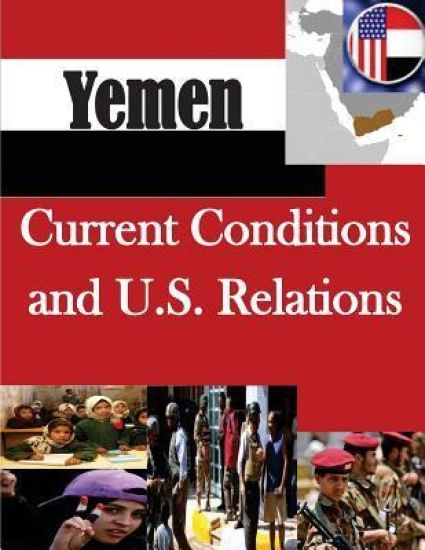
This report provides an overview and analysis of U. S.-Yemeni relations amidst evolving political change in Yemeni leadership, ongoing U. S. counterterrorism operations against Al Qaeda in the Arabian Peninsula (AQAP) operatives at large in Yemen's hinterlands, and international efforts to bolster the country's stability despite an array of daunting socio-economic problems. Congress and U. S. policymakers may be concerned with prospects for stabilizing Yemen and establishing strong bilateral relations with future Yemeni leaders. On November 23, 2011, after eleven months of protests and violence that claimed over 2,000 lives, then President Ali Abdullah Saleh of Yemen signed on to a U. S.-backed, Gulf Cooperation Council (GCC)-brokered transition plan. In line with the plan, Yemen held a presidential election in February 2012 with one consensus candidate on the ballot-former Vice President Abed Rabbo Mansour al Hadi. He received 6.6 million votes and, on February 25, 2012, he was inaugurated before parliament. Many Administration officials have declared that AQAP, the Yemeni-based terrorist organization that has attempted on several occasions to attack the U. S. homeland, is the most lethal of the Al Qaeda affiliates. In recent years, the Administration and Congress have supported an increased U. S. commitment of resources to counterterrorism and stabilization efforts there. Many analysts assert that Yemen is becoming a failed state and safe haven for Al Qaeda operatives and as such should be considered an active theater for U. S. counterterrorism operations. Given Yemen's contentious political climate and its myriad development challenges, most long-time Yemen watchers suggest that security problems emanating from Yemen may persist in spite of increased U. S. or international efforts to combat them. For FY2013, the Obama Administration is requesting $72.6 million in State Department administered economic and military aid for Yemen. The Administration ceased outlays of previously appropriated aid for Yemen during the past year due to political unrest there, although the delivery of some aid resumed in September 2011.
The diminishment of Arctic sea ice has led to increased human activities in the Arctic, and has heightened interest in, and concerns about, the region's future. The United States, by virtue of Alaska, is an Arctic country and has substantial interests in the region. On January 12, 2009, the George W. Bush Administration released a presidential directive, called National SecurityPresidential Directive 66/Homeland Security Presidential Directive 25 (NSPD 66/HSPD 25), establishing a new U. S. policy for the Arctic region. Record low extents of Arctic sea ice over the past decade have focused scientific and policy attention on links to global climate change and projected ice-free seasons in the Arctic within decades. These changes have potential consequences for weather in the United States, access to mineral and biological resources in the Arctic, the economies and cultures of peoples in the region, and national security. The five Arctic coastal states-the United States, Canada, Russia, Norway, and Denmark (of which Greenland is a territory)-are in the process of preparing Arctic territorial claims for submission to the Commission on the Limits of the Continental Shelf. The Russian claim to the enormous underwater Lomonosov Ridge, if accepted, would reportedly grant Russia nearly onehalfof the Arctic area. There are also four other unresolved Arctic territorial disputes. The diminishment of Arctic ice could lead in coming years to increased commercial shipping on two trans-Arctic sea routes-the Northern Sea Route and the Northwest Passage. Current international guidelines for ships operating in Arctic waters are being updated. Changes to the Arctic brought about by warming temperatures will likely allow more exploration for oil, gas, and minerals. Warming that causes permafrost to melt could pose challenges to onshore exploration activities. Increased oil and gas exploration and tourism (cruise ships) in the Arctic increase the risk of pollution in the region. Cleaning up oil spills in ice-covered waters willbe more difficult than in other areas, primarily because effective strategies have yet to be developed. Large commercial fisheries exist in the Arctic. The United States is currently meeting with other countries regarding the management of Arctic fish stocks. Changes in the Arctic could affect threatened and endangered species. Under the Endangered Species Act, the polar bear was listed as threatened on May 15, 2008. Arctic climate change is also expected to affect the economies, health, and cultures of Arctic indigenous peoples. Two of the Coast Guard's three polar icebreakers-Polar Star and Polar Sea-have exceeded their intended 30-year service lives, and Polar Sea is not operational. The possibility of increased sea traffic through Arctic waters raises an issue concerning Arctic search and rescue capabilities. On May 12, 2011, representatives from the member states of the Arctic Council signed anagreement on cooperation on aeronautical and maritime search and rescue in the Arctic. The Arctic has increasingly become a subject of discussion among political leaders of the nations in the region. Although there is significant international cooperation on Arctic issues, the Arctic is also increasingly being viewed by some observers as a potential emerging security issue. In varying degrees, the Arctic coastal states have indicated a willingness to establish and maintain amilitary presence in the high north. U. S. military forces, particularly the Navy and Coast Guard, have begun to pay more attention to the region
As its economy has grown to be the seventh largest in the world, Brazil has utilized its newfoundeconomic power to consolidate its influence in South America and play a larger role ininternational affairs. The Obama Administration's National Security Strategy recognizes Brazil asan emerging center of influence, and welcomes the country's leadership on bilateral, hemispheric, and global issues. U. S.-Brazil relations generally have been positive in recent years, thoughBrazil has prioritized strengthening relations with neighboring countries and expanding ties withnontraditional partners in the "developing South." While some foreign policy disagreements haveemerged, the United States and Brazil continue to engage on issues such as security, energy, trade, human rights, and the environment.
It is urgent that parents of teenagers become fully informed on the risks associated with synthetic drugs, also known as "designer drugs." The United States - especially parents and their teenage children -- face an array of drugs of abuse. Many, such as cocaine, heroin, and marijuana have confronted us for decades. The federal government has developed programs and initiatives to combat these drugs-to prevent use, treat the addicted, and disrupt production and the marketplace for drugs. But the significant threat to the nation posed by synthetic drugs, especially methamphetamine and MDMA, or "Ecstasy," is a more recent phenomenon. A related threat is the growth in nonmedical use of pharmaceutical controlled substances. Diversion of these legitimate drugs is fueled in part by easy access over the Internet. The most recent NSDUH and other data indicate that we continue to confront increased use of such drugs, notably pain relievers and tranquilizers. This document recommends some new approaches to address this challenge. The United States and its parents face an array of drugs of abuse by teenagers and students. Many, such as cocaine, heroin, and marijuana have confronted us for decades. We have developed programs and initiatives to combat these drugs-to prevent use, treat the addicted, and disrupt production and the marketplace for drugs. The significant threat to the nation posed by synthetic drugs, especially methamphetamine and MDMA, or "Ecstasy," is a more recent phenomenon. Initial efforts to confront synthetic drugs are already showing results. As demonstrated by the findings of the most recent National Survey on Drug Use and Health (formerly known as the National Household Survey on Drug Abuse) and the 2003 Monitoring the Future study, when we collectively push back, the synthetic drugs threat also will decline. A related threat is the growth in nonmedical use of pharmaceutical controlled substances. Diversion of these legitimate drugs is fueled in part by easy access over the Internet. The most recent NSDUH and other data indicate that we continue to confront increased use of such drugs, notably pain relievers and tranquilizers. This document recommends some new approaches to address this challenge. This document is a product of the hard work of the Department of Justice Criminal Division's Narcotic and Dangerous Drug Section, in cooperation with the Drug Enforcement Administration and several other agencies, and in consultation with various components of the Department of Health and Human Services. We are grateful for their efforts. The Action Plan represents an important step forward in our nation's effort to control dangerous synthetic drugs and pharmaceutical products and, moreover, in the continued achievement of the objectives set forth in the President's National Drug Control Strategy.
The economic rise of China and the growing network of trade and investmentrelations in northeast Asia are causing major changes in human, economic, political, and military interaction among countries in the region. This is affecting U. S. relationswith China, China's relations with its neighbors, the calculus for war across theTaiwan Straits, and the basic interests and policies of China, Japan, Taiwan, andSouth Korea. These, in turn, affect U. S. strategy in Asia. China, for example, hasembarked on a "smile strategy" in which it is attempting to coopt the interests ofneighboring countries through trade and investment while putting forth a lessthreatening military face (to everyone but Taiwan). Under the rubric of the Six-PartyTalks, the United States, China, Japan, Russia, and South Korea are cooperating toresolve the North Korean nuclear crisis. Taiwanese businesses have invested anestimated $70 to $100 billion in factories in coastal China. China relies on foreigninvested enterprises for about half its imports and exports. For Taiwan, Japan, andSouth Korea, China has displaced the United States as their major trading partner
In the past, the oil and gas industry considered gas locked in tight, impermeable shale uneconomical to produce. However, advances in directional well drilling and reservoir stimulation have dramatically increased gas production from unconventional shales. The United States Geological Survey estimates that 200 trillion cubic feet of natural gas may be technically recoverable from these shales. Recent high natural gas prices have also stimulated interest in developing gas shales. Although natural gas prices fell dramatically in 2009, there is an expectation that the demand for natural gas will increase. Developing these shales comes with some controversy, though. The hydraulic fracturing treatments used to stimulate gas production from shale have stirred environmental concerns over excessive water consumption, drinking water well contamination, and surface water contamination from both drilling activities and fracturing fluid disposal.