Kirjojen hintavertailu – 12 859 828 kirjaa ja 27 kauppaa
Kirjailija
Congressional Research Service
Kirjat ja teokset yhdessä paikassa: 687 kirjaa, julkaisuja vuosilta 2002–2024, suosituimpiin kuuluu GAO Bid Protests: An Overview of Time Frames and Procedures. Vertaile teosten hintoja ja tarkista saatavuus suomalaisista kirjakaupoista.
This report provides references to analytical reports on cybersecurity from CRS, other government agencies, trade associations, and interest groups. The reports and related websites are grouped under the following cybersecurity topics: policy overview, National Strategy for Trusted Identities in Cyberspace (NSTIC), cloud computing and FedRAMP, critical infrastructure, cybercrime, data breaches, and data security, national security, cyber espionage, and cyberwar (including Stuxnet), international efforts, education/training/workforce, research and development (R&D)In addition, the report lists selected cybersecurity-related websites for congressional and government agencies, news, international organizations, and organizations or institutions.
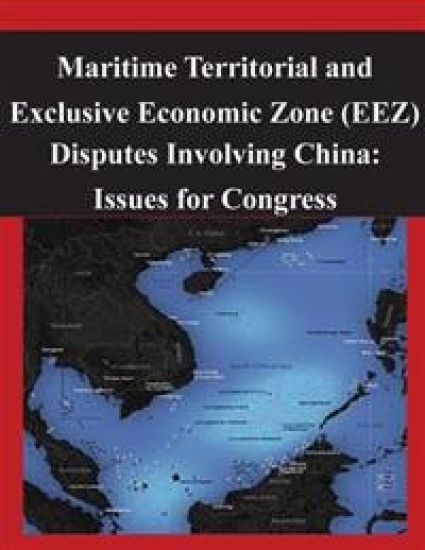
China's actions for asserting and defending its maritime territorial and exclusive economic zone (EEZ) claims in the East China (ECS) and South China Sea (SCS), particularly since late 2013, have heightened concerns among observers that ongoing disputes over these waters and some of the islands within them could lead to a crisis or conflict between China and a neighboring country such as Japan, the Philippines, or Vietnam, and that the United States could be drawn into such a crisis or conflict as a result of obligations the United States has under bilateral security treaties with Japan and the Philippines. More broadly, China's actions for asserting and defending its maritime territorial and EEZ claims have led to increasing concerns among some observers that China may be seeking to dominate or gain control of its near-seas region, meaning the ECS, the SCS, and the Yellow Sea. Chinese domination over or control of this region, or Chinese actions that are perceived as being aimed at achieving such domination or control, could have major implications for the United States, including implications for U. S.-China relations, for interpreting China's rise as a major world power, for the security structure of the Asia-Pacific region, for the long-standing U. S. strategic goal of preventing the emergence of a regional hegemon in one part of Eurasia or another, and for two key elements of the U. S.-led international order that has operated since World War II-the non-use of force or coercion as a means of settling disputes between countries, and freedom of the seas. China is a party to multiple territorial disputes in the SCS and ECS, including, in particular, disputes over the Paracel Islands, Spratly Islands, and Scarborough Shoal in the SCS, and the Senkaku Islands in the ECS. China depicts its territorial claims in the SCS using the so-called map of the nine-dash line that appears to enclose an area covering roughly 90% of the SCS. Some observers characterize China's approach for asserting and defending its territorial claims in the ECS and SCS as a "salami-slicing" strategy that employs a series of incremental actions, none of which by itself is a casus belli, to gradually change the status quo in China's favor. At least one Chinese official has used the term "cabbage strategy" to refer to a strategy of consolidating control over disputed islands by wrapping those islands, like the leaves of a cabbage, in successive layers of occupation and protection formed by fishing boats, Chinese Coast Guard ships, and then finally Chinese naval ships. In addition to territorial disputes in the SCS and ECS, China is involved in a dispute, particularly with the United States, over whether China has a right under international law to regulate the activities of foreign military forces operating within China's EEZ. The dispute appears to be at the heart of incidents between Chinese and U. S. ships and aircraft in international waters and airspace in 2001, 2002, 2009, and 2013.
Ongoing U. S. military operations against the Islamic State (which formerly referred to itself as the Islamic State of Iraq and the Levant, and is also commonly referred to as IS, ISIS, or ISIL) raise issues concerning the allocation of war powers between Congress and the President, including whether such operations have been (or are required to be) authorized by an act of Congress. In August 2014, President Obama ordered U. S. forces to commence airstrikes against IS targets in Iraq to assist the Iraqi government in combating the insurgent force, protect U. S. military and nonmilitary personnel in Iraq, and support certain humanitarian operations. In a public address on September 10, 2014, President Obama announced the pursuit of a strategy to "degrade and ultimately destroy" the Islamic State, including through the escalation of U. S. airstrikes against IS forces in Iraq, as well as the possible initiation of U. S. airstrikes against IS forces located in neighboring Syria. On September 23, 2014, the United States began airstrikes in Syria targeting IS forces and certain other groups within that country believed to be affiliated with Al Qaeda. As of the date of this report, Congress has not enacted legislation specifically authorizing U. S. force against the Islamic State. In enacting the Continuing Appropriations Resolution, 2015 (P. L. 113-164), which was signed into law on September 19, 2014, Congress authorized the President to arm and train vetted elements of Syrian opposition groups, including for purposes of deterring attacks on the Syrian populace by the Islamic State, but the legislation expressly provides that it does not constitute statutory authorization for the introduction of U. S. forces into actual or imminent hostilities. Initially, the Obama Administration cited the President's authority under Article II of the Constitution as the legal basis for U. S. operations against the Islamic State. More recently, however, the Administration has claimed that the 2002 Authorization for Use of Military Force Against Iraq (2002 Iraq AUMF; P. L. 107-243) and the 2001 Authorization for Use of Military Force (2001 AUMF; P. L. 107-40), provide congressional authority for military operations against the Islamic State. Some observers and Members of Congress have expressed disagreement with this interpretation, though it is unclear whether any dispute over application of these statutes to the Islamic State would give rise to a cognizable claim that would be resolved by the courts. This report addresses select legal questions raised by the use of military force against the Islamic State. Questions addressed in this report include potential sources (and limitations) of presidential authority to use military force against the Islamic State without express congressional authorization; the potential relevance of the 2002 Iraq AUMF, the 2001 AUMF, and the Continuing Appropriations Resolution, 2015; the constraints imposed by the War Powers Resolution upon U. S. military action that has not been authorized by Congress; and the applicability of the United Nations Charter to ongoing U. S. military strikes in Iraq and Syria. The report will be updated as warranted by events.
This report lists hundreds of instances in which the United States has used its Armed Forces abroad in situations of military conflict or potential conflict or for other than normal peacetime purposes. It was compiled in part from various older lists and is intended primarily to provide a rough survey of past U. S. military ventures abroad, without reference to the magnitude of the given instance noted. The listing often contains references, especially from 1980 forward, to continuing military deployments, especially U. S. military participation in multinational operations associated with NATO or the United Nations. Most of these post-1980 instances are summaries based on presidential reports to Congress related to the War Powers Resolution. A comprehensive commentary regarding any of the instances listed is not undertaken here. The instances differ greatly in number of forces, purpose, extent of hostilities, and legal authorization. Eleven times in its history the United States has formally declared war against foreign nations. These 11 U. S. war declarations encompassed 5 separate wars: the war with Great Britain declared in 1812; the war with Mexico declared in 1846; the war with Spain declared in 1898; the First World War, during which the United States declared war with Germany and with Austria-Hungary during 1917; and World War II, during which the United States declared war against Japan, Germany, and Italy in 1941, and against Bulgaria, Hungary, and Rumania in 1942. Some of the instances were extended military engagements that might be considered undeclared wars. These include the Undeclared Naval War with France from 1798 to 1800; the First Barbary War from 1801 to 1805; the Second Barbary War of 1815; the Korean War of 1950-1953; the Vietnam War from 1964 to 1973; the Persian Gulf War of 1991; global actions against foreign terrorists after the September 11, 2001, attacks on the United States; and the war with Iraq in 2003. With the exception of the Korean War, all of these conflicts received congressional authorization in some form short of a formal declaration of war. Other, more recent instances often involve deployment of U. S. military forces as part of a multinational operation associated with NATO or the United Nations. The majority of the instances listed prior to World War II were brief Marine or Navy actions to protect U. S. citizens or promote U. S. interests. A number were actions against pirates or bandits. Covert actions, disaster relief, and routine alliance stationing and training exercises are not included here, nor are the Civil and Revolutionary Wars and the continual use of U. S. military units in the exploration, settlement, and pacification of the western part of the United States.
The Department of Homeland Security (DHS) has statutory authority to regulate chemical facilities for security purposes. The 113th Congress extended this authority through October 4, 2014. Congressional policy makers have debated the scope and details of reauthorization and continue to consider establishing an authority with longer duration. Some Members of Congress support an extension, either short- or long-term, of the existing authority. Other Members call for revision and more extensive codification of chemical facility security regulatory provisions. Questions regarding the current law's effectiveness in reducing chemical facility risk and the sufficiency of federal chemical facility security efforts exacerbate the tension between continuing current policies and changing the statutory authority. Congressional policy makers have questioned DHS's effectiveness in implementing the authorized regulations, called chemical facility anti-terrorism standards (CFATS). The DHS finalized CFATS regulations in 2007. Since then, the site security plans for 900 chemical facilities have been approved in the CFATS process, which starts with information submission by chemical facilities and finishes with inspection and approval of facility security measures by DHS. Additionally, DHS has inspected some facilities for subsequent compliance activities. Several factors, including the amount of detailed information provided to DHS, the effectiveness of DHS program management, and the availability of CFATS inspectors, likely complicate the inspection process and lead to delays in inspection. Policy makers have questioned whether the compliance rate with CFATS is sufficient to mitigate this homeland security risk. For additional analysis of CFATS implementation, see CRS Report R43346, Implementation of Chemical Facility Anti- Terrorism Standards (CFATS): Issues for Congress. Key policy issues debated in previous Congresses contribute to the current reauthorization debate. These issues include the adequacy of DHS resources and efforts; the appropriateness and scope of federal preemption of state chemical facility security activities; the availability of information for public comment, potential litigation, and congressional oversight; the range of chemical facilities identified by DHS; and the ability of inherently safer technologies to achieve security goals. The 113th Congress might take various approaches to this issue. Congress might allow the statutory authority to expire but continue providing appropriations to administer the regulations. Congress might permanently or temporarily extend the statutory authority to observe the impact of the current regulations and, if necessary, address any perceived weaknesses at a later date. Congress might codify the existing regulations in statute and reduce the discretion available to the Secretary of Homeland Security to change the current regulatory framework. Alternatively, Congress might substantively change the current regulation's implementation, scope, or impact by amending the existing statute or creating a new one. Finally, Congress might choose to terminate the program by allowing its authority to lapse and removing funding for the program. This would leave regulation of chemical facility security to state and local governments.
Child welfare services are intended to prevent the abuse or neglect of children; ensure that children have safe, permanent homes; and promote the well-being of children and their families. As the U. S. Constitution has been interpreted, states bear the primary responsibility for ensuring the welfare of children and their families. In recent years, Congress has appropriated just above or below $8 billion in federal support dedicated to child welfare purposes. Most of those dollars (97%-98%) were provided to state, tribal, or territorial child welfare agencies (via formula grants or as federal reimbursement for a part of all eligible program costs). Federal involvement in state administration of child welfare activities is primarily tied to this financial assistance. The remaining federal dollars dedicated to child welfare purposes are provided, primarily on a competitive basis, to a variety of eligible entities to support research, evaluation, technical assistance, and demonstration projects to expand knowledge and improve child welfare practice and policy. At the federal level, child welfare programs are primarily administered by the Children's Bureau, which is an agency within the Administration for Children and Families (ACF) at the U. S. Department of Health and Human Services (HHS). However, three competitive grant programs (authorized by the Victims of Child Abuse Act) are administered by the Office of Justice Programs (OJP) within the Department of Justice (DOJ). Final FY2014 child welfare funding was appropriated as part of the Consolidated Appropriations Act, 2014 (P. L. 113-76). Because that act maintained discretionary funding at the statutory limit provided for in the recent Bipartisan Budget Agreement of 2013 (P. L. 113-67), FY2014 funding for child welfare programs that receive discretionary funding was not affected by sequestration. While most federal child welfare programs receive discretionary funding, the largest amount of federal funding is provided to child welfare programs through mandatory funding authorized under Title IV-E of the Social Security Act. Nearly all of that funding (related to foster care, adoption assistance, kinship guardianship assistance, and services to youth aging out of foster care) is statutorily exempted from sequestration in every year. Finally, a few child welfare programs receive mandatory funding and may be subject to sequestration; principally this includes the mandatory funding provided for the Promoting Safe and Stable Families Program. For FY2014, the final funding level for these nonexempt mandatory child welfare programs was reduced from their otherwise appropriated level by 7.2%. Child welfare support is provided via multiple federal programs. Title IV-B of the Social Security Act authorizes funding to states, territories, and tribes for a broad range of child welfare-related services to children and their families. Title IV-E of the Social Security Act entitles states to federal reimbursement for a part of the cost of providing foster care, adoption assistance, and (in states electing to provide this kind of support) kinship guardianship assistance on behalf of each child who meets federal eligibility criteria. Title IV-E also authorizes capped entitlement funding to states (and some discretionary funds as well) for provision of services to youth who "age out" of foster care, or are expected to age out without placement in a permanent family. Legislation concerning programs authorized in Title IV-B and Title IV-E, which represents the very large majority of federal child welfare dollars, is handled in Congress by the House Committee on Ways and Means and the Senate Finance Committee.
In order to protect national security, the government maintains various terrorist watchlists, including the "No Fly" list, which contains the names of individuals to be denied boarding on commercial airline flights. Travelers on the No Fly list are not permitted to board an American airline or any flight on a foreign air carrier that lands or departs from U. S. territory or flies over U. S. airspace. Some persons have claimed that their alleged placement on the list was the result of an erroneous determination by the government that they posed a national security threat. In some cases, it has been reported that persons have been prevented from boarding an aircraft because they were mistakenly believed to be on the No Fly list, sometimes on account of having a name similar to another person who was actually on the list. As a result, various legal challenges to placement on the list have been brought in court. The Department of Homeland Security operates a redress process for people who encounter difficulties while traveling. The government's policy, however, is never to confirm or deny whether someone is on the No Fly list; and the redress process does not provide travelers with an opportunity to contest their alleged placement on the No Fly list. Instead, the redress processconsists of an administrative review by the government, which can be followed by an ex parte, in camera judicial review by a United States court of appeals. The Due Process Clause provides that no person shall be "deprived of life, liberty, or property, without due process of law." Accordingly, when a person has been deprived of a constitutionally protected liberty interest, the government must follow certain procedures. Several courts have found that placement on the No Fly list may impair constitutionally protected interests, including the right to travel internationally, and the government's redress procedures must therefore satisfy due process. Typically, due process requires that the government provide a person with notice of the deprivation and an opportunity to be heard before a neutral party. However, the requirements of due process are not fixed, and can vary according to relevant factors. When determining the proper procedural protections in a given situation, courts employ the balancing test articulated by the Supreme Court in Matthews v. Eldridge, which weighs the private interests affected against the government's interest. Courts applying this balancing test might consider several factors, including the severity of the deprivation involved in placement on the No Fly list. In addition, courts may examine the risk of an erroneous deprivation under the current procedural framework and the potential value of imposing additional procedures on the process. Finally, courts may inquire into the government's interest in preserving the status quo, including the danger of permitting plaintiffs to access sensitive national security information. Resolution of the issue is currently pending as at least two federal courts have ruled that the government's redress procedures for travelers challenging placement on the No Fly list violate due process. Litigation is further complicated by several legal hurdles, such as the state secrets privilege, that can bar plaintiffs from accessing certain information.
The Child Care and Development Block Grant (CCDBG) provides subsidies to assist low-income families in obtaining child care so that parents can work or participate in education or training activities. Discretionary funding for this program is authorized by the Child Care and Development Block Grant Act of 1990 (as amended), which is currently due for reauthorization. Mandatory funding for child care subsidies authorized in Section 418 of the Social Security Act (sometimes referred to as the "Child Care Entitlement to States") is also due for reauthorization. In combination, these two funding streams are commonly referred to as the Child Care and Development Fund (CCDF). The CCDF is the primary source of federal funding dedicated solely to child care subsidies for low-income working and welfare families. The CCDF is administered by the Office of Child Care at the U. S. Department of Health and Human Services (HHS), and provides block grants to states, according to a formula, which are used to subsidize the child care expenses of working families with children under age 13. In addition to providing funding for child care services, funds are also used for activities intended to improve the overall quality and supply of child care for families in general. In recent years, both Congress and the Obama Administration have demonstrated an interest in reauthorizing or otherwise reforming the CCDF. On September 15, 2014, the House approved, by voice vote, the Child Care and Development Block Grant Act of 2014 (S. 1086, as amended). This bill would reauthorize the CCDBG Act through FY2020. It is an amended version of the CCDBG reauthorization bill (S. 1086, S. Rept. 113-138) that was approved by the Senate last March, by a vote of 96-2. Previously, in May 2013, HHS issued a proposed rule intended to overhaul existing regulations on the CCDF. A final rule has not yet been published. Discretionary child care funds are subject to the annual appropriations process. Congress did not enact FY2014 appropriations prior to the start of the fiscal year on October 1, 2013. This resulted in a funding gap and 16-day shutdown of the federal government. Subsequently, two short-term continuing resolutions (P. L. 113-46, P. L. 113-73) provided discretionary funding for the CCDBG until January 17, when the President signed into law a full-year consolidated appropriations act (P. L. 113-76). This law provided $2.360 billion in discretionary CCDBG funding for FY2014, which was reduced to $2.358 billion due to transfers within HHS. This funding level is about 7% more than the discretionary CCDBG's post-sequester FY2013 operating level of $2.206 billion and nearly 5% less than the FY2014 President's Budget request of $2.478 billion. Mandatory child care funds are not typically included in annual appropriation bills. Mandatory funds were directly appropriated (or pre-appropriated) for fiscal years 1997 through 2002 by the 1996 welfare reform law (P. L. 104-193), which created the mandatory component of the CCDF. Temporary extensions provided mandatory CCDF funding into FY2006. On February 8, 2006, a budget reconciliation bill was enacted into law (P. L. 109-171), increasing mandatory child care funding by $1 billion over five years (for a total of $2.917 billion for each of FY2006-FY2010). The authorization and pre-appropriations for mandatory child care funding were set to expire at the end of FY2010, but a series of six short-term extensions maintained mandatory child care funding at the same level ($2.917 billion) for FY2011-FY2013. Congress did not extend mandatory child care funding prior to the 16-day federal shutdown at the beginning of FY2014. However, mandatory child care funding has since been restored at the $2.917 billion level via temporary extensions, the most recent of which (in P. L. 113-76) provides mandatory child care funding through the end of FY2014.
CVN-78, CVN-79, and CVN-80 are the first three ships in the Navy's new Gerald R. Ford (CVN-78) class of nuclear-powered aircraft carriers (CVNs). CVN-78 was procured in FY2008. The Navy's proposed FY2015 budget estimates the ship's procurement cost at $12,887.2 million (i.e., about $12.9 billion) in then-year dollars. The ship received advance procurement funding in FY2001-FY2007 and was fully funded in FY2008- FY2011 using congressionally authorized four-year incremental funding. The Navy did not request any procurement funding for the ship in FY2012 and FY2013. To help cover cost growth on the ship, the ship received an additional $588.1 million in procurement funding in FY2014, and the Navy is requesting another $663.0 million in procurement funding for FY2015. CVN-79 was procured in FY2013. The ship received advance procurement funding in FY2007- FY2012, and the Navy plans to fully fund the ship in FY2013-FY2018 using congressionally authorized six-year incremental funding. The Navy's proposed FY2015 budget estimates CVN- 79's procurement cost at $11,498.0 million (i.e., about $11.5 billion) in then-year dollars, and requests $1,300 million in procurement funding for the ship. CVN-80 is scheduled to be procured in FY2018. The Navy's proposed FY2015 budget estimates the ship's procurement cost at $13,874.2 million (i.e., about $13.9 billion) in then-year dollars. Under the Navy's proposed FY2015 budget, the ship is to receive advance procurement funding in FY2016-FY2017 and be fully funded in FY2018-FY2023 using congressionally authorized six-year incremental funding.