
Kirjailija
D. H. Lawrence
Kirjat ja teokset yhdessä paikassa: 431 kirjaa, julkaisuja vuosilta 1985–2027, suosituimpiin kuuluu The Rainbow. Vertaile teosten hintoja ja tarkista saatavuus suomalaisista kirjakaupoista.
Nimi esiintyy myös muodoissa: D H Lawrence, D.H. Lawrence
431 kirjaa
Kirjojen julkaisuvuodet: 1985–2027.
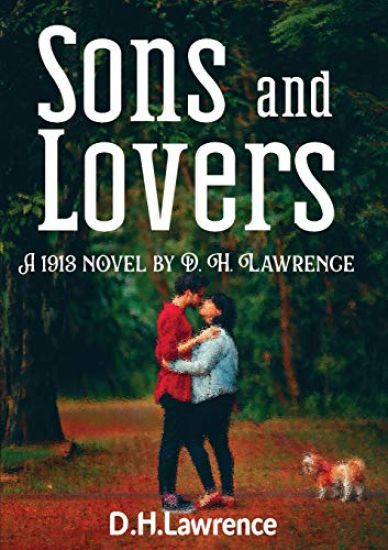
Sons and lovers: A 1913 novel by D. H. LawrenceA 1913 novel by D. H. LawrenceFirst published in 1913, this provocative semi-autobiographical novel reflects the struggles of Paul Morel, an artist who cannot reciprocate love for other women while under the influence of his stifling mother. Unconsciously taught to despise his father and eschew other women, Paul comes even further under his mother's psychological grasp after the death of his older brother. When he eventually does fall in love, the results of confused affection and desire are painful for all concerned. While "Sons and Lovers" scandalized its original English readers for its oedipal implications and social criticism, it remains a powerful story of terrifying inner and outer conflict and intense sensuality. Editorial Reviews: Sons and Lovers was the first modern portrayal of a phenomenon that later, thanks to Freud, became easily recognizable as the Oedipus complex. Never was a son more indentured to his mother's love and full of hatred for his father than Paul Morel, D. H. Lawrence's young protagonist. Never, that is, except perhaps Lawrence himself. In his 1913 novel he grappled with the discordant loves that haunted him all his life--for his spiritual childhood sweetheart, here called Miriam, and for his mother, whom he transformed into Mrs. Morel. It is, by Lawrence's own account, a book aimed at depicting this woman's grasp: "as her sons grow up she selects them as lovers--first the eldest, then the second. These sons are urged into life by their reciprocal love of their mother--urged on and on. But when they come to manhood, they can't love, because their mother is the strongest power in their lives." Of course, Mrs. Morel takes neither of her two elder sons (the first of whom dies early, which further intensifies her grip on Paul) as a literal lover, but nonetheless her psychological snare is immense. She loathes Paul's Miriam from the start, understanding that the girl's deep love of her son will oust her: "She's not like an ordinary woman, who can leave me my share in him. She wants to absorb him." Meanwhile, Paul plays his part with equal fervor, incapable of committing himself in either direction: "Why did his mother sit at home and suffer?... And why did he hate Miriam, and feel so cruel towards her, at the thought of his mother. If Miriam caused his mother suffering, then he hated her--and he easily hated her." Soon thereafter he even confesses to his mother: "I really don't love her. I talk to her, but I want to come home to you." The result of all this is that Paul throws Miriam over for a married suffragette, Clara Dawes, who fulfills the sexual component of his ascent to manhood but leaves him, as ever, without a complete relationship to challenge his love for his mother. As Paul voyages from the working-class mining world to the spheres of commerce and art (he has fair success as a painter), he accepts that his own achievements must be equally his mother's. "There was so much to come out of him. Life for her was rich with promise. She was to see herself fulfilled... All his work was hers." The cycles of Paul's relationships with these three women are terrifying at times, and Lawrence does nothing to dim their intensity. Nor does he shirk in his vivid, sensuous descriptions of the landscape that offers up its blossoms and beasts and "shimmeriness" to Paul's sensitive spirit. Sons and Lovers lays fully bare the souls of men and earth. Few books tell such whole, complicated truths about the permutations of love as resolutely without resolution. It's nothing short of searing to be brushed by humanity in this manner. --Melanie Rehak
"The Rainbow" is a 1915 novel by D. H. Lawrence. It follows a Nottinghamshire farming family through the transition from the pre-industrial to the industrial age, with a particular focus on the young and aspiring Ursula who dreams of a more fulfilling life. Lawrence's 1920s "Women in Love" is the sequel to this book and continues to follow the lives of the Brangwen Sisters. David Herbert Lawrence (1885-1930) was an English poet and writer. Lawrence's works mainly explore the effects that industrialisation had on people and society through looking at issues including vitality, emotional health, sexuality, and instinct. Although he was considered little more than a pornographer until his untimely death, he is now hailed as a significant writer of classic English literature. Other notable works by this author include: "Women in Love" (1920), "The Trespasser" (1912), and "Sons and Lovers" (1913). Read & Co. Classics is proudly republishing this fantastic novel now in a new edition complete with a specially-commissioned biography of the author.

David Herbert Lawrence (1885-1930) was an English writer and poet whose work famously examined the results of industrialisation on contemporary society. In his novels and poetry, Lawrence explored a variety of then-controversial issues including sexuality and emotional health, which led many to label his work pornography. Today, he is considered to be one of the most important and influential writers of his generation. Lawrence's 1920 novel "Women in Love" is a sequel to "The Rainbow" (1915) and continues the story of Gudrun and Ursula Brangwen, exploring their lives and loves in pre-World War I England. A veritable masterpiece of English literature not to be missed by those who have read and enjoyed others works by Lawrence. Other notable works by this author include: "The White Peacock" (1911), "The Trespasser" (1912), and "Sons and Lovers" (1913). Read & Co. Classics is proudly republishing this classic now in a new edition complete with a specially-commissioned new biography of the author.

Reproduction of the original: Love Poems and Others by D. H. Lawrence
Reproduction of the original: The Widowing of Mrs. Holroyd by D. H Lawrence
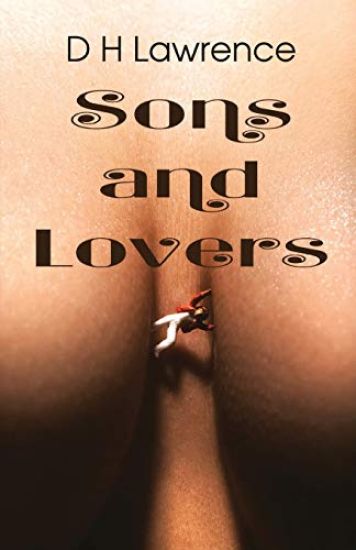
Part of Alma Classics' Evergreens series of popular classics, Sons and Lovers is presented here with an extensive critical apparatus and extra material, including a section of photographs and notes. As the sensitive and delicate Gertrude begins to shrink from her drunken and violent husband, their marriage becomes a battleground. Gertrude turns increasingly towards her two eldest sons, William and Paul, and determines that they will not grow up to be coal miners living in poverty like their father. Yet soon William falls ill, and Paul seeks to escape his mother's suffocating influence through a series of relationships. Closely autobiographical, and widely considered to be the first English novel with a truly working-class background, Sons and Lovers is the affecting portrait of a mining family torn apart by class divisions and the conflict between filial love and the urge to follow one's own desires.
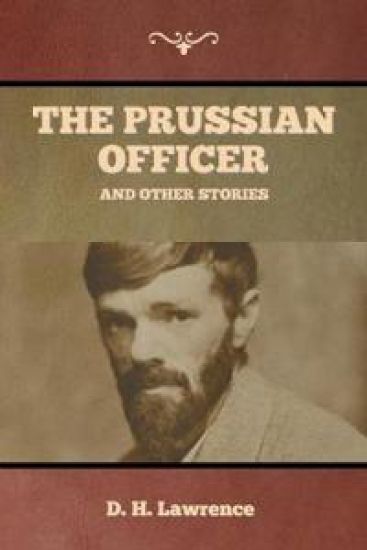
The Prussian Officer and Other Stories is a collection of early short stories by D. H. Lawrence which Duckworth, his London publisher, brought out on 26 November 1914. An American edition was produced by B W Huebsch in 1916. The stories collected in this volume are: The Prussian Officer The Thorn in the Flesh Daughters of the Vicar A Fragment of Stained Glass The Shades of Spring Second Best The Shadow in the Rose Garden Goose Fair The White Stocking A Sick Collier The Christening Odour of Chrysanthemums The first narrative of The Prussian Officer and Other Stories is The Prussian Officer and tells the narrative of Captain and his orderly. Having wasted his youth with gambling, the captain has been left with only his military career, and though he has taken on mistresses throughout his life, he remains single. His young orderly is involved in a relationship with a young woman, and the captain, feeling sexual tension with regards to the young man, prevents the orderly from engaging in the relationship by taking up his evenings. These evenings lead to the captain abusing his orderly and leaving large, painful bruises on his thighs, making it hard for the orderly to walk. Whilst isolated in a forest during manoeuvres, the orderly takes out murderous revenge on the captain, but finds himself in a daze seemingly due both to the pain of the bruises and thirst. The orderly eventually collapses and dies in the hospital shortly there after. The corpses of the two men lay side by side. (wikipedia.org)
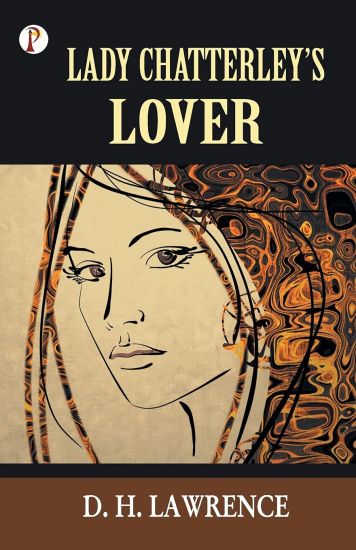
The story concerns a young married woman, the former Constance Reid Lady Chatterley, whose upper-class husband, Sir Clifford Chatterley, described as a handsome, well-built man, is paralysed from the waist down due to a Great War injury. In addition to Clifford's physical limitations, his emotional neglect of Constance forces distance between the couple. Her emotional frustration leads her into an affair with the gamekeeper, Oliver Mellors. The class difference between the couple highlights a major motif of the novel, which is the unfair dominance of intellectuals over the working class. The novel is about Constance's realization that she cannot live with the mind alone; she must also be alive physically. This realization stems from a heightened sexual experience that Constance has only felt with Mellors, suggesting that love can only happen with the element of the body, not just the mind.
The Bad Side of Books: Selected Essays of D.H. Lawrence
D. H. Lawrence
New York Review of Books
2019
nidottu
You could describe D. H. Lawrence as the great multi-instrumentalist among the great writers of the twentieth century. He was a brilliant, endlessly controversial novelist who transformed, for better and for worse, the way we write about sex and emotions; he was a wonderful poet; he was an essayist of burning curiosity, expansive lyricism, odd humor, and radical intelligence, equaled, perhaps, only by Virginia Woolf. Here Geoff Dyer, one of the finest essayists of our day, draws on the whole range of Lawrence's published essays to reintroduce him to a new generation of readers for whom the essay has become an important genre. We get Lawrence the book reviewer, writing about Death in Venice and welcoming Ernest Hemingway; Lawrence the travel writer, in Mexico and New Mexico and Italy; Lawrence the memoirist, depicting his strange sometime-friend Maurice Magnus; Lawrence the restless inquirer into the possibilities of the novel, writing about the novel and morality and addressing the question of why the novel matters; and, finally, the Lawrence who meditates on birdsong or the death of a porcupine in the Rocky Mountains. Dyer's selection of Lawrence's essays is a wonderful introduction to a fundamental, dazzling writer.
Paradoxen Poe : Edgar Allan Poe som inspiratör och föregångare
Lars Nyberg; D. H. Lawrence; George Bernard Shaw; Jules Verne; Fjodor Dostojevskij; Charles Baudelaire
H:ström Text Kultur AB
2019
nidottu
Med sin nydanande stil och sitt intresse för det mänskliga psykets skuggsidor har Edgar Allan Poe varit en inflytelserik föregångar till såväl symbolister, naturalister och modernister i litteraturhistorien. Han kan dessutom sägas vara skaparen av science fiction- och detektivgenrerna. I denna volym samlas texter om Poe av fem författare ur världshistorien, som alla, om än på radikalt olika sätt, tagit intryck av hans egenartade och varierande författarskap: Charles Baudelaire, Fjodor Dostojevskij, Jules Verne, George Bernard Shaw och D. H. Lawrence. Lars Nyberg, översättare av Baudelaire, Rilke och Xenofon med flera, ger i en initierad inledning en bakgrund till den ofta motsägelsefulla receptionen av Poes författarskap och belyser de skiftande aspekterna i de impulser Poe givit sina efterföljare.
A brilliantly varied new selection of D. H. Lawrence's essays, chosen and introduced by Geoff DyerFor D. H. Lawrence the novel was the pinnacle, 'the one bright book of life', yet his non-fiction shows him at his most freewheeling and playful. This is a selection of his essays, on subjects including art, morality, obscenity, songbirds, Italy, Thomas Hardy, the death of a porcupine in the Rocky Mountains and the narcissism of photographing ourselves. Arranged chronologically to illuminate the patterns of Lawrence's thought over time, and including many little-known pieces, they reveal a writer of enduring freshness and force. 'The greatest writer of this century, and in many things the greatest writer of all times' Philip Larkin
Kangaroo is a semi-autobiographical novel by D. H. Lawrence. It follows a British writer on his visit to New South Wales. In it there are vivid descriptions of the Australian countryside and a powerful glimpse into a wartime Cornwall. Lawrence delves deeply into his thoughts on relationship, power and the people of Australia. Perhaps Lawrence's finest, if not most accessible, novel. "One of the sharpest fictional visions of the country Australia] and its people."--Gideon Haigh
Kangaroo is a semi-autobiographical novel by D. H. Lawrence. It follows a British writer on his visit to New South Wales. In it there are vivid descriptions of the Australian countryside and a powerful glimpse into a wartime Cornwall. Lawrence delves deeply into his thoughts on relationship, power and the people of Australia. Perhaps Lawrence's finest, if not most accessible, novel. "One of the sharpest fictional visions of the country Australia] and its people."--Gideon Haigh
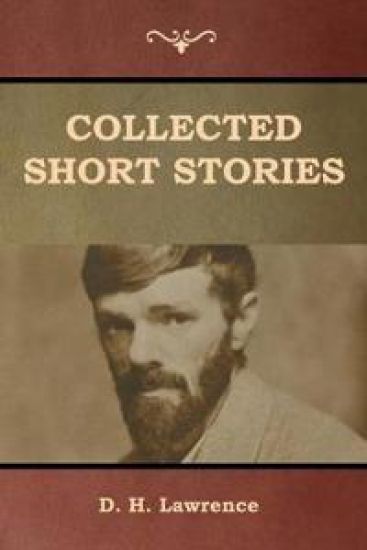
David Herbert Lawrence (11 September 1885 - 2 March 1930) was an English writer and poet. His collected works represent, among other things, an extended reflection upon the dehumanising effects of modernity and industrialisation. Some of the issues Lawrence explores are sexuality, emotional health, vitality, spontaneity, and instinct. Lawrence's opinions earned him many enemies and he endured official persecution, censorship, and misrepresentation of his creative work throughout the second half of his life, much of which he spent in a voluntary exile he called his "savage pilgrimage." At the time of his death, his public reputation was that of a pornographer who had wasted his considerable talents. E. M. Forster, in an obituary notice, challenged this widely held view, describing him as "the greatest imaginative novelist of our generation." The philosopher Bertrand Russell characterised Lawrence as a "proto-German Fascist." Later, the literary critic F. R. Leavis championed both his artistic integrity and his moral seriousness. D. H. Lawrence is best known for his infamous novel 'Lady Chatterley's Lover, ' which was banned in the United States until 1959. He is widely regarded as one of the most influential writers of the 20th century. (Wikipedia.org)
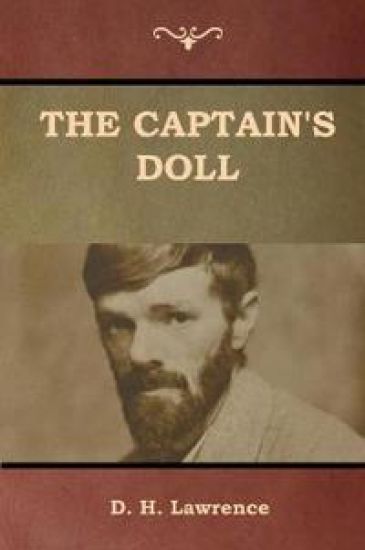
David Herbert Lawrence (11 September 1885 - 2 March 1930) was an English writer and poet. His collected works represent, among other things, an extended reflection upon the dehumanising effects of modernity and industrialisation. Some of the issues Lawrence explores are sexuality, emotional health, vitality, spontaneity, and instinct. Lawrence's opinions earned him many enemies and he endured official persecution, censorship, and misrepresentation of his creative work throughout the second half of his life, much of which he spent in a voluntary exile he called his "savage pilgrimage." At the time of his death, his public reputation was that of a pornographer who had wasted his considerable talents. E. M. Forster, in an obituary notice, challenged this widely held view, describing him as "the greatest imaginative novelist of our generation." The philosopher Bertrand Russell characterised Lawrence as a "proto-German Fascist." Later, the literary critic F. R. Leavis championed both his artistic integrity and his moral seriousness. The Captain's Doll is a short story or novella by the English author D. H. Lawrence. It was written in 1921 and first published by Martin Secker in March 1923 in a volume with The Ladybird and The Fox. It was the basis of the 1983 TV film of the same name with Jeremy Irons as the Captain. The story chronicles the journey of fallen German aristocrat Countess Johanna 'Hannele' zu Rassentlow as she dates a Scottish officer of unusual philosophy. The relationship develops into one of D. H. Lawrence's idiosyncratic 'wicked triangles'. The intimate relationship between Captain Alexander Hepburn and Hannele is intruded upon when the captain's wife Evangeline travels to Germany suspicious of foul play. The plot unfolds with two parallel narratives; one in the symbolic domain, the other a traditional short story narrative about these protagonists. The concurrent symbolic tale that unfolds centers around the central image of The Captain's Doll-after which the story gains its title. This doll is a striking portrait of the Captain, with his "slender legs" and mesmerizing dark stare encapsulated in the silks and calico of a lifeless, inanimate object. This doll is an ongoing motif throughout the story as it acts as a metaphor for the dehumanizing effects of war on Hepburn - an English gentleman who had been part of the war machine and in the aftermath has come to believe that "we are worth so very little." (wikipedia.org)
David Herbert Lawrence (11 September 1885 - 2 March 1930) was an English writer and poet. His collected works represent, among other things, an extended reflection upon the dehumanising effects of modernity and industrialisation. Some of the issues Lawrence explores are sexuality, emotional health, vitality, spontaneity, and instinct. Lawrence's opinions earned him many enemies and he endured official persecution, censorship, and misrepresentation of his creative work throughout the second half of his life, much of which he spent in a voluntary exile he called his "savage pilgrimage." At the time of his death, his public reputation was that of a pornographer who had wasted his considerable talents. E. M. Forster, in an obituary notice, challenged this widely held view, describing him as "the greatest imaginative novelist of our generation." The philosopher Bertrand Russell characterised Lawrence as a "proto-German Fascist." Later, the literary critic F. R. Leavis championed both his artistic integrity and his moral seriousness. The Captain's Doll is a short story or novella by the English author D. H. Lawrence. It was written in 1921 and first published by Martin Secker in March 1923 in a volume with The Ladybird and The Fox. It was the basis of the 1983 TV film of the same name with Jeremy Irons as the Captain. The story chronicles the journey of fallen German aristocrat Countess Johanna 'Hannele' zu Rassentlow as she dates a Scottish officer of unusual philosophy. The relationship develops into one of D. H. Lawrence's idiosyncratic 'wicked triangles'. The intimate relationship between Captain Alexander Hepburn and Hannele is intruded upon when the captain's wife Evangeline travels to Germany suspicious of foul play. The plot unfolds with two parallel narratives; one in the symbolic domain, the other a traditional short story narrative about these protagonists. The concurrent symbolic tale that unfolds centers around the central image of The Captain's Doll-after which the story gains its title. This doll is a striking portrait of the Captain, with his "slender legs" and mesmerizing dark stare encapsulated in the silks and calico of a lifeless, inanimate object. This doll is an ongoing motif throughout the story as it acts as a metaphor for the dehumanizing effects of war on Hepburn - an English gentleman who had been part of the war machine and in the aftermath has come to believe that "we are worth so very little." (wikipedia.org)