
Kirjailija
D. H. Lawrence
Kirjat ja teokset yhdessä paikassa: 431 kirjaa, julkaisuja vuosilta 1985–2027, suosituimpiin kuuluu The Rainbow. Vertaile teosten hintoja ja tarkista saatavuus suomalaisista kirjakaupoista.
Nimi esiintyy myös muodoissa: D H Lawrence, D.H. Lawrence
431 kirjaa
Kirjojen julkaisuvuodet: 1985–2027.
"Sea and Sardinia" describes a brief excursion undertaken in January 1921 by D. H. Lawrence and Frieda, his wife a.k.a. Queen Bee, from Taormina in Sicily to the interior of Sardinia. They visited Cagliari, Mandas, Sorgono, and Nuoro. Despite the brevity of his visit, Lawrence distils an essence of the island and its people. I gave him three francs. He looked at it as if it were my death-warrant. He peered at the paper in the light of the lamp. Then he extended his arm with a gesture of superb insolence, flinging me back my gold without a word. "How " said I. "Three francs are quite enough." "Three francs-two kilometers-and three pieces of luggage No signore. No Five francs. Cinque franchi " And averting his pallid, old mud-larking face, and flinging his hand out at me, he stood the image of indignant repudiation. And truly, he was no taller than my upper waistcoat pocket. The brat The brat He was such an actor, and so impudent, that I wavered between wonder and amusement and a great inclination to kick him up the steps. I decided not to waste my energy being angry. "What a beastly little boy What a horrid little boy What a horrid little boy Really-a little thief. A little swindler " I mused aloud. "Swindler " he quavered after me. And he was beaten. "Swindler" doubled him up: that and the quiet mildness of my tone of invocation. Now he would have gone with his three francs. And now, in final contempt, I gave him the other two. He disappeared like a streak of lightning up the gangway, terrified lest the steward should come and catch him at his tricks. For later on I saw the steward send other larks flying for demanding more than one-fifty. The brat.
Full text. A classic Lawrence novel of sensual awakening and the yearning for freedom, and winner of the 1920 James Tait Black Memorial Prize. The daughter of well-to-do trades people in the fictional mining town of Woodhouse, Alvina Houghton struggles to find excitement in her provincial surroundings and worries that she is condemned to become an old maid. After plans to elope with her lover to Australia and train as a nurse in London lead to nothing, she joins a traveling theater group and succumbs to the charms of the dark, passionate Italian Ciccio.
Full text. This D. H. Lawrence's matserpiece follows three generations of the Brangwen family (a dynasty of farmers and craftsmen) living in Nottinghamshire, particularly focusing on the individual's struggle to growth and fulfilment within the confining strictures of English social life. Censorship: Lawrence's frank treatment of sexual desire and the part it plays within relationships as a natural and even spiritual force of life, caused The Rainbow to be prosecuted in an obscenity trial at Bow Street Magistrates' Court on 13 November 1915, as a result of which 1,011 copies were seized and burnt. After this ban it was unavailable in Britain for 11 years, although editions were available in the United States. Quote: "Why, oh why must one grow up, why must one inherit this heavy, numbing responsibility of living an undiscovered life? Out of the nothingness and the undifferentiated mass, to make something of herself But what? In the obscurity and pathlessness to take a direction But whither? How take even one step? And yet, how stand still? This was torment indeed, to inherit the responsibility of one's own life."
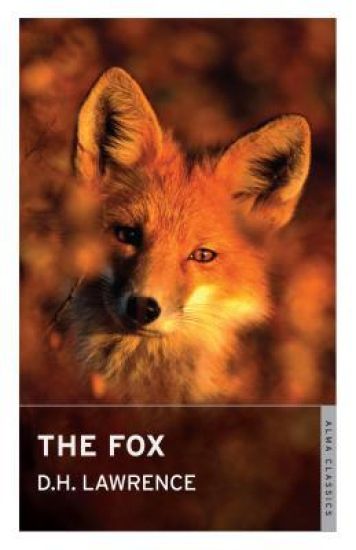
Nellie March and Jill Banford manage an ailing Berkshire farm at the time of the First World War, a task which is made all the more complicated by the frequent rampages of a local fox through their chicken coop. When a young soldier turns up and begins to interfere with the farm and the lives of the two women, they must find ways to react to this new fox in their midst. A compelling study of the question of power, gender and sexuality, as well as a realistic portrayal of wartime rural England, The Fox showcases Lawrence’s inimitable gift for psychological observation and dramatic description.
Women in Love (1920) by: D. H. Lawrence ( NOVEL )
D. H. Lawrence
Createspace Independent Publishing Platform
2017
nidottu
Ursula and Gudrun Brangwen are sisters living in The Midlands in England in the 1910s. Ursula is a teacher, Gudrun an artist. They meet two men who live nearby, school inspector Rupert Birkin and coal-mine heir Gerald Crich, and the four become friends. Ursula and Birkin become involved, and Gudrun and Gerald eventually begin a love affair. All four are deeply concerned with questions of society, politics, and the relationship between men and women. At a party at Gerald's estate, Gerald's sister Diana drowns. Gudrun becomes the teacher and mentor of Gerald's youngest sister. Soon Gerald's coal-mine-owning father dies as well, after a long illness. After the funeral, Gerald goes to Gudrun's house and spends the night with her while her parents sleep in another room. Birkin asks Ursula to marry him, and she agrees. Gerald and Gudrun's relationship, however, becomes stormy. The two couples holiday in the Alps. Gudrun begins an intense friendship with Loerke, a physically puny but emotionally commanding artist from Dresden. Gerald, enraged by Loerke and most of all by Gudrun's verbal abuse and rejection of his manhood, and driven by his own internal violence, tries to strangle Gudrun. Before he has killed her, however, he realises that this is not what he wants, and he leaves Gudrun and Loerke, and climbs the mountain, eventually slips into a snowy valley where he falls asleep, and freezes to death. The impact of Gerald's death upon Birkin is profound. The novel ends a few weeks after Gerald's death with Birkin trying to explain to Ursula that he needs Gerald as he needs her; her for the perfect relationship with a woman, and Gerald for the perfect relationship with a man.