Kirjojen hintavertailu – 12 859 818 kirjaa ja 27 kauppaa

Kirjailija

D. H. Lawrence

Kirjat ja teokset yhdessä paikassa: 431 kirjaa, julkaisuja vuosilta 1985–2027, suosituimpiin kuuluu The Rainbow. Vertaile teosten hintoja ja tarkista saatavuus suomalaisista kirjakaupoista.

Nimi esiintyy myös muodoissa: D H Lawrence, D.H. Lawrence

431 kirjaa

Kirjojen julkaisuvuodet: 1985–2027.

Amores, poems (1916), By D. H. Lawrence: David Herbert Richards Lawrence

Amores, poems (1916), By D. H. Lawrence: David Herbert Richards Lawrence

D. H. Lawrence

Createspace Independent Publishing Platform
2016
nidottu
David Herbert Richards Lawrence (11 September 1885 - 2 March 1930) was an English novelist, poet, playwright, essayist, literary critic and painter who published as D. H. Lawrence. His collected works, among other things, represent an extended reflection upon the dehumanising effects of modernity and industrialisation. In them, some of the issues Lawrence explores are emotional health, vitality, spontaneity and instinct. Lawrence's opinions earned him many enemies and he endured official persecution, censorship, and misrepresentation of his creative work throughout the second half of his life, much of which he spent in a voluntary exile which he called his "savage pilgrimage".t the time of his death, his public reputation was that of a pornographer who had wasted his considerable talents. E. M. Forster, in an obituary notice, challenged this widely held view, describing him as, "The greatest imaginative novelist of our generation." Later, the influential Cambridge critic F. R. Leavis championed both his artistic integrity and his moral seriousness, placing much of Lawrence's fiction within the canonical "great tradition" of the English novel.
The trespasser (1912) A NOVEL by D. H. Lawrence (Original Version): David Herbert Richards Lawrence
The Trespasser is the second novel written by D. H. Lawrence, published in 1912. Originally it was entitled the Saga of Siegmund and drew upon the experiences of a friend of Lawrence, Helen Corke, and her adulterous relationship with a married man that ended with his suicide. Lawrence worked from Corke's diary, with her permission, but also urged her to publish; which she did in 1933 as Neutral Ground. Corke later wrote several biographical works on Lawrence. David Herbert Richards Lawrence (11 September 1885 - 2 March 1930) was an English novelist, poet, playwright, essayist, literary critic and painter who published as D. H. Lawrence. His collected works, among other things, represent an extended reflection upon the dehumanising effects of modernity and industrialisation. In them, some of the issues Lawrence explores are emotional health, vitality, spontaneity and instinct. Lawrence's opinions earned him many enemies and he endured official persecution, censorship, and misrepresentation of his creative work throughout the second half of his life, much of which he spent in a voluntary exile which he called his "savage pilgrimage". At the time of his death, his public reputation was that of a pornographer who had wasted his considerable talents. E. M. Forster, in an obituary notice, challenged this widely held view, describing him as, "The greatest imaginative novelist of our generation." Later, the influential Cambridge critic F. R. Leavis championed both his artistic integrity and his moral seriousness, placing much of Lawrence's fiction within the canonical "great tradition" of the English novel. The fourth child of Arthur John Lawrence, a barely literate miner at Brinsley Colliery, and Lydia (n e Beardsall), a former pupil teacher who, owing to her family's financial difficulties, had to do manual work in a lace factory, Lawrence spent his formative years in the coal mining town of Eastwood, Nottinghamshire. The house in which he was born, in Eastwood, 8a Victoria Street, is now the D. H. Lawrence Birthplace Museum. His working-class background and the tensions between his parents provided the raw material for a number of his early works. Lawrence would return to this locality and often wrote about nearby Underwood, calling it; "the country of my heart," as a setting for much of his fiction. Despite common misconception he is not related to T. E. Lawrence. The young Lawrence attended Beauvale Board School (now renamed Greasley Beauvale D. H. Lawrence Primary School in his honour) from 1891 until 1898, becoming the first local pupil to win a County Council scholarship to Nottingham High School in nearby Nottingham. He left in 1901, working for three months as a junior clerk at Haywood's surgical appliances factory, but a severe bout of pneumonia ended this career. During his convalescence he often visited Hagg's Farm, the home of the Chambers family, and began a friendship with Jessie Chambers.
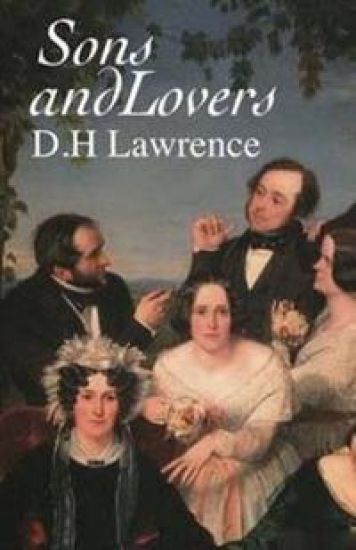
Sons And Lovers

Sons And Lovers

D.H. Lawrence

Signet Classics
2005
nidottu
D. H. Lawrence's great autobiographical novel is a provocative portrait of an artist torn between love for his possessive mother and desire for two young beautiful women. Set in the Nottinghamshire coal fields of Lawrence's own boyhood, the story of young Paul Morel's growing into manhood in a British working-class family rife with conflict reveals both an inner and an outer world seething with intense emotions. Gertrude is Paul's puritanical mother who concentrates all her love and attention on her son Paul. She nurtures his talents as a painter - and when she broods that he might marry someday and desert her, he swears he will never leave her. Inevitably, Paul does fall in love, but with two women - and is unable to choose between them. Written early in Lawrence's literary career, Sons and Lovers possesses all the powers of description, insistent sensuality, and scathing social criticism that are the special hallmarks of his genius. "A work of striking originality," writes the critic F. R. Leavis, by "the greatest creative writer in English of our time."
Women in Love

Women in Love

D.H. Lawrence

Modern Library Inc
2000
pokkari
With an Introduction by Joyce Carol Oatesforeword by the authorCommentary by Carl van Doren, Rebecca West,Aldous Huxley, and Henry MillerIt is . . . the world of the poets and the preponderance of the poet in [Lawrence] that is the key to his work. He magnified and deepened experience in the manner of a poet," wrote Anaïs Nin in 1934. Privately printed in 1920 and published commercially in 1921, Women in Love is the novel Lawrence himself considered his masterpiece. Set in the English Midlands, the novel traces the lives of two sisters, Ursula and Gudrun, and the men with whom they fall in love. All four yearn for fufillment in their romantic lives, yet struggle in a world that is increasingly violent and destructive. Commenting on the novel, which was composed in the midst of the First World War in 1916, Lawrence wrote, "The bitterness of the war may be taken for granted in the characters." Rich in symbolism and lyrical prose, Women in Love is a complex meditation on the meaning of love in the modern world. To the critic Alfred Kazin, "No other writer of [Lawrence's] imaginative standing has in our time written books that are so open to life." D. H. LAWRENCE (1885-1930), the son of a coal miner and a lace worker, completed his formal studies at University College, Nottingham, in 1908 and began teaching at a boys' school. By 1912, he had abandoned teaching to write full-time. His novels include The White Peacock (1911), The Trespasser (1912), Sons and Lovers (1913), The Rainbow (1915), Women in Love (1920), The Plumed Serpent (1926), and Lady Chatterley's Lover (1928), which was banned as pornographic in England until 1960.