Kirjojen hintavertailu – 12 859 827 kirjaa ja 27 kauppaa
Kirjailija
Daniel Kahneman
Kirjat ja teokset yhdessä paikassa: 44 kirjaa, julkaisuja vuosilta 2007–2027, suosituimpiin kuuluu HBR's 10 Must Reads on Making Smart Decisions (with featured article "Before You Make That Big Decision..." by Daniel Kahneman, Dan Lovallo, and Olivier Sibony). Vertaile teosten hintoja ja tarkista saatavuus suomalaisista kirjakaupoista.
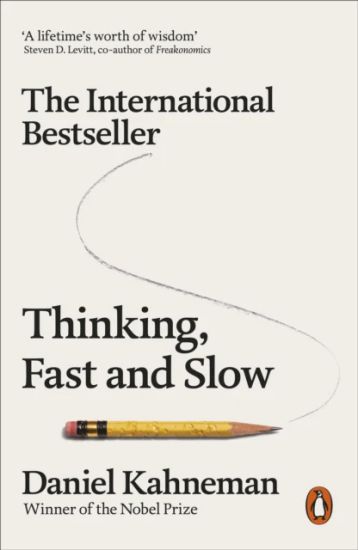
Looks at the way our minds work, and how we make decisions. Why is there more chance we'll believe something if it's in a bold type face? Why are judges more likely to deny parole before lunch? Why do we assume a good-looking person will be more competent? This book enables to you make better decisions at work, at home, and in everything you do.
*Major New York Times Bestseller*More than 2.6 million copies sold*One of The New York Times Book Review's ten best books of the year*Selected by The Wall Street Journal as one of the best nonfiction books of the year*Presidential Medal of Freedom Recipient*Daniel Kahneman's work with Amos Tversky is the subject of Michael Lewis's best-selling The Undoing Project: A Friendship That Changed Our Minds In his mega bestseller, Thinking, Fast and Slow, Daniel Kahneman, world-famous psychologist and winner of the Nobel Prize in Economics, takes us on a groundbreaking tour of the mind and explains the two systems that drive the way we think. System 1 is fast, intuitive, and emotional; System 2 is slower, more deliberative, and more logical. The impact of overconfidence on corporate strategies, the difficulties of predicting what will make us happy in the future, the profound effect of cognitive biases on everything from playing the stock market to planning our next vacation--each of these can be understood only by knowing how the two systems shape our judgments and decisions. Engaging the reader in a lively conversation about how we think, Kahneman reveals where we can and cannot trust our intuitions and how we can tap into the benefits of slow thinking. He offers practical and enlightening insights into how choices are made in both our business and our personal lives--and how we can use different techniques to guard against the mental glitches that often get us into trouble. Topping bestseller lists for almost ten years, Thinking, Fast and Slow is a contemporary classic, an essential book that has changed the lives of millions of readers.
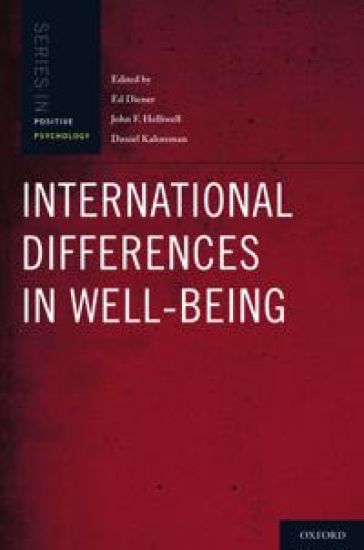
This book draws together the latest work from scholars around the world using subjective well-being data to understand and compare well-being across countries and cultures. Starting from many different vantage points, the authors reached a consensus that many measures of subjective well-being, ranging from life evaluations through emotional states, based on memories and current evaluations, merit broader collection and analysis. Using data from the Gallup World Poll, the World Values Survey, and other internationally comparable surveys, the authors document wide divergences among countries in all measures of subjective well-being, The international differences are greater for life evaluations than for emotions. Despite the well-documented differences in the ways in which subjective evaluations change through time and across cultures, the bulk of the very large international differences in life evaluations are due to differences in life circumstances rather than differences in the way these differences are evaluated.
The work of Daniel Kahneman and Amos Tversky has transformed the study of judgment and decision-making, and penetrated related disciplines such as economics, finance, marketing, law and medicine. In recognition of these achievements, Kahneman was awarded the Nobel Prize for Economics in 2003. This special issue presents ongoing research inspired by both Kahneman and Tversky. It covers many of the central themes – the heuristics and biases of judgment and prediction, framing effects, assessments and predictions of utility – that made their work so innovative. The specially written papers illustrate the range and depth of this work, and emphasise its continued relevance to current research.