Kirjojen hintavertailu – 12 859 819 kirjaa ja 27 kauppaa

Kirjailija

Dante Alighieri

Kirjat ja teokset yhdessä paikassa: 1 370 kirjaa, julkaisuja vuosilta 1972–2027, suosituimpiin kuuluu The Divine Comedy. Vertaile teosten hintoja ja tarkista saatavuus suomalaisista kirjakaupoista.

1 370 kirjaa

Kirjojen julkaisuvuodet: 1972–2027.

Die göttliche Komödie: Ausgabe mit über 100 Illustrationen
Die Commedia (italienisch f r 'Kom die'), in sp terer Zeit auch Divina Commedia ('G ttliche Kom die') genannt, ist das Hauptwerk des italienischen Dichters Dante Alighieri (1265-1321). Sie entstand w hrend der Jahre seines Exils und wurde wahrscheinlich um 1307 begonnen und erst kurze Zeit vor seinem Tod vollendet. Sie gilt als bedeutendste Dichtung der italienischen Literatur und als eines der gr ten Werke der Weltliteratur.
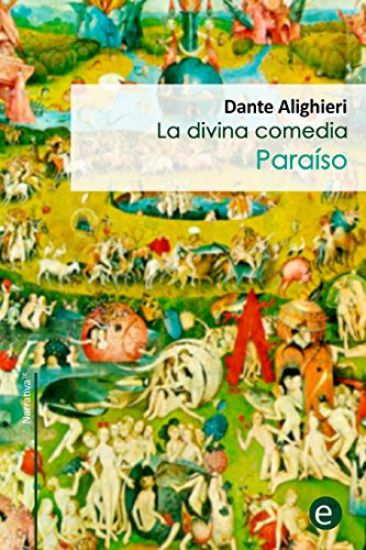
La divina comedia. Paraíso 1321

La divina comedia. Paraíso 1321

Dante Alighieri

Createspace Independent Publishing Platform
2015
nidottu
El Para so es la tercera de las c nticas del poema medieval intitulado La Divina Comedia, del florentino Dante Alighieri, siendo las primeras dos el Infierno y el Purgatorio. Fue escrito entre 1313 1314 y 1321, fecha del fallecimiento del poeta. Mientras el Infierno y el Purgatorio son sitios terrestres, el Para so es un mundo inmaterial, et reo, dividido en nueve cielos. Los primeros siete llevan el nombre de cuerpos celestes del sistema solar, que en su orden son Luna, Mercurio, Venus, Sol, Marte, J piter, Saturno. El ltimo par est compuesto por las estrellas fijas y el Primer m vil. Un gran conjunto de escenarios compone el Emp reo. La relaci n entre Dante y los beatos, sin embargo, es diferente de la que hab a sostenido con los habitantes de los otros dos reinos. De hecho, todas las almas del Para so, se encuentran en el Emp reo, y precisamente en la cuenca de la C ndida Rosa (o Rosa M stica) desde el cual contemplan directamente a Dios. Sin embargo, para que su viaje por el Para so sea m s f cil de comprender, las figuras aparecen por cielo, en una precisa correspondencia astrol gica entre las cualidades de cada planeta y el tipo de experiencia espiritual realizada por el personaje descrito. De esa manera, en el cielo de Venus se encuentran los esp ritus amantes, mientras que en el de Saturno los contemplativos.
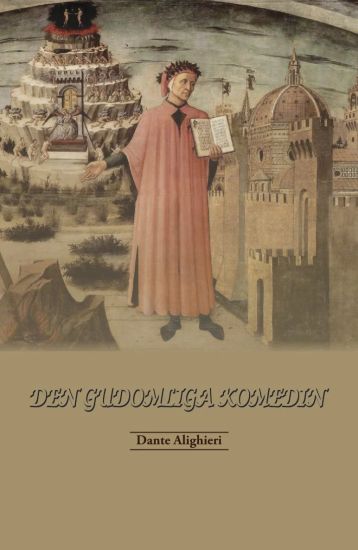
Den gudomliga komedin

Den gudomliga komedin

Dante Alighieri

Vulkan
2014
nidottu
Vid översättningar av utländska klassiker råder i vårt land något som i mångt och mycket liknar en konvention: resultatet bör vara kompatibelt med ett modernt och idiomatiskt svenskt språkbruk. I min översättning har jag resonerat annorlunda. Min fundamentala utgångspunkt har varit att ligga så nära originaltexten som möjligt för att bevara dess välljud och musikalitet, eftersom dessa komponenter kan anses vara oundgängliga för att överföra verkets poetiska kvaliteter. Jag har därför försökt att i möjligaste mån slipa bort de grava accenterna – detta genom att i vissa fall använda inverterad ordföljd. Tidvis förekommer även satsförkortningar för att göra språket mer rytmiskt och flödande. Man kan alltså med fog påstå att jag tänjer på det svenska språkets gränser för att göra det mer lyhört för originalets estetik. Av samma skäl har jag avstått inte bara från originalets rim, utan också från dess versmått. Kanske måste man här mer än brukligt betona avgrundsskillnaden mellan ett romanskt idiom författat på 1300-talet, och den moderna svenskan. Den skrud som mästaren valde för att gestalta sitt verk är inte nödvändigtvis kongenial för vårt väsensskilda språk.
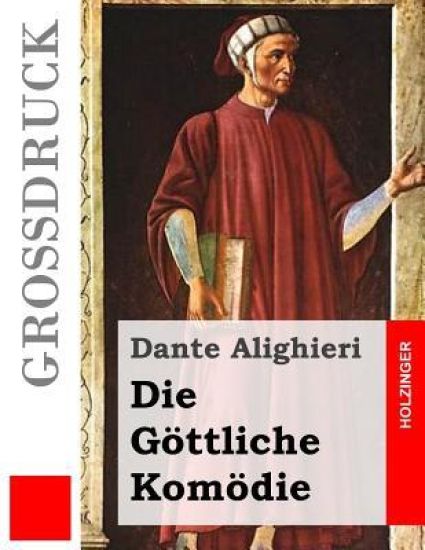
Die Göttliche Komödie (Großdruck)

Die Göttliche Komödie (Großdruck)

Dante Alighieri

Createspace Independent Publishing Platform
2014
nidottu
Dante Alighieri: Die G ttliche Kom die. La Divina Commedia Lesefreundlicher Gro druck in 16-pt-Schrift Edition Holzinger. Gro format, 216 x 279 mm Berliner Ausgabe, 2016, 2. Auflage Vollst ndiger, durchgesehener Neusatz mit einer Biographie des Autors bearbeitet und eingerichtet von Michael Holzinger Entstanden: Ca. 1307-1321. Erstdruck: Foligno 1472. Hier nach der bers. v. Karl Witte, Berlin: Askanischer Verlag, 1916]. Textgrundlage ist die Ausgabe: Dante Alighieri: Die G ttliche Kom die. bers. v. Karl Witte, Berlin: Askanischer Verlag, 1916]. Herausgeber der Reihe: Michael Holzinger Reihengestaltung: Viktor Harvion Umschlaggestaltung unter Verwendung des Bildes: Agnolo Bronzino, Alegorisches Portrait des Dante Alighieri, um 1530 Gesetzt aus der Minion Pro, 16 pt.
Paraíso: La divina comedia

Paraíso: La divina comedia

Dante Alighieri

Createspace Independent Publishing Platform
2014
nidottu
El Para so es la tercera de las c nticas del poema medieval intitulado La Divina Comedia, del florentino Dante Alighieri, siendo las primeras dos el Infierno y el Purgatorio. Fue escrito entre 1313 1314 y 1321, fecha del fallecimiento del poeta. Mientras el Infierno y el Purgatorio son sitios terrestres, el Para so es un mundo inmaterial, et reo, dividido en nueve cielos. Los primeros siete llevan el nombre de cuerpos celestes del sistema solar, que en su orden son Luna, Mercurio, Venus, Sol, Marte, J piter, Saturno. El ltimo par est compuesto por las estrellas fijas y el Primer m vil. Un gran conjunto de escenarios compone el Emp reo. La relaci n entre Dante y los beatos, sin embargo, es diferente de la que hab a sostenido con los habitantes de los otros dos reinos. De hecho, todas las almas del Para so, se encuentran en el Emp reo, y precisamente en la cuenca de la C ndida Rosa (o Rosa M stica) desde el cual contemplan directamente a Dios. Sin embargo, para que su viaje por el Para so sea m s f cil de comprender, las figuras aparecen por cielo, en una precisa correspondencia astrol gica entre las cualidades de cada planeta y el tipo de experiencia espiritual realizada por el personaje descrito. De esa manera, en el cielo de Venus se encuentran los esp ritus amantes, mientras que en el de Saturno los contemplativos.
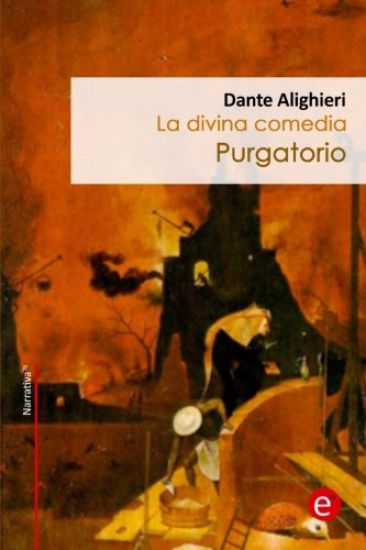
Purgatorio: La divina comedia

Purgatorio: La divina comedia

Dante Alighieri

Createspace Independent Publishing Platform
2014
nidottu
El Purgatorio es el segundo de los tres cantos de La Divina Comedia de Dante Alighieri. Lo antecede el del Infierno y le sigue el del Para so. El Purgatorio de Dante se divide en Antepurgatorio, Purgatorio y Para so terrestre. La estructura moral del Purgatorio sigue la clasificaci n tom stica de los vicios del amor mal dirigido, y no hace referencia a culpas espec ficas. Se divide en siete giros, en las cuales se exp an los siete pecados capitales: soberbia, envidia, ira, pereza, avaricia, gula, lujuria. Al pie de la monta a se encuentra el Antepurgatorio, y en la cima el Para so terrestre. Su estructura es especular a la del Infierno, pues si aquel es un abismo este es una monta a, y el orden de las penas sufre un giro de ciento ochenta grados: el camino de Dante va del pecado m s grave al m s leve (que es la lujuria, o amor que se excede en la medida). Cada giro tiene un custodio ang lico, y precisamente los ngeles de la humildad, de la misericordia, de la mansedumbre, de la solicitud, de la justicia, de la abstinencia y de la castidad; en cada giro, adem s, los que exp an las culpas tienen ante s ejemplos del vicio castigado y de la virtud opuesta.
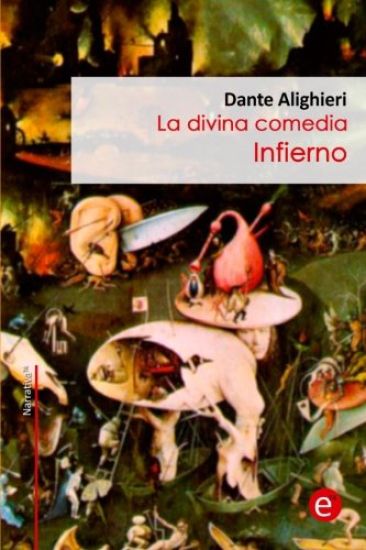
Infierno: (La divina comedia)

Infierno: (La divina comedia)

Dante Alighieri

Createspace Independent Publishing Platform
2014
nidottu
El Infierno (en italiano Inferno) es la primera de las tres c nticas de La Divina Comedia del poeta florentino Dante Alighieri. Los sucesivos cantos son el Purgatorio y el Para so. Est formada por 33 cantos, m s uno de introducci n, y cada canto est subdividida en tercetos y la rima est unida. De hecho, su estructura doctrinal hace un uso constante del n mero 3: los condenados son de hecho repartidos en tres categor as, cada una localizada en una secci n decreciente de la cavidad subterr nea. El orden de las penas, como dice Virgilio en el canto XI, depende de la tica Nicomaquea de Arist teles, y prefigura una jerarqu a del mal basada en el uso de la raz n. La elecci n de las penas sigue la "ley del contrapaso", que castiga los pecadores mediante el contrario de sus pecados o por analog a a ella. En ese sentido, los pecadores m s "cercanos" a Dios y la luz, es decir puestos en los primeros c rculos, son los incontinentes, es decir aquellos que usaron el menor uso de la raz n en pecar. Siguen los violentos, que fueron cegados por la pasi n, si bien a un nivel de inteligencia mayor que los primeros. Los ltimos son los fraudulentos y los traidores, que quisieron y realizaron el mal conscientemente. Entre los traidores hay cuatro categor as: de quien se tiene confianza, de la patria, de los hospedantes y de las instituciones. Todos los pecadores del Infierno tienen una caracter stica en com n: sienten la lejan a de Dios como el mayor castigo.
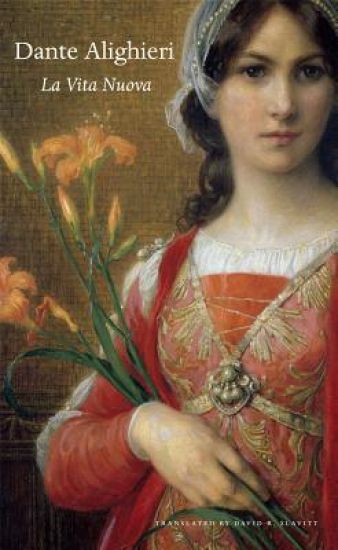
La Vita Nuova

La Vita Nuova

Dante Alighieri

Harvard University Press
2014
nidottu
La Vita Nuova (1292–94) has many aspects. Dante’s libello, or “little book,” is most obviously a book about love. In a sequence of thirty-one poems, the author recounts his love of Beatrice from his first sight of her (when he was nine and she eight), through unrequited love and chance encounters, to his profound grief sixteen years later at her sudden and unexpected death. Linked with Dante’s verse are commentaries on the individual poems—their form and meaning—as well as the events and feelings from which they originate. Through these commentaries the poet comes to see romantic love as the first step in a spiritual journey that leads to salvation and the capacity for divine love. He aims to reside with Beatrice among the stars. David Slavitt gives us a readable and appealing translation of one of the early, defining masterpieces of European literature, animating its verse and prose with a fluid, lively, and engaging idiom and rhythm. His translation makes this first major book of Dante’s stand out as a powerful work of art in its own regard, independent of its “junior” status to La Commedia. In an Introduction, Seth Lerer considers Dante as a poet of civic life. “Beatrice,” he reminds us, “lives as much on city streets and open congregations as she does in bedroom fantasies and dreams.”
The Divine Comedy of Dante Alighieri (1867)

The Divine Comedy of Dante Alighieri (1867)

Dante Alighieri

Literary Licensing, LLC
2014
sidottu
The Divine Comedy is a classic epic poem written by Dante Alighieri in the 14th century. It is widely considered to be one of the greatest works of literature in history, and has been translated into numerous languages. The poem is divided into three parts: Inferno, Purgatorio, and Paradiso. Each part is comprised of 33 cantos, with an additional introductory canto in the first part. The story begins with Dante, the narrator and protagonist, finding himself lost in a dark forest. He is then guided by the spirit of the Roman poet Virgil through the nine circles of Hell, where he encounters various sinners and witnesses their punishments. In Purgatorio, Dante and Virgil ascend the mountain of Purgatory, where souls are purged of their sins before ascending to Heaven. In Paradiso, Dante is guided by Beatrice, his beloved, through the nine spheres of Heaven, where he experiences the divine light and the ultimate vision of God. Throughout the poem, Dante explores themes of sin, redemption, love, and the nature of God. He also uses vivid imagery and allegory to convey his ideas and create a powerful and immersive reading experience. The Divine Comedy is a timeless masterpiece that continues to inspire and captivate readers to this day. This Is A New Release Of The Original 1867 Edition. This scarce antiquarian book is a facsimile reprint of the old original and may contain some imperfections such as library marks and notations. Because we believe this work is culturally important, we have made it available as part of our commitment for protecting, preserving, and promoting the world's literature in affordable, high quality, modern editions, that are true to their original work.