Kirjailija
David Nicolle
Kirjat ja teokset yhdessä paikassa: 94 kirjaa, julkaisuja vuosilta 1982–2025, suosituimpiin kuuluu The Moors. Vertaile teosten hintoja ja tarkista saatavuus suomalaisista kirjakaupoista.
94 kirjaa
Kirjojen julkaisuvuodet: 1982–2025.
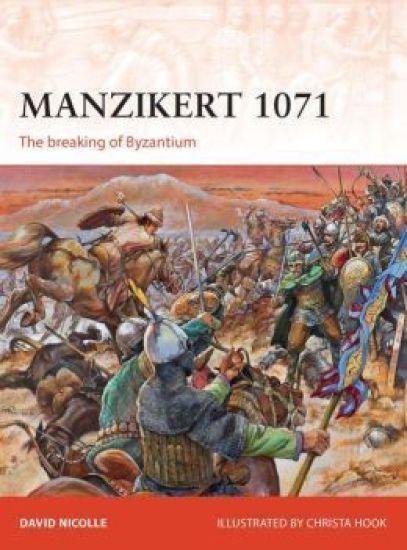
The Saljuq Turks’ defeat of the Byzantines at Manzikert opened the way for their conquest of Anatolia and domination of the Near East. On 26 August 1071 a large Byzantine army under Emperor Romanus IV met the Saljuq Turk forces of Sultan Alp Arslan near the town of Manzikert. The battle ended in a decisive defeat for the Byzantine forces, with the Byzantine emperor captured and much of his fabled Varangian guard killed. This battle is seen as the primary trigger of the Crusades, and as the moment when the power of the East Roman or Byzantine Empire was irreparably broken. The Saljuq victory opened up Anatolia to Turkish-Islamic conquest, which was eventually followed by the establishment of the Ottoman state. Nevertheless the battle itself was the culmination of a Christian Byzantine offensive, intended to strengthen the eastern frontiers of the empire and re-establish Byzantine domination over Armenia and northern Mesopotamia. Turkish Saljuq victory was in no sense inevitable and might, in fact, have come as something of a surprise to those who achieved it. As David Nicolle outlines in this highly illustrated account, it was not only the battle of Manzikert that had such profound and far-reaching consequences, many of these stemmed from the debilitating Byzantine civil war which followed and was a direct consequence of the defeat.
Die Armeen des 100-jährigen Krieges (1337 - 1453)
Paul Knight; David Nicolle
Brandenburgisches/Siegler
2013
sidottu
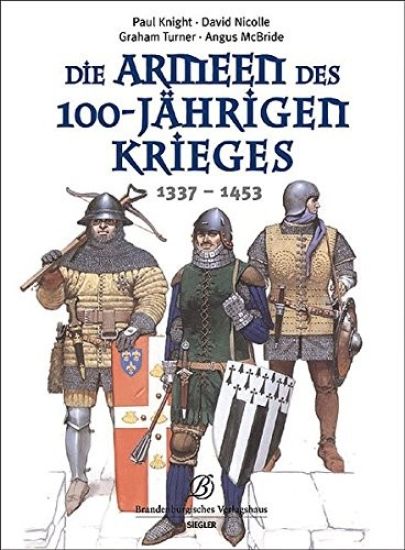
Im Jahr 1328 fand die Dynastie der Kapetinger ihr Ende. Dies war der Auslöser für den Hundertjährigen Krieg, in welchem die englischen Könige mit Waffengewalt ihren Anspruch auf den französischen Thron geltend machen wollten. Herbe Niederlagen auf den Schlachtfeldern von Cr?cy und Poitiers erschütterten das französische Königsreich. Zwar trat unter Betrand du Guesclin eine Phase der Ruhe ein, bald darauf aber rüsteten sich die Engländer unter Heinrich V zu einem noch vernichtenderen Angriff. Als der König 1422 starb, wurde er von dem damals neun Monate alten Heinrich VI abgelöst. Zwanzig weitere Jahre sollten ins Land ziehen, bevor die englische Armee aus Frankreich vertrieben wurde. Der Zerfall des Reiches dauerte bis 1429 an. Dieses Werk beschäftigt sich sowohl mit der Rolle der englischen als auch der französischen Armee, beleuchtet detailliert und anhand zahlreicher, teilweise farbiger Illustrationen Aufbau und Organisation, Ausstattung und Waffen. Auch die langsame Regenerierung Frankreichs bis hin zur Erhebung des Reiches zur wichtigsten Kriegsmacht Europas wird beschrieben, ausgelöst unter anderem durch die junge Visionärin Jeanne d'Arc.
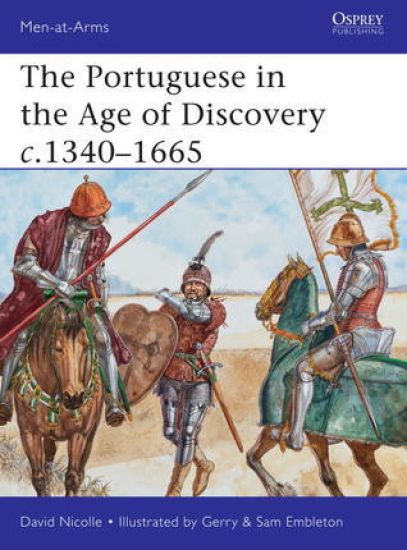
From humble beginnings, in the course of three centuries the Portuguese built the world's first truly global empire, stretching from modern Brazil to sub-Saharan Africa and from India to the East Indies (Indonesia). Portugal had established its present-day borders by 1300 and the following century saw extensive warfare that confirmed Portugal's independence and allowed it to aspire to maritime expansion, sponsored by monarchs such as Prince Henry the Navigator. During this nearly 300-year period, the Portuguese fought alongside other Iberian forces against the Moors of Andalusia; with English help successfully repelled a Castilian invasion (1385); fought the Moors in Morocco, and Africans, the Ottoman Turks, and the Spanish in colonial competition. David Nicolle's detailed text examines these Portuguese forces that prevailed in these battles on land and sea.
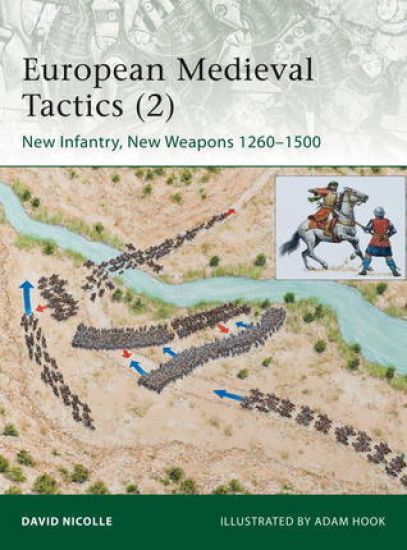
With the development in the 13th century of co-operative tactics using crossbowmen and heavy spearmen, the charge by Muslim horse-archers, and then by European armoured knights, could be defied. Infantry were far cheaper and easier to train than knights, and potentially there were far more of them. Tactics emerged by which more numerous and more varied infantry played an increasing part in battles. This book traces these and other examples of this 'jerky' and uneven process through its regional differences, which were invariably entwined with parallel cavalry developments – the balanced army of 'mixed arms' was always the key to success. By the time serious hand-held firearms appeared on battlefields in large numbers in about 1500, the face of medieval warfare had been transformed. This lavishly illustrated guide investigates the reappearance of massed, disciplined infantry, and assesses the challenge they posed to the mounted knights who had dominated the battlefield in the early Middle Ages.
The Fall of English France 1449–53
David Nicolle
Osprey Publishing
2012
nidottu
Halvin toimitettuna 26,70 €
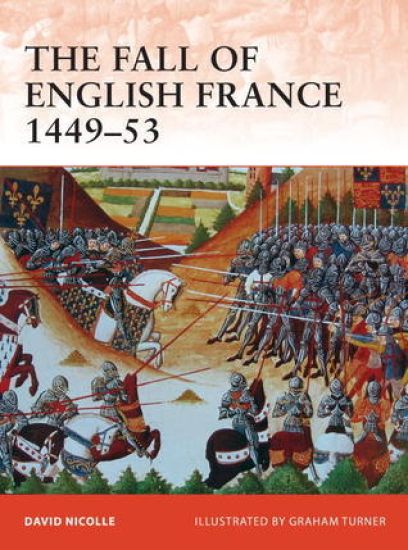
A highly illustrated account of the defeat of the English Kingdom in France at the battles of Formigny (1450) and Castillon (1453). Despite the great English victories at Crécy, Poitiers and Agincourt, the French eventually triumphed in the Hundred Years War. This book examines the last campaign of the war, covering the great battles at Formigny in 1450 and Castillon in 1453, both of which hold an interesting place in military history. The battle of Fornigny saw French cavalry defeat English archers in a reverse of those earlier English victories, while Castillon became the first great success for gunpowder artillery in fixed positions. Alongside battlescene maps and illustrations, David Nicolle explains how the seemingly unmartial King Charles VII of France all but drove the English into the sea, succeeding where so many of his predecessors had failed.
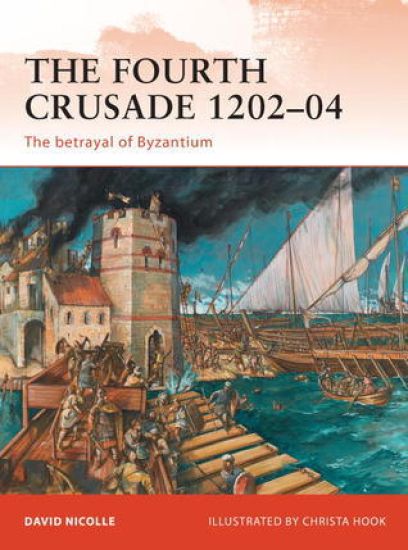
A fascinating, illustrated account of the betrayal of Byzantium, the clash of Western and Eastern Christian factions and the sacking of Constantinople. The Fourth Crusade was the first, and most famous of the 'diverted' Crusades, which saw the Crusade diverted from its original target, Ayyubi Egypt, to attack the Christian city of Zadar in modern Croatia instead, an attack that was little more than a mercenary action to repay the Venetians for their provision of a fleet to the Crusaders. This book examines the combined action and sacking of the city of Zara, which saw the Crusaders temporarily excommunicated by the Pope. It features detailed accounts of the diverse military action, which involved large-scale sieges, amphibious battles and landings and a combined action as the Crusaders fought side-by-side with Venetian troops. Alongside battlescene maps and illustrations, David Nicolle evaluates how the influence of the Venetians prompted an attack on Constantinople, analyses the siege that followed and describes the naval assault and sacking of the city which saw the Crusaders place Count Baldwin of Flanders on the Byzantine throne.
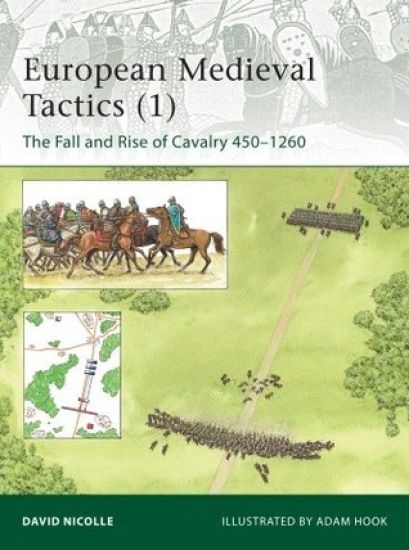
European Medieval Tactics (1)
David Nicolle
Osprey Publishing
2011
nidottu
Halvin toimitettuna 20,30 €
After the fall of the Western Roman Empire there was a decline in 'professional' cavalry forces, and infantry dominated in the Germanic successor 'barbarian' kingdoms. In the Carolingian and Norman periods from the 9th to the 11th centuries, the cavalry arm gradually expanded from the small remaining aristocratic elite. Even so, the supposedly complete dominance of the 'knight' in the 12th and 13th centuries is grossly exaggerated, as integrated cavalry and infantry tactics were nearly always the key to success. This is a two-part treatment of medieval tactics. Throughout the period there was a steady evolution of training in both individual and unit skills, of armour and weapons, and thus of tactics on the battlefield. This book covers Hastings in 1066 to Legnano in 1176. It also details the two key set piece battles of Bouvines in 1214 and Pelagonia in 1259, the former an example of abject failure of cavalry tactics and the latter a stunning success.
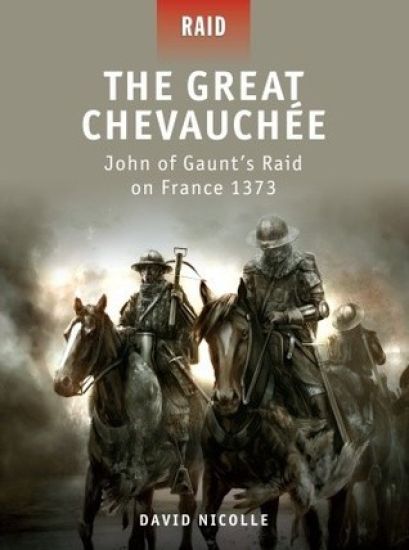
In 1373, John of Gaunt set off from Calais on a great raid to strike at the heart of France. Driven by the high ideals of chivalry,the raiders left with epic pageantry. However, the reality soon overwhelmed the raiders. Beset on all sides by French ambushes and plagued by disease and starvation, the raiders battled their way through Champagne, east of Paris, into Burgundy, across the Massif Central and finally down into the Dordogne. Unable to attack any major fortifications, John of Gaunt's men plundered the countryside, raiding towns and villages, weakening the French infrastructure. While the military value of the raid is debatable, the English knights who finally made it home were hailed as heroes. This book charts the course of the raid from beginning to end, studying all the battles and skirmishes the raiders fought along the way in this bloody example of chivalric warfare.
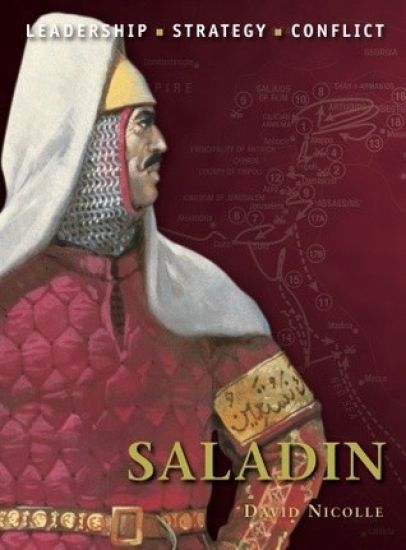
This Osprey Command book looks closely at the early life, military experiences and key battlefield exploits of Al-Malik al-Nasir Yusuf Ibn Najm al-Din Ayyub Ibn Shahdi Abu'l-Muzaffar Salah al-Din – or Saladin as he is more commonly known outside the Islamic world – who is broadly regarded as the greatest hero of the Crusades, even in Europe. Most chroniclers present him as a man of outstanding virtue, courage and political skill. More recently, however, efforts have been made to portray Saladin as an ambitious, ruthless and even devious politician, and as a less brilliant commander than is normally thought. This book sets out to reveal that the truth is, as usual, somewhere in between.
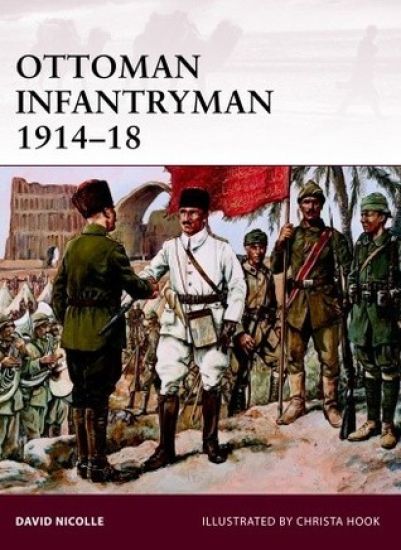
Following the Balkan Wars of 1912-1913, the Ottoman Empire undertook a massive military retraining program. Although many histories have depicted the Ottomans as a poor fighting force, this was more often due to poor leadership and logistics. The typical Ottoman soldier, the asker, was tough, well-trained, and courageous. While fighting over varied terrain from Gallipoli, to Mesopotamia and to the Caucasus, they proved themselves to be able front-line troops. This is the first English-language book to focus exclusively on the Ottoman infantryman in the First World War. Using a combination of first-hand accounts, period photographs and specially commissioned artwork, it explores the recruitment, training, and combat experiences of these often-neglected warriors.
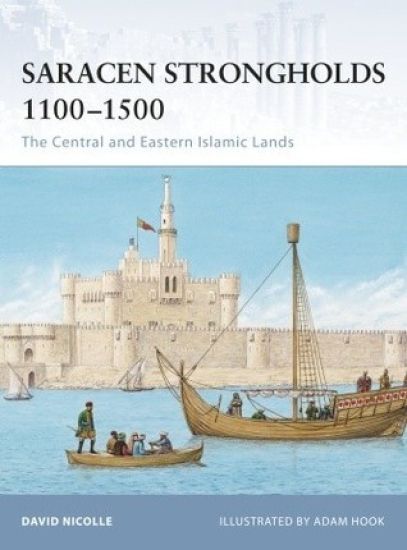
By the time of the Crusades, the Islamic world had already developed its own sophisticated styles of fortification. Distinctive and highly effective, the region's unique military architecture continued to evolve in response to the Crusader and Mongol threats, and also drew upon the traditions of their foes and neighbours. The resulting Islamic concepts of military architecture had an influence upon fortifications in Western Europe, including Italy and the Iberian Peninsula. However, Islamic fortifications continued to focus upon the defence of cities and frontiers rather than providing security for feudal aristocracies, as was increasingly the case in Europe. Covering fortifications as far apart as North Africa, Afghanistan and northern India, this volume focuses on the Islamic side of the conflict, highlighting the fortifications in use when the Crusaders sought to reconquer the Holy Land, as well as the eventual absorption of the territories of Byzantium into the Islamic world.
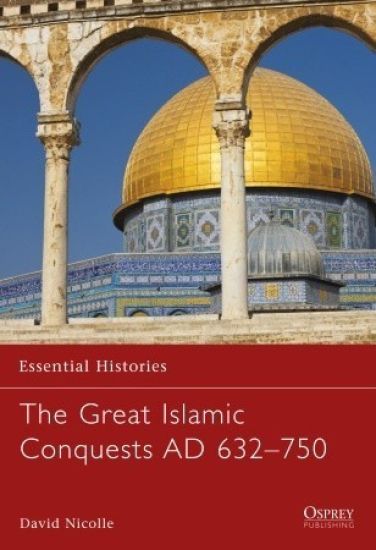
Few centuries in world history have had such a profound and long-lasting impact as the first hundred years of Islamic history. In this book, David Nicolle examines the extensive Islamic conquests between AD 632 and 750. These years saw the religion and culture of Islam erupt from the Arabian Peninsula and spread across an area far larger than that of the Roman Empire. The effects of this rapid expansion were to shape European affairs for centuries to come. This book examines the social and military history of the period, describing how and why the Islamic expansion was so successful.
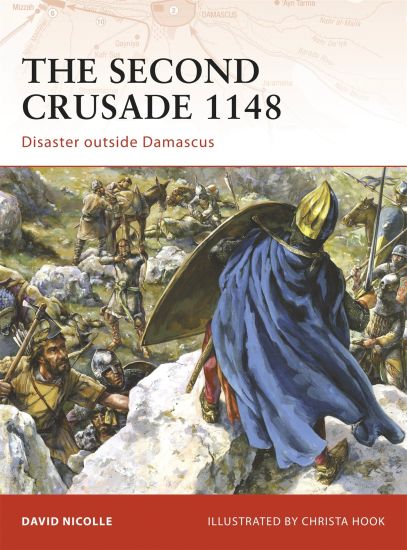
Despite minor setbacks, Christian Europe had enjoyed success on previous Crusader campaigns. Pursuing an ambitious but politically flawed strategy against an Islamic state friendly to their Crusader neighbours, the knights of the Second Crusade suffered a crushing defeat at Damascus in 1148. This battle shook the Crusaders' belief in their military supremacy, and revived the Islamic states, marking a crucial turning point in the history of the Crusades.
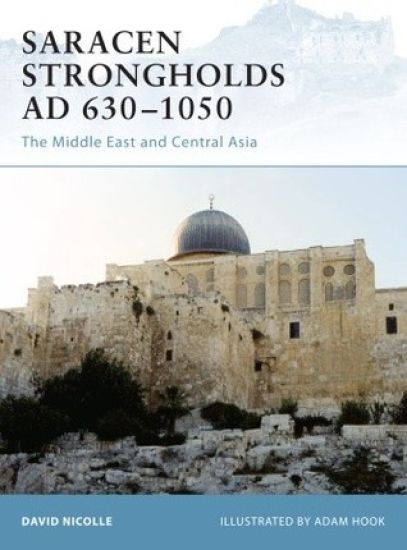
The Islamic world drew upon a myriad of pre-existing styles of fortification, taking Romano-Byzantine, Indian and Chinese ideas to create a highly effective and sophisticated hybrid fortification that was both new and distinctive.
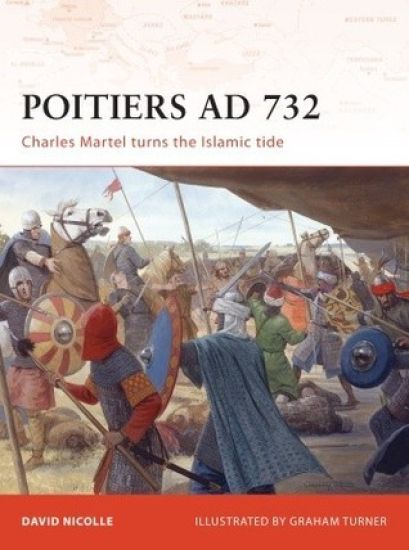
A detailed account of this key battle in the dramatic struggle between Christians and Muslims for control of Europe. In the early decades of the 8th century AD, Islamic forces were flooding into Europe through the Iberian peninsula, threatening Frankish and Burgundian territory and raiding it with ever-increasing ferocity. At the battle of Poitiers, also known as Tours, Christian forces under the Frankish leader Charles Martel 'The Hammer' (grandfather of Charlemagne) confronted a massive invading Islamic army. The Franks were victorious, effectively halting the northward advance of Islam and preserving Christianity as the dominant faith in Europe. Expert medievalist David Nicolle draws on contemporary sources to reconstruct this turning-point battle, placing it in its historical context and reviewing its background and the subsequent historical consequences.
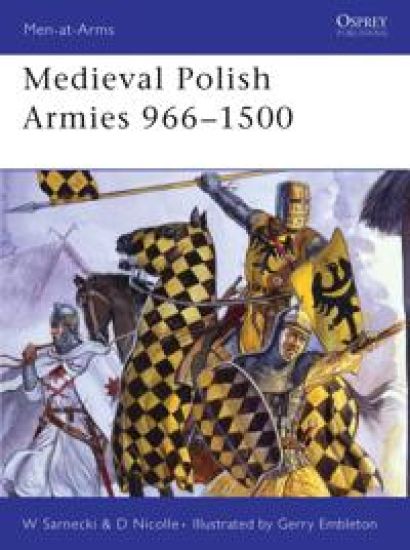
The fascinating history of a war-torn state that emerged with a strong Medieval army that became one of the dominating powers of Eastern Europe. Poland became a unified Christian state in AD 966 and by the 12th century a knightly class had emerged - a force that was integral to the defence of Poland against increasingly frequent foreign invasions. Intent on crushing rival Christian states, the Templars, Hospitallers and Teutonic Knights all mounted attacks but were beaten back by the Poles, as were invading Mongols and Turks. This book reveals the organisation, equipment and battle histories of the medieval Polish armies as they developed and modernised to emerge as one of the dominant powers of Eastern Europe.
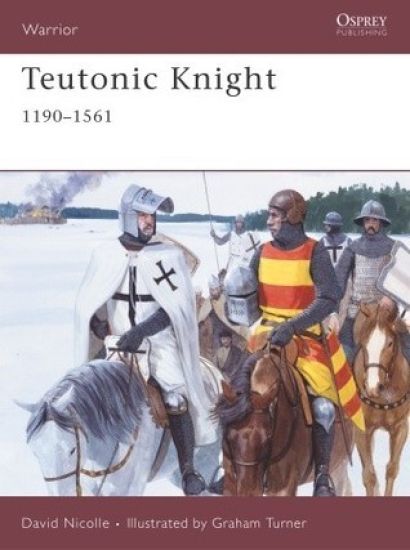
The Military Order of Teutonic Knights was one of the three most famous Crusading Orders, on a par with the Templars and the Hospitallers. Originally focusing on the preservation of the Crusader States in the Middle East, after the loss of their Middle Eastern enclaves in the 13th century, the Knights turned their attention to the Baltic. Over the next two centuries Northern Crusades were conducted against pagan Prussians and Lithuanians and, to a lesser extent, against Orthodox Russia. This title uses detailed illustrations and photographs to bring to life the appearance, beliefs and battle experience of the Teutonic Knights.
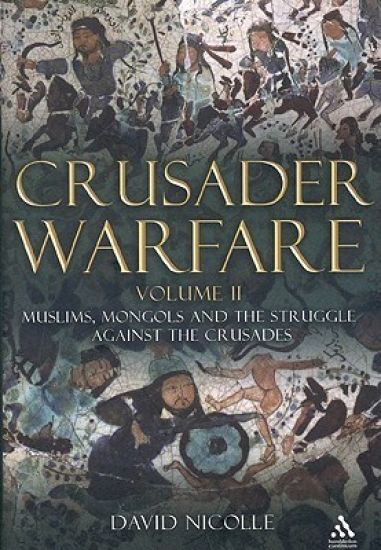
This second volume of "Crusader Warfare" focuses on those non-Christian cultures which were most directly involved in the Crusades. Centering on the Islamic world, the Mongol "World Empire", its fragmented successor states and certain other non-Christian cultures David Nicolle presents many fascinating aspects of warfare and the historical, cultural and economic background of the Islamic military during a much neglected period. In reality the Crusades, and the parallel but separate clash between the Islamic World and the Mongols, resulted from a remarkable variety of political, economic, cultural and religious factors. These campaigns involved an extraordinary array of states, ruling dynasties, ethnic, linguistic and cultural groups as well as the fighting forces associated with these disparate participants. Much current interest in the Crusades reflects the perceived threat of a so-called "clash of civilizations" and, while warnings of such a supposed clash in our own times are based upon a misunderstanding of the natures of both "Western" and "Islamic" civilizations, certain commentators have looked to the medieval Crusades as an earlier example of such a clash. Some have even interpreted the "third force" of the Mongols as somehow prefiguring the role of China, Japan or the Far East as a whole in the today's world.
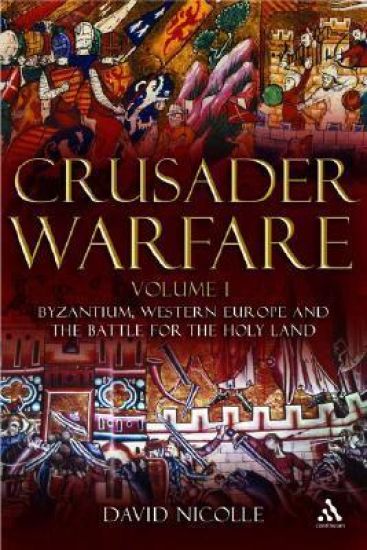
This book presents as many aspects as possible of warfare during the period of the crusades within all the cultures most directly involved. To a large extent the current interest in the Crusades reflects the perceived threat of a so-called 'clash of civilisations'. While warnings of such a supposed clash in our own times are based upon a misunderstanding of the natures of both 'Western' and 'Islamic' civilisations, some commentators have looked to the medieval Crusades as an earlier example of such a clash. In reality they were no such thing. Instead the Crusades resulted from a remarkable variety of political, economic, cultural and religious factors. The Crusades, even excluding the Northern or Baltic Crusades, also involved an extraordinary array of states, ruling dynasties, ethnic or linguistic groups and the fighting forces associated with these disparate participants. This volume focuses on Western Europe and the Byzantium Crusades. Latin or Catholic Europe certainly had an 'eastern front'. Medieval Europeans, and certainly the knightly class which came to bear the brunt of Crusading warfare, would have seen all these fronts as part of Latin Christendom's struggle against outsiders. The latter ranged from infidels to schismatics, to pagans and other 'enemies of God'. Excluding Crusading or Christian frontier warfare north of the Carpathian Mountains did not reflect any real military or even political factors on the Latin side of the 'front'. It is based upon which enemies were to be included and which excluded. This study looks at Christian and in a few cases "pagan" armies whose actions or mere existence in sub-Saharan Africa and Central Asia, had a bearing upon military, political and economic relations between Christendom and Islam within the Mediterranean world.
Crusader Castles in Cyprus, Greece and the Aegean 1191–1571
David Nicolle
Osprey Publishing
2007
nidottu
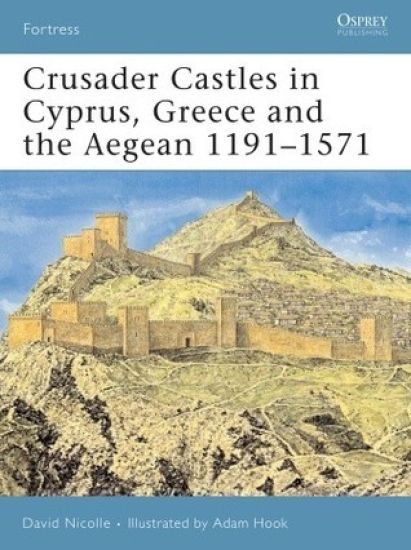
Crusader castles and other fortifications in Cyprus, the south-western coast of Turkey and Greece are amongst the best examples of late medieval military architecture to be seen in Europe. These important fortifications, erected by the Hospitallers during the 15th century to face the growing Ottoman Turkish threat, vary considerably from those in the Middle East. Despite there being many visible remains of fortifications in Cyprus, Greece and the Aegean, few studies exist of these areas compared to the fortifications of the Holy Land. Providing numerous architectural plans, maps and colour illustrations, this book seeks to redress this imbalance and complement the previous bestselling treatments of Crusader fortifications in the "Fortress" series.