Kirjojen hintavertailu – 12 903 735 kirjaa ja 27 kauppaa

Kirjailija

David Nicolle

Kirjat ja teokset yhdessä paikassa: 94 kirjaa, julkaisuja vuosilta 1982–2025, suosituimpiin kuuluu The Moors. Vertaile teosten hintoja ja tarkista saatavuus suomalaisista kirjakaupoista.

94 kirjaa

Kirjojen julkaisuvuodet: 1982–2025.

Knight Hospitaller (2)

Knight Hospitaller (2)

David Nicolle

Osprey Publishing
2001
nidottu
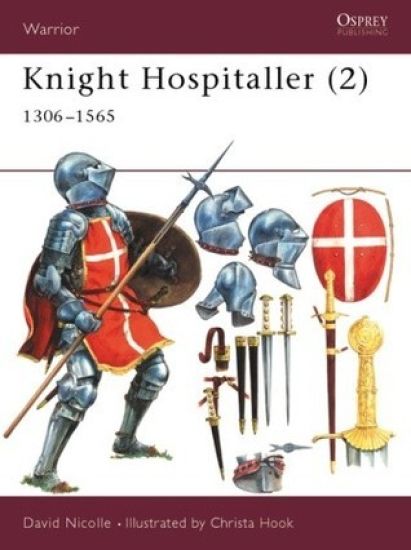
The Hospitallers were the first of the Secular Crusading Orders to be created, though they were only "militarized" after the establishment of the Templers. The Hospitallers played a major role in the military struggle between Christendom and the Islamic World throughout the mediaeval and early modern periods. They recruited from a wide section of society, but their structure and attitudes reflected the aristocratic-based society of their day. They primarily campaigned on land during the first phase of their existence, and primarily at sea during their second phase. This work reveals how, like other Military Orders, the Hospitallers played a significant cultural, political and economic role within the Christian Empire itself.
Knight Hospitaller (1)

Knight Hospitaller (1)

David Nicolle

Osprey Publishing
2001
nidottu
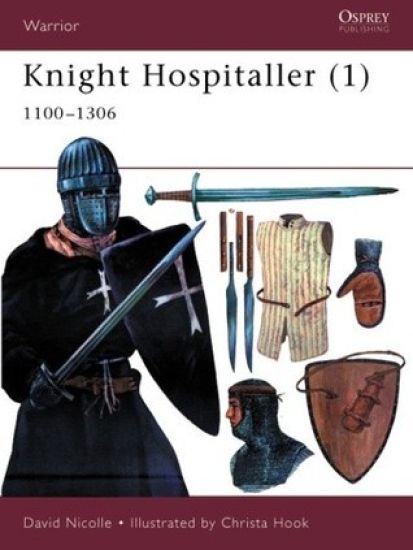
The Hospitallers were the first of the Secular Crusading Orders to be created, though they were only 'militarized' after the establishment of the Templers. The Hospitallers played a major role in the military struggle between Christendom and the Islamic World throughout the medieval and early modern periods. The Hospitallers recruited from a wide section of society, but their structure and attitudes reflected the aristocratic based society of their day. They primarily campaigned on land during the first phase of their existence, and primarily at sea during their second phase. This book offers a full exploration of the significant role played by the Hospitallers in the cultural, political and economic development of the Christian Empire.
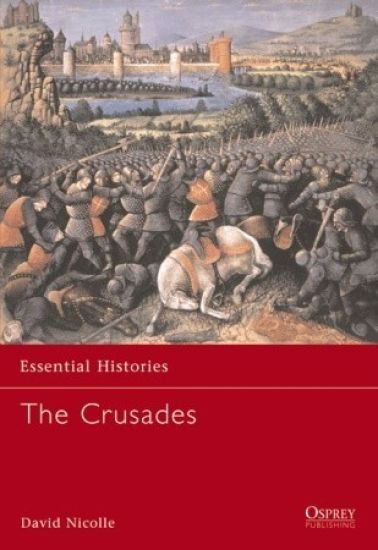
The Crusades

The Crusades

David Nicolle

Osprey Publishing
2001
nidottu
Born amid immense suffering and bloodshed, the Kingdom of Jerusalem remained a battlefield for almost 200 years. The Crusades gave rise to the Military Orders of the Templars and Hospitallers, and were a backdrop to the careers of some of history's most famous leaders including Richard 'The Lionheart' and Saladin. On occasion the savagery of the Crusaders left their opponents reeling, creating frictions that survived for more than 700 years. This book describes and illustrates the events of the Crusades, and how art, architecture and learning all benefited from new knowledge the Crusaders brought back from the East.
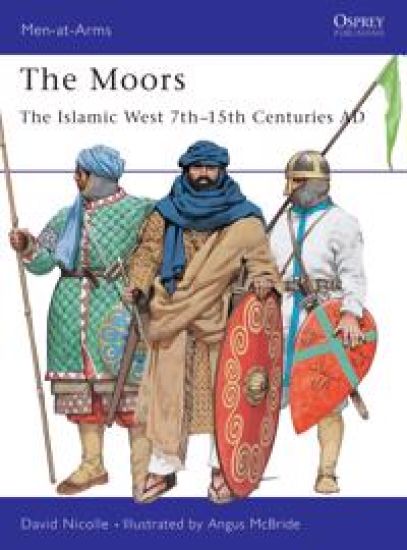
The Moors

The Moors

David Nicolle

Osprey Publishing
2001
nidottu

Halvin toimitettuna 18,70 €

The high point of medieval islamic expansion was the 700-year presence of the 'Moors' in Spain and Portugal. The Arab and Berber conquest was followed by the establishment of a richly distinct culture in Andalusia, where for a while Muslim and Christian co-operated as often as they fought. The rise and fall of successive Islamic dynasties brought new invaders, fragmentation and disunity; and the growing Christian kingdoms to the north eventually doomed the amirate of Granada, the last Moorish bastion, which fell to the Castilians in 1492. The extraordinarily varied and colourful armies of Westem Islam are described and illustrated here in fascinating detail.
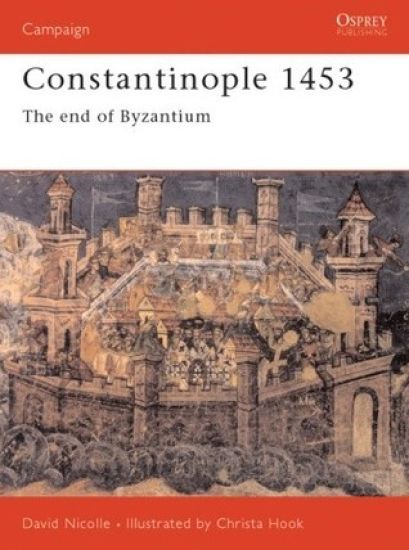
Constantinople 1453

Constantinople 1453

David Nicolle

Osprey Publishing
2000
nidottu
A detailed account of the epic four-month siege of the city of Constantinople, last vestige of the once mighty Roman and Byzantine Empires. Mehmet 'The Conqueror' led an army of 80,000 men with a massive siege train against the city. Defending were a mere 10,000 men under the Emperor Constantine XI. The Turkish artillery battered the ancient city walls mercilessly, levelling a large section. A gallant defence held off the massive Turkish assault for several hours. Refusing appeals to flee, Constantine returned to the breaches and fought until overwhelmed and killed. Thus died the last Emperor of the Byzantines, and with him his once glorious empire.
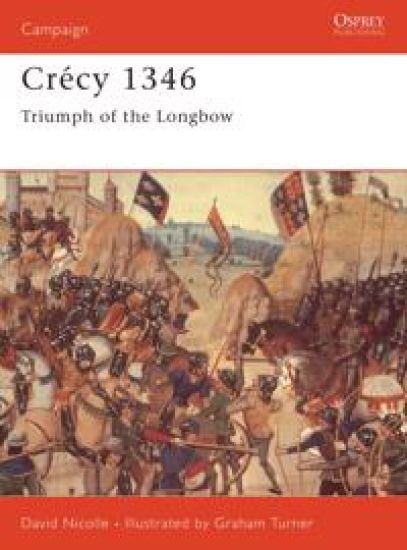
Crécy 1346

Crécy 1346

David Nicolle

Osprey Publishing
2000
nidottu
An illustrated, detailed account of the Battle of Crécy, the first major land battle of the Hundred Years War. It pitted the French army, then considered the best in Europe, and their miscellaneous allies against the English under King Edward III and the 'Black Prince', who as yet had no great military reputation; this was the battle where he 'won his spurs'. The Genoese crossbowmen were outshot by the English longbows and the pattern was set for the rest of the day: the French cavalry were committed piecemeal in fruitless charges against strong English positions, losing perhaps 10,000 men in the course of the fighting. This books demonstrated how, after almost a millennium in which cavalry had dominated the field of battle, the infantryman, and particularly the longbowman, now ruled supreme.
French Armies of the Hundred Years War

French Armies of the Hundred Years War

David Nicolle

Osprey Publishing
2000
nidottu
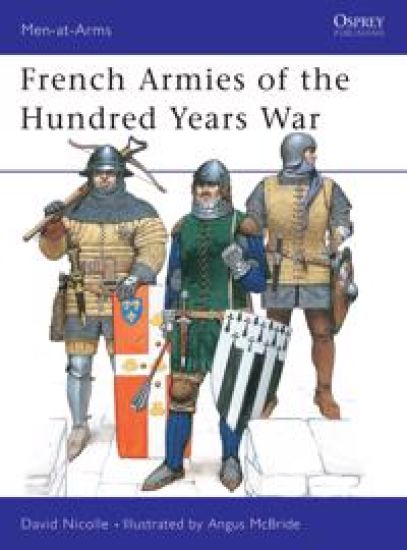
The fourteenth and fifteenth centuries were a time of great upheaval for medieval France. In 1328 the Capetian line came to an end. This was the trigger for the Hundred Years War as successive English kings attempted to uphold their claim to the French throne. Catastrophic defeats at Crécy and Poitiers shook the French kingdom to its core. A period of respite followed under Bertrand du Guesclin, but an even more devastating assault was to follow, under the warrior-king par excellence Henry V, and the French disintegration continued until 1429. This book details how the French began a recovery, partly triggered by the young visionary Joan of Arc, that would end with them as the major European military power.
Armies of Medieval Russia 750–1250

Armies of Medieval Russia 750–1250

David Nicolle

Osprey Publishing
1999
nidottu
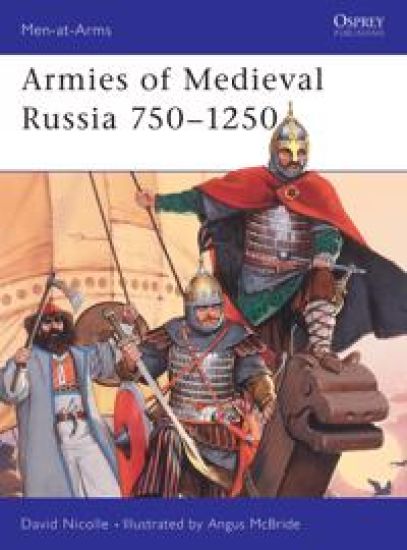
In the centuries following the first expeditions down the great rivers of northern Russia by Viking traders and adventurers, the foundations for a new state were laid. Many influences combined in this colourful culture which grew up first around the great cities of Kiev and Novgorod – Scandinavian, Finnish, Slav, steppe Turkish, Byzantine. By the time of the Mongol invasions of the 12th century the small enclaves of the old pagan Rus', tolerated by the Khazar Khans for their commercial usefulness, had evolved into a Christian nation. Its story is told here in fascinating detail, and illustrated with striking colour reconstructions of the warriors themselves.
Italian Militiaman 1260–1392

Italian Militiaman 1260–1392

David Nicolle

Osprey Publishing
1999
nidottu
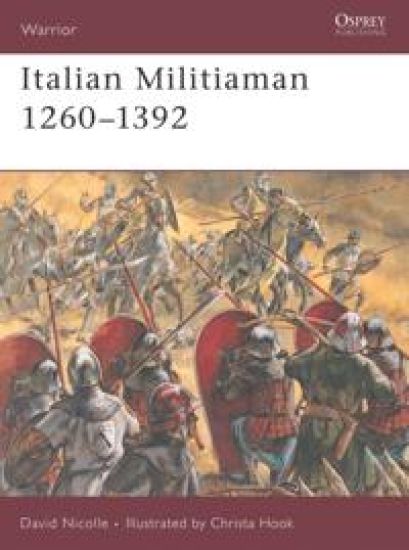
Medieval Italy was characterized by regular warfare among its numerous city-states, as well as internal strife within comunes as aristocratic factions fought each other for domination of the cities' governments. In this context, Italian warfare developed quickly, with the crossbow playing a key role in improving the armour technology of the Italian city militias that used them. This book traces the evolution of the Italian militiaman, providing a comprehensive view of all aspects of the late medieval Italian city militias, from the weaponry, attitudes and social backgrounds of their members, to the political context that made such formations necessary.
Armies of the Caliphates 862–1098

Armies of the Caliphates 862–1098

David Nicolle

Osprey Publishing
1998
nidottu
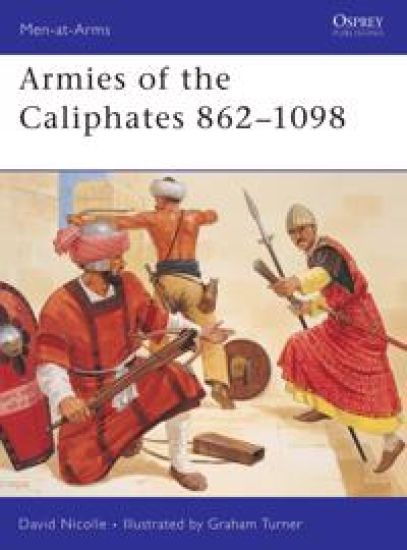
The 8th century heralded the start of a golden age in the history of the Islamic world. At this time, the Sunni Muslim 'Abbãsid Caliphate, with its capital at Baghdad, ruled virtually the entire Islamic world. Islamic military power peaked in the 9th century, but by the end of this golden age in the 11th century, the 'Abbãsid Caliphs had little political and virtually no military power. Featuring numerous photographs of artefacts and eight full colour plates by Graham Turner, David Nicolle's book examines the recruitment, organization, weaponry and uniforms of the armies of the Caliphates from 862-1098.
Granada 1492

Granada 1492

David Nicolle

Osprey Publishing
1998
nidottu
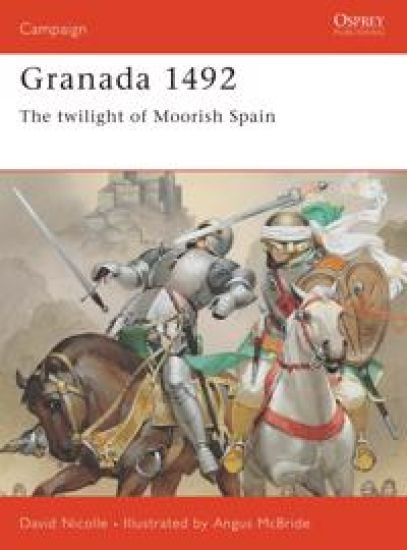
A compact, detailed account of the Spanish army's win over the Moors of Granada. By 1481 Granada was the last Islamic enclave in Catholic Spain. Granada's last ruler, Muhammad XII 'Boadbil', faced the might of the Spanish royal army revitalised and lavishly equipped with modern artillery. Despite this mismatch of strength it took 11 years of hard campaigning before the Spanish troops could bring their guns to bear on the walls of Granada. After this the outcome could not be long delayed. Andalusia, the physical embodiment of the flowering Islamic culture in Spain, was snuffed out. The commanders, forces, plans and campaign itself are all examined closely in this superbly illustrated account of 'Los Reyes Catolicos' greatest victory.
Armies of the Ottoman Empire 1775–1820

Armies of the Ottoman Empire 1775–1820

David Nicolle

Osprey Publishing
1998
nidottu
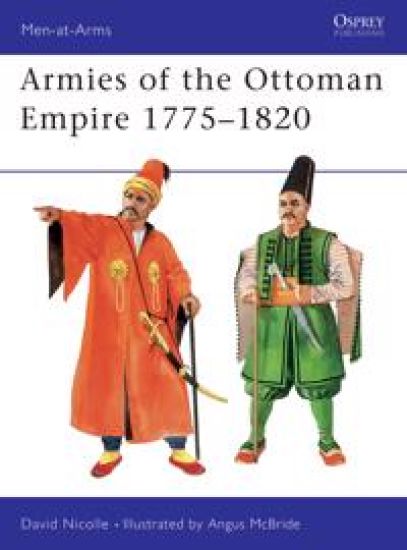
The Ottoman army was arguably the most colourful of all the military forces to take the field in the Napoleonic wars. This period was one of transition as the Ottoman empire struggled to come to terms with the upheavals caused by war to modernise her military forces in the face of threats from France, Britain and Russia. Covering the period between the reigns of Sultan Selim III and Sultan Mahmut II, this book details the series of military and naval reforms including the creation of the Nizam-i Cedit or "new army" and efforts to modernise traditional corps such as the Janissaries. It also looks at the role of foreign advisors, the impact of the French Revolution and the establishment of new military technical schools. This period was marked by a series of campaigns beginning with the defeat of the Mamluks in Egypt, followed by the joint Ottoman/British campaigns in Syria and Egypt which drove out the French. In the face of continuous military threats and despite attempts to reverse the reforms the Ottoman army continued the process of modernisation which saw the Empire through the 19th and into the 20th century.
Knight of Outremer AD 1187–1344

Knight of Outremer AD 1187–1344

David Nicolle

Osprey Publishing
1996
nidottu
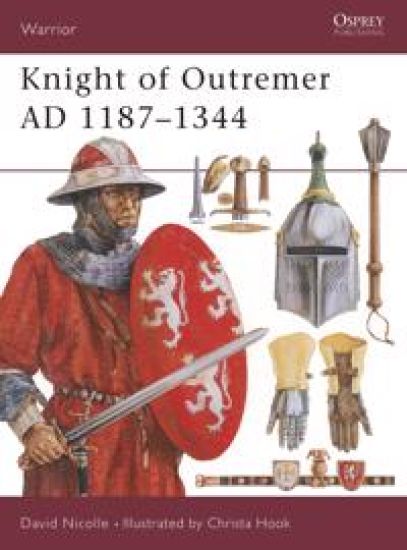
After Saladin's great victory at the Battle of Hattin in 1137, Outremer, as medieval westerners called the remaining Latin or Catholic enclaves in the eastern Mediterranean, was no longer a threat to Islam. Its military elites preferred to live in peace, focusing on trade as much as on the defence of Christendom's holy places. In this, the first book in the English language to objectively study the knights of the Latin East, David Nicolle presents a well-balanced and informed account of the Western warriors who defended the Crusader territories for so long.
Fornovo 1495

Fornovo 1495

David Nicolle

Osprey Publishing
1996
nidottu
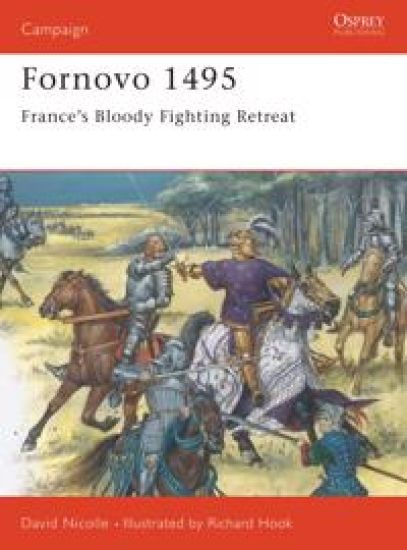
A compact, illustrated guide to the first major battle of the Italian Wars. In the year 1495, Charles VIII was the youthful King of France, the most powerful state in medieval Europe. A dreamer who saw himself as the saviour of Christian Europe, he believed he could roll back the ever-spreading tide of Ottoman Turkish conquest. As a base for his crusade he was determined to seize southern Italy. In a lightning campaign he used France's modern army to sweep through Italy, his mobile field artillery train smashing into dust the tall towers of Italy's medieval castles. David Nicolle describes the battle, in which the Italian states rallied and at Fornovo their alliance, the League of Venice, fought Charles' army to a standstill.
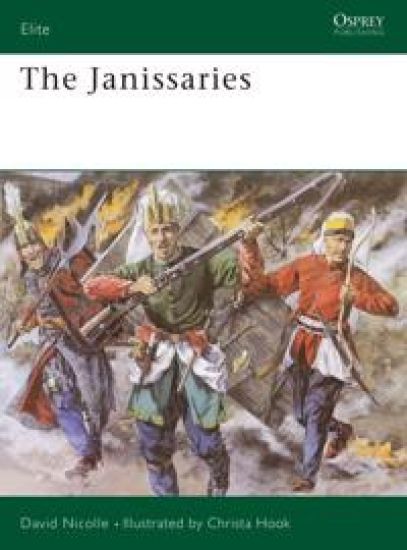
The Janissaries

The Janissaries

David Nicolle

Osprey Publishing
1995
nidottu
The Janissaries comprised an élite corps in the service of the Ottoman Empire. It was composed of war captives and Christian youths pressed into service; all of whom were converted to Islam and trained under the strictest discipline. In many ways, Jannisaries reflected Ottoman society, which was itself dominated by a military elite and where there was much greater social mobility than in Europe. On top of this, the Turks looked upon Europe much as the early Americans viewed the Western Frontier – as a land of adventure, mission and opportunity. David Nicolle examines the history, organisation, weapons and uniforms of these élite Turkish troops.
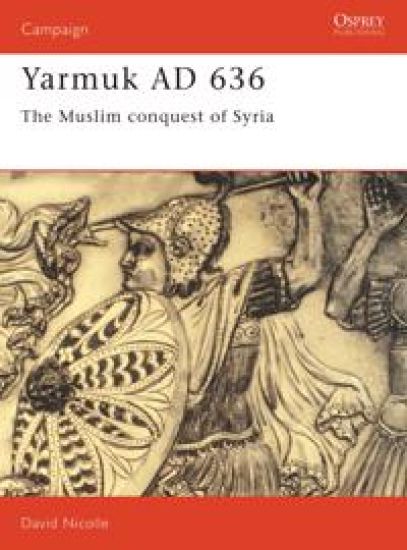
Yarmuk AD 636

Yarmuk AD 636

David Nicolle

Osprey Publishing
1994
nidottu
An illustrated account of a key battle in 636 AD, when, after protracted skirmishing and minor engagements, the Arab and Byzantine armies faced each other on the banks of the Yarmuk river. The Byzantines were initially successful, driving back the Arab right wing. Finally, though, the Arab counter-attacks broke the Byzantine lines and the subsequent pursuit became a rout. The awful fate of the fleeing Byzantine soldiers was remembered for several generations until it was recorded in early Islamic histories. In this detailed, illustrated account, David Nicolle not only looks at the battle itself but also the whole decisive Arab campaign from the Muslim invasion of 633/4 to the fall of Byzantine Syria.
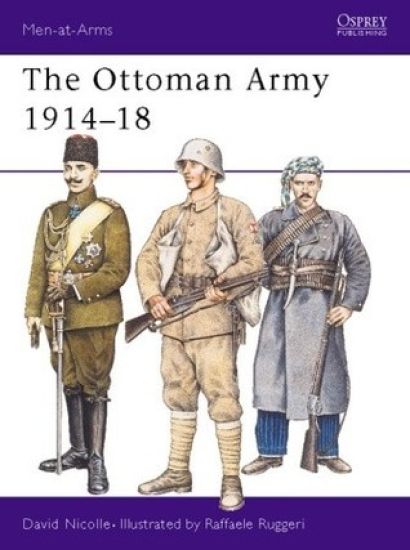
The Ottoman Army 1914–18

The Ottoman Army 1914–18

David Nicolle

Osprey Publishing
1994
nidottu
The Ottoman Turkish Empire was one of the leading protagonists of World War I, and the stolid courage of the individual Ottoman soldier was recognised by all. Yet the army in which he served is, like the Ottoman empire itself, generally little understood. Over the four years of the Great War, the Ottoman Army, Navy and two tiny air services fought on five major fronts, as well as seeing troops serve in many other war zones. This title takes a close look at the organisation, uniforms and equipment of the Ottoman Army during this period, and dispels the numerous myths that have surrounded the examinations of its forces at this time. Navy, Air, auxiliary and allied forces are also covered.
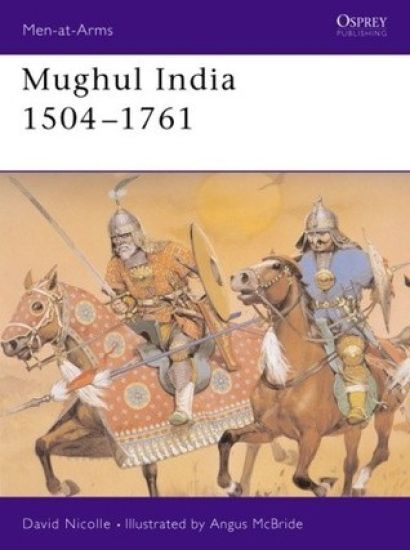
Mughul India 1504–1761

Mughul India 1504–1761

David Nicolle

Osprey Publishing
1993
nidottu
Babur, the founder of the Mughul dynasty, was of Turco-Mongol origin he was descended from Timur-i-Lenk [Tamerlane] on his father's side and Genghiz Khan on his mother's. His first raid into India in 1516 was followed by several others, and by the time of his death in 1530 Babur's troops had reached Bengal on the far side of the sub-continent. With eight fine full page colour plates by Angus McBride, and many other illustrations, this text by David Nicolle examines the organisation, tactics and uniforms of Mughul armies from Babur's time onwards.
The Mamluks 1250–1517

The Mamluks 1250–1517

David Nicolle

Osprey Publishing
1993
nidottu
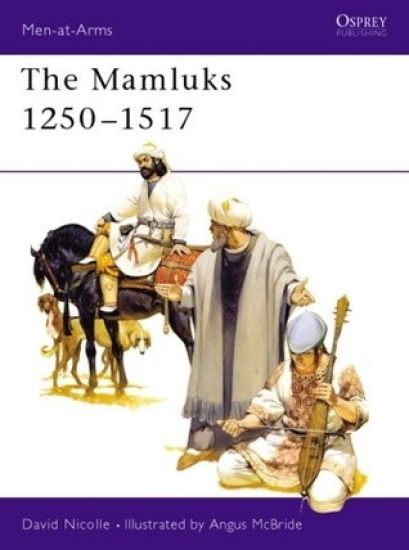
In Europe the Mamluks of Egypt are remembered as so-called 'Slave Kings' who drove out the Crusaders from the Holy Land; but they were far more than that. Though its frontiers barely changed, the Mamluk Sultanate remained a 'great power' for two and a half centuries. Its armies were the culmination of a military tradition stretching back to the 8th century, and provided a model for the early Ottoman Empire, whose own armies reached the gates of Vienna only twelve years after the Mamluks were overthrown. This absorbing text by David Nicolle explores the organisation and tactics of these fascinating people.
Hattin 1187

Hattin 1187

David Nicolle

Osprey Publishing
1993
nidottu
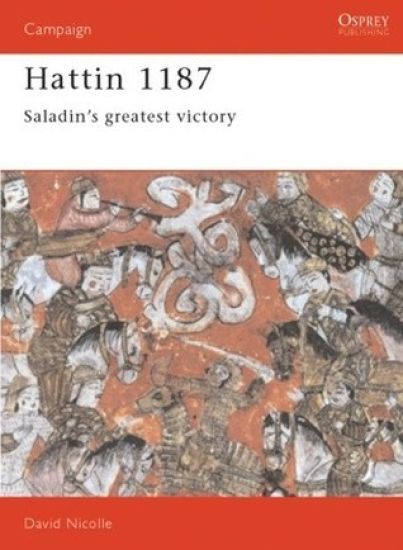
Featuring artwork throughout, including full-colour battle maps, this compact volume explores the Crusader campaign that led to the Muslim capture of Jerusalem. In 1187, Christian Europe was shaken by events in the Middle East. This volume tells the story of those momentous months after the disastrous Crusader defeat at Hattin where, in a two day running battle on the waterless plateau between Saffuriya and Tiberias, beneath a burning sun, Saladin's troops destroyed the Christian army. The disaster at Hattin resulted in the collapse of the kingdom of Jerusalem and sparked off the Third Crusade under Richard I 'Coeur de Lion'. David Nicolle examines Hattin in detail and looks at the consequences of the battle.