Kirjojen hintavertailu – 12 903 735 kirjaa ja 27 kauppaa

Kirjailija

David Nicolle

Kirjat ja teokset yhdessä paikassa: 94 kirjaa, julkaisuja vuosilta 1982–2025, suosituimpiin kuuluu The Moors. Vertaile teosten hintoja ja tarkista saatavuus suomalaisista kirjakaupoista.

94 kirjaa

Kirjojen julkaisuvuodet: 1982–2025.

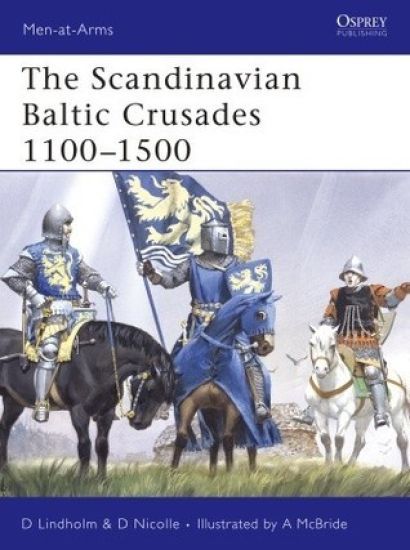
The Scandinavian Baltic Crusades 1100–1500

The Scandinavian Baltic Crusades 1100–1500

David Lindholm; David Nicolle

Osprey Publishing
2007
nidottu
Wielding their swords in the name of their faith, the crusaders originally set out to reclaim Jerusalem and its surrounding territory in the Middle East. Increasingly, however, Eastern Europe and the last remaining bastions of pagan Europe became the targets of their religious zeal. The subsequent Scandinavian campaigns laid the foundations of modern Baltic society by destroying pagan rural farming settlements, and establishing fortified Christian towns and major castles. As with the majority of crusades, the prospective acquisition of land and power was the one of the key driving forces behind these bloody military expeditions. This book reveals the colourful history of these Crusades when the soldiers of the Pope fought their way across Eastern Europe and inexorably changed the future of the continent.
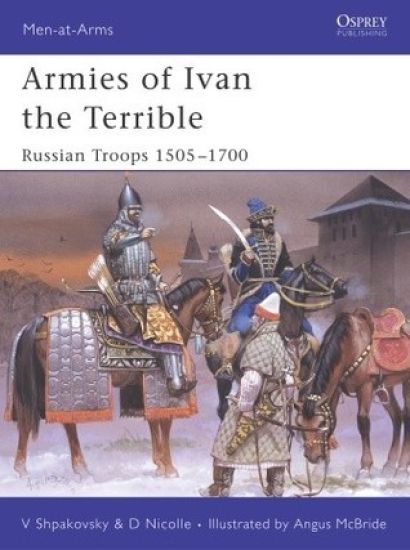
Armies of Ivan the Terrible

Armies of Ivan the Terrible

David Nicolle; Viacheslav Shpakovsky

Osprey Publishing
2006
nidottu
In most other national contexts, the term 'Renaissance' can be applied to the 16th and 17th centuries, but it cannot be said of Russia. During this time, the centralised state of the new Tsars achieved military unity under the domination of Moscow and started its expansion eastwards across Siberia and southwards towards Central Asia. Poland-Lithuania and Sweden also proved formidable threats to Russia's security. Despite their exotically Russian appearance, these armies gradually took on a more modern dimension. This book covers the armies 'invented' by Ivan the Terrible in the 16th century, looking at their development through the 17th century.
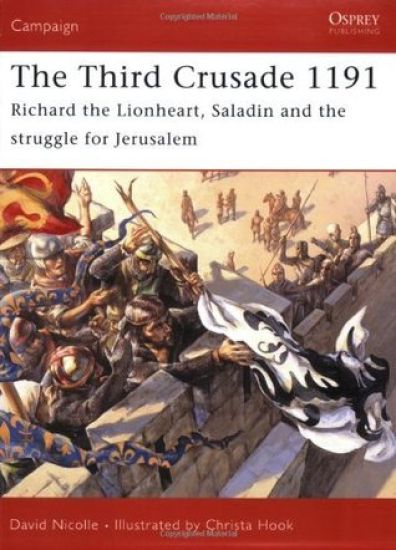
The Third Crusade 1191

The Third Crusade 1191

David Nicolle

Osprey Publishing
2005
nidottu
The clash between King Richard I 'The Lionheat' of England and Saladin has become legendary, and the strategy and tactics of a resolute, heavily armed Anglo-Saxon army versus their more lightly armed opponents have continued to fascinate military enthusiasts down the ages. The religious and geopolitical significance of the third crusade are immense and are still being played out to this day. Here was a Crusader army marching towards the greatest goal in Christendom, the Kingdom of Jerusalem, harried by a Muslim force that was equally determined to stop it. Although the battle was eventually won by the Crusaders, the prize itself remained elusive.
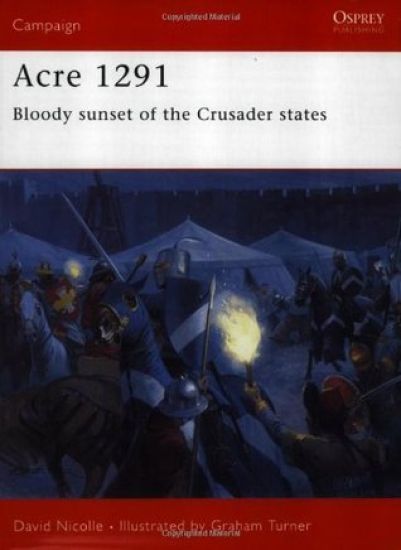
Acre 1291

Acre 1291

David Nicolle

Osprey Publishing
2005
nidottu
In April 1291, a Mamluk army laid siege to Acre, the last great Crusader fortress in the Holy Land. For six weeks, the siege dragged on until the Mamluks took the outer wall, which had been breached in several places. The Military Orders drove back the Mamluks temporarily, but three days later the inner wall was breached. King Henry escaped, but the bulk of the defenders and most of the citizens perished in the fighting or were sold into slavery. The surviving knights fell back to their fortress, resisting for ten days, until the Mamluks broke through. This book depicts the dramatic collapse of this great fortress, whose demise marked the end of the Crusades in the Holy Land.
Crusader Castles in the Holy Land 1192–1302

Crusader Castles in the Holy Land 1192–1302

David Nicolle

Osprey Publishing
2005
nidottu
After the Second Crusade in 1148 the Crusader States embarked on a period of caution and consolidation and, in an increasingly hostile environment, began strengthening existing fortifications and building new castles. Following on from Fortress 21 in the series, which looked at Crusader castles in the Holy Land from 1097 to 1192, this book takes the history of these military structures through to the early 14th century. David Nicolle examines the design and development of castles, the defensive strategies and construction methods used, the influence of Arabic and Islamic traditions in military architecture, as well as siege weaponry and everyday social and religious life. All this is placed within a historical context. Plans, maps, a timeline, photograhs and reconstruction drawings (by Adam Hook) are presented throughout. A tour of five examples (Margat, Crac des Chevaliers, Atlit, Caesarea Maritima and Arsuf), is also included.
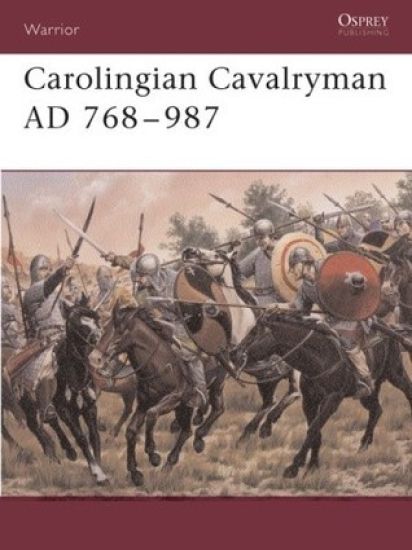
Carolingian Cavalryman AD 768–987

Carolingian Cavalryman AD 768–987

David Nicolle

Osprey Publishing
2005
nidottu
Charlemagne's army enabled him to create what he and his contemporaries regarded as a 'reborn' Western Roman Empire. Charlemagne revolutionised the organisation, logistics, indoctrination and training of his army. His troops seemed able to fight on indefinitely, even when they were thousands of miles away from Frankish territory. This title explores the role of the cavalry, the essential striking force of Charlemagne's army. In many respects the cavalrymen were the fore-runners of medieval Western European knights, yet the author shows how their recruitment, organisation, armament and tactics were still rooted in the medieval past. This book shows how the Carolingian armoured horseman played an important role in the development of European warfare.
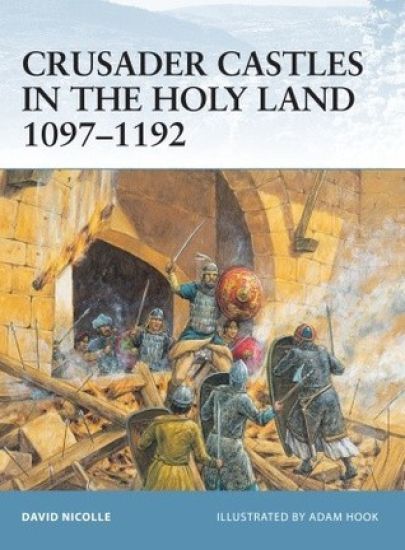
Crusader Castles in the Holy Land 1097–1192

Crusader Castles in the Holy Land 1097–1192

David Nicolle

Osprey Publishing
2004
nidottu
Of all the castles constructed by Western Europeans during the Middle Ages, none have caught the public imagination so much as Crusader castles. These structures, ranging from the very simple to the huge and elaborate, also encompass almost all aspects of Western European military architecture during the golden age of castle building from the 12th to the 13th centuries. This first volume in a series of three will focus on 12th century castles in the regions now known as Israel, Palestine, Jordan, Lebanon, Syria and south-eastern Turkey. Later volumes will focus on 13th century castles in Greece, Cyprus and the Aegean.
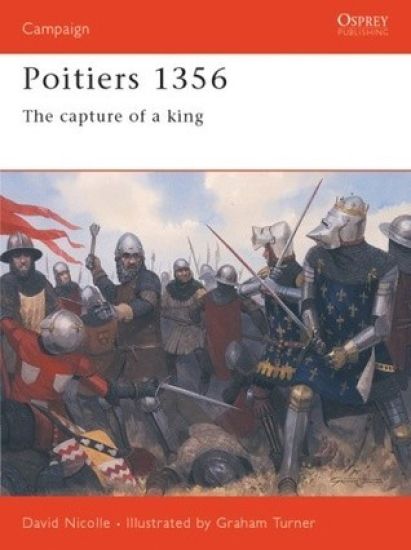
Poitiers 1356

Poitiers 1356

David Nicolle

Osprey Publishing
2004
nidottu
The battle of Poitiers was one of the most important battles of the first part of the Hundred Years' War between England and France. With an Anglo-Gascon army, the Black Prince carried out a large raid into the heart of France in the summer of 1356, causing King John of France to bring his superior forces south of the Loire. This book details their meeting at Poitiers, where after a hard fight the French were defeated. Large numbers of French were captured, including King John and his son the Dauphin. Poitiers confirmed the Black Prince's military reputation, as well as that of the English.
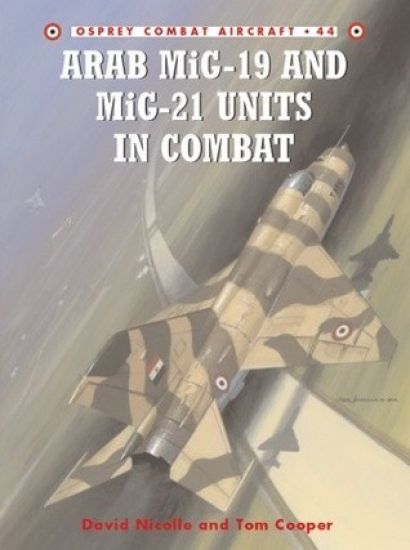
Arab MiG-19 & MiG-21 Units in Combat

Arab MiG-19 & MiG-21 Units in Combat

David Nicolle

Osprey Publishing
2004
nidottu
The MiG-21 provided the backbone of frontline Arab air combat strength for many years and remained the Arabs only real hope of challenging Israeli air supremacy. This book tells, in great detail, the story of the MiG-21 in Egyptian, Syrian and Iraqi service. It includes numerous photographs, most of which have not been seen outside the Arab world and a large proportion of which have never previously been published anywhere. The material is drawn from official sources and from the private collections and recollections of men who flew, or met, these aircraft in combat.
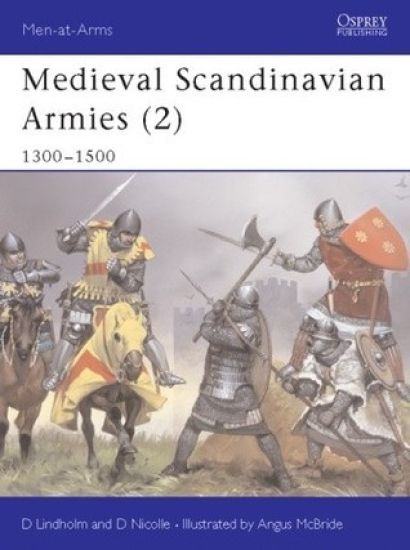
Medieval Scandinavian Armies (2)

Medieval Scandinavian Armies (2)

David Lindholm; David Nicolle

Osprey Publishing
2003
nidottu
This period saw profound changes, as Scandinavia became greatly influenced by military events and developments elsewhere in Europe. Most noticeably, plate armour began to take over from mail; and important evidence is provided by the remarkable 14th century battle grave finds at Wisby, where many corpses were tipped rapidly into mass graves still wearing their armour. This book examines the traces of wounds on the thousand-plus excavated skeletons offering unique insights into the realities of medieval hand-to-hand fighting. Later the increased use of Continental mercenaries introduced massed infantry tactics, especially in Denmark during the almost unceasing 'Union Wars' of the 15th century.
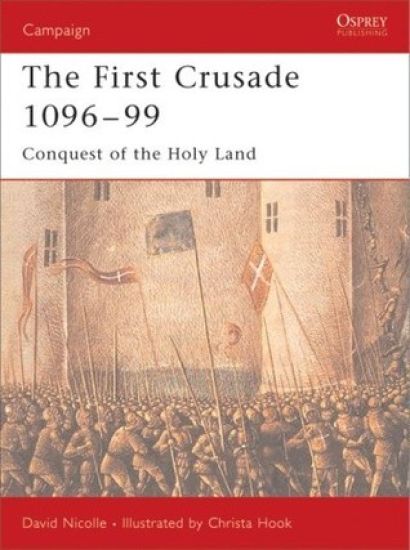
The First Crusade 1096–99

The First Crusade 1096–99

David Nicolle

Osprey Publishing
2003
nidottu
To many people the Crusades were the First Crusade. This first 'armed pilgrimage' to the Holy Land was, of course, the only Crusade that really succeeded. It resulted in the establishment of four so-called Crusader States in the Middle East and its repercussions can still be felt today. But in addition to its historical significance, this book explores how the First Crusade saw several armies march right across Europe at a time when such a thing was virtually unheard of. It also struck the Islamic World at a moment when the latter was chronically divided and thus won a series of miraculous military victories, which would have been impossible a generation earlier and were never repeated afterwards.
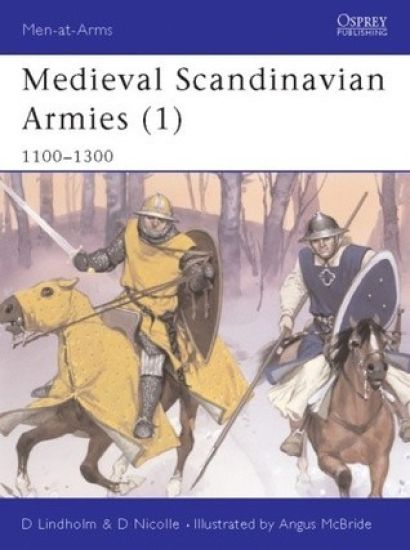
Medieval Scandinavian Armies (1)

Medieval Scandinavian Armies (1)

David Lindholm; David Nicolle

Osprey Publishing
2003
nidottu
As the Viking Age gave way to the Middle Ages the development of Scandinavian armies showed special local characteristics, due both to the rough terrain and the relatively 'egalitarian' nature of society. Though Denmark's proximity to Germany led to the appearance there of a kind of feudal system and some heavy armoured cavalry, in Sweden and Norway there was fairly willing co-operation between the few nobles and the many free farmers. This book shows how armies were of local infantry levies raised by 'democratic' methods to defend home territory. It also details how the crossbow became very important along with ambush tactics and winter campaigning, employing the use of sledges and skis.
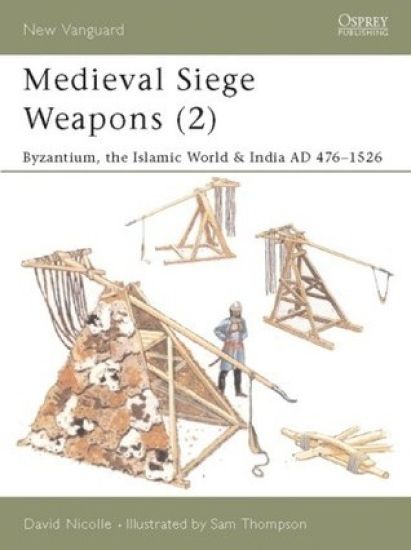
Medieval Siege Weapons (2)

Medieval Siege Weapons (2)

David Nicolle

Osprey Publishing
2003
nidottu
The medieval period was probably the most varied in military history when it came to the development of non-gunpowder military machines. One reason for this was the bringing together of several pre-existing military-technological traditions from the ancient Graeco-Roman World, Persia, India and China. Three civilizations were primarily responsible for the ease with which such technologies were brought together and combined: the Late-Roman or Byzantine Empire; the Islamic World; and the Mongol "World Empire". This work looks at the stone throwing machines that used assorted sources of power from torsion "energy storage" systems, to manpowered sling devices, counterbalance sling devices and rockets.
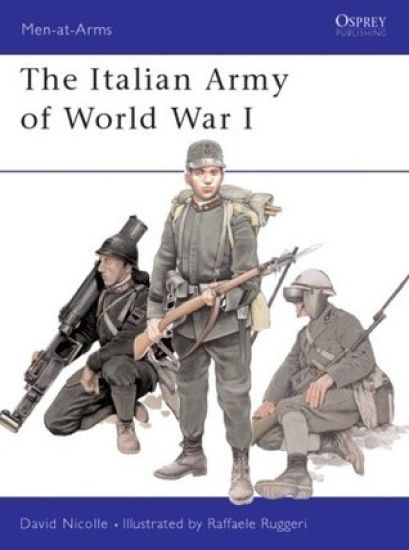
The Italian Army of World War I

The Italian Army of World War I

David Nicolle

Osprey Publishing
2003
nidottu
Due to her refusal to support Austria-Hungary at the beginning of the war, Italy was left in a position of neutrality. Both sides wanted Italy involved in the war and she was able to hold out for the best possible deal - this time on the allied side. This work shows that the majority of Italy's battles took place on the frozen slopes of the Alps, including the numerous battles of the Isonzo, the disaster at Caporetto and, in its aftermath the holding of the Piave line. Also covered are the eventual victory at Vittoria Veneto, and the conquest of Trieste following the Austrian collapse. The Italian army was also involved in fighting in Albania and the Middle East, as well as suppressing a pro-Ottoman uprising in Libya.
Warriors and their Weapons around the Time of the Crusades

Warriors and their Weapons around the Time of the Crusades

David Nicolle

Ashgate Publishing Limited
2002
sidottu
The technological relationship between the three main civilizations of the Western world - Byzantium, the Islamic world and the West - most particularly in the area of arms, armour and military technology is a field of research for which Dr Nicolle is noted. This volume deals principally with Western Europe and Byzantium, which for many centuries learnt from the Muslims in these matters; several articles also focus on military interactions in the Crusader states. The work draws upon both written and archaeological sources, but above all makes use of the depictions of war and military equipment in contemporary art to examine the interconnections across the medieval world.
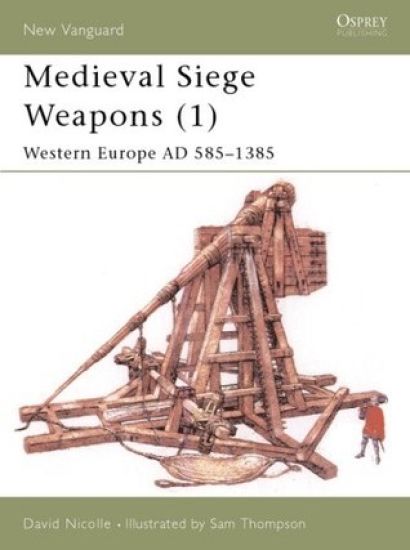
Medieval Siege Weapons (1)

Medieval Siege Weapons (1)

David Nicolle

Osprey Publishing
2002
nidottu
The Medieval era was a period of huge variety and invention in the field of siege warfare. Before the use of cannon and other gun-powder artillery, siege engines relied on assorted sources of power from torsion 'energy storage' systems to man-power, counter-balances and others. This book reveals how the combining of technological traditions from the Graeco-Roman world, Persia, India and above all China made a massive contribution to the development of siege techniques. Medieval military engineering was equally inventive in terms of mining, counter-mining, the breaking of walls, the use of noxious and chemical fumes and the use of fire-weapons.
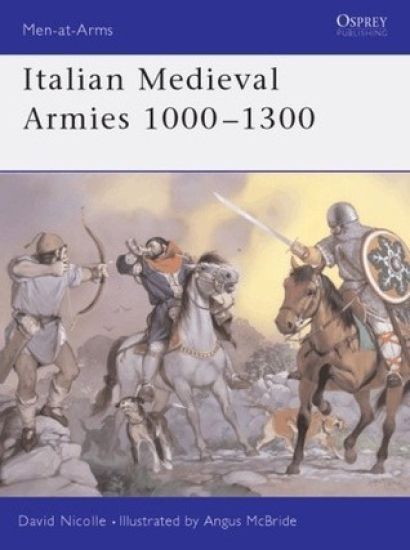
Italian Medieval Armies 1000–1300

Italian Medieval Armies 1000–1300

David Nicolle

Osprey Publishing
2002
nidottu
Although it was one of the main centres of armour production for export, early medieval Italy's costumes and armour reflected a vigorous but fragmented military system, influenced by Byzantine and Islamic styles as much as by northern Europe. This book shows how the rise of independent city armies and those of the Papacy, the spread of naval power and the founding of Norman states in the south all contributed to a dazzling kaleidoscope of military styles. The fascinating text is accompanied by numerous illustrations including eight full colour plates by the renowned military artist, Angus McBride.
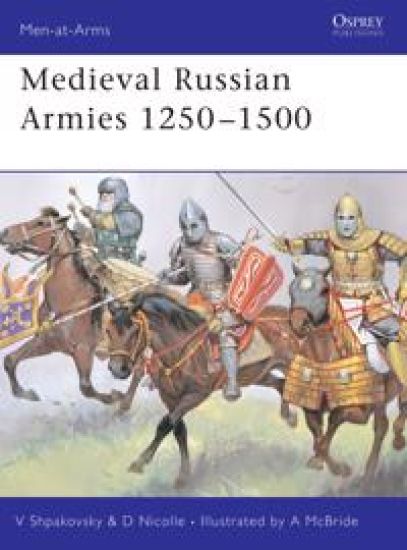
Medieval Russian Armies 1250–1500

Medieval Russian Armies 1250–1500

David Nicolle; Viacheslav Shpakovsky

Osprey Publishing
2002
nidottu
"Orientalized" Between the 13th and 15th centuries Russia developed along different lines from the rest of Europe. The Mongol conquest had a profound influence on arms, armour, organization, recruitment and tactics. Russian forces were pitted against late Mongol armies strongly influenced by contact with the Turkish-Islamic world. During the closing decades of this period the rising power of Muscovy, the most "Mongolized" of the Russian principalities, turned the tables and began to dominate the remaining Mongol (Tartar) Khanates. This book reveals how the role of firearms, particularly siege artillery, and the development of distinctive Russian forms of wooden fortifications, often in conjunction with the use of gunpowder artillary, make this period in Russia's military history unique.
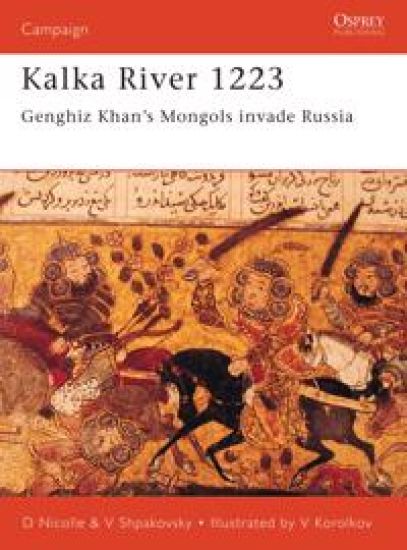
Kalka River 1223

Kalka River 1223

David Nicolle; Viacheslav Shpakovsky

Osprey Publishing
2001
nidottu
This book tells the fascinating story of the battle of the Kalka River, the culmination of Ghengis Khan's reconnaissance expedition into Russia of 1221. The consequences for the history of Europe were incalculable. The decisive Mongol victory over a combined Russian and Kipchaq army at the battle of the Kalka River opened up vast regions of Russia and Christian Eastern Europe to Mongol conquest. On orders from Ghengis himself the victorious Mongols returned eastwards, delaying the final cataclysm by a few years. However, the Russians were incapable of strengthening their defences enough to withstand the later attacks. As a result Russia fell under what historians call 'the Mongol yoke' for several centuries. In 1227 Ghengis died but the victory at the Kalka River was followed within 14 years by a Mongol invasion of Eastern Europe and even more disastrous defeats. Only the death of the Ogatai, son and successor of Ghengis, saved Europe from Mongol domination.
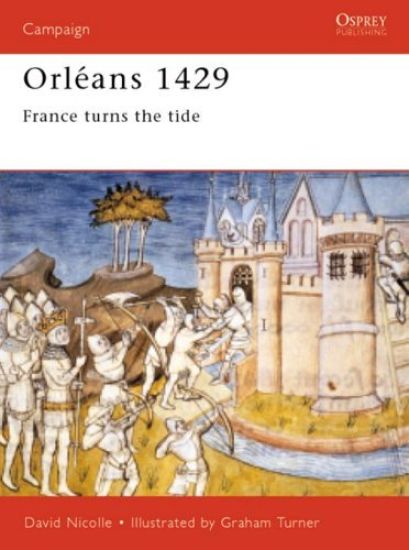
Orléans 1429

Orléans 1429

David Nicolle

Osprey Publishing
2001
nidottu
By 1429, with French fortunes in the Hundred Years War at their lowest ebb, an English victory seemed inevitable. Northern France including Paris was firmly under English control and the city of Orleans was besieged by an English army. At the darkest hour, a deeply religious peasant girl from Champagne came to the Dauphin, convinced that she had a divine mission to help him defeat the English. Her name was Joan of Arc. In less than four months Joan's inspired leadership helped to break the siege of Orleans. This volume tells the story of a legendary episode in France's history.