Kirjojen hintavertailu – 12 859 818 kirjaa ja 27 kauppaa
Kirjailija
David Roberts
Kirjat ja teokset yhdessä paikassa: 157 kirjaa, julkaisuja vuosilta 1994–2026, suosituimpiin kuuluu Canine-Centered Computing. Vertaile teosten hintoja ja tarkista saatavuus suomalaisista kirjakaupoista.
Relates to one of Wales' most important institutions of higher education, covering its history from its creation in 1884 as the University College of North Wales, its incarnation as the University of Wales, Bangor and to its 125th anniversary in 2009. This book traces the growth and development of the institution.
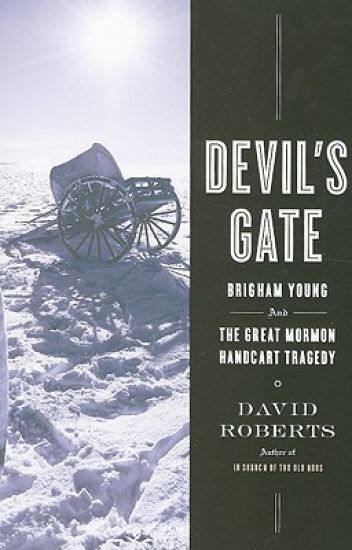
The revelatory story, now in paperback, of the worst disaster in the history of the Western migrations--and how Brigham Young made it a parable of the indomitable Mormon spirit. - Dramatic re-telling of a terrible but little-known tragedy: In 1856, 220 Mormons traveling west to Utah, pushing and pulling their belongings in handcarts, died of malnutrition and hypothermia. Roberts draws on contemporary letters and diaries to re-create the drama and suffering. - A powerful indictment of Brigham Young: Young had been warned that the pilgrims were at risk from winter storms; he could have waited until the next year or sent aid eastward sooner but failed to do so until it was too late. Not only have Young's biographers ignored or minimized this tragic and preventable event, they've tacitly accepted the official version of the story, which casts it as an unavoidable act of God that tested--and proved--the faith and steadfastness of the Mormon spirit. - Follows the success of other books about the Mormons: Devil's Gate will appeal to the same readers that made Jon Krakauer's Under the Banner of Heaven and Steven Naifeh and Gregory White Smith's The Mormon Murders into explosive, national bestsellers.
Bertie can be a bit smelly. When he trumps, it makes his mum cross, embarrasses his dad, upsets his gran and offends his sister. But they all have a secret - and Bertie knows what it is.
A veteran mountaineer recalls some of his most harrowing and dangerous climbs as he pursues the goal of reaching the summit of the world's fourteen 8,000-meter peaks, detailing his dedication to the philosophy that "getting to the top is optional, getting down is mandatory" while discussing some of his own close calls, rescues, and errors in judgment on the part of fellow climbers. Reprint. 40,000 first printing.
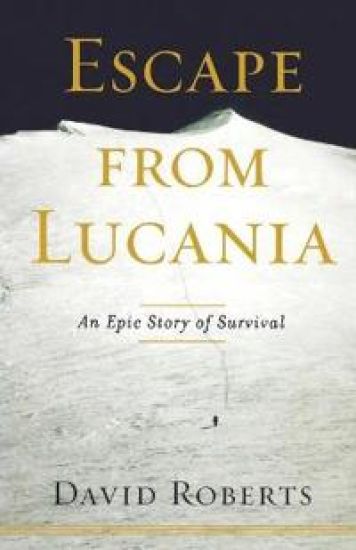
In 1937, Mount Lucania was the highest unclimbed peak in North America. Located deep within the Saint Elias mountain range, which straddles the border of Alaska and the Yukon, and surrounded by glacial peaks, Lucania was all but inaccessible. The leader of one failed expedition deemed it "impregnable." But in that year, a pair of daring young climbers would attempt a first ascent, not knowing that their quest would turn into a perilous struggle for survival. "Escape from Lucania" is their remarkable story. Classmates and fellow members of the Harvard Mountaineering Club, Brad Washburn and Bob Bates were two talented young men -- handsome, intelligent, and filled with a zest for exploring. Both were ambitious climbers, part of a small group whose first ascents in the great mountain ranges during the 1930s and 1940s changed the face of American mountaineering. Setting their sights on summitting Lucania in the summer of 1937, Washburn and Bates put together a team of four climbers for the expedition. But when Bates and Washburn flew to the Walsh Glacier at the foot of Lucania, they discovered that freakish weather conditions had turned the ice to slush. Their pilot was barely able to take off again alone, and there was no question of returning with the other two climbers or more supplies. Washburn and Bates found themselves marooned on the glacier, more than a hundred miles from help, in forbidding and desolate territory. Eschewing a trek out to the nearest mining town -- eighty miles away by air -- they decided to press ahead with their expedition. "Escape from Lucania" recounts Washburn and Bates's determined drive toward Lucania's 17,150-foot summit under constant threat of avalanches, blinding snowstorms, and hidden crevasses. Against awesome odds they became the first to set foot on Lucania's peak, not realizing that their greatest challenge still lay beyond. Nearly a month after being stranded on the glacier and with their supplies running dangerously low, they would have to navigate their way out through uncharted Yukon territory, racing against time as the summer warmth caused rivers to swell and flood to unfordable depths. But even as their situation grew more and more desperate, they refused to give up. "Escape from Lucania" tells this amazing story in thrilling and vivid detail, from the climbers' exultation at reaching the summit to their darkest moments confronting seemingly insurmountable obstacles. It is a tale of awesome adventure and harrowing danger. But above all it is the story of two men of extraordinary spirit, inspiring comradeship, and great courage. Today Washburn and Bates, now in their nineties, are legends in climbing circles. Bates co-led 1938 and 1953 expeditions to K2, the world's second-highest mountain. Washburn, whose record of Alaskan first ascents is unmatched, became founding director of Boston's Museum of Science and is one of the premier mountain photographers in the world. Some of his remarkable images from the 1937 Lucania expedition are included in this book.
Bertie has shockingly dirty habits, from nose-picking to eating sweets off the ground. Whenever he does anything dirty, his family shout, "No, Bertie! That's dirty, Bertie!" Will Bertie ever kick his horrible habits?
The author of The Pueblo Revolt and Four Against the Arctic traces the peaks and valleys of his mountaineering adventures, from the tragic deaths of climbing partners, to his challenging ascents in Alaska, to the factors that motivated his love of the sport. Reprint. 25,000 first printing.
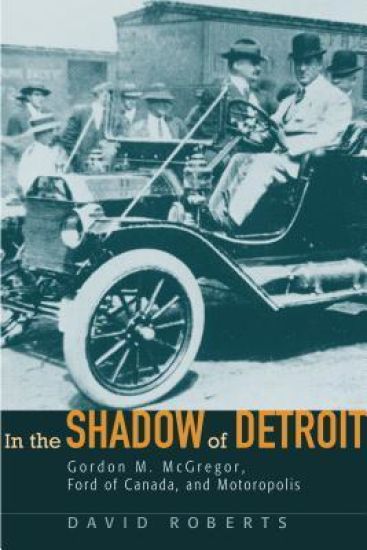
Part biography and part corporate history, ""In the Shadow of Detroit"" investigates the life and career of Gordon M. McGregor, who founded and led Ford of Canada during the first two decades of the twentieth century. With no automotive background, minimal technical expertise, and only a few years of experience in business, McGregor came to Ford in 1904 from a failing wagon-building firm. David Roberts draws from diverse public and private historical sources to chronicle McGregor's swift ascension to corporate leader, including how McGregor attached himself to Henry Ford's meteoric rise, achieved remarkable success, and became for a time Windsor's preeminent industrialist and civic leader. Roberts intertwines McGregor's corporate, civic, and personal lives to trace his pioneering role in the automobile industry. Some themes from McGregor's career that are considered here include company growth, the technical and cultural concept of the automobile, the impact of automotive transportation, technological reliance on Detroit, parent-branch relations, the effects of border proximity, industrial and political lobbying, labor relations, secondary manufacturing, public involvement, and the Great War. In addition, Roberts probes McGregor's often-subservient relationship with the enigmatic Henry Ford and examines how McGregor drew praise and political ire in calling for regional governance in the ""Border Cities"" opposite Detroit. In the years before his premature death, McGregor and his company dominated and defined the growing automotive industry in Windsor-Detroit, and their story deserves to be more widely known. Both elegantly written and exhaustively researched, ""In the Shadow of Detroit"" will be enjoyable and informative reading for local historians and anyone interested in the automobile industry.
The crisis of tradition early in the twentieth century—signaled by the collapse of perspective in painting and tonality in music and evident in the explosive ferment of the avant-garde movements—opened a new stage of modern art, which aesthetic theory is still struggling to comprehend. David Roberts situates the current aesthetic and cultural debates in a wider historical frame which extends from Hegel and the German Romantics to Lukács and Adorno, Benjamin and Baudrillard. Art and Enlightenment: Aesthetic Theory after Adorno is the first detailed analysis in English of Theodor Adorno's seminal Philosophy of Modern Music, which can be seen as a turning point between modern and postmodern art and theory. Adorno's diagnosis of the crisis of modernist values points back to Hegel's thesis of the end of art and also forward to the postmodernist debate. Thus the paradoxes of Adorno's negative aesthetics return to haunt the current discussion by representatives of the second generation of the Frankfurt School, Anglo-American Marxism, and French poststructuralism. Going beyond Adorno's dialectic of musical enlighten-ment, Roberts proposes an alternative model of the enlightenment, of art applied to literature and exemplified in the outline of a theory of parody. In its critique of Adorno, Art and Enlightenment clears the way for a reconsideration of twentieth-century artistic theory and practice and also, in offering a model of postmodern art, seeks to disentangle critical issues in the discussion of the avant-garde, modernism, and postmodernism.
By developing a long-term supranational perspective, this ambitious, multi-faceted work provides a new understanding of ‘totalitarianism’, the troubling common element linking Soviet communism, Italian fascism and German Nazism. The book’s original analysis of antecedent ideas on the subject sheds light on the common origins and practices of the regimes. Through this fresh appreciation of their initial frame of mind, Roberts demonstrates how the three political experiments yielded unprecedented collective mobilization but also a characteristic combination of radicalization, myth-making, and failure. Providing deep historical analysis, the book proves that 'totalitarianism' best characterizes the common features in the originating aspirations, the mode of action and even the outcomes of Soviet communism, Italian fascism and German Nazism. By enhancing our knowledge of what ‘totalitarianism’ was and where it came from, Roberts affords important lessons about the ongoing challenges, possibilities, and dangers of the modern political experiment.
By developing a long-term supranational perspective, this ambitious, multi-faceted work provides a new understanding of ‘totalitarianism’, the troubling common element linking Soviet communism, Italian fascism and German Nazism. The book’s original analysis of antecedent ideas on the subject sheds light on the common origins and practices of the regimes. Through this fresh appreciation of their initial frame of mind, Roberts demonstrates how the three political experiments yielded unprecedented collective mobilization but also a characteristic combination of radicalization, myth-making, and failure. Providing deep historical analysis, the book proves that 'totalitarianism' best characterizes the common features in the originating aspirations, the mode of action and even the outcomes of Soviet communism, Italian fascism and German Nazism. By enhancing our knowledge of what ‘totalitarianism’ was and where it came from, Roberts affords important lessons about the ongoing challenges, possibilities, and dangers of the modern political experiment.
Dialectic of Romanticism presents a radical new assessment of the aesthetic and philosophical history and future of modernity. An exploration of the internal critique of modernism treats romanticism (later historicism and post-modernism) as central to the development of European modernism alongside enlightenment, and, like the enlightenment, subject to its own dead-ends and fatalities. An external critique of modernism recovers concepts of civilization and civic aesthetics which are trans-historical -simultaneously modern and classically inspired - and provides a counter both to romantic historicism and enlightened models of progress. Finally, a retrospective critique of modernism analyses what happens to modernism's romantic-archaic and technological-futurist visions when they are translated from Europe to America. Dialectic of Romanticism argues that out of the European dialectic of romanticism and enlightenment a new dialectic of modernity is emerging in the New World-one which points beyond modernism and postmodernism.
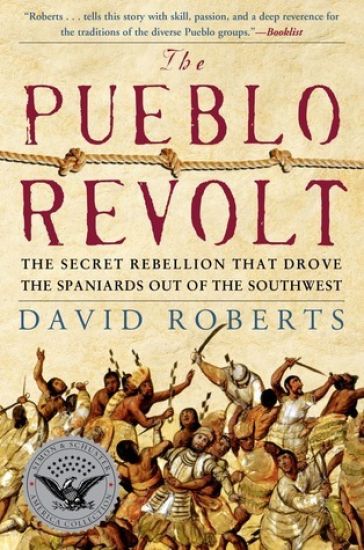
The dramatic and tragic story of the only successful Native American uprising against the Spanish, the Pueblo Revolt of 1680. With the conquest of New Mexico in 1598, Spanish governors, soldiers, and missionaries began their brutal subjugation of the Pueblo Indians in what is today the Southwestern United States. This oppression continued for decades, until, in the summer of 1680, led by a visionary shaman named Pope, the Puebloans revolted. In total secrecy they coordinated an attack, killing 401 settlers and soldiers and routing the rulers in Santa Fe. Every Spaniard was driven from the Pueblo homeland, the only time in North American history that conquering Europeans were thoroughly expelled from Indian territory. Yet today, more than three centuries later, crucial questions about the Pueblo Revolt remain unanswered. How did Pope succeed in his brilliant plot? And what happened in the Pueblo world between 1680 and 1692, when a new Spanish force reconquered the Pueblo peoples with relative ease? David Roberts set out to try to answer these questions and to bring this remarkable historical episode to life. He visited Pueblo villages, talked with Native American and Anglo historians, combed through archives, discovered backcountry ruins, sought out the vivid rock art panels carved and painted by Puebloans contemporary with the events, and pondered the existence of centuries-old Spanish documents never seen by Anglos.
A grave-marker, located in the cemetery of Franklin Village, Michigan, serves as the inspiration for TANSY BITTERS, TANSY SWEET....a novel written by author and longtime resident of Franklin, David Lee Roberts. The marker reads "Richard Trick, Company E., 30th Michigan infantry, died October 27, 1865." Military records research reveals no reference to Mr. Trick being a member of the 30th Michigan Infantry or of any Civil War unit. This mystery inspired the author to create a story containing interesting fictional characters whose lives intertwine with the lives and wartime events that were a part of the little village during the 1860s.
A grave-marker, located in the cemetery of Franklin Village, Michigan, serves as the inspiration for TANSY BITTERS, TANSY SWEET....a novel written by author and longtime resident of Franklin, David Lee Roberts. The marker reads "Richard Trick, Company E., 30th Michigan infantry, died October 27, 1865." Military records research reveals no reference to Mr. Trick being a member of the 30th Michigan Infantry or of any Civil War unit. This mystery inspired the author to create a story containing interesting fictional characters whose lives intertwine with the lives and wartime events that were a part of the little village during the 1860s.
Bertie likes making smells. When he trumps it makes his mum cross, embarrasses his dad, upsets his gran and offends his sister. But they all have a secret - and Bertie knows it! Sequel to the bestselling Dirty Bertie, this hilarious book and its naughty noises will have little ones in stitches. A brilliantly funny bedtime story, jam-packed with parp-tastic humour.