
Kirjailija
David Roberts
Kirjat ja teokset yhdessä paikassa: 157 kirjaa, julkaisuja vuosilta 1994–2026, suosituimpiin kuuluu Canine-Centered Computing. Vertaile teosten hintoja ja tarkista saatavuus suomalaisista kirjakaupoista.
157 kirjaa
Kirjojen julkaisuvuodet: 1994–2026.
Elias Canetti's Counter-Image of Society
Johann P. Arnason; David Roberts
Camden House Inc
2004
sidottu
Pursues the unresolved question of Canetti's place as a cultural and civilizational critic. The award of the Nobel Prize for literature in 1981 has seemingly assured Elias Canetti's place in literary history. But his significance as a cultural critic has not been adequately recognized. The present study redresses this situation in two ways: by mapping the counter-image of human existence, history, and society that informs Canetti's critique of the modern world and its sciences; and by opening up Canetti's hermetic oeuvre by tracing his cryptic and often concealed dialogue with major figures within the Western tradition such as Hobbes, Durkheim, and Freud and contemporaries such as Adorno, Arendt, and Elias. The authors ask how Canetti's alternative vision of man and society relates to important themes of twentieth-century social and civilizational thought even as it calls into question fundamental assumptions of the social and human sciences. In analyses of Auto da Fé, Crowds and Power, andthe aphorisms, the authors elucidate key aspects of Canetti's interrogation of human existence and human history across five thematic complexes: individual and social psychology, totalitarian politics, religion and politics, theories of society, and power and culture. They thus trace the movement of Canetti's thought from an apocalyptic sense of crisis to his search for cultural resources to set against the holocaust of European civilization. Johann P. Arnason teaches sociology at La Trobe University, Melbourne and David Roberts is Emeritus Professor of German at Monash University, Melbourne.

Jean Stafford burst on the literary scene in 1944, when, at the age of twenty-nine, she published her bestselling novel, Boston Adventure. Three years later, Life magazine hailed her as the "most brilliant of the new fiction writers." Bafflingly, for the rest of her life, Stafford would struggle--and fail--to capitalize on that early promise. David Roberts' compelling biography examines Stafford's disastrous marriages, including her first marriage to the volatile poet Robert Lowell, which culminated for her in a lengthy stay in a psychiatric hospital. Beautiful and gifted, Stafford squandered her health as well as her talent, ending her life embittered and alone.

No, Bertie! That's dirty, Bertie! Will Bertie ever kick his horrible habits? Shortlisted for the British Book Design and Production Awards, winner of the Nottingham Children's Book Award and the Norfolk Libraries Children's Book Award.

Bertie has shockingly dirty habits, from nose picking to weeing on the flowerbed. Whenever Bertie does anything dirty, Bertie's family shouts at him. Will Bertie every kick his horrible habits?

Rivers. Copyright © 2000 by David Roberts

This book illustrates the limits to the 1990s UNTAC peacekeeping intervention in Cambodia and raises a critical challenge to the assumptions underpinning key tenets of the 'Liberal Project' as a mechanism for resolving complex, severe struggles for elite political power in developing countries. The book highlights the limitations of externally imposed power-sharing. In the case of Cambodia, the imagined effect was a coalition that would share power democratically. However, this approach was appropriate only for resolving the superpower conflict that had created Cambodia's war. Rather than bringing long-term peace to Cambodia, Roberts argues, it created the temporary illusion of a democratic system that in fact recreated the military conflict and housed it in a superficial coalition. The book challenges assumptions regarding the inevitability of the globalization of liberalism as a means of ordering non-western societies. It explains the failure of democratic transition in terms of the impropriety and weakness of the plan which preceded it, and in terms of the elite's traditional reliance on absolutism and resistance to the concept of 'Opposition'.

This book illustrates the limits to the 1990s UNTAC peacekeeping intervention in Cambodia and raises a critical challenge to the assumptions underpinning key tenets of the 'Liberal Project' as a mechanism for resolving complex, severe struggles for elite political power in developing countries. The book highlights the limitations of externally imposed power-sharing. In the case of Cambodia, the imagined effect was a coalition that would share power democratically. However, this approach was appropriate only for resolving the superpower conflict that had created Cambodia's war. Rather than bringing long-term peace to Cambodia, Roberts argues, it created the temporary illusion of a democratic system that in fact recreated the military conflict and housed it in a superficial coalition. The book challenges assumptions regarding the inevitability of the globalization of liberalism as a means of ordering non-western societies. It explains the failure of democratic transition in terms of the impropriety and weakness of the plan which preceded it, and in terms of the elite's traditional reliance on absolutism and resistance to the concept of 'Opposition'.


Lost Explorer
Conrad Anker; David Roberts
Constable And Robinson
2000
pokkari
Halvin toimitettuna 20,90 €
On 8 June 1924, George Leigh Mallory and Andrew 'Sandy' Irvine were last seen climbing towards the summit of Everest. In 1999, Conrad Anker found the body of Mallory on Mount Everest. This title assesses the clues provided by the body, its position, and the possibility that Mallory had successfully climbed the Second Step, a 90-foot sheer cliff.

Travelling to America by ship, Dexter the rubber duck is washed overboard in a storm. How will he ever reach the safety of a nice warm bath? Then he is found by a submarine and he finds a home at last, in the bathtub of the captain's grandson.

This portfolio contains ten fine art prints of David Roberts' lithographs of 19th-century Cairo. Suitable for framing, they reproduce details of the streets of 19th-century Cairo with great accuracy.

The combined military might of two great mations succeeded in capturing not a single Chiricagua, not even a child.' From the Preface. Of the many tales of conflict and warfare between the US Government and the Indian tribes, perhaps none is more dramatic or revealing than the story of the Apache wars.
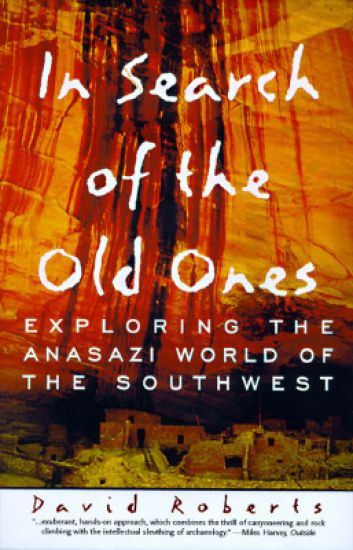
An archaeological examination of the disappearance of the Anasazi considers the various theories about their departure from the Southwest and probes their history, culture, and architecture
This text is divided into two sections: a core element focusing on basic skills which everyone needs to master in writing essays, and a subject-based section which takes the student to a more advanced level.

Jerusalem and the Holy Land Rediscovered
David Roberts
Duke University Museum of Art,U.S.
1996
sidottu
Jerusalem and the Holy Land Rediscovered is comprised of 123 tinted and watercolored lithographs produced by the British artist, David Roberts, one of the first artists to travel extensively throughout the Holy Land in 1839. Traveling from Egypt across the Suez to Mount Sinai, Petra, and Jerusalem, Roberts produced a large corpus of drawings and watercolors of all the major holy sites. These works formed the basis of the tinted lithographs published soon after his return to England, a collection which enjoyed immense popularity in England and the United States and provided the public the first glimpse of the biblical landscape and monuments known only by name. This book reproduces for the first time in full color all 123 of Roberts’s lithographs along with the unabridged text by the Reverend George Croly, L. L. D. that accompanied the prints when they first appeared in 1842. Reproduced from one of the best preserved sets in the world, this rare edition has been in a private collection in Maryland since the 1850s and was recently acquired by the Duke University Museum of Art.