Kirjailija
David Williams
Kirjat ja teokset yhdessä paikassa: 219 kirjaa, julkaisuja vuosilta 1966–2026, suosituimpiin kuuluu The Bible, Teetotalism, and Dr. Lees [A Reply to Teetotalism Plainly Taught in the Bible]. Vertaile teosten hintoja ja tarkista saatavuus suomalaisista kirjakaupoista.
219 kirjaa
Kirjojen julkaisuvuodet: 1966–2026.

Etsitkö jännitystä, uusia näkökulmia tai rentouttavaa lukuelämystä? Tutustu kirjakategorioihimme ja löydä seuraava suosikkikirjasi.
Supporting a lower-division club may not always be rewarding, but it's rarely dull. Welcome to Never Never Land, an intimate and personal story of Southend United and English football over the past 60 years. The book chronicles memorable matches as United challenge for promotion and battle against relegation. With action, sights and sounds from the terraces, stands and TV screens, it offers a front-row seat to the club’s most triumphant highs and devastating lows. Inside you will discover:Unique personal experiences of memorable Southend United matches over 60 years, interwoven with the author’s own storyHow NOT to end up supporting Liverpool: despite this being the city of his birth and hailing from a Liverpool-supporting family, Williams chose an uncelebrated lower-division Essex teamWhat it takes to support Southend United: battling the axis of commiseration, ridicule and misunderstanding afflicting supporters of lower-division clubsAn exploration of the key characters, on and off the pitch, who have helped to build United’s historyInsights into the challenges of supporting Southend United in Australia and the author’s endeavours to spread the word 12,000 miles away Never Never Land is a must-read not only for Southend United supporters, but fans of lower-division Football League clubs everywhere.
Catalogue of the Iron Age History, Exposition Universelle, Paris, 1878
David Williams
Hutson Street Press
2025
pokkari
Catalogue of the Iron Age History, Exposition Universelle, Paris, 1878
David Williams
Hutson Street Press
2025
sidottu
The Bible, Teetotalism, and Dr. Lees [A Reply to Teetotalism Plainly Taught in the Bible]
Frederic Richard Lees; David Williams
Hutson Street Press
2025
sidottu
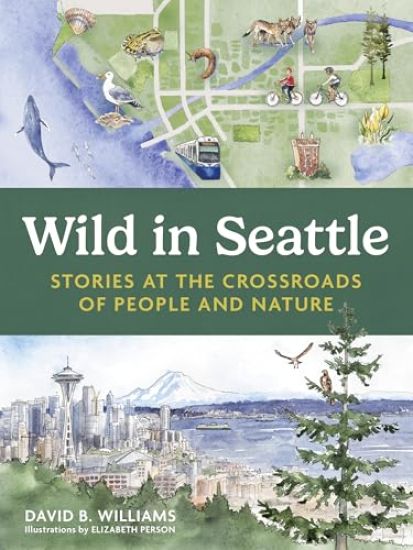
Wild in Seattle: Stories at the Crossroads of People and Nature
David Williams
MOUNTAINEERS BOOKS
2025
nidottu
More than 40 essays dive into the geology, animals, plants, and architecture that shape Seattle Fully illustrated by celebrated local artist Elizabeth Person Fun and fascinating sidebars explore regional vocabulary, scientific terms, and Indigenous language phrases For award-winning natural history writer David B. Williams, to be connected to a place you need to pause and look deeply at it. Wild in Seattle is Williams' delightful journey of discovery in this city where not only is nature all around, it's also written in the stones of the urban landscape. Explore the geologic history of glaciers, tsunamis, earthquakes, and volcanoes as well as the ways humans shape the Seattle topography. From backyards to downtown, watch for coyotes, crows, seals, otters, owls, and so much more wildlife who also call the region home. Look up at the buildings to find terra cotta eagles, stone that traveled over millions of years from Asia to the San Juan Islands, and clues to the horses who used to power the city's transportation network. Wrap your arms around a giant Douglas-fir, appreciate the unsung yet remarkable skunk cabbage, stop and listen to the spring chorus of frogs. Williams' lively essays woven with Elizabeth Person's engaging illustrations will fire up the curiosity of both residents and visitors alike, inspiring all to take a fresh look at the Emerald City.
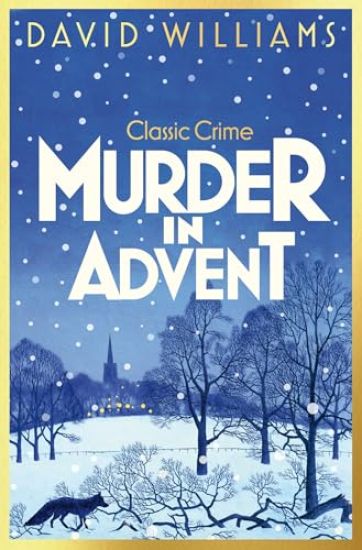
‘Mr Williams in knowledgeable and delectable top form’ Sunday TimesDuring the festive period, the cathedral town of Litchester is more used to carols by candlelight than flames and intrigue. However, when the proposed sale of the town‘s 1225 copy of the Magna Carta causes a dispute between members of the cathedral chapter, there are far-reaching consequences. Merchant banker Mark Treasure has been invited down to arbitrate the vicious disagreement, but finds himself dealing with more than he bargained for when the Dean’s verger is discovered murdered, his body left to burn along with the ecclesiastical library. As Treasure‘s investigation progresses and the evidence points to mayhem and skulduggery, he discovers that Litchester, once a town associated with peace and harmony, is in fact full of sins and secrets . . .‘An engrossing tale . . . all the elements of a classic mystery’ Library Journal
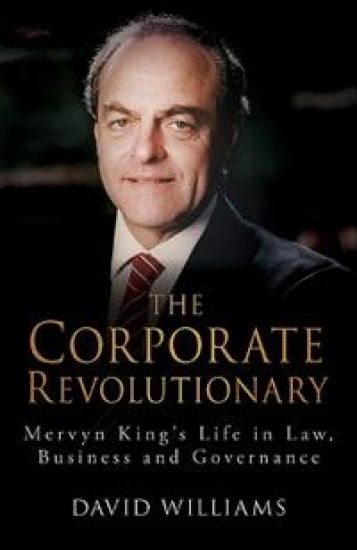
Mervyn King has transformed the global business landscape. King advocated reporting on society and the environment, not only on profit. His legacy transcends borders and continues to guide companies worldwide. His journey was enriched by his experience as a commercial lawyer; by his work as an advocate and a judge; and by his stellar career as a businessman, chair and director of many organisations. David Williams recounts his story.
Covid – an Alternative Inquiry
David Williams
Peter Lang International Academic Publishers
2023
sidottu
«This is a very good argument, with impressive detail, clear structure, and vehement commitment.» (M. McEldowney, Emeritus Professor of Planning) This book provides a post-Covid recovery strategy for the UK that is based on all aspects of health, but also addresses the ever-greater threat from global warming. Health and sustainability are interlocked. More than other European nations, we favour libertarian values over social equity, privatized public services and lower taxes that reduce those services. From fair-minded pragmatism, we have descended into dogma, incompetence and intolerance. Using the government's 5 guiding principles for a sustainable future, the book suggests how to improve distinct aspects of health: personal health through more preventive medicine; environmental health with lower transport and household emissions; economic health through local (rather than global) production of goods and services; social health by reducing gross health and wealth inequalities; and political health through strategic commitment, fair taxes (a bedroom tax just on the poor?) and real devolution to local councils. We need to think local, act local and act now.
In the second volume in the Scottish Photographic Artists series, David Williams provides a vivid biographical account of his creative development, identifying pivotal influences including an abiding, evolving interest in nonduality. He outlines key moments in a calling that saw him propelled from a career as a musician, to a vocation as an acclaimed photographic artist. Williams' essay is complemented by an appreciation of his work by Tom Normand, the photo-historian and author of 'Scottish Photography a history'. Academic and critical comments on his work expand the appreciation of Williams' oeuvre. A glorious gallery of photographs and photographic projects, allows you to step inside Williams' world and to appreciate its complexity and passion. This beautiful book is full of creative imaginings and philosophical meditations that will reward repeated visits.
Here is a brief, balanced, and up-to-date history of Georgia from the early Native Americans into the twenty-first century. Based on the most recent research, this second edition surveys the people and events that shaped our state's history in a style that reads easily and flows effortlessly. Beginning with the earliest Native American settlements, the story tells of first contacts between area natives and Spanish from Florida, British from Carolina, and James Oglethorpe leading the effort to found a colony called Georgia. That colony passed out of the British Empire during the American Revolution, a conflict that was as much a civil war as a war for independence. In the following decades, the Creek and Cherokee were driven out as Georgia was transformed into a cotton kingdom dominated by a minority of slaveholders, who finally sought to make slavery perpetual in a war that often pitted Georgians against each other. In the aftermath of the Civil War, the state struggled with the consequences of the conflict, political, social, and economic. The postwar years were highlighted by economic stagnation, questions over the meaning of freedom, and one-party politics. Race relations pervaded the state's history after the Civil War and those struggles are traced from Reconstruction to Jim Crow to the Civil Rights Era and twenty-first century voter suppression. In the latter half of the twentieth century, and carrying into the twenty-first, Georgia drifted away from the provincialism that characterized its history and moved toward modernity.
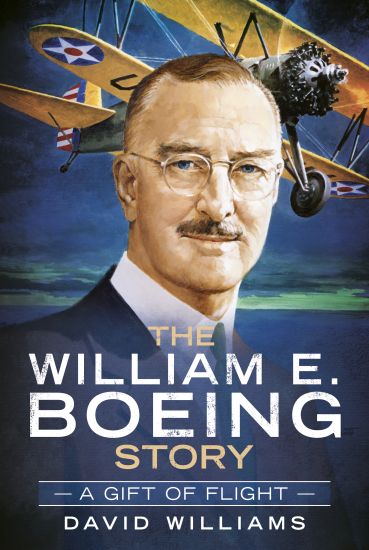
The William E. Boeing Story - A Gift of Flight is the first-ever full-length biography of William E. Boeing; the father of commercial aviation. Boeing’s story is an exciting one complete with bootleggers, kidnappers and a disastrous run-in with President Franklin Roosevelt and future Supreme Court Justice Hugo Black. Boeing’s story covers every aspect of early aviation starting with his first ride in a balloon in 1896 to the christening of the revolutionary jet-powered Dash-80 / 707 in 1955. Along the way, Boeing developed some of the world’s most iconic airplanes including the P-26 Peashooter, the Boeing 247, the B-17 Flying Fortress and the mighty B-29 Superfortress. The Boeing Family gave author David D. Williams unprecedented access to the Boeing Family Archives which contained thousands of never before seen photos, diaries, and personal letters. This treasure trove of primary sources allowed Williams to create an extraordinarily vivid and accurate portrait of this influential yet private man.
The modern world was not created by the civilization of Renaissance Italy, the advent of the printing press, or the marriage restrictions imposed by the medieval church. Rather, it was widespread reading that brought about most of the cognitive, psychological, and social changes that we recognize as peculiarly modern. David Williams combines book and communications history with readings of major works by Petrarch, Bruni, Valla, Reuchlin, Erasmus, Foxe, and Milton to argue that expanding literacy in the Renaissance was the impetus for modern civilization, turning a culture of arid logic and religious ceremonialism into a world of individual readers who discovered a new form of communion in the act of reading. It was not the theologians Luther and Calvin who first taught readers to become what they read, but the biblical philologist Erasmus, who encountered the divine presence on every page of the gospels. From this sacramental form of reading came other modes of humanist reading, particularly in law, history, and classics, leading to the birth of the nation-state. As literacy rates rose, readers of all backgrounds gained and embodied the distinctly modern values of liberty, free speech, toleration, individualism, self-determination, and democratic institutions. Communion and community were linked, performed in novel ways through revolutionary forms of reading. In this conclusion to a quartet of books on media change, Williams makes a compelling case for readers and acts of reading as the true drivers of social, political, and cultural modernity – and for digital media as its looming nemesis.
Reprint of the original, first published in 1859.