Kirjojen hintavertailu – 12 859 818 kirjaa ja 27 kauppaa

Kirjailija

David Williams

Kirjat ja teokset yhdessä paikassa: 219 kirjaa, julkaisuja vuosilta 1966–2026, suosituimpiin kuuluu The Bible, Teetotalism, and Dr. Lees [A Reply to Teetotalism Plainly Taught in the Bible]. Vertaile teosten hintoja ja tarkista saatavuus suomalaisista kirjakaupoista.

219 kirjaa

Kirjojen julkaisuvuodet: 1966–2026.

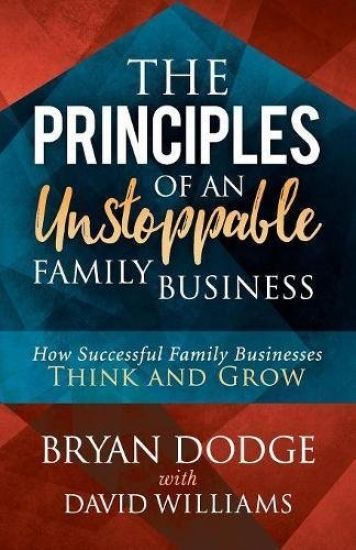
The Principles of an Unstoppable Family-Business

The Principles of an Unstoppable Family-Business

Bryan Dodge; David Williams

Morgan James Publishing llc
2018
pokkari
The Principles of an Unstoppable Family-Business is all about building a family-based business on a set of specific principals that are absolutely necessary for it to survive. It’s an enormous challenge to be in business with kin and actually make it work. Family-business consultant Bryan Dodge goal is to provide the best practices and key elements needed for a solid foundation. It’s all about making something very challenging into something very rewarding with this go-to resource for understanding the key concepts behind a successful family-business.

A Race to Freedom

A Race to Freedom

David Williams

Fonthill Media LLc
2018
sidottu
Mira Slovak was born in Czechoslovakia and endured both the Nazi occupation and the brutal Russian liberation. He joined the Czech Air force, rising to Captain by the age of 21. When he could no longer tolerate life under the Communists, he hijacked an airliner and flew across the Iron Curtain to freedom. He went to work for the CIA and was eventually sent to the US and given a job as Bill Boeing, Jr’s personal pilot. When Boeing began racing Hydroplanes in the late 1950s, Mira was his driver. During his ten year career as a hydroplane driver, he won many races and two national championships. He met Presidents and dated movie starlets. After a serious hydroplane accident, Slovak switched to airplanes where he won another national championship. When he retired from racing he became a stunt pilot and public speaker and talked about the value of freedom and how we should value it above everything else. He outlasted Communism and when it collapsed in 1990 he returned to his home, only to realize that his true home was, and always would, be the United States.
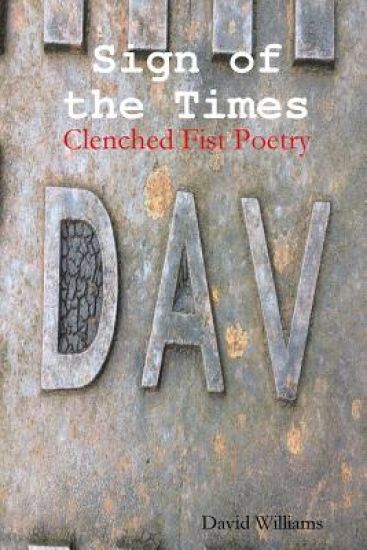
Sign of the Times

Sign of the Times

David Williams

Lulu.com
2018
pokkari
Clenched Fist Poetry from the Punk Performance Poet. Since his last book 'Graffiti Girls' David has been combining humorous verse and angry rants to give you his latest offering which is indeed a 'Sign of the Times'. Contemporary Wales is his backdrop and he is more than a little disappointed with the current state of play at the Welsh Assembly. Drawing from the influences of his heroes, Charles Bukowski, John Cooper Clarke and Cardiff Poet John Tripp, Williams attempts to awaken the latent anarchic spirit in his readership."nothing less than a revolution' said a translated Saunders Lewis.
A Sermon Preached at the Opening of a Chapel in Margaret-Street, Cavendish-Square; And the Introduction of a Liturgy on the Universal Principles of Religion and Morality. on Sunday, April 7th, 1776. by D. Williams
The 18th century was a wealth of knowledge, exploration and rapidly growing technology and expanding record-keeping made possible by advances in the printing press. In its determination to preserve the century of revolution, Gale initiated a revolution of its own: digitization of epic proportions to preserve these invaluable works in the largest archive of its kind. Now for the first time these high-quality digital copies of original 18th century manuscripts are available in print, making them highly accessible to libraries, undergraduate students, and independent scholars. The Age of Enlightenment profoundly enriched religious and philosophical understanding and continues to influence present-day thinking. Works collected here include masterpieces by David Hume, Immanuel Kant, and Jean-Jacques Rousseau, as well as religious sermons and moral debates on the issues of the day, such as the slave trade. The Age of Reason saw conflict between Protestantism and Catholicism transformed into one between faith and logic -- a debate that continues in the twenty-first century.++++The below data was compiled from various identification fields in the bibliographic record of this title. This data is provided as an additional tool in helping to insure edition identification: ++++John Rylands University Library of ManchesterT150094London: printed for T. Payne; E. and C. Dilly; G. Kearsley; and P. Elmsly, 1776]. 2],25, 1]p.; 8
Illustrations of Maxims and Principles of Education, in the Second Book of Rousseau's Emile. In Four Letters to the Mother of a Young Family, Disposed to Adopt Them
The 18th century was a wealth of knowledge, exploration and rapidly growing technology and expanding record-keeping made possible by advances in the printing press. In its determination to preserve the century of revolution, Gale initiated a revolution of its own: digitization of epic proportions to preserve these invaluable works in the largest archive of its kind. Now for the first time these high-quality digital copies of original 18th century manuscripts are available in print, making them highly accessible to libraries, undergraduate students, and independent scholars. Delve into what it was like to live during the eighteenth century by reading the first-hand accounts of everyday people, including city dwellers and farmers, businessmen and bankers, artisans and merchants, artists and their patrons, politicians and their constituents. Original texts make the American, French, and Industrial revolutions vividly contemporary.++++The below data was compiled from various identification fields in the bibliographic record of this title. This data is provided as an additional tool in helping to insure edition identification: ++++British LibraryT136467Anonymous. By David Williams. London: printed for J. Dodsley, and R. Baldwin, 1783. 2],110p.; 8
Essays on Public Worship, Patriotism, and Projects of Reformation. With a Large Appendix. ... The Second Edition
The 18th century was a wealth of knowledge, exploration and rapidly growing technology and expanding record-keeping made possible by advances in the printing press. In its determination to preserve the century of revolution, Gale initiated a revolution of its own: digitization of epic proportions to preserve these invaluable works in the largest archive of its kind. Now for the first time these high-quality digital copies of original 18th century manuscripts are available in print, making them highly accessible to libraries, undergraduate students, and independent scholars. The Age of Enlightenment profoundly enriched religious and philosophical understanding and continues to influence present-day thinking. Works collected here include masterpieces by David Hume, Immanuel Kant, and Jean-Jacques Rousseau, as well as religious sermons and moral debates on the issues of the day, such as the slave trade. The Age of Reason saw conflict between Protestantism and Catholicism transformed into one between faith and logic -- a debate that continues in the twenty-first century.++++The below data was compiled from various identification fields in the bibliographic record of this title. This data is provided as an additional tool in helping to insure edition identification: ++++British LibraryT067857Anonymous. By David Williams. 'An appendix to the Essays on publick worship, &c.' has separate pagination and register and was also issued separately. London: printed for T. Payne; E. and C. Dilly; G. Kearsly; and P. Elmsley, 1774. 6],65, 1];72p.; 8
The Leiden Triangle Mystery

The Leiden Triangle Mystery

David Williams

Lulu.com
2017
pokkari
Ken Frane, antediluvian anti-hero, the last of the Cardiff Docks' detectives. Former Detective with South Wales C. I. D now fallen from grace, picking up whatever jobs and leads his old friends can provide him with. Ken Frane, old school, flies to the Netherlands to act as advisor on a disturbing child murder case to his old friend Jan Van der Bleet of Politie.nl Frane is introduced in a short story at the beginning in the 'Dubrovnik Postcard' affair and then we follow the hard bitten private investigator as he navigates the biker gangs and right wing extremists of modern day Netherlands. Once you see how Ken Frane operates in this opening novella, you will be wanting more and more.
Japan: Beyond the End of History

Japan: Beyond the End of History

David Williams

Routledge
2017
sidottu
In this analysis of Japan's policy-making, David Williams places his argument within the debates about Japanese political economy in the United States and Britain, debates previously polarised between `market' and `ministry' views. He presents Japanese-style nationalist development as a serious challenge to Western values and theory.
Lessons to a Young Prince

Lessons to a Young Prince

David Williams

Hansebooks
2017
pokkari
Lessons to a Young Prince - Third Edition is an unchanged, high-quality reprint of the original edition of 1790. Hansebooks is editor of the literature on different topic areas such as research and science, travel and expeditions, cooking and nutrition, medicine, and other genres. As a publisher we focus on the preservation of historical literature. Many works of historical writers and scientists are available today as antiques only. Hansebooks newly publishes these books and contributes to the preservation of literature which has become rare and historical knowledge for the future.
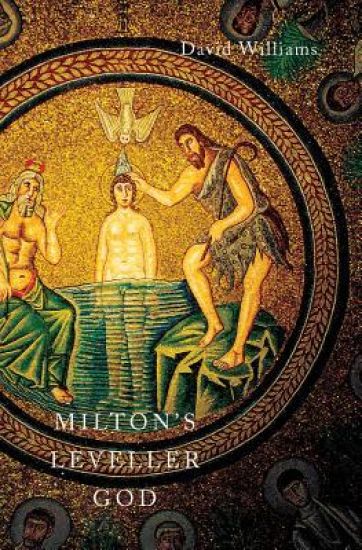
Milton's Leveller God

Milton's Leveller God

David Williams

McGill-Queen's University Press
2017
nidottu
Three and a half centuries after Paradise Lost and Paradise Regain’d were written, do Milton’s epic poems still resonate with contemporary concerns? In Milton’s Leveller God, David Williams advances a progressive and democratic interpretation of Milton’s epics to show they are more relevant than ever. Exploring two blind spots in the critical tradition – the failure to read Milton’s poetry as drama and to recognize his depictions of heaven’s political and social evolution – Williams reads Milton’s “great argument” as a rejection of social hierarchy and of patriarchal government that is more attuned to the radical political thought developed by the Levellers during the English Revolution. He traces echoes between Milton’s texts and thousands of pages of Leveller writings that advocated for popular rule, extended suffrage, and religious tolerance, arguing that Milton’s God is still the unacknowledged ground of popular sovereignty. Williams demonstrates that Milton’s Leveller sympathies, expressed in his early prose, conflicted with his official duties for Oliver Cromwell’s government in the 1650s, but his association with the journalist Marchamont Nedham later freed him to imagine an egalitarian republic. In a work that connects the great epic poet in new ways to the politics of his time and our own, Milton’s Leveller God shows how the political landscape of Milton’s work fundamentally unsettles ancient hierarchies of soul and body, man and woman, reason and will, and ruler and ruled.
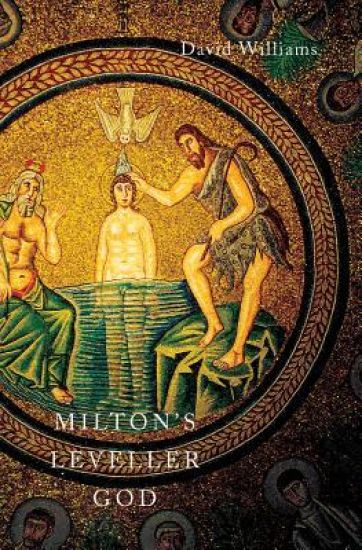
Milton's Leveller God

Milton's Leveller God

David Williams

McGill-Queen's University Press
2017
sidottu
Three and a half centuries after Paradise Lost and Paradise Regain’d were written, do Milton’s epic poems still resonate with contemporary concerns? In Milton’s Leveller God, David Williams advances a progressive and democratic interpretation of Milton’s epics to show they are more relevant than ever. Exploring two blind spots in the critical tradition – the failure to read Milton’s poetry as drama and to recognize his depictions of heaven’s political and social evolution – Williams reads Milton’s “great argument” as a rejection of social hierarchy and of patriarchal government that is more attuned to the radical political thought developed by the Levellers during the English Revolution. He traces echoes between Milton’s texts and thousands of pages of Leveller writings that advocated for popular rule, extended suffrage, and religious tolerance, arguing that Milton’s God is still the unacknowledged ground of popular sovereignty. Williams demonstrates that Milton’s Leveller sympathies, expressed in his early prose, conflicted with his official duties for Oliver Cromwell’s government in the 1650s, but his association with the journalist Marchamont Nedham later freed him to imagine an egalitarian republic. In a work that connects the great epic poet in new ways to the politics of his time and our own, Milton’s Leveller God shows how the political landscape of Milton’s work fundamentally unsettles ancient hierarchies of soul and body, man and woman, reason and will, and ruler and ruled.