

Kirjailija
Desiderius Erasmus
Kirjat ja teokset yhdessä paikassa: 315 kirjaa, julkaisuja vuosilta 1933–2026, suosituimpiin kuuluu Ulrich Von Hutten Gegen Desiderius Erasmus, Und Desiderius Erasmus Gegen Ulrich Von Hutten. Vertaile teosten hintoja ja tarkista saatavuus suomalaisista kirjakaupoista.
315 kirjaa
Kirjojen julkaisuvuodet: 1933–2026.
L' loge de la folie: avec quelques notes de Listrius et les belles figures de Holbenius, le tout sur l'original de l'Acad mie de B le... (Nouv. d. rev. et augm.) / compos en forme de d clamation par rasme...; traduite nouvellement en fran ois par M. GueudevilleDate de l' dition originale: 1738Le pr sent ouvrage s'inscrit dans une politique de conservation patrimoniale des ouvrages de la litt rature Fran aise mise en place avec la BNF. HACHETTE LIVRE et la BNF proposent ainsi un catalogue de titres indisponibles, la BNF ayant num ris ces oeuvres et HACHETTE LIVRE les imprimant la demande. Certains de ces ouvrages refl tent des courants de pens e caract ristiques de leur poque, mais qui seraient aujourd'hui jug s condamnables. Ils n'en appartiennent pas moins l'histoire des id es en France et sont susceptibles de pr senter un int r t scientifique ou historique. Le sens de notre d marche ditoriale consiste ainsi permettre l'acc s ces oeuvres sans pour autant que nous en cautionnions en aucune fa on le contenu. Pour plus d'informations, rendez-vous sur www.hachettebnf.fr
"Praise of Folly" by Dutch humanist and scholar Desiderius Erasmus is considered one of the most important works of literature in Western Civilization. The essay is a classic satirical work in the style of Lucian, the ancient Greek satirist, in which the Goddess of Folly extols the virtues of frivolousness and indulgence of one's passions, then moves to a darker praise of delusion and madness, and finally turns to a satirical examination of Christian superstition and the corruption of the clergy. In a humorous way, "Praise of Folly" reveals the greed and abuses of power of the Roman Catholic Church at the time and is seen as a catalyst for the Protestant Reformation. Desiderius Erasmus of Rotterdam (1466-1536) was known as Prince of the Humanists - though a theologian, a Catholic priest and the leading European scholar of his time. A close friend of Sir Thomas More, Erasmus' writings had a strong influence on the growing movement for change in Christian Europe, both Lutheran and the Counter-Reformation. These two essays are among his most important - and well-known - writings.'The Praise of Folly', written in Latin in 1509 and spoken by the goddess Folly (who champions a lively enjoyment of life), was a bold satire on (in the cautious contemporary environment) not only Western classical traditions but also the Catholic Church. Dedicated to More himself, Erasmus wittily challenged entrenched views in so forthright (and humanist) a style that it could have brought him in direct conflict with the papacy. Fortunately the pope, Leo X, enjoyed the humour and the challenge

Éloge de la Folie Nouvellement. Traduit Du Latin
Desiderius Erasmus
Hachette Livre - BNF
2019
pokkari
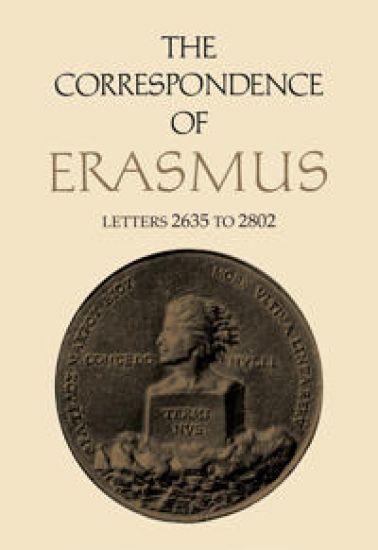
This volume includes Erasmus’ correspondence for the months April 1532 to April 1533, a period in which he feared a religious civil war in Germany. In his desire to move somewhere far enough from Germany to be safe and yet not so far that an old man could not undertake the journey, Erasmus eventually decided to accept the invitation from Mary of Hungary, regent of the Netherlands, to return to his native Brabant. In March 1533, the terms of Erasmus’ return were settled and in July they were formally approved by the emperor. But by this time Erasmus’ fragile health had already declined to the point that he could not undertake the journey, and he would never recover sufficiently to do so. The works published in the months covered by this volume include the eighth, much-enlarged edition of the Adagia, and the Explanatio symboli, the catechism that delighted Erasmus’ followers but gave Martin Luther much ammunition for a brutal attack on him in his Epistola de Erasmo Roterodamo of 1534.
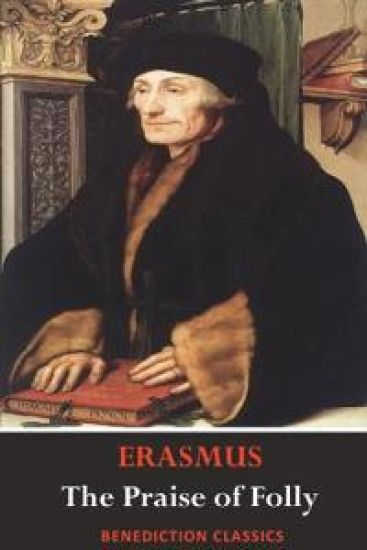
The Praise of Folly (Illustrated by Hans Holbein)
Desiderius Erasmus
Benediction Classics
2019
pokkari
In Civilization, Kenneth Clarke states "The first man to take full advantage of the printing press was Erasmus. It made him, and unmade him, because in a way he became the first journalist. He had all the qualifications: a clear, elegant style (in Latin, of course, which meant that he could be read everywhere, but not by everyone), opinions on every subject, even the gift of putting things so that they could be interpreted in different ways. He poured out pamphlets and anthologies and introductions; and so in a few years did everyone who had views on anything... for ten years he was the most famous man in Europe. ... Early in his journalistic career he produced a masterpiece of the Renaissance - ThePraise of Folly. He wrote it staying with his friend Thomas More; he said it took him a week, and I dare say it's true. ... To an intelligent man, human beings and human institutions really are intolerably stupid and there are times when his pent-up feelings of impatience and annoyance can't be contained any longer. Erasmus's Praise of Folly was a dam-burst of this kind; it washed away everything: popes, kings, monks (of course), scholars, war, theology - the whole lot. This edition also contains a brief life of Erasmus and Erasmus's epistle to Thomas More. It is illustrated in monochrome woodcuts by Hans Holbein.
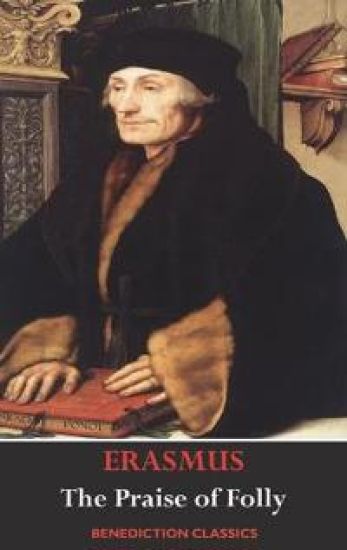
The Praise of Folly (Illustrated by Hans Holbein)
Desiderius Erasmus
Benediction Classics
2019
sidottu
Halvin toimitettuna 28,00 €
In Civilization, Kenneth Clarke states "The first man to take full advantage of the printing press was Erasmus. It made him, and unmade him, because in a way he became the first journalist. He had all the qualifications: a clear, elegant style (in Latin, of course, which meant that he could be read everywhere, but not by everyone), opinions on every subject, even the gift of putting things so that they could be interpreted in different ways. He poured out pamphlets and anthologies and introductions; and so in a few years did everyone who had views on anything... for ten years he was the most famous man in Europe. ... Early in his journalistic career he produced a masterpiece of the Renaissance - ThePraise of Folly. He wrote it staying with his friend Thomas More; he said it took him a week, and I dare say it's true. ... To an intelligent man, human beings and human institutions really are intolerably stupid and there are times when his pent-up feelings of impatience and annoyance can't be contained any longer. Erasmus's Praise of Folly was a dam-burst of this kind; it washed away everything: popes, kings, monks (of course), scholars, war, theology - the whole lot. This edition also contains a brief life of Erasmus and Erasmus's epistle to Thomas More. It is illustrated in monochrome woodcuts by Hans Holbein.

Erasmus' "Institutio principis christiani." Chapters III-XI
Desiderius Erasmus
Alpha Edition
2019
pokkari
Erasmus produced his five editions of the New Testament in Greek and Latin and his Paraphrases on the Gospels and Epistles almost contemporaneously with the tumultuous events that accompanied the beginnings of the Reformation in Europe. At the same time, his scholarship was a signal illustration of the Christian Humanism of northern Europe. His remarkable scholarship is translated and annotated in the Collected Works of Erasmus, volumes 42-60, published by the University of Toronto Press. This volume, CWE 41, seeks to set in perspective in a major introductory essay the full range of that scholarship. It traces the origin of Erasmus' work and its development over the course of the last two decades of his life, placing the work on the New Testament in the context of his life and the political and religious events of his age, revealing the endeavour as a process, and thus giving the reader illuminating points of reference for the many cryptic allusions in his annotations and paraphrases. The book includes an annotated translation of three of Erasmus' major writings on Scripture and its interpretation -- the Paraclesis, the Ratio verae theologiae ('System of True Theology'), and the Apologia (defense of his work). It includes as well some of his further attempts to clarify his endeavour -- relevant letters and a vitriolic response to his 'crabby critics' (Contra morosos). The volume offers a unique insight into the production of Erasmus' scholarship in book form, illustrating abundantly the special features that made his editions of the New Testament and his Paraphrases both esthetically pleasing and effectively marketable products.
Despite having enemies in the powerful Spanish religious orders, and being warned of the controversies that would arise, Erasmus published the fourth edition of his New Testament in 1527, resulting in a major crisis for Erasmianism in Spain. This period is marked by a bitter dispute between Erasmus and the conservative elements in Spain, involving behind-the-scenes manoeuvring, where it was impossible to distinguish friend from foe. Following this tension, a confrontation culminated in the Valladolid conference where enemies of Erasmus were obliged to come forward and where, following these events, Erasmus himself was forced to respond publicly to the charges brought against him. The three texts in the present volume were written by Erasmus in response to his antagonists, and include An Apologia of Desiderius Erasmus of Rotterdam Against Several Articles Presented by Certain Monks in Spain, The Answer of Desiderius Erasmus to the Pamphlet of a Certain Fever-ridden Individual, and Letter to Certain Highly Impudent Jackdaws.

Erasmus yearned to make the Bible an effective instrument of reform in society, church, and everyday life. To this end, he composed the Paraphrases, in which the words of Holy Scripture provide the core of a text vastly expanded to embrace the reforming 'philosophy of Christ.' Matthew was Erasmus's first paraphrased Gospel and was thus the great theologian's first opportunity to set out a full portrait of the life of Jesus. In this Paraphrase, the wonderful complexity of Jesus's life finds coherence in the conception of Him as a teacher. The baptism, the dove, and the divine voice attesting sonship are called the 'inaugurating ceremonies' that authenticate Jesus as the divine teacher of heavenly philosophy. His students are the disciples, who are to be teachers themselves, initiating an unending line of Christian teachers. The Jesus of this Paraphrase understands pedagogy: He adapts His teaching to the developing abilities of His pupils, quizzes them, and gently rebukes them. His actions as well as His words have one primary objective: to teach the disciples. As a Preface to the Paraphrase, Erasmus wrote a 'Letter to the Pious Reader,' which became one of his most provocative and important essays. Like the more published Paraclesis, this 'Letter' vigorously advocates the translation of scripture into the vernacular languages, and proposes a 'confirmation' ceremony to encourage young people to assume responsibility for the vows taken for them at baptism by their sponsors. This volume illuminates the early thinking of Erasmus and is a welcome addition to the Collected Works series. Volume 45 of the Collected Works of Erasmus series.
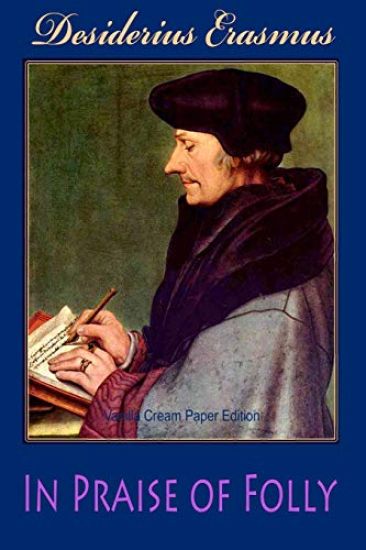

The Praise of Folly (Black Label Edition)
Desiderius Erasmus
Createspace Independent Publishing Platform
2018
nidottu
In Praise of Folly starts off with a satirical learned encomium, in which Folly praises herself, after the manner of the Greek satirist Lucian, whose work Erasmus and Sir Thomas More had recently translated into Latin, a piece of virtuoso foolery; it then takes a darker tone in a series of orations, as Folly praises self-deception and madness and moves to a satirical examination of pious but superstitious abuses of Catholic doctrine and corrupt practices in parts of the Roman Catholic Church-to which Erasmus was ever faithful-and the folly of pedants. Erasmus had recently returned disappointed from Rome, where he had turned down offers of advancement in the curia, and Folly increasingly takes on Erasmus' own chastising voice. The essay ends with a straightforward statement of Christian ideals. "No Man is wise at all Times, or is without his blind Side."
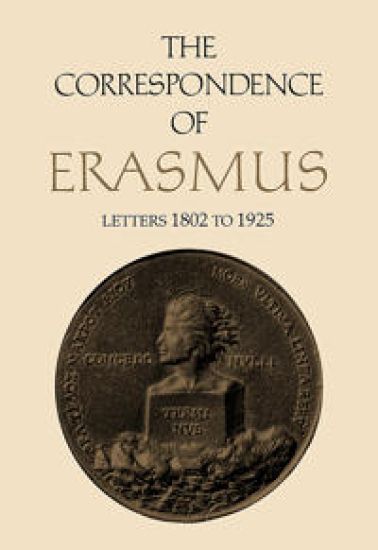
The letters in this volume cover Erasmus' correspondence from March to December 1527. These 129 letters centre primarily on Erasmus' continuing struggle with his Catholic critics, especially those in Spain and France, and on Erasmus' growing criticism of the Protestant reform movement. The letters show Erasmus' attempts to justify his position and to win favour with rulers, other prestigious men, and powerful institutions, all influential in both secular and religious spheres. Although the Inquisition in Spain investigated his orthodoxy and did not bring charges against him, the Paris Faculty of Theology formally condemned 112 propositions drawn from Erasmus' works in December 1527. The letters in this volume, written by and to Erasmus in this critical time, represent a unique view of a Europe torn by war and breaking apart into religious confessionalism and regionally organized churches. Throughout all this controversy, Erasmus repeatedly protested that the sole aim of his life's work was to promote the study of humanities for the profit of both knowledge and religion. Volume 13 of the Collected Works of Erasmus series.
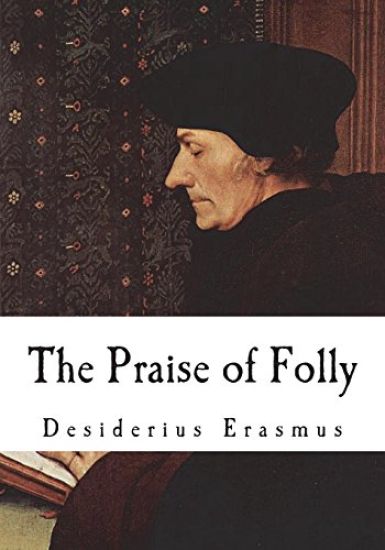
The Praise of Folly by Desiderius Erasmus and translated by John Wilson. In Praise of Folly, also translated as The Praise of Folly, is an essay written in Latin in 1509 by Desiderius Erasmus of Rotterdam and first printed in June 1511. Inspired by previous works of the Italian humanist Faustino Perisauli (it) De Triumpho Stultitiae, it is a satirical attack on superstitions and other traditions of European society as well as on the Western Church. Erasmus revised and extended his work, which was originally written in the space of a week while sojourning with Sir Thomas More at More's house in Bucklersbury in the City of London. The title Moriae Encomium had a punning second meaning as In Praise of More. In Praise of Folly is considered one of the most notable works of the Renaissance and played an important role in the beginnings of the Protestant Reformation.

A Merry Dialogue Declaringe the Properties of Shrowde Shrews and Honest Wives
Desiderius Erasmus
Hansebooks
2018
nidottu
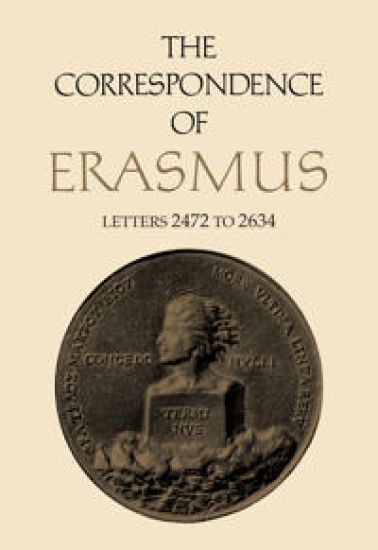
Volume 18 in the Collected Works of Erasmus series covers the period from 1 April 1531 to 30 March 1532. The most persistent theme in the letters is the fear, to which Erasmus had long been prey, that the religious strife in Germany and Switzerland would eventually lead to armed conflict. His Catholic and Evangelical critics continued to annoy him. In June 1531 Erasmus published his final apologia against Alberto Pio, who had accused him of being the source of the Lutheran heresy. Though Erasmus’ public controversy with the Strasbourg theologians had come to an end in 1530, he wrote a long letter to Martin Bucer emphasizing his doctrinal differences with the Strasbourgers and his low estimate of their moral character. Erasmus’ financial affairs also figure prominently in the letters between him and his friend, the banker Erasmus Schets. The letters between them are testimony to his impatience with people who owed him money, his frequent inability to understand the details of his own finances, and his quickness to assume that people he trusted were cheating him. Volume 18 of the Collected Works of Erasmus series
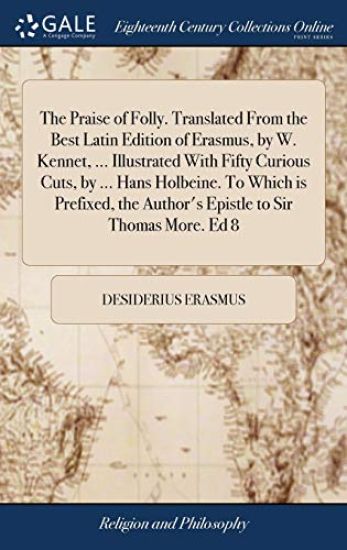
The Praise of Folly. Translated From the Best Latin Edition of Erasmus, by W. Kennet, ... Illustrated With Fifty Curious Cuts, by ... Hans Holbeine. To Which is Prefixed, the Author's Epistle to Sir Thomas More. Ed 8
Desiderius Erasmus
Gale Ecco, Print Editions
2018
sidottu
The 18th century was a wealth of knowledge, exploration and rapidly growing technology and expanding record-keeping made possible by advances in the printing press. In its determination to preserve the century of revolution, Gale initiated a revolution of its own: digitization of epic proportions to preserve these invaluable works in the largest archive of its kind. Now for the first time these high-quality digital copies of original 18th century manuscripts are available in print, making them highly accessible to libraries, undergraduate students, and independent scholars. The Age of Enlightenment profoundly enriched religious and philosophical understanding and continues to influence present-day thinking. Works collected here include masterpieces by David Hume, Immanuel Kant, and Jean-Jacques Rousseau, as well as religious sermons and moral debates on the issues of the day, such as the slave trade. The Age of Reason saw conflict between Protestantism and Catholicism transformed into one between faith and logic -- a debate that continues in the twenty-first century.++++The below data was compiled from various identification fields in the bibliographic record of this title. This data is provided as an additional tool in helping to insure edition identification: ++++Cambridge University LibraryT174618With a final leaf of directions for placing the cuts. London: printed and sold by J. Barker, and W. Phorson, Berwick, 1785?]. xii,178, 2]p., plates: port.; 12
The Praise of Folly. Translated From the Best Latinedition of Erasmus, by W. Kennet, Illustrated With Fifty Curious Cuts, by Hans Holbeine. To Which is Prefixed, the Author's Epistle to Sir Thomas More
Desiderius Erasmus
Gale Ecco, Print Editions
2018
sidottu
The 18th century was a wealth of knowledge, exploration and rapidly growing technology and expanding record-keeping made possible by advances in the printing press. In its determination to preserve the century of revolution, Gale initiated a revolution of its own: digitization of epic proportions to preserve these invaluable works in the largest archive of its kind. Now for the first time these high-quality digital copies of original 18th century manuscripts are available in print, making them highly accessible to libraries, undergraduate students, and independent scholars. The Age of Enlightenment profoundly enriched religious and philosophical understanding and continues to influence present-day thinking. Works collected here include masterpieces by David Hume, Immanuel Kant, and Jean-Jacques Rousseau, as well as religious sermons and moral debates on the issues of the day, such as the slave trade. The Age of Reason saw conflict between Protestantism and Catholicism transformed into one between faith and logic -- a debate that continues in the twenty-first century.++++The below data was compiled from various identification fields in the bibliographic record of this title. This data is provided as an additional tool in helping to insure edition identification: ++++Bodleian Library (Oxford)T177699Titlepage in red and black. London: printed and sold by J. Barker, 1785?]. xii,178p., plate: ill.; 12
The 18th century was a wealth of knowledge, exploration and rapidly growing technology and expanding record-keeping made possible by advances in the printing press. In its determination to preserve the century of revolution, Gale initiated a revolution of its own: digitization of epic proportions to preserve these invaluable works in the largest archive of its kind. Now for the first time these high-quality digital copies of original 18th century manuscripts are available in print, making them highly accessible to libraries, undergraduate students, and independent scholars. Western literary study flows out of eighteenth-century works by Alexander Pope, Daniel Defoe, Henry Fielding, Frances Burney, Denis Diderot, Johann Gottfried Herder, Johann Wolfgang von Goethe, and others. Experience the birth of the modern novel, or compare the development of language using dictionaries and grammar discourses. ++++The below data was compiled from various identification fields in the bibliographic record of this title. This data is provided as an additional tool in helping to insure edition identification: ++++Bodleian Library (Oxford)T177820With an index. London: printed for J. Wilford, 1724. 16], xiv, 2], v, 1],168, 4]p., plates: ill.; 12